Home Blog Page 6067

Jobless rate steadies at 6% in June; job quality improves

Unemployment rate steadied in June, while job quality improved to its best in over a year, the Philippine Statistics Authority reported on Monday.

Preliminary results from PSA June round of the Labor Force Survey (LFS) showed unemployment rate at 6% in June, steady for the second straight month. It was also lower than the 7.7% posted in June last year.

The ranks of unemployed Filipinos slightly increased by 62,000 to 2.990 million in June from 2.927 million in May. However, it shrank by 781,000 from 3.770 million last year.

In the first half, PSA reported unemployment rate average at 6%, lower than the 7.8% average in 2021 and 10.4% average in 2020. However, this was still higher than the pre-pandemic average of 5.1%.

Meanwhile, employment rate steadied at 94% in June from May. This was higher than the 92.3% in June last year.

In absolute figures, employed Filipinos were up by 508,000 to 46.592 million in June from 46.084 million in May. This was also higher by 1.516 million from 45.076 million a year ago.

The quality of jobs improved in June as underemployment rate — the share of those already working, but still looking for more work or longer working hours to total employed population — decreased by 12.6% in June from 14.5% in May and 14.2% in June last year.

This was equivalent to 5.888 million Filipinos looking for more work or longer working hours, a 780,000 reduction from 6.668 million in May. It was also down by 522,000 from 6.410 million a year ago.

Underemployment rate in June was the lowest in 13 months or since the 12.3% recorded in May 2021.

The labor force size also went up by 570,000 to 49.581 million in June from 49.011 million in May. This was also higher by 735,000 from the 48.846 million labor force size in the same month last year.

This put the labor force participation rate — the share of labor force to the total population 15 years old and over — to 64.8% in June, higher than 64% in May, but lower than the 65.1% in June last year.

This is the highest LFPR in three months or since the 65.4% in March.

On a monthly basis, the number of new entrants to the Filipino workforce decreased by 237,000 to 980,000 in June. This translated to a 2% share of new entrants to the total labor force that month, slightly lower than 2.5% in May.

A Filipino workers worked an average of 40.3 hours a week in June, higher than the 39.8 hours a week in May and 39 hours a year ago.

Services sector remained the largest employer in June with 56.5% share, down from 59% a month ago.

It was followed by agriculture and industry with 24.5% and 19%, respectively.

The June round of LFS was conducted from June 8 to 28, covering 10,915 sample households. — Bernadette Therese M. Gadon

[B-SIDE Podcast] What I’ve learned after helping write the 1987 Constitution

Follow us on Spotify BusinessWorld B-Side

By Patricia B. Mirasol, Reporter
speaking to Bernardo M. Villegas

WITH EVERY CHANGE of administration comes the question of what needs to change, and what needs to be retained. In this episode of BusinessWorld B-Side podcast, multimedia reporter Patricia B. Mirasol takes a look back at how the 1987 Philippine Constitution was drafted with Bernardo M. Villegas, an economist and one of its framers. They also discuss foreign ownership liberalization, the additional factors driving foreign direct investments, plus the key area the next administration needs to focus on.

Don’t enshrine provisions that can change with circumstances.

“Except for vital issues like the right to life and the family as a foundation of society, all other issues are debatable and should not be enshrined in the constitution,” Mr. Villegas said in response to possible drawbacks to the recent constitutional amendments pertaining to foreign ownership and liberalization.

Things can change decades down the road that can necessitate changing the laws, he added. Right now, however, “we need (foreigners) badly, because we’re buried in debt.”

The ideal constitution is a short constitution — a defect the 1986 Constitutional Commission was not able to address, according to Mr. Villegas.

“It’s too verbose…” he said. “You should understand that we were traumatized by Martial Law and the EDSA revolution. We overdid it by putting in too many restrictions.”

The Filipino First mentality is backward and must be expunged.

“I’m very happy we have those three amendments,” Mr. Villegas said, referring to Republic Act (RA) No. 11647 (The Amended Foreign Investment Act), RA 11595 (The Amended Retail Trade Liberalization Act), and RA 11659 (The Amended Public Service Act).

RA 11647 eases restrictions and requirements on foreign ownership in businesses. RA 11595 removes the categorization of enterprises and reduces the minimum paid-up capital of foreign retailers from $2.5 million to P25 million. RA 11659 allows full foreign ownership in sectors like telecommunications, railways, subways, and airlines.

All three are expected to generate more jobs, improve basic services, allow the exchange of technology, and help the economy recuperate from the COVID-19 pandemic.

These are also expected to inject much-needed foreign capital into the economy that will ultimately help fund programs such as “Build, Build, Build.”

He was one of the few in the constitutional commission who wanted to do away with the “Filipino First” provisions, Mr. Villegas told BusinessWorld. Because there wasn’t much competition from overseas, the ultra-nationalist protections soon gave rise to oligopolies, an outcome he described as “Rich Filipinos First, Damn the Rest of Us.”

While the Duterte administration has done a good job with “Build, Build, Build,” Mr. Villegas added that the next two administrations will have to do even better, since the country’s infrastructure as compared with its neighbors is “still so poor.”

Agriculture is the Achilles heel of the economy.

The National Economic and Development Authority’s AmBisyon Natin 2040 vision of having every Filipino “enjoy a strongly rooted, comfortable, and secure life” is doable, Mr. Villegas said.

It will, however, hinge upon equality of education, infrastructure development, and a focus on agriculture. The latter alone will reduce the poverty rate, Mr. Villegas added, as about three-quarters of the poor are from rural areas. 

“I would like to emphasize — for the next administration — the importance of rural and agricultural development,” Mr. Villegas said. “Our biggest failure came from decades of neglecting poor farmers.”

Apart from continuing to build farm-to-market roads, Mr. Villegas told BusinessWorld that small-scale farmers can adopt models, such as the nucleus estate, to achieve economies of scale even with their small landholdings.

In such a model, small-scale farmers lease their land to corporations, who are then responsible for coordinating the transfer of technology, as well as the processing of the produce to higher-value products. 

“We were able to do it with pineapples. (We can do it) in cacao, coffee, durian, avocado… but that requires leadership,” said Mr. Villegas. “That requires cooperation between the executive and the legislative.”

Follow us on Spotify BusinessWorld B-Side

Iloilo City and SM Prime collaborate on PPP to redevelop 2 city public markets

Top row (left to right): Iloilo Vice-Mayor Jeffrey Ganzon, Iloilo Mayor Jerry Treñas, SM Prime President Jeffrey Lim, SM Supermalls President Steven Tan, and SM Supermalls Senior Vice-President Bien Mateo. Bottom row (left to right): Iloilo Central Market officers Danilo Lemos, Sonia Lim, Marites Poja, Analiza Catedrilla, Josefino Barroca, Boy Adorio, Benjie Beniegas, and Elnora Mendoza Lava

In line with the national government’s thrust to transform the Philippines through PPPs and collaboration between LGUs and the private sector, Iloilo City Mayor Jerry Treñas recently signed the lease agreement with SM Prime Holdings, Inc. for the redevelopment of the Central and Terminal Markets in the bustling Southern capital. SM is investing P1.5 billion to P2.5 billion in the project.

“Wherever we can, we do markets for Micro, Small and Medium enterprises (MSMEs) and small vendors in the same city where we have SM malls,” said SM Supermalls President Steven Tan in a separate interview on the partnership. “SM has long been a part of Iloilo City, and it is now time for us to give back to the city.”

Mr. Tan cited that SM has partnered in the past with LGUs for such projects as the Marketmall in Dasmariñas, Cavite, which was well-received by the community, as it has transformed the public market into a spacious, safe, clean and more complete marketplace where both MSMEs and national brands are thriving.

Top row (left to right): Iloilo Vice-Mayor Jeffrey Ganzon, Iloilo Mayor Jerry Treñas, SM Prime President Jeffrey Lim, SM Supermalls President Steven Tan, and SM Supermalls Senior Vice-President Bien Mateo. Bottom row (left to right): Iloilo Terminal Market officers Emily Terol, Lelibeth Villaran, Linda Roque, Ma. Paz Eclarinal, Rosario Camarista, Marjorie Dumalag, Johna Reyes, Valentina Estember, and Philip Lim

“As a home for small businesses, the vendors of the public markets have a place where they can grow, as the synergy between the established SM brand and those who are starting out has always been good to the customers, the businesses and the city,” said Mr. Tan.

The modern markets will have retail spaces and ample parking, and will bring in not only more local customers, but hopefully will spur tourism as it will be a showcase of the best the city has to offer in terms of local products and well-loved Ilonggo food specialties.

“The MSMEs and vendors would definitely be selling more as it will be a convergence zone for the growth of micro, small and medium businesses,” added Mr. Tan.

Mr. Treñas clarified that the management of the markets would remain with the city government through the Local Economic Enterprise Office.

“The city government will operate the markets. It will continue to deal with the vendors.” Mr. Treñas further told the vendors that their suggestions during the consultations would be considered.

Mr. Treñas cited that this is one of the many redevelopment projects ongoing and planned for the city.


Spotlight is BusinessWorld’s sponsored section that allows advertisers to amplify their brand and connect with BusinessWorld’s audience by enabling them to publish their stories directly on the BusinessWorld Web site. For more information, send an email to online@bworldonline.com.

Join us on Viber to get more updates from BusinessWorld: https://bit.ly/3hv6bLA.

AboitizPower making headway in decarbonization journey with data and innovation

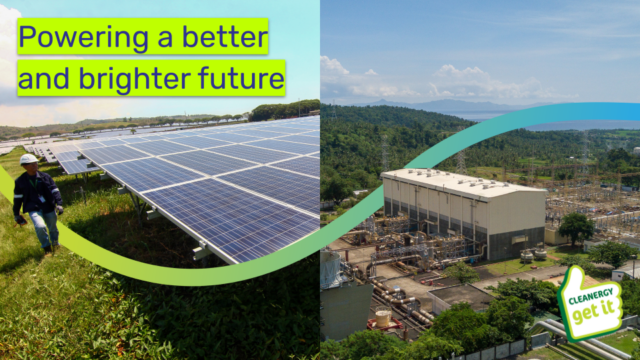
AboitizPower aspires for a better and brighter future for the country as it moves closer to growing its renewable energy portfolio while leveraging digitalization and innovation.

As the Aboitiz Group embarks on a Great Transformation towards becoming the first “techglomerate” in the country by 2025, the company’s power arm is making great strides in helping realize this ambition.

AboitizPower President and Chief Executive Officer Emmanuel V. Rubio said they are transforming their business through digitalization and innovation. At the same time, they are moving closer to their ambition of growing their Cleanergy portfolio. Cleanergy is AboitizPower’s brand for clean and renewable energy.

“We have almost 1,000 megawatts of disclosed renewable energy projects so far, all of which are expected to be delivered within the next three years. With that, we are well on our way towards delivering 3,700 MW of additional RE capacity by 2030 as part of our decarbonization journey,” he said.

AboitizPower announced last year that it aims to generate a net attributable capacity of 9,200 MW by the end of the decade, half of which will be sourced from RE and without a new coal plant. With this development, Rubio said they are “very optimistic” about hitting their goal.

“We are eager to complete these projects to continue serving the country’s growing power needs with RE and contributing to a sustainable energy transition,” he added.

AboitizPower’s decarbonization journey is reinforced by its innovation and digitalization initiatives. These stand at the forefront of the organization’s growth strategy and play a crucial part in the Great Transformation.

The Aboitiz Group is in full swing in its transition to becoming a “techglomerate” or a conglomerate that heavily integrates technology and design thinking in all its production, services, and processes.

In partnership with Aboitiz Data Innovation, AboitizPower launched its Data Innovation Program to strengthen its foray into Artificial Intelligence (AI), data science, and new technology applications. The program aims to create shared value within the company and for all its stakeholders, impacting electricity costs and improving energy reliability and security in the country.

Rubio stressed the importance of innovation and data science in making impactful progress in moving the company’s bottom line and benefiting consumers. For AboitizPower, it is a concerted effort to drive innovation and data science. It is a moving force on all business fronts, including generation, distribution, and commercial operations.

The company is exploring various innovation projects proposed by AboitizPower team members to jumpstart its data innovation program. Among these are battery optimization, predictive analytics, and intelligent benchmarking of existing assets, to name a few.

“We are leveraging technology and innovation to improve our operations and to serve our customers better. This way, we can bring more value to the communities where we operate,” Rubio said.

AboitizPower will continue to pursue innovative energy solutions toward a more sustainable future and will strive to transform energy to power progress and help build prosperity for all.


Spotlight is BusinessWorld’s sponsored section that allows advertisers to amplify their brand and connect with BusinessWorld’s audience by enabling them to publish their stories directly on the BusinessWorld Web site. For more information, send an email to online@bworldonline.com.

Join us on Viber to get more updates from BusinessWorld: https://bit.ly/3hv6bLA.

Security Bank forges ahead as it celebrates 71 years of BetterBanking service

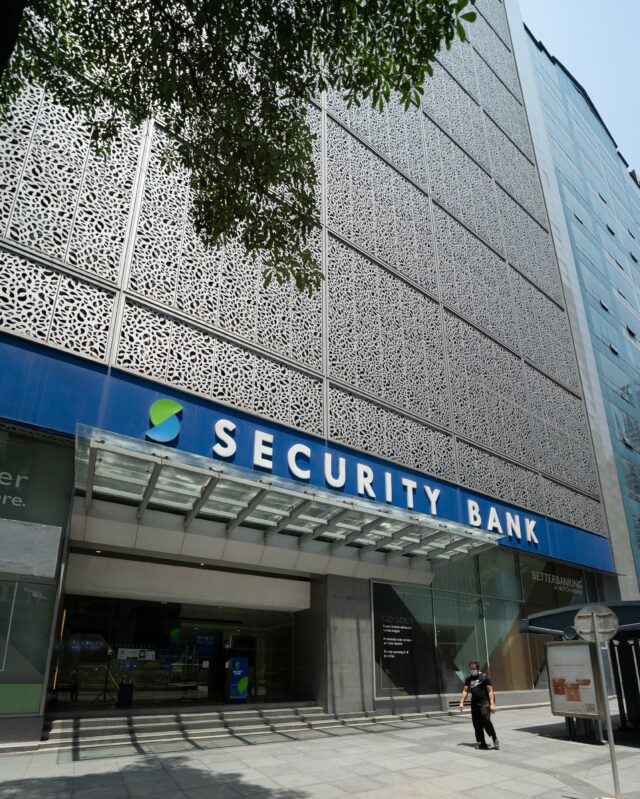
The façade of Security Bank’s head office in Ayala Avenue features an installation titled Perfect Harmony—a modernized yin and yang depiction of synergy and collaboration.

Security Bank Corporation (PSE: SECB), one of the Philippines’ leading universal banks, has been serving retail, corporate, institutional, and MSME clients since it opened its doors in 1951.

In the 1980s, while expanding its branch network, the Bank launched various innovative credit and trust products that have become forerunners of many of today’s industry offerings. It was a pioneer in the country’s credit card industry with the launch of the first credit card franchise through Diners Club.

In 1991, new majority owners led by current Chairman Emeritus Frederick Y. Dy took over Security Bank, provided a fresh direction, and in 1995, the Bank was listed at the Philippine Stock Exchange. In 2016, Japan’s banking giant MUFG Bank Ltd. invested PHP36.9B for a 20% stake in Security Bank—enabling both organizations to leverage cross-border capabilities and further innovate their financial products and services.

Delivering on a vision of customer-centricity

Solenn Heussaff joins the Security Bank family as the banks’ newest brand ambassador together with brother Erwan Heussaff.

Building on a heritage of BetterBanking service, as recognized over the years by The Asian Banker, Euromoney, Asiamoney, Alpha Southeast Asia, and many others, the Bank embarked on a new journey in 2020. Amid the pandemic, the Bank found opportunities to evolve and carve out paths for growth. With changing customer behaviors and business needs in mind, the Bank pivoted to invest in service differentiation.

Anchored on a vision to become the most customer-centric bank in the Philippines, Security Bank focused its lens on high growth sectors in retail, wholesale, and MSME segments—understanding and investing in what matters to clients. In doing so, significant investments were made in people engagement and talent development, scalable infrastructure, cloud technology, as well as robust risk management controls.

The Bank recently held its Service Tenure Awards to honor and recognize long-serving employees, including 40-year veteran, Retail Banking Segment Head, Maki Tingson. (L-R, Nerissa Berba, SVP and Head of Human Capital Management, Maki Tingson, EVP and Retail Banking Segment Head and Chairman Emeritus, Frederick Dy.

“Serving our customers has always been crucial to our success. We have taken this a step forward by investing in our customers—thinking long-term and focusing our resources to innovate and delight them. We have and continue to make investments in order to transform our customers’ journey and exceed their expectations across our different products and services,” said Sanjiv Vohra, Security Bank President and CEO.

Apart from investments in new organizational teams to support its vision, the Bank partnered with global frontrunners like Oracle, AWS, Google, Microsoft, Bain, and McKinsey on its strategic journey and digital transformation. This was complemented by initiatives to equip its people with the skills needed to embrace change and take on complex challenges—leveraging industry-leading platforms like LinkedIn Learning and Glint to track success.

Creating lasting impact for all stakeholders

Security Bank Foundation awarded technical vocational scholarships in partnership with Don Bosco Academy Pampanga and the Bank’s industrial clients, Motech Automotive Educational Center, Inc. and Sambon P&E Philippines, Inc.

Taking its mission of enriching lives, empowering businesses, and building communities to heart, the Bank has put its stakeholders at the core of its sustainability journey. Its BetterBanking commitment is demonstrated by collective efforts to provide excellent financial products and services for clients, add value at every customer interaction, care for employees’ health and welfare, act responsibly, and support advocacies that align with its mission.

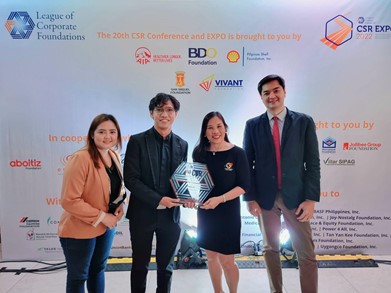
SBFI recognized for its Ready Set Read education program at the League of Corporate Foundation CSR Guild Awards (From left to right: SBFI Program Officer Racquel Tanyag, SBFI Program Manager Louie De Real, KCFI President and CEO Rina Lopez-Bautista, and KCFI Director for Operations Edric Calma.

These advocacies promote health and wellness, livelihood development, community-building programs in disaster recovery, arts and culture, and women empowerment. These complement the pioneering work of Security Bank Foundation Inc. (SBFI), the Bank’s Corporate Social Responsibility (CSR) arm. SBFI drives the Bank’s advocacy for quality education through various initiatives, including scholarship and classroom-building programs.

Security Bank employees participated in the “Hope Begins with a Meal” food packing activity led by International Care Ministries. ICM and its partner companies packed a total of 16,000 meals for delivery to impoverished families in the Philippines.
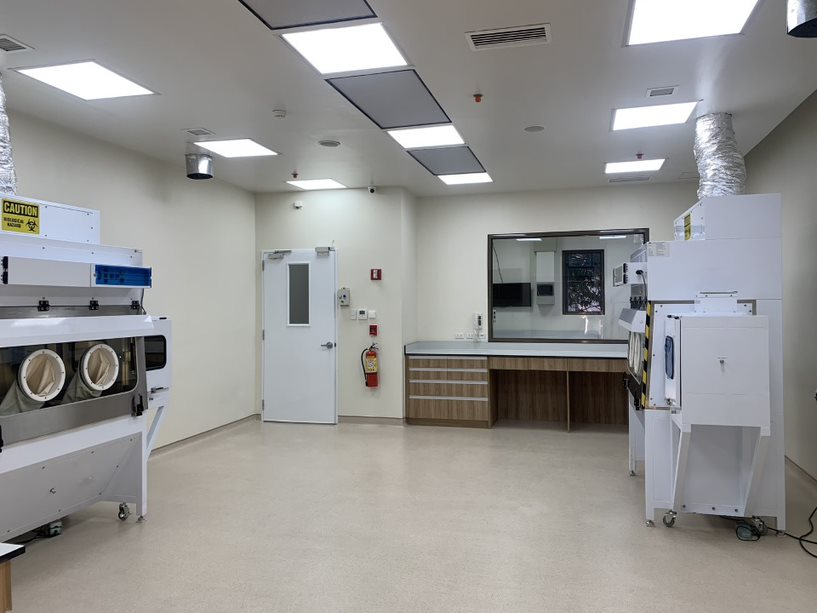
The Bank worked with Helping Women and Others (HWAO) Foundation and their partners to construct the PGH Chemo Prep Room, which will improve preparation of chemotherapy medications and help more cancer patients.

Security Bank has made significant strides in its sustainability imperative. The Bank’s Sustainability Framework was developed in 2020, outlining its approach to addressing environmental, social, and governance issues.

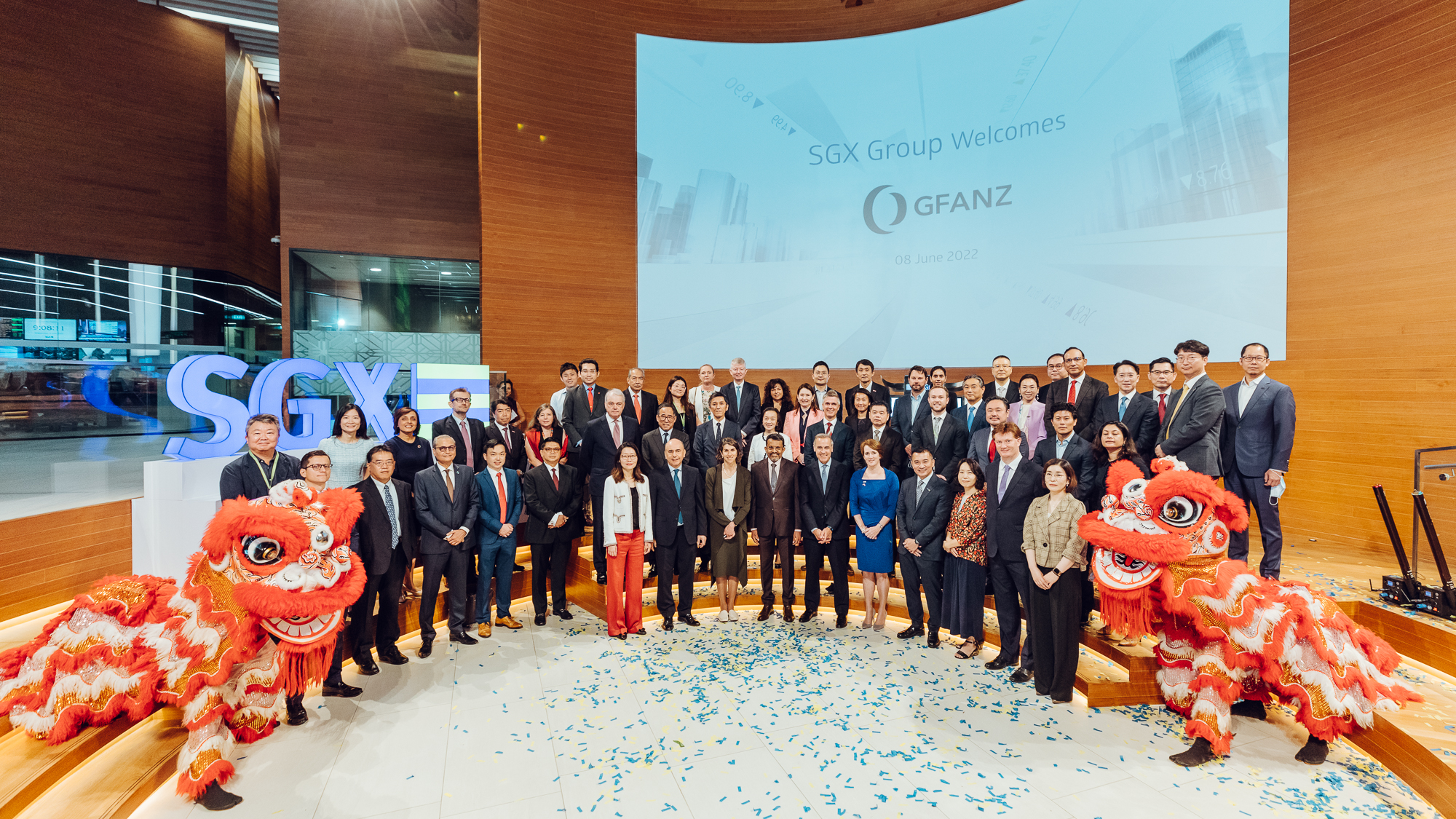
Security Bank joined the GFANZ global coalition event to accelerate transition to net-zero with its President and CEO Sanjiv Vohra in attendance—a testament to its commitment to zero out coal power generation financing.

To further underpin this framework, in 2021, the Board approved the Bank’s Environmental and Social Risk Management System (ESRMS), detailing the policies and due diligence requirements to identify, address, and mitigate environmental and social risks in its operations, lending and investing practices, and supply chain.

A key component of its ESRMS is the commitment to zero out coal power generation financing. In fact, the Bank has stopped funding the construction of new coal power generation plants with a view to completely exit direct financing by 2033.

“As we celebrate our 71st anniversary, we’re committed to innovating our BetterBanking service to benefit our stakeholders. With over seven decades of experience and a sharp focus ahead, we’re optimistic about achieving our vision to become the most customer-centric bank in the Philippines,” adds Vohra.

To know more about Security Bank, visit www.securitybank.com.


Spotlight is BusinessWorld’s sponsored section that allows advertisers to amplify their brand and connect with BusinessWorld’s audience by enabling them to publish their stories directly on the BusinessWorld Web site. For more information, send an email to online@bworldonline.com.

Join us on Viber to get more updates from BusinessWorld: https://bit.ly/3hv6bLA.

GDP growth likely eased in Q2 — poll 

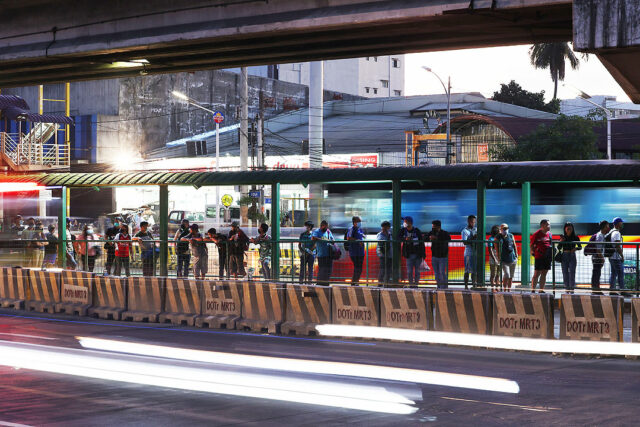
COMMUTERS line up early at the EDSA Bus Carousel in Quezon City, June 21. — PHILIPPINE STAR/ MIGUEL DE GUZMAN

By Lourdes O. Pilar, Researcher

THE Philippine economy likely grew at a slower pace in the second quarter as surging inflation may have affected consumer spending.

A BusinessWorld poll of 18 economists and analysts last week yielded a median gross domestic product (GDP) growth estimate of 7.5% for the April-June period, easing from the 8.3% growth in the first quarter and 12.1% in the same period a year ago.

If realized, the figure would put average growth at 7.9% in the first half, above the government’s 6.5-7.5% full-year target.

Analysts’ Q2 2022 GDP estimates

Official second-quarter GDP data will be released on Aug. 9, alongside factory output and international merchandise trade statistics for the month of June.

Analysts said robust household spending likely drove second quarter economic growth, but this may have been hurt by rising inflation. In June, inflation rose to a near four-year high of 6.1%, the third straight month it exceeded the Bangko Sentral ng Pilipinas (BSP) 2-4% target band, as prices of food and fuel continued to spike.

Private sector spending accounts for about 75% of the country’s economic output annually.

Nicholas Antonio T. Mapa, senior economist at ING Bank N.V. Manila, estimated 8.8% growth in the second quarter as household spending were driven by election-related expenditures. 

“Relaxed mobility curbs may have helped accommodate expenditures on items related to revenge spending: hotels and restaurants and recreation & culture. Capital formation also expected to provide a boost with imports of capital equipment posted solid gains for the quarter,” Mr. Mapa said in an e-mail.

However, this may have been offset by the ballooning trade deficit and elevated inflation, he added.

Ruben Carlo O. Asuncion, chief economist from UnionBank of the Philippines said GDP likely expanded by 7.2% in the April to June period, mainly due to strong consumption growth.

“We think that previous quarter’s economic growth and recovery have spilled over in second quarter even amid rising inflation and monetary policy hikes,” said Mr. Asuncion in an e-mail.

The BSP began its tightening cycle in May with a 25-basis point (bp) hike in May, followed by another 25-bp rate increase in June and an off-cycle 75-bps rate hike in July. The Monetary Board has raised benchmark interest rates by a total of 125 bps so far this year.

Mr. Asuncion also noted manufacturing recovery continued in the second quarter, and that overseas Filipino workers’ (OFW) remittances’ purchasing power remained intact.

“Overall, people movement have continued to be positive and above the baseline as the economy proceeds to more reopening,” he said.

Most parts of the country remained under the most lenient alert level during the second quarter.

OFW cash remittances grew 2.5% to $12.592 billion as of May, while the S&P Global Philippines Manufacturing Purchasing Managers’ Index showed continued expansion in June.

Miguel Chanco, chief emerging Asia economist of Pantheon Macroeconomics, said he expects a modest slowdown in year-on-year growth to 8.1%.

“The largely trivial slowdown from 8.3% in Q1 owes largely from a favorable base effect — remember that the economy contracted marginally in Q2 2021 — which we think will mask yet another contraction in the quarter just passed,” Mr. Chanco said in an e-mail.

“Underlying our projection for a quarter-on-quarter contraction is a marked slowdown in the momentum in household spending, a significant pullback in government spending (related mainly to the natural pause button hit by the election), and a much larger drag from net trade.”

The country posted a trade deficit of $24.922 billion in the five months to May, with imported goods growing by 29% versus the 8.4% growth of merchandise exports in the same period. 

Domini S. Velasquez, chief economist at China Banking Corp., who pencilled in an 8.2% GDP growth, said in an e-mail that the economy continued to gain momentum as it recovers from the pandemic.

“Revenge spending and domestic travel were clearly evident in second quarter as COVID-19 (coronavirus disease 2019) cases due to the Omicron variant in the preceding quarter waned,” she said in an e-mail.

Ms. Velasquez said the second-quarter figure may have received a boost from election spending, the return of business process outsourcing workers to offices and “very favorable” employment rates.

“Robust domestic tourism and mobility gauges in retail spots also appear to confirm that revenge spending and retail therapy will likely be behind a potentially strong print despite headwinds emanating from the Russia-Ukraine war and the cumulative 50-bp BSP rate hikes in May and June,” Bank of the Philippine Islands Lead Economist Emilio S. Neri, Jr. said in an e-mail. 

Headline inflation averaged 4.7% from January to July, settling above the government’s 2-4% target but below the 5% forecast for the year. 

RATE HIKES
Economists, however, warned the country’s economic output growth for the rest of the year may be tempered by the impact of the BSP’s aggressive policy tightening.

“We expect year-on-year growth to moderate over the course of the year given the less favorable base effect. Sequentially momentum will also be moderate given higher prices, weaker global trade, and less scope for catch-up as most restrictions are now removed,” Makoto Tsuchiya, assistant economist from Oxford Economics Japan, said in an e-mail.

“We expect the effect of monetary tightening to start kicking in towards the end of the quarter, with the impact to be more evident in 2023,” he added.

BSP Governor Felipe M. Medalla has already signaled another rate hike of 25 or 50 bps at the next meeting on Aug. 18 to tame inflation.

Rizal Commercial Banking Corp. Chief Economist Michael L. Ricafort said rising long-term and short-term interest rates would be a drag on domestic economic growth in the next few months. He estimated GDP growth to settle at the lower-end of the government’s 2022 target at 6.5% this year.

“We expect economic growth in second half of 2022 may be softer than first half because of higher inflation impact and rising interest rates,” he said.

Security Bank Corp.’s Chief Economist Robert Dan J. Roces said the spillover effects of inflationary pressures and geopolitical headwinds may be felt in the third quarter.

“(This may) continue to constrain private consumption’s full potential and thus slow down growth. However, recent trends have shown commodity prices settling in a new, lower range, and as such may provide price relief by fourth quarter in time for the peak consumption season,” Mr. Roces said.

Economic managers are targeting 6.5-7.5% GDP growth this year.

The World Bank pencilled in a 5.7% full-year growth for the Philippines; while the International Monetary Fund expects 6.7% expansion. The Asian Development Bank and Fitch Ratings see 6.5% growth for the Philippines this year, while Moody’s Investors Service gave a 7.2% projection.

“For the rest of the year, we think that despite challenges of high inflation and weaker external demand, the economy is still poised to post a healthy growth of around 7%,” Ms. Velasquez said.   

Mr. Neri said his full year GDP growth estimate remains at 6.7%.

“However, the stepped up COVID-19 booster rollout will likely soften the blow of external headwinds. The return of primary school students to face-to-face classes will likely underpin a stronger-than-expected consumption recovery. This can somehow mitigate the negative impact of elevated prices, policy rate hikes, global growth slowdown, among others on domestic consumer confidence during the second semester,” he said.


Dollar reserves may drop further in coming months

United States one-dollar bills are seen in this Nov. 14, 2014 file photo — REUTERS

THE Philippines’ foreign exchange reserves may decline further in the coming months as the central bank continues to prop up the local currency.

Data from the Bangko Sentral ng Pilipinas (BSP) showed gross international reserves (GIR) stood at $98.83 billion as of end-July, 2% lower than the $100.85 billion level as of end-June.

The dollar reserves fell below the $100-billion level for the first time since August 2020 when GIR stood at $98.95 billion. The GIR level has been decreasing since February this year.

ING Bank N.V. Manila Senior Economist Nicholas Antonio T. Mapa said the BSP has been one of the most aggressive central banks in building up the GIR to $110 billion during the pandemic.   

“Regional central banks built up reserves during the height of the pandemic, cognizant of the fact that they would need them once policy normalization starts,” he said in an e-mail.

Amid the Federal Reserve’s aggressive tightening, Mr. Mapa noted Asian central banks have deployed the tandem of rate hikes and foreign exchange spot intervention.

“In the coming months, we can expect GIR drawdown and rate hikes to continue. This is why GIR buildup was done in the first place, so we will see prudent central banks put their hard-earned built-up reserves to good use to get through the current turbulent landscape of a Fed rate hike rampage,” Mr. Mapa said.

The peso touched its all-time low of P56.45 per dollar in July.

The Fed raised interest rates by 75 basis points (bps) in July. Coupled with earlier actions in March, May and June, the US central bank’s overnight interest rate is now at a level between 2.25% and 2.50%. 

The BSP has raised benchmark interest rates by a total of 125 bps so far this year, as it seeks to tame inflation.

Rizal Commercial Banking Corp. Chief Economist Michael L. Ricafort said the country’s dollar reserves may still increase in the coming months amid expected rise in inflows from overseas Filipino workers remittances, business process outsourcing revenues, foreign tourism revenues, and foreign investment.   

However, the GIR can be offset by the widening trend in the country’s trade deficit and some net foreign debt payments, Mr. Ricafort said. 

BSP Governor Felipe M. Medalla said in a virtual forum that the country’s foreign exchange buffer remains comfortable.

“On the other hand, our reserves are comfortable but not excessive. This is not the time to waste our bullets,” Mr. Medalla said.   

The BSP is expecting a GIR of $108 billion for this year and $109 billion for next year.

The country’s foreign exchange buffer hit a record high of $110.12 billion in December 2020.

Also on Friday, Mr. Medalla signaled the possibility of a 50-bp increase in policy rates at its Aug. 18 meeting, as inflation quickened in July.

The consumer price index at the national level climbed 6.4% year on year in July, from 6.1% in June and 3.7% a year ago.

July was the fourth consecutive month that inflation went above the central bank’s 2-4% target range. The July inflation print was also the fastest growth in 45 months, or since the 6.9% logged in October 2018.

“Clearly that raises the probability rather than 25 (bps), but again, there are other (factors) that we will look at,” Mr. Medalla said. — Keisha B. Ta-asan

New progressive taxes, belt tightening may help gov’t address ballooning debt

PHILIPPINE STAR/ MICHAEL VARCAS

By Diego Gabriel C. Robles

THE GOVERNMENT should consider more progressive taxes and belt-tightening measures amid ballooning debt, economists said.

“We would definitely have to raise taxes because of the huge expenditures. However, this should be made progressive. Furthermore, we should assure the public that the taxes will be used for the public good,” said Leonardo A. Lanzona, director of the Ateneo Center for Economic Research and Development.

The National Government’s outstanding debt hit a record-high P12.79 trillion at the end of June, up 2.4% from the previous month, the Bureau of the Treasury (BTr) said on Friday.

Rizal Commercial Banking Corp. Chief Economist Michael L. Ricafort attributed the higher debt to increased government borrowings after the elections in May, and the peso’s 5% depreciation against the US dollar.

Domestic debt inched up 1.2% month on month to P8.77 trillion as of end-June.

External debt jumped 5.1% to P4.02 trillion due to “the impact of local currency depreciation against the USD amounting to P186.94 billion and the net availment of external financing amounting to P43.18 billion; offsetting the P35.72 billion effect of net depreciation against the US dollar on third-currency denominated obligations.”

“The economy is in a precarious situation — inflation untamed until 2024, debt exploding, and no assurance of revenue increase amidst the crisis,” University of the Philippines Professor Emeritus Rene E. Ofreneo said in an e-mail.

The country’s debt level reached 63.5% of gross domestic product (GDP) at the end of the first quarter, exceeding the 60% threshold prescribed by multilateral lenders for developing markets. The debt-to-GDP ratio surged from 39.6% as of end-2019 after the government ramped up its borrowings for infrastructure projects and pandemic response.

NEW TAXES
“There is a need to intensify tax collections based on existing tax laws, new taxes, higher tax rates, and other tax reform measures, as well as other fiscal reform measures such as disciplined spending, rightsizing the government, preventing leakages in government spending, as well as anti-corruption measures,” Mr. Ricafort said in an e-mail.

The government targets revenue to increase annually from 15.2% of GDP in 2022 all the way to 17.6% by 2028. It also aims to reduce the budget deficit from 7.6% of GDP in 2022 to just 3% in 2028.

President Ferdinand R. Marcos, Jr. in his State of the Nation Address urged Congress to approve a tax on digital service providers, which is estimated to generate P11.7 billion in revenues in 2023.

The Finance department has also pushed for a tax on single-use plastics, which may generate P1 billion in annual revenues.

The Treasury has estimated that the government needs to raise P249 billion annually in incremental revenue to avoid new borrowing and reduce the debt load.

“New taxes and higher tax rates need to be fair, equitable, and progressive, especially targeted to those that can afford them or those from the higher income brackets or at least prevent adding burden to the poor, most vulnerable sectors, and those hit hard by the pandemic,” Mr. Ricafort said.

For Mr. Lanzona, the government should pursue taxes on the wealthy, with the poor shouldering less of the tax burden.

“The best way is to tax income directly in order not to distort their investment decisions. But unfortunately, this can prove difficult and can cause them not to reveal their true incomes. Taxes on consumption may cause them to divert their investments but are easier to impose,” he said in an e-mail.

Mr. Ofreneo suggested several forms of wealth taxation, including a tax on windfall profits, a one-off emergency tax, or the institutionalization of a progressive taxation schedule.

“With his huge political capital of 31 million votes, President Ferdinand ‘Bongbong’ R. Marcos, Jr. is in a good position to ask the wealthy class to express solidarity to the people and the nation by agreeing to wealth taxation,” he said in an e-mail.

However, proposals on wealth taxes have already received a lukewarm reception from Finance Secretary Benjamin E. Diokno, who said this may scare investors.

University of Asia and the Pacific Economist Bernardo M. Villegas said that the government’s focus should be on cost reduction and savings, as well as digitalization of government processes.

“I have great hopes for improvements in tax collections through a more aggressive digitalization of the BIR (Bureau of Internal Revenue) operations being advocated by the present BIR Commissioner, who is an expert in digitalization,” Mr. Villegas said in an e-mail.

Asian Institute of Management Economist John Paolo R. Rivera said that the government should go beyond imposing new taxes, and pursue efforts to plug leakages in tax collection, rightsize the bureaucracy, and belt-tightening by cutting waste on unnecessary expenditures.

“These may be unpopular moves but can be subject for review and debate to weigh cost and benefit,” he said in a Viber message.

Budget Secretary Amenah F. Pangandaman earlier said the department is finalizing a proposed measure to rightsize the bureaucracy, which will be submitted to Congress.

Travel notes

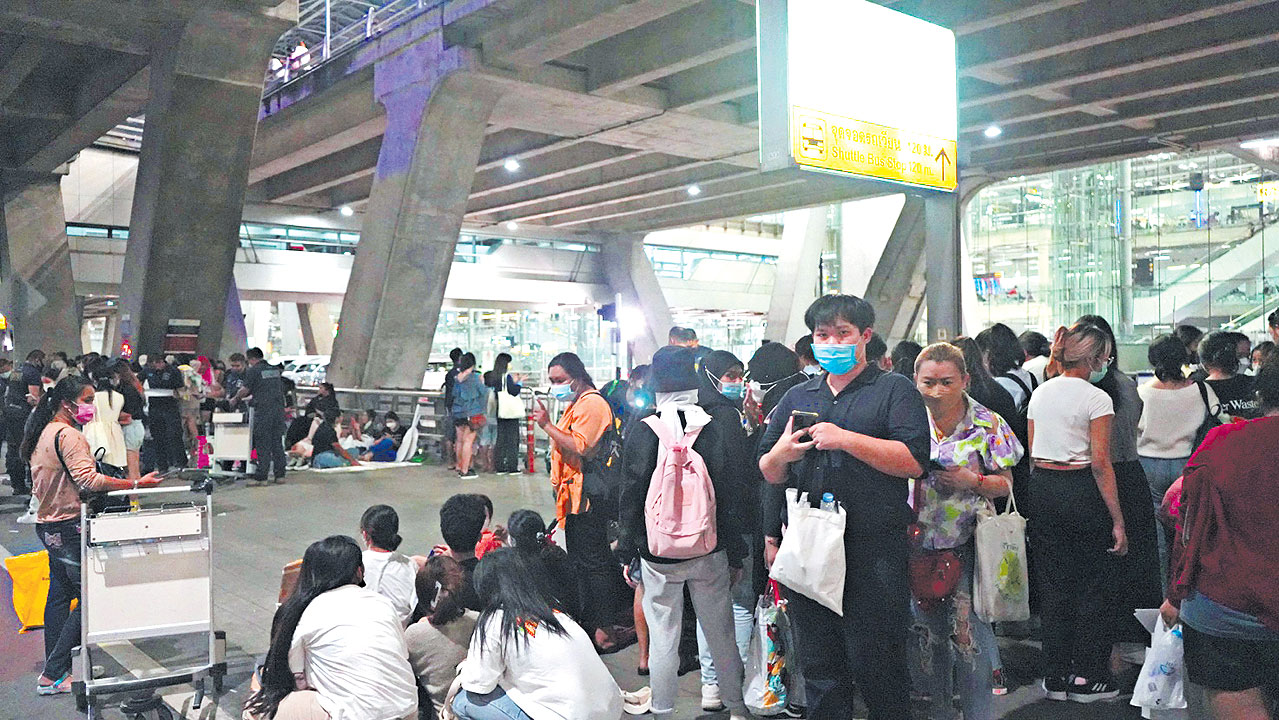
Back to almost normal. Fans who waited for the arrival of K-pop act Super Junior at the Suvarnabhumi International Airport begin to disperse after midnight. On the whole, Thais displayed mask discipline — perhaps equal or even better than our own. — PHOTO BY KAP MACEDA AGUILA

Masked mallers and K-pop fans in Thailand

MY WIFE and I finally got some time off from our day jobs for a quicker-than-quick vacation out of the country. To be honest, it was kind of weird not seeing her with her work laptop for several days. And although I meant the trip to be just that, a laptop-free jaunt, I flaked at the last minute as I had some unfinished business (and by business, I mean articles) to edit and write. So into the roll-on bag my laptop went.

We left on a Thursday afternoon, and NAIA Terminal 1 wasn’t teeming with people. It felt weird, really, to have huge sections of the main hall free of travelers in queue. We just needed to accomplish some pre-departure musts like the Bureau of Quarantine’s online Vax Cert (save the generated QR code in your phone) and secure travel insurance.

You don’t need to present a negative RT-PCR test — if you’ve gotten your two vaccine jabs, plus at least one booster. Do confirm ahead; it may be dependent on where you’re headed to. But at least that was what the nice lady behind the airline counter told me. “We would have asked you for a negative test if you weren’t boostered,” she said. Also, bring your proof of vaccination, that’s for sure.

This was my second time to travel after the advent of the pandemic, and I would say that people appear more comfortable — and excited even — to head out again.

So what is it like to travel again?

“I had a lot of fears, to be honest, but I’m certainly glad we got our second booster,” commented my wife Joyce. “I was excited to just go out of the country again and travel, but I knew we had to be smart about it.”

Of course, by this time you hardly notice the fact that most people you encounter are wearing masks — with the exception of a few brazen individuals who probably mistakenly think that the pandemic is over. The flight attendants wear medical-grade gloves as well, and that helps to give a feeling of enhanced hygiene. But again, it’s a crap shoot, if you ask me, so what’s really keeping you safe are the antibodies inside you (as a result of the vaccine shots and, hopefully, booster). Wearing the right mask in the correct manner also saves us from a host of threats out there. We also brought replacement ones; the last thing you should scrimp on are those masks.

Small bottles of alcohol are also mandatory, I believe, for that quick spray on your hands or surfaces like restaurant tables or hotel room high-touch surfaces — just to be sure.

At the mall, we noticed that food servers and attendants always wore their masks — and properly. This certainly speaks well about the Thai, who are obviously elated that foreign travelers are arriving in droves again. Tourism, of course, is a big part of our neighbor’s economy. It’s a good, consistent message that frontliners know how to comport themselves in the new normal. When filling your plate at the buffet, you’ll also need to mask up — the norm here as well. The only time you’ll see people’s smiling faces is when they’re at their table eating — yes, people were grinning from ear to ear surely at the general feeling of just being outdoors, savoring good food and the sight of strangers.

As for congestion, I noticed that people weren’t really concerned about “social distancing” anymore, so long as they were masked up.

The retail shops were also full — revenge shopping came to mind. After all, what’s the best way to celebrate going outdoors than by buying something again for the outdoors? Bags, nice clothes, and all the things you (don’t) need as you blink at the bright sunlight again.

For us, this trip to Thailand was mainly about going to K-pop act Super Junior’s concert at the Impact Arena. “We’re going to Thailand to see some South Koreans,” I told my sister-in-law Abbey before we left. My wife, a big fan of the group, wasn’t amused.

Having said that, I had lots of fun at the concert, shouting among the throngs of ladies (I was probably one of only 20 guys in total). We were singing along (with masks on), shaking those light sticks, which were changing colors in unison. I haven’t had that much fun in a long while — certainly not since the pandemic started.

Going back to the Philippines was a breeze — the only irritant being our realization that it was too short a trip.

Don’t forget to fill out the One Health Pass 24 hours before you fly back to the Philippines. You’ll need to present it before you get to the immigration officer who will stamp your passport, and ask you to briefly remove your mask as well for obvious purposes.

Once you’re home, take out that calendar and mark the day of your next adventure. Sounds like a plan.

Toyota adds FX, Cargo trims to Lite Ace lineup

The Toyota Lite Ace FX can carry up to 12 people, including the driver. — PHOTO BY KAP MACEDA AGUILA

AS IT PROMISED during the launch of the all-new Lite Ace last month, Toyota Motor Philippines (TMP) promptly added two variants to its new workhorse model meant to support Filipino micro, small, and medium enterprises (MSMEs).

In addition to the Panel Van and Pickup variants, the Lite Ace lineup now boasts the FX Utility Van and Cargo Aluminum Van forms. The variants are available for preorder in all Toyota dealerships nationwide.

The FX Utility Van can seat up to 12 people, including the driver. On the other hand, the Cargo Aluminum Van is designed for agricultural businesses or the transportation of dry goods and other materials.

In a release, TMP First Vice-President for Vehicle Sales Operations Sherwin Chualim said, “We are very encouraged by the warm reception and positive product feedback that we received from customers when we released the first two variants of the all-new Lite Ace. One of the key strengths of the… line is its versatility and flexibility, and with the availability of the FX Utility Van and Cargo Aluminum variants, we will be able to address the needs of more entrepreneurs and business operators for efficient and economical transport.”

Powered by a 1.5-liter gasoline engine mated to a five-speed manual transmission, the Lite Ace line also features safety equipment like SRS air bags.

Customers can also avail of special financing packages for these two new variants through Toyota Financial Services Philippines (TFSPH). The Lite Ace FX Utility Van will retail for P727,000, while the Cargo Aluminum Van will be priced at P699,000. The units are expected to arrive in September.

For more information, visit toyota.com.ph/asenso, download the myToyota app for Android or iOS, follow Toyota Motor Philippines on Facebook and Instagram, or ToyotaMotorPH on Twitter. TMP is also on Viber (Toyota PH).

Ayala Land cuts capital spending to P80B this year

PROPERTY developer Ayala Land, Inc. (ALI) is downscaling this year’s P90-billion capital expenditure budget to P80 billion as it postpones for next year the P10 billion allotted for land acquisition.

“We did announce previously P90 billion, but now we are [looking at] P80 billion. The P10 billion is basically for land acquisition, which we will be deferring into next year,” ALI Chief Finance Officer and Treasurer Augusto Cesar D. Bengzon said during the company’s first-half media briefing on Friday.

He said that the deferral was because there are still conditions that need to be fulfilled by landowners in their negotiations with ALI.

“We don’t need to rush it. We think next year we will be able to come to terms [with the landowners],” Mr. Bengzon added.

In a press release on Friday, ALI said its first-half capital spending reached P30.2 billion, of which 54% was used on residential projects, 15% on land acquisition, 15% on estate development, and 6% on other items.

For the second half, Mr. Bengzon said that there would be an acceleration in spending on mixed-use developments.

ALI is also set to launch two master-planned estates within the second half of this year to increase its presence in strategic growth areas.

The estates are said to be about 80 hectares each and would be located in Bulacan and Batangas.

Aside from these projects, the company said that there would be 20 residential launches within the year, which it hopes to meet the increasing market demand for real estate projects.

“Moving forward for us, expect that we will continue to develop our existing estates, we’ll also continue to introduce, in other parts of the country, new estates,” ALI President and Chief Executive Officer Bernard Vincent O. Dy said.

Mr. Dy added that ALI will also look for potential opportunities as the new administration rolls out its eight-point socioeconomic agenda.

In the second quarter, ALI registered a 50.6% increase in net income to P4.91 billion from the P3.26 billion last year.

It also registered an 18.1% increase in the second-quarter top line to P28.72 billion and a year-to-date increase of nearly 9% to P53.34 billion.

“We expect continued growth and recovery in the second half of the year. Our business model of estate development where there are various product offerings remains largely intact and will still be the basis of our growth initiatives moving forward,” Mr. Dy said.

On the stock exchange on Friday, shares in ALI slipped by 0.38% or 10 centavos to P25.90 apiece. — Justine Irish D. Tabile

Artefino makes an onsite comeback

INSIDE barong by NinoFranco; Blazer and bermuda shorts by Aire; Sling denim bag by edited _limited — PHOTO COURTESY OF ARTEFINO

The artisanal brands fair goes live for five weeks at Powerplant

ARTEFINO, one of the city’s more popular artisanal brands fairs, is coming back with a vengeance. While it pivoted during the pandemic by opening a website that made it feel like ArteFino was open all year-round, this year, it sees more than 150 vendors on a rotating five-week schedule.

During a launch in Rockwell, Makati on Aug. 2, it gave a foreshadowing of what to expect from Aug. 25 to Sept. 28. About 44 new brands are set to make their Artefino debut this year, including Aire (outfits in piña cotton), Kelvin Morales (whimsically embroidered barongs; one such sample at the launch was embroidered with crushed water bottles in blue thread), and Pinas Sadya (kimono ponchos, jackets, scarves, and matching sets in indigenous fabric). Some familiar brands included woodworkers SustainablyMade by MARSSE and Riotaso (https://www.bworldonline.com/arts-and-leisure/2022/02/21/430915/from-farm-to-table-literally/  and https://www.bworldonline.com/arts-and-leisure/2021/12/13/416878/a-scrappy-brand-makes-it-to-british-vogue/).

The whole experience will be quite sensorial with food (like the ham butter and ham jam from Mielle) and the aforementioned brands, but even the music has been planned to stimulate the senses, with a soundtrack by Tarsier Records.

The whole showcase would be held on the ground floor of Rockwell’s Powerplant Mall.

“It feels safer to hold it down here,” said ArteFino co-founder Cedie Lopez-Vargas (a scion of the Lopez family, which developed the Rockwell complex). “The spaces are more open,” she said, citing safety concerns that are still present with the ongoing pandemic.

Asked about the website (which has temporarily ceased operations because of the forthcoming fair), she said, “We may probably reopen that once everything has settled.”

Many small businesses use lifestyle fairs like ArteFino to launch their lines. Asked if this specific fair becomes good training for small businesses, Ms. Lopez-Vargas said, “I would think so. If you ask them, they’ll tell you about the discipline that they have to be committed to. Our application forms alone are kilometric,” she said. “We need to be transparent about it,” she said about the vetting process, as well as the work that goes into joining ArteFino. “We need to understand that what they’re doing is authentic — if they say they have communities, do they really have communities [they help]?”

One may think these lifestyle fairs are simply filled with baubles to fill the closets and tables of wealthy homes (though we do note that some pieces sold at the fair are truly affordable), but Ms. Lopez-Vargas thinks that these activities, showcasing small businesses with products made by artisans, serve a higher purpose. “It gives hope. I think that’s key. We’ve always felt that ArteFino inspired hope, for artisans. People who can only do two or three pieces at a time. It’s a platform, it’s advocacy. We try to develop that love, appreciation, and celebration of all things good and Filipino.”

She notes that many small businesses aspire to be exporters, but Ms. Lopez-Vargas notes, “There are a lot of small businesses that would not make it as exporters… we direct ourselves towards the local market.” Exporters usually look for sameness and consistency, but then, “Everything is handcrafted.”

She points to ArteFino habitué Zarah Juan, whose pieces are made with indigenous fabric and beadwork. Apparently, she makes shirts, then sends the beaders home to work on them. Each piece therefore becomes unique, away from an assembly line. “When each piece comes back, it’s all different.”

“That’s who we are,” she said.

ArteFino was founded in 2017, by Ms. Lopez-Vargas, Susie Quiros, Marimel Francisco, Mita Rufino, and Maritess Pineda. Ms. Lopez-Vargas says that one of the things that sparked its founding was her going around another lifestyle fair. According to her, the vendors there told her that many foreign buyers would just stop by their booths and take pictures. Machines would be made that would be able to replicate the process, and allow them to be mass-produced somewhere else. “That was so sad. They started with their hands, with all these hopes, and then some foreigner comes in, takes pictures, then they could mass-produce it.”

“We put so much heart and soul into what we do. It comes to life with us Filipinos,” she said. “You want to be able to keep that hope alive. They can do it —  and they can do it the way they want to do it.” — Joseph L. Garcia