Home Blog Page 6065

‘We’ll be back’ — Norman Black

“IT’S NOT over yet. It’s just three games; it’s a best-of-seven series, says coach Norman Black. — PBA MEDIA

Games Today
(Smart Araneta Coliseum)
3 p.m. – San Miguel vs. Meralco*
6 p.m. – Magnolia vs. TnT*
*TnT, SMB lead series, 2-1

MERALCO coach Norman Black’s faith in the Bolts remains strong as they plot to climb out of their 2-1 deficit and get the job done against San Miguel Beer (SMB) in the Philippine Basketball Association (PBA) Philippine Cup semifinal series.

“We didn’t have any injuries (after the third game) so we’ll be back,” a defiant Mr. Black said after Meralco’s 96-91 Game 3 loss last Sunday.

“It’s not over yet. It’s just three games; it’s a best-of-seven series so as long as we don’t have any injuries to key players, we’ll be ready to play Game 4,” he added.

The Beermen turned to the unstoppable June Mar Fajardo as well as Mo Tautuaa and Vic Manuel down low to gain the edge against the Bolts in the tie-breaking third game. Mr. Fajardo dropped 21 markers, including 10 in the fourth, plus 16 rebounds while Messrs. Manuel and Tautuaa combined for 19 points and 10 boards versus Meralco counterparts Raymond Almazan, Kyle Pascual and Raymar Jose.

Mr. Black tasked his bigs to “continue scrapping” even as he called on his perimeter gunners to “shoot well.”

“I really believe we can compete with anybody, including San Miguel,” he said.

“I thought they (SMB) got a lot of foul shots in the second half and that made a big difference in the game. Of course, that’s the observation of the referees so there’s nothing we can do about it. We just have to keep scrapping.”

He conceded that with six-time MVP Mr. Fajardo and post-threats Messrs. Manuel and Tautuaa, the Beermen will always have the edge size-wise.

“(But) I have enough big men that I can just throw out there to try to at least make things manageable. And then the guards have to shoot well, that’s very, very important,” said Mr. Black.

The Beermen scored 50 points inside the paint against the Bolts’ 44 in Game 3, though Mr. Black’s charges won the rebounding battle, 50-45.

Meralco Bolts’ snipers made only 36.4% of their shots from beyond the arc (eight-of-22) last Sunday, which paled in comparison to their 42.3% marksmanship (11-of-26) when they won Game 2, 99-88, two nights before. — Olmin Leyba

Hidilyn Diaz will make her ‘last lift’ in Paris Olympics

TOKYO Games gold medalist Hidilyn Diaz — REUTERS

FILIPINA weightlifting star Hidilyn F. Diaz-Naranjo has set aside her family goals for another shot at Olympic glory in the 2024 Paris Games where she has announced she will make her “last lift.”

“Today (Sunday), we are officially two years to go before I step onto the platform at the 2024 Paris Olympics,” said Ms. Diaz, who recently married trainer Julius Naranjo in Baguio City, on her social media page.

“We have set aside our honeymoon, we only have 730 days left. Even if its difficult, even though I don’t need to prove anything, I still want to do whatever I can for weightlifting and the Philippines,” she added.

Ms. Diaz’s statement came after Samahang Weightlifting Pilipinas President Monico Puentevella, one of her wedding godfathers, told her she could focus on her family and deserves to be happy.

After all, Mr. Puentevella said Ms. Diaz has nothing to prove anymore following her memorable feat in last year’s Tokyo Games where she delivered the country’s breakthrough Olympic gold.

The Zamboanga native and Air Force woman also had a silver to show in the 2016 Rio Olympics.

But Ms. Diaz isn’t fading quietly into the night, knowing she still have something more to give and would pursue for the final time an Olympic gold in Paris.

“I am manifesting this because this is what I want and weightlifting is what makes me happy. Please accompany me in my decision to go for my last lift. My team will be with me throughout the whole process, but I will need the support and prayers from all of you,” said Ms. Diaz.

“I am determined to do more for our country. I am claiming this, for the love of God and our country,” she added. — Joey Villar

Filipino chess team suffers heartbreaking loss to Hungary

THE Philippine women’s team came close to stunning heavily favored Hungary and barging into the top 10 but blew its golden chances with critical mistakes in the end, resulting to a heartbreaking 2.5-1.5 defeat in the eighth round on Sunday night that sent crashing out from the top 30 of the 44th World Chess Olympiad in Chennai, India.

With the match knotted at one apiece following a win by Jan Jodilyn Fronda on board two and Kylen Joy Mordido’s loss on board four, Janelle Mae Frayna was on her way to beating an old rival in Hoàng Thanh Trang with what appeared to have been a winning position and Shania Mae Mendoza clawed her way from a losing game and a pawn down by sending it to what was a clear drawn game with Zsoka Gaal on board four.

A win by Ms. Frayna and a draw by Ms. Mendoza would have sealed the Filipinas a stunning victory against the same Hungarian squad that beat them in Baku, Azerbaijan in 2016 and a place in the top 10 after nine rounds of this 11-round biennial event.

But in a snap of a finger, Ms. Frayna missed the winning line against the same player who eliminated her in last year’s World Cup in Sochi, Russia and drew their game while Ms. Mendoza completely blundered away her drawing opportunities to concede a defeat.

That sent the country, which was being backed by the Philippine Sports Commission, stumbling down to a share of 31st place with 16 others with 11 match points instead.

But they would have a chance to redeem themselves as they battle Southeast Asian powerhouse Vietnam in the 10th and penultimate round at press time for a chance at a top 20 finish that would eclipse their forgettable 67th-place effort in the last over-the-board edition of this biennial event in Batumi, Georgia four years ago.

“It was a heartbreaking loss because Janelle was winning and Shania should have drawn. We could have beaten the strong Hungarians,” said national women’s team coach Grandmaster (GM) Jayson Gonzales.

MEN’S TEAM
The men’s team, for their part, saw IM Paulo Bersamina losing to GM Levan Pantsulaia on board four while GMs Mark Paragua, John Paul Gomez and Darwin Laylo all carving out fighting draws on the first three boards.

It sent the Filipinos to a 24-country tie at 58th spot with 10 points, but they could move up from there if they could beat the lower-ranked Guatemalans in the 10th and penultimate round at press time.

DVORKOVICH RE-ELECTED FIDE PRESIDENT
Former Russian deputy prime minister Arkady Dvorkovich was re-elected for a second term as president of the International Chess Federation (FIDE) on Sunday, defeating a Ukrainian who had criticized him over Moscow’s actions in Ukraine.

Mr. Dvorkovich, deputy prime minister from 2012 to 2018, received 157 votes in his favor and 16 against him at FIDE’s general assembly in Chennai, India, the international governing body said.

Mr. Dvorkovich, FIDE president since October 2018, ran against Ukraine’s Andrii Baryshpolets, who criticized him for his ties with the Russian leadership.

Indian chess Grandmaster Viswanathan Anand, a five-time world champion, was elected deputy president.

Mr. Dvorkovich, who gave an interview to Western media in March in which he spoke out against the Kremlin’s actions in Ukraine, quit as chair of the prestigious Skolkovo foundation in March after a lawmaker accused him of a “national betrayal.”

At the time, the chairman of the foundation’s board of directors said Mr. Dvorkovich had resigned because he could no longer combine his duties at Skolkovo with his responsibilities at FIDE.

Shortly after his comments to Western media, Mr. Dvorkovich said in a statement on Skolkovo’s website that he was “sincerely proud of the courage of our (Russian) soldiers” and that Russia had been targeted by “harsh and senseless sanctions.” — Joey Villar with reports from Reuters

Former heavyweight ONE king Brandon Vera on ‘Buchecha’: That level of jiu-jitsu is scary

BRANDON Vera may have long relinquished his place as the ONE heavyweight world champion, but he’s still keeping a close eye on the division he once ruled.

A fighter that the Filipino-American star has been watching closely is Brazilian jiu-jitsu (BJJ) legend Marcus “Buchecha” Almeida.

“Mr. Buchecha” is 3-0 in his young mixed martial arts career, but the hulking heavyweight was an unstoppable force in the submission grappling realm. The American top team fighter holds 17 world titles across the ADCC, IBJJF World Championship, and the Abu Dhabi World Cup among other organizations.

Mr. Vera, a BJJ black belt himself, said Mr. Almeida’s submission game is in a league of its own and that there’s almost no escape once he latches on to you.

“‘Buchecha’ is a heavyweight man, he’s flying around submitting all these big heavyweights with no problem,” Mr. Vera said.

“Dude, his takedowns look so beautiful and it’s not the technique of his takedowns that impresses me but the timing of his takedown, off the shots. Your back-and-forth motion, very impressive ‘Buchecha,’ I’ve been watching you.”

Mr. Almeida’s BJJ game was on full display in his first two matches in ONE Championship when he submitted knockout artists Anderson “Braddock” Silva and Kang Ji Won. He changed his approach in his third fight against Simon Carson when he scored a ground-and-pound knockout against the Australian veteran.

St. Louis Cardinals beat New York Yankees to complete series sweep

PAUL DeJong and Nolan Arenado drove in four runs each as the St. Louis Cardinals outlasted the visiting New York Yankees 12-9 on Sunday to complete a three-game sweep.

The Cardinals won their seventh straight game to move two games up on the Milwaukee Brewers in the National League Central. The Yankees lost their fifth straight game.

DeJong went 2-for-3 with two walks, a double, a three-run homer and three runs in the 4-hour, 25-minute marathon. Arenado went 3-for-5 with a double, a three-run homer and two runs.

Cardinals starting pitcher Adam Wainwright allowed six runs on eight hits and four walks in four innings. Reliever Chris Stratton (6-4) earned the victory and Ryan Helsley got the final four outs to earn his 11th save. — Reuters

Building a more climate-resilient Philippines

It’s been three weeks since I arrived in Cambridge, Massachusetts. I never thought I would have to experience heat waves to know how serious climate change is. It’s not even on the list of courses I want to study at the Harvard Kennedy School (HKS). But the discussion on climate change is part of our summer program, and it’s quite intense.

It is also part of my ordeal, having to walk daily for 15-20 minutes under the heat of the sun from my apartment to HKS. It’s definitely hotter than the summer in the Philippines. I even got a dry cough and a cold in the second week. But it’s not COVID-19, that’s climate change!

The first time I heard about climate change was in 2015. The Paris Agreement was all over the news. At that time, it seemed to me that the problem was solved already. I’m not sure how many people around the world did care much about it, but I joined our government in celebrating since the Philippines is a signatory of the climate agreement, without clearly understanding what it really meant for me and our country.

Unfortunately, the Philippines is a disaster-prone country and more vulnerable to the effects of climate change. While we are used to tropical storms and flash floods which usually result in the cancellation of classes (especially in Metro Manila), we have also been experiencing earthquakes, volcanic eruptions, and El Niño has been happening more often recently, and then the COVID-19 pandemic happened.

A new department to deal with disasters was already proposed prior to the pandemic. It is separate from the National Disaster Risk Reduction and Management Council (NDRRMC), an attached agency under the Department of National Defense, which is currently handling disaster-related concerns. In the opening of the 19th Congress, a proposal for the creation of the Department of Disaster Resilience (DDR) was filed again. In House Bill No. 13, it was reiterated that 74% of Filipinos and 80% of the country’s land area are exposed to the risk of natural calamities.

Consequently, President Ferdinand Marcos, Jr. expressed his support for the creation of the new department during his first State of the Nation Address (SONA) on July 25. He said that renewable energy is on top of his climate agenda to further lower our carbon footprint. He briefly mentioned building new nuclear power plants, using more solar power, and providing investment incentives by clarifying the uncertain policies on upstream gas, particularly in the area close to the Malampaya gas field — a deep-water gas-condensate reservoir located offshore, 65 km northwest of the island of Palawan.

After attending the lectures and discussions on climate change as part of the MPA Summer Program at the HKS, I got even more confused and, at the same time, overwhelmed about how it affects the Philippines and what exactly are we doing back home.

So, I became more curious. I started reading and searching for all related laws and regulations, policies and programs, and anything about climate change.

I’m not a climate change expert but we all have to know and support what our country is doing to save the planet. A strategy roadmap is needed to engage all stakeholders, especially with the use of a balanced scorecard which the public can understand to monitor progress, similar to the World Bank Report on Ease of Doing Business.

As Co-Chair of the Ease of Doing Business on paying taxes, I have witnessed how all stakeholders, both from the public and private sectors, have been very much involved and committed to improving our competitiveness ranking in the World Bank report.

The Philippines has committed to 75% Greenhouse Gas (GHG) reduction and avoidance by 2030. With less than 1% of global greenhouse gas emissions, we are definitely not a major source of carbon emissions, unlike China, the US, and Russia who are the Top 3 counties with the largest carbon footprint. But why should we care? And who is on top of all these climate change initiatives?

The simple answer is we are all in this together. We have one earth to save, regardless of our country’s CO2 emission. We can choose to blame other countries, or resolve to contribute to mitigating the risks and effects of climate change.

In the Philippines, it’s the Climate Change Commission (CCC) that is the sole policy-making body of the government tasked to coordinate, monitor, and evaluate the programs and action plans of the government relating to climate change.

As a fiscal policy and tax consultant, I have worked with the CCC on tax incentives and regulations to build resilience against climate change. In the same way that we strive to have an efficient tax system, a climate-resilient Philippines requires a whole government approach involving all stakeholders, not just to push for a climate agenda but to transition to a more sustainable lifestyle for every Filipino.

While we laud the CCC’s leadership and accomplishments, we need a balanced scorecard to objectively measure the impact of all existing laws, particularly those granting tax incentives, whether they’re really promoting green industries, cities, or jobs — e.g. the Renewable Energy Act of 2009 (RA 9513), the Green Jobs Act (RA 10771), the Philippine Clean Air Act of 1999 (RA 8749), and the Philippine Clean Water Act of 2004 (RA 9275), among others.

Given the challenges we face in implementing the existing laws related to climate change, the CCC must work closely with Congress to make sure mechanisms are in place before new taxes are imposed. We have to be careful so as not to pass the burden of new taxes to the consumers.

The CCC will be in the best position to give an impact assessment and make recommendations as to what policies or best practices can be adopted to achieve our target of 75% GHG reduction by 2030. They should also be part of the discussion and deliberation in the Ways and Means Committee regarding the laundry list of proposed taxes, e.g., carbon tax, congestion tax, energy tax, air pollution tax, biodiversity services tax, single-use plastic tax, and even a border carbon adjustment so we can impose carbon tariffs on carbon intensive products.

In the end, we are one with the CCC in its vision of a climate-resilient and climate-smart Philippines with healthy, safe, prosperous, and self-reliant communities, and more environment-friendly, earth-loving and responsible Filipinos.

This article reflects the personal opinion of the author and does not reflect the official stand of the Management Association of the Philippines or MAP.


Raymond “Mon” A. Abrea is a member of the MAP Ease of Doing Business Committee, the Founding Chair and Senior Tax Advisor of the Asian Consulting Group, and Co-Chair of the Paying Taxes – EODB Task Force. He is a Trustee of CSR Philippines, the advocacy partner of the Bureau of Internal Revenue, Department of Trade and Industry, and the Anti-Red Tape Authority on ease of doing business and tax reform.

map@map.org.ph

mon@acg.ph

DoLE, TESDA to provide livelihood programs for workers affected by Abra quake

THE DEPARTMENT of Labor and Employment (DoLE) and the Technical Education and Skills Development Authority (TESDA) are partnering to provide livelihood training programs and emergency employment to workers most affected by the recent magnitude 7 earthquake that rocked northwestern parts of the country.  

In a statement on Monday, Labor Secretary Bienvenido E. Laguesma said the joint project aims to build a pool of construction workers who could be tapped by local governments for repair and rehabilitation work on damaged facilities, especially in Ilocos and the Cordillera Administrative Region (CAR).  

“It will assist severely affected areas in Northern Luzon, specifically CAR and Region I (Ilocos), to rehabilitate the infrastructure, shelter, and cultural heritage of devastated communities, and implement emergency employment programs in affected communities to jumpstart their lives towards eventual normalcy,he said.  

The project will provide programs that will develop skills and competencies in carpentry, masonry, electrical wiring, and plumbing.   

TESDA will finance the initial stages of the skills training program and will directly coordinate with local governments on rehabilitation projects.  

The project also aims to mobilize the construction sector to employ displaced workers in the regions hit hardest by the earthquake, it added.   

In an online briefing on Monday, DoLE’s Information and Publication Service Director IV Raul M. Francia said the agency has already released aid to Ilocos and CAR worth P31 million.  

The Labor department has allocated P50 million for emergency employment and rehabilitation in the Cordillera and Ilocos regions. John Victor D. Ordoñez 

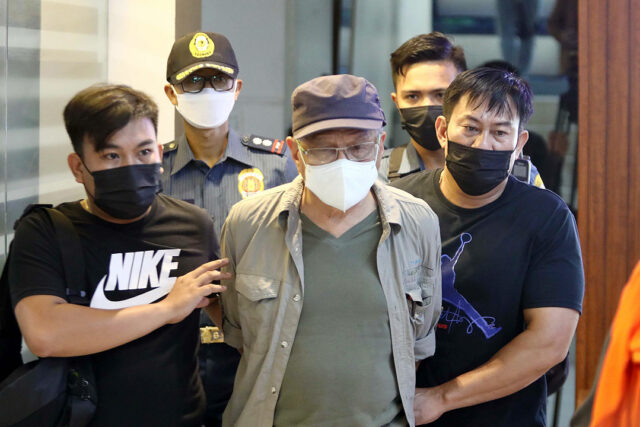
Former VP candidate Bello arrested for cyber-libel case filed by ex-Davao City official 

Former vice presidential candidate Walden Bello has just been arrested for cyber libel crime by members of the Quezon City Police and was brought to Camp Karingal, Aug. 8. — PHILIPPINE STAR/ RUSSELL PALMA

FORMER Akbayan Party-list representative and vice-presidential candidate Walden F. Bello was arrested on Monday over a cyber-libel complaint filed by a former Davao City information official whom the former publicly accused of being involved in the illegal drug trade.   

“Walden was arrested in his house at 4:00 pm today,” Leomar Doctolero, who is part of Mr. Bello’s staff said in a Viber message.  

“This is in relation to the cyber-libel cases filed by Sara Z. Duterte-Carpio’s former press officer Jefry Tupas.” 

Mr. Doctolero said the former congressman was to be transferred to Camp Karingal from Quezon City Police station 8 based on the directive of the District Director of the Quezon City Police Department.  

The bail for Mr. Bello’s release was set at P48,000, according to the arrest warrant issued by Davao City Branch 10 Regional Trial Court Presiding Judge Retrina E. Fuentes.  

Ms. Tupas filed the cyber-libel charges on March 7 before the Davao City Prosecutor’s office.  

The cyber-libel complaint stemmed from a statement made by Mr. Bello, where he accused the former city official of getting nabbed in a drug raid at a beach party for “snorting P1.5 million worth of drugs” with her friends.  

Also in March, the Davao City council declared the former congressman and academic persona non grata, or unwelcome in the city after he tagged Davao as the drug center of the South.John Victor D. Ordoñez

Ensuring debt sustainability through fiscal consolidation

GIORGIO TROVATO-UNSPLASH

The pre-pandemic period was often cited as one of the most successful episodes of fiscal consolidation in the Philippines. This was attributed to the government’s prudent fiscal policy which led to the steady reduction in the public debt-to-GDP ratio over the years.

Since 2020, the reserved fiscal buffer has helped Filipinos weather the pandemic storm and boosted the recovery of the Philippine economy through fiscal stimulus. Consequently, the public debt-to-GDP ratio has increased sharply. In response, the government plans to undertake fiscal consolidation to ensure public debt sustainability.

DEBT SUSTAINABILITY NOT AT RISK
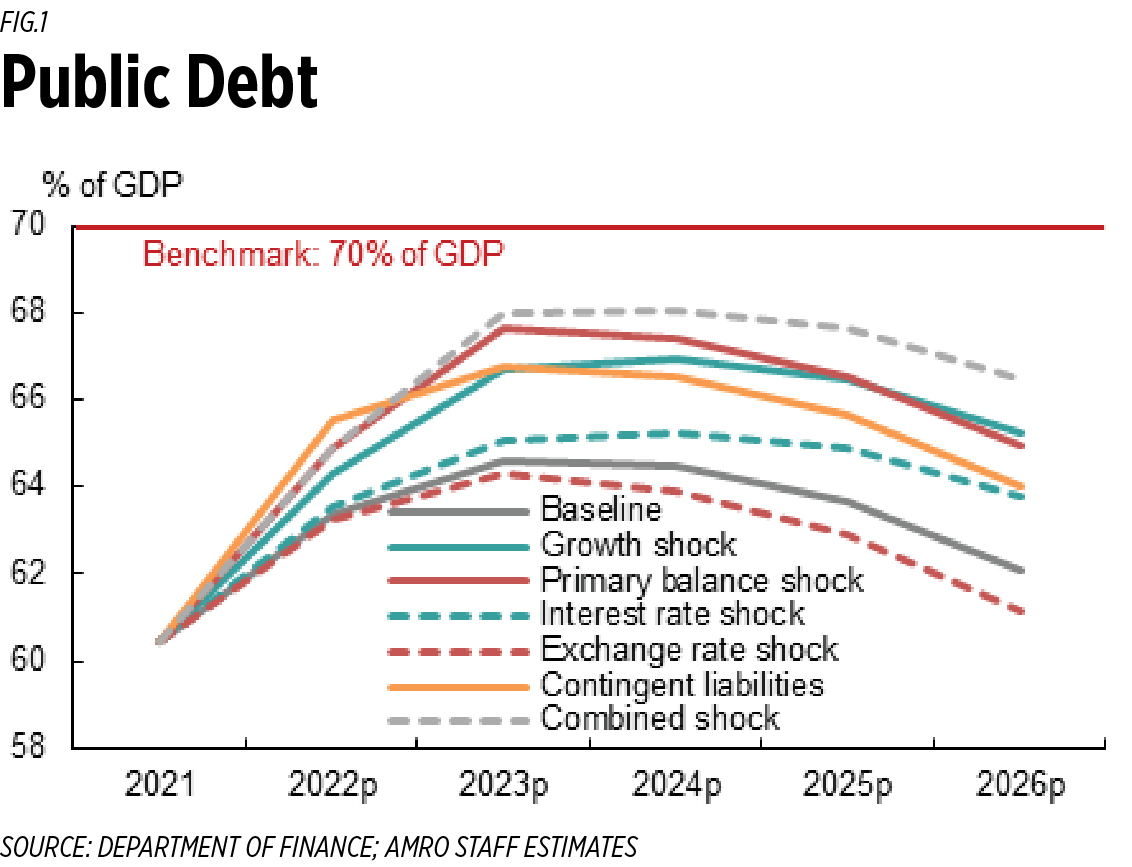
With a strong economic recovery momentum and the government’s fiscal consolidation efforts, the Philippine debt-to-GDP ratio is expected to gradually decline in the medium term, after peaking at mid-60% in 2023 (Figure 1). AMRO’s stress test results under various shock scenarios reveal that the debt ratio remains below the threshold of 70%, as recommended by the International Monetary Fund (IMF) for emerging markets economies.

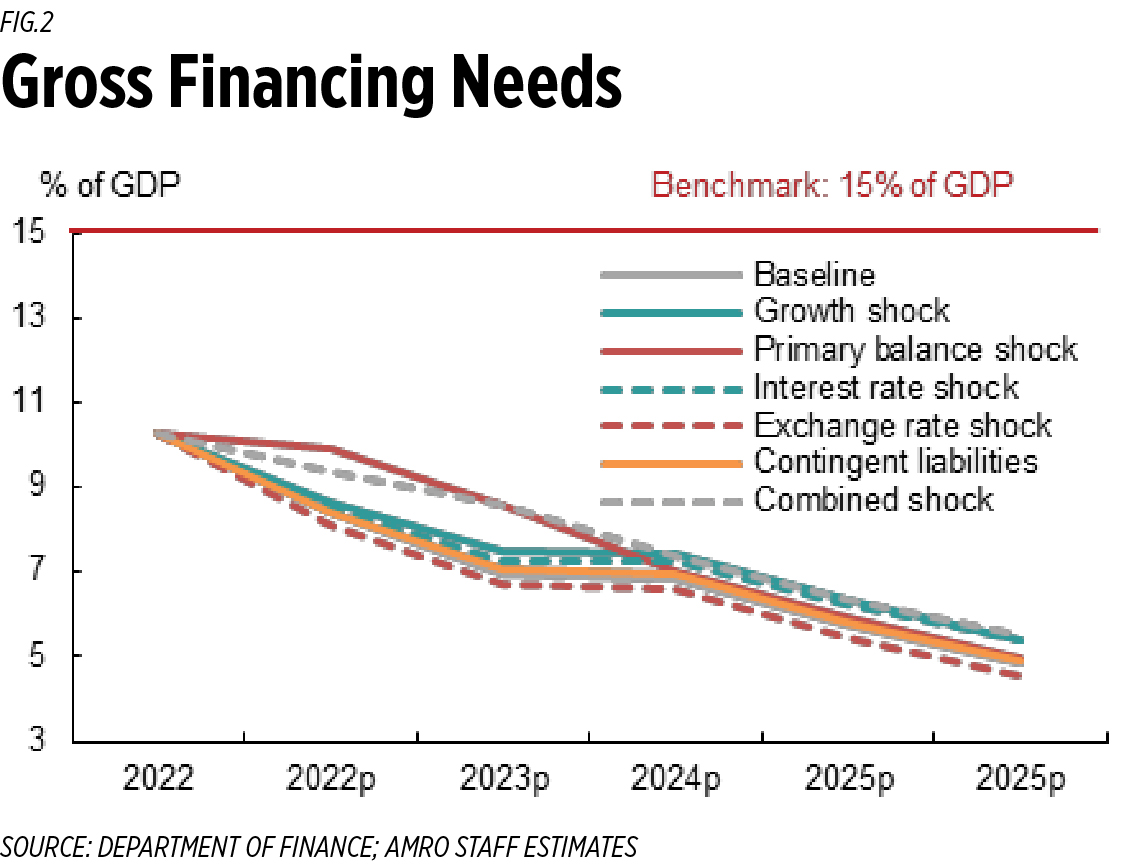
The baseline projection and stress tests for the gross financing needs, defined as the sum of fiscal deficit and amortization, also demonstrate low financing stress (Figure 2).

Moreover, market perception of the sovereign risk of the Philippines is regarded as low, as reflected in the stable Emerging Market Bond Index (EMBI) Global spread and Credit Default Swap (CDS) spread.

Notwithstanding the higher debt, the scarring from COVID-19, and the headwinds from the ongoing war in Ukraine, the Philippines has also succeeded in maintaining the investment grade of sovereign credit ratings by major credit agencies.

Furthermore, the debt profile of the Philippines has been broadly sound. External financing requirements stayed low, attributable to the stable amortization schedule of external public and private debt. The share of external debt has declined to 30%, mostly in the long maturity and with 44% in concessional terms, implying low liquidity risk arising from sudden shifts in the foreign investors’ risk appetite. The contribution of short-term debt is only 6.8%, making it less susceptible to rollover risk.

Overall, the risk of public debt sustainability in the Philippines is assessed to be low in all aspects — solvency, liquidity, and debt profile vulnerability.

ACCELERATE FISCAL CONSOLIDATION WITH A CREDIBLE PLAN
Given the economic growth momentum may be moderated under high uncertainty, the government’s fiscal consolidation plan to gradually reduce fiscal deficit is deemed reasonable. In view of the concerns over the narrowed fiscal policy space and the limited buffers to address unforeseen future shocks, the pace of fiscal consolidation should be accelerated once private-sector growth becomes self-sustaining.

While unwinding the COVID-related spending, the government needs to continue strengthening revenue-enhancing measures; broadening the tax base, especially for VAT, and improving the efficiency of tax administration, including the digitalization of tax and customs duty collection. Raising excise tax rates and introducing new taxes on digital services could also be considered.

The government should also ensure the credibility of the fiscal consolidation plan.

The public debt-to-GDP ratio is projected based on the underlying macroeconomic forecasts and fiscal plans. Realistic macroeconomic forecasts and feasible fiscal plans are critical in setting achievable public debt-to-GDP ratio targets in the process of fiscal consolidation. Any significant errors in government debt forecast may hamper the credibility of fiscal plans and cause market sentiment to falter.

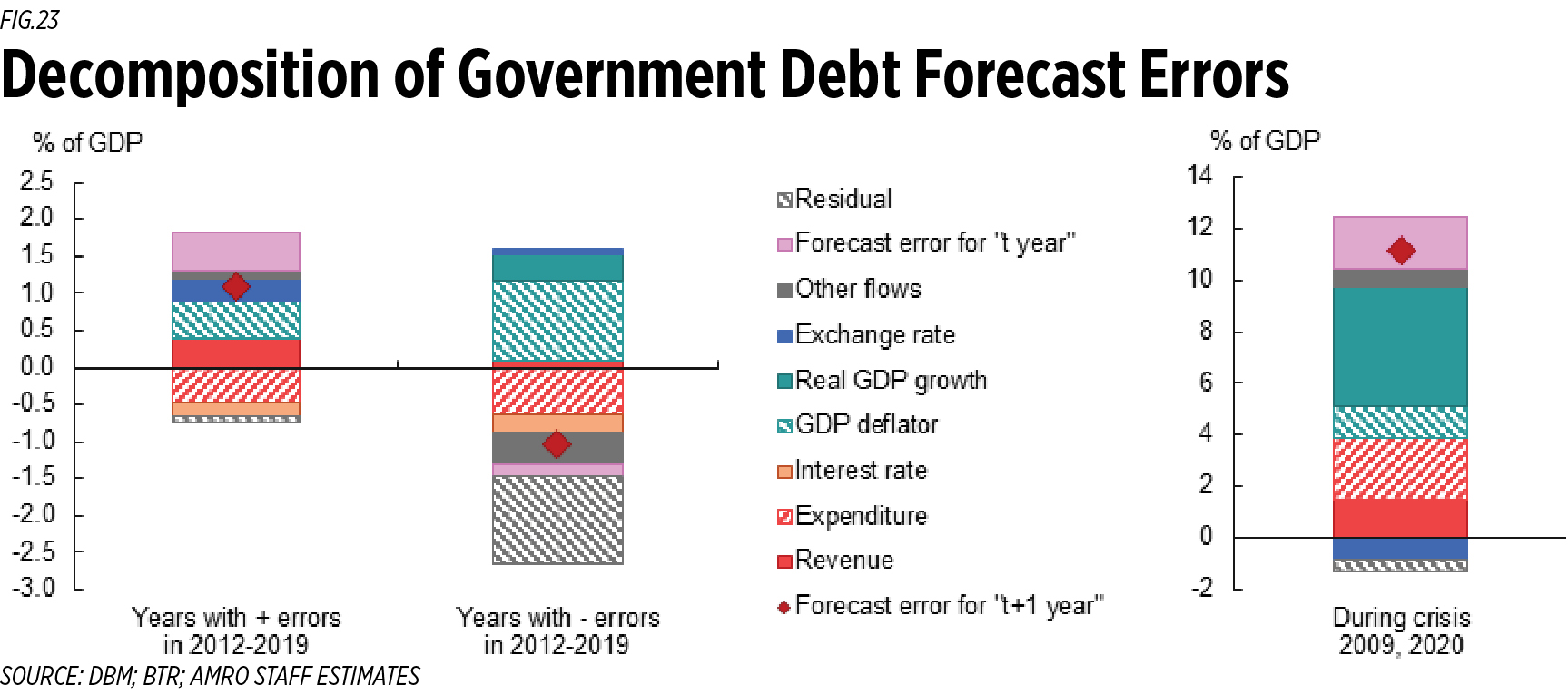
AMRO assessed the public debt forecast errors and identified the sources of errors in the Philippines by using the forecasts of official budget documents from 2009 to 2021 (Figure 3). It revealed that the forecast error in debt-to-GDP ratio projections was not insignificant. In particular, the GDP deflator inflation has been consistently over-forecasted, while the revenue shortfall and the expenditure underspending have been observed for many years.

During the 2009 Global Financial Crisis and the onset of the COVID-19 pandemic in 2020, the collapse in real GDP growth has been the major source of forecast error. The results suggest there is room to improve the macroeconomic forecasts and enhance revenue collection and expenditure disbursement.

To conclude, strong fiscal prudence over the past decade has enabled the Philippines to maintain debt sustainability despite the pandemic. Today, the government has kicked off another round of fiscal consolidation efforts to restore the shrunken fiscal buffer. In its journey ahead, establishing a credible plan based on realistic medium-term macroeconomic projections, and accelerating its implementation, depending on the economic developments, are necessary to ensure success.


Dr. Byunghoon Nam is Senior Economist with the ASEAN+3 Macroeconomic Research Office (AMRO).

Motorcycle taxis, illicit tobacco, and electric cooperatives

There were four economic developments last week that I want to comment on.

The first is high inflation driven by transport, alcoholic beverages and tobacco (ABT), and financial services.

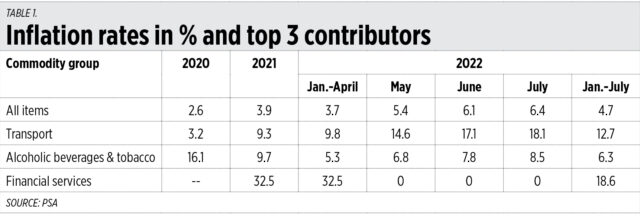
Last Friday, the Philippine Statistics Authority (PSA) reported the July 2022 inflation rate at 6.4%, another four-year high from October 2018’s 6.9%. Transport and ABT are among the big inflation generators (Table 1).

From transport inflation of 18.1% July, the inflation rates of sub-components are:

1.) Operation of personal transport equipment, 48.1%;

2.) Passenger transport services, 7.2%;

3.) Purchase of vehicles, 1.3%;

4.) Transport services of goods, 0.3%.

MOTORCYCLE TAXIS AND LTFRB
As shown in the numbers above, the cost of operating personal transport like cars was very high, 48% in July due to higher gasoline and diesel prices.

Last week, there was this report in BusinessWorld: “Grab PHL says MOVE IT acquisition compliant with rules” (Aug. 8). This is good news.

Currently there are three motorcycle taxi (MCT) companies in the Philippines — Angkas, Joyride, and Move It. The latter is the smallest with just a few hundred drivers, while the first two have at least 15,000 drivers, the cap per player imposed by the Department of Transportation (DoTr) Technical Working Group that includes the Land Transportation Franchising Regulatory Board (LTFRB). The acquisition by Grab PHL of Move It will have many benefits for the public.

One, commuters will have more options, more convenience with three large MCT players to choose. Long lines of people queuing for a ride will be cut shorter.

Two, thousands of new drivers will be on-board — not hired as it is not an employer-employee arrangement. More drivers mean more MCTs to serve the riding public.

Three, there will be more competition as the virtual duopoly by Angkas and Joyride will be broken. So, there will be more competition in technology/apps, better services, more competitive fares, more passenger convenience and safety.

Four, traffic will ease as more people leave their cars or motorcycles at home and take public transportation. MCTs will help provide the “first mile” house-to-train/bus station, and “last mile” train/bus station-to-destination. And reverse back going home.

Five, the overall inflation rate will be tempered when inflation in transport, especially in operation of personal transportation, is reduced. And people will have more savings.

To further increase competition and passenger convenience, Transportation Secretary Jaime J. Bautista and LTFRB Chair Cheloy Velicaria-Garafil should consider removing two caps — remove the maximum number of MCT players from only three, and remove the maximum 15,000 drivers per player. At a maximum of 45,000 legal drivers, it is very likely that the number of unregistered “habal habal” drivers may be twice or more than that number nationwide. Since they are already existing, they should be onboarded via legal MCT companies, for better regulatory transparency and better passenger safety.

If the two caps are removed, it is estimated that at least one million rides daily can be served by MCTs. Secretary Bautista comes from the air transportation sector where there are no caps on flights per destination per day or per month, so he can appreciate the need to remove the caps on the number of players and vehicles in land transportation.

More restrictions mean less choices, and more suffering for the public. More competition means more choices, and less suffering for the commuters. More and faster mobility of people and goods means more economic growth, more businesses and job creation, and lower inflation.

TOBACCO TAXES AND ILLICIT TRADE
Last week, Budget Secretary Amenah F. Pangandaman reiterated that they will submit Budget 2023 to Congress on Aug. 22. The thick documents include projected tax revenues and other measures to fund the government’s huge expenditures, including sin taxes.

Eight years ago, now Finance Secretary Benjamin Diokno wrote a column, “Illicit trading of cigarettes rising” (Manila Speak, Oct. 9, 2014; reprinted in one of his four books, Through the Looking Glass, published 2020). He cited Oxford Economics’ estimates of tax losses from illicit cigarettes: P2.62 billion in 2012, and P15.60 billion in 2013. The estimated number of illicit cigarettes was 6.4 billion sticks in 2012 and 19.1 billion sticks in 2013, an almost 200% increase in just one year.

Last April, I attended a webinar organized by the National Tobacco Administration on illicit tobacco and Congressman Jericho “Koko” Nograles was one of the speakers. He shared Euromonitor’s estimates of illicit tobacco as a share of total supply: Nationwide 13%, Zambales 11.5%, Nueva Ecija 22%, Bataan 32%, Palawan 25%, Sultan Kudarat 36%, Zamboanga de Sibugay 51%, Misamis Occidental 57%, some areas of Mindanao up to 60%.

Mr. Nograles’ estimate of foregone revenues from illicit tobacco nationwide is P26 billion/year. In March 2021, Congressman Joey Salceda released his estimate of tax losses from illicit tobacco at P30 billion/year. These are huge amounts that benefit the smugglers, and criminal gangs in cahoots with some corrupt government officials, both national and local.

To verify the numbers of the two legislators, I made my own estimate, taking off from the Euromonitor estimate of 13% illicit cigarette share to total supply, meaning 87% is legal tobacco. The numbers I got range from P24 to P49 billion in 2021 alone (Table 2).
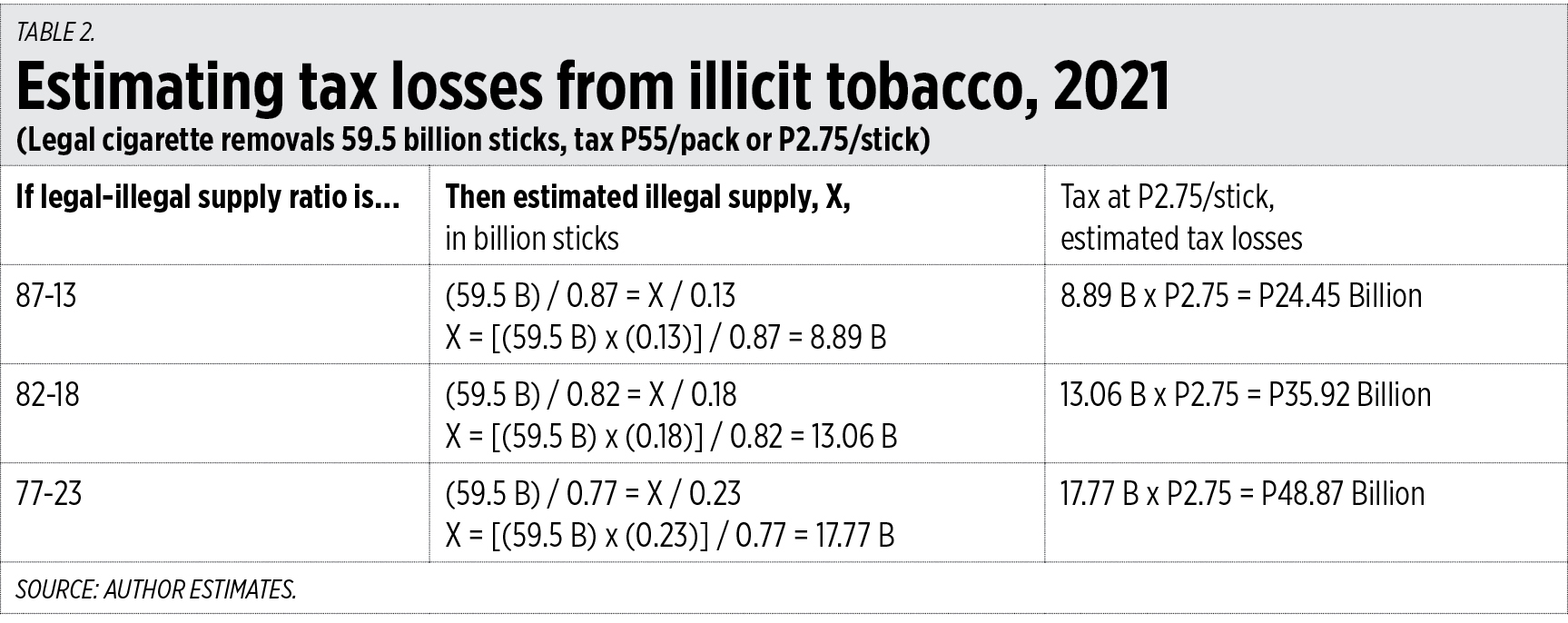
High inflation contribution of ABT (Table 1) is mainly due to the steadily rising tobacco tax: P50/pack in 2020, P55 in 2021, P60 in 2022, and 5% yearly increase starting 2023. It is safe to assume that illicit tobacco will only increase, not decrease. With cheap smuggled tobacco, there will be more smoking, not less. And there will be more money for the criminal gangs and their partner corrupt government officials, not less.

ELECTRIC COOPERATIVES AND BLACKOUT ECONOMICS
Last week, Senator Raffy Tulfo, Chairman of the Senate Committee on Energy, lambasted a number of electric cooperatives (ECs) in the country for the frequent blackouts in their franchise area. I also saw these reports in BusinessWorld: “ERC orders 3 electric cooperatives to refund nearly P294M” (May 31), “Gov’t imposes sanctions on two electric cooperatives” (June 9), and, “Tulfo threatens to summon officials of inefficient power co-ops before Senate Energy Committee” (Aug. 3).

Report number one is about Central Negros EC (Ceneco), Pangasinan I EC (Panelco I), and La Union EC (Lueco) that over-charged their customers.

Report number two is about Maguindanao EC (Magelco) and Lanao del Sur EC (Lasureco) that owe P16.7 billion to the Power Sector Assets and Liabilities Management Corp. (PSALM), a government corporation under the Department of Finance. Magelco owes P3.8 billion, Lasureco owes P12.9 billion and they have not expressed the intention to pay. So, taxpayers have shouldered their unpaid debt -— very wasteful and corrupt.

Report number three is about frequent brownouts in EC areas in provinces including Palawan, Bataan, and Davao. Later Oriental Mindoro EC was also investigated.

Five years ago, I wrote in this column, “Unstable power supply due to problematic electric cooperatives” (BusinessWorld, Feb. 8, 2017), about the Abra Electric Cooperative (ABRECO) and Albay Electric Cooperative (ALECO) that owed big amounts to the Wholesale Electricity Spot Market (WESM).

ALECO, in particular, owed P1 billion to WESM around 2010, it also owed PSALM about P2 billion. In 2014, SMC Global bought ALECO and renamed it Albay Power and Energy Corp. (APEC), and assumed its P4 billion debt. Two years later, the debt ballooned to P5.6 billion. Until now, ALECO or APEC still owe some gencos hundreds of millions of pesos.

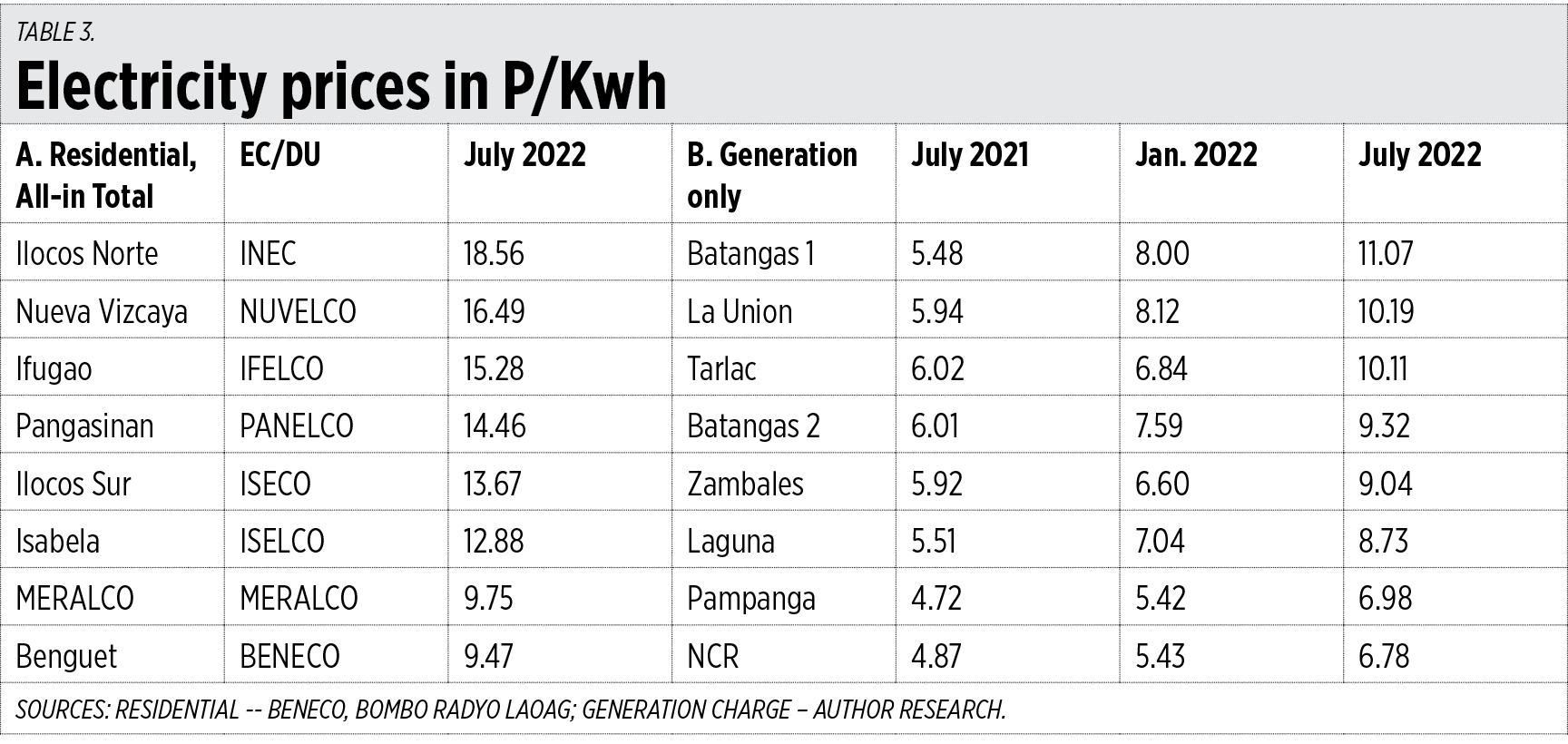
Many ECs are notorious for inefficiency, frequent blackouts and/or high electricity rates that penalize their customers. See some of those ECs and compare their rates with Meralco and the National Capital Region (Table 3).
I am sure Energy Secretary Raphael “Popo” Lotilla is doing something to address the twin problems of blackout economics and the fiscal burden of unpaid debt to PSALM and gencos by many ECs.

Finally, during the Philex Mining Corp. Stockrights Offering last week, Finance Secretary Ben Diokno, as Keynote Speaker, reiterated his support for the mining sector, especially Philex’s new gold mining project in Surigao. Metal prices can only go up, not down, as global demand for gold, copper, silver, nickel, etc. keep rising. The current high excise tax for mining output means higher revenues for the government while allowing the companies to export more and create more jobs. Good policy, Secretary Diokno.


Bienvenido S. Oplas, Jr. is the president of Minimal Government Thinkers.

minimalgovernment@gmail.com

Putin’s Ukraine war has three lessons for global food supplies

KREMLIN.RU

WHEN 26,500 tons of corn sailed out of the port of Odesa last week — the first agricultural export from Ukraine since Russia’s invasion — many food security experts breathed a sigh of relief. The news, combined with the falling cost of wheat after global prices had nearly doubled, has investors and policy makers wondering whether the threat of global food shortages is abating.

Not exactly. It’s too soon for unreserved optimism because many of the problems that fueled food inflation even before the Ukraine invasion persist: Energy and agrochemicals prices remain high, making it costly to operate mechanized farms and move food through the supply chain. Scorching weather and drought are decimating farm yields from Waterloo, Canada, to Bangalore and Bordeaux, and climate disruptions are expected to get more varied and extreme.

It’s not too soon, though, to appreciate what we’ve learned over the past five months from one of the most significant food-supply disruptions the world has experienced in decades. Russia’s invasion of Ukraine forced global food producers, distributors and relief programs to quickly adapt to overcome the shortages — and they did so, on the whole, with great agility. That response has provided a deeper understanding of how food growers, investors and policy makers can meet the problems ahead.

Here are three key lessons from the Russia-Ukraine war about how to secure the future of a global food business:

Farmers are resilient.

When grain supplies from Russia and Ukraine — which together produce a quarter of the world’s wheat — were suddenly curtailed, farmers in major producing countries sprang into action. Tight supply and rising wheat prices encouraged farmers of other annual crops like soy and corn to pivot to wheat — and plant it they did, from the American Midwest and Brazil to Australia and Japan, restoring war-strained reserves.

We also learned the value of maintaining vast stores of grain from previous harvests, which were tapped in nearly every major producing country to fill the immediate void left by Russia and Ukraine. These reserves must now be fully replenished, and in the meantime, we can acknowledge and appreciate the effectiveness of a double-whammy strategy of maintaining robust reserves while planting new acreage.

The supply of perishable fruits and vegetables is far less resilient.

The past six months have underscored the differences between the commodities market, which can rely on stockpiled product, and fresh-food markets. High-nutrient, perishable crops including fruits, vegetables, meats, and dairy are more vulnerable to climate pressures, require more specific conditions for growing and production, and are harder to produce and distribute spontaneously when supply disruptions hit. Long-term storage facilities for fresh foods are incredibly energy- and resource-intensive.

Ukraine’s disruptions remind us how important it will be for every wealthy nation to expand local and regional supplies of fresh fruits and vegetables. In some regions this may have to include networks of high-efficiency greenhouses and vertical farms that can grow these nutritious foods year-round in facilities protected from environmental hazards.

Encouraging new efforts for cell-cultured meat — grown in laboratories — should be key a part of that plan. These investments will be costly near term but increasingly prudent as the agriculture industry adapts to the realities of climate change.

Those who have the least will suffer the most, and we owe them support.

Famine is on the rise globally, alongside geopolitical and environmental stresses, and disruptions in food production anywhere hits the food-insecure countries the hardest. Three hundred million people lack reliable food supplies and 45 million are on the edge of famine. Famine-stricken countries such as Yemen suffered most from the disruptions to Ukrainian food exports, as well as food-insecure Egypt, Turkey, and Bangladesh, which typically import billions of dollars of Ukrainian wheat annually.

Wealthy nations must resolve to save a greater portion of their grain stockpiles for the most vulnerable populations, while allocating more funds for international food aid. In recent months, these funds have been in such short supply that the Biden administration chose to spend all of its US Agency for International Development funding on famine-stricken regions. USAID Director Samantha Power just committed another $1.2 billion to famine relief, but that money will be depleted quickly.

No matter how nimble farmers are in wealthy nations, severe famine will continue to spread and deepen in the coming years from both human conflict and climate change. Food security must become a part of all major international trade and economic agreements among Group of 10 industrialized nations. The focus of this collaborative effort should go beyond emergency aid to include substantial investment in a paradigm shift toward sustainable agriculture.

The damage and destruction caused by Russia’s invasion of Ukraine has yielded important insights into the future of agriculture in a world of increasing environmental and geopolitical instability. Absorbing these lessons and acting on them will give us a chance to better prepare for the inevitable disruptions ahead.

BLOOMBERG OPINION

HK eases COVID quarantine rules

REUTERS

HONG KONG — Hong Kong will shorten the COVID-19 hotel quarantine period for all arrivals to three days from seven, taking another step to gradually unwind stringent pandemic rules that have isolated the Asian financial hub.

The measures will be effective from Friday, the city’s leader, John Lee, told a news conference on Monday.

Arrivals will need to self monitor for a further four days, during which they will be forbidden to enter such premises as restaurants and bars.

“We need to balance between people’s livelihood and the competitiveness of Hong Kong to give the community maximum momentum and economic vitality,” Mr. Lee said.

People in quarantine will be issued a red code on a government mandated app. This will change to a yellow code once they leave quarantine, signifying they may not enter crowded premises.

Quarantine was formerly as long as three weeks. Currently, all arrivals must spend at least a week in hotel quarantine and comply with frequent testing orders, provide fecal samples for babies and fill out multiple forms.

Only a select number of hotels are available for quarantine.

Rooms are costly and are typically booked out months in advance. Payment is made up front and refunds are not permitted unless there is a change in government policy or flight cancellation.

Hong Kong’s competitiveness has been hammered by the pandemic measures, business executives have said, hoping Lee, the city’s leader since July 1, would scrap the quarantine rules.

The city’s border has been almost completely sealed since 2020, with international arrivals facing tough quarantine and testing protocols. It is one of the last places in the world still imposing quarantine for arrivals.

Mr. Lee has pledged to reconnect Hong Kong with the mainland and the rest of the world. He suspended a rule in July that banned individual flights if they brought in passengers infected with the coronavirus, saying it caused unnecessary trouble and inconvenience for residents.

More than 100 flights were banned this year, a major frustration for businesses and residents use to easy and efficient travel from the city.

Shares in flagship carrier Cathay Pacific Airways leapt as much as 3.5% after the announcement to HK$8.77, the biggest daily percentage rise since June 28.

Cathay Pacific has been battered by Hong Kong’s strict pandemic rules over the past two years that led to a 98% fall in passenger numbers.

Hong Kong’s popular international Rugby Sevens event will take place November 4-6 for the first time in more than three years. It was canceled in 2020 and 2021 because of pandemic measures.

The tournament, which is a draw for international visitors, is meant to coincide with a major banking conference that month to be attended by top global executives and will be a sign that Hong Kong can resume business as normal.

Bankers have said that quarantine free travel is a pre-condition for the event to take place. — Reuters