Home Blog Page 6027

PEZA asks gov’t to lift freeze on economic zones in NCR

THE moratorium on new economic zones (ecozones) in the National Capital Region (NCR) needs to be lifted to better align policy with the provisions of the tax reform program, according to the Philippine Economic Zone Authority (PEZA).

PEZA Deputy Director General Tereso O. Panga said in a statement on Wednesday that Republic Act No. 11534 or the Corporate Recovery and Tax Incentives for Enterprises (CREATE) Act makes no distinction between economic zones established in the capital region or elsewhere.

“The CREATE Act… is a (more) recent law” which should take precedence, Mr. Panga said.

“CREATE… (stipulates) the criteria in setting up an information technology (IT) center in Metro Manila (and lists) IT services as an eligible activity (for incentives)… therefore, from our understanding and with our presentation to the Fiscal Incentives Review Board] (FIRB), we should already be allowing for the resumption of (registering) IT centers in Metro Manila,” Mr. Panga said.

“According to the (IT and Business Process Management Association of the Philippines), there will be an increase in uptake (for IT ecozones of) 450,000 to 650,000 seats. The more reason that we should be allowing this growth so that we can facilitate the spillover effects of the IT growth in the countryside,” he added.

Administrative Order (AO) No. 18 issued by Malacañang in June 2019 declared a moratorium on approving new ecozones in the NCR in order to distribute development more evenly to the countryside.

In March, the FIRB said it rejected a PEZA request to lift the moratorium, adding that AO No. 18 is a component of the government’s strategy for developing the countryside.

According to PEZA Director-General Charito B. Plaza, locators to the countryside must be supported by making services there more efficient.

“Our IT Parks are only located in five business districts in Metro Manila… Nine city mayors were complaining (saying) ‘Why are you putting a moratorium when we don’t even host… one IT Park?” Ms. Plaza added. — Revin Mikhael D. Ochave

Low booster rate seen endangering recovery as immunity wanes

PHILSTAR FILE PHOTO

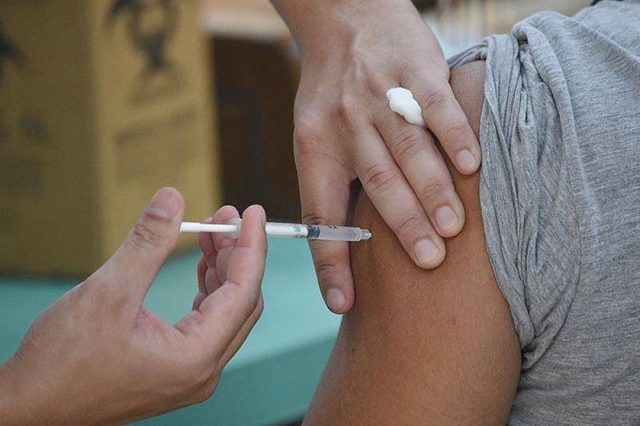
THE slow rollout of booster shots is putting the economic recovery at risk, particularly for micro, small, and medium-sized enterprises (MSMEs), with the threat expected to be elevated when the protection provided by the first two vaccine doses starts to recede later this year, Presidential Adviser for Entrepreneurship Jose Ma. A. Concepcion III said at a Laging Handa briefing on Wednesday.

He said the prospect of further lockdowns, should coronavirus disease 2019 (COVID-19) cases surge again, would wipe out whatever momentum recovering MSMEs have built up.

“Our immunity will be waning in the coming months, especially in the second semester. It might affect businesses especially MSMEs that are recovering,” Mr. Concepcion said.

Mr. Concepcion said 74.1% of the target population has been fully vaccinated, with boosters administered to 13.7%.

“The gains… will be wasted, especially with our MSMEs. It is difficult to recover again if we are placed under Alert Level 3 or 4,” he said, referring to quarantine settings that contain comprehensive restrictions on mobility. “We will lose the momentum of this economic recovery.”

Mr. Concepcion said in a statement on Wednesday that boosters are the key to ensuring that a World Health Organization (WHO) forecast of 300,000 active COVID-19 cases by May does not come to pass.

“There are around 27 million vaccines expiring in July and 53 million more in storage. That’s more than enough for our needs,” Mr. Concepcion said.

He said the Philippines is still short of its target of 90 million people receiving two doses, with 67 million having received the two shots that the government sees as the norm for full vaccination. He estimated the population that has not received a booster dose at over 53 million, including senior citizens and youth aged 12 to 17.  

“While we have almost 80 million vaccines, we should get our booster shots. Let’s maintain the wall of immunity, and not waste the vaccines. Let’s protect ourselves and allow the economy to grow and help our citizens,” Mr. Concepcion said.  

“Cases are moving up. This may be due to waning immunity as the booster uptake remains very poor. We’re trying to prevent people from getting severely ill and overwhelming the healthcare system. We want to maintain the Alert Level 1 status, but we need people to stay healthy and keep the engines of the economy running,” he added. — Revin Mikhael D. Ochave

Cruise ship port planned for Coron

IMAGE BY GIULIANO GABELLA VIA UNSPLASH

THE government is planning to build a port to receive cruise ships in Coron, Palawan, according to the Philippine Ports Authority (PPA).

According to PPA documents posted on its website, the Coron cruise ship berth has been allocated an approved budget of P425.1 million. It will rise in Coron’s Barangay Tagumpay.

The bid deadline for the project was announced as May 11. Bids must be submitted to the Bids and Awards Committee secretariat at the PPA office in Manila on or before 9 a.m. of that date, the PPA said.

The successful bidder is required to complete the project in 540 calendar days from the receipt of the notice to proceed.

“Bidders should have completed a contract similar to the project,” the PPA said.

Last year, the Transportation department inaugurated three port projects in Palawan: the Port of San Fernando, El Nido, the Port of Bataraza in that municipality’s Barangay Buliluyan, and Borac Port in Coron.

Transportation Secretary Arthur P. Tugade said the projects “will bring convenience and comfort not only to the people of Palawan, but more importantly to the people of the Philippines and also to the people of ASEAN.”

The PPA is hoping to complete and inaugurate 31 more port projects before President Rodrigo R. Duterte’s term ends on June 30.

Since 2016, the government has completed 585 port projects, large and small, according to PPA General Manager Jay Daniel R. Santiago. — Arjay L. Balinbin

South Korea targeting Mindanao agriculture, energy, infra tie-ups

ICTSI

SOUTH KOREA is hoping to forge private sector-led partnerships in Mindanao agriculture, energy and infrastructure ventures, its embassy in Manila said, expanding on South Korean companies’ long-standing relationships in Luzon and the Visayas.

“The sessions of the meeting or forum on April 26 will consist of agriculture, energy and resources, and infrastructure,” the embassy’s First Secretary Lee Youngsin said in a Viber message to BusinessWorld.

The Republic of Korea-Mindanao Sectoral Discussions and Business to Business Meeting will be held in Davao City to help South Korean companies establish networks with the Mindanao business community.

“This visit is expected to provide an avenue for leading Korean companies to build partnerships with local entrepreneurs and explore possible business opportunities in Mindanao,” Ambassador Kim In-chul said in a statement on Wednesday, noting that his country’s private sector is keen on exploring Mindanao’s investment and business potential. 

Two South Korean government organizations and eight companies have confirmed their attendance at the meeting, Mr. Lee said.

South Korea’s footprint in Mindanao includes key development cooperation projects such as Laguindingan Airport, the Korea-Philippines Vocational Training Center, and the ongoing Panguil Bay Bridge project.

“We are more than happy to facilitate business networks between (South Korea) and Mindanao,” Mindanao Development Authority (MinDA) Secretary Maria Belen S. Acosta was quoted as saying in the statement.

Ms. Acosta added that MinDA will look into potential areas of cooperation that are aligned with the Brunei Darussalam–Indonesia–Malaysia–Philippines East ASEAN Growth Area (BIMP-EAGA) agenda. South Korea is one of BIMP-EAGA’s development partners while MinDA serves as the sub-region’s Philippine Coordinating Office. — Alyssa Nicole O. Tan

Jan. price growth of wholesale goods highest since 2011

PHILIPPINE STAR/ MICHAEL VARCAS

GROWTH in wholesale prices for general goods in January was 4.6%, the highest since late 2011, according to preliminary data released by the Philippine Statistics Authority (PSA).

The rise in the general wholesale price index (GWPI) accelerated from 2.1% year on year in January 2021 and also exceeded the 4.1% rate posted in December.

The January reading was the highest in 121 months, when the indicator grew 5.8% in December 2011.

General Wholesale Price Index in the Philippines

“This can be attributed to the spillover of increased demand from the previous quarter (fourth quarter 2021) when a lot of restrictions were being eased due to declining cases of COVID-19 (coronavirus disease 2019),” UnionBank of the Philippines, Inc. Chief Economist Ruben Carlo O. Asuncion said in an e-mail interview.

“This suggests that demand may have (picked up despite) the Omicron-induced surge last January and domestic demand was continuing to recover.” 

To contain the Omicron surge in the coronavirus, Metro Manila and surrounding areas were placed under the Alert Level 3 quarantine setting. This was later eased to Alert Level 2 in February. Restrictions were eased in the capital region and nearby areas since March, with a move to Alert Level 1.

The food component of the index rose 3.9% in January from 3.3% in December. Food carries a 36.8% weight in the theoretical wholesale basket of goods, with the base year at 2012.

Price growth in manufactured goods classified chiefly by materials, which account for a fifth of the wholesale basket, came in at 6.4%, up from 6.3% a month earlier.

Other commodities where price growth accelerated in January were crude materials, inedible except fuels (16.3% from 6.7% in December); mineral fuels, lubricants, and related materials (30.5% from 26.3%); chemicals including animal and vegetable oils and fats (4.4% from 2.8%); and miscellaneous manufactured articles (0.8% from 0.6%).

Price growth eased for beverages and tobacco (4.4% from 5.7%) and machinery and transport equipment (1.2% from 1.4%).

Wholesale price growth in Luzon accelerated to 4.7% in January from 4.1% in December. A year earlier, bulk price growth in Luzon was 2.3%.

Gains for Luzon were also the highest in more than a decade, or since the 6.6% posted in December 2011.

In the Visayas, wholesale price growth for general goods was 3.2%, against 2.2% in December. The January reading was level with the year-earlier reading and was the highest since the 3.5% posted in October 2011.

Meanwhile, bulk price growth in Mindanao eased 4.2% in January from 5% a month earlier. Growth was still higher than the January 2021 reading of 2.8%.

Over the remainder of the year, Mr. Asuncion expects wholesale prices to continue firming in the absence of further infection surges that could force the government to reimpose strict mobility curbs.

“However, external events such as the Ukraine conflict and its impact and the recent China lockdowns may dampen the outlook for 2022,” he said.

The GWPI is used to monitor the wholesale trade sector and serves as a basis for price adjustments in business contracts and projects. — Abigail Marie P. Yraola

BIR sees collection efforts aided by tech-savvy new hires

PHILSTAR

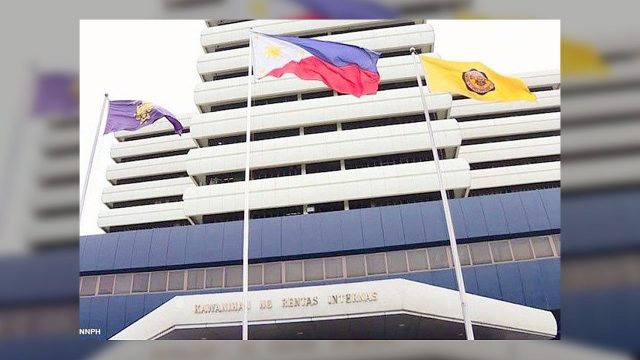
THE Department of Finance (DoF) said its younger hires are facilitating the revenue-collection agencies’ digital transformation initiatives, particularly at the Bureau of Internal Revenue (BIR).

The BIR considers its collection performance in 2021 to be aided by new workers who easily adapted to the bureau’s digitalization transformation (DX) efforts, the DoF said in a statement on Wednesday.

“We can attribute our improved performance to our DX programs as well as to our increasing number of young workers who are quicker and more adept at learning digital skills,” BIR Commissioner Caesar R. Dulay was quoted as saying.

Mr. Dulay said that the BIR expanded from 9,626 personnel in 2016, to 13,818 in 2021. Of this total, 6,540 were hired between 2016 and 2021.

Finance Secretary Carlos G. Dominguez III said that the BIR’s DX efforts have ”really helped continue the tax collection effort, especially during the pandemic.”

Due to the BIR’s increased use of digital payment methods, such as the Electronic Filing and Payment System (eFPS), electronically collected taxes in 2021 accounted for 84% or P1.75 trillion of the total haul.

Mr. Dulay also reported that in 2021, the agency tallied 4.63 million registered business taxpayers, up 5.4% from a year earlier.

Under the BIR’s DX road map, the agency implemented an online system for Tax Clearance for Bidding Purposes and Tax Compliance Verification Certificate (e-TCBP-TCVC), the e-Personal Equity and Retirement Account System, and the e-Appointment system, which took in around 90,000 bookings between May and December last year.

Mr. Dulay said that 76 BIR Offices under its Large Taxpayers Service and Revenue District Offices use e-Appointments for frontline services, while 14 offices in the Assessment section use it for virtual meetings.

Other digitalization efforts include the launch of the Internal Revenue Integrated System (IRIS), which is used to process taxpayer information, and the Enhanced Internal Revenue Stamps Integrated System (STAMPS), which manages processes relating to the excise tax on tobacco products.

The BIR hopes to collect P2.4 trillion this year. For April, the BIR’s collection target is P256.89 billion. — Tobias Jared Tomas

Travel industry contribution to economy valued at $41B in 2021 

REUTERS

THE travel industry accounted for $41 billion of Gross Domestic Product (GDP) in 2021, with domestic travel taking up some of the slack for the international tourism slump, according to the World Travel & Tourism Council (WTTC).

At the opening briefing of the 21st WTTC Global Summit on Wednesday, WTTC President and Chief Executive Officer Julia Simpson said that the Philippine industry’s contribution grew 129.5% from the year-earlier $17.8 billion, when the industry was hammered by the pandemic.

The estimates were based on WTTC studies conducted with Oxford Economics and were released as an Economic Impact Report.

“Tourism to the Philippines is absolutely critical. This growth was primarily built on domestic travel,” Ms. Simpson said.

According to Ms. Simpson, the travel industry accounted for 10.4% of GDP in 2021, against 4.8% in 2020.

She said employment in the industry rose 20.5% to 7.8 million in 2021.

“(The result is) a massive employment boost for the sector, leading to the recovery of 1.3 million more jobs compared to the previous year. Our expert analysis shows that the economy has turned a corner and is firmly on the road to recovery,” Ms. Simpson said.

“We forecast an average annual growth rate of 6.7% over the next 10 years here in the Philippines, exceeding the Philippines’ expected overall economic average growth rate of 5.6%,” Ms. Simpson said.

“We are also forecasting good news on the employment front. Employment will grow annually by an average of 3% over the next 10 years, generating 2.9 million new jobs which will account for 21.5% of all jobs in the Philippines,” she added.

Tourism Secretary Bernadette Romulo-Puyat said signs of recovery are apparent in the global travel industry as more countries open their borders.

“In the nearly two years where international travel was put on hold, the Philippines has been busy preparing for the day when our country would be open to the world. We have put in place guidelines that will ensure the safety of our guests, our tourism work force, and our community,” Ms. Puyat said.

“Ultimately, through this summit, we hope to raise awareness of the full economic and social impact of travel and tourism. We also want to assure everyone, especially our foreign guests, that your safety and well-being is our priority,” she added.

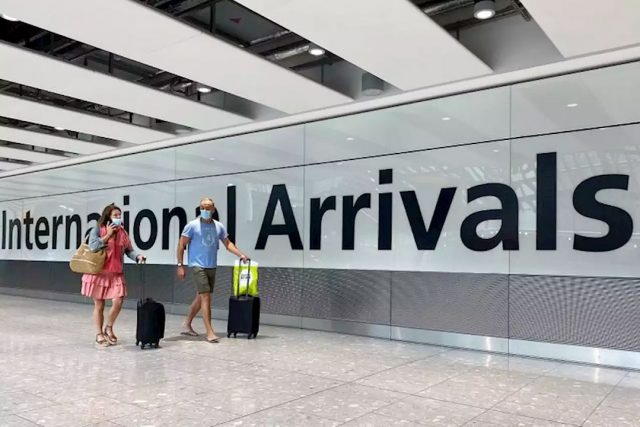
The Philippines began accepting foreign visitors from nationals entitled to visa-free entry on Feb. 10. Since April 1, borders have opened to all nationals. — Revin Mikhael D. Ochave

Tax obligations of election candidates

With the national and local elections a few weeks away, candidates are scaling up their efforts to win the hearts of voters. We all know that running for public office is a costly undertaking funded by contributions and monetary support.

But, are you also aware of the registration, invoicing and tax filing requirements that all candidates, political parties, and even campaign contributors must comply with? After the election season, they are required to submit reports to the Bureau of Internal Revenue (BIR) within 30 days after the election. Moreover, campaign contributions may qualify for income tax and donor’s tax exemptions.

With the upcoming election, the BIR issued Revenue Memorandum Circular (RMC) No. 22-2022 to remind election candidates of the stringent administrative requirements during the campaign season. Some guidelines also apply to campaign contributors not running for public office. Highlights of the RMC are summarized as follows:

BIR REGISTRATION
Upon filing their certificate of candidacy, all candidates and political parties/party-list groups are required to register or update their registration with the BIR. Registration is to be performed at the Revenue District Office (RDO) having jurisdiction over the political subdivision where the candidate is seeking election, or if this is not applicable, registration may also be based on the candidate’s principal residence or registered office address.

Individual candidates must be registered as “Professional -— In General” and tagged as “Politician” while political parties/party list groups are tagged as “Political Party” under the special code in the BIR registration system. Campaign contributors must also be registered with the BIR, with individual contributors registering as taxpayers under Executive Order 98.

All candidates and political parties must pay an Annual Registration Fee of P500 before the Certificate of Registration (CoR) is issued. However, a CoR will not be issued to individual candidates who are not engaged in business.

REGISTRATION OF BOOKS
All candidates and political parties are required to register and maintain adequate books and other accounting records (which includes the cash receipts/disbursements journal) that will serve as the basis for the Statement of Contributions and Expenditures (SoCE) to be submitted to the Commission on Elections (Comelec).

Alternatively, the RMC allows individual candidates to use a simplified set of bookkeeping records, as long as these can provide accurate information.

ISSUANCE OF BIR-REGISTERED NON-VAT OFFICIAL RECEIPTS
All candidates and political parties are required to issue BIR-registered non-VAT ORs for every contribution received, whether in cash or in kind. For contributions in kind, the Fair Market Value should be indicated in the OR.

The original OR must be issued to the contributor/donor, while the duplicate must be retained by the issuing candidate/political party/party-list.

PRESERVATION OF RECORDS
All political parties and candidates must preserve records of contributions and expenditures for 10 years, pursuant to Section 235 of the Tax Code, as implemented by Revenue Regulations No. 5-2014.

In addition to the above registration and bookkeeping requirements, the RMC also provides guidelines for the following taxes:

INCOME TAX
Generally, campaign contributions are excluded from the taxable income of the candidate based on the assumption that the contributions are to be used to cover the candidate’s campaign expenditures and not for the personal enrichment of the candidate.

Thus, to be exempt from income tax, the contributions should be fully utilized during the campaign period. Any unutilized campaign funds (campaign contributions less campaign expenditures) are treated as taxable income (without any further deductions) of the recipients and reported in their respective annual income tax returns.

It is also crucial for each candidate or political party to file the SoCE with the Comelec within 30 days after the election, as required by the Omnibus Election Code. Otherwise, the recipient is automatically precluded from claiming such expenditures as deductions from the campaign contributions, making all contributions directly subject to income tax.

DONOR’S TAX
Donations/contributions are exempt from the 6% donor’s tax, provided these have been utilized during the campaign period and duly reported to the Comelec. However, following RMC No. 38-2018, utilized donations before or after the campaign period are subject to donor’s tax and should not be claimed as a deductible expense of the donor.

WITHHOLDING TAX
A 5% withholding tax applies on the following:

• Purchases of goods/services by political candidates and political parties as campaign expenditures; and

• Purchases of goods/services by individuals or juridical persons intended to be given as campaign contributions to political parties and candidates.

Moreover, the general rule for the payor to issue a certificate of withholding tax (BIR Form No. 2307) as evidence of the Creditable Withholding Tax (CWT), upon demand must also be followed.

Withholding of tax is crucial since expenses that were not subjected to the 5% CWT are not considered utilized campaign funds, and therefore, (1) cannot be claimed as deductions against campaign contributions; and (2) must be reported as unutilized campaign funds subject to income tax.

PENALTIES
All parties covered by the RMC who fail to register and comply with the requirements of the BIR will be subject to compromise penalties provided under Revenue Memorandum Order (RMO) No. 7-2015.

Since they are vying for the privilege to be public servants, candidates are called to the civic duty of nation-building, which includes abiding by tax regulations. Candidates who are compliant with their tax obligations may be deemed to reflect a style of leadership and governance anchored in honesty, transparency, and accountability — qualities that this country urgently needs in these times of uncertainty.

The views or opinions expressed in this article are solely those of the author and do not necessarily represent those of Isla Lipana & Co. The content is for general information purposes only, and should not be used as a substitute for specific advice


Jasmin L. Chan is a Senior Associate at the Tax Services Department of Isla Lipana & Co., the Philippine member firm of PricewaterhouseCoopers global network.

jasmin.chan@pwc.com

Another Marcos disqualification suit dismissed

BONGBONG MARCOS FB PAGE

THE COMMISSION on Elections (Comelec) has rejected another lawsuit seeking to bar the son and namesake of the late dictator Ferdinand E. Marcos from the presidential race this year. 

In a 31-page decision, the election body’s First Division ruled Senator Ferdinand “Bongbong” R. Marcos, Jr.’s failure to file his income tax returns in the 1980s did not involve wicked, deviant behavior. 

“The filing of income tax return is only for record purposes, nor for the payment of tax liability,” it said in a ruling written by Election Commissioner Socorro B. Inting. “He may have been neglectful in performing this obligation, it however does not reflect moral depravity.” 

“The respondent possesses all the qualifications and none of the disqualifications under the 1987 Constitution and relevant laws,” it added. 

The suit was the last disqualification case within Comelec’s two divisions. It used to be handled by the Second Division but was transferred to the other division after a reorganization, according to a Comelec memo in February. 

The Comelec decision is a “major boost” to his presidential bid, Mr. Marcos, who is leading in presidential opinion polls, said in a statement. He said he could now heave a sigh of relief and continue his campaign as the May 9 elections draw near. 

“It’s a good development and we’re happy that it happened before the upcoming elections,” the 64-year-old former senator said. 

In a separate statement, Marcos spokesman Victor D. Rodriguez said elections are settled through the ballots on election day and not through the “abuse of our judicial processes like the filing of nuisance petitions for disqualification.” 

“It is now time for every peace-loving Filipino to work for clean, honest, credible and fair elections, and allow the people to speak, their voices heard and votes genuinely counted,” he added. 

A group of martial law victims earlier asked Comelec to bar Mr. Marcos from the presidential race after he was convicted for tax evasion in the 1990s.  

They filed two “extremely urgent” motions for Comelec to resolve the pending case, noting that delaying the case could complicate this year’s presidential election. 

Newly appointed Comelec Chairman Saidamen B. Pangarungan last month said they would fast-track pending cases in the divisions. 

Election Commissioner George Erwin M. Garcia had said the cases would be resolved by the third week of April. He also said he would inhibit himself from any cases involving Mr. Marcos, who is a former client. 

The latest decision favoring the dictator’s son echoed the February ruling written by Commissioner Aimee P. Ferolino, who said there is no law punishing one’s failure to file income tax returns. The case is on appeal before the Comelec full court. 

The Second Division rejected a similar petition in January as it ruled Mr. Marcos did not mislead the public when he said in his certificate of candidacy that he was eligible to run for president. The case is also on appeal with the en banc. 

Ms. Ferolino had been accused of delaying one of the cases. She denied the allegations and said it was a minor issue that would not affect the credibility of the commission as a whole. 

Retired Election Commissioner Maria Rowena V. Guanzon had accused her of delaying the case so her vote for disqualification would not count. She also said a senator from Davao was meddling in the case. 

“It is now imperative that the en banc act on it post-haste so as to give the parties ample time to even seek an appeal before the Supreme Court,” Bayan Muna Rep. Carlos Isagani T. Zarate said in a statement. “What is at stake here is not only the political future of a convicted tax evader but the survival of our country as well.” 

Danilo A. Arao, lead convenor of election watchdog Kontra Daya, earlier said the Supreme Court would be the final arbiter on the Marcos disqualification cases. The next vice-president would have to take over in case he gets disqualified, he said in a Facebook Messenger chat on April 9. 

“That was expected,” Senator and boxing champion Emmanuel “Manny” D. Pacquiao, who is also running for president, told reporters in Ilocos Norte in mixed English and Filipino, according to a transcript sent by his office. 

“We did not think he would be disqualified, so the fight continues. That’s better — it will be the people who will decide whom to vote for,” he added. — John Victor D. Ordoñez with Kyle Aristophere T. Atienza and Alyssa Nicole O. Tan

Manila mayor faces hurdles as nation’s ‘alternative’ bet

By Kyle Aristophere T. Atienza, Reporter

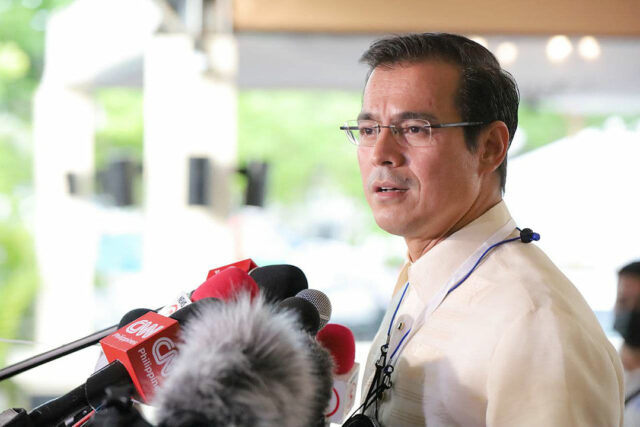
MANILA City Mayor Francisco “Isko” M. Domagoso would use the rest of his campaign period to present himself as an alternative to the top two presidential poll frontrunners, his spokesman said on Wednesday.

“We are focusing on the message that Mayor Isko is the alternative to the perceived frontrunners,” Ernest M. Ramel, Jr., who heads the mayor’s political party, said in a Viber message.

Former Senator Ferdinand “Bongbong” R. Marcos, Jr. has dominated opinion polls, with Vice-President Maria Leonor “Leni” G. Robredo a distant second. Mr. Domagoso is a distant third.

“We are spreading his accomplishments and his generosity and more importantly, his platforms for all the challenges that ordinary Filipino families struggle with every day,” he said. “It is possible for Mayor Isko to offer real solutions and fast action.”

Mr. Domagoso has been aiming for the endorsement of President Rodrigo R. Duterte, who on Tuesday joined a campaign rally for the ruling party’s senatorial candidates.

The mayor’s claim to be an alternative candidate “remains a claim,” said Jan Robert Go, an assistant political science professor from the University of the Philippines.

“Isko’s statements betray his supposed alternative politics narrative,” he said in a Messenger chat. He noted that the former matinee idol whose rags-to-riches story has captivated many Filipinos “actively engages in name-calling, particularly against the supporters of Robredo.”

“He does not even engage them at the level of agenda or issues,” he added.

Ms. Robredo attracted 65,000 supporters at a grand rally on Tuesday night in Bataan province in northern Philippines. The province’s powerful political clan, the Romans, has backed the candidacy of Mr. Marcos.

Mr. Go said the Manila mayor had not tried to engage the camp of the son and namesake of the late dictator Ferdinand E. Marcos on issues that hound his candidacy, except for his estate’s unpaid taxes worth more than P200 billion.

“On a more substantive plane, there is not much discussion — not exactly the alternative that we would expect.”

Mr. Domagoso on Wednesday asked Ms. Robredo to speak for herself instead of letting her spokesman do the talking for her.

At a press conference on Sunday, the mayor and other presidential poll laggards urged Ms. Robredo to withdraw from the presidential race, after calls by some sectors for them to back her instead to prevent another Marcos presidency.

He called the vice-president’s supporters “yellow,” a derogatory term used against the political supporters of the late President Benigno S.C. Aquino III.

His mother, the late President Corazon C. Aquino, led a popular street uprising that toppled the late dictator’s regime and forced him and his family into exile in the United States in 1986.

Some candidates always end up claiming to be an alternative because there are efforts to undermine the system established after the people-led uprising that toppled the late dictator’s martial rule, said Arjan P. Aguirre, a political science lecturer at the Ateneo de Manila University.

“The ‘alternative candidate’ claim is deployed to frame the current electoral cycle as something that involves the decades-old rivalry between the two factions or families and narratives of the post-EDSA era,” he said in an e-mail.

“It presents Manila Mayor Isko Moreno as someone who can offer something new in terms of governance, motivation and leadership to this post-EDSA politics.”

He said Mr. Domagoso, who has flip-flopped on his support for the Duterte administration, might be replicating the brand of politics of Mr. Duterte, who had vowed to dismantle the country’s elite-dominated system.

“We see Isko trying to replicate that, in a way, but it does not mean that the alternative should be the option now, given the quality of the alternative being presented to us.”

“He was projecting himself quite well as a politician who was not part of the Yellow-Red binary, although the fact is he was already shifting allegiances within these two sides during his storied political career,” Michael Henry Ll. Yusingco, a research fellow at the Ateneo Policy Center, said in a Facebook Messenger chat.

Marcos loyalists and populist politicians have blamed the Aquino clan for the failures in the post-EDSA system.

Mr. Yusingco said Sunday’s news briefing by Mr. Domagoso and two other presidential bets might be an open declaration of war against Ms. Robredo.

He said the event did not go as planned “because his potential image as the most viable alternative candidate is now being buried by criticisms of misogyny, political sourgraping and hypocrisy.” “It unfortunately has unmasked him to be still a member of and standing in the same old personality-based and patronage-driven politics,” he added.

Meanwhile, Senator and boxing champ Emmanuel “Manny” D. Pacquiao said the call for Ms. Robredo to quit the presidential race had not been agreed upon by the presidential bets who attended the briefing.

“That press conference was not for attacking other candidates,” he told reporters in Filipino. It was meant for them to unite for clean and honest elections.

Mr. Pacquiao, who did not make it to the briefing due to a scheduling conflict, said he was surprised by what happened.

“It was not in the discussion to discredit another person there and to tell them to withdraw,” he said. “What I am expecting is that everyone will continue the run. Nobody will withdraw and what was said was unexpected.” —with Alyssa Nicole O. Tan


Duterte nullifies IRR issued by chief of migrant workers’ department 

PRESIDENT Rodrigo R. Duterte has approved the implementing rules and regulations (IRR) proposed by the Department of Migrant Workers(DMW) transition team, according to the Department of Labor and Employment (DoLE).  

Rolly M. Francia, DoLEs ‘s information and publication service director, said the IRR previously issued by DMW Secretary Abdullah Mama-o was not approved by Mr. Duterte.  

Palace nullifies Sec. Mama-os IRR,he said in a Viber message to reporters.   

This means that employees of government agencies that will be absorbed into the new DMW such as the Philippine Overseas Employment Administration (POEA) will continue with their current functions and operations.  

“In recognition of the authority of the Transition Committee to formulate the IRR pursuant to Section 23(a) of RA No. 11641, the President interposes no objection to the submitted IRR and has cleared its immediate publication,” according to a memorandum signed by Executive Secretary Salvador C. Medialdea on Apr. 18, according to a copy shared by the Labor official.  

A copy of the IRR was set to be released on Thursday, Mr. Francia said.  

The transition team, led by Foreign Affairs Undersecretary Sarah Lou Y. Arriola and POEA chief Bernard P. Olalia, asked Mr. Duterte earlier this month to void the IRR published by Mr. Mama-o.  

The committee is composed of representatives from DoLEs International Labor Affairs Bureau, National Maritime Polytechnic, National Reintegration Center for OFWs of the Overseas Workers’ Welfare Administration (OWWA), and Office of the Social Welfare Attaché of the Department of Social Welfare and Development.  

According to a copy of a memorandum sent by DoLE to Mr. Olalia on Apr. 19, all personnel of POEA are hereby directed to maintain the status quo in the performance of their duties and responsibilities…”  

It said that the law creating the DMW shall not be constitutedunless theres an appropriation for the newly-created agency in the 2023 General Appropriations Act. Kyle Aristophere T. Atienza 

Bangsamoro gov’t sets up EAGA-focused committee 

THE BANGSAMORO government has set up a team that will focus on coordination with other agencies to give the new autonomous region a broader role in boosting economic ties with the Brunei, Indonesia, Malaysia, Philippines-East ASEAN Growth Area (BIMP-EAGA).  

The creation of the BIMP-EAGA Economic Growth Linkages Sub-Committee was approved last week by the Bangsamoro Economic Development Council, a cabinet-level policy making body of the regional government.   

Assistant Secretary Romeo M. Montenegro, deputy executive director of the Mindanao Development Authority (MinDA), said an institutionalized set-upis needed within the Bangsamoro region that corresponds to the roles of key national government agencies.”  

MinDA serves as the Philippines national secretariat for BIMP-EAGA.    

Established in 1994, the sub-grouping covers the entire Brunei Darussalam; the Indonesian islands of Kalimantan, Sulawesi, Maluku, as well as Irian Jaya, the Indonesian portion of the island of New Guinea; the Malaysian states of Sabah and Sarawak and territory of Labuan; and Mindanao and Palawan in the Philippines.  

MinDA recently met with the Bangsamoro Autonomous Region in Muslim Mindanaos (BARMM) ministries on transport, trade and tourism, and agriculture to discuss growth sectors within the Association of Southeast Asian Nations (ASEAN) sub-grouping.   

BARMMs island provinces of Tawi-Tawi, Sulu, and Basilan are geographically closest to the countrys EAGA neighbors.    

At the 24th BIMP-EAGA Ministerial Meeting held in October last year, officials said projects and programs intended for completion by 2025 were on track.   

These include improvements in transport and telecommunications connectivity, agricultural investments and trade, tourism, and education and socio-cultural ties.   

As of end-2019, the four member countries have listed 72 priority projects valued at about $23.3 billion, such as air and sea port upgrades and road network improvements.   

The $150-million BIMP-EAGA Submarine and Terrestrial (B.E.S.T) Cable Project is also being fast-tracked following delays due to pandemic restrictions, according to the groupings facilitation center.   

The private sector-led B.E.S.T project is a combination of submarine cables, satellite, and terrestrial facilities that aim to improve connectivity and ensure access in remote areas. MSJ