Home Blog Page 5977

OCTA warns of COVID-19 surge by May or June 

PHILSTAR

By Revin Mikhael D. Ochave, Reporter

THE PHILIPPINES might experience another surge in coronavirus infections by May or June, similar to what other countries are experiencing now, according to an expert from the OCTA Research Group. 

“The increase in new COVID-19 (coronavirus disease 2019) cases in South Africa, India and the US makes it likely that the Philippines will see an increase in cases soon,” OCTA fellow Fredegusto P. David told a virtual town hall meeting on Monday. 

“How high and when, we don’t know yet. The rise in cases may happen maybe May or June,” he added. 

The Philippines on Monday started giving out second booster shots against the coronavirus to seriously ill people. 

Among those eligible for the shots are people with weak immune systems, those living with HIV, cancer, transplant and bedridden patients, and the terminally ill, the Department of Health (DoH) said in a statement. 

Only 12.9 million of 67.2 million fully vaccinated Filipinos have received booster shots, said Teodoro J. Herbosa, an adviser at the National Task Force Against COVID-19. 

He also said a COVID-19 outbreak could happen among unvaccinated Filipinos. 

“If we ever do get an outbreak, it will be in areas where vaccination rates are below 50%,” Mr. Herbosa said.   

OCTA President Ranjit S. Rye, citing a poll they conducted on March 5 to 10, said 77% of Filipinos were willing to get their booster shots, while 23% were unsure. 

He added that 53% of those who were unsure said they were having second thoughts about the safety of the booster shots, while 35% thought these are not needed. 

OCTA Research interviewed 1,200 adults face-to-face for the nationwide poll. 

Only certain areas in the capital region were ready to roll out the second booster shots, DoH said. 

Members of the vulnerable sector should get a vaccine brand that is different from their earlier shots for more protection, according to Nina Gloriani, who heads the government’s vaccine expert panel. 

The second booster vaccine should be injected three months after the first, the Health department said earlier. 

Rontgene M. Solante, a member of the government’s vaccine expert panel, told the town hall meeting that economic frontliners should get their first booster shots to ensure that economic recovery was not derailed. 

“Get your first booster because we cannot proceed with the second booster until such time that they get the first booster, especially the general population,” he said. 

The first booster shots would protect one from infection and lessen the chance of transmission, Mr. Solante said. 

“If COVID-19 cases go up, we might be placed under a lockdown again and our economy will be derailed again,” he added. 

He said vaccine hesitancy among Filipinos must be addressed. They should also be encouraged to take booster shots. 

Based on DoH guidelines, economic frontliners include private sector workers required to physically report for work, employees in government agencies and informal sector workers and self-employed people who work outside. They also include people who work in private households. 

At the same meeting, presidential adviser for entrepreneurship Jose Ma. A. Concepcion III said Filipinos should take their booster shots to prevent lockdowns, which would stall the recovery momentum of businesses.   

“We don’t want to go back to Alert Level 3,” he said. “That would really destroy the renewed enthusiasm of entrepreneurs as they see their lives and businesses coming back. You don’t want to break that momentum.” 

The private sector is working on how to entice more Filipinos to get their COVID-19 booster shots, he separately said via mobile phone. 

“It is challenging with the current environment. But we are working on it,” he added.   

He also said private companies are conducting information drives to inform people that COVID-19 vaccines are safe.   

“The possibility of a COVID-19 surge happening soon that was predicted by experts, if that comes in, then I think Filipinos might be encouraged to get booster shots,” he said. “People are complacent. Nobody is scared.” 

The Philippines recorded 1,465 new coronavirus infections from April 18 to 24, 12% lower than a week earlier, DoH said in a separate statement. 

It also reported 213 more deaths, 43 of which occurred this month, 14 in March, 8 in February, and 13 in January. 

The agency said 726 severe and critical coronavirus patients or 12.8% of total admissions were staying in hospitals. 

It said 479 or 16.9% of 2,841 intensive care unit (ICU) beds had been used as of April 24, while 4,112 or 16.9% of 24,309 non-ICU beds were occupied. — with Kyle Aristophere T. Atienza 

Arrest remarks just a warning, says Comelec official

ONENEWS.PH

AN ELECTION commissioner who said they would not hesitate to call on the military to arrest people who accuse the Commission on Elections (Comelec) of bias on Monday said his remarks were just a “warning,” not a threat.

“I am actually warning the people to obey the laws just in case they were unaware,” Election Commissioner Rey E. Bulay told a news briefing in mixed English and Filipino streamed live on Facebook. “The word I used was ‘warning.’ It was clear and I said this for the good of our countrymen.“

Lawmakers at the weekend slammed Mr. Bulay for his statement last week. Detained Senator Leila M. de Lima, a former human rights commissioner, said his remarks were “uncalled for and illegal.”

Under the constitution, the only time the Armed Forces of the Philippines (AFP) can exercise police power, such as arresting people, is when the Philippine president calls out the AFP to suppress lawless violence, she said.

“Neither Bulay nor the Comelec is the commander-in-chief,” Ms. De Lima, one of President Rodrigo R. Duterte’s most outspoken critics, said. “Not even during elections. The Comelec’s deputization power during elections certainly does not include the power to use the AFP in stifling criticisms and suppressing free speech.”

“We will not hesitate to call upon the AFP, which is now under Comelec control, to round you up and have you jailed,” Mr. Bulay told a news briefing in mixed English and Filipino on Friday.

Meanwhile, Kontra Daya convenor Danilo A. Arao urged election commissioners to listen to public criticism as part of the democratic process.

“We call on the Comelec to listen to the sentiments of the public whether or not it is something that is positive or negative to their image,” he told the ABS-CBN Channel. “There are cases where there is constructive criticism and such criticism would be evidence-based and a factual basis for having such kinds of perspective.” 

“There is an authoritarian tendency that is happening right now in our current Comelec, which is not good because the Duterte administration has been roundly criticized for the reign of tyranny and the culture of impunity,” Mr. Arao said.

“Don’t worry, I am guaranteeing that it is OK for you to criticize us and give your sentiments to the Commission on Elections,” Election Commissioner George Erwin M. Garcia told TeleRadyo in Filipino on Monday. “If ever we chase other people, it will be because of them spreading fake news and undermining electoral processes.”

He added that people may criticize Comelec as part of their right to freedom of expression.

Meanwhile, Mr. Garcia said a report that a ballot in New Zealand did not have the name of a presidential candidate is fake news.

“Our embassy in New Zealand declared that they did not receive even one complaint regarding this issue from our countrymen in New Zealand,” he said in Filipino. “When we print a ballot, we can’t just print them one by one, they are printed by batch so if it was true, we would have had multiple complaints.”

A Facebook post of a Filipino based in New Zealand claiming that she had received a ballot that was missing the name of Vice-President Maria Leonor “Leni” G. Robredo went viral at the weekend. — John Victor D. Ordoñez

Comelec asked to overturn ruling letting Marcos run

PHILSTAR FILE PHOTO

MARTIAL LAW victims have asked the Commission on Elections (Comelec) full court to reverse a division ruling that allowed the only son and namesake of the late dictator Ferdinand E. Marcos to run for president this year.

In a 29-page motion for reconsideration, the plaintiffs said former Senator Ferdinand “Bongbong” R. Marcos, Jr.’s repeated failure to file his income tax returns is “contrary to justice, honesty, modesty or good morals.“

“The division’s gratuitous statement that failure to file an income tax return is’’not inherently wrong’ as it is ‘only an obligation created by law and the omission to do so is only considered as wrong because the law penalizes it’ is clearly devoid of any basis both in fact and in law,” according to a copy of the pleading filed by lawyer Christian S. Monsod, a former Comelec chief and constitutional framer.

The First Division last week junked the last disqualification case against Mr. Marcos within Comelec’s two divisions, as it ruled that his failure to file his income tax returns in the 1980s did not reflect moral depravity.

The case was originally handled by the Second Division but was transferred to the other division after a reorganization, according to a Comelec memo in February.

“All indications of the flaw in character, blatant disregard of the law and trampling of the justice system by Marcos, Jr. are clearly manifested by his actions and ommissions,” the plaintiffs said.

The group of martial law victims earlier asked Comelec to bar Mr. Marcos from the presidential race after he was convicted for tax evasion in the 1990s.

They filed two “extremely urgent motions for Comelec to resolve the pending case, noting that delaying the case would complicate this year’s presidential election.

The latest decision favoring the dictator’s son echoed the February ruling written by Commissioner Aimee P. Ferolino, who said there is no punishing one’s failure to file income tax returns.

The Second Division rejected a similar petition in January as it ruled Mr. Marcos did not mislead the public when he said in his certificate of candidacy that he was eligible to run for president. The case is also on appeal with the en banc.

Ms. Ferolino had been accused of delaying one of the cases. She denied the allegations and said it was a minor issue that would not affect the credibility of the commission as a whole.

Retired Election Commissioner Maria Rowena V. Guanzon had accused her of delaying the case so her vote for disqualification would not count. She also said a senator from Davao was meddling in the case.

“Marcos, Jr.’s repeated violation of the law is reflective of and constitutes an act of baseness in the duties which he owes his fellow Filipinos and his country,” the plaintiffs said. — John Victor D. Ordoñez

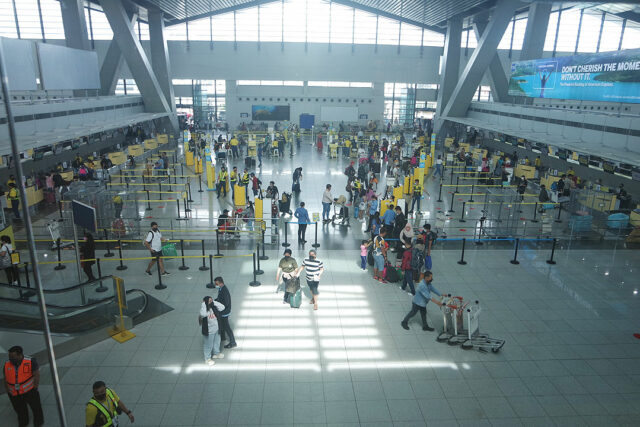
NAIA domestic passengers rise to 3.17 M in Q1

NINOY Aquino International Airport (NAIA) check-in counters. — BW FILE PHOTO

DOMESTIC PASSENGER traffic at the Ninoy Aquino International Airport (NAIA) surged to 3.17 million in the first three months of the year as travel restrictions were dialed back, according to the Manila International Airport Authority (MIAA).

Domestic passenger traffic — arrivals as well as departures — were significantly higher than the year-earlier total of more than one million passengers, according to an operations report posted on MIAA’s website. Domestic traffic was still running well behind the total of 4.48 million posted in the first quarter of 2020, which included the two months before the declaration of the state of emergency.

International passenger traffic at NAIA increased to 1.03 million in the first quarter of 2022 from 503,331 a year earlier. In the first three months of 2020, international passengers at NAIA were at 4.35 million.

Fully vaccinated foreign nationals from 157 countries, who enjoy visa-free entry, were once again admitted starting Feb. 10, as coronavirus cases in the Philippines continued to decline, leading the government to ease travel restrictions in a bid to stimulate the economy.

The Tourism department in March reported 47,000 visitor arrivals since the reopening of the borders.

Of the total, 45% or 21,409 were balikbayans or returning Filipinos, and 55% or 26,306 were foreign tourists.

Americans topped the list, followed by nationals from Canada, the UK, South Korea, Australia, Vietnam, and Germany.

The International Air Transport Association (IATA) has said that international travel in 2022 will recover to 44% of pre-crisis (2019) levels. In 2021, the estimate for international air travel was 22% of pre-crisis levels.

Domestic travel in 2022 is expected to hit 93% of pre-crisis levels, compared to 73% for 2021, it said in a statement.

“These projections were made before the onset of the Omicron variant, which could have an impact particularly of international travel,” IATA said. — Arjay L. Balinbin

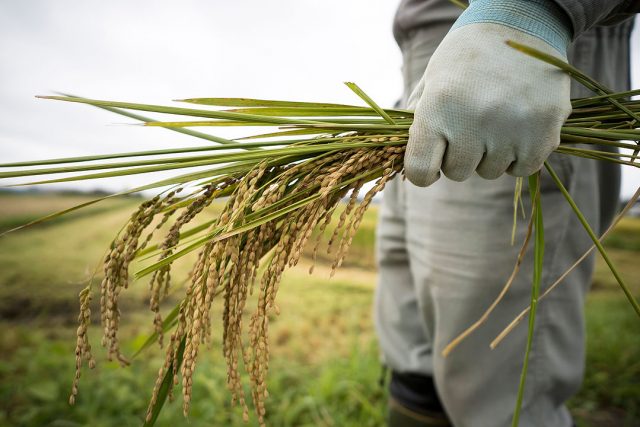
Marcos seen borrowing more to lower rice prices

NEDA

By Kyle Aristophere T. Atienza, Reporter

PRESIDENTIAL CANDIDATE Ferdinand R. Marcos, Jr.’s campaign promise to lower rice prices by P20 to P30 threatens to swell National Government debt if carried out, analysts said.

“To implement a price cap that is more or less 50% lower than current prices, the government will have to subsidize the cost whether or not the country is rice self-sufficient, and doing so will mean additional (funding) that needs to be factored into the national budget,” according to Zyza Nadine Suzara, a public finance expert and executive director of the Institute for Leadership, Empowerment, and Democracy.

The Marcos campaign said in a statement recently that the planned price cap on rice will bring prices down by P20 to P30 per kilogram if he wins. He also promised to halt rice imports once the Philippines becomes self-sufficient in producing the staple.

Ms. Suzara said such promises suggest that, in the event self-sufficiency does not materialize, the government may have to resort to imports, possibly reviving the National Food Authority’s (NFA) role as sole importer of rice. This points to the return of the NFA’s previous business model “whereby it will buy buffer stocks of rice at prevailing market prices and then sell them at a much lower cost.”

She said that according to government data, the Philippines was 85% rice self-sufficient in 2020. In 2019, the self-sufficiency rate was 79.8%.

“The NFA cannot pay for this using its own funds alone. This will require additional subsidies from the National Government,” Ms. Suzara said via chat. “How will it be financed? Is he going to rely on debt to afford this?”

She said that while the government does need to keep supporting the NFA to ensure a steady supply of cheap rice, “the problem is the government doesn’t have unlimited resources.”

She said the government will either need to collect higher taxes or incur additional debt “which in the end, taxpayers also have to pay for.”

“In either case, it could be fiscally unsustainable for the National Government as populist (measures) often are,” she said. “It also opens up opportunities for leakage and corruption. This is a recipe for greater fiscal disaster.”

The Department of Agriculture estimates that the commercial price of rice in Metro Manila and nearby cities range between P38 and P50 per kilogram. Imported rice commanded P37-P52 as of April 13.

In the statement, the Marcos campaign said the Philippines needs to carry out a “regular and thorough” inventory of the rice harvest beginning with his first year in office.

Such inventories are already being conducted by the Philippine Statistics Authority. It estimated that of palay (unmilled rice) output was worth P403.893 billion in 2021, up from P390.213 million a year earlier.

“Subsidizing the price of rice will be one of the options he will try to explore in the first year of his administration,” according to the statement.

“In principle, the intention of the promise is good. But we need to understand how this can happen,” according to John Paolo R. Rivera, an economist at the Asian Institute of Management.

“The price of rice is determined by the dynamics of supply and demand. Holding demand constant, supply has to be augmented to put a downward pressure on prices,” he said in a chat message, noting that Mr. Marcos has failed to present a clear roadmap to achieve the goal. His general refusal to outline the specifics of his plans has done little to quell doubts that could undermine business confidence, analysts said.

“The promise sounds good but without a clear understanding of existing data, we’re not going anywhere,” said Emy Ruth Gianan, instructor at the Polytechnic University of the Philippines Economics department.

She said bringing down prices drastically will adversely affect rice producers.

“Adding a price cap would further hurt our farmers,” she said via chat. “They would either be forced to produce more than their capacity, which is not possible given limited agricultural technology and support for most of our farmers, or would be selling rice at a loss.”

Ms. Gianan said that Mr. Marcos’ promise is counterproductive policy and may not benefit the public in the long term. “It compels us to choose less productive policy options: just buy at a higher price instead of heavily investing in the industry’s development.”

She said it may not be possible to rule out imports once self-sufficiency is achieved because “farmers would be forced to produce at a loss, making it unsustainable for them to plant rice.”

“This would result in more farmers exiting the market,” Ms. Gianan said. “The policy is actually more supportive of imports, contrary to what Mr. Marcos claims.”

“Also, it opens the door to corruption. With the NFA acting as both regulator and buyer, there’s a conflict of interest.”

Roy S. Kempis, a retired professor of agricultural development economics in Pampanga State of Agricultural University, said that at any rate, self-sufficiency “will take some time. So the time frame of Mr. Marcos’ promise is important. He can have an excuse that since he will have a term of six years, he can always say that it is possible,” he said in an e-mail. “But this may only happen in his sixth year.”

Mr. Kempis said that Mr. Marcos has failed to explain the mechanisms by which he intends to increase palay production, noting that opening up new land for planting will have no immediate effect. “We do not know what his time frame is, but definitely the promise is not realistic.”

“Sufficiency will have a cost. When he insists that this happens earlier than later, the drive for sufficiency is going to be more costly.”

Maria Ela L. Atienza, a political science professor at the University of the Philippines-Diliman, said coming up with a price range without consulting farmers and other stakeholders does not appear to have been a considered plan.

“This simply shows that he comes up with statements without careful study and consultation.”

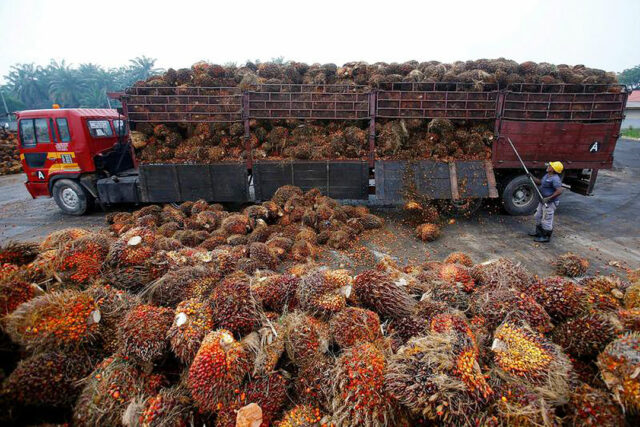
Smugglers exploiting loophole in palm oil import rules, House panel told

REUTERS

By Alyssa Nicole O. Tan

SMUGGLERS are exploiting a quirk of the tax rules by declaring their palm oil imports as intended for processing as animal feed, which allows their shipments to enter tax-free, legislators said at a House of Representatives hearing on Monday.

The importers then end up using their palm oil to make cooking oil, thereby evading the tax on palm oil imports intended for human consumption, PBA Party-list Representative Jericho Jonas B. Nograles said at a Ways and Means committee hearing.

“The livestock industry only requires about P50 billion worth of imports of palm oil, we’re importing P300 billion,” he said.

Resource persons from the poultry and livestock industry told the committee, which is chaired by Rep. Jose Ma. Clemente S. Salceda of Albay, that their preferred feed does not typically use much palm oil.

“We’re rather surprised about the volume because palm oil, especially for… the poultry industry, is not a priority feed component,” United Broiler Raisers Association President Elias Jose M. Inciong said. 

The industry’s preferred raw material for feed is coconut oil, which is widely available in the Philippines. He added that palm oil, while cheap, carries safety concerns.

“You have this concern about contaminants and the safety of your animals when you use palm oil,” Mr. Inciong added. “I don’t think it has merit. If you talk to animal nutritionists, they would prefer at any given time coco oil.”

He also said palm oil imports are adding to the distress of coconut farmers.

National Federation of Hog Farmers Chairman Chester W. Yeo Tan said “in the swine industry, a big percentage is given to coco oil, while the use of palm oil is very minimal.”

Agriculture Undersecretary Ariel T. Cayanan told the committee that inspections of palm oil shipments can determine whether they are food grade or feed grade.

According to data presented by the Bureau of Customs, palm oil imports amounted to 1.2 billion kilograms in 2021 from 910 million in 2016. For feed grade palm oil, imports rose to 176 million last year from 5.7 million in 2016.

Mr. Salceda said: “If agriculture products are allowed to slip through the net of customs and sanitary and phytosanitary enforcement, we will not be able to compensate farmers for the damage they will cause.”

“We will also leave the country’s farms exposed to biological threats these smuggled goods carry,” he added.

Mr. Tan of the hog farmers’ association said the Department of Agriculture’s goal must not be food security, which paves the way for an import-friendly policy, but self-sufficiency in major commodities.

The Philippines’ main source of palm oil is Malaysia, Agriculture Undersecretary for Policy, Planning and Research Fermin D. Adriano said.

Mr. Adriano also noted that Indonesia’s recent ban on exporting palm oil may set off a protectionist chain reaction in other commodity-exporting countries, threatening food security.

The Philippines needs to strive for food sovereignty, he said, but funding is not available since most of the agricultural spending goes mostly to rice.

Mr. Salceda invited presentations at the next hearing on the disruptive effects of palm oil imports on the coconut industry.

Gov’t discussing possible PHL investment by US battery tech company 

THE Department of Trade and Industry (DTI) said it met with US battery technology company ZAF Energy Systems, Inc. and its affiliate Battery Grade Materials, Inc. (BGM) in Washington, DC, to discuss the possibility of an investment in the Philippines.

At an April 19 meeting, Trade Secretary Ramon M. Lopez said ZAF and BGM’s plan for a hydroxide processing plant and battery manufacturing projects may be eligible for incentives under the proposed 2022 Strategic Investment Priority Plan (SIPP).

“Apart from having (access to) vast resources of green metals such copper, cobalt, and nickel, which are key inputs to the production and manufacture of battery and other technology products, US companies stand to benefit from a partnership with the Philippines with the new incentives they can benefit from under the Corporate Recovery and Tax Incentives for Enterprises (CREATE),” Mr. Lopez said.

“With a registration with the Board of Investments (BoI), activities addressing value chain gaps… ZAF-BGM… may both qualify for Tier II status (which grants incentives to projects that address) Industrial Value Chain Gaps under the proposed 2022 SIPP,” he added.

According to the DTI, the US companies are already in talks with Philippine nickel miners and are searching for additional suppliers in preparation for producing nickel hydroxide in the Philippines.

“When fully completed including a battery factory, estimated total investments could reach up to $400-500 million and employ almost a thousand direct employees,” the DTI said.

The US companies have been engaging the BoI and the Philippine Trade and Investment Center (PTIC) in New York since July 2021 to discuss partnership opportunities, requirements, and negotiations for the proposed investment.

“ZAF is currently in further coordination with BoI and PTIC for their planned due diligence visit to the country,” the DTI said.

Mr. Lopez said the DTI has been targeting companies that can process minerals in-country to create an alternative to exporting the minerals as raw ore.

Meanwhile, the DTI has also committed to support the ongoing expansion plans of SBA Communications Corp. in the Philippines.

In a meeting on April 20, Trade Secretary Ramon M. Lopez said SBA has the DTI’s support as the US company seeks to expand its operations in the Philippines as a provider of passive infrastructure for wireless communications.

The company has installed 20 telecommunications towers in the Philippines so far and seeks to build 42 more by the end of the quarter.

“As the Philippines is in the middle of updating its digital infrastructure, we welcome SBA’s continued expansion in the country, which will create more jobs while enhancing competition that will lead to better and more affordable telecommunication services for the people,” Mr. Lopez said.

“There is a strong connectivity demand in the country as Filipinos spend more time online than any other country in ASEAN and most other countries in the world,” he added.

SBA Senior Director (International) Nicholas Van Slyck said that the company is aiming to establish 180 telecommunication towers in 2022.

He added that the company is in talks with mobile network operators Smart Communications, Inc., Globe Telecom, Inc., and Dito Telecommunity Corp. on tower-sharing.

According to the DTI, SBA launched its tower venture in 2021. The BoI approved the company’s application for registration on March 31, 2021, granting its pioneer status. Its proposal to the BoI estimated the project cost at P10.76 billion with job creation of 353 staff.

“For its project, SBA intended to install a total of 1,470 tower structures in the country within five years,” the DTI said.

“The Philippines is currently fourth in foreign direct investment (FDI) in ASEAN, with an annual average of $85 billion from an average of $60 billion in the previous administration,” it added. — Revin Mikhael D. Ochave 

BoC seizes unregistered health products worth P31.5 million

THE Bureau of Customs (BoC) said it seized counterfeit and unregistered health products valued at P31.5 million from two warehouses in Santa Cruz, Manila.

In a statement on Monday, the BoC said the seizures took place last week.

The BoC’s Customs Intelligence and Investigation Service-Intellectual Property Rights Division coordinated a team that included representatives from the Port of Manila, the National Bureau of Investigation, and the Armed Forces of the Philippines. One of the locations inspected was at Ongpin Street, and the other along Fernandez Street.

The seized goods carried brands like Lianhua Lung Cleansing Tea, Healthy Brain Pills, Gluta Lipo, Lidan Tablets, Nin Jiom Pei Pa Koa, Vita herbs, among others. These goods require clearance from and registration with the Food and Drug Authority.

Goods seized at the Ongpin Street warehouse were valued at P9.5 million, while the goods at the Fernandez Street location were valued at P22 million.

The bureau said an investigation is in progress for possible violations of the Customs Modernization and Tariff Act or Republic Act 10863, the Intellectual Property Code of the Philippines or Republic Act 8293, which deals with the infringement of copyright, and the Food and Drug Administration Act or Republic Act 9711.

The BoC said in a separate statement on Monday that the port of Subic also destroyed counterfeit cigarettes worth P38 million last week.

The container bearing the cigarettes was found to also contain counterfeit clothing. The shipment arrived the year before and was forfeited by the port for violations of National Resolution No. 079-2005, Section 1113(f) of Republic Act 10863, and Section 155 of Republic Act 8293.

The BoC said that the destruction of the cigarettes was carried out at an accredited facility in Marilao, Bulacan.

The bureau seized P3.89 billion in smuggled goods and destroyed P7.70 billion worth of forfeited goods as of the end of March.

The BoC posted collections of P643.56 billion in 2021, exceeding the target by 4.7%. The BoC aims to collect P671.66 billion in 2022. — Tobias Jared Tomas

RBEs of IT-BPMs remember their fiscal incentives all too well

For two years during the pandemic, many of us worked from the comfort of our homes, enjoying the benefits of the work-from-home (WFH) arrangement and avoiding traffic and reducing transportation costs. However, this will come to an end for those working for Registered Business Enterprises (RBEs) of the Information Technology – Business Process Management (IT-BPM) sector, which started to return to office work on April 1.

Section 309 of the Tax Code requires that RBEs in economic zones or freeports be exclusively conducted or operated within the geographical boundaries of the zone or freeport.  Any project or activity conducted or performed outside of the geographical boundaries of the zone or freeport is not entitled to incentives.

In relation to this, the Fiscal Incentives Review Board (FIRB) issued Resolution Nos. 19-21 and 23-21 that allowed RBEs IT-BPM to continue the WFH arrangement only until March 31, 2022, without compromising their fiscal incentives. The conditions to enjoy the WFH were as follows:

1. The number of employees under the WFH arrangement shall not exceed 90% of the total workforce that are directly and indirectly engaged in registered activity of the RBE and shall exclude third-party contractors.

2. The number of laptops and other equipment of an RBE outside the ecozone shall not exceed the number of its employees who are under WFH arrangement.

3. Bonds shall be posted for all the equipment deployed to ensure payment of taxes and duties, if any.

4. Revenues from exports shall be maintained regardless of the allowed ratio of employees who will work from home. Provided, that the current number of employees shall not be reduced even if the majority of their employees are working from home.

5. The RBE shall comply with the reportorial requirements and site inspection.

Noncompliance with the above conditions is considered a violation leading to suspension of the income tax incentive for the period of noncompliance. The RBE in the IT-BPM sector would be liable for a penalty equivalent to income tax using the regular rate of 20% or 25% during the months that it committed such a violation.

FIRB Resolution No. 006-22 clarified that the penalty for noncompliance with the provisions found in FIRB Resolution No. 19-21 will be effective from Sept. 13, 2021 until the expiration of the effectivity of FIRB Resolution No. 19-21 on March 31.

COMPUTATION OF PENALTY
Per BIR RMC No. 39-2022, the noncomplying RBEs in the IT-BPM sector are to continue to file their annual income tax return (AITR) using BIR Form No. 1702 EX for those with the Income Tax Holiday (ITH) incentive and BIR Form No. 1702-MX for those enjoying gross income tax (GIT) incentives with mixed transactions.

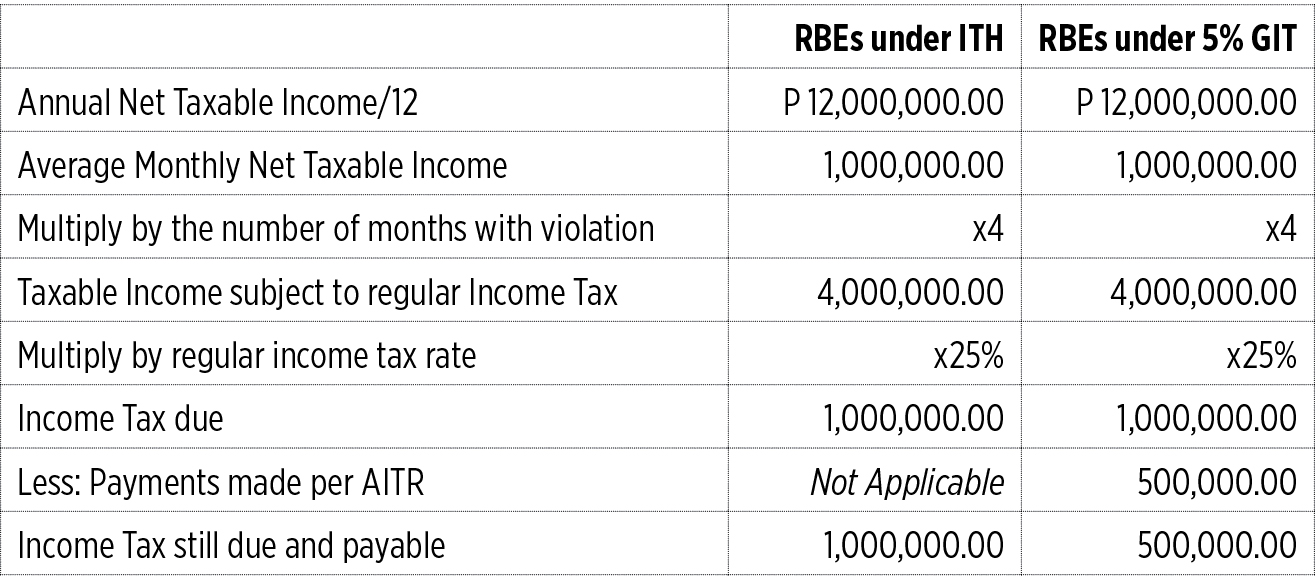
However, they are subject to additional penalties for the months during which they were not compliant with the FIRB conditions. Assuming that the RBE was not compliant between September and December 2021, the computation of penalty is illustrated as follows:

As discussed above, RBEs are to first file and pay based on the incentives that they enjoy. Thereafter, they are to compute the penalties equivalent to the regular income tax of 25% or 20% for the months they were not compliant. In the example above, the RBE enjoying ITH did not pay income tax for the whole year while the RBE enjoying GIT paid the 5% tax of P1.5 million for the entire year.

Considering that the violations occurred for four months, the regular corporate income tax is computed for the four months. Hence, the regular corporate income tax due is arrived at by computing for the entire year tax and then dividing by 12 months. The result is to be multiplied by the number of months that the RBE IT-BPM was in violation. In the illustration above, the RBE is subject to the regular corporate income tax of 25% computed at P1 million for the noncompliant four months.

Once the regular income tax due is computed, the prior payments made using the incentives are to be deducted and only the remaining tax will be due. In the case illustrated above, since the RBE did not pay income tax under the ITH scenario, the entire P1 million becomes payable. However, for the RBE enjoying 5% GIT, since it already paid P500,000 for the four months when it filed its AITR, only the remaining P500,000 is due when it pays the penalty.

MANNER OF FILING AND PAYMENT OF PENALTY
RMC 39-2022 stipulates the uniform use of BIR Form 0605 for the payment of penalties.

The RBE IT-BPM voluntarily paying the penalty is to indicate in the BIR Form 0605 ‘Others’ under ‘Voluntary Payment’ the phrase ‘Penalty pursuant to FIRB Res. No. 19-2021.’ The tax type code remains ‘IT’ and ATC is ‘MC 200.’

The payment is due within 30 days after the due date prescribed for the payment of income tax. Should the payment of penalties be made beyond the prescribed period, administrative penalties are to be imposed. The RBE IT-BPM may opt to voluntarily pay the penalties using the prescribed computation and manner of filing and payment discussed above. The voluntary payment of penalties for the violation of the WFH limit and the conditions set forth above are not an absolute guarantee that the RBE will not be subject of a BIR assessment. The benefit of paying voluntarily is that the voluntary payment made may be directly credited and deducted against the assessed deficiency taxes.

MOVING FORWARD
The illustration provided by the BIR covered the annual income tax filing for the affected RBE in the IT BPM sector for calendar year 2021.

However, as the first quarterly income tax return for 2022 is nearing, RBE IT-BPMs are now in a quandary on how to pay and file their first quarter return. Are they supposed to follow the prescribed procedure set forth in the RMCs?  Will these RBEs be computing income tax payable using the regular rate if they were not compliant in the first quarter of 2022?  Or will they continue to pay their quarterly income tax based on their incentive and pay the penalties in April 2023? Since the RMC is silent as to quarterly filings, is the computation of penalty done during annual preparation only?

The RMCs is also silent as to the suspension of other fiscal incentives available to IT-BPM RBEs. The FIRB resolutions specifically mention suspensions of their ‘fiscal incentive.’ However, the RMCs limit their discussion as to penalties relative to income tax incentives. Can we assume that the violation of the WFH conditions will not affect the VAT zero-rating of local purchases of these RBEs for as long as they keep their registration as registered export enterprises?

Is the prescribed computation of penalty already in lieu of other taxes that may arise in case of non-compliance? Since the RBE became subject to the regular corporate income tax for the noncompliant months, will the local business tax be also payable for the affected months? Take note that the 5% GIT already included the 2% tax due to the local government. Since the 2% tax is already paid to the local government, further payment is arguably no longer due even with the violation of the WHF. However, for those under ITH, there was no local business tax paid. Hence, will they now be subject to local business tax for the period that they become subject to regular corporate income tax.

If the RBE ITM BPM remains noncompliant after March 31, what penalties will be due? How will it affect the non-income tax incentives that they are enjoying?

For the affected RBEs, uncertainties still abound and further clarifications from the regulators would be most welcome to allow them to plan and strategize moving forward as they all strive to return to the new normal.

Let’s Talk Tax is a weekly newspaper column of P&A Grant Thornton that aims to keep the public informed of various developments in taxation. This article is not intended to be a substitute for competent professional advice.


Marie Abigail C. Geluz is a senior in charge from the Tax Advisory & Compliance division of P&A Grant Thornton, the Philippine member firm of Grant Thornton International Ltd.

pagrantthornton@ph.gt.com

Comelec changes format of final presidential, VP debates after muddle involving partner organizer

THE SECOND round of the Comelec-sanctioned presidential debates for the 2022 elections held April 3 was attended by nine of 10 candidates. The only one absent was Ferdinand “Bongbong” R. Marcos, Jr., who also skipped the first round. — PHILIPPINE STAR/ MIGUEL DE GUZMAN

THE SUPPOSED third and final round of official debates among candidates for the countrys top two positions in this year’s elections will be changed into a panel-interview format following a muddle involving the Commission on Elections (Comelec) organizing partner, Impact Hub Manila. 

The final debate was scheduled last weekend but had to be postponed due to Impact Hub Manilas failure to fulfill part of its financial obligations to the venue, Sofitel Philippine Plaza Manila. 

The new dates, April 30 for vice presidential bets and May 1 for president, were in conflict with the candidatesschedules.  

“The Commission on Elections, in partnership with the Kapisanan ng mga Brodkaster ng Pilipinas (KBP), has announced that the concluding event of the Pilipinas Debates 2022 Series will no longer be Vice-Presidential and Presidential Town Hall Debates,” Comelec said in a statement on Monday.  

“In consideration of the inevitable scheduling conflicts as the candidates approach the homestretch of the campaign period, and as advised by the KBP, the COMELEC will now be adopting a Single Candidate/Team – Panel Interview format,it said.   

KBP, a non-government and non-profit organization of the Philippine broadcast media, held its own presidential forum in February that discussed topics such as unemployment, corruption, and foreign relations.  

Election Commissioner George Erwin M. Garcia told reporters in a Viber message that the discussions will be pre-recorded and that Comelec would be in charge of production and editing.  

“The debates will be aired between May 2 to 6 and all (candidates) will be entitled to a one-hour panel interview,” he said. 

As for the Impact Hub Manila controversy, Mr. Garcia declined to give further comment as the investigation is ongoing.    

“The presumption of innocence still stands until completion of the entire process,” he said in a Viber message.  

Comelec Commissioner Rey E. Bulay told a press briefing on Monday that 14 departments of the election agency have submitted responses to the inquiry that he is leading.   

He said it will take him a week to study the responses.  

Comelec’s private contractor allegedly owes the venue P14 million. 

“Unfortunately, the initiative between the two private companies encountered some misunderstandings,” Impact Hub Manila said in a statement dated April 23.   

“While there have been incomplete reports as to the cause of the miscommunication, Impact Hub Manila will refrain from publicly divulging these matters and will endeavor to discuss them with Sofitel and other stakeholders privately. 

Senate President Vicente C. Sotto III, who is running for vice president, told a press briefing last Friday that he and his running mate Senator Panfilo “Ping” M. Lacson, Sr. might skip the debates, citing a conflict of schedule.  

Mr. Garcia told reporters in another Viber message that Comelec would send out on Monday the invitations to the modified forum.  

“We will adjust to where the candidates want the debates to be held and whether they would prefer the debates to be face to face or virtual,” he said in Filipino in a Viber message. John Victor D. Ordoñez 

Flyover for faster airport-Iloilo City travel to be opened soon

ILOILO CITY GOVERNMENT

A FLYOVER that will decongest traffic between the Iloilo International Airport and Iloilo City is expected to be opened soon following Mondays topping out ceremony.   

This is expected to cut travel time from Iloilo City to Iloilo International Airport in Sta. Barbara-Cabatuan towns and vice-versa from the usual 45 minutes to only 20 minutes,the Iloilo City government said in a Facebook post of the ceremony attended by Ilonggo Senator Franklin M. Drilon and local officials.   

The 453.70-meter is one of four flyovers, with a total cost of P1.2 billion, lined up for construction within the Metro Iloilo area beginning Jan. 2020.   

The Metro Iloilo area covers Iloilo City, the neighboring towns of Pavia, Oton, Leganes, Santa Barbara, Cabatuan and San Miguel, and the neighboring island province of Guimaras.  

Also on Monday, a formal groundbreaking was held for the River North Bank Road, which is intended to help decongest heavy traffic between the city and southern towns of Iloilo province.   

Construction for the five-kilometer road, which will also be called Iloilo Sunset Boulevard, is ongoing, according to the project brief of the Department of Public Works and Highways-Western Visayas regional office.   

It will cost about P751.57 million, including drainage structures, river bank protection, and lighting.  

It will traverse between Barangay Tabucan in Iloilo Citys Mandurriao district and Barangay Cagbang in Oton town.  

Iloilo City Mayor Jerry P. Treñas said the local government will handle the landscaping for the road project, which will also have walkways and bike lanes.  

This project aims for a sustainable and greener Iloilo. Its completion will boost further development in the city in the fields of tourism, economy and infrastructure,the city government said. MSJ 

House, Senate probes sought on IP issues highlighted in Bukidnon shooting 

LABOR leader and presidential candidate Leodegario "Ka Leody" de Guzman (in black jacket and red shirt) in a consultation meeting with indigenous community leaders in Bukidnon on April 18, the night before the shooting incident. — KA LEODY DE GUZMAN TWITTER ACCOUNT 
KA LEODY DE GUZMAN TWITTER ACCOUNT

RESOLUTIONS have been filed in both chambers of Congress seeking investigations on a shooting incident in Bukidnon province during a protest activity of an indigenous peoples (IP) community that was attended by labor leader and presidential candidate Leodegario Ka Leodyde Guzman on April 19.  

This violence and the attacks against indigenous people have been ongoing with impunity for quite some time now without resolution and proper intervention by the government,Bayan Muna Party-list representatives said in House Resolution 2561. 

Five members of the Manobo-Pulangihon IP community in Quezon town were injured after private security personnel shot at the group. The regional police office said last week that charges have been filed against the suspects.   

The recent shooting incident that includes the party of Ka Leody de Guzman is emblematic of how our justice system continues to fail them, an act which members of Congress should not countenance,they added. 

The Manobo-Pulangihon are asserting their claim on their ancestral domain, which they said has been illegally taken by a private firm that grows and exports pineapples.       

Meanwhile, Senator Ana Theresia RisaN. Hontiveros-Baraquel has also filed a Senate resolution to probe the land-grabbing allegation.  

Land disputes have been a longstanding issue in our country that often end in violence,she said in a statement on Monday.   

Such incidents are repeated because we do not have a proper policy that will finally end the violence, especially against our indigenous people.”  

Its time we have proper legislation that can address this,she added. Alyssa Nicole O. Tan