Home Blog Page 5915

Russian journalist’s Nobel Peace Prize fetches record $103.5 mln at auction to aid Ukraine children

STOCK PHOTO | Image by 1045373 from Pixabay

Dmitry Muratov, the co-winner of the 2021 Nobel Peace Prize and the editor of one of Russia’s last major independent newspapers, auctioned off his Nobel medal for a record $103.5 million to aid children displaced by the war in Ukraine.

All proceeds from the auction, which coincided with the World Refugee Day on Monday, will benefit UNICEF’s humanitarian response for Ukraine‘s displaced children, Heritage Auctions, which conducted the sale in New York, said in a statement.

Mr. Muratov’s Novaya Gazeta newspaper, fiercely critical of President Vladimir Putin and his government, suspended operations in Russia in March after warnings from the state over its coverage of the war in Ukraine. Read full story

Pressure against liberal Russian media outlets has been continuous under Putin, Russia’s paramount leader since 1999, but it has mounted after Moscow sent troops into Ukraine on Feb. 24. Mr. Muratov was attacked with red paint in April. Read full story]

Russia’s mainstream media and state-controlled organizations follow closely the language used by the Kremlin to describe the conflict with Ukraine, which Moscow calls a “special operation” to ensure Russian security and denazify its neighbor. Kyiv and its Western allies say it is an unprovoked war of aggression.

According to U.S. media reports, the auction of Mr. Muratov’s prize shattered the record for any Nobel medal that has been auctioned off, with reports saying that the previous highest sale fetched just under $5 million.

“This award is unlike any other auction offering to present,” Heritage Auctions said in a statement before the sale.

“Mr. Muratov, with the full support of his staff at Novaya Gazeta, is allowing us to auction his medal not as a collectible but as an event that he hopes will positively impact the lives of millions of Ukrainian refugees.”

Mr. Muratov, who co-founded Novaya Gazeta in 1991, won the 2021 the Nobel Peace Prize with Maria Ressa of the Philippines for what the Nobel Prize committee said were “their efforts to safeguard freedom of expression, which is a precondition for democracy and lasting peace“.

Mr. Muratov, who pledged to donate about $500,000 of that prize money to charities, dedicated his Nobel to the six Novaya Gazeta journalists who have been murdered since 2000.

That list included the journalist Anna Politkovskaya, a critic of Russia’s war in Chechnya, who was killed in 2006 in the elevator of her Moscow apartment building. – Reuters

Tesla sued by former employees over ‘mass layoff’

Logo of Tesla, Inc.

Former Tesla Inc TSLA.O employees have filed a lawsuit against the U.S. electric car company alleging its decision to carry out a “mass layoff” violated federal law as the company did not provide advance notice of the job cuts.

The lawsuit was filed late Sunday in Texas by two workers who said they were terminated from Tesla‘s gigafactory plant in Sparks, Nevada in June. According to the suit, more than 500 employees were terminated at the Nevada factory.

The workers allege the company failed to adhere to federal laws on mass layoffs that require a 60-day notification period under the Worker Adjustment and Retraining Notification Act, according to the lawsuit.

They are seeking class action status for all former Tesla employees throughout the United States who were laid off in May or June without advance notice.

Tesla has simply notified the employees that their terminations would be effective immediately,” the complaint said.

Tesla, which has not commented on numbers of layoffs, did not immediately respond to requests for comment about the lawsuit.

Mr. Musk, the world’s richest person, said earlier this month he had a “super bad feeling” about the economy and that Tesla needed to cut staff by about 10%, according to an email seen by Reuters. Read full story

More than 20 people identifying themselves as Tesla employees said they were laid off, let go or had positions terminated this month, according to online postings and interviews with Reuters. Read full story

The action filed by John Lynch and Daxton Hartsfield, who were fired on June 10 and June 15 respectively, seeks pay and benefits for the 60-day notification period.

“It’s pretty shocking that Tesla would just blatantly violate federal labor law by laying off so many workers without providing the required notice,” Shannon Liss-Riordan, an attorney representing the workers told Reuters.

She said Tesla is offering some employees only one week of severance, adding that she is preparing an emergency motion with a court to try to block Tesla from trying to get releases from employees in exchange for just one week of severance.

The suit was filed in the U.S. District Court, Western District of Texas. – Reuters

UAE to build Red Sea port in Sudan in $6 billion investment package

Location of the Red Sea as seen in a screenshot from Google Maps.

The United Arab Emirates will build a new Red Sea port in Sudan as part of a $6 billion investment package, DAL group chairman Osama Daoud Abdellatif, a partner in the deal, told Reuters.

Abdellatif said the package includes a free trade zone, a large agricultural project and an imminent $300 million deposit to Sudan‘s central bank, which would be the first such deposit since an October military takeover.

Western donors suspended billions in aid and investment to Sudan after the coup, plunging an economy that was already struggling into further turmoil and depriving the government of much needed foreign currency.

Ibrahim told Reuters on Wednesday that a memorandum of understanding had been signed with the UAE for a port and agricultural project, but the details have not previously been reported. Read full story

The finance ministry did not immediately respond to a request for comment on details of the deal.

The $4 billion port, a joint project between DAL group and Abu Dhabi Ports, owned by Abu Dhabi’s holding company ADQ, would be able to handle all kinds of commodities and compete with the country’s main national port, Port Sudan, Abdellatif said.

Located about 200 km (124 miles) north of Port Sudan, it would also include a free trade and industrial zone modeled after Dubai’s Jebel Ali, as well as a small international airport, he said. The project is in “advanced stages,” with studies and designs complete, he said.

Rumours of Gulf investments in Port Sudan, and in agricultural projects elsewhere in the country, have in the past stirred opposition and sometimes protests.

Port Sudan has long been plagued with infrastructure challenges and was shut by a political blockade for six weeks late last year, losing business from major international shippers.

The UAE deal also includes the $1.6 billion expansion and development of an agricultural project by Abu Dhabi conglomerate IHC and DAL Agriculture in the town of Abu Hamad in northern Sudan, Abdellatif said.

Alfalfa, wheat, cotton, sesame, and other crops would be grown and processed on the 400,000 acres of leased land, he said. A $450 million, 500 km (310 mile) toll road connecting the project to the port would be built as well, financed by the Abu Dhabi Fund for Development.

Under the agreement, the Fund would also make a deposit of $300 million to the Central Bank of Sudan, Abdellatif said.

Abdellatif said the agreement was reached initially in July 2021, under a civilian-led transitional government.

Two sources from the former cabinet, who asked not to be named, said a different version of the deal had been reviewed last year but ultimately did not move to a vote due to reservations.

Two high-level current Sudanese officials told Reuters the outlines of the new deal had been agreed between Sudanese leader General Abdelfattah al-Burhan and UAE President Sheikh Mohamed bin Zayed during a recent visit to the Gulf state.

A representative for Abu Dhabi Ports said the company had no comment, while representatives for ADQ, the Abu Dhabi Fund, IHC, and the Abu Dhabi and UAE governments did not immediately respond to requests.

“Ourselves and our partners in the UAE, we have already invested in a bank, a hotel, mining,” said Abdellatif, whose conglomerate has also bid for control of one of Sudan‘s largest telecom companies, Zain Sudan. Read full story

“The UAE wants a stable Sudan so they can do more and more of these investments, but we are not waiting for everything to be perfect,” he added.

After the military ousted Omar al-Bashir in 2019 following popular protests, the UAE and Saudi Arabia pledged a combined $3 billion in grants and in-kind aid to Sudan, which military and civilian leaders say was not delivered in full. – Reuters

Europe may shift back to coal as Russia turns down gas flows

UNSPLASH

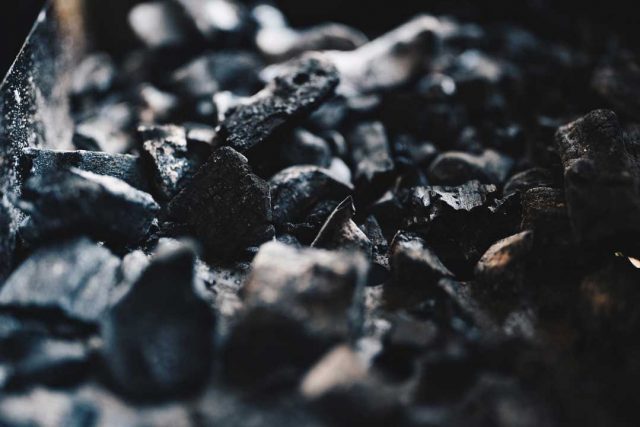
Europe‘s biggest Russian gas buyers raced to find alternative fuel supplies on Monday and could burn more coal to cope with reduced gas flows from Russia that threaten an energy crisis in winter if stores are not refilled.

Germany, Italy, Austria and the Netherlands have all signaled that coal-fired power plants could help see the continent through a crisis that has sent gas prices surging and added to the challenge facing policymakers battling inflation.

The Dutch government said on Monday it would remove a cap on production at coal-fired energy plants and will activate the first phase of an energy crisis plan. Read full story

Denmark has also initiated the first step of an emergency gas plan due to the Russian supply uncertainty. Read full story

Italy moved closer to declaring a state of alert on energy after oil company Eni ENI.MI said it was told by Russia‘s Gazprom GAZP.MM that it would receive only part of its request for gas supplies on Monday.

Germany, which has also experienced lower Russian flows, has announced its latest plan to boost gas storage levels and said it could restart coal-fired power plants that it had aimed to phase out.

“That is painful, but it is a sheer necessity in this situation to reduce gas consumption,” said Economy Minister Robert Habeck, a member of the Green party that has pushed for a faster exit from coal, which produces more greenhouse gases.

“But if we don’t do it, then we run the risk that the storage facilities will not be full enough at the end of the year towards the winter season. And then we are blackmailable on a political level,” he said.

Russia on Monday repeated its earlier criticism that Europe had only itself to blame after the West imposed sanctions in response to Moscow’s invasion of Ukraine, a gas transit route to Europe as well as a major wheat exporter.

The Dutch front-month gas contract TRNLTTFMc1, the European benchmark, was trading around 124 euros ($130) per megawatt hour (MWh) on Monday, down from this year’s peak of 335 euros but still up more than 300% on its level a year ago.


FILLING INVENTORIES SLOWLY

Markus Krebber, CEO of Germany’s largest power producer RWE RWEG.DE, said power prices could take three to five years to fall back to lower levels. Read full story

Russian gas flows to Germany through the Nord Stream 1 pipeline, the main route supplying Europe‘s biggest economy, were still running at about 40% of capacity on Monday, even though they had edged up from the start of last week.

Ukraine said its pipelines could help to fill any gap in supply via Nord Stream 1. Moscow has previously said it could not pump more through the pipelines that Ukraine has not already shut off.

Eni and German utility Uniper UN01.DE were among European companies that said they were receiving less than contracted Russian gas volumes, although Europe‘s gas inventories are still filling – albeit more slowly.

They were about 54% full on Monday against a European Union target of 80% by October and 90% by November.

Germany’s economy ministry said bringing back coal-fired power plants could add up to 10 gigawatts of capacity in case gas supply hit critical levels. A law related to the move goes to the upper house of parliament on July 8.

Alongside a shift back to coal, the latest German measures include an auction system to encourage industry to consume less gas, and financial help for Germany’s gas market operator, via state lender KfW KFW.UL, to fill gas storage faster.

RWE said on Monday it could prolong the operation of three 300 megawatt (MW) brown coal power plants if needed.


RUSSIA BLAMES WEST

Austria’s government agreed with utility Verbund VERB.VI on Sunday to convert a gas-fired power plant to coal should the country face an energy emergency. OMV OMVV.VI said on Monday Austria was set to receive half the usual amount of gas for a second day. Read full story

The Netherlands will remove a production cap at coal-fired energy plants to preserve gas in the light of Gazprom’s moves to cut supplies to Europe. Dutch energy minister Rob Jetten, who made the announcement on Monday, said the government had also activated the “early warning” phase of a three-part energy crisis plan.

Russia‘s state-controlled Gazprom cut capacity last week along Nord Stream 1, citing the delayed return of equipment being serviced by Germany’s Siemens Energy SIEGn.DE in Canada.

“We have gas, it is ready to be delivered, but the Europeans must give back the equipment, which should be repaired under their obligations,” Kremlin spokesman Dmitry Peskov said.

German and Italian officials have said Russia was using this as an excuse to reduce supplies.

Italy, whose technical committee for gas is expected to meet on Tuesday, has said it could declare a heightened state of alert on gas this week if Russia continues to curb supplies.

The move would trigger measures to reduce consumption, including rationing gas for selected industrial users, ramping up production at coal power plants and asking for more gas imports from other suppliers under existing contracts. – Reuters

Billionaire Razon’s Prime Infrastructure eyes IPO

Prime Infrastructure Holdings Inc., billionaire Enrique Razon’s sustainable infrastructure firm, is considering an initial public offering in Manila that could raise as much as $400 million, according to people with knowledge of the matter.

The company is working with financial advisers on the potential first-time share sale, the people said. A listing in the Philippines could take place as soon as this year, said the people, who asked not to be identified as the process is private.

Deliberations are ongoing and details of the offering such as the size and timing could still change, the people said. Prime Infra officials didn’t immediately respond to requests for comment.

A listing by Prime Infrastructure will give a boost to the IPO market in the Southeast Asian nation. The country hosted six new listings so far this year raising $352 million in total, down from $1.3 billion in the same period in 2021, according to data compiled by Bloomberg.

Prime Infrastructure was set up to focus on building assets that support sustainability priorities such as clean and renewable energy as well as access to clean water and waste management, according to its website. The company plans to build a facility including a solar panel installation with a capacity of as many as 3,500 megawatts, and a battery energy storage system that can hold up to 4,500 megawatt-hours, according to a statement.

Razon is the second-richest person in the Philippines, with a net worth of $5.1 billion, according to the Bloomberg Billionaires Index. He built his wealth mainly through his shipping company International Container Terminal Services Inc. Razon also controls Bloomberry Resorts Corp., which owns the Manila gambling complex Solaire Resort & Casino. — Bloomberg

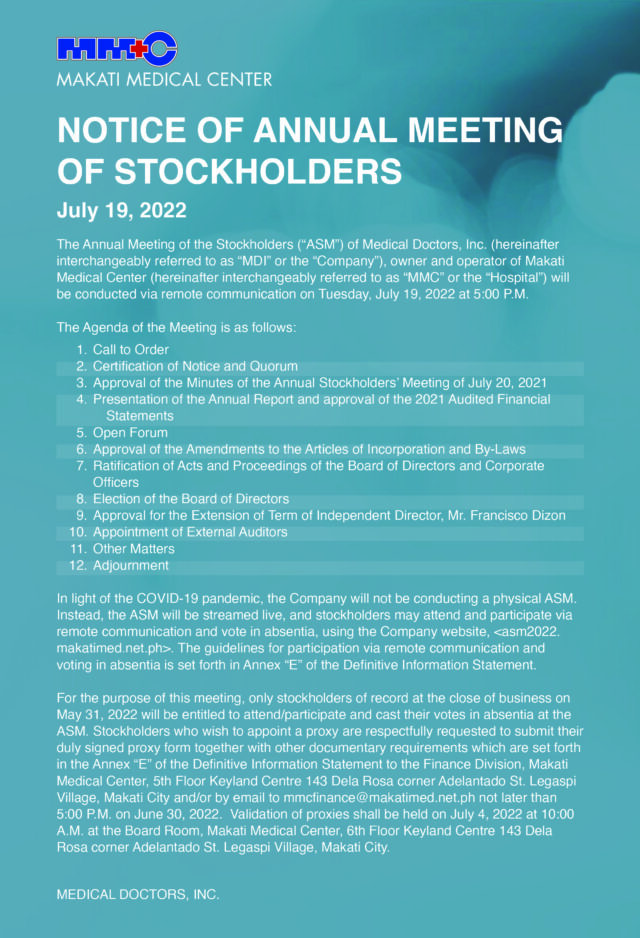
Medical Doctors, Inc. to conduct annual meeting of stockholders via remote communication on July 19


Spotlight is BusinessWorld’s sponsored section that allows advertisers to amplify their brand and connect with BusinessWorld’s audience by enabling them to publish their stories directly on the BusinessWorld Web site. For more information, send an email to online@bworldonline.com.

Join us on Viber to get more updates from BusinessWorld: https://bit.ly/3hv6bLA.

Marcos to head Agriculture dep’t

PHILIPPINE STAR/ MICHAEL VARCAS

By Kyle Aristophere T. Atienza, Reporter

PRESIDENT-ELECT Ferdinand R. Marcos, Jr. on Monday said he would take over the Agriculture department to address the “severe” problems facing the sector.

He also said he would allow open-pit mining operations as long as these do not harm the environment.

At a press briefing at his campaign headquarters, Mr. Marcos warned of rising food prices and shortages in the next quarters due to external factors that are affecting the supply of food and feeds around the world.

“For agriculture, I think the problem is severe enough that I have decided to take on the portfolio of secretary of Agriculture at least for now,” he said. “At least until we can reorganize the Department of Agriculture (DA) in a way that it can be ready for the years to come.”

Agriculture contributes about a tenth to the gross domestic product (GDP) and a fourth of jobs in the country.

Agricultural output shrank by an annual 0.3% in the first quarter, as fisheries, livestock and crop production declined. Agriculture Secretary William D. Dar had attributed the lower production to the spike in oil and fertilizer prices after Russia’s invasion of Ukraine in late February.

Mr. Marcos said he would focus on boosting food production amid rising food protectionism around the world.

“You may have noted that Thailand and Vietnam, for example, one of our main sources of imported rice, have decided to ban their rice exports at least for now. We have to compensate for that by hopefully increasing production here in the Philippines,” he said.

Mr. Marcos said it’s important for the president to take over the DA “so things can move quickly” in response to global developments.

“We have to plan in a more thorough fashion instead of just responding. I have asked DTI, NEDA, DoF and DBM to start to make economic forecasts on what it is we think we have to face for the rest of this year so we can prepare… There may be some emergency situation especially in regard to food supply,” he said.

This is not the first time a sitting president has taken over a department. Former President Gloria Macapagal-Arroyo also held a Cabinet post during her term, leading the Defense department from November 2006 to February 2007.

The Samahang Industriya ng Agrikultura (SINAG) welcomed Mr. Marcos’ plan to head the DA.

“Since winning the presidency, we have pushed for the president to assume the post as DA secretary given the scale of destruction of the local agriculture sector in the last three years,” the group, which has opposed the government’s export policies, said in a statement.

“We believe that only the president can jumpstart the gargantuan task of rehabilitating local agriculture from the carnage created by those at the helm of the DA these past years,” it added.

CLEAN MINING
Meanwhile, Mr. Marcos said he wants to ensure that the Philippines can have “clean mining.”

“We have to view mining, natural resources as a national treasure which can help the Philippines. It is for us to ensure that mining operations in the country are environmentally neutral,” he said.

“I cannot believe that here in the Philippines, we cannot monitor and regulate the mining industry sufficiently so that we can have clean mining,” he added.

Economists have been urging the government to ensure that it gets a fair share in mining projects, which they said could be used to fund more social programs.

In 2021, the government lifted a four-year ban on new open-pit mines, gaining the ire of activists and economists who have been saying that the industry has not produced a significant number of jobs.

Mr. Marcos also rejected calls to suspend the excise tax on oil products, saying he would focus on helping those “in need.”

“Those who have the means, they can afford to pay. Those who are in danger of losing their livelihoods, they should be our focus,” he said.

Fuel retailers are raising gasoline prices by P0.80 per liter and diesel prices by P3.10 per liter on Tuesday.

As of June 14, pump prices have gone up by P28.70 per liter for gasoline and P41.15 for diesel since the start of 2022, data from the Department of Energy showed.

BSP chief says 25-bp rate increase ‘likely’

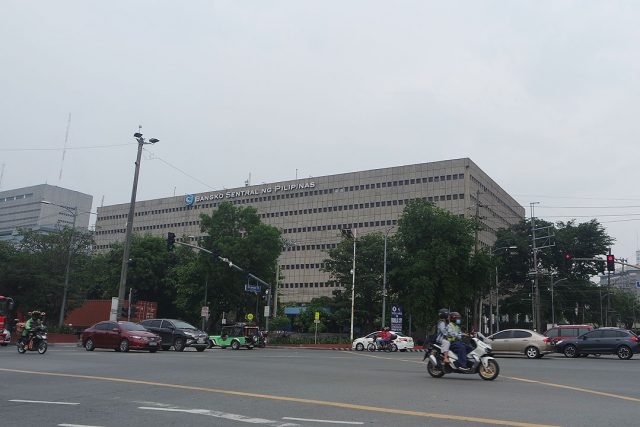
THE PHILIPPINE central bank said on Monday it would likely raise interest rates by 25 basis points (bps) on Thursday, despite market expectations of more aggressive tightening.

“I think most likely 25 bps. Most likely. We’re not sure but we go by the data. And we don’t have to keep in step with the Fed because if you really look at the real interest rate and inflation, we are too far,” Bangko Sentral ng Pilipinas (BSP) Governor Benjamin E. Diokno told reporters in mixed English and Filipino on Monday.

A BusinessWorld poll last week showed 15 out of 16 analysts anticipate a rate hike at the June 23 meeting. Nine analysts expect the Monetary Board to raise rates by 25 bps, while six see an increase of 50 bps.

Felipe M. Medalla, current Monetary Board member and incoming BSP governor, said that there would be two more rate hikes this year and possibly more if elevated inflation persists.

“We are actually now preparing for a series of 25-bp increase. Exactly how many? We know it’s at least two more for this year, if necessary, more than two more, and if necessary, more increases in 2023,” he told the ABS-CBN News Channel on Monday.

Mr. Medalla last week told BusinessWorld he “personally does not like 50 bps,” after being asked if the BSP would consider hikes bigger than 25 bps.

“The BSP will keep on adjusting the policy rates until we’re comfortable that the change of inflation from one month to the next will be consistent with the target of 2-4%,” he said.

Inflation rose to 5.4% in May, the highest in three and a half years and exceeded the BSP’s 2-4% target range, amid a continued rise in food and fuel prices.

The BSP last month raised its average inflation estimate to 4.6% this year from 4.3%.

However, some analysts said the BSP might consider a 50-bp increase after aggressive tightening by the US Federal Reserve last week.

The Fed approved a 75-bp interest rate hike, its biggest in three decades, as it sought to tame stubbornly high inflation. Also last week, the Bank of England increased rates for a fifth time since December, while the Swiss National Bank raised rates for the first time in 15 years.

However, Mr. Medalla said central banks do not necessarily have to match each other’s policy rates.

“This gap between Philippine interest rates and US interest rates has to be seen in a global context. If we look at all currencies combined, we are actually appreciating. When you take out the US dollar, we are in the middle of the pack. That’s why we do not have to match US rates,” he said.

After June 23, the Monetary Board has four more policy meetings scheduled this year — Aug. 18, Sept. 22, Nov. 11, and Dec. 15. – Keisha B. Ta-asan

Over P500-B investment pledges expected in next 18 months — DTI’s Lopez

THE ORTIGAS business district pictured on Nov. 9, 2021. — PHILIPPINE STAR/ MICHAEL VARCAS

THE PHILIPPINES can expect more than P500 billion worth of investment pledges in the next 18 months, Department of Trade and Industry (DTI) Secretary Ramon M. Lopez said on Monday.

“Total estimated value of investment leads is over P500 billion in the next 18 months. These are actual pledges already, and in various stages of preparation, site identification, company registration and IPA (investment promotion agency) application,” he told reporters in a Viber message.

“(These are in) varying stages. Some not yet registered, while some are,” he added.

Mr. Lopez said the investment leads are in sectors such as manufacturing, specifically personal protective equipment, international sports and apparel brands. He also mentioned electronics, printers, drones, e-vehicle ecosystems, battery technology and green metal processing.

Other investment leads include automotive parts, cement plants, integrated iron and steel, marine shipbuilding and ship repair, modern agribusiness projects, and integrated dairy operations. 

Mr. Lopez said there are also planned investments in satellite services such as billionaire Elon Musk-led SpaceX’s satellite internet, as well as data centers for hyperscalers, and renewable energy projects.

There are also investments related to information technology and business process management (IT-BPM), healthcare, animation, IT design and engineering, logistics, marine services, and transshipment operations.

Mr. Lopez said the investment leads and pledges are driven by recent economic reforms such as the Corporate Recovery and Tax Incentives for Enterprises (CREATE) Act and amendments to the Public Service Act. Retail Trade Liberalization Act and Foreign Investment Act. 

“The main drivers are robust post-pandemic economic recovery and growth, 110 million market size, and a young and competent workforce at 49 million,” he said. 

“(Other drivers include) market-oriented liberal policies to continue in the next administration, ease of doing business — facilitative IPAs and agencies in welcoming investments, free trade agreements of the Philippines, and the expectation of Regional Comprehensive Economic Partnership (RCEP) ratification,” he added. 

SOUTH KOREA INVESTMENT
Meanwhile, the Board of Investments (BoI) said it approved a P756.24-million tapioca starch project being undertaken by South Korean firm Daesang Philippines Corp.

In a statement on Monday, the BoI said Daesang Philippines has been given the greenlight as a new producer of tapioca starch. The company will introduce its wastewater-to-biogas technology for the first time, which is expected to boost the circular economy and energy efficiency goals of the Philippines.

The project has an annual capacity of 33,000 tons of tapioca starch and 4,446 tons of tapioca residue as the by-product. It is estimated to begin commercial operations by January 2023 in Tagoloan town, Misamis Oriental and will generate 492 jobs.

According to the BoI, the project will augment the country’s cassava starch production by 9% to 403,000 metric tons (MT) from 370,000 MT.

It added that around 1 to 1.2 million MT of cassava roots are needed to meet the requirements for local cassava processing, citing estimates from the Philippine Cassava Industry Roadmap and the US Department of Agriculture-Foreign Agricultural Service.

The BoI said the approval of the Daesang project is expected to boost the economic partnership between the Philippines and South Korea, as the two countries are expected to forge an FTA soon. Once signed, the FTA between the two countries is expected to generate more investment and employment opportunities. — Revin Mikhael D. Ochave

Diokno confident of Jan. exit from FATF’s ‘gray list’

THE LOGO of the Financial Action Task Force (FATF) is seen at the OECD headquarters in Paris, France, Oct. 18, 2019. — REUTERS

BANGKO SENTRAL ng Pilipinas (BSP) Governor Benjamin E. Diokno expressed confidence the Philippines would leave the Financial Action Task Force’s (FATF) “gray list” of jurisdictions subjected to increased monitoring for “dirty money” risks by January.

The global financial crime watchdog kept the Philippines on its gray list last week, citing the need to further strengthen its action plan to address “strategic deficiencies.”

Mr. Diokno told reporters on Monday the FATF had given the Philippines until January to comply with 18 action plan items identified by the International Co-operation Review Group (ICRG).

“We are taking steps until January 2023 because there will be a change in administration, so delivery may be affected. So, we’re still on that list, but it’s not damaging to our trade,” he said. “We still have six months to go.”

Anti-Money Laundering Council (AMLC) Secretariat Executive Director Mel Georgie B. Racela said in a Viber message the Philippines has complied with five action plan items, leaving 13 more to be addressed.

“The ICRG action plan does not require any legislative action from the Philippines. This means that the country’s laws are generally compliant with the requirements of the FATF. The ICRG action plan’s focus is on how the country is effectively implementing its AML/CFT (anti-money laundering/combating the financing of terrorism) laws and regulations,” he said.

The FATF said the Philippines should continue to show there is effective risk-based supervision of designated nonfinancial businesses and professions, and demonstrate that supervisors are using AML/CFT controls to lessen risks associated with casino junkets.

The country should boost and streamline law enforcement agencies’ access to beneficial owners’ information and demonstrate increased use of financial intelligence, the FATF said.

The Philippines should also investigate and prosecute of money laundering and terrorist financing cases, it added.

The watchdog also said the country should take proper measures for the nonprofit organization sector, as well as improve the effectiveness of targeted financial sanctions framework for terrorist and proliferation financing.

“The AMLC will continue pushing for a ‘One Nation Approach’ to exit the gray list. This includes apprising the incoming administration of the roles of the agencies concerned; and convening the new National AML/CFT Coordinating Committee (NACC) for the monitoring of the implementation of the action plan items,” Mr. Racela said.

The NACC, which will oversee the implementation of the National AML/CFT Strategy (NACS), is composed of the BSP, Insurance Commission, Securities and Exchange Commission, Department of Finance and Department of National Defense, among other agencies.

“It shall be under the ambit of the NACS that the relevant Philippine authorities will continue to work together in strengthening the country’s AML/CFT measures and to show progress towards effectiveness,” Mr. Racela said.

He also urged law enforcement and government agencies, and covered persons to demonstrate effectiveness to address the action plan items.

The country in June 2021 was once again included in the FATF gray list. While the FATF did not call for enhanced due diligence for transactions, the government earlier said some Philippine-related transactions have been subjected to more scrutiny. — K.B.Ta-asan

PLDT group blocks 23M smishing SMS from entities

BW FILE PHOTO

Text scams from individual numbers to follow

THE PLDT group was able to block millions of short message service (SMS)-based phishing attacks, or smishing, and is now working to address text scams sent through individual numbers, according to its chief information security officer.

Dati ’yung text scams ay nanggagaling sa talagang sender IDs ng mga kumpanya at pinatay na natin ’yun two weeks ago (Before, text scams would come from the sender IDs of companies, and we’ve gotten rid of them two weeks ago),” PLDT, Inc. and Smart Communications, Inc. First Vice-President and Chief Information Security Officer Angel T. Redoble told BusinessWorld on June 17.

Ang nakakalusot na lang ay nanggagaling sa peer-to-peer or individual numbers, kasi unang-una hindi naman natin binabasa ’yung SMS ng mga tao (Those that still get away with it are messages sent through peer-to-peer or individual numbers, because we don’t read people’s SMS),” he added.

He noted that the group is now in talks with vendors “to upgrade so that we can detect and prevent” text scams coming from individual numbers.

“We’ve already initiated coordination with the PNP (Philippine National Police) anti-cybercrime group para imbestigahan kung nakakabili sila ng SIM cards na bulto-bulto (to investigate if [some people] are able to buy SIM cards in bulk).”

PLDT and its wireless arm Smart said on Monday that they have increased efforts to prevent malicious messages from reaching their customers.

“From June 11 to 14 alone, PLDT and Smart have blocked more than 23 million SMS that contain three URLs identified as phishing sites,” the group said in an e-mailed statement.

The group defined smishing or SMS phishing as a form of “social engineering done through text messages that deceive customers into thinking that these messages were sent by legitimate organizations such as banks, recruitment agencies, tour operators and other companies.”

“These messages often contain links to websites that lure victims into revealing their personal information,” it noted.

More than 600,000 text messages linked to smishing, hoaxes, and spamming were blocked in the first five months of the year.

At the same time, the group said it had blocked nearly 78,000 SIMs, or removable smart cards for mobile phones, related to smishing from January to May.

“PLDT and Smart have blocked more than 500 domains specifically linked to smishing while the group has further blocked more than 10,000 domains tied to phishing.”

The group invested nearly P3 billion in cybersecurity infrastructure last year.

“We are constantly upgrading our tools to stay ahead of criminals. We continue to engage our partners both in the government and private sector to keep the group updated on the latest threats and how perpetrators run their modus,” Mr. Redoble said.

Hastings Holdings, Inc., a unit of PLDT Beneficial Trust Fund subsidiary MediaQuest Holdings, Inc., has a majority stake in BusinessWorld through the Philippine Star Group, which it controls. — Arjay L. Balinbin

Cosco, Thailand’s Siam Global partner for one-stop warehouse

COSCO Capital, Inc. has signed a joint venture agreement with Siam Global House Public Co. Ltd. to operate a one-stop home improvement warehouse.

“The consideration or contribution of Cosco Capital in the joint venture agreement is less than 10% of the company’s total book value,” the listed retail holding firm said in a disclosure on Monday.

The warehouse will hold building and construction-related materials, home and garden decorative goods, home improvement goods, construction equipment, and tools.

For its initial capital, the joint venture will have P500 million — 55% for Siam Global and 45% for Cosco Capital. The agreement was forged on June 17 at the foreign company’s head office in Roi Et, Thailand.

Cosco Capital said the joint venture is “looking to finalize, construct and open” three to five stores in the next 12 to 18 months in the National Capital Region, Calabarzon (Batangas, Cavite, Laguna, Quezon, and Rizal) and Region 3, or Central Luzon.

Siam Global is a Thailand-based firm with 76 stores selling building materials and home decorative products.

Cosco Capital is an investment holding company with diverse interests in retail, wine and alcohol distribution, real estate, and mining. The group’s subsidiaries include Puregold Price Club, Inc., Ellimac Prime Holdings, Inc., and Office Warehouse, Inc., among others.

In the first quarter, the company reported that its consolidated net income increased by 10.9% to P2.71 billion. Consolidated revenues were also up by 2.8% to P40.68 billion from P39.57 billion.

On Monday, Cosco Capital shares climbed by 2.36% or 10 centavos to close at P4.34 at the stock market. — Luisa Maria Jacinta C. Jocson