Home Blog Page 5893

World leaders lash Russia over Ukraine invasion, referendum plans

Army soldier figurines are displayed in front of the Ukrainian and Russian flag colors background in this illustration taken, Feb. 13, 2022. — REUTERS/DADO RUVIC/ILLUSTRATION

 – World leaders meeting at the United Nations in New York denounced Russia‘s invasion of Ukraine, as Moscow-installed leaders in occupied areas of four Ukrainian regions announced plans to hold referendums on joining Russia in coming days.

In the apparently coordinated move, pro-Russian figures announced referendums for Sept. 23-27 in Luhansk, Donetsk, Kherson and Zaporizhzhia provinces, representing around 15% of Ukrainian territory, or an area about the size of Hungary.

“The Russians can do whatever they want. It will not change anything,” Ukraine‘s Foreign Minister Dmytro Kuleba said on Tuesday in response to reporters’ questions at the United Nations where leaders were arriving for a General Assembly meeting dominated by the war in Ukraine.

In a tweet, he added: “Ukraine has every right to liberate its territories and will keep liberating them whatever Russia has to say.”

If the referendum plan “wasn’t so tragic it would be funny,” French President Emmanuel Macron told reporters ahead of the UN assembly in New York. Read full story

Russian President Vladimir Putin on Feb. 24 ordered what he calls a “special military operation” in Ukraine to root out dangerous nationalists and “denazify” the country. The war has killed thousands, destroyed cities and sent millions fleeing their homes in the former Soviet republic.

German Chancellor Olaf Scholz said Putin will only give up his “imperial ambitions” that risk destroying Ukraine and Russia if he recognizes he cannot win the war. Read full story

“This is why we will not accept any peace dictated by Russia and this is why Ukraine must be able to fend off Russia‘s attack,” Scholz said in his first address to the General Assembly.

Japanese Prime Minister Fumio Kishida told the assembly the UN’s credibility was in danger because of the invasion by Russia, a permanent member of the Security Council, and reforms of the council were needed. Read full story

Russia‘s invasion of Ukraine is a conduct that tramples the philosophy and principles of the U.N. charter … It should never be tolerated,” Mr. Kishida said.


JUSTIFICATION TO MOBILIZE

Some pro-Kremlin figures framed the referendums for occupied regions as an ultimatum to the West to accept Russian territorial gains or face an all-out war with a nuclear-armed foe.

“Encroachment onto Russian territory is a crime which allows you to use all the forces of self–defense,” Dmitry Medvedev, a former Russian president and now hawkish deputy chairman of Putin’s Security Council, said on social media.

Reframing the fighting in occupied territory as an attack on Russia could give Moscow a justification to mobilize its 2 million-strong military reserves. Moscow has so far resisted such a move despite mounting losses.

U.S. National Security Adviser Jake Sullivan said Washington was aware of reports Putin might be considering ordering a mobilization. That would do nothing to undermine Ukraine‘s ability to push back Russian aggression, Mr. Sullivan said, adding that Washington rejected any such referendums “unequivocally”.

Russia already considers Luhansk and Donetsk, which together make up the Donbas region Moscow partially occupied in 2014, to be independent states. Ukraine and the West consider all parts of Ukraine held by Russian forces to be illegally occupied.

Russia now holds about 60% of Donetsk and had captured nearly all of Luhansk by July after slow advances during months of intense fighting.

Those gains are now under threat after Russian forces were driven from neighboring Kharkiv province this month, losing control of their main supply lines for much of the Donetsk and Luhansk front lines.


‘SOME NOISE’

“The situation on at the front clearly indicates the initiative is with Ukraine,” Ukrainian President Volodymyr Zelenskiy said in a video address released early on Wednesday.

Ukraine‘s position did not change because of “some noise” from Russia, Mr. Zelenskiy added in a reference to the referendums.

In Kherson, where the regional capital is the only major city Russia has so far captured intact since the invasion, Ukraine has launched a major counter-offensive.

In the south, Russia controls most of Zaporizhzhia, including Europe’s largest nuclear power plant. The plant, operated by Ukrainian staff, has suffered damage from shelling, fuelling fears of a radioactive disaster.

Ukraine‘s nuclear energy firm Energoatom said power to the plant’s No. 6 unit had been disrupted by shelling early on Wednesday, requiring the start of two emergency generators for safety systems to ensure the operation of the fuel cooling pumps. – Reuters

Japanese man sets himself on fire in apparent protest at former PM’s state funeral

STOCK PHOTO | Image by Alexa from Pixabay

 – A man set himself on fire near the Japanese prime minister’s office on Wednesday in an apparent protest at the government’s decision to hold a state funeral for former premier Shinzo Abe, who was assassinated earlier this year, media reported.

The man was taken to hospital suffering burns to his entire body, while a police officer who tried to extinguish the flames was also injured.

The man, in his 70s, was unconscious when first found but later told police that he had deliberately doused himself in oil, media said. A letter about Abe’s state funeral and the words “I strongly oppose it,” was found nearby.

Police declined to confirm the incident, which took place on what would have been Abe’s 68th birthday.

“I have heard that police found a man who had suffered burns near government offices, and I’m aware that police are investigating,” chief cabinet secretary Hirokazu Matsuno told a news conference.

Abe, Japan’s longest serving premier who stepped down in 2020 citing ill-health, was gunned down at a campaign rally on July 8. His state funeral is set for Sept. 27, with some 6,000 people from Japan and overseas set to take part.

Opposition to the event has been growing due to revelations after Abe’s killing of links between the Liberal Democratic Party (LDP), of which he was a powerful member, and the controversial Unification Church. The suspect in Abe’s death has said the church bankrupted his mother and he felt the former prime minister supported it.

Links to the Unification Church, founded in South Korea in the 1950s, have grown into a huge problem for current Prime Minister Fumio Kishida and the LDP since they emerged following Abe’s killing. The LDP earlier this month said a survey showed nearly half of 379 LDP lawmakers had some form of interaction with the church. Read full story

Public sentiment was narrowly in favor of a state funeral at the time it was announced, shortly after Abe’s death, but opinion has shifted sharply.

Numerous polls show a majority of Japanese now oppose the ceremony, helping to send Kishida’s support plummeting. A poll by the Mainichi Daily conducted at the weekend showed his support at 29%, down six percentage points from late August – a level that analysts say makes it difficult for a prime minister to have enough support to carry out his agenda.

Support for the LDP fell 6 points to 23%, the Mainichi said.

Kishida has defended his decision repeatedly, but a vast majority of voters remain unconvinced, also questioning the need to hold such an expensive ceremony at a time of growing economic pain for ordinary citizens.

The latest government cost estimate is 1.65 billion yen ($12 million), which includes security and receptions.

In 2014, two men set themselves on fire in separate incidents in protest at Japan’s shift away from postwar pacifism under Abe’s administration. One of the men died. – Reuters

US, Canadian warships sail through Taiwan Strait for 2nd time in a year

Screenshot from Google Maps

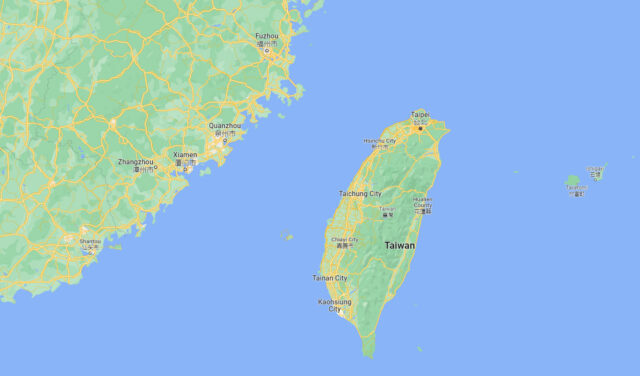
A US Navy warship and a Canadian frigate made a routine transit through the Taiwan Strait on Tuesday, the militaries of both nations said, at a time of heightened military tension between Beijing and Taipei.

The transit was the second in a month by a US Navy ship, and the second jointly by the United States and Canada in less than a year, since October 2021. Read full story

While China condemned the mission, saying its forces “warned” the ships, recent years have seen U.S. warships, and occasionally those of allied nations such as Britain and Canada, routinely sail through the strait.

Such trips anger China, which claims Taiwan over the objections of the island’s democratically elected government.

“Cooperation like this represents the centerpiece of our approach to a secure and prosperous region,” the US Navy said in a statement.

The Arleigh Burke-class guided-missile destroyer Higgins and the Royal Canadian Navy’s Halifax-class frigate Vancouver made the transit through a corridor in the strait that is beyond the territorial sea of any coastal state, it added.

Canadian Defense Minister Anita Anand said that as a Pacific nation, her country was deeply committed to upholding global stability and prosperity in the Indo-Pacific region.

“Today’s routine Taiwan Strait transit demonstrates our commitment to a free, open and inclusive Indo-Pacific,” she said in a statement.

Taiwan‘s foreign ministry welcomed the action.

“This operation though the Taiwan Strait is, even more, a concrete demonstration of the resolute opposition of democratic allies to China’s expansion attempts,” it said.

The Eastern Theatre Command of China’s People’s Liberation Army said its forces monitored the ships and “warned them”.

“Theatre forces are always on high alert, resolutely counter all threats and provocations, and resolutely defend national sovereignty and territorial integrity,” it said in a statement, employing its usual phrasing for such responses.

Taiwan‘s defense ministry said the ships sailed north through the waterway and its forces observed the mission but “the situation was as normal”.

A visit to Taiwan early in August by US House of Representatives Speaker Nancy Pelosi enraged China, which subsequently launched military drills near the island that have continued, although on a much reduced scale.

The narrow Taiwan Strait has been a frequent source of military tension since the defeated Republic of China government fled to Taiwan in 1949 after losing a civil war with the communists, who established the People’s Republic of China. – Reuters

Europe energy crisis may deepen with looming liquidity crunch

 – Europe‘s problems in sourcing oil and gas this winter after a dispute with Russia may be exacerbated by a new crisis in the market where prices are already red-hot: a liquidity crunch that could send them spiraling higher still.

But European governments have only belatedly rallied to offer financial support to power providers on the brink of collapse, in an effort to ease pressure on a market whose smooth operation is vital to keep people warm.

“We have a dysfunctional futures market, which then creates problems for the physical market and leads to higher prices, higher inflation,” a senior trading source told Reuters.

The problem first came to light in March when an association of top traders, utilities, oil majors and bankers sent a letter to regulators calling for contingency plans. Read full story

This was triggered by market players rushing to cover their financial exposure to soaring gas prices through derivatives, hedging against future price spikes in the physical market, where a product is delivered, by taking a ‘short’ position.

Market players typically borrow to build short positions in the futures market, with 85-90% coming from banks. Some 10-15% of the value of the short, known as minimum margin, is covered by the traders’ own funds and deposited with a broker’s account.

But if funds in the account fall below the minimum margin requirement, in this case 10-15%, it triggers a ‘margin call’.

As prices for power, gas and coal have risen over the past year, so have the price of shorts, with the resulting margin calls forcing oil and gas majors, trading firms and power utilities to tie up more capital.

Some, particularly smaller firms, have been hurt so badly they have been forced to exit trading altogether as energy prices soared after Russia’s invasion of Ukraine in February, which made a general global shortage worse.

Any such drop in the number of players reduces market liquidity, which can in turn lead to even more volatility and sharper spikes in prices that can hurt even major players.

Since late August, European Union governments have stepped in to help utilities such as Germany’s Uniper. Read full story

However, with winter price spikes lying ahead, there is no indication of whether or how quickly governments and the EU can back banks or other utilities that need to hedge their trades.

Exchanges, clearing houses and brokers have raised initial margin requirements to 100%-150% of contract value from 10-15%, senior bankers and traders said, making hedging too costly for many.

The ICE exchange is, for example, charging margin rates of up to 79% on Dutch TTF gas futures.

Although market participants say that fast disappearing liquidity could severely reduce trading in fuels such as oil, gas and coal and lead to supply disruptions and bankruptcies, regulators still say the risk is small. Read full story

Norwegian state-owned firm Equinor, Europe‘s top gas trader, said this month that European energy companies, excluding in Britain, need at least 1.5 trillion euros ($1.5 trillion) to cover the cost of exposure to soaring gas prices. 1N30D0XO

That compares with the $1.3 trillion value of U.S. subprime mortgages in 2007, which triggered a global financial meltdown.

However, one European Central Bank (ECB) policymaker told Reuters that worst case scenario losses would amount to 25-30 billion euros ($25-30 billion), adding the risk lay with speculators rather than the actual market.


‘NEED TO HEDGE’

Some traders and banks have nevertheless asked regulators such as the ECB and the Bank of England (BoE) to provide guarantees or credit insurance to brokers and clearing houses to lower initial margining levels to pre-crisis times.

Doing this, sources familiar with talks said, would help bring participants back into the market and increase liquidity.

The ECB and BoE have met several big trading houses and banks since April, four trading, regulatory and banking sources said, but no concrete measures have resulted from the consultations, which have not previously been reported.

“It’s too big a single point of risk for a bank. The banks have hit or are close to hitting their liquidity risk and counterparty risk levels,” a senior banking source involved in commodities finance said.

Banks have a certain level of capital they can tie up to a particular industry or a particular player and the price spikes and a reduction of players are currently testing those levels.

The ECB has repeatedly said it did not see systemic risk that could destabilize the banking sector. The ECB declined to offer fresh comment.

ECB President Christine Lagarde said this month she would support fiscal measures to provide liquidity to solvent energy market participants, including utility firms, while the ECB stood ready to provide liquidity to banks if needed.

Britain’s Treasury and Bank of England, meanwhile, announced a 40 billion pound ($46 billion) financing scheme this month for “extraordinary liquidity requirements” and short term support to wholesale energy firms. Read full story

A Treasury spokesman said the measures are being taken at the appropriate moment after watching the market for some time and in line with European peers.

Yet the markets for energy and commodities remain opaque, with physical trades hedged with financial instruments depending on internal rules set by the various companies involved.

And since no regulator or exchange maintains a central register for trades it is impossible to see the full picture, sources at several large commodities houses told Reuters.

For some, however, the signals are clear to see.

“Open interest and volumes have come down significantly as a result of what is happening on the margining front,” Saad Rahim, chief economist at Trafigura, told a conference last week.

“It will ultimately have an impact on the physical volumes that are being traded because physical traders need to hedge.” – Reuters

What crisis? High-stakes crypto lending looks here to stay

REUTERS

 – On May 11, Scott Odell, an analyst at British crypto lender Blockchain.com, instant messaged Edward Zhao of Three Arrows Capital asking that the Singapore hedge fund repay at least part of a $270 million loan.

Three Arrows had just taken a hit from the collapse of cryptocurrency Terra, raising doubts about its ability to repay. That was a worry for Blockchain.com since it had not taken collateral to secure the loan, court filings show.

“This is time sensitive so let’s sort if you’re available,” Odell said of the repayment.

Zhao appeared lost for words.

“Yo,” he replied.

“uhh”

“hmm”

Three Arrows filed for bankruptcy in July and Blockchain.com told Reuters it had yet to recover a cent of its loan. The text exchange is among the affidavit documents filed by liquidators as part of the hedge fund’s liquidation proceedings. Read full story

Three Arrows did not respond to requests for comment. Odell declined to comment, while Reuters was unable to reach Zhao.

The loan was part of an opaque web of unsecured lending between crypto companies that left the industry exposed when cryptocurrency prices crashed 50% earlier this year, according to a Reuters review of bankruptcy court and regulatory filings, and interviews with about 20 executives and experts.

Institutional crypto lending involves lending cryptocurrencies as well as cash in return for a yield. By waiving the requirement for the borrower to put up collateral – such as stocks, bonds or more commonly other crypto tokens – lenders can charge higher rates and ramp up profits, while borrowers can generate cash quickly.

Blockchain.com has since largely ceased its unsecured lending, which had represented 10% of its revenue, chief business officer Lane Kasselman told Reuters. “We’re not willing to engage in the same level of risk,” he said, although he added the company would still offer “extremely limited” unsecured loans to top clients under certain conditions.

Unsecured lending has become common across the crypto industry, according to the review of filings and the interviews. Despite the recent shakeout, many of the industry insiders said the practice was likely to continue and could even grow.

Alex Birry, chief analytical officer for financial institutions at S&P Global Ratings, said the crypto industry was in fact broadly seeing a trend towards unsecured lending. The fact that crypto was a “concentrated ecosystem” raised the risk of contagion across the sector, he added.

“So if you are only lending to people operating in this ecosystem, and especially if the number of these counterparties are relatively limited, yes, you will see events such as the one we’ve just seen,” he said about the summer collapse of lenders.


CRYPTO BOOM AND BUST

Crypto lenders, the de facto banks of the crypto world, boomed during the pandemic, attracting retail customers with double-digit rates in return for their cryptocurrency deposits. On the flip side, institutional investors such as hedge funds looking to make leveraged bets paid higher rates to borrow the funds from the lenders, who profited from the difference. Read full story

Crypto lenders are not required to hold capital or liquidity buffers like traditional lenders and some found themselves exposed when a shortage of collateral forced them – and their customers – to shoulder large losses. Read full story

Voyager Digital, which became one of the biggest casualties of the summer when it filed for bankruptcy in July, provides a window into the rapid growth of unsecured crypto lending.

The New Jersey-based lender’s crypto loan book grew from $380 million in March 2021 to around $2 billion in March 2022, and it took collateral for just 11% of that $2 billion, the company’s regulatory filings show.

The lender collapsed after Three Arrows defaulted on a crypto loan worth more than $650 million at the time. Although neither party have said if this loan was unsecured, Voyager did not report liquidating any collateral over the default, while Three Arrows listed its collateral status with Voyager as “unknown”, the companies’ bankruptcy filings show. Read full story

Voyager declined to comment for this article.

Rival lender Celsius Network, which also filed for bankruptcy in July, offered unsecured loans too, court filings show, although Reuters could not ascertain the scale.

Since most loans are private, the amount of unsecured lending across the industry is unknown, with even those involved in the business giving wildly different estimates.

Crypto research firm Arkham Intelligence put the figure in the region of $10 billion, for instance, while crypto lender TrueFi said at least $25 billion.

Antoni Trenchev, co-founder of crypto lender Nexo, said that his company had turned down requests from funds and traders asking for unsecured loans. He estimated uncollateralized lending across the industry was “probably in the hundreds of billions of dollars”.


BULLISH ON BORROWING

While Blockchain.com has largely pulled back from unsecured lending, many crypto lenders remain confident about the practice.

Most of the 11 lenders interviewed by Reuters said they would still provide uncollateralized loans, though they did not specify how much of their loan book this would be.

Joe Hickey, global head of trading at BlockFi, a major crypto lender, said it would continue its practice of offering unsecured loans only to top clients for which it had seen audited financials.

A third of BlockFi’s $1.8 billion loans were unsecured as of June 30, according to the company, which was bailed out by crypto exchange FTX in July, when it cited losses on a loan and increased customer withdrawals. Read full story

“I think our risk-management process was one of the things that saved us from having any bigger credit events,” Hickey said.

Furthermore, a growing number of smaller, peer-to-peer lending platforms are seeking to fill the gap left by the exit of centralized players such as Voyager and Celsius.

Sid Powell, co-founder and CEO of unsecured crypto lending platform Maple, said institutional crypto lenders were more cautious after Three Arrows’ insolvency, but conditions have since normalized and lenders are now again comfortable lending unsecured.

Executives at two other peer-to-peer lenders, TrueFi and Atlendis, said they had seen an increase in demand as market makers continue to seek unsecured loans.

Brent Xu, CEO of Umee, another peer-to-peer platform, said the crypto industry would learn from its mistakes, and that lenders would fare better by extending loans to a more diversified range of crypto companies.

For example, that would include firms seeking to make acquisitions or to fund expansion, he added, rather than focusing on those making leveraged trades on crypto prices.

“I’m very bullish on the future of unsecured borrowing and lending,” Xu said.


MILLION DOLLARS OF BITCOIN

To be sure, many crypto loans are secured. Even then, though, the collateral is frequently in the form of volatile tokens that can quickly lose value.

BlockFi over-collateralized a loan to Three Arrows but still lost $80 million on it, the lender’s CEO Zac Prince said in a tweet in July. BlockFi said its lending to the hedge fund was secured with a basket of crypto tokens and shares in a bitcoin trust.

“A more traditional lender would likely want more than full collateral coverage on a loan backed by crypto, because in any given day the collateral value could swing by 20% or more,” said Daniel Besikof, a partner at Loeb & Loeb who works in bankruptcy.

“Lending a million dollars against a million dollars of bitcoin is riskier than lending against more traditional, stable collateral.” – Reuters

Marcos urges respect for international law at UN debut

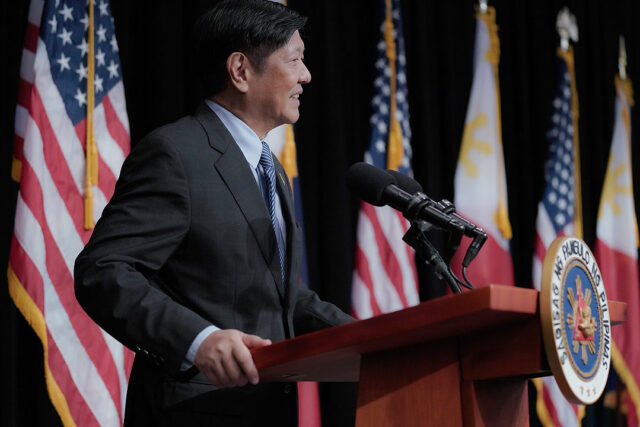
Philippine President Ferdinand R. Marcos, Jr. on Wednesday called for respect for international law in a speech at the United Nations General Assembly that marked his debut on the global stage.

An inclusive and rule-based international order that is “informed by the principles of equity and of justice” remains an important stabilizer amid global tides, he said at the meeting of global leaders in New York City.

“By reinforcing the predictability and stability of international law, particularly the 1982 United Nations Convention on the Law of the Sea (UNCLOS), we provided an example of how states should resolve their differences: through reason and through right,” he said, based on a video uploaded on YouTube.

“Our very Charter is being violated around the world as we speak,” Mr. Marcos said. “In Asia, our hard-won peace and stability is under threat by increasing strategic and ideological tensions.”

He invoked the 1982 Manila Declaration on the Peaceful Settlement of International Disputes, amid the war in Ukraine and rising tensions between the US and China over Taiwan.

Mr. Marcos has vowed to pursue an independent foreign policy, while also recognizing the country’s long-standing alliance with the US. Rodrigo R. Duterte, his predecessor, led a foreign policy pivot to China away from western countries.

He said the Philippines would keep its “friendly” foreign policy, adding that it would “continue to be a friend to all, and an enemy of none.”

The president told an economic forum at the New York Stock Exchange on Tuesday a future with the US as an ally is inconceivable. “The US has not failed us.”

Mr. Marcos spoke before the UN amid tensions between the US and China over Taiwan, which has called on the Philippines to back its bid for inclusion in the UN system.

Taiwan last month angered China for welcoming US House Speaker Nancy Patricia D. Pelosi. Days after, US Secretary of State Antony J. Blinken met with Mr. Marcos in Manila and renewed his country’s commitment to stand by Manila.

US President Joseph R. Biden, Jr. has told CBS News American forces would defend Taiwan in case of a Chinese invasion, Reuters reported. This drew an angry response from China, which said it sent the wrong signal to those seeking an independent Taiwan.

US officials including Mr. Blinken have made the same commitment to the Philippines, but local experts have doubted the US would keep its promise.

Some Filipino foreign policy experts have been urging the Marcos government to manage the country’s sea dispute with China through the Association of Southeast Asian Nations.

The US recently approved an arms package for Taiwan that include 60 Harpoon Block II, anti-ship missiles and 100 Sidewinder missiles for warplanes’ air-to-air firepower. – Kyle Aristophere T. Atienza

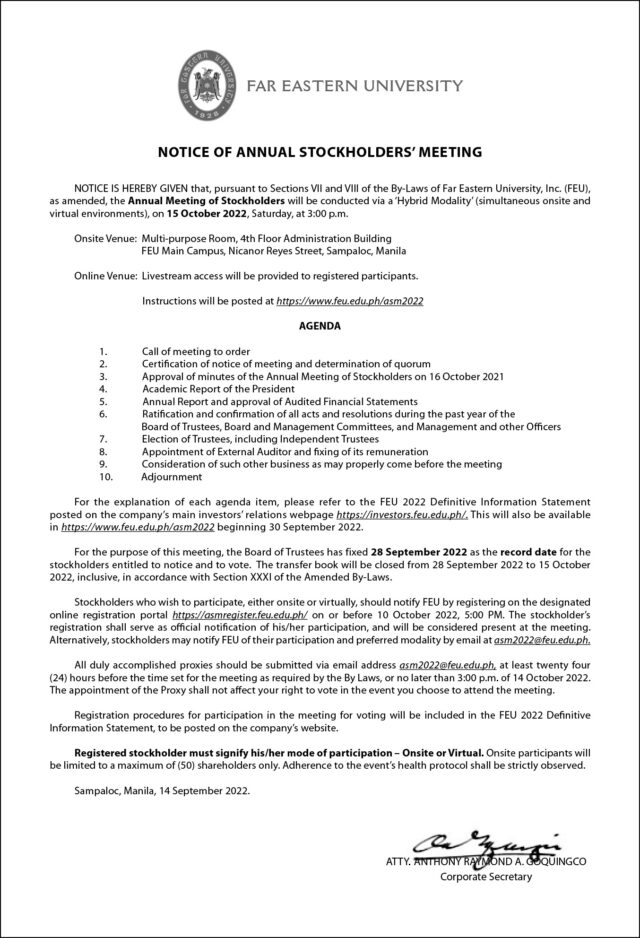
Far Eastern University, Inc. to hold annual stockholders’ meeting on Oct. 15


Spotlight is BusinessWorld’s sponsored section that allows advertisers to amplify their brand and connect with BusinessWorld’s audience by enabling them to publish their stories directly on the BusinessWorld Web site. For more information, send an email to online@bworldonline.com.

Join us on Viber to get more updates from BusinessWorld: https://bit.ly/3hv6bLA.

Get the best care and protection with Cocolife Aruga


Self-care plays an essential role more than ever before, especially in safeguarding yourself against life-threatening health problems. According to a recent report by the Philippine Statistics Agency, the top fatal illnesses in the country include heart attack, stroke, COVID-19, cancer, diabetes, and hypertensive disease. Contracting any from the list puts households one sickness away from financial catastrophe.

Aside from maintaining a healthy lifestyle, it is crucial to have a plan that financially prepares you to get ahead of tomorrow.

The latest offering from Cocolife, the biggest Filipino-owned stock life insurance company and the first ISO-certified Filipino insurance company, is ready to equip Filipinos and their loved ones with protection from unexpected health situations.

Designed by a Filipino insurer, Cocolife Aruga is a first-of-its-kind plan that offers results-oriented health coverage beyond the usual lists of defined illnesses. It is a life and health insurance plan that covers your medical expenses and provides for your future needs.

Cocolife Aruga gives coverage until age 85 and has four primary benefits: benefits for major and minor health conditions, death benefit, and return of premium for clients.

Cocolife Aruga is ready to cover major health conditions – whether it is a life impact, a major loss, or a specific illness – with a guaranteed cash benefit equivalent to 100% of the plan’s face amount less any minor health condition benefits paid prior.

The plan defines life impact as a condition that hinders a client from performing their daily work activities for eight or more consecutive weeks, alongside any two or more of the following: staying in a hospital for ten or more consecutive days; staying in the ICU for three or more consecutive days; having a lifelong medication, as confirmed by a Registered Medical Specialist; or having undergone surgery under general, spinal, or epidural anesthetic.

A major loss condition refers to any of the following: permanent advance cognitive impairment; permanent need for a wheelchair; and permanent loss of use of two limbs, or both hands, or all fingers and both thumbs, or both feet, or sight of both eyes, or hearing, or speech. Meanwhile, a specific illness condition includes cancer, heart attack, or stroke.

Cocolife Aruga also covers a maximum of two minor health condition claims, 20% deducted from the plan’s face value should they get diagnosed with an early-stage critical illness. Such illnesses include:

  • angioplasty and stenting for carotid arteries
  • carcinoma-in-situ
  • cardiac pacemaker implantation
  • carotid artery surgery
  • cerebral aneurysm or arteriovenous malformation requiring surgery
  • early-stage malignancy
  • early thyroid cancer
  • endovascular treatment of cerebral aneurysm
  • endovascular treatment of peripheral arterial disease
  • less severe heart attack.

To further ensure the financial security of Filipinos and their loved ones, Cocolife Aruga’s death benefit provides life insurance protection equivalent to 100% of the plan’s face amount, less any minor health conditions benefit paid, upon the insured’s passing.

However, if the client outlives the policy and has no major health condition claim, Cocolife Aruga shall return the premium equal to 100% of the total basic premiums paid less any minor health condition benefit claimed.

Available for a face amount starting at P300,000 to P5,000,000, the plan is sold in two variants: the Simplified Issue Offer (SIO), which policyholders can pay for 10 or 15 years, and the Regular Underwriting variant, which can be paid for 10, 15, or 20 years.

With Cocolife Aruga, the insurer continues its promise to deliver products that help Filipinos reach their dreams of an improved and secured quality of life by giving them choices that suit their needs and resources.

“We assure you that Cocolife will provide you with only the highest quality of service, as we have done for the past 40 years. It is a commitment that made us the first ISO-certified life insurance company in the Philippines,” Cocolife President and Chief Executive Officer Atty. Martin Loon said.

For inquiries about Cocolife Aruga and other products from Cocolife, call (02) 8810-7888, e-mail customer_service@cocolife.com or visit cocolife.com.


Spotlight is BusinessWorld’s sponsored section that allows advertisers to amplify their brand and connect with BusinessWorld’s audience by enabling them to publish their stories directly on the BusinessWorld Web site. For more information, send an email to online@bworldonline.com.

Join us on Viber to get more updates from BusinessWorld: https://bit.ly/3hv6bLA.

No more sugar imports this year — SRA

A stall vendor arranges products at a market stall in central Manila. — BW FILE PHOTO

By Luisa Maria Jacinta C. Jocson, Reporter

THE GOVERNMENT does not plan to import more sugar for the remainder of this crop year as output is expected to begin picking up, Sugar Regulatory Administration (SRA) chief David John Thaddeus P. Alba said on Tuesday.

“By November, all the mills and refineries will be producing. There will be no importation until we finish stock,” Mr. Alba said at a briefing.

“We don’t want to import when our mills and planters are in full (operation). While they are operating, we will never import,” he added.

The current sugar crop year began on Sept. 1 and will end on Aug. 31, 2023.

Earlier this month, the SRA issued Sugar Order (SO) No. 2, which authorized the importation of 150,000 metric tons (MT) of refined sugar to augment local supply and bring down prices.

Under the order, the total volume of imports will be equally divided between industrial users and consumers. The imports are expected to arrive not later than Nov. 15.

Mr. Alba said the import volume under SO No. 2 was decided as a “stopgap measure” as it would cover the demand needed for two months.

Latest SRA data showed the country’s current stock of physical raw sugar is at 134,526.72 MT, while its total stock of refined sugar is at 143,665.05 MT.

The official said sugar prices will likely go down by November as imports arrive and with milling already in full swing, adding that the SRA is targeting to lower the average retail price of refined sugar to P70-P80.

As of Sept. 9, the average price of refined sugar in wet markets almost doubled to P97.36 from P52.64 in the same period last year. The price of raw sugar likewise rose to P72.64 from P43.36 in 2021.

“Right now, most of the big mills in Negros are in full operation and are milling. Refineries will be in full operation by November. We’re hoping that by November, prices will stabilize,” he said. “By the time we start refining, we would like everybody to buy locally produced refined sugar from the refineries.”

“Barring another typhoon like Odette, the canes are looking good. Hopefully, if the trend continues, we’ll have more sugar than we have estimated,” Mr. Alba added.

Pablo Luis S. Azcona, who represents the sugar planters’ bloc in the SRA board, said prices are normally higher before the start of milling due to low supply.

“Once everybody mills in Negros, because 60% of production comes from there, the prices will surely stabilize,” Mr. Azcona added.

SRA board sugar millers’ representative Mitzi V. Mangwag likewise said prices may begin declining once refineries commence operations in November.

“By November, all refineries will be operating at full speed. So, we can really have enough refined sugar for the needs of the industrial and direct consumers. Hopefully by that time, input costs will be a little bit lower…to sell [sugar] at a reasonable cost in the market. We are really looking forward to operating these refineries soon to be able to bridge the gap,” Ms. Mangwag said.

BUSINESS SECTOR
Meanwhile, the Philippine Chamber of Commerce and Industry (PCCI) in a statement on Tuesday urged the SRA to appoint a business sector representative for local food manufacturers and exporters.

“We believe that all sectors must be heard. Our local food processors and manufacturers, which are mostly micro, small and medium enterprises (MSMEs) have long been burdened with the high cost of refined sugar and sadly, they are not able to compete with our counterparts in ASEAN (Association of Southeast Asian Nations), whose sugary-made products are sold way cheaper than ours,” PCCI Agriculture Committee Chairman Paul Cuyegkeng said.

The chamber said the SRA should give a board seat to the private sector so they can better determine the sugar requirements of companies and MSMEs and consider them in import requests.

It also recommended modernizing the milling industry to increase production and provide incentives to attract investments in the agriculture-related manufacturing sector.

Timely passage of 2023 budget to help PHL gov’t achieve economic goals

BW FILE PHOTO

THE TIMELY PASSAGE of the proposed 2023 national budget will help ensure the fulfillment of the administration’s socioeconomic agenda, leaders of the House of Representatives said as they began plenary debates on the spending plan on Tuesday.

House Bill 4488 or the 2023 General Appropriations Bill (GAB), will authorize new general appropriations amounting to P4.259 trillion, consisting of P3.671 trillion in programmed new appropriations and P588.2 billion in unprogrammed funds, which may only be used when collections from any revenue sources exceed targets or when new foreign loans or grants are received.

The proposed P5.268-trillion budget is 4.9% higher than this year’s spending plan and is equivalent to 22.2% of gross domestic product (GDP). It was submitted by the Department of Budget and Management to Congress on Aug. 22.

The 2023 GAB seeks to provide funding for programs and measures that support the eight-point socioeconomic agenda of the administration of President Ferdinand “Bongbong” R. Marcos, Jr., namely food security, improved transportation, affordable and clean energy, healthcare, social services, education, bureaucratic efficiency, and sound fiscal management.

“It is now the responsibility of the House of Representatives through the Committee on Appropriations, where the General Appropriations Act originates, to pass a timely, responsive and inclusive budget for the Filipino people,” House Committee on Appropriations Chair Elizaldy S. Co said in his sponsorship speech.

House Committee on Appropriations Senior Vice-Chair Stella Luz A. Quimbo said in her sponsorship remarks that the 2023 budget is the first step for the government’s achievement of its economic goals.

“To pave our economic recovery path moving forward, the new administration crafted the Medium-Term Fiscal Framework (MTFF), which seeks to grow our economy, stabilize prices, increase revenues, as well as manage and pay our debt… If external shocks such as geopolitical tensions and policy rate hikes in the US were absent, the challenge of economic recovery would have been easier. Nonetheless, these are recognized and factored into the framework of growth,” Ms. Quimbo said.

“The 2023 budget is the first step in fulfilling the visions of the MTFF to create more jobs and reduce poverty. House Bill No. 4488 or the 2023 General Appropriations Bill amounting to P5.268 trillion focuses on growing vital sectors of the economy,” she added.

Ms. Quimbo noted that the education sector, which is constitutionally mandated to have the biggest share in the national spending plan, has a proposed budget of P852.8 billion to be used for the safe resumption of face-to-face classes, the construction and rehabilitation of school facilities and to provide educational assistance.

She added that spending on health, agriculture and agrarian reform, social protection programs and sustained infrastructure development are important pillars of the 2023 GAB.

“By creating a vibrant atmosphere for business, small businesses develop, and investments come in. With more investments, jobs are created,” Ms. Quimbo said. “And with more and better jobs come prospects for growth. That is the blueprint of our economic recovery.”

The House of Representatives began 2023 budget briefings for the different government agencies on Aug. 26 and ended them on Sept. 16.

House leaders have said they aim to approve the 2023 budget before their October recess. — M.C.L. Montecillo

BSP sets digital banks’ RRR at 8%

BW FILE PHOTO

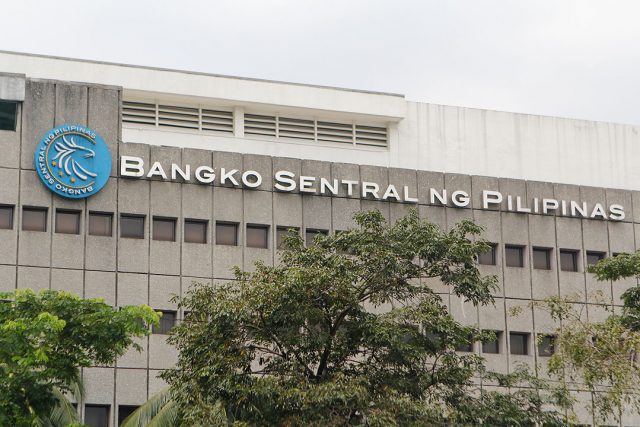
THE reserve requirement ratio (RRR) of digital banks will be at 8% and they will likewise be covered by existing prudential requirements for big banks that mandate them to maintain adequate capital and liquidity buffers, the Bangko Sentral ng Pilipinas (BSP) said on Tuesday.

BSP Circular No. 1154, dated Sept. 8 and signed by BSP Deputy Governor Eduardo G. Bobier as officer-in-charge, amends the Manual of Regulations for Banks, Manual of Regulations for Non-Bank Financial Institutions, and Manual of Regulations on Foreign Exchange Transactions to clarify the applicability of prudential requirements to digital banks, among others.

These include rules on capitalization, liquidity, leverage, and reserves, as well as guidelines on corporate governance, technology risk management, cybersecurity, consumer protection, and anti-money laundering (AML), among others.

The circular set digital banks’ reserve ratio, or the percentage of deposits and deposit substitutes they must keep with the BSP, at 8%. The RRR for big banks is currently at 12%, one of the highest in the region. Reserve requirements for thrift and rural lenders are at 3% and 2%, respectively.

Under the circular, digital banks must meet the same Basel III capital, liquidity and leverage requirements covering universal and commercial banks and they will also be subject to the related reporting requirements.

The Basel III framework contains measures that aim to improve banks’ risk management so they can withstand excessive financial stress. These came in the aftermath of the 2008 Global Financial Crisis.

Universal and commercial banks and their subsidiary lenders have been required to comply with standards under the Basel III framework as adopted by the BSP since 2014.

Under these rules, big lenders are required to have a minimum capital adequacy ratio of 10%, a Tier 1 ratio of 7.5%, and a 6% common equity Tier 1 ratio.

They are likewise mandated to maintain a net stable funding ratio — a measure of the ability of a bank to fund its liquidity needs over one year — of 100% on both solo and consolidated bases, as well as a countercyclical capital buffer set at a maximum of 0% to 2.5%.

The central bank also requires these lenders to have a minimum capital conservation buffer of 2.5% and a liquidity coverage ratio — which mandates big banks to hold high-quality, easily convertible assets to cover potential net cash outflows over a 30-day period — of 100%.

Lastly, they must have a minimum leverage ratio — which represents how much capital banks should have on hand to cover non-risk weighted assets — of 5%.

Meanwhile, under capital rules, the central bank added a section that requires thrift, rural and cooperative banks that primarily offer financial products and services that are processed end-to-end through a digital platform and/or electronic channels under an Advanced Electronic Payments and Financial Services license to maintain a minimum capital of P1 billion, just like digital lenders, and will be given five years to meet the new requirement. They must also submit a capital buildup program to the BSP within six months.

The BSP also set a 25% limit on digital banks’ aggregate investment in equities in all enterprises, in line with those for thrift, rural and cooperative banks. This is below the 50% imposed on universal banks and the 35% limit for commercial banks.

Digital banks’ IT profile has been tagged as “complex” in the amendments, meaning they use technology extensively in business processes and delivering financial products and services.

They will be subject to existing BSP rules for universal and commercial banks on internal audit and operational risk management, among others.

For governance, the BSP said digital banks should have at least one member of the board of directors and one senior management officer with a three-year experience and technical knowledge in operating a business in the field of technology or electronic commerce.

It said the directors as well as president and chief executive officer of digital banks are subject to confirmation by the Monetary Board, while chief operating officers, treasurers, heads of internal audit and risk management, and compliance officers are subject to the confirmation by the BSP Financial Supervision Sector.

Online lenders must also adopt an electronic AML system capable of monitoring risks associated with money laundering and terrorist financing as well as generating timely reports for the information of its board of directors and senior management.

The circular also outlines fees and penalties applicable to digital banks, as well as the application process for these lenders.

The central bank capped the number of digital banking licenses to six last year to monitor the development of the sector, ensure competition, and boost its capacity to regulate these kinds of lenders.

The six online lenders that secured licenses to operate in the country are Tonik Digital Bank, Inc.; GOtyme of the Gokongwei Group and Singapore-based Tyme; Maya Bank of Voyager Innovations, Inc.; Overseas Filipino Bank, subsidiary of Land Bank of the Philippines; UNObank of DigibankASIA Pte. Ltd.; and UnionDigital of UnionBank of the Philippines, Inc. — KBT

Marcos makes pitch to US business community, touts pro-market policies

PRESIDENT Ferdinand R. Marcos, Jr. at the New York Stock Exchange. — OFFICE OF THE PRESS SECRETARY

PRESIDENT Ferdinand “Bongbong” R. Marcos, Jr. on Monday (Tuesday, Manila time) told the United States’ business community that the country has improved the ease of doing business, touting policies that have liberalized the Philippines’ “vibrant” economy.

Mr. Marcos, who is in the US for a state visit and to attend the United Nations General Assembly, made the pitch as he encouraged investments in key economic sectors, including information technology and agriculture.

“Bouncing back from the pandemic, the Philippine economy has seen robust growth since last year and has returned to its path toward upper middle-income country status, achievable, we believe, within the next few years,” Mr. Marcos said in a speech delivered at the New York Stock Exchange (NYSE). He led the ringing of the bourse’s closing bell at 4 p.m. on Monday. 

“Against this backdrop, we have increased the scope for mutually beneficial investments that would mean more jobs and a better quality of life for Filipinos. For investors, doing business in the Philippines is an opportunity to reap the benefits of a vibrant economy,” he said.

Mr. Marcos encouraged the US business community to invest in areas related to information technology and business process management, medical products and devices, electric vehicles and batteries, agribusiness, and telecommunication infrastructure and services.

“We seek partnerships in many areas of our development agenda: in public infrastructure — such as mass transit systems, airports, toll roads; in public services; in digitalization initiatives; in the energy development agenda; in efforts to modernize agriculture; and in programs aimed at strengthening our industries, to just name a few,” he said.

In his speech, the Philippine leader cited policies that have made doing business in the country more attractive, including measures that lowered the corporate income tax, rationalized fiscal incentives, and reduced the minimum paid-up capital requirements for foreign retailers and startups bringing in new technologies.

He also mentioned a 2022 law that allowed full foreign ownership in key public services, which was passed by lawmakers without revising the Philippines’ 35-year-old charter.

Mr. Marcos likewise touted the country’s growing labor force and consumer market.

The US was the Philippines’ third-largest trading partner and second major source of foreign direct investment applications in 2021. Bilateral trade between the US and the Philippines was at $19.6 billion last year.

SOUND FUNDAMENTALS
Mr. Marcos said his administration is committed to maintaining sound macroeconomic fundamentals and providing a “clear development roadmap.”

He said although the country’s external borrowings increased substantially as financing needs increased due to the coronavirus pandemic, “we continue to reduce the cost of our public debt through judicious debt management.”

“Now that the economy is reverting to normalcy, the government is likewise heading back to the path of fiscal consolidation,” he said, noting that the government wants to reduce its debt-to-gross domestic product ratio to below 60% by 2025 and to 51.2% by the end of his six-year term in 2028 from 60.5% at end-2021.

This will help the country reach its goal to have an “A” level credit rating within the next few years, Mr. Marcos said.

“Our economy’s resilience to crises is recognized internationally… As we look forward to achieving upper middle-income status, we are also gearing up for “A” territory credit ratings in the medium term.”

He noted the Philippines has “sufficient” buffers against external shocks, citing the steady inflows of remittances, business process outsourcing receipts, and foreign direct investments.

Moody’s Investors Service last week affirmed the Philippines’ “Baa2” credit rating, which is a notch above the minimum investment grade and a step below the “A” rating category.

On the other hand, Fitch Ratings in February maintained the Philippines’ investment-grade “BBB” rating, but retained a “negative” outlook, flagging uncertainties surrounding medium-term growth and hurdles to bringing down debt. A “negative” outlook means a downgrade is possible within the next 12 to 18 months.

Lastly, S&P Global Ratings last affirmed the Philippines’ “BBB+” rating with a “stable” outlook in May 2021.

Meanwhile, the President said his government would pursue more partnerships with the private sector and explore government-to-government (G-to-G) deals.

“We have really opened up the policy of the Philippines to more of these public-private partnerships (PPPs),” Mr. Marcos said in an interview with NYSE vice-chairman John Tuttle. “But not only PPPs but also G-to-G arrangements, as I mentioned, joint ventures between private entities.”

Cabinet members as well as Philippine businessmen attended the NYSE economic forum, which was led by Aboitiz Equity Ventures, Inc. Chief Executive Officer Sabin M. Aboitiz, who chairs the Private Sector Advisory Council.

Jaime Augusto Zobel de Ayala of Ayala Corp., Ramon S. Ang of San Miguel Corp., and Lance Y. Gokongwei of Cebu Pacific Air, Inc. were also present during the forum. — Kyle Aristophere T. Atienza