Home Blog Page 589

Bebang Halo-Halo eyes first overseas store in Dubai in 2026

BEBANG HALO-HALO

By Almira Louise S. Martinez, Reporter

BEBANG HALO-HALO, a fast-growing Filipino dessert chain, is preparing to enter the international market with plans to open its first overseas store in Dubai by late 2026 or early 2027, aiming to bring its signature halo-halo to a wider global audience.

“We’re hoping that… we will have an international location either by the end of 2026 or the first quarter of 2027,” President and Chief Executive Officer Sam Karazi said in an interview.

Dubai is the likely first stop because of the founders’ familiarity with the market. “I spent more than 10 years there… It will be easier to expand in a place you know versus when you’re completely blind,” he said.

The company sees strong potential demand from the large Filipino community in the United Arab Emirates (UAE), many of whom regularly look for familiar comfort foods while working overseas.

“Overseas Filipino workers (OFWs) in Dubai are a huge population,” Mr. Karazi said, noting that his co-founder, Daymee Salumbides, also lived there for almost a decade. “We both have a lot of ties to the place.”

The UAE remains one of the biggest hubs for overseas Filipinos. Data from the Philippine Embassy in Abu Dhabi and the Philippine Consulate General in Dubai showed 189,892 registered OFW voters in the country, with 123,891 based in Dubai and the Northern Emirates and 66,001 in Abu Dhabi.

As the chain sets its sights abroad, Mr. Karazi said Bebang Halo-Halo’s growth has been powered largely by its strong social media presence.

“The reason we succeeded is because I know how to navigate social media and how to market a brand on social media,” he said. “This is our secret sauce. This is where all the magic happens.”

He added that the company’s early success came from investing heavily in marketing from day one.

Bebang Halo-Halo began in 2021 out of a residential parking space in Quezon City, selling halo-halo to neighbors. When Mr. Karazi joined the venture, he said the business was struggling to grow beyond its immediate community.

“Within a few months — two to three months — we were already open and operational in Mandaluyong,” he said, referring to what became the chain’s first official branch.

The company has since expanded rapidly. It now has 42 branches across the Philippines and is targeting 50 stores by year-end and 60 by January 2026.

“Sometimes, we open two to three stores a week,” Mr. Karazi said. “We were supposed to have more locations than this now, but we started expanding only last year.”

He said the company intends to sustain its momentum as it prepares to take the brand overseas. “We have to continue moving forward. We have to go take the brand globally. That’s our goal. Nothing should slow us down.”

T-bill yields fall below 5% as market anticipates rate cuts

BW FILE PHOTO

THE GOVERNMENT made a full award of the Treasury bills (T-bills) it auctioned off on Tuesday as all tenors fetched average yields below 5%, with investors swamping the offer to lock in still-high rates ahead of expected cuts by the US Federal Reserve and the Bangko Sentral ng Pilipinas (BSP) this week.

The Bureau of the Treasury (BTr) raised P22 billion as planned via the T-bills it placed on the auction block as the offer was more than four times oversubscribed, with total tenders reaching P88.225 billion. This was also higher than the P85.26 billion in bids recorded last week.

The Auction Committee made a full award as the T-bills were quoted at yields that were all lower than those fetched at last week’s offering, the Treasury said in a statement.

Broken down, the government raised P7 billion as planned from the 91-day T-bills as the tenor was met with demand worth P30.825 billion. The three-month paper fetched an average rate of 4.759%, down by 5.3 basis points (bps) from 4.812% in the previous auction. Yields accepted were from 4.712% to 4.828%.

The Treasury also made a full P7.5-billion award of the 182-day debt as bids reached P25.85 billion. The average rate of the six-month T-bill went down by 5.7 bps to 4.873% from 4.93% last week. Tenders awarded carried yields from 4.83% to 4.963%.

Lastly, the BTr likewise sold the programmed P7.5 billion in 364-day securities as bids for the tenor hit P31.55 billion. The one-year paper’s average yield was at 4.962%, declining by 4.9 bps from 5.011% the previous week. Accepted rates were from 4.943% to 4.998%.

At the secondary market before Tuesday’s auction, the 91-, 182-, and 364-day T-bills were quoted at 4.8732%, 4.999%, and 5.052%, respectively, based on PHP Bloomberg Valuation Service Reference Rates data provided by the Treasury.

The government fully awarded its T-bill offer as yields went down week on week across the board and with all tenors fetching bids that were over three times the offered volume, a trader said in a text message.

“Lower yields across the board are likely in anticipation for the next FOMC (Federal Open Market Committee) meeting, as there is a high chance that there will be another rate cut,” the trader said.

The Fed was set to begin its two-day policy meeting overnight, where it is widely expected to lower borrowing costs.

The spotlight, though, is on what comes after the Fed’s December rate cut, with bond investors positioning for a shallow US easing cycle and many Wall Street banks predicting fewer Fed interest rate cuts in 2026 on lingering inflation concerns and expectations of a more resilient US economy, Reuters reported.

Traders are pricing in 77 bps of easing by the end of next year, according to LSEG data.

While a rate cut is broadly expected, some strategists think the Fed’s policy committee could be sharply divided.

T-bill yields also went down as the market expects another rate cut from the BSP this week, especially as November inflation came in slower than expected, Rizal Commercial Banking Corp. Chief Economist Michael L. Ricafort said in a Viber message.

He added that demand was strong as investors wanted to take advantage of the still relatively high T-bill yields before they go down further in line with expectations of further monetary easing by both the Fed and the BSP.

Headline inflation eased to 1.5% last month from 1.7% in October and 2.5% in November 2024, the Philippine Statistics Authority reported on Friday. This was within the BSP’s 1.1-1.9% forecast for the month but was a tad below the 1.6% median estimate in a BusinessWorld poll of 15 analysts.

The November clip brought the 11-month average to 1.6%, below the central bank’s 1.7% full-year forecast and 2-4% annual goal.

Analysts said below-target inflation and weakening growth could prompt the BSP to ease its policy settings further. A BusinessWorld poll showed that 17 of 18 analysts expect the Philippine central bank to deliver a fifth straight 25-bp reduction at its meeting on Thursday (Dec. 11) to bring the policy rate to 4.5%, its lowest since September 2022.

The central bank has cut benchmark borrowing costs by a total of 175 bps since it began its easing cycle in August 2024.

BSP Governor Eli M. Remolona, Jr. said last week that softer growth prospects raise the odds of a cut on Thursday. He earlier said that they could extend their rate cut cycle until next year to help provide economic stimulus as governance concerns have caused a slowdown in public spending and also dampened consumer and investor confidence.

The BTr wants to raise P101 billion from the domestic market this month, or P66 billion through T-bills and P35 billion via Treasury bonds.

The government borrows from local and foreign sources to help fund its budget deficit, which is capped at P1.56 trillion or 5.5% of gross domestic product this year. — A.M.C. Sy with Reuters

SEC warns public against Legacy Asia over investment scheme

BW FILE PHOTO

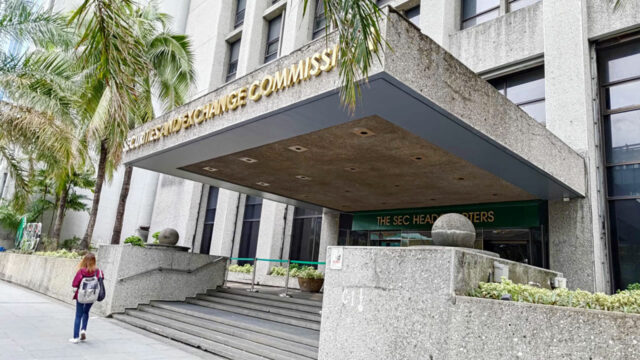
THE SECURITIES and Exchange Commission (SEC) has issued an advisory against Legacy Asia International and its owner for allegedly soliciting investments from the public while promising unusually high returns.

In its advisory, the SEC said Legacy Asia has been using its Facebook page to collect funds from the public, presenting these as investments or business loans with promised returns of 22%, 55%, 71%, or 88% over five, 15, 20, or 25 days, respectively.

“Investors may register through their website… or join different Facebook groups that are managed by team leaders to manage their investments and serve as their adviser in future transactions,” the corporate regulator said.

The scheme offers four investment plans, each with varying profit rates tied to specific minimum and maximum investment amounts, the SEC added.

The commission said these arrangements fall under the definition of an investment contract, which must be registered and authorized under the Securities Regulation Code (SRC).

Under the SRC, an investment contract exists when money is placed in a common enterprise with the expectation of profits primarily from the efforts of others.

“The public is hereby informed that Legacy Asia International is not authorized to solicit investments from the public, not having secured prior registration and/or license to sell securities or solicit investments as prescribed under Section 8 of the SRC,” the SEC said.

The regulator advised the public to avoid or discontinue investing in the scheme, warning that those acting as promoters, recruiters, or agents may face criminal liability under the Financial Products and Services Consumer Protection Act and the SRC, with penalties of up to P5 million or 21 years’ imprisonment, or both.

The SEC-provided website link was unavailable, and the owner’s other contact information is not publicly accessible. — Alexandria Grace C. Magno

La Scala season opens with Russian opera in tribute to composer Shostakovich

TEATRO ALLA SCALA INTERIOR — COMMONS.WIKIMEDIA.ORG/WOLFGANG MORODER

MILAN — La Scala opened its new season on Sunday with Russian composer Dmitri Shostakovich’s Lady Macbeth of the Mtsensk District, an opera promoting women’s rights that was once banned in Russia.

The Milan opera house is staging the work in a tribute to Shostakovich 50 years after his death.

The opera, based on a play by Nikolai Leskov, debuted in St. Petersburg in 1934 and was originally intended to be the first of a trilogy dedicated to Russian women.

Despite its initial success, the opera faced criticism from the Soviet leadership, including Joseph Stalin, due to its depiction of sex, violence, and female rebellion and it was banned for nearly 30 years in the country.

“Opening the season with this opera is… a tribute to a 20th century giant and to an opera that suffered for far too many years,” Riccardo Chailly, La Scala’s principal conductor, said.

Speaking about calls to exclude Russian performers from European stages, Russian director Vasily Barkhatov said that personal political views and cultural identity should be kept separate.

“If you openly support the Russian government, you must be aware of the possible consequences of your choice,” Mr. Barkhatov told Reuters.

“It’s different, however, if you are discriminated against just because you are a Russian artist,” he said.

KATERINA’S CHARACTER ‘LIKE A RACING CAR’
The opera tells the story of Katerina who, trapped in an unhappy marriage, murders her husband and father-in-law with the help of her lover, but is eventually discovered and sent to Siberia where she commits suicide.

“It’s a story about women’s freedom and human happiness,” said Mr. Barkhatov.

US soprano Sara Jakubiak, who plays Katerina, said her character “is like a racing car that goes from zero to 100 km in a couple of seconds.”

The opera was originally set in the countryside of 19th century Russia, but Mr. Barkhatov and Belarusian set-designer Zinovy Margolin have shifted the three-and-a-half-hour production to an urban setting of 1950s Moscow.

“We wanted to do something different. We thought that setting it in the city where Shostakovich lived would be fitting,” said Mr. Margolin.

Russian tenor Yevgeny Akimov plays Katerina’s husband, Zinovy, while Uzbek tenor Najmiddin Mavlyanov stars as her lover Sergey.

This season will be the first for La Scala’s new artistic director, Fortunato Ortombina.

La Scala, inaugurated in 1778, has become one of the world’s most prestigious opera and ballet theaters.

Sunday’s opening performance, was sold out. Tickets, costing as much as €3,200 ($3,725) — will generate a record €2.8 million in revenue.

The opera will be performed at La Scala until Dec. 30. — Reuters

Why the push for a stronger yuan won’t go away

STOCK PHOTO | Image by Xb100 from Freepik

By Daniel Moss

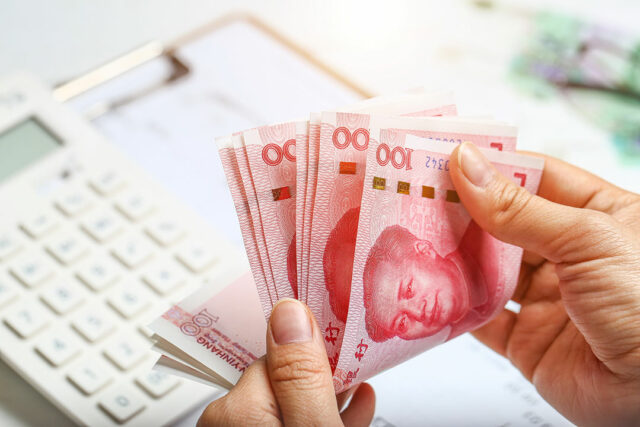
TWO DECADES after China began allowing its currency to fluctuate, authorities are again standing in the way of an appreciation. It’s a reminder that the decision in 2005 to sever the yuan’s hard peg to the dollar, important as it was, came with strings attached.

While Beijing never walked away from the foreign-exchange market, recent interventions are noteworthy. They suggest a desire to preserve exports made more competitive by a weak currency and a worry that the domestic economy is softer than official growth numbers suggest. The problem is that this situation is unlikely to cure itself. Exports rose more than forecast in November, according to figures released on Monday, and the trade surplus exceeded $1 trillion for the first time. A raft of data later in the week, by contrast, are projected to point to a lackluster domestic picture.

Not that the yuan has suffered in 2025. It’s up almost 4% against the dollar and on course for the best annual performance in five years. But these gains are middling, considering the greenback is having a less-than-stellar time. The Malaysian ringgit, Thai baht, and Singapore and Taiwan dollars have done much better. Investors want to take the yuan higher, but keep encountering resistance from the People’s Bank of China.

One of the main ways for the central bank to signal intentions is through the setting of a reference rate for the currency; dealers try to predict the starting point for the day’s trade. Last week, the fixing was significantly weaker than forecast. State banks reinforced the go-slow message, buying dollars to keep a lid on the yuan. Beijing recognizes the power of markets. FX trading has ballooned to $9.6 trillion a day, compared with just $1.9 trillion when the long practice of maintaining a value for the yuan of 8.3 per dollar ceased in 2005. It traded at around seven on Monday.

It’s not a stronger rate per se that repels the government. Rapid moves are anathema and decisions about the pace and degree of change must always reflect what top officials believe is the overall national interest. The challenge is how to preserve the export machine, while acknowledging the reasons behind the pressure for appreciation: A rally in local stocks, which draws money into the country, and an easing of trade tensions with the US, which tends to lift emerging markets, generally.

US President Donald Trump has historically moaned that a range of nations, China included, conspire to keep their currencies artificially weak to “rip off” the US. But in the most recent round of talks between the two countries, the yuan hasn’t been a sticking point, and tariffs have come down from levels that would have crippled the economy. Washington and Beijing appear content to come to mini-deals every few months to stop the relationship nosediving. Not allowing any yuan gains might jeopardize this relative detente.

President Xi Jinping should go further and let it advance some more. According to two former American officials, the yuan could be undervalued to the tune of as much as 18%, based on International Monetary Fund estimates. A number of large banks, including Goldman Sachs Group, Inc., tip advances next year. Prominent Chinese economists, while careful to not be sharply critical in their commentary, see plenty of scope for upward movement. It may even help the economy — over time — by stimulating local demand. The question will be whether the short-term disruption and difficulties will persuade top policymakers that it’s a worthwhile step.

The time has come to let the yuan run a bit, says Miao Yanliang, chief strategist at China International Capital Corp., and a former top economist at the foreign-exchange regulator. The dollar is likely to be soft for a few years. It’s natural for other currencies to rise in that environment; to hold the yuan back would be to allow it to depreciate against other trading partners.

It’s not without risks. China has been skirting deflation and a strong currency could exacerbate the difficulties. Activity could use a boost in other areas: Retail sales have been disappointing, along with industrial production and employment, while investment is languishing. By lowering the cost of imports, they could become more attractive to consumers.

The case for rebalancing China’s economy away from exports is a familiar one. It lurks behind many of the calls for appreciation in the 20 years since the hard link was broken. And it was one of the arguments in favor of reforming the trading rules in 2005 — along with heading off protectionist bills in the US Congress. Now, there is a trade-barrier fan in the White House. Extracting concessions from China these days is all about getting it to buy more soybeans and allow the West to purchase the rare minerals so critical to modern manufacturing.

Encouraging further yuan strength, or not standing so vigorously in its path, makes sense.  The alternative is a sudden move, with disruption that entails. In 2005, China did just enough to quell the arguments of yuan bulls. Not a bad approach to adopt today. The pressure isn’t going away.

BLOOMBERG OPINION

Financing gaps, weak data systems slowing MSME shift to AI, IBM says

STOCK PHOTO | Image by Gerd Altmann from Pixabay

MICRO, small and medium enterprises (MSME) are increasingly becoming interested in using artificial intelligence (AI) but continue to face hurdles such as financing constraints and poor data quality, IBM Philippines said.

“MSMEs cater to smaller end-clients, so absorbing and organizing data is quite challenging,” IBM Philippines Technical Sales Lead Felicisimo S. Torres, Jr. told reporters on the sidelines of an event on Tuesday.

He added that adoption is more complex for small firms because many still rely on manual processes and lack integrated systems.

Only 14.9% of Philippine companies use AI tools, according to a recent study by the Philippine Institute for Development Studies, underscoring how far most businesses are from automation.

To address cost pressures, Mr. Torres said MSMEs could start with subscription-based AI tools rather than large upfront investments.

He added that cultural barriers remain a concern, with some workers and business owners reluctant to adopt tech due to fears of job displacement or added operational complexity.

A study by the IBM Institute for Business Value found that 64% of business leaders globally think AI success depends more on people’s willingness to adopt it than the technology itself.

The report also showed that 85% of executives expect AI to enable fresh business models, though many admit there is still a wide gap between their ambitions and what they have implemented.

Mr. Torres said interest among MSMEs is rising, noting that IBM recently closed a deal with a Cebu-based medium enterprise looking to integrate the company’s AI solutions into its operations. “The complexity is there, but it’s not impossible,” he said.

Globally, organizations are directing 64% of their AI investments into their core operations, according to the IBM study.

MSMEs account for more than 99% of Philippine businesses and contribute about 40% of economic output. — Beatriz Marie D. Cruz

Banks’ loans to MSMEs rise as of Sept.

BW FILE PHOTO

PHILIPPINE BANKS extended more loans to micro, small and medium enterprises (MSMEs) at end-September.

Banks’ loans to MSMEs amounted to P536.51 billion at end-September, up 7.13% from the P500.809 billion disbursed in the same period last year, based on data from the Bangko Sentral ng Pilipinas (BSP). However, this was lower than the P540.92 billion in loans posted at end-June.

This made up 4.45% of the banking system’s P12.049-trillion loan book in the period.

Under Republic Act No. 9501 or the Magna Carta for MSMEs, banks must allocate 8% of their loan portfolio to micro and small enterprises (MSEs), and 2% to medium-sized businesses.

The mandated credit allocation lapsed in June 2018, or 10 years after the law was passed. However, the BSP continues to monitor banks’ lending to MSMEs as part of its supervisory oversight and policy development.

Central bank data showed that loans to micro and small enterprises amounted to P225.17 billion at end-September, rising by 9.9% from P204.886 billion a year earlier. This accounted for 1.87% of banks’ portfolio.

Meanwhile, banks lent P311.34 billion to medium enterprises at end-September, making up 2.58% of their loan book. This was 5.21% more than the P295.923 billion disbursed a year ago.

Broken down, universal and commercial banks extended P158.57 billion in loans to micro and small enterprises as of September, which accounted for 1.44% of their P10.98-trillion loan portfolio. They also lent P253.35 billion to medium enterprises or 2.31% of the total.

Thrift banks’ lending to MSEs reached P31.64 billion or 3.68% of their P859.55-billion loan portfolio, while loans to medium enterprises stood at P37.23 billion or 4.33% of the total.

Rural and cooperative banks extended P34.31 billion in credit to micro and small enterprises as of September or 20.35% of their P168.62-billion loan book. They also lent P20.69 billion to medium enterprises or 12.27% of the total.

The BSP had allowed Philippine banks to count MSME loans as alternative reserve compliance with the reserve requirements to help support the sector during the pandemic until June 2023. This relief measure was extended only for thrift banks and rural and cooperative banks until Dec. 31, 2025.

Lastly, digital banks disbursed P66 million in loans to the micro and small enterprise sector, equivalent to 1.61% of their P40.93 billion total loan book. Loans granted to medium enterprises accounted for 0.17% of their portfolio at P7 million.

The BSP said it continues to promote MSME lending by improving credit risk assessment, simplifying loan applications, supporting digital finance, and creating frameworks.

John Paolo R. Rivera, a senior research fellow at the Philippine Institute for Development Studies, said in a Viber message that the year-on-year increase in banks’ lending to small businesses “reflects recovering demand, improved mobility, and the continued expansion of MSMEs in food services, retail, and logistics.”

“Banks also maintained lending momentum because MSMEs remain a key driver of domestic consumption, and some lenders have expanded credit programs supported by guarantees and government-backed facilities,” he said.

However, the decline from the end-June level may have been due to corruption concerns that could have caused businesses to put their expansion plans on hold, resulting in slower borrowing.

“Higher operating costs and soft consumer sentiment also led many MSMEs to postpone inventory buildup and investment plans, reducing credit demand in the third quarter,” Mr. Rivera said.

He added that increased economic activity during the holiday season could boost MSME lending towards the end of the year.

“MSME lending may see a modest bump in the fourth quarter due to holiday demand, but growth will likely remain subdued overall. Borrowing appetite will depend on how quickly confidence recovers, how stable the peso becomes, and whether government disbursements normalize,” he said.

“Until clarity on governance and fiscal spending improves, MSME loan growth is expected to stay steady but not strong.” — Katherine K. Chan

Warner Bros. fight heats up with $108-billion hostile bid from Paramount

PARAMOUNT SKYDANCE on Monday launched a hostile bid worth $108.4 billion for Warner Bros. Discovery, in a last-ditch effort to outbid Netflix and create a media powerhouse that would challenge the dominance of the streaming giant.

Netflix had emerged victorious on Friday from a weeks-long bidding war with Paramount and Comcast, securing a $72-billion equity deal for Warner Bros. Discovery’s TV, film studios, and streaming assets. But Paramount’s latest attempt means the jockeying for Warner Bros. and its prized HBO and DC Comics assets will not come to a conclusion swiftly.

The Warner Bros. Discovery board of directors on Monday afternoon said it would review Paramount’s offer, but was not modifying its recommendation with respect to Netflix. It advised the company to “take no action at this time” in regard to the Paramount Skydance proposal.

Paramount’s $30-per-share cash offer includes financing from Affinity Partners, the investment firm run by Jared Kushner, US President Donald J. Trump’s son-in-law, and several Middle Eastern government-run investment funds, and is backstopped by the Ellison family. Larry Ellison, the world’s second-richest person, is the father of Paramount head David Ellison and has close ties to the White House.

Larry Ellison called Mr. Trump after the Netflix deal was announced and told him the transaction would hurt competition, the Wall Street Journal reported, citing a White House official and a person familiar with the matter.

The studio argues its bid for the entirety of Warner Bros. Discovery is superior to Netflix, giving shareholders $18 billion more in cash and an easier path to regulatory approval. It said a Paramount-Warner Bros. combination, which would be among the largest media deals in history, would be in the best interest of the creative community, movie theaters, and consumers, who would benefit from enhanced competition.

“We believe our offer will create a stronger Hollywood,” Paramount Chief Executive Officer (CEO) David Ellison said in a statement. Separately, he said Paramount’s proposal offered “higher headline value, increased certainty in that value, greater regulatory certainty, and a pro-Hollywood, pro-consumer and pro-competition future.”

Paramount’s bid includes Warner Bros. Discovery’s cable television properties; Netflix’s bid is limited to the Warner Bros. film and television studios, HBO, and the HBO Max streaming service.

Analysts noted that Paramount’s offer comes with its own antitrust scrutiny as a consolidation of two major television operators. Last month, Democratic senators warned that such a transaction would result in “one company controlling almost everything Americans watch on TV.” The combined studio would also have a greater market share than current leader Disney, and add to fears of consolidation that have hit the industry in recent years.

The offer represents a 139% premium over the company’s value from before the buyout talks started, and bests Netflix’s $27.75 offer that mixes cash and stock.

KUSHNER, SAUDIS PART OF PARAMOUNT OFFER
At a UBS conference, Netflix co-CEO Ted Sarandos said Paramount’s hostile bid for Warner Bros. was “entirely expected,” but added that he was confident of closing the deal.

“In the offer that Paramount was talking about today, the Ellisons were talking about $6 billion of synergies,” said Mr. Sarandos. “Where do you think synergies come from? Cutting jobs? So we’re not cutting jobs. We’re making jobs.”

In a regulatory filing, Paramount said that the Ellison family, which owns Paramount, along with private equity firm RedBird Capital, had agreed to backstop $40.7 billion in equity capital. The offer also includes financing from Mr. Kushner’s Affinity Partners, the Saudi and Qatari sovereign wealth funds, and L’imad Holding Co., owned by the government of Abu Dhabi.

“A Paramount Skydance-Warner Bros. merger would be a five-alarm antitrust fire and exactly what our anti-monopoly laws are written to prevent,” US Senator Elizabeth Warren, a Democrat, said on Monday. The hostile bid “is backed by a who’s who of Trump buddies… raising serious questions about influence-peddling, political favoritism, and national security risks.”

If Warner Bros. accepts Paramount’s offer, it will have to pay Netflix a $2.8-billion breakup fee. Netflix, on its part, is on the hook for $5.8 billion if its deal falls through. The streaming pioneer is likely to face strong antitrust scrutiny, and Mr. Trump has already raised questions about its offer.

On Monday, Mr. Trump said neither bidding party “are friends of mine,” and he wanted “to do what’s right.” He added that he had not spoken to Mr. Kushner about the Paramount bid.

Netflix’s bid has already drawn sharp criticism from bipartisan lawmakers and Hollywood unions over concerns that it could lead to job cuts as well as higher prices for consumers.

“While it is perhaps a sad commentary on the US that Paramount thinks its closeness to the occupant of the Oval Office will help it seal the deal, it is merely doing what it can to steal a march on its rival,” said Chris Beauchamp, chief market analyst at UK-based IG Group.

Shares of Paramount were up 7.3% on Monday. Warner Bros. Discovery rose 5.3%, while Netflix shares fell 4%.

TWISTS AND TURNS
Reuters had already reported, citing sources familiar, that Paramount had raised its offer to $30 per share on Thursday for the entire company, but that the Warner Bros. board had concerns about the financing.

“The Warner Bros. Discovery acquisition is far from over,” said eMarketer senior analyst Ross Benes. “Paramount will appeal to shareholders, regulators, and politicians to try to stymie Netflix. The battle could become prolonged.”

Paramount maintained that it would be a champion of Hollywood and its talent, would remain committed to releasing movies in theaters, and that its path to regulatory approval would be faster than Netflix’s. In its appeal to shareholders, Paramount said it submitted six proposals over the course of 12 weeks, but Warner Bros. “never engaged meaningfully” with these proposals.

The company said it had sent a letter to Warner Bros., questioning the sale process and alleging the company has abandoned a fair bidding process and predetermined Netflix as the winner.

That followed reports that Warner Bros.’ management called the Netflix deal a “slam dunk” while speaking negatively about Paramount’s offer.

In an interview with CNBC on Monday, David Ellison said there was an “inherent bias” in the bidding. — Reuters


CEB to receive seven aircraft in 2026, adds Riyadh route

PHILSTAR FILE PHOTO

BUDGET CARRIER Cebu Pacific (CEB) said it expects to receive seven aircraft deliveries next year as it looks to expand its domestic and international network.

“This growth will really strengthen our position in the region and will allow us to serve more destinations with greater efficiency and comfort,” Cebu Pacific President and Chief Commercial Officer Alexander G. Lao said during the airline’s year-end media briefing on Tuesday.

Cebu Pacific is set to end 2025 with 100 aircraft, after taking delivery of seven planes this year, Mr. Lao said.

For 2026, the airline expects five narrow-body aircraft and two wide-body aircraft.

The carrier also announced it will launch direct flights between Manila and Riyadh beginning March 1, 2026.

“We remain committed to providing reliable and accessible connections for Filipinos wherever they may be in the world,” Mr. Lao said.

The service will operate four times a week, with Manila-Riyadh flights departing every Monday, Wednesday, Friday and Sunday, while return flights to Manila are scheduled every Monday, Tuesday, Thursday and Saturday.

Cebu Pacific said Riyadh will be its sole long-haul market next year even as it continues to explore other opportunities.

“We do try to stay in the areas that we are pretty strong at,” Mr. Lao said, adding that the airline will also focus on strengthening its existing routes.

“It is really how we strengthen the existing network so that we are able to gain economies of scale. It is important because that is how we lower our fares,” Cebu Pacific Chief Marketing and Customer Experience Officer Candice A. Iyog said.

Cebu Pacific currently serves 37 domestic and 27 international destinations across Asia, Australia and the Middle East.

For the third quarter, the airline reported a 13.9% rise in passenger volume to 19.95 million, from 17.51 million a year earlier.

Domestic passengers grew 12.7% to 14.88 million, while international passengers increased 17.7% to 5.07 million.

For the first half, Cebu Air, Inc., the airline’s operating unit, posted an attributable net income of P8.97 billion, more than double the P3.55 billion recorded a year earlier, as gross revenues climbed 23.1% to P63.33 billion.

Passenger revenues amounted to P44.23 billion, while cargo and ancillary revenues contributed P3.51 billion and P15.59 billion, respectively.

Cebu Pacific said it expects strong demand in the fourth quarter, driven by holiday travel and a favorable macroeconomic environment in the Philippines and Southeast Asia.

At the stock exchange on Tuesday, Cebu Pacific shares gained P1.05, or 3.28%, to close at P33.05 apiece. — Ashley Erika O. Jose

What the US national security strategy tells us about how Trump views the world

WHITE HOUSE

The White House has released its national security strategy, a document put out by every US presidential administration in order to spell out its foreign policy priorities. These documents are legally required to be released by Congress and are typically written by a committee. Still, they bear the president’s signature and usually serve as a distillation of how the current commander in chief views the world.

This latest document is no exception. But perhaps even more so than any previous national security strategy, it reflects a focus on the views and activities of the current president. It touts supposed achievements of the Trump administration in a way that would be more appropriate in a campaign speech. And at numerous points, it lavishes praise on Donald Trump for upending conventional wisdom and setting US foreign policy on a new course.

So what can we learn from this document about how Trump views the world? Three themes stand out. The first is that, contrary to some claims, Trump is not an isolationist. He doesn’t want to pull the US back from foreign entanglements completely. If he did, it would hardly make sense to boast of having brokered eight peace deals or of having damaged Iran’s nuclear program.

Like more traditional national security strategy documents, the latest one still portrays the US as having a responsibility for global peace and prosperity. But within that broad remit, it has a new set of priorities.

The most striking is the focus on the western hemisphere. Whereas recent administrations have identified the containment of China as their key priority, Trump vows he will “restore American preeminence in the western hemisphere.” Yet the only concrete “threats” the document identified as originating in the region are drug cartels and flows of irregular migrants.

Viewed from the standpoint of previous administrations, this makes little sense. US foreign policy has usually been concerned mainly with grave security threats, particularly from Russia and China. Drugs and migrants were less important than nuclear weapons and aircraft carriers.

Trump views things differently. From his perspective, dangerous narcotics and migrants who he has previously said are “poisoning the blood” of the US are much more direct threats to the American people. Putting “America First,” to use Trump’s favorite phrase for describing his own foreign policy, means focusing on them.

But this does not mean Trump is isolationist. Protecting the American people, even in the way Trump understands it, means having an active foreign policy.

The second key theme of the document is its attitude towards “civilization.” In it, Trump has returned to a central aspect of his political rhetoric — that “western civilization” is under attack from a combination of hostile migrants, spineless liberals, and cultural degeneracy. Just as Trump appears to see himself as leading the fightback against these forces in the US, he wants others to do the same.

In passages that have sent shockwaves through Europe’s political establishment, the national security strategy lambasts European governments for allegedly welcoming too many migrants, persecuting far-right political parties and betraying the west’s civilizational heritage.

Again, these are not the words of an isolationist. They are the words of someone who, as I have concluded in my own research, views themselves as the protector of a racially and culturally defined civilization that covers both the US and Europe.

The particularism here is striking. Whereas past US national security strategies spelled out a desire for Washington to spread liberal democracy throughout the world, Trump’s document says this is an unachievable goal. Instead, he seems to be interested primarily in the destiny of white Europeans — and in shaping their democracy and values to conform with his own.

The national security strategy warned that several countries risk becoming “non-European” due to migration, adding that if “present trends continue, the continent will be unrecognizable in 20 years or less.” This is a stance that some observers say echoes the racist “great replacement theory,” a comparison the White House has branded as “total nonsense.”

The third and final theme that stands out from the document is its intensely economic focus. The most detailed parts of the document relate to economic statecraft — how to reshore industries to the US, reshape the global trading system, and enlist US allies in the mission of containing the economic rise of China.

Regional security matters, by contrast, receive much less attention. Russia’s ambitions in Europe are barely mentioned as a problem for the US, and Taiwan merits only a paragraph. Indeed, the Kremlin has said the new strategy is “largely consistent” with its vision.

Rarely has a US national security strategy been so transactional. In its discussion of why the US will support Taiwan, the document only invokes the island’s semiconductor industry and strategic position as reasons. Not a word is said about the intrinsic worth of Taiwanese democracy or the principle of non-aggression in international law.

The impression this leaves is that, in foreign policy, Trump prioritizes economics over values. He views leaders such as China’s Xi Jinping and Russia’s Vladimir Putin not as implacable dictators hell-bent on regional domination, but as possible business partners. He seems to believe the focus of foreign policy ought to be to maximize profits.

For US allies in Europe and Asia, this raises an uncomfortable question: what if the profitable thing to do turns out to be to abandon them and strike a grand bargain with Russia or China? Based on this document, they have little reason to think Trump will do anything else.

THE CONVERSATION VIA REUTERS CONNECT

Andrew Gawthorpe is a lecturer in History and International Studies at Leiden University. He is affiliated with the Foreign Policy Center in London.

Jobstreet: AI skills starting to show up in MSME hiring

STOCK PHOTO | Image by DC Studio from Freepik/THIS RESOURCE WAS GENERATED WITH AI

MICRO, small and medium enterprises (MSME) are beginning to screen applicants for artificial intelligence (AI) skills as they try to keep pace with bigger competitors, according to Jobstreet by SEEK.

“AI adoption has gradually begun to shape the requirements employers are posting on Jobstreet by SEEK,” Henry Jose “Joey” Yusingco, head of market at Jobstreet by SEEK in the Philippines, said in an e-mailed reply to questions.

“We’re seeing AI-related skills slowly popping up in job requirements, much like how proficiency in Microsoft Office became essential decades ago, or how digital skills became standard requirements about 10 years ago,” he added.

MSMEs are checking whether applicants can use generative AI tools that fit a firm’s workflow, he said, adding that AI literacy is starting to form part of employers’ baseline expectations.

About 60,000 SMEs have posted openings on the platform this year, covering retail, trade and smaller outsourcing firms. Mr. Yusingco said smaller companies continue to grapple with rising costs, heavier workloads and competition for talent, and the platform is offering free job ads to help widen their pool.

About 72% of employers say AI knowledge influences their hiring decisions, according to Jobstreet’s Hiring, Compensation and Benefits report. Thirty-six percent view AI literacy — ranging from soft skills such as using generative tools for administrative tasks to technical skills like prompt engineering — as “crucial.”

AI knowledge is no longer a “nice-to-have,” but an expected skill among job candidates, Mr. Yusingco said.

“Jobseekers who list specific skills in workflow automation and AI verification are gaining a distinct advantage due to a current shortage of AI-literate talent,” he said.

About nine of 10 Philippine chief executive officers expect moderate to large use of AI in their operations in the next three years, according to PwC’s 28th Global CEO Survey. — Beatriz Marie D. Cruz

BIS raises concerns of gold and stocks double bubble

ZLATAKY CZ-UNSPLASH

LONDON — The combination of gold and share prices soaring in unison is a phenomenon not seen in at least half a century and raises questions of a potential bubble in both, global central bank umbrella body, the Bank for International Settlements (BIS), says.

While equity markets continue to be driven by artificial intelligence (AI) and tech gains, gold’s 60% surge this year is set to be its biggest since 1979, fueling debate about whether its traditional role as a safe-haven asset has changed.

“Gold has behaved very differently this year compared to its usual pattern,” Hyun Song Shin, economic adviser and head of the Monetary and Economic Department at the BIS said as it released its final report of the year on Monday.

“The interesting phenomenon this time has been that gold has become much more like a speculative asset.”

Dubbed the central bank to the world’s central banks, the BIS has given regular warnings about potential stock market bubbles in recent years, but its concern around the co-movement with gold is twofold.

Where would investors shelter if stocks and gold both crash? And what could it mean for central banks and other reserve managers given some have been heavy buyers of gold?

The BIS’ analysis concluded that this year has been the first time gold and the S&P 500 have jointly exhibited “explosive behavior” in the last 50 years.

Not only is gold up 60% this year, it is up more than 150% since 2022 when the post-COVID pandemic surge in inflation began to impact markets, alongside Russia’s invasion of Ukraine and subsequent Western sanctions on Moscow.

Another possible bubble warning sign is that retail investors have also been piling in.

Gold exchange-traded fund (ETF) prices have been consistently trading at a premium relative to their net asset value (NAV) this year, signaling “strong buying pressure coupled with impediments to arbitrage,” the BIS said.

Central banks’ purchases have “clearly set a very firm tone in the price of gold,” Shin added.

“Whenever you have prices actually doing quite well, you will see other investors jumping in, and certainly retail investors have also taken part (in the rally), and not just in gold.”

The BIS gave a broader warning too about the “growing fragility” of the risk-on environment amid the concerns about artificial intelligence (AI) valuations and the recent 20% dives in cryptocurrencies like bitcoin.

The European Central Bank and Bank of England have both raised their own AI bubble concerns in recent weeks and the risk of an abrupt burst if investors’ rosy expectations are not met.

Shin said the profits being made by the AI firms — now spending enormous amounts on data centers — was an important difference between now and the “dotcom bubble” of the early 2000s when firms weren’t making money.

The “fundamental question,” however, is whether those expenditures will be seen as being justified in the long run, Shin said, adding that the other key determinant for markets will be how the global economy holds up next year.

“So far, activity has been surprisingly resilient,” Shin said.

The BIS is also watching where the dollar goes from here. This year it is headed for its biggest annual drop since the Lehman Brothers collapse in 2007.

“After the April episode (when US President Donald J. Trump announced sweeping trade tariff plans), the dollar has been relatively stable,” Shin said.

“I think the hedging behavior of non-US investors is going to be a very, very important input into how markets will co-move from here.” — Reuters

ADVERTISEMENT
ADVERTISEMENT