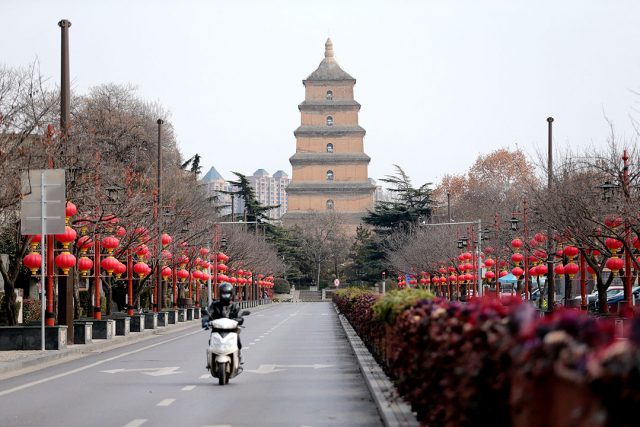
Around 11,000 members of the Moro Islamic Liberation Front and Moro National Liberation Front take a special qualifying exam on May 29 in the cities of Cotabato and Lamitan to join the Philippine National Police. The integration of former armed rebels into the police force is part of the peace pact signed with the government in 2014.
BOSTON CELTICS forward Jayson Tatum (0) reacts after winning the Larry Bird Eastern Conference Finals MVP trophy after Game 7 of the 2022 Eastern Conference finals at FTX Arena. — REUTERS
JAYSON Tatum registered 26 points, 10 rebounds and six assists to help the Boston Celtics notch a 100-96 victory over the host Miami Heat to win Game 7 of the Eastern Conference finals on Sunday night and reach the National Basketball Association (NBA) Finals.
Marcus Smart added 24 points and nine rebounds and Jaylen Brown also scored 24 points as the Celtics advanced to the NBA Finals for the first time since 2010. Grant Williams added 11 points for Boston.
Tatum was named the conference finals’ MVP.
Jimmy Butler recorded 35 points and nine rebounds to lead the Heat, although he missed a 3-point attempt with 16.6 seconds left that would have given Miami the lead. Bam Adebayo added 25 points and 11 rebounds, and Kyle Lowry had 15 points and seven rebounds.
The Celtics will face the Golden State Warriors in the NBA Finals. Game 1 is Thursday night in San Francisco.
Boston led wire-to-wire in ending a streak of five straight losses in opportunities to clinch an NBA Finals berth.
The Heat, who trailed by 17 early in the second quarter and by 16 late in the second, pulled within 82-79 after Adebayo and Butler opened the fourth quarter with baskets.
But Boston countered with eight straight points, with Smart’s floater making it an 11-point cushion with 6:36 left.
Smart’s two free throws elevated the lead to 98-85 with 3:35 remaining. Miami suddenly came alive as Lowry, Max Strus and Victor Oladipo scored baskets to cut the deficit to seven.
Lowry’s layup with one minute left pulled the Heat within 98-93, and Strus followed with a 3-pointer to cut it two with 50.7 seconds left.
Miami had a chance to move ahead, but Butler’s ill-fated transition 3-pointer bounced off the rim, and Smart made two free throws with 11.4 seconds left to give Boston the game-ending four-point lead.
Miami’s Tyler Herro (groin) returned from a three-game absence and was scoreless in seven minutes.
Boston shot 41.2% from the field, including 11 of 32 from 3-point range.
The Heat made 42% of their shots and were a shaky 6 of 30 from behind the arc.
Brown scored 15 and Tatum added 13 as the Celtics held a 55-49 half time lead. Butler scored 24 in the half for Miami.
Boston sprinted out of the gates with leads of 12-3 and 24-9. After the Heat awoke with eight straight points, the Celtics finished the quarter with eight of their own to take a 32-17 lead into the second quarter.
Brown’s basket to start the second gave Boston a 17-point lead, and the advantage was 53-38 after Tatum connected on a 3-pointer with 2:36 left. But Miami finished strong with an 11-2 burst to trail by six at the break.
The Celtics pushed the lead to 72-58 on Smart’s 3-pointer with 6:46 left in the third quarter. Miami again cut down its deficit and trailed 82-75 entering the final stanza. — Reuters
LEYLAH Fernandez (CAN) returns the ball to Amanda Anisimova (USA) during their match on day eight of the French Open at Stade Roland-Garros. — REUTERS
PARIS — Improving her overall game was the top priority for Leylah Fernandez after her runner-up finish at last year’s US Open and the Canadian teenager believes she is on the right track after making the French Open quarterfinals for the first time.
The 19-year-old left-hander, who won the girls’ title three years ago at the claycourt Grand Slam, made a stunning run to the championship match at Flushing Meadows where she went down to fellow teenager Emma Raducanu.
Fernandez won a WTA 250 title in Monterrey, Mexico, at the beginning of March but her path since making her maiden major final has been marked by numerous defeats.
“I think I’m improving more and more and understanding my game, that’s the most important thing,” she told reporters on Sunday, after defeating American 27th seed Amanda Anisimova 6-3, 4-6, 6-3.
“That was our goal after the US Open, that we just want to improve my tennis game, my all-around game, and just keep getting those opportunities and see where my level is at and see where I can improve for the next match.”
A dogged fighter from the baseline with a stinging forehand, Fernandez said she wanted to add more aggression to her game.
“I think I just understood that there is a process, and it’s still a long year, very long year, and I just need to calm myself down, calm my mind down, and just accept that things are going to be tough,” she said.
“Things are going to go sideways in a match, in a practice, and just understand that I’ve got more tools in my toolbox that I can use and just find solutions.”
World number one Iga Świątek is the only survivor among the top 10 women’s seeds at Roland Garros, but Fernandez said she was taking nothing for granted. — Reuters
PARIS — Carlos Alcaraz pummelled Karen Khachanov into submission in a 6-1, 6-4, 6-4, victory on Sunday to reach the French Open quarterfinals and stretch his winning run to 14 matches.
The 19-year-old, who has taken the tennis world by storm this year, became the youngest male player in 29 years to reach two Grand Slam quarterfinals after also making the US Open last eight.
“It has been a great match from my side. I played really well from the beginning until the end of the match,” he said. “I knew I had to be really focused from the beginning.”
“I expected the level that I played. I started really well and I kept the level for the whole match. I am very happy with it.”
He needed just 29 minutes to storm through the first set with his special mix of raw power, punishing forehands and deft drop shots that made his 26-year-old opponent look old.
Khachanov, the world number 25 and a quarterfinalist in Paris in 2019, managed to hold serve early in the second set but the Spaniard broke him at 3-3, and never looked back.
The pair traded breaks midway through the third set on a chilly and overcast evening in the French capital, but it was Alcaraz who pulled ahead with yet another break after an eye-popping ‘tweener’ lob over the tall Russian.
He wobbled a bit at the end, wasting five match points on Khachanov’s serve, but that only delayed the inevitable by one game, as he sealed victory on his serve minutes later.
World number six Alcaraz, who now has a 19-1 win-loss record on clay this season after winning back-to-back titles in Barcelona and Madrid in April and May, will next face third seed Alexander Zverev, who beat qualifier Bernabe Zapata Miralles in straight sets.
“Sasha (Zverev) is playing a great game. He is real aggressive and it will be a tough match,” Alcaraz said. “Best of five against him will be tough. He has beaten great players in Grand Slams.”
“I like to play tough, close matches so it is going to be a good match.”
Should the stars align for Alcaraz, he could eventually take on either world number one and defending champion Novak Djokovic or 13-time Roland Garros winner Rafael Nadal in the last four. — Reuters
MADRID — About 400,000 jubilant Real Madrid fans flocked to the streets of the Spanish capital on Sunday to join the players for a celebration of their record-extending 14th European Cup triumph after the 1-0 win against Liverpool in Paris on Saturday.
Traffic restrictions had been in place all over Madrid since late on Saturday as supporters started gathering around the central Cibeles fountain to celebrate the team’s fifth Champions League crown in nine years, secured by a Vinícius, Jr. strike just before the hour with Real’s first attempt on goal.
Madrid’s emergency services said 51 fans had received medical attention overnight due to burns from flares, falls, dizziness and bruises.
The official celebration started on Sunday at 6 p.m. local time when the victorious Real players paid their traditional visit to the Almudena Cathedral to offer the trophy to the Virgin of Almudena, patroness of Madrid.
After passing through City Hall and local government offices for a meeting with the mayor and governor, the players arrived in an open-top bus at a packed Cibeles, where some the 400,000 fans were waiting around the famous fountain.
They stayed there for over an hour as Real captain Marcelo assumed the traditional responsibility of “crowning” the Greek goddess statue.
Marcelo, in what is set to be the last of the 33-year-old’s 16 seasons at the Spanish champions, placed a Real scarf around the head of the statue and a white flag with the club’s coat of arms over her chest as his team mates and the fans waved their hands in the air to the sound of “We Are The Champions.”
The players left Cibeles right after 10 p.m. for a final three- mile run in the open-top bus to finish the party at the club’s Santiago Bernabeu stadium where a stage was built on the pitch and almost 50,000 fans were waiting in the stands.
“We are very proud to share this trophy here, in our home. Madrid is our starting point. From here, we’ve been able to transmit our values to the world,” club president Florentino Perez said.
“This European Cup will be remembered as one of the greatest in the history for how they achieved it. Real Madrid have once again conquered the hearts of all fans.
“I want to thank all the fans. This is a club that have no owner, all of you are the owners of our own destiny.” — Reuters
PARIS — Rafa Nadal overcame a sluggish start and a stiff challenge from Canadian ninth seed Felix Auger-Aliassime with an enthralling 3-6, 6-3, 6-2, 3-6, 6-3 win on Sunday to set up a mouth-watering quarterfinal with world number one Novak Djokovic.
This was only the third time in his 112 matches that Nadal was taken to the fifth set at Roland Garros and he ensured he kept his blemish-free record intact, wrapping up the win in four hours and 21 minutes to wild applause from the crowd.
Nadal will hope he can recover in time from the gruelling contest for his next outing, where the reigning champion awaits for their 59th career showdown.
The Spaniard, who will turn 36 on Friday, has lifted the Musketeers’ Cup a record 13 times but was ousted in the semifinals last year by Djokovic.
Djokovic completed his victory against Diego Schwartzman on Court Suzanne Lenglen shortly before his long-time rival started his match and the Serb is yet to lose a set in his four rounds.
“Of course, we know each other well. We have a lot of history together,” Nadal said of Djokovic. “I am going to be focused, I will try my best. I don’t know what will happen, but I will fight until the end.” — Reuters
Fully electric Porsche Taycans in Power Plant Mall
The future of electromobility is happening now, according to PGA Cars, the partner of Audi, Bentley, Lamborghini, and Porsche automobiles in the Philippines.
The distributor exhibited fully electric Porsche and Audi cars at Power Plant Mall in Makati City on May 27–29, and will do so again June 3–5, as part of its FutureNow program, which aims to assist the country’s transition to sustainable, premium electric vehicles (EVs).
The Porsche Taycan, Audi e-tron SUV, and Audi e-tron GT will take center stage next weekend to showcase the beginning of the local EV ecosystem.
“With these models, we are leading the Philippines’ transition to sustainable premium electric mobility,” said Christopher Chan, managing director of Audi Philippines, at the opening of the exhibition on May 27.
By 2025, Audi and Porsche want EVs to make up half of their global sales.
In the Philippines, PGA Cars initially invested P300 million in its FutureNow program for the construction of facilities, manufacturer-approved equipment, and personnel training for the requirements and safety standards of EVs.
LEADING THE CHARGE The vision for a fully electric automotive industry is supported by multiple stakeholders, said William Angsiy, managing director of Porsche Philippines.
He pointed out that mall owners, property developers, and fuel companies are setting up public charging stations.
“By doing this, we are opening possibilities for consumers and stakeholders to embrace the sustainable way to use resources,” he said.
This April, SM Supermalls launched free, in-mall charging stations for electric vehicles in SM Aura in Taguig City, SM North Edsa in Quezon City, SM Mall of Asia in Pasay City, and SM Megamall in Mandaluyong.
Meanwhile, Republic Act No. 11697, or the Electric Vehicle Industry Development Act (EVIDA), was put in place this year by President Rodrigo R. Duterte to provide a framework for the manufacturing and adoption of EVs.
“It’s only a matter of time until EVs become more widespread. It just so happens that luxury brands like us are bringing more of them here first,” Mr. Angsiy told BusinessWorld.
Both the Porsche Taycan and Audi e-tron range come with portable charging systems that can be plugged into either a household or a three-phase industrial outlet.
The cars also have available alternating current (AC) charging units that can be installed at homes. Owners can either charge overnight or whenever they can — and with more charging stations being built, wherever they can.
The Electric Vehicle Association (EVAP) said last year that there were 12,965 registered EVs from 2010 to 2020, only a small fraction of which are personal vehicles. — Brontë H. Lacsamana
CHINA reported the fewest new coronavirus disease 2019 (COVID-19) cases in almost three months, with the easing of outbreaks in Beijing and Shanghai emboldening authorities to relax some of the strictest virus controls of the pandemic and move to stimulate the country’s faltering economy.
In Beijing, infections dropped to 12 on Sunday, from 21 on Saturday. Curbs on movement in several districts started to be loosened yesterday after officials said the outbreak was under control. The decline has eased concern that Beijing could have been headed for a lockdown when it was reporting several dozen cases a day earlier in the outbreak despite increasingly strict restrictions.
In Shanghai, cases fell to 67 for Sunday from 122 on Saturday. The financial hub on Sunday rolled out a raft of measures to support its lockdown-hit economy, including allowing all manufacturing to restart from Wednesday.
There were 122 cases reported across the country on Sunday, the fewest since March 3. China hasn’t reported a day without infections since October despite its zero-tolerance approach to the virus.
Consumption-related plays led gains in Chinese equities as traders snapped up shares of companies that are positioned to benefit from a gradual resumption of normal life. Still, the benchmark CSI 300 Index was up just 0.4% at the mid-day break, trailing a 1.8% jump in the broader MSCI Asia Pacific Index.
While sweeping curbs have brought COVID’s spread under control for now in China’s two most important cities, the virus has evolved to become far more contagious, said Ben Cowling, chair of epidemiology at The University of Hong Kong’s School of Public Health. That means it’s likely to flare up again and again, making it more difficult to control than it was last year when a less transmissible strain was spreading, he said.
“Beijing and other cities in China would need to be prepared to implement outbreak control measures more often in the coming year than in 2021 because of the increased transmissibility of the virus over time,” Mr. Cowling said.
ECONOMIC ACTION At the weekend, Shanghai said it will accelerate approvals for property projects and increase the quota for car ownership by 40,000 this year. A purchase tax for some passenger vehicles will be reduced and subsidies will be given to electric-car buyers. COVID test requirements will be loosened for people entering public places from June 1 as the city tries to restore a sense of normalcy after a two-month lockdown of its 25 million population.
China’s dogged adherence to its COVID Zero policy at all costs — epitomized by Shanghai’s lockdown and restrictions imposed elsewhere in the country of 1.4 billion — has dragged on everything from consumer spending to manufacturing in the world’s second-largest economy. The harsh curbs, which confined millions of people to their apartments or residential compounds, also sparked clashes between residents and police.
The Shanghai measures come after the State Council, the equivalent of China’s cabinet, outlined a 140 billion-yuan ($21 billion) package of extra tax rebates and loans aimed at stimulating the battered economy. Most economists expect it will be difficult for China to meet its economic growth target of about 5.5% this year because of the disruption wrought by its Covid approach.
In Beijing, most public transport including buses, subways and taxis will resume in three districts including the biggest, Chaoyang. Shopping centers outside of controled areas will also be allowed to reopen with capacity limits. Chaoyang is one of Beijing’s key central business districts, hosting most foreign embassies and many in the expatriate community.
Some Beijing residents who were required to work from home previously will be allowed to return to their offices, while hotels and hostels in five districts on the city’s outskirts will be permitted to reopen.
Schools and kindergartens will remain suspended and university campuses will stay closed, with students urged to go home before the summer holidays. Dining-in is still banned at restaurants. — Bloomberg
AFTER SRI LANKA defaulted on its debt, Jack McIntyre, a portfolio manager at Brandywine Global Investment Management, started watching rice and grain prices more closely.
For a swath of the markets he’s tracking, global food shortages are presenting governments with a stark choice — pay their debts or feed their people.
Sri Lanka opted for the latter, falling into arrears on its foreign debt May 18 amid a lack of dollars to ease shortages of everything from food to fuel, and bets are high that others may follow. Fifteen emerging market nations now trade with debt at distressed levels, or a risk premium of more than 10 percentage points. Four of those nations are in Africa, where one of the steepest run-ups in food prices is taking a toll.
“The default in Sri Lanka made me nervous,” Mr. McIntyre said. “You don’t have to drive, heat your home, but you have to eat.”
With memories of the Arab Spring unrest in the early 2010s in mind, investors are fleeing emerging market nations threatened with crippling food shortages and uprisings. Russia’s invasion of Ukraine disrupted vital supplies of food staples, adding to problems caused by extreme temperatures and elusive rain in breadbaskets from the Great Plains to the Horn of Africa.
Indeed, food prices have skyrocketed by more than 30% over the past year, according to a United Nations measure. That’s all the more striking when you consider that in the two decades through 2020 they rose an average of 4.3% every year.
MARKET MELTDOWN The countries that are most affected — and least able to cope — are those in the developing world. For these nations, food is almost a third of current year-on-year headline inflation gauges; in the US, UK and much of Europe, food accounts for 10% or less of similar measures.
Desperate measures like India’s move to restrict wheat exports, announced earlier this month, will add to global price pressures, thwarting efforts by central bankers to subdue them. And protests against domestic pain have the potential to spread.
“The markets have firmly underestimated the implications of the rise in input costs,” said Luiz Eduardo Peixoto, emerging markets economist at BNP Paribas Markets. “We are particularly concerned about food inflation. The repercussions of the increase in the cost of food will be seen in the next few months, causing a dramatic increase in global inflation.”
Not that prices haven’t already taken a hit. Debt of developing nations in dollars has lost 15% so far this year while local-currency obligations are down 7%, with both trading near early 2020 levels, according to Bloomberg indexes. The MSCI gauge of emerging-market stocks has lost 14%, trading near the lowest level since 2001 relative to US stocks.
And the more exposed a nation is to food inflation, the more likely it is their currency will weaken, with the Mexican peso, the Colombian peso, the ringgit and rupiah among the most vulnerable. An important inflation report is due out of Mexico this week, with investors also watching for Colombia’s presidential elections, Brazil GDP and China PMI.
That makes servicing debt — particularly dollar debt — even harder, raising the prospect that developing nations lose access to markets at a time they need it most. Yields on their dollar bonds are near the highest in two years at almost 7%, tripling a country like Tunisia’s borrowing costs.
Meanwhile, the cost to protect the debt of speculative-grade emerging market nations has risen to match levels on par with the 2013 taper tantrum, according to Bloomberg Intelligence.
“Compared to energy price shocks, food price inflation tends actually to be more pervasive and prolonged in its impact, and governments typically have fewer administrative programs to buffer the effects on households,” said Bryan Carter, head of emerging-market debt in London at HSBC Asset Management.
His team is cautious on the bond markets of Nigeria, India, Kazakhstan, Egypt and Pakistan due to their large food inflation components and has ratcheted up expectations for emerging-market inflation in most countries.
What’s clear to all is there’s no quick fix — for food shortages or the markets fallout. Even before the Russia-Ukraine conflict disrupted food supplies, networks had been weakened by the lingering effects of pandemic shutdowns, climate change and the energy crisis.
It’s a situation that’s led to hoarding on a global scale, with food-producing nations now stopping some exports and perpetuating a cycle of inflation and hunger.
India, the world’s second-biggest producer of wheat, followed its prohibition on sales of the staple with a limit on sugar exports. Malaysia has halted the overseas sale of poultry. Indonesia is partially stopping shipments of palm oil.
Thailand and Vietnam, the world’s top rice exporters after India, may also take action that could result in higher food costs for consumers worldwide. The two Asian nations should jointly raise prices to boost their bargaining power, according to Thai premier Prayuth Chan-Ocha.
The same day Sri Lanka defaulted, the UN secretary general warned that a global food shortage could last for years, spreading political upheaval and starvation.
“The next aspect of that food price angle that we’re going to be monitoring very closely is with regards to politics, populism and protectionism,” said Mary-Therese Barton, head of emerging-market debt at Pictet Asset Management in London. “It’s a very difficult period for EM.” — Bloomberg
JERUSALEM — Israel on Monday warned its citizens against travel to Turkey, citing Iranian threats of revenge for the assassination last week of a Revolutionary Guards colonel.
Teheran has blamed Israel for the killing of Hassan Sayad Khodai, who was shot dead at the wheel of his car by two people on a motorcycle and has vowed retaliation.
Israel’s National Security Council said in a statement that Tehran could be looking to harm Israelis in Turkey and classified it as a “high-risk country.”
Turkey is a popular tourist destination for Israelis and the two countries have been mending their ties after more than a decade of strained relations.
Israel has accused Khodai of plotting attacks against its citizens worldwide.
Israeli Prime Minister Naftali Bennett’s office, which oversees intelligence agency Mossad, has declined to comment on the assassination but Bennett said on Sunday that Teheran would “pay the full price” for instigating attacks on Israelis. — Reuters
We asked an air conditioner expert to talk about the most frequently asked questions about aircons and share tips how you can save on electric bills
Inverters, compressors, freons, portable aircon, centralized aircon, and so much more – Are you overwhelmed with what you need to know in buying the right air conditioner for your home and don’t know where to start? Don’t worry, here’s a quick guide to all things aircon and energy-savings straight from the expert.
STARTING WITH THE BASICS
By now, most people have probably heard about inverter technology. It sounds rather technical, but what is it exactly and what does it do for home appliances?
Simply, an inverter is a control circuit that varies electrical frequency. In an air conditioner, the inverter regulates the electric power linearly in accordance with room conditions to achieve comfortable and energy-saving operations. Meanwhile, non-inverter air conditioners only run at a full speed or stop, thus leading to energy waste.
According to Engr. Neil Galero, a product expert from Panasonic Air-Conditioning Philippines, you can compare it to driving a car. You save more fuel when driving on an expressway without stopping compared to driving on a normal road where you need to stop on traffic signs and converging roads.
The same analogy applies to air conditioners. At startup, the inverter runs at maximum power to provide quick cooling. Once the set temperature is reached, the inverter maintains efficient operation to minimize changes in temperature. This in turn, prevents wasteful consumption of electricity.
Simply put, inverter air conditioners provide you better energy-efficiency vs non-inverter air conditioners, which leads to electric bill savings.
That’s why more customers now choose inverter appliances for their household.
THE BENEFITS OF INVERTER TECHNOLOGY
Aside from energy-efficiency, inverter technology offers more advantages. One of which is the longer lifespan for your appliances.
Motors, especially the compressors running inside your appliance, experience the most stress during startup. Since non-inverter compressors start and stop periodically, they can wear out much earlier than inverter compressors.
With Panasonic appliances that are certified Japan Quality, customers can expect superior quality and reliability. With over 60 years of expertise in air conditioning, Panasonic products are engineered with innovative features that deliver unparalleled comfort, energy-efficiency, and ease of use!
Another benefit of the inverter technology is that it can help reach a set temperature faster when compared to a non-inverter air conditioner.
This is further improved when you have a Panasonic Inverter Air Conditioner. It comes with PAM (Pulse Amplitude Modulation) and PWM (Pulse Width Modulated Wave) which provide faster cooling at startup compared to conventional inverters.
According to Engr. Neil Galero, conventional inverters may also have rougher control of their compressor’s rotation, whereas Panasonic’s Inverters are more precise and smoother in controlling the rotation speed of the compressor.
He adds that with PAM, Inverter technology increases the power output to accelerate the speed of the compressor, allowing it to deliver strong, cool air at a faster rate. Once the set temperature is reached, PWM stabilizes the rotation speed to maintain a set temperature for constant comfort but still maintaining optimum energy-efficiency.
The unique and patented Inverter technology of Panasonic enables customers to get #PureEnergySavings. At the same time, different types of aircon have this Inverter feature. Panasonic has window type inverter aircon and the split type inverter aircon.
Now, you can enjoy excellent cooling without breaking the bank!
CONSIDERATIONS IN CHOOSING THE RIGHT AIR CONDITIONER
Customers often ask what capacity of air conditioner fits a particular room. According to Engr. Neil Galero, room dimension is important in identifying the best model. The room size determines what horsepower should best fit your need. However, a proper room survey is still the best way for assessment.
With a room survey, the ideal location for the air conditioner can be determined to give the best cooling condition for the room. The room survey also accounts for different heat sources present in the room.
As each room in your home is different, nailing down just one model that you can use in all spaces is nearly impossible. Thankfully, if you get a Panasonic Air Conditioner with ECO+A.I. feature, this dilemma can be resolved. ECO+A.I. feature ensures that your appliance can intelligently balance energy-savings and comfort without any hassles.
Engr. Neil Galero adds, the ECO Mode with Artificial Intelligence (A.I.) Control automatically learns and judges what is the optimal ECO level based on multiple factors. There’s the room condition (size and ventilation) and the presence of heat sources (sunlight, heat from other appliances, body heat).
Additionally, this feature balances power consumption with the time taken to reach the desired temperature to maintain your comfort with minimal energy waste.
As a result, ECO+A.I. lets you save up to 20% more in energy! That’s a big check for any potential customer.
Homeowners also look for other features that give them big returns. On top of excellent energy-efficiency, Panasonic Air Conditioners have features that ensure optimal air purification.
Panasonic has its patented nanoeTM X technology. This inhibits viruses and bacteria present in the air. More so, this maintenance-free titanium nanoe™ X generator inhibits the novel coronavirus.
This has been verified by Texcell, a global contract research organization. Over 91% of novel coronavirus (SARS-CoV-2) activity was inhibited within 8 hours in a 6.7m³ test space.123
Finding the perfect air conditioner for your home is quite a task. Even the smallest of details can make a big difference. Find out here how #CareWins every day with Panasonic Air Conditioners: https://www.panasonic.com/ph/consumer/air-conditioners.html
Spotlight is BusinessWorld’s sponsored section that allows advertisers to amplify their brand and connect with BusinessWorld’s audience by enabling them to publish their stories directly on the BusinessWorld Web site. For more information, send an email to online@bworldonline.com.
SRI LANKA has a habit of selling off its assets when times are tough. And it doesn’t get much tougher than this. The tiny island nation is in default and in desperate need of $4 billion to pay for food, fuel, and fertilizer to stave off a deeper crisis.
The newly appointed prime minister, Ranil Wickremesinghe — his sixth time in the job — wasted no time in announcing the government would privatize Sri Lankan Airlines, which, prior to the pandemic, had flown to 126 destinations in more than 60 countries. The carrier struggled with a stretched balance sheet even before COVID-19 and may fail to make payments to aircraft lessors, Bloomberg Intelligence analysts wrote last month. It had lost $125 million in the year through March 2021 and will likely struggle to find a buyer willing to take it on.
But when a country has only one day’s stock of gasoline and not enough dollars to pay for the three ships carrying crude and furnace oil anchored off the coast, selling anything that isn’t nailed down starts to look like a worthy strategy. The problem is, Sri Lanka has already essentially given away some of its most strategic points to China, which until recently was working hard to expand its footprint there. Now, Beijing has offered loans of “a few hundred million dollars,” Wickremesinghe told the Financial Times, while his government is also seeking to renegotiate existing debts to China, amounting to around $3.5 billion.
Wickremesinghe is pushing to fast-track talks with the International Monetary Fund, but his negotiators haven’t yet reached a staff-level agreement with the multilateral lender. And until the loans start flowing, Sri Lanka is living day-to-day. Protesters have established a permanent presence in the capital, Colombo, and continue to demand the resignation of President Gotabaya Rajapaksa. “Give us back our stolen money,” one sign reads, as their fury at the government’s role in the economic crisis shows no sign of subsiding.
China is Sri Lanka’s single largest bilateral creditor, and its white elephants — the Chinese-built Hambantota port and little-used airport near the ancestral village of the Rajapaksa family — have contributed to citizens’ rage against the political dynasty that includes both the president, and his brother Mahinda, who on May 9 resigned as prime minister following violence that left nine people dead and dozens wounded. Protesters set fire to the Rajapaksa family home in Hambantota and destroyed monuments to their parents in what was a culmination of months of growing civil unrest over their disastrous fertilizer ban that has led to ongoing food shortages, the failure to handle the foreign-currency crisis, and their inexplicable delays in seeking international aid.
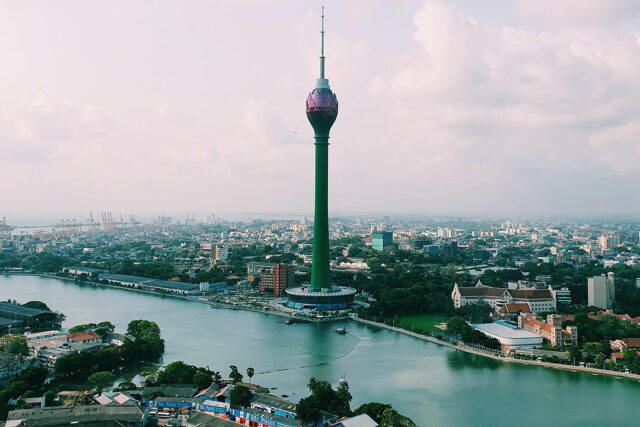
There’s also the Colombo Port City, which was meant to position the capital as the next big Asian financial center. But its status as a special economic zone means the government sees little benefit for the scar that’s been created along the waterfront. It, like the port, is controlled by a Chinese-owned company, with a significant portion of it on a 99-year lease.
Of course, not only Beijing seeks to exert influence in Sri Lanka. India’s slice may be smaller, but it continues to hold significant sway simply via its political and economic sway in the region. New Delhi has provided more than $3.5 billion in assistance this year to help pay for fuel, food, and medicine. The arrival of Indian shipments of diesel and petrol these past two weeks have caused chaos in Colombo as citizens flocked to fuel stations to try and fill their vehicles.
In September last year, one of India’s largest companies, the Adani Group, entered into a $700-million deal to develop a deep-water container terminal in Sri Lanka in what the Sydney-based Lowy Institute described as a “strategic game-changer” in the battle for influence between Beijing and New Delhi. It will sit next to the Chinese-run terminal at Colombo Port (China Merchant Ports Group Co. also runs Hambantota Port).
Then in January, the Indian Oil Corp. subsidiary Lanka IOC took a 49% stake in the joint development of the Trincomalee oil tank farm, with Ceylon Petroleum Corp. maintaining a 51% stake in the finalization of a deal that was struck in 1987, during Rajiv Gandhi’s tenure as India’s prime minister. Sri Lanka’s location along one of the world’s busiest shipping routes means it’s crucial for maintaining global supply chains.
So, what else can the country privatize? It’s a question that’s worrying political economists like Ahilan Kadirgamar, who is concerned about the social impact of key assets leaving government hands. Kadirgamar, a senior lecturer at the University of Jaffna, said officials were most likely to consider the Ceylon Electricity Board and the Ceylon Petroleum Corp. He predicts there will be significant resistance to such a move.
The electricity board is one of the nation’s social strengths, he said. “Few developing countries have the kind of electricity connectivity and services as Sri Lanka does. Even day-wage laboring families have access to electricity, which benefits their children’s education.” The IMF will be pressing the government to reduce the agency’s losses, Kadirgamar predicts, and the government may be tempted to fill its coffers via a sale rather than reforming the sector.
For now, the country appears to have no other option but to rely on India and China’s largesse. The World Bank said that until Colombo puts in place an “adequate macroeconomic policy framework” that restores stability and growth, it does not intend to offer new financing. If Sri Lanka can hold off on selling the silver, it may have a fighting chance to put the economy back together again.