Home Blog Page 5857

Peso drops to new all-time low on hawkish Fed
BW FILE PHOTO

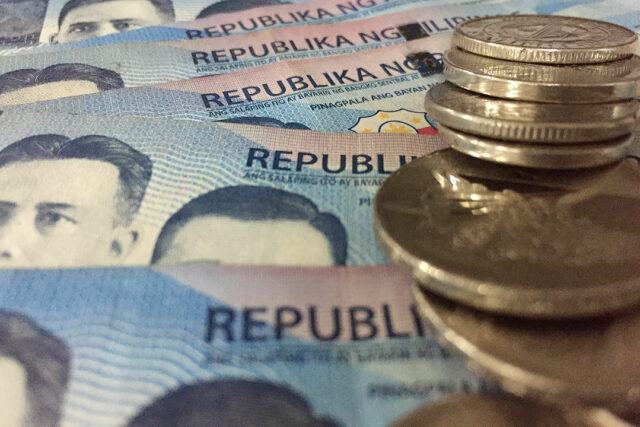
THE PESO closed at a new record low against the dollar for the third straight day after the US Federal Reserve delivered another aggressive rate hike and signaled more increases to bring inflation under control.

The local unit closed at P58.49 versus the greenback on Thursday, down by 49 centavos from its P58 finish on Wednesday, data from the Bankers Association of the Philippines showed.

Year to date, the peso has weakened by 14.68% or P7.49 from its P51-per-dollar close on Dec. 31, 2021. Just for this month, the local unit has lost P2.345 in value against the dollar so far from its P56.145 finish on Aug. 31.

The peso opened Thursday’s session at P58.10 against the dollar. Its intraday best was at P58, while its worst showing for the day was at P58.50 versus the greenback.

Dollars exchanged increased to $1.51 billion on Thursday from $1.05 billion on Wednesday.

The local unit declined after the Fed hiked rates by 75 basis points (bps) overnight, Rizal Commercial Banking Corp. Chief Economist Michael L. Ricafort said in a Viber message.

The US central bank raised rates by 75 bps to between 3% and 3.25% on Wednesday and signaled they could go even higher to rein in high prices. It was the third hike of that size since May and brought cumulative increases for the year to 300 bps.

“Continued peso weakness, despite the latest +0.50 local policy rate hike to 4.25%, could lead to higher import prices and overall inflation, as the peso already depreciated by 14.7% since the start of 2022,” Mr. Ricafort said.

“Dollar strength from a more aggressive Fed in the aftermath of last night’s Federal Open Market Committee meeting is the main factor pressuring the peso lower today. This factor is unlikely to fade towards yearend,” MUFG Bank Currency Analyst Sophia Ng said in a note on Thursday.

“This, in addition to the likely widening of the Philippines’ trade and current account deficits as imports increase and export growth decelerates, would push the peso to new record lows against the dollar,” she added.

The Bangko Sentral ng Pilipinas (BSP) on Thursday raised benchmark interest rates by 50 bps for a second straight meeting amid broadening price pressures. It has now hiked borrowing costs by a total of 225 bps since May.

Headline inflation eased slightly to 6.3% in August from the near four-year high of 6.4% in July, bringing the eight-month average to 4.9%, both above the BSP’s 2-4% target for the year.

The central bank on Thursday hiked its average inflation forecast for this year to 5.6% from 5.4%.

For 2023, the BSP sees inflation averaging at 4.1%, also up from 4% previously, before slowing to decline to 3% in 2024, down from the 3.2% seen as of August.

For Friday, Mr. Ricafort gave a forecast range of P58.30 to P58.60 against the greenback.

BROAD DEPRECIATION
BSP Deputy Governor Francisco G. Dakila, Jr. said at a press briefing on Thursday that the local unit’s decline is broadly in line with regional currencies’ weakening versus the greenback due to broad dollar strength.

“The current movement of the peso is expected as it largely reflects the strengthening of the US dollar given the monetary policy tightening cycle of the US Fed. Now, concerns over the Russia-Ukraine conflict and its protracted impact on global supply chains, global growth uncertainty and elevated global inflation also continue to drive investors towards the US dollar as a safe-haven asset. So other currencies actually in the region are also seeing a pronounced weakening and volatility,” Mr. Dakila said.

“Our view is that the recent foreign exchange pressures are not unique to the peso. At the same time, the peso’s movements are a natural consequence of the prevailing current account dynamics of a growing economy, reflecting the increase in the country’s imports and with the ongoing economic recovery… as an inflation-targeting central bank, the BSP will respond to exchange rate fluctuations to the extent that they pose a risk to the inflation outlook,” he added.

Mr. Dakila said Thursday’s policy action is seen enough to help alleviate currency pressures while tempering inflation risks.

He said the BSP is ready to enter the foreign exchange market, but only to ensure orderly conditions and reduce excessive volatility in the currency.

“The BSP is also prepared to utilize other tools to respond to fluctuations in exchange rate and to ensure that legitimate demand for foreign currency is satisfied. Some of those tools have been implemented at the time, for example, when there was that taper tantrum some years back. The BSP also has a wide array of macroprudential measures in its toolkit that are available to respond to the challenges of maintaining financial stability,” Mr. Dakila said.

He added that the economy has adequate buffers against external headwinds. — Keisha B. Ta-asan

Philippine stocks drop as Fed, BSP raise rates

PHILIPPINE SHARES declined further on Thursday after the US Federal Reserve raised borrowing costs anew overnight and gave a hawkish outlook on rates, with the Bangko Sentral ng Pilipinas (BSP) also delivering another increase at its own policy meeting.

The benchmark Philippine Stock Exchange index (PSEi) went down by 39.98 points or 0.63% to close at 6,301.71 on Thursday, while the broader all shares index dropped by 29.28 points or 0.86% to 3,356.24.

“Stocks dropped as investors digested the Fed’s statement on their stance on interest rates and inflation. As expected, the Fed raised their benchmark rates by 75 basis points (bps), but maintained their goal of bringing down US inflation to 2% at all costs. All costs include taking the risk of pulling the US economy into a recession,” AB Capital Securities, Inc. Vice-President Jovis L. Vistan said in a Viber message.

“The local bourse declined further by 39.98 points or 0.63% to 6,301.71 as the Fed raised interest rates by 75 bps, which brought negative sentiment to the market, while the BSP hiked rates by 50 bps to fight inflation,” Philstocks Financial, Inc. Research Analyst Claire T. Alviar said in a Viber message.

“The Fed’s decision brought most equity markets into the red, especially with the expectation that they will remain aggressive for the rest of the year. At home, the BSP’s 50-bp rate increase could help the peso but high policy rates may temper demand,” Ms. Alviar added.

The US central bank on Wednesday hiked interest rates by 75 bps for a third straight time and signaled further increases as policy makers continue to battle inflation. This brought the Fed’s cumulative hikes for this year so far to 300 bps.

Meanwhile, the BSP on Thursday raised benchmark rates by 50 bps for a second straight meeting amid broadening price pressures. It has now hiked borrowing costs by a total of 225 bps since May.

The majority of sectoral indices ended in the red on Thursday, except for financials, which rose by 10.79 points or 0.69% to finish at 1,563.73.

Meanwhile, property declined by 78.89 points or 2.80% to 2,734.04; industrials went down by 136.11 points or 1.47% to 9,098.61; mining and oil dropped by 164.13 points or 1.45% to end at 11,112.50; services fell by 6.20 points or 0.37% to 1,634.39; and holding firms retreated by 1.27 points or 0.02% to close at 6,133.75.

Value turnover went up to P5.92 billion with 641.94 million shares changing hands from the P5.42 billion with 569.25 million issues traded the previous day.

Decliners overwhelmed advancers, 156 to 41, while 34 names closed unchanged.

Still, net foreign selling declined to P204.57 million on Thursday from P421.14 million on Wednesday.

AB Capital Securities’ Mr. Vistan placed the PSEi’s support at 6,100 and resistance at 6,500. — Justine Irish D. Tabile

DoE sees facility investment for gas imports topping P69B

ENERGY.AGPGLOBAL.COM

THE natural gas industry will require investment of P69.23 billion to help navigate the transition from domestically produced to imported gas, the Department of Energy (DoE) said on Thursday after announcing the completion of the Natural Gas Development Plan (NGDP).

The estimated capacity of the receiving facilities required for the transition is 24.6 million tons per annum (MTPA) of liquefied natural gas (LNG) by 2040, the DoE said. The capacity requirement is only 15.6 MTPA under a scenario of greater adoption of clean energy.

The plan estimates natural gas consumption in the Philippines to be at least 16.8 million tons of oil equivalent (MTOE) for power generation and 0.05 MTOE for non-power applications by 2040.

It said much of the gas demand will be “mainly driven by the displacement of coal and oil-based fuels in power generation and greater use of gas-fired power plants as sources of balancing power.”

“Reductions in production levels are anticipated starting in 2022, with the Malampaya concession expiring by 2024. While the gas field will continue to produce significant amounts of natural gas until 2027, the impending depletion of the Malampaya gas fields, ongoing lack of LNG infrastructure, price volatility due to geopolitical and other international issues, and the increasing urgency to reduce coal and oil-based fuel utilization are providing a high level of uncertainty for potential investors and industry stakeholders, given the possibility of stranded assets should projected demand fail to pan out,” according to the plan.

The DoE said it prepared the NGDP with the University of the Philippines Statistical Center Research Foundation, Inc. The plan will serve as a guide in developing the downstream natural gas industry.

“We underscore the importance of developing our natural gas industry. As part of our strategy and ensuring energy security, we need to strengthen our strategies and policies,” Rino E. Abad, director of the DoE’s Oil Industry Management Bureau, said in a media statement.

The NGDP is a US-funded gas policy development plan guiding the DoE in drafting policy recommendations to promote clean energy.

The NGDP outlines for potential investors the legal framework, gas demand outlook, ongoing projects, industry practices and product and facility standards. It also calls for the establishment of a technical committee on downstream natural gas.

“With the challenges facing the current supply of our natural gas from the Malampaya gas field, this NGDP is also timely in providing our prospective investors’ guidance and policy framework, legal requirements, and incentives in putting up LNG facilities and other infrastructure,” Mr. Abad said.

The DoE also said that the NGDP also contains proposed regulatory processes, including the recommendations to government agencies and local government units (LGUs).

“These include technical, administrative, and regulatory guidance for agencies and LGUs, a simplified process for securing permits and clearances, documentary requirements, and technical standards to comply with,” the DoE said.

To date, the DoE has approved six proposed LNG terminal projects with operations expected to start between 2023 to 2025.

These include the FGen LNG Corp., Linseed Field Corp., Energy World Gas Operations Philippines, Shell Energy Philippines, Vires Energy Corp., and Luzon LNG Terminal. — Ashley Erika O. Jose

Philippine government says it can’t deal with climate change alone

PHILIPPINE STAR/ MICHAEL VARCAS

THE Philippines needs to take a “whole of society” approach in tackling climate change because of the government’s inability to shoulder the burden on its own, officials said, citing the need for full-scale efforts in mitigating disaster risk and transitioning to renewable energy.

“We need to invest in early warning systems, social protection, resilience building, R&D (research and development), and innovation and technology,” socioeconomic planning Undersecretary Rosemarie G. Edillon said at the Disaster and Climate Emergency Policy Forum on Thursday.

“There are limits to government resources… Government itself is just responsible for 12-15% of GDP (gross domestic product); the rest is really private sector contribution,” she added.

Finance Assistant Secretary Neil Adrian S. Cabiles said at the same event that over the long term, typhoons and earthquakes can inflict P177 billion worth of annual losses to public and private assets in the Philippines.

“In the next 50 years, the country has a 40% chance of experiencing a loss exceeding P989 billion, and a 20% probability of experiencing a loss of as much as P1.5 trillion,” he said.

Bangko Sentral ng Pilipinas Assistant Governor Lyn I. Javier said the resulting risks to the banking sector are substantial.

“With extreme weather episodes, there is a decline in the total deposits, total resources, (and) total loans, while there is an increase in the nonperforming loans of the banks. This would actually impede them, or make it challenging for them, to lend to households, consumers, and businesses,” she said.

“We expect banks to progressively increase their exposure to sustainable projects, and also assist their borrowers in terms of transitioning and being resilient to the impact of climate change and other environmental risks,” she added.

Ms. Edillon said that responsible consumption and production, or sustainable development goal (SDG) 12, is at the heart of all SDGs, prompting the creation of a Philippine Action Plan for that specific purpose.

“It’s about editing those choices, editing those menu(s), so that people will just choose from those sustainable consumption and production goods,” Ms. Edillon said, noting the importance of R&D, innovation, and technology.

“We need to provide them the options (and) alternatives to these unsustainable goods and services, and then, of course, the infrastructure is needed to be in place so that we encourage the sustainable behavior and discourage the unsustainable behavior.”

However, implementors face a lack of institutional capacity, both in terms of knowledge and funding.

“The estimated cost to implement climate change mitigation actions for the sectors of energy, forestry, industry, and transport alone is around $4.12 billion from 2015 to 2030,” Mr. Cabiles said, noting how this does not yet include the costs the Philippines shoulders to fulfill its Nationally Determined Contribution commitment of reducing greenhouse gas emissions by 75%.

Robert E.A. Borje, vice-chairman of the Climate Change Commission (CCC) said that the current funding access of the Philippines for climate change initiatives is low compared to other countries.

“The CCC identified only P74 billion worth of financial support committed for 15 climate change projects from 2022 onwards. Why do I say this with a little trepidation? Because the grants amount to only to P6.9 billion and the loans are P67.1 billion,” he said.

“The position of the Philippines is that while we want a mix or a blend of financing, as a developing country, we need better access to grants.”

Budget Assistant Secretary Romeo Matthew T. Balanquit said P338.2 billion was allocated for adaptation projects next year under the proposed budget, against P114.9 billion this year. He added that the government’s efforts are aimed at minimizing the negative effects of extreme weather events to help ensure the attainment of national development targets.

The government hopes to expand the economy by 6.5-7.5% this year, and by 6.5-8% next year until 2028.

Energy Undersecretary Felix William B. Fuentebella said that the department hopes to raise the share of renewable energy (RE) in the fuel mix to 35% by 2030 and 50% by 2040.

“We have seen that we have a lot of (fuel) imports, and what happens when the dollar goes up against the peso. So where’s the opportunity? We really have to pursue RE,” he said.

“Six years ago, it was difficult to push for RE because of the cost; now it’s easier (because costs have fallen).”

Albay Rep. Jose Ma. Clemente S. Salceda said that RE can help solve the problem of high power rates that disincentivize investors from doing business in the Philippines.

“Rapid, inclusive growth requires cheap renewable energy, and cheap energy can come from a combination of dependable base load, a surplus of renewable, and setting aside legacy issues for a fresh start,” he said.

He said the main obstacles to expanding RE involve restrictions on foreign capital.

“RE is subject to (the) 60-40 rule,” he said, referring to the constitutional cap of 40% on foreign investment in some industries. “So, foreign investors can’t come in.”

“We need to liberalize renewable energy. If you really want this thing to be solved, you really need to push RE to a massive surplus. We need to regulate distribution, especially for renewables; allowing households to distribute to each other.” — Diego Gabriel C. Robles

2023 budget boosts virus R&D funding by over 58%

RITM.GOV.PH

FUNDING for virus research has been raised by 58.14% to P419.3 million to support the establishment of the Virology and Vaccine Institute of the Philippines, the Department of Budget and Management (DBM) said.

“We need to be proactive and fund a Virology Institute composed of highly-trained experts who will conduct studies on emerging virus strains as quickly as possible and prepare us in case of health emergencies,” Budget Secretary Amenah F. Pangandaman said in a statement.

In his first State of the Nation Address last July, President Ferdinand R. Marcos, Jr. cited the creation of the institute as a legislative priority.

Speaking in his budget message, Mr. Marcos said that the coronavirus disease 2019 (COVID-19) pandemic highlighted “the need for faster identification of and response to outbreaks.”

“At present, the Department of Science and Technology’s (DoST) Industrial Technology Development Institute (ITDI) and the Research Institute for Tropical Medicine (RITM)” have taken the lead on virus-related medical and scientific research, the DBM said.

Specifically, these research projects include the identification of viruses in the Philippines with pandemic potential, tests on combination therapy for drug-resistant bacteria, the development of diagnostics for food and water-borne bacterial pathogens, and an on-site detection method for African Swine Fever.

The 2022 General Appropriations Act also sets aside P360.5 million to establish the institute, including its operations to a second year, and P356.2 million to acquire scientific and laboratory equipment and vehicles.

This week, legislators filed House Bill 308, which seeks to establish the institute, proposing research funding of P2 billion.

The 2023 budget of the Department of Public Works and Highways sets aside P250 million to build the institute’s facility in Capas, Tarlac. — Diego Gabriel C. Robles

Conservation NGO calls for crackdown on illegal fishing, suspension of fish imports

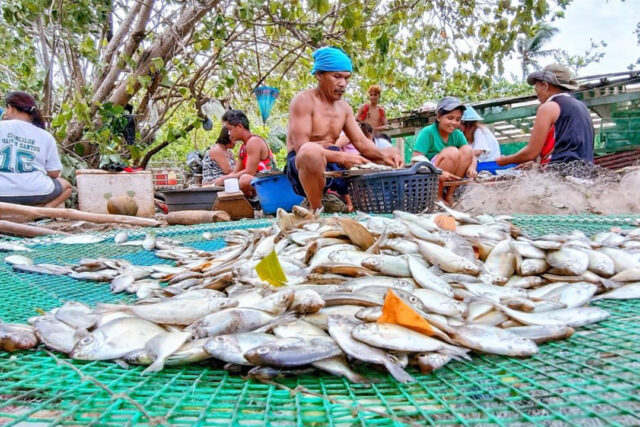
A FAMILY of siganids fishers in Eastern Samar. — MARCIAL VILLANIA BOLEN

THE government needs to crack down on illegal fishing in municipal waters and reduce fish imports if it expects fisherfolk and marine resources to thrive, a conservation group said.

“We are already feeling the pinch of a global food crisis, including decreasing national fish stock. The country’s aquaculture and marine resources should be prioritized as a major source of food and nutrition for Filipinos, but these continue to degrade because of lack of political will to fully and vigorously implement fishery laws, policies and regulations,” Oceana Philippines Vice-President Gloria E. Ramos said in a statement.

“We are asking President Ferdinand R. Marcos, Jr. to stop importing fish; implement an inclusive, science-based fisheries management plan; and prosecute commercial fishers encroaching in municipal waters,” she added.

Ms. Ramos said that the government should protect the 15-kilometer zone marking the extent of municipal waters from commercial fishing operations and support programs to develop the 12 designated Fisheries Management Areas (FMAs).

“While there are initial successes in Eastern Visayas, Zamboanga Peninsula and Davao regions, and that the 12 FMAs have their respective management boards and scientific advisory groups, much is still to be desired in the implementation of their FMA management plans to effectively restore our fishing grounds and ensure that small fisherfolk are provided ample assistance for their livelihood, post-harvest facilities and perhaps fuel and food subsidies to improve their income and their families’ well-being,” she said.

“The Bureau of Fisheries and Aquatic Resources should continuously work hand in hand with fishing industry stakeholders and local government unit (LGU) officials to ensure that our marginalized fisherfolk and coastal communities are taken care of,” she added.

Oceana Philippines is also calling for the full compliance with fisheries law via the mandatory use of vessel monitoring devices by all registered and qualified commercial fishing vessels. 

“In lieu of importing fish, the government should instead protect our municipal waters, home to coral reefs, seagrass and mangroves, which serve as fish shelters and spawning grounds, and thus must be preserved as mandated by the existing fisheries and environmental laws,” Mrs. Ramos said.

“In particular, they should be protected from illegal entry of commercial fishing vessels. Government should fully implement the vessel monitoring rules to track and identify the ownership and location of commercial fishing vessels,” she added. — Luisa Maria Jacinta C. Jocson

Chip industry to pitch gov’t on aid

REUTERS

THE Semiconductor and Electronics Industries in the Philippines Foundation, Inc. (SEIPI) said it needs government help in attracting more investment to the industry, and hopes to make its case to Cabinet officials next month.

“The organization requested to meet with key Cabinet members to initiate its partnership with the new government and discuss the causes of low electronics industry foreign direct investment (FDI), the high production costs, improvements in the Incentives Rationalization component of the Corporate Recovery and Tax Incentives for Enterprises (CREATE) Law, and supply chain issues,” SEIPI said in a statement on Thursday.

SEIPI said the industry remains the Philippines’ top exporter, with shipments in the seven months to July at $26.51 billion, up 1.9% year on year. The semiconductor and electronics industry accounted for 59.25% of all exports during the period.

Asked to comment, SEIPI President Danilo C. Lachica said in a Viber message that the group hopes to meet with government agencies in October.

“We have requests to meet with President Ferdinand R. Marcos, Jr. and cabinet (Department of Trade and Industry, Department of Finance, National Economic and Development Authority). We hope to have meetings in October,” Mr. Lachica said.

Mr. Lachica has said that the industry lost out on over $3 billion worth of investment that elected to locate elsewhere in Asia following the rationalization of incentives under CREATE.  

For 2022, SEIPI has set a 10% growth target. — Revin Mikhael D. Ochave

PHL lifts ban on poultry products from Hungary

BW FILE PHOTO

THE Department of Agriculture (DA) has lifted the temporary ban on imports of poultry products from Hungary, which is now free from Highly Pathogenic Avian Influenza (HPAI) or bird flu.

“In accordance with the provisions of the World Organisation for Animal Health Terrestrial Animal Health Code, Hungary is now free from HPAI,” according to the memorandum order.

The HPAI events in Hungary that led to the import suspension order are now deemed resolved, it added.

According to the DA, the risk of contamination from Hungarian imports is “negligible.”

The DA imposed its ban in December on Hungarian domestic and wild birds and their products, including poultry meat, day old-chicks, eggs and semen. The government also lifted the ban on poultry imports from the US and Japan in August, after both countries were declared HPAI-free. — Luisa Maria Jacinta C. Jocson

Travel agencies project ‘strong’ recovery 

Tourists flock to surfing spots in Baler, Aurora during summer. — PHILIPPINE STAR/ MICHAEL VARCAS

THE Philippine Travel Agencies Association (PTAA) are projecting a “strong recovery” for the tourism industry due to pent-up demand.

“I can say now is that the comeback of tourism is really strong. I can see the thirst from people to still travel even though we are experiencing global crises such as oil price hikes,” PTAA President Michelle G. Taylan said on the sidelines of the group’s general membership meeting in Manila on Thursday.

“I cannot say that we are already totally recovered from the pre-pandemic period. But we are now at the ‘peakest’ level of recovery. I am no longer comparing the pre-pandemic level and now because our situation is totally different,” she added.

Ms. Taylan expects more arrivals during the year-end holidays.

“We can expect more foreign tourist arrivals at the end of the year, especially we are approaching the holiday season. We are also expecting returning overseas Filipinos (balikbayans) to arrive,” Ms. Taylan said.

Ms. Taylan is also expecting business + leisure (“bleisure”) travel to boost the industry, possibly aided by the resumption of Chinese international travel.

“If the Chinese tourism market opens, it will be a huge comeback for the tourism industry because a lot of people are waiting for them. It will give a big help to our economy. I am hoping that China opens soon,” she added.

Tourism Secretary Maria Esperanza Christina G. Frasco has said that foreign arrivals topped 1.3 million as of Aug. 28, dating back to the reopening of the borders earlier this year. — Revin Mikhael D. Ochave 

Manila court junks petition to declare communists as terrorists

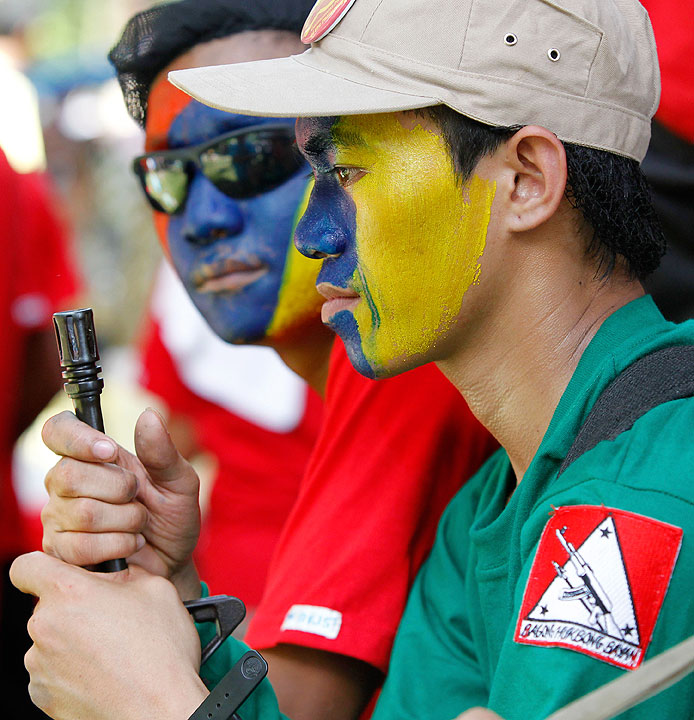
FILIPINO communist rebels painted their face to hide their identities during the celebration of the 42nd founding anniversary of the Communist Party of the Philippines on Dec. 26, 2010. — REUTERS

A MANILA trial court has rejected the government’s plea to declare communist organizations in the Philippines as terrorist groups.

In a 135-page resolution dated September 21, the Manila Regional Trial Court Branch 19 ruled that the Communist Party of the Philippines (CPP) and its armed wing, the New People’s Army (NPA), were not formed for the purpose of engaging in terrorism based on their platform.

“It is not difficult to see how the CPP-NPA’s resort to ‘armed struggle’ and the violence that necessarily accompanies the same, as the sanctioned means to achieve its purpose may have earned the CPP-NPA the terrorist label,” Presiding Judge Marlo A. Magdoza-Malagar said in the ruling.

Ms. Malagar added that the group’s “armed struggle” is only a “means” to achieve its purpose.

The Justice department under the previous administration filed a petition in 2018 seeking to declare the CPP and the NPA as “terrorist and outlawed organizations” under the Human Security Act of 2007.

The law has since been repealed by the Anti-Terrorist Act of 2020, which has labeled the communist party as a terrorist group.

Under the Human Security Act of 2007,  terrorism is defined as engaging in acts used to “sow and create a condition of widespread and extraordinary fear and panic among the populace in order to coerce the government to give in to an unlawful demand.”

The court noted there was no evidence in the nine incidents of terrorist acts it examined supposedly linked to the CPP-NPA.

It added these incidents were considered isolated events in scattered areas in the country, which could not cause widespread fear and panic.

“The CPP can only gain adherents for as long as the government remains insensitive to and incompetent in addressing the social realities of poverty and material inequality which bring with them the oppression of the marginalized,” the judge said.

Current Justice Secretary Jesus Crispin C. Remulla told reporters that the department will appeal the ruling, according to a video posted by state-run news agency People’s Television Network on Twitter.

‘PLEASANT SURPRISE’
Marco L. Valbuena, CPP chief information officer, said the court ruling was a “pleasant surprise”  amid efforts to arbitrarily label groups as terrorists

“The anti-terrorism dogma is being used to silence and suppress the people’s voice, legitimate resistance and grievances to widespread social ills,” he said.

Mr. Valbuena added that the ruling should compel the country’s anti-communist task force to stop branding democratic organizations and other peasant groups as terrorists.

Solicitor General and former Justice Secretary Menardo I. Guevarra earlier said the anti-communist task force should file complaints instead of tagging activists as communists.

The anti-communist task force’s executive director, Emmanuel B. Salamat, asserted that they will continue efforts to raise awareness of how “deceptive” communist groups are in dealing with the state” while addressing the roots of insurgency.

“We are in harmony with other agencies to address what they call injustices and discontent, so to speak, by the communist terrorist group,” he told the ABS-CBN News Channel, reacting to the court ruling.

Bagong Alyansang Makabayan Secretary General Renato M. Reyes, Jr., meanwhile, said the ruling reminds the government to address the cause of armed conflict instead of labeling groups as terrorists.

“We have said it before, labeling revolutionaries and those engaged in peace negotiations as “terrorists” is wrong, counter-productive and undermines any possibility of a political settlement in the armed conflict,” he said in a statement.

The Philippine government decriminalized membership in the CPP and similar organizations through a law signed by the late former President Fidel V. Ramos in 1992.

In 2017, former President Rodrigo R. Duterte issued a proclamation declaring the CPP-NPA as terrorist groups.

In April, the Supreme Court rejected an appeal seeking to reverse its decision upholding the validity of the Anti-Terrorism law, which was signed in 2020.

The Anti-Money Laundering Council has said the law would help it counter the so-called dirty money.

Political experts have said that the current administration still tags organizations as terrorists and communists without basis.

“These actions are a big challenge to the rule of law, independence of the Judiciary, accountability mechanisms and people’s rights,” Maria Ela L. Atienza, a political science professor at the University of the Philippines, said in a Viber message on August 20.

“All these attacks on legitimate organizations and personalities to stifle dissent must be challenged by various organizations in all arenas,” she added. — John Victor D. Ordoñez

Groups seek concrete steps from Marcos on climate crisis, rights

MEMBERS of the Quezon City Department of Public Order and Safety join riders from environmental advocacy and cycling groups during the Pedal for People and Planet event on April 24, 2022 to push for more immediate action in addressing climate change impact. — PHILIPPINE STAR/ MIGUEL DE GUZMAN

PHILIPPINE-BASED groups on Thursday said President Ferdinand R. Marcos, Jr. failed to substantiate his climate change talk at the United Nations General Assembly, adding that he also fell short of discussing the country’s human rights situation.

Jon Bonifacio, national director of Kalikasan People’ Network, a coalition of green groups, said Mr. Marcos needs to lay down a clear platform to shield the Philippines from the worst impacts of global warming and protect environmental defenders.

“While millions of Filipinos suffer directly from the impacts of our ongoing economic and ecological crisis, all we are getting from Marcos Jr. so far are flowery statements,” said Mr. Bonifacio, who participated in climate-related activities in New York in time for the UN event.

“While Marcos Jr. included climate change in his central message, this is mere posturing as he plans on expanding the fossil-based energy industry in the Philippines,” he added.

Press Secretary Trixie Cruz-Angeles did not immediately reply to a Viber message seeking comment.

Mr. Bonifacio said Mr. Marcos has not yet tackled concerns about development projects that Kalikasan said pose threats to the environment and communities.

The Marcos government considers the mining industry as one of the major contributors to the Philippines’ economic recovery.

Center for Environmental Concerns-Philippines (CEC) Executive Director Lia Torres said this contradicts his “stated commitments on climate change.”

“Marcos Jr.’s push for more large-scale mines in the Philippines will only worsen the rapid degradation of our forests, rivers and seas,” she said. “Big mining is a major factor in the massive displacement of indigenous people and rural communities.”

“This will augur more disaster for mineral-rich forestlands and the rural poor communities of mostly indigenous peoples,” she said. 

Kalikasan and CEC noted Mr. Marcos also needs to address the situation of climate and environmental defenders, citing that at least six incidents affecting 119 advocates had been recorded in June alone.

The two organizations are part of a consortium of Philippine-based organizations reporting on the human rights situation in the Philippines for the UN Human Rights Council’s Universal Periodic Review of the Philippines.

The Philippines, an archipelago, is the third most vulnerable country to climate change, according to the Climate Change Commission.

Mr. Marcos, 65, talked about climate change and called for respect for human rights as well as international law in a speech at the UNGA that marked his debut on the global stage.

“Marcos Jr. used the world stage at the UN General Assembly to talk about lofty universal ideals and principles that he and his family refuse to live by,” Cristina E. Palabay, secretary general of local rights group Karapatan, said in a statement.

“Marcos Jr. mentioned the UN Joint Program on Human Rights, and yet he continues to implement the policies of his predecessor Duterte that have resulted in extrajudicial killings, torture, enforced disappearance, illegal and arbitrary arrests and detention,” she added.

Ms. Palabay reminded Mr. Marcos that the majority of killings and rights violations committed during former President Rodrigo R. Duterte’s six-year term have yet to be rendered justice.

Mr. Marcos is the only son and namesake of the late dictator Ferdinand E. Marcos who ruled under a Martial Law regime.

Maria Ela L. Atienza, who teaches political science at the University of the Philippines (UP), said ordinary Filipinos and members of civil society have the duty to educate the public about the Marcos dictatorship and demand the government to preserve the institutional memory about it.

A day before the Philippines commemorated the 50th anniversary of Mr. Marcos’ Martial Law declaration, senators clashed over how the nation should commemorate the military rule, with some senators forcing Filipinos to “move on.”Ms. Atienza reminded senators that the two Houses of Congress were among the first institutions to suffer “as a result of the Martial Law declaration.”

“Congress was replaced by a rubber stamp Batasang Pambansa,” she said. “These senators are making a mockery of themselves and their institution.”

In his UN speech, Mr. Marcos said the UN human rights program is an “example of a constructive approach that puts our people, not our politics, at the center of this work.” — Kyle Aristophere T. Atienza

VP’s office asked to give up P500-M confidential fund  

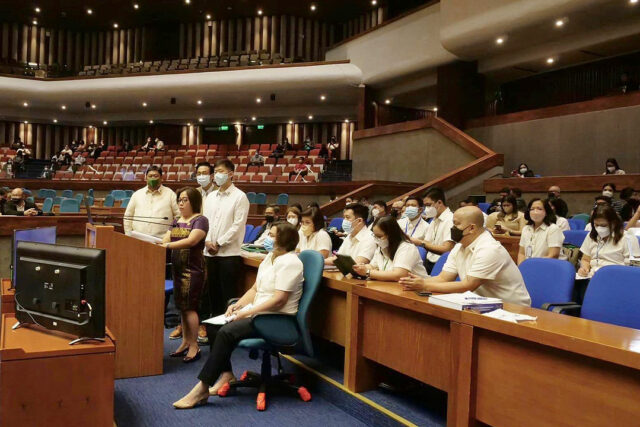
VICE President and Education Secretary Sara Duterte-Carpio (seated in front) attends the 2023 budget hearing for the two offices on Sept. 22 at the House of Representatives. — OFFICIAL FACEBOOK PAGE OF INDAY SARA DUTERTE

A LAWMAKER on Thursday asked the Office of the Vice-President (OVP) to give up a P500-million confidential fund under its 2023 proposed budget, which could be reallocated to other agencies whose appropriations have been cut due to financial strain in public funds.   

Could the distinguished sponsor ask the honorable (Vice-President Sara Duterte-Carpio) if she is willing to forego (her offices) confidential funds,Albay Rep. Edcel C. Lagman said during plenary debates at the House of Representatives.   

Earlier this month, OVP Spokesperson Reynold S. Munsayac said confidential funds would be used for programs related to peace and order and national security.   

Davao de Oro Rep. Maria Carmen S. Zamora, sponsor of the OVPs 2023 budget, said the vice-president would be able to make full use of the funds to assist President Ferdinand R. Marcos, Jr. and the other offices under the executive department.   

Ms. Duterte later told Ms. Zamora she will defer to the decision of Congress on the confidential fund.   

The OVP will receive P2.3 billion in the 2023 National Expenditure Program, 228.4% higher than this years budget of P702,035. Matthew Carl L. Montecillo

ADVERTISEMENT
ADVERTISEMENT