Home Blog Page 5852

Factory activity improves in Sept.


Workers are seen at an electronics manufacturing assembly plant in Biñan, Laguna, April 20, 2016. — REUTERS/ERIK DE CASTRO
Philippine factory output expanded for eight straight months in September. — REUTERS

By Diego Gabriel C. Robles

THE PHILIPPINES’ manufacturing sector expanded for an eighth month in a row in September, as better demand led to growth in output and new orders, S&P Global said on Monday.

The S&P Global Philippines Manufacturing Purchasing Managers’ Index (PMI) reading stood at 52.9 in September, rising from 51.2 in August and the seven-month low of 50.8 in July.

A PMI reading above 50 denotes improvement in operating conditions compared with the preceding month, while a reading below 50 signals deterioration.

Manufacturing Purchasing Managers’ Index (PMI) of select ASEAN economies, September 2022“Firms noted that an increase in customer demand allowed production levels and factory orders to grow for the first time since June,” Maryam Baluch, economist at S&P Global Market Intelligence, said in a statement.

“Adding to the good news, inflationary pressures, which have been uncomfortably high in the past couple of months, moderated in the latest survey period, hinting that inflation may have peaked,” she added, referring to the inflation print easing to 6.3% in August from 6.4% in July.

Among its Southeast Asian neighbors, the Philippines’ PMI reading was once again in the middle of the pack, behind Singapore (58.5), Thailand (55.7) and Indonesia (53.7) but better than Vietnam (52.5), Malaysia (49.1), and Myanmar (43.1).

The headline PMI measures manufacturing conditions through the weighted average of five indices: new orders (30%), output (25%), employment (20%), suppliers’ delivery times (15%) and stocks of purchases (10%).

S&P Global noted the Philippines’ manufacturing PMI was the fastest in three months, mostly due to moderate improvements in output and new orders.

“According to anecdotal evidence, greater client appetite helped boost factory orders, with firms then scaling up production,” it said.

However, S&P Global noted that growth might have only been driven by domestic demand, as foreign demand contracted for the seventh straight month. This reflected a slump in demand from China and other major economies amid a global slowdown.

“Though Filipino manufacturers saw inflows of new business increase during September, foreign demand for Filipino manufactured goods weakened,” it added.

Still, as a result of better demand and output, firms purchased additional inputs for production.

According to S&P Global, firms are expecting greater demand so they increased both pre- and post-production stocks more quickly in September than in August.

Manufacturing firms also expanded their workforce for the fifth straight month, with the pace in September being the second fastest in the last five months.

However, vendor performance deteriorated for a second consecutive month, while average lead times lengthened to its highest in six months, S&P Global said, citing shipping delays and port congestion.

“If supplies can’t be delivered, this could slow overall production as raw materials and intermediate components can’t be sourced immediately,” said ING Bank N.V. Manila Senior Economist Nicholas Antonio T. Mapa.

Still, with improved demand conditions and regardless of persistent supply chain pressures, producers reported the first rise in work outstanding since February 2016.

“That said, inflation rates remained sharp and could still be harmful to demand conditions, with firms citing rising material and energy prices, alongside an unfavorable exchange rate, which could place upward pressure on costs,” Ms. Baluch said, mentioning how production is still being impeded by supply chain issues.

The Bangko Sentral ng Pilipinas (BSP) estimated a 6.6-7.4% print in September, higher than 6.3% in August and way beyond its target of 2-4%.

A median estimate from a BusinessWorld poll of 13 analysts suggested that headline inflation will likely reach a fresh peak of 6.7% in September amid higher electricity rates and food prices, as well as the continued weakening of the peso versus the dollar.

During the data collection period of Sept. 12 to 23, S&P Global said that inflationary pressures eased, with input price inflation specifically easing to a 20-month low.

“That said, the pace of charge inflation was still historically elevated with firms choosing to pass costs on to customers,” it added.

Manufacturing firms remained positive despite supply chain disruptions, as demand conditions improved, with the degree of optimism at its peak since August 2018.

“Overall, sustained growth across the sector has meant that firms are largely optimistic in regards to expansion in output in the future,” Ms. Baluch said.

ING’s Mr. Mapa attributed the optimism to the further reopening of the economy as the government already signaled how lockdowns are in the rear view.

However, “rising inflation could dampen demand eventually and slow PMI in the future,” he said in a Viber message. “The general consensus that recession for developed markets is around the corner is also a concern.”

In a note, Rizal Commercial Banking Corp. Chief Economist Michael L. Ricafort said that manufacturers increased their production activities amid anticipated demand in the fourth quarter due to the Christmas season, as well as the further easing of movement restrictions.

Mr. Ricafort noted, however, that the 52.9 PMI reading is still below the four-year high of 54.3 recorded in April, as the manufacturing sector is still weighed down by elevated inflation, higher interest rates, a weaker peso, and risks of a recession in the US, as well as a growth slowdown in China.

Likewise, economist John Paolo R. Rivera from the Asian Institute of Management said that increased demand as the economy reopened and the approaching holiday season drove the uptick in PMI.

“[Yet] this would put pressure on inflation if manufacturing cannot cope with demand,” he added via Viber.


Peso falls to new record low of P59 vs US dollar

BW FILE PHOTO

THE PESO closed at fresh all-time low of P59 against the US dollar on Monday, amid lingering concerns over inflation.

The local unit dropped 37.5 centavos on Monday from its P58.625 finish on Friday, Bankers Association of the Philippines data showed.

Year to date, the peso has weakened by P8 or 13.65% from its Dec. 31, 2021 close of P51.

Monday marked the 12th time the peso set a new record high this year.

The peso opened Monday’s trading session at P58.75 per dollar. Its intraday best was at P58.72, while its weakest showing was at its close of P59 against the greenback.

Dollars traded dropped to $666 million on Monday from $1.05 billion on Friday.

“The peso closed at the 59-peso level following the higher-than-expected Fed’s inflation gauge for August 2022,” a trader said in an e-mail. 

The US Commerce department said the personal consumption expenditures price index (PCE), the measure by which the US Federal Reserve targets 2% inflation, rose 6.2% year on year in August.

Even before the report’s release, the Fed is widely expected to deliver a fourth straight 75-basis-point (bp) interest rate hike at its next policy meeting in November.

Fed policy makers have hiked the benchmark policy rate by 300 bps since March to a range of 3% to 3.25%, and signaled a continued hawkish stance.

“The peso (was) also weaker as the markets also anticipate the latest Philippine inflation data that could pick up on Oct. 5,” Rizal Commercial Banking Corp. Chief Economist Michael L. Ricafort said in a Viber message.

Analysts expect the Philippines’ consumer price index to have peaked anew in September amid the peso depreciation, higher electricity rates, and rising food prices.

A BusinessWorld poll of 13 analysts yielded a median estimate of 6.7% for September headline inflation, within the Philippine central bank’s 6.6-7.4% estimate. This would be faster than the 6.3% seen in August.

It would also be higher than the 2-4% target of the Bangko Sentral ng Pilipinas (BSP) and its 5.6% average forecast for the year.

The Monetary Board has so far raised 225 bps since May to tame inflation.

However, for the trader, the peso may appreciate today (Oct. 4) as expectations of further policy rate hikes by the BSP would boost market sentiment.

The Philippine Statistics Authority (PSA) is scheduled to release the latest consumer price index data on Oct. 5 (Wednesday).

“Peso remains on the backfoot today. Double trouble of a wider current account deficit coupled with financial outflows linked to expectations for a determined Fed are weighing on the peso,” ING Bank N.V. Manila Senior Economist Nicholas Antonio T. Mapa said. 

“Very little that central banks both emerging markets and developed markets can do in the face of this Fed rate hike cycle,” Mr. Mapa said, adding that early and large rate increases have done little to offset the Fed’s aggressive tightening. 

For Tuesday, the trader sees the peso moving between P58.90 and P59, while Mr. Ricafort gave a forecast range of P58.80 to P59 per dollar. — Keisha B. Ta-asan

Economic growth unlikely to outpace increase in debt

PHILIPPINE STAR/EDD GUMBAN
The Philippine economy expanded by 7.4% in the second quarter. — PHILIPPINE STAR/ EDD GUMBAN

WHILE the accumulation of new borrowings by the National Government has been on a decline, there is a concern that Philippine economic growth may not be able to outpace the rise in debt.

“Debt has been declining partly due to better [revenue] collections but also due to slowing government spending,” said ING Bank N.V. Manila Senior Economist Nicholas Antonio T. Mapa, citing the windfall of revenues from the Bureau of Customs (BoC) as a result of the high prices of crude oil imports.

“One problem, however, is that although [the] budget deficit has been falling, prospects for growth are dimming at the same time,” he added in a Viber message. “The more important metric of debt-to-gross domestic product (GDP) ratio may not decline fast enough if we can’t outgrow our debt.”

The Philippine economy expanded by 7.4% in the second quarter, slower than the 12.1% GDP growth a year earlier and 8.2% in the first quarter. GDP growth averaged 7.8% in the first half, above the government’s 6.5-7.5% full-year target.

The debt-to-GDP ratio stood at 62.1% as of the end of the second quarter, still above the 60% threshold prescribed by multilateral lenders and reflects the amount of debt incurred since end-2019 when the ratio stood at just 39.6%.

While the government intends to bring it down to 61.8% by yearend, Mr. Mapa said that accelerating inflation, rising interest rates, and lower government spending may slow economic growth.

“This could leave us open to a credit rating downgrade by at least one of the ratings agencies,” he added.

Rizal Commercial Banking Corp. Chief Economist Michael L. Ricafort said tax collection efforts should be further intensified using existing or new tax laws, paired with more disciplined spending, in order to ease debt-to-GDP ratio and maintain the support of credit rating agencies.

Last month, Moody’s Investors Service kept the Philippines’ “Baa2” credit rating with a “stable” outlook, a grade the country has held since December 2014. In May, S&P Global Ratings also affirmed its “BBB+” long-term credit rating with a “stable” outlook, while Fitch Ratings kept its credit rating at “BBB” and its “negative” outlook.

Outstanding debt rose to a record-high P13.02 trillion at the end of August due to additional domestic borrowings and a weak peso, the Bureau of the Treasury (BTr) said on Friday. Debt inched up 1% or by P134 billion month on month, which Mr. Ricafort said is lower than the monthly average increase of P165 billion from 2020 to June this year.

However, outstanding debt will likely rise in September “in view of the P420.4-billion retail Treasury bond (RTB) issuance settled on Sept. 7, of which P311.9 billion were new borrowings,” he added.

“The debt is of concern because it’s relatively elevated, but the concern should be more of balancing interest rates, the inflation rate, and the exchange rate so that economic players’ interests are taken into consideration,” said economist John Paolo R. Rivera from the Asian Institute of Management in a Viber message.

Headline inflation climbed 6.3% year on year in August, marking the fifth straight month that inflation exceeded the Bangko Sentral ng Pilipinas’ (BSP) 2-4% target this year. The central bank forecast inflation to be between 6.6% and 7.4% for September.

The BSP increased its benchmark interest rates by 50 basis points (bps) to 4.25% on Sept. 22, hiking borrowing costs by 225 bps since May. This as the US Federal Reserve continued its hawkish stance, having raised its interest rates by 300 bps since March.

“Higher US and global interest rates would also increase the government’s interest rate payments and could lead to more debt,” Mr. Ricafort said. “Higher inflation could also increase the government’s expenditures, widen the budget deficit, and, in turn, would lead to more government borrowings.”

Mr. Rivera added that if the peso depreciated beyond what the import sector can tolerate, more interventions would have to be made.

“If the currency continues to depreciate imports would be more expensive [and] it will push inflation further,” he added. “Balance is needed, not just to make exporters and overseas Filipino workers (OFWs) well off, but [also] to look into the sector that the country is also heavily dependent [upon].”

The peso closed at another all-time low of P59 per dollar on Monday.

The budget deficit narrowed to P833 billion in the first eight months of 2022, lower by 13.06% than the P958.2-billion gap a year ago. It is expected to hit 7.6% of GDP by yearend.

UnionBank of the Philippines, Inc. Chief Economist Ruben Carlo O. Asuncion said the increase in revenues is a positive development that can be attributed to the further reopening of the economy.

“I wouldn’t say that we [should] sound the alarm at this point, but we should be sober about the external headwinds and its impact on potentially rising debt,” he said in a Viber message.

“Nevertheless, our national debt is more skewed toward domestic ones and we are somehow shielded from exchange rate fluctuations, and this is a good thing going for us,” he added.

Of the outstanding debt, the bulk or 68.68% was obtained domestically, while the rest was from foreign creditors. The government intends to adjust the borrowing mix to 75-25 this year and to 80-20 eventually, still in favor of domestic lenders.

Meanwhile, the BTr said gross borrowings fell 38.06% from a year earlier to P1.314 trillion in the first eight months of the year.

From January to August, the P1.314 trillion gross borrowing included P1.04 trillion in domestic debt, down 46.04% from a year earlier.

Gross borrowing from foreign creditors declined by 26.33% to P337.79 billion in the January to August period.

The BTr paid down P63.16 billion in foreign loans during the period, bringing net foreign borrowing to P274.64 billion. — Diego Gabriel C. Robles

Gov’t breaks ground for Ortigas, Shaw subway stations

President Ferdinand R. Marcos, Jr. (left) and Transportation Secretary Jaime J. Bautista led the groundbreaking ceremony for the Ortigas and Shaw Boulevard stations of the Metro Manila Subway Project Phase 1, Oct. 3. — COURTESY OF THE DEPARTMENT OF TRANSPORTATION

THE GOVERNMENT on Monday broke ground for the Ortigas and Shaw Boulevard stations and tunnels of the Japan-funded Metro Manila Subway Project Phase 1.

“As the Ortigas and Shaw Boulevard stations span through the business district of Pasig City, we look forward that this project will benefit approximately 150,000 passengers a day by the year 2028,” President Ferdinand R. Marcos, Jr. said during the groundbreaking ceremony in Pasig City, Monday.

The P17.75-billion Ortigas-Shaw subway segment is being undertaken by Megawide Construction Corp. and its joint-venture partners from Japan, Tokyu Construction Co. Ltd. and Tobishima Corp. It runs nearly 3.4 kilometers and consists of two subway stations.

The Ortigas-Shaw segment is part of the 33-kilometer, 17-station subway project from Valenzuela City to FTI-Bicutan in Parañaque City, with a spur line to the Ninoy Aquino International Airport (NAIA) Terminal 3 in Pasay City.

“With improving linkages of key areas in business districts in the metro as well as the availability of stalls and other stores in the stations and nearby markets, we can see more business opportunities for entrepreneurs and investors and additional economic activity,” Mr. Marcos said in his speech.

The department expects the Ortigas-Shaw segment to generate more than 18,000 jobs during its construction phase, according to Transportation Secretary Jaime J. Bautista.

“As we press on toward this common goal, our bilateral cooperation’s ‘fast and sure model is here to stay,” Japanese Ambassador Koshikawa Kazuhiko said in an e-mailed statement.

“With the full support of state-of-the-art Japanese technologies and skilled experts, the Philippines can be certain that Japan will continue to cooperate until this Filipino dream turns from a blueprint into reality,” he added.

The entire subway project is expected to cut travel time between Quezon City and NAIA from the current one hour and 10 minutes to just 35 minutes.

Once fully operational, the country’s first underground railway system is expected to service up to 519,000 passengers daily, the Transportation department said.

Transportation Undersecretary Timothy John R. Batan earlier said partial operation of the subway is targeted by the last quarter of 2027, with full operations by 2028.

To give way for the construction of the Ortigas and Shaw Boulevard stations, Meralco Avenue in Ortigas, Pasig City, will be closed to traffic beginning Oct. 3.

“The road closure will take effect until 2028 and will cover the front section of Capitol Commons up to the corner of Shaw Boulevard,” the Transportation department said.

Meralco Avenue will serve as the subway project’s access point to Shaw Boulevard station.

The department advised the motorists to take alternative routes to be provided by the Metro Manila Development Authority, Land Transportation Franchising and Regulatory Board, and the city governments of Pasig and Mandaluyong.

Public utility jeepneys from Meralco Avenue going to Shaw Boulevard will be “rerouted to Captain Henry Javier Street and then to Danny Floro Street, and vice versa.”

Modern jeepneys coming from Meralco Avenue to Shaw Boulevard will be rerouted to Doña Julia Vargas Avenue, then to San Miguel Avenue, and vice versa.

UV Express vehicles will also be rerouted to Doña Julia Vargas Avenue to San Miguel Avenue or Anda Road, then to Camino Verde.

All available routes are accessible to private vehicles, the department said. — Arjay L. Balinbin

DoE clears Razon takeover as Malampaya operator

THE Energy department has approved the sale of the 45% stake of Shell Philippines Exploration B.V. (SPEx) in the Malampaya deepwater project to a subsidiary of Razon-led Prime Infrastructure Capital, Inc.

In a press release on Monday, the Department of Energy (DoE) said Prime Infra was found to be technically, financially, and legally qualified as an operator of the Malampaya gas-to-power project.

The DoE, led by Secretary Raphael P.M. Lotilla, said that upon its review, SPEx will now become a wholly owned subsidiary of Prime Infra.

SPEx, as a unit of Prime Infra, will continue to operate Service Contract (SC) 38, which covers the Malampaya project located northwest of Palawan island in the West Philippine Sea.

The DoE said that its review “has considered the need to maximize the utilization of the existing petroleum resources in Malampaya [SC] 38.” It added that the Shell group “has underlined” to the department “that it has decided to exit from upstream petroleum activities in the Philippines.”

It cited Presidential Decree 87 and DoE Department Circular No. DC 2007-04-0003 as the basis for the transfer of rights and obligations in petroleum service contracts.

Separately, Prime Infra said in a press release that before the DoE approval, the Malampaya SC 38 consortium members gave their consent to the sale. It was referring to UC38 LLC and state-led PNOC Exploration Corp., which hold 45% and 10%, respectively.

Enrique K. Razon, Jr., chairman of Prime Infra, said that his group welcomes the DoE’s “thorough review” and subsequent approval of the SPEx sale “given the urgency to sustain the operations of Malampaya — a vital energy installation and symbol of national pride— and to plan for the further development of the existing reserves in light of the current power undersupply.”

“We will contribute by doing all that can be done to produce as much gas as possible to sustain production in support of the power demand in Luzon,” Mr. Razon added.

Prime Infra said that it is expected to assume full ownership of Malampaya on Nov. 1, once the transition process for the handover of SPEx’s operation is completed.

The DoE said that Malampaya supplies up to 20% of Luzon’s total electricity requirements but the consortium’s license for the project is set to expire in 2024. — Ashley Erika O. Jose

Global Ferronickel acquires 20% stake in Chinese firm

GLOBAL Ferronickel Holdings, Inc. has acquired a 20% stake in Guangdong Century Tsingshan Nickel Industry Co., Ltd. (GCTN), it disclosed on Monday.

“The acquisition is expected to create reliable and consistent synergies between FNI (the company’s stock symbol) as a nickel ore supplier and GCTN as a value-added processor, and support our ongoing diversification projects to boost profitability,” Global Ferronickel President Dante R. Bravo said in a disclosure.

The acquisition was made through the purchase of shares in GHGC Holdings, Ltd. (GHL). GHL owns 90% of the GCTN stock portfolio.

In a separate disclosure, Global Ferronickel further said that it signed a share purchase agreement to acquire 22.22% shareholding in GHL for $75 million.

“This shareholding gives Global Ferronickel 20% indirect ownership in GCTN and provides experience and capabilities in value-added processing of nickel ore,” according to the company.

GCTN is a Chinese nickel alloy enterprise that operates smelters with rotary kiln-electric furnace technology. It produces about 28,000 tons of pure nickel annually.

The firm also has a 33-hectare facility employing over 600 employees. Its customers are mainly from Guangdong’s Economic and Technological Development Zones and abroad.

“This initiative will help manage risks, optimize value to stakeholders, and develop downstream integration of the value chain,” Global Ferronickel said.

“To complement its expansion targets, the company continues to pursue investments in high-growth firms and industries that can enhance operational and cost efficiencies,” it added.

In September, the firm announced that its affiliate Ipilan Nickel Corp. completed its maiden shipment of nickel ore for export to China.

It exported 54,700 wet metric tons (WMT) of medium-grade nickel ore to GCTN from its mine site in Brooke’s Point, Palawan.

Global Ferronickel also noted that Platinum Group Metals Corp. (PGMC) is its subsidiary and Ipilan Nickel Corp. is an affiliate.

“PGMC is a leading nickel ore producer, while Ipilan Nickel has just conducted its maiden shipment of nickel ore to China,” it added.

Global Ferronickel said it is diversifying its investments towards high-growth firms and industries that can provide operational synergies and improve cost efficiencies to complement the growth potential of the company’s nickel mining business.

“The business diversification initiatives will provide risk reduction and optimal value to stakeholders. This results in vertical integration of the value chain,” it added.

Global Ferronickel has interests in nickel ore mining, logistics, cement and steel production, and port operations.

In the second quarter, the firm’s net income dropped by 16.2% to P615.58 million from P734.56 million in 2021.

At the stock market on Monday, Global Ferronickel shares declined by 4.31% or 10 centavos to close at P2.22. — Luisa Maria Jacinta C. Jocson

PLDT receives P57.7 billion from sale of 4,435 towers

THE PLDT group on Monday said it recently received P57.7 billion from the sale of 4,435 telecom towers.

“As of Oct. 3, ownership of a total of 4,435 towers or 75% of the 5,907 towers covered by the sale and leaseback transaction had been transferred to the tower companies,” PLDT, Inc. said in a disclosure to the stock exchange.

“Proceeds from the sale of the towers would be used to pay down debt, and support operating and capital expenditures,” it added.

The group is currently studying the “sale of telecom towers in addition to the 5,907 towers.”

The group announced in April that its subsidiaries, Smart Communications, Inc. and Digitel Mobile Philippines, Inc., had signed sale and purchase deals in connection with the sale of 5,907 telecom towers and related passive telecom infrastructure for P77 billion to the subsidiaries of international telecommunications infrastructure services companies edotco Group and EdgePoint.

The 5,907 towers — almost half of PLDT’s total tower portfolio — are spread across the Philippines, with 2,973 being acquired by ISOC edotco Towers, Inc., a subsidiary of edotco Group, and 2,934 towers by Comworks Infratech Corp., a subsidiary of EdgePoint.

“The transaction is timely as it allows PLDT to avoid additional debt against a backdrop of a rising interest rate environment,” PLDT said.

“PLDT expects additional closings before the end of the year, with final closing anticipated to be completed by the first quarter of 2023,” it added.

PLDT shares closed 1.19% lower at P1,490 apiece on Monday.

Hastings Holdings, Inc., a unit of PLDT Beneficial Trust Fund subsidiary MediaQuest Holdings, Inc., has a stake in BusinessWorld through the Philippine Star Group, which it controls. — Arjay L. Balinbin

Cemex Holdings unit suspends terminal operations in Davao

CEMEX Holdings Philippines, Inc. said one of its subsidiaries has temporarily suspended terminal operations due to surging operational costs and the entry of Vietnamese cement imports.

In a statement on Monday, Cemex said APO Cement Corp. has temporarily stopped the operations of its Davao cement terminal, which has a daily dispatching capacity of 25,000 bags.

“Our operational costs in maintaining the Davao terminal have increased and continue to increase, while our volumes are decreasing due to the unabated entry of cement imports from Vietnam. Given these, we are constrained to suspend terminal operations in Davao,” Cemex Vice-President for Supply Chain Edwin P. Hufemia said.

“This suspension of our operations in the Davao terminal will allow us to continue focusing on efficiently running our plant and other terminals and warehouses in order to cope with these current challenges,” he added.

Despite the temporary suspension, Mr. Hufemia said that the supply and delivery of the company’s cement will be unaffected.

The cement manufacturing plant of APO Cement is located in Naga City, Cebu.

“We remain committed to supporting the country’s development program and support the administration’s Build, Better, More infrastructure program, and we assure the public that there will be no disruption on the supply and delivery of our cement,” Mr. Hufemia said.

In December last year, the Department of Trade and Industry imposed provisional anti-dumping duties on specific cement brands imported from Vietnam.

Dumping happens when exporters sell their products to an importing country at a lower price compared to their normal value when used in the domestic market.

Currently, there is a pending case in the Tariff Commission regarding a petition for anti-dumping filed by local cement manufacturers against ordinary Portland cement type 1 and blended cement type 1P imports from Vietnam. — Revin Mikhael D. Ochave

Globe says $150-M submarine cable project completed by April 2023

GLOBE Telecom, Inc. on Monday said it expects its $150-million domestic submarine cable project, which now covers eight provinces, to be completed by April next year.

“The Philippine Domestic Submarine Cable Network is the longest domestic subsea cable project in the Philippines,” Globe said in an e-mailed statement.

The project, which started in July, “has landed in Lucena City, Boac in Marinduque, Calatrava in Romblon, Placer in Masbate, Iloilo City, Bacolod City, Roxas City, and most recently, the tourist island of Siargao in Surigao del Norte,” the telco added.

The eight provinces and cities are among the 33 identified landing points of the cable network, which will have a total distance of 2,500 kilometers.

The project is being carried out by Globe, Eastern Telecommunications Philippines, Inc. (Eastern Communications) and InfiniVAN, Inc.

Eastern Communications, a broadband provider jointly owned by PLDT, Inc. and Globe, has said it targets to reach more customers by boosting its network resiliency in remote and disaster-prone areas.

“Despite disruptive weather events this wet season, our project has been touching down its landing points as planned, bringing reliable fiber connectivity to remote and underserved areas,” said Arlene Jallorina, vice-president for strategic infrastructure investments for Globe Business, Enterprise Group. — Arjay L. Balinbin

Avida’s Pasay condominiums targeting young professionals

AVIDA LAND Corp. aims to attract young, value-conscious yet discerning Filipino millennials and families with its latest projects in Taft Avenue and Roxas Boulevard.

The mid-range residential brand of property giant Ayala Land, Inc. (ALI) said that its hopes are high for Centralis Towers, a one-tower high-rise development located on a 3,380 square meter (sq.m.) lot on Taft Avenue, and Patio Madrigal, a two-tower mid-rise development located on a 6,222.50 sq.m. lot on Roxas Boulevard.

“We’ve catered to the middle class before but [with these properties] we offer value in terms of space. Majority can enjoy units facing either the Makati or Malate skyline,” said Reginald D. Alabe, Avida Land’s business area head for Metro South properties, at a media briefing on Sept. 21.

“Centralis will follow the formula of our successful development in the area, Prime Taft. It targets affluent young people in Taft … For Patio Madrigal, our target is professionals who’ve established themselves but don’t want to live in Makati,” he added.

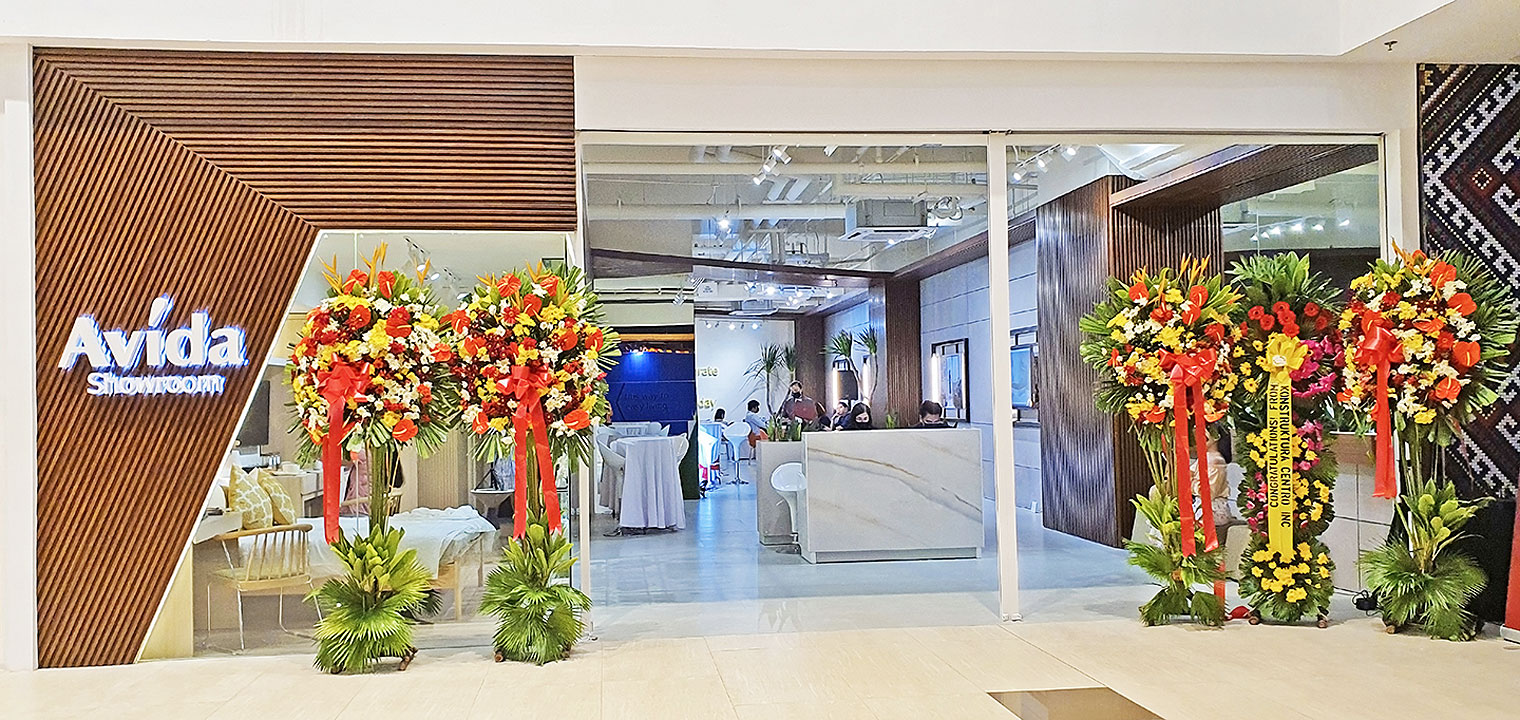
Model units for both condominiums are now available for viewing at the newly launched Avida Land showroom on the second floor of Ayala Malls Manila Bay.

Bing C. Gumboc, Avida Land’s vice-president for sales and marketing, explained that young home seekers can take the opportunity to visit the new showroom for a glimpse of “the curated Avida lifestyle in its intimate yet inspiring form.”

“We invite the younger generation, who now have an increased sense of the world. They are more into investing and taking advantage of what the world offers. They also want to retire earlier now,” she said during the same briefing.

To cater to this market, Centralis Towers provides affordable residence for a live-work-play lifestyle near three cities — Pasay, Makati, and Manila.

It will have 1,111 residential units, 285 parking units, and one retail unit. Unit sizes range from 23 sq.m. for studio and junior one-bedroom to 57 sq.m. for two-bedroom. Prices start at P6.4 million for the studio and go up to P15.9 million for a two-bedroom unit.

Centralis Towers’ amenities include a co-working space, an indoor lounge, a children’s play area, an adult pool, a garden lounge, and a wellness nook.

“Those of you who are aspiring for a place where you can nurture your passion and thrive in unlimited possibilities, we hope you can take the leap to independence and have your first investment with Avida,” Ms. Gumboc said.

Meanwhile, Patio Madrigal, a joint partnership with the Madrigal family, offers upscale yet easy living for young business owners, professionals, investors, overseas returnees, and retirees.

Its two towers will have 1,138 residential units, 341 parking units, and 11 retail units. Unit sizes range from 26.43 sq.m. for a studio to 41.38 sq.m. for a one-bedroom unit. Prices start at P10.1 million for the studio and go up to P15.8 million for a one-bedroom unit.

Patio Madrigal’s amenities include a clubhouse, a multi-function room, a garden lounge, a viewing deck, an adult pool, a kiddie pool, a children’s play area, and an indoor gym.

Mr. Alabe noted that Patio Madrigal’s location is a huge selling point as it is the first Ayala and Avida project in Roxas Boulevard, where residents can view either the famed Manila Bay sunset or the bustling metropolis’ skyline.

“Avida is still sticking to its middle-income format wherein we cater to the mid-range market, but Patio Madrigal gave us that opportunity to level it up a little bit than our usual projects,” he said.

As of September 2022, Centralis Towers is 22% sold while Patio Madrigal is 29% sold. Avida Land is expecting to complete both condominiums by the end of 2027. — Brontë H. Lacsamana

Nickel Asia buys shares in metal processing firm

NICKEL ASIA Corp. has bought 33.05 million common shares of Coral Bay Nickel Corp. (CBNC) for $25.93 million, it said on Monday.

“This investment by the company was made in furtherance of its commitments toward sustainability, environmental protection and renewable energy, since the processing of lateritic nickel ores by the CBNC plant allows the utilization of cobalt and nickel derived from such ores for manufacturing electric vehicle batteries,” Nickel Asia said in a disclosure.

Nickel Asia purchased the shares from Sumitomo Metal Mining Co., Ltd. (SMM), which is the majority shareholder of CBNC.

“The sale and purchase transaction also strengthens the long-standing partnership between the company and SMM,” it added.

CBNC operates the Coral Bay high-pressure acid leach or HPAL processing plant in Bataraza, Palawan which processes metals from lateritic nickel ore.

The acquisition of the additional CBNC shares increased Nickel Asia’s equity ownership in CBNC to 15.625% from 10%.

In the first half, Nickel Asia’s attributable net income went up by 40.3% to P3.83 billion from P2.73 billion, driven by higher nickel ore prices and favorable exchange rates.

On Monday, company shares ended lower by 1.38% or P0.07 to finish at P5.00 apiece. — Luisa Maria Jacinta C. Jocson

Making dance films more accessible

PROFESSIONAL dancer Madge Reyes had just come home from New York — where she had an artist fellowship grant in dance with the Asian Cultural Council — when the world shut down in March 2020 due to the COVID-19 pandemic. Being on the dance floor and feeling the energy of the audience was postponed indefinitely.

But it was also during lockdown that she brought dance to life online through the Fifth Wall festival.

“I had really no intentions of setting up a festival that soon, but I also realized, ‘When else?’ So, I just seized the moment since nothing was happening for live performance,” the Fifth Wall festival founder and director told BusinessWorld at a press launch at Sine Pop in Quezon City on Sept. 28.

The Fifth Wall Festival, the first and only festival for dance film, began in 2020 with online screenings of dance films, workshops, and talks.

Ms. Reyes said that dance film festivals are widely and regularly mounted in cities across America and Europe. The Fifth Wall Festival in the Philippines, it aims to “dance from all angles™” and it “works towards bridging the gap between local and international dance communities.”

This month it returns for its third edition and is moving beyond screen and stage with a hybrid event of in-person and online offerings. It will run from Oct. 7 to 16.

The 10-day festival starts with a preview of this year’s program through its opening night program, FIFTH WALL FEST 2022: An Introduction, at the Samsung Performing Arts Theater at Circuit Makati on Oct. 6.

It will include the screening of Cirio H. Santiago’s Happy Days Are Here Again (1974). The film features clips of dance in Philippine film and television history. There will also be a live performance by Steps Dance Studio and the AMP Big Band, as well as a photo exhibit featuring the works of Koji Arboleda and Renzo Navarro.

From Oct. 7 to 16, online and onsite screenings of local and foreign dance films will be available for free at the UP Fine Arts Gallery and Sine Pop in Quezon City; Tarzeer Pictures in Makati City; and online at www.fifthwallfest.com.

To be shown at the UP Fine Arts Gallery are:

• Café Müller — one of the most famous works choreographed by modern dance figure Pina Bausch. This film is a recording of its performance in August 1985 in Wuppertal, Germany, featuring Bausch.

Agnes Locsin Retrospective a special retrospective of dance performances showcasing the choreographic legacy of National Artist for Dance Agnes Locsin.

• Hoppla! — a film adaptation of Belgian choreographer Anne Teresa de Keersmaker’s creations set to the music of Béla Bartók.

Movement in FocusA special collection of 12 films featuring Butoh or the Japanese avant-garde genre on the exploration of movement.

To be shown at Sine Pop on Oct. 9 and 11 are:

• Happy Days Are Here Again — big names in Philippine film such as Gloria Romero, Nida Blanca, Dolphy, National Artist for Film and Broadcast Arts Nora Aunor, and Fernando Poe, Jr. dance onscreen in movie clips from the 1940s to 1970s.

• Temporary Fixa film by Tarzeer Pictures, it unpacks the intent and ephemerality of motions surrounding a museum incident that once broke the internet.

• StarstruckA tribute to the unique style of Hollywood actor, singer, and dancer Gene Kelly. The film is the onscreen revival of his choreography of Pas de Dieux.

• An Evening with Taglioni — A short film inspired by a bizarre event following the death of ballerina Marie Taglioni.

The online activities accessible through the festival website are a photo exhibit at Tarzeer Pictures featuring the works of Koji Arboleda and Renzo; “Kada Hakbang”, an exhibit done in collaboration with Archivo 1984, featuring a selection of Filipino film posters highlighting dance-themed titles spanning over the last 60 years on view at Sine Pop; and, a closing party and book launch of photographer Eddie Boy Escudero’s When We Danced, a book about the 1990s Manila rave scene, which will be held on Oct. 15 at the PowerMac Spotlight Center in Circuit Makati.

“We really want dance to be more accessible to the public, and film is generally an easy medium,” Ms. Reyes said. “We really hope to put Philippine dance on the map and be part of that global dance landscape.”

For more information, visit www.fifthwallfest.com and its official social media pages. — Michelle Anne P. Soliman