Home Blog Page 5851

Tutoring service reports learning gaps in K-to-12 students

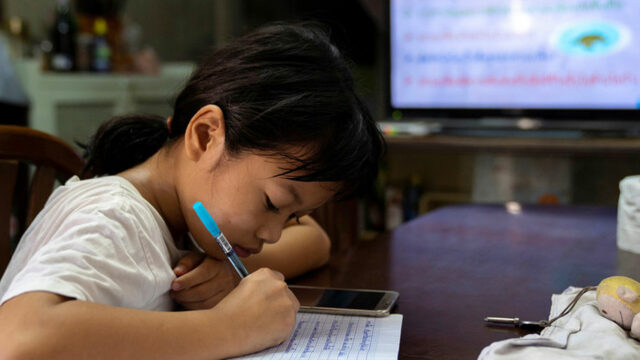
A tutoring service reported gaps between students’ skills and their grade level upon assessment. 

“We are seeing 2–3 years learning gap in both literacy and numeracy skills across all grade levels,” said Cecilia Calvo-Lewis, vice-president of tutorial services at Edukasyon.ph, an online learning platform, in an e-mail. “For reading, the learning gaps are more prominent in emerging readers. Most 5th and 6th graders we meet – maybe close to 90% – are not proficient in reading.”  

This improficiency also extends to Tagalog, she added. 

About 1,000 K-12 students from Luzon and Visayas have enrolled in EDGE, a live tutoring service launched this May by Edukasyon.ph, which offers English, Math, and Tagalog subjects. 

EDGE also partnered this July with Children International, a non-profit child sponsorship organization, to deliver tutorial and remedial lessons in reading and math to more than 150 public school students. The program includes grade-level assessment; personalized digital learning instruction; and a mobile phone plan to ensure continued learning.  

“This is how the private sector can have more active involvement in responding to the learning crisis in the country. We hope more are encouraged to do the same,” said Grace M. David, Edukasyon.ph chief executive officer, in a Sept. 30 statement.  

BusinessWorld previously reported that the Philippines’ learning poverty is among the highest in the region, with nine of 10 Filipinos unable to read and understand short age-appropriate texts by the age of 10, according to the World Bank. 

The Department of Education (DepEd) on Sept. 14 asked Congress for an additional P100 billion to “solve all the problems of basic education” in the country.  

EDGE is offering a 15% discount on its remote tutorial services this October with the code OCTOBER2022. — Patricia B. Mirasol

N. Korea conducts longest-range ballistic missile test yet over Japan

KCNA VIA REUTERS

SEOUL/TOKYO — Nuclear-armed North Korea fired a ballistic missile over Japan for the first time in five years on Tuesday, prompting a warning for residents to take cover and a temporary suspension of train operations in northern Japan.

The Japanese government warned citizens to take cover as the missile appeared to have flown over and past its territory before falling into the Pacific Ocean.

It was the first North Korean missile to follow such a trajectory since 2017, and Tokyo said its 4,600 km (2,850 miles) range may have been the longest distance traveled for a North Korean test flight, which are more often “lofted” higher into space to avoid flying over neighboring countries.

The latest launch was Pyongyang’s fifth in 10 days, amid military muscle-flexing by the United States, South Korea and Japan. Last week, the three countries conducted trilateral anti-submarine exercises that included a US aircraft carrier, which stopped in South Korea for the first time since 2017.

Recent tests have drawn relatively muted responses from Washington, which is focused on the war in Ukraine as well as other domestic and foreign crises, but the US military has stepped up displays of force in the region.

Tokyo said it took no steps to shoot the missile down. Defense Minister Yasukazu Hamada said Japan wouldn’t rule out any options, including counterattack capabilities, as it looks to strengthen its defenses in the face of repeated missile launches from North Korea. South Korea also said it would boost its military and increase allied cooperation.

The United States said it strongly condemned North Korea’s “dangerous and reckless” decision to launch a long-range ballistic missile over Japan.

“This action is destabilizing and shows the DPRK’s blatant disregard for United Nations Security Council resolutions and international safety norms,” National Security Council spokesperson Adrienne Watson said in a statement, using the initials for North Korea’s official name.

US Secretary of State Antony Blinken held phone calls with his South Korean and Japanese counterparts during which they “strongly condemned” the North’s latest test. The launch violates U.N. Security Council resolutions, which have imposed sanctions over Pyongyang’s nuclear and missile programs.

‘REAL-WORLD’ TEST
Officials in Tokyo and Seoul said the missile flew 4,500 to 4,600 kilometers (2,850 miles) to a maximum altitude of about 1,000 km.

South Korea’s Joint Chiefs of Staff (JCS) said it appeared to have been an intermediate-range ballistic missile (IRBM) launched from North Korea’s Jagang Province. North Korea has used that province to launch several recent tests, including multiple missiles that it claimed were “hypersonic.”

The test prompted East Japan Railway Co 9020.T to suspend train operations in the northern regions, Japanese broadcaster NHK reported.

The initial flight details suggest the missile may have been the Hwasong-12 IRBM, which North Korea unveiled in 2017 as part of its threatened plan to strike US military bases in Guam, said Kim Dong-yup, a former South Korea Navy officer who now teaches at Kyungnam University.

The Hwasong-12 was used in 2017 tests that overflew Japan, and Kim noted it was also test fired from Jagang Province in January.

Flying a missile such a long distance allows North Korea’s scientists to test missiles under more realistic conditions, said Ankit Panda of the US-based Carnegie Endowment for International Peace.

“Compared to the usual highly lofted trajectory, this allows them to expose a long-range reentry vehicle to thermal loads and atmospheric reentry stresses that are more representative of the conditions they’d endure in real-world use,” he said.

POLITICAL BACKLASH
South Korean President Yoon Suk-yeol called the test “reckless” and said it would bring a decisive response from his country’s military, its allies and the international community.

Speaking to reporters in Tokyo, Japanese Prime Minister Fumio Kishida called North Korea’s actions “barbaric”, and said the government would continue to gather and analyze information.

The launch over Japan was “not a productive path forward” but Washington remained open to talks, Daniel Kritenbrink, the top US diplomat for East Asia, said during an online event hosted by the Institute for Corean-American Studies.

South Korea’s defense minister, Lee Jong-sup, told parliament on Tuesday that the North completed preparations for a nuclear test around May. If there is a test, he said, it might use a smaller weapon meant for operational use, or a device with a higher yield than in previous tests.

Mr. Lee said it was difficult to predict when Pyongyang would conduct its seventh nuclear test, but lawmakers briefed by intelligence officials last week said that a possible window could be between China’s Communist Party Congress this month and US mid-term elections in November.

Mr. Kritenbrink said the nuclear test was “likely awaiting a political decision to do so,” warning such a “dangerous” act would represent “a grave escalation that would seriously threaten regional and international stability and security.” — Reuters

Ukraine estimates $35B in environment damage from Russia invasion

MAX KUKURUDZIAK-UNSPLASH

BRUSSELS — Environmental damage in Ukraine caused by Russia’s invasion was estimated at around 36 billion euros ($35.3 billion), with millions of hectares of natural reserves under threat, Ukraine’s environment minister said on Monday.

One fifth of protected areas in Ukraine is at risk of destruction and about 2,000 cases of environmental damages have already been recorded, the environment minister, Ruslan Strilets, said, showing slides to European Union lawmakers at a hearing in the EU Parliament in Strasbourg, France.

According to estimates from the Ukrainian government, the bill from air pollution caused by the war in Ukraine is so far about 25 billion euros and another 11.4 billion euros are needed to address damage to soil.

Citing a new methodology developed by the Ukrainian government to calculate the damages, Mr. Strilets said the seven-month-old war alone had caused 31 million tons of CO2 emissions, roughly the amount produced by New Zealand annually.

He said another 79 million tons of greenhouse emissions could be produced for the reconstruction of infrastructure and buildings destroyed during the war. — Reuters

Diageo boss warns on Scottish water shortage

JACEK DYLAG-UNSPLASH

LONDON — Diageo PLC’s Chief Executive Ivan Menezes believes Scotland could face a water shortage due to climate change unless businesses and lawmakers act, he said at the Reuters Impact conference on Monday.

The threat in Scotland, where Diageo is the biggest exporter of Scotch whisky through brands like Johnnie Walker, depends on how successful the world is at averting climate change and hitting a 1.5-degree Celsius limit on global warming, he said.

“There are scenarios where we could see water being stressed in Scotland,” Mr. Menezes said.

Diageo’s beer business manufacturing Guinness stout consumes more water than spirits, he added.

Mr. Menezes said that part of his compensation is tied to Diageo hitting specific environmental goals including water conservation.

Diageo also makes Don Julio tequila, Smirnoff Vodka and Baileys liqueur.

Separately, Menezes said that Diageo is “not immune” to inflationary pressure and soaring energy costs but “should be OK” if Europe faces energy blackouts as soon as tomorrow.

Russia’s war on Ukraine has driven energy prices to record highs, hitting Europe particularly hard because of its dependence on Russian gas. “We should be well-covered,” he said.

Diageo sees water conservation and environmental efforts as “really core to the long-term health of the business,” Mr. Menezes said.

“We’re a consumer business so it will translate into consumer preference over time,” Mr. Menezes said. “We have a strong conviction about that.” The company is replenishing water in stressed areas it operates in, including in India by 2024.

The spirits industry has managed to avoid taking a hit from an ongoing cost-of-living crisis in Europe. Diageo recently reported strong sales of its most expensive products.

The company said during its earnings call in July that its products were selling because people consider them an occasional indulgence, even as high inflation stoked by Russia’s war with Ukraine shows no signs of abating. — Reuters

UN pushes for cut in global fertilizer prices to avoid ‘future crisis’

JONATHAN ANSEL MOY DE VITRY-UNSPLASH

GENEVA — The United Nations is pushing to cut the price of fertilizers to avoid a “future crisis” of availability, said a senior U.N. trade official who is involved in talks aimed at boosting the export of Russian fertilizers, including ammonia.

Russia’s has fueled a global food crisis and soaring fertilizer prices, according to the United Nations. Russia and Ukraine are key global exporters of grain, while Russia is also one of the largest exporters of fertilizers.

“If we are not able to bring fertilizer prices down, the crisis of affordability that we have today will be a crisis of availability tomorrow, and that is what we are working on right now,” said Rebeca Grynspan, secretary-general of the United Nations Conference on Trade and Development (UNCTAD).

“To avert a future crisis, we need to bring fertilizer prices down,” she told reporters in Geneva.

Russia is one of the world’s largest suppliers of potash, phosphate and nitrogen fertilizers — key crop and soil nutrients — producing 13% of the global total. Fertilizer exports from Russia in the first half of 2022.

Facilitating Russia’s food and fertilizer exports is a central aspect of a package deal brokered by the U.N. and Turkey on July 22 that also restarted Ukraine’s Black Sea grain and fertilizer shipments. Russia has criticized the deal, complaining that its exports were still hindered.

The deal included ammonia — a key ingredient in nitrate fertilizer. A from Russia’s Volga region to Ukraine’s Black Sea port of Pivdennyi (Yuzhny) was shut down when Russia invaded Ukraine on Feb. 24.

The U.N. is now trying to broker a resumption of those ammonia exports.

But since talks started, Russia has moved to annex Ukraine’s Donetsk, Luhansk, Kherson and Zaporizhzhia regions after holding what it called referendums — votes that were denounced by Kyiv and Western governments as illegal and coercive.

Ms. Grynspan declined to comment on the ammonia negotiations, describing the situation to Reuters as “too sensitive.” She added that U.N. Secretary-General Antonio Guterres had tried to call her while she was in the news conference.

“We need to get it right and bring prices down,” she said. — Reuters

Musk and Zelenskiy in Twitter showdown over billionaire’s Ukraine peace plan

Tesla CEO Elon Musk (Left) and Volodymyr Zelensky, President of Ukraine (Right)

 – Billionaire Elon Musk on Monday asked Twitter users to weigh in on a plan to end Russia’s war in Ukraine that drew immediate condemnation from Ukrainians, including President Volodymyr Zelenskiy, who responded with his own poll.

“Which @elonmusk do you like more?,” Mr. Zelenskiy tweeted, offering two responses: one who supports Ukraine, one who supports Russia.

Mr. Musk, the world’s richest person, proposed UN-supervised elections in four occupied regions that Moscow last week moved to annex after what it called referendums. The votes were denounced by Kyiv and Western governments as illegal and coercive.

“Russia leaves if that is will of the people,” Mr. Musk wrote.

The Tesla Inc. chief executive suggested that Crimea, which Moscow seized in 2014, be formally recognized as Russia, that water supply to Crimea be assured and that Ukraine remain neutral. He asked Twitter users to vote ‘yes’ or ‘no’ on the plan.

“Dear @elonmusk, when someone tries to steal the wheels of your Tesla, it doesn’t make them legal owner of the car or of the wheels. Even though they claim both voted in favor of it. Just saying,” Lithuania’s President Gitanas Nausėda tweeted in response.

Mr. Musk, who is also chief executive of SpaceX, followed up his first tweet with another poll: “Let’s try this then: the will of the people who live in the Donbas & Crimea should decide whether they’re part of Russia or Ukraine.”

He said he didn’t care if his proposal was unpopular, arguing that he did care “that millions of people may die needlessly for an essentially identical outcome.”

“Russia has >3 times population of Ukraine, so victory for Ukraine is unlikely in total war. If you care about the people of Ukraine, seek peace,” he posted on Twitter.

In February, when Ukraine‘s internet was disrupted following Russia’s invasion, Musk responded to a tweet by a Ukrainian government official seeking help. Musk said SpaceX’s Starlink satellite broadband service was available in Ukraine and that SpaceX was sending more terminals to the country. Read full story

“SpaceX’s out of pocket cost to enable & support Starlink in Ukraine is ~$80M so far. Our support for Russia is $0. Obviously, we are pro Ukraine,” Mr. Musk posted on Twitter later on Monday.

Ukraine‘s outspoken outgoing ambassador to Germany, Andriy Melnyk, had a blunt reaction to Musk‘s peace plan. Melnyk himself faced criticism in July for defending the controversial World War Two Ukrainian nationalist leader Stepan Bandera. Read full story

“Fuck off is my very diplomatic reply to you @elonmusk,” tweeted Melnyk. – Reuters

Kim Kardashian pays $1.26 million fine for paid crypto ad, SEC says

 – Kim Kardashian has promoted everything from appetite-suppressing lollipops to melon-flavored liqueur to toilet paper, but it was her foray into the murky world of cryptocurrencies that got her into hot water.

The reality television star and influencer has agreed to settle charges of unlawfully touting a crypto security and to pay $1.26 million in penalties and fees, the US Securities and Exchange Commission said on Monday.

Kardashian, who has 330 million followers on Instagram and 73.7 million followers on Twitter, failed to disclose that she was paid $250,000 by crypto company EthereumMax to publish an Instagram post about its EMAX tokens, the SEC said.

The SEC in November 2017 warned celebrities looking to cash in on the emerging digital asset space that U.S. rules require they disclose when they are being paid to endorse crypto tokens.

Since then it has pursued a handful of other celebrities, including action film star Steven Seagal, music producer “DJ Khaled” and boxer Floyd Mayweather Jr. for breaking that rule, but Kardashian is arguably the most high profile. Read full story

Her post contained a link to the EthereumMax website, which provided instructions for potential investors to purchase EMAX tokens. “Sharing what my friends just told me about the EthereumMax token!” the post read.

Under U.S. law, people who tout a certain stock or crypto security need to disclose not only that they are getting paid to do so, but also the amount, the source and the nature of those payments, SEC Chair Gary Gensler said on Monday.

“This was really to protect the investing public – when somebody is touting that stock and whether that’s a celebrity or an influencer or the like, and that’s at the core of what this is about,” Gensler said in an interview with CNBC.

“I want to acknowledge Miss Kardashian cooperating and ongoing cooperation. We really appreciate that,” Gensler added.

Kardashian has agreed to pay the charge without admitting or denying the SEC’s findings. Her lawyer Michael Rhodes said Kardashian was pleased to have resolved the case.

“She wanted to get this matter behind her to avoid a protracted dispute. The agreement she reached with the SEC allows her to do that so that she can move forward with her many different business pursuits,” Rhodes said in a statement.


ONGOING LAWSUIT

Kardashian is also named, along with boxer Mayweather and former basketball star Paul Pierce, in an ongoing lawsuit filed in January by investors who allege they suffered losses after the celebrities promoted EMAX. Read full story

EMAX tokens have declined around 98% since June 13, 2021, when Kardashian posted about them on Instagram to her then 225 million followers, according to the website CoinMarketCap.com.

Last month, Kardashian, who has expanded her footprint in the world of finance, launched a new private equity firm focused on investing in consumer and media businesses.

Regulating cryptocurrency markets has been high on the SEC chair’s agenda this year, as prices of digital assets suffer wild swings due to heightened recession fears, rising interest rates and geopolitical turmoil. Read full story

Japanese eyewear OWNDAYS releases Pokémon Frame Collection

Featuring nine spectacle frames inspired by eight Pokémon

Japanese fast fashion eyewear brand, OWNDAYS, is launching a new collection of spectacle frames inspired by 8 Pokémon. Inspired by the theme “Choose Your Pokémon, Choose Your Fit,” this collection manifests OWNDAYS’ creative take on reinventing Pokémon into fun, chic eyewear pieces that resonate with fans of Pokémon while also appealing to those looking for unique, well-designed spectacles to match their outfits.

OWNDAYS Pokemon frames will come in 9 designs in various colours and shapes. This collection promises an equal quotient of style and functionality. In addition to two Pikachu models, the lineup consists of seven other spectacle frames designed based on Bulbasaur, Squirtle, Charmander, Eevee, Jigglypuff, Snorlax, and Mew. It has three designs arriving in the SNAP models — 2-in-1 eyewear that can be transformed into sunglasses instantly using a colored magnetic clip-on lens.

The Pokémon Frame Collection is now available in selected OWNDAYS stores in limited quantities. Each Pokémon frame retails at P6,990. Frames come with a special case, wiper, and tote bag, including single vision, ultra-thin, rigid, multi-coated lenses.

PRODUCT LINEUP

Pikachu SNAP Model

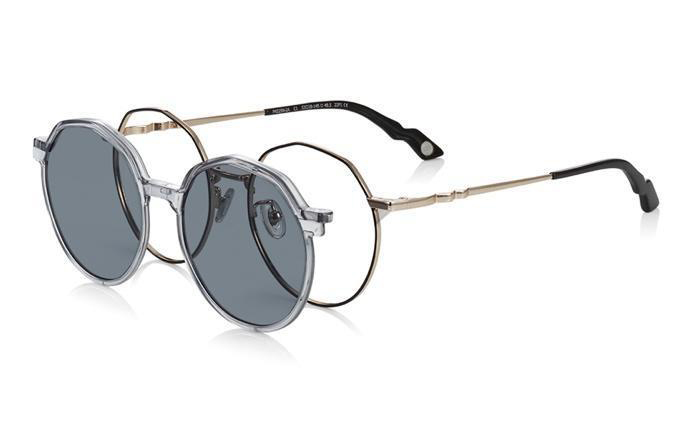
The Pikachu SNAP model features a polygonal frame in gold with black accents as a direct reference to colors symbolic of Pikachu. A key highlight of the frame is the front of the temples, which comes in a wavy structure, breaking away from the linear conformity usually adopted for temple design. The temple tips are shaped like a lightning bolt similar to Pikachu’s tail, with an emblem in Pikachu’s silhouette featured on the reverse side of the left temple tip. Pikachu’s national Pokedéx number 025 is laser-engraved on the top of the nose bridge. This model comes with a grey-tinted SNAP LENS that converts the frame into sunglasses in a split second.

Pikachu Model

The Pikachu model features a polygonal frame in matte gold with subtle touches of brown to accentuate the overall design. A zigzag lightning bolt design is added to the temples to represent Pikachu’s Electric-type move. The temple tips are given a soft color palette to create a mellow contrast that balances the frame’s striking aesthetic. An emblem in Pikachu’s silhouette is featured on the reverse side of the left temple tip, while its national Pokedéx number 025 is laser-engraved on the top of the nose bridge.

Bulbasaur Model

The Bulbasaur model features a Wellington frame inspired by Bulbasaur’s Grass-type move, Vine Whip, which has been transformed into motifs that adorned the entire frame from the front of the frame to the temple tips at the back. The frame doubles down on the transparent trend seen on recent runways, with its rim coming in see-through green that will show up in a distinct shade according to the skin tone of the wearer. An emblem in Bulbasaur’s silhouette is featured on the reverse side of the left temple tip, while its national Pokedéx number 001 is laser-engraved on the top of the nose bridge.

Squirtle SNAP Model

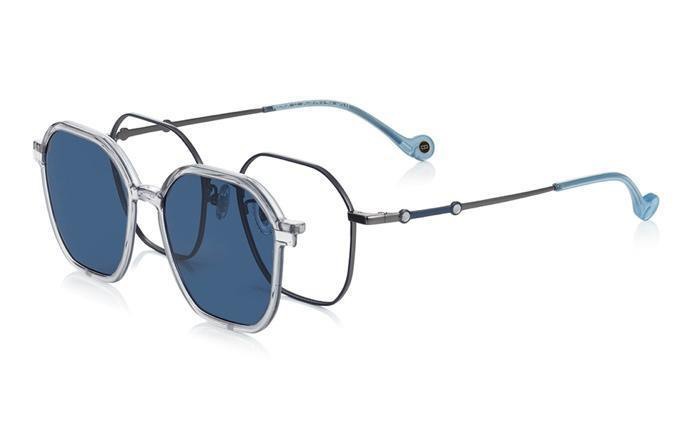
The Squirtle SNAP model features a polygonal frame in a blue-and-gunmetal colorway. Two Squirtle-inspired enamel turtle-shell tessellations are added to each temple, forming a centerpiece that is set to draw attention from the side profile. The temple tips are designed to resemble Squirtle’s tail with an emblem in its silhouette featured on the reverse side of the left temple tip. Squirtle’s national Pokedéx number 007 is laser-engraved on the top of the nose bridge. This model comes with a blue-tinted SNAP LENS that converts the frame into sunglasses in a split second.

Charmander Model

The Charmander model features a gold-colour frame in Boston style. The frame’s rim is given a combo finish with the top half in shiny gold while the bottom comes in a matte treatment. The flame on Charmander’s tail has inspired the flame-patterned engraving on the end pieces, and further translates into a medley of flaring hues at the temple tips to denote fire. An emblem in Charmander’s silhouette is featured on the reverse side of the left temple tip, while its national Pokedéx number 004 is laser-engraved on the top of the nose bridge.

Eevee Model

The Eevee model features a dual-material frame in Boston style that is made of clear plastic in beige color with metal components in matte gold. The frame oozes an understated cuteness as design elements inspired by Eevee adorn the frame in subtle forms, beginning with the two metallic accents at the front of the frame that are modeled after Eevee’s ears. The fluffy ruff around its neck translates into the decorative features found on the temples, while the temple tips assume the design of its 2-toned tail. An emblem in Eevee’s silhouette is featured on the reverse side of the left temple tip, while its national Pokedéx number 133 is laser-engraved on the top of the nose bridge.

Jigglypuff SNAP Model

The Jigglypuff SNAP model features a round frame in Jigglypuff’s iconic pink body color. Accents in rose gold offer a deliberate dash of cool vibe to the overall sweet-looking frame design. The tuft of fur on Jigglypuff’s forehead has inspired the design of the temple tips and the spiral features found on the rim and the temples. An emblem in Jigglypuff’s silhouette is featured on the reverse side of the left temple tip, while its national Pokedéx number 039 is laser-engraved on the top of the nose bridge. This model comes with a pink-tinted SNAP LENS that converts the frame into sunglasses in a split second.

Snorlax Model

The Snorlax model features an oversized, transparent frame in a bold structure that acts as a candid reference to Snorlax’s huge body size. The key focal point of the frame design is the metal wire core embedded within the transparent temples. It is decorated with engravings inspired by Snorlax’s paw prints on the outer side and two Snorlax line-art engravings on the reverse side. The temple tips are designed to resemble the shape of Snorlax’s head and are accompanied by a blue-green hue iconic to Snorlax. An emblem in Snorlax’s silhouette is featured on the reverse side of the left temple tip, while its national Pokedéx number 143 is laser-engraved on the top of the nose bridge.

Mew Model

The Mew model features a round frame in a shiny metallic pink tone that is similar to the color of Mew. The frame evokes a sense of magical glee, given its flamboyant design and curvy form, which is a connotation to Mew’s long, thin tail. An emblem in Mew’s silhouette is featured on the reverse side of the left temple tip, while its national Pokedéx number 151 is laser-engraved on the top of the nose bridge.

For more product information, please visit www.owndays.com/ph.


Spotlight is BusinessWorld’s sponsored section that allows advertisers to amplify their brand and connect with BusinessWorld’s audience by enabling them to publish their stories directly on the BusinessWorld Web site. For more information, send an email to online@bworldonline.com.

Join us on Viber to get more updates from BusinessWorld: https://bit.ly/3hv6bLA.

South Asia’s poorest city dwellers bear brunt of worsening floods

STOCK PHOTO | Image by Laurentiu from Pixabay

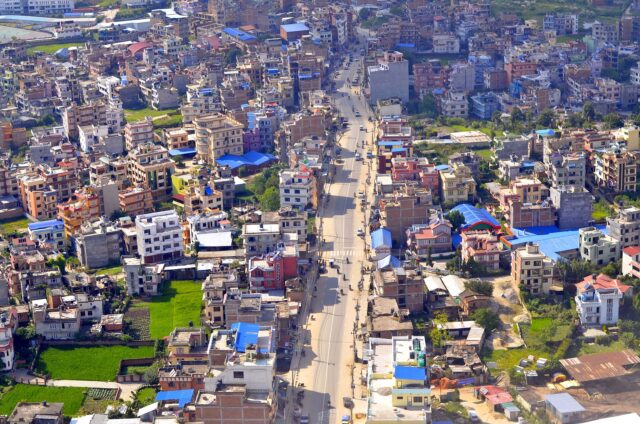
 – Each summer, the thousand or so families living in a floodplain informal settlement on the edge of Kathmandu brace themselves for flash flooding as monsoon rains pour in.

The close-packed slum homes, set amid small patches of rice fields, are testament to how much migration has filled in the once-abundant green spaces on the banks of the Manohara River over the last 20 years.

Amid the crowding, risks are rising.

In August, when floods slammed Kathmandu’s outskirts, residents of the slum spent days drying out their soaked belongings while the local school shut for a week after classrooms flooded.

“The classrooms were inundated up to three feet (one meter) … the books and school records got damaged,” said Indira Mahat, principal of Sarasvati Middle School.

Shanta, a slum resident who asked not to disclose her surname, said many people living there “go sleepless for nights” during the rainy season.

“When the floods actually hit, we bear the consequences for months,” said the 40-year-old mother of three, as she washed dishes outside her home.

Worrying about floods is an annual routine for the community, but environmental experts fear its residents – like marginalized city dwellers across South Asia – face even harsher threats ahead as rains becomes more erratic and intense.

This summer’s deadly inundation in Pakistan – and other lesser floods in the region, including in India’s Bengaluru – highlight how unprepared many countries and cities are for increasingly extreme weather fueled by climate change.

Rapid and unplanned urbanization is the main reason that South Asian cities from Karachi to Kathmandu are so vulnerable to floods, with the poorest most at risk as urban populations boom, researchers and officials in the region said.

“The urban poor generally occupy, or are pushed to, floodplains where roads, drainages and other infrastructure are generally poorly maintained,” said Madhukar Upadhya, an independent watershed and climate change expert.

“When floods enter the floodplains, it is the poor that suffer the most damage,” he added.

As well, many poorer city residents do not have the resources to prepare for or cope with changing risks, said Ilan Kelman, a disaster risk expert at Britain’s University College London.

“People (are forced) into situations where they cannot reduce their own vulnerability,” he said.


KATHMANDU CHALLENGES

The population of the Kathmandu Valley – which covers Nepal’s capital as well as Lalitpur and Bhaktapur districts – is estimated at more than 2.5 million.

Studies suggest the number of residents is rising by 6.5% a year – in part as rural dwellers seek better job opportunities in the city – making it one of South Asia’s fastest-growing metropolitan areas.

Informal settlements tend to pop up on the least desirable land in Kathmandu, mainly along the banks of the city‘s rivers, which are heavily polluted and prone to floods during monsoons.

Officials of the National Disaster Risk Reduction and Management Authority said an existing law banning construction on floodplains needs to be enforced, and highlighted the need for better housing and drainage systems to curb future flooding.

“We have to find a way to stay safe as extreme weather events are becoming more frequent,” said technical under-secretary Rajendra Sharma.

“Unplanned urbanization is a major challenge which needs to be addressed for effective disaster mitigation and management.”

But one resident of the Kathmandu slum, who refused to give his name out of fear of being evicted, said the community had little choice but to “suffer silently” even as risks rose.

“If we complain, the government will label us as illegal residents and will find it easy to drive us away from here,” he said.

More than a billion people worldwide live in slums or informal settlements, over a quarter of them in Central and South Asia, according to a 2018 report by UN-Habitat, the United Nations Human Settlements Program.

It estimated that 3 billion people would need access to more adequate housing by 2030.


REGION-WIDE WOES

Bengaluru, India’s tech hub, became another face of urban flooding in the region this summer after heavy rains crippled the city for days, raising questions about development that has come at the cost of green spaces and natural flood defenses.

Less than 3% of the city was covered in vegetation as of last year, down from about 68% in the early 1970, according to research by Bengaluru’s Indian Institute of Science.

The city has “squandered” inherent advantages, such as its high elevation, rolling terrain, and interconnected lakes that used to act as flood basins, said Jagdish Krishnaswamy, of the Bengaluru-based Indian Institute for Human Settlements (IIHS).

“Legal and illegal infrastructure development (have) exacerbated India’s Silicon Valley’s vulnerability to floods,” he said.

Other problems contributing to flooding problems include stormwater drains that have been encroached on, reducing their flow, and road and other construction that has disrupted natural water flows in the basin, he added.

G.S. Srinivasa Reddy, director of the Karnataka State Natural Disaster Monitoring Centre, said Bengaluru needs to adopt flood reduction measures such as removing structures that encroach on waterways, improving drains and cutting run-off.

Meanwhile, in Karachi, Pakistan’s largest city, unplanned development and encroachment on drainage systems continue to boost the scale and likelihood of floods, said architect and urban planner Arif Hasan.

Flooding in Pakistan since mid-June has killed more than 1,650 people in the country, according to the U.N. Office for the Coordination of Humanitarian Affairs.

In Kathmandu’s floodplain slums, residents say they still have hope things can improve.

Bina Lama, 35, whose family moved to the city from a village in eastern Nepal two decades ago, fleeing Maoist rebels, said they had spent nearly every summer since worrying about floods.

But “I am hoping to leave the bad memories of floods behind me,” she said. “I hope the government will soon help us to get rid of floods.” – Reuters

Colombia, US discuss drug trafficking, differences remain

US Secretary of State Antony Blinken. Official White House — CAMERON SMITH VIA FLICKR

 – Colombian President Gustavo Petro and US Secretary of State Antony Blinken on Monday discussed stepping up intelligence sharing and other drug trafficking measures but announced no agreements and remained at odds on extraditing drug criminals.

Leftist former rebel Mr. Petro, who hosted Mr. Blinken in Bogota, has derided the US-led war on drugs as a failure and called for a new international approach.

In a news conference after their meeting, Mr. Blinken said the two sides were “largely in sync” on the approach to drug trafficking, but there were no indications of new agreements on the issue and they reiterrated divergent views on the extradition of drug criminals.

Mr. Petro said Colombia‘s priorities were the interdiction of drugs before they are shipped out of Colombia and going after those who run the trade, who were likely, he said, to be not in Colombia‘s jungles but in Bogota, Medellin, Miami and even New York.

There were discussions on “doing more in terms of interdicting drugs that are moving on the seas by boat, as well as enhancing even more our intelligence sharing to go after those who are responsible for drug trafficking,” Mr. Blinken said.

He added that Mr. Petro put “concrete ideas on the table” during the talks but made no mention of any specific agreements.

Mr. Blinken is on a week-long trip to Colombia, Chile and Peru, which all have relatively new leftist leaders. Read full story

Mr. Petro repeated criticism of Colombia‘s agreement with Washington on the extradition of drug traffickers. He has proposed that traffickers who comply with government surrender conditions and abandon the trade not be extradited to face charges abroad.

Mr. Blinken responded that extradition between the two countries had benefited justice and the victims of transnational crime.

“It’s one important tool to help dismantle the transnational criminal organizations that do so much damage to both of our societies. And we’ll continue to work closely together on this,” Mr. Blinken said.

Mr. Petro also reiterated criticism of Cuba’s continued inclusion on the US list of state sponsors of promoting terrorism as an injustice, decrying that the decision by former U.S. President Donald Trump to place Cuba back on the list had not been corrected.

Cuba hosted peace talks between the government of former Colombian President Juan Manuel Santos and the now demobilized FARC guerrillas.

“That is called an injustice and while in my opinion it isn’t up to us, it should be corrected,” Mr. Petro said. – Reuters

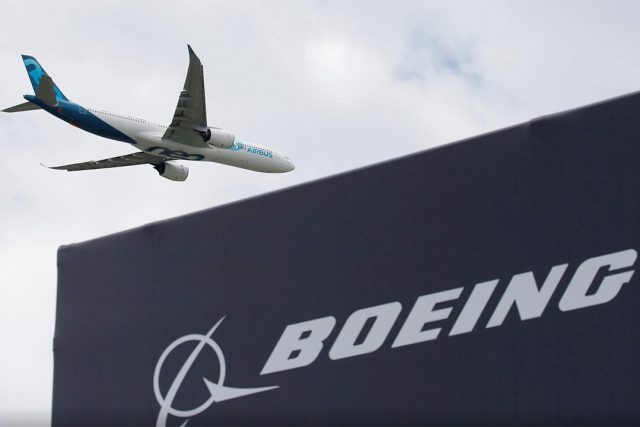
Boeing doesn’t expect MAX 10 to gain FAA approval before summer 2023 -letter

REUTERS

 – Boeing Co. does not anticipate winning approval for the 737 MAX 10 before next summer, according to a Federal Aviation Administration (FAA) letter sent on Monday that intensifies concerns about the company’s timeline for deliveries.

Boeing faces a December deadline to win regulatory approval for the MAX 10, which is slightly larger than current 737 MAXs in service, as well as for a smaller variant, the MAX 7. Unless it gains an extension from Congress, Boeing must meet new modern cockpit-alerting requirements that could significantly delay the planes’ entry into service.

“With regard to the 737-10, Boeing‘s current project plan timeline has the 737-10 receiving an amended type certificate no sooner than summer 2023,” two sources quoted acting FAA Administrator Billy Nolen as saying in a letter to Senator Roger Wicker, the top Republican on the Senate Commerce Committee.

The FAA, Boeing and Wicker’s office declined to comment.

Boeing has recently booked major MAX 10 orders from Delta Air Lines, Canada’s WestJet Group and other carriers.

Last week, Wicker proposed extending the deadline for Boeing to win approval for the two new variants until September 2024 and hopes to attach the proposal to an annual defense bill. But it is not clear if Congress would be willing to approve the proposal.

The new cockpit alerting requirements are part of certification reform legislation that was passed in 2020 after two 737 MAX crashes killed 346 people and led to a 20-month grounding for the best-selling plane.

Certifications of planes require extensive paperwork submissions and detailed review of safety assessments by the FAA.

In a Sept. 19 letter to Boeing made public last week, the FAA expressed concerns that the plane maker would not be able to win certification for the MAX 7 this year. Boeing must get approval for the MAX 7 first as the MAX 10 approval is contingent on some MAX 7 documentation, Boeing Chief Executive Dave Calhoun said last month.

The letter added Boeing has not completed all its required assessments and needed to turn in remaining documents by mid-September if it intended to meet the December deadline.

Boeing, which has argued that it is safer to have one common cockpit alerting system for all versions of the 737, said on Friday that it “is focused on meeting all regulatory requirements to certify the 737-7 and 737-10.

According to one of the sources, Nolen’s letter on Monday said the FAA was unable to provide an estimate as to when certification work will be completed for the MAX 7 or MAX 10.

“We’re committed to diligently and thoroughly reviewing the documentation as it is submitted,” Nolen was quoted as saying.

Nolen also wrote that he supports his team “taking the time they need to fully understand” human factor functions, according to the source.

Calhoun last month told reporters he thought the FAA would approve the MAX 7 this year and said there was still a “chance” of approval for the MAX 10 before the end of the year. – Reuters
Global recession can be avoided with right fiscal policies – IMF’s Georgieva

A participant stands near a logo of the International Monetary Fund at the annual meeting in Nusa Dua, Bali, Indonesia, Oct. 12, 2018. — REUTERS/JOHANNES P. CHRISTO/FILE PHOTO

RIYADH – Global recession can be avoided if governments’ fiscal policies were consistent with monetary policy tightening, but likely there would be countries falling into recession next year, the International Monetary Fund’s managing director said on Monday.

In the context of monetary policy tightening, fiscal policy cannot stay idle because the cost of living crisis is hitting parts of society dramatically, Kristalina Georgieva said.

“We do need central banks to act decisively. Why, because inflation is very stubborn… It is bad for growth and it is very bad for poor people. Inflation is a tax on the poor,” Georgieva told Reuters in an interview during a visit to Saudi Arabia.
She added fiscal policies that indiscriminately support everybody by suppressing energy prices and providing subsidies are working against monetary policies’ purposes.

“So you have monetary policy putting a foot on the brakes and fiscal policy putting a foot on the accelerator,” she said, after taking part in a conference on food security in the Saudi capital Riyadh.

Governments across the globe have stepped in to support their populations amid high food inflation and shortages by following the U.S. Federal Reserve’s interest rate hikes, sending shockwaves through financial markets and the economy.

Earlier Monday, a United Nations agency warned of the serious consequences of a monetary policy-induced global recession for developing countries. It called for a new strategy, including corporate windfall taxes, supply-side efforts and regulation on commodity speculation.

Georgieva called on the Fed to be extremely prudent in its policies and be mindful of the spillover impact on the rest of the world, adding its responsibility “is very high.”

AGREEMENTS WITH TUNISIA, EGYPT

The IMF sees labor markets in the United States are still quite tight, demand is still quite significant for goods and services and the Fed has to continue on the course of tightening in that environment, she said.

“We are likely to see … unemployment going up and that will be the time for the Fed has to say we have done our job. We can ease in the future. We are not there yet.”

The IMF on Friday approved a new food shock borrowing window under its existing emergency financing instruments to help vulnerable countries cope with food shortages and high costs stemming from inflation exacerbated by Russia’s war in Ukraine.

Georgieva said somewhere between 10 and 20 countries – most of them in Africa – are likely to ask for access in the window and are eligible to receive funding.

She highlighted the IMF’s mission in Malawi, saying the country may enter into a full IMF loan agreement after receiving emergency financing.

The fund is also in advanced discussions with Egypt and Tunisia, Georgieva added, as both governments are struggling under economic crises that have strained public finances.

“I can confirm that with both countries we are in a very advanced stage of discussing staff level agreements, whether it would be within days or weeks, hard to predict but it will be very soon,” she said.

“We’re looking at sizable programs. The exact size is always determined through negotiations and finalised with the authorities.” — Reuters