Home Blog Page 5839

Vehicle sales recovery at risk if taxes reimposed on pickup trucks — Fitch Solutions

Vehicles are stuck in traffic along EDSA, Cubao in Quezon City, Aug. 18. — PHILIPPINE STAR/ MIGUEL DE GUZMAN

THE PHILIPPINE auto industry’s sales recovery will likely be derailed if a measure reimposing excise taxes on pickup trucks is signed into law, according to Fitch Solutions Country Risk and Industry Research.

In a commentary dated Sept. 26, Fitch Solutions said it expects total vehicle sales to post double-digit growth this year, after a strong performance in the first nine months but the outlook for 2023 has dimmed.

“Prospects for the continued strong recovery in vehicle sales in 2023 have diminished following the possible reintroduction of excise taxes on pickup trucks, mainly due to the subsegment’s popularity in the country,” Fitch Solutions said.

Pickups are classified under the commercial vehicle (CV) segment. 

Vehicle sales rose by 25% to 212,872 units in the January to August period, data from the Chamber of Automotive Manufacturers of the Philippines, Inc. (CAMPI) and the Truck Manufacturers Association (TMA) showed.

This was mainly driven by a 39% increase in CV sales to 160,790, which helped offset a 4.3% decline in passenger car sales to 52,082 units.

“Indeed, CV sales rose by 39% over the same period as consumers brought forward their purchases in anticipation of a possible reintroduction of an excise tax exemption granted by the Filipino government to assist small and medium businesses under the Tax Reform for Acceleration and Inclusion (TRAIN) law first introduced by the Duterte administration in 2017,” Fitch Solutions said.

In August, the House Ways and Means Committee approved the fourth package of the Comprehensive Tax Reform Program which included the elimination of the excise tax exemption for pickup trucks.

According to the Finance department, the removal of the excise tax exemption is expected to generate P52.6 billion worth of additional revenues from 2022 to 2026.

“While the decision to reimpose the excise tax is yet to be made final, we believe that demand for pickup trucks will rise as the deadline to the excise tax exemption nears resulting in sales dropping thereafter,” Fitch Solutions said.

Sought for comment, Albay Rep. and House Ways and Means Committee Chair Jose Ma. Clemente S. Salceda said in a Viber message that pickup truck sales will be affected, but noted that the tax exemption gave it an “undue advantage” over sedans that are manufactured locally.

“Some 98% of all pickup trucks are imported, whereas some sedans are manufactured or assembled here, including the Toyota Vios. From a domestic value-added perspective, the tax measure will be good for the domestic car manufacturing sector, because it will shift some of the demand away from almost fully imported pickups,” Mr. Salceda said.

“The proposal might hit the Indonesian or the Thai car industries since that’s where we import our pickup trucks from, but the Philippine auto industry will be all right. Demand from the pickup truck sector will simply shift to other segments, such as sedans. The domestically assembled ones create jobs here,” he added.

CAMPI President Rommel R. Gutierrez previously said that the measure would affect the industry’s recovery, since it would raise prices of pickup trucks.

“We are concerned about the addition of the taxes. As we know, the demand for vehicles is price sensitive. This will definitely impact prices,” Mr. Gutierrez previously said.

OUTLOOK
Meanwhile, Fitch Solutions said it kept the vehicle sales outlook unchanged while the measure is still pending in Congress.

It expects vehicle sales to jump by 19.7% to 321,400 units this year, with passenger car sales growth at 17% and CV sales growth at 21%. For 2023, it sees vehicle sales growth slowing to 9.1%.

Fitch Solutions forecasts Philippine vehicle sales to return to the 2017 peak level by 2025.

“In the medium term (2022-2026), we expect demand for CVs to be driven by the government’s efforts to fill the country’s infrastructure deficit through an aggressive policy to promote economic development,” it said.

The Marcos administration has promised to focus on infrastructure development in order to drive economic growth.

Fitch Solutions said heavy trucks and light commercial vehicles will likely perform better since they are used for construction activities.

“In addition, due to pickup trucks’ continuous appeal on the domestic market, demand for light commercial vehicles (LCVs) will continue to be high. However, prospects of the reintroduction of excise taxes by the Marcos administration could derail the fast growth the sub-segment has witnessed since the onset of much relaxed movement restrictions,” it added.

Fitch Solutions also pointed out that the Public Utility Vehicle Modernization Program did not receive any allocations under the proposed Department of Transportation budget for 2023, “calling into question the political will to support public transport operators as they shift towards lower emissions vehicles.”

Meanwhile, Fitch Solutions sees an improved outlook for passenger vehicle sales in the coming year, as consumer confidence rises and restrictions on movement are eased.

“Positive changes to the limits on movement will boost economic activity, which will encourage consumers to resume buying expensive goods like new (passenger vehicles),” it said. — Revin Mikhael D. Ochave


Another BSP off-cycle rate hike likely, economist says

REUTERS

THE BANGKO SENTRAL ng Pilipinas (BSP) may deliver a second off-cycle rate hike in early November when the US Federal Reserve is expected to raise rates by another 75 basis points (bps), an economist from the Bank of the Philippine Islands (BPI) said.

At the same time, ANZ Research sees the BSP raising its benchmark rate to 5.25% by mid-June next year as it seeks to cool inflation.

In a statement, BPI Lead Economist Emilio S. Neri, Jr. said he hopes the BSP will not repeat the low-rate hike last June when “we were caught between two meetings of the FOMC (Federal Open Market Committee) with a much lower policy rate (adjustment).”

The Philippine central bank last week raised its benchmark policy rate by 50 bps to 4.25%. Rates on the overnight deposit and lending facilities also rose by 50 bps to 3.75% and 4.75%.

The Monetary Board has raised rates by 225 bps so far since May, including a 75-bp off-cycle hike in July.

Mr. Neri said the Fed is expected to continue its aggressive monetary tightening into 2023.   

“[We are] not catching up with the higher, faster, longer signal of the FOMC. Several foreign banks have already mentioned in reports that we are seen as dovish,” he added.

Mr. Neri said a P60-per-dollar exchange rate is “just around the corner.”

The peso closed at P58.99 a dollar on Tuesday, dropping 49 centavos from its P58.50 finish on Friday, based on Bankers Association of the Philippines data. It has weakened by 15.66% or P7.99 from its P51-a-dollar close last year.

Mr. Neri added that a “mild policy rate hike” by the BSP at its Nov. 17 policy meeting might use up the country’s gross international reserves (GIR).

“The only thing that is preventing a 40%, 42% depreciation of the peso now, like in 1997, is probably that we have a GIR at seven months, which we have to be careful not to use up,” he said.

Latest data from the central bank showed dollar reserves stood at $98.98 billion as of end-August, slipping by 0.85% from the $99.83 billion as of end-July. It was also 8.3% lower from the $107.96-billion level a year ago, and marked the sixth consecutive month of decline.

The BSP expects to end the year with $105 billion in dollar reserves and $106 billion in 2023.

HIGHER RATES BY 2023
In its latest Asia Economic Outlook, ANZ Research expects the BSP to raise its key policy rates by 50 bps to end the year at 4.75% and another 50 bps to 5.25% by mid-2023. This is higher than the initial forecasts of 3.5% in 2022 and 4% in 2023.     

“To some degree, these revisions reflect spillover from our hawkish Fed view. The stickiness of US inflation suggests the global inflation pulse is stronger. Some central banks will also be concerned about the inflationary implications of currency weakness against the dollar,” ANZ Research said.   

The FOMC has hiked its federal fund rate by 300 bps since March to a target of 3-3.25%. ANZ Research sees a full percentage point increase by yearend.

“We expect the dollar to continue to appreciate until the first half of 2023. The strong dollar is helping the Fed in its inflation challenge, but complicating policy elsewhere,” it added.    

ANZ Research also expects the consumer price index (CPI) in the Philippines to quicken to 5.6% this year, matching the central bank’s revised 5.6% average inflation forecast, and easing to 4.2% in 2023 and to 3% in 2024.

“Inflation is close to peaking in most economies owing to stabilizing food and energy prices, which carry large weights in the region’s CPI baskets,” ANZ said.   

“At the same time, it is unlikely that inflation will quickly slip back into official target ranges. We think that a correction of this magnitude is feasible only in the second half of 2023 in most economies.”

Inflation quickened to 6.3% in August from a year earlier, exceeding the central bank’s 2-4% target for a fifth straight month. It averaged 4.9% in the first eight months.

ANZ Research also sees the economy expanding by 6.5% this year, matching the lower end of the government’s 6.5-7.5% target. — Keisha B. Ta-asan

ADB allots $14B for program to ease food crisis in Asia

Vendors arrange their goods at a public market in Manila. — PHILIPPINE STAR/ RUSSEL A. PALMA

THE ASIAN Development Bank (ADB) is planning to allocate at least $14 billion for a program aimed at easing a food crisis in the Asia-Pacific region.

“The future of food and nutrition security in Asia and the Pacific depends on the region’s ability to address [the] current food price crisis, as well as the long-term challenges of climate change,” said ADB President Masatsugu Asakawa at a press briefing on Tuesday.   

“Floods, droughts, heat, disease, and other factors affected by climate change will have an impact on food production. Disruptions to livelihoods will drive even more food scarcity, compounded by climate-induced migration,” he added.    

Assistance under the program will start this year and run until 2025.

The amount of $14 billion will be drawn from the multilateral lender’s sovereign and private sector operations.

Broken down, $3.3 billion in commitments is expected to be mobilized this year, of which $1 billion is from repurposed funds for countercyclical support and $1.5 billion from projects on agriculture, natural resources, and rural development. 

The rest, or $800 million, is expected to reach the private sector, particularly as support to trade and supply chain finance; financing to agribusiness and to farmers; and lending to financial institutions that will support food and agriculture small and medium enterprises. 

The ADB said that it also seeks to leverage from the private sector an additional $5 billion as co-financing for food security initiatives.

“This is a timely and urgently needed response to a crisis that is leaving too many poor families in Asia hungry and in deeper poverty… Our support will be targeted, integrated, and impactful to help vulnerable people, particularly vulnerable women, in the near term, while bolstering food systems to reduce the impact of emerging and future food security risks,” Mr. Asakawa said in a separate statement.

Russia’s invasion of Ukraine disrupted supply of food, fertilizer and fuel, causing a food crisis in many countries still recovering from the pandemic.

ADB Country Director Kelly Bird told BusinessWorld that it is currently in talks with the Philippine government, not just for the assistance program from 2023 to 2025, but also in relation to a Country Partnership Strategy from 2024 to 2029.

“This will be aligned with the administration’s eight-point agenda which prioritizes food security,” Mr. Bird said, mentioning how it will focus on improving agricultural competitiveness and raising rural incomes.

“We are preparing with the Philippines a policy-based loan to improve agriculture productivity. The second subprogram is planned for approval at the end of this year,” he added, while also citing future planned partnerships on flood management, irrigation, and agribusiness. 

For next year until 2025, the ADB has programmed $10.7 billion, which is built on strategies “to build stronger, more sustainable, and equitable food systems.”

“We are scaling up our climate mitigation and climate adaptation investments across the entire food and agriculture value chain,” Mr. Asakawa said, noting how it is inclusive of support to smallholder farmers and women in strengthening agricultural communities.

Mr. Asakawa also said that the ADB will promote digital transformation initiatives and nature-based solutions.

The former “will improve the efficiency of agricultural production and value chains, including fisheries and livestock,” while the latter will “develop innovative financial instruments to attract capital that will build environment-friendly food systems, and to promote more balanced diets.”

In the Global Food Security Index Q2 2022 released by consultancy agency Deep Knowledge Analytics last month, the Philippines placed 146th out of 171 countries and last in East and Southeast Asia. Its food security index score of 5.05 out of 10 reflected the need for improvement in food accessibility, crisis level, and food system and economy resilience. — Diego Gabriel C. Robles

Iconoclasts to icons: Two National Artists, one stage

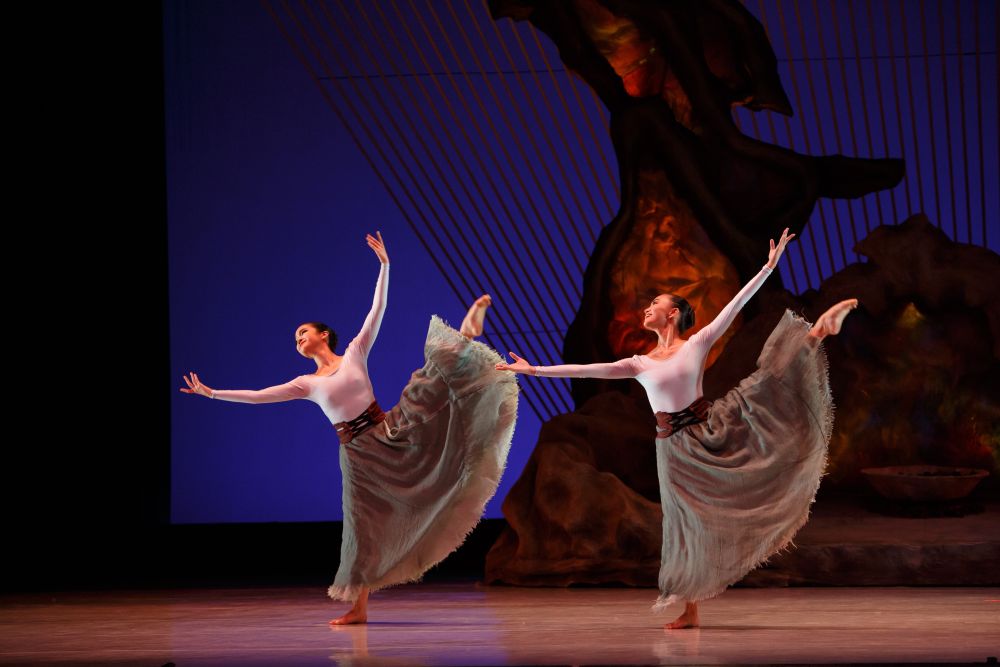
MONICA GANA and Katrene San Miguel in Carmina Burana (2018) by Alice Reyes — PHOTO BY JOJO MAMANGUN

By Sam L. Marcelo, Multimedia Editor

Ballet
Pulso Pilipinas II: Alay nina Alice at Agnes
Sept. 30, 8 p.m.
Oct. 1, 3 p.m. and 8 p.m.
Oct. 2, 3 p.m.
Tanghalang Nicanor Abelardo (CCP Main Theater)
Cultural Center of the Philippines

A PRODUCTION that celebrates the work of two living National Artists for Dance — Alice G. Reyes and Agnes D. Locsin — will attempt to encapsulate more than 50 years of Philippine dance and make a stand about its future.

Pulso Pilipinas II: Alay nina Alice at Agnes will see the Alice Reyes Dance Philippines (ARDP) performing alongside underprivileged youth from different regions in a program composed of Ms. Reyes’ Carmina Burana, a feat of athleticism and stamina that matches the musicality and monumentality of German composer Carl Orff’s cantata; and Ms. Locsin’s Igorot, Moriones, and Elias at Salome, a trio of works that show off the range of the pioneering neo-ethnic choreographer known for her angularity, percussive power, and groundedness.

Accreted time and accolades have turned these dances into masterpieces but they were revolutionary — controversial, even — when they were first staged and their choreographers, iconoclasts instead of the icons they are now.

“People like to put things in boxes,” said Ms. Reyes at an open rehearsal in the Cultural Center of the Philippines this July. “Should you step out of these boxes and do something else, people … don’t know how to deal with it.”

‘A HAPPY SOLUTION’
Carmina Burana, like the rest of Ms. Reyes’s oeuvre, incorporates different dance vocabularies: where ballet has pointe shoes, modern dance has bare flexed feet; where ballet desires to escape gravity, modern dance is enamored of it.

The ability to do both is the hallmark of a dancer who has been trained by Ms. Reyes and her protégés. Celebrated today, the combination of techniques was questioned then. “People thought I was doing something really stupid because I was doing modern and classical ballet. They thought it was odd,” she said. “And now you won’t find a ballet or dance company that doesn’t do that — even in Russia.”

The last is a veiled reference to the rift between Ms. Reyes and Ballet Philippines (BP), the company she founded in 1969. (See “Copyright fight: Ballet Philippines risks losing ‘treasure trove’ of dance”)

At a masterclass on copyright organized by BP this August, Lorna P. Kapunan, the company’s legal adviser, advised diplomacy: “The more important thing here is the viewing public. Let’s not deprive the public of good creations. …  The public benefits from the parties not quarreling whether it’s Ballet Philippines, Alice Reyes, or CCP. The constitution says that intellectual property must have a social function. To me, the social function of art is to bring happiness and not discord to people. Perhaps Ballet Philippines, CCP, and Alice Reyes should sit down and come up with a happy solution.”

BASTARDIZATION, VINDICATION
Meanwhile, Ms. Locsin, who once dressed women in G-strings as they portrayed gender-bending roles (a necessity since she lacked male dancers), was accused of bastardizing and appropriating indigenous dances when her neo-ethnic pieces premiered. Igorot is inspired by dance rituals of the Mountain Province; Moriones, by the Moriones Festival of Marinduque.

“I never explained myself. The best answer to criticism is silence,” said Ms. Locsin in a Zoom call with BusinessWorld. Naysayers have dwindled over the decades, or have become smart enough to remain silent themselves.

When pressed, Ms. Locsin has always said that she never wanted to supplant tradition. “This is my tribute to Philippine culture,” she said of her research-based choreography.

Vindication by way of being conferred the highest state honor for individuals who have done much for their artistic field is far from her mind. “Right now, this National Artist thing hasn’t sunk in,” she said, adding that she is concentrating on helping Ms. Reyes’ fledgling company.

“I want ARDP to continue and further Alice Reyes’ legacy,” she said. “Why make a new vision when her vision is there and it is good? There is room for all kinds of dances, room for growth.”

EPHEMERAL, OF THE MOMENT
Alay nina Alice at Agnes is a rare jewel, given how few and far between National Artists are among those who toil in dance. Ms. Locsin, recognized this year, is only the 6th; Ms. Reyes, recognized in 2014, was the 5th.

The dearth of honorees — as compared to, say, those in the visual arts — might be explained by the nature of dance itself and the limits of video technology when Ms. Reyes, 79, and Ms. Locsin, 64, began their careers.

“If you never saw me dance, you never saw me dance. If you didn’t see Agnes Locsin’s Encantada 10 years ago, then you’ve never seen it,” said Ms. Reyes. “It [dance] is so ephemeral, so of the moment, and so not visible after the moment.”

The momentousness of Alay nina Alice at Agnes as a moment in Philippine dance is not lost on the members of ARDP.

“We’re starting something new and we want to make an impression on the audience: this is who we are, we’re different from them, this is what we’re focused on,” said ARDP ballet soloist Monica A. Gana. Unnamed but out in the open in her reply is how ARDP compares to BP (“them”).

Added Ronelson P. Yadao, ARDP artistic director: “There is pressure and I can feel it. But Alice Reyes believes in the group and in me: that gives me confidence.”

The dancers have always been the priority of Ms. Reyes, who formed ARDP out of like-minded individuals who were displaced from various dance companies over the pandemic — and it is for them that she continues despite less-than-ideal circumstances: Zoom as the de facto means of communication, the lack of an office and studio, questions about copyright, and competing ideologies.

When Ms. Reyes staged her first modern dance concert at the CCP in 1969, she had the run of the place. “It was a different world. The CCP was ours. And now, there are different resident companies all wanting space, all with their own plans and programs,” she said. “You’re not going to get everyone to understand. There will always be those who prefer opera to BTS. There will always be those who prefer Swan Lake to Encantada or Amada.”

AEV says units exit Sri Lanka, files P12-B bonds

ABOITIZ Equity Ventures, Inc. (AEV) said on Tuesday that its subsidiaries had agreed to sell their 100% equity interest in Gold Coin Feed Mills (Lanka) Ltd., a manufacturer and distributor of animal feed products in Sri Lanka.

The listed holding firm disclosed to the stock exchange that its units Gold Coin Management Holdings Pte. Ltd. and Glen Arbor Holdings Pte. Ltd. entered into a share sale and purchase agreement with New Anthoney’s Farms (PVT) Ltd.

“Following the signing of the agreement and subject to completion of conditions precedent, the transaction is expected to be completed by the year-end of 2022,” AEV said.

“The exit from Sri Lanka is aligned with the Aboitiz Group’s direction to grow its animal feeds business in other parts of the SouthEast Asia and China markets,” the firm added.

New Anthoney’s Farms said on its website that it is one of the leading frozen chicken manufacturing and poultry farming companies in Sri Lanka.

Glen Arbor and Gold Coin Management are AEV’s Singapore-based subsidiaries whose shares are held through Pilmico International Pte. Ltd.

In a separate disclosure, AEV said that it had filed an application with the Securities and Exchange Commission to issue fixed-rate retail bonds with an aggregate principal amount of up to P12 billion, including oversubscription.

The application consists of the issuance of the final tranche of its P30-billion shelf registration program in 2019 amounting to P7.45 billion and the first tranche of the new P30-billion shelf-registered debt amounting to up to P4.55 billion.

AEV said proceeds from the bonds will partially fund the company’s equity contribution to its subsidiary Aboitiz Infracapital, Inc. and for the repayment of the parent company’s outstanding bonds.

“[Aboitiz Infracapital] will use such amount to acquire interest in GMR-Megawide Cebu Airport Corp.,” the firm said.

The bonds are expected to be offered to the public in the fourth quarter, subject to market conditions, and are intended to be listed with the Philippine Dealing and Exchange Corp.

AEV said the P12-billion bonds received a credit rating of PRS Aaa with a stable outlook from the Philippine Rating Services Corp. (PhilRatings), which also maintained the issue credit rating of PRS Aaa with a stable outlook for the firm’s total outstanding bonds.

Bonds with a PRS Aaa rating are of the highest quality with minimal credit risk, indicating the obligor’s capacity to meet its financial commitment “is extremely strong.” A stable outlook means that the rating is likely to be maintained or to stay unchanged in the next 12 months.

On Tuesday, Aboitiz Equity shares lost P2.40 or 4.18% to P55.05 apiece. — Justine Irish D. Tabile

How to show off crypto art? On flat-screen TVs

ANG HULING HAPUNAN by AJ Dimarucot

SINCE crypto art exists online, how to show it off onsite? On flat-screen TVs.

Twelve artists’ individual works and a collaborative piece will be highlighted at Galeria Paloma crypto art exhibit, “1/1” (read: One of One), which will be held both online and onsite.

The exhibit will be up from Sept. 30 to Oct. 4 at Power Plant Mall in Makati. It can also be visited online now on the NFT art platform Foundation (https://foundation.app/@galeriapaloma).

The physical exhibition will display the works of crypto art on Samsung The Frame TV screens.

“This partnership enables us to bring to the fore how The Frame TV can display digital artwork the way they are meant to be seen and appreciated,” Mahir Al-Rubah, Audiovisual Product Marketing Head of Samsung Electronics Philippines Corp., said in a statement.

Mounted in conjunction with Crypto Art Week Asia, “1/1” is the gallery’s second in a series of exhibits of crypto art which are digital artworks minted on a blockchain.

“This series of exhibitions is focused on highlighting crypto art as a genre of fine art,” Galeria Paloma director Kimi Rocha-Delgado said at a press conference at the Power Plant Mall’s The Grid on Sept. 19.
“Digital art has been around since the advent of the computer. But in the past years, it has enjoyed a renaissance due to blockchain infrastructure that now makes it possible for artists and collectors to have a solution for issues it has before” like proof of ownership, authenticity, and royalties Ms. Delgado added.

The exhibition features 12 crypto artists from the Philippines and Singapore.

One of the artists is Luis Buenaventura, who will showcase an animated work that commemorates the recent merge of the Ethereum blockchain. The blockchain holds sentimental value in Mr. Buenaventura’s crypto career — he was one of the artists whose work was included in the first NFT art collection ever minted on the Ethereum blockchain, Curio Cards (2017), which is the first lot in the history of Christie’s auction house that sold in Ether for $1.2 million.

Graphic designer, crypto artist, art director, and illustrator AJ Dimarucot employs artificial intelligence (AI) in his work Ang Huling Hapunan, a tribute to reproductions of The Last Supper. Mr. Dimarucot transforms the image into an electric, expressionist artwork that morphs into a scene of families gathering at a fast-food restaurant.

Win Magsino’s collection, Ghosts of Luggard Road, is made up of photos of trees walking home from Victoria Harbor. Mr. Magsino has won top awards at various international photography competitions. He is also a 2021 NCCA Ani ng Dangal honoree.

Cris Magsino’s Symphony of Stars is an animated image of the night sky, gracefully moving over the turquoise crater lake of the Kawa Ijen volcano. The photograph was awarded the Jury Top 5 selection and Honorable Mention at the 2020 International Photography Awards and Bronze at the 2020 Moscow International Foto Awards.

Painter and co-founder of CryptoartPh Jopet Arias joins the roster with original works on canvas in his signature style — traditional mediums intersected by digital technology.

The award-winning performing and visual artist Raymond Lauchengco will also be displaying his landscape photography. Painter and sculptor Carlos will be exhibiting his paintings which were animated by motion designer Isaiah Cacnio, who will also be presenting his own original work.

Holy Blood, a self-taught graphic designer and artist, as well as collage artist Sheila Ledesma will also be exhibiting their crypto work. Ten-year-old NFT artist Sevi Agregado also joins the exhibit with works on canvas tokenized on the blockchain.

Singaporean visual artist Wyn-Lyn Tan, who has been working on landscapes since she launched her collection on the blockchain last year, is also in “1/1”.

To commemorate the exhibition, a limited edition collaborative NFT titled The Twelve will be produced by the featured artists, to be distributed among the artists and supporters of the crypto art community.

Alongside the crypto art exhibit, Galeria Paloma will also be launching Galeria Paloma Perspectives, an educational initiative that will host talks, panel discussions, and lectures about art and its integrations of Web3 in its practices.

The exhibit runs from Sept. 30 to Oct. at the 2nd Floor Activity Area at the Power Plant Mall in Makati City and can be viewed online on www.galeriapaloma.com and https://foundation.app/@galeriapaloma. For more information, visit www.galeriapaloma.com. — Michelle Anne P. Soliman

Globe sells 1,350 towers to PhilTower for P20 billion

GLOBE Telecom, Inc. announced on Tuesday that it recently signed a sale and leaseback deal with Phil-Tower Consortium, Inc. (PhilTower) for the telco’s 1,350 towers.

“Globe expects to raise total proceeds of P20 billion from executing this transaction,” the company told the stock exchange.

The tower assets, which are located primarily in Visayas and Mindanao, consist of 90% ground-based towers and 10% rooftop towers. The towers will be leased back to the telco for an initial period of 15 years.

“The first close for this portfolio is targeted to occur by the end of 2022, with subsequent closings happening as and when closing conditions are met,” Globe said.

The company estimates a pre-tax transaction gain of P5.2 billion.

The sale to PhilTower brings the Ayala-led telco’s total tower sold from 5,709 towers to 7,059, with expected total proceeds of P91 billion.

This will be used to finance capital expenditures and maturing debts, according to the company.

Ernest L. Cu, Globe president and chief executive officer,  said these monetization efforts is expected to provide an uplift to the company’s overall value.

For PhilTower, its expansion into Visayas and Mindanao through Globe towers “will give the company a truly nationwide reach.”

“We look forward to growing a long-term partnership with all mobile network operators to bring efficiency, cost savings and faster expansion, and further bridge the nation’s digital divide,” said Devid Gubiani, president of PhilTower.

On Sept. 23, Globe announced that had achieved the first closing with 800 towers out of the 3,529 towers to be acquired by Frontier Tower Associates Philippines, Inc. for a cash consideration of P10 billion.

“The portfolio sold to MIESCOR Infrastructure Development Corp. (consists of 2,180 telecom towers in Luzon) on Aug. 11 of this year is expected to close within the next few weeks,” the company said in a statement.

Globe shares closed 0.18% higher at P2,178 apiece on Tuesday. — Arjay L. Balinbin

Myths, machismo deter men from getting vasectomies — POPCOM

UNSPLASH

By Patricia B. Mirasol, Reporter 

FILIPINO males who get no-scalpel vasectomies (NSV) are getting younger — but uptake of this permanent method of family planning (FP) remains low, according to the Commission on Population and Development (POPCOM). 

“It’s one of the least methods being availed of. I don’t know if it reaches 1%,” said Jackylin D. Robel, acting regional director of POPCOM-National Capital Region, who estimated that males electing to undergo the procedure are in their 20s and 30s. 

The Philippine Health Insurance Corp. reported 69 vasectomy claims in 2021, up from 27 in 2020, per POPCOM’s 2021 annual report.   

NSV, as opposed to a traditional vasectomy that requires the use of a scalpel, involves a small puncture in the scrotum to cut and seal the tubes that carry sperm. It takes about 30 minutes in an outpatient setting.  

The procedure, among the strategies devised by the National Program on Population and Family Planning to increase male involvement in family planning, is recommended for couples who are satisfied with the number of children they have, Ms. Robel told BusinessWorld in a Sept. 26 Zoom call.  

The Responsible Parenthood and Reproductive Health Act of 2012 (Republic Act No. 10354) requires family planning services such as ligation, vasectomy, and intrauterine device placement to be available in all government hospitals.  

MISCONCEPTIONS ABOUT MANHOOD 
The country’s machismo culture multiplies the misconceptions surrounding NSV, said Ms. Robel.  

“Men think it may diminish their virility … They have this misconception that something is being cut,” she said. “NSV is not like that. It’s only the vas deferens [the ducts that move sperm away from its storage place in the testicle] that’s being tied.”  

 A vasectomy does not decrease a man’s sex drive because it does not affect the production of the male hormone testosterone. It does not affect a man’s ability to get an erection either.  

Ms. Robel notes that of the 52% of Filipinos who take to contraception, 14% use traditional methods. Figures from the NDHS reflect that use of traditional methods, like the withdrawal method, have decreased to 14% in 2017 from 17% in 2013.  

“We want to improve the use of modern family planning methods among Filipinos,” she said.  

The modern artificial FP methods are subdivided into short-acting (such as pills and condoms), long-acting (such as intrauterine devices and subdermal implants), and permanent (such as no-scalpel vasectomy or NSV and bilateral tubal ligation). Modern natural FP methods, meanwhile, include lactational amenorrhea and basal body temperature charting.  

“Compared to modern artificial methods, it takes more time to train women on modern natural planning,” said Ms. Robel.  

The Health department’s Field Health Service Information System reported 7.5 million users of modern FP methods by the end of 2021. This marks a 2% increase from 2020’s report of 7.4 million FP users.  

The unmet need for FP likewise decreased to 10.1% in 2021 from 10.8% in 2017. As a result, the demand satisfied with a modern method increased to 58.1% in 2021 from 55.6% in 2017.  

Ms. Robel said the pills are the most popular FP method, given their ease of use and convenience. More than half of Filipinos, women in particular, avail of free contraception in barangay health centers, she told BusinessWorld.  

“Responsible parenthood is a shared responsibility of both men and women. Men play a very important role in family planning,” Ms. Robel said.  

MADE Art Awards: Images of recurring realities

Dalawáng Libó’t Dalawáng Pu at Hanggang Kailan? by Raymund Ador III

MESSAGES of hope, human relationships affected by politics, and environmental issues were tackled by the winning entries of the Metrobank Art & Design Excellence (MADE). The Metrobank Foundation, Inc. (MBFI) recognized the MADE awardees through an online awarding ceremony held on Sept. 22.

Now on its 38th year and held for the second time online, the competition carried the theme “Emerge: Step into Your Boundless Future,” focusing on human sentiments and ambition.

Established in 1984 by the late Metrobank Group founder and chairman Dr. George Ty Siao Kian, MADE has served as a platform for the discovery of creative visionaries. To date, more than 400 visual artists and design professionals have been MADE awardees, including such top talent as Elmer Borlongan, Mark Justiniani, Jan Leeroy New, Alfredo Esquillo, Andres Barrioquinto, Yeo Kaa, and Cedrick dela Paz.

“The creative industries play a major role in shaping our national identity and cultural preservation. Time and again, we look for avenues where creative expression and artistic talent thrive as a means to celebrate human experiences,” said MBFI President Aniceto Sobrepeña in his opening remarks.

“The Metrobank Art & Design Excellence or MADE is driven by the purpose to celebrate budding artists and provide a conducive platform for their genius to flourish,” he added.

Of 500 entries nationwide — 59 water media paintings, 79 sculptures, 399 oil and acrylic paintings — 12 national finalists were chosen. Four outstanding works emerged as awardees in the Painting and Sculpture Recognition Program.

The four are recognized for “their technical acuity and brilliant portrayal of the Filipino narrative.”

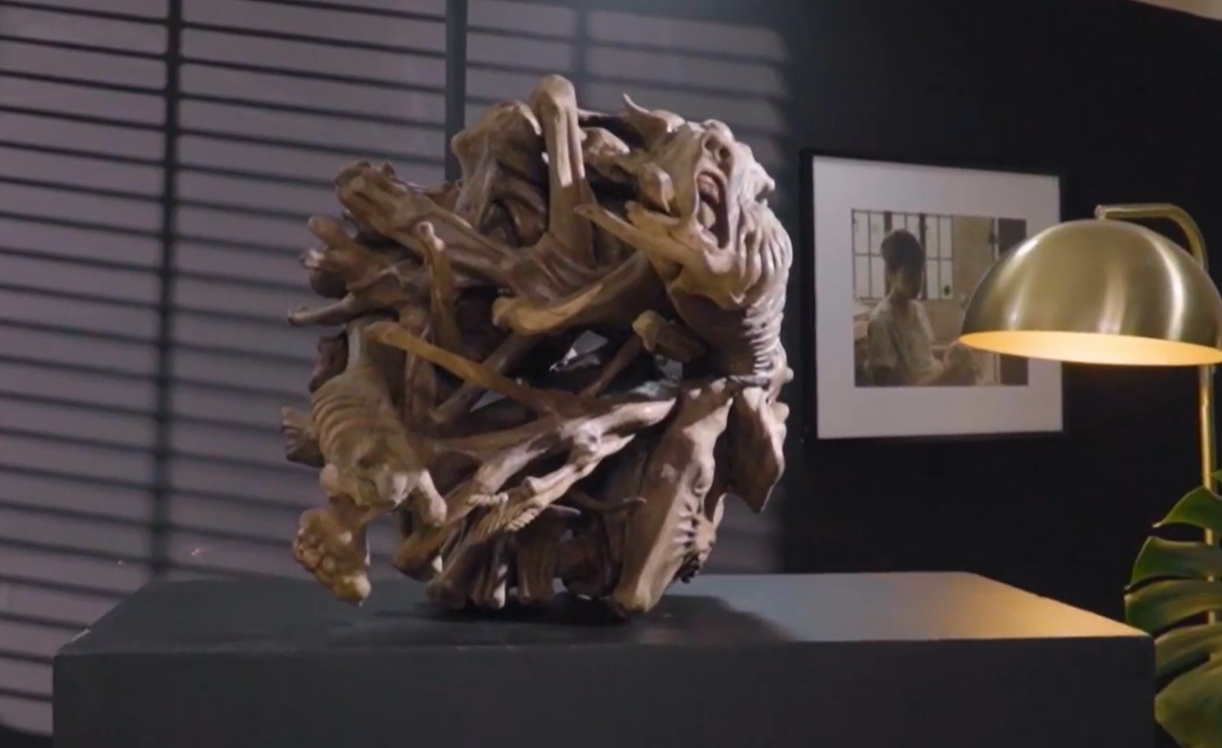
Underneath by Jun Orland Espinosa won the Special Citation for Sculpture. The wood sculpture is a representation of natural calamity and chaos.

“I challenge others to look for the positive side of things in a chaotic scenario. Despite life’s challenges, if you have faith, there is hope,” Mr. Espinosa said in English and Filipino during the awarding ceremony.

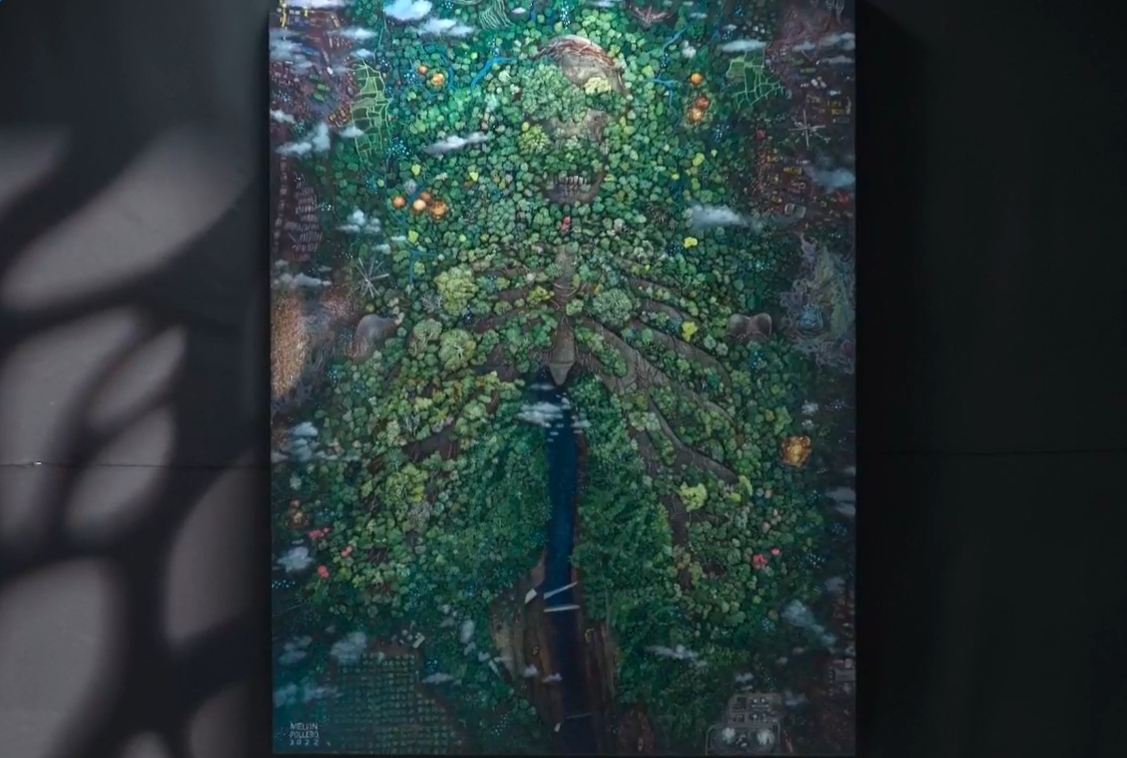
Ninuno by Melvin Pollero is the awardee in the Oil/Acrylic on Canvas Category. The painting’s focal point is a skeleton representing national minorities covered in trees in a forest. The work’s busy images also show fleeing animals and a scene depicting people helplessly fighting off bulldozers.

“’Iyung Ninuno tungkol siya sa kalagayan ng kalikasan natin, kalagayan ng national minorities, at ang kaugnayan nito sa ating lahat (Ninuno is about the state of nature and our environment, the state of our national minorities, and how it relates of all of us),” Mr. Pollero said of his winning piece.

Dalawáng Libó’t Dalawáng Pu at Hanggang Kailan? by Raymund Ador III is the awardee for Watermedia on Paper Category. It shows a young painter sitting in his studio with his head down while holding a skull.

“The message of this piece is about hope and how to solve the COVID-19 crisis, and how we can start again,” Mr. Ador said in English and Filipino.

Politika by Mateo Cacnio is the grand awardee for Sculpture. His piece of two figures fighting, made of aluminum, presents an illusion of fluidity.

“I want them to see that politics has turned out to be this battleground between what is real, what is fact versus what is evil,” Mr. Cacnio said of his work. “I believe that artworks aren’t meant to be explained. Rather they are meant to be felt. That’s why we call art as a form of visual communication.”

This year’s Board of Judges was chaired by visual artist and director of Eskinita Art Farm Alfredo Esquillo. Members of the board included visual artist and co-founder of the Orange Project Charlie Co; visual artist Mervy Pueblo; painter and sculptor Reg Yuson; University of the Philippine College of Fine Arts professor Lisa Ito; visual artist Elmer Borlongan; and visual artist and Philippine High School for the Arts art teacher Marc Vincent Cosico.

The grand prize awardees received a certificate, trophy, and cash prizes of P500,000; while the artist given the Special Citation for the Sculpture Recognition Program received a certificate, trophy, and a cash prize of P100,000.

The continuity of MADE’s program is also reflected in the competition’s new trophy called More by metal sculptor and 2007 Metrobank Foundation Prize for Achievement in Sculpture Juan Zajid.

“[You] have more to offer after winning this prestigious award,” Mr. Zajid said.

The trophy is designed with holes like binoculars to represent focus in one direction. “Through your focus, that’s where you become an authentic artist,” he said.

To expand MADE’s advocacy, it has partnered with the Linangan Art Residency for the first time to provide scholarships for two of the competition’s finalists. They will be mentored by prominent Filipino artists in a three-month curriculum.

“We push forward a specialized curriculum designed not only to equip and nurture emerging artists, but to connect them to a deep sense of purpose and identity that empowers them,” Linangan Art Residency director Alee Garibay said of the program.

For more information and to view the online gallery of winners, visit https://www.madeartdepot.ph/. — Michelle Anne P. Soliman

PayerMax to focus on PHL in regional growth goals

ROBIN WORRALL-UNSPLASH

PAYERMAX, a global payment solution provider, said it plans to boost its growth across Southeast Asia (SEA), with a key focus on the Philippines.

The company intends to employ “more resources and manpower while Singapore acts as its strategic foothold,” PayerMax said in an e-mailed statement on Tuesday.

Locally, PayerMaxt supports its customers through local payment methods like GCash, TrueMoney, and DragonPay. The company describes itself as a digital payment solution provider “with over 350 payment methods over five continents.” It services online merchants that have ambition beyond borders.

PayerMax said it expects the digital payments landscape in the region to reach $1.5 trillion by 2030.

The shift toward cashless, contactless, and cross-border payments is expected to accelerate.

Online payment is “now the new norm, and players need to recognize this as an opportunity,” said Vicky Gannason, regional director at PayerMax.

“Our key focus in the long horizon is … to build PayerMax’s presence in emerging markets, and we are excited about the growth prospects in a region that is witnessing huge digital payments boom in the years to come,” said Essay Zhu, PayerMax chief operating officer.

The company will “leverage on its private and public sector partnerships in the region to drive and fuel the payment infrastructure of e-commerce, gaming and entertainment while working hand-in-hand with regulatory ecosystems.”

PayerMax is headquartered in Singapore with regional head offices and presence in the Philippines, Malaysia, Indonesia, Vietnam, Thailand, United Arab Emirates, Kingdom of Saudi Arabia, Brazil, and Shanghai. — Arjay L. Balinbin

The ¾ rule: recommendations for voluntary outdoor masking

PHILIPPINE STAR/EDD GUMBAN

By Patricia B. Mirasol, Reporter 

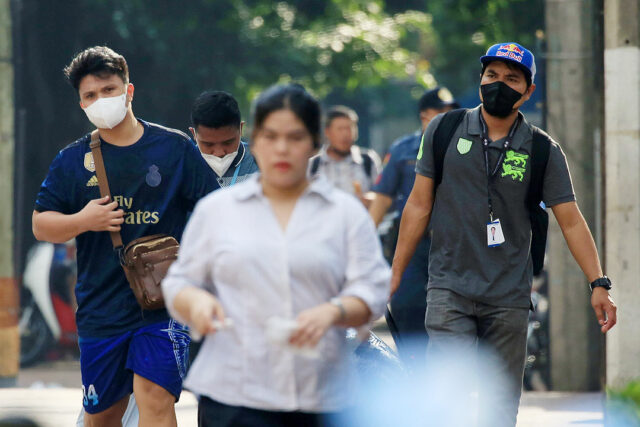
INDIVIDUALS who are fully vaccinated against coronavirus disease 2019 (COVID-19), physically distanced, and outdoors may not need to wear their masks, according to an epidemiologist.  

Remember the ¾ rule of voluntary masking when outdoors, said Dr. John Wong, an epidemiologist and chair of the Department of Health drug price advisory council, at a Sept. 23 session organized by the Healthcare Professionals Alliance Against COVID-19 and 702 DZAS FEBC radio.  

The ¾ rule entails asking four questions:   

  • Am I fully vaccinated?  
  • Am I physically distanced?  
  • Am I outdoors?  
  • Do I need to mask?  

“To keep safe, you need any three out of the four conditions,” he said.   

“Vaccination is the easiest to comply with. Once you’ve done it, you can forget about it. All the other behaviors you have to pay attention to,” Dr. Wong said.  

Physical distancing means keeping a personal bubble of 1–2 meters. Masks, meanwhile, have to be high quality, with N95, KN95, and KF94 variants being Dr. Wong’s recommendations.   

Masking has other benefits too, he added, citing fewer deaths due to tuberculosis and pneumonia.  

“The only change in behavior was masking … Even if you’re outdoors, you’re not only protecting yourself from COVID-19 but also from other respiratory diseases,” he said. “The ¾ rule is a good rule of thumb for everyone.”  

WHAT ABOUT INDOORS, IN CARS?
The calculus changes when the setting moves indoors, even if a venue’s occupants get a negative result in their antigen test, which is not as sensitive as an RT-PCR (real-time reverse transcription-polymerase chain reaction) test. 

An indoor space’s carbon dioxide level can be measured with carbon dioxide sensors, Dr. Wong said. If the level is less than the maximum accepted concentration of 1,000 ppm (parts per million or µg/m3), then distancing and masking are encouraged.  

“If you can distance, you may not have to wear a mask. If you can’t, better to wear [one],” he said. 

“We don’t have too many regulations about air quality. … We go to malls, we don’t know what the air quality is,” Dr. Wong added. “I think this needs to be enforced better.”  

 Ventilation is also key when riding in a car with passengers of unknown vaccination status. “To improve ventilation, request that two of the windows are opened at least three inches,” he said. 

Security Bank donates sculptures to National Museum

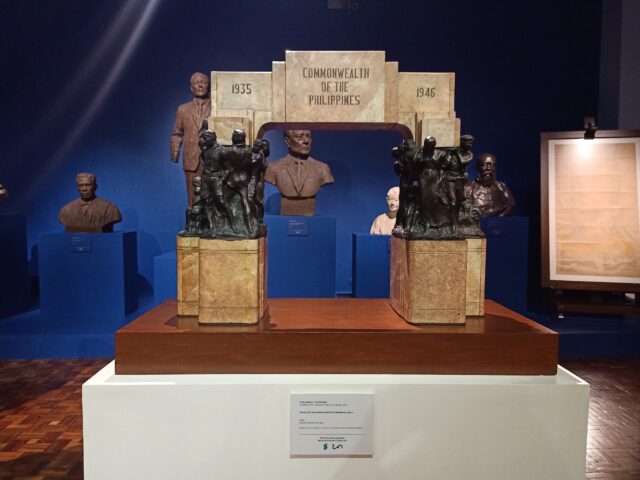
Model for the Commonwealth Triumphal Arch 1989; replica of the orignal commissioned by Ambeth Ocampo — PHOTO BY MICHELLE ANNE P. SOLIMAN

SECURITY Bank Corp. has donated 14 works by National Artist for Sculpture Guillermo Tolentino to the National Museum of the Philippines on the same day as the newly renovated Security Bank Hall at the National Museum of Fine Arts reopened on Sept. 24.

Guillermo Tolentino (July 24, 1890 — July 12, 1976) was a sculptor and professor of Fine Arts at the University of the Philippines (UP). Prior to teaching at UP, he earned diplomas in painting and sculpture there in 1915. In 1921, he finished his studies at the Ecole De Beaux-Arts (School of Fine Arts) in New York City and spent three years studying sculpture at the Regio Instituto Superiore di Belle Arti di Roma where he finished with highest honors. He was active in the Philippine art scene from the 1930s to the 1950s.

He followed the classical style and mainly used plaster and metal for his pieces. One of his most familiar works is the Oblation statue at the University of the Philippines. In 1953, Mr. Tolentino served as director of the UP School of Fine Arts, retiring in 1955 as professor emeritus. He was named as the National Artist of the Philippines for Sculpture in 1973, three years before his death.

During the official turnover and gallery reopening, National Museum Director Jeremy R. Barns explained in a speech how the exhibit of sculptures in the gallery began in early 2011.

“Through the efforts of a mutual friend of my own and [then] Chairperson Frederick Dy of Security Bank, we came together because Mr. Dy said that he had this collection of Mr. Tolentino sculptures that he wanted to place for public display [and asked if] the National Museum would be interested,” Mr. Barns said.

The mutual friend persuaded the former chairman, and now the Bank’s chairman emeritus, to make a donation, so that a special dedicated exhibition hall sponsored by the bank could be established to house the sculptures.

The 14 sculptures had previously been on loan to the museum as part of a permanent exhibit, “Gallery XII — Eskultor ng Lahing Filipino: Honoring the Life and Work of Guillermo Tolentino,” which opened in July 2013.

Early this year, the Bank reached out to the museum and offered to donate the 14 sculptures.

“Security Bank has been a proud advocate of Filipino art and culture for many years and has been a partner of the National Museum since 2013,” Sanjiv Vohra, Security Bank President and CEO, said in his speech. “With the reintroduction of the Security Bank Hall, underpinned by the official handover of Mr. Tolentino’s pieces, we hope to spark a fresh interest in historic art and make these easily accessible to visitors and the community for generations to come.”

The 14 sculptures donated by the Bank to the National Museum are: a model of the Commonwealth Triumphal, busts of President Manuel Roxas, Lapu-Lapu, President Manuel L. Quezon, Gat. Andres Bonifacio, Gen. Emilio Aguinaldo, Bibiano Meer, Luisa Marasigan, Don Jacobo Lim Chitco, a Matriarch, Dr. Jose Rizal and a Boy Scout, the head of a Filipina Lady, and a miniature bust of Dr. Jose Rizal.

Mr. Tolentino’s sculptures were often commissioned by individuals, business owners, educational institutions, and private companies, the museum’s engagement assistant John Lusuegro told guests during a tour of the gallery.

Visitors will be able to see new additions to the exhibit, including memorabilia such as Honorable Mention certificates he received as a fine arts student at UP, the medal given to Mr. Tolentino during his confirmation as a National Artist, and his tools of the trade.

The newly renovated Security Bank Hall is at the second floor of the National Museum of Fine Arts and was opened to the public yesterday. — Michelle Anne P. Soliman