Home Blog Page 5701

Thousands of workers evicted in Qatar’s capital ahead of World Cup

DOHA — Qatar has emptied apartment blocks housing thousands of foreign workers in the same areas in the center of the capital Doha where visiting soccer fans will stay during the World Cup, workers who were evicted from their homes told Reuters.

They said more than a dozen buildings had been evacuated and shut down by authorities, forcing the mainly Asian and African workers to seek what shelter they could — including bedding down on the pavement outside one of their former homes.

The move comes less than four weeks before the Nov. 20 start of the global soccer tournament which has drawn intense international scrutiny of Qatar’s treatment of foreign workers and its restrictive social laws.

At one building which residents said housed 1,200 people in Doha’s Al Mansoura district, authorities told people at about 8 pm on Wednesday they had just two hours to leave.

Municipal officials returned around 10.30 pm, forced everyone out and locked the doors to the building, they said. Some men had not been able to return in time to collect their belongings.

Nearby, five men were loading a mattress and a small fridge into the back of a pickup truck. They said they had found a room in Sumaysimah, about 40 km (25 miles) north of Doha.

World soccer’s governing body FIFA did not respond to a request for comment and Qatar’s World Cup organizers directed inquiries to the government.

Around 85% of Qatar’s three million population are foreign workers. Many of those evicted work as drivers, day labourers or have contracts with companies but are responsible for their own accommodation — unlike those working for major construction firms who live in camps housing tens of thousands of people.

One worker said the evictions targeted single men, while foreign workers with families were unaffected. A Reuters reporter saw more than a dozen buildings where residents said people had been evicted. Some buildings had their electricity switched off.

Most were in neighborhoods where the government has rented buildings for World Cup fan accommodation. The organizers’ website lists buildings in Al Mansoura and other districts where flats are advertised for between $240 and $426 per night.

The Qatari official said municipal authorities have been enforcing a 2010 Qatari law which prohibits “workers’ camps within family residential areas” — a designation encompassing most of central Doha — and gives them the power to move people out.

Some of the evicted workers said they hoped to find places to live amid purpose-built workers’ accommodation in and around the industrial zone on Doha’s southwestern outskirts or in outlying cities, a long commute from their jobs.

“Who made the stadiums? Who made the roads? Who made everything? Bengalis, Pakistanis. People like us. Now they are making us all go outside.” — Reuters

Omnist Irving

To argue that Kyrie Irving is easy to figure out would necessitate engaging in revisionist history. In fact, there’s nothing easy about him — and not just because of his partiality to conspiracy theories and scientifically debunked positions. He has long marched to the beat of his own drum, and it’s fair to note that his value on the court as a seven-time All-Star excuses away his transgressions off it. And does he have a lot — among them his refusal to be vaccinated for the COVID-19 virus and, just three days ago, his tweet of an Amazon.com link to the movie Hebrews to Negroes: Wake Up, Black America, which, like the book on which it is based, carries a racist tone.

To be fair, Nets owner Joe Tsai immediately went to social media to blast Irving’s promotion of wrongful content. “I’m disappointed that Kyrie appears to support a film based on a book full of antisemitic disinformation. I want to sit down and make sure he understands this is hurtful to all of us, and as a man of faith, it is wrong to promote hate based on race, ethnicity or religion.” The Nets and the National Basketball Association then issued similar statements. Given the negative backlash, the 2011 first overall pick would have done well to take down the Twitter post, issue an apology for what is clearly a mistaken viewpoint, and move on.

Irving being Irving, however, the message he sought to impart in the aftermath was one of defiance. No, he said, he wasn’t being racist when he shared the link. “I am an OMNIST and I meant no disrespect to anyone’s religious beliefs. The “Anti-Semitic” label that is being pushed on me is not justified and does not reflect the reality or truth I live in everyday. I embrace and want to learn from all walks of life and religions.” In other words, he’s simply being himself, and all and sundry are wrong to pillory him for his so-called inclusive stance.

That Irving did not take down the tweet speaks volumes of his stubborn nature. That the Nets still played him yesterday in spite of their opposition to it likewise speaks volumes of their supposed commitment to the truth. Freedom of speech comes with responsibility, and their failure to penalize him for acting inappropriately indicates the greater importance they place on his skills with a basketball in hand than on the line he crossed with a keyboard at his disposal. Their protestations notwithstanding, they kept him on the floor for the most number of minutes and let him take and issue the most number of shots and assists. So much for sending the right message.

There’s no question that Irving is a magician when he burns rubber and aims to make leather and nylon meet under the klieg lights. There’s also no question that he courts controversy with errant perspectives when not in uniform. If nothing else, his gaudy stat line yesterday, albeit in a loss, underscores which is really more important to the Nets. Ignorance is his excuse. What is theirs?


Anthony L. Cuaycong has been writing Courtside since BusinessWorld introduced a Sports section in 1994. He is a consultant on strategic planning, operations and Human Resources management, corporate communications, and business development.

Typhoon Nalgae shatters hopes of tourism recovery

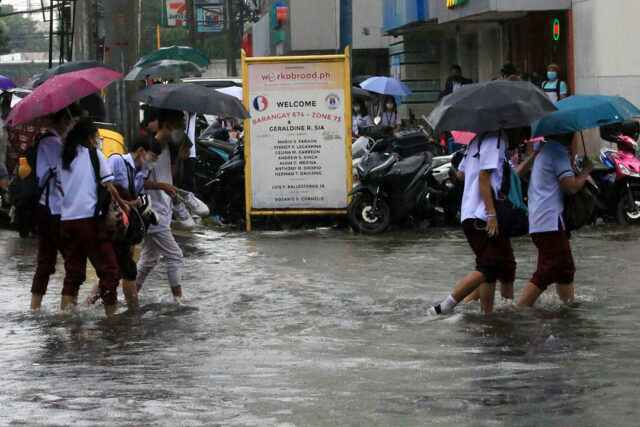
PHILIPPINE STAR/ WALTER BOLLOZOS

By Kyle Aristophere T. Atienza, Reporter

RESORT owners along the white beach of Puerto Galera south of the Philippine capital were expecting a boost to their revenues during the long weekend holiday after President Ferdinand R. Marcos, Jr. made mask-wearing indoors optional.

But Typhoon Nalgae (Paeng) came, forcing visitors to cancel reservations, killing dozens and sending rescuers to search for missing victims.

“The holiday resulted in a sharp increase in bookings, but before the ink had dried on those new records, they were all swept away by the winds of the storm,” British Daniel Stracey, who manages Lalaguna Villas Luxury Dive Resort & Spa, said in a Facebook Messenger chat.

“We saw hope that made our hearts flutter briefly. But the slightest good news was followed hastily by the bad,” he added.

The luxury resort in the province of Oriental Mindoro, which is about an hour by boat from Batangas port, was estimated to have foregone P1 million in sales at the weekend, an amount that would have funded the holiday bonuses of its workers, Mr. Stracey said.

Thankfully though, damage on most facilities along Puerto Galera’s white beach was minimal.

Noe Lineses, who owns an online platform that organizes trips and tours to the popular beach destination, said resorts and cafeterias had prepared for Halloween parties for its visitors.

When ferry trips got canceled on Oct. 28, more than 3,000 tourists failed to make the trip to Puerto Galera, he said.

“There are many establishments in Puerto Galera that are struggling to survive due to the on and off nature of tourism nowadays,” he said in a Messenger chat. “Long weekends would have guaranteed income to many, but unluckily, the typhoon came.

The town had lost as much as P50 million in potential income due to the typhoon, Mr. Lineses said.

Both Mr. Stracey and Mr. Lineses hope that the Christmas holiday could somehow offset the losses from the typhoon.

The Philippines lies along the typhoon belt in the Pacific and experiences about 20 storms each year. It also lies in the so-called Pacific Ring of Fire, a belt of volcanoes around the Pacific Ocean where most of the world’s earthquakes strike.

The Philippines’ 16th typhoon this year also affected other tourist spots including the world-renowned Boracay Island in Aklan province.

CONTINGENCIES
Beibi Balana, a member of a Facebook group on DIY (Do-It-Yourself) travel, said Paeng had brought rains to the small island as early as Oct. 27, forcing them to delay their land tour for a day and cancel all water activities.

She was one of thousands of tourists who were stranded after flights to Manila were moved from Oct. 29 to the 31st.

“Typhoons threaten itineraries, disrupting potential revenues from tourism products and services, while costs may have already been incurred due to preparations for guest arrivals,” said John Paolo R. Rivera, associate director of the Asian Institute of Management’s Dr. Andrew L. Tan Center for Tourism.

“Rebooking is also disruptive especially when reservations have already been paid,” he said in a Viber message. “It messes up the system and smaller tourism enterprises may not have the ability to adjust.”

Paeng disrupted the operations of at least six airports and 78 seaports, according to a report by the local disaster agency.

More than 180 flights were canceled and only 4% of affected seaports were operational. Almost 8,000 passengers, more than 2,400 rolling cargoes and 68 vessels were stranded.

Many businesses also incurred losses after the typhoon caused brownouts. More than 124 cities experienced brownouts at the weekend.

“We cannot do anything about the Philippines’ vulnerability to natural calamities,” Mr. Rivera said. “They will definitely disrupt tourism activities to some extent. For small players reliant on tourism receipts, contingency should be available.”

Small players should have alternative sources of livelihood so they can cope when disruptions happen, he added.

The government and the private sector should also work together to make tourism infrastructure resilient to typhoons and other natural calamities, Mr. Rivera said.

“Better weather forecasting equipment should be available to generate reliable information, allowing players and tourists to make adjustments even before calamity strikes,” he added.

Mr. Marcos and his economic managers have said the revival of Philippine tourism would boost the Southeast Asian nation’s economic recovery.

Tourism arrivals in the Philippines have hit 1.7 million as of Oct. 17, exceeding the target for the year, Tourism Secretary Maria Esperanza Christina Frasco said earlier this month.

The tourism sector accounted for 12.8% of Philippine economic output in 2019, or about P2.48 trillion. Tourism’s economic contribution fell to 5.2% last year as most countries closed their borders amid a global coronavirus pandemic.

Thousands stranded as Philippines cancels flights due to severe tropical storm

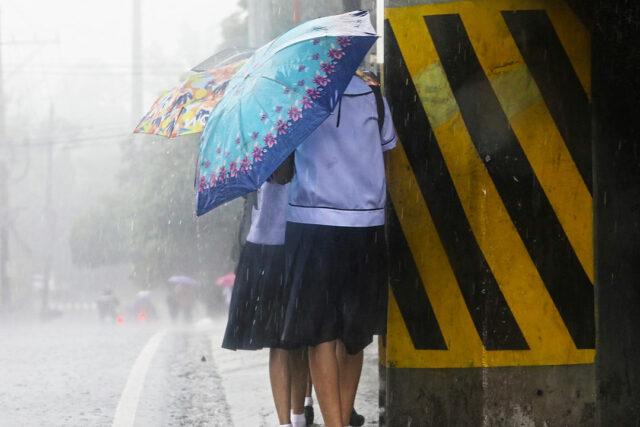
PHILIPPINE STAR/ MIGUEL DE GUZMAN

THE MANILA International Airport Authority (MIAA) on Sunday said 181 flights — 160 domestic and 21 international — were canceled due to Typhoon Nalgae (Paeng).

Local airlines have advised their passengers whose flights got canceled to rebook.

“Recovery flights are still ongoing,” flag carrier Philippine Airlines said in a statement.

Planes that were diverted to outstations were in the process of returning to Manila and flights originally slated to use these planes were canceled, it said. “Other flights are on planned delays.”

Sixty road sections in various areas were closed to traffic, the Department of Public Works and Highways said in a separate statement.

As of 6 a.m. on Sunday, seven road sections were affected in the Cordillera Administrative Region, three in the National Capital Region, six in the Cagayan Valley region, one in Central Luzon, and 11 in the Calabarzon and Mimaropa regions, it said.

These roads were closed due to flooding, strong water current, soil collapse, road cuts and slips, mudflow, collapsed bridges and uprooted trees, among other causes.

Three road sections were affected in the Bicol region, 18 in Wester Visayas, four in Eastern Visayas, one the Zamboanga Peninsula, three in Soccsksargen and three in the Bangsamoro region.

More than 3,000 passengers, drivers and cargo helpers were stranded at various ports, the Transportation department said in a separate statement, citing the Philippine Coast Guard.

More than a thousand cargoes, 21 vessels and 10 motor boats were stranded, it said, adding that 159 vessels and 71 motor boats were taking shelter from the storm.

The PLDT group said its network remained resilient in Northern Luzon.

“Our teams have prepositioned mission-critical equipment and manpower even before Paeng intensified into a severe tropical storm, which helped our network stay resilient,” it said in an e-mailed statement.

“We await more details on the restoration of commercial power in areas such as Batangas and Laguna, as our connectivity service is dependent on power,” the company said. “We are widening our relief distribution in the coming days to reach more people in need.”

Globe Telecom, Inc. said its teams were ready to address network issues and deploy free calls, charging and WiFi stations in affected areas.

Meanwhile, the House of Representatives might adjust the proposed P5.268-trillion national budget for next year for the rehabilitation of typhoon-hit areas.

“I have asked the chairman of the House appropriations committee, Rep. Elizaldy S. Co, to compile the damage assessment from House members and executive offices so that they may aid us in reviewing possible adjustments in budget allocations for repair and rehabilitation of affected areas under the proposed 2023 General Appropriations Act,” Speaker Ferdinand Martin G. Romualdez said in a statement.

He said he had asked his colleagues to help Executive departments and agencies in assessing the damage from Paeng. and focus on relief operations.

“The House of Representatives will also use its power over the purse to see to it that rehabilitation of affected communities will proceed unhampered as soon as the relief stage is completed,” he said.

The House has passed the proposed budget bill on third and final reading. The Senate expects to pass its version next month. — Arjay L. Balinbin and Kyanna Angela Bulan

Marcos gov’t told to fund weather bureau enhancement after storm Paeng’s devastation

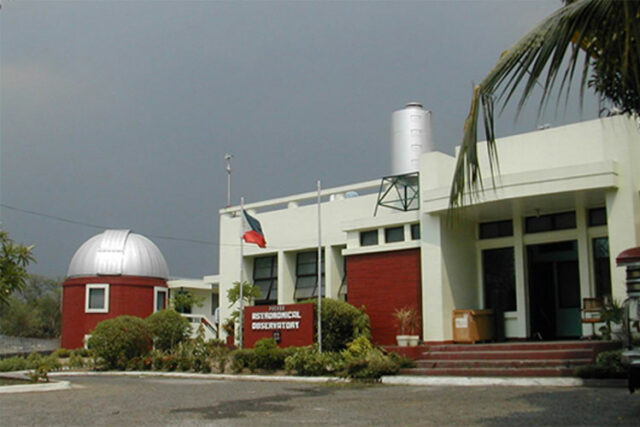
The PAGASA Astronomical Observatory within the University of the Philippines campus in Quezon City. — PAGASA.DOST.GOV.PH

A GROUP of Filipino scientists urged the government to provide a significant increase in the state weather bureaus budget, citing escalating threats from changing climate patterns.   

The call was made after Mr. Marcos directed government agencies to be accurateand advancedin weather reporting following the devastation from Tropical Storm Paeng, with international name Nalgae, which has killed at least 48 Filipinos and injured dozens more as of Sundays monitoring.   

If we are asking where the government’s response fell short, it is rooted on the declining budget allocation of the department,Philippine-based group AGHAM said in a statement, noting that slashing P1.6 billion from the proposed P3.048-billion budget of the agency for 2023 would negatively impact the agency’s weather forecasting capacity.”   

Long before the Paeng typhoon disaster, the government knew that our Disaster Risk Reduction Management (DRRM) needed significant improvement,AGHAM said. With the increasing threats of climate change President Marcos Jr said that this is included in his top priorities. Yet he cuts the budget on departments that address this issue.”  

State weather bureau PAGASA which stands for Philippine Atmospheric, Geophysical, and Astronomical Services Administration is under the Department of Science and Technology (DoST). 

AGHAM said the P1.3-budget budget of PAGASA in 2022 is also lower than the P1.6 billion allocated to the agency in 2021.   

For the 2023 budget, the DoSTs budget request of P44.17 billion was reduced to P24.06 billion, lower than the previous year’s budget of P24.27 billion, it added.  

President Marcos Jr., should put money where his mouth is.”  

In a televised briefing with Cabinet officials on Saturday, Mr. Marcos said the Department of Interior and Local Government, PAGASA, and DoST should have good communication exchanges. 

If we give them the advance information, good, accurate, advance information, then Im pretty sure thatLGUs (local government units) will respond and they will do everything,he said.   

Mr. Marcos added that well see what we can doto improve forecasting, particularly in terms of flooding risks.   

Mr. Marcos, meanwhile, expressed disappointment over the death toll in the southern province of Maguindanao, where at least 40 people have been confirmed to have died by the regional government. 

Speaking to Science and Technology Secretary Renato U. Solidum Jr., the President asked why there was no warning that the flooding in the province would be worse.  

Mr. Solidum said in response that it was announced that heavy rainfall would happen in parts of Mindanao, noting that flood advisories had been issued.

PAGASA issues regular advisories on rainfall and flooding forecast at regional levels, which are distributed to local government disaster teams as well as published on its online platforms. 

Mr. Marcos attended the Sunday afternoon briefing virtually, prompting citizens to ask about his whereabouts. There have been claims on social media that hes in Japan which acting press secretary Cheloy V. Garafil denied in a message to reporters. 

A year-long state of calamity is likely to be enforced in Paeng-hit areas in Bicol and Bangsamoro regions, according to a report by the state-run Philippine News Agency. 

A new tropical cyclone, which will be named Queenie locally, was set to enter the Philippines on Monday morning. It would be the Philippinesfifth tropical cyclone in October alone and the 17th for the year. 

Paeng made landfall on Friday, affecting 277,383 families or 932,077 people in in more than 2,400 villages in 14 regions across the country, based on an 11:00 am report by the National Disaster Risk Reduction and Management Council (NDRRMC) on Sunday. 

The disaster council said 44,847 families or 168,453 people were still staying in 2,125 evacuation centers. 

Of the 48 deaths reported, 37 were confirmed and 11 were still being validated. Thirty-three of the confirmed deaths were in the Bangsamoro region and two in Soccsksargen region in the countrys south. Two deaths were recorded in Western Visayas. NDRRMC said 22 people were missing. 

Seven of the 11 deaths that were still under validation were recorded in Bangsamoro, two in Eastern Visayas, and one each in Soccsksargen and Bicol regions. 

Paeng was heading toward the South China Sea as of Sunday morning, packing maximum sustained winds of 85 kilometer per hour (kph) near the center and gustiness of up to 105 kph, according to an 11:00 am bulletin by PAGASA. Kyle Aristophere T. Atienza

Initial agricultural damage from ‘Paeng’ pegged at P49.54M

THE CATANDUANES Provincial Agriculture Services Office assists fish farmers in securing facilities on Oct. 27 in preparation for typhoon Paeng. — CATANDUANES LGU

AGRICULTURAL damage caused by Tropical Storm Paeng, with international name Nalgae, has been initially estimated at P49.54 million, according to the Department of Agriculture (DA).    

The storm, the 16th to hit the country this year, has affected 762 farmers and 1,949 hectares of agricultural areas, based on the bulletin issued by the DAs disaster risk reduction and management office on Sunday morning.   

A total of 2,543 metric tons (MT) of production loss had so far been reported.    

Based on assessments made by the DA regional field offices, damage and losses have been reported in Mimaropa, Bicol and Western Visayas RegionAffected commodities include rice, high value crops and fisheries. These values are subject to validation,the DA bulletin said.    

Damage to rice amounted to P47.25 million with 2,479 MT of production affected.    

Losses to high-value crops totaled P1.24 million. Production volume loss reached 64 MT while 62 hectares of agricultural land were affected.   

Damage to fisheries reached P1.05 million.    

The DA continuously coordinates with concerned national government agencies, local government units and other DRRM-related offices for the impact of the tropical cyclones, as well as available resources for interventions and assistance,the bulletin said. Revin Mikhael D. Ochave

House climate change committee to tap public, private sector experts for bills on green economy 

PHILIPPINE STAR/EDD GUMBAN

THE HOUSE Committee on Climate Change will tap public and private sector experts to help enhance proposed laws aimed at creating a more green Philippine economy and protect sectors most vulnerable to climate change.   

Negros Oriental Rep. Jocelyn Sy Limkaichong, vice chair of the committee, said via e-mail that there are pending measures in Congress that can help address the impact of climate change.  

One of these is the Sustainable Forest Management Act that seeks to delineate the boundary limits of forest lands and protect them from further denudation,Ms. Limkaichong said.  

Another pending measure seeks to strengthen the existing Wildlife Resources Conservation and Protection Act to expand the coverage of prohibited activities and impose stiffer penalties for violations,she said.  

Ms. Limkaichong also cited a bill that will establish carbon trade and credits that will encourage the private sector to reduce greenhouse gas emissions using economic rewards and incentives.  

Another pending bill proposes a National Coastal Greenbelt Program to promote beach forest protection, mangrove rehabilitation, and sustainable management.”  

She also cited a bill that will declare the Philippine Rise, previously referred to as Benham Rise as a protected area, home to millions of hectares of coral reefs and fish stocks. (This) is long overdue with rising cases of overfishing and pollution.”  

“​​While the Department of Finance and the Commission on Climate Change have done a lot of initiatives in terms of climate financing, theres still so much to be done,the solon said.  

Ms. Limkaichong said that Congress has a large role to play in terms of creating the policy framework to protect marine and coastal systems, reducing carbon footprint, and promoting both green and blue economies through regulation, financing, and incentives.  

Since the Philippines is an archipelago and an agricultural country when typhoons come, there’s a lot of impact on our economy,she added.  

The World Bank last week said the impact of climate change would likely slash the Philippinesgross domestic product by as much as 13.6% by 2040 if no action is done by the government and private sector.  

In 2021, hazards brought by climate change caused P506.1 billion in losses and damages, according to the Finance department.   

Every year, the Philippines is visited by around 20 tropical cyclones, some of which have become stronger in recent years and affecting areas that were historically considered as typhoon-free.   

Bohol Rep. Edgar M. Chatto, the committee chair on Climate Change, said the bills in place must be assessed in close coordination with the executive department especially with agencies such as the National Economic and Development Authorityand private sector expertsto ensure that the policies are science-based 

This tact acknowledges not only the whole of government approach but more inclusively, it recognizes the importance of the private sector most especially the experts in providing the science in policy proposals,he said.  

Mr. Chatto said the private sector has experts who can help the government in terms of managing the risks and impact of climate change. Kyanna Angela Bulan

Bill seeks adjustments in school curriculum to nurture emotional, intellectual maturity

PHILIPPINE STAR/WALTER BOLLOZOS

A BILL has been filed in the House of Representatives seeking to integrate lessons on environmental protection, entrepreneurship, and reproductive health in primary and secondary school subjects to help nurture the young towards responsible adulthood.   

House Bill 5202, also known as the Responsible Youth Act, mandates the Department of Education (DepEd) to adjust elementary and high school lessons to include age-appropriate topics on these various topics.   

The proposed measure also adds population control and drug prevention to the curriculum.   

Discussion of these programs or courses paired with broader and more comprehensive instruction as early as childhood can help prepare youth to reach intellectual and emotional maturity leading to a responsible and healthy life decisions,Surigao del Norte Rep. Robert S. Barbers, author of the bill, said in the explanatory note.   

Early intervention has a life altering impact on changing a childs life path away from problems and toward positive behaviors, he said.   

Under the proposed measure, the education department will also provide additional free training to teachers and staff to help them incorporate a reality framework in teaching students.  

In order for these programs to produce positive results, the content of the course or the teaching modules to be developed by the Department of Education must be age-appropriate,Mr. Barbers said in a statement on Sunday. Matthew Carl L. Montecillo

Same number of Filipinos experienced hunger in 1st 3 months of Marcos gov’t — SWS poll

PHILSTAR FILE PHOTO

FILIPINO families that experienced hunger in July to September, the first three months of the Marcos administration, slightly fell to 11.3% from 11.6% in June, according to a poll by the Social Weather Stations (SWS).  

This was equivalent to 2.9 million people, the same number recorded a quarter earlier, the pollster said in a statement on Sunday.  

The hunger rate in October 2022 was 0.9 percentage points lower than 12.2% in April and 0.5 points lower than 11.8 in December 2021, it added.  

The October hunger rate was 1.3 points higher than 10% in September 2021 and two points higher than the pre-pandemic annual average of 9.3% in 2019, it added.  

The hunger incidence in Metro Manila rose by 1.6 points to 16.3% of families from 14.7% in June, followed by 1.3-point increase in Visayas to 7.0% from 5.7%, and 1.3-point increase in Mindanao to 15.3% from 14.0%.   

Luzon areas outside Metro Manila saw a 2.3-point decrease to 9.6% from 11.9%.  

The SWS noted that hunger incidence in Metro Manilas was the highest in 25 out of the 99 surveys since July 1998.  

“The 11.3% hunger rate in October 2022 is the sum of 9.1% (est. 2.3 million families) who experienced moderate hunger and 2.2% severe hunger,” it said.  

Moderate hunger referred to those who experienced hunger only once or a few times in the last three months, while those who had “severe hunger” were “often or always hungry” during the same period.  

SWS interviewed 1,500 respondents on Sept. 29 to Oct. 2 for the survey, which had an error margin of ±2.5 points. John Victor D. Ordoñez

State of calamity

MINISTER N. SINARIMBO VIA BANGSAMORO INFO OFFICE

THE BANGSAMORO government has declared a state of calamity in the entire region after weeks of torrential rains, including those brought by tropical storm Paeng (international name: Nalgae) caused widespread flooding and landslides in Cotabato City, the regional center, and the Maguindanao provinces. At least 40 people in the region have been confirmed to have died while thousands of families have been evacuated.

South Korea in national mourning after deadly Halloween crush

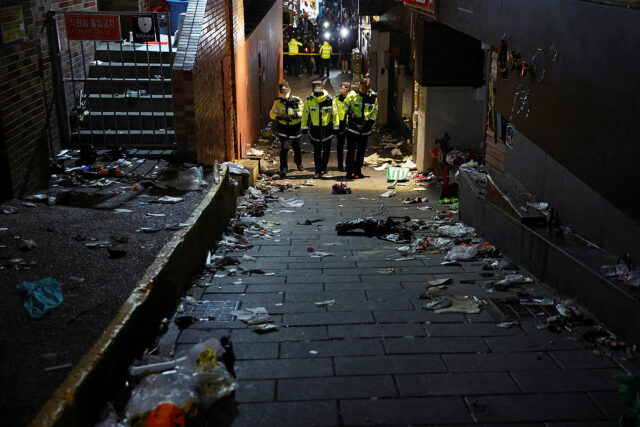
POLICE OFFICERS walk at the scene where many people died and were injured in a stampede during a Halloween festival in Seoul, South Korea, Oct. 30, 2022. — REUTERS

SEOUL — South Korea’s President Yoon Suk-yeol declared a period of national mourning on Sunday after a Halloween crush killed some 151 people in a packed nightlife area in Seoul.

Yoon expressed condolences to the victims, mostly teenagers and people in their 20s, and his wishes for a speedy recovery to the many injured.

“This is truly tragic,” he said in a statement. “A tragedy and disaster that should not have happened took place in the heart of Seoul last night.”

A huge crowd celebrating in the popular Itaewon district surged into an alley on Saturday night, emergency officials said, adding the death toll could rise.

Choi Sung-beom, head of the Yongsan Fire Station, said 151 deaths had been confirmed, including 19 foreigners. He told a briefing at the scene 82 people were injured, 19 of them seriously.

It was the first Halloween event in Seoul in three years after the country lifted coronavirus restrictions and social distancing. Many of the partygoers were wearing masks and Halloween costumes.

Early on Sunday costumes and personal belongings mingled with blood spots in the narrow street. Survivors huddled under emergency blankets amid throngs of emergency workers, police, and media.

Many of those killed were near a nightclub, Mr. Choi said. Many of the victims were women in their 20s, while the foreigners killed included people from China, Iran, Uzbekistan and Norway, he said.

Witnesses described the crowd becoming increasingly unruly and agitated as the evening deepened. Chaos erupted just before the 10:20 p.m. (1320 GMT) stampede, with police on hand for the event at times struggling to control the crowds, witnesses said.

Moon Ju-young, 21, said there were clear signs of trouble in the alley before the incident. He told Reuters it was more than 10 times as crowded as usual.

Social media footage showed hundreds of people packed in the narrow, sloped alley crushed and immobile as emergency officials and police tried to pull them free.

PACKED ALLEY ON SLOPE
Mr. Choi, the Yongsan district fire chief, said all the deaths were likely from the crush in the alley.

Fire officials and witnesses said people continued to pour into the alley after it was already packed wall-to-wall, when those at the top of the slope fell, sending people below them toppling over others.

One woman said her daughter, pulled from the crush of people, survived after being trapped for more than an hour.

A makeshift morgue was set up in a building next to the scene. About four dozen bodies were wheeled out on wheeled stretchers and moved to a government facility to identify the victims, according to a Reuters witness.

The Itaewon district is popular with young South Koreans and expatriates alike, its dozens of bars and restaurants packed on Saturday for Halloween after businesses had suffered a sharp decline over three years of the pandemic.

“You would see big crowds at Christmas and fireworks… but this was several ten-folds bigger than any of that,” Park Jung-hoon, 21, told Reuters from the scene.

US President Joseph R. Biden and first lady Jill Biden sent their condolences, writing: “We grieve with the people of the Republic of Korea and send our best wishes for a quick recovery to all those who were injured.”

British Prime Minister Rishi Sunak tweeted: “All our thoughts are with those currently responding and all South Koreans at this very distressing time.”

With the easing of the coronavirus pandemic, curfews on bars and restaurants and a limit of 10 people for private gatherings were lifted in April. An outdoor mask mandate was dropped in May.

President Yoon held an emergency meeting with senior aides and ordered a task force be set up to secure resources to treat the injured and launch a thorough investigation into the cause of the disaster.

The disaster is among the country’s deadliest since a 2014 ferry sinking that killed 304 people, mainly high school students.

The sinking of the Sewol, and criticism of the official response, sent shockwaves across South Korea, prompting widespread soul-searching over safety measures in the country that are likely to be renewed in the wake of Saturday’s crush. — Reuters

‘It ruined everything’: Buy-now, pay-later drives Gen Z into debt

JCOMP-FREEPIK

SARAH PFEFFERLE had already saved $16,000 for her future home by the time she was 18. Then she started using buy-now, pay-later products (BNPL) and “ruined everything.”

In just two months, the Chicago native racked up $5,000 in debt across three of the installment-loan firms. The ballooning balances, alongside unexpected medical costs, drained much of her savings and prompted her to seek help from a financial adviser. But the damage was done: Ms. Pfefferle’s credit score dropped to 580 from 720 after she closed her accounts.

Ms. Pfefferle, now 21, said her plan to buy a house has been set back at least two years. And she fears she won’t be able to get a mortgage.

“I have little to no money saved for emergencies,” she said. “It’s a vicious cycle.”

Ms. Pfefferle is hardly alone. Australian firm Afterpay Ltd. popularized the concept of buy now, pay later as a new spin on layaway plans with an instant-gratification twist. The financial products typically let consumers pay for purchases in four installments with the promise of little to no fees, no interest and quick credit approvals.

That enticed young consumers with little credit history, who saw BNPL as an alternative to credit cards for the TikTok generation. The pioneering firms, including  Afterpay, Klarna Bank AB and Affirm Holdings, Inc., launched with hip clothing retailers, struck brand deals with social media influencers and quickly became ubiquitous on apps and online checkouts. They make most of their money by charging merchants a fee each time a consumer uses the product at checkout.

The short-term loans surged in popularity during the pandemic thanks to consumers who were flush with extra cash and limited to shopping online. Five major BNPL companies originated 180 million loans totaling $24.2 billion in 2021, a near tenfold increase from 2019, according to a report from the Consumer Financial Protection Bureau (CFPB).

The promise of interest-free payments made BNPL products particularly attractive to credit card-wary Gen Z, who in many cases grew up watching loved ones struggle during the financial crisis. However, BNPL is “only free when you follow all the rules,” said Ed Mierzwinski, a senior director of the US Public Interest Research Group.

The BNPL firms have been plagued by delinquency this year as inflation bites. The CFPB found that younger borrowers are more likely to have loans in “derogatory status,” meaning they’re either in default or sent to a third-party debt collector. Roughly 11% of borrowers paid at least one late fee in 2021, an increase from the prior year. And 18% of consumers aged 18 to 29 fell behind on payments in 2021, according to a US Federal Reserve report.

These days, young TikTok users joke about dodging payments or accruing balances they can’t pay off.

“The marketing here is counting on a younger, perhaps less financially sophisticated spender because they haven’t been in the financial marketplace as long,” Mr. Mierzwinski said.

In e-mailed statements, Afterpay — now owned by digital payments company Block, Inc. — Klarna and Affirm all said they provide more consumer safeguards than credit cards and emphasized that they don’t charge interest and either don’t charge late fees or cap them.

NEW TO MONEY
For Gabrielle, who asked that her last name be withheld, it didn’t feel like she was spending money because her BNPL payments weren’t due for weeks. And the more she spent, the more credit she got. More than a year later, the 19-year-old was left with a heap of new clothes, makeup and $3,500 in debt with balances across several BNPL apps — a common borrower practice called “loan stacking,” which the CFPB cited as a risk to consumers.

She was eventually able to pay off her balances in April after seeking help on a Reddit forum where many users said BNPL apps fueled their shopping addictions.

A poll for the Financial Technology Association found 40% of BNPL users borrowed from multiple providers. And nearly a third reported spending “more than they would have if BNPL hadn’t been available,” according to the Financial Health Network.

For some, falling behind on BNPL payments could have long-lasting consequences.

Briana Gordley, 24, said she didn’t understand the hidden pitfalls of BNPL when she first encountered an Afterpay ad at the clothing retailer Forever 21 in 2016. Paying her own way through college and rejected by credit card providers, the then-freshman believed the financial offering was a safe way to pay for things she couldn’t afford with her part-time job.

Just 18 months later, the Texas native had spent $1,500 across three platforms, and three of her loans had been sent to collections. She was forced to turn to her parents for help. And even then, it took her two years to finally build a savings account and start paying down her student loans.

While Ms. Gordley’s late payments didn’t impact her credit score, that may not be the case for borrowers in the future. Major credit bureaus like Equifax, Inc. and Experian Plc have said they’ll start including BNPL purchases on consumers’ credit reports, although not all lenders are reporting data to them yet. Loans sent to debt collectors can also be reported, which can hurt consumers’ credit scores.

Ms. Gordley told the Senate Banking Committee in September that BNPL targets younger borrowers who are just learning how to manage their own finances, and said the products verge on being “predatory” without strong disclosures and consumer protections.

“I understand and believe in personal accountability and responsibility for the choices I made,” Ms. Gordley said during a listening session hosted by the committee. “But accountability and responsibility should be a two-way street between consumers and businesses.” — Bloomberg

ADVERTISEMENT
ADVERTISEMENT