Home Blog Page 5695

Initial agricultural damage from ‘Paeng’ pegged at P49.54M

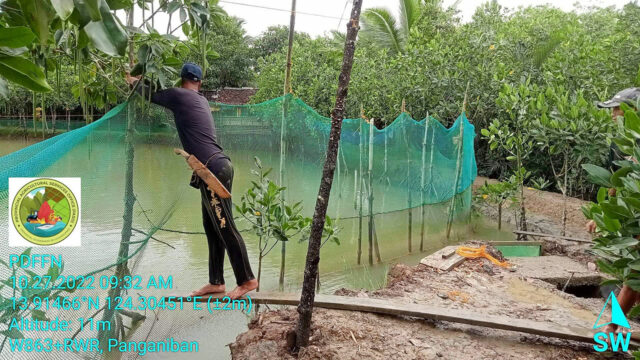
THE CATANDUANES Provincial Agriculture Services Office assists fish farmers in securing facilities on Oct. 27 in preparation for typhoon Paeng. — CATANDUANES LGU

AGRICULTURAL damage caused by Tropical Storm Paeng, with international name Nalgae, has been initially estimated at P49.54 million, according to the Department of Agriculture (DA).    

The storm, the 16th to hit the country this year, has affected 762 farmers and 1,949 hectares of agricultural areas, based on the bulletin issued by the DAs disaster risk reduction and management office on Sunday morning.   

A total of 2,543 metric tons (MT) of production loss had so far been reported.    

Based on assessments made by the DA regional field offices, damage and losses have been reported in Mimaropa, Bicol and Western Visayas RegionAffected commodities include rice, high value crops and fisheries. These values are subject to validation,the DA bulletin said.    

Damage to rice amounted to P47.25 million with 2,479 MT of production affected.    

Losses to high-value crops totaled P1.24 million. Production volume loss reached 64 MT while 62 hectares of agricultural land were affected.   

Damage to fisheries reached P1.05 million.    

The DA continuously coordinates with concerned national government agencies, local government units and other DRRM-related offices for the impact of the tropical cyclones, as well as available resources for interventions and assistance,the bulletin said. Revin Mikhael D. Ochave

House climate change committee to tap public, private sector experts for bills on green economy 

PHILIPPINE STAR/EDD GUMBAN

THE HOUSE Committee on Climate Change will tap public and private sector experts to help enhance proposed laws aimed at creating a more green Philippine economy and protect sectors most vulnerable to climate change.   

Negros Oriental Rep. Jocelyn Sy Limkaichong, vice chair of the committee, said via e-mail that there are pending measures in Congress that can help address the impact of climate change.  

One of these is the Sustainable Forest Management Act that seeks to delineate the boundary limits of forest lands and protect them from further denudation,Ms. Limkaichong said.  

Another pending measure seeks to strengthen the existing Wildlife Resources Conservation and Protection Act to expand the coverage of prohibited activities and impose stiffer penalties for violations,she said.  

Ms. Limkaichong also cited a bill that will establish carbon trade and credits that will encourage the private sector to reduce greenhouse gas emissions using economic rewards and incentives.  

Another pending bill proposes a National Coastal Greenbelt Program to promote beach forest protection, mangrove rehabilitation, and sustainable management.”  

She also cited a bill that will declare the Philippine Rise, previously referred to as Benham Rise as a protected area, home to millions of hectares of coral reefs and fish stocks. (This) is long overdue with rising cases of overfishing and pollution.”  

“​​While the Department of Finance and the Commission on Climate Change have done a lot of initiatives in terms of climate financing, theres still so much to be done,the solon said.  

Ms. Limkaichong said that Congress has a large role to play in terms of creating the policy framework to protect marine and coastal systems, reducing carbon footprint, and promoting both green and blue economies through regulation, financing, and incentives.  

Since the Philippines is an archipelago and an agricultural country when typhoons come, there’s a lot of impact on our economy,she added.  

The World Bank last week said the impact of climate change would likely slash the Philippinesgross domestic product by as much as 13.6% by 2040 if no action is done by the government and private sector.  

In 2021, hazards brought by climate change caused P506.1 billion in losses and damages, according to the Finance department.   

Every year, the Philippines is visited by around 20 tropical cyclones, some of which have become stronger in recent years and affecting areas that were historically considered as typhoon-free.   

Bohol Rep. Edgar M. Chatto, the committee chair on Climate Change, said the bills in place must be assessed in close coordination with the executive department especially with agencies such as the National Economic and Development Authorityand private sector expertsto ensure that the policies are science-based 

This tact acknowledges not only the whole of government approach but more inclusively, it recognizes the importance of the private sector most especially the experts in providing the science in policy proposals,he said.  

Mr. Chatto said the private sector has experts who can help the government in terms of managing the risks and impact of climate change. Kyanna Angela Bulan

Bill seeks adjustments in school curriculum to nurture emotional, intellectual maturity

PHILIPPINE STAR/WALTER BOLLOZOS

A BILL has been filed in the House of Representatives seeking to integrate lessons on environmental protection, entrepreneurship, and reproductive health in primary and secondary school subjects to help nurture the young towards responsible adulthood.   

House Bill 5202, also known as the Responsible Youth Act, mandates the Department of Education (DepEd) to adjust elementary and high school lessons to include age-appropriate topics on these various topics.   

The proposed measure also adds population control and drug prevention to the curriculum.   

Discussion of these programs or courses paired with broader and more comprehensive instruction as early as childhood can help prepare youth to reach intellectual and emotional maturity leading to a responsible and healthy life decisions,Surigao del Norte Rep. Robert S. Barbers, author of the bill, said in the explanatory note.   

Early intervention has a life altering impact on changing a childs life path away from problems and toward positive behaviors, he said.   

Under the proposed measure, the education department will also provide additional free training to teachers and staff to help them incorporate a reality framework in teaching students.  

In order for these programs to produce positive results, the content of the course or the teaching modules to be developed by the Department of Education must be age-appropriate,Mr. Barbers said in a statement on Sunday. Matthew Carl L. Montecillo

Same number of Filipinos experienced hunger in 1st 3 months of Marcos gov’t — SWS poll

PHILSTAR FILE PHOTO

FILIPINO families that experienced hunger in July to September, the first three months of the Marcos administration, slightly fell to 11.3% from 11.6% in June, according to a poll by the Social Weather Stations (SWS).  

This was equivalent to 2.9 million people, the same number recorded a quarter earlier, the pollster said in a statement on Sunday.  

The hunger rate in October 2022 was 0.9 percentage points lower than 12.2% in April and 0.5 points lower than 11.8 in December 2021, it added.  

The October hunger rate was 1.3 points higher than 10% in September 2021 and two points higher than the pre-pandemic annual average of 9.3% in 2019, it added.  

The hunger incidence in Metro Manila rose by 1.6 points to 16.3% of families from 14.7% in June, followed by 1.3-point increase in Visayas to 7.0% from 5.7%, and 1.3-point increase in Mindanao to 15.3% from 14.0%.   

Luzon areas outside Metro Manila saw a 2.3-point decrease to 9.6% from 11.9%.  

The SWS noted that hunger incidence in Metro Manilas was the highest in 25 out of the 99 surveys since July 1998.  

“The 11.3% hunger rate in October 2022 is the sum of 9.1% (est. 2.3 million families) who experienced moderate hunger and 2.2% severe hunger,” it said.  

Moderate hunger referred to those who experienced hunger only once or a few times in the last three months, while those who had “severe hunger” were “often or always hungry” during the same period.  

SWS interviewed 1,500 respondents on Sept. 29 to Oct. 2 for the survey, which had an error margin of ±2.5 points. John Victor D. Ordoñez

State of calamity

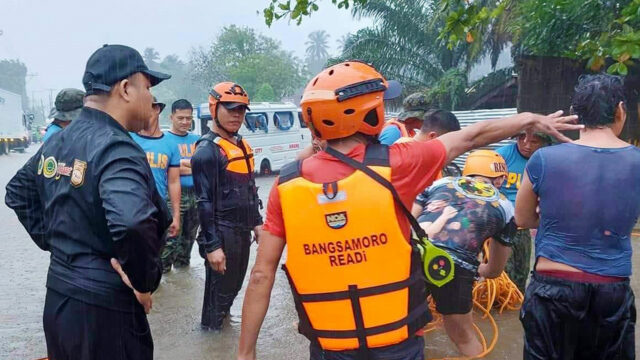
MINISTER N. SINARIMBO VIA BANGSAMORO INFO OFFICE

THE BANGSAMORO government has declared a state of calamity in the entire region after weeks of torrential rains, including those brought by tropical storm Paeng (international name: Nalgae) caused widespread flooding and landslides in Cotabato City, the regional center, and the Maguindanao provinces. At least 40 people in the region have been confirmed to have died while thousands of families have been evacuated.

South Korea in national mourning after deadly Halloween crush

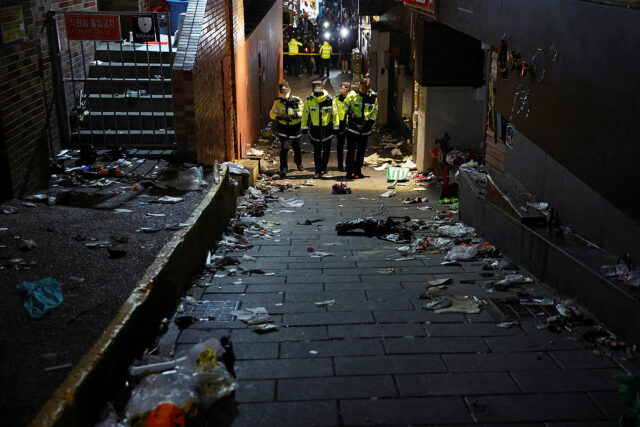
POLICE OFFICERS walk at the scene where many people died and were injured in a stampede during a Halloween festival in Seoul, South Korea, Oct. 30, 2022. — REUTERS

SEOUL — South Korea’s President Yoon Suk-yeol declared a period of national mourning on Sunday after a Halloween crush killed some 151 people in a packed nightlife area in Seoul.

Yoon expressed condolences to the victims, mostly teenagers and people in their 20s, and his wishes for a speedy recovery to the many injured.

“This is truly tragic,” he said in a statement. “A tragedy and disaster that should not have happened took place in the heart of Seoul last night.”

A huge crowd celebrating in the popular Itaewon district surged into an alley on Saturday night, emergency officials said, adding the death toll could rise.

Choi Sung-beom, head of the Yongsan Fire Station, said 151 deaths had been confirmed, including 19 foreigners. He told a briefing at the scene 82 people were injured, 19 of them seriously.

It was the first Halloween event in Seoul in three years after the country lifted coronavirus restrictions and social distancing. Many of the partygoers were wearing masks and Halloween costumes.

Early on Sunday costumes and personal belongings mingled with blood spots in the narrow street. Survivors huddled under emergency blankets amid throngs of emergency workers, police, and media.

Many of those killed were near a nightclub, Mr. Choi said. Many of the victims were women in their 20s, while the foreigners killed included people from China, Iran, Uzbekistan and Norway, he said.

Witnesses described the crowd becoming increasingly unruly and agitated as the evening deepened. Chaos erupted just before the 10:20 p.m. (1320 GMT) stampede, with police on hand for the event at times struggling to control the crowds, witnesses said.

Moon Ju-young, 21, said there were clear signs of trouble in the alley before the incident. He told Reuters it was more than 10 times as crowded as usual.

Social media footage showed hundreds of people packed in the narrow, sloped alley crushed and immobile as emergency officials and police tried to pull them free.

PACKED ALLEY ON SLOPE
Mr. Choi, the Yongsan district fire chief, said all the deaths were likely from the crush in the alley.

Fire officials and witnesses said people continued to pour into the alley after it was already packed wall-to-wall, when those at the top of the slope fell, sending people below them toppling over others.

One woman said her daughter, pulled from the crush of people, survived after being trapped for more than an hour.

A makeshift morgue was set up in a building next to the scene. About four dozen bodies were wheeled out on wheeled stretchers and moved to a government facility to identify the victims, according to a Reuters witness.

The Itaewon district is popular with young South Koreans and expatriates alike, its dozens of bars and restaurants packed on Saturday for Halloween after businesses had suffered a sharp decline over three years of the pandemic.

“You would see big crowds at Christmas and fireworks… but this was several ten-folds bigger than any of that,” Park Jung-hoon, 21, told Reuters from the scene.

US President Joseph R. Biden and first lady Jill Biden sent their condolences, writing: “We grieve with the people of the Republic of Korea and send our best wishes for a quick recovery to all those who were injured.”

British Prime Minister Rishi Sunak tweeted: “All our thoughts are with those currently responding and all South Koreans at this very distressing time.”

With the easing of the coronavirus pandemic, curfews on bars and restaurants and a limit of 10 people for private gatherings were lifted in April. An outdoor mask mandate was dropped in May.

President Yoon held an emergency meeting with senior aides and ordered a task force be set up to secure resources to treat the injured and launch a thorough investigation into the cause of the disaster.

The disaster is among the country’s deadliest since a 2014 ferry sinking that killed 304 people, mainly high school students.

The sinking of the Sewol, and criticism of the official response, sent shockwaves across South Korea, prompting widespread soul-searching over safety measures in the country that are likely to be renewed in the wake of Saturday’s crush. — Reuters

‘It ruined everything’: Buy-now, pay-later drives Gen Z into debt

JCOMP-FREEPIK

SARAH PFEFFERLE had already saved $16,000 for her future home by the time she was 18. Then she started using buy-now, pay-later products (BNPL) and “ruined everything.”

In just two months, the Chicago native racked up $5,000 in debt across three of the installment-loan firms. The ballooning balances, alongside unexpected medical costs, drained much of her savings and prompted her to seek help from a financial adviser. But the damage was done: Ms. Pfefferle’s credit score dropped to 580 from 720 after she closed her accounts.

Ms. Pfefferle, now 21, said her plan to buy a house has been set back at least two years. And she fears she won’t be able to get a mortgage.

“I have little to no money saved for emergencies,” she said. “It’s a vicious cycle.”

Ms. Pfefferle is hardly alone. Australian firm Afterpay Ltd. popularized the concept of buy now, pay later as a new spin on layaway plans with an instant-gratification twist. The financial products typically let consumers pay for purchases in four installments with the promise of little to no fees, no interest and quick credit approvals.

That enticed young consumers with little credit history, who saw BNPL as an alternative to credit cards for the TikTok generation. The pioneering firms, including  Afterpay, Klarna Bank AB and Affirm Holdings, Inc., launched with hip clothing retailers, struck brand deals with social media influencers and quickly became ubiquitous on apps and online checkouts. They make most of their money by charging merchants a fee each time a consumer uses the product at checkout.

The short-term loans surged in popularity during the pandemic thanks to consumers who were flush with extra cash and limited to shopping online. Five major BNPL companies originated 180 million loans totaling $24.2 billion in 2021, a near tenfold increase from 2019, according to a report from the Consumer Financial Protection Bureau (CFPB).

The promise of interest-free payments made BNPL products particularly attractive to credit card-wary Gen Z, who in many cases grew up watching loved ones struggle during the financial crisis. However, BNPL is “only free when you follow all the rules,” said Ed Mierzwinski, a senior director of the US Public Interest Research Group.

The BNPL firms have been plagued by delinquency this year as inflation bites. The CFPB found that younger borrowers are more likely to have loans in “derogatory status,” meaning they’re either in default or sent to a third-party debt collector. Roughly 11% of borrowers paid at least one late fee in 2021, an increase from the prior year. And 18% of consumers aged 18 to 29 fell behind on payments in 2021, according to a US Federal Reserve report.

These days, young TikTok users joke about dodging payments or accruing balances they can’t pay off.

“The marketing here is counting on a younger, perhaps less financially sophisticated spender because they haven’t been in the financial marketplace as long,” Mr. Mierzwinski said.

In e-mailed statements, Afterpay — now owned by digital payments company Block, Inc. — Klarna and Affirm all said they provide more consumer safeguards than credit cards and emphasized that they don’t charge interest and either don’t charge late fees or cap them.

NEW TO MONEY
For Gabrielle, who asked that her last name be withheld, it didn’t feel like she was spending money because her BNPL payments weren’t due for weeks. And the more she spent, the more credit she got. More than a year later, the 19-year-old was left with a heap of new clothes, makeup and $3,500 in debt with balances across several BNPL apps — a common borrower practice called “loan stacking,” which the CFPB cited as a risk to consumers.

She was eventually able to pay off her balances in April after seeking help on a Reddit forum where many users said BNPL apps fueled their shopping addictions.

A poll for the Financial Technology Association found 40% of BNPL users borrowed from multiple providers. And nearly a third reported spending “more than they would have if BNPL hadn’t been available,” according to the Financial Health Network.

For some, falling behind on BNPL payments could have long-lasting consequences.

Briana Gordley, 24, said she didn’t understand the hidden pitfalls of BNPL when she first encountered an Afterpay ad at the clothing retailer Forever 21 in 2016. Paying her own way through college and rejected by credit card providers, the then-freshman believed the financial offering was a safe way to pay for things she couldn’t afford with her part-time job.

Just 18 months later, the Texas native had spent $1,500 across three platforms, and three of her loans had been sent to collections. She was forced to turn to her parents for help. And even then, it took her two years to finally build a savings account and start paying down her student loans.

While Ms. Gordley’s late payments didn’t impact her credit score, that may not be the case for borrowers in the future. Major credit bureaus like Equifax, Inc. and Experian Plc have said they’ll start including BNPL purchases on consumers’ credit reports, although not all lenders are reporting data to them yet. Loans sent to debt collectors can also be reported, which can hurt consumers’ credit scores.

Ms. Gordley told the Senate Banking Committee in September that BNPL targets younger borrowers who are just learning how to manage their own finances, and said the products verge on being “predatory” without strong disclosures and consumer protections.

“I understand and believe in personal accountability and responsibility for the choices I made,” Ms. Gordley said during a listening session hosted by the committee. “But accountability and responsibility should be a two-way street between consumers and businesses.” — Bloomberg


Liz Truss’ phone was hacked by suspected Putin agents — report

Liz Truss arrives at the Conservative Party headquarters, after being announced as Britain’s next Prime Minister, in London, Britain, Sept. 5. — REUTERS

LONDON — Former British Prime Minister Liz Truss’ personal phone was hacked by suspected agents working for Russian President Vladimir Putin when she was foreign minister, the Daily Mail reported on Saturday.

Those agents gained access to “top-secret details” of negotiations with international allies in addition to private messages exchanged with Truss’s close friend Kwasi Kwarteng, who later became finance minister, the report said.

The messages are believed to have included discussions with senior international foreign ministers about the war in Ukraine, including details about arms shipments, it added.

Up to a year’s worth of messages were downloaded, the Mail said, citing unnamed sources.

A British government spokesperson declined to comment on “individuals’ security arrangements”.

“The Government has robust systems in place to protect against cyber threats. That includes regular security briefings for Ministers, and advice on protecting their personal data and mitigating cyber threats,” the spokesperson added.

The hack was discovered during the Conservative Party leadership campaign that led to Truss becoming prime minister, the Mail reported.

Truss left office last week as prime minister and was succeeded by Rishi Sunak.

The Mail said the messages that fell into foreign hands included criticisms of Johnson made by Truss and Kwarteng, “leading to a potential risk of blackmail.” — Reuters

Hate speech, online extremism fueled Pelosi attack, terror experts believe

PAUL FRANCIS PELOSI

WASHINGTON — The frequent targeting of US House Speaker Nancy Pelosi by online extremists and political opponents likely contributed to the violent attack on her husband Paul, terrorism and extremism experts said.

The intruder at the Pelosis’ home yelled “Where’s Nancy?” before assaulting Paul Pelosi with a hammer, according to a person briefed on the incident. An internet user with the same name as the man arrested at the scene, David Depape, expressed support for former President Donald Trump and embraced the cult-like conspiracy theory QAnon in online posts that referenced “satanic pedophilia.”

Police have yet to comment on a motive in the attack.

But terrorism and extremism experts believe it could be an example of the growing threat of so-called stochastic terrorism, in which sometimes unstable individuals are inspired to violence by hate speech and scenarios they see online and hear echoed by public figures.

“This was clearly a targeted attack. The purpose was to locate and potentially harm the speaker of the house,” said John Cohen, a former counterterrorism coordinator and head of intelligence at the Department of Homeland Security, who is currently working with state and local law enforcement across the country on the issue.

“This is a continuation of a trend that we have been experiencing over the past several years. It is a threat dynamic that has law enforcement extraordinarily concerned.”

Ms. Pelosi has been demonized online and in public by both far right and far left-leaning political websites and figures. Graphics depicting her being beheaded, and a call to send immigrants to her home, with her address, circulated online this summer, according to Site Intelligence Group, which researches online extremism.

Rita Katz, executive director of Site, said the Speaker was a hate figure for much of the political right, and is the “face of the Democratic establishment and, as such, at the center of many QAnon-adjacent conspiracy theories.”

Those theories and people who espouse them are sometimes promoted by more mainstream public figures, amplifying the threats, experts say.

“While the intent may be to mobilize one’s political base or generate ratings it also adds to the volatility of the threat environment,” said Mr. Cohen.

Individual attackers, sometimes known as “lone wolves” frequently combine personal with political grievances and are reinforced and radicalized by things they read online, the Department of Justice’s research arm The National Institute of Justice reports.

Attacks on political figures, places of worship and races or ethnicities have occurred in the United States for decades, but law enforcement professionals say the current environment is particularly dangerous.

“Today’s radical extremism threat has this powerful digital component that can really accelerate recruitment and activate violence across a broader threat landscape,” Aisha Qureshi, a social science analyst at the National Institute, said in an agency podcast before the Pelosi attack.

“Just the sheer volume and speed of misinformation spread through social media really exacerbates this problem,” she said.

Threats against political leaders are rising in the United States. Cases related to “concerning statements and threats” against members of Congress jumped from 3,939 in 2017 to 9,625 in 2021, according to the US Capitol Police.

“Look at the FBI attack in Ohio,” said Todd Helmus, a senior behavioral scientist at security research firm Rand Corp., referring to an August incident when an armed man tried to break into the Cincinnati FBI headquarters.

Mr. Helmus linked that incident to rhetoric surrounding the FBI’s removal of classified documents from Trump’s Florida estate. Site said the Pelosi attack was being celebrated online by far-right supporters.

“We’re just waiting for more of these things to occur,” said Mr. Helmus. — Reuters

Traveler fined, refused entry to Australia for ‘significant’ biosecurity breach

STOCK PHOTO | Image from Pixabay

SYDNEY — An international traveler has been fined and refused entry to Australia after trying to bring meat into the country in what the government said on Sunday was a “significant breach” of biosecurity laws to protect Australia from foot and mouth disease.

Australia earlier this year stepped up protection against foot and mouth disease at its international airports following an outbreak in Indonesia.

In a statement, Agriculture Minister Murray Watt and Home Affairs Minister Clare O’Neil said the traveler had been fined $2,664 and blocked from entering Australia after attempting to bring 6 kilograms of meat products into the country.

“Australian biosecurity officers uncovered the undeclared meat during a baggage inspection at Perth Airport (on) Oct. 18,” the ministers said.

The traveler failed to declare 3.1 kg of duck, 1.4 kg of beef rendang, over 500 grams of frozen beef and nearly 900 grams of chicken concealed in his luggage, they said.

Ms. O’Neil said the traveler was referred to Australian Border Force officers, who canceled the man’s visa.

“This is why legislation is in place to cancel the visa of any traveller who commits a significant biosecurity breach or repeatedly contravenes biosecurity laws,” she said.

Foot and mouth disease is highly transmissible and causes lesions and lameness in cattle, sheep, goats and other cloven-hoofed animals, but does not affect humans.

The government has estimated a large outbreak in Australia could see revenue losses of up to $A51.8 billion ($33.2 billion) over 10 years.

In Indonesia, authorities have been working to get an outbreak under control that has infected hundreds of thousands of livestock and killed thousands of animals. — Reuters

Scanning the health legislative agenda

FREEPIK

I have worked on health policy for more than a decade, but I have never seen health given so much importance by ordinary Filipinos until recently. COVID-19 has made our society and politics more aware of public health. Everyone suddenly has become interested in vaccines, the Department of Health (DoH), and all types of health news.

While we have succeeded in making many important health laws in the past including the game-changing Universal Health Care Act, our lawmakers and the Executive are now keen on introducing health legislation that will address many weaknesses in our health system’s response to the pandemic.

Despite not having appointed a Health Secretary, the President in his very first state-of-the-nation address (SONA) mentioned as priority the passage of three important health measures, namely: the Vaccine Institute, Medical Reserves Corps, and the Center for Disease Control and Prevention. This October, the Legislative-Executive Development Advisory Council (LEDAC) affirmed the SONA’s legislative health agenda and included the bill on the Magna Carta for Barangay Health Workers.

Some of these proposals had already been tackled in the previous 18th Congress. The bills on the Virology Institute and the Center for Disease Control and Prevention were in fact passed on third reading at the House of Representatives, but the lack of time prevented their legislation.

For the 19th Congress, many legislators have filed or refiled the bills.

First on the list is the creation of the Virology Institute. The goal is to boost our vaccine capacity by making vaccine development its primary function. It will be established under the Department of Science and Technology and will cover therapeutic research, aside from vaccine development.

When the COVID-19 vaccines were introduced, we experienced serious supply problems. To have access to vaccines, we were literally at the mercy of vaccine-producing countries. We now realize the need to build our own vaccine development capacity.

Second is the creation of the Center for Disease Control and Prevention or CDC. Some countries like the US have a functioning CDC, which has played a leading role in fighting the pandemic. The CDC sets the tone for the adoption of US health policies in response to the pandemic. This is what the Philippines wants to emulate.

While some functions of the CDC are already performed by several bureaus under the DoH and other government agencies, the pandemic response was bogged down by a lack of coordination and the differing or contradicting positions taken by officials from different government bodies.

The hope is that the creation of a CDC will address the coordination problems by lodging into one organization all relevant and important offices. This organizational coordination will deal with a real time response to COVID-19 and other emerging diseases.

However, it is an imperative that the bill creating the CDC avoid redundancy of organizations and functions. It should also result in an institution with a voice strong enough for the Chief Executive to base the country’s health interventions and policy directions.

Third is the establishment of a Medical Reserves Corps. The aim of the bill is to have a reserve medical workforce that will be called upon in times of health emergencies. This considers the need for quick and agile deployment of human resources when necessary. Our policymakers and politicians have seen how difficult it has been for our health frontliners to work overtime, do double duty, or perform straight shifts. The situation was much worse in the early pandemic period when hospitals were always at full capacity.

The supply of health human resources has been a perennial problem. According to the World Health Organization’s global health workforce statistics of 2017, the Philippines only has 0.6 doctor per 1,000 population. We also emphasize that geographically isolated and disadvantaged areas (GIDA) have very limited health human resources.

While the objective of having a reserve is good, the bigger challenge that we need to address is how to ensure a sufficient supply of health human resources.

Lastly, on the Magna Carta for Barangay Health Workers (BHW), we do recognize the significant role played by our BHWs especially during the COVID-19 pandemic. Such recognition must translate into giving commensurate benefits to them and having their ranks professionalized (instead of being politicized).

By providing them with ample training and setting qualifications, our health system will be able to establish primary care teams and networks that are the first point of contact in the delivery of basic health care services in the communities.

This will not only help address the insufficient supply of health workers in the delivery of basic health services, but will also allow better health monitoring, given the trust created by the personal link of the patients and the BHWs.

To conclude, these health priority measures for legislation, once passed into law, will aid and complement the Universal Health Care Act, and will better prepare and equip our health system in dealing with catastrophic illness or health emergencies.


Paula Mae Tanquieng, a lawyer by profession, provides legal guidance to Action for Economic Reforms in pursuit of legislative reforms on health.

Offshore wind puts the Philippines on the road to energy independence

CARL RAW-UNSPLASH

OFFSHORE WIND is emerging as a possible “win-win” for the Philippines in its pursuit of energy independence. The country’s success will depend on clear regulations, strong incentives, early investments in grid capacity, and the political will to make it all happen.

Offshore wind can meet growing energy needs, while protecting our land.

With its lush and beautiful nature, both above and below the sea, the Philippines is balancing the development and environmental agendas. And like all nations, it faces the imperative to transition to cleaner sources of energy while protecting its precious, and limited, land resources.

Land scarcity is a problem, and offshore wind is one of the solutions. Food vs Energy vs Environment is a false choice — The Philippines can achieve greater security on all through good political craftsmanship.

When you combine increasing food security concerns with the growing demand for clean energy, it’s natural to explore ways of producing energy offshore, rather than on land. Offshore wind in Asia, Europe, and North America has reached 60 gigawatts (GW) to date, and another 315 GW is anticipated to be added to the global energy mix by 2031.*

Offshore wind is poised to be an abundant energy source in the Philippines, with potential for up to 178 GW according to the World Bank. It’s been identified as a viable energy solution that allows this country to protect its scarce land resources, boost local employment, and stimulate industrial growth.

Size matters in the offshore wind game.

To get to this point, the World Bank suggests the Philippines needs a government-sanctioned roadmap, supporting a minimum of 15 GW of operational capacity by 2035, 30 GW by 2040, and 50 GW by 2050. This level of government commitment will give offshore wind players the long-term assurance they need to make the necessary investments. It will also help the National Grid Corporation of the Philippines (NGCP) plan its own development, as the grid remains a critical limiting factor to expanding renewables.

By the end of the 2nd quarter of 2022, the Philippines Department of Energy (DoE) has awarded over 22 GW of service contracts for offshore wind. This is a good start, but a lot of work remains to secure a position as more than just a minor contributor in the larger offshore wind ecosystem. The Philippines is home to strong players in the energy industry, and the country must continue to partner with global leaders to successfully navigate the energy transition. By scaling offshore wind along the shores, the Philippines has the potential to create a national cluster that benefits both the local economy and national development.

We have a window of opportunity to build a thriving offshore wind industry.

If we look at mature offshore wind markets today, they deliver competitively priced energy with zero direct emissions. This did not happen by accident. Every thriving market for offshore wind has always started with a certain level of government support. It begins with a clear and agreed upon roadmap towards a defined target that in turn drives the regulatory agenda. Well-crafted regulation gives the assurance needed to encourage investment.

To attract capital and secure the development of a domestic renewables industry, offshore wind will require a form of feed-in tariff in the initial phase. The larger the scale and the greater the visibility on the regulation side, the lower the tariff can be. However, there is no way around the fact that the first movers will require incentives from government to develop the industry. Thanks to the government support, the offshore wind power costs have fallen dramatically in recent years in the UK. In the latest auction, prices dropped 5.8%, and is a quarter of the current spot price.

Developing the domestic offshore wind industry will require upgrades of not only the national grid, but also the country’s ports, domestic shipping capabilities, sea-traffic management and much more — all with a keen eye to protect the rich and beautiful underwater environment surrounding the Philippines. In addition to Department of Energy and Department of Environment and Natural Resources, the Maritime Industry Authority and the Philippine Coast Guard should also be involved.

Support from the local government is also crucial to the success of offshore wind. From a regulatory and political perspective, they are an essential enabler in ensuring everything is in place to succeed. National, provincial, and municipal governments must work together to harmonize regulations.

With the build-out of offshore wind comes the need to take care of the aquatic life around the infrastructure. It requires research and mapping of the biodiversity and the migratory routes for aquatic life and birds. This enables the offshore developers to deliver the projects in a responsible and sustainable manner.

When it comes to the local fisheries in the Philippines, we see some clear advantages connected to offshore wind. While the construction period for the offshore structures may reduce catch levels temporarily, the large number of structures installed act as artificial reefs and can help boost biomass generation in the project areas.

The potential is enormous, but time is of the essence.

The Philippines is a country rich in offshore wind resources. It has a strong maritime legacy. It is home to highly capable local industries. And it’s a country that has long welcomed global partners to help it progress. These factors combined make the Philippines the ideal setting for a thriving offshore wind sector, and the country is well-positioned to extract significant value from this energy resource.

Offshore wind has the potential to put the Philippines on the road to energy independence. We see that a crucial enabler for offshore wind success in the Philippines will be finding the right partners who understand and respect Filipino culture, history, and legacy. The future offshore wind sites will become important infrastructure for the country’s future, and its development must be done in a way that is respectful and profitable for all.

*Global Wind Energy Council, annual report 2021


Torbjørn Kirkeby-Garstad is the General Manager Southeast Asia, Scatec. Scatec has a joint venture with Aboitiz Power: SN Aboitiz, and is aiming to develop 2.4 GW of offshore wind in the Philippines over the coming years.

ADVERTISEMENT
ADVERTISEMENT