Home Blog Page 5674

China Bank income climbs in first half
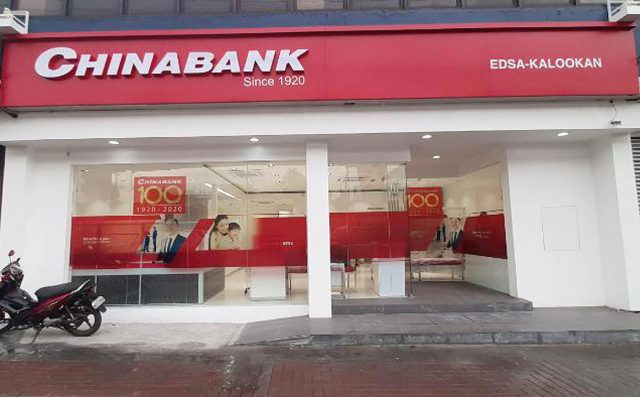
CHINA BANKING CORP. (China Bank) posted a higher net profit in the first semester, driven by increases in its net interest and core fee incomes, as well as lower provisions for bad loans.

China Bank recorded a P10.1 billion net income in the first six months of 2022, up by 39% from the P7.3 billion booked in the same period last year, it said in a disclosure to the stock exchange on Thursday.

This translated to a return on equity of 16.4% and return on assets of 1.7%.

“The sustained growth puts China Bank in a stronger position to support customers and the economy in this period of recovery,” China Bank President William C. Whang said in a statement.

“For the 2Q 2022 period, China Bank’s net income breached the P5-billion mark, a first in the Bank’s more than 100-year-old franchise,” Chief Finance Officer Patrick D. Cheng said.

Net interest income grew by 16% to P22 billion in the first semester from P18.9 billion last year, driven by stronger revenues and steady interest expense. As a result, net interest margin was at 4.3%.

Meanwhile, the depreciation in the bank’s trading and foreign exchange gains caused its fee-based income to decline to P3.2 billion, 46% lower from P5.9 billion in the comparable period. 

Still, core fee income increased by 24% due to double-digit increases in earnings from service charges, fees and commissions, the sale of acquired assets, and bancassurance.   

“Efficiency enhancements and judicious cost management kept operating expenses flat year on year, further improving cost-to-income ratio to 44%,” the bank said.

The bank’s loan portfolio expanded by 14% to P655 billion as of June from P576 billion last year on the back of significant growth in both business and consumer credit.   

Gross nonperforming loans (NPL) ratio was at 2.3%, 120 basis points (bps) lower than last year’s 3.5%. Meanwhile, NPL cover stood at 128%.

Amid improved asset quality, China Bank cut its credit provisions by 69% to P1.7 billion from P5.4 billion in the same period in 2021.

Total deposits also increased by 14% to P945 billion from P827 billion in June 2021 amid a 14% year-on-year growth in current and savings accounts.

As of June, China Bank’s consolidated assets stood at P1.2 trillion, 17% higher than the P1.02 trillion in the same period in 2021.

Total equity jumped by 16% to P127 billion, with the bank posting a common equity Tier 1 ratio of 14.8% and a capital adequacy ratio of 15.7%, both above the regulatory minimum.

China Bank’s shares closed unchanged at P26.90 apiece on Thursday. — K.B. Ta-asan

Agri, mining seen as key to boosting jobs 

DAVID HELLMANN-UNSPLASH

THE government should focus on the agriculture and mining industries if it wants to generate more jobs, the Employers Confederation of the Philippines (ECOP) said on Thursday.

ECOP President Sergio R. Ortiz-Luis, Jr. told BusinessWorld Live on One News Channel parts of agriculture with the potential to create jobs include bamboo.

“There are some little sectors like in agriculture… where we should be producing more. That can at the very least create 100,000 jobs easily, such as bamboo,” Mr. Ortiz-Luis said.

Mr. Ortiz-Luis added that more job-creation opportunities are available in mining.

“We’re beginning to look at responsible mining as doable, and we are hoping that (the government) will pursues this policy,” Mr. Ortiz-Luis said.

Mr. Ortiz-Luis said the association’s goal of creating one million jobs in 2022 is attainable despite the economic challenges posed by inflation, which rose to 6.1% in June.

“With or without inflation, provided, there are no (additional pandemic restrictions), and if they are able to solve transportation especially here in Metro Manila, (the target) is attainable,” Mr. Ortiz-Luis said.

In May, the National Employment Recovery Strategy task force set a target of one million jobs this year.

Philippine Chamber of Commerce and Industry (PCCI) President George T. Barcelon said during the Pandesal Forum on Thursday that the first State of the Nation Address (SONA) delivered by President Ferdinand R. Marcos, Jr. on July 25 was “very comprehensive.”

“He touched on a lot of points,” Mr. Barcelon said, though the PCCI wants to hear detailed plans.

“It is not explicitly stated what the President will do in terms of job creation. But all the narration that he did basically touches on the sustainability of our economy and that in effect would provide more jobs to our fellow Filipinos,” Mr. Barcelon said.

Federation of Filipino Chinese Chambers of Commerce & Industry, Inc. President Henry Lim Bon Liong said that the SONA bodes well for investor confidence.

“His speech and the detailed list of proposed reforms by government will boost investor confidence in the Philippines, translating to a stronger economic recovery, and sustainable and inclusive economic growth,” Mr. Bon Liong said.

“We need reforms and political will for a stronger Philippine economic recovery and social (services),” he added. — Revin Mikhael D. Ochave

Shakira refuses to settle with Spanish prosecutor to end tax fraud case

Shakira — PHOTO FROM SHAKIRA.COM/

MADRID — Latin American superstar Shakira has rejected a settlement offered by the prosecutor in her €14.5 million Spanish tax fraud case and is now a step closer to going to trial, her media team said on Wednesday.

The Colombian singer — who has sold more than 80 million records worldwide with hits such as “Hips Don’t Lie” — has always met all of her tax obligations, a statement said. She considers the case “a total violation of her rights,” it said.

“The singer is fully confident of her innocence and therefore does not accept a settlement,” the statement said.

The terms of the proposed settlement were not disclosed.

The prosecutor’s office in Barcelona did not reply to a request for comment.

Shakira is accused of failing to pay up €14.5 million ($14.7 million) in tax income between 2012 and 2014, a period in which Shakira’s representatives say she did not live in Spain.

The 45-year-old singer — dubbed “the Queen of Latin Music” — says she moved to Barcelona in 2015, where she lived with FC Barcelona soccer club defender Gerard Pique. They have two children and recently separated.

Shakira says even though her legal team disagreed about the alleged debt; she paid the €17.2 million that the Spanish tax office claimed she owed so she has had no outstanding debt with the tax authorities for many years.

The court still has to formally send her to stand trial and set a date. — Reuters

Town halls as a strategic management tool

Some time ago, you wrote about employee birthdays as an opportunity to celebrate and at the same time gather people face-to-face with the chief executive officer (CEO). In our case, the only employees that attend the meetings are those on their birth month. Should we adopt a new system if we want to call town hall meetings? — Lone Wolf.

Birthdays and anniversary months mean everything to both labor and management. They’re a celebration of employee milestones as they spend more time in the company. If you ask me, it’s better to maintain the status quo. There’s no need for you to alter the practice of celebrating birth months.

Don’t complicate things. Regardless of whether it’s the employees’ birthday, anniversary month, or whatever milestone, what’s important is your determination to establish, maintain and nurture long-term proactive two-way communication.

And before I forget, let me congratulate you for wanting to make town hall meetings a monthly event. Not many organizations can do that. They simply get by with a quarterly forum, which to me is ineffective.

Workers can drive the organization towards profitability and sustainability. Having said that, organizations must ensure that monthly town hall meetings come with team problem-solving activities and individual engagement dialogue.

AGENDA AND FORMAT
The job of ensuring proactive, two-way communication depends much on the leadership of HR in arriving at a consistent and coherent strategy. It’s essential to focus on how to make every town hall meeting follow a framework that must consider the following:

One, aligning or realigning management action with corporate goals. To maintain a coordinative and supportive system, the CEO should always refer back to the company’s vision, mission and value statements when discussing its recent achievements, current plans and future programs. Without this correlation, it’s only a matter of time before management and employees forget that they have a compass to follow.

Two, face-to-face meetings are important. But not during pandemics or if geographical constraints do not allow it. Much depends on the number of employees attending the town hall meeting. The ideal number is 30 to 50 employees per month, subject to venue capacity. Many meetings are held inside cafeterias or training rooms.

Three, observe a limit of two hours. Everyone is busy. Be guided by an agenda that includes an introduction by HR, a brief self-introduction by each participant, and the CEO’s message, all within the first hour. It’s advisable that the CEO be given an advance list of the attendees.

Devote the second hour to an open forum. Allow questions from those attending from remote locations. The last five minutes may include a closing statement from the CEO or anyone from the senior management team.

Four, put other members of the management team up front. It is for every employee comment or question to be addressed not just by the CEO, but by the concerned department head. Meet-and-greets like these help maintain healthy interaction en route to becoming a high-performing organization.

Last, summarize and share highlights of the meeting. This is the best way to ensure that the result of each town hall meeting is disseminated to all workers and management. This can be done via a one-page circular posted in every bulletin board in key areas of the company and shared in an article via the intranet. This is important if HR is to anticipate and collect employee feedback and complaints.

RESPECT
I came to know of a junior HR official who recommended the inclusion of an online “mood meter” during a town hall meeting. A “mood meter” allows online participants to express their state of mind when attending a seminar or workshop, particularly if the resource person is not engaging.

I must disagree with the use of this tool during a town hall meeting. What’s the point of subjecting the CEO or any of the senior management team to feedback like this? If the meeting has become boring or no longer enjoyable, then the participants should simply keep quiet and be attentive. We must understand that a town hall meeting is not meant to be entertainment.

What is important is to give employees the chance to express themselves through an open exchange of ideas while being respectful to one another. This can be done by getting HR to ask random employees to share their views on management plans. This should ensure that employees become active listeners.

Every employee knows how to behave in a work environment, where everyone is treated with respect, but HR plays an important role in making sure this happens.


Consult with Rey Elbo on Facebook, LinkedIn or Twitter or send your questions to elbonomics@gmail.com or via https://reyelbo.consulting

8990 Holdings income down in Q2

8990HOLDINGS.COM

LISTED property developer 8990 Holdings, Inc. reported a 9.9% decrease in net income to P1.72 billion in the second quarter from the P1.91 billion posted a year earlier after a decline in revenues.

For the April-June period, the company registered a 13.4% decrease in revenues to P4.8 billion from the P5.54 billion recorded in the same period last year, its filing with the stock exchange showed.

In the first half, 8990 posted a 5.5% increase in net income to P3.65 billion from P3.46 billion previously after a slight increase in revenues to P10.05 billion from P10.01 billion a year ago.

“Despite inflationary fears and the rest of the uncertainty from the outcome of the elections to the war in Ukraine, 8990 was able to sustain revenue levels,” 8990 President and Chief Executive Officer Anthony Vincent Sotto said in a press release on Thursday.

As of end-June, 8990 delivered 5,364 units, with the National Capital Region (NCR) contributing the biggest share at 37%, followed by Iloilo at 17%, Davao at 16%, north Luzon at 15%, Cebu at 9%, General Santos at 4%, and south Luzon at 2%.

8990’s vertical projects contributed the majority of revenues at 60% while horizontal projects accounted for 40%, the company said.

NCR accounted for the bulk of revenues at 54%, followed by north Luzon and Davao at 14% each, Cebu at 9%, Iloilo and Bacolod at 7% each, and south Luzon and General Santos at 1% each.

Towards the end of June, 8990 inaugurated an amenities area of Urban Deca Homes Ortigas in Pasig City — the company’s largest project to date at 13.2 hectares.

Mr. Sotto said that he remains confident that 8990 will achieve its target of P23-billion revenues for 2022, banking on the company’s inventory of 3,292 units with a sales value of P3.6 billion across all projects nationwide.

“In the next seven to 10 years, we expect to unlock a total of P171 billion in revenues,” Mr. Sotto said.

On the stock market on Thursday, shares in 8990 closed lower by 46 centavos or 4.67% to P9.38 apiece. — Justine Irish D. Tabile

Stakeholder capitalism and the future of work

“FROM Stockholders to Stakeholders: The Future of Capitalism” was the theme of the 6th Ayala-FINEX Finance Summit in Makati City organized by the Financial Executives Institute of the Philippines (FINEX), Ayala Corp. (AC), and PA Grant Thornton. Coming after a two-year hiatus owing to the pandemic, the summit’s revival could be a signal that the business community is almost back to normal -—with face-to-face events like this summit being held once again at hotel venues and convention centers nationwide instead of the webinars and virtual meetings that we have gotten used to.

Among the featured speakers were Jon Canto, Senior Vice-President of McKinsey & Co.; Eric Francia, CEO of AC Energy Corp.; Wim Bartels, CFO Network Lead of the World Business Council for Sustainable Development; Justin Rix, Partner of Grant Thornton UK LLP; and Lorelie Quiambao-Osial, CEO of Pilipinas Shell Petroleum Corp. The panelists included Qualimed/Healthway Philippines, Inc. CEO Jaime Ysmael and BPI Asset Management and Trust Corp. CEO Maria Theresa Marcial.

Stakeholder theory is a concept of corporate governance that seeks to ensure that an organization is not only directed for the benefit of its stockholders, but also for other stakeholders such as suppliers, employees, creditors, and the community where it operates. Thus, it challenges the theory of American economist Milton Friedman that “an entity’s greatest responsibility lies in the satisfaction of the shareholders.”

In the 1970s, Mr. Friedman denounced corporate social responsibility (CSR) as a socialist doctrine. But in the aftermath of the Asian financial crisis in 1997 and the global recession in 2007-2008, CSR has become an integral part of business ethics along with ESG or environmental, social, and governance.

ESG has, in fact, emerged as more than just a responsibility and is now viewed as an opportunity to build a more sustainable business by enhancing the trust of various stakeholders. The prevalent thinking is that ESG programs create valuable impact in organizations, communities, and the planet as a whole.

However, Multinational Investment Bancorporation Chair Marilou Cristobal cited an article in the Financial Times criticizing ESG as a category error that needs unbundling because the acronym jams together three disparate and sometimes contradictory objectives. This made for a lively discussion during one of the summit’s sessions on sustainability and compliance to value.

Another session delved into the future of work and how sustainability would become pervasive in the years to come. Industry-specific cases were presented, including current practices adopted by large enterprises as well as MSMEs that are underpinned by continuous innovation based on regenerative thinking, human-centric technology, and science. Some of these applications — digital twins, circular commerce, systems of systems — can already be found in the metaverse.

The summit succeeded in showing a path toward a sustainable, collaborative, and truth-based future for humanity in a world where the rule of law shall prevail.

THE FUTURE OF ART
Today is the start of the 1st Modern and Contemporary Art Festival (MoCAF) at the grand ballroom of Fairmont Hotel in Makati City. MoCAF is a brainchild of Art+, a publishing house and multimedia platform that started out as a resource for Philippine visual art news.

As a showcase for revered masters and emerging artists, the three-day festival reflects the fast-developing art scene in the country. MoCAF offers impressive exhibitions curated by 18 galleries from the Philippines and Japan. It has also lined up a series of insightful talks, two of which are in collaboration with the FINEX Arts and Culture Committee.

One of the lectures is on “The Future of Art Publishing: Printed and Digital Form” featuring Gus Vibal, president of the Vibal Publishing Group; Jose Maria Cariño, director-general of the Foreign Service Institute; and Jewel Chuaunsu, managing editor of Southeast Asian Heritage Publications.

Lawyer and art collector Tonico Manahan will speak on “Art as an Investment and the Luxury Market.” He is a former investment banker who currently serves as an advisor to a leading Makati-based art gallery and auction house.

MoCAF aims to provide new cultural and immersive experiences beyond the norm. Art enthusiasts and collectors now have a new festival to look forward to.


J. Albert Gamboa is the chief finance officer of Asian Center for Legal Excellence and chairman of the FINEX Media Affairs Committee. The opinion expressed herein does not necessarily reflect the views of these institutions and BusinessWorld. #FinexPhils www.finex.org.ph

McDonald’s raises UK cheeseburger price for first time in 14 years

MCDONALDS.COM

LONDON — McDonald’s will increase the price of its cheeseburger by 20% in Britain, in the first price hike for the popular item in 14 years as it responds to soaring inflation.

The cheeseburger’s price will now rise to £1.19 from 99 pence. McDonald’s will also increase prices by 10p-20p for other items that have been hit by rising costs, the burger chain’s UK chief told customers on Tuesday.

“We’re living through incredibly challenging times,” McDonald’s UK & Ireland CEO Alistair Macrow said. “Just like you, our company, our franchisees who own and operate our restaurants, and our suppliers are all feeling the impact of rising inflation.”

The increase, which will take the cheeseburger above the psychologically important price point of £1, comes as British consumer price inflation hovers around 40-year highs and is forecast to top 11% in October.

Mr. Macrow said the increases had been delayed for as long as possible, and that the company was still committed to keeping prices affordable.

The Chicago-headquartered chain, which runs more than 36,000 restaurants in more than 100 countries, also raised US prices by 6% last year, in line with increases at other consumer-focused companies which are facing higher inflation amid strong post-pandemic demand and supply chain disruption.

The British Retail Consortium said on Wednesday shops and supermarkets had increased prices by 4.4% in the 12 months to July, the largest rise since these records began in 2005.

Helped in part by higher prices, McDonald’s Corp. on Tuesday reported better-than-expected profit even as expenses soared. It said it was also considering whether to add more discounted menu items as higher inflation, particularly in Europe, forces some consumers to buy fewer big combination meals. — Reuters

Netflix orders sequel and spinoff to Ryan Gosling film The Gray Man

Ryan Gosling in The Gray Man

LOS ANGELES — Netflix, Inc. is turning its new spy thriller The Gray Man into a franchise, announcing plans on Tuesday for a sequel and spinoff to the action movie starring Ryan Gosling.

The Gray Man, one of Netflix’s most expensive movies to date, began streaming last Friday and was the most watched film on the streaming service in 92 countries, the company said.

Mr. Gosling stars in the film as Sierra Six, a former inmate sprung from prison by the CIA in exchange for servitude in a secret program.

A Gray Man movie sequel is now in development with Gosling and directors Joe and Anthony Russo, Netflix said in a statement.

The company also announced a separate spinoff movie but did not provide details on the storyline or characters.

The expansion of Gray Man is part of Netflix’s strategy to build brands with well-known characters that can traverse film, television, video games, and movies. — Reuters

Manila ranks 93rd in 100-city sustainability list

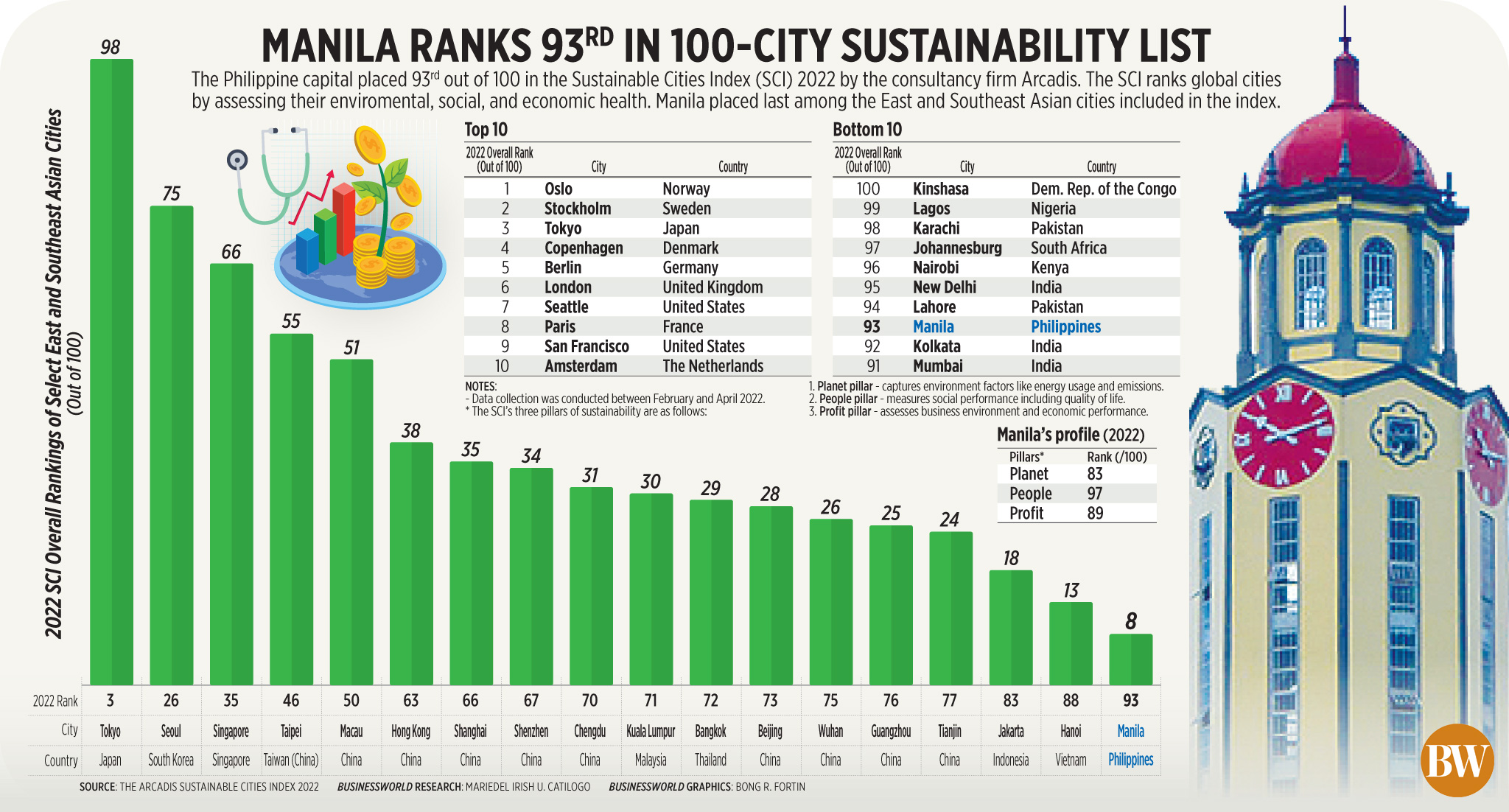
The Philippine capital placed 93rd out of 100 in the Sustainable Cities Index (SCI) 2022 by the consultancy firm Arcadis. The SCI ranks global cities by assessing their environmental, social, and economic health. Manila placed last among the East and Southeast Asian cities included in the index.

Manila ranks 93<sup>rd</sup> in 100-city sustainability list

How PSEi member stocks performed — July 28, 2022

Here’s a quick glance at how PSEi stocks fared on Thursday, July 28, 2022.


Marcos vetoes bill expanding DLPC franchise

PRESIDENT Ferdinand R. Marcos, Jr. has vetoed House Bill 10554, an Act Expanding the Franchise Area of Davao Light and Power Co., Inc. (DLPC), noting that the area targeted for expansion would mean that DLPC would effectively “kill” the current franchise holder, North Davao Electric Cooperative, Inc. (Nordeco). 

In his veto letter sent to the Senate and House of Representatives on Wednesday, Mr. Marcos said that he is concerned that the measure could be subject to a court challenge if Nordeco defends its interests.

“I remain committed to the pursuit and attainment of this objective in a vigorous and systematic manner, with utmost respect for the concomitant rights of the public service entities engaged in supplying electric service,” Mr. Marcos said in his letter, noting that with Nordeco’s franchise ending in 2023, “House Bill 10554, aims to kill the (electric cooperative’s) franchise.”

He said the measure would violate Section 27 of Republic Act No. 9136 or the Electric Power Industry Reform Act (EPIRA) of 2001. Section 27 allows franchises to continue operating over their full term.

“Likewise, the resulting repeal of North Davao Electric Cooperative, Inc.’s franchise over the expanded franchise area will violate the non-impairment clause as provided in Section 10, Article III of the 1987 Constitution,” the President said.

Asked to comment, Rodger S. Velasco, president and chief operating officer of DLPC, said the company has been notified of the veto.

“We can confirm that we have received information that Malacañang vetoed House Bill 10554, which is meant to expand the franchise area of AboitizPower subsidiary Davao Light and Power Co. to Davao del Norte,” Mr. Velasco said in a text message.

Mr. Velasco declined to comment further pending the issuance of an official company statement and “until we receive final instructions from regulators and government authorities.” — Ashley Erika O. Jose with Maya M. Padillo

Minimal 2023 budget increase could force sacrifice of some programs for agri, Angara says

PHILSTAR FILE PHOTO

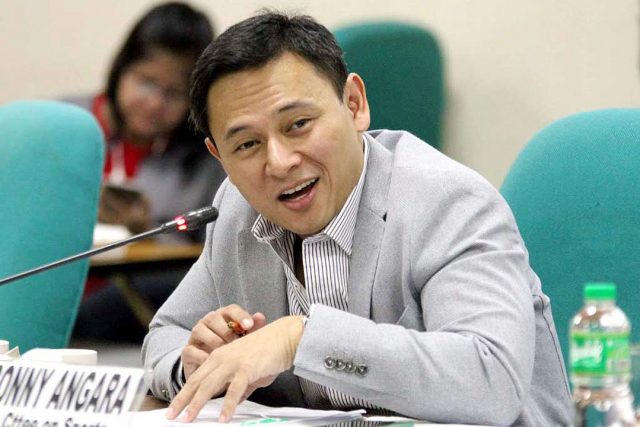
THE 4% funding increase in the 2023 General Appropriations Act will require the government to set clear spending priorities and possibly sacrifice some spending items to achieve its goal of expanding agriculture, according to the chairman of the Senate Finance Committee.

The budget increase over 2022 is “a very small increase compared to previous years,” Senator Juan Edgardo M. Angara told ABS-CBN news channel on Thursday, in response to expectations that the government will spend freely on agriculture, to the extent of tripling the agriculture budget.

He was referring to expectations that the administration will triple the budget and spending on the agriculture sector.

Mr. Angara said the limited expansion of the budget will mean cutbacks for some programs, which will “bear the brunt” as the food crisis takes priority.

He expects that there will be a “more focused spending” as “the President wants to do so many things so, the departments have to take their cue and focus on what the President mentioned in his SONA (State of the Nation Address).”

“Maybe that’s why the President started off his SONA with a kind of budget responsibility call, maybe a fiscal responsibility call, but there will be no wasteful spending, precisely so he can focus on all of these issues he wants to spend on,” he added.

The senator approved of the chief executive’s decision to talk about taxes to open his address, saying that “if you want to have funds (for) your projects, do it at your most popular.”

To simplify taxation, Mr. Angara proposed to strengthen the role of the Department of Information and Communications Technology (DICT) and pass bills digitizing government processes and transactions.

“These are all intertwined with ease of doing business. So, if you can do this online, if people can do this from the comfort of their home, just punch in their bank account and transact, that would be fantastic,” he said. 

“But of course, the adjunct to that is there are also cyber security concerns. So, as cyber commerce grows, then… your ability to protect that space becomes more important also,” he added.

Mr. Angara believes that the government’s goal should be to return to pre-pandemic levels and achieve goals previously set.

“We were on track to achieve those goals during the previous administration, except that COVID (coronavirus) hit us,” he said. “I guess, the biggest challenge is how to put us back on that track.”

“That’s why I am happy that he mentioned agriculture (and) tourism, because these are all components of our country’s GDP (gross domestic product). And if you look, what has been driving our GDP is services and government spending, as well as IT-BPOs (information technology-business process outsourcing),” he added. — Alyssa Nicole O. Tan