Home Blog Page 5658

Fidel V. Ramos: A man dedicated to peace and his people

BW FILE PHOTO

I received a text message on the death of President Fidel V. Ramos on Sunday afternoon as I was getting ready to join a Zoom meeting. The sketchy report said the former President succumbed to COVID complications at the Makati Medical Center. I tried to get confirmation from his daughter, Cristy. I later learned she was in Indonesia as Competition Commissioner in an international football tournament. Cristy, a former member of the women’s national football team, had always said that football is her sport. It was sad that she wasn’t around when her dad passed away at the age of 94 after serving the country in various capacities with honor, dignity, and competence.

I first met Armed Forces of the Philippines (AFP) vice-chief of staff Fidel V. Ramos (FVR) at EDSA, on the second day of EDSA I. We were in front of the then Philippine Constabulary (PC) headquarters, Camp Crame, across Camp Aguinaldo, headquarters of the Armed Forces of the Philippines (AFP). He had his unlit cigar and was casually talking to the groups huddled in the night, sharing meals and encouraging one another as the uprising went into its second night. The General was reassuring everyone, “Everything is ok. Just hold your ground.”

We would see him again later in the night, inside a war room that the General and the people of Defense Secretary Juan Ponce Enrile had established. The place was full of heavily armed military and police personnel who were warning civilians like us that an attack early that morning, Monday, Feb. 24, 1986, was imminent. The attack never materialized. Around seven the next morning, General Ramos and Enrile appeared on a platform beside the PC flagpole and announced that Marcos had fled. The General did what would later become his signature “jump,” to the delight of the crowd that had gathered inside the camp. The crowd freely entered the camp which sheltered the same forces which were instrumental in the enforcement of martial law.

The next day, Tuesday, Feb. 26, I shook hands at Club Filipino with both the General and Enrile, who were appointed by President Corazon Aquino as AFP Chief of Staff and Minister of Defense, respectively, by the country’s 11th President. I noticed the presence of several politicians who, just a few days before President Aquino’s oathtaking, were loudly proclaiming their opposition to the new Administration.

In late 1987, General Ramos joined President Aquino’s cabinet as Defense Secretary, vice Rafael Ileto. I had by then been Secretary of Agrarian Reform since July 1987 and I welcomed the opportunity to work with a man who would provide perspective in my attempts to deal with farmers and landowners of various stripes — including military and police retirees and military and police officials-landowners in active service who opposed the government’s Comprehensive Agrarian Reform Program (CARP). In one public forum in Cebu City sometime in early 1988, a man who introduced himself as a “Colonel Gonzalez” in the AFP, declared that “you will get my land over my dead body.”

Ramos was very supportive of our efforts as the Cabinet Officer for Regional Development (CORD) for the Cordilleras. As CORD of the Cordilleras, we were tasked with helping implement the provisions of the peace negotiations between the then-New Armed Forces of the Philippines and the Cordillera People’s Liberation Army (CPLA), headed by priest-turned-dissident, Conrado Balweg, sometimes referred to as Fr. Balweg or Ka Ambo. With the help of Chief of Staff Renato de Villa, we were able to get the AFP to provide Ka Ambo’s troops with weapons, to join the AFP in the battle against the insurgents. Secretary Ramos would regularly monitor the progress of our activities in support of the Mt. Data peace talks. It was at that point that I noted that FVR was a man of peace, ready to discuss ways to achieve common ground.

Sometime in June 1994, almost two years into his presidency, FVR asked me to join him in a round of golf at the Veteran’s Memorial Golf Club in Quezon City. It was the usual early Sunday morning golf game for which the early-rising and late-retiring, hardworking President was known. Joining us were then Deputy Executive Secretary Leonardo Quisumbing and Gen. Jose Magno of the Government Service Insurance System. Quisumbing would later be appointed Associate Justice of the Supreme Court.

President Ramos and the rest of the foursome played the first hole and then proceeded to the tee mound of the second hole at the corner of North and Mindanao Avenues. President Ramos pointed towards the terminal-garage of the Metro Manila Transit Corp. (MMTC) of the “Love Bus” fame. FVR remarked, “Look at that garage of the MMTC. The employees are perpetually on strike — either the drivers, the conductors, the mechanics, or the office personnel. This is your district (he had asked me to run for Congress in 1992 under Lakas-NUCD) and you have something at stake in its development. We have plans for this North area — develop it into a North City and bring in large developers like Ayala, SM, etc. I want you to work with (Department of Transportation Secretary) Sonny Garcia and come up with a creative and non-bureaucratic approach to privatize MMTC so we can free this entire area for these developers.”

As we approached the third hole, FVR called Quisumbing and said, “Prepare Popoy’s appointment as Presidential Consultant for Community Development or PCCD. PCCD, puwede na ba ’yun? (Is that OK?),” he asked me. Then he added, “Pero walang opisina ito ha (But this has no office).” I merely smiled. I knew what he meant. This was a job for the Boy Scouts. Volunteer work. No pay. For the country.

Over the years, the government had tried to liquidate MMTC. All attempts were unsuccessful and resulted in bloodshed, deaths and injuries to both peacekeepers and MMTC people. We took a look at the situation and personalities involved. Garcia was only too happy to pass on the problem to me. With his support, I asked the President to sign (around the middle of June 1994) a Memorandum Circular ordering all government agencies to cooperate with the PCCD in privatizing the MMTC. It was going to be the first ever attempt at “blue collar privatization.”

We had countless meetings, peaceful and contentious, with all MMTC groups. After many months of consultation with the groups, the Senate and House Committees on Public Services and Transportation, the Development Bank of the Philippines (a creditor of MMTC), the private sector, and the Quezon City government, we were able to successfully privatize the MMTC. The company was sold to the organization’s blue-collar workers and privatized in ceremonies held in Malacañang in early March 1995. FVR was visibly happy — but at the same time agitated as the Flor Contemplacion issue exploded.

Contemplacion was a domestic worker in Singapore who was convicted of strangling to death fellow domestic worker, Delia Maga, nanny of a three-year-old Singaporean who drowned to death. Overseas workers were outraged and frustrated by their overall situation and blamed the government for its inability to work for the exoneration of Contemplacion. FVR was to see a group of overseas workers’ representatives right after the MMTC privatization ceremonies. He had told me. “Sige. Good work pero dalian mo. Medyo problema itong kay Contemplacion (Good work but do it fast. This Contemplacion situation is problematic).”

The North City has since become a reality and a booming business district.

The nine-month MMTC engagement allowed me to see the FVR who believed in the developmental and entrepreneurial roles of both the private sector and government. It also afforded me an opportunity to see him up close during a difficult, politically-charged moment.

A few days after the MMTC privatization, on March 25, 1995, FVR called me up as I was conducting a class at the Asian Institute of Management. He asked me to assume the Chairmanship of the Philippine Sports Commission. I then got used to his CSW (Completed Staff Work) requirements, his calls at five in the morning to ask specific pointed questions and for details, and his evening golf games capped with brandy at the Presidential Security Group Golf course in Malacañang and at the Municipal Links in Intramuros.

At the end of his term, I wrote a book to pay tribute to his commitment to good governance and love for sports entitled, Sports and Governance.

Farewell Mr. President. Your heart for peace and democracy will be missed.


Philip Ella Juico’s areas of interest include the protection and promotion of democracy, free markets, sustainable development, social responsibility and sports as a tool for social development. He obtained his doctorate in business at De La Salle University. Dr. Juico served as secretary of Agrarian Reform during the Corazon C. Aquino administration.


Making net zero a reality in the Philippines sooner rather than later

USER6702303-FREEPIK

A NUMBER of countries in the Asia-Pacific region, including China and Indonesia, have set aggressive targets to reduce greenhouse-gas emissions, despite significant coal exposure. The Philippines has not yet followed suit. Instead, it has pledged to reduce emissions by 75% from the “business as usual” trajectory by 2030; this promise is also almost entirely conditional on international financial support that has so far not been forthcoming. The Philippine Energy Plan forecasts emissions increasing until at least 2040.

That said, there has been some action. The Department of Energy has set an objective of 50% renewable energy in power generation by 2040, and in 2020 imposed a moratorium on construction of new coal-fired power stations. In transport, there are mandates for biodiesel and bioethanol and targets for electric vehicle (EV) penetration. There are also goals for energy efficiency in buildings and for planting new forests. But it is not enough.

A more aggressive approach that would cut emissions 44% by 2030 and reach net zero by 2060 — as China and Indonesia have pledged — is not only possible, but could bring substantial benefits, in the form of cleaner air, healthier land, and new sources of economic value and growth.

There is great potential in four areas.

Expanding renewable power generation capacity to 80% of supply, including decommissioning and conversion of existing thermal plants and modernization of the electricity grid. Solar power would contribute the biggest share, accounting for about 40% of total capacity by 2060, with wind contributing more than 20%. For this to happen, the Philippines would need to build long-duration energy storage to give the system the necessary flexibility to operate with a higher renewable share. All this would enable a full phase-out of coal-fired generation by 2050, with some installed coal capacity retro-fitted with carbon capture and storage (CCS) equipment. The shift to renewables and phase-out of coal would bring about a 98% reduction in emissions from the power sector by 2060, even as demand is expected to rise more than 150% over that period.

Introducing mechanical farming techniques, especially in rice cultivation. This will require educating farmers and coordinating with many small landowners; there may also be a role for subsidies to finance the transition. More efficient cultivation could cut emissions 70% by 2060, and also improve water management. In addition, restoration of forest areas and other land-use improvements could abate 20 million metric tons of carbon dioxide equivalent (Mt CO2e), the basic unit of greenhouse-gas accounting.

Creating new green-value chains in emissions-intensive industries, including installation of CCS devices on industrial plants and adoption of new electric technologies for manufacturing steel. For example, 100% of cement production could be decarbonized through CCS and electrification.

Converting to low-emission technologies in transport and buildings. Converting the road fleet from internal combustion engines (ICE) to EVs will take time, as well as regulatory support and further technology improvements. But improving efficiency 60% by 2040, and an additional 1% a year thereafter, would get the Philippines to net zero in transport.

In the building sector, the opportunity is for electrification, for example shifting from gas to electric cooking in residences would improve indoor air quality and improve health. Regulatory support for this shift in the form of subsidies could incentivize this change. For instance, in the UK a government scheme makes grants available to homeowners to replace oil and gas boilers with electric heat pumps, opening up the likelihood of clean energy usage, kickstarting the British heat pump industry, and buffering consumers against unexpected hikes in oil and gas prices.

Given appropriate investment, all these activities could serve to create new sources of value and growth.

Private companies and startups in the Philippines are already at work on green-growth initiatives. A number of companies are producing power from biomass waste. For instance, by end 2022, SMC Global will complete 1,000 MW of BESS facilities. Prime Infrastructure Holdings has also invested P3.5 billion in Solar Philippines Project Power Holdings for >340 MW of solar, and has partnered with US-based WasteFuel Global for a 30-million-gallon synthetic crude oil biorefinery pilot targeted to be operational by 2025. Victorias Milling Company has one of the largest biomass power plants (63 MW) in the Visayas. In the area of transport, EV startup QEV Philippines plans to roll out 50,000 electric jeepneys over the next five years by replacing their ICEs with lithium-ion batteries.

That is the potential; getting there, however, means putting sustainability at the heart of strategy. For government, that starts with reporting emissions and setting ambitious and quantifiable sector-level decarbonization goals. This would provide a framework within which individual agencies could work with the private sector to devise action plans. The government can also put emissions reduction at the heart of its investment strategy, for example by working with business to build charging infrastructure for EVs and establishing a market for carbon credits, which could support investment in these areas.

The private sector must be involved — and it can be in their interest to do so. International experience shows that businesses that act to reduce their carbon footprint can improve returns and cut costs, including the cost of capital. A recent example in the Philippines includes RCBC bank, the first bank in the Philippines to issue green bonds. In 2019, RCBC listed P15 billion worth of green bonds, which ended up directly correlating with the bank achieving a low borrowing cost of 7%, the lowest of any bank. Another example is telecoms provider Globe which set itself a goal of being net zero by 2050. To this end, it has been pro-actively undertaking sustainable practices even before regulatory compliances require them to do so, including installing hybrid generators at off-grid sites, which have resulted in a 60% reduction in fuel and maintenance costs. A number of other companies in the Philippines have made similar pledges to become net zero and are establishing targets and prioritizing budgets to cut emissions, such as Ayala Corp., Nestlé, and Shell.

Finally, the Philippines’ current modest strategy envisions support from international investors and donors; a more ambitious one will likely do the same. One priority is to mobilize green finance to support investment in decarbonization, for example through public-private partnerships in the power sector. The Asian Development Bank is already playing a crucial role in supporting the development of green financing instruments. NGOs and donors also have an opportunity to scale up investment in low-carbon programs such as microgrids and sustainable agriculture, by providing technical assistance and innovative financing.

The conventional wisdom is that action on climate change is inimical to economic growth. On the contrary: the right strategy could bring new green growth opportunities, particularly in power and carbon management. Capturing these opportunities depends not on innovations yet to be seen or unrealistic business models, but on proven, economically competitive technological solutions.

Indeed, not going in this direction poses long-term risks. Climate change is becoming a factor in international policies on trade and investment; countries that fall short risk being subject to punitive trade measures. In addition, international investors are increasingly focused on sustainability.

Finally, let’s not forget that the Philippines archipelago is already exposed to significant risks from climate change, including sea levels rising at three times the global average. The UN Food and Agriculture Organization projects that falling crop yields will cause a 6% annual loss of GDP by 2100 if climate change continues unabated.

The imperative is clear, and so are the opportunities. A start has been made; now it’s time to advance.


Jon Canto is a senior vice-president in McKinsey Manila office.

Food prices are falling. Why is there still a hunger crisis?

EDUARDO SOARES-UNSPLASH

AS QUICKLY as it blew up, the food crisis of 2022 appears to be receding.

Red spring wheat rose to nearly $13 a bushel in March, prompting the world’s biggest wheat importer, Egypt, to devalue its currency. It’s now trading around $8, a fall of more than a third. Indonesia halted exports of palm oil in April in the face of a similar price spike. Prices are now down more than 40% from the peak. Corn prices fell by nearly a quarter since the start of May. Sugar and arabica coffee beans have hit respective one-year and nine-month lows in the past few weeks.

It’s tempting to see this as a sign that the crisis that has pushed the world’s population of hungry people to its highest level since the mid-2000s is finally ending. Sadly, that’s unlikely to be the case.

That’s because, for all the attention they direct toward the problems of food insecurity, the pricing of agricultural commodities contracts on major exchanges is only one of many factors contributing to hunger in the world — and in many cases, it’s not even the most important.

Few of the world’s hungry, for instance, are paying for their food in US dollars. That means that currency fluctuations can be every bit as important as shifts in commodity price benchmarks in determining the price paid on the ground.

The rise in commodity prices since the end of 2021 has pushed the price of US dollar wheat up about 23% — but the devaluation in the Egyptian pound has been even more damaging, adding another 25% to local currency prices. In Turkey, the third-biggest wheat buyer, the collapsing lira has added about 171% to costs. In Pakistan, the rupee’s slump has made it 53% more expensive.

Those currency effects can be long lasting. Import-dependent emerging economies often subsidize food sourced from abroad, putting strain on the government budget whenever commodity prices rise. Most countries’ public finances are already under unprecedented strain now thanks to the COVID-19 pandemic, so there’s little room for further deterioration. Should shrinking government budgets and foreign exchange reserves cause a currency crisis a year or two down the line, even falling dollar food prices won’t be enough to stop the local cost of imported produce climbing further.

That’s not the only way that COVID is causing long-standing aftereffects for the food sector. The number of people employed globally dropped in 2020 for the first time in at least a generation, as more than 100 million were laid off or stayed home to cope with the effects of the pandemic. A similar number, 97 million, have been driven below the global poverty line of $1.90 a day. Incomes for the bottom 40% of the world’s population were down 6.7% last year from levels expected before the pandemic, compared to a 2.8% drop for the wealthiest 40%.

The result has been a smaller pool of income available to pay for nutrition, compounding the problems of a strained public sector. As Nobel-winning economist Amartya Sen showed in his landmark 1981 study on famine, most episodes of severe hunger are caused not by an absolute shortage of food, but by the price of food rising beyond the capacity of the poorest members of society to pay for it.

Those problems are compounded by conflict, still the most important cause of hunger worldwide. War and unrest can choke off supply chains, crash currencies, destroy jobs, and raise prices all at once. The war in Ukraine is only the latest instance of such breakdowns. The number of people displaced by strife, a decent proxy for the global human toll of unrest, in late 2021 hit its highest level since records began, according to the United Nations High Commissioner for Refugees — up 8% from a year earlier, and double its level a decade ago.

Finally, there’s the impact of climate and weather disasters to consider. For people in low-income countries most at risk of starvation, the prices of global commodities are often almost irrelevant, because they lack the cash or the supply connections to buy from international markets. Indeed, in parts of the world dependent on exports of cash crops such as palm oil, cocoa, or coffee, falling food prices are as likely to cause problems as rising ones by choking off incomes for farmers. That makes floods like those that swept through Pakistan last week, or drought like the one that’s ravaged eastern Africa in recent years, as much of a threat as geopolitics.

Falling food prices, should they be sustained, may at least provide some relief for the world’s 768 million undernourished people. They won’t be enough to turn the tide on four years of rising food insecurity. To do that, the world needs to address deeper-seated problems, from the long-run impact of COVID, to the persistent effects of inequality, war, and conflict.

BLOOMBERG OPINION

Shortened story

PCH.VECTOR-FREEPIK

IS IT THE NEED for a commercial break for TV news or the shrinking attention span of the bloggers and their followers in the gadget culture that makes the “shortened story” inevitable? Convoluted answers from news subjects to a question thrown at them in an interview need to be edited into sound bites or short video clips. The pauses, whether dramatic or simply a case of a loss for words, need to be cut out.

The quick summary, sometimes excerpted from the diarrhea of words arising from a constipation of thought (please wipe after every discharge), is intended to disguise a rambling response. The summary junks context and irons out the complexity of the subject matter. This is not an academic lecture, after all, even if academics from a certain university dominate the cabinet and advisory councils.

Even more challenging in terms of abbreviated reporting is the photo op. Here, there is a staged meeting of the cabinet, sometimes with the quarantined leader appearing like Orwell’s “Big Brother” on a TV screen before a table squeezing in cabinet members who seem to be reverently paying attention. Are marching orders being issued? The coverage plays safe by stating the obvious — the working-from-home chief is conducting a meeting. The topic is not even mentioned, just the sense that the chief can’t wait to get back to the office and figure things out.

The one-on-one interview, either of a corporate CEO or a political leader, allows for a more extended elucidation of issues, especially when the interviewer allows the interviewee to finish his sentences, without interruption. This more relaxed conversation, sometimes in the boardroom of the interviewee’s office, can feature a host that has done her research and studiously keeping biases in check. Even in this setting, the interviewee must be mindful that excerpts may be recycled into the news and an unintended sound bite extracted from scripted answers.

Even business subjects can shrink from the characterization of the hour-long interview squeezed into a five-minute segment — traces of poison in our noodles are insignificant and equivalent to two mosquito bites. (I was misquoted.)

News subjects are cautioned by their PR mentors to keep their guard up with media. Any words that are uttered by the interviewee are fair game, even when the cameras are not rolling, and people are just milling around having donuts and coffee. PR advisers familiar with the penchant of media for sound bites are ready to provide their own. This feed ensures that it is the intended slant that prevails.

Casual comments must be reined in — I gave to all the candidates, but not the same amount. Even if this is mentioned while the crew is packing away, it might end up as the sound bite for the interview.

Media, both traditional and social, have turned interviews into a search for the shortened story. The journalist follows the dictum — when eating an elephant, take it one bite at a time. The pachyderm metaphor refers to the heavyweight status of a subject, and the little snatches of sound that must be applied.

The choice of excerpts to highlight is left to the ones covering the event. History itself has picked sound bites to characterize its heroes and villains. Wasn’t Marie Antoinette forever associated with her haughty attitude towards the poor — let them eat cake? And wasn’t this royal cluelessness seen as the match that ignited the French Revolution. Never mind if she didn’t really say it.

The rising importance of influencers and bloggers in the media space makes the shortened story even more pervasive. Sometimes, trolls and their farm managers are issued talking points (or attack messages) to let loose on a designated target.

The sound bite cannot be stopped by a sincere denial or the laying out of a long narrative of excuses and misunderstandings. Shortened stories can only be doused by even shorter responses. In fact, words can be dispensed with.

To dismiss the allegations of a feud, can a photographed fist bump between two heads of state work? This has been tried at the highest global level, but the oil production of that party did not really rise to plug the leak of the economic sanctions on Russia.

There’s always a longer story to explain what really happened. But who cares to listen to that?


Tony Samson is chairman and CEO of TOUCH xda

ar.samson@yahoo.com

Pelosi hails Taiwan’s free society as China holds drills, vents anger

TAIWAN Foreign Minister Joseph Wu welcomes US House of Representatives Speaker Nancy Pelosi at Taipei Songshan Airport in Taipei, Taiwan, Aug. 2. — TAIWAN MINISTRY OF FOREIGN AFFAIRS/HANDOUT VIA REUTERS

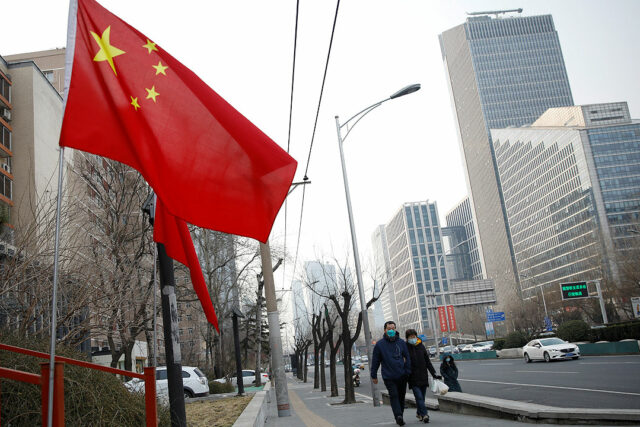
TAIPEI — China furiously condemned the highest-level US visit to Taiwan in 25 years as House of Representatives Speaker Nancy Pelosi hailed the self-ruled island as “one of the freest societies in the world” and pledged American solidarity.

Beijing demonstrated its anger with Ms. Pelosi’s presence on an island that it says is part of China with a burst of military activity in surrounding waters, summoning the US ambassador in Beijing and halting several agricultural imports from Taiwan.

Some of China’s planned military exercises will take place within Taiwan’s 12 nautical mile sea and air territory, according to Taiwan’s defense ministry, an unprecedented move a senior defense official described to reporters as “amounting to a sea and air blockade of Taiwan”.

Ms. Pelosi arrived with a congressional delegation on an unannounced visit late on Tuesday, defying China’s repeated warnings, in what she said shows unwavering US commitment to Taiwan’s democracy.

“Our delegation came to Taiwan to make unequivocally clear that we will not abandon Taiwan,” Ms. Pelosi told Taiwan President Tsai Ing-wen.

“Now, more than ever, America’s solidarity with Taiwan is crucial, and that’s the message we are bringing here, today.”

Addressing parliament, Ms. Pelosi said new US legislation aimed at strengthening the American chip industry to compete with China “offers greater opportunity for US-Taiwan economic cooperation.”

“We thank you for your leadership. We want the world to recognize that,” Ms. Pelosi told Ms. Tsai, who Beijing suspects of pushing for formal independence — a red line for China.

A long-time China critic, especially on human rights, Ms. Pelosi was set to meet later on Wednesday with a former Tiananmen activist, a Hong Kong bookseller who had been detained by China and a Taiwanese activist recently released by China, people familiar with the matter said.

The last US house speaker to go to Taiwan was Newt Gingrich, in 1997. But Ms. Pelosi’s visit comes amid sharply deteriorating Sino-US relations, and China has emerged as a far more powerful economic, military and geopolitical force during the past quarter century.

China considers Taiwan part of its territory and has never renounced using force to bring it under its control. The United States warned China against using the visit as a pretext for military action against Taiwan.

In retaliation, China’s customs department announced a suspension of imports of citrus fruits, chilled white striped hairtail and frozen horse mackerel from Taiwan, while its commerce ministry banned export of natural sand to Taiwan.

MILITARY DRILLS
Ms. Pelosi’s visit, which has been blasted in official Chinese news outlets, was the dominant topic on China’s heavily censored social media, with many users urging Beijing to invade the island in retaliation and expressing dismay that military action had not been taken to block her arrival. A live-tracker of her plane on China’s WeChat was watched by 22 million.

China’s Twitter-like Weibo platform crashed just before Ms. Pelosi’s landing, which Weibo blamed on overstretched broadband capacity, without mentioning Taiwan.

Shortly after Ms. Pelosi’s arrival, China’s military announced joint air and sea drills near Taiwan and test launches of conventional missiles in the sea east of the island, with Chinese state news agency Xinhua describing live-fire drills and other exercises around Taiwan from Thursday to Sunday.

China’s foreign ministry said Ms. Pelosi’s visit seriously damages peace and stability in the Taiwan Strait, “has a severe impact on the political foundation of China-US relations, and seriously infringes upon China’s sovereignty and territorial integrity.”

Before Ms. Pelosi’s arrival, Chinese warplanes buzzed the line dividing the Taiwan Strait. The Chinese military said it was on high alert and will launch “targeted military operations” in response to Ms. Pelosi’s visit.

White House national security spokesperson John Kirby said on Tuesday after Ms. Pelosi’s arrival that the United States “is not going to be intimidated” by China’s threats or bellicose rhetoric and that there is no reason her visit should precipitate a crisis or conflict.

Mr. Kirby said China might engage in “economic coercion” toward Taiwan, adding that the impact on US-China relations will depend on Beijing’s actions in coming days and weeks.

The United States has no official diplomatic relations with Taiwan but is bound by American law to provide it with the means to defend itself. China views visits by US officials to Taiwan as sending an encouraging signal to the pro-independence camp on the island. Taiwan rejects China’s sovereignty claims, saying only the Taiwanese people can decide the island’s future.

Taiwan’s cabinet on Wednesday said the military has increased its alertness level. The island’s defense ministry said 21 Chinese aircraft entered its air defense identification zone on Tuesday, and that China was attempting to threaten key ports and cities with drills in the surrounding waters.

“The so-called drill areas are falling within the busiest international channels in the Indo-Pacific region,” a senior Taiwan official familiar with its security planning told Reuters on Wednesday.

“We can see China’s ambition: to make the Taiwan Strait non-international waters, as well as making the entire area west of the first island chain in the western pacific its sphere of influence,” the person said. — Reuters

West could trigger nuclear war over Ukraine — Russia

UNSPLASH

UNITED NATIONS — The conflict in Ukraine does not warrant Russia’s use of nuclear weapons, but Moscow could decide to use its nuclear arsenal in response to “direct aggression” by NATO countries over the invasion, Russia said on Tuesday at the United Nations.

At a nuclear nonproliferation conference, Russian diplomat Alexander Trofimov rejected “utterly unfounded, detached from reality and unacceptable speculations that Russia allegedly threatens to use nuclear weapons, particularly in Ukraine.”

Within days of Russia’s Feb. 24 invasion, Mr. Putin put the country’s deterrence forces — which include nuclear arms — on high alert, citing what he called aggressive statements by NATO leaders and Western economic sanctions against Moscow.

Mr. Trofimov, a senior diplomat in the non-proliferation and arms control department of Russia’s foreign ministry, said Moscow would only use nuclear weapons in response to weapons of mass destruction or a conventional weapons attack that threatened the existence of the Russian state.

“None of these two hypothetical scenarios is relevant to the situation in Ukraine,” Mr. Trofimov told the U.N. conference to review the Treaty on the Non-Proliferation of Nuclear Weapons.

However, he accused NATO countries of a “fierce hybrid confrontation” against Russia that now “dangerously balances on the edge of open military clash.”

“Such a move would be able to trigger one of the two emergency scenarios described in our doctrine,” Mr. Trofimov said. “We obviously stand for preventing this, but if Western countries try to test our resolve, Russia will not back down.” — Reuters

ASEAN to rethink peace plan if Myanmar executes more prisoners

PHNOM PENH — The Association of Southeast Asian Nations (ASEAN) will be forced to reconsider a peace plan agreed with Myanmar if the country’s military rulers conduct more executions of prisoners, Cambodian Prime Minister Hun Sen said on Wednesday.

The 10-nation bloc had been pushing for Myanmar to adhere to a five-point peace “consensus” it agreed to last year and has condemned the recent execution of four democracy activists by the junta.

“If more prisoners are executed, we will be forced to rethink…our role vis-a-vis is ASEAN’s five-point consensus,” said Hun Sen, who is the current chair of ASEAN and was speaking at the start of a meeting of the group’s foreign ministers.

Mr. Hun Sen said that ASEAN’s unity had been challenged by the political and security implications of the crisis in Myanmar, which has spiraled into an economic and humanitarian crisis.

The prime minister said that while the five-point consensus had “not advanced to everyone’s wishes” there had been some progress including in providing humanitarian aid.

But he went on to say the current situation had “changed dramatically” and could be seen as even worse than before the peace agreement because of the junta’s execution of the activists.

Cambodia along with other ASEAN member states “are deeply disappointed and disturbed by the execution of those opposition activists, despite the appeals from me and others for the death sentences to be reconsidered,” said Mr. Hun Sen.

Myanmar’s military last week defended the execution of the activists as “justice for the people,” brushing off a deluge of international condemnation including by its closest neighbors.

The military said it had executed the activists for aiding “terror acts” by a civilian resistance movement, Myanmar’s first executions in decades.

Myanmar will not be represented at this week’s meeting, a spokesperson for the ASEAN chair said on Monday, after its military rulers declined a proposal to send a non-junta representative instead.

ASEAN has since late last year barred the Myanmar junta from joining its meetings due to its lack of progress in implementing the peace plan.

Some other members of ASEAN, which has a tradition of non-interference in each other’s internal affairs, have been increasingly strident in their criticism of the generals.

Malaysian Foreign Minister Saifuddin Abdullah has described the executions as a crime against humanity and appearing to make “a mockery” of the ASEAN peace plan.

The head of Myanmar’s junta Min Aung Hlaing on Monday blamed instability related to the pandemic and internal violence for stalling efforts to implement the peace plan.

The junta also extended a state of emergency put in place after seizing power from the elected government of Aung San Suu Kyi in February last year.

Myanmar has been in chaos since then, with conflict spreading after the army crushed mostly peaceful protests in towns and cities. — Reuters

Mexico probes former president Pena Nieto for money laundering

MEXICO’s President Enrique Pena Nieto arrives in a traditional Philippine ‘barong’ shirt for a welcome dinner during the Asia-Pacific Economic Cooperation (APEC) summit in the capital city of Manila, Philippines, Nov. 18, 2015. — REUTERS/EDGAR SU

MEXICO CITY — Mexico’s attorney general’s office is investigating former President Enrique Pena Nieto for alleged money laundering, illicit enrichment, and illegal international transfers, two sources familiar with the matter told Reuters on Tuesday.

The sources said Mr. Pena Nieto, who was president from 2012 to 2016, is the person identified as “Enrique P” in a statement from the attorney general’s office (FGR) on Tuesday.

Reuters was not able to immediately contact Mr. Pena Nieto for comment. He previously denied any wrongdoing when reports of an investigation by Mexico’s anti-money laundering unit emerged last month.

Mr. Pena Nieto has not been charged with a crime.

The Tuesday statement said the FGR was “developing investigation procedures” into various federal crimes. In the statement, the FGR said it was investigating crimes related to Spanish construction company OHL.

OHL did not immediately respond to a request for comment outside business hours.

In 2016, the Mexican unit of OHL was fined over inadequacies in its financial reporting. The company said then that there was no evidence of fraud.

At the time, OHL Mexico had been hit by corruption allegations over leaked recordings in which its executives appeared to be discussing overcharging the government for a highway concession.

The FGR said the investigations into money laundering and illegal international transfers stemmed from complaints by tax authorities.

In July, Mexico’s anti-money laundering unit asked the FGR to investigate millions of dollars’ worth of money transfers abroad addressed to Mr. Pena Nieto.

Mr. Pena Nieto addressed the accusations in a series of tweets at the time, saying, “I am certain that before the competent authorities I will be allowed to clarify any question about my assets and demonstrate their legality.” — Reuters

Risks mount from China drills near Taiwan during Pelosi visit — analyst

REUTERS

HONG KONG — As China embarks on an unprecedented six days of military drills surrounding Taiwan, security analysts are warning of mounting risks of escalation even if Beijing seeks to avoid its protests over Nancy Pelosi’s visit from sparking full blown conflict.

China announced drills in six locations surrounding Taiwan soon after House Speaker Ms. Pelosi — a veteran China critic and the third most senior US politician — landed in Taipei on Tuesday night.

Taiwan officials said the live fire drills violate United Nations rules, invade Taiwan’s territorial space and are a direct challenge to free air and sea navigation.

China’s Eastern Theatre Command said a multi-force exercise involving the Navy, Air Force, Rocket Force, Strategic Support Force and Joint Logistics Support Force, took place in the air and sea to the north, southwest and southeast of Taiwan on Wednesday.

Chinese military practiced operations including seal and control, assault at sea and strike on land.

Analysts spoken to by Reuters say it remains unclear if China will fire cruise or ballistic missiles directly over the island, or attempt a blockade for the first time.

Song Zhongping, a Hong Kong-based military commentator, said it appeared the People’s Liberation Army wanted to practice blockading the island if it had to in a later war.

“The goal of these exercises, to put it bluntly, is to prepare for the military fight with Taiwan.”

Unusually, the drills were announced with a locator map circulated by the official Xinhua news agency — a factor that for some analysts and scholars shows the need to play to both domestic and foreign audiences.

“We can see China’s ambition: to make the Taiwan Strait non-international waters, as well as making the entire area west of the first island chain in the western pacific its sphere of influence,” said a senior Taiwanese official familiar with its security planning.

If China got what it wanted, the official said, the impact would “be fatal for the safety and stability of regional countries, as well as for the regional economy.”

Singapore-based security scholar Collin Koh said the Pelosi visit had trapped China between having to show a resolute and sweeping response while avoiding a full-blown conflict.

“Even if they want to avoid that outcome, there are still significant possibilities for an accidental escalation,” said Mr. Koh, of the of the S. Rajaratnam School of International Studies.

Maps of the drills produced by China show they go far beyond the missile firings in the straits in 1996 when Beijing protested the island’s first direct presidential election in what became known as the Third Taiwan Strait Crisis.

Significantly, in the north, east and south, the proposed exercise areas bisect Taiwan’s claimed 12 nautical miles of territorial waters — something Taiwanese officials say challenges the international order and amount to a blockade of its sea and air space.

In 1996, the United States navy dispatched two aircraft carriers close to the straits to effectively end the crisis — a move many analysts consider more challenging now given China’s military growth, including a vastly more capable missile inventory.

A US Navy official confirmed to Reuters on Tuesday that the 7th Fleet had deployed the USS Ronald Reagan carrier and four other warships, including a guided missile cruiser, in the Philippine Sea east of Taiwan as part of a “routine deployment”.

The Indo-Pacific Command in Hawaii did not immediately respond to Reuters’ questions on the Chinese drills on Wednesday.

Mr. Koh said advanced US and Taiwanese reconnaissance aircraft would see the drills as an opportunity to probe Chinese military systems and communications, potentially adding to risks if Chinese planes responded. — Reuters

FEU offers data science and business analytics courses

Far Eastern University (FEU) Institute of Technology will offer specializations in data science, business analytics, and innovation and business starting this school year.  

The courses are BS Computer Science with specialization in Data Science, BS Information Technology with specialization in Innovation and Business, and BS Information Technology with specialization in Business Analytics. 

This year, FEU Tech schools, composed of FEU Alabang, FEU Diliman, and the FEU Institute of Technology, were recognized among the World’s Universities with Real Impact (WURI) Top Global Innovative Universities, which ranks science-and-technology programs based on societal impact.  

“All fields will be needing data science,” said Hadji J. Tejuco, an instructor of the college of computer studies and multimedia arts at FEU Tech. “It’s the only way to process the data to provide solutions for complex problems,” he added in an August 2 event by FEU Tech. “Data fed into the system can help us make future projections [too].”  

Data science — the collection, preparation, and analysis of data — is linked with artificial intelligence (AI), which is the technology for machines to understand and make intelligent decisions, and machine learning, which are algorithms that help machines improve through supervised and unsupervised learning.  

These three are the force behind applications such as the speech recognition abilities of virtual assistants, the web storefronts personalized for each shopper, and the health monitoring of patients via wearable devices.  

“The entire idea is to perform result-driven calculations on the data to get insights for business and research,” Mr. Tejuco said.  

“Data is your bread and butter,” added Geliza Marie I. Alcober, a fellow FEU Tech instructor at the college of computer studies and multimedia arts.  

Disneyland, she pointed out, uses business analytics to give them an idea who a customer’s favorite Disney character is. 

“This allows them to ensure your favorite Disney character interacts with you in Disneyland,” she said. “You don’t need magic to create something magical.”  

According to Rolan Marco U. Garcia, FEU Tech Group’s chief innovation officer and director for new ventures, the school “puts its money where its mouth is” and invests in the startup ideas of its students with an internal fund.  

“We look at the problems these startups want to solve. All innovation starts with that,” he said. “[Then] we look for validity and scalability.” 

Students that struggle with the math necessary to study data science can seek help from iCare, FEU’s free tutorial system.  

The Philippines placed second-lowest in mathematics among 79 economies that participated in the Program for International Student Assessment, a global study conducted in 2018 by the Organisation for Economic Co-operation and Development that examined students’ knowledge in reading, math, and science.

Indian state bets big on oil palm to cut $19 billion vegoil imports

STOCK PHOTO | Image by Pexels from Pixabay

 – Pullarao Daravathu and thousands of fellow farmers from Telangana in India’s south are busy planting oil palms as their home state aims to add more area under the controversial crop within four years than the entire country has in decades.

Telangana is targeting 2 million additional acres under oil palm cultivation in the next four years, and is going to great lengths to achieve this goal – from building large dams and irrigation canals to importing millions of germinated sprouts.

Generous government subsidies and bumper profit potential compared to other crops are also encouraging farmers like Daravathu to shift to oil palms.

Oil palm is giving more than 200,000 Indian rupees ($2,536) per acre return to farmers who planted the crop some years back. In rice, I am struggling to earn 40,000 rupees even after putting in lots of effort,” said Daravathu, who was planting oil palm on his 5-acre farm at Sathupally, nearly 300 km (186 miles) east of Hyderabad, the state capital.

The recent rally in palm oil prices has more than doubled prices of fresh fruit bunches, which farmers sell to oil mills.

For years, price volatility, water scarcity and a gestation period of nearly four years limited oil palm plantation in India to less than 1 million acres, mostly in coastal Andhra Pradesh, the state that Telangana was carved out of in 2014.

But Telangana, which occupies an inland region on the Deccan Plateau, is now keen to emerge as India’s main palm oil hub, with an area target that would place the state as the fifth largest oil palm grower globally – from a negligible base currently.

The drive could reduce India’s mammoth vegetable oil imports, which cost the country a record $18.9 billion a year ago and widened the national trade deficit.

India fulfils two-thirds of its vegetable oil demand through imports of around 14 million tons annually, including around 8.5 million tons of palm oil.

The federal government is keen to increase palm oil output to slash those expensive imports, which lifted inflation this year to multi-year highs after top supplier Indonesia abruptly halted exports.

“In the next four years, most of the palm planting would be done, and after 7-8 years Telangana could be producing 4 million tons of palm oil,” L Venkatram Reddy, director of Horticulture at the state government told Reuters.

India currently produces less than 300,000 tons of palm oil and relies on imports from Indonesia, Malaysia and Thailand to fulfil its requirements.

Even if Telangana manages to grow oil palm on only 1 million acres and produces 2 million tons of palm oil, it would be a huge achievement, said Chava Venkateswara Rao of Godrej Agrovet Ltd, the country’s biggest palm oil producer.

Until last year, the country was adding around 35,000 acres under oil palm every year.


WATER FIRST

Some areas in Telangana have sufficient water for thirsty oil palms thanks to the rivers such as the Godavari, Krishna and Bhima. But many pockets lacked sufficient water to cater to the oil palm‘s need of up to 265 liters per tree per day.

To overcome that, the state has built massive lift irrigation projects and a canal network that is now allowing farmers to plant oil palms across most of the state.

“We used to face water scarcity in summer season. Now, with the Kaleshwaram lift irrigation project, we have ample water for oil palm,” said farmer Bollampalli Venkateshwar Rao, who planted oil palms on 12 acres.

The Kaleshwaram irrigation project, which is nearly complete, cost the state 1.15 trillion rupees ($14.44 billion).

Authorities are giving permission to cultivate oil palms only after farmers install water-conserving micro irrigation systems, said Reddy, adding “The central and state government’s subsidies are covering almost the entire cost of drip irrigation system.”

The shift towards oil palm from paddy rice and other crops could help the state to bring down annual paddy procurement by around 2.5 million tons, and trim the electricity bill for lift irrigation projects by 15 billion rupees as drip-fed oil palms need less water than paddy, Reddy said.

Ravi Mathur, who heads the Indian Institute of Oil Palm Research (IIOPR), a government-backed body spearheading the oil palm push, said the lift irrigation project has made oil palm planting feasible in areas previously unsuitable for the crop because of water scarcity.


PLANTING MATERIAL SCARCITY

While thousands of farmers are keen to shift to oil palm, the availability of seedlings is limited, and preparing them is a lengthy process which takes almost a year.

Companies operating in Telangana imported 12.5 million sprouts last year and made seedlings for around 200,000 acres this year, said an official with the state-run TS Oilfed, the country’s biggest importer of germinated sprouts

The state is aiming to import 15 million sprouts this year – mainly sourced from Indonesia, Malaysia, Thailand and Costa Rica – and 50 million next year to achieve the target, he said.

But only handful of companies are supplying germinated sprouts.

“There is sudden surge in demand following a rally in palm oil prices. Companies are not able to supply as much we need this year,” said Sougata Niyogi, a top official at Godrej Agrovet. “The supply situation would become more comfortable next year.” – Reuters

After unexpected hurdles, military toxic burn pits bill passes US Senate

STOCK PHOTO | Image by Joan Greenman from Pixabay

 – A bill expanding healthcare coverage for veterans sickened by gases from military toxic burn pits passed the U.S. Senate on Tuesday night after unexpectedly getting held up by opposition from Republicans last week.

The US military used burn pits to dispose of waste on foreign bases until the mid-2010s. Fumes from burning everything from rubber, chemical waste, ammunitions and human feces have caused rare cancers and respiratory illnesses in veterans. Read full story

The bill initially passed the 100-member Senate with the support of 34 Republicans and all 50 Democrats, but got held up by a technical error the House swiftly corrected.

The Senate‘s final approval last week was expected to be a routine vote, but after Democrats announced a deal within their caucus on an unrelated climate and tax bill that would not require bipartisan support, a group of Republican senators abruptly changed their positions and voted against the corrected bill.

Many saw the Republican senators’ move, which took place just hours after the Democrats’ announcement, as retribution for continuing negotiations on the climate and tax bill that most in Congress thought were dead.

On Tuesday, Democratic Senator Chuck Schumer said he had reached a deal with Republican Senator Pat Toomey to hold a vote on an amendment that would change how money was allocated within the burn pits bill, clearing the way for a final vote on passage on Tuesday evening.

Mr. Toomey’s amendment was defeated before the Senate approved the legislation by a vote of 86-11.

Veterans who have pushed for the bill have camped on the Capitol steps since Thursday evening when the bill last came to the floor. US President Joe Biden called the veterans on Saturday and said he stood in solidarity with them, according to Rosie Torres, a veterans’ advocate.

Ms. Torres believes the Republican senators who changed their vote treated veterans like “political pawns.”

“It shouldn’t be about politics,” Ms. Torres said. “People are dying.”

Veterans and their advocates – including comedian Jon Stewart, an outspoken supporter of the bill – packed the galleries of the Senate chamber to watch the final vote on Tuesday night.

Mr. Biden said in a statement he looks forward to signing the bill into law “so that veterans and their families and caregivers impacted by toxic exposures finally get the benefits and comprehensive health care they earned and deserve.” – Reuters