Home Blog Page 5628

Aggressive rate hikes may be needed

Jeepneys wait for passengers at the EDSA-Aurora Boulevard intersection in Quezon City, June 9. The minimum jeepney fare increased to P12 starting October, which likely fueled inflation. — PHILIPPINE STAR/ MIGUEL DE GUZMAN

MORE AGGRESSIVE monetary tightening by the central bank may be needed if inflation continues to accelerate, economists said.

“To avoid de-anchoring inflationary expectations, more aggressive monetary tightening may be necessary to further slow exchange rate pass through to domestic prices,” Bank of the Philippine Islands (BPI) Lead Economist Emilio S. Neri, Jr. said in a Viber message.

The Bangko Sentral ng Pilipinas (BSP) on Monday projected inflation to settle within the 7.1-7.9% range in October, well above the 2-4% target band.

A BusinessWorld poll of 14 analysts conducted last week yielded a median estimate of 7.2% for annual inflation in October. The statistics agency will release last month’s inflation data on Nov. 4.     

“There must be flexibility not just to match but to hike more than the US Federal Reserve to avoid inflation from staying elevated for a longer period. Persistent inflation can erode future growth prospects, after all,” Mr. Neri said.

Calixto V. Chikiamco, member of the board of Institute for Development and Econometric Analysis, told BusinessWorld Live on One News that the BSP will raise rates later this month to tame inflation and match the Fed’s tightening.

“The government said it will match the Fed point by point so that’s probably what we can expect…We will only see deceleration when the Fed stops increasing interest rates,” he said.   

The US Federal Reserve is widely expected to raise rates by three quarters of a percentage point at its policy meeting this week, bringing the target overnight lending rate to a 3.75%-4% range.

BSP Governor Felipe M. Medalla last week said the Monetary Board may raise benchmark interest rates by 75 basis points (bps) at its Nov. 17 meeting if the Fed delivers a hike of the same magnitude. The BSP has raised rates by 225 bps this year to tame inflation.

“What will happen is we’ll see a slowdown in the economy… We’re still very positive, with the 5-6% (gross domestic product) but probably in the lower range with interest rate hikes, as this will hit the interest rate sensitive sectors like car, houses, etc.,” Mr. Chikiamco said.   

The economy expanded by 7.8% in the first half, still within the government’s 6.5-7.5% full-year target. Third-quarter GDP data is set to be released on Nov. 10. 

NOT YET THE PEAK?
If the upper end of the BSP’s October inflation forecast is realized, this would be the fastest pace in over 14 years or since the 9.1% print in November 2008.   

However, the BSP said inflation is projected to “gradually decelerate” in the next months, as “cost-push shocks to inflation due to weather disturbances and transport fare adjustments dissipate.”

“My concern is we haven’t seen the peak yet cause we’re heading into the Christmas season,” Mr. Chikiamco said, adding that there is stronger demand for goods during the holidays.   

“Winter is coming; therefore, oil prices globally may see a spike again and of course this is the lean season for the fish catch, therefore this may also contribute to further inflation,” he added.

Mr. Neri said inflation may slow in the succeeding months, but remain above the BSP’s 2-4% target band.

“Inflation may slow a bit but remain well above target until well into 2024 if structural reforms to improve the supply side are not addressed and if demand factors causing currency weakness are not tempered,” he added.

Asian Institute of Management economist John Paolo R. Rivera said in a Viber message that inflation may continue to rise ahead of the holiday season.

“But inflation can be expected to slow down after the holidays or early 2023 due to reduced demand and impact of monetary tightening by BSP,” he added.   

At its Sept. 22 policy meeting, the central bank raised its average inflation forecast for this year to 5.6% from 5.4% previously, exceeding the 2-4% target.

For 2023, the BSP expects inflation to average 4.1% before easing to 3% in 2024. — Keisha B. Ta-asan


PHL companies expect growth in cashless payments to continue

By Arjay L. Balinbin, Senior Reporter

PAYMENT SOLUTION PROVIDERS said enterprises in the Philippines are increasingly accepting cashless payments, and this trend is expected to continue.

“More enterprises are now accepting cashless payments. For example, the number of our registered merchant touchpoints in end-September 2022 tripled year on year, and many of these are micro, small and medium enterprises (MSMEs),” Maya Group President and Maya Bank Co-Founder Shailesh Baidwan told BusinessWorld in an e-mail interview last week.

During the pandemic, Maya rolled out a digital transformation solution for enterprises, allowing them to accept digital payments as they earn additional income from other digital services such as remittance, cash-in and out, bills payment, and load transactions.

“At the height of the pandemic, going cashless was out of necessity. Today, more Filipinos are opting to use digital payments,” Mr. Baidwan said.

According to the Visa Consumer Payments Attitude Study 2022, nearly four of every five Filipino consumers (78%) plan to use digital payments more often, with three in four (79%) believing it is safer.

“This growing demand for digital payments continues — there’s no turning back from this rising tide,” Mr. Baidwan said, adding that everyday transactions such as airtime load, bill payment, money transfers and shopping are driving growth.

He noted that more digital banking services, such as savings and credit, are driving digital payment transactions.

“We’re seeing this in our Maya app — customers who have saving accounts, for example, are very active in using their wallets for everyday payments because the experience is conveniently seamless and intuitive,” Mr. Baidwan added.

GrabPay, also a payment solution provider in the Philippines, said it continued to see growth in cashless transactions despite the full reopening of the economy.

This is “driven by both online and offline merchants,” GrabPay said in a statement to BusinessWorld last week.

“We are seeing more retailers accepting payments via e-wallets. This is most particularly evident on offline merchants with the implementation of PH QR,” it added, referring to the national quick response (QR) code standard, which the Bangko Sentral ng Pilipinas and the Philippine Payments Management, Inc. launched in 2019.

GCash President and Chief Executive Officer Martha M. Sazon said the company saw higher user engagement “now that things have started to normalize.”

This is “further proof that GCash has become embedded in the everyday lives of Filipinos,” she said in an e-mailed statement.

GCash had 66 million users as of the second quarter of the year, while Maya, which rebranded from PayMaya in April, had 50 million registered users across its consumer platforms.

Mr. Baidwan said Maya has powered “over 700,000 registered merchant touchpoints with QR payments.”

According to GCash, it expanded its cash-in and cash-out outlets to 339,000 in the first half of the year.

“It just goes to show that the Filipinos’ shift to a more digital lifestyle is not limited to those during lockdowns. We continue to see the adoption increasing, and even the everyday use and use case diversity are growing. I think the adoption is here to stay and we’re not seeing it plateauing in the near future,” Ms. Sazon said.

According to London-based data analytics and consulting company GlobalData Plc, food and drink accounted for the largest share of the total e-commerce transaction value last year due to the popularity of online grocery sales and on-demand food delivery services amid the public health crisis. 

“This has somehow softened during the onset of the easing of lockdown restrictions, but it is picking up back again especially during the holidays,” GrabPay said.

Maya’s Mr. Baidwan said people are now enjoying more mobility amid the “early post-pandemic period. The return to normalcy translates to an upward trend for digital transactions in the travel, entertainment, food, and retail sectors, he added.

“The share of offline payment transactions for food and groceries posted double-digit year-on-year growths, even as consumers continued to order and shop online. Entertainment and travel-related transactions posted the highest growth in terms of volume, based on data from 2022. Travel-related transactions in May this year grew 10X year on year, while entertainment grew by 9X for the same period,” Mr. Baidwan said.

Shell completes exit from Malampaya

BW FILE PHOTO

SHELL PETROLEUM N.V. (Shell Petroleum) on Tuesday completed the sale of its stake in the operator of the Malampaya gas field to a unit of Razon-led Prime Infrastructure Capital, Inc. (Prime Infra). 

In a statement, the company said its 100% shareholding in Shell Philippines Exploration B.V. (SPEX) has been transferred to Malampaya Energy XE Pte. Ltd. (MEXP), subsidiary of Prime Infra, effective on Nov. 1.

SPEX will continue to operate the Malampaya gas field, where it still has a 45% operating interest.

Shell said SPEX staff will continue to be employed under the new ownership.

The other members of the Service Contract (SC) 38 consortium are a subsidiary of Dennis Uy’s Udenna Corp., and PNOC Exploration Corp., which own a 45% and 10% interest, respectively. The Malampaya concession is set to expire by 2024.

“Since operations began in 2002, the Malampaya gas field has supplied an important part of the Philippines’ energy demand through the dedicated work of our partners and staff, past and present. This sale supports our strategy to create a resilient and competitive upstream portfolio,” Shell’s Upstream Director Zoe Yujnovich said in a statement.

SPEX received its license to operate in the Philippines in 1990, and developed SC 38 offshore northwest of Palawan.

The Malampaya gas field, which began commercial operations in 2002, supplies up to 20% of Luzon’s total electricity requirements, according to the Department of Energy (DoE). However, it is expected to be depleted by 2027.

Shell said the deal has no impact on its other businesses in the Philippines. 

“Shell will continue to pursue opportunities in the Philippines where it can leverage its global expertise,” the company said.

Regina Capital Development Corp. Head of Sales Luis A. Limlingan said in a Viber message that investors will now be looking at Shell’s future prospects in the Philippines as it remains one of the market leaders in the energy sector.

Investors will also keep an eye on Prime Infra’s planned P28-billion initial public offering (IPO), which was postponed to the first quarter of 2023 due to unfavorable market conditions.

“Even without considering this deal, the Prime Infra is one of the most anticipated IPOs. It is just unfortunate that the global market weakness has postponed the listing,” Mr. Limlingan said.

The Philippines also has to prepare as Malampaya, the country’s only domestic commercial source of natural gas, runs out in the next few years.

“The country needs to prepare the possible reduction of natural gas flow from the facility estimated in the coming years, since natural gas has been one of the major sources of energy/electricity for the country,” Rizal Commercial Banking Corp. Chief Economist Michael L. Ricafort said. — A.E.O.Jose

Innovator, entrepreneur

The Entrepreneur Of The Year Philippines 2022 has concluded its search for the country’s most undaunted and unstoppable entrepreneurs. Entrepreneur Of The Year Philippines is a program of the SGV Foundation, Inc., with the participation of co-presenters the Asian Institute of Management, the Department of Trade and Industry, the Philippine Business for Social Progress, and the Philippine Stock Exchange. BusinessWorld will feature each finalist in the next few weeks.
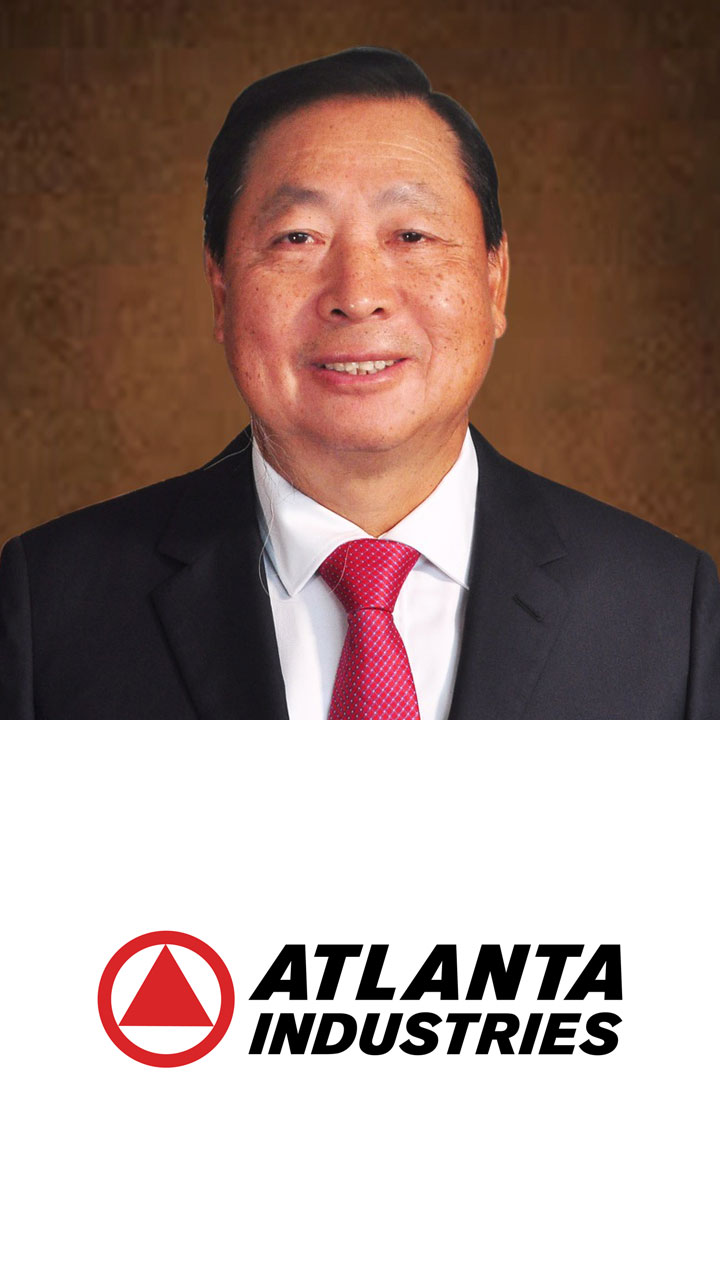
Roberto J. Chan
Chairman and Chief Executive Officer
Atlanta Industries, Inc.

IT TAKES TIME to build something worthwhile. Undoubtedly, there will be bumps and challenges along the way but anything is possible if you work hard, persevere and believe in yourself. Such is the case for Roberto J. Chan, chairman and chief executive officer of Atlanta Industries, Inc.

No stranger to hard work, Mr. Chan was a working student who had to balance going to school in the mornings and then working at their family business in the afternoons. He wore many different hats at his job — manager, salesman, the person in-charge of production, delivery, dispatch, and others. Eventually, he had to quit his studies at the University of the Philippines after two years due to the challenges that came with being a working student.

At 20 years old, he started working full time. He began his entrepreneurial journey at a humble hardware store in Binondo, Manila. Finding his footing, he later ventured into wholesale hardware materials. As with any other fledgling business, the company’s early years had its share of challenges. Back then, his wife would stay in the office to take care of back-office concerns while he was out making sales.

At that time, there were a lot of new technologies and innovations emerging in the construction industry. Poly-vinyl chloride (PVC) was one of them. However, PVC was considered inferior to steel, which at that time dominated the piping and plumbing industry. But something about the technology touched the inventor in Mr. Chan and he felt there was much potential in PVC.

Through luck and timing, he was given the opportunity to become a distributor of a PVC pipe manufacturing company. After the manufacturer encountered problems and wanted to close, Mr. Chan was offered the chance to take over the business. Though he had no background in manufacturing, Mr. Chan accepted the offer, took out a loan and acquired the corporation. By 1986, it then formally became Atlanta Industries, Inc.

Everything seemed to be going his way in the years that followed. With Mr. Chan’s extraordinary ability to solve problems and provide solutions through his numerous inventions, Atlanta grew rapidly. When the 1997 Asian financial crisis hit, the company incurred huge foreign exchange losses from debt due to the sudden and significant peso depreciation against the dollar. Suddenly, the company’s debt was two to three times bigger. It was a tough time for everyone — companies and banks alike.

Fortunately, Mr. Chan was able to address his debt issues through loan restructuring. Because of that experience, he is now conservative when it comes to the company’s expansion. Eventually, Mr. Chan recovered from that roadblock, survived two more financial crises and other business challenges.

Today, Atlanta Industries is one of the Philippines’ leading manufacturers of high-grade PVC/CPVC/HDPE/PPR pipes, fittings and profiles. In addition, Atlanta has a highly diversified catalog of products that cater to various industries and sectors, from real estate developers to government contractors, utility companies and educational institutions. The company also produces PVC building components such as windows and doors, ceiling and wall materials, school chairs for the Department of Education, PVC toilets for the Department of Health, protective tubing for telecommunication companies, and agribusiness materials. It also developed PVC rescue boats for use during disaster relief operations.

Through it all, what helped Mr. Chan overcome the difficulties in his entrepreneurial journey was his growth mindset and his nature as an inventor who aims to make things better for others. His inventor side often comes to the fore during trying times. He is not one to back down from a challenge. He would do research on a certain need and do what it takes to provide a solution to address that need. This is one of the main reasons why he was able to survive financial crises, turn challenges into opportunities and produce world-class products.

Mr. Chan currently has 41 patents under his name — each an answer for a need. Despite not finishing university, he made the most of what he has and went above and beyond everyone’s expectations. He made not just ordinary products but high-quality ones that have a big, positive impact on many people. For example, he developed a strong, easy to install, recyclable, chemical and impact resistant, and UV resistant large structured wall HDPE pipe, called Durapipe. Durapipe is now being used in many cities’ underground drainage to divert water and prevent landslides — replacing the country’s decades-old concrete pipes. The product is said to help solve the problem of flooding and inadequate drainage system in the country. Durapipe is approved by the Department of Public Works and Highways.

During the pandemic, Mr. Chan was also one of the first batch of COVID-19 patients. He was intubated for 40 days. For him, this is his second life. Currently, he is preparing his sons to take over the company. He has high hopes for them, saying that they share his ideas and goals.

When asked about the secret to his success, Mr. Chan said: “You have to have faith. And you have to be honest, sincere, hardworking and humble. Sincerity and integrity are very important.”

The media sponsors of the Entrepreneur of the Year Philippines 2022 are BusinessWorld and the ABS-CBN News Channel. Gold Sponsors are SteelAsia Manufacturing Corp., Uratex, and Navegar. Silver Sponsors are Intellicare, OneWorld Alliance Logistics Corp., and Regan Industrial Sales, Inc.

The winners of the Entrepreneur Of The Year Philippines 2022 will be announced on Nov. 21 in an awards banquet at the Grand Hyatt Manila. The winner will represent the country in the World Entrepreneur Of The Year 2023 in Monte Carlo, Monaco in June 2023. The Entrepreneur Of The Year program is produced globally by Ernst & Young (EY).

Documentary highlights work of Filipina scientists over pandemic

SCREENSHOT VIA UNDP PHILIPPINES/YOUTUBE 

By Brontë H. Lacsamana, Reporter 

A DOCUMENTARY that highlights the work of Filipina data scientists over the pandemic shows how clear and accurate information can help solve public health crises. 

“The challenge was to build a team that will encompass the data pipeline, from the data source to analysis to visualization,” said Ma. Regina Justina E. Estuar, an information systems and computer science professor at Ateneo De Manila University and the team leader of FASSSTER (Feasibility Analysis of Syndromic Surveillance using Spatio-Temporal Epidemiological Modeler), a disease surveillance and modeling platform.   

One of the subjects of Pintig: Women, Data, and the Pandemic, the FASSSTER team — initially formed to address dengue, measles, and typhoid — was mobilized by the Department of Health (DoH) during the coronavirus disease 2019 (COVID-19) pandemic. 

“With very little data and calibration, we were uncertain with what we had produced initially,” said Ms. Estuar at the documentary’s Oct. 28 launch. “One thing that was helpful was that there was good scientific discussion among groups of data scientists. The questions were hard but it challenged us to make sure we’re doing the right thing.”  

Reinabelle C. Reyes, senior data scientist at Pintig Lab under the United Nations Development Program, added that data science and analytics should be applied to solve developmental problems.   

“If your fundamentals are there and your heart is in the right place and you are open to collaborating with the right people, together you can come up with something bigger and better,” she said.  

Pintig Lab monitors and tracks the COVID-19 pandemic and provides data-driven support to DoH and other agencies in their response and recovery efforts.  

AI4GOV, a social technology organization led by co-founder Lei Motilla, collaborated with data science groups to create an algorithm for triaging.  

“We scoured the internet for algorithms. We created one and then presented it to DoH and then soon after there was a memorandum. It all happened so fast,” Ms. Motilla said. “There were so many stakeholders and we felt maybe we’re too small for this.”  

After reflecting on the organization’s goal to improve public services, AI4GOV went full steam ahead to do their part in fighting the pandemic.  

Maria Rosario S. Vergeire, officer-in-charge at the DoH, said that the women in the Pintig documentary are just one part of the large population of women who helped the country through the health crisis. 

“In this time full of doubt, we had to show people that in these kinds of situations, women can make concrete actions and directions along with feeling the compassion and emotions that we have,” she said.

North Star to grow meat business ahead of IPO

AFTER its deferred market listing, North Star Meat Merchants, Inc. is focusing on growing the business using funds from partners while waiting for the right time to hold an initial public offering (IPO).

“Rather than focusing on an IPO, with us just waiting for the right time, [we will] just focus on the fundamentals of the business,” North Star Chief Executive Officer Anthony Ng said in a recent interview with BusinessWorld.

“So, rather, we would focus on improving right now the business itself, growing the business with the support of partners and banks, [since] the opportunity is there,” he added.

North Star, an end-to-end fresh frozen meat retailer, counts SM Markets, United Steak, Waltermart, and Alfamart as among its retail partners.

Mr. Ng said the company remains keen on an IPO possibly in 2023 or by early 2024. The maiden offering was supposed to run from June 13 to 17, 2022 from which the company expects to raise around P3.5 billion.

“If I had a magic genie, of course, we would like [the IPO] to be 2023, early 2024, but we cannot go against the situation. It’s global, it’s not even domestic,” he said.

In March, North Star filed the registration application for its IPO with 1.8 billion outstanding shares to be offered to investors. Days before the offer period, the company said that it was deferring the offering due to market volatility.

“Two days into pricing, we realized [that] it’s bound to enter a bear territory. All of the indications were moving toward that. In my head, it was [a] very obvious decision that had to be made,” Mr. Ng said.

He added that the company is waiting for an indication that the economy is beginning to bounce back.

“But obviously, no one knows, it’s as good as anybody’s guess,” he said. “So, until that indication comes, we will be in a standby mode.”

According to Mr. Ng, what the company is constantly trying to improve its revenues and profit.

“[It’s going to be] continuous projects, continuous expansions, continuous ways of finding creative avenues where we can enhance our topline and bottom line,” he said.

Mr. Ng also said that prices are increasing abroad and that there is a “supply crunch” locally, prompting North Star to stock up.

“All of our finances right now are directed towards securing stocks in the most efficient manner,” he said.

Meanwhile, Mr. Ng said the company is on track to reach its 2022 topline target by the end of this year.

“Our guidance was P9 billion to P9.5 billion. At least, so far, ‘wag lang may mangyari lang sa (as long as nothing’s going to happen in the) last quarter, which is an important part of the year. If we annualize our results, we will reach P9 billion to P9.5 billion,” he said.

According to the company’s website, North Star’s full-year sales last year reached P9.28 billion, up by 52.5% from P6.09 billion in 2020.

Its net income last year reached P610.47 million, more than twice the earlier year’s P238.83 million. — Justine Irish D. Tabile

Hats: an important part of Korean culture

DIFFERENT hats shown at the ‘Korea, A Land of Hats’ exhibition.

OFTEN worn as an accessory or as protective gear, hats add personality to the wearer’s overall look. In Korea, hats completed an outfit and were traditionally worn at social events and to symbolize social rank.

“Korea, A Land of Hats,” an exhibit presented by the Metropolitan Museum of Manila — now called The M — with support from the Traveling Korean Arts project of the Korean Foundation for International Cultural Exchange (KOFICE), and done in collaboration with the Korean Cultural Center in the Philippines (KCC) and Coreana Cosmetics Museum, features around 150 headpieces including heritage Korean traditional hats, and modern art works.

As creations of Korean National Intangible Cultural Heritage, Korean traditional hats exhibit both the beauty and the complexity of Korean craftsmanship.

The exhibition notes state that the hat, or moja, is more than a mere accessory. It is believed to be directly linked to one’s attitude, spirit, and life beyond serving practical and decorative functions. It was a unique piece of clothing culture that reflected the rich Korean history, the occasion, social values and status, and the wearer’s rank.

When Confucianism flourished in the Joseon Dynasty (1392-1897), decorum was of high value and people maintained themselves well-kept from head to toe. A hat held social significance as an indicator of class as well as serving a practical purpose as head protection. Headpieces matched clothing and were classified by use into daily, going out, or ceremonial gear. Unlike in Western culture where it is considered polite to remove one’s hat when inside the house, Koreans kept the hat on as it was against etiquette to reveal a bare head, even indoors.

The exhibit begins with the artifacts section, and includes accessories and headdresses for women, men, and children predating the 19th Century. Men’s hats were mostly blue while women’s hats were red. Men’s hats had more variety in design as men were engaged in more social activities.

Highlighted in the exhibit is the gat — the most notable hat in the Joseon Dynasty. It has become famous among K-drama fans for its appearance in the Korean zombie series, Kingdom. Normally in black, the heuklip (black hat) has a wide brim and was worn by high-ranking military officials. It is secured by tying strings under the chin. The long gat strings were decorated with bamboo, jade, amber, coral and other precious stones to indicate the wearer’s social standing.

The exhibition also showcases hats created by the Korean National Intangible Cultural Heritage artisan for Gannil (gat hat making) Park Chang Young and its certified trainee Park Hyung Park. The process of gannil involves three basic steps: making the cylindrical hat with horsehair or bamboo; making the broad brim, called yangtae, with thin-split bamboo; and combining the hat and brim, adding fabric, and applying lacquer to complete the gat.

Along with the actual hats, the exhibition also presents specially curated contemporary artworks — paintings, photos, books and installation work.

The exhibit ends with a display of traditional Korean costume dolls from Baehwa Women’s University. The dolls recreate Korean clothing worn in different seasons by a child until they become an adult. A bride doll displays the traditional wedding headdress of the North Korean region, which shows the glamour of a traditional Korean wedding.

Before leaving the exhibit, guests can also try wearing hats and take pictures with a traditional Korean street background.

Adjacent to the exhibit is its local counterpart titled “Hat of the Matter,” an exhibit which features Filipino hats and examines Filipino contemporary artists’ interpretations of Philippine head gear.

WHAT’S IN STORE FOR THE M
“Korea, A Land of Hats” is the second exhibition of The M’s soft opening at its new location, following one featuring Ronald Ventura’s sculptures and paintings in the building’s alley and ground floor.

Metropolitan Museum of Manila President Florentina “Tina” Colayco said that The M is set to officially open in February 2023.

“We are gradually opening the spaces as they become available, and also because we have been planning some of the shows for some time,” Ms. Colayco told BusinessWorld during the launch of “Korea, A Land of Hats” on Oct. 21.

Designed by New York-based Filipino architect Carlos Arnaiz, The M takes up three floors and occupies over 3,000 square meters at the Mariano K. Tan Center in Bonifacio Global City in Taguig. It houses exhibition spaces and the museum staff’s office. (Related story: https://www.bworldonline.com/arts-and-leisure/2021/12/01/414191/the-met-is-now-the-m/ ).

When other activities are viable, The M plans to host onsite workshops for teachers and students.

“Education has always been a big component of what we have always been doing. We plan to have teacher’s training for public school teachers, but we had to put a hold on that because school was out (because of the COVID-19 pandemic). But now that the museums are starting to open their spaces, we could probably continue holding workshops for teachers, kids, and viewings for the disabled,” Ms. Colayco said.

In December, The M will launch the “Elusive Edge,” an exhibition which will highlight the history of Philippine abstraction, curated by Patrick D. Flores. As a tribute, it will include works by National Artist for Visual Arts Arturo Luz who was the Metropolitan Museum of Manila’s first director.

“We really hope to be deeply engaged with the community because our philosophy from before was really ‘Art for All.’ I think museums now are more open and more inclusive — all the more because we are part of a new environment now,” Ms. Colayco said.

The original Metropolitan Museum of Manila building opened along Roxas Boulevard in Manila in 1975. It was initially a venue for international art exhibitions, showing works from the Brooklyn Museum and other American museums and galleries. In 1986, it shifted its focus towards local works, started offering bilingual exhibition texts, and developing outreach educational programs.

“Korea, A Land of Hats” if open to the public for free until Nov. 30. The M is open Tuesdays to Saturdays from 10 a.m. to 4 p.m. at the MK Tan Centre, 30th St., Bonifacio Global City in Taguig. Reservations are required and guests are advised to wait for a confirmation letter from The M. The visit will be by appointment and is opened to maximum of 20 people. One can book a visit at https://tinyurl.com/TheM-2022ScheduleYourVisit.   Michelle Anne P. Soliman

DoH cautions the public against waterborne, foodborne diseases

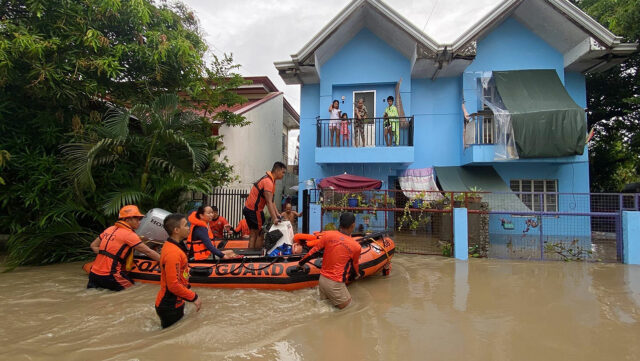
PHILIPPINE COAST GUARD FACEBOOK PAGE

RESIDENTS of areas flooded by Severe Tropical Storm Paeng (international name: Nalgae) should guard against possible outbreaks of waterborne and foodborne illnesses, influenza-like illnesses, leptospirosis, and dengue, a health official said. 

The Department of Health (DoH) has activated the Inter-Agency Committee on Environmental Health, set to convene on Nov. 4, to discuss ways to address acute gastroenteritis and diarrhea cases, as well as cholera outbreaks, that may be caused by the onslaught of recent typhoons and floods.   

 According to a DoH surveillance report, leptospirosis deaths from January–October 2022 rose to 332 from 164 in the same period last year. Food- and waterborne diseases such as cholera and dengue likewise increased to 37 from 6, and 559 from 220, respectively. Acute bloody diarrhea, meanwhile, decreased to 67 for the current period, from 87 last year.  

“The public should watch out for these diseases, especially those who are in evacuation centers. The rain and cold weather can cause colds, cough, and fever, which can easily transmit from one person to another,” said Dr. Ariel I. Valencia, chief of the Calabarzon (Cavite, Laguna, Batangas, Rizal and Quezon) health office, in a Nov 1. statement. 

“Handwashing, proper disposal of masks, and physical distancing should be observed. Inform officials of evacuation centers immediately if you have symptoms of these diseases,” he added.   

Tacloban, one of the areas in the Eastern Visayas affected by Paeng, reported six cholera cases on Oct. 28. Fifty-six other patients have also been confined at the government-run Eastern Visayas Medical Center and Tacloban City Hospital due to severe cases of dehydration. — Patricia B. Mirasol 


Sidebar | Are you at risk for leptospirosis?  

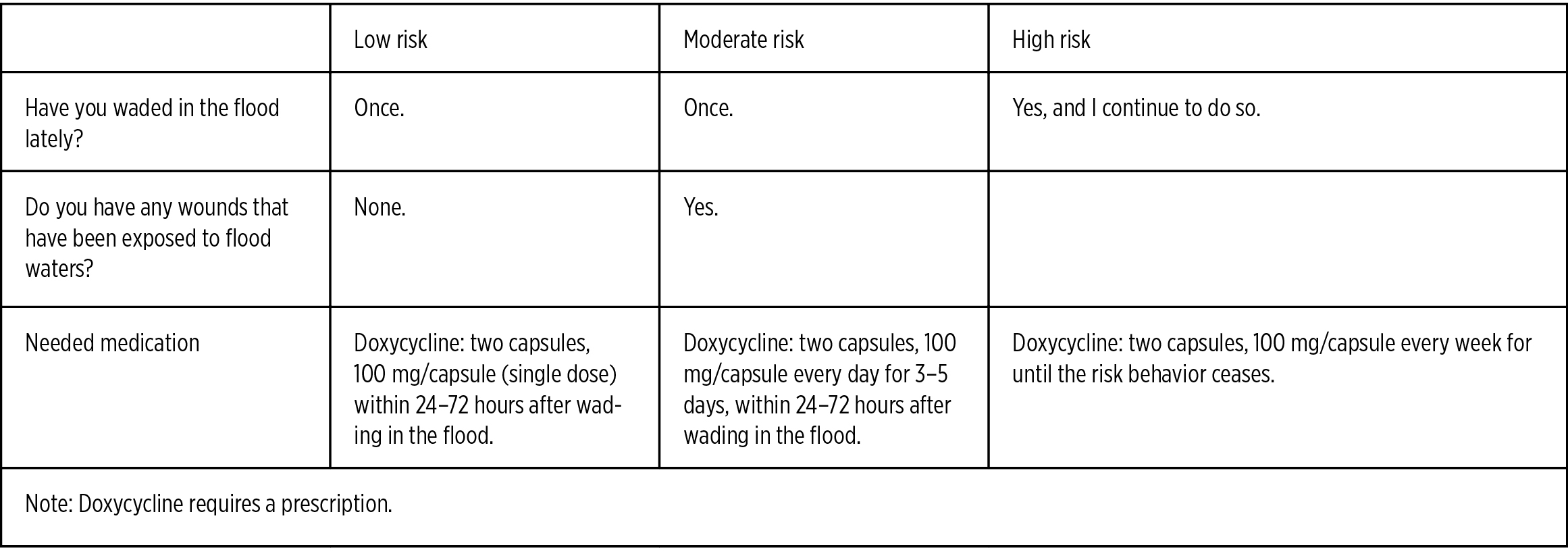
Leptospirosis is a bacterial infection that can cause heart, liver, and kidney failure in severe cases. It is found in animal urine collected in water gutters, making individuals with cuts on the skin or wounds on the feet who wade in floods susceptible to the disease.  

Are you at risk for leptospirosis? The Department of Health shares the following advisory:


Sidebar | What do you need in a go bag?  

The Department of Health advised packing a go bag for emergency situations. Here’s what you should have in your kit

  • Food — non-perishable items such as biscuits, crackers, cup noodles and canned goods; 1.5 liters of drinking water, plus coffee and tea;  
  • Toiletries — toothbrush, toothpaste, mouthwash; sanitary napkins; soap, shampoo, and conditioner; hand sanitizer and alcohol; insect repellant; sunscreen  
  • First aid kit — bandages and sterile gauze; micropore tape; povidone iodine and alcohol; wound ointment; mefenamic acid and paracetamol tablets; maintenance medications  
  • Survival kit — pocket knife with can opener; flashlight or penlight and matches or lighter; rope, fishhook, and line; whistle; utensils and a plastic bag  
  • Personal Protective Equipment (PPE) and other equipment — safety goggles, dust mask, N95 mask, surgical gloves, raincoat, poncho; portable radio, batteries, powerbank, charger, extension cord  
  • Clothes and bedding — lightweight shoes and slippers; jacket; blanket and sleeping bag; an outfit that can be worn for up to three days

Enstack targets to grow PHL merchants, partners

SUPERAPP Enstack is aiming to grow its ecosystem of merchants and partners in the country as part of efforts to expand its presence and to help more small and medium enterprises (SMEs) digitalize their operations.

Enstack Chief Executive Officer and Co-Founder Macy Castillo told BusinessWorld via e-mail interview that the platform is focusing on providing solutions to underserved SMEs that wish to digitalize their daily operations.

“The app’s performance has exceeded targets and expectations both on merchant adoption and transactions. We plan to continue growing our ecosystem of highly engaged merchants and integrated partners in the next year while we consider various monetization options without shifting the large burden to our SMEs,” Ms. Castillo said.

“We are constantly onboarding more logistics providers to help us better serve our SME needs in different areas of the country, looking to add to our standard delivery partners,” she said, enumerating these as Ninja Van, 2GO, and same-day delivery partners Grab and Lalamove.

According to Ms. Castillo, Enstack currently has over 50,000 merchants and 25 integrated partners since it was launched in February, adding that demand for the platform has been increasing following the lifting of pandemic-related restrictions and as many businesses have yet to digitalize their operations.

She added that Enstack is aiming to launch in other Southeast Asian countries in the next 18 months while growing its presence in the Philippines and Vietnam.

“The growth of in-app transactions is far exceeding our expectations with the holidays fast approaching. Merchants in health, beauty, fashion, and food are the most popular, proving that our app addresses the needs of different types of small businesses,” Ms. Castillo said.

She said that Enstack is also helping merchants to address hesitancy towards digitalization via online workshops and caravans targeting SMEs.

“We continue to expand partnerships with private and public organizations including the Trade department and several local government units such as Muntinlupa and Pasig by hosting online workshops and on-the-ground caravans to help SMEs understand the value of starting their own business and future-proofing their operations through digitization,” Ms. Castillo said.

“Education remains to be the most important aspect to helping merchants overcome their hesitancy to digitization,” she added.

Enstack allows entrepreneurs to operate their businesses from their phones via Enstack Cashier, Chat Store, and Web Store. The platform also offers access to payment and delivery solutions such as cash on delivery, GCash, credit cards, same-day delivery, and standard delivery.

The platform also offers a streamlined signing-up process that only requires interested merchants to upload one ID, selfie, and proof of address, allowing them to bypass paperwork required by banks, payment processors, and logistics providers.

“Startups like Enstack have the potential to contribute greatly to the growth of the economy by providing innovations and services that address market needs. To harness this opportunity, we are focused on providing small businesses [with] best-in-class commerce and business management tools that minimize their need for capital, skills, and infrastructure,” Ms. Castillo said. — Revin Mikhael Ochave

From QAnon to The Sandman: How demons found a place in popular culture

ACTOR Tom Ellis in a scene from the TV show Lucifer.

In western culture today, demons exist as something of a paradox. Religious belief in them is often presented as marginal. Many mainstream Christian denominations are silent or give them little prominence.

In 2014, for example, the Church of England removed references to the devil from its baptismal rites. When questioned, Bishop Robert Paterson stated that the devil “has been turned into a cartoon character of no particular malevolence.”

At the same time, American politics is replete with demons. Pentecostal ideas of “spiritual warfare” — the use of prayer to battle invisible demonic forces — have become mainstream and tied to ascendant Christian nationalist movements.

Belief in satanic forces behind national and global politics are core tenets of conspiracy movements like QAnon, which claims (without evidence) that liberal actors and politicians engage in satanic ritual abuse of children to prolong their lives.

Western demons remain alive and well in popular culture and contemporary politics. One of us (Jonathon) has researched the continued presence of demons in contemporary culture from gaming to US elections.

The other (Zohar) has completed a study demonstrating the complexity of demons in medieval religious traditions and folk tales. And it shows the enduring relevance of these stories for contemporary societies, as such stories continue to be told as a living oral tradition to this day.

Yet it is hard to completely refute Bishop Paterson’s assertion. The devil’s swing between cartoon character and active threat is part of the figure’s complex history in the modern world. While once seen as threats to human souls, demons today are much more ambiguous figures.

This ambiguity is in line with non-Christian and older perceptions of demons. In the ancient near east, demons were perceived as good, evil, or morally neutral. Liminality (existing at a boundary or threshold) and ambivalence are essential characteristic of demons. Christianity repressed these aspects, identifying demons as unequivocally evil.

Traditions such as Islam maintain a long-standing ambivalent depiction of demons and Satan, who can be rebellious and believers, deceitful and teachers, benevolent and enemies. In Mediterranean Muslim societies and beyond, jinn (spirits which can be benevolent or malevolent) remain a concrete part of life, due to cultural heritage and religious tradition.

The Qur’an depicts the jinn as an intelligible species, alongside humans and angels. This religious and cultural context is a powerful influence on notions of health and disease, too. For example, the notion of possession by jinn can be seen in Muslim societies, but also in the UK, among communities from Pakistan, Bangladesh, the Middle East, or north Africa. Sometimes, modern medicine and an Islamic religious authority are involved in such cases.

For many westerners today, however, demons are more often figures of popular culture. Yet such depictions often echo their ambivalent ancient and non-Christian characterizations. In the TV show The Chilling Adventures of Sabrina (2018–2020), the devil is both an object of devotion for several core characters and a primary antagonist.

In Lucifer (2016–2021), he abandons rulership of hell to run a nightclub in Los Angeles and assist local police in solving crimes. These works often take the devil’s theological origins more as inspiration than as gospel.

The titular character of Lucifer is drawn from the universe of Neil Gaiman’s graphic novel, The Sandman — itself subject to a recent TV adaptation. And Sandman’s Lucifer owes more to the Satan of John Milton’s epic 1667 poem “Paradise Lost” than the Christian Bible.

Milton’s portrayal of Satan wrestling with his damnation inspired others to reflect on themes of freedom, power, justice, and self that recast the devil in morally ambivalent, even heroic ways. Beyond simply figures of evil, demons became artistic motifs to explore of the struggles of free will, the opposition to tyranny and the processing of grief.

This ambivalence exists in other religious traditions. Sufi (mystical) Islam portrays Iblis (Satan) as tragic. He was disobedient of God’s command to the angels to bow before the newly created Adam because he preferred monotheism (only prostrate oneself to God) over obedience.

Yet as Kevin Spacey’s character, Robert “Verbal” Kint, says in The Usual Suspects: “The greatest trick the devil ever pulled was convincing the world he didn’t exist.”

This phrase echoes a Sufi warning against turning one’s back on demons: as soon as they are considered dead, they will rise and stab the person in the back. For practitioners of “spiritual warfare,” this is exactly what has happened. To them, the decline in literal belief in demons and the diversity of media depictions are signs not of the evil’s decline – but his ascent.

The Christian nationalist movement in America today is exemplary here. As Jonathon analyses in their book, Passing Orders (2021), members of this movement view social liberalization and cultural change as demonic.

Reproductive and LGBT rights and recent movements for racial justice such as Black Lives Matter are key examples of such changes. Often this is framed as a struggle against an imagined “secular humanism,” the driving, diabolic ideology of a secular world that has forgotten the devil exists, and which thus acts on his behalf.

Despite common perceptions of them as inherently evil, the place of demons in modern society is often ambiguous. In line with their depictions in non-Christian contexts such as Muslim and ancient Greek traditions, demons exceed simple representations of evil, becoming symbolic of concepts such as freedom, willfulness, rebellion, passion, and moral grey areas. This ambiguity becomes especially stark when placed against differences in cultural contexts and historical eras. — The Conversation via Reuters Connect


Zohar Hadromi Allouche is an Assistant Professor in Classical Islamic Religious Thought and Dialogue at Trinity College Dublin. S. Jonathon O’Donnell is a visiting scholar, postdoctoral fellow in American Studies, in Queen’s University Belfast. Allouche received funding from the Trinity Long Room Hub Research Incentive Scheme, Trinity Research in Social Sciences, and Trinity Art and Social Sciences Benefactions Fund for the funding of Demons: Good and Bad conference (2022).

Eating local greens can improve mental health — wellness experts

UNSPLASH

FILIPINOS who suffer from poor mental health can benefit from eating local in-season vegetables since gut health can improve mood, said doctors and wellness experts.  

Without vegetables, opportunistic bacteria can prey on an unbalanced gut microbiome, inflaming the gastrointestinal system which leads to poor mood regulation, according to speakers at the recent National Mental Health Summit. 

The folk song “Bahay Kubo” names essentials like singkamas, talong, sitaw, and upo (turnip, eggplant, string bean, and white squash), which provide dietary fiber that transforms into butyrate, a metabolite that helps produce serotonin.  

“Butyrate communicates with cells that produce serotonin, one of the neurotransmitters that regulates your mood,” said Dr. Carisse Diana “Candy” Drilon-Dalman, medical director of wellness clinic Centro Holistico, at the Oct. 25 summit organized by mental health services provider Mind You and the Department of Health.   

Dr. Dalman added that 98% of serotonin is produced in the gut, which makes eating metabolite-producing vegetables an important part of self-care.  

“The gastrointestinal system starts in the mouth. Everything you put in your mouth affects the entire system. Your gastrointestinal system is the connection of your environment to your internal environment,” she said.  

The diversity of one’s gut microbiome depends on where an individual is in the world, she added, since human beings are always more “attuned” to local food.  

Vegetables endemic to the Philippines can regulate moods, according to Dr. Susana M. Balingit, a wellness doctor at The Farm at San Benito and an advocate of using food as medicine.  

“If we were just to use what’s local and endemic to where we come from, we would have a lot to help us improve our mental health,” she said. 

Here are Dr. Balingit’s recommended vegetables and the corresponding areas of mental health they address:  

Sprouts — mushrooms, togue (mung bean sprouts), bamboo shoots, ubod ng niyog (coconut palm heart)  

  • To strengthen liver and gall bladder  
  • For when you’re angry, restless, frustrated, resentful, and sluggish

Leafy vegetables — saluyot (jute leaves), talbos ng kamote (sweet potato leaves), kangkong (water spinach)  

  • To help the heart and small intestines  
  • For when you feel overly excited, tense, restless  

Fruit vegetables — ampalaya (bitter gourd), squash, upo  

  • To keep your pancreas, spleen, and stomach healthy   
  • When you feel extra sensitive or like you want to cry or have strong craving for sweet taste  

Beans/Seed vegetables — sitaw (string bean), bataw (hyacinth bean), patani (lima bean), sigarilyas (winged bean), mani (peanut)  

  • To strengthen your lungs and large intestines  
  • For when you’re depressed, nostalgic, lethargic, indecisive  

Root crops — garlic, onions, ginger, kamote, cassava, gabi (taro)  

  • To reinforce your kidneys and reproductive organs  
  • For when you feel worried, overwhelmed, confused, scared, or hesitant and crave for a salty favor  

“We claim our country to be one of the most eco-diverse but we allow other people to teach us what to eat. They just taught us what they know they have and what they can sell to us, but what happens to what we have?” said Dr. Balingit. — Brontë H. Lacsamana 

CapitaLand Ascott ties up with IFC for bond issuance

CAPITALAND Ascott Trust Management Ltd. has partnered up with International Finance Corp. (IFC) to be the sole subscriber for a sustainability-linked bond worth 16.5 billion Japanese yen or about 157.4 million Singapore dollars.

“[CapitaLand Ascott] continues to collaborate with like-minded stakeholders in the financing and investment community to fight climate change through our collective efforts,” said Serena Teo, its chief executive officer, in a press release.

Proceeds from the issuance will be used to refinance CapitaLand Ascott’s debts and to further decarbonize three of its serviced residences in Southeast Asia.

The residences — Ascott Jakarta in Indonesia, Ascott Makati, and Somerset Millennium Makati in the Philippines — are expected to achieve a 40.5% reduced electricity consumption by the end of 2028.

The projects must also obtain IFC’s Excellence in Design for Greater Efficiencies (EDGE) certification within the same time frame.

CapitaLand Ascott is said to be the largest lodging trust in Asia-Pacific with an asset value of S$7.6 billion as of mid-2022. IFC is a global development institution focused on private firms in emerging markets.

The bond issuance is part of CapitaLand Ascott’s S$2-billion multicurrency debt issuance program with a fixed coupon rate of 1.05% per annum.

The seven-year bonds will mature in November 2029 and will be paid semi-annually.

According to Ms. Teo, the company has already raised around S$450 million through sustainable financing.

“Dovetailing our financing efforts with our environmental, social and governance efforts further affirms our commitment towards responsible growth,” Ms. Teo said.

“Currently, 35% of [CapitaLand Ascott’s] portfolio is green-certified and we remain on track to green 50% of our portfolio by 2025 and our entire portfolio by 2030,” she added. — Justine Irish D. Tabile