Home Blog Page 5624

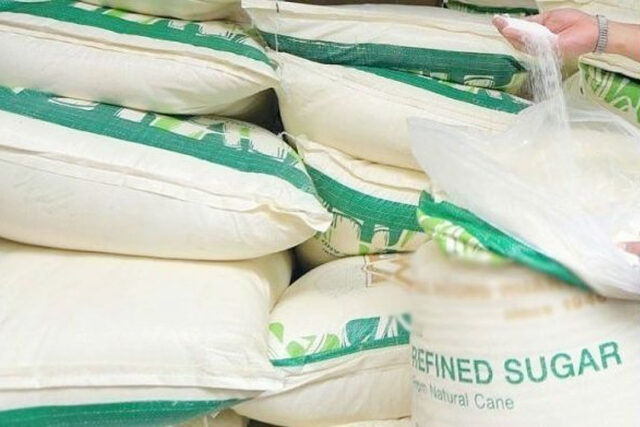
Sugar industry wants SRA to distribute imports 50-50 between industrial users, consumer market
PHILIPPINE STAR/EDD GUMBAN

THE sugar industry said the government agency regulating the commodity needs to allocate sugar imports on a 50-50 basis between industrial users and consumers, in keeping with its mandate.

“Our suggestion is that (imports) should not be given to just selected industrial users. The mandate of the Sugar Regulatory Administration (SRA) is to regulate supply. At least 50% was to go to industrial users and 50% to domestic users or wet markets so that sugar prices won’t rise this high,” Luzon Federation of Sugar Producers, Inc. President Cornelio V. Toreja said during a Congress hearing on Monday.

The hearing was called in response to the unauthorized signing of Sugar Order (SO) No. 4, which the Palace has since clarified did not have the approval of President Ferdinand R. Marcos, Jr.

The incident has led to the resignation of Agriculture Undersecretary Leocadio S. Sebastian, who acknowledged last week that he signed the order on behalf of Mr. Marcos. On Monday, SRA board member and millers representative Roland B. Beltran, who also signed the order, resigned from the board, citing “health reasons.”

SO No. 4 would have allowed the import of 300,000 metric tons (MT) of sugar. 

“We agree there is a need to import refined sugar to address high domestic and stabilize supply. There is no need to import raw sugar. Imports should be open to accredited traders with track records and the use (of the imports) should not be confined to a specific sector,” Mr. Toreja added.

Philippine Sugar Millers Association President Pablo L. Lobregat said that rising sugar prices would have been averted if a previous sugar order had been implemented on time.

“If SO No. 3 was able to be realized, I don’t think we would have this rise in prices to astronomical heights. Therefore, SO No. 4 is compensating for the additional requirements given that the final figures of sugar (due to be produced and held in inventory) are not sufficient,” he said.

SO No. 3 was issued in February and authorized the import of 200,000 MT of refined sugar. The import plan was delayed by two separate temporary restraining orders (TROs) filed against it.

According to SRA Administrator Hermenegildo R. Serafica, the TRO issued by the Regional Trial Court (RTC) of Sagay City has been dismissed, while the one filed with the RTC in Himamaylan City remains active.

Mr. Serafica added that not all shipments ordered under SO No. 3 have arrived.

As of Aug. 12, a total of 185,633.0 MT to be imported under SO No. 3 are covered by SRA clearances and actual arrivals are at 166,234.90 MT.

“The filed cases stymied the imported sugar. The elections also (resulted in) some delay, until finally it was noticed by everyone that (claims) there was enough sugar were not true. Look at what happened to the prices,” Mr. Lobregat said.

“The SRA is supposed to make sure that the supply of sugar is balanced, protecting consumers from shortages and making sure it does not import too much sugar, which is detrimental to the producers. The SRA has been in contact with different players in the producer sector. We always try to find a balance of supply. This year has been a difficult year,” he added.

Mr. Lobregat said that the issue with SO No. 4 is an administrative or inter-office miscommunication, and that the necessity of importing sugar remains.

“If there’s a (deficiency in the) process between SRA, DA (the Department of Agriculture) and the President as secretary of DA, it has nothing to do with the supply or lack of sugar today. SO No. 4 was done in consultation with producers to ensure (sufficient) volumes for imported sugar to bring down prices to acceptable levels,” he added.

Samahang Industriya ng Agrikultura Chairman Rosendo O. So said that the SRA should inspect warehouses to verify supply levels.

“The SRA should call on all groups, even the distribution pipeline, to determine whether there is a shortage or not. Wherever we go, we see sugar. We do not see a shortage,” he said.

“We also found out that the production shortfall is just 100,000 MT. So why is the SRA (authorizing the import of) 300,000 MT?” he added.

United Sugar Producers Federation President Manuel R. Lamata said the adequacy of supply is not being reflected in rising prices.

“You go to the wet market or supermarket, there is sugar, but it is too expensive. Even us producers are complaining. Prices are higher than normal because of high fuel prices and fertilizer,” he told BusinessWorld Live on Monday.

“I cannot blame the traders, that is their job. It’s their business, it’s trading. They buy low, they sell high. But it’s a different conversation altogether on the manipulation on behalf of the government,” he added.

Farmers’ group Kilusang Magbubukid ng Pilipinas (KMP) said that an estimated 700,000 farm workers in sugarcane haciendas and 24,000 workers in sugar mills have been affected by the sugar crisis.

“In Negros, some 310,000 sugar farm workers and 18,000 sugar mill workers are affected by lack of work and livelihood due to the dead season between planting and harvest,” known in the industry as “tiempo muertos,” the KMP said in a statement.

“Year after year, sugar farm workers endure hunger and poverty during the dead season while unscrupulous officials cannot wait to rake in profits from sugar imports.” 

Former agrarian reform secretary and KMP member Rafael V. Mariano said that the Congress must investigate what is behind the sharp spike in sugar prices.

“We must know whether there is price manipulation in sugar or the steadily rising cost of sugar production, specifically fuel and fertilizer prices, are the leading factors behind the sugar price hike,” he said.

“Congress should also conscientiously exercise its oversight capacity and determine that decades of liberalization and importation led to the decline and near-destruction of domestic agriculture. We need more legislation that will truly uplift the state of local agriculture and food producers, especially farmers,” he added.

In his official YouTube channel, Mr. Marcos said that before issuing another sugar order, earlier imports must be consumed.

“We currently have previous imports in our inventory. Before we import, we need to finish this supply first. We do not want to resort to imports. However, if the current supply is not enough, we are forced to import,” he said.

“If we do not import and the supply is not adequate, then prices will rise. We need to ascertain that whatever amount we import fits our needs, and not more,” he added.

He brought up the possibility of 150,000 MT worth of imports by October.

“It’s possible that by October, our local supply will be diminished. Maybe that is the time we import, but not a large volume, not as large as 300,000 MT. Around 150,000 MT seems enough for the entire year,” he added.

Philippine Chamber of Commerce and Industry George T. Barcelon supported the revised import plan.

“This is a welcome development. The new harvest will be around the fourth quarter. That will be a reference (for determining whether) more imports are needed. Consumption is higher during the holiday season,” he said in a Viber message.

Former Presidential Adviser for Entrepreneurship Jose Ma. A. Concepcion III said in a statement that Mr. Marcos is “correct in his plan” to import a limited amount of sugar and only if the domestic supply has been exhausted.

“The President’s approach will protect both the consumer and the farmer… but a calibrated importation of 100,000 to 150,000 MT, as the President is planning, will allow us to see if price levels start to go down, and doing this at a gradual level will let us adjust as harvest season approaches, then adjust it again as production goes into full swing,” he added. — Luisa Maria Jacinta C. Jocson

Sweden offers help to improve EDSA Busway; DoTr not ruling out cable car proposals for NCR

PHILIPPINE STAR/ BOY SANTOS

THE Department of Transportation (DoTr) said on Monday that the Swedish government has offered to help expand the capacity of the EDSA Busway project, which suffers from long queues with demand currently overwhelming the available number of buses.

“Transportation Secretary Jaime J. Bautista gratefully received the offer of Swedish Ambassador to the Philippines Annika Thunborg to allow the government of Sweden to explore how to improve the EDSA Busway project,” the DoTr said in a statement.

“During a recent courtesy call at the DoTr Secretary’s office, Ambassador Thunborg relayed the Swedish government’s offer to help enhance the operational efficiency of the highly patronized EDSA Busway project, (which is currently offering) free rides to EDSA commuters until the end of the year,” it added.

The department said improving the EDSA Busway to accommodate the demand when face-to-face classes resume this month is in line with Mr. Bautista’s promise to raise the transport systems to global standards.

The EDSA Busway is a dedicated median bus lane service which is a joint initiative of the DoTr, Land Transportation Franchising Regulatory Board, Metro Manila Development Authority, and Department of Public Works and Highways.

In an appearance on ANC Headstart, Mr. Bautista said the department intends to “look for other possible bus stops” to improve the commuter experience.

“I had a meeting with the consortium that operates EDSA Carousel, and we asked them to have additional buses, especially during the start of the face-to-face classes on Aug. 22,” he added.

CABLE CARS
Mr. Bautista also said the department remains open to having cable cars in the National Capital Region (NCR) as a means of reducing traffic.

“I am not discounting the possibility of this. We are open to all ideas, although it might be difficult to implement it,” he said.

Last week, Senator Robinhood Ferdinand C. Padilla proposed the use of cable cars to decongest the roads.

“I would like to suggest it as it will be suitable for the Philippines, especially in Metro Manila, because of traffic,” he told Senators at a plenary session on Tuesday.

Mr. Bautista said following the proposal, “I asked our undersecretary for road sector to look at it.”

“We will conduct a study because for you to be able to implement a program, you need to have the important data,” he added.

The DoTr in the previous administration had endorsed a project proposal to the National Economic and Development Authority to build a cable car transit system between the Light Rail Transit (LRT) Line 2’s Santolan Station in Marikina City and Barangay Rosario in Pasig City.

The feasibility study for the Metro Manila urban cable car project was funded by the government of France.

The selected alignment spans 4.5 kilometers and mostly follows the Marikina River. It starts from LRT Line-2 Santolan Station and proceeds southward to Ortigas Avenue in Rosario, Pasig.

Four more sites for stations were identified between LRT-2 Santolan Station and Rosario: Quezon City’s Libis and Eastwood and Pasig City’s Santolan and Manggahan. — Arjay L. Balinbin

LGU borrowing proposals sharply lower at end of July

NEW BORROWING sought by local government units (LGUs) declined by 71.34% year on year to P20.8 billion in the seven months to July, the Bureau of Local Government Finance (BLGF) said.

According to preliminary data, the BLGF issued 113 certificates of net debt service ceiling and borrowing capacity to LGUs, against 273 issued a year earlier.

The document is a proxy for the borrowing intentions of local governments, whose capacity for taking on debt must be certified by the BLGF, an arm of the Department of Finance.

The certificates of net debt service ceiling and borrowing capacity were issued to 81 municipalities, 23 cities, four provinces, and five barangays.

LGUs’ total borrowing capacity was P48.65 billion, down by  72.19% from a year earlier.

Cities applied to borrow P8.16 billion, followed by municipalities (P7.79 billion), provinces (P4.83 billion), and barangays (P24.65 million).

Cities also had the highest total borrowing capacity at P26.15 billion, followed by municipalities (P16.41 billion), provinces (P6.05 billion), and barangays (P37.24 million).

In July, the BLGF released two certifications to LGUs covering proposed loans worth P1.09 billion, against the P6.9 billion seen in the same month of 2021.

Aurora province was the leading availer of loans in July with P940 million. Pagadian City availed of P150 million. — Diego Gabriel C. Robles

Budget utilization at 94% in 7 months to July

BW FILE PHOTO

GOVERNMENT AGENCIES raised their cash utilization rate to 94% at the end of July, from 89% posted a year earlier, the Department of Budget and Management (DBM) reported, with analysts saying that disbursements were likely facilitated by easier quarantine settings and the pre-election spending rush.

The DBM said the National Government, local governments and state-owned firms used P2.3 trillion of the P2.44 trillion in notices of cash allocation (NCAs) issued to them in the first seven months, leaving P140.24 billion unused.

An NCA is an authorization issued by the DBM to agencies informing them of the funds available for disbursement.

“The faster government cash utilization rate so far this year may have to do with the further reopening of the economy towards greater normalcy, as well as accelerated government spending on various projects earlier this year especially in preparation for the elections,” Rizal Commercial Banking Corp. Chief Economist Michael L. Ricafort said.

“The government rushed various infrastructure projects earlier this year before the election ban and expedited the completion of various projects before the elections, as well as various modernization programs,” he added in a Viber message.

The ban on public works projects for the May national elections began on March 25 and ended on May 8.

In the five months to May, spending on infrastructure and capital outlays hit P334.6 billion, up 0.7% from a year earlier.

“Actual spending has increased maybe due to increased activity, execution of pledged spending in the previous months, and utilization of budgeted items due to increased demand and soaring prices due to inflation and currency depreciation,” Asian Institute of Management Economist John Paolo R. Rivera said.

The government has mobilized its Targeted Cash Transfer program through the Department of Social Welfare and Development (DSWD) to aid Filipinos affected by inflation, which averaged 4.7% in the first seven months of 2022.

The DSWD recorded a usage rate of 86%, utilizing P107.76 billion out of the P125.73 billion released to the agency.

Aside from the government’s infrastructure and social spending, Mr. Rivera also noted that debt repayments were another factor driving the increased utilization.

In the six months to June, the debt service bill amounted to P458.36 billion, with around 56.12% going towards interest payments.

Line departments used 93% or P1.57 trillion in NCAs released to them as of July.

The Civil Service Commission and the Commission on Audit recorded the highest budget usage rates at 99%, while the Department of Information and Communication Technology and the Department of Labor and Employment posted the lowest rates of 64% and 68%, respectively.

Budgetary support to government-owned companies was almost 100% taken up in the seven months, with P106.97 billion utilized out of P107.42 billion NCAs issued.

Meanwhile, allotments to local government units recorded a 97% usage rate, with P622.48 billion used from the P644.59 billion released.

The DBM released P4.7 trillion or 93.5% of this year’s P5.024-trillion spending plan as of July.

In the same period last year, the DBM had released P3.88 trillion or 86% of that year’s P4.51-trillion budget. — Diego Gabriel C. Robles

SC finds ERC neglected to act on WESM operator’s market fee application

PHILSTAR FILE PHOTO

THE Supreme Court (SC) said the Energy Regulatory Commission (ERC) failed to act on the Independent Electricity Market Operator of the Philippines’ (IEMOP) application to set market fees for 2021.

In a 24-page ruling on March 23 and made public on Aug. 15, the court’s second division said the ERC’s inaction on the application ran contrary to its mandate to act on and approve applications for market fees by IEMOP.

“By not acting on the market fees application filed by IEMOP, the revenue and budgetary requirements of the Governance Arm and the Market Operator of the Wholesale Electricity Spot Market (WESM) for Calendar Year 2021 are put on hold and remain unacted upon,” according to the ruling penned by Rodil V. Zalameda.

“The ERC unlawfully neglected and refused to perform the foregoing duties imposed upon it by law.”

IEMOP, a non-stock, non-profit corporation, filed its application to set market fees for 2021 on Aug. 4, 2020.

As the market operator of WESM, IEMOP has the legal right to apply for market fees and seek action from the ERC, the tribunal noted.

The ERC argued that IEMOP’s application lacked the needed documentation.

The High Court found IEMOP’s submission to be compliant with the ERC’s rules.

“However, despite the foregoing, the ERC did not respond to IEMOP or act on any of its additional submissions or compliance,” it said.

“There is thus no basis for ERC to reject or refuse to act on IEMOP’s market fees application on the ground of lacking documentary requirements.”

IEMOP charges market fees, subject  pending the approval by the ERC to recover its yearly operating costs.

The Electric Power Industry Reform Act created IEMOP, the centralized venue for the trading of electricity between distribution utilities. — John Victor D. Ordoñez

Maynilad says waste reduction from modernization sufficient to supply over 4.3 million people

BW FILE PHOTO

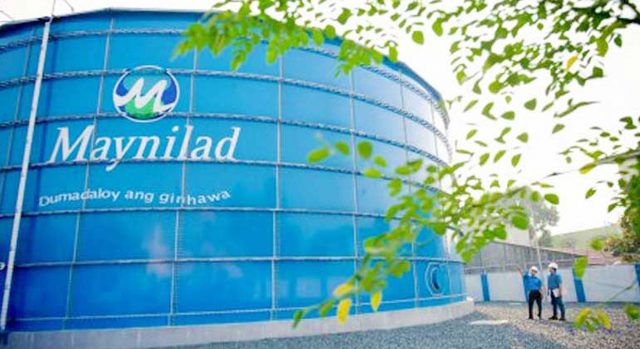
MAYNILAD Water Services, Inc. said its modernization programs since 2007 helped reduce waste of 838 million liters of water per day (MLD), equivalent to the water needs of some 4.3 million people.

“When we took over Maynilad operations 15 years ago, the water distribution network in the West Zone was highly inefficient. We have since poured investment into pipe rehabilitation and modernization, which gradually enabled us to recover more water for distribution. Additional investment is needed to ensure sustained efficiency for the long term,” Maynilad President and Chief Executive Ramoncito S. Fernandez said in a statement.

The water concessionaire said it spent nearly P25 billion on its Non-Revenue Water (NRW) management program to curb physical and commercial water losses, which stood at 66% prior to the re-privatization of 2007.

Of the investment, around P21.8 billion went to pipe replacement projects.

The NRW management program involves pipe and meter replacements, active leakage control using state-of-the-art leak detection technology, district metered areas, and sustained network diagnostic activities.

Maynilad is the water concessionaire for the West Zone of the Greater Manila Area, which is composed of parts of Manila, Quezon City, Makati, Caloocan, Pasay, Parañaque, Las Piñas, Muntinlupa, Valenzuela, Navotas,  Malabon, and Cavite. — Luisa Maria Jacinta C. Jocson

Appealing a decision: Remedies for taxpayers at the FDDA stage

As taxpayers may know, all field audit and other field operations of the Bureau of Internal Revenue (BIR) covered by Letters of Authority relative to the examination and verification of taxpayers’ books of account, records, and other transactions, have been suspended until further notice, except for cases prescribing on or before Oct. 31, 2022, and for other situations described in BIR Revenue Memorandum Circular (RMC) 77-2022. The suspension remains in force at the time of this writing. However, as per the RMC, the service of assessment notices, warrants, and seizure notices should still be effected. 

Before matters reach the point of serving assessment notices, taxpayers normally opt to resolve tax assessments. A prudent taxpayer cooperates and submits the necessary reconciliations, explanations, and documents to resolve the deficiencies or discrepancies initially identified by the BIR. However, when the purported findings of the BIR are not resolved at the early stages, these may reach the Final Decision on Disputed Assessment (FDDA) stage.

The FDDA pertains to the final decision of the Commissioner of Internal Revenue (CIR) or his duly authorized representative on the protest to the Final Assessment Notice (FAN). An FDDA may serve as the final step of the process for taxpayers should they choose to end the assessment by paying the amount demanded. On the other hand, in case of disagreement, the taxpayer may also go the route of requesting reconsideration from the CIR (if the FDDA was previously rendered by the Regional Director) or filing a petition for review before the Court of Tax Appeals (CTA).

It is worth noting that, if the FDDA was rendered by a Regional Director (not yet by the BIR Commissioner), a taxpayer may choose to contest the FDDA either administratively (by exhausting the administrative remedy first) or judicially (the FDDA issued by a Regional Director may be elevated to the CTA within 30 days from receipt of the decision).

If the taxpayer chooses the administrative remedy, he may elevate his protest through a request for reconsideration to the BIR Commissioner within 30 days from receipt of the Regional Director’s decision. If the protest through a request for reconsideration is denied in whole or in part by the BIR Commissioner, a judicial remedy is available in the form of an appeal to the CTA within 30 days from the date of receipt of the FDDA issued by the BIR Commissioner.

However, there could be instances when the BIR issues preliminary collection letters and even final notice before seizure, and/or a warrant of distraint and/or levy after the issuance of the FDDA by the Regional Director and pending the final decision of the BIR Commissioner. There may be confusion as to whether these notices are enforceable against taxpayers and whether these notices constitute the BIR’s decision as appealable to the CTA.

In a recent Supreme Court (SC) case, G.R. No. 231238, dated June 20, 2022, the Court clarified the reckoning point of the 30-day period to file an appeal on the disputed assessment with the CTA if the taxpayer chooses to wait for the decision of the BIR Commissioner.

In the above SC case, when a taxpayer chooses to wait for the final decision of the BIR Commissioner, any issuance of a preliminary collection letter, final notice before seizure, and/or warrant of distraint and/or levy pending such final decision should not be the reckoning point of the 30-day period to file for an appeal with the CTA. Otherwise, the issuance of a preliminary collection letter, final notice before seizure, and/or warrant of distraint and/or levy will deprive the taxpayer of the remedy of waiting for the final decision of the BIR Commissioner on the appeal. Moreover, the preliminary collection letter, final notice before seizure, and/or warrant of distraint and/or levy are all considered tentative pending the decision of the BIR Commissioner on the appeal. Consequently, the taxpayer may file an appeal with the CTA within 30 days from the receipt of the BIR Commissioner’s decision.

Meanwhile, there may also be an instance where the protest is not acted upon by the Regional Director. In this case, the taxpayer may wait for the lapse of the 180-day period, counted from the date of filing of the protest (if the previously filed protest is in the nature of a request for reconsideration); or from date of submission by the taxpayer of the required documents within 60 days from the date of filing of the protest (if the previously filed protest is in the nature of a request for reinvestigation); then file an appeal to the CTA within 30 days from the lapse of the 180-day period. At any rate, if the taxpayer was not able to elevate the case to the CTA upon the lapse of the 180-day period, the lapse is not the end of the road for taxpayers, who can still await the FDDA.

While the BIR field audit, except for certain instances as per RMC 77-2022, may be suspended for now, we can look forward to its resumption in the coming months or so. In the meantime, taxpayers should be prudent in keeping abreast of tax updates and remaining well-informed about the available remedies in case of an unfavorable decision down the road.

Let’s Talk Tax is a weekly newspaper column of P&A Grant Thornton that aims to keep the public informed of various developments in taxation. This article is not intended to be a substitute for competent professional advice.


Jesson A. Doria is an associate of Tax Advisory & Compliance division of P&A Grant Thornton, the Philippine member firm of Grant Thornton International Ltd.

pagrantthornton@ph.gt.com

Manila eyes US choppers after axing Russia deal

STEVE SLATER

By Alyssa Nicole O. Tan, Reporter

THE PHILIPPINES is looking to buy heavy-lift Chinook helicopters from the United States after scrapping a deal with Russia worth P12.7 billion pesos ($227.35 million) to avoid sanctions, its ambassador to Washington said on Monday.

The US is willing to strike a deal for the amount the Philippines was set to spend on the Russian helicopters, Philippine Ambassador to the US Jose Manuel G. Romualdez told a virtual briefing on Monday. The deal would likely include maintenance, service and parts, he added.

In June, days before President Rodrigo R. Duterte ended his six-year term, the Philippines scrapped a deal to buy 16 Mi-17 Russian military transport helicopters because of fears of US sanctions linked to Russia’s invasion of Ukraine.

“This cancellation of this contract is precipitated mainly by the war in Ukraine,” Mr. Romualdez said. “While there are sanctions expected to come our way — from the United States and western countries — obviously it is not in our interest to continue and pursue this contract.”

Russia has said it is conducting a “special military operation” in Ukraine.

Mr. Romualdez said the Chinooks would replace existing hardware used for the movement of troops and in disaster preparedness in the Philippines.

The Philippines in talks with Russia to recover its $38-million downpayment for the helicopters, the delivery of which was supposed to start in November next year, or 24 months after the contract was signed.

The Philippines is at the tail-end of a five-year P300-billion modernization of its outdated military hardware that includes warships from World War II and helicopters used by the US in the Vietnam War.

Aside from military deals, the Philippines, under new President Ferdinand R. Marcos, Jr. also wants increased economic exchanges with the US including in manufacturing, digital infrastructure and clean energy, including modular nuclear power, Mr. Romualdez said.

He also said the Philippines would ally itself with the US in case tensions with China regarding Taiwan lead to a war.

The envoy, a second cousin of the president, said the Mutual Defense Treaty with the US does not automatically tie Manila to all US conflicts. It is based more on the country’s area of responsibility that includes the South China Sea and surrounding waters, he said.

“If there is of course a major war, which we hope never happens, we are allied with the US like we were allied with them in World War II,” he said.

The treaty requires both sides to help each other in case of any external aggression.

“In any kind of alliance, obviously each country has a role to play,” Mr. Romualdez said. “We’re right in the center of everything, and that is why the United States knew that our agreements, our visiting forces agreement, our Mutual Defense Treaty are more important now than any time in the history of the world.”

“We are prepared to do our part as far as the alliance is concerned, but again we continue to push our friends, our allies to always use maximum restraint,” he said. “We all know what these things can bring and really, we’re all trying to recover from the pandemic and here’s another tension that the world does not need at this time.”

It is likely that the Philippines’ role would involve the use of its facilities, the ambassador said.

A delegation of American lawmakers arrived in Taiwan on Sunday for a two-day trip during which they will meet President Tsai Ing-wen, the second high-level group to visit while there are military tensions between the self-ruled island and China.

The trip happened less than two weeks after a visit by US House Speaker Nancy Patricia Pelosi, which prompted China to conduct air and naval drills that involved test launches of ballistic missiles as it blockaded the island in anger.

“The relevant visit once again proves that the US does not want to see stability across the Taiwan Strait and has spared no effort to stir up confrontation between the two sides and interfere in China’s internal affairs,” Liu Pengyu, the Chinese Embassy’s spokesman in the US, tweeted.

“To defend our sovereignty and territorial integrity, to uphold the basic norm in international relations of noninterference in other countries’ internal affairs, China will take resolute countermeasures in response to the US provocations,” he added.

He blamed the US for the tension across the Taiwan Strait and said it should “bear all the consequences.” China has suspended cooperation with the US in some areas and imposed several sanctions on personalities involved.

“I think taunting each other is not going to help in bringing down the tension,” Mr. Romualdez said. “Let’s hope that kind of tension will be brought down to a lower level. Nobody wants that kind of situation.”

The US has vowed to continue sending its warships and conducting air operations in the area surrounding Taiwan, while China will continue “training and war preparation” by conducting military exercises. — with Reuters

Philippine COVID cases in past week hit 28,000 — DoH

PHILIPPINE STAR/ MICHAEL VARCAS

THE PHILIPPINES posted 28,008 coronavirus infections in the past week, with a daily average of 4,001 cases, the Department of Health (DoH) said on Monday.

The daily average from Aug. 8 to 14 rose by 3% from a week earlier, it said in a bulletin.

DoH said it had verified 229 deaths in the past week, 98 of which occurred from Aug. 1 to Aug. 14. Of the new cases, 101 were severe and critical.

It said 719 of 2,571 intensive care unit (ICU) beds had been used as of Aug. 14, while 6,781 of 21,968 non-ICU beds were occupied. There were 882 severe and critical admissions, it added.

The government has fully vaccinated 72.1 million people, 17 million of whom have received booster shots, the agency said.

Meanwhile, P10 billion worth of coronavirus vaccines were wasted, or 8.4% of the total, Senator Ana Theresia Hontiveros-Baraquel told a Senate hearing.

“At this rate, by October, the Philippines will have breached the [10%] wastage threshold set by the World Health Organization,” she said. In June, about 4.7% of coronavirus vaccines expired.

“Our vaccine program is leaking billions of pesos, both of which we sorely need for reopening our economy,” the senator said. “Figuring out what is driving the vaccine wastage should be top priority.”

Health officer-in-charge Maria Rosario S. Vergeire said a global initiative for equal access to coronavirus vaccines had agreed to replace all expired vaccines as long as these don’t expire again.

The vaccines either expired, were opened but not used or got spilled, she told the hearing.

Meanwhile the Education department would let unvaccinated teachers in classrooms, Undersecretary Revsee A. Escobedo told a news briefing. “We will allow them to report and teach provided that they still need to follow the minimum public health protocols like wearing of face mask. Classrooms should also have proper ventilation.”

The coronavirus has affected school operations in the country since 2020. The new school year will start on Aug. 22, with more schools expected to implement face-to-face classes.

Mr. Escobedo said 37,000 teachers remained unvaccinated. About 20,000 of them have committed to get vaccinated.

Also on Monday, the Private Sector Advisory Council said President Ferdinand R. Marcos, Jr. had accepted its recommendations for the country’s healthcare system including promoting public-private partnerships (PPPs).

“The proposals made by the members of PSAC’s health group are focused on improving the nation’s healthcare system through closer collaboration between the government and private sector,” the group led by Aboitiz Equity Ventures, Inc. President and Chief Executive Officer Sabin M. Aboitiz said in a statement.

Strengthening partnerships between the government and the private sector “will start addressing the most pressing health issues of Filipinos in the first 100 days of the administration.”

Ms. Vergeire and officials of the Philippine Health Insurance Corp. were also present during discussions “and provided support and guidance,” the council said. — Kyle Aristophere T. Atienza and Alyssa Nicole O. Tan

Religious group indicted for terrorist financing 

DOJ.GOV.PH

Government prosecutors have indicted members of a religious group for alleged terrorist financing, the Justice department said in a statement on Monday. 

Charged before an Iligan City court in Mindanao were 16 members of the Rural Missionaries of the Philippines whom the government accused of financing activities of the Communist Party of the Philippines, based on testimonies from former rebels. 

Members of the group had failed to answer the charges during a preliminary investigation, the agency said. “No defense on the part of the respondents was received by the prosecuting panel.” 

The Anti-Terrorism Council has labeled the communist party a terrorist group. 

In April, the Supreme Court rejected an appeal seeking to reverse its decision upholding the validity of the Anti-Terrorism law, which the Philippine Congress passed in 2020. 

The Anti-Money Laundering Council has said the law would help it counter so-called dirty money. 

The Rural Missionaries is a church-based group made up of Catholic priests and lay people. The group empowers farmers, fisherfolk and indigenous groups and educates them about their rights, according to its website. — John Victor D. Ordoñez 

Former Agri chief returns to department as undersecretary 

DOMINGO F. Panganiban (right) takes his oath on Aug. 12 as Agriculture undersecretary before President and Agriculture Secretary Ferdinand R. Marcos, Jr. — TWITTER/@BONGBONGMARCOS

PRESIDENT Ferdinand R. Marcos, Jr. on Monday named a new Agriculture undersecretary, who previously headed the department, days after a controversy on sugar importation broke out.  

In a Facebook post, Mr. Marcos said he appointed Domingo F. Panganiban as Agriculture undersecretary. 

Mr. Panganiban served as agriculture secretary in 2001 under the administration of Joseph E. Estrada. He held the same post in 2005 under Gloria Macapagal-Arroyos government.  

Isang karangalan ang makatrabaho ang ating mga dalubhasa sa pagtugon sa mga pangangailangan ng ating bayan lalo na sa sektor ng agrikultura (It is an honor to work with our experts in addressing the needs of our country especially in the agriculture sector),said the President, who concurrently assumed the post of Agriculture secretary.  

The new appointment in the Department of Agriculture was made days following Leocadio S. Sebastians resignation as undersecretary after he was implicated in an illegalplan to import 300,000 metric tons of sugar  

Mr. Marcos said in a vlog late Sunday that the country has an ample supply of sugar, noting that there is no need to import just yet. 

However, he said the country may import 120,000 metric tons of sugar in October, citing a potential supply depletion.  

Maybe around October, the supply here in the Philippines will be almost gone, so we may need to import, but not a lot,he said. Its not as much as 300,000 metric tons they were talking about before, he said.    

Meanwhile, the President also said his administration is trying to look at “non-traditional” sources of fertilizer supply.  

The President earlier said he would reach out to China, Indonesia, Malaysia, the United Arab Emirates, and Russia to secure the countrys fertilizer supply.  

Government efforts to mitigate the impact of rising fertilizer price include the issuance of e-vouchers to farmers and discussions between the Department of Trade and Industry and fertilizer traders, Mr. Marcos said. Kyle Aristophere T. Atienza 

IT expert named new Comelec commissioner; watchdog pushes for changes in voter registration 

PHILIPPINE STAR/ BOY SANTOS

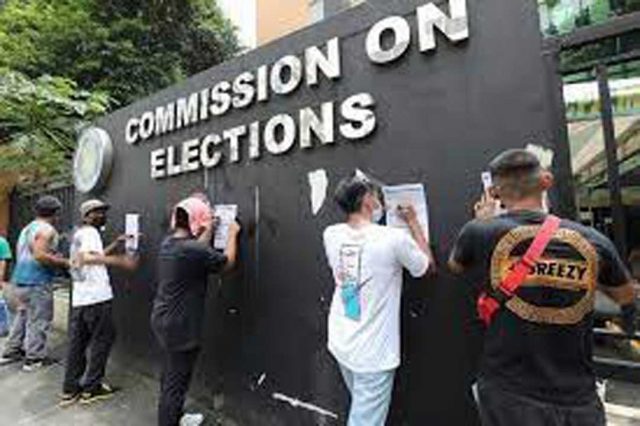
PRESIDENT Ferdinand R. Marcos, Jr. has appointed Nelson J. Celis as a commissioner of the Commission on Elections (Comelec).  

“I am pleased to transmit the nomination letter of Mr. Nelson Java Celis signed by President Ferdinand R. Marcos, Jr., for a term expiring on February 2, 2029,” according to an appointment letter signed by Executive Secretary Victor D. Rodriguez.  

Mr. Celis was the spokesperson of Automated Election System (AES), a coalition of nearly 50 organizations that has been advocating for transparent and clean elections since 2010.  

Mr. Celis is an electronics and communications specialist with degrees in electronics and communications engineering and business administration from Don Bosco Technical College and De La Salle University, where he is a faculty member. 

He had previously worked in other government agencies such as the Commission on Higher Education, Department of Science and Technology, and the Technical Education and Skills Development Authority.  

“We sincerely believe that his expertise and long experience in Information Technology will immensely benefit the COMELEC and further enhance the automation of our electoral processes,” the election body said in a statement on Monday.  

Mr. Celis will take the post of former commissioner Aimee S. Torrefranca-Neri, whose appointment was bypassed by the Commission on Appointments (CA) in June. 

“It’s a regular appointment (Mr. Celis) cannot assume yet until confirmed,” Comelec Chairman George Erwin M. Garcia told reporters in a Viber message.  

Under the Constitution, election commissioners have a seven-year term and cannot be reappointed. Their appointment must be approved by the CA, composed of senators and congressmen. 

NAMFREL
Meanwhile, the National Citizen’s Movement for Free Elections (Namfrel) on Monday called on the Philippine Congress to amend existing laws or pass new measures that would make the voter registration process more efficient, less costly, and more convenient.  

In a statement, the election watchdog said among its recommendations are legislation that would allow the Philippine Statistics Authority (PSA) to share data in the national ID system with the Comelec.  

“This would save time and costs not only for the local Comelec offices but also for would-be voters who have to line up even before the sun has risen just to be able to submit their applications,” it said.  

There were 65.75 million registered voters and 1.7 overseas voters in this year’s national and local elections. 

Namfrel also said voters who did not vote in two successive preceding regular elections should not be deactivated for the current voter registration period.  

“Voters should not be penalized for the failure to exercise their right to choose leader, and then line up before sunrise to apply for activation,” it said.  

“If the reason for including failure to vote as a ground for deactivation is that those who failed to vote may have done so because of death, this would be addressed by the PSA and the civil registrars nationwide submitting information on deceased persons to the Comelec.”  

The watchdog also pushed for the development of internet voting and other mechanisms that will adopt the use of new technology.   

Comelec is preparing to hold the village and youth council elections in December despite calls from lawmakers to postpone them.  

Namfrel earlier rejected the proposal saying voters should be allowed to choose local leaders regularly and “without interruption.The village elections had already been postponed twice. John Victor D. Ordoñez