Home Blog Page 5594

Cristiano Ronaldo leaving Manchester United ‘with immediate effect’

CRISTIANO Ronaldo has parted with Manchester United “with immediate effect,” the Premier League club confirmed Tuesday.

The 37-year-old’s future with United was in question after an interview in which said the club had made “zero progress” since the departure of Sir Alex Ferguson in 2013 and that he “doesn’t respect” ten Hag.

His contract wasn’t due to expire until June, but the club is not paying Ronaldo to leave early, according to multiple reports.

“Cristiano Ronaldo is to leave Manchester United by mutual agreement, with immediate effect,” United said in a statement.

“The club thanks him for his immense contribution across two spells at Old Trafford, scoring 145 goals in 346 appearances, and wishes him and his family well for the future.

“Everyone at Manchester United remains focused on continuing the team’s progress under Erik ten Hag and working together to deliver success on the pitch.”

Ronaldo is in Qatar preparing for Portugal’s opening game against Ghana on Thursday.

“Following conversations with Manchester United we have mutually agreed to end our contract early,” Ronaldo said in his own statement.

“I love Manchester United and I love the fans, that will never ever change. However, it feels like the right time for me to seek a new challenge.

“I wish the team every success for the remainder of the season and for the future.”

Ronaldo rejoined United from Juventus in 2021, but had made it clear that he wanted to transfer with his role being greatly reduced this season. He was ordered to train on his own last month after refusing to come on as a substitute and walking off the pitch during United’s win over Tottenham.

However, he said during an interview with Piers Morgan last week that he felt “betrayed,” while also criticizing younger players on the club.

Ronaldo is now a free agent and able to sign with any club.

Meanwhile, Manchester United also confirmed on Tuesday that the Glazer family is exploring a potential sale of the club.

“The Company’s Board of Directors (the “Board”) is commencing a process to explore strategic alternatives for the club,” the statement read.

“The process is designed to enhance the club’s future growth, with the ultimate goal of positioning the club to capitalize on opportunities both on the pitch and commercially.

“As part of this process, the Board will consider all strategic alternatives, including new investment into the club, a sale, or other transactions involving the Company.”

“This will include an assessment of several initiatives to strengthen the club, including stadium and infrastructure redevelopment, and expansion of the club’s commercial operations on a global scale, each in the context of enhancing the long-term success of the club’s men’s, women’s and academy teams, and bringing benefits to fans and other stakeholders.”

The Glazer family has owned the club since 2005. — Reuters

BoI tallies 163 IT-BPM projects endorsed for transfer from PEZA

THE Board of Investments (BoI) has received 163 endorsements of information technology and business process management (IT-BPM) projects seeking to transfer their registration from the Philippine Economic Zone Authority (PEZA), according to the Department of Trade and Industry (DTI).

The DTI said the BoI tally is as of Nov. 17, of which 55 have paid the administrative fees and are being processed. The transfer of registration allows the IT-BPMs to offer 100% work-from-home (WFH) arrangements while still enjoying fiscal incentives under Republic Act No. 11534 or the Corporate Recovery and Tax Incentives for Enterprises (CREATE) law.

“As of Nov. 17, 2022, the PEZA has endorsed for registration with BoI 163 projects under the IT-BPM sector with a total investment of P13.9 billion,” the DTI said in a statement.

On Oct. 18, the DTI issued Memorandum Circular No. 22-19 that provided the specific procedures on the transfer of registration from the PEZA to the BoI.

The DTI issued the circular after the inter-agency Fiscal Incentives Review Board issued Resolution No. 026-22 on Sept. 14 which permitted registered IT-BPMs to implement a 100% WFH arrangement and remain eligible for fiscal incentives such as income tax holiday by transferring their registration from PEZA to BoI.

Registered IT-BPMs have until Dec. 31 this year to shift their registration to the BoI from the PEZA.

“Those who did not exercise the option shall no longer be allowed to register and shall be covered by Corporate Recovery and Tax Incentives for Enterprises (CREATE),” the DTI said.

Under Republic Act No. 11534 or the CREATE Act, registered business enterprises (RBEs), including IT-BPM firms, are required to conduct operations within economic zones in order to be eligible for fiscal incentives.

According to the DTI, registered IT-BPMs that can transfer to the BoI are those that have remaining tax incentives under CREATE and those that have approved incentives on or before Sept. 14 under the CREATE Act.

“After the lapse of the period of the remaining tax incentives, the existing registered project of the covered RBEs shall not be entitled to additional incentives, unless the activity qualifies as a new investment or qualified expansion under the Strategic Investment Priority Plan (SIPP), subject to a separate application for registration,” the BoI said.

IT and Business Process Association of the Philippines (IBPAP) Chief Policy and Regulatory Affairs Officer Celeste B. Ilagan said in a Laging Handa briefing on Wednesday that further skills development is required for the industry’s workers.

“Many of our services are already at higher value. The skills are increasing. The digital transformation is a big part of globalization and therefore, employees need to be digitally skilled,” Ms. llagan said.

“It would be good for the industry if the Department of Education and Commission on Higher Education (equip graduates with) the skills that they need to be hired,” she added.

IBPAP estimates that the IT-BPM industry employed 1.44 million full-time workers and posted 10.6% revenue growth in 2021. — Revin Mikhael D. Ochave

Manufacturers urged to temper price hikes for Christmas feast items

PHILSTAR FILE PHOTO

THE Department of Trade and Industry (DTI) is appealing to manufacturers to minimize any price increases for ingredients used to prepare the traditional feast for Christmas Eve, known as noche buena.

“We have a standing appeal for manufacturers (to keep price hikes at) an absolute minimum only. We understand that the cost of production has increased,” Trade Undersecretary Ruth B. Castelo said at the Laging Handa briefing on Wednesday.

“We don’t want manufacturers to incur losses but the price increases should also not be too heavy for consumers,” she added.

The DTI issued a noche buena price guide on Nov. 23 which reflects price increases for 195 out of 223 stock keeping units.

The price guide covers ham, fruit cocktail, spaghetti noodles, spaghetti sauce, and queso de bola.

According to Ms. Castelo, the price increases for products in the guide range from 10% to 27%.

“For ham, there is a price increase of up to 10%, fruit cocktail is at 13%, and mayonnaise around 27%,” Ms. Castelo said.

“We are strengthening our price monitoring efforts especially now that it is the Christmas season,” she added.

According to the DTI, the prices of products in the noche buena guide are not regulated and do not require approval, as opposed to basic necessities and prime commodities covered by the suggested retail price bulletin, as authorized by Republic Act No. 7581 or the Price Act.

Separately, Trade Secretary Alfredo E. Pascual led the pilot run of the “Ikot Palengke” (market rounds) program in Marikina City on Wednesday, to check whether vendors are charging fair prices.

“Today’s launch of the ‘Ikot Palengke’ reminds everyone that we at DTI will always make sure to protect our consumers. Let this be a warning to unscrupulous traders and those who do abusive practices such as hoarding, profiteering and cartels,” Mr. Pascual said. — Revin Mikhael D. Ochave

Senate casts doubt on rosy POGO revenue forecast

PHILSTAR FILE PHOTO

THE Philippine Amusement and Gaming Corp. (PAGCOR) issued a forecast for revenue generated by the Philippine Offshore Gaming Operator (POGO) industry of P10.23 billion by 2027, which was called overly optimistic at a Senate hearing.

Senator Sherwin T. Gatchalian, who chairs the Senate Ways and Means Committee, said at a hearing on Wednesday that the forecast was “ambitious” after the industry peaked at P8 billion in revenue in 2019.

The forecast was issued in the context of debate on whether the industry should be phased out.

Renfred Tan, PAGCOR senior manager for the Offshore Gaming and Licensing department, replied: “The gradual increase in the income is based on the increase of the number of licensees.”

Mr. Gatchalian also cited the forecast’s sensitivity to events like a crackdown on Chinese gambling.

Jackie Lou D. Rivera, PAGCOR acting senior manager for Compliance Monitoring and Enforcement, said the POGO industry took in revenue from 24 countries in 2019, and downplayed fears that it is too dependent on the Chinese market.

Revenue in renminbi accounted for 47% of the industry’s total, Mr. Gatchalian said, asking whether this strongly indicates a heavy weighting towards Chinese customers.

“From a business standpoint, you should know where your customers are coming from,” Mr. Gatchalian said, noting that if China decided to further restrict gambling, then revenue will be impacted. “There are policy considerations from that country of origin that we need to consider,” he added.

“You plan to grow (revenue), but the growth… also has risk because our source of revenue can change its policy,” he said. “We are getting revenue from a country that declared POGO illegal. That’s a risk and we need to (consider) that risk.”

Former Finance Secretary Margarito B. Teves, speaking at the hearing, said that continued POGO operations may put the Philippines’ bilateral relations with China at risk, noting as well the possible impact on foreign direct investment.

“Since governments have some influence on their investors, we have to relay to these governments and also get a feel (for the government position),” he said. “We’re saying that since most POGO operators come from China, it would be net advantageous for us to consider (the Chinese government’s) position and attitude towards the POGOs.”

Gambling is illegal in China, with Beijing calling cross-border gaming an attempt to circumvent its laws.

The Anti-Money Laundering Council, Mr. Teves said, estimated that of the P54 billion worth of POGO transactions between 2017 and 2019, 26% were deemed suspicious transactions, “which puts the credit rating of the Philippines at risk, something we need to be careful about given the country’s very tight fiscal position.”

“Opposition would be in favor of stopping POGO operations. The social costs of continued operation of POGOs do not only outweigh its current economic benefits, it’s social costs will bring further economic costs,” he added.

Valery Joy A. Brion, finance assistant secretary for Fiscal Policy and Monitoring, said direct economic costs from POGO operations include additional funding for law enforcement and immigration.

A clearly directed and implemented phase out of POGOs may resolve these issues, Mr. Teves said.

“The signal will have to be very clear that we’re going to stop POGO operations but we’re going to have a phase out mechanism because of its impact on our economy,” he said, noting urgent economic concerns including inflation and job loss. “But the signal has to be continuously conveyed to both investors as well as governments.”

Mr. Tan said “social costs or social ills stem from illegal operations and not from those that are licensed by PAGCOR.”

“In the short term, that would be very helpful for the POGO industry to differentiate itself, to show that it is a business that does not come with the social costs that is associated with it,” he added.

For the medium term, the agency seeks to encourage the establishment of more POGO hubs with the inclusion of government regulatory offices.

“In the long term, we see POGO as a contributor to the government of important revenue without the social costs that are associated with it, and we hope there will be reduced or zero illegal operations,” Mr. Tan said.

“As of now, we have 33 remaining licensees. This was reduced during the pandemic, most of the licensees closed shop… so now our long-term goal is to reach that number again so that we can provide the same revenue to the government, if not more,” he added. — Alyssa Nicole O. Tan

Casecnan hydro pre-bid meet draws 13 potential buyers

LOMBARDI

THE Power Sector Assets and Liabilities Management Corp. (PSALM) said 13 potential bidders attended the pre-bid conference for the auction of the Casecnan hydroelectric power plant in Nueva Ecija.

Lorenzo Deona, corporate staff analyst A at PSALM, told BusinessWorld by phone that 13 potential bidders attended the conference, but did not identify them nor provide further details.

In a statement on Wednesday, PSALM said the conference was called to gauge the acceptability of the terms of sale for Casecnan, a 165-megawatt hydropower plant.

PSALM said the asset is being privatized on an “as is, where is” basis. The deadline for the submission of bids is Feb. 24.

In its invitation to bid, PSALM required interested parties to submit a letter of interest to PSALM’s privatization bids and awards committee not later than Nov. 18. It noted that only those who submit letters would be allowed to participate in the privatization exercise.

PSALM said that bidders are also required to pay a non-refundable participation fee of P160,000.

The Casecnan hydro plant is a combined irrigation and power generation project. The water from its reservoir flows into the irrigation channels of the National Irrigation Administration (NIA).

The NIA will continue to take irrigation water from Cancan even after it is privatized.

Casecnan was turned over to the government last year after the build-operate-transfer contract with the previous operator, Casecnan Water and Energy Co., Inc. expired on Dec. 11, 2021. — Ashley Erika O. Jose

Singapore cybersecurity scheme touted as model for Philippines

MICROSOFT Corp. said on Wednesday that Singapore’s cybersecurity labeling scheme for consumer devices could be one approach towards boosting cybersecurity in the Philippines.

Certifications and labels can “enhance cybersecurity transparency and assurance,” Microsoft Philippines National Technology and Security Officer Dale Pascual Jose said at a briefing.

Launched in 2020, Singapore’s cybersecurity labeling scheme is the first of its kind in the Asia-Pacific. It provides cybersecurity ratings for smart devices, allowing consumers to determine the level of security on offer to help them make informed purchasing decisions.

“The cybersecurity labeling scheme also aims to help manufacturers stand out from their competitors and be incentivized to develop more secure products,” according to Singapore’s Cyber Security Agency on its official website.

According to Mr. Jose, Microsoft believes stakeholders should “promote technology and security awareness, focus criteria on security processes, and root certification or label security criteria in existing best practices and international standards.”

The Philippines placed 61st out of 194 countries in the 2020 edition of the Global Cybersecurity Index, which measures countries’ commitment in adopting cybersecurity best practices.

Microsoft said the Philippines should promote resilience through cybersecurity hygiene and education. Cybersecurity hygiene means enabling multifactor authentication, applying “Zero Trust” principles, using modern anti-malware, and protecting data, among others.

The Bangko Sentral ng Pilipinas (BSP) is currently working to strengthen banks’ cyber resilience through industry-wide initiatives to protect consumers as the use of digital payments increases. It is set to roll out a digitized regulatory and supervisory engine by January 2023.

Former BSP Governor Benjamin E. Diokno in December said the central bank was looking to issue stronger regulations on banks’ cyber defenses following hacking incidents involving BDO Unibank, Inc. and UnionBank of the Philippines, Inc. — Arjay L. Balinbin

The problem with being authentic

One key change to our shopping experience has been the rise of mobile shopping apps. These apps offer unparalleled convenience and, at times, unbelievable savings. I recall one experience this year during the “7.7” flash sale where I was notified by my smartphone of drastically lowered prices for any and all kinds of products. Lo and behold, the golf club which I had been saving up for was available. Surprisingly, it only cost about a fifth of the selling price from a brick and mortar authorized retailer. To my disappointment, however, the golf club broke after only my second round of using it.

This incident made me realize that we should be cautious of the products we buy online and remain steadfast against counterfeit items. At the very least, we should check the comments and reviews section of the merchant’s page to get feedback on the merchant and the quality of the products it is selling.

In a similar vein, our tax authorities have enforced strict measures to ensure that documents submitted by taxpayers are authentic, especially when the documents are executed overseas.

To cite an example, Revenue Memorandum Order (RMO) No. 46-2020 was issued by the Bureau of Internal Revenue (BIR) to promulgate guidelines and procedures for the availment of the 15% rate on dividends paid by a domestic corporation to a non-resident foreign corporation (NRFC), otherwise known as the Tax Sparing Rule. In the RMO, the BIR requires certain documents to be authenticated or apostilled in order to prove an NRFC’s entitlement to the lower rate.

TAX SPARING RULE PROCEDURES UNDER RMO NO. 46-2020
Under Section 28(B)(5)(b) of the Tax Code or the Tax Sparing Rule, the final withholding tax (FWT) on Philippine-sourced dividends received by an NRFC can be reduced from 25% to 15%. To avail of the tax sparing rate, the NRFC-applicant must prove that the foreign tax jurisdiction of the NRFC either: a) allows a credit against the tax due from the NRFC the taxes deemed to have been paid in the Philippines of at least to 10%; or b) exempts the dividends from tax.

For this purpose, the RMO requires the NRFC-applicant to submit the following documents:

• A copy of the law of the country of domicile allowing a tax credit for taxes actually paid in the Philippines and for taxes deemed paid in the Philippines equivalent to at least 10% of the dividends; and

• A copy of any document issued by, or filed with, the foreign tax authority showing the amount of deemed paid tax credit actually granted by the foreign tax authority or a document confirming that the NRFC is exempt from income tax on dividends received from the Philippine corporation.

AUTHENTICATION REQUIREMENT
Based on the RMO, in order to be acceptable in the Philippines, all documents executed in a foreign country must either be authenticated by the Philippine Embassy stationed there, or apostilled if the foreign country is a signatory to the Convention Abolishing the Requirement of Legalization for Foreign Public Documents (HCCH 1961 otherwise known as the Apostille Convention).

The reason for the authentication requirement, as cited by the BIR, is that existence of a foreign law is a question of fact and Philippine courts do not take judicial notice of foreign laws. Thus, citing Section 24 and 25 of Rule 132 of the Revised Rules on Evidence, the BIR requires that a foreign law be established by a certification and authenticated copy thereof. In case the country of Domicile of the NRFC is a member of the Apostille Convention, a foreign law can also be established by submitting an apostilled copy thereof in lieu of the required certification and authentication.

In practice, if the copy of the foreign law and other required documents executed abroad are not apostilled or authenticated and certified, the BIR will not accept the taxpayer’s Tax Sparing application.

While the intention is to guard against spurious and outdated versions of the foreign tax law, the strict authentication requirement has become a burden for NRFCs intending to avail of lower tax rates on their Philippine sourced income. Not only does the authentication process entail additional costs for the NRFC-applicant, it normally takes a long time to apostille or authenticate a document, taking as long as a month in certain jurisdictions.

Foregoing considered, I think that the BIR could revisit these strict requirements. The BIR is an administrative agency tasked to enforce the National Internal Revenue Code of the Philippines. Thus, it need not adhere strictly to the requirements of the Rules of Court with regard to administrative matters. In administrative proceedings, case law provides that the technical rules of procedure and evidence are not to be strictly applied. The quantum of evidence in administrative proceedings is substantial evidence, which refers to more than a mere scintilla, but such quantum of relevant evidence which a reasonable mind might accept as adequate to justify a conclusion.

Thus, in lieu of the strict authentication or apostille requirements to prove the foreign tax law, the BIR may consider accepting documents from other verifiable sources. In fact, in one BIR Ruling confirming the application of the Tax Sparing rule issued prior to RMO No. 46-2020, a full text copy of the foreign jurisdiction’s tax law from a reliable source (i.e., website of a reputable audit firm located in the NRFC’s country) was accepted by the BIR. If the copy of the foreign tax law is from a reputable source (such as a copy of the tax law from the government’s official website), I think that the BIR could dispense with the requirement of authenticating or apostilling the copy of the foreign law since the BIR can readily verify the authenticity of its contents.

To conclude, I fully agree that the BIR should remain vigilant when evaluating documents, just as online buyers should be careful with potential counterfeit purchases made over an online platform. Nevertheless, RMO No. 46-2020 was issued to simplify the manner of confirming entitlement to reduced tax rates in view of the implementation of the Ease of Doing Business and Efficient Government Service Delivery Act of 2018. Perhaps, the BIR should exercise some flexibility with its requirements to better achieve the government’s overarching intention.

The views or opinions expressed in this article are solely those of the author and do not necessarily represent those of Isla Lipana & Co. The content is for general information purposes only, and should not be used as a substitute for specific advice.


Jose Luis M. Yupangco is a senior associate at the Tax Services department of Isla Lipana & Co., the Philippine member firm of the PwC network.

+63 (2)8845-2728

jose.luis.yupangco@pwc.com

Marcos vows support as he asks scientists to ‘stay in the country’

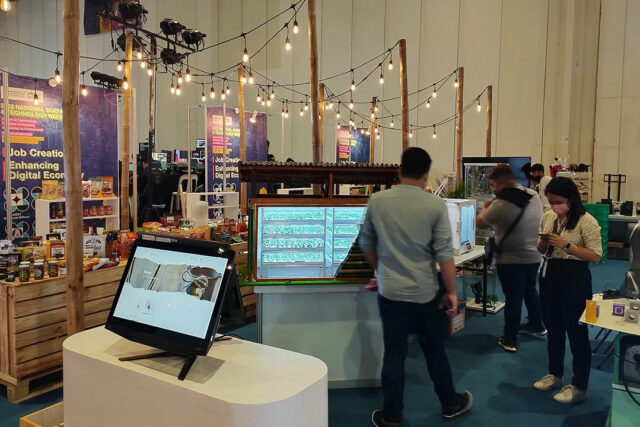
INNOVATIVE products and services developed by Filipino scientists, researchers, and engineers are on display at the World Trade Center in Pasay City for the 2022 National Science and Technology Week celebration. — DOST

By Kyle Aristophere T. Atienza, Reporter

PRESIDENT Ferdinand R. Marcos, Jr. on Wednesday asked Filipino scientists and researchers to stay in the country, vowing to support their careers and the sector.

At the same time, the President urged them to partner with the government as it seeks to build a sustainable future.

“I encourage our Filipino scientists, researchers, inventors, and innovators to continue sharing your expertise especially to young people,” Mr. Marcos said in a speech at the celebration of the National Science and Technology Week.

“I urge you to stay in the country as you pursue your career. We will continue to support you and continue to look to you to be active partners of the government,” he added.

Mr. Marcos said the country needs more local experts as it recovers from the pandemic and faces a “new economy.”

“It is a new world, these are new problems we are facing, and therefore we need to find new solutions and innovation is the key, innovation and agility.”

Mr. Marcos underscored the important role of the scientific community in generating new knowledge and devising better strategies to safeguard and advance the well-being of Filipinos.

“I also urge the DoST and all other concerned agencies to allocate resources to institutions that carry out research and development and integrate these in government programs,” he said.

“What Dr. Solidum and I discovered is that there are many research institutions that are doing really remarkable food research, however the problem that we are finding is that research is not directed,” he said, referring to Science and Technology Secretary Renato U. Solidum, Jr.

“Everyone has their own program, has their own projects. It’s not their fault. They’re studying what they are interested in,” Mr. Marcos added.

He said it is the government’s job to “give direction” so that research outputs can be immediately used by farmers, micro, small and medium-sized enterprises, other businesses, and citizens.

“I’ve spoken to some of the researchers and some of those administering research institutes around the country, not only agriculture but all kinds of other R&D (research and development), and they’re willing to take direction from us, from the private sector as to what are the necessary technologies for the Philippines,” he said.

The President said the government will “wholeheartedly” support their R&D initiatives.

STEM SCHOLARSHIPS
Mr. Marcos also challenged the Department of Science and Technology (DoST) and their partner institutions to continue “to provide more scholarships to Filipino students to develop a bigger pool of scientists, researchers, and  innovators in the country.”

He said he will institute a scholarship program specifically for Science, Technology, Engineering, and Math (STEM) students and “this will not be limited to those who have shown their capabilities, their ability, and how they deserve these scholarships here in the Philippines but to any institution that they are accepted to abroad.”

He also called for improvements in the country’s STEM program, noting that  the Philippines lags behind its Southeast Asian peers in these fields.

“The material I can see is available. It is just a question of us incorporating it into our curricula, it is just up to us to give it an emphasis because in every aspect the STEM subjects have become terribly, terribly important,” he added.

AGHAM, a group of local scientists, earlier said government support for STEM remains low and called for a long-term plan to boost the scientific community.

“The present government should acknowledge that we are suffering from brain drain due to the absence of a national program for the development of the country’s science and technology that could provide opportunities locally for our experts,” AGHAM said last month.

“This is critical as climate change is one of the important things that need to be addressed using science-based action.”

AGHAM said the budgetary allocation for research and development does not meet the recommended UNESCO threshold of 1% of gross domestic product.

Under the proposed 2023 national budget, the DoST will receive P24.06 billion, slightly lower than its allocation of P24.27 billion this year.

Mr. Solidum told the House of Representatives in September that the DoST originally proposed a P44.17-billion budget.

Half or P12.14 billion of the proposed budget for the DoST will be allocated to scientific and technical services, while 25.32% or P6.09 billion will be earmarked for the office of the secretary and regional offices.

Police in drug war case convicted of torture, planting evidence 

PHILIPPINE STAR/EDD GUMBAN
THE JUSTICE department filed charges in 2018 against two cops involved in the murder of two teens during an anti-drug operation. — PHILIPPINE STAR/ EDD GUMBAN

By John Victor D. Ordoñez, Reporter

A REGIONAL trial court has convicted a police officer of torture and planting of evidence in the killings of two teenagers during the previous administration’s anti-illegal drug campaign.

In a decision made public on Wednesday, the Caloocan City Regional Trial Court Branch 122 sentenced the law enforcer to reclusion perpetua or up to 40 years in prison for torturing the teens and planting a .38 caliber firearm ammunition, packets of marijuana leaves and crystal meth at the crime scene.

“After a careful scrutiny of the records and evaluation of the pieces of evidence presented by the prosecution, the Court is convinced that the prosecution was able to overcome its burden,” according to the ruling written by Presiding Judge Rodrigo F. Pascua, Jr.

The police officer was also ordered to pay the families of 19-year-old Carl Angelo M. Arnaiz and 14-year-old Reynaldo D. De Guzman for moral and exemplary damages totaling P2 million each.

In 2018, the Justice department filed charges before the court against two policemen involved in the murder of the two teens.

The court noted the other cop died of hepatitis in 2019 while in detention.

The Public Attorney’s Office forensic laboratory service director had testified before the court that Mr. Arnaiz sustained swelling, contusions and abrasions in his face due to blunt force, while Mr. De Guzman had stab wounds and abrasions on various body parts.

“The court holds that the foregoing narrations lead to a reasonable hypothesis that the evidence of physical torture sustained by the victims, were perpetrated by no other persons than the accused in this case,” the trial court said.

It added that the two police officers had the motive to plant the ammunition on Mr. Arnaiz to support their story of a shootout after Mr. Arnaiz supposedly robbed a taxi driver.

Another witness testified that the 19-year-old was handcuffed before being shot by the policemen.

Separate murder charges for the teenagers’ deaths are still pending before another trial court in Navotas City.

At least 25 police officers have been charged with murder in connection with ex-President Rodrigo R. Duterte’s deadly drug war, Justice Secretary Jesus Crispin C. Remulla told the United Nations Human Rights Council this month.

An inter-agency task force on extralegal killings had investigated at least 17,000 cops, he added.

There were 221-drug-related killings from January to August this year, Human Rights Watch said in September, citing a joint study by the University of the Philippines and Belgium’s Ghent University.

National police chief Rodolfo S. Azurin, Jr. told a press briefing last week that law enforcers had killed 46 suspects during illegal drug operations five months into President Ferdinand R. Marcos’ term.

Marcos meets with Vietnam’s legislative chair

OFFICE OF THE PRESS SECRETARY

PHILIPPINE President Ferdinand R. Marcos, Jr. met on Wednesday with Vietnam National Assembly Chairman Vuong Dinh Hue in Malacañang, where they reaffirmed the two countries’ commitment to enhance ties.

“[Mr. Marcos] got an added boost of commitment from Vietnam in a wide range of areas that include food security, climate change, defense and food supply,” the Office of the Press Secretary (OPS) said in a news release, but did not provide more details.   

The OPS said Mr. Vuong told Mr. Marcos that Vietnam will help the Philippines in elevating its role and position in the global stage.

“I am looking forward to building upon excellent relationships between our two countries… and also in helping elevate the role and position of the Philippines on the global stage,” Vietnam’s top legislator told Mr. Marcos.

The Vietnamese official said he was “much impressed” about the commitments made by the Philippines during the Association of Southeast Asian Nations (ASEAN) Inter-Parliamentary Assembly for expressing the “concerted efforts and coordination to address climate change and to work together on transitioning towards clean energy.”

Mr. Marcos was represented by House Speaker Martin G. Romualdez during the event.

Mr. Vuong, meanwhile, expressed hope to “enhance the partnership” between the two countries’ legislatures.

“We are hopeful that we can do more to enhance the relationships between our political parties and government-to-government and parliament-to-parliament relationships, and most importantly, the people-to-people exchanges,” he added.

Mr. Marcos said he was “a little surprised that 16, 18 years have transpired since the exchange of visits between our two legislatures — that is much too long for such close neighbors.”

The Philippine leader said he’s “very optimistic that the Asia-Pacific region will return to its old position as the driving force behind the global economy.” — Kyle Aristophere T. Atienza

Cybercrime posts to be set up in PHL airports 

REUTERS

THE BUREAU of Immigration (BI) and the Cybercrime Investigation and Coordinating Center (CICC) will establish posts that will cater to cases of cybercrime and online fraud in the countrys major airports.  

In a statement on Wednesday, Immigration Commissioner Norman G. Tansingco said the cybercrime hubs will assist both locals and foreigners who have been victims of online fraud.   

The two agencies inked the agreement on Nov. 15 at the BI office in Manila.  

The CICC under the Department of Information and Communications Technology (DICT) serves as the lead agency in addressing cybercrimes.  

The agency earlier said the pandemic aggravated the issue of online child exploitation, specifically with minors from low-income families.  

In August, the Department of Justice (DoJ), Department of Interior and Local Government, Department of Social Welfare and Development, and the DICT formed a task force to combat the online exploitation of children.  

The DoJ and Bankers Association of the Philippines (BAP) also launched an anti-cybercrime partnership in February to train workers on cyber-security amid increasing cases of online fraud.  

The Philippines placed third worldwide in ransomware payments last year, with local organizations spending an average of P1.6 million, according to cybersecurity firm Sophos.  

BAP has said unauthorized withdrawals and transfers reached more than P1 billion last year due to an uptick of cybercrime incidents amid a coronavirus pandemic.  

“This invaluable partnership between government agencies is a major step towards eliminating cybercrime in the country,Mr. Tansingco said. John Victor D. Ordoñez 

Tourist arrivals in Asia-Pacific still below pre-pandemic levels — UNWTO

PHILIPPINE STAR/KRIZ JOHN ROSALES

TOURIST arrivals in the Asia-Pacific region during the first nine months of the year were still below pre-pandemic levels despite the opening of many destinations, according to the United Nations World Tourism Organization (UNWTO).   

The UNWTOs latest World Tourism Barometer issued on Wednesday showed that international visitors in the region increased for the January to September period but was still 83% below the numbers three years ago.  

In Asia and the Pacific (+230%) arrivals more than tripled in the first nine months of 2022, reflecting the opening of many destinations, though remained 83% below 2019 levels,the UNWTO said.    

The UN agency said international tourism is expected to reach 65% of pre-pandemic levels by yearend following the surge in the first three quarters.  

“An estimated 700 million tourists traveled internationally between January and September, more than double (+133%) the number recorded in the same period of 2021. This equates to 63% of 2019 levels and puts the sector on course to reach 65% of its pre-pandemic levels this year,the UNWTO said.    

Results were boosted by strong pent-up demand, improved confidence levels and the lifting of restrictions in an increasing number of destinations,it added.    

The Philippine Tourism department recently announced that its 1.7 million tourist arrivals projection for 2022 has been surpassed with 2.025 million visitors recorded as of Nov. 14. Revin Mikhael D. Ochave

ADVERTISEMENT
ADVERTISEMENT