Home Blog Page 5563

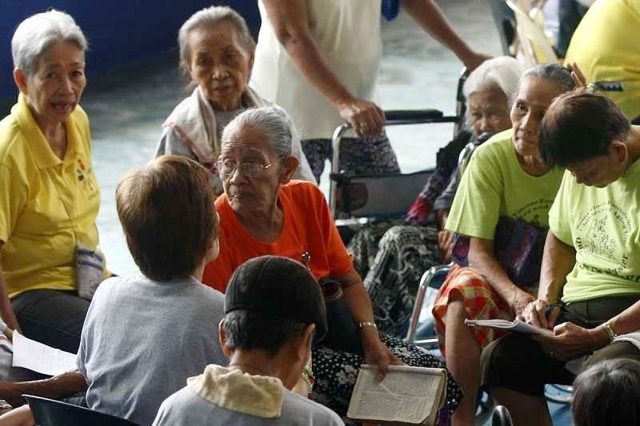
Social pension for poor senior citizens increased to P1,000 monthly with new law 

PHILIPPINE STAR/MIGUEL DE GUZMAN

THE MONTHLY social pension of indigent senior citizens will soon increase to P1,000 from P500 as the approved bill on additional benefits for those at least 60 years old lapsed into law on July 30, according to a letter sent by the Presidential Palace to the Senate.  

Republic Act (RA) 11916, which amends RA 7432, also encourages the hiring of seniors through a tax incentive to employers.

It provides that private entities that will employ senior citizens will be entitled to an additional deduction from their gross income equivalent to 15% of the total cost of salaries and wages to seniors employed for at least half a year. 

The increase in the pension of indigent senior citizens is a timely response to catch up with the urgent and real needs of our indigent elderly,Senator Mary Grace S. Poe-Llamanzares, primary author of the bill, said in a statement on Tuesday.

Under the new law, indigent senior citizen refers to any elderly who is frail, sickly or with disability, and without pension or permanent source of income, compensation or financial assistance from his or her relatives to support his or her basic needs, as determined by the Department of Social Welfare and Development (DSWD) in consultation with the National Coordinating and Monitoring Board. 

The law also provides additional social safety assistance to seniors to cushion the effects of economic shocks and disasters, to be sourced from calamity funds of local governments.

There are about 4.1 million indigent seniors, according to DSWD data. 

The implementation, distribution and management of the social pension will be transferred from the DSWD to the National Commission of Senior Citizens within three years from the effectivity of the law. Alyssa Nicole O. Tan 

Trade union spokesperson appointed to social welfare post for ex-rebels 

PRESIDENT Ferdinand “Bongbong” R. Marcos Jr. has appointed Trade Union Congress of the Philippines (TUCP) spokesperson Alan A. Tanjusay as Social Welfare Undersecretary for Inclusive and Sustainable Peace. 

Mr. Tanjusay confirmed his appointment in a statement sent via Viber. 

I am, therefore, relinquishing my post as spokesperson and advocacy director of the Associated Labor Unions-TUCP,he said. 

With his new post, Mr. Tanjusay is expected to oversee the governments psycho-social and welfare services to former rebels and extremists and their families. 

Meanwhile, Press Secretary Trixie Cruz-Angeles said Mr. Marcos is already considering someone to lead the Presidential Legislative Liaison Office (PLLO). 

Someone is already being considered. We cannot disclose it yet. So, let’s just wait. We will not deny it,she told a televised news conference. 

Senator Francis “Chiz” Escudero earlier urged Mr. Marcos to immediately appoint a “high-caliber Cabinet member” as head of the PLLO after the President vetoed five measures approved by the 18th Congress. 

The measures vetoed by Mr. Marcos included a bill that would have created a special economic zone and freeport in San Miguel Corp.’s airport project in Bulacan province and a tax break for teachers in their service as election officers. Kyle Aristophere T. Atienza 

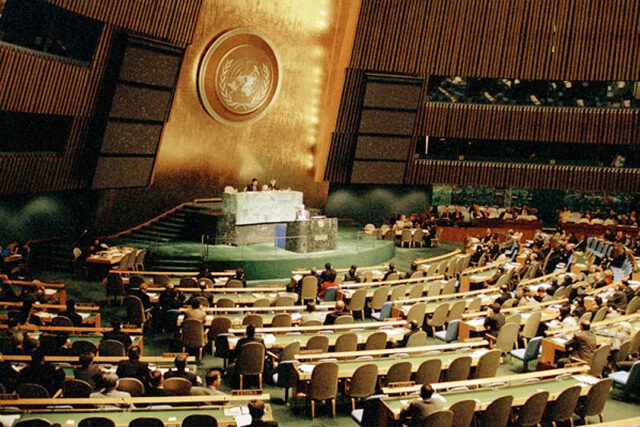
PHL reaffirms commitment to international treaty vs spread of nuclear weapons 

UN PHOTO-E.DEBEBE

THE PHILIPPINES has reaffirmed its commitment to the Treaty on the Non-Proliferation of Nuclear Weapons (NPT), according to a statement released by the Department of Foreign Affairs, citing goals to advance peace, security and development ahead of a conference for its review held in New York. 

Our commitment is rooted in the Constitution, in our laws and regulations and national aspirations for peace and development,Foreign Affairs Secretary Enrique A. Manalo said in a statement on Monday evening.

The humanitarian consequences of use of nuclear weapons are too unimaginable to consider,he said. No nuclear weapons should ever be used and there is nothing that justifies their salience in the military and security doctrine of any nation.

He also emphasized the importance of keeping the southeast Asian region free from nuclear weapons. 

The Philippines, along with other non-nuclear weapon states, also asserted its right to peaceful use of nuclear energy.

The Philippines upholds our inalienable right to use nuclear energy and nuclear-related technologies for peaceful purposes and in pursuit of our environmentally-conscious climate-change-resilient sustainable development,Mr. Manalo said. The national framework for this is robust and is being further developed.” 

President Ferdinand R. Marcos, Jr. has said that his administration will be reexamining the country’s approach and policy towards nuclear energy. Alyssa Nicole O. Tan 

Enrollees for new school year hit 13M 

STUDENTS of Lakan Dula High School in Manila register on July 26 for the new school year that will start on Aug. 22. — PHILIPPINE STAR/EDD GUMBAN

THE NUMBER of enrolled students for the school year 2022-2023 has hit 13 million, the Education department said on Thursday. 

The enrollment rate for the new school year is significantly higher than that of the previous years,Michael T. Poa, spokesperson of the Department of Education (DepEd), told a televised news briefing. 

As of today, we have 13.152 million enrollees,he said. 

Mr. Poa said the turnout on the first day of enrollment alone reached 3.3 million, way higher than the turnout of 222,000 on the previous school years first enrollment day. 

It does appear from the trend that our learners are excited to go back to in-person classes,he said, noting that gaps related to access to remote learning tools might have affected the tally of enrollees in previous years. 

DepEd opened the enrollment for the new school year on July 25. It will end on Aug. 22, the first day of classes. 

The agency targets to fully implement five day of face-to-face classes by November. 

The Philippines was among the last countries to reopen schools physically after a coronavirus pandemic was declared in 2020. 

In the latter part of 2021, about 76% of schools implemented partial in-person classes, Mr. Poa said. That number gives us confidence. 

He said Vice President and Education Secretary Sara Duterte-Carpio has given explicit instructionsto DepEd regional offices to coordinate closely with the regional offices of the Department of Health for the vaccination of students. 

He said the two agencies will roll out counselling programs for the unvaccinated ones. 

DISASTER-HIT AREAS
Meanwhile, Mr. Poa said the agency worries about the schools that have been affected by the magnitude 7 earthquake that rocked the countrys northwestern part last week and those in the south and central areas that were damaged by a super typhoon in December 2021. 

Those are the things were a bit worried about, but again, we do have plans, we do have a strategy and were confident [that we would be able to open the classes on August 22]. 

Mr. Poa told One News Channel earlier in the day that at least 270 schools have been damaged by the major quake last week. The damage to schools has already hit P1.480 billion, he added.

I have to emphasize, that is a moving number on a daily basis, we get what we call a radar report which is a rapid assessment of the damages incurred so everyday, these numbers keep on moving,he said. I think we will have to really look at the funding requirements for all these reconstructions and rehabilitation needed for schools needed by the earthquake.

Mr. Poa said the Supreme Court ruling that increased the shares of local government units (LGUs) from national taxes hinders the national government from immediately rehabilitating schools damaged by the quake. 

He said the ruling named after former Batangas Governor Hermilando I. Mandanas devolves to LGUs the tasks of repairing and building school structures. 

That’s another obstacle that we’re facing because obviously, the LGUs, they have a lot in their hands already,he said. 

I’m not saying they won’t be doing it. All I’m saying is they do have a lot in their hands so it would be good to actually lodge the budget to put up these buildings with the primary agency concerned with education, which is [the] Department of Education. 

He said the matter will be discussed in the coming days. Kyle Aristophere T. Atienza

Youth party-list opposes mandatory student military training 

KABATAAN Party-list, which represents youth concerns, has opposed the proposed revival of the mandatory Reserve Officer Training Corps (ROTC) composed of tertiary-level students, saying it is not needed to strengthen the countrys disaster response measures. 

“For us, it’s (improving disaster response) a weak excuse to bring back mandatory ROTC,Kabataan Rep. Raoul Danniel A. Manuel said in a press conference on Monday.  

(B)ecause we have the NSTP (National Service Training Program) Act of 2001, which states that the youth can be mobilized even without mandatory ROTC during times of disaster.”  

Vice President and Education Secretary Sara Duterte-Carpio was the first to express intent to revive the ROTC, which has since been supported by President Ferdinand “Bongbong” R. Marcos Jr. and some of their allies in Congress.  

Mr. Manuel said a youth reserve force for disaster response can already be formed with the NSTP, which does not include military training components.   

The press conference was also attended by parent representatives, and other education stakeholders. Matthew Carl L. Montecillo 

More Senate, House committee chairs elected

THE SENATE has elected the second batch of committee chairmanships for the 19th Congress.  

During the Tuesday plenary session, Senator Mary Grace S. Poe-Llamanzares was chosen as chair of the Economic Affairs Committee, while Senator Mark A. Villar will head the Banks, Financial Institutions and Currencies Committee. 

Senator María Imelda “Imee” R. Marcos will head an additional two committees, namely: the Cooperatives Committee and the Electoral Reforms and Peoples Participation Committee. She was earlier elected to chair the Foreign Relations Committee and the Social Justice, Welfare and Rural Development Committee.  

Some senators will keep committee chairmanships from the previous Congress, including the Environment and Natural Resources, and Climate Change under Senator Cynthia A. Villar; Civil Service, Government Reorganization and Professional Regulation Committee under Senator Ramon BongRevilla, Jr.; Sport Committee under Senator Christopher Lawrence T. Go; and Tourism Committee under Senator Maria Lourdes Nancy S. Binay.  

The Public Information and Mass Media Committee will be chaired by Senator Robinhood Ferdinand RobinC. Padilla; the Urban Planning, Housing and Resettlement Committee by Senator Joseph Victor G. Ejercito; and the Youth Committee by Senator Juan Edgardo “Sonny” M. Angara.  

At the House of Representatives, among the committee leaders elected on Monday were:  

Manila Rep. Irwin C. Tieng, Committee on Banks and Financial Intermediaries; 

Mandaue City Rep. Emmarie M. Quano-Dizon, Committee on Ecology; 

Bukidnon Rep. Jonathan Keith T. Flores, Committee on Government Reorganization; 

Lanao del Sur Rep. Yasser Alonto Balindong, Committee on Mindanao Affairs; 

Ilocos Norte Rep. Angelos Marcos Barba, Committee on North Luzon Growth Quadrangle; 

Manila Rep. Edward Vera Perez Maceda, Committee on Revision of Laws; 

Aklan Rep. Carlito S. Marquez, Committee on Science and Technology; 

Mountain Province Rep. Maximo Y. Dalog, Jr., Committee on Suffrage and Electoral Reforms; and  

Davao Occidental Rep. Claude P. Bautista, Committee on Flagship Programs and Projects.    

Cagayan de Oro Rep. Rufus B. Rodriguez and Kalinga Rep. Allen Jesse C. Mangaoang retained their chairmanship of the Committee on Constitutional Amendments, and the Committee on Indigenous Culture Communities and Indigenous Peoples, respectively. Alyssa Nicole O. Tan and Matthew Carl L. Montecillo 

Zawahiri killed in US drone strike

US PRESIDENT JOE BIDEN/FACEBOOK

KABUL/WASHINGTON — The United States killed al Qaeda leader Ayman al-Zawahiri in a “precision” strike in the center of Kabul, the Afghanistan capital, President Joseph R. Biden said, the biggest blow to the militant group since its founder Osama bin Laden was killed in 2011.

Mr. Zawahiri, an Egyptian surgeon who had a $25-million bounty on his head, helped coordinate the Sept. 11, 2001, attacks that killed nearly 3,000 people.

US officials, speaking on the condition of anonymity, said Mr. Zawahiri was killed when he came out on the balcony of his safe house in Kabul on Sunday morning and was hit by “hellfire” missiles from a US drone.

“Now justice has been delivered, and this terrorist leader is no more,” Mr. Biden said in remarks from the White House on Monday. “No matter how long it takes, no matter where you hide, if you are a threat to our people, the United States will find you and take you out.”

He said he had authorized the precision strike in downtown Kabul and that no civilians were killed.

Three spokespeople in the Taliban administration in Kabul declined comment on Mr. Zawahiri’s death.

Taliban spokesperson Zabihullah Mujahid had previously confirmed that a strike took place in Kabul on Sunday and strongly condemned it, calling it a violation of “international principles.”

A spokesperson for the interior ministry said a house was hit by a rocket in Sherpoor, an upscale residential neighborhood of the city which also houses several embassies.

“There were no casualties as the house was empty,” Abdul Nafi Takor, the spokesperson, said.

Taliban authorities threw a security dragnet around the house in Sherpoor on Tuesday and journalists were not allowed nearby.

A senior Taliban official told Reuters that Mr. Zawahiri was previously in Helmand province and had moved to Kabul after the Taliban took over the country in August last year.

US intelligence determined with “high confidence” through multiple intelligence streams that the man killed was Mr. Zawahiri, one senior administration official told reporters.

“Zawahiri continued to pose an active threat to US persons, interests and national security,” the official said on a conference call. “His death deals a significant blow to al Qaeda and will degrade the group’s ability to operate.”

Mr. Zawahiri succeeded Mr. bin Laden as al Qaeda leader after years as its main organizer and strategist, but his lack of charisma and competition from rival militants Islamic State hobbled his ability to inspire devastating attacks on the West.

There were rumors of Mr. Zawahiri’s death several times in recent years, and he was long reported to have been in poor health.

SANCTUARY
The drone attack is the first known US strike inside Afghanistan since US troops and diplomats left the country in August 2021. The move may bolster the credibility of Washington’s assurances that the United States can still address threats from Afghanistan without a military presence in the country.

His death also raises questions about whether Mr. Zawahiri received sanctuary from the Taliban following their takeover of Kabul in August 2021. The official said senior Taliban officials were aware of his presence in the city and said the United States expected the Taliban to abide by an agreement not to allow al Qaeda fighters to re-establish themselves in the country.

“The Taliban will have to answer for al-Zawahiri’s presence in Kabul, after assuring the world they would not give safe haven to al-Qaeda terrorists,” Adam Schiff, chairman of the House Permanent Select Committee on Intelligence, said in a statement.

US Secretary of State Antony Blinken said the Taliban had “grossly violated” the Doha Agreement between the two sides by hosting and sheltering Mr. Zawahiri.

Former President Barack Obama joined lawmakers in praising the operation.

“Tonight’s news is also proof that it’s possible to root out terrorism without being at war in Afghanistan,” Mr. Obama said in a Twitter message. “And I hope it provides a small measure of peace to the 9/11 families and everyone else who has suffered at the hands of al Qaeda.”

Republican US Senator Marco Rubio said: “The world is safer without him in it and this strike demonstrates our ongoing commitment to hunt down all terrorists responsible for 9/11 and those who continue to pose a threat to US interests.” 

Until the US announcement, Mr. Zawahiri had been rumored variously to be in Pakistan’s tribal area or inside Afghanistan.

A video released in April in which he praised an Indian Muslim woman for defying a ban on wearing an Islamic head scarf dispelled rumors that he had died.

The senior US official said finding Mr. Zawahiri was the result of persistent counter-terrorism work. The United States found out this year that Mr. Zawahiri’s wife, daughter and her children had relocated to a safe house in Kabul, then identified that Mr. Zawahiri was there as well, the official said.

“Once Zawahiri arrived at the location, we are not aware of him ever leaving the safe house,” the official said. He was identified multiple times on the balcony, where he was ultimately struck. He continued to produce videos from the house and some may be released after his death, the official said.

In the last few weeks, Mr. Biden convened officials to scrutinize the intelligence. He was updated throughout May and June and was briefed on July 1 on a proposed operation by intelligence leaders. On July 25 he received an updated report and authorized the strike once an opportunity was available, the administration official said.

With other senior al Qaeda members, Mr. Zawahiri is believed to have plotted the October 12, 2000, attack on the USS Cole naval vessel in Yemen which killed 17 US sailors and injured more than 30 others, the Rewards for Justice website said.

He was indicted in the United States for his role in the August 7, 1998, bombings of the US embassies in Kenya and Tanzania that killed 224 people and wounded more than 5,000 others.

Both Mr. bin Laden and Mr. Zawahiri eluded capture when US-led forces toppled Afghanistan’s Taliban government in late 2001 following the Sept. 11 attacks on the United States. — Reuters

From subway stations to malls, Taiwan prepares air-raid shelters

REUTERS

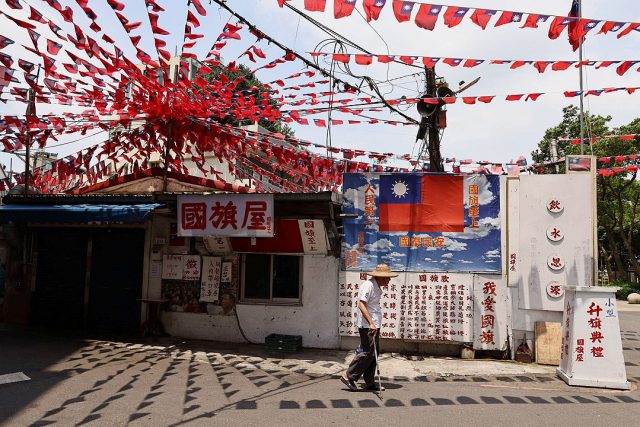
TAIPEI — Taiwan is preparing its air-raid shelters as rising tension with China and Russia’s invasion of Ukraine raise new fears about the possibility of a Chinese attack on the democratic island.

China considers Taiwan its territory and has increased military activity in the air and seas around it. Taiwan vows to defend itself and has made strengthening its defenses a priority, with regular military and civil defense drills.

The preparations include designating shelters where people can take cover if Chinese missiles start flying in, not in purpose-built bunkers but in underground spaces like basement car parks, the subway system and subterranean shopping centers.

The capital of Taipei has more than 4,600 such shelters that can accommodate some 12 million people, more than four times its population.

Harmony Wu, 18, was surprised to learn that an underground shopping concourse where she and other youngsters were recently rehearsing some dance moves would be turned into an air-raid shelter in the event of war.

But she said she could understand why.

“Having shelter is very necessary. We don’t know when a war might come and they are to keep us safe,” Ms. Wu said at the venue near a Taipei subway station.

“War is brutal. We’ve never experienced it so we aren’t prepared,” she said.

Taipei officials have been updating their database of designated shelters, putting their whereabouts on a smartphone app and launching a social media and poster campaign to make sure people know how to find their closest one.

Shelter entrances are marked with a yellow label, about the size of an A4 piece of paper, with the maximum number of people it can take.

A senior official in the city office in charge of the shelters said events in Europe had brought a renewed sense of urgency.

“Look at the war in Ukraine,” Abercrombie Yang, a director of the Building Administration Office, told Reuters.

“There’s no guarantee that the innocent public won’t get hit,” he said, adding that that was why the public had to be informed.

“All citizens should have crisis awareness … We need the shelters in the event of an attack by the Chinese communists.”

‘NOT STRESSED’
Last month, Taiwan held a comprehensive air-raid exercise across the island for the first time since the coronavirus pandemic disrupted regular drills.

Among the instructions citizens got in case of incoming missiles was to get down in their basement parking lots with their hands covering their eyes and ears while keeping their mouths open – to minimize the impact of blast waves.

Some civil defense advocates say more needs to be done.

Authorities are required by law to keep the shelters clean and open but they don’t have to be stocked with supplies like food and water.

Researchers in parliament called in June for shelters to be provided with emergency supplies.

Wu Enoch of the ruling Democratic Progressive Party says the public must prepare survival kits to take with them when they seek shelter.

“What’s important is what you bring with you, for people to stay there for a long period of time,” Wu said, citing medical supplies and even tools to build a makeshift toilet.

After decade of saber-rattling across the Taiwan Strait separating the democratic island from China, many Taiwan people appear resigned to living with the threat of a Chinese invasion.

“I’m not stressed. I carry on with my life as usual. When it happens, it happens,” said Teresa Chang, 17, who was also going through her paces at the underground dance practice. — Reuters

The best and worst airlines for flight cancellations

A PLANE is seen shortly after take-off at sunset, from Heathrow Airport, London, Britain, Dec. 11, 2020. — REUTERS

PASSENGERS flying with Virgin Australia and Dutch carrier KLM are suffering some of the biggest disruptions to travel as the understaffed aviation industry struggles to cope with a resurgence in demand, schedules show.

Zeroing in on a group of 19 airlines around the world — the same one Qantas Airways Ltd. uses to assess its performance against peers — Virgin Australia canceled the biggest proportion of flights in the three months through July 26, according to data from analytics company Cirium. It axed close to 2,200 flights, or 5.9% of its schedule, compared with 1.4% in the same period in 2019.

Air New Zealand Ltd., Sydney-based Qantas and Deutsche Lufthansa AG, Europe’s biggest airline, rounded out the five that canceled flights most often in the period. Singapore Airlines Ltd. had the best record, scrapping just 0.1% of planned services.

A supercharged rebound in bookings as Covid-19 travel restrictions ease has overwhelmed even the largest and most established names in aviation. After laying off tens of thousands of pilots, flight crew, baggage handlers and security staff during the pandemic, the industry can’t hire fast enough to keep up. Analysts say it may be months before normal levels of service return.

The carriers assessed in the three-month period mirror those used by Qantas to benchmark its total shareholder return, according to the airline’s annual report. The group includes International Consolidated Airlines Group, owner of British Airways Plc and Iberia, and Qantas itself.

It is a relatively small cross-section of the world’s airlines, which means there may be other, lesser-known carriers with patchier performance records. The basket also excludes airlines from China, the world’s second-largest aviation market before Covid, but which remains largely closed to international flights.

KLM, the Dutch arm of Air France-KLM, said in a statement it canceled flights for a variety of reasons, including a shortage of airport security staff. It pointed to additional measures announced last month to ease the pressure, such as scrapping flights to Europe and restricting ticket sales. “We apologize to our affected passengers,” the airline said.

Air New Zealand Chief Executive Officer Greg Foran said the airline’s schedule has been disrupted by severe weather and up to triple the normal rate of crew sickness. “This certainly isn’t the experience we want our customers to be having with us and we know that every cancellation has an impact,” Mr. Foran said in a statement. The airline is hiring more than 1,000 staff to strengthen operational resilience, he said.

Lufthansa said it’s cancelling almost 3,000 flights over the summer in Frankfurt and Munich, but it’s trying to avoid axing flights on a day-to-day basis to minimize the impact on passengers. “The aim is to offer a stable flight schedule,” the airline said in a statement.

Virgin Australia, which operates the fewest overseas flights among the group, said it outperformed its closest rival Qantas on flight cancellations in the five months through June, based on Australian government data that Virgin uses to benchmark its domestic performance. Qantas Domestic and International CEO Andrew David said cancellation rates are almost back to pre-COVID levels. “We are seeing improvements, but we know we’ve got more work to do,” he said.

Sydney airport has struggled to deal with a rebound in demand in a country desperate to fly again after closing its borders for two years. Qantas, Australia’s largest carrier, and to a lesser extent Virgin, have become targets for social media abuse from disgruntled flyers.

Europe has also descended into travel chaos. London’s Heathrow airport, for example, has announced a two-month cap on daily passenger traffic to limit the turmoil and inconveniences such as stranded luggage. The problems are being exacerbated across the continent by strikes over pay and conditions.

British Airways has said it would cancel another 10,300 flights through the summer season, taking total cancellations from April to close to 30,000 flights. — Bloomberg

Apple drops mask requirements for most of its corporate workers

UNSPLASH

APPLE, INC. is dropping its mask mandate for corporate employees at most locations, the Verge reported on Monday, citing an internal memo.

This comes even as COVID-19 infections in the United States have been on the rise with the BA.4 and BA.5 subvariants of the Omicron variant accounting for more than 90% of infections, according to the US Centers for Disease Control and Prevention.

These subvariants have significant mutations from the earliest versions of Omicron and protection from vaccines wanes over time.

“Don’t hesitate to continue wearing a face mask if you feel more comfortable doing so,” the report quoted Apple as saying in the internal email. “Also, please respect every individual’s decision to wear a mask or not.”

Apple did not immediately respond to Reuters’ request for comment outside regular business hours. — Reuters

Closer economic ties with Taiwan – 1

BW FILE PHOTO

(First of two parts)

As the administration of President Ferdinand Marcos, Jr. tries to expertly balance our politico-economic relations with China, avoiding the extremes of the last administration, it should also try to achieve as many benefits as possible from closer economic trade and investment relations with Taiwan.

It was refreshing to hear the President say in his State of the Nation Address (SONA) that he will not budge an inch in claiming our rights in the West Philippine Seas. As Secretary of Agriculture, the President will find many opportunities to improve the productivity of our farm sector through closer cooperation with both the Taiwanese Government and Taiwanese agribusiness enterprises.

Although Taiwan is a highly industrialized country such that is already considered First World (its per capita income is about $25,00000, far above the $12,000 threshold for a high-income economy), its interest for us in our greatest challenge of attaining food security comes from the historical fact that its industrialization was preceded by a significant improvement in the productivity of its agricultural sector. We can say that it is the first economy in East Asia to attain First World status on the basis of balanced agro-industrial development. That should be the ambition of our leaders today, especially since our sitting President today also occupies the position of Secretary of Agriculture. There is still time for us in the next 10 to 20 years to become an agro-industrial power in the Indo-Pacific region. The promises made by the President to our farmers in his SONA (in excellent Tagalog) can parallel very closely what the Taiwanese Government did for their farmers to make them among the richer citizens of Taiwan.

This is not to say that Taiwan will not play an important role in helping the Philippines deepen its manufacturing sector. In fact, over the years Taiwanese firms have poured in P32.3 billion in total investments in export-oriented enterprises in economic zones registered with the Philippine Economic Zone Authority (PEZA), mainly in electric equipment and apparatus, metal products manufacturing, as well as in the real estate sector. Among the most significant investors are Kinpo Electronics (Philippines), Inc., Acbel Polytec, Inc., and Tong Hsing Electronics, Inc. Even at the height of the pandemic in 2020, Taiwanese companies such as Adapter Technology Co., Ltd. and Sunon Properties Philippines still chose to invest in the Philippines. These Taiwanese investments have created some 40,000 jobs.

It is notable that Taiwanese investments of P32.3 billion in the Philippines surpass those of mainland China, a much bigger economy, whose cumulative investments in our country reached only P24.7 billion.

The greatest lesson we can learn from Taiwan, however, is their most successful agrarian reform program during the Government of Chiang Kai-shek which came in three phases: 1.) forced reduction of land rent to 37.5% of the crop yield (instead of the previous 50%); 2.) selling of small land shares seized from the Japanese (who occupied Taiwan for some 40 years); and, 3.) finally, proper agrarian reform in 1951 (Land-to-the-Tiller Program) with a 2.9 hectare limit on the property surface area, expropriation of big landowners, and the redistribution of surplus farmland to small farmers. Most important of all, after making the small farmers the owners of their own land, the Taiwanese Government endowed them abundantly with farm-to-market roads, post-harvest facilities, irrigation systems, and all the agricultural extension and credit services needed by the small farmers to make their holdings productive enough for them to earn a comfortable living. Indeed, the Taiwanese economic success was premised on making the small farmers rich.

Thailand and Vietnam followed very faithfully the Taiwanese model of agrarian reform. The Philippines did not by grossly neglecting the infrastructure and other assistance to the small farmer that was needed to help them improve their productivity. It is heartening to note that President Marcos Jr. intends to make up for lost time in announcing all the services and benefits his government will endow to Filipino farmers. He, however, will need the full support of the business sector and civil society.

The agrarian reform program of Taiwan was so successful that between 1946 and 1976, agricultural production quintupled and continued to diversify: animal products, fruits and vegetables, which were not very prominent early on. The greatest lessons we can learn from the agricultural experience of Taiwan are in the high-value crops in which we can be self-sufficient. As agricultural productivity increased, enriching the small farmers, the farm sector was able to supply the rest of the economy with a capital sum representing 22% of the agricultural value added at the early stages, and 15% at the end, whether through taxes or, as happened at the later stages, the diversified placement of farmers’ savings. For this reason, it is safe to say that agricultural surplus played a crucial role in the constitution of industrial capital in the development of Taiwan.

Fortunately, today there is a Filipino corporation which, through a joint venture with a leading Taiwanese agribusiness firm called Known You Seed, is actively transferring modern but appropriate agribusiness technology from Taiwan to the Philippines. Put up by Filipino-Chinese entrepreneur Arsenio Barcelona, Harbest Agribusiness Corp. has been, for more than 20 years, transferring Taiwanese technology developed during the golden age of Taiwanese agriculture during the last century to Filipino farmers and agribusiness enterprises in the Philippines.

Here, let me report on a proposal called Formosa Filipina by Mr. Barcelona which intends to achieve a Taiwanese-Filipino farmers partnership in producing quality fruits in agro-industrial orchards in the Philippines.

Through several decades of research and development by the Taiwanese Agricultural Research Institute’s Tropical Fruits Research Center in Fengshan, Taiwan, as well as the enthusiastic acceptance of these improved varieties and agronomic technology by the fruit farmers themselves, the Taiwanese consumers have been blessed with year-round supply of fresh quality fruits. A visit to fruit stalls in Taiwan would immediately reveal that 95% of the fruits being sold are grown locally. This is in stark contrast with what we see in Philippine supermarkets in which more than 50% of fruits are imported. This is unfortunate since there is no reason why the Philippines cannot be self-sufficient in fruits. We, like Taiwan, can produce abundant supplies of mangoes, atemoya (atis or sugar-apple), jojoba, carambola (star fruit), guava, persimmon, pineapple, melon, watermelon, honeydew, papaya, loquats, lychee, bananas, oranges, pomelo, durian, longan, caimito (star apple), avocado, santol (cotton fruit) and many more. In fact, like Taiwan, we can export many of these tropical fruits to China, South Korea, and Japan. The Chinese domestic market has an almost unlimited demand for tropical fruits.

The only success stories of the Philippines as regards tropical fruits are in cavendish bananas and pineapples grown in large plantations in Mindanao. In contrast, mangoes, durian, avocado, guyabano (soursop), guava, atis, nangka (jackfruit), calamansi (local citrus), the saba and lakatan banana varieties, mangosteen, pomelo, papaya, watermelon, melon, and honeydew are grown in inefficient small farms or backyard gardens. Quality is not stable and fruits sold in supermarkets are usually of poor quality if compared with those sold in Taiwan. This technology and farm practices gap between the two economies presents an opportunity for close ties between the Philippines and Taiwan.

As pointed out by Harbest’s Mr. Barcelona, the more than 100 million strong Philippine population can become a huge market for affordable and quality fruits. He proposes a “Formosa Filipina” collaboration that will match Taiwanese agronomic and marketing skills in fruit farming with the young workforce in the Philippines, many of whom can be attracted to the entire agribusiness chain linked to fruit farming. Taiwan has clearly demonstrated that agribusiness goes much beyond farming and encompasses the whole value chain, from farming to post-harvest, to warehousing, cold storage, and the entire logistics sector, all the way to processing and retailing.

(To be continued.)


Bernardo M. Villegas has a Ph.D. in Economics from Harvard, is professor emeritus at the University of Asia and the Pacific, and a visiting professor at the IESE Business School in Barcelona, Spain. He was a member of the 1986 Constitutional Commission.

bernardo.villegas@uap.asia

A new chapter in PHL foreign relations

RAWPIXEL.COM-FREEPIK

“A friend to all and an enemy to none” was the phrase used by President Ferdinand “Bongbong” Marcos, Jr.  to define his independent foreign policy. To a large extent, this signifies continuity with reference to past presidents’ standpoint, domestically and internationally.

Change, however, lies on the dynamics involved in operationalizing the policy amid the ever-changing global environment of interconnectedness and uncertainty.

In his first State of the Nation Address, Mr. Marcos Jr. emphasized that in the pursuit of this independence, he will “not preside over any process that will abandon even a square inch of territory of the Republic of the Philippines to any foreign power.”

With regard to the West Philippine Sea issue, the credibility of the Philippines as a regional and global actor was undermined by the foreign policy direction of the past administration. It also resulted in the loss of trust in the government’s ability in protecting our territorial rights over its waters — in general, our national sovereignty.

Nevertheless, public opinion remains consistent on whether the Philippine government should assert the 2016 arbitral ruling, according to Pulse Asia. In December 2016 and at the height of the historic win, 84% of Filipinos agreed that the ruling should be asserted. In June 2022, this figure increased, with 89% of Filipinos agreeing that the Marcos Jr. administration must assert our rights over the West Philippine Sea.

In this regard, the new administration has already made strategic steps in committing to protecting the West Philippine Sea.

Mr. Marcos Jr.’s appointments in the Department of Foreign Affairs (DFA) and Department of National Defense (DND) have signaled a more decisive government response to this issue. DFA Secretary Enrique Manalo and DND Officer-in-Charge Jose Faustino, Jr. have not only been vocal on their stand on the West Philippine Sea issue; they have also laid out their respective agenda and brought to the table their experience to build on this independent policy.

Mr. Faustino reflected, in his recently released 10-point agenda, the need to shift from an internal to an external defense posture. He has seen the development of the country’s defense credibility from the inside and has his eyes set on strengthening the Armed Forces of the Philippines (AFP) for territorial defense.

His perception is consistent with the Pulse Asia survey where 90% of Filipinos agree that investing on the capability building of the Philippine Navy and the Philippine Coast Guard is critical to protecting our territory. Key to this will be keeping the AFP Modernization Program on track to achieve external defense capability to address the different security challenges —traditional and non-traditional — emerging today and maintaining good relations with strategic partners in the region.

Mr. Manalo has also been clear regarding the finality of the 2016 arbitral ruling and that it “is no longer within the reach of denial and rebuttal.” In the same Pulse Asia survey, 84% of Filipinos agree that alliance building should be a key priority in defending the West Philippine Sea. Given the seasoned diplomatic career of Mr. Manalo, he brings to the table demonstrated skills and deep understanding of international politics and engagement with the international community.

It is in the aspect of investing to protect our marine resources in our exclusive economic zones (EEZ) that Mr. Marcos Jr. could further leverage stronger alliances and promote the country’s partnership with like-minded states.

The positive and encouraging reaction of the French Ambassador to the Philippines Michèle Boccoz to the President’s “strong” stand in protecting the country’s territory is a good case in point.

Ms. Boccoz’ commitment to further increase engagement with Manila clearly points to maritime cooperation, defense, and development. She even spelled out that France and the Philippines could enhance cooperation in maritime security or reopen discussions on possible joint patrols within the country’s EEZ.

The conduct of joint maritime patrols, the provision of modern naval equipment, and other important aspects of maritime security should be pursued.

Further, sustained engagement with France will not only consolidate 75 years of friendship and partnership, but will also broaden and bolster the country’s alliance network.

The same Pulse Asia survey says that the top-of-mind trustworthy country is still the United States of America (89%), followed by Australia and Japan, at 79% and 78% respectively. Meanwhile, the third trusted countries are Germany (69%), South Korea (65%), Great Britain (64%), Indonesia (60%), and India (51%).

Staying on course in this independent foreign policy will not be easy; the complexity of foreign policy and security issues has always been relative to the inherent level of power of a state.

In the case of the Philippines, the current administration must be able to effectively and efficiently allocate the country’s resources, in line with its policy prioritization agenda, current to long-term plan for infrastructural, institutional, and human capacity, and overall national development and security strategy.

The Marcos Jr. administration must also be strategic, responsive, and considerate to the country’s developmental needs as well as the current state of national affairs, which will serve as the basis of a clearer program for regional and international engagements.


Victor Andres “Dindo” C. Manhit is the president of the Stratbase ADR Institute.