Home Blog Page 5533

SM’s NEO seeks resiliency certification for its buildings

SM INVESTMENTS Corp.’s NEO group is planning to get all of its buildings resiliency-certified by global development institution International Finance Corp. (IFC) early next year.

“There’s a rating now called the Building Resilience Index by the IFC. We’re doing that for all of our buildings. So, by next year, we’ll have a resiliency rating for every single NEO building,” NEO Chief Executive Officer Raymond D. Rufino told BusinessWorld.

The rating aims to provide the building sector with a web-hazard mapping and resilience assessment framework. It measures how buildings can withstand earthquakes, typhoons, and other risks present in their location, Mr. Rufino said.

“It’s under process now so baka malamang first quarter next year ’yun lalabas, ’yung rating namin (I think the result of the ratings will come out by first quarter next year),“ he said.

Meanwhile, Mr. Rufino said that the company is planning to release its first sustainability report in the coming weeks.

“It was very challenging but we’re very excited. We’re gonna release that in the coming weeks,” he said.

“I’m very proud of that report. I think it’s a very good quality report for a private company. I think it’s gonna be a great first effort and I look forward to doing that every year,” he added.

Mr. Rufino said doing the report was not that hard for the group as it has pushed early on for sustainability initiatives.

“Since talagang nandoon na kami (Since we’re already there), we’ve always been pushing for energy reduction [and the like], it was not hard for us kasi madami na kaming nagawa (we already did so many) from before,” he said.

“I guess if you’re starting from zero [it would be more] challenging,” Mr. Rufino said about getting a sustainability report done.

At present, all seven buildings of NEO have certifications from Building for Ecologically Responsive Design Excellence, Excellence in Design for Greater Efficiencies, WELL Building Standard, and Advancing Net Zero Philippines.

The seven buildings — One/NEO, Two/NEO, Three/NEO, Four/NEO, Five/NEO, Six/Neo, and Seven/NEO — are all at Bonifacio Global City in Taguig City. — Justine Irish D. Tabile

Netflix hit Emily in Paris draws cast to French capital for global premiere

PARIS — The cast of Emily in Paris hit the red carpet Tuesday in the city of lights for the global premiere of season three of the popular Netflix series, taking over a theater on Avenue Montaigne.

Upcoming shows delve further into the characters, explained creator Darren Star.

“Everybody has some strong stories — it’s not just about Emily any more,” Star said.

Slated for release on Dec. 21, the new season of the television comedy stars Lily Collins as Emily Cooper, an American who relocated from Chicago to the French capital for a marketing job.

“Emily this season is a little more grounded in herself, she’s quietly confident, she is a little bit more French,” Ms. Collins said.

Watched by 58 million households in its first month, the series debuted at the height of pandemic lockdowns in 2020 and became the most popular comedy on Netflix that year.

There were more crowds on the streets during filming this season, noted Kate Walsh, who plays Madeline Wheeler.

It has drawn ire in France for caricatures of Parisians while inspiring droves of visitors from abroad to the capital for selfies in front of the Eiffel Tower and meals at Emily’s favorite haunts.

“Tourism in Paris is doing well, everyone’s wearing berets,” said William Abadie, who plays the role of a perfumer.

Philippine Leroy-Beaulieu, who plays Emily’s French boss, said that while the series pokes fun at the French, it also takes on Americans — but hinted at newfound cooperation between her character and Emily.

“I think she’s influencing Emily a lot more than Emily thinks and Emily’s influencing her also a lot,” said Leroy-Beaulieu.

Two new cast members, Paul Forman and Melia Kreiling, join the upcoming series.

One of the characters, Nicolas, seeks to “prove himself as an individual,” said Mr. Forman, who plays a wealthy son. — Reuters

Sovereign wealth fund: a governance issue

THE talk of the town these days is the proposed sovereign wealth fund (SWF). Briefly, the SWF will be capitalized at P250 billion and is supposed to promote economic development, strengthen the national budget and boost citizen savings. It will be allowed to invest in cash, foreign currencies, tradeable commodities, fixed-income investments, listed and unlisted equities such as stocks, financial derivatives, joint ventures, mutual funds and commercial real estate and infrastructure.

SWFs are typically created when governments have budgetary surpluses or have little or no international debt. Kuwait, for example, created its SWF in 1953 to invest substantial revenues from its oil industry. Other commodity rich funds followed. Non-commodity-based countries with vast current account surpluses got into the fray, like China, Korea, Taiwan, Hong Kong and Singapore. Initially, it was to manage their exchange rate systems, and later to reap higher returns.

According to Lee and Wang, SWFs aim to convert physical wealth (often mineral wealth) into financial wealth and preserve such wealth in a trust format for the benefit of multiple generations. They aim to manage pools of excess reserves used to support domestic currencies to ensure financial stability, as well as provide for some level of fiscal contingency.

The first two premises of SWF creation as observed worldwide need to be asked about the Philippine case. First, is our country rich with accumulated substantial foreign exchange reserves from commodity exports?  Second, are we following the model of SWFs in Asian countries which are mostly based on conventional current account surpluses derived from non-resource exports and persistent balance of payment surpluses associated with capital inflows and increasing foreign exchange reserves?

The short answer to these two salient questions is a resounding no. This column does not have enough space to elucidate on this, but it is well known how government budget deficit was a full-year P1.7 trillion in 2021 or 8.61% of GDP.  This year, it will slightly decrease but should still be way above the peso trillion mark. We have also breached the borderline 60% debt-to-GDP ratio being monitored by international and multilateral agencies, reaching 62.10% in 2Q 2022.

Granted, for the sake of argument, that we can justify a Philippine SWF, Kin-Yip Ho and Zhaoyong Zhang have raised important unresolved issues hounding the operations of existing Asian SWFs. “First, would these SWFs use their financial power and clout to advance their political ambitions. As these SWFs have operated in a rather secretive and non-transparent manner with limited disclosure on their strategies, do they have a hidden political agenda? Second, would their investments destabilize international financial markets? Third, would a conflict of interest arise between SWFs and the recipient countries where these funds are invested, since SWF investments could have macroeconomic implications for the local government? Fourth, would the aggressiveness of SWFs create backlash and encourage the rise of protectionism in recipients’ countries? Finally, would SWFs lead to state capitalism and undermine the free market system?”

Ho and Zhang highlighted the biggest issue that will pester the proposed SWF when they cited the common practice of “secretive and non-transparent” management of SWFs. I admire the forthrightness of BSP Governor Felipe Medalla who said in a Bloomberg TV interview that “Even if the current guys are okay, will the guys five years from now still be okay?  It’s a governance issue.” Medalla expressed his lukewarm attitude towards the fund and his concern that the monetary authority’s independence could be compromised. He clearly expressed doubts about its reason for creation and as a respected economist and practitioner/leader combined, Medalla’s views should be heard.

The four core principles of good governance are accountability, transparency, fairness and responsibility. Will the SWF be able to account for and explain every and all actions it takes, take ownership of risks and build trust with its stakeholders?  Will the SWF affairs be open and fully disclosed accurately and on time? Will it strive for good business ethics? Will its board and management wield their power responsibly?

The sovereign wealth fund proposal deserves closer scrutiny and evaluation.  There are so many unanswered questions.  We have not even touched on the proposal to tap SSS and GSIS pension funds, which is receiving a lot of negative reviews.  Why should these funds, already threatened in their actuarial lives, be risked for the SWF? And what types of projects will the SWF sponsor? There is no mention of sustainability objectives or the cause of environment, social and governance goals.

We can only hope the powers that decide on this proposal will cover all angles before rushing into action.  It is amazing that it passed Congressional approval in record time despite its complications. We need to subject this proposal to more intensive deliberation. The academe and serious policy wonks should be consulted. Decisions should be based on verifiable data and a review of past practices, even if elsewhere.  We should learn from lessons learned by the international community and not reinvent the wheel. Any program that is supposed to preserve our wealth as a nation deserves no less.

***

The views expressed herein are his own and does not necessarily reflect the opinion of his office as well as FINEX.


Benel Dela Paz Lagua was previously EVP and chief development officer at the Development Bank of the Philippines.  He is an active FINEX member and an advocate of risk-based lending for SMEs. Today, he is independent director in progressive banks and in some NGOs.

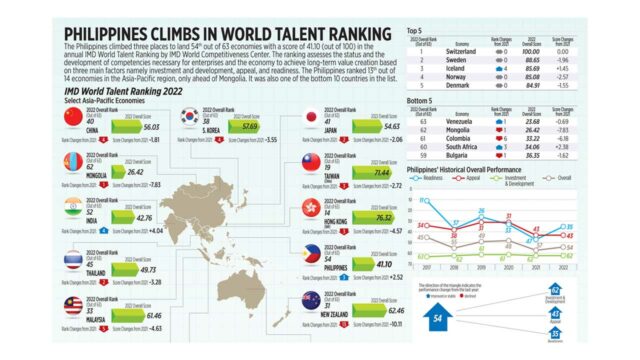
Philippines climbs in world talent ranking

THE PHILIPPINES jumped three spots in an annual global ranking of economies that measures their ability to attract and retain a skilled workforce, a report by the Institute for Management Development (IMD) World Competitiveness Center showed. Read the full story.

Philippines climbs in world talent ranking

Stocks to move sideways ahead of US CPI, Fed

PHILIPPINE STAR/KRIZ JOHN ROSALES

LOCAL STOCKS are expected to move sideways on Friday on tepid market activity as investors wait for the release of November US inflation data and the US Federal Reserve’s policy meeting next week, where they are expected to hike rates anew.

The 30-member Philippine Stock Exchange index (PSEi) lost 149.22 points or 2.23% to close at 6,525.16 on Wednesday, while the broader all shares index decreased by 51.86 points or 1.49% to end at 3,425.86.

Philippine financial markets were closed on Thursday in observance of the Feast of the Immaculate Conception of Mary.

The PSEi had closed lower on Monday due to profit-taking before rebounding on Tuesday. However, it declined anew on Wednesday.

“The market closed at 6,525 on Wednesday after a very rocky week start ahead of the holiday,” AP Securities, Inc. Equity Research Analyst Carlos Angelo O. Temporal said in a Viber message.

He said positive news that drove the market’s rally on Tuesday, which included China’s easing of coronavirus disease 2019 (COVID-19) restrictions.

Beijing last week relaxed its zero-COVID policy, with rules now allowing infected people with mild symptoms to quarantine at home and dropping testing for people travelling domestically.

Regina Capital Development Corp. Head of Sales Luis A. Limlingan said the downward trend in the market in two of the last three trading sessions was caused by worries over the Fed’s next move.

The Fed will hold its last policy review for this year on Dec. 13-14, where markets expect a smaller rate hike following four consecutive 75-basis-point (bp) increases. It has raised borrowing costs by 375 bps since March.

“On Wednesday though, there was evident profit taking at close given the holiday,” Mr. Limlingan said.

Rizal Commercial Banking Corp. Chief Economist Michael L. Ricafort said the PSEi has so far corrected lower by 3.8% for the month of December.

This is after a 10.2% increase in November, which was the biggest monthly gain in more than 12 months or since September 2010.

“From the immediate low of 5,699.30 posted on Oct. 3, the PSEi still gained by a total of 825.86 points or 14.5%,” Mr. Ricafort said in a Viber message.

For Friday, Mr. Temporal said investors’ focus will shift to US consumer price index (CPI) data to be released on Dec. 12, which is expected to be a key consideration in the Fed’s upcoming meeting.

“Upward movement for the market could be restrained by these uncertainties but sustained appreciation of peso is likely to keep it afloat,” he said.

“Local stocks’ performance on Friday will depend on the US’ performance Thursday night,” Mr. Limlingan said.

Mr. Temporal said he expects market activity on Friday to remain anemic and placed the PSEi’s support at 6,400 and resistance at 6,700. — J.I.D. Tabile

Maharlika still flawed after pensions ruled out as funders

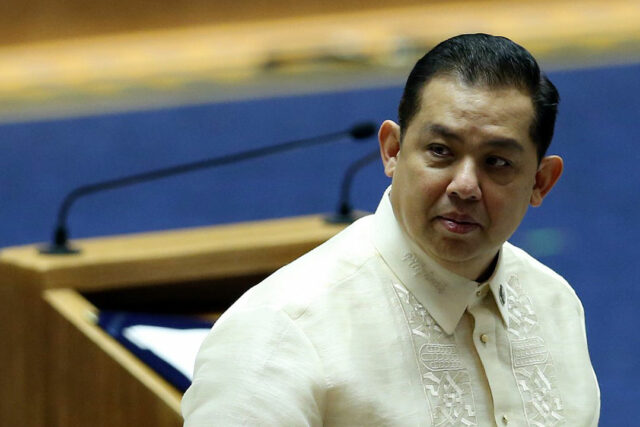
SPEAKER Martin G. Romualdez during the opening of the 19th Congress at the House of Representatives in Quezon City on July 25, 2022. — PHILIPPINE STAR/KRIZ JOHN ROSALES

By Beatriz Marie D. Cruz

THE proposed Maharlika Wealth Fund (MWF) continues to be saddled with governance “red flags” even after the withdrawal from participation of chief funders the Government Service Insurance System (GSIS) and Social Security System (SSS).

Filomeno S. Sta. Ana III, co-founder and coordinator of the Action for Economic Reforms think tank, told BusinessWorld Live that House Bill 6398 creating the MWF retains “very controversial provisions which are inconsistent with good institutions, good governance, potential care, (and) good oversight regulations.”

Mr. Sta. Ana said that the Philippines currently isn’t suited for a sovereign wealth fund. “Even if we get the concept right, we just don’t have the right conditions. It depends on the surplus that we have, and it has to be a very huge surplus,” he said.


Interview by Brontë H. Lacsamana, Reporter. Editing by Earl R. Lagundino.

On Wednesday, House committee on appropriations senior vice chair Stella Luz A. Quimbo said that the GSIS and SSS have been excluded as Maharlika funding sources.

David Michael M. San Juan, a professor at De La Salle University and convener of the Professionals for a Progressive Economy (PPE), said some reservations were addressed somewhat by the withdrawal of the two pension funds.

However, another proposal to use central bank profits will reduce funding for education, healthcare, and housing.

As alternatives, Mr. San Juan proposed “imposing a wealth tax on Filipino billionaires and trimming down/reducing the salaries of BSP, GSIS, SSS bureaucrats, senators, and Palace executives. Ending corruption and wasteful expenditure in government must be also done,” he said in an e-mail.

He also proposed the “abolition of agencies like NTF-ELCAC (for which P10 billion was allotted for next year) and the reduction, if not total removal of confidential funds.”

He was referring to the National Task Force to End Local Communist Armed Conflict.

Jose Enrique A. Africa, executive director of IBON Foundation, said that the changes “(do not) remedy so many other deficiencies of the proposal,” calling it “maliciously opaque.”

In a text message, he said, “There are no real safeguards and, with the sweeping mandate on the use of funds, it seems designed to be used for narrow self-serving purposes beyond public scrutiny.”

“The proposal clearly isn’t supported by any proper staff work, wasn’t consulted with key stakeholders, and was just railroaded at the committee level. This is apparent from the muddled explanations about the fund’s objectives where there are public justifications by proponents that are inconsistent with the bill’s provisions,” Mr. Africa said.

Senate Minority Leader Aquilino Martin D. Pimentel III said in a statement that the changing proposals for the Maharlika funding set-up indicates that the bill remains “an idea which… hasn’t been thought out well and was rushed (and) will have a difficult time in the Senate.”

Sen. Emmanuel Joel J. Villanueva welcomed the changes in the bill, but proposed the plastics and mining industry as alternative sources of seed money for the fund. He said in a statement that there is a need “to be circumspect about the sources of the funds and how it will be managed.”

House Senior Deputy Minority Leader Rep. Paul R. Daza said there should be no hurry to pass the bill. In a statement, Mr. Daza said, that “there is a proper way to execute this fund. Let us please not rush this through Congress. We must study this carefully and create a working MWF that would suit our current economic situation.”

According to Ms. Quimbo, the House committee on appropriations will meet on Friday to discuss how much the central bank should contribute to the P275-billion fund.

As originally written, the bill called for the GSIS to provide P125 billion in capital to the fund, the SSS and Land Bank of the Philippines P50 billion each, and the Development Bank of the Philippines P25 billion.

Mayors see building up staff, irrigation as major hurdles to post-Mandanas devolution

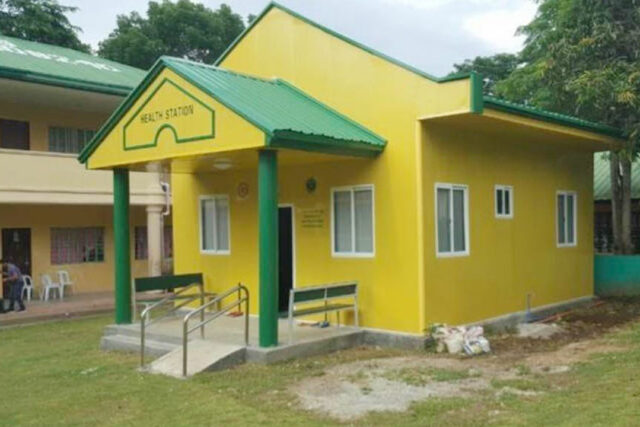
PHILSTAR FILE PHOTO/ RELEASE JBROS CONSTRUCTION CORP.

By Luisa Maria Jacinta C. Jocson, Reporter

LOCAL government units (LGUs) face an uphill task in staffing up to implement devolution and taking charge of irrigation in the wake of the Supreme Court’s Mandanas-Garcia ruling, mayors said.

“We are supportive of devolution. It’s just that there are limitations on the part of the local government unit,” Real, Quezon Mayor Diane D. Aquino said in an interview on Wednesday.

Ms. Aquino said that devolving the functions from the National Government (NG) in a short period may be “too much,” due to the challenge of hiring more personnel.

“We have to hire more technical personnel and there is a cap or ceiling when it comes to creating new positions in the LGU… a big factor is salary, (which) takes up 40-50%. If you add the job orders from the municipality, more than 50% of the funds goes to personnel,” she said.

“All in all, it’s all right for (devolution) to proceed as long as the financial resources are commensurate with the (devolved functions),” she added.

She also cited the readiness or capacity of barangays to take on certain frontline services.

The ruling granted LGUs a larger share of the national taxes by expanding their 40% cut of NG revenue to also include revenue from Customs duties.

“In the next two years, I hope there will be a slow transition. I hope we will not be rushed,” Ms. Aquino added.

Last year, President Rodrigo R. Duterte signed Executive Order No. 138, which transfers some basic services to LGUs by 2024 to offset the reduced share of revenue retained by the NG.

In November, the Department of Budget and Management (DBM) said it plans to delay the devolution of some National Government functions to 2027 from 2024.

“They are suspending the implementation to 2027, so hopefully by that time, we are fully recovered and we have proper income when it comes to the functions devolved,” Gumaca, Quezon Mayor Webster D. Letargo said.

As a result of the Mandanas-Garcia ruling, LGU allocations rose 37.89% to P959 billion in 2022.

LGUs by law are given 40% of NG revenue. The ruling clarified that LGUs are also entitled to a cut of Customs revenue. The original wording of the Local Government Code defined the LGU share as the “Internal Revenue Allotment (IRA),” which the NG interpreted to mean 40% of the collections of the Bureau of Internal Revenue (BIR).

The court rejected that interpretation and ordered the law to be rewritten to redefine the LGU allocation as based on all taxes. The IRA is now known as the National Tax Allotment (NTA).

However, because of decreased revenue collections in 2020 due to the pandemic, the allotment for next year is estimated to decrease by 14.47% to P820 billion. The NTA is 40% of NG collections from three years prior.

“Although we support this ruling and our (NTA) got bigger, because of collections during the lockdown, it went down by 14%. Agriculture, health, education have all been delegated to us. There are so many devolved functions,” Mr. Letargo added.

“We need to spend so much. Personnel for agriculture, school buildings, bridges, all of that. It’s heavy. Next year we expect belt-tightening,” he said.

Mr. Letargo cited irrigation as one challenge among the devolved functions.

“That was given to us and it’s a bit out of reach for us. It takes hundreds of millions to construct irrigation,” he said.

To aid LGUs in funding their devolved services, the DBM said that under the proposed budget for 2023, it will allocate P28.9 billion under the Local Government Support Fund in addition to the P820.3-billion LGU share from the 2023 national tax collection.

Strong 3rd quarter metals output points to solid 2022

BW FILE PHOTO

THE Department of Environment and Natural Resources (DENR) said metallic minerals production for the second half of the year will continue the sector’s strong performance in the third quarter.

“It’s very promising as you know for this year. We don’t have the exact figures for the final semester yet but in the first semester, we have noticed the uptick in revenue,” Environment Secretary Ma. Antonia Yulo-Loyzaga told reporters on Wednesday. 

In the third quarter, metallic mineral production rose 29.2% year on year to P39.79 billion, according to the Mines and Geosciences Bureau (MGB).

The increase was driven by strong nickel ore and gold prices as well as increased volumes of gold, silver, chromite, and iron in the third quarter. Nickel ore prices rose 47.2% year on year to $11.97 per pound.

The Bangko Sentral ng Pilipinas said gold prices rose 1.36% year on year to $1,826.47 per troy ounce during the period. However, prices of silver and copper declined 14.8% and 0.64%, respectively.

Nickel ore and its nickel by-products, nickel-cobalt sulfide, and scandium oxalate accounted for much of the metal output at P86.94 billion or 49.4%, gold took up a 38.3% share with P67.45 billion; copper 10.8% at P18.99 billion; and silver, chromite, and iron 1.5% at P2.63 billion.

In the nine months to September, prices of nickel surpassed the 2018 to 2021 levels, peaking in March at $17.14 per round.

“We need to be able to enjoy this economic gain while also balancing the environmental side of the mining industry. For our outlook for the final semester, I cannot give you the figures yet but it is quite positive,” Ms. Yulo-Loyzaga said.

In a report, the MGB said that it is relying on small-scale mining to boost the industry, Ms. Yulo-Loyzaga said the DENR is hoping that the review of mining laws will help small-scale miners. — Ashley Erika O. Jose

PHL expecting healthcare technology transfer from Taiwan after MoU signing

EXPO.TAIWAN-HEALTHCARE.ORG

By Alyssa Nicole O. Tan, Reporter

THE Philippine healthcare industry could benefit from technology transfer following the signing of an agreement between Taiwan’s Institute for Biotechnology and Medicine Industry (IBMI) and hospitals in the Asia-Pacific, a Philippine hospital industry official said.

“Initially, it is more of establishing relationships between the hospitals and of course, the Taiwan group of companies and then from there, we will see what benefits we will get eventually from having this relationship,” Private Hospitals Association of the Philippines, Inc. (PHAPi) President Jose Rene D. de Grano told BusinessWorld on the sidelines of the Taiwan Healthcare Expo held in Taipei.

“Most probably, it’s going to be more of a transfer of technology, transfer of artificial intelligence, those things and that will probably improve, by a lot, the healthcare system in our country, because you know, our technology in the Philippines is (far behind),” he added.

Mr. De Grano said the memorandum of understanding (MoU) will facilitate Taiwan-Philippines collaboration in the fields of smart hospitals, cancer treatment, and biotechnology.

“The Philippine Hospital Association welcomes any initiative that paves the way to building a strong operation and collaboration with medical industry stakeholders in Taiwan,” Philippine Hospital Association (PHA) President Edmundo B. Lopez said in a speech. “This will surely benefit those in our respective health centers in pursuit in our attainment of our health reform agenda, with the continuous development and improvement of our healthcare system.”

Mr. Lopez said the MoU will help improve the standard of care and safety in the Philippine healthcare.

“On behalf of the Philippine Hospital Association, I am delighted to sign this MoU with IBMI to collectively facilitate collaboration and initiatives to name a few, in the field of smart hospitals, safe and quality healthcare innovations, advancement in prevention, diagnostics and treatment technologies, friendly hospitals, and digitalization enhancements,” he said.

“The Healthcare Expo is an important platform for public-private cooperation in the development of our next-generation health industry. It is also a key venue for showcasing the impressive results of Taiwan’s cross-disciplinary collaboration across healthcare, biotechnology, and digital technology,” Taiwan President Tsai Ing-wen said during her opening speech at the expo.

She noted that Taiwan has conducted exchanges in medicine and public health in accordance with its New Southbound Policy partners across the region, including the Association of Southeast Asian Nations (ASEAN), South Asia, Australia and New Zealand.

“Our Ministry of Health and Welfare recently announced that it will loosen regulations to let hospitals in Taiwan more easily establish overseas branches in Southeast Asia, helping further expand Taiwan’s regional healthcare,” she said.

The Taiwan government, industry and academics, she added, will work with its biotechnology industry “to further improve public welfare, create more business opportunities, and continue to distinguish itself on the international stage.”

IBMI President Chi-Huey Wong told BusinessWorld at the forum that “the next step probably (will involve) hospitals here and (continuing the discussion) about what is the best business model for collaboration.”

The information technology industry must work with healthcare professionals to come up with more efficient and cost-effective ways of managing hospitals, he added, noting that this may be of “great interest” to the Philippines.

“I think it’s important to know each other, and then to understand, for example, the difference in culture between the two countries, and we may come up with a good business model,” Mr. Wong said.

He underscored the importance of understanding the needs of partners before arriving at a mutually acceptable compromise.

Mr. Wong said that the IBMI first reached out to the Philippines in 2017, but described the rate of progress as slow.

“We want to speed up these kinds of collaboration, we need to have more interactions,” he said.

Philippine Medical Association President Jose P. Santiago, Jr. told BusinessWorld that the Philippine healthcare environment has changed since the pandemic hit.

“We’re now aware of COVID, and continuously question how we can deal with COVID in the future, just in case there’s another surge,” he said.

Mr. Santiago said that the Philippines should take advantage of the interest expressed by Taiwan, since “we have to really redirect our healthcare system and accelerate the course of its development.”

He noted interest in improving the Philippines’ capabilities in artificial intelligence, biotechnologies, and stem cell therapy, calling the expo a venue for finding partners that can help elevate the standard of care in the Philippines.

“Our organization will strive to encourage opportunities for further cooperation in the expansion of our networks overseas, especially here in Taiwan,” Mr. De Grano said.

“We expect future cooperation and coordination to have matchmaking events like this and conferences between the two countries and other ASEAN countries,” he added. “Probably by next year, we will have to communicate with them. I hope it will happen sooner than later.”

The Philippines can hold events to exchange ideas and technologies with businesses, hospital and industry experts from Taiwan, Mr. De Grano said, noting as well opportunities to exchange manpower through training.


RCEP seen signed by early 2023

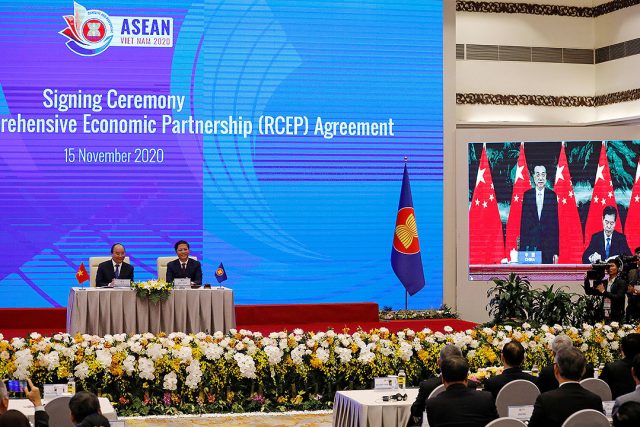
REUTERS

THE Department of Trade and Industry (DTI) said the Philippines could finally sign on to the Regional Comprehensive Economic Partnership (RCEP) trade agreement by early next year.

Trade Undersecretary Ceferino S. Rodolfo told reporters on the sidelines of the recent National Export Congress 2022 in Pasay City that the DTI is hoping that the Senate will give its concurrence to RCEP by the first quarter.

“We have been in constant coordination with the senators with respect to the RCEP and other free trade agreements (FTAs) that we are negotiating… Given the importance of the RCEP and the urgency, we remain optimistic that this will be considered positively by the Senate. Hopefully first quarter of next year,” Mr. Rodolfo said.

According to Mr. Rodolfo, the RCEP paperwork is currently with the Senate Committee on Foreign Relations following the transmission of the instrument of ratification from President Ferdinand R. Marcos, Jr.

“On Dec. 6, the Senate read the RCEP into the record. They calendared it and essentially passed it to the Senate Committee on Foreign Relations. The President has already transmitted the instrument of ratification to the Senate,” Mr. Rodolfo said.

“We will work with the Senate Committee on Foreign Relations so that we can respond to whatever questions they may still have about the RCEP with the view towards facilitating the Senate concurrence to the ratification,” he added.

Trade Secretary Alfredo E. Pascual has said that the Cabinet approved and requested the concurrence of the Senate, adding that Mr. Marcos has reviewed and given the go-ahead for RCEP ratification.

“When I asked President Marcos about the RCEP, he said that he has already reviewed it and that it is okay with him. In October… the Cabinet, as a whole, made a decision to request the concurrence of the Senate,” Mr. Pascual said.

The RCEP, billed as the world’s largest FTA, started taking effect in the various jurisdictions on Jan. 1. Participants include the 10 members of the Association of Southeast Asian Nations (ASEAN), Australia, China, Japan, South Korea, and New Zealand.

The Philippines and Myanmar are the only remaining countries that have yet to finalize their participation in RCEP.

The previous Congress failed to give its concurrence as some senators raised concerns about the lack of safeguards for the agriculture sector. Former President Rodrigo R. Duterte ratified the RCEP in September 2021. — Revin Mikhael D. Ochave

LGUs must step up crisis communication capacity

PHILIPPINE STAR/ MICHAEL VARCAS

LOCAL government units (LGUs) must ramp up their crisis and risk communication efforts through digitalization and technology upgrades in order to make them better prepared against the pandemic and other emergencies, according to the Philippine Institute for Development Studies (PIDS).

“Local governments have been at the forefront of the pandemic response since the COVID-19 crisis started in 2020. One of the most critical aspects of a pandemic response is risk communication and crisis communication,” PIDS said in a study written by Sheila V. Siar and Pauline Joy M. Lorenzo.

“The role of LGUs in crisis and risk communication is crucial to manage the risks of the COVID-19 pandemic and mitigate its negative impacts. However, with or without a pandemic, local officials are the government actors directly closest to citizens; thus, they play a prominent role in communication tasks. This responsibility becomes more crucial when a disaster strikes as its impacts and effects are felt most strongly at the local level,” it added.

The study said improving the information and communications technology infrastructure must leverage modern communication tools to improve government responsiveness.

“Affordable, fast, and reliable internet connection is also vital for government offices to use internet-based tools for service delivery and for the public to access government services,” it said.

The study cited the need for social media and messaging platforms to improve their responsiveness to citizen concerns, make them more accessible to the public, and increase organizational transparency and accountability.

“Hiring dedicated personnel for social media is essential to fully exploit the capabilities of different platforms and respond to public inquiries and concerns,” it added.

Social media analytics can also help promote effective communication, according to the study.

“While the government increasingly uses social media, there is limited use of data gathered from social media channels to measure performance and inform decisions and strategies. This can be attributed to the low usage of social media analytics due to a lack of awareness and knowledge,” PIDS said.

It recommended the establishment of social media listening or monitoring channels for problems and opportunities.

“Training and capacitating government personnel on analytics approaches is key to more effective use of social media in communicating and engaging with target audiences,” it added.

The study recommended capacity building in risk communication, science communication, and crisis communication.

“Capacitating government staff, particularly disaster risk reduction officers, health officers, and information officers on the abovementioned key subfields of strategic communication is essential for them to effectively carry out their communication functions during disasters and health emergencies,” it added.

It also said that training in public communication during health emergencies needs to be addressed, given the country’s limited experience in dealing with epidemics and pandemics.

PIDS recommended training LGU personnel on communication planning, monitoring, and evaluation.

“Whether or not the situation is a crisis, LGUs should have a strategic communication plan. A communication plan is essential in setting goals and objectives, identifying the audience, message, channels, timing, and resources, and specifying accountabilities,” it said.

“Along with a plan, a clear communication monitoring and evaluation system should be in place to track outcomes against targets, identify communication pitfalls and areas for improvement, and evaluate the success of communication interventions,” it added. — Luisa Maria Jacinta C. Jocson

Registered births, deaths continue to decline in first 8 months

PHILSTAR

REGISTERED births and deaths declined by 22.3% and 34.6% respectively from a year earlier in the eight months to August, the Philippine Statistics Authority (PSA) reported on Thursday.

Citing preliminary data from its Vital Statistics Report, the PSA said recorded births in the January-August period totaled 662,780, lower than the 852, 960 registered a year earlier.

Meanwhile, deaths fell to 366,918 from 560,839 a year earlier.

Calabarzon (Cavite, Laguna, Batangas, Rizal, Quezon) logged the most births and deaths with 100,118 and 54,533, respectively.

Births in the region accounted for 15.1% of all births in the Philippines while deaths accounted for 14.9%.

The National Capital Region logged 81,170 births during the first eight months against the year-earlier 100,680, for a decline of 19.4%. The capital region accounted for 12.2% of the total births in the Philippines.

Metro Manila reported 44,048 deaths or 12% of the national total.

In a separate statement, the PSA said ischaemic heart diseases, cerebrovascular disease, and neoplasms remained the leading causes of death in the first eight months.

Deaths due to ischaemic heart diseases during the period amounted to 67,601 or 18.4% of all deaths while cerebrovascular diseases totaled 37,936 or 10.3% of the national tally.

Neoplasms (37,470) accounted for a 10.2% share of the total.

Deaths associated with COVID-19 totaled 12,772 in the eight months to August, or 3.5% of all registered deaths.

The COVID-19-associated deaths included 8,963 cases or 2.4% of the total in which the virus had been identified at the time of death, making the disease the 11th leading cause of death during the period.

Deaths in which COVID-19 had not been identified amounted to 3,809 cases, accounting for 1% of the total.

Metro Manila recorded the most deaths due to COVID-19 with 3,176 or 24.9% of the national tally.

This was followed by Calabarzon with 2,017 (15.8%), and Central Luzon with 1,690 (13.2%).

Meanwhile, the Bangsamoro Autonomous Region in Muslim Mindanao logged the fewest COVID-19 deaths of any region with 35 cases during the period.

Vital Statistics data showed that registered marriages increased 11.4% year on year in the first eight months to 256,854.

Calabarzon posted the most marriages with 37,614 or 14.6% of the national total, while Metro Manila registered 31,444, or 27.4%.

The PSA’s COVID-19 death tally was based on death certificates lodged with health officers at the local government unit level.

This tally differs from the one maintained by the Department of Health, which is based on a surveillance system which counts only confirmed cases.

The Vital Statistics report was compiled from tallies generated by city or municipal Civil Registrars, consolidated by the PSA’s Provincial Statistical Offices, and then submitted to the Office of the Civil Registrar General. — Abigail Marie P. Yraola  

ADVERTISEMENT
ADVERTISEMENT