Home Blog Page 5518

MVP Sports Foundation, Smart and PLDT rally behind PHL sports

17 NSAs, Gilas Pilipinas and bevy of national teams

FROM all-out support to Filipino athletes to hosting local and international events, and building more sports centers, the MVP Sports Foundation (MVPSF) stayed the course and even went extra mile for the booming Philippine sports in its full-swing return at the tailend of the pandemic.

MVPSF, with mother companies PLDT, Inc. (PLDT) and Smart Communications, Inc. (Smart) — more than ever — doubled on that noble commitment to further advancing Philippine sports with a banner campaign this year in and out of the country.

Just in the first quarter of the year, MVPSF unveiled the MVPSF Center for Sports Excellence in Antipolo, Rizal for the holistic training of badminton players and boxers, and the MVPSF Gymnastics Center in Intramuros, Manila for the country’s aspiring gymnasts.

That’s on top of the unwavering backing of Filipino athletes in their overseas campaigns bannered by Olympians Caloy Yulo (gymnastics), Hidilyn Diaz (weightlifting), EJ Obiena (pole vault), boxers Nesthy Petecio and Hergie Bacyadan, the Philippine Women’s National Football Team and the Smart Omega Esports, who have brought home multiple medals and trophies this year.

In total, MVPSF has been rallying behind 17 national sports agencies (NSAs) including a bevy of national squads like Gilas Pilipinas, Philippine men’s and women’s national volleyball teams, Smash Pilipinas, and sponsorships for Smart Omega Esports and PLDT High Speed Hitters among others.

“The pride that our athletes give the Philippines when they represent our country is priceless. PLDT and Smart have always believed that sports plays a key role in shaping individuals and communities to build a better nation,” said Jude Turcuato, Head of Sports at PLDT and Smart, and Executive Director at MVPSF.

“Our mission is to be the driving force in the development of world-class Filipino sports champions. We want to foster a culture of winning using the grassroots programs and partnerships that we’ve established in various sporting events,” he added.

MVPSF, PLDT and Smart, through the Smart Livestream app, have also made it possible to bring the Filipino fans closer to international events like the 2022 Southeast Asian Games, FIBA World Cup and FIBA Asia Cup and FIVB Volleyball Nations League along with major local tilts in the Premiere Volleyball League, University Athletics Association of the Philippines, and Philippine Basketball Association.

Smart have also bolstered this year’s Universities and Colleges Basketball League with connectivity support for livestreaming their games and country’s top sports sites, NBA.com/Philippines.

Aside from inking its 5th year partnership with Moonton for the Mobile Legends: Bang Bang Pro League, Smart also launched the first all-in-one esports platform for Filipino mobile gamers, GIGA Arena, to empower Filipinos with the best mobile gaming experience powered by the fastest mobile network.

But more than advancing the Philippine sports movement, PLDT and Smart have championed the mental health awareness advocacy through different seminars and conversations with Football for Humanity to launch the Better Today for Kids Playground, where fifty (50) children joined the football workshop to channeling sports and play for rehabilitation.

“We believe that sports can become an enabler for strong mental resilience and well-being, which is fundamental to our much broader digital wellness advocacy. We hope to promote a culture of empathy among our community members,” said Stephanie V. Orlino, AVP and Head of Stakeholder Management at PLDT and Smart as part of the company’s commitment to the UN Sustainable Development Goals (SDGs), particularly SDG #3: Good Health and Well-Being. — John Bryan Ulanday

Sprinter Compuesto shortlisted for the national team

MASBATE wunderkind sprinter Leonelyn Compuesto

THE PHILIPPINE Sports Commission’s Batang Pinoy has succeeded in its core goal of producing national athletes.

That’s at least as far as track and field is concerned.

Edward Kho, secretary-general of the Philippine Athletics Track and Field Association, recently said the best performers in the sport in Batang Pinoy would be seriously considered for national youth team inclusion.

“Shortlisted athletes from the Batang Pinoy athletics competition will be included for the Philippine selection Team to compete at the 4th Asian Youth Athletics Championships in Tashkent, Uzbekistan on April 27-30, 2023,” said Mr. Kho, who was with PATAFA President Terry Capistrano to personally identify the worthiest performers in the sport.

And the first to make the squad was Masbate wunderkind Leonelyn Compuesto, who swept all five sprint gold medals to end the most be-medaled athlete at the track.

Ms. Compuesto, 15, was a cut above the rest in capturing mints in 100 meters, 200m, 400m as well as the 4x100m and 4x400m relays where she was the anchor of Masbate’s version of the “Fantastic Four” that included Realyn Lanuza, Jesalyn Materdan and Alessandra Nicole Capellan.

And just like her idol, the late great Lydia de Vega-Mercado, Ms. Compuesto is ready when destiny comes calling. — Joey Villar

Azkals eye full points versus lowly Brunei team

Philippine Azkals — PH AZKALS

Match Today
(Rizal Memorial Stadium)
6 p.m. — Philippines vs Brunei

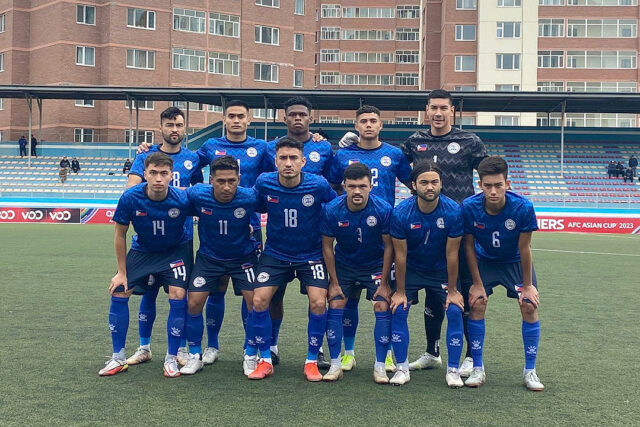
THE PHILIPPINE Azkals set out for a bounceback victory against unheralded Brunei today at the familiar grounds of Rizal Memorial Stadium to revive their bid in the AFF Mitsubishi Electric Cup.

After sustaining a stunning 3-2 loss to old prey Cambodia over in Phnom Penh Tuesday, the new-look Azkals try to make the most of the opportunity against their lightweight opponent to grab maximum points in the 6 p.m. home outing.

It’s a battle of Match Day 1 losers as qualifier Brunei sustained a heavy 5-0 setback to defending champion Thailand in their opening duel in Kuala Lumpur.

If successful against the Bruneians, the in-transition Pinoy booters will continue the uphill battle for a semifinal ticket in Group A versus the War Elephants in a tough Dec. 26 road assignment and 2020 runner-up Indonesia in a challenging Jan. 2 hosting.

“Now it’s a question of working on the last three matches to turn things around,” said Azkals midfielder Mark Hartmann, one of the few veterans in the squad of Spanish coach Josep Ferre.

A four-time semifinalist since the historic run of 2010, the Philippines is determined to make it back to the Final Four after missing out in the previous edition. — Olmin Leyba

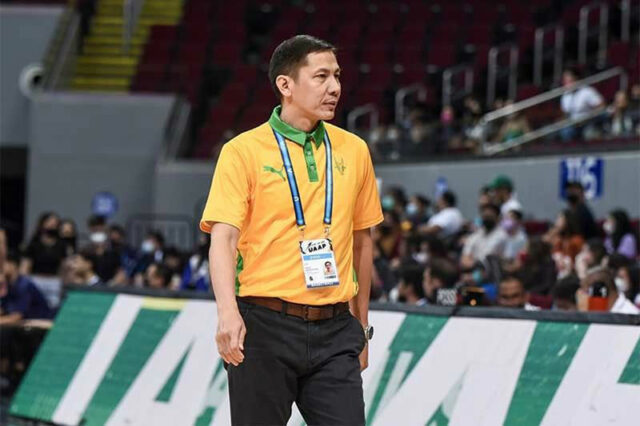
Olsen Racela steps down as Tamaraws head coach

Coach Olsen Racela — UAAP

OLSEN Racela has stepped down from his head coaching post in the Far Eastern University (FEU), the school announced yesterday.

Mr. Racela’s resignation came on the heels of the Tamaraws’ early exit in UAAP Season 85 after recording then the longest Final Four streak at eight straight seasons.

The Tamaraws struggled to a 5-9 finish this season to settle for only seventh place after taking a blow from the departure of ace guard RJ Abarrientos to the Korean Basketball League.

With L-Jay Gonzales and Bryan Sajonia leading the way, FEU actually nearly flipped a flat 0-5 start by uncorking a four-game win streak that nonetheless proved to be still insufficient in foiled last hurrah to the semis.

FEU’s early elimination this season was also the team’s lone Final Four miss under Racela since taking over from his brother Nash, now Adamson mentor, in 2016.

There is still no word on who will be the replacement of Racela, also an assistant coach of Barangay Ginebra in the PBA, with a still full year left before the next UAAP season.

Reports, however, this early surfaced pointing to long-time assistant Denok Miranda as the heir apparent in the Tamaraws’ head coaching role.

A bona fide Tamaraw himself, Mr. Miranda is the top deputy of Mr. Racela in FEU that boasts a stacked staff including Johnny Abarrientos, Mark Isip, Marc Pingris, Vic Pablo, Eric Gonzales, Allan Albano and Jonathan de Guzman. — John Bryan Ulanday

Lionel Messi extends contract with French club Paris St. Germain

LIONEL MESSI — REUTERS

PARIS — World Cup winner Lionel Messi has reached a deal with Paris St. Germain to stay with the club for at least the 2023-24 season, French daily Le Parisien reported on Wednesday.

The 35-year-old forward, seven-times winner of the Ballon D’Or, helped Argentina lift the World Cup trophy by beating France on penalties in the final on Sunday.

“In early December, in the midst of the World Cup, an agreement was reached (for Messi) to stay on for at least one more season,” the paper said, citing no sources. PSG were not immediately available for comment.

Paris St. Germain (PSG) President Nasser Al-Khelaifi said this month that Messi was happy at the Ligue 1 champions, adding that discussions about a contract extension would be held after the World Cup.

Mr. Messi, who has 12 goals and 14 assists for PSG in all competitions this season, moved to the French capital from Barcelona in 2021 on a two-year contract. — Reuters

Bucks’ comeback falls short vs Cavs

A 15-0 run in the first quarter gave the host Cleveland Cavaliers a lead they never surrendered en route to a 114-106 defeat of the Milwaukee Bucks on Wednesday.

Four different Cavaliers scored during their pivotal, early-game run, with the last points coming from Jarrett Allen.

Donovan Mitchell started Wednesday’s contest slowly on offense, scoring four first-quarter points and sitting on seven for the first half before his buzzer-beating 3-pointer to send Cleveland into intermission with an 18-point lead.

The 3-pointer set the tone for a 26-point second half for Mitchell, who finished with a team-high 36 points. He got to the free-throw line for 16 attempts, making 15. Mitchell also dished a team-high six assists.

Behind Giannis Antetokounmpo’s season-high 45 points, Milwaukee chipped away at the deficit in the second half. The Bucks rallied from down as many as 24 points to pull within five points when Pat Connaughton connected on a 3-pointer with 2:21 remaining in regulation.

But Darius Garland, who scored 23 points, answered with a jumper and a free throw to push the lead back to eight points and keep Milwaukee at bay.

Mr. Allen added 19 points and grabbed eight rebounds for the Cavaliers, and Kevin Love scored nine points with a team-high nine rebounds.

The win marked Cleveland’s fifth straight, and fourth over the Cavaliers’ ongoing, six-game homestand. Milwaukee fell to 1-1 on its current, five-game road swing.

Mr. Antetokounmpo grabbed a game-high 14 rebounds and dished four assists in the loss, and Jrue Holiday flirted with a triple-double at nine points, nine rebounds and eight assists. — Reuters

Bulls woes

Fans of the Bulls heaved a sigh of relief following their win over the Heat the other day. It wasn’t simply that they triumphed on the road after having suffered setbacks in their previous four matches (and in seven of their last nine). Neither was it just because they went against highly regarded (and well-rested) opponents boasting of four straight victories. For the most part, it was due to the way they won: with a clear intent to be better collectively.

Considering that the Bulls largely brought back the same roster that finished 46 and 36 en route to an outright postseason berth in the previous season, not a few quarters figured they would make an even bigger impact throughout their 2022-23 campaign. Instead, they struggled from the get-go, and, after a middling November, appeared to be in a swoon heading into the holidays. The other day, however, they showed their potential, and how.

To be sure, the Bulls’ concerns won’t be disappearing anytime soon. Given that DeMar DeRozan and Zach LaVine, their top two scorers, need the ball to be effective, the offense has been a my-turn-your-turn experiment that yields failure more than success. To top it off, they’re typically less than engaged at the other end of the court. Which, in a nutshell, explains why they have a significant net-negative rating when they burn rubber at the same time.

It’s fair to argue that the Bulls will have to take a long, hard look at their pool of talent and see if they can effect change — any change — in order to infuse dynamism to their sets. The fact that starting point guard Lonzo Ball, superior at ball distribution and on-ball coverage, remains on the injury list hasn’t helped. Meanwhile, head coach Billy Donovan, fresh off a contract extension, seems unable to frame a strategy that enables DeRozan and LaVine to play off each other well.

Whether the Bulls will be active in the trade market at the deadline remains to be seen. They should, at the very least, explore the possibilities. Else, they’ll be one and done once again in the playoffs — that is, if they even get there.


Anthony L. Cuaycong has been writing Courtside since BusinessWorld introduced a Sports section in 1994. He is a consultant on strategic planning, operations and human resources management, corporate communications, and business development.

Don’t worry about being happy

JACQUELINE MUNGUIA-UNSPLASH

I’M ALL for life and liberty. But the pursuit of happiness? In penning his famous line in 1776, Thomas Jefferson may have been spot-on about unalienable rights. But as a life coach — which, admittedly, he wasn’t claiming to be — he and the entire Western Enlightenment caused lasting and unquantifiable damage.

As the festive and allegedly soulful season approaches, I want to take some pressure off of you. Happiness shouldn’t be your goal, nor is it the point of life. In fact, dwelling on it will only make you and others miserable. So don’t worry about it.

The Western tradition wasn’t always fixated on happiness. Aristotle, for one, set off in a more mature direction, by contemplating the “good life” more broadly and the role in it of eudaimonia. Regularly mistranslated as “happiness,” that word in fact means “good spirit.”

What Aristotle had in mind had nothing to do with smiley faces, and lots to do with what we would call flourishing. Basically, he viewed the good life as fulfilling your purpose, whatever that may be. If you’re a knife, you cut; if you’re Aristotle, you think; if you’re me, you write and parent.

Another way of thinking about purpose might be duty. Aeneas, as Virgil described the Trojan hero, was rarely happy and often wretched. But he was “pius” — meaning dutiful; the connotation “pious” came much later — and therefore lived well.

There’s absolutely no need to make this notion either complicated or epic. Ralph Waldo Emerson brought Aristotle right down to earth: “The purpose of life is not to be happy. It is to be useful, to be honorable, to be compassionate, to have it make some difference.”

Of course, people who strive to live an Aristotelian life also pause occasionally to ponder where they are on their paths, just as seasoned travelers like to look back on their peregrinations. And then, for fleeting moments, they may feel an uplifting sensation that maybe all of this was, if not always fun, at least worthwhile. Go ahead and call that happiness. But recognize that it’s retroactive, and will be gone again in a jiffy.

That’s because these sporadic warm and fuzzy, or bright and bubbly, feelings usually evaporate as soon as people turn back to the present moment — the famous “Now” of New Age lore. In that here and now, most of us can’t help but notice that life frequently just sucks.

For many people, life offers up a diet of pain, poverty, disease, or hunger. And even when the menu features ease, wealth, health, and cornucopia, people are still stuck with their own minds. And oh, how the human psyche knows to torture. Its tricks range from anxiety to depression, anger, envy, and all the rest.

The Athenian philosophers coming just after Aristotle understood this and therefore tried to refine notions about the good life. The results were Stoicism, Epicureanism, Skepticism and Cynicism — in their original, not their modern, senses, mind you. But the Hellenistic thinkers too weren’t really aiming at happiness as such. Their goal was instead equanimity.

The world champions of thinking about the mind and equanimity were the Buddhists. The first of their four noble truths states that life is duhkha. This is usually translated as “suffering” but means something closer to unease or discomfort. According to yoga scholar T.K.V. Desikachar, the etymology ultimately comes from the Sanskrit for “dark chamber.”

Basically, Buddhism recognizes that our natural state resembles being in a dark space, something like the opposite of happiness. The blame for that, again, belongs to the mind. Even if we’re momentarily happy, for example, we’ll be unhappy as soon as that high is gone. And then we’ll forever crave another hit of happiness, like junkies needing their next fix.

The rest of Buddhism basically elaborates how — sort of, maybe, possibly — we can get ourselves “at ease” again. That involves observing the mind doing its stuff — by watching, but not judging, our thoughts. One thing meditators eventually notice is that bad emotions enter the mind but also leave it again just as easily. So Buddhists practice politely seeing their inner nasties to the door and letting them go.

If all goes well, a person can eventually climb out of the dark chamber into a permanently lit place. But that’s rare. And the Sanskrit words for that experience don’t exactly translate to happiness either. Instead they have meanings like liberation, release, emptiness, or even “being blown out” (nirvana) like an extinguished candle. Enlightenment, in short, is quite a different idea in East and West. As an unalienable Jeffersonian right, the pursuit of being blown out doesn’t cut it.

Having forgotten the legacy of the ancient Greeks and at best dabbled in Eastern thought, we in the West therefore went in a different direction. Sometimes we equate happiness with the bouncy optimism of Pollyanna, the title character in an American novel from 1913. More generally, it implies cheer and joy no matter what’s going on. As that most annoying of songs puts it: “Don’t Worry, Be Happy.”

The psychology behind such Hallmark-Card happiness falls somewhere between denial, escapism, and self-deception. At one extreme, putting on a happy face when your situation objectively leaves much to be desired might make you stop or delay planning, saving, getting an education, sobering up, or getting fit, thereby pre-programming future misery.

The modern happiness cult has other pernicious side effects. It leads to what some authors call a “Happycracy” or “Toxic Positivity.” That’s when the onus of not just pursuing but actually catching up with happiness falls on the individual person. If you’re not happy, you must be doing something wrong. It’s your fault.

That’s a lot of pressure, and causes a lot of guilt — moving you even further away from happiness. Often, it’s also downright, if inadvertently, cruel. The author Whitney Goodman, a psychotherapist, lists some particularly common and inappropriate positivity reflexes when we encounter grief: “You’ll be fine.” “Just smile.” “You have so much to be grateful for.” “Time heals all wounds.” “Be grateful for what you learned.” “It could be worse.”

Spouting cliches such as these borders on sadistic if you’re with somebody who just lost a job, got divorced, had a cancer diagnosis, suffered a miscarriage, got bombed out of Mariupol — or indeed somebody who simply feels lonely and down. The better response to somebody who’s unhappy — in the mirror or across the table — is to validate the pain, making it legitimate.

But we shouldn’t overshoot in the other direction either, by dwelling on the bad that may or may not be yet to come. Unsurprisingly, our foes are once again our own minds. The problem is that in imagining future outcomes, human cognition has evolved a “negativity bias”: For purposes of survival in the ancestral savannas, it was better to assume the worst, whereas natural selection never cared a whit about anybody’s happiness.

That heritage makes us prone to what psychologists call “catastrophizing.” It’s the recurring temptation, especially late at night or when we can’t sleep, to worry about the worst that could happen, rather than picturing more likely scenarios. This can lead to unwarranted and excessive anxiety.

Here’s the advice I’ll try to follow, and not just during the upcoming holidays. First, ignore silly “happiness indices” and other claptrap. Second, strange as it sounds, don’t feel bad if you’re not happy. Third, remember that, like Aeneas, you have more important things to do in this world, so stay focused on those. And fourth, keep watching your own mind, lest it gallop off too wildly in the wrong directions.

I’ll admit the possibility of one other secret weapon: a macabre sense of humor. “Much will be gained,” as Sigmund Freud allegedly put it, “if we succeed in transforming your hysterical misery into ordinary unhappiness.” On that note, Happy Holidays.

BLOOMBERG OPINION

Impunity plus

DYNAMIC WANG-UNSPLASH

Every government official of this country, whether elected or appointed, is supposedly in office in accordance with Constitutional processes. Their power to appoint their subordinates is based on their presumed legitimacy and that of the President, who assumes that post as a result of constitutionally mandated elections.

The President and Vice-President take an oath to “preserve and defend (the) Constitution, execute (the Philippines’) laws, do justice to every man, and consecrate (themselves) to the service of the Nation.” Every government official is bound by the same oath: as the highest official of the land, the President may be said to be speaking for every bureaucrat in all three branches of government.

Preserving and defending the Constitution and doing justice to every man are their common mandate. Both are best achieved by respecting and complying with the provisions of the Constitution. Among the most important, if not the most important of those provisions is the Bill of Rights (Article III, Sections 1 to 22), which limits the powers of government over its constituents and defines the rights to which every citizen is entitled. It makes individual rights the paramount value in Philippine governance.

Among others, those provisions mandate the equal protection of the law; the right to life and to be secure in one’s home; the right to due process and the privacy of communication and correspondence; the inviolability of the rights to free speech, free expression, press freedom, and freedom of assembly and of organization; freedom of religion; the right to information; freedom from torture; the right to be presumed innocent until proven guilty; and the right to hold contrary opinions without being persecuted for them. There is also a ban on the passing of any ex-post facto law and bill of attainder, which protects individuals from prosecution for acts that prior to the enactment of a law were not illegal, and from being penalized without trial.

The 1987 Constitution’s Bill of Rights has been hailed by lawyers, media advocacy groups and political scientists as a major contribution to the defense and enhancement of human rights. Its protection of free expression and press freedom is the envy of independent journalists and media communities in much of Asia where the practice of journalism, unlike in the Philippines, is usually regulated by “press laws.”

Unfortunately, however, what is on paper is hardly what goes on in practice. The Constitution’s Article III has not prevented the worsening of the human rights crisis in the Philippines about which not only human rights defenders but also press freedom watch groups both here and abroad have expressed grave concern.

The principal reason for that crisis is the ruling oligarchs’ use of the power the people have delegated to them to either completely ignore, or interpret according to their personal, familial, and class interests, the meaning and intent of whatever the Constitution and the rest of the country’s laws say. As a consequence, the country’s basic law is becoming, by itself, only “the piece of paper” former President Rodrigo Duterte described it in 2019, when he expressed his contempt for human rights and in effect sanctioned the use of force rather than the rule of law as the only solution to such complex, multi-dimensional problems as drug addiction and the illegal drug trade.

But Mr. Duterte is alone only in his quite candid airing of his views. While they believe as he does, much of the Philippine political class and the bureaucracy they command reveal it only in their actions even as they pledge their respect for and allegiance to the Constitution at every opportunity.

An outstanding example of where their true allegiance lies is their support for the use of force against supposed wrong-doers. Despite the all-too obvious conflict between, on the one hand, the extrajudicial killings that characterize the so-called “war on drugs,” and on the other, the right to life and due process, most of the country’s officials, from the lowliest policemen to the representatives and senators of the realm, approve of that approach and are still enabling the campaign to continue unabated.

As for the “equal protection of the law,” the same oligarchs have demonstrated time and again how tenuously they observe that principle, as those who steal a can of corned beef to feed their starving children are quickly imprisoned while they set loose those of their ilk guilty of the plunder of billions of pesos from the public treasury.

Equally telling is the continuing campaign, despite Article III Section 4, to intimidate and silence independent journalists and government critics. Rather than check each other, practically all the bureaucrats in the three branches of government are united in their support for it.

While the killing of journalists continued, with the perpetrators and brains behind them rarely prosecuted and punished, most of the same worthies in Congress supported the shutdown of the free TV and radio services of ABS-CBN network, and with their silence or tacit consent colluded with those responsible for the harassment, threats against, and even the killing of activists, human rights defenders, and government critics.

A throwback to the US colonial period — it was passed because, according to the then Governor General, Filipinos did not understand press freedom — the 1932 libel law criminalizing libel is still in force 90 years later. This despite the United Nations’ declaring it as excessive, and a decades-long campaign for the decriminalization of libel by media advocacy, human rights defenders, and journalists’ groups — and despite its obvious conflict with the Constitutional protection of free expression and press freedom.

Even worse is the inclusion of criminal libel and even harsher prison terms in the provisions of the Cyber Crime Prevention Act that the late former President Benigno Aquino III signed into law in 2012 despite his often-expressed commitment to human rights.

At least three journalists including Nobel Peace Prize laureate Maria Ressa have been convicted of cyber libel and sentenced to years of imprisonment. The latest is the Baguio-based journalist Frank Cimatu who has been sentenced to a maximum of five years in prison for a Facebook post about a former government official — which should qualify as privileged communication —consisting of about a dozen words.

What should be evident in these instances is that not only those accused of this or that offense but also those who persecute and condemn them should be accountable for acts contrary to law and the Bill of Rights and other provisions of the Constitution that protect citizen lives and liberties. Equally evident, however, is the likelihood that the latter will never be called to account.

The culture of impunity in these isles of fear is in that sense far more pervasive than is suggested by the view that it consists solely of the exemption from punishment of those petty tyrants responsible, whether as killers or as masterminds, for the killing of journalists. That culture consists as well of the exemption from accountability of those other officials — whether presidents, senators, congressmen, police chiefs, judges or whatever else — who in far too many instances have made such provisions of the Constitution as the right to life and due process and freedom of expression and press freedom worth only the paper they are printed on.

What obtains in the Philippines is not just a culture of impunity, but a culture of impunity plus — and it is the lawless few who are supposed to implement the law but who are the first to break it who are responsible.


Luis V. Teodoro is on Facebook and Twitter (@luisteodoro).

www.luisteodoro.com

How accurate are China’s COVID-19 death numbers?

CLAY BANKS-UNSPLASH

By David Stanway and Nancy Lapid

CLAY BANKS-UNSPLASH

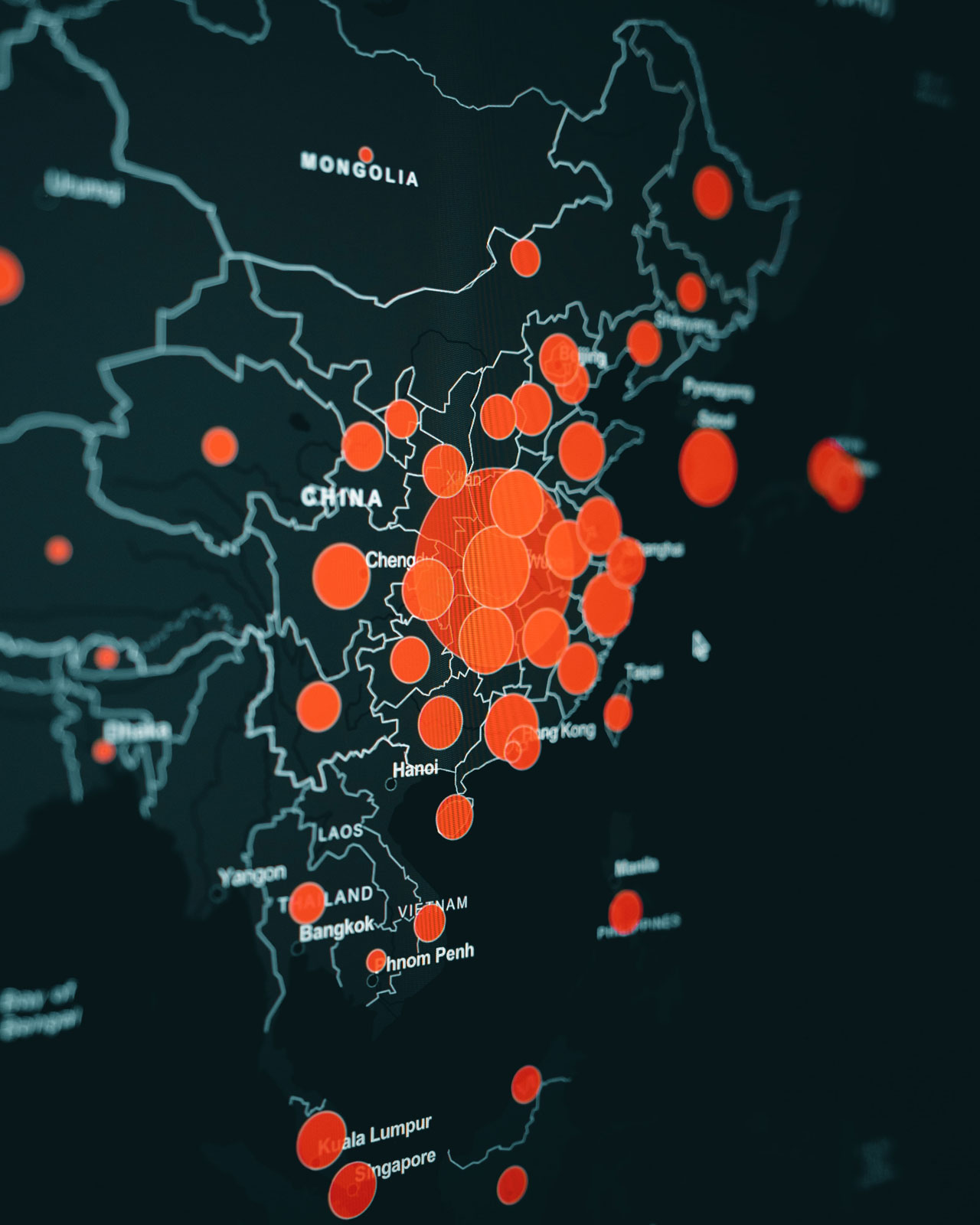
CHINA’s narrow criteria for identifying deaths caused by COVID-19 will underestimate the true toll of the pandemic’s current wave there and could make it harder to communicate the best ways for people to protect themselves, foreign health experts warn.

Only deaths caused by pneumonia and respiratory failure after contracting COVID will be classified as having been caused by the coronavirus, a leading Chinese medical expert said on Tuesday.

Deaths from complications at other sites in the body, including underlying conditions made worse by the virus, would be excluded from the official toll, said Wang Guiqiang, head of the infectious disease department at Peking University First Hospital.

Experts familiar with hospital protocols in China told Reuters that such cases were not always excluded previously, though sometimes COVID would be ruled out as a cause of death if a formerly positive patient had tested negative a day or two before dying.

Wang said the criteria had changed because the Omicron variant is less likely to cause other life-threatening symptoms, though China’s hospitals are still required to judge each case to ascertain precisely whether or not COVID was the ultimate cause.

The methods for counting COVID deaths have varied across countries in the nearly three years since the pandemic began.

Yet disease experts outside of China say this specific approach would miss several other widely recognized types of potentially fatal COVID complications, from blood clots to heart attacks as well as sepsis and kidney failure.

Some of these complications can increase the chances of death at home, particularly for people who are not aware that they should seek care for these symptoms.

The new definition “clearly won’t capture all deaths from COVID,” said Dr. Aaron Glatt, an infectious diseases expert at Mount Sinai South Nassau Hospital in New York and a spokesperson for the Infectious Diseases Society of America. “To say you’re going to ignore anything else going on in the body makes no sense and is scientifically inaccurate.”

Last month, Korean researchers reported that 33% of Omicron-related deaths between July 2021 and March 2022 at one large hospital were due to causes other than pneumonia.

CAN CHINA’S COVID DATA BE TRUSTED?
With one of the lowest COVID death tolls in the world, China has been routinely accused of downplaying infections and deaths for political reasons.

A June 2020 study of the country’s initial outbreak in Wuhan starting in late 2019 estimated 36,000 could have died at the time, or 10 times the official figure.

A study published by the Lancet in April, which looked at COVID-related mortality in 74 countries and territories over 2020-2021, estimated there were 17,900 excess deaths in China over the period, compared to an official death toll of 4,820.

Globally, the study estimated 18.2 million excess deaths in 2021-2022, compared with reported COVID deaths of 5.94 million.

The new announcement from China raised concerns the government was seeking to disguise the true impact of relaxing its draconian “zero-COVID” controls after nearly three years of disruptive lockdowns and mandatory mass testing.

Despite widespread reports that funeral homes and crematoriums are struggling to cope with a surge in demand, China’s official death numbers have not spiked, with no new fatalities reported for Dec. 21 and only seven deaths reported since the government announced on Dec. 8 that “zero-COVID” restrictions would be removed.

China actually cut its accumulated death toll by one on Dec. 20, bringing the total to 5,241.

China’s National Health Commission did not immediately respond to requests for comment about the country’s COVID statistics and excess mortality.

Even if China were to continue defining COVID deaths more broadly, the official data is still unlikely to reflect the situation on the ground, given how quickly infections are now spreading, said Chen Jiming, a medical researcher at China’s Foshan University.

“The reported counts of cases and deaths are only a very small portion of the true values,” he said.

Ben Cowling, an epidemiologist at the University of Hong Kong’s School of Public Health, said the official death tally would be very low even if a broader definition were in use, “because so little testing is being done” now that China has discontinued mass surveillance.

On the other hand, Cowling said, labeling every person who died while positive for COVID as having died from the disease could lead to an over-count. Such an approach “can also be criticized because it can, and has, included coincidental deaths such as in people hit by a bus while having mild COVID.”

Dr. Mai He, a pathologist at Washington University in St. Louis who was involved in the Wuhan study published in 2020, said there was still a lack of faith in the integrity of China’s numbers.

“The persistent critical issue is a lack of transparency; people cannot use their data to do research and analysis, (or) provide guidance for the next step,” he told Reuters.

The lack of trust in China’s statistics is also causing panic among members of the public, said Victoria Fan, senior fellow in global health at the Center for Global Development.

“It’s in the best interest of the government to be more transparent, because a lot of the behaviors that the public is exhibiting is because they don’t have information,” she said.

REUTERS

Ukraine’s Zelensky tells US Congress aid is ‘not charity’

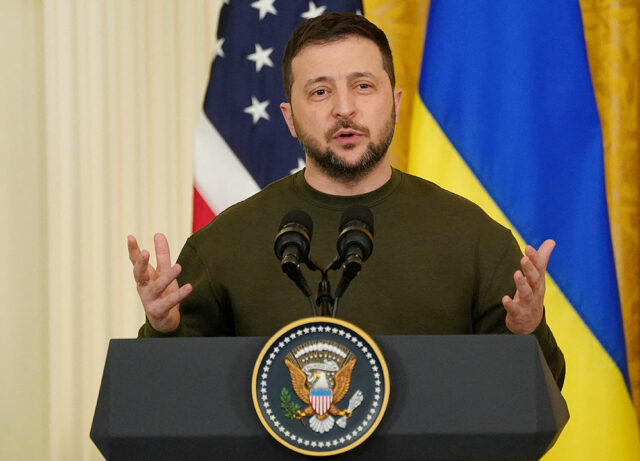
UKRAINE’s President Volodymyr Zelensky speaks during a joint news conference with US President Joseph R. Biden (not pictured) in the East Room of the White House in Washington D.C., Dec. 21, 2022. — REUTERS

WASHINGTON/KYIV — President Volodymyr Zelensky told the US Congress that aid to Ukraine was an investment in democracy and “not charity” as he invoked American battles against the Nazis in World War II to press for more assistance for his country’s war effort.

Mr. Zelensky’s comments on Wednesday come as Republicans — some of whom have voiced increasing scepticism about sending so much aid to Ukraine — are set to take control of the US House of Representatives from Democrats on Jan. 3.

Some hardline Republicans have even urged an end to aid and an audit to trace how allocated money has been spent. “Your money is not charity. It is an investment in the global security and democracy that we handle in the most responsible way,” Mr. Zelensky told a joint session of the US Senate and House of Representatives, speaking in English.

The world is too interconnected to allow any country to stand aside and feel safe, Mr. Zelensky said as he appealed for bipartisan support.

Earlier, Zelensky, wearing his trademark olive green trousers and sweater on his first foreign wartime visit, met President Joseph R. Biden, who called for support to keep flowing in 2023.

The United States also announced another $1.85 billion in military aid for Ukraine, including a Patriot air defense system to help it ward off barrages of Russian missiles.

Mr. Zelensky said the Patriot system was an important step in creating an air shield.

“This is the only way that we can deprive the terrorist state of its main instrument of terror — the possibility to hit our cities, our energy,” Mr. Zelensky told a White House news conference, standing next to Mr. Biden.

“We would like to get more Patriots … we are in war,” Mr. Zelensky told reporters at the White House.

Russia says it launched its “special military operation” in Ukraine in February to rid it of nationalists and protect Russian-speaking communities. Ukraine and the West describe Russia’s actions as an unprovoked war of aggression.

Ukraine has come under repeated Russian strikes targeting its energy infrastructure in recent weeks, leaving millions without power or running water in the dead of a freezing winter.

TASS news agency cited Russia’s US ambassador as saying that Mr. Zelensky’s visit confirmed that US statements about not wanting a conflict with Russia were empty words.

America’s provocative actions in Ukraine were leading to an escalation the consequences of which were impossible to imagine, TASS cited Anatoly Antonov as saying.

Russia said last week, Patriot systems, if delivered to Ukraine, would be a legitimate target for Russian strikes.

INVOKES WORLD WAR II
Mr. Zelensky joined a long list of world leaders to address joint meetings of the US Senate and House, a tradition that began in 1874 with a visit by Hawaiian King Kalakaua and included almost legendary wartime visits by British Prime Minister Winston Churchill, kings, queens and one pope.

House members and senators from both parties leaped to their feet to cheer parts of Mr. Zelensky’s speech as he likened his country’s battle to World War II and even the American Revolution.

Referencing former US President Franklin D. Roosevelt, who served between 1933 and 1945, and efforts to liberate Europe from Nazi occupation, Mr. Zelensky appealed to Americans as they gathered with family for Christmas.

“Just like the brave American soldiers, which held their lines and fought back Hitler’s forces during the Christmas of 1944, brave Ukrainian soldiers are doing the same to Putin’s forces this Christmas,” he said.

Congress is on the verge of approving an additional $44.9 billion in emergency military and economic assistance, on top of some $50 billion already sent to Ukraine this year as Europe’s biggest land conflict since World War II drags on.

QR STARTS HERE

White House National Security Council spokesman John Kirby said Washington was seeing no sign that Russian President Vladimir Putin was willing to engage in peacemaking.

Kremlin spokesman Dmitry Peskov said more Western arms supplies to Ukraine would lead to a “deepening” of the conflict.

Mr. Zelensky said a “just peace” with Russia meant no compromises on Ukraine’s sovereignty and territorial integrity.

BAKHMUT
Russian forces attacked targets in the Zaporizhzhia region and pushed to advance near the battered eastern front-line towns of Bakhmut and Avdiivka, the focal point of fighting in the Donetsk region, Ukraine’s military said on Wednesday evening.

The commander of Ukraine’s “Freedom” battalion, Petro Kuzyk, helping to defend Bakhmut, told the website of Espreso TV: “Each day, there are anywhere from seven to 10 attempts to storm our positions. And it’s the same at night.”

“They won’t be able to take Bakhmut, but if they take the heights above it and set up their artillery and cut our logistical arteries, that will make the situation much more difficult,” Mr. Kuzyk said.

Mr. Putin has promised to give his military whatever it needs to prosecute the war nearing the end of its 10th month and backed a plan to boost the size of the armed forces by more than 30%. — Reuters

Taiwan scrambles combat jets to warn away China’s air force incursion

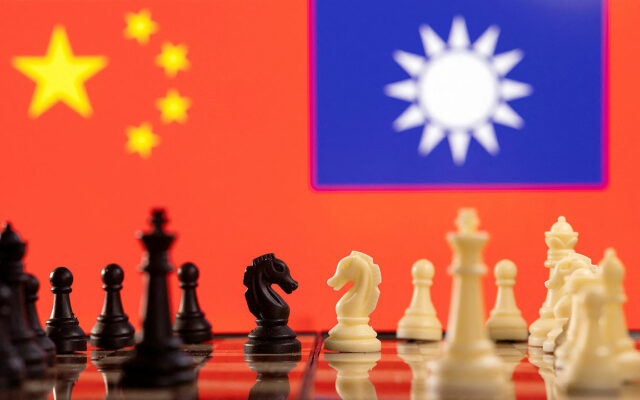
CHESS PIECES are seen in front of displayed China and Taiwan’s flags in this illustration taken Jan. 25, 2022. — REUTERS

TAIPEI — Taiwan scrambled combat jets to warn away 39 Chinese aircraft that entered its southeastern air defense zone, the island’s defense ministry said on Thursday.

Taiwan has complained of repeated missions by the Chinese air force over the last two years, often in southern areas of its air defense identification zone, or ADIZ.

Thursday’s incursion included 21 fighters and four H-6 bombers, as well as early warning, antisubmarine and aerial refueling aircraft, Taiwan’s defense ministry said in a report detailing Chinese activities in its ADIZ over the last 24 hours.

Many of the aircraft flew over a waterway known as the Bashi Channel to an area off the island’s southeastern coast, according to a map provided by the ministry. Three Chinese navy ships were also detected near Taiwan, the ministry said.

Taiwan sent unspecified combat aircraft to warn away the Chinese planes, while missile systems monitored their flight, the ministry said, using standard wording for its response.

Separate Taiwan government notices have said the defense ministry’s research and development arm, the National Chung-Shan Institute of Science and Technology, is holding a missile firing drill this week on the island’s southeastern coast.

China, which claims Taiwan as its own, has stepped up pressure in recent years on the self-governed island to accept Beijing’s rule. Taiwan’s government rejects the Chinese claims and says it wants peace but will defend itself if attacked. — Reuters