Home Blog Page 5458

Ten-man Vietnam move into Group B pole position with win over Malaysia at the Asean Championship

VIETNAM brushed aside Nguyen Van Toan’s first-half sending-off to hand Malaysia a 3-0 defeat in Hanoi and move top of the Group B standings at the Asean Championship on Tuesday.

Nguyen Tien Linh put Park Hang-seo’s side in front with a 28th-minute downward header that bounced over the goalline before Van Toan was dismissed four minutes later for a second bookable offense.

His absence did little to affect the Vietnamese, who doubled their advantage in the 64th minute when Que Ngoc Hai scored from the penalty spot after Azam Azmi’s sending-off two minutes earlier left both teams a man short.

Vietnam added a third through Nguyen Hoang Duc with seven minutes remaining to ensure the Vietnamese collected their second win in a row as they look to reclaim the title they won in 2018.

Mr. Park’s team lead the standings on goal difference from Malaysia, who have played one game more, and Singapore following their 2-0 win over Laos earlier in the day.

Irfan Fandi gave the four-times champions a 32nd-minute lead with a header and Shawal Anuar dispossessed Laos goalkeeper Keo Souvannasangso to score his side’s second in the 94th minute to ensure the points were secured by Takayuki Nishigaya’s team.

The opening phase of the Asean Championship will conclude on Jan. 3, when the top two sides in each group progress to the knockout rounds. The semi-finals will be played on a home-and-away basis on Jan. 6 and 9 with the final on Jan. 13 and 16. — Reuters

Klopp hails ‘unstoppable’ Nunez despite lack of goals

DARWIN Nunez was not on the scoresheet in Liverpool’s 3-1 win over Aston Villa on Monday but manager Juergen Klopp said he was delighted with the Uruguayan’s all-round play and is confident the goals will come.

Mr. Nunez missed several chances against Villa but his tireless running and chance creation saw him named Man of the Match, with his late cutback allowing teenager Stefan Bajcetic to score his first senior goal.

Mr. Klopp said he had been around long enough in football not too lose any sleep over Mr. Nunez’s recent scoring record. “There are so many other things that are much more important because we look back at strikers and you cannot imagine some of the chances strikers who I worked with missed,” he said.

“The work rate he put in, the spaces he creates, he’s unstoppable in the moment. There is no defender who can really catch up speed-wise.”

Mr. Nunez has scored just five league goals since being brought in as Sadio Mane’s replacement in a transfer that cost Liverpool an initial fee of €75 million ($79.92 million) in the close season.

Mr. Klopp said he is being patient with the 23-year-old, who also failed to score in three games at the World Cup.

“He will score goals, I have no doubt about that,” said the German. “Everything will be fine.” — Reuters

Hospitals ‘extremely’ busy as COVID spreads in China

MEDICAL WORKERS attend to patients at the intensive care unit of the emergency department at Beijing Chaoyang Hospital, amid the coronavirus disease 2019 (COVID-19) outbreak in Beijing, China, Dec. 27. — CHINA DAILY VIA REUTERS

CHENGDU — Chinese hospitals were under intense pressure on Wednesday as a surge of coronavirus disease 2019 (COVID-19) infections strained medical resources, while the scale of the outbreak and doubts over official data prompted some countries to consider new travel rules on Chinese visitors.

In an abrupt change of policy, China this month began dismantling the world’s strictest COVID regime of lockdowns and extensive testing, putting its battered economy on course for a complete reopening next year.

The lifting of restrictions, which came after widespread protests against them, means COVID is spreading largely unchecked and likely infecting millions of people a day, according to some international health experts.

The speed at which China, the last major country in the world moving towards treating the virus as endemic, has scrapped COVID rules has left its fragile health system overwhelmed.

China reported three new COVID-related deaths for Tuesday, up from one for Monday — numbers that are inconsistent with the experience of much less populous countries after they reopened.

Staff at Huaxi, a big hospital in the southwestern city of Chengdu, said they were “extremely busy” caring for patients with COVID, as they have been ever since curbs were eased on Dec. 7.

“I’ve been doing this job for 30 years and this is the busiest I have ever known it,” said one ambulance driver outside the hospital who declined to be identified.

There were long queues inside and outside the hospital’s emergency department and at an adjacent fever clinic on Tuesday evening. Most of those arriving in ambulances were given oxygen to help with their breathing.

“Almost all of the patients have COVID,” one emergency department pharmacy staff member said.

The hospital has no stocks of COVID-specific medicine and can only provide drugs for symptoms such as coughing, she said.

Zhang Yuhua, an official at the Beijing Chaoyang Hospital, said most recent patients were elderly and critically ill with underlying diseases. She said the number of patients receiving emergency care had increased to 450-550 per day, from about 100 before, according to state media.

The China-Japan Friendship Hospital’s fever clinic in Beijing was also “packed” with gray-haired patients, state media reported.

Nurses and doctors have been asked to work while sick and retired medical workers in rural communities were being rehired to help. Some cities have been struggling to secure supplies of anti-fever drugs.

Pictures published by state-run China Daily showed rows of mostly elderly patients, some breathing through oxygen tubes, receiving treatment from medical staff in white hazmat suits in the hospital’s intensive care unit.

TRAVEL RULES
In a major step towards freer travel, China will stop requiring inbound travelers to go into quarantine from Jan. 8, authorities said this week, prompting many Chinese, cut off from the world for so long, to check travel platforms.

But while online searches for flights spiked on Tuesday from extremely low levels, residents and travel agencies suggested a return to anything like normal would take some months yet, given worries about COVID and more careful spending because of the impact of the pandemic.

Moreover, some governments were considering extra travel requirements for Chinese visitors.

US officials cited “the lack of transparent data, including viral genomic sequence data” as reasons for doing so.

India and Japan would require a negative COVID test for travelers from mainland China, with those testing positive in Japan having to undergo a week in quarantine. Tokyo also plans to limit airlines increasing flights to China.

The Philippines should be “very cautious” when receiving inbound travelers from China, its transportation minister said on Wednesday, adding the country was considering imposing testing requirements.

Asked about the travel requirements imposed by Japan and India, a spokesman for China’s foreign ministry said on Tuesday “COVID measures should be scientific, moderate and should not affect the normal flow of individuals.”

China’s $17 trillion economy is expected to suffer a slowdown in factory output and domestic consumption as workers and shoppers fall ill.

News of China reopening its borders sent global luxury stocks higher, but the reaction was more muted in other corners of the market, as the worlds second-largest economy is likely to face subdued global demand in 2023. 

US carmaker Tesla plans to run a reduced production schedule at its Shanghai plant in January, extending the restricted output it began this month into next year, according to an internal schedule reviewed by Reuters.

Tesla did not specify a reason for the planned production slowdown.

Once the initial shock of new infections passes, some economists expect Chinese growth to bounce back with a vengeance from what is this year expected to be its lowest rate in nearly half a century, somewhere around 3%.

Morgan Stanley economists expect 5.4% growth in 2023, while those at Goldman Sachs see 5.2%. — Reuters

South Korea to spend $440M until 2027 to counter NK drones

A view of a “high-thrust solid-fuel motor” test to develop a new strategic weapon, at the Sohae Satellite Launching Ground in Tongchang-ri, North Korea, Dec. 15, 2022, in this photo released by North Korea’s Korean Central News Agency (KCNA). — KCNA VIA REUTERS

SEOUL — South Korea plans to spend 560 billion won ($441.26 million) over the next five years to beef up its ability to fend off North Korean (NK) drones, Seoul’s defense ministry said on Wednesday.

The plan was included in South Korea’s midterm defense blueprint for 2023-27 after North Korean drones crossed into the South in the first such intrusion since 2017.

The ministry earmarked the funds for four projects aimed at bolstering counter-drone capabilities, including an airborne laser to destroy drones and a jammer to neutralize smaller devices.

The blueprint also included a plan to add another drone unit in the army, which operates two squadrons.

“The laser weapon program is in a testing phase and expected to begin deployment in 2027,” a ministry official said. “The ‘soft-kill’ type jamming system would improve our response capability against small drones.”

Monday’s incident triggered criticism over South Korea’s air defenses as it tries to curb the North’s evolving nuclear and missile threats.

President Yoon Suk-yeol chastised the military’s handling of the incursion, urging it to hasten the reinforcement of the drone units.

The military apologized for its response, and said it could not shoot down the drones because they were too small.

As part of efforts to counter North Korea’s nuclear and missile threats, the ministry seeks to procure more stealth jets, which it said would bolster real-time strike capabilities against moving targets.

The ministry will also secure additional ballistic missile submarines and accelerate the development of systems to intercept artillery rockets.

“We will strengthen our overwhelming massive punishment and retaliation capability to be able to destroy key facilities anywhere in North Korea in case of its nuclear attack or use of weapons of mass destruction,” the ministry said in a statement.

In total, the ministry aims to spend 331.4 trillion won ($261 billion) on defense over the next five years, with an average annual increase of 6.8%. This year’s budget stood at 54.6 trillion won.

Defense expenditures are subject to parliamentary approval. — Reuters

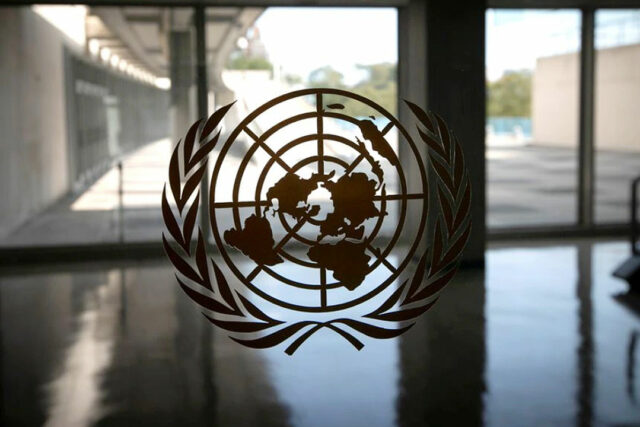
UN Security Council denounces Taliban bans on women in Afghanistan

REUTERS

UNITED NATIONS — The United Nations (UN) Security Council on Tuesday called for the full, equal and meaningful participation of women and girls in Afghanistan, denouncing a ban by the Taliban-led administration on women attending universities or working for humanitarian aid groups.

In a statement agreed by consensus, the 15-member council said the ban on women and girls attending high school and universities in Afghanistan “represents an increasing erosion for the respect of human rights and fundamental freedoms.”

UN Secretary-General Antonio Guterres said on Twitter on Tuesday that the restrictions were “unjustifiable human rights violations and must be revoked.” He added: “Actions to exclude and silence women and girls continue to cause immense suffering and major setbacks to the potential of the Afghan people.”

The university ban on women was announced as the Security Council in New York met on Afghanistan last week. Girls have been banned from high school since March.

The council said a ban on female humanitarian workers, announced on Saturday, “would have a significant and immediate impact for humanitarian operations in country,” including those of the United Nations.

“These restrictions contradict the commitments made by the Taliban to the Afghan people as well as the expectations of the international community,” said the Security Council, which also expressed its full support for the UN political mission in Afghanistan, known as UNAMA.

Four major global aid groups, whose humanitarian efforts have reached millions of Afghans, said on Sunday that they were suspending operations because they were unable to run their programs without female staff.

UN aid chief Martin Griffiths told the Security Council last week that 97% of Afghans live in poverty, two-thirds of the population need aid to survive, 20 million people face acute hunger and 1.1 million teenage girls were banned from school.

The Islamist Taliban seized power in August last year. They had largely banned education of girls when last in power two decades ago but had said their policies had changed. The Taliban-led administration has not been recognized internationally. — Reuters

‘Gift of love’ Waterford crystals placed on Times Square New Year’s Eve ball

EN.WIKIPEDIA.ORG
EN.WIKIPEDIA.ORG

NEW YORK — Nearly 200 new Waterford crystals were installed on the New Year’s Eve ball in Times Square in New York on Tuesday in preparation for Saturday’s celebration to welcome in 2023.

Since 1999, replacements for the 2,688 crystal panels that make up the ball have been designed and made by hand by Irish craftsmen at Waterford. Each year, a new theme is chosen.

This year’s theme was the “Gift of Love,” incorporating intertwining love hearts, said Waterford master artisan Tom Brennan at the Times Square site.

“We need this after the pandemic. We’ve all gone through a horrendous two years. We’ve come out the other side of it and we’ve come out better. We surround ourselves with love. We’ve got everything,” he said.

This year, for the first time since before the pandemic, there will be no COVID-related restrictions on visitors willing to brave the cold and crowds of Times Square in midtown-Manhattan to count down the new year and see the ball drop on the stroke of midnight. — Reuters

Contrasting appeals to the world by leaders

PRESIDENT.GOV.UA

The 23-minute speech of the President of Ukraine Volodymyr Zelensky before the joint meeting of the United States Congress was a model of defiance in the midst of optimism. Defiance, for Zelensky mirrored the courage and indomitable spirt of resistance against one dictator who has uttered several times that “Ukraine has no right to exist” and that it is a “manufactured country.”

Optimism, as Zelensky delivered his impassioned plea for support during Advent, or in layman’s terms, at the start of the Christmas season, which for Christians is a season of hope.

For Christians, the birth of Christ in a manger, wrapped in swaddling clothes, marks the beginning of salvation history and faith in the salvific process.

In his speech, Zelensky said, “We’ll celebrate Christmas, (and) even if there is no electricity, the light of our faith in ourselves will not be put out. If Russian missiles attack us, we’ll do our best to protect ourselves. If they attack us with Iranian drones and people will have to go to bomb shelters on Christmas Eve, Ukrainians will still sit down at the holiday table and cheer up each other. And we don’t have to know everyone’s wish as we know that all of us, millions of Ukrainians, wish the same: victory, only victory.”

It was clear that Zelenskyhad appealed to the importance of families being together, especially on Christmas which was coming a few weeks after another great American family festival, Thanksgiving. He was also addressing the American commitment to democracy, despite the aberration of, among others, Trump, Giuliani, Kevin McCarthy, Roger Stone, Steve Bannon, congressman Jim Jordan, and the Jan. 6 insurrection. To remind the Americans of their solidarity with democratic principles and the willingness of the US to fight for such principles, Zelensky referred to the address of British Prime Minister Winston Churchill, also on a December day, in 1941 and, of course, to the address of President Franklin Delano Roosevelt (FDR) on Dec. 8, 1941, the day after the Japanese Imperial Army’s sneak attack on American military and naval facilities and assets at Pearl Harbor, Guam, Wake Island, Midway Island, the then British Malaya and the Philippines.

While asking for the support of the US, Zelensky was careful to point out that the Ukrainians were not asking the US government to send American troops, because “we will do the fighting ourselves and we can operate American aircraft and other military assets. Too many American families had lost husbands, wives, brothers and sisters in wars waged by America in distant lands.”

Zelensky further emphasized the brutality of the Russian forces on orders of the Kremlin and certainly, Putin. “The Russian tactic is primitive. They burn down and destroy everything they see. They send thugs to the front lines. They send convicts to the war. They threw everything against us, similar to the other tyranny, which is similar to the Battle of the Bulge.” The reference to the Battle of the Bulge has to do with the last German offensive before the victory of the Allied Forces during World War II.

In his speech at the US Congress, Churchill referred to the triumvirate of (dictators) of Germany, Italy, and Japan as “enormous forces” ranged against Great Britain, the US, and other World War II allies which ironically included the USSR. Churchill had warned that “upon the battle depends the survival of Christian civilization.”

“They are bitter; they are ruthless. The wicked men and their factions who have launched their peoples on the path of war and conquest know that they will be called to terrible account if they cannot beat down by force of arms the peoples they have assailed. They will stop at nothing. They have a vast accumulation of war weapons of all kinds. They have highly trained and disciplined armies, navies, and air services. They have plans and designs which have long been contrived and matured. They will stop at nothing that violence or treachery can suggest.”

The reference to FDR’s speech was just as timely and relevant. FDR had gone to Congress for a Declaration of War against Japan. Before he made his request, FDR stated, “The attack (at Pearl Harbor) yesterday on the Hawaiian Islands has caused severe damage to American naval and military forces. I regret to tell you that very many American lives have been lost. In addition, American ships have been reportedly torpedoed on the high seas between San Francisco and Honolulu.”

FDR also pointed out the duplicity of the enemy in Asia which was conducting diplomatic negotiations through their highest diplomatic officials while preparing for the attacks on American military, naval, and air services. FDR then simply stated, “The President requests a War Declaration.” The request was granted.

A third speech, without any formal declarations of war but with the same request for understanding and support after a long and grueling but bloodless struggle to restore democracy, was delivered by President Corazon C. Aquino on Sept. 18, 1986, seven months after assuming office on Feb. 25 of the same year. The appeal was focused on the Philippines’ then foreign debt which had ballooned to $26 billion by the time the Ferdinand Marcos reign had come to an end in February 1986.

President Aquino had said, “Finally, may I turn to that other slavery, our $26 billion foreign debt. I have said that we shall honor it. Yet, the means by which we shall be able to do so are kept from us.” President Aquino added that many of the conditions imposed on the previous government continued to be imposed on Filipinos who never benefitted from those onerous loans.

The three speeches before the joint sessions of the US congress are all history-making, although with vastly different contexts. But they all have one thing in common: They all tell the story of defending democracy.

As expected, the Kremlin’s official reaction to Zelensky’s speech was beamed at its domestic audience which has started to realize that Russia is losing what Putin himself now calls a “war.” Prior to his statement, it was illegal to call the “Special Military Operations” in Ukraine a “war.”

As things stand, with the approval by the US congress of $45 billion in new aid for Ukraine, covering economic, military training, and equipment assistance, and the entry of the Patriot missile system which is designed to target incoming enemy missiles, Putin’s options appear to be getting limited as per military experts. The use of the system by Ukraine, which is essentially defensive, has been called by Russia a provocative move by the US.

Putin’s main move is to cripple the infrastructure of Ukraine and make life miserable for all Ukrainians. No structure is exempt from attack; from hospitals to schools, churches, power and water systems. CNN says, the Russians are bombing Ukraine back into the stone age.

Putin apparently hopes to bring Ukraine to its knees by attrition, precipitate a refugee crisis, and create a humanitarian emergency for Europe and the west. This refugee crisis should put a strain on the West’s budgets and, worse, create dissension in these societies and the importance of this surge of humanity relative to each country’s priorities and political orientations.


Philip Ella Juico’s areas of interest include the protection and promotion of democracy, free markets, sustainable development, social responsibility and sports as a tool for social development. He obtained his doctorate in business at De La Salle University. Dr. Juico served as secretary of Agrarian Reform during the Corazon C. Aquino administration.

Identity by number

CARSON ARIAS-UNSPLASH

Shortly after Christmas Day, the law requiring the registration of all SIM (subscriber identity module) cards took effect. In this line, all mobile phone and mobile data users have until April 2023 to register their SIM cards with public telecommunication service providers using valid identification requirements. After the deadline, all unregistered SIM cards will be deactivated.

Prior to this, in September 2021, the mobile portability law took effect, which allowed mobile phone and mobile data users to keep their existing mobile phone numbers even as they move from one service provider to another. In this sense, a person already identified with a certain number has the option to keep that identifier intact.

And in 2019, I believe, the Bankers Association of the Philippines also announced that it would launch its digital banking ID registry that would pave the way for electronic know-your-customer (KYC) procedures and electronic data storage sharing and exchange among banks. The banking ID registry is expected to help in vetting banking transactions and in identifying clients.

A couple of years before, in 2018, the National ID law was passed, which aimed to establish a single national identification system for all citizens and resident aliens in the country. Each citizen and resident alien will be issued a National ID and assigned a national ID number. In addition, personal data include biometrics that match those also collected for passports and driver’s licenses.

Way before the National ID law, regulations already required the use of a tax identification number (TIN) in many government transactions. Vehicle registration, for instance, or sales transactions involving cars and real estate all require the use of a TIN identifying sellers and buyers. All those employed also have TINs, social security system, and PhilHealth numbers.

Truly, it is becoming a digitally connected world. And people may soon find themselves identified or known more by a certain set of digits — a customer number, a national ID number, or a mobile number — rather than their given names. It is pretty much like how many alumni of the University of the Philippines system, decades after graduation, still recall their UP Student Number.

And, of course, digital footprints are all over now, unlike maybe two or three years ago. With mobile payment solutions like GCash and Maya, among others, and the use of online retail platforms and ordering systems, many consumers now have “bank” or digital payment accounts and shopping identities, among other digital identifiers.

Anything that has a digital identifier leaves a digital footprint that can be tracked, monitored, and observed. Now, even money — actual bills and coins — are used less frequently since many big banking transactions are mostly done electronically. Legitimate money transfers are done electronically, even country to country, and rarely physically. Even retail payments and banking have gone digital. And then there is also the rise of cryptocurrencies.

As I had previously noted, back in the day, one needed to physically go to the bank branch to open an account. In turn, one was issued a passbook, and only through that passbook could one transact with the bank. In this sense, your data cannot be hacked, and your money cannot be moved or “stolen” electronically. And, physical money was in the bank vault.

Nowadays, however, a bank doesn’t even need a physical branch to operate. Banking transactions can be done online. Retail payments are also done electronically. With new initiatives, more people are brought into the “formal” financial system. A banking digital ID registry is enforced, a national ID system is in place, mobile portability is in effect, and these make SIM registration icing on the cake.

One consequence is that all this also helps identify all financial transactions that are subject to tax, and make it easier for withholding agents to deduct all taxes due the government. This includes digital sales. The same initiative, along with the banks’ digital ID registry system and the use of the national ID system, also assist in tax administration and in fighting money laundering.

Couple this with the law to make mobile numbers “portable,” that allows a person to maintain his cellular number for life, and including that mobile number among the information contained in a national ID, then there is really no escape even for those doing financial transactions via mobile platforms. Again, SIM registration is just the icing on the cake.

I recall a book by authors Kieron O’Hara and Nigel Shadbolt, both based in the United Kingdom. Titled, The Spy in the Coffee Machine, the book came to memory anew after reading all the news about SIM registration. As I noted previously, for mobile portability to work, any and all mobile numbers in use must first be registered, whether post-paid or pre-paid. And with registration comes a government or private database, whether electronic or otherwise, that captures a person’s personal information and other data.

The book, published by OneWorld in 2008, discussed the emergence of “hyper-surveillance,” as the authors noted that as more and more people increasingly used technology for work and leisure, all their electronic activity would actually “leave behind digital footprints that can be used to track our movements.”

The “spy,” as O’Hara and Shadbolt called it, is now in all our cars, telephones or mobile phones, and even coffee machines and other electronic devices, through what they referred to as “tiny computers communicating wirelessly via the Internet [that] can serve as miniature witnesses, forming powerful networks whose emergent behavior can be very complex, intelligent, and invasive.”

The book posed the question: “How much of an infringement on privacy are they? Exposing the invasion of our privacy from CCTVs to blogs, The Spy in the Coffee Machine explores what — if anything — we can do to prevent it from disappearing forever in the digital age, and provides readers with a much-needed wake-up call to the benefits and dangers of this new technology.”

As I noted in an earlier column, I consider the book required reading for those interested in knowing more about surveillance. It used to be that the ability of an inanimate object, like a coffee machine or a cellular phone, was limited to “following commands.” But, with the era of customization, we have actually allowed these inanimate things, through technology and artificial intelligence, to understand, learn, and even memorize or recall our peculiarities, desires, wants, preferences, attitudes, and behavior.

The SIM registration database — matching names with pictures and mobile numbers as well as other personal information — will just be another “digital footprint” that can be hacked, and the information possibly misused. And the Data Privacy Act is simply no match to those who intend to do harm.

Couple this with the ability to track phones and their owners through GPS and cell sites, and match this with face-recognition software employed through public and private CCTV networks, then “Big Brother” is now more a reality than fiction. Electronic devices, particularly those that use signals, frequencies, air waves, and access the internet are “spies in our midst,” or the “observers” among us that gather and analyze intelligence, and perhaps share such intelligence with others. These are devices that “watch” us and “learn” about us, and attempt to supposedly “understand” how to better “serve” us.

It may yet be a case of man vs machine. Machines are no longer just tools with humans behind them. Through AI technology, machines have actually learned to think for themselves, and obviously have far more computing power than humans, and thus have the potential ability to out-think us in every way possible.

But “Big Brother” is no longer the government watching us, but it is that network of computers and mobile phones and other electronic devices that develop, capture, and analyze digital footprints and allow those with legal and illegal access to our information to better understand us and to make “informed” decisions about how to either serve us, or steal from us.

The big challenge now for policymakers, regulators, and government and industry leaders is how to best protect the public, the government, and businesses from data breach. After putting in place mobile portability, SIM registration, and the national ID, among others, we need to follow through with next-generation data security and protection. The Data Privacy Act is definitely not enough. We need more safeguards against data breach, which has become a real threat to national and people security.


Marvin Tort is a former managing editor of BusinessWorld, and a former chairman of the Philippine Press Council

matort@yahoo.com

Electronic permits seen as solution to illegal wildlife trade

Philippine Forest Turtle. — WIKIMEDIA COMMONS

By Patricia B. Mirasol, Reporter

About a million species are threatened with extinction — nearly 800 of which are in the Philippines. At its Biodiversity Conference this December, the United Nations urged countries to protect species-rich land and sea areas.

“Biodiversity, and by extension humanity, is now in deepening trouble,” said Inger Andersen, UN undersecretary general. “Nature and biodiversity are dying the death of a billion cuts. And humanity is paying the price for betraying its closest friend.”

In an earlier statement, the intergovernmental organization’s world trade arm UNCTAD (United Nations Conference on Trade and Development) noted how digitalization can help curb illicit trade in endangered species.

“An electronic permit system linked to a customs management system can help customs officers, importers and exporters ensure the right species are traded in the right quantities,” UNCTAD said.

Emerson Y. Sy, a wildlife trade analyst and editor of a database that tracks reptiles and amphibians in the Philippines, added that digitizing “can minimize fake permits and fraudulent alterations.”

“Preventing online wildlife trafficking is a key measure to address conservation issues. Many wildlife species are openly traded online with minimal or no repercussion to traffickers,” he said in a Nov. 28 e-mail.

The European Union, together with the Philippines and the rest of the 182 countries that are parties to the Convention on International Trade in Endangered Species of Wild Fauna and Flora (CITES), is looking into this electronic permit system and exploring solutions that are both cost-effective and interoperable.

CITES is an international agreement among governments that aims to ensure that international trade in specimens of wild animals and plants does not threaten the survival of the species.

Technology can multiply the number of eyes and ears tracking the movement of animals, noted Gregg H. Yan, the founder of the Best Alternatives Campaign, an environmental nonprofit.

Among the most traded Philippine wildlife, according to Mr. Yan, are Philippine forest turtles (Siebenrockiella leytensis), Palawan hill mynahs (Gracula religiosa), tokay Geckos (Gekko gecko), and rare flora including orchids, begonias, and pitcher plants.

“The rarest items are usually the most highly coveted by collectors,” Mr. Yan said in a Nov. e-mail. “The Philippines is what is called a ‘source and destination country’ for the Illegal Wildlife Trade (IWT), meaning we both ship out and import — often illegally — live plants and animals as well as wildlife components such as elephant tusks and rhino horn.”

“The country is also an IWT transshipment point that forms part of a global network of wildlife buyers and sellers,” he said.

Most exotic pets don’t make it to their prospective owners, but instead die in transit.

Aside from legislating stiffer penalties against IWT, Mr. Yan advocated collecting sustainable alternatives such as certified farm-bred red-eared Sliders (Trachemys scripta elegans), African lovebirds (Agapornis spp.), and green iguanas (Iguana iguana) instead of endangered species.

“By shifting to less endangered alternatives, we can grant our native wildlife a reprieve,” Mr. Yan said.

Actually, it has been a wonderful year for tech’s future

MAXIM HOPMAN-UNSPLASH

ALL THE NUMBERS point to one of the worst years for the technology sector in over a decade. Stock meltdowns, crypto implosions, supply-chain disruptions, a startup-funding freeze, and yet more hacks made 2022 a year most would rather forget. Yet a range of major developments emerged that set the scene for a rosier future.

By the time the clock rings out 2022, the tech-heavy Nasdaq will have put in one of its biggest annual declines in at least 14 years. Other indices, including the broader S&P 500 and MSCI World did better, but still ensured investors racked up their heaviest losses in over a decade. The biggest victim were of course crypto punters. Not only did customers of outfits like brokers FTX and Voyager, and stablecoin TerraUSD/Luna get taken to the cleaners, the currency at the heart of the bubble, Bitcoin, lost around two-thirds of its value.

This turmoil, which is connected to rising interest rates, a slowing global economy, and post-COVID hangovers, hit a plethora of technology companies from big names like Google and Facebook that cut staff, to startups which may not survive another year.

There’s some positive news, though, and here are a few examples.

Post-Quantum Gets More Secure: At some point in the next few decades, a new paradigm in computing will become viable. Instead of doing calculations in binary units (bits), systems will work in more complicated chunks called quantum bits (qubits). Computer scientists are rightly excited about the possibility of more powerful and efficient machines. Security researchers are worried, however, because it means that cryptographic approaches to keeping data safe could be broken. Anything stored today, from passwords to credit card numbers, might in future be decrypted by a quantum computer that has yet to be invented. In July, the US National Institute of Standards and Technology finally released four algorithms, developed by external researchers, “that are designed to withstand the assault of a future quantum computer.” Without such safeguards, the wider community — from financial firms to internet companies — lack assurance that the systems they’re rolling out now will be secure years into the future. Now they can march boldly forward into the unknown.

Machines Can Chat and Draw: A number of artificial intelligence systems hit the headlines in 2022 for their eerie ability to seem human. Writing tools like ChatGPT can answer questions, craft poetry, and write code. DALL-E does the same for images, as do a handful of others. It’s okay to be both excited and scared by this development. When a university student admits to using the technology to write essays, and artists note that these bots are built on the foundation of stolen work, then humanity has every reason to be worried. But you can’t stop progress, so the challenge ahead will be how to guide AI toward uses that help us and away from those that could hurt even a tiny fraction of the population.

Crypto’s Credibility Crunch: For all the gloating by crypto bears about the sector’s reckoning in 2022, we ought not to forget that thousands of people lost tons of money, and the victims are too numerous to count. Yet, there’s uncanny similarities to the dot-com bust two decades ago that paved the way for a period of vast innovation — online payments and communications software, among them — which truly improved the lives of billions around the world. There’s a good chance this latest crash will result in entrepreneurs focusing on businesses that have practical value beyond cartoon apes and pump-and-dump schemes. And if we’re really lucky, venture capitalists will stop enabling crypto charlatans and turn their attention to funding more worthwhile projects.

Musk Torches Twitter: The blue bird isn’t dead. In fact, it probably has a few years left in it. But the takeover and teardown of the short-form social media service has turned attention to a handful of alternatives which may end up becoming friendlier, more tolerant platforms for sharing information and opinions. Whatever Twitter’s future, the world will likely be better off five years from now if something comes along to dent the power of a megalomaniacal billionaire.

America Gets its Chips Act Together: The passage of a $53-billion corporate welfare package aimed at luring chipmakers is akin to the Moon Shot Washington launched 60 years ago. A lot of money will be wasted, many failures experienced, and the US probably still won’t catch up to Taiwan in semiconductors. But the dream, given momentum by Taiwan Semiconductor Manufacturing Co.’s own investments in Arizona, will help the nation which invented chips regain some of its former glory.

Decentralizing Production: After years relying on one country for the majority of its devices, the world finds itself at the point where a combination of COVID upheavals, supply disruptions, and geopolitical tensions have forced a rethink in manufacturing. Apple, Inc. is finally taking alternative locales seriously, and we’ll see a greater proportion of its products made in places like India, Vietnam, Europe, and possibly North America. More companies, spanning industries from electronics to automobiles, will mix up their sources of production. The point of diversification isn’t to hurt China, but to make supply chains more resilient.

It’s easy to look back at a tough year and feel a bit glum. The salad days may be over, but a period of true advancement is now baked into the future of technology.

BLOOMBERG OPINION

Making it look difficult

VHERLIANN-UNSPLASH

IN SPORTS COMPETITIONS like high diving, usually in some scenic cliff with a deep body of water beside it, “degree of difficulty” elicits a high score from the judges. A simple dive with no twists (how many?) before hitting the water may get a so-so score. But when the somersaults are executed three times before hitting the water without a splash, winning is possible.

Successfully executing tricky, or not previously attempted, moves get high scores from the judges. It is these complex moves that subsequently redefine the standards of the game. And to top it off, the difficult maneuver should look effortless and graceful.

Degree of difficulty also applies to politics. Landmark achievements are in fields where political reforms have previously failed. The launching of the Public-Private Partnership (PPP) with a transparent bidding process and revenue-sharing scheme launched by a previous administration speeded up a difficult and previously corruption-laden aspect of building up the nation’s infrastructure. The toll roads to Baguio are a good example.

Sometimes, the degree of difficulty is unexpected, as in the launching of a sovereign fund that has met with bashing from both the private and (previous) public sector. The source of the funds and the government guarantee of bad decision-making (not always unintentional) raises the issue of moral hazard.

Can the degree of difficulty also be intentionally promoted?

The problem of corruption rests on the premise that difficult issues can be cleared or “facilitated” with a little incentive. This paradigm is applied to both small things like car registration and the acquisition of a driver’s license, to bigger ones like tax payments (or non-payments) and government contracts.

Are we dealing with a cultural issue here where following the rules, which have intentionally been made complex, seems to result only in frustration and higher costs? Paying brokers of power to unclog the system has become the normal way of doing business.

Still, there are two types of public users. The first includes otherwise law-abiding citizens who just want to get something done—a traffic violation cleared, a business license approved, or a fire inspection to be done with. It seems a small inconvenience to “incentivize” somebody to cut through the red tape. The second category involves jumping the queue in a government bidding process.

On the first category of reluctant bribers who just want to get through the routine of dealing with government, some progress has been made. Driver’s license and passport renewals are decentralized at malls and even subdivisions (like “passport on wheels”). These moves have cut down the need for fixers by simplifying the process and making it more accessible.

It is red tape and ironically the legislated effort “to provide checks and balances” that complicate dealings with government. And there is always the legislative branch ready to introduce new rules for even simple private transactions like requiring identification and registration for owning a mobile phone. Another function to be added to the bureaucracy — job applicants and ghosts can line up here.

Making things look difficult can be part of marketing.

If you lock yourself out of your house, will you pay the regular rate for a locksmith who just fiddles with the lock with his picks and opens the door for you in less than 30 seconds? Should “easy” not merit the usual fee? After all, this ease proves the locksmith’s expertise which should command proper recognition.

Making a service look too effortless sometimes plants doubt in the customer — is she paying too much for that quickie service?

Degree of difficulty is a big aspect in a consultant’s presentation and the fee that he is pushing for. Is it any wonder that the “diagnosis” stage of the engagement entails doomsday scenarios (your talent turnover is the highest in the industry) that require expert intervention? There are cases presented of rescue operations involving previous clients — whatever happened to the non-disclosure agreements with those companies?

Professional advice, sometimes falling under the category of renting expertise, strives to rely on jargon (efficiency metrics) rather than simple words that may be too accessible — hey, I understand that. The degree of difficulty is directly proportional to the fee that is proposed (sometimes in foreign currency).

Making things look too difficult can backfire. Maybe, we can do this later… with somebody cheaper.


Tony Samson is chairman and CEO of TOUCH xda

ar.samson@yahoo.com

Philippines hunts for 26 still missing after weekend weather disaster

Source: https://www.facebook.com/coastguardph

 – Rescue teams across nine provinces in the Philippines raced on Wednesday to try to locate 26 people missing after weekend rains, floods and landslides that have killed at least 25 people, in one of its deadliest weather events this year.

The national disaster agency on Wednesday said casualties reported so far had increased to 25 from 17 the previous day, with most deaths caused by drowning from flash floods.

“Search and rescue operations continue, led by the coast guard as most of them were missing fishermen,” the disaster agency’s Diego Agustin Mariano told DZMM radio.

The rain-induced floods and landslides are unlike previous disasters in the Philippines, which are typically triggered by more severe typhoons and tropical storms, of which the archipelago nation usually sees about 20 each year.

The agency also recorded more than 300 flooded areas and 20 rain-induced landslides, which collectively have forced more than 80,000 people to take shelter in evacuation centers. Most of the floods have since subsided.

Local media showed images on Wednesday of people crammed in gymnasiums turned into evacuation centers and residents removing debris and cleaning up homes after days of heavy rains.

The state weather agency said occasional light to moderate rains will continue in central and southern areas until Thursday. – Reuters

ADVERTISEMENT
ADVERTISEMENT