Home Blog Page 5455

Philippines must be ‘very cautious’ over travelers from China — Bautista

MANILA — The Philippines should be “very cautious” when receiving inbound travelers from China, which is grappling with a sharp rise in COVID case numbers, the Philippine transportation secretary said on Wednesday.

The Southeast Asian country could impose measures like testing requirements on visitors from China, but not an outright ban, Transportation Secretary Jaime Bautista told reporters. — Reuters

Villar SIPAG honors 14 cooperatives for poverty reduction

Former Senate President Manny Villar and Senator Cynthia A. Villar, posed with the winners in the 10th Villar SIPAG Awards for Poverty Reduction-- Most Outstanding Community Enterprises. House Deputy Speaker Camille Villar and Vista Land CEO Paolo Villar also graced the event held at Villar SIPAG Complex in Las Pinas City The award, a nationwide search, was launched to recognize the exemplary achievements of community enterprises that resulted to local economic development and improvement of lives. In photo: Standing L-R: Crisalle Allysa Bautista -Bagnos MPC; Mamerto Santos-St.Paschal MPC; Randy Albores – Bansalan MPC; Deputy Speaker Camille Villar, Vistaland CEO Paolo Villar; Sen.Cynthia Villar; Former Senate President Manny Villar; Celso Castro- Pasamasi; Kap Gaudioso “Guding” Diato-DACCO MPC. Seated L-R : Domingo Bolalin-Baao Parish MPC; Evelyn Gascon-La Castellana-1 Personnel MPC; Bernadette Relon– Fatima Vigan MPC; Jeremy Castañeda-ST.Vincent Parish MPC; Jefferson Macapinlac-St.James the Apostle MPC; Arminda Carandang – Ibabao MPC; Emma Ulep Golocan- Thanksgiving MPC; Janette Romero-Bohol Community MPC; Desiree Paras-Gen.Trias Dairy Raisers

The Villar SIPAG (Social Institute for Poverty Alleviation and Governance) recognized 14 cooperatives for their contribution in improving the quality of life of Filipinos, especially from the countryside.

Former Senate President Manny Villar and Sen. Cynthia Villar led the awarding ceremonies and hand over plaque of recognition the cooperatives that showed exemplary assistance to their communities coming from different parts of the country.

Each awardees likewise received Php250,000 in cash from Villar SIPAG.

Thirty four cooperatives were shortlisted from among the 153 entries and 14 emerged as the final awardees.

“Cooperatives play a significant role toward realizing the aspirations of our countrymen, especially those from the rural areas. They are the true epitome of Sipag at Tiyaga, values that have helped me succeed in my career as a businessman and a public servant,” former Senate President Villar said.

“Through this recognition, we hope to inspire and encourage cooperatives to continue with their work to uplift the lives of their communities,” added Sen. Cynthia Villar, director of Villar SIPAG.

The 10th Villar SIPAG Awards for Poverty Reduction are:

Luzon:

  1. Thanksgiving Multi-Purpose Cooperative, Upper Green Valley, Camp 6 Kenon Road, Tuba, Benguet
  2. St. Paschal Baylon Multi-Purpose Cooperative, Zone 3 San Quintin, Pangasinan
  3. Bagnos Multi- Purpose Cooperative, Brgy. #9 Binacag, Banna, Ilocos Norte
  4. Fatima Vigan Multi-Purpose Cooperative, Pantay Fatima Vigan, Vigan City, Ilocos Sur
  5. St. Vincent Parish Multi- Purpose Cooperative, St. James Coop Building, Brgy. Bagumbayan Dupax Del Sur, Dupax Nueva Viscaya
  6. St. James The Apostle Multi-Purpose Cooperative, St. James Coop Building, Purok 3, San Miguel Betis, Guagua Pampanga
  7. General Trias Dairy Raisers Multi-Purpose Cooperative, Purok 1 Brgy. Santiago, General Trias, Cavite
  8. Pangkalahatang Samahan Ng Mga Magsasaka Ng Siniloan, L. De Leon Street, Brgy. Wawa, Siniloan , Laguna
  9. Damayan Sa Cavite Community Multi-Purpose Cooperative, 2nd Floor Dacco Mpc, 40 Anabu Road, Anabu Ii, Imus’s Cavite
  10. Ibabao Multi- Purpose Cooperative, National Road, Ibabao, Cuenca,Batangas
  11. Baao Parish Multi-Purpose Cooperative, National Highway San Nicholas, Baao, Camarines Sur

Visayas

  1. La Castellana 1 Personnel Multi-Purpose Cooperative, Cor.Ferla Roxas Street, Brgy. Robles Las Castellana, Negros Occidental
  2. Bohol Community Multi-Purpose Cooperative, Poblacion Ubos, Loay, Bohol

Mindanao

  1. Bansalan Multi-Purpose Cooperative, Ramon Delos Cientos Street, Bansalan, Bansalan, Davao Del Sur

House Deputy Speaker Camille Villar, Vista Land CEO Paolo Villar and Cooperative Development Authority Usec. Joseph Encabo also graced the event held at Villar SIPAG Complex in Las Piñas City. enterprises that resulted to local economic development and improvement of lives.

The event capped the birthday celebration of former Senate President Villar, the founding Chairman of Villar SIPAG.


Spotlight is BusinessWorld’s sponsored section that allows advertisers to amplify their brand and connect with BusinessWorld’s audience by enabling them to publish their stories directly on the BusinessWorld Web site. For more information, send an email to online@bworldonline.com.

Join us on Viber to get more updates from BusinessWorld: https://bit.ly/3hv6bLA.

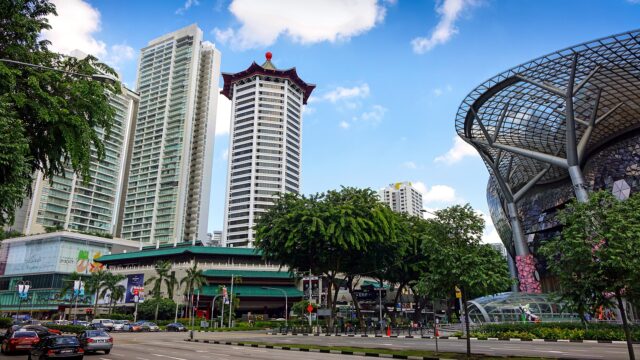
Singaporeans hit the malls on smart shopping spree before sales tax hike

STOCK PHOTO | Image by Jason Goh from Pixabay

 – Singaporean Soif Noor has already bought furniture and appliances for his new home, four months before he can move in. Like many residents, he’s been on a spree – because on Jan. 1 Singapore’s sales tax goes up for the first time in 15 years.

From next year, the sales tax on everything from groceries to diamond rings goes from 7% to 8%. Barring a sharp global economic downturn next year, it will then rise to 9% in 2024 as the city state of 5.6 million people raises revenue to support its ageing population.

Overall, economists say the impact of the one percentage point tax hike may be muted, with a consumer spending surge before the rise likely to be offset by a drop afterwards. But for residents like Mr. Soif, it’s a significant trigger.

“A 1% increment may be small, but any savings help in this inflationary environment,” the 28-year-old engineer told Reuters. By buying everything now before the hike, Soif said he’s saving S$250 ($185) on his purchases, now in storage at retailers’ facilities.

Mr. Soif said some of his male colleagues are rushing to get engagement rings, being urged by girlfriends to “propose now – if not it will be more expensive next year”.

At 8%, Singapore’s new sales tax will be slightly higher than Thailand’s 7% but lower than Indonesia’s 11%, less than half the roughly 20% rate imposed in many countries in Europe, and below Japan’s 10%.

Singapore’s move to forge ahead with the tax increase comes even as some countries, like Thailand and Italy, approve consumption tax breaks to help citizens cope with the rising cost of living crisis.

OCBC economist Selena Ling said the current “positive bump” in big-ticket consumer purchases was good for the retail sector, but the impact on the overall economy is likely to be muted. The sale or lease of residential property is exempt from the tax, while the impact on car sales remains uncertain, with prices at record highs this year.

Ms. Ling expects economic growth in the first quarter of next year to be slow with “less consumer appetite for excessive spending in the near term until the uncertainties abate”.


‘BEAT THE TAX HIKE!’

From department stores to furniture shops, savvy retailers are tapping into residents’ ‘smart shopping‘ mode, with promotions telling consumers to “Beat the goods and services tax hike!”

At jewelry boutique LeCaine Gems in an upscale mall near the Marina Bay area, co-founder Michael LeCaine said he’s been nudging non-committal customers into purchases by bringing up the tax hike so they will “make a decision there and then”.

Government statistics show retail doing well.

Sales rose 11.2% in September compared with the same month a year earlier, and then grew 10.4% year-on-year in October. Outstanding credit card balances in Singapore climbed 16% year-on-year in the third quarter of 2021, according to the central bank.

LeCaine Gems had a 15% increase in sales last month compared to the same month in 2021, while jewelry chain SK Jewellery Group reported a 25% increase year-on-year for the period from September to November.

The upbeat spending comes against a backdrop of concern, and some opposition, among the population about the tax hike.

But the move’s supporters say Singapore has no option but to increase state revenue to cope with the expected surge in its ageing population. The government estimates a quarter of the population will be 65 and older by 2030.

To soften the blow, the government has pledged to give almost 3 million Singaporeans at least S$700 in cash payouts over five years as part of an S$8 billion “assurance package”. It has also said it would review the second step of the tax hike if there was a major global downturn next year.

In the meantime, Mr. Soif’s spree will leave him set to move into his new place with his wife – and peace of mind.

“We just want to get it done and stop thinking about it,” he said. – Reuters

Japan asks its insurers to retain marine war cover for LNG shippers in Russian waters

STOCK PHOTO | Image by Marcos Marcos Mark from Pixabay

 – The Japanese government has asked insurers to take on additional risks to continue providing marine war insurance for liquefied natural gas (LNG) shippers in Russian waters, a senior official at the industry ministry said.

The Financial Services Agency and Agency for Natural Resources and Energy made the rare request in a joint letter to the country’s general insurance association. Tokyo wants to ensure Japan will continue to import LNG from the Sakhalin-2 project in Russia, the official told Reuters.

“The FSA and ANRE have asked insurers to take actions to continue offering marine war insurance for the shipowners to transport LNG from Sakhalin-2 as it is key for Japanese energy security,” the official said.

The move comes after Tokio Marine & Nichido Fire Insurance, Sompo Japan Insurance and Mitsui Sumitomo Insurance on Friday told shipowners that they would stop offering marine war insurance, which covers damage to ships from war in Russian waters, from Jan. 1.

The decisions came as reinsurance companies warned they would no longer take on vessels’ risks related to war.

But the three companies said on Monday they are in talks with other reinsurers to offer cover. Read full story

The Sakhalin Island complex in Russia’s Far East, partly owned by Gazprom and Japanese trading houses, accounts for 9% of Japan‘s LNG imports.

“Securing LNG is the top priority for the government, and we asked insurance companies to cooperate in this regard,” an official at the FSA said.

Responding to the letter, spokespersons at Tokio Marine, Sompo Japan and Mitsui Sumitomo told Reuters they will continue to seek more support from reinsurers on the war coverage so that they can provide marine war insurance next year.

Industry sources have said that insurers may refuse to cover planes flying to Ukraine or ships sailing through the Black Sea as reinsurers – who insure the insurers – propose excluding the region from policies from January.

Reinsurers typically renew their 12-month contracts with insurance clients on Jan. 1, meaning they have the first opportunity to scale back exposure since the war in Ukraine started, after being hit this year by losses related to the conflict and from Hurricane Ian in Florida. Read full story Reuters

[B-SIDE Podcast] Turning vegan

Follow us on Spotify BusinessWorld B-Side

Nancy Siy, founder of Manila Vegans, explains to BusinessWorld reporter Ashley Erika O. Jose that veganism is grounded in morality and ethics. “Veganism is more of a social justice movement,” she said. “We are beginning to acknowledge that animals are not machines or property. They are sentient beings.”

Aside from excluding meat from one’s diet, being vegan means avoiding the use of animal-based products.

TAKEAWAYS

Veganism is a social justice movement.
“Our goal in animal liberation does not depend on products. It depends on shifting the mindset of people,” said Ms. Siy. “Our goal as vegans is to end animal use and we are still far from that, and that is okay. Because there is a lot of learning and unlearning that has to happen and we need to understand that

Veganism is tied to ethics and morality.
“Our call is to individuals: number one is to be vegan. To be involved in systematic changes like legislation to be passed so that the barriers of veganism can be broken down,” Ms. Siy said.

“We cannot talk about sustainability without talking about morality. What I am trying to say is when we talk about sustainability we cannot separate ethics, it should still be considered,” she added.

Recorded remotely in December 2022. Produced by Joseph Emmanuel L. Garcia, and Sam L. Marcelo.


Read the related story: Going vegan

Follow us on Spotify BusinessWorld B-Side

FTX customers file class action to lay claim to dwindling assets

FTX.COM

FTX customers filed a class action lawsuit against the failed crypto exchange and its former top executives including Sam Bankman-Fried on Tuesday, seeking a declaration that the company’s holdings of digital assets belong to customers.

The lawsuit is the latest legal effort to lay claim to the dwindling assets of FTX, which is already feuding with liquidators in the Bahamas and Antigua as well as the bankruptcy estate of Blockfi, another failed crypto company.

FTX pledged to segregate customer accounts and instead allowed them to be misappropriated and therefore customers should be repaid first, according to the lawsuit filed in U.S. Bankruptcy Court in Delaware.

“Customer class members should not have to stand in line along with secured or general unsecured creditors in these bankruptcy proceedings just to share in the diminished estate assets of the FTX Group and Alameda,” said the complaint.

FTX did not immediately respond to a request for comment.

Bahamas-based FTX halted withdrawals last month and filed for bankruptcy after customers rushed to pull their holdings from the what was once the second-largest cryptocurrency exchange after questions surfaced about its finances.

Bankman-Fried faces charges stemming from what a federal prosecutor called a “fraud of epic proportions” that included allegedly using customer funds to support his Alameda Research crypto trading platform.

Bankman-Fried has acknowledged risk-management failures at FTX but said he does not believe he has criminal liability. He has not yet entered a plea and was released on a $250 million bond last week that included restrictions on his travel.

The proposed class, which wants to represent more than 1 million FTX customers in the United States and abroad, seeks a declaration that traceable customer assets are not FTX property. The customer class also wants the court to find specifically that property held at Alameda that is traceable to customers is not Alameda property, according to the complaint.

The lawsuit seeks a declaration from the court that funds held in FTX U.S. accounts for U.S. customers and in FTX Trading accounts for non-U.S. customers or other traceable customer assets are not FTX property. The customer class also wants the court to find specifically that property held at Alameda that is traceable to customers is not Alameda property, according to the complaint.

If the court determines it is FTX property, then the customers seek a ruling that they have a priority right to repayment over other creditors.

Crypto companies are lightly regulated and often based outside the United States and deposits are not guaranteed as U.S. bank and brokerage deposits are, complicating the question of whether the company or customers own the deposits. – Reuters

Aboitiz InfraCapital, regional winner at 17th PropertyGuru Asia Property Awards

LIMA Estate was awarded with “Best Industrial Development in Asia” and “Best Green Development in Asia” — recognizing Aboitiz InfraCapital’s excellence and efforts in pushing forward sustainability in its developments.

Aboitiz InfraCapital (AIC) Economic Estates, the infrastructure arm of the Aboitiz Group, bags the “Best Industrial Developer in Asia” award at the recently-concluded 17th PropertyGuru Asia Property Awards. Southeast Asian property technology company PropertyGuru Group also awarded AIC’s LIMA Estate, with two distinctions — the “Best Industrial Development in Asia” and “Best Green Development in Asia” awards — recognizing AIC’s excellence and efforts in pushing forward sustainability in its developments.

For the second year in a row, AIC bagged the highly-coveted “Best Industrial Developer in Asia” award which is given to the most impressive company that exhibited dominance in the industrial real estate sector. Aboitiz InfraCapital Economic Estates is the first and only Filipino company to be awarded 3 regional titles, fortifying AIC’s reputation as a leader in smart and sustainable industrial estate development, cementing the Philippines’ position as a globally competitive and viable investment destination within ASEAN.

PropertyGuru acknowledged the company’s commitment to bringing economic progress to the Philippines and its efforts in spearheading smart and sustainable next-generation developments. AIC’s recent achievements and milestones which include LIMA Estate’s recent BERDE 5-Star District Certification from the pilot program of the Philippine Green Building Council (PHILGBC), the launch of LIMA Office Park and Commercial lots within the LIMA CBD, and the industrial expansions in both the LIMA and the West Cebu Estate are valuable proofs of the company’s growth and development, and of its tireless commitment to sustainability.

AIC Economic Estates Head Rafael Fernandez de Mesa expressed his gratitude to the AIC Economic Estates team for its efforts in contributing to the development of the LIMA Estate, which also won the “Best Industrial Development in Asia” award for bringing economic progress and development to the Philippines. The Estate impresses as the country’s largest privately-owned industrial park, housing 140 locators, 65,000 employees, 4,400 households, 167 retail outlets, and a 4-star hotel.

PropertyGuru awards Aboitiz InfraCapital with three regional distinctions during the 2022 Asia Property Awards, including a back-to-back win for the Best Industrial Developer in Asia award.

PropertyGuru Asia judges came to a unanimous decision in awarding AIC’s LIMA Estate the “Best Green Development in Asia,” lauding the Estate’s green features including the use of renewable energy solutions, a smart water network system, a comprehensive waste management system, and its progressive decarbonization efforts. These smart and sustainable features paved the way for its 5-Star BERDE District Certification, which was guided by locally and internationally-recognized green development standards from the World Green Building Council.

As AIC continues to push boundaries of innovation through technology, the organization has partnered with Singapore-based consultancy firm Surbana Jurong and Aboitiz Group’s newly formed business unit Aboitiz Data Innovation (ADI) to optimize its operations through data science and artificial intelligence. Through these collaborations, AIC will be able to accelerate the delivery of solutions that improve efficiency and processes by leveraging the data collected from its systems. Further, it ensures that AIC remains at the forefront of smart and sustainable industrial estate development in the Philippines, and at a level at par with industrial powerhouses in the ASEAN region.

“This award is a testament to our commitment to providing sustainable industrial development that will protect the environment and positively impact the local and national economies by attracting more investors to operate in our estates,” said Rafael Fernandez de Mesa, head of Aboitiz InfraCapital Economic Estates and president of LIMA Land. Expressing his gratitude to PropertyGuru for recognizing the company’s efforts in sustainable industrial development in the Philippines, Mr. Fernandez de Mesa added, “We are honored for this opportunity to showcase our world-class industrial estates that further drive economic, social, and environmental progress in the country. We will continuously strive to elevate and transform our Economic Estates in order to adhere to the requirements of an increasingly sophisticated and discerning market,” Mr. Fernandez de Mesa added.

Considered the most sought-after real estate industry honors and dubbed as the Gold Standard in Asian real estate, the PropertyGuru Awards is the leading real estate awards program that recognizes the best projects, designs, and innovations in the industry. With the theme “Adaptive Reinvention,” PropertyGuru also held the seventh annual edition of the Asia Real Estate Summit (ARES), featuring discussions on sustainability, green tech, innovation, diversity, and the new economy.


Spotlight is BusinessWorld’s sponsored section that allows advertisers to amplify their brand and connect with BusinessWorld’s audience by enabling them to publish their stories directly on the BusinessWorld Web site. For more information, send an email to online@bworldonline.com.

Join us on Viber to get more updates from BusinessWorld: https://bit.ly/3hv6bLA.

Revamp of vehicle tax needed — IMF

MOTORISTS drive through an intersection in Cubao, Quezon City, Aug. 2, 2022. — PHILIPPINE STAR/ MIGUEL DE GUZMAN

THE PHILIPPINES should consider revamping the taxation of passenger vehicles to take into consideration their impact on the environment, the International Monetary Fund (IMF) said.

In a report, the IMF said the Philippines should conduct a thorough review of the tax treatment of passenger vehicles.

“Moving away from a luxury tax (like the long phased-out value-added tax on luxury goods) to an environment tax (one-off registration tax or excise, potentially coupled with recurrent circulation tax, akin to the current motor vehicle road user charge), ideally taking into account both (carbon dioxide) emissions and road congestion, should be favored,” the IMF said.

The Philippines should conduct an assessment of the revenue impact of this policy change before implementation, it said.

“From 2003, the Philippines moved away from taxing passenger cars based on the engine size (a proxy of negative externalities related to the adverse impact on the environment and roads’ wear and tear) towards a tax on the value of cars,” the IMF said.

However, the IMF said this type of tax compromises the main objective of a “Pigouvian tax — reducing consumption of goods with negative externalities, and the ease of enforcing an excise tax which is usually based on objective and easily measured criteria.”

It noted that low-value cars, most often old models, may be more damaging to the environment, infrastructure and traffic safety than new vehicles.

Despite the “commendable” reforms under Republic Act No. 10963 or the Tax Reform for Acceleration and Inclusion (TRAIN) law, the IMF said “changes in the taxation of passenger vehicles should be revisited.”

Under TRAIN, automobile taxes were adjusted based on the net manufacturing or importer’s price. The tax rate is 4% of the manufacturing or importer’s price for automobiles worth up to P600,000; 10% for automobiles with more than P600,000 but below P1 million; 20% for automobiles above P1 million but below P4 million; and 50% for automobiles above P4 million.

Pickup trucks and purely electric vehicles are currently exempt, while hybrid cars are taxed at 50% of the equivalent automobile.

In August, the House Ways and Means Committee approved the fourth package of the Comprehensive Tax Reform Program, which includes the removal of the excise tax exemption on pickup trucks.

The removal of the excise tax exemption on pickup trucks is projected to generate P52.6 billion worth of additional revenues from 2022 to 2026, according to the Finance department.

However, automakers have opposed the measure, saying this would hurt the automotive industry’s sales and also local businesses that use pickups.

The IMF said there are many tax measures proposed by the previous administration that the current government should consider for implementation.

“The measures include those related to VAT (value-added tax) base broadening, upward adjustment of traditional excises, and potential plans to adopt carbon taxation,” it said.

“Further refining of excise taxation, including on energy products, eliminating exemptions on motorcycles, and introducing a recurrent motor vehicle tax are viable options for revenue mobilization and improved efficiency.”

The Department of Finance under the Duterte administration had proposed a fiscal consolidation and resource mobilization plan, which it said was needed to address the government’s P3.2-trillion debt incurred during the pandemic.

Among the proposed measures are the deferment of the personal income tax reduction under TRAIN, excise tax on single-use plastic and luxury goods, as well as imposition of VAT on digital service providers and a carbon tax.

It also proposed reforming the motor vehicle road user charge, which involves the imposition of a single and unitary rate based on the gross vehicle weight of all motor vehicles. — L.M.J.C.Jocson

Subscribers grumble after first day of SIM registration hit by glitches

PEOPLE are seen using their mobile phones along Claro M. Recto Avenue in Divisoria, Manila, Dec. 27. Mobile phone users are now required to register their subscriber identity module cards. — PHILIPPINE STAR/EDD GUMBAN

THE COUNTRY’S major mobile network carriers faced a slew of consumer complaints on Tuesday after glitches marred the first day of mandatory subscriber identity module (SIM) card registration.

The official Facebook pages of Globe Telecom, Inc., Smart Communications, Inc., and DITO Telecommunity Corp. were flooded with subscribers’ complaints about technical issues they encountered in registering their SIM cards.

Responding to a user, Globe said: “We’re sorry if you’re having trouble accessing the SIM Registration page, which is currently experiencing birth pains.”

Smart, the wireless arm of PLDT Inc., said in a statement that some of its subscribers may have experienced difficulty accessing the SIM registration website (https://simreg.smart.com.ph/) “due to the high volume of registrants.”

A representative of new entrant DITO Telecommunity told reporters via Viber that it managed to address “most of the complaints.”

“The first two weeks of the implementation of the SIM registration is considered as a test period, wherein some glitches or technical issues are expected as the public telecommunications entities (PTE) fine-tune their respective processes,” the Department of Information and Communications Technology (DICT) said in a statement.

During the 15-day test period, the DICT said mobile network carriers should be able to assess what they need to improve to make the registration process more efficient and easier for subscribers, it added.

In an e-mailed statement, Globe said that “several customers” were able to access its registration site between 4 a.m. and 7 a.m. but the portal temporarily went offline as the site was “being optimized.”

Globe said it was working to have the registration platform back up “within the day.”

As of press time, its website https://new.globe.com.ph/simreg is still inaccessible.

The Ayala-led telco said it will contact existing postpaid subscribers to confirm and complete their registration.

“Technical teams are working double time so the online platform can go live before the day ends. Rest assured that we are optimizing our systems to give you a better registration experience. We’d also like to remind our customers that there is enough time to register,” said Maria Yolanda C. Crisanto, sustainability and corporate communications head of Globe Group.

Globe estimates that its network has 87.9 million SIM users.   

Meanwhile, PLDT group Corporate Communications Head Cathy Y. Yang told Cignal TV’s One Balita Pilipinas news program that Smart has around 67 million subscribers who need to register their SIM cards. 

“The three million of them are postpaid subscribers. The process is different for postpaid because they only need to text ‘yes’ to 5858,” she said in Filipino.

There were technical issues when Smart’s registration platform went live, Ms. Yang said but those were addressed “immediately.”

Meanwhile, DITO said it has “nearly 15 million subscribers and potential customers” who are expected to register.   

“Subscribers who successfully register their SIM cards will receive 2GB bonus data,” DITO said in a statement.

The SIM Card Registration Act, which took effect on Oct. 28, requires the registration of all SIM cards in the country.

All mobile device users have to register their SIMs on their telcos’ authorized registration platforms within 180 days from the effectivity of the law or until April 26, 2023. The DICT may extend the registration period by another 120 days.

Under the rules, anyone who provides false information or who uses fraudulent identification documents to register a SIM may face up to two years of imprisonment or a fine of not more than P300,000.    

Mobile service companies that fail or refuse to register SIMs may face fines of up to P1 million.

The DICT launched a 24/7 SIM registration complaint center, where subscribers can report their concerns or make suggestions on how to improve the registration process.

The DICT said concerns related to the SIM registration process can be directed to its Cybercrime Investigation and Coordinating Center through hotline 1326.

Hastings Holdings, Inc., a unit of PLDT Beneficial Trust Fund subsidiary MediaQuest Holdings, Inc., has a majority stake in BusinessWorld through the Philippine Star Group, which it controls. — Arjay L. Balinbin

PHL airlines optimistic about recovery despite headwinds

Airplanes are seen on the runway at the Ninoy Aquino International Airport. — PHILIPPINE STAR/ MICHAEL VARCAS

By Arjay L. Balinbin, Senior Reporter

LOCAL AIRLINES expect the recovery momentum to continue next year, as the industry is better positioned to weather potential external headwinds.

“We are on track to restore our flights to 90% of pre-pandemic levels,” flag carrier Philippine Airlines (PAL) said in a statement to BusinessWorld.

PAL, which completed its voluntary Chapter 11 proceedings last year, saw its financial performance significantly improve. It posted a P6.8-billion attributable profit in the first nine months of 2022, a turnaround from the P21.8-billion net loss a year ago.

For 2023, PAL plans to reinforce its position as the Philippines’ only full-service network airline by restoring its network to mainland China, once it reopens to international travel. The flag carrier also plans to expand its code-sharing and interline partnerships with other airlines to give PAL passengers access to more overseas destinations and better connections.

PAL said it also aims to sustain and grow its cargo business in order to tap opportunities in the air freight market.

At the same time, the Lucio Tan-led airline targets to continue its digital transformation by introducing new products for customers and better in-house systems to boost efficiency.

The flag carrier noted that the Civil Aeronautics Board’s (CAB) move to lower the applicable fuel surcharge for domestic and international flights to Level 7 in January 2023, from Level 8 implemented in November and December, will “increase travel appetite and boost air travel.”

The CAB noted the drop in the average price of jet fuel to P41.50 per liter between Nov. 10 and Dec. 9, from the P42.87 per liter between Sept. 10 and Oct. 9.

Meanwhile, Cebu Pacific Chief Commercial Officer Xander Lao said separately that the budget carrier expects next year to be “much better” than 2022 in terms of passenger and cargo demand.

Mr. Lao described as “safe” the International Air Transport Association’s (IATA) global forecast of airlines returning to profitability in 2023.

The IATA earlier this month said it expects a net profit of $4.7 billion for the global airline industry next year, after losing billions of dollars in 2020 and 2021 amid the pandemic.

In the first nine months of the year, Cebu Pacific reduced its attributable net loss to P12.05 billion from the P21.1-billion loss posted a year ago. Revenues jumped to P37.53 billion from P9.15 billion in 2021, as more Filipinos booked more flights to domestic and international destinations.

“Fuel prices have come down recently. The world is opening up. At Cebu Pacific, we are starting to see a lot more traffic in the international sectors. Japan, Korea, Singapore, and Thailand have been doing quite well,” Mr. Lao said at a press briefing.

However, Mr. Lao noted that there is “still a lot of uncertainty looking forward.”

“But we are pretty confident that if we adhere to our low-cost model, we think it will be a good year for Cebu Pacific as well as the industry,” he said.

Meanwhile, AirAsia Philippines Chief Executive Officer Ricardo P. Isla said the low-cost carrier is establishing a more cost-efficient corporate structure as it aims for a full recovery from pandemic-related losses in 2023.

“AirAsia Philippines is on the path to full recovery in 2023. Our key goals in the coming year are the following: Growth of fleet and flight frequency to pre-pandemic levels, reactivation of hibernated international routes and launch of new ones, and the expansion of our domestic route network,” Mr. Isla said in a statement to BusinessWorld.

He also cited “strengthened collaboration with the private sector and investment in improved infrastructure” as contributing to the industry’s resurgence.

Sought for comment, Avelino D.L. Zapanta, aviation expert and former PAL president and chief executive officer, said most airlines will be in a growth mode in 2023, after nearly three years of the pandemic.

“They have virtually restored their pre-pandemic capacity. The main driver is revenge travel. The remaining pandemic-induced travel restrictions though, such as the continuing and new health regulations, might impede the growth to some extent. Many countries still impose certain requirements,” he said in an e-mail interview.

Asked how local airlines should deal with elevated fuel prices next year, Mr. Zapanta said: “They will just have to be better at their fuel hedging decisions to avoid the PAL disaster experienced in 2008 that led to the decision to sell 49% of shares to San Miguel.”

CHALLENGING YEAR
Meanwhile, Singapore-based aviation analyst and consultant Brendan Sobie said 2023 could become “quite challenging” for airlines given the looming recession, high fuel prices, and the geopolitical environment.

“Philippine Airlines has already been profitable in recent quarters, benefiting from a supply-demand imbalance in the long-haul market which has resulted in extremely high yields (airfares),” he said in an e-mail interview.

“Cebu Pacific has not yet been able to restore profitability but relies more heavily on the domestic market, which has been suffering from relatively low yields and too much rather than too little capacity,” he added.

He pointed out that Cebu Pacific also relies quite a lot on the regional international market, which is just starting to recover.

“While the rest of Southeast Asia has been open for several months, the reopening in North Asia is still in the early phases… North Asia is a big market for all Philippine carriers,” Mr. Sobie said.

AirAsia Philippines has been slow to restore capacity, and its financial situation is “rather weak compared to its two much larger competitors,” he noted.

“It will be interesting to see what happens to AirAsia Philippines as the AirAsia Group restructures,” he said.

Mr. Sobie said all three main local competitors should do quite well during the peak holiday season.

“However, it could be difficult to maintain any profitability that is achieved this month and (January). Capacity will continue to be gradually restored in 2023 — in the Philippines, including foreign airline capacity, as well as in the Asia-Pacific overall,” Mr. Sobie noted.

He advised airlines to be “nimble and flexible,” adding that “no one should be assuming profitability for Philippine carriers in 2023.”

Anthony Oundjian, managing director and senior partner at Boston Consulting Group, said the Asian airlines should see profitability next year.

“Our region is about six months ‘behind’ US/Europe, so the impact seen by European airlines this year will likely be felt by airlines in Asia next year,” he said in an e-mail interview.

Key drivers to profitability are the “very rapid, more than expected surge in demand combined with the limited capacity due to operational constraints and difficulty to restart,” he added.

“Because of these supply and demand factors, airlines should see much higher yields, helping them return to profitability,” Mr. Oundjian said.

He also said that China is also another potential driver, a global demand wildcard, to the industry.

“A reopening of China will increase direct flows of businessmen and tourists to the Philippines, and also indirectly increase services for US-Asia and Europe-Asia, making it easier for international tourists to visit the country,” Mr. Oundjian said.

China’s reopening is expected to boost air travel and the tourism sector, not just in the Philippines but the rest of Southeast Asia. China had accounted for 22% of visitor arrivals to Southeast Asian countries before the pandemic.

If oil prices remain elevated next year, airlines can pull a few levers.

“Of course, some cost has to be passed through. We have seen most airlines in America and Europe adding surcharges since July 2022, and these surcharges will remain a key part of impact mitigation strategies. Beyond fuel pass-throughs, airlines are also continuously improving their fuel efficiency, not only for cost containment but also for sustainability,” Mr. Oundjian said.

Inflation may affect travel demand next year. However, he noted consumers would still want to travel, but may make some trade-offs.

“[There will be] more shifts to low-cost carriers, more shifts to domestic over international travel, some make shorter trips, some tighten their belts on accommodation/meals,” he noted.

“For the Philippines, this could mean that local tourism will be favored more. The weakening of the Philippine peso can also help attract more international travelers, but it’s too early to see such an effect.”

Cebu Pacific’s Mr. Lao is hoping fuel prices will continue to drop and the peso continue to strengthen against the US dollar next year.

“Having said that, we need to focus on what we can actually control like the investments in fleet, having more efficient flight plans, and more efficient processes,” he said.

Rizal Commercial Banking Corp. Chief Economist Michael L. Ricafort said the peso’s recent appreciation against the US dollar may help reduce airline ticket prices and air cargo rates next year.


PLDT meets suppliers, moves to cut budget overrun

BW FILE PHOTO

PLDT Inc. on Tuesday said it is in talks with suppliers for discounts and the cancellation of certain components of delayed projects to reduce its P48-billion budget overrun.

“The ongoing discussion with the principal vendors includes negotiation on discounts and cancellation of certain portions of delayed projects that have not been started or completed, which would reduce the capex (capital expenditure) overrun,” the company said in a disclosure to the stock exchange.

The Pangilinan-led company added that its discussion with suppliers also includes the possible replacement of certain projects that will be canceled.

On the alleged unrecorded transactions, the company said that its recent disclosure on capex spending “did not mention any unrecorded transactions.”

It clarified that the ongoing discussion with the vendors referred to in its disclosure will provide the company with “more information and basis to determine the appropriate treatment of the P48 billion on our books.”

“The P48-billion expenditures are expected to be completed in 2022 to 2023 barring any delays,” it said. These will then enter its financial statements as they are completed, it added.

“These are projected to be completed from 2022 to 2023 (and possibly 2024 should there be delays),” it said.

According to the company, its chairman, Manuel V. Pangilinan, received information in October 2022 on the accumulated capex spend “reflecting a total amount which is higher than the projected capex spend.”

The company estimates a budget overrun of about P48 billion, which represents about 12.7% of its P379-billion capex over the past four years. It attributed the budget overspending to site rollout, transport projects, and ports rollout.

“After receipt of the information and further internal verification, the company undertook an internal forensics investigation mandated by the company’s Board and Audit Committee with the assistance of an external consultant,” PLDT noted.

The company also denied reports of employee suspension in connection with the budget overrun.

“The concerned officers are on leave with pay to allow the conduct of an independent investigation on the elevated capex spend, although they have made themselves available to the company to answer questions or provide clarifications as needed,” PLDT said.

The company stressed that its “forensic investigation is still ongoing,” adding that thus far, “no fraudulent transaction, procurement anomaly, or loss has been identified or uncovered.”

It plans to borrow P35-45 billion in the next two years for “general corporate purposes including, but not limited to, payment of capex and dividends.”

Meanwhile, the company disclosed in separate disclosures on Tuesday that Mr. Pangilinan bought 3,000 PLDT shares at prices ranging from P1,235 to P1,269 apiece, while PLDT President and Chief Executive Officer Alfredo S. Panlilio also bought 3,000 shares at P1,270 each.

Both executives made the transaction on Dec. 19.

PLDT Vice-President Luis Gregorio D. Casas also acquired 170 PLDT shares on Dec. 19, while PLDT Vice-President Radames Vittorio B. Zalameda disposed of 120 shares on Dec. 9, bringing his total disposed PLDT shares to 550.

PLDT shares closed 2.6% higher at P1,262 apiece on Tuesday.

Hastings Holdings, Inc., a unit of PLDT Beneficial Trust Fund subsidiary MediaQuest Holdings, Inc., has a majority stake in BusinessWorld through the Philippine Star Group, which it controls. — Arjay L. Balinbin with input from Justine Irish D. Tabile

Metro Manila Film Festival 2022: Cheap and easy laughs

By Joseph L. Garcia, Reporter

Movie Review
Partners in Crime
Directed by Cathy Garcia-Molina
MTRCB Rating: PG

EVERYONE’S favorite (or at least, most visible) LGBTQ+ TV host, Vice Ganda, thanked his fans via Twitter on Dec. 25, in capital letters, “Maraming-maraming salamat! Nakaka-cry! (Thank you so much! You are making me cry!)” amid reports that their film, Partners in Crime, was in the running for the top grosser of this year’s Metro Manila Film Festival (MMFF).

We are so not angry. We entered the cinema knowing that Vice Ganda movies are fun, raunchy, and nothing much else, and in times like these, I could use a laugh. So did the gentleman next to me in the back row, who gushed to his companion as he walked out, “Sobrang sulit! (it was worth it!).” At more than P300 a ticket at the cinema, it better be.

Vice Ganda plays Jack, a popular TV host (ha ha!) who needs a quick replacement to take a break, as his vocal cords are about to give out. In flashbacks, it’s told that this has always been a problem. During a bingo game he hosts (pre-fame) where his voice gives out, a pretty member of the audience shouts out the numbers by reading his lips, forming a business partnership hosting several gigs (which are avenues for several gags: the falling baby scene is a must).

At another hosting gig, Jack is discovered by a TV exec, who propels him to fame but compels him to leave his partner behind. In the present time, his made-over former partner, Barbara (played by internet hottie and actress Ivana Alawi), arrives, and vows to take over his career in revenge for the slight years ago. She also changes her name to Rose, making this another Jack and Rose tandem (as in the Titanic movie).

Both are assigned to interview the country’s richest man, Don Bill Libme (Rez Cortez). Both try to out-scoop each other, and disguise themselves as servers for Don Bill’s birthday party — except they find his dead body and are framed for the crime. Following the instructions of Don Bill’s true assassin, who promises to absolve them if they follow his orders to unlock Don Bill’s vault by performing a series of tasks, the two have to work together to clean up the mess.

Ivana Alawi is a delight on screen. She’s very pretty, and proves that she’s more than a pretty face but an actual funny person (or am I just blinded by her beauty?). It’s a running gag that she had been deeply in love with Vice’s character despite his LGBTQ+ status and his own homeliness (his Twitter bio says: “Supermodel turned actress turned horse”).

The series of tasks they need to perform showcase their own talents for physical comedy, and the two throw funny barbs at each other throughout. Another running joke, by the way, is how Ms. Alawi’s ample bosom can be used as a storage area (Vice Ganda levels the joke by using his crotch as the same). Anything else funny is compounded by the fact that Ms. Alawi runs around the movie in a skimpy maid’s uniform, while Vice Ganda does the same in a corset-tux combo. The two also wear a “disguise” of single giant moles on their cheeks, just to add to the absurdity of it all. Dressed like this, the two also have to carry around the limp Rez Cortez.

Would I watch this again? On a streaming service, yes. They’re cheap and easy laughs that don’t need much thinking (if you think about it too hard, it ruins the joke). And Vice does it so well.