Home Blog Page 5453

IP filings rise 4.4% in first nine months

THE INTELLECTUAL Property Office of the Philippines (IPOPHL) said IP registration applications rose 4.4% year on year in the first nine months as economic activity picked up.

During the period, IPOPHL said filings for trademarks, patents, utility models (UM), and industrial designs (ID) totaled 36,709, against the 35,172 applications posted a year earlier.

“The latest figures show impressive recovery in IP filings as we are on track to exceeding pre-pandemic volumes. This is largely driven by increased economic activity as quarantine restrictions have de-escalated in many areas to their laxest yet,” IPOPHL Director General Rowel S. Barba said in a statement Thursday.  

According to the IPOPHL, trademark filings rose 5.6% to 31,665. Residents accounted for 62% or 19,762 filings.

Patent filings increased 2.3% to 3,116. The patent filings were dominated by non-residents, accounting for 90% of the total.

ID filings, or applications that safeguard the unique appearance of a product, rose 1% to 923. Non-residents accounted for 516 filings or 56% of the total.

UM filings, which provide patent-like protection for shorter periods with a less rigorous application process, dropped 17.2% to 1,005. Residents accounted for 96% of the UM filings.

IPOPHL said that 19% of trademark filings were from the pharmaceuticals, health, and cosmetics industries, followed by agricultural products and services (16.8%), and scientific research, information and communication technology (14.5%).

Patent filings were dominated by pharmaceuticals (29.3%), organic fine chemistry (11.6%), and biotechnology (8.6%).

ID applications were led by means of transport or hoisting at 18.7%, followed by packages and containers for transport or handling of goods at 9.1%, and furnishing at 8.4%.

UM applications were dominated by food chemistry at 46.8%, other special machines at 9.1%, and IT methods for management at 4.4%.

Separately, IPOPHL said copyright registrations surged 69.1% to 2,602 filings. The applications were led by books, pamphlets, articles, e-books, audio books, comics, novels and other writings (29%), followed by other literary, scholarly, scientific and artistic works (27.8%), and drawings, paintings, architectural works, sculpture, engraving, prints, lithography or other works of art, models or designs for works of art (9.3%).  — Revin Mikhael D. Ochave

DENR hoping to deploy biotech solutions to fight climate change

MISAMIS OCCIDENTAL PROVINCIAL POLICE

THE DEPARTMENT of Environment and Natural Resources (DENR) said it will explore biotechnology solutions in addressing climate change. 

“Biotechnology is one of the tools that we can use to boost economic growth, create jobs, develop healthcare solutions, improve agri-food systems, and rehabilitate and protect our environment and natural resources,” Environment Undersecretary Jonas R. Leones said in a statement. 

The DENR said biotech advances will also help the department arrive at “scientifically informed” decisions.

Separately, Trade Secretary Alfredo E. Pascual said developments in the field will also help the government produce clean energy and reducing environmental footprints.

“Biotechnology’s breakthrough products and technologies feature multifaceted benefits. Aside from creating vaccines that combat debilitating diseases, biotechnology can produce clean energy, reduce our environmental footprint, and make industrial manufacturing processes safer, cleaner, and more efficient,” Mr. Pascual added. — Ashley Erika O. Jose

Elevate your home with these 2023 home interior trends

In 2023, comfort is vital. But comfort combined with aesthetics is such a plus. These 2023 home trends will add satisfaction, function without sacrificing style and incorporate one-of-a-kind design elements which will make the year shine!

RICH AND NATURAL 

The rich and natural home decor trend brings textures that give a relaxed and comfortable feel. A neutral palette such as beige and other earth-tone palettes with rich hues combined with vivid natural colors makes the space more open and spacious, while natural accents give dynamic energy that makes it even more inviting. This trend will give the room a luxurious feel while creating an elegant atmosphere.

WARM AND NEUTRAL

Neutrals are making a comeback this year. Embrace the new neutral trend and use different shades to create a cozy and warm atmosphere at home to give a more relaxed vibe. This warm and neutral home makeover will give your space a sense of deep calm and intimacy.

NATURE INSPIRED

Nature-inspired living space will match 2023’s lucky colors. This trend will see a resurgence in organic and sustainable design that boast a luxurious ambiance and eco-inspired color schemes. It can also match a softer palette for a beautiful, calming space that attracts positive energy. Nature-inspired design is evergreen and perfect for your physical and mental well-being.

GOLD AND GLITTERY

Home decor with a touch of gold and glitter is a timeless beauty that never goes out of style. Gold adds a luxe touch to any space, while the glittering elements give it a contemporary twist. Incorporating this trend into the space is simple—add a few decorative touches or go all-out to accent other furniture, and it will still fit perfectly and sparkling gold pieces, big or small, are real eye-catchers. It also exudes sophistication and glamour, which are always a  winning combination for a home. 

WHIMSICAL AND PLAYFUL

With a playful yet sophisticated theme, homeowners can embrace a whimsical and playful aesthetic that is both kid-friendly and stylish. This theme will add a bit of magic to the space by combining patterns and bright colors, and with a statement piece or vibrant backdrop. Add quirky pieces to your space to inspire enjoyable conversation. This trend will definitely add personality and fun for 2023.

TEXTURED MAXIMALIST

The maximalist trend often revolves around textures and color, with multiple prints and patterns used throughout a space. Combining textured materials introduces more visual interest and creates a more inviting environment or mix and match your colors and go asymmetric to create a room with your own imaginative, signature style. Time to turn the room into a textural home décor to achieve that “wow” factor while still maintaining a calm and serene atmosphere at home.

These 2023 home trends are stylish and functional at the same time and will change the way homeowners think about their home decor. Following the trends for a sleek and modern interior that makes a statement in any space from floor to ceiling, these design tips will help transform any area in the home into an elegant and sophisticated sanctuary.

Achieve these 2023 home interior trends, visit shop.wilcon.com.ph. You may also shop at any Wilcon Depot store nationwide.

Explore the limitless product selections that Wilcon offers, ranging from Tiles, Sanitarywares, Plumbing, Furniture, Home Interior, Building Materials, Hardware, Electrical, Appliances, and other DIY items.

For more information about Wilcon, you can visit www.wilcon.com.ph or follow their social media accounts on Facebook, Instagram, and Tiktok and subscribe and connect with them on Viber Community, LinkedIn, and YouTube.


Spotlight is BusinessWorld’s sponsored section that allows advertisers to amplify their brand and connect with BusinessWorld’s audience by enabling them to publish their stories directly on the BusinessWorld Web site. For more information, send an email to online@bworldonline.com.

Join us on Viber to get more updates from BusinessWorld: https://bit.ly/3hv6bLA.

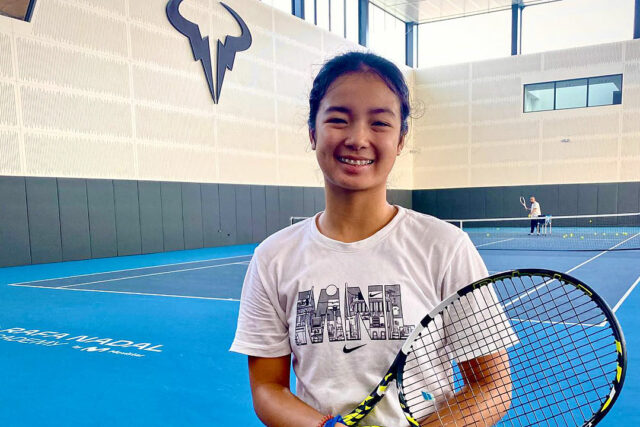
Eala sets sights on a brighter 2023

ALEX EALA FACEBOOK PAGE

A FILIPINA tennis princess has risen in Queens, New York.

In a breezy September, teen sensation Alex Eala dazzled and waltzed her way to the top of the US Open junior championships, and put the Philippines on the world tennis map.

The 17-year-old ace netted a piece of “HERSTORY” with a masterful 6-2, 6-4 win over then world No. 3 and now top-ranked Lucie Havlickova of the Czech Republic in becoming the first Filipina to win any junior singles Grand Slam.

It’s the first singles Grand Slam in her budding career after bagging two doubles titles in the 2020 Australian Open with Indonesian pal Priska Madelyn Nugroho and the 2021 French Open with Russian Oksana Selekhmeteva.

And Ms. Eala did it on an emphatic fashion, displaying a perfect campaign without any single set yielded through six rounds of the elite 64-strong US major draw that featured the best junior players in the world.

It’s a fitting and well-deserved singles breakthrough for Ms. Eala’s unwavering tennis major title hunt after a previous-best Final Four finish in 2020 Roland Garros paired with a couple of misses in the US Open(quarterfinals), Wimbledon (second round) and French Open (first round).

In 2022, Ms. Eala just would not be denied in seizing her first singles crown, at long last, despite participating in the US Open as her lone junior tournament all year long.

A former world junior No. 2 in the International Tennis Federation (ITF) herself, Ms. Eala this year opted to earn more stripes in the Women’s Tennis Association (WTA) — where she also made big leaps to slowly but surely scale the world rankings.

In April, Ms. Eala captured her second pro title in the W25 Chiang Rai in Thailand after her maiden crown in the W15 Manacor in Spain last year.

Ms. Eala also held her own in tougher pro tourneys highlighted by her first Final Four finish in a stacked $80,000 joust in W80 Poitiers in France following the W60 Hamburg in Germany (Round of 16), W80 Rancho Sante Fe (quarterfinals), W60 Templeton in California (Round of 16) and the powerhouse W100 Shrewsbury in Great Britain (qualifying finals).

That series of commendable campaigns thus catapulted Ms. Eala closer to the elite of the elites with now a career-best placing at No. 214 in the WTA to end a stellar year.

Ms. Eala also debuted in the 31st Southeast Asian Games in Hanoi, Vietnam, coming away with three bronze medals.

But she is not yet done, setting her sights to an even brighter 2023 starting with a historic women’s Grand Slam debut in the qualifying event of the Australian Open in Melbourne — where she won her maiden junior Slam. — John Bryan Ulanday

Collegiate basketball: Three-peat Knights for NCAA, Blue Eagles redemption in UAAP, Seventh title in a row for NU Lady Bulldogs

HAT trick for Collegio San Juan de Letran Knights. — ncaa/synergy | GMA

HISTORY. Redemption. Controversy. Dynasty.

The Philippine collegiate hoops had it all in a much-awaited return, lacking no shortage of milestones for distinguished schools led by Collegio San Juan de Letran, University of the Philippines (UP), Ateneo de Manila University (ADMU) and National University (NU).

As the Knights capped a three-peat in the NCAA, the Fighting Maroons and the Blue Eagles went back-and-forth for UAAP supremacy while the Lady Bulldogs clinched their seventh straight title in UAAP women’s hoops — all fueled by the hunger and thirst from a long hiatus due to the pandemic.

Aside from completing a hat trick in the NCAA against three different final opponents, Letran under the tutelage of coach Bonnie Tan owned a page in the history books by being the country’s first twin-champion in just a year.

After sweeping Season 97, the Knights met a strong resistance from College of St. Benilde (CSB) this time but still prevailed on top of Season 98 after a three-game finale duel — catapulting them to their 20th overall NCAA cup.

Jeo Ambohot was named the Season 97 Finals MVP followed by King Caralipio in Season 98 while Rhenz Abando was hailed as the Rookie-MVP in Season 97, the first for the NCAA since 2015 when Mapua’s Allwell Oraeme achieved the same feat.

Will Gozum won the Season MVP in Season 98 as CSB barged into the NCAA finals for the first time in 20 years before falling short to the mighty Letran.

UAAP
In the UAAP, Katipunan rivals UP NU and Ateneo took turns in hoisting the crown after figuring in two straight finals duels.

The UP Fighting Maroons, with debuting collegiate coach Goldwin Monteverde at helm, drew first blood behind JD Cagulangan’s game-winner in Season 84 to win its first title in 36 years.

UP, which ended the dynasty of then three-time reigning champion Ateneo in the process, actually had a chance to keep mastery of its rival and follow Letran’s suit in capturing a twin-title this year by arranging a finals rematch with Ateneo in Season 85.

The Tab Baldwin-mentored Blue Eagles exacted vengeance though, regaining their rightful throne by ruling Season 85 albeit in another three-game thriller, for their fourth in the last five seasons and 12th overall title.

Ange Kouame and Malick Diouf stamped their dominance in two straight gigantic battles with Mr. Kouame winning the Season 84 MVP and Season 85 Finals MVP plum while Diouf hoisted the Season 84 Finals MVP and Season 85 MVP.

Like any other year though, there were some scratches, too, as John Amores of Jose Rizal University (JRU) ran amok and punched multiple players in an NCAA game against College of St. Benilde, making the headlines for the wrong reason en route to an indefinite NCAA suspension and expulsion from the JRU basketball team.

SEVENTH TITLE IN A ROW
But brightest of the 2022 lights belonged to coach Aris Dimaunahan and the NU Lady Bulldogs, who despite a bump on the road still clinched a record-tying, seventh straight basketball title in the UAAP.

Behind Finals MVP Kristine Cayabyab with veterans Mikka Cacho and Camille Clarin, NU vented its ire on De La Salle with a sweep in the Season 85 finals to join the great University of the East squad of coach Baby Dalupan and Robert Jaworski Sr., in the 60s-70s as the only seven-peat collegiate basketball champion.

The Lady Bulldogs actually saw the end of their 108-game win streak that stood tall for almost a decade after an elims loss against La Salle but still claimed the ultimate goal to extend an invincible women’s hoops dynasty.

Eka Soriano of Santo Tomas, meanwhile, won the Season 85 MVP honor. — John Bryan Ulanday

Marcos appoints Richard Santos Clarin as GAB chairman

AFTER some delays, the ball is now rolling for Philippine sports. President Bongbong Marcos yesterday named Richard Santos Clarin as chairman of the Games and Amusements Board (GAB), the agency that controls professional sports in the country.

Mr. Clarin will take over the post vacated by Abraham “Baham” Mitra.

It came just a day after the Palace appointed Richard Bachmann as new chair of the Philippine Sports Commission, GAB’s amateur sports counterpart.

Also getting assignments from the Chief Executive were Edward Hayco and Walter Torres as PSC commissioners.

Messrs. Bachmann, Hayco and Torres joined Olivia “Bong” Coo, who was appointed in the middle of the year. — Joey Villar

Brooklyn Nets survive late surge to clip Hawks, win 10th straight

KYRIE Irving scored 20 of his 28 points in the second half to help the visiting Brooklyn Nets hold on to defeat the short-handed Atlanta Hawks 108-107 on Wednesday and extend their winning streak to 10 games.

The Nets have the longest active winning streak in the NBA and are the first team this season to win 10 consecutive games. Brooklyn has also matched its third-longest winning streak in franchise history and improved its record in December to a league-best 11-1.

Brooklyn outscored Atlanta 12-2 to start the fourth quarter and led by as many as 13 points but couldn’t put the Hawks away. The Hawks had a chance to tie with 29.9 seconds remaining, but Dejounte Murray made only one of two free throws. Mr. Murray then missed a game-winning shot at the buzzer.

Mr. Irving was 11-for-22 from the field with five 3-pointers and eight assists. Kevin Durant scored 26 points and had 16 rebounds and eight assists. Nic Claxton added 17 points, 10 rebounds and six blocks.

The Hawks played without three starters — leading rebounder Clint Capela (right calf strain), De’Andre Hunter (left ankle sprain) and Trae Young (left calf contusion), who leads the team with averages of 27.3 points and 9.9 assists. That trio accounts for 54.3 points per game on a team that averages 114.3.

Atlanta was led by Mr. Murray’s 24 points, nine rebounds and eight assists. John Collins finished with 21 points and eight rebounds. Bogdan Bogdanovic and Jalen Johnson each scored 14 points.

The Hawks shot 52 percent from the field in the first half and took a 63-56 lead into the break. Atlanta led by as many as 15 points when Mr. Bogdanovic made a 3-pointer with 4:28 left, only to have Brooklyn outscore the Hawks 13-5 to finish the half. Patty Mills scored 12 first-half points on 3-for-3 shooting on 3-point tries and three-for-three at the foul line. Atlanta plays again on Friday at home against the LA Lakers. Brooklyn completes a three-game road trip on Saturday at Charlotte. — Reuters

Place in history secure

LeBron James was succinct in his assessment of the Lakers’ loss to the Heat yesterday. He noted that turnovers caused the blowout setback, and, given the numbers, it’s hard for even the most optimistic fans to argue otherwise. After all, the purple and gold  committed 19 more than their opponents’ five. The yawning gap led them to absorb a 29-point deficit in points scored off miscues. That they shot marginally better from the field made no difference, especially since they also happened to have 15 less stabs at the basket.

To be sure, James did little to help the Lakers protect the hall better. In fact, he finished the match with the highest number of turnovers, one more than the Heat’s combined aggregate. Perhaps they were affected by fatigue on the second night of a back-to-back set. Perhaps they simply reflected their poor record away from crypto.com Arena.

Bottom line, they were overmatched for much of the contest; they relinquished the lead three minutes and change into the first quarter, and went downhill from then on. They may have whittled the deficit down to seven points with four minutes left in the payoff period, but it proved to be too little, too late. Two bad passes and a miss later, and the outcome was evident.

No doubt, James didn’t want to spend his last time he set foot on the court as a 37-year-old the way he did. Given his prolonged exposure in recent memory, the 34 minutes he spent burning rubber was limited by comparison. That said, he made no secret of his desire to keep playing under better terms. “I want to still be able to compete for championships because I know what I can still bring to any ballclub with the right pieces.” For those who love to parse his statements, the operative phrase is “any ballclub.” Even at this stage, even when he’s close to becoming the National Basketball Association’s all-time leading scorer, he’s still bent on adding to his haul of rings.

Lest James be accused of chasing the hardware, however, it bears noting that he’s no longer upwardly mobile as he used to be. For better or worse, he’s stuck with the Lakers — in terms of his contract, in terms of his age, in terms of his family. And barring a sudden turn of events, 2023 will pretty much be the same as 2022 for him: closer to the bottom than the top. But, hey, he can’t complain. At this juncture, it’s his lot in life; it may no longer be a lot, but it’s life. In any case, his place in history is secure; whether or not he exits the sport’s grandest stage with a bang, he will have an immeasurable influence lasting well beyond his years.


Anthony L. Cuaycong has been writing Courtside since BusinessWorld introduced a Sports section in 1994. He is a consultant on strategic planning, operations and human resources management, corporate communications, and business development.

Consumer groups continue to raise privacy concerns surrounding SIM registration

PHILIPPINE STAR/KRIZ JOHN ROSALES

By Patricia B. Mirasol, Reporter 

The mandatory registration of subscriber identity module (SIM) cards for mobile phones, which began Dec. 27, continues to be plagued by unresolved privacy and disenfranchisement issues, according to consumer advocates. 

“There’s the large, unsolved issue of surveillance and privacy rights, with so much of the data being centralized into one, essential database,”  said Maded N. Batara III, spokesperson of the Junk SIM Registration Network, a multi-sectoral alliance of digital rights advocates that has been calling for the junking of Republic Act 11934, or the SIM Registration Act, since March.  

Selfie verification, which was not part of the SIM registration law’s implementing rules and regulations, is an added risk, said Mr. Batara in a Dec. 28 Zoom call. 

Ronald Gustilo, national campaigner of advocacy network Digital Pinoys, said that SIM registration won’t resolve spam issues and mobile phone scams.  

“It [the SIM registry] may actually worsen it, because the law is creating a bigger target for hackers. The database generated from this law will always be coveted and targeted by cybercriminals,” Mr. Gustilo said through Messenger on Dec. 27.  

 The first day of the mandatory registration, Dec. 27, was marked by difficulties 

“We apologize to our mobile customers, especially those who have been wanting to take advantage of the first day of SIM registration,” said Maria Yolanda C. Crisanto, chief sustainability and corporate communications officer of the Globe Group, in a statement. The telecommunications provider found “potential minor vulnerabilities in our microsite that required careful patching in order to prevent any serious threat to customer data.”  

Globe requested until Dec. 30 from the National Telecommunications Commissions to observe its SIM registration portal, new.globe.com.ph/simreg, to ensure the technical stability of the patches.  

“Us having to temporarily make the site inaccessible is really unfortunate having prepared for this day… We have enough time to register all Globe customers in compliance with the law,” Ms. Crisanto added in a Dec. 27 e-mail.   

Smart Communications, for its part, announced on social media that it is “continuing to optimize” its registration platform, https://simreg.smart.com.ph .  

“Our overall assessment is we had a better-than-expected experience for the first day and we were able to stress test our portal,” said Cathy Y. Yang, first vice president and group head of corporate communications of PLDT, and Smart in a Facebook post. “With our current process, which is simple, easy, and secure, we will be able to register all our subscribers in the period provided by the IRR.”   

FRUSTRATION ON SOCIAL MEDIA
Globe Telecom, Inc.’s redirected subscribers to a Frequently Asked Questions page, according to tweets. Users of Smart Communications, Inc.’s services, meanwhile, reported a null status on their registration attempts.

Globe subscribers took to Globe Telecom, Inc.’s Facebook page and talked about the hassle of uploading a photo:

“ang hirap mag upload ng photo sa valid ID…” — Rosalie Rosal 

“I was trying to register but it got stuck when I was trying to upload the photo of my ID. Can you please help ? Senior citizen here.”  — Erika Efigenia Alix 

Others grumbled about glitches in the online form:   

“I tried to register my prepaid SIM online but there’s something wrong with the online form. Some of the fields don’t work, which is why I couldn’t complete the process! Not sure if you’re even aware of this. Nevertheless, can you have someone from your IT team take a look at it!” — Butch Blanco    

“Globe Telecom why is it that some of the mandatory fields is on gray. I won’t allow me to enter info” — Heaven Arthur De Luna  

Smart Communications, Inc., users on Facebook didn’t seem to fare any better at the uploading photo part of the process:  

“Sir smart, why po na bumabalik sa pag access ng otp, after pindutin yung take a photo, kanina pa po ito?” — Rommel Rufin III  

“Sablay link nyo. Pag iclick yun Take Photo bumabalik sa OTP page.” — Mark B. Delgado 

As of this writing, Smart has received close to 400,000 successful applications. Globe, meanwhile, has logged over 1.5 million registrations. 

The deadline for registration is April 26, 2023. 

“There are a hundred million SIMs in the Philippines …  How can you expect [those] in far-flung places — away from city centers — to make the 180-day timeframe?,” said Mr. Batara. “Disenfranchisement is really a large part of why we oppose the SIM registration law. We’ve seen that in action as it’s being implemented.”  

Why the future of technology is so hard to predict

RAWPIXEL.COM-FREEPIK

THEY don’t make technology predictions like they used to. Just look at the amazingly prescient technological wish list famed chemist Robert Boyle jotted down in a note found after his death in 1691:

“The recovery of Youth, or at least some of the Marks of it, as new Teeth, new Hair, new hair color’d as in youth.” Check.

“The art of flying.” Check.

“The art of continuing long under water and exercising functions there.” Check.

“The Practical and Certain way of finding Longitudes.” Check.

And finally: “Potent Drugs to alter or Exalt Imagination, Waking, Memory and other functions, and appease pain, procure innocent sleep, harmless dreams, etc.” Check … with caveats.

I think Boyle would be pleased with the 21st century’s dentistry, rainbow of hair dyes, scuba gear, submarines, routine flight and GPS. He would surely want to try our psychedelic drugs.

He also predicted “The Prolongation of Life” — but there, he might be disappointed in us.  We’ve made vast progress in preventing people from dying from infections while still young, but have yet to figure out how to get most people to live much past 100.

More recent predictions by futurists haven’t been quite as accurate, perhaps because they rely too much on extending the latest, trendiest technologies into new realms. One of the most famous living futurists, Ray Kurzweil, predicted back in 1999 that by 2019 robots would educate us, conduct business transactions for us, adjudicate political and legal disputes, do our household chores, and have sex with us.

Even someone as brainy as Kurzweil couldn’t have imagined that in late 2022 the main feature in MIT Technology Review would be headlined: “A Roomba recorded a woman on the toilet. How did screenshots end up on Facebook?”

Worse still, the Roomba is still not as good at vacuuming as a diligent human.

Technology writer Edward Tenner is author of, most recently, The Efficiency Paradox, about the limitations of big data and artificial intelligence. We had a long talk about the trouble with predicting the future of technology, and why, today, the future seems extremely late and not exactly what we ordered. He explained that there are three problems with predicting which technologies will change the world.

The first is what he calls a reverse salient — a sort of stubborn bottleneck, which may explain why we still don’t have a universal cure for cancer, we haven’t extended the human lifespan past a little over 100, and — even with a fantastic breakthrough in fusion energy this month — we have made such slow progress on clean energy.

This year’s debut of ChatGPT looks like it might have broken through a barrier to humanlike artificial intelligence, but Tenner said it’s really just hoovering up vast seas of existing information. “It’s sort of a scaled-up plagiarism in which other people’s ideas and writing are sliced and diced and repackaged.”

To illustrate what it’s missing, he asked it to consider the meanings of the phrase “a rolling stone gathers no moss.” It picked the most common Western interpretation of the proverb — that it’s good to keep rolling along in life.

“On the other hand, in the Japanese sense of aesthetics, moss is really beautiful … so you could say that somebody who is footloose and doesn’t really commit to anything — they will not have this natural treasure,” said Tenner. ChatGPT never considered this view. 

There are remaining bottlenecks to useful and trustworthy AI, said Tenner. “A lot of AI now is really a black box process where the AI can’t really explain and defend the reasons for a decision.” ChatGPT can be glib and even creative, but we might not want to put it in charge of anything important.

The second problem with predicting the future of technology is that some inventions just don’t beat rival technologies on the market. A great example was a new kind of refrigerator designed in 1926 by Albert Einstein and another physics genius, Leo Szilard. How could an Einstein refrigerator possibly lose? There was a great need for it because refrigerators at the time used toxic gases that sometimes leaked, killing entire families.

The Einstein-Szilard refrigerator used an electromagnetic field and a liquid metal as a compressor, which got rid of the toxic gas problem but apparently created an annoying noise problem. By the 1930s, scientists discovered chlorofluorocarbons, which were stable and safe for households — but, as the world would learn decades later, were building up in the atmosphere and destroying the earth’s protective ozone layer.

Other examples abound, from Thomas Edison’s direct current, which was usurped by alternating currents, to the Segway motorized scooter, which was supposed to change the world, but never really gained traction — despite the popularity today of e-bikes and motorized scooters.

The final problem with predicting the future: Sometimes, social, cultural, and psychological factors keep predictions from coming true. For several years after the first sheep was cloned, there were predictions everywhere that cloned people would soon follow. But society doesn’t really like the idea of cloned people.

Similarly, fears of using gene editing to create the “perfect baby” are probably overblown. Even if Crispr technology makes that possible on some level, the perfect baby probably wouldn’t grow up into a perfect adult, said Tenner. We’re not consistent in what we consider perfect — “you can imagine a wave of [engineered] babies … and by the time they grow up, they’d be obsolete,” he explained. Maybe tomorrow’s parents would try to clone Einstein’s brain, only for their baby Einstein to miss the window for revolutionizing physics and invent a brilliant but forgotten refrigerator.

This year, predictions are reflecting the mood of our pandemic times — gloomy. Earlier this month, the New York Post listed technologies that could bring to life a terrifying dystopian future. The first was quantum computers, which could potentially break all current encryption systems and allow everyone’s money to be stolen. Then there was geoengineering — which could either save us from climate change or kill us all — and killer drones.

And last on the list was the same thing Boyle put at the top of his list in the 1600s: Life extension for the super-rich, illustrated with a photo of a giant rat superimposed on Jeff Bezos. I think Boyle would be more intrigued than afraid, though he might also be surprised that one of the richest men in the 21st century hasn’t invested in a head of “new hair color’d as in youth.”

BLOOMBERG OPINION

That was 2022

PHILIPPINE STAR/KRIZ JOHN ROSALES

The year 2022 is mostly ending on an economic and political note. The inflation rate is at an unprecedented 8%, the highest level since 2008, while the looming passage of the Maharlika Investment Fund bill in Congress is indicating how the legislative and executive branches of government, while supposedly separate and equal, are practically one and the same. Expect the Supreme Court, in which the majority are appointees of former President Rodrigo Duterte, to be as supportive of those two other branches as well, should there be any challenges to the laws they pass and implement.

This is not to say that previous years had not ended with political and economic issues and with their consequences unresolved. The Duterte administration’s last year in office also passed into history with its control over all three branches of government intact, and with unemployment and the prices of prime commodities, housing, and medical care at record highs.

The first is in violation of the republican principle of checks and balances, while the second is indicative of how little attention Mr. Duterte and company paid to easing the suffering many families have had to endure because of the COVID-19 pandemic and its impact on employment and on business. But what makes this year-end unique is that the same problems and worse are still facing this country and its people six months since almost the entire Marcos family returned to power on the promise of change, 36 years after the 1986 EDSA civilian-military mutiny forced them out of the country and into exile.

It is becoming exceedingly clear that rather than “moving on,” the results of the May 2022 elections are making only a repetition of the past possible — the exact opposite of the promise of change that beguiled many Filipinos. It was the Marcos restoration that made the year excruciatingly significant, and particularly troubling to those Filipinos aware of history. Political scientists, historians, and most of all the survivors of torture and illegal detention, and the kin of the disappeared and murdered during the martial law period, thought it impossible. But it has indeed come to pass for a number of quite obvious reasons.

The year 2022 practically began with the removal, courtesy of the supposedly independent Commission on Elections (Comelec), of the major challenge to Ferdinand Marcos, Jr.’s and his family’s decades-long drive for the Presidency. The Commission denied the petitions for his disqualification that argued that he cannot run for public office because of his alleged failure to file income tax returns from 1982 to 1985.

Mr. Marcos followed up that victory by wooing the military, assuring it of his support for a bigger budget come 2023 for its National Task Force to End Local Communist Armed Conflict (NTF-ELCAC). He was true to his word: his allies and kin in Congress — his cousin and his own son, among others — approved the increase in the NTF-ELCAC’s budget in the P5.268 trillion 2023 General Appropriations Act (GAA). He signed it into law, despite the Armed Forces of the Philippines’ (AFP) claim that the New People’s Army (NPA) is no longer as serious a threat to oligarchic rule as it once was.

But it does make sense for Mr. Marcos, since if there is anything he has learned from his late father’s rule, it is how crucial military support can be to the survival of any regime.

But what resonated most in the mass of the electorate was his campaign promise to make rice available at P20 a kilo. Rice — its availability and its cost — has always been an election and governance issue in this country, hence Mr. Marcos’ promise, which much of the electorate, especially those in the direst economic straits, believed he could achieve, together with the hope that he would distribute to the poorest at least part of the wealth that his family in some form or another amassed during the Marcos Sr. dictatorship.

But forgetting the past is what the family hopes will serve it best, and they made it clear during the year. As various groups and personalities assailed the martial law period as one of the darkest in Philippine history, the family condemned them for their “preoccupation with the past,” and urged everyone to “move on,” despite the imperative of remembering what happened in history as the only means of preventing its repetition.

Nevertheless, the family’s “forget the past” mantra did not stop the online troll farms, no doubt orchestrated by the usual broadcast and print media hacks and public relations mercenaries, from going back to the martial law era by painting the Marcos Sr. dictatorship as a “golden age” despite the gross human rights violations, the rice and energy crisis, the “world-class” corruption, the economic decline, the war in Mindanao, the savaging of Philippine culture, and the poverty of the millions under its boot heel that characterized it.

Media and election watch groups have correctly identified disinformation as the most crucial factor behind the Marcos restoration. Ours is supposed to be the Information Age, but truth tellers are demonized and under threat from the onslaught of the mercenaries of disinformation and the demagogues behind them. Thanks to the “golden age” myth and the fairy tale that he would distribute to the poor some of his family’s wealth that the trolls and their cohorts in broadcast and print propagated, Ferdinand Marcos, Jr. is arguably nearly as powerful as his father was, as a consequence of the electorate’s packing both the House of Representatives and the Senate with his kin and allies; the judicial system’s pliability to Executive pressure; and the police and military’s predictable partiality to the rule of another Marcos.

Apparently in deference to his presumed popularity, which the public opinion polls now say is at record highs, much of today’s supposedly free press seems to be content with merely following him around and reporting what he did or said on this or that occasion. Only the handful of independent journalists and media organizations that have survived years of threats, harassments, physical assaults, libel suits, and assassinations have dared point out that other than make such motherhood statements as that “we should raise production” or “improve” our so-called “industries,” Mr. Marcos has yet to specify exactly how he intends to achieve either, and, as critical as the public health situation and the country’s problems with food are, he has yet to name a full-time head of the Department of Health (DoH) and continues to be his own Secretary of Agriculture.

Instead of sustainable means and programs, still in place are the same short-term Duterte regime band-aid responses to public health problems, poverty, unemployment, the rocketing inflation rate, and climate change, such as limited financial aid (“ayuda”), and relief operations for this sector or that region despite the urgent need for long-term, strategic solutions to this country’s and its people’s monumental problems.

Volcanic eruptions, earthquakes, floods, or even the pandemic and other natural calamities are not so much the major causes of Filipino afflictions. Rather are they the doing of the uncaring and ineffectual dynasts the mass of disinformed voters habitually put in office who are obsessed with pelf and power, and whose misplaced, self-servingly lucrative priorities prevent their paying more attention to the plight of the very same long-suffering people to whom they owe the posts they think are theirs by right.

Like the many other years that have since passed, that was 2022.


Luis V. Teodoro is on Facebook and Twitter (@luisteodoro).

www.luisteodoro.com

I’ve indulged over the holidays. If I’m healthy the rest of the time, does it matter?

BW FILE PHOTO

The holidays are often called the “silly season” — a time when we eat, drink, and be merry. But these holiday indulgences can lead to feelings of guilt and fear that we’ve undone all the healthy habits from the rest of the year. But how much do you really need to worry about the impacts of holiday overeating?

There are studies that show weight gain can and does occur in the silly season. But on average it’s not as dramatic as diet culture would have us believe, coming in at about 0.7 kg.

However, because humans are complex and varied, and nutrition science is hard, there are studies with varied findings. Some show that despite significant increases in overall energy intake and reductions in diet quality, weight gain doesn’t occur.

Importantly, much of this research comes from the northern hemisphere where the major holidays coincide with winter. And these studies focus on weight, not health. Weight is just a marker that’s convenient to measure, but health is more complicated.

Food isn’t just energy and nutrients. It’s a big part of our cultures and celebrations, and contributes to social, cultural and emotional wellbeing.

While it’s harder to study, nourishing our souls with foods that connect us to our loved ones and our traditions is just as important as the role food plays in nourishing our bodies.

Holiday feasts are also an opportunity to share meals. Sharing meals contributes to our emotional wellbeing and happiness.

Homeostasis is a scientific term that describes how systems self-regulate. The word comes from the ancient Greek words for “similar” and “steady.”

In living things it means that biology can adapt to changes to keep things in their normal constant state. Essentially, our body is always making little constant biological changes to help things stay the same. This is how we regulate things like our body temperature, blood sugar, blood pressure, and other systems important for survival.

The principles of homeostasis also apply to our eating and metabolism. If we eat more for one or two holiday feast days (or even weeks) our biology works to minimize the impacts. This is also why losing weight on restrictive diets can be hard — homeostasis means as we reduce our energy intake our bodies adjust to using less energy.

So for most people, discrete periods of indulgence aren’t likely to be the major determinants of health outcomes. It’s more likely the patterns we follow most of the time will influence our long-term health.

Biology and social norms both mean restrictive diets are hard to maintain long-term. Some people are more successful in maintaining a balanced diet when indulging is allowed.

And now science has helped you to relax a little, a few words of caution.

Over-consumption of alcohol can cause increased risk for chronic diseases.

Excess alcohol consumption in the festive period increases the risk of alcohol-related harm, including accidents and violence.

Staying hydrated by alternating with non-alcoholic beverages helps reduce how much you drink and how bad a hangover is, but it won’t eliminate the risks.

Festive eating, with sharing, travelling, and over-crowded fridges increases our risks of food poisoning. Summer holidays also bring the added risk of heat.

You want to share food and joy, not germs, so remember your basic food safety rules like hand washing, avoiding cross contamination of uncooked meats and other foods, storing food chilled, and heating thoroughly.

It’s also a good idea to make sure you talk to your guests or hosts about food allergens to make sure everyone has a safe holiday feast.

What we eat is a big part of determining our health, but adding a side serving of guilt to your festive feast isn’t healthy either.

For true healthy choices, focus on balance and moderation for the bulk of the year and for most of your choices, but social and cultural eating is part of balance.

Enjoying your celebration foods doesn’t need to mean throwing away all your healthy habits, but healthy eating and healthy indulgence can co-exist if we let it.

THE CONVERSATION VIA REUTERS CONNECT


Emma Beckett is a senior lecturer (Food Science and Human Nutrition), at the School of Environmental and Life Sciences, University of Newcastle. She has received funding for research or consulting from Mars Foods, Nutrition Research Australia, NHMRC, ARC, AMP Foundation, Kellogg, and the University of Newcastle. She is a member of committees/working groups related to nutrition or the Australian Academy of Science, the National Health and Medical Research Council and the Nutrition Society of Australia.

ADVERTISEMENT
ADVERTISEMENT