Home Blog Page 5448

Ja Morant scores 35 to lead Grizzlies over Kings

JA Morant scored nine of his points in the fourth, as the Grizzlies held the Kings to 21 points. — ALL-PRO REELS/WIKIMEDIA

JA MORANT scored 35 points as the host Memphis Grizzlies pulled away down the stretch for a 118-108 victory over the Sacramento Kings on Sunday night.

The Grizzlies won their third straight by putting together another effective fourth quarter to separate themselves from the Kings.

Mr. Morant scored nine of his points in the fourth, as the Grizzlies held the Kings to 21 points. Mr. Morant made 13 of 23 shots along with eight free throws and also finished with eight rebounds and five assists.

Steven Adams helped Mr. Morant get plenty of shots by matching his career high with 23 rebounds, including a career-best 13 offensive boards. Mr. Adams posted at least 20 rebounds for the second straight game and the center’s big night on the glass helped Memphis outrebound Sacramento 57-47 and score 64 points in the paint.

Reserve Tyus Jones contributed 18 points as the Grizzlies shot 46% and beat the Kings for the eighth time in the past nine meetings. Dillon Brooks added 15 points and Jaren Jackson, Jr. chipped in 14.

De’Aaron Fox scored 19 points but shot 7 of 18 and committed five turnovers as the Kings were unable to win a third straight. Domantas Sabonis posted his 13th straight double-double with 18 points and 14 boards while Malik Monk also contributed 18 points.

The Kings turned a 59-58 halftime deficit into a 79-74 lead when rookie Keegan Murray hit a 3-pointer with 6:58 left in the third. Sacramento then went ice cold as the Grizzlies ripped off a 12-0 run and held a 91-87 lead heading into the final frame.

The Grizzlies began getting separation early in the fourth when Mr. Jones banked in his fifth 3-pointer for a 99-90 lead. The lead reached 105-92 when Mr. Adams used one hand to beat Sabonis for an offensive rebound and converted a putback dunk with 6:49 remaining.

Consecutive hoops by Mr. Morant and a basket by Mr. Brooks opened a 113-99 lead with 4:05 left, but Kevin Huerter’s 3-pointer cut the lead to 113-106 a little over a minute later. After a timeout, Memphis iced the game when Mr. Morant hit consecutive hoops and a free throw. — Reuters

Wizards rout depleted Bucks for fifth consecutive victory

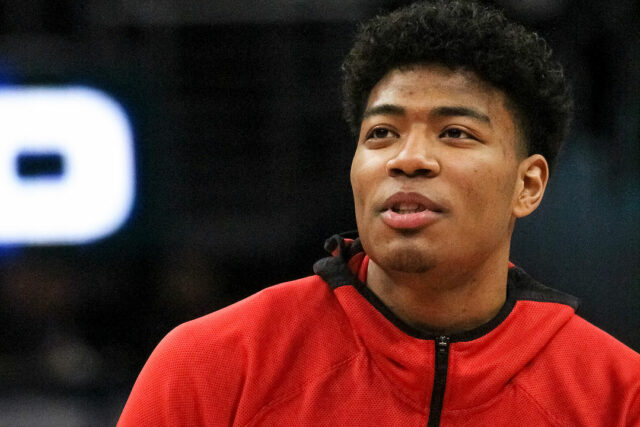
WASHINGTON WIZARDS FORWARD RUI HACHIMURA — MOGAMI KARIYA

RUI Hachimura scored 26 points and Kristaps Porzingis added 22 as the Washington Wizards went on the road and took down the depleted Milwaukee Bucks 118-95 on Sunday night.

Kyle Kuzma also had a big night, finishing with a 10-point, 13-rebound, 11-assist triple-double, the second of his career.

Daniel Gafford and Corey Kispert also finished in double figures, scoring 17 and 12 points respectively for the Wizards, who won their fifth straight game.

The Bucks were without their big three in Giannis Antetokounmpo, Jrue Holiday and Khris Middleton, as well as George Hill.

Mr. Antetokounmpo was ruled out just a few hours before tip with left knee soreness. Bradley Beal also sat out for Washington.

Bobby Portis led the way for Milwaukee in their absence, scoring 19 points and grabbing 10 rebounds. Jevon Carter added 14 points, Grayson Allen scored 13 along with eight assists, and two players who don’t get much playing time took advantage of their opportunities, with rookie MarJon Beauchamp scoring 11 points and AJ Green chipping in 10.

The Wizards quickly built a big lead, up 34-17 after the first quarter, and never looked back, leading by as much as 26.

Washington shot 50% from the field in the first quarter compared with Milwaukee’s 26.1%. The Bucks were particularly outmatched inside early on, as the Wizards held an 18-2 advantage in paint points after one quarter and 36-14 at intermission. Mr. Hachimura scored 16 of his 26 points in the half.

The Wizards, who have won five of their last six games, will remain in Milwaukee for an off day Monday before the two teams match up once again on Tuesday night. The Bucks have lost five of six. — Reuters

No decision on Russia’s potential switch to Asian football confederation

BOTH UEFA and global football’s governing body FIFA had decided in February that all Russian teams — whether national or club sides — would be suspended from participation in their competitions following Russia’s invasion of Ukraine. — DMITRY SADOVNIKOV/WIKIMEDIA

THE RUSSIAN Football Union’s (RFU) Executive Committee members have not expressed their intention to switch to the Asian confederation even as the country remains suspended by European soccer body UEFA, RFU head Alexander Dyukov said.

Both UEFA and global football’s governing body FIFA had decided in February that all Russian teams — whether national or club sides — would be suspended from participation in their competitions following Russia’s invasion of Ukraine.

“Was any member of the Executive Committee in favour of Asia? Nobody expressed this position,” Mr, Dyukov was quoted as saying by Russia’s TASS news agency. Moscow calls its actions in Ukraine a “special operation” but the suspension prevented Russia from qualifying for the 2022 men’s World Cup while the women’s team were barred from participating in the European Championship earlier this year.

The move prompted the RFU to discuss making the switch to the Asian Football Confederation (AFC). But TASS reported the committee that met on Friday decided to create a working group to interact with FIFA, UEFA and other confederations.

“(The) discussion was not about a transfer to Asia… the executive board made a decision to involve all regulators in order to formulate a consolidated position,” Mr. Dyukov added.

The RFU and four Russian clubs had appealed to the Court of Arbitration for Sport (CAS), but their appeals against FIFA and UEFA’s decision to ban them from all competition until further notice were dismissed in July.

The AFC has accepted new members from other confederations in the past, welcoming Australia into their competitions after they left the Oceania confederation in 2006. — Reuters

Subluxation

Two weeks ago, Warriors fans were sent scrambling to their dictionaries in search of the meaning of “subluxation.” Top dog and reigning Finals Most Valuable Player Stephen Curry just suffered a shoulder injury, and followers of the blue and yellow wanted to ascertain how the unfortunate development would affect the Warriors’ playoff hopes. They were expecting the worst in the face of his absence; even at his sharpest, he could not lift the defending champions past mediocrity more than four-fifths into the season. In other words, the foreseeable future looked bleak.

Fast forward to the new year, and the Warriors have surprisingly stayed relatively competitive with Curry on the sidelines. The other day, he was again relegated to mere spectator in their fourth straight victory, which, not coincidentally, all occurred at the Chase Center. For some reason, they’re close to invincible at home, with their 16-2 slate edging the Bucks for the best in the National Basketball Association. On the other hand, they’ve resembled deer in the headlights on the road; they’ve managed to claim only three of 19 contests away from familiar confines.

Make no mistake. The Warriors are progressing sans Curry. They’re far from efficient on offense, although they seem to have learned how to spread the load to Jordan Poole and Klay Thompson during his convalescence. Where they’ve really improved, though, is on defense; with Draymond Green overseeing sets from the middle and ensuring that coverage doesn’t wane, they’ve scratched and clawed their way to wins. Against the Blazers the other day, their outstanding coverage led to triumph off a 14-point turnaround on the payoff period.

For the Warriors, here’s the good news: Curry is scheduled to be reevaluated by the end of the week, and his return to action should be sooner than later. They must be hoping that the experience they gained while he could do no more than wave towels at the end of the bench will do them good in the second half of their 2022-23 campaign. Otherwise, not even their outstanding effort in front of diehard supporters can prevent them from a date with disappointment. They may have the most expensive roster, but if they don’t get significantly better, they won’t be able to do anything when the Larry O’Brien Trophy is pried from their cold dead hands.


Anthony L. Cuaycong has been writing Courtside since BusinessWorld introduced a Sports section in 1994. He is a consultant on strategic planning, operations and human resources management, corporate communications, and business development.

Croatia joins Schengen zone, switches to euro

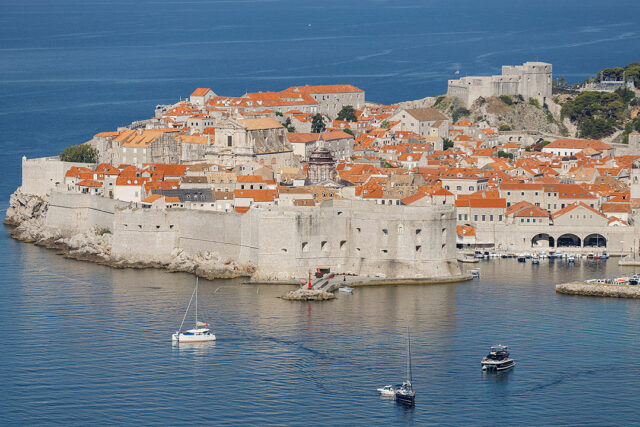
GENERAL VIEW of the Old City of Dubrovnik, Croatia, July 29, 2020. — REUTERS

BREGANA BORDER CROSSING, Croatia — Croatia rang in two historic changes with the new year, as the European Union’s (EU) youngest member joined both the EU’s border-free Schengen zone and the euro common currency, fulfilling longstanding ambitions of close integration with Europe.

At the Bregana border crossing with neighboring Slovenia, police took down signs at midnight and a barrier was lifted up for the last time, before a placard reading “free passage” was installed, symbolizing the end of border checks.

“If there are historical moments, special moments which should provide us with great honor and when we witness the achievement of strategic goals of a state — this is such a day,” Prime Minister Andrej Plenkovic said at a ceremony at the border later on Sunday.

He was joined by European Commission President Ursula von der Leyen, who hailed it as “a day to celebrate”.

“Today Croatia joins the Schengen Area and the eurozone, two immense achievements for the youngest member state of the European Union and both reached on the very same day. So indeed, this is a day for the history books.”

Mr. Plenkovic and Ms. Von Der Leyen later toured the capital Zagreb where they bought coffee in a cafe using euros, which replaced Croatia’s kuna currency. After a server brought their coffees to an outdoor table, Mr. Plenkovic paid with a handful of euro notes, while Ms. Von Der Leyen, seated next to him, applauded.

Croatia entered the EU in 2013. It becomes the 27th country to join the Schengen area, and the 20th to adopt the euro currency.

Finance Minister Marko Primorac touted the advantages of using the euro to lawmakers last month, saying it would strengthen the economy, improve the investment climate and make Croatia more resistant to external shocks. — Reuters

Global economy faces tougher year in 2023, IMF’s Georgieva warns

REUTERS

For much of the global economy, 2023 is going to be a tough year as the main engines of global growth – the United States, Europe and China – all experience weakening activity, the head of the International Monetary Fund said on Sunday.

The new year is going to be “tougher than the year we leave behind,” IMF Managing Director Kristalina Georgieva said on the CBS Sunday morning news program “Face the Nation.”

“Why? Because the three big economies – the US, EU and China – are all slowing down simultaneously,” she said.

In October, the IMF cut its outlook for global economic growth in 2023, reflecting the continuing drag from the war in Ukraine as well as inflation pressures and the high interest rates engineered by central banks like the US Federal Reserve aimed at bringing those price pressures to heel.

Since then, China has scrapped its zero-COVID policy and embarked on a chaotic reopening of its economy, though consumers there remain wary as coronavirus cases surge. In his first public comments since the change in policy, President Xi Jinping on Saturday called in a New Year‘s address for more effort and unity as China enters a “new phase.”

“For the first time in 40 years, China’s growth in 2022 is likely to be at or below global growth,” Ms. Georgieva said.

Moreover, a “bushfire” of expected COVID infections there in the months ahead are likely to further hit its economy this year and drag on both regional and global growth, said Ms. Georgieva, who traveled to China on IMF business late last month.

“I was in China last week, in a bubble in a city where there is zero COVID,” she said. “But that is not going to last once people start traveling.”

“For the next couple of months, it would be tough for China, and the impact on Chinese growth would be negative, the impact on the region will be negative, the impact on global growth will be negative,” she said.

In October’s forecast, the IMF pegged Chinese gross domestic product growth last year at 3.2% – on par with the fund’s global outlook for 2022. At that time, it also saw annual growth in China accelerating in 2023 to 4.4% while global activity slowed further.

Her comments, however, suggest another cut to both the China and global growth outlooks may be in the offing later this month when the IMF typically unveils updated forecasts during the World Economic Forum in Davos, Switzerland.


US ECONOMY ‘MOST RESILIENT’

Meanwhile, Ms. Georgieva said, the US economy is standing apart and may avoid the outright contraction that is likely to afflict as much as a third of the world’s economies.

The “US is most resilient,” she said, and it “may avoid recession. We see the labor market remaining quite strong.”

But that fact on its own presents a risk because it may hamper the progress the Fed needs to make in bringing US inflation back to its targeted level from the highest levels in four decades touched last year. Inflation showed signs of having passed its peak as 2022 ended, but by the Fed’s preferred measure, it remains nearly three times its 2% target.

“This is … a mixed blessing because if the labor market is very strong, the Fed may have to keep interest rates tighter for longer to bring inflation down,” Ms. Georgieva said.

Last year, in the most aggressive policy tightening since the early 1980s, the Fed lifted its benchmark policy rate from near zero in March to the current range of 4.25% to 4.50%, and Fed officials last month projected it will breach the 5% mark in 2023, a level not seen since 2007.

Indeed, the US job market will be a central focus for Fed officials who would like to see demand for labor slacken to help undercut price pressures. The first week of the new year brings a raft of key data on the employment front, including Friday’s monthly nonfarm payrolls report, which is expected to show the U.S. economy minted another 200,000 jobs in December and the jobless rate remained at 3.7% – near the lowest since the 1960s. – Reuters

Russia risks causing new-year IT worker flight with remote working law

 – Russia’s buffeted IT sector risks losing more workers in the new year because of planned legislation on remote working, as authorities try to lure back some of the tens of thousands who have gone abroad without prompting them to cut ties completely.

Having relatively portable jobs, IT workers featured prominently among the many Russians who fled after Moscow sent its army into Ukraine on Feb. 24 and the hundreds of thousands who followed when a military call-up began in September.

The government estimates that 100,000 IT specialists currently work for Russian companies overseas.

Now, legislation is being mooted for early next year that could ban remote working for some professions.

Hawkish lawmakers, fearful that more Russian IT professionals could end up working in NATO countries and inadvertently sharing sensitive security information, have proposed banning some IT specialists from leaving Russia.

But the Digital Ministry said in December that a total ban could make Russian IT firms less effective, and so less competitive: “In the end, whoever can attract the most talented staff, including those from abroad, will win.”


‘NEGOTIATING WITH TERRORISTS’

While many disillusioned young Russians have gone to countries such as Latvia, Georgia or Armenia where the Russian language is widely spoken, several have made a bigger leap – to Argentina.

IT specialist Roman Tulnov, 36, said he did not plan on returning to Russia under any circumstances.

“I had wanted to leave for some time. On Feb. 24, everything became clear. I understood that there was no more life in Russia,” he said, crediting mobilization in particular for the opportunity to work six times zones away and still keep his job.

“Before mobilization, no one thought about giving the go-ahead for people to move to who-knows-where.”

Vyacheslav Volodin, the powerful chairman of Russia’s lower house of parliament or State Duma, has said he wants to see higher taxation for workers who have moved abroad.

Product designer Yulia, 26, estimated that a quarter of her team would rather quit than return to Russia under duress.

“Such a non-alternative choice is a bit like negotiating with terrorists: ‘Come back or we’ll make your job impossible, and for your company and employees’,” she said.

Some expatriate Russians might also be put off paying tax altogether. Personal income tax of 13% is deducted automatically from employees who are resident, but those who work for Russian-based companies from abroad are left to their own devices.

Professional online poker player Sasha, 37, also living in Argentina, said he had now stopped paying Russian taxes.

“When you pay taxes you support the state and its military expansion,” he said. “I’m not paying and don’t plan to.” – Reuters

World welcomes 2023 and leaves a stormy year behind

STOCK PHOTO | Image by Tumisu from Pixabay

The world welcomed the new year with a packed party in Times Square and fireworks soaring above European capitals, while hoping for an end to the war in Ukraine and a return to post-COVID normality in Asia.

It was a year marked by the conflict in Ukraineeconomic stresses and the effects of global warming. But it was also a year that saw a dramatic soccer World Cup, rapid technological change, and efforts to meet climate challenges.

After 2023 descended upon Asia, Africa and Europe, New York rang in the new year in typical style as thousands corralled themselves into pens under pouring rain in Times Square, waiting hours for the ball to drop. A 12-foot (3.7-meter) geodesic sphere made of Waterford crystal triangles slid down a pole atop a 25-story building to mark the calendar change.

Meanwhile, millions watched the accompanying musical acts and countdown on television from dry and warm living rooms around the world.

Tommy Onolfo, 40, a mechanic from nearby Nassau County, said he wore a diaper during his drenched, 14-hour wait in Times Square, as security measures require spectators to deprive themselves of all comforts to maintain a front-row view.

“I’m a lifeguard in the summer so I’m not afraid of water at all,” Onolfo said. “I have my bathroom thing down to a science. I haven’t had to use the diaper yet. It’s just in case.”

Earlier, across the Atlantic, the London Eye turned blue and yellow in solidarity with Ukraine as fireworks saw in midnight in the British capital.

The celebration, which London’s mayor had branded the biggest in Europe, also referenced Queen Elizabeth II, who died in September, the red and white of England’s soccer team, and the rainbow colors of the LGBTQ Pride event, which had its 50-year anniversary in 2022.


SOLEMNITY IN UKRAINE

For Ukraine, there seemed to be no end in sight to the fighting that began when Russia invaded in February.

Numerous blasts were heard in Kyiv and in other places around Ukraine and air raid sirens wailed across the country in the early hours of New Year’s Day.

On Saturday, Russia fired a barrage of cruise missiles that Ukraine’s human rights ombudsman described as “Terror on New Year’s Eve.”

Evening curfews remained in place nationwide, making the celebration of the beginning of 2023 impossible in many public spaces. Several regional governors posted messages on social media warning residents not to break restrictions.

In Kyiv, though, people gathered near the city’s central Christmas tree as midnight approached.

“We are not giving up. They couldn’t ruin our celebrations,” said 36-year-old Yaryna, who was celebrating with her husband, tinsel and fairy lights wrapped around her.

In a video message to mark the New Year, Ukrainian President Volodymyr Zelenskiy, Time Magazine’s 2022 Person of the Year, said: “I want to wish all of us one thing – victory.”

Russian President Vladimir Putin devoted his New Year’s address to rallying the Russian people behind his troops.

Festivities in Moscow were muted, without the usual fireworks on Red Square.

“One should not pretend that nothing is happening – our people are dying (in Ukraine),” said 68-year-old Yelena Popova. “A holiday is being celebrated, but there must be limits.” Many Muscovites said they hoped for peace in 2023.

Elsewhere in Europe, fireworks exploded over the Parthenon in Athens, the Brandenburg Gate in Berlin, and the Arc de Triomphe in Paris, where crowds gathered on the Champs-Elysees avenue to watch the French capital’s first New Year fireworks since 2019.

But, like many places, the Czech capital Prague was feeling the pinch economically and so did not hold a fireworks display.

“Holding celebrations did not seem appropriate,” said city hall spokesman Vit Hofman.


COVID DAMPENS PARTY IN CHINA

Earlier, Australia kicked off the celebrations with its first restriction-free New Year’s Eve after two years of COVID disruptions. Sydney welcomed the New Year with a typically dazzling fireworks display, which for the first time featured a rainbow waterfall off the Harbour Bridge.

In China, rigorous COVID restrictions were lifted only in December as the government abruptly reversed its “zero-COVID” policy, a switch that has led to soaring infections and meant some people were in no mood to celebrate.

While China’s official death toll is barely ticking higher, UK-based health data firm Airfinity estimated last week that around 9,000 people in the country are probably dying each day from COVID.

“This virus should just go and die, cannot believe this year I cannot even find a healthy friend that can go out with me,” wrote one social media user based in eastern Shandong province.

But in the city of Wuhan, where the pandemic began three years ago, thousands of people gathered to despite a heavy security presence.

Barricades were erected and hundreds of police officers stood guard. Loudspeakers blasted out a message on a loop advising people not to gather. But the large crowds of revelers took no notice.

In Shanghai, many thronged the historic riverside walkway, the Bund.

“We’ve all travelled in from Chengdu to celebrate in Shanghai,” said Da Dai, a 28-year-old digital media executive who was visiting with two friends. “We’ve already had COVID, so now feel it’s safe to enjoy ourselves.” – Reuters

Yoon says South Korea, US discussing exercises using nuclear assets

South Korean President Yoon Suk-yeol. — REUTERS

 – South Korea and the United States are discussing possible joint planning and exercises using U.S. nuclear assets in the face of North Korea‘s growing nuclear and missile threats, South Korean President Yoon Suk-yeol said in a newspaper interview.

The Chosun Ilbo newspaper quoted Yoon as saying the joint planning and exercises would be aimed at a more effective implementation of the US “extended deterrence.”

The term means the ability of the US military, particularly its nuclear forces, to deter attacks on US allies.

“The nuclear weapons belong to the United States, but planning, information sharing, exercises and training should be jointly conducted by South Korea and the United States,” Yoon said, adding Washington is also “quite positive” about the idea.

Yoon‘s remarks come a day after North Korean state media reported that its leader Kim Jong Un called for developing new intercontinental ballistic missiles (ICBMs) and an “exponential increase” of the country’s nuclear arsenal to counter US-led threats amid flaring tension between the rival Koreas.

The North’s race to advance its nuclear and missile programs has renewed debate over South Korea‘s own nuclear armaments, but Yoon said maintaining the Treaty on the Non-Proliferation of Nuclear Weapons remained important.

At a meeting of the ruling Workers’ Party last week, Kim said South Korea has now become the North’s “undoubted enemy” and rolled out new military goals, hinting at another year of intensive weapons tests and tension.

Inter-Korean ties have long been testy but have been even more frayed since Yoon took office in May.

On Sunday, North Korea fired a short-range ballistic missile off its east coast, in a rare late-night, New Year’s Day weapons test, following three ballistic missiles launched on Saturday, capping a year marked by a record number of missile tests.

Yoon‘s comments on the nuclear exercises are the latest demonstration of his tough stance on North Korea. He urged the military to prepare for a war with “overwhelming” capability following North Korean drones crossing into the South last week.

Analysts say the tensions could worsen.

“This year could be a year of crisis with military tension on the Korean peninsula going beyond what it was like in 2017,” said Hong Min, a senior researcher at the Korea Institute for National Unification, referring to the days of the “fire and fury” under the Trump administration.

“North Korea‘s hardline stance…and aggressive weapons development when met with South KoreaUS joint exercises and proportional response could raise the tension in a flash, and we cannot rule out what’s similar to a regional conflict when the two sides have a misunderstanding of the situation,” Hong said. – Reuters

Some in China return to regular activity after COVID infections

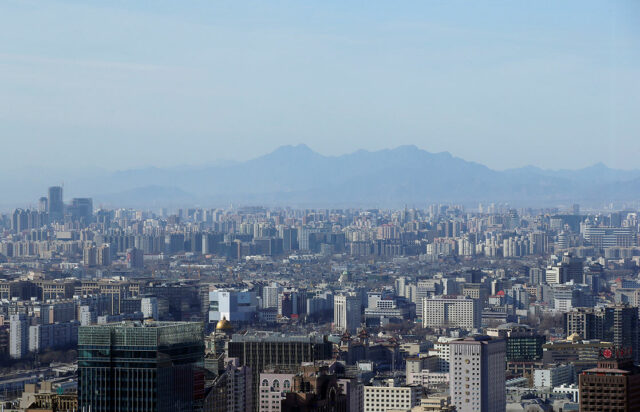
A GENERAL VIEW shows Beijing’s skyline on a sunny day in this file photo. — REUTERS

BEIJING — Some people in China’s key cities of Beijing, Shanghai and Wuhan braved the cold and a spike in coronavirus disease 2019 (COVID-19) infections to return to regular activity on Monday, confident of a boost to the economy as more recover from infections.

Among those who gathered to sled or ice skate on a frozen lake in the capital’s Shichahai Lake Park were some upbeat about the opening-up, after China dropped stringent “zero-COVID” measures on Dec. 7 to adopt a strategy of living with the virus.

However, a wave of infections has since erupted nationwide, after borders had been kept all but shut for three years amid a strict regime of lockdowns and relentless testing.

“After the end of this lockdown, we don’t have to scan the health code any more, nor do we have to check the travel code,” said one of those in the park, Yang, who gave only one name.

“So, we are free now.”

Also at the lake was Zhong, a 22-year-old college student, who said he had stayed home for two or three weeks after getting infected. “Now I can go out and it’s good timing for the New Year’s Day holiday,” he added. “I want to go around in Beijing, have a look and feel the festive mood.”

Monday was a public holiday, but traffic in the capital has built up again in the last few days as people flock to outdoor sites, although business is still slow in some smaller, confined locations, such as restaurants.

The owner of a Beijing seafood restaurant said patrons had not returned to full strength.

“I expect this situation to linger through the Lunar New Year holiday,” said Chen, who gave only his surname. “I am counting on business to be more normal after the holiday.”

In the central city of Wuhan, where the pandemic began three years ago, people were not as anxious any more, a man surnamed Wu told Reuters.

“Work production, life and entertainment are all getting back to normal levels,” added Mr. Wu, a tutor at a private training center.

LUNAR NEW YEAR TRAVEL
China’s biggest holiday, Lunar New Year, begins on Jan. 21 this year, when the railway network is expected to carry 5.5 million passengers, state broadcaster CCTV has said.

As expectations for holiday travel grow, authorities at Tibet’s spectacular Potala Palace said it would open for visitors from Jan. 3, after shutting last August due to a COVID-19 outbreak.

Some hotels in the southern tourist resort of Sanya are fully booked for Lunar New Year, media have said.

In recent days state media have sought to reassure the public that the COVID-19 outbreak was under control and nearing its peak.

Infections in the cities of Beijing, Guanzhou, Shanghai and Chongqing are close to ending, news outlet Caixin said on Sunday, citing researchers in the Chinese commercial hub.

But infections will peak in the urban regions of Sichuan, Shaanxi, Gansu and Qinghai in the latter half of January, they added.

More than 80% of those living in southwestern Sichuan have been infected, the province’s Center for Disease Control and Prevention has said.

But Monday’s single new COVID death — flat from the previous day — among China’s population of 1.4 billion does not match the experience of other countries after they re-opened.

The official death toll of 5,250 since the pandemic began compares with more than 1 million in the United States. Chinese-ruled Hong Kong, a city of 7.4 million, has reported more than 11,000 deaths.

About 9,000 people in China are probably dying each day from COVID, health data firm Airfinity said last week, while cumulative deaths since Dec. 1 have probably reached 100,000, with infections at 18.6 million.

Airfinity, which is based in Britain, expects China’s COVID cases to reach their first peak on Jan. 13, with 3.7 million daily infections.

China has said it only counts deaths of COVID patients caused by pneumonia and respiratory failure as being related to COVID.

The relatively low death count is also inconsistent with rising demand reported by funeral parlors in several cities. — Reuters

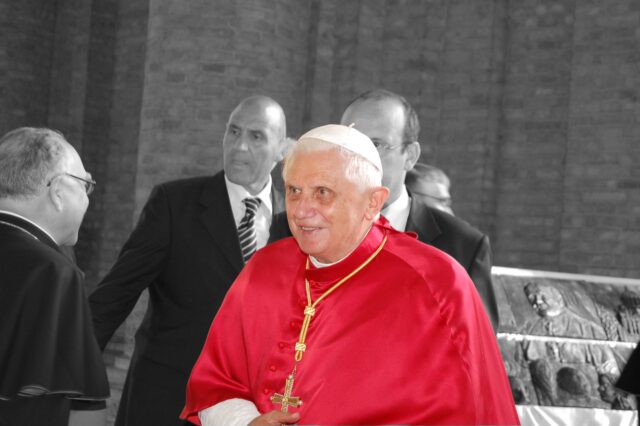
FACTBOX | Former Pope Benedict, his papacy and resignation

STOCK PHOTO | Image by Francesco Nigro from Pixabay

 – Following are some facts about former Pope Benedict, who died on Saturday:

– Benedict, the first German pope in 1,000 years, was elected on April 19, 2005 to succeed the widely popular Pope John Paul II, who reigned for 27 years. Cardinals chose him from among their number seeking continuity and what one called “a safe pair of hands”. For nearly 25 years, as Cardinal Joseph Ratzinger, he was the powerful head of the Vatican’s doctrinal office, the Congregation for the Doctrine of the Faith (CDF).

– An uncompromising theological conservative, Ratzinger left Germany and his post as archbishop of Munich in 1982 to head the CDF. His disciplining of Latin American priests who promoted Marxist-influenced Liberation Theology bestowed him with the sobriquet “God’s Rottweiler”.

– A weak administrator who admitted a “lack of resolve in governing and decision taking,” his eight-year papacy was marked by missteps and a leaks scandal. He antagonized Muslims by appearing to suggest that Islam was inherently violent. He angered Jews by rehabilitating a Holocaust denier and prompted international dismay by saying the use of condoms in the fight against AIDS only worsened the problem. The 2012 “Vatileaks” scandal helped unravel his papacy. Paolo Gabriele, Benedict’s butler, leaked secret documents that revealed corruption and feuding within the Vatican. Benedict said he stood down because bad health prevented him from bearing the full weight of the papacy.

– Child abuse scandals hounded most of his papacy but he is credited with jump-starting the process to discipline or defrock predator priests after a more lax attitude under John Paul II. He ordered an inquiry into abuse in Ireland, which led to the resignation of several bishops. He disciplined the late Father Marcial Maciel, founder of the Catholic order the Legionaries of Christ and one of the Church’s most notorious predators. The Vatican under Pope John Paul II had failed to take action against Maciel despite overwhelming evidence of his crimes.

– In 2022, an independent report in Benedict’s native Germany alleged that he had failed to take action in four cases when he was Archbishop of Munich between 1977 and 1982. The frail former pope acknowledged in an emotional personal letter that errors had occurred and asked for forgiveness. His lawyers argued in a detailed rebuttal that he was not directly to blame.

– Although he promised to keep a low profile after his retirement, Benedict wrote, gave interviews and, unwittingly or not, became a lightning rod for conservatives who opposed Pope Francis. Some loyalists failed to accept that he had resigned the papacy willingly and continued to consider him “my pope”. The “two popes” confusion was compounded because he chose to continue wearing white and be known as “pope emeritus”. The resulting polarization led to calls from both conservatives and liberals for changes in Church law to regulate the functions and status of former popes.

– Benedict produced more than 60 books between 1963, when he was a priest, and 2013, when he resigned. “In reality I am more of a professor, a person who reflects and meditates on spiritual questions,” Benedict said after his resignation.

– He played piano and had a preference for Mozart and Bach. As a classicist, he frowned on rock and roll as an “expression of base passions” and once called popular music a “cult of banality”. Pope Francis, by contrast, also loves classical music but appreciates Italian pop songs from the early 1960s and also likes tango music from his native Argentina.

Reuters

Russian drones attack critical infrastructure in and around Kyiv – officials

Army soldier figurines are displayed in front of the Ukrainian and Russian flag colors background in this illustration taken, Feb. 13, 2022. — REUTERS/DADO RUVIC/ILLUSTRATION

 – Waves of Russian drones targeted critical infrastructure in Ukraine’s capital of Kyiv and surrounding areas on Monday, officials said, as Russia extended its constant bombardment into the second day of 2023.

Ukrainians cheered from balconies as their air defenses blasted Russian missiles and drones out of the sky in the first hours of the New Year, which Russia ushered in by attacking civilian targets across Ukraine.

“Glory to Ukraine! Glory to heroes!” some shouted as air raid sirens wailed.

Ukrainian forces shot down 45 Iranian-made Shahed drones fired by Russia on the first night of the year, President Volodymyr Zelenskiy said on Sunday, praising Ukrainians for showing gratitude to the troops and one another.

Drones, missiles, everything else will not help them,” he said of the Russians. “Because we stand united. They are united only by fear.”

In a stern New Year’s speech, Russian President Vladimir Putin signaled no let-up in his assault on Ukraine, however.

By 3 a.m. (0100 GMT), Ukraine’s air defense systems destroyed 20 air objects above Kyiv, its military administration said.

“It is loud in the region and in the capital: night drone attacks,” Kyiv Governor Oleksiy Kuleba said.

Russians launched several waves of Shahed drones. Targeting critical infrastructure facilities. Air defense is at work,” he said on the Telegram messaging app.

Earlier, one person was wounded by debris from a drone destroyed over Kyiv that hit a road and damaged a building in a northeastern district of the capital, Mayor Vitali Klitschko said.

A 19-year-old man was taken to hospital in the mainly residential Desnianskiy district, on the left bank of the Dnipro River, Klitschko said on the Telegram app.

Reuters was not able to independently verify the information.

The regional military command in Ukraine’s east said air defense systems destroyed nine of the Iranian-made drones over the Dnipropetrovsk and Zaporizhzhia regions by the early hours of Monday.


NEW YEAR IN THE TRENCHES

On Twitter, the US ambassador to Ukraine, Bridget Brink, said, “Russia coldly and cowardly attacked Ukraine in the early hours of the New Year. But Putin still does not seem to understand that Ukrainians are made of iron.”

Troops toasted the New Year on the front line in Ukraine’s eastern province of Donetsk. One soldier, Pavlo Pryzhehodskiy, 27, played a song he had written on a guitar after 12 of his comrades were killed in a single night.

“It is sad that instead of meeting friends, celebrating and giving gifts to one another, people were forced to seek shelter, some were killed,” he told Reuters.

“It is a huge tragedy that cannot ever be forgiven. That is why the New Year is sad.”

In a nearby trench, soldier Oleh Zahrodskiy, 49, said he had volunteered after his son was called up as a reservist. Now, his son is in hospital, fighting for his life with a brain injury, while his father mans the front.

“It is very tough now,” he said, holding back tears.


‘HAPPY NEW YEAR’

Kyiv‘s police chief, Andrii Nebytov, posted a photo on the Telegram app, showing what was described as a piece of a drone used in an attack on the capital, with a handwritten sign on it in Russian reading “Happy New Year”.

“This wreckage is not at the front, where fierce battles are taking place, this is here, on a sports grounds, where children play,” Mr. Nebytov said.

Russia has flattened Ukrainian cities and killed thousands of civilians since Putin ordered his invasion in February, saying Ukraine was an artificial state whose pro-Western outlook threatened Russia‘s security.

Russia, which denies targeting civilians, has since claimed to have annexed about a fifth of Ukraine.

Ukraine has fought back with Western military support, driving Russian forces from more than half the territory they seized. In recent weeks, the front lines have been largely static, with thousands of soldiers dying in intense warfare.

Russia says its aerial strikes aim to reduce Ukraine’s ability to fight; Kyiv says they have no military purpose and are intended to hurt civilians, a war crime.

“The main thing is the fate of Russia,” Mr. Putin said in a New Year’s Eve speech to a group dressed in military uniform, instead of the event’s normal backdrop of the Kremlin walls.

“Defense of the fatherland is our sacred duty to our ancestors and descendants. Moral, historical righteousness is on our side.”

A Ukrainian drone attack damaged a power facility in Russia‘s Bryansk region bordering Ukraine, its governor said on Monday, adding that there were no casualties.

Russia said last week that it shot down a Ukrainian drone close to one of long-range bomber bases deep inside its territory and that three air force personnel had been killed.

Reuters was not able to independently verify the report. – Reuters

ADVERTISEMENT
ADVERTISEMENT