Home Blog Page 5443

BSP signals more tightening in 2023

MOTORISTS drive past the Christmas lights along Jose Abad Santos Avenue in San Fernando, Pampanga, Nov. 7. The Philippine economy is expected to grow by 6-7% in 2023. — PHILIPPINE STAR / MIGUEL DE GUZMAN

By Keisha B. Ta-asan, Reporter

THE BANGKO SENTRAL ng Pilipinas (BSP) signaled further tightening in 2023, as it aims to bring inflation to near 3% by the third quarter.

“Our goal is to have inflation between 2-4%, preferably closer to 3% than to 4% by the third quarter of next year, and then the fourth quarter until 2024 will also be like that. That’s our goal,” BSP Governor Felipe M. Medalla told reporters on Tuesday.

Inflation at the national level accelerated to a 14-year high of 8% in November, bringing the full-year average to 5.6%. This is lower than the BSP’s 5.8% full-year forecast but well above its 2-4% target.

Mr. Medalla earlier said there may be rate hikes in the Monetary Board’s (MB) first two meetings in 2023. The schedule of the MB meetings for 2023 have yet to be released.

Asked if the MB will continue to raise interest rates next year, Mr. Medalla said a pause in the tightening cycle is unlikely after its first two meetings next year.

“I would say we’re data dependent, but clearly…one cannot rule out that after two meetings next year, there’d be no more rate hikes. But given the nature of surprises, one can never say never,” he said in a mix of Tagalog and English.

“So, I think it’s safe to say that the terminal policy rate is higher than what we have now. How much higher is what we don’t know,” he said, adding that the terminal policy rate could be at 6% by end-2023.

The BSP raised borrowing costs by 50 basis points (bps) to 5.5% last week, bringing the policy rate to the highest since November 2008 when it was at 6%.

Since May, the Monetary Board has hiked rates by a total of 350 bps.

According to Mr. Medalla, the current policy rate of the BSP is “quite high” already.

He also said the BSP may consider smaller rate hikes next year, noting there is a higher chance of 25-bp or 50-bp rate increases at its next two policy meetings.

However, there are a lot of uncertainties, Mr. Medalla said, and these would affect the BSP’s policy decisions moving forward.

“Who could’ve forecasted that three months before it happened, the Fed will have four 75 (bps)? In forecasting, you have to always be prepared for anything. That’s why we always say we’re very data dependent,” he added.

The US Federal Reserve has increased its benchmark policy rates by 425 bps, which brought the policy rate to 4.25-4.5%.

Asked if the dollar is starting to weaken against the peso, Mr. Medalla said it is not surprising given that the pace of rate hikes by the US central bank is beginning to slow.

This as the Philippine peso on Tuesday closed at P55.24 against the US dollar, up by 17 centavos from its P55.41 finish on Monday.

Year to date, the peso has weakened by 8.3% or P4.24 from its P51-a-dollar close on Dec. 31, 2021.

RRR CUT NEXT YEAR POSSIBLE
Meanwhile, the BSP may consider cutting banks’ reserve requirement ratio (RRR) by June next year, if inflation slows down as projected.

“We don’t want to confuse the markets. We don’t want to be raising rates and cutting RRR,” Mr. Medalla said.

“In reality, we should be able to do that because all we have to do is borrow more to mop up the liquidity cost by the RR cut. But to avoid confusing the market, it has to wait when we’re no longer in an increasing mode,” he said.

If there are indications that inflation will fall below 4%, Mr. Medalla said there may be an RRR cut before end-June.

The BSP earlier committed to bringing down the RRR of big banks to single digits by 2023.

The RRR for big banks is currently at 12%, one of the highest in the region. Reserve requirements for thrift and rural lenders are at 3% and 2%, respectively.

BoP records $756-million deficit in November

THE PHILIPPINES posted a balance of payments (BoP) deficit in November, as more dollars flowed out of the country to pay for the government’s foreign debt and the trade deficit continued to widen.

Data released by the Bangko Sentral ng Pilipinas (BSP) late on Monday showed the BoP — the summary of the country’s economic transactions with the rest of the world within a given period — stood at a $756-million deficit last month. This was wider than the $123-million gap a year ago, and the biggest since the $2.34-billion gap in September.

“The BoP deficit in November 2022 reflected outflows arising mainly from the National Government’s payments of its foreign currency debt obligations and the BSP’s net foreign exchange operations,” the central bank said in a statement.

Philippines: Balance of payments positionHowever, the November deficit was a reversal of the $711-million surplus in October that was largely brought about by the Marcos administration’s first bond issuance which raised $2 billion.

“BoP swung back to deficit with the National Government servicing foreign debt obligation all while the peso was starting to recover from its weakest levels,” Security Bank Corp. Chief Economist Robert Dan J. Roces said in a Viber message.

The peso rebounded to the P56-a-dollar mark in November, closing the month at P56.56 on Nov. 29, up by P1.41 or 2.5% from its P57.97 finish on Oct. 28.

In the 11-month period, the BoP posted a $7.9-billion deficit, a turnaround from the $353-million surfeit in the same 11 months of 2021.

“Based on preliminary data, this cumulative BoP deficit was due to the widening trade in goods deficit as goods imports continued to surpass goods exports on the back of the increase in international commodity prices and resumption in domestic economic activities,” the BSP said. 

Latest data showed the trade deficit widened to $49.98 billion as of end-October, from the $32.40-billion gap a year ago. Imports rose 22.7% to $115.99 billion in the 10-month period, while exports grew by 6.3% year on year to $66.01 billion.

“The year-to-date levels, on the other hand, shows how imports growth are outpacing exports with local demand stronger during the holiday season, while external demand is dampened mostly by China’s lockdowns, US inflation, and global slowdowns,” Mr. Roces said.

BSP data also showed gross international reserves (GIR) reached $95.1 billion as of end-November, up 1.17% from $94 billion in the prior month.

The dollar buffers are enough to service 7.2 months’ worth of imports of goods and payments of services and primary income.

The GIR can also cover up to 5.8 times the country’s short-term external debt based on original maturity and 3.8 times based on residual maturity.

“Moving forward, the BoP may remain in negative territory as external demand will remain down in the interim with our largest trading partner, China, just beginning to pivot towards looser curbs,” Mr. Roces said. 

Earlier this month, China began dropping its “zero-COVID” policy,” which included strict lockdowns and testing. However, health experts said China may face a large wave of coronavirus infections in the next few months.

“For the coming months, especially in December, BoP data could still improve with the expected seasonal increase in the country’s structural inflows,” Rizal Commercial Banking Corp. Chief Economist Michael L. Ricafort said in a note.

He cited remittances from migrant Filipino workers, foreign tourism receipts, as well as revenues from business process outsourcing and Philippine Offshore Gaming Operators, among others.

The BSP earlier said it expects the country to post a wider BoP deficit this year as the global outlook is clouded with uncertainty.

The country’s BoP is now expected to end the year at a deficit of $11.2 billion or equivalent to -2.8% of gross domestic product (GDP), bigger than the previous projection of a $8.4-billion deficit (-2% of GDP) announced in September.

The BSP projected the GIR to hit $93 billion by end-2022 and by end-2023, lower than the September projections of $99 billion and $100 billion, respectively. — Keisha B. Ta-asan

Corporations face higher fines for failure to disclose beneficial ownership

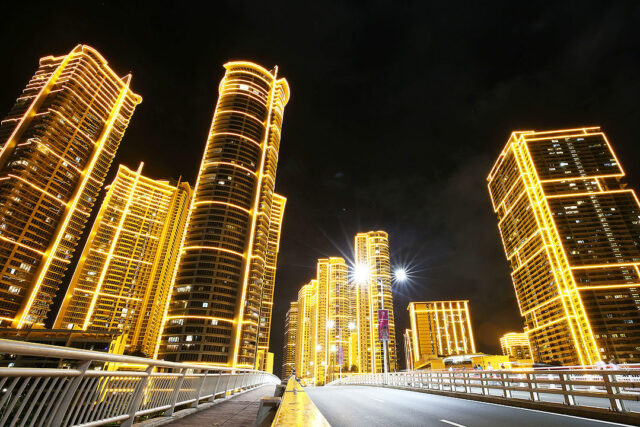
BUILDINGS are seen from the Estrella-Pantaleon Bridge in Makati City, Dec. 4, 2022. — PHILIPPINE STAR/ MIGUEL DE GUZMAN

CORPORATIONS that do not disclose their beneficial owners will have to pay higher penalties, as well as face nonfinancial penalties, starting next year.

The Securities and Exchange Commission (SEC) issued Memorandum Circular No. 10, which increased the penalties on corporations that fail to disclose their beneficial ownership without any lawful cause. The circular will take effect on Jan. 1.

“It has been observed that despite the promulgation of the 2019 revision on the GIS (general information sheet) to include beneficial ownership information, a significant number of corporations have yet to declare their beneficial owners with the Commission,” the regulator said.

Aside from higher fines, the SEC said additional nonfinancial sanctions should be imposed on corporations “to make them proportional, effective, and dissuasive for noncompliance.”

This is in line with the recommendation of the Financial Action Task Force (FATF), which placed the Philippines in its “gray list” of jurisdictions subjected to increased monitoring for “dirty money” risks. It has been on the list since June 2021.

Under the circular, stock corporations with retained earnings of less than P500,000 will face fines ranging from P50,000 for the first violation to P500,000 for the fourth and subsequent violations. This is significantly higher than the previous penalties ranging from P10,000 to P100,000.

Nonstock corporations which have a fund balance of less than P500,000 will now pay a fine of P25,000 for the first violation, from P5,000 previously. The penalty will rise to P250,000 for the fourth and subsequent violations, from P50,000 previously.

Meanwhile, the SEC retained the fines for stock and nonstock corporations which have a retained earnings or fund balance of P500,000 up to P10 million. These corporations may pay up to four times the penalties imposed on those with retained earnings of less than P500,000.

The SEC will slap an additional fine of P1,000 on the corporation for each day of delay in the submission of the beneficial ownership information as a continuing violation. However, this may not exceed P2 million.

If found to have submitted false beneficial ownership information, a corporation may be penalized up to P2 million and “subsequently dissolved.”

Directors and officers of the corporation will also face higher penalties.

For the first violation, the company’s directors, trustees and officers will be fined P10,000 (from P5,000 previously). This will go up to P100,000 (from P50,000 previously) for the fourth and succeeding violations.

If found responsible for noncompliance of the beneficial ownership information disclosure, the directors, trustees and officers may face a fine of up to P200,000 each. They will also be disqualified from being appointed as directors, trustees and officers for five years.

The SEC can also revoke the corporation’s certificate of incorporation if it finds willful violation of this circular.

The SEC said the circular will also be applied to foreign corporations.

The GIS should now only be submitted through SEC’s Electronic Filing and Submission Tool as over-the-counter or mailed submissions will no longer be accepted. — Justine Irish D. Tabile

PEZA-approved investment pledges surge this year

STOCK PHOTO | Image by Freepik

INVESTMENT pledges approved by the Philippine Economic Zone Authority (PEZA) more than doubled this year, thanks to several big-ticket projects.

The PEZA in a statement said it approved 198 projects that are expected to generate P140.7 billion this year, 103% higher than the P69.3 billion in 2021.

With this, the investment promotion agency surpassed its 6.7% growth target for 2022.

“Despite the 29.85% decline in the first semester of the year 2022 compared to the first semester of 2021, we never lost hope that we will recover,” PEZA Officer-in-Charge Tereso O. Panga said.

“With the big-ticket investments that were prequalified by the Board for endorsement to the FIRB (Fiscal Incentives Review Board), we were able to record a positive increase in investments in 2022.”

The PEZA said investment approvals this year were the highest in four years or since the P140.2 billion recorded in 2018.

“At the rate we are going now, PEZA has achieved this year the level of annual investments approved in 2018. That means that the country’s ecozones and high-performance investments are back to the pre-pandemic, even surpassing the 2018 level,” Mr. Panga said.

The higher investments also reflect the improvement in the economic and political climate, he added.

At its Dec. 13 meeting, the PEZA Board approved 13 new and expansion projects worth P83.651 billion.

Three of these projects are by ecozone developers while 10 are by ecozone locators such as export manufacturing and information technology service enterprises.

According to PEZA, these projects will be located in Taguig City, Pangasinan, Cavite, Batangas, Laguna, Cebu, and Negros Occidental.

The investments mainly came from Japan, Singapore, the Netherlands, the United Kingdom, the United States, India, South Korea, the Republic of China, the British Virgin Islands, and Taiwan.

Philippine Chamber of Commerce and Industry President George T. Barcelon is hopeful the country will continue to attract more foreign investments next year.

“I think with all the efforts that the government has put in — I see that President Ferdinand R. Marcos, Jr. has been active in promoting the country for investment — so I would like to think that it will continue next year,” he said in a phone interview.

However, Mr. Barcelon noted foreign investments may slow next year as the global economy faces a more challenging outlook.

“It’s known now that the European economic situation is not quite optimistic, so that would maybe affect some of the investments that we will be expecting… Similar to North America, the recent increase in interest rates has put a halt to some of the optimistic projections for 2023,” he said.

Mr. Barcelon said the Philippine government still has to address concerns of investors, such as power availability and high power rates, among others.

Mr. Panga, on the other hand, is confident that more foreign direct investments will enter the country in 2023.

“What is important is we keep building and sustaining the confidence of investors and the country’s competitiveness in investment promotions and facilitations,” Mr. Panga said.

The Philippine economy grew by 7.7% in the first nine months of the year, putting it on track to surpass the government’s 6.5-7.5% full-year target.

“We are… actively engaging various government agencies and industry partners among others to aggressively promote the Philippines. We need to get our act together; we cannot do this alone. By doing that, we can achieve regulatory coherence and enhance further ease of doing business in the ecozones,” Mr. Panga said. — Arjay L. Balinbin

A 33-year process to see print

YVETTE FERNANDEZ (left) with book illustrator Aldy Aguirre. — YVETTE FERNANDEZ

Yvette Fernandez’s children’s book is a bit of a Christmas miracle 

YVETTE FERNANDEZ (left)
with book
illustrator
Aldy Aguirre. — YVETTE FERNANDEZ

“ONCE upon a December evening,” reads the first line of Yvette Fernandez’s not-quite-new children’s story. Thirty-three years after it was written, the story following a little bear, a wooden boy, golden-haired doll, and a tin soldier, has finally been published.

In 1989, Ms. Fernandez, then a journalism student at the University of the Philippines-Diliman, had an assignment for her English class. “As a journalist, I am used to writing reality and facts,” Ms. Fernandez told BusinessWorld in an interview via Zoom. “So, I said, ‘Oh no! What am I going to write?”

Her siblings suggested that her writing assignment be a story about toys.

“My sister [Lara] was 11 at the time — she did some illustrations. And then my other sister [Jackie, who] was a year younger than me, did the cover,” Ms. Fernandez recalled. “And then we photocopied it, and we gave it as Christmas presents to our family and friends. And then after that, every year we would e-mail the story to my friends.”

The story was also adapted into a Christmas play at their parish.

After a few years, the copy of the story was misplaced, and that seemed like the end of that.

Until, that is, a mundane household task turned out to be what some might consider a “Christmas miracle.”

“I did not know where it was until about two years ago when my sister [Lara] found a pile of diskettes,” Ms. Fernandez said. “[She] converted the files herself. She had an old computer with a floppy disk drive and then copied them to another computer.”

And the story was found.

A DREAM PROJECT
“We always dreamt of having it printed one day,” Ms. Fernandez, who is a published book author, said.

“We never had a real title for the book. I think when we first gave it [as a present] way back then it was called, Once Upon a Wintery Evening. So, the actual first sentence was ‘Once upon a wintery evening.’ And then, just very recently, when it was on the proofs, we changed ‘wintery’ to ‘December.’ Because ‘wintery’ was so foreign,” Ms. Fernandez said.

The title was finalized in the last month before printing.

“For the title, I wanted it to have the idea of Christmas in it. So, we just changed it to The Christmas Toys,” she said.

As mentioned earlier, the story follows four characters — a little bear, a wooden boy, a golden-haired doll, and a tin soldier — who each share their stories about Christmas and discover its true meaning.

The choice of characters came together when she started writing all those decades ago.

“I’m not quite sure how it came out to be that way. I just had the first sentence in my head and sat down and wrote it,” she said.

As none of the original illustrations still exist, the printed book was illustrated by Aldy Aguirre whom the author reached out to online. They worked on the book, corresponding virtually, for two years. 

The net proceeds of the book will go to the Carewell Community Foundation, a nonprofit organization that provides support and education for cancer patients and their families. The organization was established by the author’s late sister, Jessica “Jackie” Fernandez-Suntay, who passed away from cancer in 2005. 

“They will use it for different wellness programs they have. They have a lot of classes and talks for cancer patients, survivors, and their families,” Ms. Fernandez said.

With The Christmas Toys, Ms. Fernandez hopes that children and families remember the experience of camaraderie and friendship and the meaning of the first Christmas.

“Sometimes in the busyness of life, people forget what the first Christmas was [all about] and hopefully people remember that,” she said.

The Christmas Toys is priced at P850. For inquires, visit Yvette Fernandez’s Facebook page. Copies are also available at the BenCab Museum (http://www.bencabmuseum.org/) in Benguet. — Michelle Anne P. Soliman

Can the show go on? Britain’s theaters fear the dark

CAST MEMBERS perform during the Christmas Pantomime Beauty and the Beast at Mercury Theatre, in Colchester, Britain, Nov. 25 in this screen grab taken from a video. — MERCURY THEATRE/HANDOUT VIA REUTERS

LONDON — British theaters are negotiating with energy suppliers, investing in hot water bottles, and dusting off generators as they live in dread of blackouts and utility bills they cannot pay.

Their problems echo those across society as the Ukraine war and its impact on energy supplies have exacerbated a cost-of-living crisis in Britain, where inflation rates are among the highest in the developed world.

People want escapist fun more than ever, and musicals and Christmas shows are drawing record audiences, but attendance figures for the year overall lag pre-pandemic levels and pantomime jokes about utility bills generate nervous laughter.

Steve Mannix, executive director at the Mercury Theater in Colchester, to the northeast of London, says half in earnest that he has told the cast of Beauty and the Beast to stick to the script for fear of running over time: the emergency back-up generators waiting in the wings have only three hours of capacity.

“In 37 years in this industry, this is the hardest,” Mr. Mannix said.

Even after a £14 million ($17 million) refit to install triple glazing, low energy lights, and solar panels that has put the theater in the country’s top 25% of environmentally friendly public buildings, Mr. Mannix says its cash reserves will run out in six months’ time unless the government provides more help.

The Mercury Theater’s annual energy bill is set to reach £120,000 ($147,432), up from £40,000 last year.

It cannot pass on the extra cost, in part because many tickets were sold months in advance, and in part because theater-goers have limited cash to spare.

“We know this is a difficult time for theaters and we remain firmly on their side,” a government spokesperson said by e-mail, without specifying whether energy and tax relief for the arts would be extended.

The relief is currently expected to decrease at the start of April.

HOT WATER BOTTLES
Figures vary as some London theaters benefit from tourists lured by the sterling’s weakness while classical music and more experimental theater suffer the biggest audience declines.

But overall, tickets sales for some of the country’s top theaters were down 38% in the three months to August from the pre-COVID average, according to data providers The Audience Agency. A brief improvement earlier this year vanished as the cost-of-living crisis took hold.

Nine out of 10 theaters are worried for their future, with eight out of 10 saying they need deep cost cuts to survive, research commissioned by Ecclesiastical Insurance and shared with Reuters showed.

Theaters rely on insurance in case of cancellation, for instance because of blackouts, though premiums have also risen.

Ecclesiastical commissioned research by OnePoll, which interviewed representatives of 100 theaters and found nearly half were renegotiating suppliers’ contracts, reducing opening hours and reducing staff hours.

Even the big private theater groups are worried.

Trafalgar Theaters, which operates 13 venues across Britain, including in London, said in e-mailed comments it had so far seen a 200% increase in energy costs.

“Theater operators are having to look at all costs and all revenue streams to remain viable,” it said.

In the small independent venues, where budgets have always been stretched to breaking point, the battle to survive continues.

“Energy strategy — we bought some hot water bottles. That’s about it. We’re just struggling on,” said Neil McPherson, artistic director at the Finborough Theater based in a west London pub. — Reuters

Arts & Culture (12/21/22)


CCP celebrates Simbang Gabi, Christmas Eve mass

THE CULTURAL Center of the Philippines (CCP) is celebrating the traditional Simbang Gabi by going hybrid with onsite and online masses. The Misa de Gallo (dawn masses) are being held daily until Dec. 24 at 5 a.m. at the CCP Main Building Ramp, in partnership with Our Lady of Sorrows Parish. For details on the online masses, visit the CCP Facebook page (https://www.facebook.com/culturalcenterofthephilippines). The series of masses will culminate with the Christmas Eve Mass on Dec. 24, 8 p.m., led by Fr. Mario Sobrejuanite, S.S.P. On Christmas Eve, there will be a pre-mass program at 7 p.m. featuring the Manila Symphony Orchestra playing traditional tunes, and special classical numbers from soprano Myramae Meneses. As a finale, the Philippine Madrigal Singers will lead a 100-voice chorale singing Christmas carols with the Manila Symphony Orchestra.


Last minute Christmas gifts at Ortigas Library

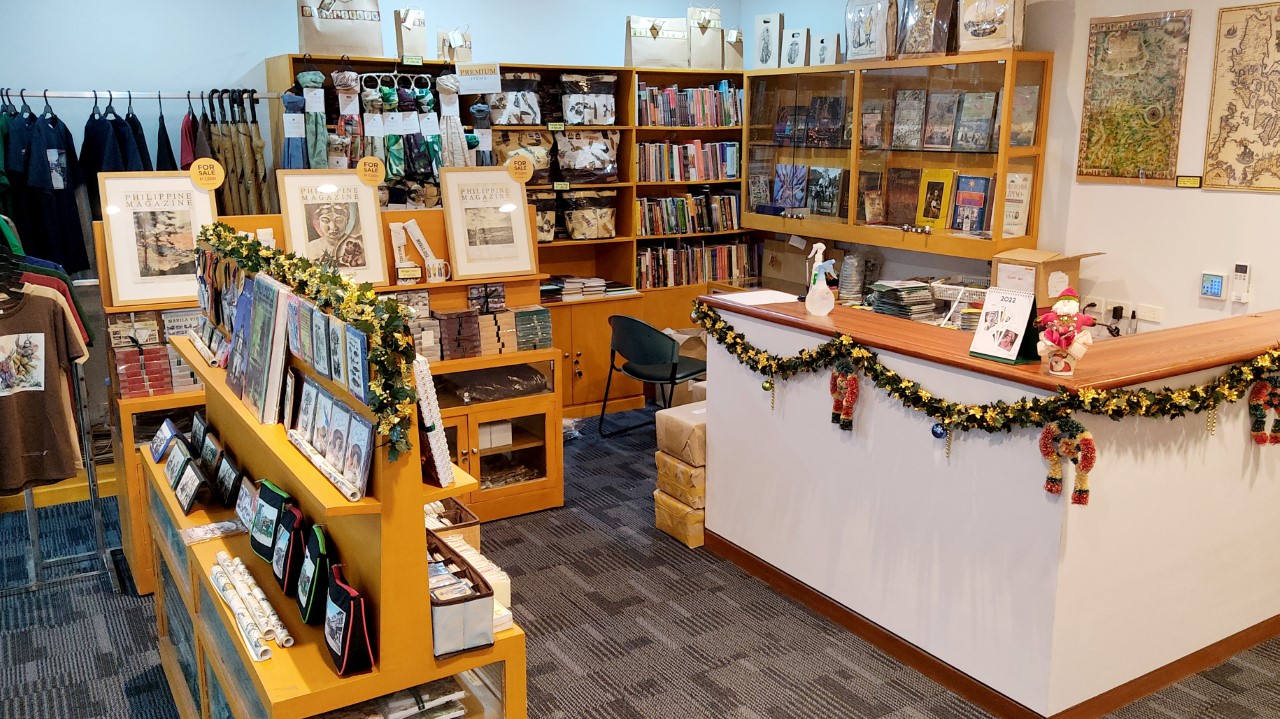
THE ORTIGAS Foundation Library houses a 36,000-volume Filipiniana special collection. To further promote the appreciation of Philippine history, it has unique items featuring images from these special and rare collections perfect for gifts and giveaways for all occasions. The shop also features a book section with many interesting finds. Choose from the library’s array of bags, shirts, scarves, stationery items, and more at https://www.facebook.com/Ortigas.Foundation/shop. Send orders to santosjd@ortigasfoundation.com.ph or call 0947-426-1432.


Art Fair Philippines returns to The Link in 2023

AFTER holding an online edition in 2021 and a hybrid setup in 2022, Art Fair Philippines has announced its return to The Link in Makati in 2023. The art fair is scheduled from Feb. 17 to 19. Since its first edition in 2013 until its last onsite show in 2020, the fair had been held at a car park, The Link, at the Ayala Center in Makati City. For more information and updates, visit www.facebook.com/artfairph.


Ballet Manila’s Cinderella opens this weekend

EXPERIENCE classic romance, magic, and happy endings as Ballet Manila stages the ballet Cinderella on Dec. 25 to 30, 4 p.m. at the Aliw Theater, CCP Complex, Pasay City. Featuring all-original choreography by the company’s CEO and Artistic Director Lisa Macuja-Elizalde, Ballet Manila’s re-telling of its all-time hit is perfect for kids and kids-at-heart. This year’s staging is part of Ballet Manila’s Holiday Cheer Series, a new annual Christmas tradition. “It is our first full-length ballet since the pandemic shrunk the number of dancers in the company. So, we are adding outstanding students from the school to add to the cast. It will be different as well as we will be using the new stage facilities — especially the LED screen of the newly refurbished Aliw Theater. So the experience will be more high-tech with special effects and animation,” Ms. Macuja-Elizalde said in a statement. Tickets are available at P800 and P500 exclusively through Ticketworld. For more information, call 8891-9999 or visit www.ticketworld.com.ph.


Leeroy New works on view at Newport World Resorts

THIS year, the Newport Mall presents “Christmas Mall-seum: Art of this World with Leeroy New,” featuring larger-than-life installations from multidisciplinary artist Leeroy New. Visitors can view the works — Neon Spaceship, Sapphire Forest, and Bamboo Cave — in the three immersive rooms at Newport Mall. The Neon Spaceship installation is a glowing front end of a spacecraft with hundreds of neon and LED signage on its surface. The Sapphire Forest showcases blue synthetic trees made from plastic water containers and PET bottles. The Bamboo Cave features woven bamboo and plastic covering the walls and posts of the whole room. Mr. New is known for his large-scale creations crafted from reclaimed and reused plastics turned into décor. Among notable projects are the sculpted silicone bustier for Lady Gaga worn in the “Marry the Night” music video, his solo show at Pintô International in New York, an exhibit at Palais de Tokyo in Paris, and more. The installations are currently on view at the ground floor of the Newport Mall.


West Gallery’s final show of the year

ONGOING until Jan. 32 is the group exhibit, “They gave them land. And cement. And bricks”. It features the works of Allan Balisi, Luis Antonio Santos, and Costantino Zicarelli. The building blocks for this show are a collection of narratives. The gallery is located at 48 West Ave., Quezon City.


Richelle Rivera shows at Robinsons Land ARTablado

HAPPINESS can be most elusive, even ephemeral. Just ask artist Richelle Rivera. Sadness, loss, heartache, longing, rejection and emptiness — she felt them all. What she did was overcome these crippling feelings of anxiety and depression by immersing herself in art. She embraced varying artistic styles: from impressionism to realism. An architect by profession with a degree from the Nueva Ecija University of Science and Technology, the pandemic allowed her to take up the brush again once again. She took advantage of the lockdown to paint landscapes, seascapes, flowers, portraits, still life and even abstracts. Her predilection for architectural composition even shows up in some of her paintings. She founded an art group called Pilipinta, which had its first group show last August at ARTablado in Robinsons Galleria. She offers support to aspiring artists by initiating a mentorship program and an online art workshop. She actively participates in art-for-a-cause programs to help the less fortunate, raising funds for those affected by typhoons as well as providing school supplies and support to indigenous people, all done in collaboration with The First People, Ateneo Graduate School of Business, and Humankind PH. Her latest works are now on view in the exhibit “I Found My Happiness,” at Robinsons Land ARTablado, Level 3 of Robinsons Galleria until Jan. 3.


CCP calls for outdoor Earth Day installation proposals

THE CULTURAL Center of the Philippines (CCP) Visual Arts and Museum Division has issued a call for proposals for the 2023 Earth Day Outdoor Installation, as part of the center’s Earth Day Celebration. Deadline for submission is on Jan. 9, 2023. Proposals should follow this year’s World Earth Day theme, which is “Invest in Our Planet,” and should highlight relevant environmental issues through public art. Interested artists must submit their installation concept, with description of the project and the idea/s behind it.  It should include the background information of the artist/curator/artist group, as well as the contact details of the proponent/s, and documentation of past works. Preliminary studies/works-in-progress and similar past works should be included in the proposal. Proposals (should be in a single PDF file) must be sent via e-mail to ccp.exhibitproposal@gmail.com. The selected proposal will receive a grant to cover the cost for professional fees, materials, and preparations, among others. It will be presented from April to May at the CCP Front Lawn during the Earth Day Celebration. For more information, contact the CCP VAMD at (632) 8832-1125 loc. 1504/1505 and (632) 8832-3702, or e-mail vamd@culturalcenter.gov.ph


Manulife, National Geographic partner to rice terraces

MANULIFE has announced a new partnership with the National Geographic Society to deliver on an ambitious global project to safeguard several historical and culturally significant heritage sites from the impact of climate change and protect the physical and financial well-being of the communities that depend on those sites for their livelihood. The Philippines’ Banaue Rice Terraces is among the 10 natural and cultural sites from Asia, North and South America, and Europe that will be protected under the newly launched project, Preserving Legacies: A Future for Our Past. To safeguard these cultural heritage sites, Preserving Legacies will build community capacity to visualize climate impacts on a local scale and make the science of climate change relevant and applicable to the conservation of specific sites. Led by National Geographic Explorer Victoria Herrmann and connected to Manulife’s Impact Agenda, this project will focus on network building between sites, where knowledge sharing will be key to developing climate change adaptation plans. “The Philippines is considered one of the countries most vulnerable to climate change. With this partnership, Manulife Philippines aims to contribute to efforts to mitigate its risks to people’s lives and livelihoods, expanding our initiatives to advocate for the well-being of people, communities, and the environment while driving sustainability and creating long-term value,” said Rahul Hora, President and Chief Executive Officer, Manulife Philippines. The 10 sites included in the project are the Banaue Rice Terraces of the Philippine Cordilleras; Petra, Jordan; Angkor Archeological Park, Cambodia; Border Fields, USA and Mexico; Historical Mosque City of Bagerhat, Bangladesh; Nan Madol, Micronesia; Levuka, Fiji; Koutammakou, the Land of the Batammariba, Togo and Benin; Sceilg Mhichil, Ireland; and, Port, Fortress, and Group of Monuments at Cartagena, Columbia To learn more about the commitments made by Manulife through its Impact Agenda, and to track progress against its goals, visit Manulife.com/Impact.


Dakila artist-activist collective receives Dutch Award

ON THE occasion of Human Rights Day, the Netherlands Embassy recognized the Filipino artist collective, Dakila, with the 2nd Embassy Tulip Award for Human Rights, in a reception hosted by Dutch Ambassador Marielle Geraedts in her residence. Explaining the reason behind bestowing this award, Ms. Geraedts said that it is meant to “recognize outstanding organizations that promote human rights in peaceful ways, especially for their innovation and creativity.” She also said that the award “seeks to support human rights defenders with visibility and a broader platform for engagement and critical discussions.” Through this award, the Dutch Embassy hopes it adds a layer of protection especially against extraordinary harassment or threat, as it assures continued monitoring and support for their work. Dakila is an artist-activist collective that has pioneered “creative resistance” and harnessing the power of arts, media, and popular culture in popularizing human rights and democratic values in the Philippines. Since it was founded 17 years ago, it has created a community of artists and activists that integrates Filipino culture and values in countering efforts to discredit human rights work, and in reclaiming and shaping the human rights movement. One of Dakila’s most notable achievements is the establishment of the Active Vista International Human Rights Festival, the biggest, broadest, and longest running festival celebrating rights and freedoms in the Philippines.


Salcedo Auctions’ year of achievements

AS 2022 closes, Salcedo Auctions has looked back on a year of achievements. There was the record-breaking sale of Anita Magsaysay-Ho’s 1971 masterpiece, Women Fishing, selling for P26,864,000 — the highest price for the artist’s work in her distinctive “ink blot” style. This was followed by the benchmark sales of six of Ramon Orlina’s Tower Club glass sculptures that set one new record after another in Salcedo Auctions’ back-to-back marquee events in March, June, September, and November. This year also saw new world records set overall and based on size for abstractionist Romulo Olazo. Two works from his renowned Diaphanous series, the 48×48 inch Diaphanous 71719 and 42×84 inch Diaphanous B-CXIVIII, sold for P11,680,000 and P14,016,000 respectively. Salcedo Auctions also delivered a new record for Juan Luna’s work on paper based on size, with the sale of his watercolor Reclining Warrior, dated circa 1887. This artwork, which went for the highest price for any Luna painting sold in the Philippines in 2022, sold for P2,102,400. At The Well Appointed Life auction last September, the house presented two rare early works of National Artist Ang Kiukok from the collection of the late Rufus Colefax Phillips III, a former USAID director, diplomat, and published author. These 1957 works from the Banana series sold for a combined total of P9,110,400. A rare 1969 mixed media piece from National Artist Benedicto “BenCab” Cabrera’s Scavenger series sold for P4,088,000. The prices for the works of the late modernist Justin Nuyda will be enjoying an “afterglow” after the world record setting sale of Search Mindscape: ‘Break of Dawn’ for P9,344,000 in the same auction. In the spirit of the season, the Nuyda family donated the proceeds of the sale to the Search Mindscape Foundation and the Philippine Cancer Society. Among the host of solo exhibitions held at Salcedo Private View this year, Ronald Ventura’s Beastmaster undoubtedly reverberated, securing his pole position in Philippine contemporary art. Closing the auction year, Under the Tree: The Wish List saw Ramon Orlina’s Triumvirate equaling Salcedo’s own price benchmark for the artist in a “three-peat” achievement, while astonishing results were also achieved for National Artist Fernando Amorsolo’s Tinikling for P2,102,400 and Ventura’s untitled hyperrealist piece depicting hands for P1,752,000. Salcedo Auctions is now accepting consignments to the Important Philippine Art & Furniture auction scheduled in March. To inquire, send an e-mail to info@salcedoauctions.com or contact 0917-591-2191.


Singapore’s ARTBOX 2023

ARTBOX, Singapore’s largest lifestyle event, is returning after a three-year hiatus on Feb. 24 to 26 and March 3 to 5, noon to 11 p.m. at Hall 6 of Singapore Expo. It will feature least 300 vendors from Southeast Asia providing retail and F&B experiences, and art installations by local artists at the Singapore Expo. Organized by Invade, the upcoming edition of ARTBOX will be held indoors for the first time since its inception in 2017, providing visitors with air-conditioned comfort while they soak in the festivities of the night market experience, even in the daytime, thanks to cleverly designed spaces and lighting installations in the 9,822 sqm space. Next year’s ARTBOX is also coorganized with SGAG, one of Southeast Asia’s fastest-growing digital content producers. Kent Teo, Founder and CEO of Invade, said in a statement: “We are also co-organizing the event with SGAG to inject their dose of cheeky humor to the festival and at the same time provide an interactive offline space to the local and regional creator economy.” Over two weekends in February and March, visitors can also expect a showcase of gourmet creations from F&B entrepreneurs and brands from Southeast Asia, unique shopping experience featuring crafts and innovative products from local and global brands, and immersive structures and interactive experiences curated in collaboration with the region’s best artists all under one roof. Tickets to the event are S$5 per person per entry with early-bird pricing of S$4.50 per person, available until Dec. 31. Visitors looking at attending all six days can opt for a Season Pass at S$30 per person with priority entry. More information can be found at https://www.artbox.sg/. 

ICTSI signs new 30-year lease for Poland terminal

MARIAH DALUSONG-UNSPLASH

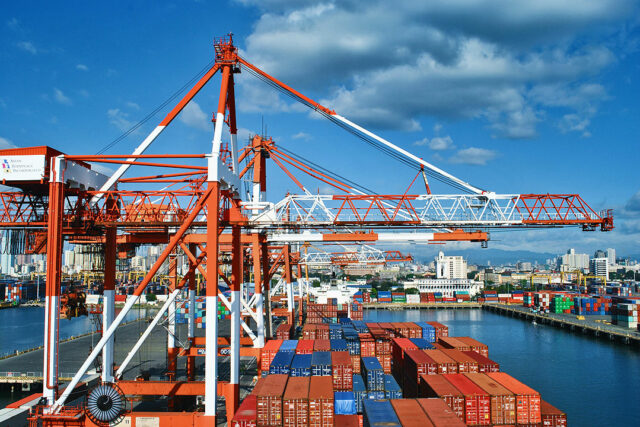
PORTS operator International Container Terminal Services, Inc. (ICTSI) announced on Tuesday that it recently signed a new 30-year lease for the Baltic Container Terminal (BCT) at the Port of Gdynia in Poland.

ICTSI signed the contract with the Port Authority of Gdynia S.A. (PAGSA) on Dec. 19, the listed company said in an e-mailed statement.

“This new lease extends the operations of BCT until 2053,” it added.

The company has been active in the Port of Gdynia since 2003. ICTSI said it has invested in excess of $100 million in the terminal’s facilities, personnel, and general service capability.

“Future investments are expected to easily match and exceed this figure and will initially complement work underway by the Port Authority of Gdynia S.A. to upgrade the port infrastructure to facilitate the access and handling of larger vessel sizes,” ICTSI said.

The terminal serves the Baltic region and is a crucial link in the Polish logistics gateway for steel import and export, according to the company. It has a handling capacity of one million twenty-foot equivalent units.

“Recent years have seen BCT make its mark in the handling of wind turbine components destined for use in onshore wind farms,” ICTSI said.

“It further expects to deploy this expertise in conjunction with offshore wind farms, which are planned for development over the short to medium term,” it added.

ICTSI is involved in 34 terminal concessions and port development projects in 20 countries worldwide. It has nine terminal operations in the Philippines, including an inland container terminal, a barge terminal, and combined terminal operations in Subic.

For the nine months that ended September, the company saw its net income attributable to equity holders increase by 47% to $465.1 million from $316.4 million previously.

Revenues from port operations climbed 20.1% to $1.64 billion from $1.37 billion last year.

On Tuesday, ICTSI shares rose or by eight centavos of 4.08% to end at P204 apiece. — Arjay L. Balinbin

Megawide sees precast unit as potential growth driver

MEGAWIDE Construction Corp. said its unit, Precast and Construction Solutions (PCS), has the potential to be a growth driver for the company after recording P720 million in revenues for the first nine months of 2022, or higher by 2% than the previous year.

“The segment is proving to be an emerging growth area for Megawide, not only as a pure complementary service under the company’s fully integrated construction platform, but as a separate income-generating business catering to a wide array of residential, commercial, and industrial uses,” Megawide said in a statement on Tuesday.

According to the company, precast is the biggest contributor at 54%, followed by batching plant or ready-mix concrete (34%), and the remainder comes from equipment and formworks sales and rental.

PCS used to make up less than 3% of Megawide’s total construction revenues, but has more than doubled its contribution in the January-to-September period, Megawide said, citing its widened scope.

The Megawide unit now covers affordable housing (with Phirst Park Homes supply and installation contracts) and horizontal infrastructure (with Skyway supply contracts), among others.

PCS started offering services to external clients in 2018. Megawide said its engineering innovation unit hopes to expand its footprint in the local industry and promote a “more environmentally friendly innovation.”

“As ancillary businesses, these legs can benefit from the company’s healthy order book as part of the value chain,” Megawide Chairman and Chief Executive Officer Edgar B. Saavedra said.

“Externally, they can also look for their own clients outside of Megawide to increase their customer base and diversify their revenue stream to leverage on the usability of precast as a natural progression in the construction industry,” he added. — Arjay L. Balinbin

Actor Amber Heard to settle defamation case with ex-husband Johnny Depp

ACTOR Amber Heard said on Monday she would settle defamation claims that were brought against her by ex-husband and fellow actor Johnny Depp, ending years of legal wrangling over dueling claims of abuse during their marriage.

In an Instagram post, Ms. Heard said the decision to settle with Mr. Depp was “very difficult” and followed “a great deal of deliberation.” The actress said this was “not an act of concession.” In June, Mr. Depp had won a multimillion-dollar jury verdict for his defamation suit against Ms. Heard.

Mr. Depp’s co-lead trial counsel, Ben Chew and Camille Vasquez, said he would receive a payment from Ms. Heard’s insurers of $1 million and Mr. Depp has pledged to donate the funds to charity.

Mr.Chew and Ms. Vasquez, said: “We are pleased to formally close the door on this painful chapter for Mr. Depp, who made clear throughout this process his intent to bring the truth to light.”

Mr. Depp and Ms. Heard sued each other in 2022 for defamation, each claiming they were abused before and during their roughly two-year marriage.

Following a six-week televised trial full of graphic testimony, a seven-person jury ruled in June that Ms. Heard defamed Depp, and the Pirates of the Caribbean star was awarded $10.35 million. The jury also determined that Ms. Heard was defamed, awarding her $2 million.

In July, Ms. Heard filed an appeal to the Virginia jury’s decision that she defamed Me. Depp when she claimed in a newspaper opinion piece that she was a survivor of sexual violence.

Representatives for Ms. Heard did not respond to requests for additional comment after the Aquaman star posted her decision on Instagram.

“It’s important for me to say that I never chose this,” Ms. Heard said in her post. “I defended my truth and in doing so my life as I knew it was destroyed. The vilification I have faced on social media is an amplified version of the ways in which women are re-victimized when they come forward,” she wrote.

Ms. Heard went on to say she finally has the opportunity to “emancipate” herself from something she tried to leave over six years ago.

In the post, she also said she had lost faith in the American legal system and favors the UK legal system as more “robust,” “impartial,” and “fair.” Ms. Heard also blasted the US media, saying it favored “popularity and power” over “direct evidence.”

“In the interim I was exposed to a type of humiliation that I cannot re-live,” Ms. Heard said. “Even if my US appeal is successful, the best outcome would be a re-trial where a new jury would have to consider the evidence again. I simply cannot go through that for a third time.” — Reuters

Tax court rejects farm development firm’s refund claim

CTA.JUDICIARY.GOV.PH

THE Court of Tax Appeals (CTA) has affirmed its decision to deny Lead Export and Agro-Development Corp.’s claim for refund worth P17.74 million representing its excess input value-added tax (VAT) for the year 2010.

In a 15-page decision dated Dec. 13 and made public on Dec. 19, the CTA full court said the firm’s petition was filed late which made the commissioner of internal revenue’s (CIR) decision unappealable.

“With respect to the timeliness of the judicial claim, it is indispensable to ascertain the expiry of the 120-day period as the said period is crucial in determining the timeliness of an appeal with the CTA,” Associate Justice Roman G. Del Rosario said in the ruling.

The tax court added that it had no jurisdiction over the case since the petition was filed with the internal revenue commissioner beyond the 120-day under the law.

It noted that the firm’s petition for review questioning the CTA’s ruling was timely filed.

Under the country’s revenue code, a taxpayer is given 30 days to appeal a decision on a disputed tax claim if the CIR fails to act on the claim. The commissioner is given 120 days to act on the disputed tax assessment; otherwise, the decision would be final.

The CTA previously said the firm’s appeal before the court in the division was filed on April 25, 2019, which was beyond the January 28, 2012 deadline.

Citing Supreme Court jurisprudence, the tribunal said the 30 day-period to appeal a decision starts after the taxpayer receives it or after the 120-period day period, whichever comes first.

“In sum, there being no reversible errors committed by the court in division, the court en banc finds no cogent reason to reverse and set aside the assailed resolutions dated July 8, 2022 and January 29, 2021,” it said.

“It is well-settled that if the court has no jurisdiction over the nature of an action, its only jurisdiction is to dismiss the case.” — John Victor D. Ordoñez

China bonds being left behind in clamor for emerging market debt

WITH BOND INVESTORS seen returning to emerging markets en masse next year, the biggest of them all might get the shortest shrift.

Expectations of a China growth rebound as authorities roll back COVID Zero policies are reducing the appeal of its sovereign debt. That’s at a time when funds are loading up on developing nation bonds amid bets that the US Federal Reserve may end its tightening cycle next year.

More attractive opportunities in other markets mean investors are unlikely to reverse the massive China outflows seen in 2022, according to Fidelity International Ltd. and T. Rowe Price Group, Inc. Lingering regulatory and geopolitical risks will also keep capital from returning, said Goldman Sachs Group, Inc. and JPMorgan Chase & Co.

“I doubt that money comes in again,” said Vikas Gupta head of currencies and emerging markets, Asia -acific at JPMorgan said referring to China’s bond market. “If I were to be a positive on growth, I won’t be expecting rates to go down very dramatically,” he said.

Global funds reduced their holdings of Chinese bonds at the fastest pace on record this year as a selloff in Treasuries spurred by Fed hikes pushed US yields above those of China. The yield premium of as much as 253 basis points (bps) offered by benchmark Chinese bonds over US peers in 2020 disappeared to become a discount of around 75 bps as of Tuesday.

While Chinese bonds outperformed global debt markets this year and are on track for positive returns, their performance is beginning to slip. They have fallen the most among Asia-Pacific peers over the last month, finding few buyers as a reopening-led growth rebound is seen boosting returns on domestic stocks and reducing the likelihood of further monetary easing.

“We do not think fixed income flows will return to China in large amounts given the increased regulatory and geopolitical risk environment, as well as the competition from other developed markets,” said Goldman’s Singapore-based strategist Danny Suwanapruti.

Citigroup Inc. forecasts a total return of 3.7% for Chinese government bonds in 2023 on a hedged basis, compared with 5.4% for emerging-market local rates.

T. Rowe Price Group is underweight and has shifted its focus primarily to Latin America on expectations that commodity-exporting countries could benefit from a global tightening cycle and as China reopens. Abrdn is betting on Korean and Indian bonds.

“Over this year, Chinese government bonds have been a fantastic store of value for fixed-income investors and this is a time where we feel like relative to the global opportunity set for bonds — China is looking a little bit expensive,” said Leonard Kwan, a fixed-income portfolio manager at T. Rowe in Hong Kong.

SMALL BUT CRUCIAL
Global funds hold just 2.7% of China’s at 127 trillion yuan ($18.2-trillion) bond market, which is the second-largest in the world. Their holdings have fallen from as much as 3.5% last year. However, their participation as a marginal buyer could matter even more next year if the heavy selloff by retail investors continues.

Still, while bearish bets grow, Morgan Stanley sees China bonds as a good hedge against reopening trades on the risk that an abrupt end to Covid Zero results in a spike in Covid cases that weighs on economic growth in the coming months. Schroder Investment Management Ltd. expects positive outlook for Chinese onshore bonds into 2023, especially if dollar strength reverses.

And Fidelity International, which has turned bullish on some Chinese corporate debt, exposure to government bonds helps provide a hedge against credit risks.

“China’s story had worked for so many years and we still have China government bond exposure,” said Vanessa Chan head of fixed income directing at Fidelity International in Hong Kong. “But we’ll probably be coming down from our allocation.” — Bloomberg