Home Blog Page 5436

Esports company to invest P100M in PHL

Ampverse’s Filipino esports team, Minana. — Ampverse/Facebook

Ampverse, an esports and Web3 company based in Singapore, will invest more than P100 million as it expands into the Philippines, its fifth market.

“We love how social Filipinos are, and how passionate they are for gaming,” said Ferdinand M. Gutierrez, Ampverse chief executive officer (himself a Filipino). “There’s so much talent around gaming in the Philippines.”

The company will focus on four pillars: esports (specifically mobile games), talent, commerce, and Web3 (a decentralized version of the Internet).

“We feel that we can leverage the fact that we have great gaming and esports talent, and translate that into the play-and-earn and play-to-earn space,” he said, adding that one of Ampverse’s team players is set to compete in the equivalent of the world championships for Axie Infinity, a play-to-earn game.

To coincide with its entry into the Philippines, Ampverse has signed an amateur all-Filipino esports team in Mobile Legends, a play-to-earn game popular in Southeast Asia (SEA). The team, which has 11 straight championships under its belt, will play under a new brand, Minana, which means inheritance.

Ampverse intends to build Minana into a lifestyle and gaming brand.

“When we saw that this team had so much promise, winning championship after championship … we said, ‘Why don’t we get a slot and try to get them into the pro league?’ That’s what our vision is: to take the best amateur team we could find to compete in the pro league,” said Mr. Gutierrez

“We believe in grassroots gaming,” he continued, adding that Ampverse will spend “a lot of time” nurturing new talent to continue the tradition of winning. “Our plan is to have development teams in every single market in SEA.”

Julius “Banoobs” Mariano, the “godfather of e-sports and gaming in the Philippines,” has been appointed as Ampverse’s regional expansion manager. A streamer with over 100,000 followers, Mr. Mariano previously worked as country manager Philippines for Twitch, an Amazon-owned video livestreaming service platform.

Ampverse will launch in Indonesia later this year. Founded in 2019, it has offices in Singapore, Thailand, Vietnam, and India.

According to advisory firm Mordor Intelligence, Asia Pacific is the largest and fastest-growing market for esports. Worldwide, the esports market is expected to register a compound annual growth rate of 20% during the forecast period of 2021 to 2026. — Patricia B. Mirasol

NG budget deficit narrows in July

PHILIPPINE STAR/ MICHAEL VARCAS

by Diego Gabriel C. Robles

The National Government’s budget deficit narrowed in July, as government revenues grew by double-digits, the Bureau of the Treasury (BTr) reported on Friday, with economists attributing this to the uptick in business activity as pandemic restrictions continued to ease.

In a statement, the BTr said the budget gap stood at P86.8 billion in July, 28.41% lower than the P121.2 billion in the same month a year ago.

Government expenditures rose by 4.81% to P395.4 billion during the month, “partly due to the release of PhilHealth subsidy and higher National Tax Allocation (NTA) transfers.”On the other hand, total revenue collection jumped by 20.53% to P308.6 billion in July from P256.1 billion in the same period last year. This was driven by a 22.24% rise in tax revenues to P281.9 billion, and a 4.96% increase in nontax revenues to P26.7 billion.

National Government fiscal performanceThe bulk of tax revenues came from the Bureau of Internal Revenue (BIR) with P197.4 billion, up by 15.55% year on year.

“BIR’s higher uptake is attributable to its continued strict enforcement, as well as the implementation of its digitization program,” the BTr said.

Collections by the Bureau of Customs (BoC) surged 46.23% to P83.6 billion, which the BTr attributed to “improved valuation, digitized and modernized systems, and the gradual reopening of the economy which resulted in higher import volume.”

At the same time, nontax revenues from the BTr dipped 1.67% to P13.4 billion, due to lower dividend remittances and interest income from government deposits, though partially offset by higher income from Bond Sinking Fund (BSF) investments and the share of the National Government from the income of the Philippine Amusement and Gaming Corporation (PAGCOR).

Primary expenditures, or spending net of interest payments, expanded by 7.88% to P343.3 billion in July.

Interest payments declined by 11.75% to P52.1 billion in July, “due in part to the level effect of the timing of coupon payments for Global Bonds recorded in July last year as it originally fell on a weekend (Aug. 1, 2021).”

UnionBank of the Philippines, Inc. Chief Economist Ruben Carlo O. Asuncion attributed the narrowing of the budget gap to higher revenue collections as the economy continued to reopen.

“Nevertheless, this continues to show the results of the re-opening economy with domestic demand expected to further pick-up (though slightly still because of inflation pressures) due to the resumption of face-to-face classes,” he said in a Viber message.

“(This) may have an impact on consumer spending and putting stronger upside to more business activity, thus, potentially more opportunities for higher government revenues moving forward,” he added.7-MONTH BUDGET GAPIn the first seven months of 2022, the budget deficit narrowed to P761 billion, 9.11% lower than the P837.3-billion gap a year ago.

Total revenue collection by the National Government jumped by 16.59% to P2.036 trillion in the seven months leading to July from P1.746 trillion in the same period last year.

Tax revenues, which accounted for 90% of the total, jumped 15.82% to P1.823 trillion during the seven-month period. This was driven by the 10.59% increase in BIR collections to P1.329 trillion, and 33.82% rise in BoC collections to P480.3 billion.

Nontax revenues, on the other hand, went up by 23.61% to P213.1 billion, thanks to a 23.36% rise in BTr revenues to P117.5 billion.

“The narrower budget deficit from January to July may have to do with the further re-opening and no more large scale lockdowns so far this year, compared to some pockets of hard lockdowns in 2021, thereby increasing the government’s tax revenue collections with more business and industries re-opening and operating at much higher capacity,” Rizal Commercial Banking Corp. Chief Economist Michael L. Ricafort said in a Viber message.

On the other hand, year-to-date expenditures rose by 8.26% to P2.797 trillion from P2.583 trillion in the same period last year.

Primary expenditures stood at P2.487 trillion from January to July, up by 7.41% year on year.

Interest payments increased 15.6% to P309.3 billion, “but still lower by 3.17% versus the P319.4 billion original program, translating to P10.1 billion in savings.”

“Interest payments comprised 11.06% of total expenditures for the 7-month period, up from 10.36% in 2021. Meanwhile, interest payments as a percentage of revenue improved to 15.19% from last year’s 15.32%,” the BTr said.

The government expects the budget deficit to hit P1.65 trillion this year, slightly lower than the actual deficit of P1.67 trillion in 2021.

As of the first quarter, the budget deficit as a ratio of the gross domestic product (GDP) stood at 6.4%.

The government aims to reduce the deficit to 7.6% of GDP this year, and further to 6.1% in 2023, 5.1% in 2024, 4.1% in 2025, 3.5% in 2026, 3.2% in 2027, and 3% in 2028.

Proposed 2023 spending plan to support growth amid risks

THE Marcos administration’s economic team assured that their proposed P5.268-trillion spending plan for 2023 will continue to support economic growth, even as they move to reduce the debt incurred amid the coronavirus pandemic and as risks to the outlook remain.

“The multiplier effects of the proposed budget on the economy and on the various sectors, including the social sectors, are quite evident. As reflected in the eight-point agenda, we address there the basic constraints to growth, poverty reduction, and investment,” Socioeconomic Planning Secretary Arsenio M. Balisacan said during the Development Budget Coordination Committee’s (DBCC) briefing for the House Committee on Appropriations on Friday, which kicked off Congress’ deliberations on the proposed 2023 national budget.

“If we succeed in getting those (funds) addressing those areas, investment should be able to revive productivity growth. Agriculture should be able to provide more opportunities in our tourism (and) manufacturing,” Mr. Balisacan said.

During the briefing, lawmakers questioned the P1.6 trillion earmarked for debt servicing under the proposal that includes principal amortization, noting the money could be used to further grow the economy instead.

“What’s only provided in the budget would be the interest payments of P582 billion because the P1 trillion that represents the amortization payments are already covered by previous appropriations,” National Treasurer Rosalia V. de Leon explained.

“This is just financing the earlier expenditures, of which the funding came from obligations — meaning, loans (and) our bond issuances. So, there’s no need to put it under the budget anymore.”

Finance Secretary Benjamin E. Diokno said the amount the government spends on debt servicing, especially for interest payments, has gone down and is expected to decline further as the economy continues to grow.

“Actually, our current situation is much better than before. (Debt servicing) will be in the neighborhood of only 10%, interest payment as a percent of the budget is approximately 11%, and interest payment as a percent of GDP (gross domestic product) has been constant all along around 2.4%,” Mr. Diokno said.

He added that the country still needs to borrow as the government continues to operate on a budget deficit, with the amount it wants to spend outpacing the revenues it collects as a developing economy.

Mr. Diokno said they are looking at a borrowing mix of 75-25 for 2023, in favor of domestic financing to reduce foreign exchange risks.

He also noted that cutting expenditures is not an option as the administration is targeting continued growth to reduce poverty and inequalities as well as improve employment quality, but he acknowledged their fiscal space is limited due to the obligations incurred due to the pandemic.

“Our needs for borrowing will decline significantly because I don’t think we’ll have another pandemic in the near future,” he added. “What is really relevant is debt as a percentage of GDP, the size of the economy, and that has been declining. That’s why I showed that our debt-to-GDP ratio will progressively decline,” Mr. Diokno added.

The debt-to-GDP is estimated to drop to 61.3% by next year from 62.1% in end-second quarter, all the way to 52.5% by 2028.

The government wants to reduce its budget deficit to 6.1% next year from an estimated 7.6% this year, which will then gradually go down to 3% by 2028.

“We would like the economy to grow and to recover. So, if there are additional resources available to us — either through maybe new loans or maybe additional revenues coming from, say, privatization of some corporations — we would be willing to support a supplemental budget… Because if there are ready to implement projects, and we had the money, then better spend it now rather than, say, a year from now,” Mr. Diokno said.

“In preparation of the budget, we consider our fiscal space as provided for by the DBCC and with that, we have a formula to allot or fund each department and in preparing the budget, we take into consideration the utilization and absorptive capacity of the agencies,” Budget Secretary Amenah F. Pangandaman added when asked about budgets of specific agencies, such as the Education department, and whether they can fund more projects.

Asked on the impact of quicker inflation on the government’s spending plans, Bangko Sentral ng Pilipinas (BSP) Felipe M. Medalla said decreased purchasing power and the BSP’s move to hike benchmark interest rates to arrest rising prices are expected to affect growth, but “not enough” to prevent the administration from reaching the goals that serve as the basis of its proposed budget.

“If prices begin to moderate, as forecasted by the BSP, it’s a little bit better for us,” Mr. Medalla said.

“In our view, recovery is underway… Philippine economic growth prospects remain robust and will be sustained in the medium term, providing scope for the BSP to roll back its pandemic-induced interventions,” he added.

He reiterated that the BSP is ready to take the necessary policy actions to bring inflation back within target.

PS-DBM ISSUES

Meanwhile, in the same briefing, Ms. Pangandaman said they will leave the fate of the Procurement Service of the Department of Budget and Management (PS-DBM) in Congress’ hands.

“If we give a chance to PS-DBM, and if we clean the process and the system of procurement in PS-DBM, maybe we can go back to its old glory… We already have programs on how to fix PS-DBM. If you may give us a chance to at least clean PS-DBM, we will highly be happy with that,” she added.

The PS-DBM, primarily tasked to operate a centralized procurement system for common office supplies and equipment for government agencies, was put in the spotlight last year after state auditors flagged irregularities in the purchase of medical supplies in 2020 using emergency funds amid the coronavirus pandemic.

More recently, the Commission on Audit’s 2021 audit report again flagged P1.39-billion worth of personal protective equipment procured by PS-DBM for the Department of Health. A separate report questioned the agency’s purchase of P2.4-billion worth of slow and outdated laptops for the Department of Education. — Diego Gabriel C. Robles


Hustle PH partners with local tech giants UBX, Coins.Ph and Paymongo

Hustle PH co-founder Jason Gaguan presents to a panel of investors at The Final Pitch.

Market research start-up Hustle PH partners with Union Bank’s open finance platform UBX, Philippine’s crypto giant Coins.ph, and payment solution leader Paymongo to dominate SEA’s insights industry. The collaboration was formed during CNN’s start-up reality show The Final Pitch wherein Hustle PH’s Jason Gaguan and Carl Chung pitched to a panel of investors in the hopes of raising capital and support to further build on their existing growth traction.

John Januszcak (CEO, UBX), Wei Zhou (CEO, Coins.ph) and Francis Plaza (CEO and Co-Founder, Paymongo) pledged capital infusion alongside technology support and inter-platform partnerships.

Hustle PH’s Jason Gaguan and Carl Chung secured funding and strategic platform partnerships with UBX, Coins.ph and Paymongo.

Asked about the future of Hustle PH with its newfound partners, co-founder Jason Gaguan said, “This new partnership between these industry giants gives us the war chest to double down on our efforts to carve out our market in the Philippines and abroad. The integration of our platforms and technologies would result in better client servicing, a greater customer base, and richer data to share, analyze, and play with.”

Hustle PH was founded in 2020 at the peak of the pandemic by Jason Gaguan, Ferdinand Perez, Kevin Cena and Celine Yap with the goal of providing fast, accurate, and cost-efficient market intelligence in a quickly evolving customer environment. Since its founding as a market intelligence platform, the company has provided its insights to several multinational consumer goods companies, international AI companies, banks, tech start-ups, and telecommunications giants.

“At Hustle PH, we are storytellers first and foremost. Our story comes directly from the people. We make sense of their stories in a grand tapestry of data points, and we weave through all of this data to find elegant patterns that reveal interesting truths about the market.”, Gaguan said.

CNN Philippines’ The Final Pitch airs every Sunday 8:30 PM, created and hosted by serial entrepreneur and author John Aguilar.


Spotlight is BusinessWorld’s sponsored section that allows advertisers to amplify their brand and connect with BusinessWorld’s audience by enabling them to publish their stories directly on the BusinessWorld Web site. For more information, send an email to online@bworldonline.com.

Join us on Viber to get more updates from BusinessWorld: https://bit.ly/3hv6bLA.

Specific job descriptions can minimize mismatches — JobStreet

Better hiring practices from the employer’s end and upskilling from the employee’s end can minimize job mismatches, according to the employment website JobStreet.

“Job mismatches are one of the primary reasons that new hires don’t stay in certain positions long-term, which translates to high turnover rates for the company,” said JobStreet Philippine country manager Philip A. Gioca, in an Aug. 24 press statement. “Not only will this require employers to invest more to hire and train new employees, but it also reflects negatively on the employee experience that other jobseekers perceive.”

JobStreet recommends better hiring practices, which includes crafting specific and well-detailed job descriptions, to minimize the incidence of job mismatches. A job description that is clear about the skills needed for the position, the requirements needed to assume the role, and the expectations the company has for the candidate targets the qualified and avoids misinterpretation among jobseekers.

Job or skills mismatches are either horizontal or vertical. A horizontal mismatch is when an employee who has studied in one field works in a completely different one. Employees under that category may have the right level of education, but don’t necessarily have the ideal level of expertise.

A vertical mismatch, on the other hand, is when an employee’s level of expertise does not match the level needed for a job. The terms overqualification and underqualification fall under a vertical mismatch, as both imply a discrepancy between the individual’s abilities versus the abilities required for the position.

The online job platform recommends that companies evaluate candidates beyond interviews through skills assessment tests, which can come in the form of tests or job simulations. This type of test, it said, offers a more unbiased perspective as to what candidates are capable of and helps measure their abilities.

Jobseekers, meanwhile, should ensure that their academic pursuits are geared towards an industry they are interested in. JobStreet also recommends that candidates upskill to minimize skills gaps.

Crucial too is the need to read job descriptions to understand what a particular position entails.

“It’s important for candidates to focus on the development of not only hard skills through their education and other experiences, but also soft skills. With a combination of both, candidates can then look at job listings more critically and come to a decision as to whether they would be the right fit for a position,” Mr. Gioca said.

Six of the top 10 popular courses on the educational site LinkedIn Learning were related to the soft skills of speaking and critical thinking, based on data collected in Southeast Asia between June 1, 2021, and June 30, 2022.

Meanwhile, the Philippine Statistics Authority reported that the total number of unemployed Filipinos reached 2.990 million in June. — Patricia B. Mirasol

Japan to spend $1.8M on Abe’s funeral despite opposition

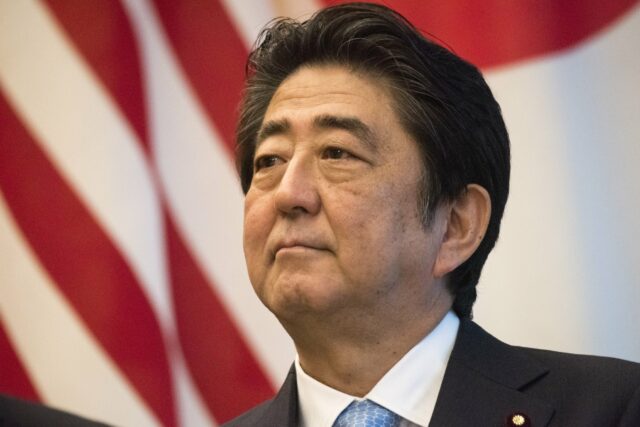
Former Prime Minister Shinzo Abe. Image via Chairman of the Joint Chiefs of Staff/Flickr/CC BY 2.0

TOKYO — Japan will spend $1.83 million on a state funeral for slain former leader Shinzo Abe, the government said on Friday, despite growing opposition from a public angered by revelations of the ruling party’s ties to the Unification Church. 

Abe, Japan’s longest-serving but divisive premier, was shot and killed at an election rally on July 8, and although funeral services were held soon after, Japan has decided to hold a state funeral at Tokyo’s Nippon Budokan arena on Sept. 27. 

The government of Prime Minister Fumio Kishida, an Abe protege, decided the state funeral would be paid for solely with state funds. 

But opinion polls show persistent opposition to the idea. In the latest, published on Sunday, 53% of respondents were against a state funeral. 

The public has been angered by revelations of ties between the ruling party and the Unification Church, which a vast majority of respondents in opinion polls feel have not been fully explained and have become a major headache for Kishida, dragging down his support. 

The church, founded in South Korea in the 1950s and famous for its mass weddings, has over the years faced questions over how it solicits donations. 

Abe’s suspected assassin, arrested at the scene moments after the shooting, bore a grudge against the church, alleging it bankrupted his mother, and he blamed Abe for promoting it, according to his social media posts and news reports. 

The man is undergoing psychiatric evaluation, media has reported. 

“Abe was highly regarded both within Japan and internationally, and there have been many messages of condolence (since his death),” chief cabinet secretary Hirokazu Matsuno told a news conference. 

“We believe it is necessary for Japan as a country to respond to that as international etiquette, and so we decided that it is best to conduct this funeral as an official event hosted by the government and have international visitors attend,” he said. 

Japan’s last fully state-funded funeral for a prime minister was for Shigeru Yoshida in 1967. Subsequent ones have been paid for by both the state and the ruling Liberal Democratic Party (LDP), of which Abe was an influential member. 

Several current and former world leaders are expected to attend, with news reports saying arrangements were being made for former US President Barack Obama to take part. 

Russian President Vladimir Putin will not attend, the Kremlin said in July. ($1 = 136.7000 yen) — Reuters

PHL corporate bond issuance may hit $7B in 2022

BW FILE PHOTO

Philippine companies are seen raising a record P400 billion ($7.14 billion) through bond issuances this year to fund expansion plans and retire debts, the country’s bond market operator said on Friday.

Year-to-date, companies have raised P371 billion via bonds, with a robust pipeline in the coming months. Bond listings on the Philippine Dealing & Exchange Corp (PDEx) fell by nearly half to P213 billion last year from a record high of P387 billion in 2020.

“If last year was a year of caution, this year, the firms are back for funding,” Antonino A. Nakpil, PDEx president and chief executive officer, told Reuters.

Top issuers include banks and property firms, and conglomerates. In July, San Miguel Corp. raised P30 billion, the largest domestic bond deal by a non-banking institution.

Philippine companies, backed by financial markets despite higher lending rates, are pursuing expansion plans this year, banking on an economic recovery from the coronavirus disease 2019 (COVID-19) pandemic.

Companies are taking advantage of market liquidity to fund expansion and pay down debts, Mr. Nakpil said. On Friday, property firm Robinsons Land Corp. listed P15 billion in a bond deal oversubscribed by 12 times.

To date, there are 54 companies that have a combined 193 bond issues in the Philippines’ fixed income trading platform. — Reuters

Shopee 9.9 sale includes community-building initiatives

SHOPEE’s Sept. 9 sale will offer shopping deals, vouchers, games, and a chance to support community-building projects.

The 9.9 Super Shopping Day marks the start of the year-end shopping season.

“We are thrilled to be welcoming the busiest sale season of the year with our users, sellers, and communities from all over the Philippines,” said Martin Yu, director at Shopee Philippines, in a statement. “We aim to be a platform that harnesses the power of technology to help all of our stakeholders and the community — whether it’s through our impactful CSR initiatives or exciting double day sales.”

Barangay Shopee, a new initiative under the Shopee Bayanihan program, allows users to win a sponsored community project for their barangay — examples include the construction of a basketball court, the renovation of a multi-purpose hall, or the provision of public school supplies.

Shopee users can nominate their barangay by posting video entries on Facebook and submitting the link via the app.

Meanwhile, deals and upsized brand promos will include free shipping with no minimum spend and P1 deals.

Brands offering discounts include INSPI, Garnier, Dreame, Sabbat, OPPO, GameXtreme, Huawei, Colgate-Palmolive, Crocs PH, Uni-Care, Johnson & Johnson, Abbott Philippines, Pedigree and Whiskas, Belo Essentials, P&G Beauty, Unilever, Ace Hardware, Adidas, Xiaomi, POCO, Bosch, Chef’s Classics, Enfagrow, and Lactum.

Users who purchase on the app can play a game for a chance to win up to P1 million.

For more information, visit the 9.9 Super Shopping Day page and the Barangay Shopee page on the app. — Brontë H. Lacsamana


SIDEBAR | Filipinos shop more after office hours

Filipino consumers are more likely to buy online outside typical working hours, specifically from 7 p.m. onwards, with transactions peaking at 9 p.m., according to The State of Online Shoppers in the Philippines 2021/22 – Part 2 conducted by Southeast Asian e-commerce meta-search website iPrice.

This is in contrast with the platform’s 2016/17 edition of the report, where most Filipinos made online purchases during work hours. Midnight shopping was also found to be nearly three times higher in the recent study as compared to four years ago.

Sunday is also the peak shopping day for Filipino consumers, unlike in 2016/17 when that was the day with the lowest number of transactions.

“Our hypothesis is the shift toward mobile e-commerce has driven these changes in online buying patterns,” iPrice said in its latest report.

“The rapid roll-out of mobile broadband and affordable mobile devices; the optimization of e-commerce websites for mobile browsers and the investment in marketing campaigns by online retailers to encourage purchases via mobile has led to Philippine consumers putting more trust in mobile shopping platforms,” it explained.

However, despite the increase in comfort using mobile devices that allow purchases from anytime anywhere, iPrice found that Filipinos prefer to buy expensive items via desktop, with the average basket size being 86% higher for desktop purchases.

The meta-search platform concluded that expensive items require a search for more information prior to making a purchase, easier done through a desktop’s larger screen.
iPrice’s report is based on data from 125 million users on iPrice Group’s e-commerce across websites across six key SEA markets including the Philippines. Data was collected from January 2021 to April 2022. — Brontë H. Lacsamana

China’s navy begins to erase imaginary Taiwan Strait median line

A globe is seen in front of Chinese and Taiwanese flags in this illustration, Aug. 6, 2022. — REUTERS/DADO RUVIC/ILLUSTRATION

TAIPEI — For nearly 70 years an imagined line running down the Taiwan Strait between Taiwan and China has helped keep the peace but the so-called median line is looking increasingly meaningless as China’s modernized navy asserts its strength. 

China has never officially recognized the line that a US general devised in 1954 at the height of Cold War hostility between Communist China and US-backed Taiwan although the People’s Liberation Army largely respected it. 

Now Taiwan is bracing for warships from China’s much larger navy routinely pushing over the line as part of the steps an angry Beijing has taken to protest against a visit to Taipei three weeks ago by US House Speaker Nancy Pelosi. 

“They want to increase pressure on us with the end goal of us giving up the median line,” said one Taiwanese official familiar with security planning in the region. 

“They want to make that a fact,” said the official, who declined to be identified given the sensitivity of the issue. 

Some Taiwanese officials say it would be “impossible” for the island to abandon the concept of a buffer that the line represents. 

Foreign Minister Joseph Wu told a news conference this month a change in the status quo could not be tolerated. 

“We need to join our hands with likeminded partners to make sure that the median line is still there, to safeguard peace and stability across the Taiwan Strait,” Mr. Wu said. 

Other officials and security analysts warn that it would be difficult for the island to defend the line without raising the risk of dangerous escalation. 

PROJECTING POWER 

Taiwan would have to react militarily if Chinese forces entered its 12 nautical miles of territorial waters, the Taiwan official said, but apart from that, there was no immediate plan to give the military or coastguard more authority to respond. 

President Tsai Ing-wen has repeatedly said Taiwan will neither provoke nor escalate conflict. 

It is questionable whether international support for Taiwan is sufficient to deter China from patrolling into Taiwan’s side of one of the world’s busiest shipping lanes, or if Taiwan’s friends would help it maintain the line. 

Ships of the US and other Western navies sail through the strait to highlight what they maintain is its international status, not to strictly enforce the imaginary line that has no legal standing. 

The Taiwan Strait is some 180 kilometers wide and at its narrowest, the median line is about 40 km from Taiwan’s waters. 

An established Chinese naval presence close to Taiwan’s territorial waters would stretch Taiwan’s military and make any Chinese blockade or invasion much easier, Taiwanese officials warn. 

Ultimately, a redundant median line would also usher in further challenge to the long-standing US dominance of China’s near seas — the so-called first island chain — and help China to project its power into the Pacific. 

The median line has no features marking it. For years, China tacitly acknowledged it but in 2020 a foreign ministry spokesman stated it “did not exist.” That was echoed by its defense ministry and Taiwan Affairs Council. 

In recent days, the two sides’ frigates and destroyers have played cat-and-mouse, with Chinese ships attempting to maneuver around Taiwanese patrols to cross the line. 

Chinese fighter jets have also crossed the line this month, albeit only going a short way over, something China’s air force has only done rarely in the past. 

China’s defense ministry did not respond to requests for comment. 

‘POLITICAL ARTIFACT’ 

Chieh Chung, a security analyst from the National Policy Foundation think tank in Taipei, said the “overthrowing” of the median line consensus had increased the risk of accidental conflict. 

Chieh said the codes of engagement for Taiwan’s coastguard and military should be reviewed to give them more authority and legal protection in reacting to increasingly complex challenges from Chinese forces. 

Within weeks, US warships are expected to sail through the Taiwan Strait, underscoring what they see as its status as an international waterway, to the inevitable annoyance of China, which claims sovereignty and other rights over the strait. 

But the US ships are not expected to challenge Chinese vessels on either side of the median line. 

Three US officials, speaking on the condition of anonymity, said that Chinese crossings of the median line had little tactical importance. 

“It’s an imaginary line that’s symbolic and it’s about poking Taiwan in the eye a bit,” one of the officials told Reuters. 

The United States saw little need to uphold the status of the line or push back against China’s moves across it, they said. 

Christopher Twomey, a scholar at the US Naval Postgraduate School in California, said he believed the US Navy viewed the line as a “political artifact” rather than a legal one. 

Speaking in a private capacity, Mr. Twomey said the dangers should not be overstated and the recognition and use of the strait as an international waterway would continue. He described Chinese activities as “political statements.” 

“Mere Chinese presence on either side of arbitrary lines within that area is not likely to lead to any operational response,” Mr. Twomey said. — Reuters

Britons to face shock of record leap in fuel bills

UNSPLASH

LONDON — Britons will learn the reality of the looming winter energy shock on Friday when the regulator announces an expected 80% jump in its price cap, heaping pressure on the government to do more to help millions of households facing fuel poverty. 

Wholesale gas and power prices that were already rising after the pandemic have surged since Russia invaded Ukraine and Moscow curtailed gas exports to Europe, driving UK inflation to a 40-year high. 

The increases are passed on to British consumers through a price cap, calculated every three months, that was designed to stop energy suppliers profiteering but is now the lowest price available for 24 million households. 

Analysts at Cornwall Insight predict the cap, which applies from Oct. 1, will rise 80%, taking average dual-fuel bills to 3,554 pounds ($4,212) a year, on top of a 54% rise in April. 

To put the rise into context, the opposition Labour Party has proposed a six-month freeze on energy prices. If extended for a year it would cost around 60 billion pounds — almost as much as the coronavirus disease 2019 (COVID-19) pandemic furlough scheme. 

“Without further support from the government, more than half of UK households will likely be in fuel poverty by January,” supplier EDF Energy UK’s executive Philippe Commaret said on Wednesday, adding that customers were at risk of a “dramatic and catastrophic winter”. 

Fuel poverty is defined as spending more than 10% of income on energy. 

SPIRALLING COSTS 

The spiralling cost of energy, reflected in the price of everything from food to travel, is set to worsen a cost of living crisis amid warnings from the Bank of England of a lengthy recession. 

The Labour Party said the new cap, which is due to be announced by regulator Ofgem at 0600 GMT, would be devastating. 

“The fact the government is absent at this time of national crisis is unforgivable,” leader Keir Starmer said. 

The government announced a 400 pound discount on consumer bills for this winter in May, when price forecasts were significantly lower. It has since been preoccupied with the battle to oust Boris Johnson as prime minister, and the race to replace him. 

While European governments seek to conserve gas, increase storage and cut bills, Britain’s government has split into the warring camps of candidates Liz Truss and Rishi Sunak, who have clashed over how to respond to the crisis as they vie for the top job. 

Truss wants to suspend environmental and social levies — a measure that would shave about 8% off bills under the current cap — while Mr. Sunak has said he will cut sales tax. 

Cornwall Insight predicts the cap will rise by another 31% in January to 4,650 pounds, more than three and a half times the level of a year earlier, as the market shows no sign of abating, with UK gas prices hitting a record high on Monday. 

Energy suppliers have come up with their own proposals. 

Centrica-owned British Gas said it would give 12 million pounds of its 98 million first-half pretax profit to an energy support fund. Scottish Power has called for the government to cover some of the rise, which would be repaid over 10 to 15 years. ($1 = 0.8437 pounds) — Reuters

China Telecom PHL partner sees profit for venture by 2026

China Telecommunications Corp.’s Philippine venture expects to post its first profit in as early as four years, the majority shareholder of the Southeast Asian nation’s third mobile-phone provider said.

A positive bottomline “will emerge” for DITO Telecommunity Corp. by 2026 or 2027, said Ernesto R. Alberto, president of DITO CME Holdings Corp. that’s owned by businessman Dennis A. Uy. 

“We are also on track on the business plan despite two-and-half years of the pandemic,” Mr. Alberto said in an interview this week with other officials of Mr. Uy’s businesses. 

The telecom venture’s earnings before interest, taxes, depreciation and amortization is also on track to be positive as early as end-2024 “assuming no event risk,” Mr. Alberto said.

DITO CME may sell down its 53% stake in DITO Telecom to raise its equity share to help fund venture’s expansion and has asked banks to find it an “ideal private equity placement partner,” Mr. Alberto said.

Still, the DITO CME president said a preferred option is to use its share in DITO Telecom to raise its share of equity component with a 2-3 year loan with balloon payment. “We are confident that the value of shares will be much more — barring of course, event risks — two, three years down the road,” he said, adding that talks are on with foreign and local lenders on this “bridge facility.”

DITO Telecom is also optimistic that it will complete by November talks with a group of lenders led by Bank of China for a $4.1 billion long term loan to fund rollout of its network which is required to have 84% population coverage by 2024.

By 2024, DITO Telecom “will be on even keel competition with the incumbents in terms of capacity but with a much more brand-new network without any legacy baggage,” Mr. Alberto said.

The mobile-phone provider, which started commercial operations in March 2021, is close to hitting its 12 million customer goal by year-end, with the subscriber count currently nearing 11.5 million. — Bloomberg

Takeover of NDTV by India’s richest man worries journalists

Image via Vinu Thomas/CC BY-SA 2.0/Wikimedia Commons

NEW DELHI — For years Indian television company NDTV pursued an independent line critical of the government even as others embraced strident nationalism. Now a proposed takeover by tycoon Gautam Adani’s conglomerate has raised fears that one of the country’s last bastions of free media is under threat.

NDTV is seeking to block the bid by Mr. Adani, who is India — and Asia’s — richest man, citing regulatory restrictions related to what it called an “entirely unexpected” move .

NDTV, founded in 1988, blazed a trail for independent broadcasting in India as the country opened up to free market enterprise. Journalists in the country view Adani’s play with trepidation.

“We all feel dejected,” a current senior NDTV journalist, who declined to be named as employees are not authorised to speak on the issue, told Reuters.

“The main concern is our editorial independence which we think will be compromised” by the hostile takeover. NDTV runs one of India’s most popular news websites along with channels in Hindi and English.

Adani Group said NDTV was “the most suitable broadcast and digital platform to deliver on our vision.” A spokesperson for Mr. Adani did not respond to a request for comment on whether the channel’s independence would be compromised by a takeover.

Also critical of the opposition Congress party when in power, the network has been at loggerheads with Modi and his brand of Hindu nationalist politics since long before he became prime minister.

After taking office in 2014, Narendra Modi cast the media as part of an out-of-touch elite and India fell in media freedom rankings. Outlets owned by industrial families have aligned themselves with the government, Reporters Without Borders said this year.

Mr. Adani has previously said he is not close to Mr. Modi. While his rapid ascent of the Forbes’ rich list has taken place in tandem with Mr. Modi’s political fortunes and both hail from the state of Gujarat, there is little evidence of strong links between the two men beyond the politician’s use of Adani-owned private jets before he became prime minister.

Regardless, media observers say that ownership by corporate titans has had a negative effect on journalism in India.

Mukesh Ambani’s Reliance Industries controls Network18, another of India’s largest media houses.

“Media ownership for many corporates has been a way of creating favors so that other businesses can grow. That cross-ownership is a huge problem,” said Hartosh Singh Bal, the political editor of the Caravan magazine, one of India’s few remaining independent media publications.

“In terms of independence the other channels don’t even come close. Not only is government’s view propagated through them, but any counter-narrative, any fact challenging the government is dismissed, and I see that the same thing will happen.”

Saba Naqvi, a veteran freelance journalist and visiting lecturer at India’s Jindal School of Journalism and Communication, said NDTV was one of the few networks in India with the size and credibility to hold the government to account.

“It is the last influential outfit ready to take on the government,” she said

“It’s a crown jewel in the media landscape.”

Owned by husband-and-wife team Prannoy Roy and Radhika Roy, NDTV has been criticized by Mr. Modi’s supporters for bias against him. Fans compare it favorably to other networks, where split-screen debates crowded with panelists regularly descend into chaos.

“It stands out as the one place you can occasionally get a sensible debate,” Ms. Naqvi said.

The proposed takeover comes amid a worsening landscape for independent journalism in the county.

India fell to 150 out of 180 countries ranked in Reporters Without Borders’ World Press Freedom Index this year, its lowest position ever.

The government rejects the group’s conclusions, pointing to a lack of transparency and objectivity, and says it protects the rights of journalists in the country. — Reuters