Home Blog Page 5411

China defends its retaliation against South Korea, Japan COVID curbs

 – Chinese state media defended on Wednesday the retaliatory measures against South Korea and Japan over their COVID-19 travel curbs as “reasonable”, while Chinese tourists decried Seoul’s “insulting” treatment on social media.

China re-opened its borders on Sunday after three years of isolation under the world’s strictest regime of COVID restrictions, which Beijing abruptly began dismantling in early December after historic protests.

With the virus spreading unchecked among China‘s 1.4 billion people after the policy U-turn, some foreign governments have raised concerns about the scale and impact of the outbreak, with the World Health Organization saying deaths are underreported.

In a first, China‘s health authorities – which have been reporting five or fewer deaths a day over the past month, numbers that are inconsistent with the long queues seen at funeral homes – did not report COVID fatalities data on Tuesday.

China‘s Center for Disease Control and Prevention and the country’s National Health Commission did not immediately respond to requests for comment.

More than a dozen countriesincluding the United States, Australia and some European Union members, imposed at the start of the year requirements for pre-departure negative test results from visitors from China.

Among them, South Korea and Japan have also limited flights and require tests on arrival, with passengers showing up as positive being sent to quarantine.

In response, the Chinese embassies in Seoul and Tokyo said on Tuesday they had suspended issuing short-term visas for travelers to China, with the foreign ministry slamming the testing requirements as “discriminatory.”

China requires negative test results from visitors from all countries.

State-run nationalist tabloid Global Times defended Beijing’s retaliation as a “direct and reasonable response to protect its own legitimate interests, particularly after some countries are continuing hyping up China‘s epidemic situation by putting travel restrictions for political manipulation.”

South Korean foreign minister Park Jin has said the country’s decision was based on scientific evidence. Japan lodged a protest to China over its suspending the issuance of visas for Japanese citizens.


‘INSULTING’

Chinese social media anger mainly targeted South Korea, whose border measures are the strictest among the countries that announced new rules.

Flights can only land at Incheon International Airport and those who test positive on arrival are sent to a designated quarantine facility for seven days at their own cost.

Videos circulating online showed special lanes coordinated by soldiers in uniform for arrivals from China at the airport, with travelers given yellow lanyards with QR codes for processing test results.

One user of China‘s Twitter-like Weibo said singling out Chinese travelers was “insulting” and akin to “people treated as criminals and paraded on the streets.”

Global Times reserved a separate article for South Korea, saying the measures made Chinese people suspicious that Seoul was putting up a “political show.”

“Seoul should not be surprised by China‘s countermeasures,” it said in the article, which also criticized “very poor” quarantine conditions.

The tensions hurt share prices of South Korean companies with exposure to China, including cosmetics makers LG H&H and Amorepacific.

Annual spending by Chinese tourists abroad reached $250 billion before the pandemic, with South Korea and Japan among the top shopping destinations.


COVID DRUGS

China is working to add new drugs to its COVID-fighting arsenal, including Pfizer’s Paxlovid and Merck’s oral drug molnupiravir, which was priced at 1,500 yuan ($221.21) per bottle in Tianjin, according to the northern Chinese city’s medical purchasing center on Tuesday.

Merck has a deal for China‘s Sinopharm to import and distribute the medication. The Chinese firm’s vice president said the drug could be ready for sale before the Lunar New Year, according to local media.

Because of a severe antivirals shortages in China, many people have turned to underground channels to secure drugs, according to domestic media. Scalpers charge as much as 50,000 yuan for a box of Paxlovid, more than 20 times its original price.

Pfizer Chief Executive Albert Bourla said on Monday the company was in talks with Chinese authorities about a price for Paxlovid, but not over licensing a generic version in China.

The sudden dismantling of China‘s “zero COVID” regime has caught pharmacies understocked and forced local pharmaceutical firms to extend working hours to meet demand. It has also overwhelmed hospitals and crematoria across the country.

Although international health experts have predicted at least one million COVID-related deaths this year, China has reported just over 5,000 since the pandemic began, a fraction of what much less populous countries have reported as they reopened.

China says it has been transparent with its data.

State media said the COVID wave was already past its peak in the provinces of Henan, Jiangsu, Zhejiang, Guangdong, Sichuan and Hainan, as well as in the large cities of Beijing and Chongqing – home to more than 500 million people combined. – Reuters
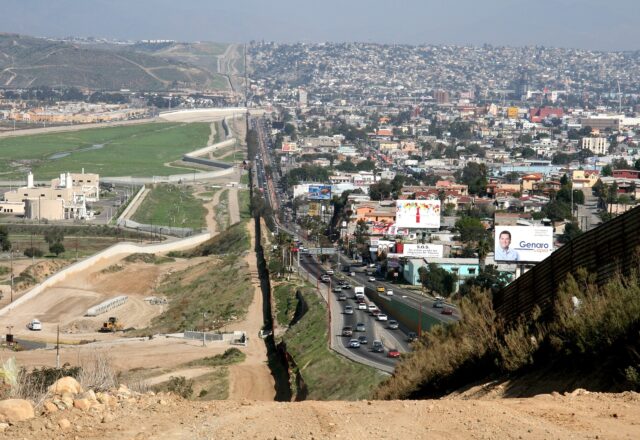

US seeks Canadian help to ease crowding at U.S.-Mexico border

STOCK PHOTO | Image by WikiImages from Pixabay

 – The United States is looking to Canada to help cope with the growing number of migrants at the United States’ border with Mexico, a State Department spokeswoman said on Tuesday.

A possible trilateral agreement with Canada, the United States and Mexico was on the table as the three countries met in Mexico for the North American Leaders’ Summit, spokewsoman Kristina Rosales told Reuters.

The agreement would help thousands immigrate through legal channels, without having to put their lives at risk at the hands of human traffickers, Ms. Rosales said.

“Canada has its own specific programs for refuge and migration,” Ms. Rosales said, telling Reuters ahead of the trilateral talks that the countries would discuss Canada’s involvement.

No such agreement was made public immediately after the talks between US President Joe Biden, Canadian Prime Minister Justin Trudeau and Mexican President Andres Manuel Lopez Obrador ended on Tuesday.

US authorities detained 2.2 million migrants at the border with Mexico in fiscal year 2022, a record not seen since World War II.

Ms. Rosales also said the United States is considering including more nationalities to enter the country by air while expelling those crossing over land under an order known as Title 42.

The order, launched in October for Venezuelans, was expanded to Cuban, Nicaraguan and Haitian migrants last week.

Encounters of Venezuelans at the border dropped about 90% in December, and similar drops are expected for other migrants in the program.

“If we see that we have to increase the number of those eligible for humanitarian parole per month and include other nationalities, we will consider it,” Ms. Rosales added.

Mexico‘s Lopez Obrador said Tuesday the nation “celebrated” the US decision to award humanitarian parole and that he believed “that this plan will be extended to benefit other countries.”

The United States has in recent months seen a significant increase in migrants reaching the country by sea from Caribbean countries such as Cuba and Haiti. Ms. Rosales said those who arrived in the United States by sea “unfortunately will not be able to qualify” for humanitarian parole.

Ms. Rosales added that the US government is seeking to broaden legal methods of immigrating and sway potential migrants from paying human traffickers.

“We want to broaden the legal channels so that people can apply directly from their cell phones,” Ms. Rosales said. – Reuters

Indonesia’s transgender community fears threat posed by new law

STOCK PHOTO | Image by Talpa from Pixabay

– Transgender Indonesian woman Chika Ananda Putrie wakes every morning in her decrepit rented room in a Jakarta slum, worried for her safety because of her gender identity.

She saw some of her worst fears come true last month, when the world’s largest Muslim-majority country, and its third-largest democracy, banned people from having sex outside marriage or even living together, at the risk of prison time.

“I am scared of being jailed,” said Chika, a 28-year-old busker who commutes each day to her preferred spot in a nearby town, and fears being caught living with her partner in a country where the government does not recognize gay marriage.

When the legal changes take effect in three years, such unmarried couples, particularly in the LGBT community already under pressure from religious conservatives, will have to contend with the constant threat of being reported to police.

Even though only a spouse, parent or child may report suspected offences under the new law, experts and rights groups have warned of the risk of misuse by those looking to crush alliances they dislike.

It “will disproportionately impact LGBT people, who are more likely to be reported by families for relationships they disapprove of,” New York-based Human Rights Watch said recently.

The first openly transgender woman to hold public office in Indonesia warned that the law could foster latent homophobia or transphobia while adding risks for those who cannot get married.

“The code does not break the chain of hate,” Hendrika Mayora Victoria Kelan, who is a provincial village official, told Reuters. “The state rules over … people’s bedrooms too much.”

Government officials have said they hope police raids and finger-pointing by moral crusaders would be prevented by the limitations on who is allowed to report a possible offence.

“Other parties cannot report it, or even play judge,” Albert Aries, the spokesperson for a government taskforce on the law, said last month.

“So there will be no legal process without complaints from the rightful party, or those who are directly harmed.”

Officials of the law ministry did not respond to fresh requests for comment.


TRADITIONAL VIEWS

Although homosexuality is considered taboo in Indonesia, it is not illegal, except in the ultra-conservative, autonomous province of Aceh.

Gender-fluid communities have historically been an accepted part of society. The Bugis ethnic group on Sulawesi island, for instance, traditionally recognizes five genders, including one that is said to “transcend”, or combine, the female and male.

But a rising tide of conservative Islam has swelled persecution of the LGBT community.

“In the last three years there has been an increase in case data every year,” LGBT advocacy group Arus Pelangi said in December, adding that there were more than 90 such incidents last year, up 90% from the previous year.

“It’s possible that the enactment of the criminal code will add to the list of victims from the LGBT community.”

With sexual minorities already living under duress before the new rules, they stand to increase the risk of vigilantism, police raids, and abuse of the law, said Bivitri Susanti, an expert from the Indonesia Jentera school of law.

“Their lives will be more threatened because the things that were once considered immoral are now illegal,” she added.

Also fueling concern is a provision on customary law that could lead to some sharia-inspired local laws being replicated elsewhere, reinforcing discrimination against women or LGBT groups.

Like many ‘waria’, a term combining the words for “woman” and “man” by which transgender women describe themselves, Chika has seen her share of trouble.

Her voice trembled as she told of transgender neighbors unfairly driven out of the slum years earlier, after another neighbor blamed a fire on the mere fact of their existence.

Seated on a mattress beside her partner strumming his guitar in a tenement enlivened by brightly-colored fabrics, Chika said the implications of the new law left her feeling helpless, despite the assurances.

“If anything happens, I’ll just give up,” she said, adding that she would be powerless to resist arrest. – Reuters

Apple supplier BOE plans new factories in Vietnam -sources

STOCK PHOTO | Image by Dariusz Sankowski from Pixabay

 – Chinese display maker BOE Technology Group Co Ltd., a supplier of both Apple Inc. and Samsung Electronics Co Ltd., plans to invest a substantial sum to build two factories in Vietnam, two people familiar with the matter said.

The investment may total up to $400 million, one of them said.

The plan underscores efforts by technology firms led by U.S. iPhone maker Apple and Taiwanese device assembler Foxconn to lower supply chain exposure to China amid trade and geopolitical tension between Beijing and Washington and production disruption caused by China’s COVID-19 containment measures.

BOE is in talks to rent dozens of hectares of land in north Vietnam to add to its relatively small plant in the south that supplies mostly television screens to South Korea’s Samsung and LG Electronics Inc., the people said, declining to be identified as negotiations were confidential.

BOE declined to comment.

Northern Vietnam has in recent years attracted significant investment from electronics giants, becoming a major hub for the production of smartphones, computers and cameras, including flagship goods from Apple and Samsung.

Hon Hai Precision Industry Co Ltd (Foxconn) and China’s Luxshare Precision Industry also make or plan to assemble a number of Apple products in the area such as laptop and tablet computers.

BOE plans to rent up to 100 hectares and use 20% for a plant making remote control systems at a cost of $150 million, one of the people said.

The rest would be for displays, with BOE spending $250 million to build a plant on 50 hectares while suppliers would use the remaining 30 hectares, all by 2025, the person said.

BOE plans to make the more sophisticated organic light-emitting diodes (OLED) screens at the site rather than liquid-crystal displays (LCDs), the person said.

Apple, which included BOE in its 2021 list of manufacturing partners, uses OLED screens for its latest iPhone smartphones.

China’s biggest display maker by output is set to become the largest supplier of displays for new iPhones by 2024, analyst Kuo Ming-chi at TF International Securities forecast last week.

The US tech giant, however, plans to start making mobile screens in-house by next year, Bloomberg reported on Wednesday.

Apple declined to comment.

BOE‘s Vietnam plan is not specifically aimed at supplying Apple, the person said.

Customer Samsung, the world’s largest smartphone maker, produces half of its handsets in Vietnam while LG has a large operation in the country and is planning new investment. – Reuters

Ecuador confirms first human bird flu infection in 9-year-old girl

 – Ecuador reported its first case of human transmission of bird flu in a 9-yearold girl, the Health Ministry said on Tuesday, marking a rare case of human infection a month after the country declared an animal health emergency.

Human illness from bird flu infections have ranged from no symptoms to mild illness to severe disease resulting in death, according to the US Centers for Disease Control and Prevention, which advised that spread between humans is very rare.

Bird flu wiped out tens of millions of birds last year across the United States, which reported a first human case last April. Many of the birds were slaughtered to stop the disease from spreading.

Ecuador‘s Health Ministry said humans and animals in the area where the child was infected in the central province of Bolivar were being closely monitored for transmission.

It did not report on the girl‘s condition.

“It is presumed that the infection occurred through direct contact with birds that carried the virus,” the ministry added. “So far no other cases have been reported in humans.”

Ecuador declared an animal health emergency in late November and an epidemiological alert in December after an outbreak had been detected in the provinces of Cotopaxi and Bolivar, where thousands of birds were slaughtered to contain the disease.

The government assured that the consumption of eggs and chicken meat does not represent a risk to human health. It recommended strengthening “biosecurity” measures and seeking medical help in case of symptoms related to influenza. – Reuters

Metro Pacific shares extend gains on deal speculation

MANILA – Philippines’ Metro Pacific Investments Corp said on Wednesday it had not entered into any “definitive” agreement with foreign investors, after shares in the infrastructure conglomerate were boosted by market rumors of a potential deal.

Metro Pacific shares rose by as much as 5% in early trade to reach the highest in nearly 14 months, extending a 7.8% surge on Tuesday.

The share rally came after speculation of the potential entry of a foreign investor or a plan to take the group private, said April Lee-Tan, head of research at online brokerage firm COL Financial in Manila. “After all, stock is super cheap”.

Philippine website Bilyonaryo reported on Tuesday that Japan’s Mitsui was interested in buying a state of up to 20% in Metro Pacific.

“We meet with many interested investors with our current portfolio given our strong and stable performance,” Metro Pacific said in a statement to Reuters. “But we have not entered into any definitive agreement with anyone.”

Metro Pacific, which has interests in power, water, hospitals and toll roads, is a unit of First Pacific Co Ltd, which is owned by Indonesian tycoon Anthoni Salim.

A Mitsui & Co spokesperson in Tokyo declined to comment on a reported deal.

“We are aware of the report, but we decline to comment,” he said. — Reuters


Note: MPIC is one of three key Philippine units of First Pacific, the others being Philex Mining Corp. and PLDT, Inc. Hastings Holdings, Inc., a unit of PLDT Beneficial Trust Fund subsidiary MediaQuest Holdings, Inc., has a majority stake in BusinessWorld through the Philippine Star Group, which it controls.

November trade deficit widens to $3.68 billion

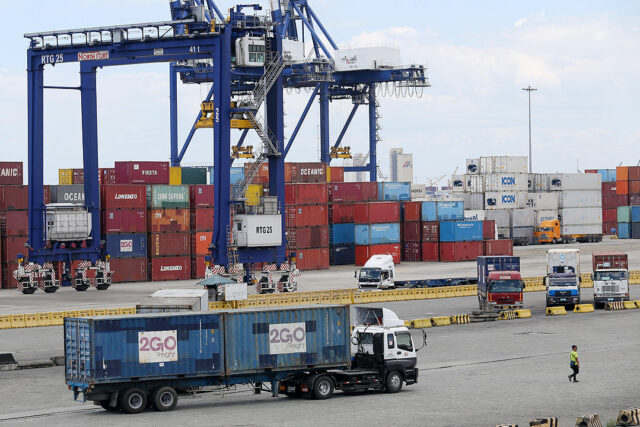
Trucks enter the port area in Manila. — PHILIPPINE STAR/EDD GUMBAN

By Lourdes O. Pilar, Researcher

THE PHILIPPINES’ trade deficit widened to a two-month high of $3.68 billion in November, as export growth slowed while imports declined for the first time in nearly two years, the Philippine Statistics Authority (PSA) reported on Tuesday.

Preliminary data from the PSA showed the value of merchandise imports slipped by 1.9% to $10.78 billion in November, a reversal of the revised 7.7% growth in October and the 36.8% rise in November 2021.

Imports dropped for the first time since January 2021 when it saw an 11.8% contraction. The November import bill was also the lowest in nine months or since the $10.19 billion posted in February last year.

Philippine trade year-on-year performanceMeanwhile, exports jumped by 13.2% year on year to $7.10 billion in November, slower than the revised 20.3% growth in October but faster than 6.6% in November 2021.

The November reading marked the third straight month of year-on-year growth in exports after the 1.7% contraction in August 2022.

Export earnings that month were also the lowest in three months or since $6.43 billion in August 2022.

This brought the trade-in-goods deficit — the difference between exports and imports — to $3.68 billion in November, narrower than the $4.71-billion shortfall in the same month in 2021.

The November trade gap was wider than the revised $3.31-billion gap in October, and the widest deficit in two months after the revised $4.83-billion gap in September.

November’s total trade — the sum of exports and imports — grew by 3.6% to $17.88 billion, slower than the 12.5% in October and the revised 24.1% in November 2021.

In the 11 months to November, exports grew by 7% year on year to $73.17 billion. This growth rate is still above the revised 4% growth target set by the Development Budget Coordination Committee (DBCC).

Year to date, imports climbed by 20.3% to $126.86 billion, matching the government’s 20% growth target for 2022.

This brought the trade deficit to $53.69 billion in the January-to-November period, widening from the $37.11-billion gap in 2021.

WEAK DEMAND
University of Asia and the Pacific Senior Economist Cid L. Terosa said in an e-mail that the wider trade gap reflected weaker world markets and global demand.

“The slowdown in exports shows weaker global demand for intermediate inputs for manufactured products. Meanwhile, the slowdown in imports reflects a cautious stance towards expanding domestic production given unstable and uncertain external economic conditions,” Mr. Terosa said.

With the latest data, Mr. Terosa expects the recently revised DBCC growth targets for exports and imports in 2022 would be achieved.

“Exports will grow by 5%-6%, while imports will grow by at least 20%,” he added.

ING Bank N.V. Manila Senior Economist Nicholas Antonio T. Mapa said in an e-mail that the November trade data showed strong export growth, lifted by electronics shipments which gained by 22.9% year on year.

“Electronics exports managed to gain sharply despite projections of slowing global demand. Imports, on the other hand, fell into contraction for the first time in 21 months after global energy prices moderated from their highs in 2022. Meanwhile, imports of both capital goods and raw materials fell, suggesting that investment momentum may be slowing in response to rapid fire rate hikes carried out by the central bank last year,” he said.

Despite the improvement, Mr. Mapa noted the trade deficit will keep the current account in deficit territory. The widening of the current account deficit was one of the main factors for the peso’s struggles last year.

“With the trade deficit expected to remain, we believe that the peso’s appreciation may be capped to some extent. The Philippine peso may enjoy some appreciation momentum in the near term on the improving balance of trade, however, a potential quick drop in exports later in the year due to softer global demand for electronics could spell some renewed depreciation pressure on the currency,” Mr. Mapa said.

Data from the Bangko Sentral ng Pilipinas showed the Philippine peso averaged P57.65 to a US dollar in November, a bit stronger than P58.82 monthly average in October. However, this was weaker than the P50.34-to-a-dollar average in November 2021.

Philippine Exporters Confederation, Inc. President Sergio R. Ortiz-Luis, Jr. said the exports performance in November can be attributed to the economy’s continued reopening.

Mr. Ortiz-Luis in a phone interview said that exports will continue to expand, but the 2022 import growth target is unlikely to be achieved.

Manufactured goods, which comprised the bulk of the country’s total export receipts, rose by 15.3% year on year to $6.05 billion in November.

Electronic products, which made up of more than three-fourths of manufactured goods and 64.3% of total exports in November, grew by 22.9% to $4.57 billion. More than two-thirds of electronic product sales came from semiconductors, which surged by 42.4% to $3.74 billion.

Meanwhile, orders of raw materials and intermediate goods fell by 4.6% to $4.06 billion in November. These accounted for more than one-third of the total November import bill.

In November, imports of capital and consumer goods were valued at $3 billion (down 10.4%) and $1.97 billion (up 11.4%), respectively. Mineral fuels, lubricants and related materials grew by 7.9% to $1.68 billion during the month from $1.55 billion last year.

Hong Kong was the top destination of locally made products, accounting for 16.3% ($1.16 billion) of the total receipts. It was followed by United States (16% share or $1.14 billion), and Japan (13.2% share or $938.30 million).

Meanwhile, Mr. Terosa said the trade performance in December 2022, which will be released on Jan. 26, is expected to mirror the weakness in global markets.

“Despite the reopening of China, global markets continue to be cautious about the prospects of spectacular rebound in economic activities in China. Soaring interest rates across the world and their economic effects will continue to constrain trade performance in December,” Mr. Terosa said, also citing the looming recession in the US.

Mr. Mapa noted the smaller trade gap should help lift economic growth in the fourth quarter.

“Meanwhile, we expect more of the same in December with a slight moderation possible for exports,” he said.

The PSA will release the fourth-quarter and full-year 2022 GDP report on Jan. 26.

Medalla sees 25-50 bps hike in Feb. meeting

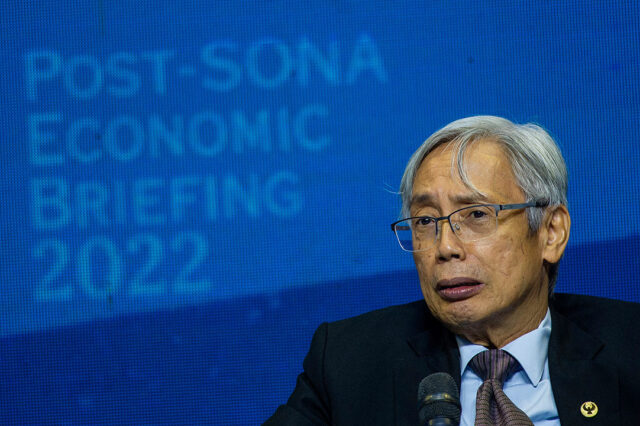
Bangko Sentral ng Pilipinas (BSP) Governor Felipe M. Medalla attends an economic briefing in Pasay City, July 26, 2022. — REUTERS

By Keisha B. Ta-asan, Reporter

THE BANGKO SENTRAL ng Pilipinas (BSP) is likely to raise benchmark interest rates by 25 or 50 basis points (bps) at its meeting in February, its governor said, citing the need to anchor inflation expectations.   

BSP Governor Felipe M. Medalla said the pressure to match the US Federal Reserve’s policy tightening was waning, and the need for large policy adjustment is “no longer there.”    

“In that scenario, you have a weaker dollar to begin with, so the pressure on us to match US increases will be much lower,” he told reporters on Tuesday.   

The Monetary Board has raised rates by a total of 350 bps last year to tame inflation and slow the peso’s decline. This brought the policy rate to a 14-year high of 5.5%.

Last year, the US Federal Reserve delivered 425 bps of cumulative rate hikes, which brought its own policy rate to 4.25-4.5%.

The peso weakened against the dollar last year, closing at a low of P59 in October. The peso has since rebounded, finishing at a six-month low of P54.87 on Tuesday.

Mr. Medalla also said the BSP is “way ahead” of central banks in the region.

“We’ve already done more work than them, they have more work to do than us. Our main concern now is inflation and to some extent the strong dollar,” he said.   

Inflation rose to 8.1% in December, from 8% in November and 3.1% in December 2021. This brought the average inflation in 2022 to 5.8%, the highest in 14 years.     

With the BSP set to take further steps in taming price pressures, Mr. Medalla expects inflation to be within the central bank’s annual 2-4% target by the second half, falling below the midpoint of that target by late 2023 or early 2024.   

The BSP chief noted that inflationary pressures are broadening and until that is addressed, monetary tightening will continue.

“Now, what if we don’t even need to do more rate hikes? It’s easy to reverse that later. I would rather cut rates in that scenario than scramble to raise interest rates. The moment the people start to not trust us anymore, that would be a more difficult path to take,” he said in mixed English and Tagalog.   

“I’m not worried about the monetary policy reducing output. What I’m worried about is (if) we’re late, and there’d be a greater sacrifice of output later on,” he said.

Mr. Medalla noted that the economy may grow by more than 6% this year as pent-up demand would continue to support growth.    

The Philippines’ gross domestic product (GDP) expanded by 7.6% in the third quarter, bringing the nine-month average to 7.7%. The government expects GDP to have grown by 6.5-7.5% in 2022, and targets 6-7% growth in 2023.     

The Philippine Statistics Authority is scheduled to release the fourth-quarter 2022 GDP data on Jan. 26.

The Monetary Board is scheduled to meet on Feb. 16 for its first policy meeting this year.

PHL raises $3 billion from US dollar bonds

COLIN WATTS-UNSPLASH

THE PHILIPPINES raised $3 billion from its first US dollar bond issuance for the year, the Bureau of the Treasury (BTr) said on Tuesday. 

The government sold $500 million worth of the 5.5-year notes priced at 4.625% or US Treasuries plus 105 basis points (bps).

It also raised $1.25 billion from the 10.5-year papers priced at 5% or US Treasuries plus 145 bps.

“This was 50 bps tighter than initial price guidance of US Treasury plus 155 and 195 bps, respectively,” the BTr said in a press release.

The government also sold $1.25 billion worth of the 25-year sustainability bonds with a yield of 5.5% or US Treasuries plus 180.7 bps. This was also 45 bps tighter than the initial price guidance.

The bond issuance’s order book peaked at $28.2 billion for all tranches, reflecting “strong interest across all tranches from a diverse pool of high-quality investors, showcasing investors’ confidence in the republic’s credit profile,” the BTr said.

“Due to a strong order book, we were able to compress the price guidance while still upsizing the transaction from an initial target issue size of $2 billion,” the Department of Finance (DoF) said in a statement.

The three-tranche offering, which is expected to be settled on Jan. 17, was launched on Monday at a benchmark size or at least $500 million each.

“Despite high volatility in global credit markets amid the rate hike cycle, the republic took advantage of the improved market sentiments with economic data showing signs of slowing inflation and alleviating concern over US Federal Reserve tightening,” the BTr said.

The US Federal Reserve slowed the pace of rate hikes at its meeting in December. However, two Fed officials on Monday said they see a need to raise rates above 5% and hold them for a long time.

“The robust demand for our first international bond offering in 2023 represents a strong vote of confidence by international investors. It is a testament to the republic’s sound economic fundamentals and the resilience of our economy in the face of volatile global financial markets,” Finance Secretary Benjamin E. Diokno said in a statement.

National Treasurer Rosalia V. de Leon said the reception and tight pricing of the offering “reaffirms the distinction of Philippine credit as a favored proposition even in times of uncertainties.”

Proceeds of the bonds will be used for general budget financing, as well as the financing or refinancing of assets in line with the government’s sustainable finance framework.

BofA Securities, Deutsche Bank, Goldman Sachs, HSBC (B&D), Morgan Stanley, Standard Chartered Bank and UBS acted as joint lead managers and bookrunners. UBS and Standard Chartered were also both designated as sustainability structuring banks.

The dollar bonds were rated “Baa2” by Moody’s Investors Service, “BBB+” by S&P Global Ratings, and “BBB” by Fitch Ratings.

This is the second global bond offering under the Marcos administration, following its first three-tranche dollar bond offering in October, where it raised $2 billion.

The government borrows from external and local sources to fund a budget deficit capped at 6.1% of gross domestic product (GDP) for 2023.

For 2023, the government plans to borrow P2.207 trillion, where 75% is expected to be sourced domestically. The government plans to borrow P1.654 trillion domestically and P553.5 billion from external sources. — Luisa Maria Jacinta C. Jocson

Meralco customers brace for higher January bills

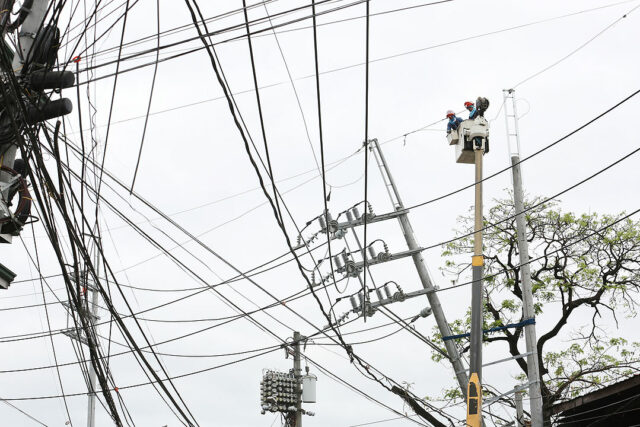
PHILIPPINE STAR/MICHAEL VARCAS

By Ashley Erika O. Jose, Reporter

TYPICAL HOUSEHOLDS in Metro Manila can expect their monthly electricity bills to go up by around P125 this month, after Manila Electric Co. (Meralco) said it will hike the overall rate due to an increase in the generation charge and the completion of refunds.

In a statement on Tuesday, Meralco said the overall rate for a typical household increased by P0.6232 per kilowatt-hour (kWh) to P10.9001 per kWh in January, from P10.2769 per kWh in December.   

Households that consume 200 kWh would see their monthly bills increase by around P125. Residential customers consuming 300 kWh, 400 kWh, and 500 kWh will see an increase of P187, P248, and P309, respectively, in their monthly bills.

Meralco attributed the January rate hike to the generation charge which rose by P0.3316 to P7.1291 per kWh from P6.7975 per kWh in December.   

Joe R. Zaldarriaga, Meralco spokesperson and head of corporate communications, said charges from the independent power producers (IPPs) also went up by P0.4070 per kWh as First Gas-Sta. Rita used more expensive alternative fuel due to the lack of supply of Malampaya natural gas.

However, the peso appreciation, which affected 97% of IPP costs that are dollar-denominated, tempered the further increase of power rates.

In December, IPPs supplied 46% of Meralco’s energy requirement.   

The peso closed at P55.76 against US dollar on Dec. 29, 2022 gaining 88 centavos from its close of P56.64 per dollar on Nov. 28, 2022. 

Wholesale Electricity Spot Market (WESM) charges went up by P0.6808 per kWh as the secondary price cap was triggered 61% of the time in December.

Last month, the Luzon grid was placed under yellow alert due to thin power supply after several power plants experienced forced outages.   

Meralco also sourced more of its energy supply from WESM in December, increasing the latter’s energy share to 9% from 7%. This came after South Premiere Power Corp. (SPPC) withdrew its power supply agreement (PSA) with Meralco effective on Dec. 7.

SPPC’s deal with Meralco had covered 670 megawatts (MW) of capacity for a period of 10 years starting in 2019 at P4.2455 per kWh.   

In November, the Court of Appeals (CA) issued a temporary restraining order (TRO) in favor of SPPC suspending the implementation of its PSA with Meralco.   

To mitigate the impact of SPPC’s withdrawal, Meralco then secured an emergency PSA (EPSA) with Aboitiz Power Corp. (AboitizPower) on Dec. 15 until Jan. 25 at P5.96 per kWh.   

AboitizPower will source the supply from its GNPower Dinginin Ltd. Co., but it only covers 300-MW baseload capacity. Meralco is sourcing the remaining 370 MW it lost from the SPPC power deal from WESM.   

“Due to the cessation or suspension of SPPC PSA, we had to procure power in the spot market and enter into emergency PSA but hopefully the situation will be much better,” Mr. Zaldarriaga said.

Lawrence S. Fernandez, vice-president and head of utility economics of Meralco, said that it cannot say at the moment whether AboitizPower will extend its contract with Meralco.   

“GNPower said they will also need to see what their costs are going to be at that time, Meralco is still calling suppliers for supply apart from GNPower so we will see what will happen as we approach Jan. 25,” Mr. Fernandez said. 

Also, the completion of the distribution-related refunds amounting to P0.2761 per kWh for residential customers contributed to the higher rate this month, Mr. Zaldarriaga said.

Two distribution-related refunds are still being implemented by Meralco. These refunds, amounting to P1.0579 per kWh, will be completed by January and May which will be reflected in February and June billing period.

Meanwhile, Mr. Fernandez urged the public to practice energy efficiency following the Department of Energy’s (DoE) warning of thin power reserves this year.

“For summer 2023, we are conducting biddings for short-term PSAs, one for 180-MW and another for 300 MW to help customers be shielded from spot market prices. We will try to mitigate the impact of the expected supply tightness,” Mr. Fernandez said.   

The DoE said it expected deficient reserves for seven months this year, it also places the whole of May as critical period due to expected surge in power demand.   

Separately, Meralco said it will now proceed with negotiations for its 200-MW baseload energy requirement after no challenge was submitted on the second round of competitive selection process (CSP) for Solar Philippine Batangas Baseload Corp.’s (SPBBC) proposal.   

SPBBC will source the power it will supply to Meralco from solar and battery.   

Meralco said its third-party bids and awards committee (TPBAC) did not receive “any competitive bids from any challenger during the bid submission deadline on Jan. 10.”   

The power distributor added that because there is no outstanding dispute during the previous rounds of competitive challenge it can now negotiate for the contract capacity requirement.   

SPBBC’s offer to Meralco covers 20-year contract beginning in 2024 at a rate of P4.65 per kWh.   

“Once negotiations are completed, Meralco will enter into a PSA with the original proponent and seek regulatory approval for the contract,” Meralco said.

Meralco’s controlling stakeholder, Beacon Electric Asset Holdings, Inc., is partly owned by PLDT Inc. Hastings Holdings, Inc., a unit of PLDT Beneficial Trust Fund subsidiary MediaQuest Holdings, Inc., has an interest in BusinessWorld through the Philippine Star Group, which it controls.

5G subscription in PHL seen rising at ‘brisk pace’

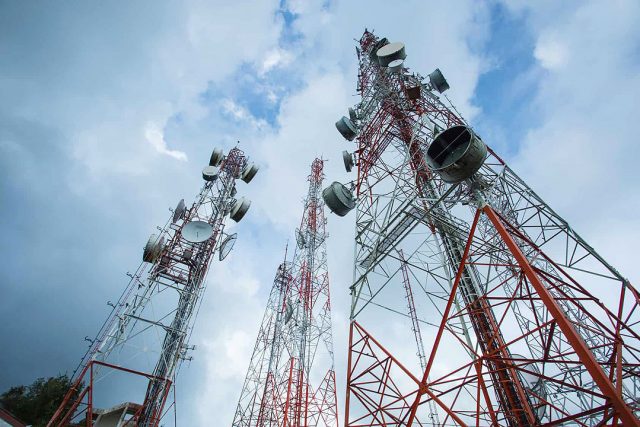
BW FILE PHOTO

THE total revenue of telecommunications companies in the Philippines is expected to increase at a compound annual growth rate (CAGR) of 4% during 2021-2026, with subscriptions to fifth-generation (5G) services seen growing at a “brisk pace,” according to London-based data analytics company GlobalData Plc.

In its analysis report released last month, GlobalData said the progress in telecom revenue will be mainly supported by mobile data and fixed broadband segments.

Citing its research, GlobalData said the mobile voice service revenue in the country will decrease over 2021-2026 in line with the constant decline in mobile voice average revenue per user or ARPU, as telcos extend unlimited voice minutes as part of their packaged plans.

Meanwhile, mobile data service revenue is expected to increase at 7.8% over the period “driven by the projected rise in mobile internet subscriptions, growth in higher ARPU-yielding 5G subscriptions and a steady rise in the consumption of mobile data services.”

Aasif Iqbal, telecom analyst at GlobalData, said: “4G services accounted for 80.4% of the total mobile subscriptions in 2021 and will remain the leading mobile technology through 2026.”

“5G subscriptions will however increase at a brisk pace over the forecast period, supported by 5G network expansion efforts by operators like PLDT and Globe Telecom across the country.”

GlobalData also expects revenue from the fixed voice segment to grow over the forecast period driven by the subscription gains in the voice over internet protocol or VoIP segment.

“Fixed broadband service revenue will also increase during the forecast period, driven by a steady rise in fiber-to-the-home subscriptions, and continued growth in DSL (digital subscriber line), cable internet, and fixed wireless subscriptions,” GlobalData noted.

It said that the acceleration in the adoption of fiber-optic broadband services in the country can be attributed to the rising demand for high-speed data services and the expansion of fiber-optic network infrastructure by local government and service coverage by operators.

“For instance, PLDT has added 489,000 new fiber subscriptions and has deployed 1.29 million new fiber ports in the first nine months of 2022,” GlobalData said.

On Monday, Globe Telecom said it had successfully tested the 5G-standalone technology in various applications.

“The successful demonstration of 5G standalone with network slicing highlights the company’s commitment to driving innovation and providing new and improved services to its customers,” the telco said in a statement.

“The technology also opens up new opportunities for businesses across a range of industries, as it enables Globe to provide products and services that are tailored to specific demands,” it added. — Arjay L. Balinbin

ACEN signs EPC contract for solar farm in Australia

ACEN Corp. said its subsidiary had chosen PCL Construction as its engineering, procurement and construction contractor (EPC) for the development of its 520-megawatt direct current (MWdc) Stubbo solar farm in Australia.

“PCL has been engaged to deliver all aspects of the solar project and is responsible for the detailed design, engineering and procurement of Stubbo solar,” ACEN said in a media release on Tuesday, adding that the contractor will also handle the operation and maintenance services of the solar farm for two years.

ACEN said the construction of the Stubbo solar farm started after it issued a notice to proceed to PCL, which means all contracts for the project are in place. It described PCL as a diversified construction company involved in solar energy solutions in Australia, the United States and Canada.

ACEN quoted Gopi Govindraj, country manager of PCL, as saying, “We look forward to designing and building this important solar project for ACEN Australia.”

Sech Zabaleta, chief development officer at ACEN, said that the Stubbo solar farm is part of the Ayala-led company’s renewable energy expansion where it targets to reach 20 gigawatts of installed renewable energy (RE) capacity by 2030.

The solar farm project is located in Stubbo, New South Wales. It will connect the existing 330-kiloVolt (kV) network between Wollar and Wellington.

The project is expected to power up to 185,000 households. It includes a provision for a 200-megawatt-hours (MWh) battery energy storage system, which will allow the solar farm “to dispatch energy when it is most needed during peak hours and provide important grid stability services.”

In a separate media release, ACEN said it executed on Dec. 9 a P10-billion loan facility agreement with BDO Unibank, Inc.

ACEN also said it signed a deal for the acquisition of subscription rights in Sinocalan Solar Power Corp. (SSPC), the developer of a 60-megawatt-peak solar power plant in Pangasinan.

The renewable energy company said it signed a deed of assignment with Sungrow Power Renewables Corp. to acquire subscription rights to be issued in the increased authorized capital stocks of SSPC.

On Tuesday, shares in ACEN closed 3.95% lower to end at P7.30 apiece. — Ashley Erika O. Jose

ADVERTISEMENT
ADVERTISEMENT