Home Blog Page 5408

Keeping things spicy

INSTAGRAM.COM/ALEROSPH/

An artisanal brand of hot sauce mixes chili peppers with fruit for a well-balanced burn

A LONGING for the warmth of home is what made Radi Custorio create very hot sauce.

Late last year, we met up with Mr. Custorio among the many holiday bazaars in the city, where his hot sauce, WAP! (as in the pop song), was sold under his brand, Aleros N’ Sauces, along with a display of chips with which one can sample his sauces.

Mr. Custorio is Filipino, but was born and raised in Latin America — a hotspot for spicy food. There, he sprinkled his meals with Marie Sharp’s hot sauce, a product from Belize made of Habanero peppers and grapefruit. To give in to a craving after his sauce ran out after moving to the Philippines, he tried to replicate the experience, taking note that it was made with fruit. From there, he experimented with different peppers and fruit. “Latin (American) culture is very hot, very spicy-food oriented,” he said. “I kind of missed that.”

Four of his sauces made an impression on this writer, namely Apple Desire, Oh Dalandan, one made with watermelon, and another inspired by Mexican mole (which had cacao in it). The one with apples was smoky and sweet with a light kick, while the one with watermelon, also infused with Japanese sake, had a taste one can describe as juicy, slowly releasing the heat of the world’s spiciest chili, the Carolina Reaper (with about 2 million Scoville Heat Units; the scale for which they measure chili’s heat). Oh Dalandan was complex and oddly fresh, while the Mole was hot! The immediate rush smolders down to a pleasant ember, and despite all the hot sauce we had consumed, we were still able to stand and talk to Mr. Custorio.

The ability to still stand after consuming something made with the world’s spiciest chili is a mark of Mr. Custorio’s mastery and sense of balance. It’s hard to say we’re only flattering him, considering he already won The Fiery Cup (a competition by the Philippine Hot Sauce Club) in 2020; as well as placing in the Ultimate Taste contest in 2021 and 2022. His secret is combining the lightness of fruits with the heat of peppers: “I just really like highlighting tropical fruit. No one’s really done it, and then it’s kind of a good entry-level way for people to jump into hot sauce,” he said.

“My goal is never to just have a painful hot sauce. I try to balance flavor with heat,” he told BusinessWorld in an interview.

He sources the local fruit at wet markets himself, but the peppers are a different story. Bred in other countries (the ghost pepper derives from India, while the Reapers were first developed in South Carolina, as its name suggests), he had to find local suppliers to get his fix. “I have four or five local suppliers that grow their own peppers,” he said. “They acclimate the peppers here. Took them maybe a few years.”

He knows his peppers well: each sauce is meant for specific purposes. For example, the one made with dalandan, a local citrus, is meant for red meats and chicken, while the pineapple-passionfruit variety is made for breads, cheeses, and pizza. Apple Desire is meant for Asian dishes, the watermelon sauce is for lighter fare like salads — it looks like he has a sauce for every dish.

He talks about his own take on Filipino cuisine, and how hot sauce fits in with it: “Filipinos kind of like slight heat to their meals,” he said, citing the appearance of chilis in sawsawan (dips). “It’s not something too far and unrecognizable.”

To purchase Mr. Custorio’s sauces, contact instagram.com/alerosph. — Joseph L. Garcia

Car sales up 31% in 2022, exceed industry target

PHILSTAR FILE PHOTO

AUTOMOTIVE sales jumped past 352,000 last year, with units sold breaching the industry’s target on the back of surging demand, data from vehicle manufacturing groups show.

In a joint report released on Wednesday, the Chamber of Automotive Manufacturers of the Philippines, Inc. (CAMPI) and Truck Manufacturers Association (TMA) said that January-to-December 2022 vehicle sales reached 352,596 units, equivalent to a 31.3% improvement compared with 268,488 units in 2021.

Broken down, commercial vehicle sales rose 45.6% to 266,699 units. The segment accounted for 75.64% of overall sales led by light commercial vehicles or LCVs with 209,728 units sold and Asian utility vehicles or AUVs with 46,877 units sold.

Auto SalesPassenger vehicle sales in 2022 increased by 0.7% to 85,897 units and accounted for 24.36% of total sales.

In December alone, the local auto industry sold a total of 37,259 units, higher by 33.8% from 27,846 units sold in the same month in 2021.

Sales of commercial vehicles, which rose 47.7% to 28,645 units from 19,399 units, accounted for 76.9% of overall sales in December.

Passenger vehicles sold reached 8,614 units, higher by 2% than the 8,447 units sold in the same month a year earlier. The segment contributed 23.12% of total sales.

CAMPI President Rommel R. Gutierrez said the full-year 2022 sales figure “brings renewed optimism” for the local auto industry in 2023, adding that the sales level last month was last recorded in 2017.

“The new motor vehicle sales of 37,259 units in December was the highest monthly performance recorded, which contributed in achieving its full-year sales of 352,596 units,” Mr. Gutierrez said in a separate statement.

He added that CAMPI-TMA sales alone have exceeded the total industry sales forecast of 336,000 units, “strong evidence that the industry has recovered from the impact of the pandemic and other external challenges.”

Toyota Motor Philippines Corp. led car manufacturers in sales last year, accounting for 174,106 units sold or 49.38% of the total.

Other car manufacturers trailed distantly. Mitsubishi Motors Philippines Corp. had a share of 15.09% or 53,211 units sold, followed by Ford Motor Co. Phils, Inc. at 7.01% or 24,710 units sold, Nissan Philippines, Inc. at 6.02% or 21,222 units sold, Suzuki Phils, Inc. at 5.66% or 19,942 units sold, and Isuzu Philippines Corp. at 5% or 17,639 units sold.

Mr. Gutierrez said that the local industry is banking on strong demand to boost sales for 2023.

“The continued expansion of the economy, creation of new jobs and opportunities is just as important as ensuring that no pandemic disruption occurs anew this year. Nonetheless, the industry will continue to capitalize on the growing market demand for new motor vehicles,” Mr. Gutierrez said. — Revin Mikhael D. Ochave

Noma and the search for a second act

NOMA restaurant in Copenhagen. — TWITTER.COM/NOMACPH

By Howard Chua-Eoan

COPENHAGEN became a place of pilgrimage for global gourmands because of Noma and its chef Rene Redzepi. The news that he will close its doors as a restaurant at the end of 2024 brought me back to the afternoon of Sept. 7, 2019. I’d just had lunch there with my friends Ferran and Isabel Adria, who were visiting from Barcelona. Ferran was the trailblazing wizard of El Bulli on the Costa Brava — a supremely innovative kitchen that made culinary history. Rene had worked there briefly and credits Ferran with freeing the imagination of cooks around the world from the dominance of French gastronomy.

Rene and his wife Nadine led us out into the restaurant’s lovely garden. He had important questions for Ferran, who’d shuttered El Bulli eight years before: How should he think about life after Noma? How does one go about a second act?

Here were two epic figures in the universe of haute cuisine, but I can’t say any real answers emerged from their conversation. Ferran’s one dictum was that, whatever Rene did, it couldn’t be just about food. Creativity, the Catalan chef said, was his operating principle. He had been working hard to turn the site of El Bulli into a center for innovation in all endeavors. That ambition had gotten a lot of attention but most of it derived from Ferran’s own compelling personality and his historic role in making Spain a mecca for the culinary avant-garde — or as he prefers to say in Spanish, la vanguardia. I’d been following the evolution of the post-restaurant El Bulli and was aware that Ferran had so many ideas for the project that shaping it had become a monumental task in itself. El Bulli will finally reopen this year — as a culinary museum.

On that September afternoon, Rene had listened politely but did not look as if he’d gotten the direction he needed. The New York Times says Noma will become a food laboratory that will turn out products to be sold online. However successful the endeavor, the next chapter will be very different from being the acclaimed chef of the best restaurant in the world. I think of the lines from Tennyson’s “Ulysses”: “How dull it is to pause, to make an end,/To rust unburnish’d, not to shine in use!”

I suspect Rene will go through what I sense Ferran has discovered. It’s great to be part of history — but not really comforting to know you have become part of the past. There’s nothing that quite compares to the rush from being the world’s No. 1 restaurant — an acknowledgement not just of creativity but of that most difficult of arts, making people happy simply by placing food in front of them.

When he closed El Bulli, Ferran admitted that he wouldn’t miss the annual anxiety over retaining Michelin stars. In the years since, he’s worked selflessly to burnish the reputation of his brilliant younger brother, Albert, whose restaurants are among the world’s best. But it’s still wonderful to be reminded of how brightly you’ve shined. I could see how he beamed when we ate at Rasmus Munk’s acclaimed Alchemist, where the cuisine is, in many ways, a living tribute to El Bulli. Munk is too young to have eaten at Ferran’s restaurant but he was enraptured by the presence of the master. And that made Ferran happy.

For now, the top chef doing the best forward thinking about second acts is another disciple of Ferran’s: Jose Andres. He’d been fired from El Bulli by Ferran himself, but when Jose moved to the US, he became an evangelist for his mentor’s culinary philosophy. He made his home and career in the Washington DC area, becoming adept at politics or at least dealing with politicians. Remember his feud with Donald Trump?

While Jose has built a successful business of several restaurants around the US, he has also become a secular saint. If a war breaks out or a natural disaster slams a city, Jose and his World Central Kitchen will sweep in to feed people.  It’s a different kind of celebrity status. Hero or top chef — which role provides greater satisfaction? Or longevity?

Noma won’t close till the end of next year. And the dash for final reservations will be heady. But all that doesn’t mean Rene can’t change his mind. He shut Noma once before, reopening what’s popularly called Noma 2.0 in a new site (where we sat in the garden) after more than a year’s absence. In the interim, he took his operation overseas for elaborate pop-ups. He’s doing one again this year in Kyoto. He’s only 45. Give the second act a little more time to shape itself. I haven’t given up hope for El Bulli 2.0. — Bloomberg

Megawide aims to raise P1.5B via preferred share offering

LISTED construction company Megawide Construction Corp. announced on Wednesday that it plans to raise P1.5 billion through a preferred share offering in March this year.

The net proceeds from the offer will be used for the redemption of the outstanding Series 2A perpetual preferred shares of the company which will be due for step-up on May 27, Megawide said in its preliminary prospectus.

The company submitted on Jan. 6 an application to the Securities and Exchange Commission for its offer and sale of 15 million cumulative, non-voting, non-participating, non-convertible, redeemable (non-reissuable) perpetual preferred shares having a par value of P1 per share.

“The offer shares is for a total of 15 million Series 5 preferred shares, which shall be issued at a subscription price of P100 per share,” Megawide said.

The company said the sale of the shares will be made solely in the Philippines through RCBC Capital Corp. and its selling agents who will sell and distribute to third-party buyers or investors at the offer price.

The Series 5 preferred shares will be listed on the main board of the Philippine Stock Exchange on March 31 under the trading symbol “MWP5.”

“Following the offer, the company will have 2,013,409,717 common shares and 386,016,410 common shares held in treasury; 26,220,130 Series 2A preferred shares, and 17,405,880 Series 2B preferred shares, 29,000,000 Series 3 preferred shares, 40,000,000 Series 4 preferred shares issued and outstanding shares, and 15,000,000 Series 5 preferred shares,” Megawide said.

Megawide noted that the holders of the Series 5 preferred shares do not have identical rights and privileges with holders of the existing common shares and existing Series 2, Series 3, and Series 4 preferred shares of the company.

“Any and all preferred shares of the corporation shall have preference over common shares in dividend distribution and in case of liquidation or dissolution,” it said.

For the January-to-September period of 2022, the company’s attributable net loss widened to P445.3 million from a loss of P80.8 million in 2021.

The company’s consolidated net loss reached P970 million compared with the consolidated net loss of P510 million in 2021.

This was “due to a higher loss contribution from the airport business as well as landport operations,” Megawide previously said in a statement. — Arjay L. Balinbin

Onions or no onions, Olive Garden expands in 2023

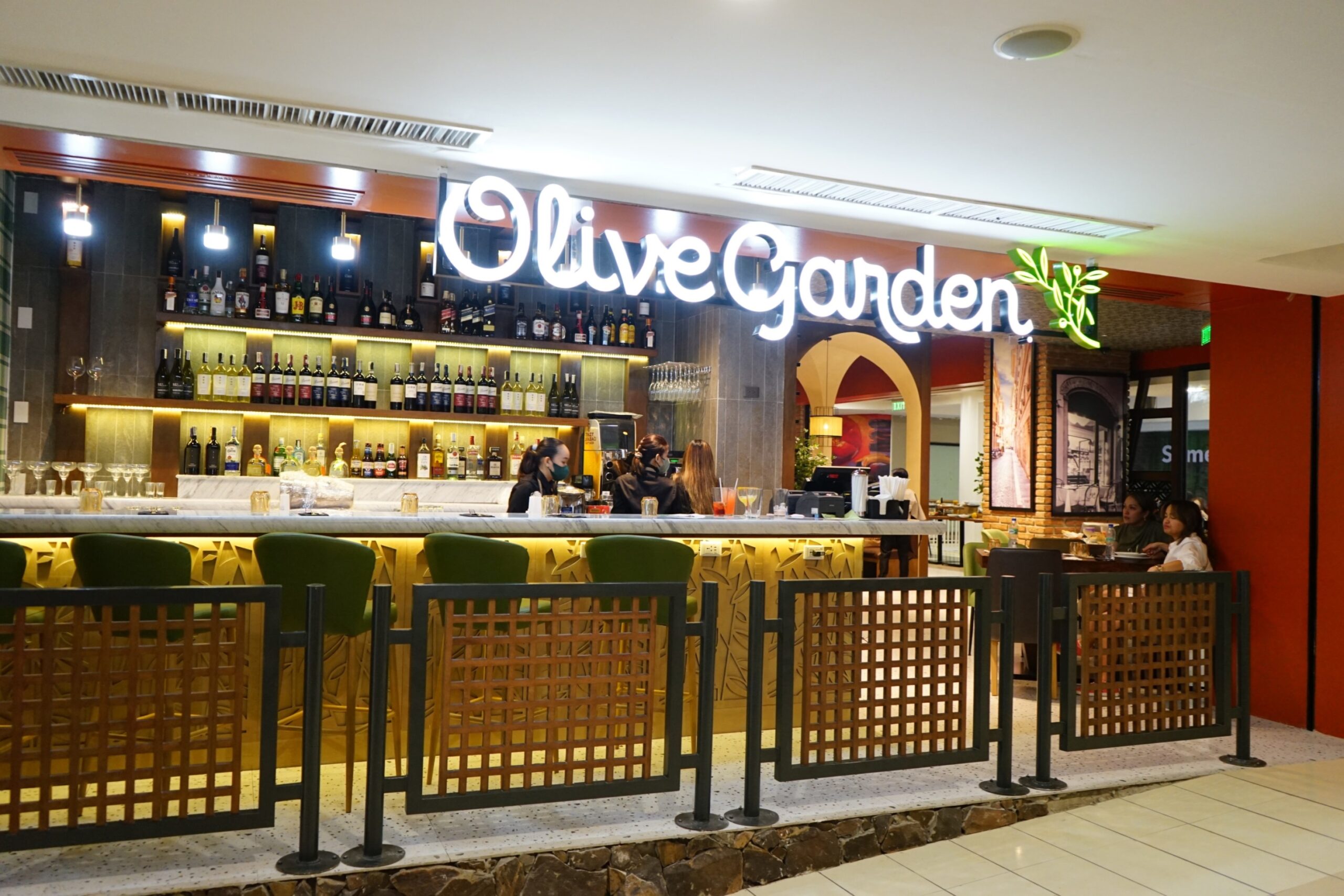
AFTER testing the waters in the Philippines last year, Olive Garden is seeing green as it plans to open more branches this year. Just this week, it opened its second branch in Glorietta, and plans to open a BGC location in March.

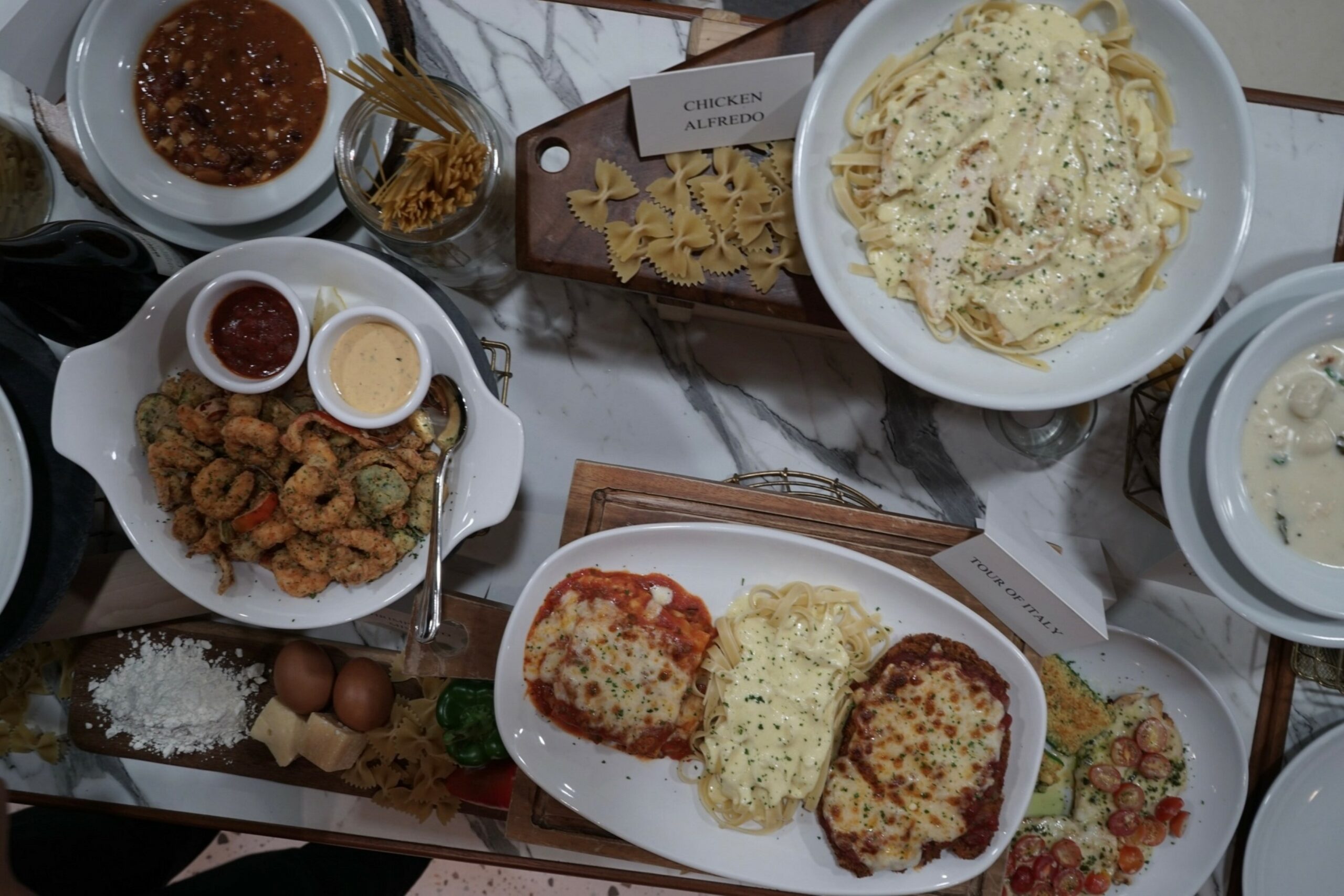
Last week, for the second time since September, BusinessWorld sat down at Olive Garden again, to be reacquainted with its Tour of Italy platter, which includes Lasagna Clasico, Fettucine Alfredo, and Chicken Parmigiana, as well as never-ending bowls of Zuppa Toscana (a soup made of fennel-infused Italian sausage, potatoes, and a luxury in these times, white onions). We have to hand it to them: while BusinessWorld’s first visit last year at its SM Mall of Asia branch ended with a daze from aggressive flavors, the second branch showed off balance resulting in a pleasant meal. With the tempered tastes and the never-ending (their term for unlimited refills) soup, salad, and bread, Olive Garden in the Philippines may have more than a chance to be a new favorite for casual diners.

Greg Dalogh, Director for International, Darden-International said, “We of course start with our signature recipes that resonate worldwide. But then, based on our guests’ feedback, we can adapt the flavors.” He cites possible adjustments with sweetness, saltiness, mildness, mellowness, and other properties. “From what we’ve found through feedback, the flavors are a little more sweet,” he said about the Filipino palate.

The American-headquartered Darden Restaurants Inc. is the parent company of Olive Garden, and other restaurants like Cheddar’s Scratch Kitchen, Longhorn Steakhouse, and The Capital Grille, among others. Olive Garden’s arrival in the Philippines is its first venture in Asia. Asked if they plan to open other Darden restaurants in the country, Mr. Dalogh said, “It’s certainly possible. We’re always looking for new franchise partners. Certainly, if the Bistro Group is interested in one of our brands, we would love to partner with them as well.”

“Bistro’s culture mirrors Olive Garden and Darden’s culture of warmth and generosity,” he added.

The Bistro Group isn’t holding back either. Responsible for bringing restaurants like Texas Roadhouse, Buffalo Wild Wings, TGI Friday’s, Hard Rock Cafe, El Pollo Loco, and Randy’s Donuts to the Philippines, among others, The Bistro Group plans to open 50 more restaurants this year — a feat it had accomplished last year. Three of these will be TGI Friday’s, four of these will be Randy’s, and it plans to open the country’s first Fogo de Chão (a chain of Brazilian steakhouses) this year.

RC Tiongson, Chief Operating Officer for Olive Garden in the Philippines, discussed the Bistro Group’s aggressive strategy in the face of a recovering post-pandemic economy, and worrying crises in inflation, importation, logistics, and supply. “If you’re asking why we keep on opening, we take that opportunity to keep on opening while the others are closing. We’re very aggressive with getting new concepts and opening more restaurants for this year.”

LOCATION, LOCATION, LOCATION
As real estate professionals would say, it’s still all about “location, location, location.”

“When others were closing, we took the opportunity to maximize the opening of more restaurants. Sayang naman (it would have been a waste),” said Ms. Tiongson. For example, late in 2018, the Bistro Group opened the country’s first Red Lobster at S Maison, but apparently, the market had not been ready for it. They temporarily ceased operations in the two branches (the other one was in Las Piñas), but the pandemic dealt the two branches final blows. Instead, those have been reformed into Japanese Watami restaurants.

In other malls, they tend to have a habit of opening Bistro Group restaurants close to each other. For example, during the opening of the Glorietta branch of Olive Garden last week, Ms. Tiongson pointed out the Modern Shanghai and Watami restaurants near it, and the TGI Friday’s a floor below. “We try to make concepts in one location. We believe it creates synergy. It encourages more customers in that area,” she said. “When we invest and open, we try to get bigger locations, and have two or three more concepts.”

ENDLESS PROMOS, INFLATION, AND ONIONS
As noted above, we noticed the abundance of onions in Olive Garden’s Zuppa Toscana at a time when other restaurants have had to eliminate or find substitutes for onions in their menus, due to a lack of supply and high prices when they can be had (now at about P600 a kilo). In another turn, many foreign franchises in the Philippines do away with “endless” promos when they arrive in the Philippines.

Of the “never-ending” servings, Ms. Tiongson said: “It is more costly, but at the same time, it is also beneficial. You need more volume for this kind of brand and concept,” she said. “We’re sticking with it because we know exactly that, that will be our edge compared to others.”

Meanwhile, Mr. Dalogh said that never-ending servings are a part of their DNA: after all, their old motto was, “When you’re here, you’re family.”

“You can’t find a restaurant that offers that kind of value, and for the quality,” he said. “It’s the service. It’s the warmth and generosity. That’s the Olive Garden base.

“That’s something that we’re very strict on, as well. Whatever markets around the world we open, that has to be there,” he said about the company’s culture.

As for the other problems arising from supply and inflation concerns, Ms. Tiongson says, “We can’t do anything about it because it’s beyond our control. What we’re doing in Olive Garden, we try to ensure that there is some kind of substitution is some items. But for those core products, we shall keep it as it is. We’re known for that.” She uses the cheese-laden Alfredo as an example. “Even if the cheese prices are high, we still have to keep our Alfredo with cheese, or else, we’ll be the same as others.”

We spoke of the onion shortage to Mr. Dalogh, who noted, “That’s where partnering with big groups like The Bistro Group (comes in). They have lots of buying power and pull. If there’s an ingredient like onions, they’re big enough that they can source it and get it there with their own logistics.”

Ms. Tiongson meanwhile said, “We keep our margins at par with what we are expecting. We don’t need to shortchange customers because of inflation. If you try to make your restaurant efficient, then I don’t think it should affect you that much.”

The Olive Garden’s Glorietta Branch is located at the third floor of Glorietta 3. — Joseph L. Garcia

Maynilad customers set to receive rebate

CUSTOMERS of Maynilad Water Services, Inc. who were affected by the recurring service interruptions in areas served by the concessionaire’s Putatan water treatment plants are set to receive a rebate.

In a statement on Wednesday, the Metropolitan Waterworks and Sewerage System (MWSS) said Maynilad was found to have violated its service obligations of ensuring the availability of an uninterrupted water supply to its customers.

The agency did not specify details of the rebate, saying it was “currently in the process of assessing the final rebate amount, which shall not be recoverable or passed on to the consumers.”

Separately, Maynilad said that it voluntarily decided to pay a rebate to its affected customers, adding that the company has accepted the findings of the MWSS-Regulatory Office.

Maynilad said that the water service interruptions were due to the reduced production of its treatment plant in Putatan, Muntinlupa, damaging its sludge removal equipment.

The company added that the prolonged water service interruptions were due to the rise in turbidity levels of the raw water from Laguna Lake.

MWSS has ordered Maynilad to expedite the resumption of water supply to the affected customers “during this time of the pandemic when water is most essential for safeguarding public health.”

Meanwhile, Maynilad said that the repairs on the sludge removal equipment are now 75% completed, allowing the company “to increase water production to 91%, and gradually reduce the number of affected customers or lengthen the supply availability duration.”

The west zone water concessionaire also assures the public that it was stabilizing the plant’s system that was affected by the defective equipment.

Maynilad also said that it was expecting the water level to revert to the normal level by the end of the month. It said it was monitoring the turbidity trend in the raw water supply.

“Barring any complications, water service should revert to normal levels by the end of January 2023 or earlier,” Maynilad said.

Last month, the MWSS warned Maynilad that it would impose another sanction and a possible fine if it fails to address the recurring water service interruptions in areas served by the Putatan water treatment plants.

Metro Pacific Investments Corp., which has a majority stake in Maynilad, is one of three Philippine units of Hong Kong-based First Pacific Co. Ltd., the others being Philex Mining Corp. and PLDT Inc.

Hastings Holdings, Inc., a unit of PLDT Beneficial Trust Fund subsidiary MediaQuest Holdings, Inc., has an interest in BusinessWorld through the Philippine Star Group, which it controls. — Ashley Erika O. Jose

World Bank GDP growth forecasts for select East Asia and Pacific economies

PHILIPPINE economic growth would probably slow to 5.4% this year, from an estimated 7.2% in 2022, amid a looming global recession, the World Bank (WB) said. Read the full story.

World Bank GDP growth forecasts for select East Asia and Pacific economies

Term deposit yields end mixed on rate, inflation expectations

BW FILE PHOTO

YIELDS on the term deposits of the Bangko Sentral ng Pilipinas (BSP) ended mixed on Wednesday as the market anticipates further rate hikes, but lower global oil prices and a stronger peso helped ease bets of large increases.

Bids for the term deposit facility (TDF) of the central bank amounted to P377.197 billion, lower than the P390-billion offer as well as the P430.617 billion in tenders seen a week earlier for the same offer.

Broken down, tenders for the seven-day deposits amounted to P190.262 billion, going below the P220 billion auctioned off by the BSP and the P237.656 billion in tenders a week earlier for a P230-billion offer.

Accepted rates were from 6.27% to 6.45%, higher than the 6.2445% to 6.42% last week. This caused the average rate of the one-week term deposits to inch up by 2.31 basis points (bps) to 6.3553% from 6.3322% previously.

Meanwhile, the 14-day papers fetched tenders amounting to P186.935 billion, higher than the P170-billion offer as well as the P192.961 billion in bids for the P160-billion offering seen the previous week.

Lenders asked for yields ranging from 6.25% to 6.459%, narrower than the 6.2445% to 6.5% margin seen on Jan. 4. With this, the average rate of the two-week papers declined by 2 bps to 6.398% from 6.418% in the prior auction.

The central bank has not auctioned off 28-day term deposits for more than two years to give way to its weekly offering of securities with the same tenor.

The term deposits and the 28-day bills are used by the BSP to mop up excess liquidity in the financial system and to better guide market rates.

Term deposit yields were mixed due to hawkish signals from the BSP, Rizal Commercial Banking Corp. Chief Economist Michael L. Ricafort said in a Viber message.

BSP Governor Felipe M. Medalla on Tuesday said the central bank could consider a 25-bp or 50-bp rate increase at its meeting next month, citing the need to anchor inflation expectations.

He said the pressure to match the US Federal Reserve’s policy tightening was waning, and the need for a large adjustment is “no longer there.”

Still, the BSP chief noted that inflationary pressures are broadening and until that is addressed, monetary tightening will continue.

The Monetary Board raised rates by a total of 350 bps last year to tame inflation and slow the peso’s decline. This brought the policy rate to a 14-year high of 5.5%.

Meanwhile, the US Federal Reserve delivered 425 bps of cumulative rate hikes in 2022, which brought its own policy rate to 4.25-4.5%.   

Mr. Ricafort said lower global oil prices and a stronger peso could help ease inflation and reduce the need for central banks to tighten policy. — Keisha B. Ta-asan

Citicore Energy REIT eyes green bonds

CITICORE Energy REIT Corp. (CREIT) said it is looking to issue green bonds in 2023 to fund the acquisition of AFAB Solar Rooftop System and parcels of land spanning 475.3 hectares in Batangas.

In its three-year investment plan posted on Wednesday, the company said that once it has acquired AFAB, it will be leased out to an affiliate solar power business, Sunny Side Up Power Corp., for 20 years.

Meanwhile, the parcels of land from multiple owners in Tuy, Batangas are expected to be leased out to solar power developers and operators for an initial term of 25 years.

CREIT is targeting to increase its renewable energy capacity by five times to 780-megawatt-peak of direct current (MWpDC) from its current capacity of 145 MWpDC.

The company expects to complete eight renewable projects this year, which can be potentially infused into the REIT and help it reach its target capacity.

These projects are the second phase of the Arayat-Mexico solar farm;  Batangas solar farms A and B; separate solar farms in Pangasinan, Laguna and Bulacan; and a run-of-river hydropower project in Isabela.

The first four projects are currently at the pre-development status while the next three are still at site selection. The Isabela project is under construction.

Meanwhile, the company’s sponsor — Citicore Renewable Energy Corp. — is also developing other solar power plants under its five-year roadmap of 1.5 gigawatts of direct current capacity.

“The sponsor’s pipeline of projects will serve as the primary source of new assets for infusion into CREIT,” the firm said. — Justine Irish D. Tabile

Data security more important as digital transformation accelerates

REUTERS

DIGITAL transformation will continue to accelerate, leading to cybersecurity becoming “the cornerstone for everything” and not just a concern of security and risk management, according to Amazon Web Services (AWS).

“Around the world, the public is becoming more discerning about how personal data should be gathered, stored, and processed — and governments are responding by creating new legislation to protect personal data,” Phil Rodrigues, AWS’s head of security for Asia-Pacific & Japan, said in a statement.

Technological research and consulting firm Gartner said three-fourths of the world’s population will have introduced data protection legislation by 2024, while large organizations are expected to invest $2.5 million in privacy technology.

In the Philippines, legislation like the Data Privacy Act and SIM Card Registration Act have been implemented to deter cybercrime. The Bangko Sentral ng Pilipinas also kicked off 2023 with a “Check-Protect-Report” information drive to educate and protect financial consumers.

Moving forward, instead of conducting periodic cybersecurity reviews, a future where organizations will shift to continuous automated security is expected, Mr. Rodrigues said.

He added that cybersecurity will eventually be built into everything organizations do from the very start, with trends like cloud-based artificial intelligence (AI) and machine learning (ML) expected to add a layer of automation in cloud environments.

“Cloud-based AI/ML offers predictive capabilities derived from collected information that can play a role in making cybersecurity more proactive by identifying outliers and offering recommendations on how to address vulnerabilities,” Mr. Rodrigues added.

The workforce must also grow to keep data safe and be trained not just in technical skills like AI and cloud computing, but also in communication-related skills, he said.

He said cybersecurity professionals themselves name communication, flexibility, and leadership as the top three skills they can be better trained in, citing a 2022 study by the Information Systems Audit and Control Association.

In 2022, the International Information System Security Certification Consortium also found that there was a global shortage of 3.4 million cybersecurity practitioners.

Meanwhile, Reynaldo C. Lugtu, Jr., chairman of the Information and Communications Technology committee of the Financial Executives Institute of the Philippines, told BusinessWorld in an interview that consumers can be prepared for risks if data security issues are better communicated to them.

Though the Philippines has made big strides for financial inclusion, Filipinos still have “issues of security, trust, and lack of knowledge,” he said.

“Financial institutions should give contact details for any issue [customers] encounter, like problems with accounts, money transfers, or transactions. They should be able to go to a chatbot, e-mail, or hotline,” Mr. Lugtu said in a mix of Filipino and English.

“What’ important is they communicate [security risks and protection measures] to consumers. With social media, they can reach a wide consumer base,” he added.  

HEALTHY DIGITAL HABITS
Meanwhile, cybersecurity firm Kaspersky released this month a list of five healthy digital habits for Filipinos this new year:

1. New year, new passwords – Start the new year with changing passwords on all accounts, without using the same one. Modern password managers have handy features like automatic generators that produce a unique and complex variation of one master password for each account.

2. Subscribe to notifications about account data leaks – Data leaks and breaches happen often and are a big threat to personal and corporate accounts. Use services that scan for the latest leaks to see whether they contain your data. Advanced password managers also include this feature and can quickly notify users if any of their saved logins or passwords are found in recent data leaks.

3. Need more privacy? Get a VPN – Known to allow users to access content like streaming services or games from anywhere in the world by hiding one’ original IP address, a virtual private network or a VPN lets a person stay private online. They are easy to use, provide high traffic speeds, and keep personal data safe.

4. Transfer documents to a safe place – People keep both paper originals and electronic versions of documents. Whether on a folder on the computer or uploaded to a password-protected cloud, any method can be insecure and lead to the loss of data. Modern password manager apps are a good alternative since they’re encrypted and capable of storing scans, PDFs, and other documents.

5. Learn more about your child’s hobbies on the Internet – It’s important to learn online safety from childhood so kids enter the digital world equipped with healthy digital habits. Parents who are not tech savvy must put in the effort to learn about secure online practices together with their child.

Vladislav Tushkanov, Kaspersky’s lead data scientist, said in a statement that privacy and security are not a result, but a process. Securing one’s account and digital footprint will require some dedication, he said.

“Small steps such as creating unique passwords for different accounts and using advanced tools like password managers can greatly boost your privacy while making this task much simpler. And there’s no better time to start a new, more secure digital life than in the new year,” he said. — Brontë H. Lacsamana

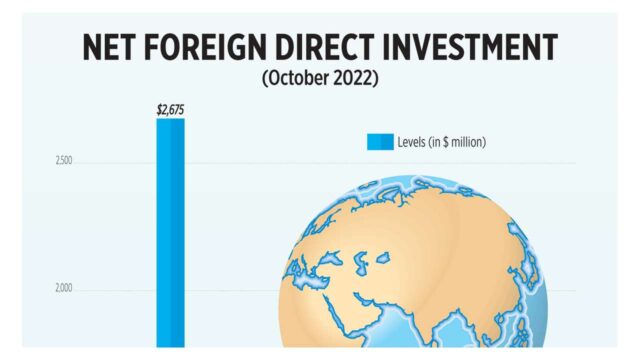
Net Foreign Direct Investment (Oct. 2022)

FOREIGN DIRECT INVESTMENT (FDI) inflows rose to a six-month high in October, the Bangko Sentral ng Pilipinas (BSP) said on Wednesday. Read the full story.

Net Foreign Direct Investment (Oct. 2022)

Former GSIS president is new SSS chief

FORMER Government Service Insurance System (GSIS) President and General Manager Rolando L. Macasaet has been appointed as the new president and chief executive officer of Social Security System (SSS) and took office on Tuesday.

Mr. Macasaet is the 20th SSS president and CEO and was appointed by President Ferdinand “Bongbong” R. Marcos, Jr. last week, state-run private sector pension fund SSS said in a statement on Wednesday.

He was the head of the GSIS, the state-run pension fund for government employees, for four years during the Duterte administration.

Mr. Macasaet replaced Michael G. Regino, who was appointed by former President Rodrigo R. Duterte and was SSS chief for nine months.

He took his oath of office as SSS chief before Executive Secretary Lucas P. Bersamin in Malacañan Palace on Jan. 5.

“President Ferdinand R. Marcos has high expectations from us to provide guaranteed safety nets to the Filipino people. We have to work doubly hard so we could provide our current members and pensioners on what is just and due to them without putting in jeopardy the financial protection of current members and future pensioners,” Mr. Macasaet was quoted as saying.

Mr. Macasaet held leadership roles in government-owned and -controlled corporations from 1988 to 2005.

He has more than two decades of professional experience in financial services, banking, and public-private partnerships. He previously worked at Philippine National Bank and served as a board member of San Miguel Corp., Bank of Commerce, and Private Infrastructure and Development Corp., among others.

Mr. Macasaet obtained BS Business Economics and Master of Business Administration degrees from the University of the Philippines. — A.M.C. Sy