Home Blog Page 5239

An emerging opportunity in new normal learning

Fulfill your passion for education as Kumon Franchisee-Instructor

Quality education is an essential that children deserve to easily access and avail. Numerous educational programs and initiatives see this tremendous demand. Yet, Kumon, now with 27 years of service in the Philippines, sets itself apart with its capabilities in honing not only the academic skills of students but also the educational careers of instructors.

One of the leading educational franchises globally, Kumon continues to make an impact in the industry — from starting as a Math and Reading program in Japan to expanding into a well-known educational program that helps develop children’s academic abilities worldwide.

Even in the midst of the COVID-19 pandemic, which drastically impacted people’s routines and preferences, including how classes and other learning activities were performed, Kumon was able to adapt and embrace digital transformation. Kumon quickly shifted to online classes with their students using their preferred application, whether it’s Zoom, Messenger, or Google Meet. Moreover, the franchise applications shifted online as well, with the franchise orientation, test and interview, and training all taking place in online sessions via Zoom, making sure that acquiring franchisees won’t stop even during the pandemic.

This transformation is seen to shape the new normal of learning as it turns into hybrid, allowing learners to develop their academic skills whether face-to-face or online. Online, learners will have to complete Kumon worksheets as their daily tasks, and they also participate in scheduled one-on-one online sessions with a Kumon Instructor to complete the worksheets. Under a limited face-to-face setup, meanwhile, learners will complete their daily tasks, but the only difference is that they will be doing so at Kumon centers based on their schedule; and Kumon Instructors will mentor learners while following health protocols.

Becoming a franchisee-instructor

The new normal in learning is also providing an opportunity for educators and even non-educators to venture their own learning center business and equip the next generation with the learning skills they need. Kumon is opening such paths as it creates employment opportunities and develops a career path for aspiring franchisee-instructors who want to live out their passion for teaching children.

At Kumon, they have a chance to deal with children of different ages with different learning situations and abilities, which fulfills their passion for teaching as they provide individualized instruction that suits each child’s learning abilities and will help each child reach his or her full potential.

Living up to Kumon’s standards as a leading educational franchise, franchisee-instructors are expected to have enthusiasm and passion for teaching, excellent interpersonal and adaptability skills, and a willingness to commit full-time to Kumon.

Becoming a Kumon Franchisee-Instructor not only teaches but also provides the best learning experience to every learner. Thus, Kumon ensures that its instructors develop the right skills and abilities through comprehensive training sessions; regular consultations with area development managers; the opportunity to participate in local and international conferences, seminars and training; as well as marketing support to further develop their instructional and management skills.

In addition, Kumon is looking for franchisee-instructors who are preferably female, between 25 to 45 years of age, college or university graduates, have good Math and English skills (which will be examined on the date of the orientation), and holds Filipino citizenship.

Begin fulfilling your passion for educating with Kumon. Apply for a franchise at https://ph.kumonglobal.com/openkumoncenter/.


Spotlight is BusinessWorld’s sponsored section that allows advertisers to amplify their brand and connect with BusinessWorld’s audience by enabling them to publish their stories directly on the BusinessWorld Web site. For more information, send an email to online@bworldonline.com.

Join us on Viber at https://bit.ly/3hv6bLA to get more updates and subscribe to BusinessWorld’s titles and get exclusive content through www.bworld-x.com.

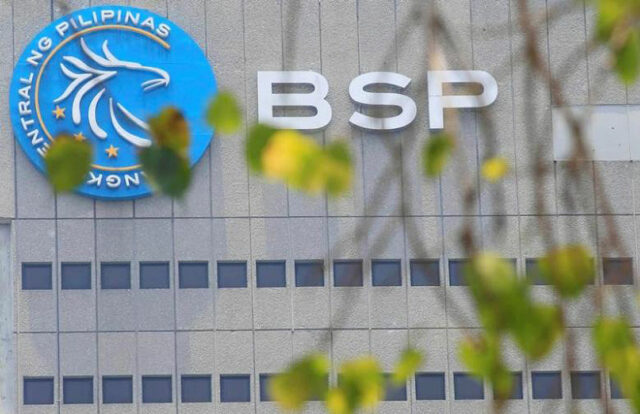
BSP sees 25 or 50 bps rate hike in March

REUTERS

The Philippine central bank on Friday flagged a 25 or 50 basis points rate hike at its next meeting, with inflation as the primary concern, its governor said in television interviews.

“The choice is really between 25 or 50 (basis points) in the next meeting, unless we see an actual negative month-on-month inflation,” Bangko Sentral ng Pilipinas (BSP) Governor Felipe M. Medalla told Bloomberg TV.

The central bank is open to more hikes beyond 50 basis points if there is a need for it and depending on data, he said.

Inflation, running at a 14-year high of 8.7% in January, is the BSP’s primary concern, with interest rate hikes meant to increase the chances of a lower than 4% year-on-year inflation by the end of 2023, Medalla told CNBC Asia TV.

The central bank raised its benchmark interest rate by 50 basis points on Thursday, at its first rate-setting meeting this year, and said it was difficult to rule out needing a third or fourth increase.

Monetary authorities, which have raised rates eight times for a total of 400 basis points since last year, will next meet on March 23. — Reuters

Microsoft-backed OpenAI to let users customize ChatGPT

SAN FRANCISCO – OpenAI, the startup behind ChatGPT, on Thursday said it is developing an upgrade to its viral chatbot that users can customize, as it works to address concerns about bias in artificial intelligence.

The San Francisco-based startup, which Microsoft Corp. has funded and used to power its latest technology, said it has worked to mitigate political and other biases but also wanted to accommodate more diverse views.

“This will mean allowing system outputs that other people (ourselves included) may strongly disagree with,” it said in a blog post, offering customization as a way forward. Still, there will “always be some bounds on system behavior.”

ChatGPT, released in November last year, has sparked frenzied interest in the technology behind it called generative AI, which is used to produce answers mimicking human speech that have dazzled people.

The news from the startup comes the same week that some media outlets have pointed out that answers from Microsoft’s new Bing search engine, powered by OpenAI, are potentially dangerous and that the technology may not be ready for prime time.

How technology companies set guardrails for this nascent technology is a key focus area for companies in the generative AI space with which they’re still wrestling. Microsoft said Wednesday that user feedback was helping it improve Bing before a wider rollout, learning for instance that its AI chatbot can be “provoked” to give responses it did not intend.

OpenAI said in the blog post that ChatGPT’s answers are first trained on large text datasets available on the Internet. As a second step, humans review a smaller dataset, and are given guidelines for what to do in different situations.

For example, in the case that a user requests content that is adult, violent, or contains hate speech, the human reviewer should direct ChatGPT to answer with something like “I can’t answer that.”

If asked about a controversial topic, the reviewers should allow ChatGPT to answer the question, but offer to describe viewpoints of people and movements, instead of trying to “take the correct viewpoint on these complex topics,” the company explained in an excerpt of its guidelines for the software. — Reuters

Moderna flu vaccine delivers mixed results in trial, shares fall

Moderna Inc. on Thursday said its closely watched experimental messenger RNA-based influenza vaccine generated a strong immune response against A strains of the flu but failed to show it was at least as effective as an approved vaccine versus less prevalent influenza B.

The resultsdashed investor hopes that the company might plug its COVID franchise decline, sending Moderna’s shares down more than 6% in after-hours trading.

Moderna, whose only marketed product is its COVID-19 shot, has high hopes for its flu vaccine and aims to grab large portions of the respiratory syncytial virus (RSV) and seasonal flu markets with new mRNA vaccines.

The company said its vaccine, called mRNA-1010, generated a stronger immune response for the A/H3N2 and A/H1N1 strains than the marketed vaccine it was tested against in a trial of 6,102 adults aged 18 and over across Argentina, Australia, Colombia, Panama and the Philippines during flu season there.

It failed to meet its goal of non-inferiority compared to the conventional vaccine for the B/Victoria and B/Yamagata-lineage strains, the drugmaker said.

Cowen analyst Tyler Van Buren said investors had hoped Moderna would replace its COVID revenue with RSV and flu vaccine income, especially after it delivered positive RSV vaccine efficacy results in January.

“But to fill that big COVID decline, you need RSV and flu. The efficacy results could tell a different story when they come out, but there was no doubt that the most recent vaccine data was a mixed bag,” he said.

He said physicians and patients might be put off by Moderna’s flu vaccine’s results for Influenza B and the high rate of side effects.

The US company said it has already updated mRNA-1010 in a way it believes will improve immune responses against Influenza B and will test those changes.

“We have always said our goal is to produce a flu vaccine, and then to iterate it, and to fine tune it over time to really make it exceptional,” Chief Medical Officer Paul Burton said in an interview.

Dr. David Boulware, an infectious disease specialist at the University of Minnesota Medical School, said he was not overly concerned about the immune response versus Influenza B.

Boulware said the immune response against the A strains demonstrated that the vaccine probably worked and Moderna’s tweaks to the vaccine are likely to improve the response against the B strains.

“I consider it pretty positive,” he said.

Seventy percent of those who received Moderna’s shot reported mostly mild adverse reactions compared to 48% for the conventional flu vaccine. Pain and swelling at the injection site as well as headaches and fatigue were among the most commonly reported side effects.

The company also has an ongoing late-stage efficacy study on the mRNA-1010 flu vaccine, which could have data within weeks.

If that trial reads out soon, Burton said he hopes to have the data prepared and sent to regulators in the first half of this year, which could allow them to review it as soon as late 2023 or early 2024.

The flu, an infection of the nose, throat and lungs, kills 290,000 to 650,000 people worldwide annually. — Reuters

With Japan’s new central bank boss, Kishida bids farewell to Abenomics

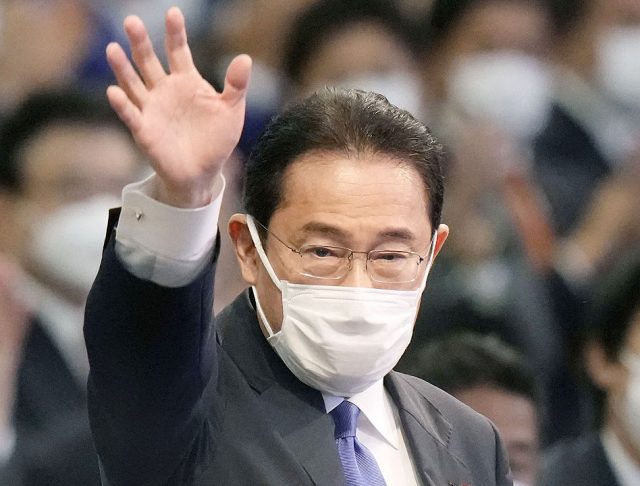
Japanese Prime Minister Fumio Kishida — KYODO/VIA REUTERS

TOKYO, Feb 17 (Reuters) – For Prime Minister Fumio Kishida, Japan’s next central bank chief had to symbolize a departure from the unconventional policies of his predecessor Shinzo Abe – but without angering pro-growth lawmakers of Abe’s powerful political faction.

The tricky task of steering the Bank of Japan (BOJ) out of years of ultra-low interest rates without upending markets required the skill to read markets and clearly communicate policy intentions, both domestically and internationally.

Kazuo Ueda, a 71-year-old university professor who has kept a low profile despite strong credentials as a monetary policy expert, ticked some important boxes.

He was branded neither an explicit dove nor hawk. While he was not even on the list of dark horse candidates floated by the media, Ueda was well known in global central bank circles.

Having an academic helm the BOJ is unprecedented in Japan, where the job traditionally rotates between a central banker and an official from the Ministry of Finance (MOF).

But the idea found traction in Mr. Kishida’s administration, particularly as attempts to convince incumbent deputy governor Masayoshi Amamiya, considered the top contender for the job, failed.

The account of how Mr. Kishida chose the new BOJ leadership is based on interviews and conversations with 15 sources, including former and incumbent central bank and government officials, ruling camp lawmakers, aides of Mr. Kishida, private-sector bankers and analysts closely watching Japanese politics and policy.

Most of them spoke on condition of anonymity as they were not authorized to speak publicly, or declined to comment on record due to the sensitivity of the matter.

The search for a new chief began mid-last year, when Mr. Kishida and his aides drafted a list including a range of candidates from the BOJ, MOF, private sector and academia.

Other academics in the list included Columbia University professor Takatoshi Ito, a close associate of Kuroda, and University of Tokyo academic Tsutomu Watanabe, known for his research on Japan’s deflation.

The BOJ lobbied hard for a career central banker to take the job after Kuroda, a former MOF executive, presided for a rare second, five-year term that ends in April.

The bank’s preferred choices were incumbent deputy governor Amamiya, as well as former deputies Hiroshi Nakaso and Hirohide Yamaguchi, given their deep knowledge on monetary policy.

Many finance ministry officials favored Amamiya, who for decades has cultivated good ties with the government.

But Amamiya had made clear to associates from the outset he had no intention of taking the job, on the view he would not be able to dismantle the stimulus he helped Kuroda create, sources say.

“If he becomes governor, he would have had to spend five years contradicting what he said in the past decade,” said a former MOF executive who knows Amamiya well. “That’s quite hard.”

A commercial bank executive who met him late last year recalled how Amamiya, when asked, flatly denied the chance of becoming governor. “It struck me how he very strongly ruled out the possibility,” the executive said.

Amamiya, in fact, talked about how the BOJ needed to be like the US Federal Reserve, where academics with monetary policy expertise take the helm and guide policy with support from staff, say people who had interactions with him.

Mr. Kishida’s administration also wanted someone who would signal a departure from Kuroda’s monetary experiment that was a key part of his predecessor’s “Abenomics” stimulus policies, and became deeply unpopular with the public for failing to broadly distribute wealth.

But choosing a more hawkish policymaker like Nakaso or Yamaguchi would have drawn discontent from reflationist-minded lawmakers from Mr. Abe’s powerful faction within the ruling Liberal Democratic Party (LDP).

That was too risky for Mr. Kishida, whose own faction is a minority and relies on support from more powerful groups within the LDP.

The choice of Kuroda’s successor has been closely watched by investors and the wider public as an indication of how soon the BOJ will shift away from extremely low interest rates, a transition that could have huge ramifications for global financial markets.

“The prime minister probably wants a fresh face. But he also needs to avoid giving the impression that there will be a big change to ultra-loose policy,” ruling party heavyweight Akira Amari told Reuters days before news of Ueda’s choice broke.

When asked in parliament on Wednesday by an opposition lawmaker, Mr. Kishida said he could not comment on how he reached the decision, and when he finalised it. He also declined to comment on whether the administration sounded out Amamiya for the job.

Mr. Kishida, however, said he had “exchanged views” with many people since last year in selecting the new BOJ leadership.

The BOJ declined to comment for this story, including on questions about Amamiya’s consideration of the role. Japan’s top government spokesperson Hirokazu Matsuno declined to comment, when asked on Thursday whether the government sounded out Amamiya for the top BOJ job.

Matsuno said he hoped the BOJ works closely with the government and guides monetary policy flexibly, when asked whether Ueda’s appointment could lead to a retreat from Abenomics.

POLITICAL BALANCING ACT

Thanks in part to Amamiya’s recommendation, Ueda remained on a short list and eventually became the top choice in a process that was disclosed to only a handful of people.

On Feb. 8, Mr. Kishida met party heavyweights Toshimitsu Motegi and Taro Aso for dinner at a high-end Japanese restaurant near the premier’s official Tokyo residence.

While Mr. Kishida did not reveal the name of his preferred choice, the BOJ succession was among topics discussed, said two sources with knowledge of the matter.

“The government needed someone who understood monetary policy both in terms of practice and theory, and can interact with an inner circle of top central bankers,” one of the people said. “That turned out to be Mr. Ueda.”

The fact Ueda, who holds a PhD from the Massachusetts Institute of Technology and studied under prominent central banker Stanley Fischer, kept a low political profile and avoided being branded as someone in favor or against Abenomics, served him well.

While he warned of the rising cost of the BOJ’s yield control policy, Ueda has called for the need to keep monetary policy loose to ensure Japan stably achieves the bank’s 2% inflation target.

The view meshed with that of Kishida’s administration, which wants the BOJ to address the side-effects of yield curve control but not rush into tightening monetary policy.

“Amamiya was labelled as close to Abenomics. By contrast, Ueda has a fresh image and gives the BOJ a freer hand in shifting away from Abenomics,” said a ruling party heavyweight belonging to Abe’s faction.

Political commentator Atsuo Ito sees Kishida’s decision as symbolic of the way his administration gives due consideration to what lawmakers of Abe’s pro-growth faction think.

“For Kishida, this choice was about getting the political balance right,” he said.

NEW POWER DYNAMICS

Mr. Kishida’s choice was welcomed by many BOJ policymakers, as Ueda was no stranger to the institution and a quiet cheer-leader of its pre-Kuroda conventional policies.

During his seven-year stint as a BOJ board member, Ueda worked closely with Amamiya inventing new tools to combat a banking crisis and debilitating deflation.

Even after retiring as board member, Ueda kept close ties with the BOJ by serving as an adviser at its think tank and attending various international central bank forums.

“He’s something of a legend in Japanese central banking,” said a BOJ official of Ueda. “He stood out as someone special among the many members who served at its board.”

Knowing they would have little influence on Mr. Kishida’s final pick, BOJ officials had a backup plan in case the new governor was someone from outside the institution.

That was to re-appoint BOJ executive director Shinichi Uchida for a rare, second four-year term in April last year to ensure he would slide into the deputy governor post.

That would provide the new leadership with the kind of knowledge of the BOJ’s inner bureaucracy for which Amamiya was known.

Together with Ryozo Himino, the other nominated deputy and a former banking regulator, the three should have the right combination of theoretical, industry and technocratic expertise to unwind Kuroda-era policy, say sources familiar with the BOJ’s thinking.

However, none of the three are seen as having the political savviness of Amamiya, who could read the political mood and work behind the scenes to sound out the administration’s policy views.

That could work as a disadvantage if the economy takes a turn for the worse and the BOJ again comes under political heat.

Already, Japan faces headwinds from slowing global growth, casting doubt on whether wages will rise enough to keep inflation sustainably around the BOJ’s 2% target and justify phasing out stimulus.

“If the BOJ actually moves toward normalizing monetary policy, there will surely be some political tension because the reflationist-minded lawmakers will push back,” said Atsuo Ito.

“A policy reversal will probably take quite a long time.” — Reuters

Google, Twitter, Meta face tougher EU online content rules

Stock Photo | Image by Freepik

BRUSSELS – Alphabet Inc’s Google, Facebook parent Meta Platforms Inc. and Twitter face stricter EU online content rules according to monthly user numbers published by the companies on Thursday which exceeded the EU threshold.

The new rules known as the Digital Services Act (DSA) labels companies with more than 45 million users as very large online platforms and subject to obligations such as risk management and external and independent auditing. They are also required to share data with authorities and researchers and adopt a code of conduct.

The European Commission had given online platforms and search engines until Feb. 17 to publish their monthly active users. Very large online platforms have four months to comply with the rules or risk fines.

Twitter said it has 100.9 million average monthly users in the EU, based on an estimation of the last 45 days.

Alphabet provided one set of numbers based on users’ accounts and another set based on signed-out recipients, saying users can access its services whether they sign in to an account or are signed out.

It said the average monthly number of signed-in users totalled 278.6 million at Google Maps, 274.6 million at Google Play, 332 million at Google Search, 74.9 million at Shopping and 401.7 million at YouTube.

Earlier this week, Meta Platforms said it had 255 million average monthly active users on Facebook in the EU and about 250 million average monthly active users on Instagram in the last six months of 2022. — Reuters

8-bit to theme park: Super Mario warps into Universal Studios Hollywood

Screenshot from the Super Nintendo World promotional video of Universal Studios Hollywood | https://youtu.be/H2K4JzHVxpM

 – Universal Studios Hollywoodvisitors can leap over to the new Super Nintendo World and see Japanese video game designer Shigeru Miyamoto’s Mushroom Kingdom come to life with vibrant colored coin blocks, warp pipes, Piranha plants and beloved characters like Mario and Luigi.

“There’s nothing better than being inside the land,” said Jon Corfino, vice president of Universal Creative. “You’ll see kids, five years old, grown men, 50 years old, just screaming because they’re coming to a place where they’ve only known it on their game and now, they get to actually go here.”

The theme park in Los Angeles features “Mario Kart Bowser’s Challenge,” which allows players to battle Team Bowser in the racing game, Mario Kart.

Visitors can also eat at Toadstool Café and get Nintendo swag at “1-UP Factory store.”

Guests can level-up by wearing an interactive “Power-Up Band,” a colorful slap bracelet that stores digital, coins and keys that unlock access to challenges, like a battle against game antagonist Bowser Jr.

The theme park world is meant to ignite interest from both new and seasoned fans of the Mario games through an immersive experience. It follows in the footsteps of its predecessor in Universal Studios Japan, also owned by the Comcast Corp CMCSA.O unit.

Super Nintendo World will also be added to Universal Studios Florida in 2025.

Mr. Corfino told Reuters that attendees of all ages can explore and adventure anywhere in the park while learning something new every time they go on the Mario Kart ride.

“All of us here have worked very hard over the last six years to bring this to life,” Mr. Corfino said.

The opening of the park will be followed by the “Super Mario Bros” movie, which arrives in theaters on April 7 and stars “Guardians of the Galaxy” actor Chris Pratt, who voices Mario. — Reuters

Automotive industry’s share in enabling sustainable mobility

Making our cities and communities more sustainable is considered one of the needed keys to addressing pressing global challenges, from economic crisis to climate change. In such massive movement, it is important to note that society must seriously aim for decarbonization, with industries doing their respective share in reducing emissions and hence mitigating the impacts of climate change.

The automotive sector is among those industries that are beginning to take such responsibility as it drives approximately 75% of total carbon emissions from transportation being consumed by road vehicles, as consulting firm McKinsey & Company noted.

As we live in what appears to be a more accelerated landscape, advanced technologies can negatively affect the environment and so heavily impact climate change as a result. Yet, the automotive industry is moving towards sustainable mobility, primarily through decarbonizing transport vehicles.

One of the seen main goals of decarbonizing transportation is the shift to electric vehicles (EVs), which are powered by batteries or renewable energy. EVs, as multinational accounting firms network RSM Global noted, are known for their “rapid acceleration, minimal maintenance, and extra luggage space” which provides increased performance to vehicles. More crucially, electric cars are seen to have also made net-zero possible in the future.

As early as 2015, sales of EVs are projected to be about 10%-20% by the year 2030; and currently, many of the biggest automotive companies, including Volvo, Mercedes and Bentley anticipated going fully electric by 2030.

The transformational shift may involve several changes, including changes to the supply chain, demand reduction, an increase in batteries and electric drives, and employment opportunities. However, as McKinsey observed, the shift has accelerated in 2020 when governments and cities are starting the process of decarbonization of road transport and inducing and adopting of sustainable mobility in the sector.

“The transition to net-zero emissions will need to be universal, involving all economic sectors and countries. In mobility, structural changes must accompany the technological transition. For consumers, upfront capital spending would increase, but the total cost of vehicle ownership would fall. New employment opportunities will open up, even as jobs are reallocated across activities,” McKinsey explained on its website.

On the bright side, despite the pandemic, which has caused disruption in the automotive sector, the global EV market is on a trend, as this type of vehicles becomes more cost-effective and as consumer demand is expected to increase quickly. McKinsey projected that EV sales have already exceeded 10% of new car sales and by 2030-2035, the automotive industry should be entirely electrified, and the expected demand for EVs would increase significantly if net-zero emissions are reached.

Also, to achieve carbon neutrality, the sector could develop vehicles using more eco-friendly materials that are both recyclable and renewable. As the attention of businesses turns to incorporating sustainability, the automotive sector’s attempt to build cleaner cars by using sustainable materials is seen to play a significant role.

Online automotive platform Autovista24 observed this decarbonization effort on the rise recently among automobile manufacturers. Replacing leather with what are called “vegan” leather, made from different natural resources like mushrooms or pineapple waste, is one such initiative. Swedish car maker Volvo announced its aim to adopt such materials in their vehicle range by 2030, while BMW reportedly collaborates with a company that creates a cactus-based biomaterial that can replace leather in seats and panels.

Aside from “vegan” leather, there is also plastic which can be recycled into another material for automotive manufacturing, from the dashboard to foam seats to the air bags of the vehicles.

“Plastic remains a popular material for car manufacturers as it reduces the weight and cost of vehicles while also increasing performance. Around a third of the 3,000 parts used in new vehicles are made from plastic, so recycling the product makes sense from an environmental point of view,” Autovista24 reported, adding that Audi is interested in recycling automotive plastic and previously got involved in a chemical-recycling pilot project in Germany.

Additionally, bio-based materials can also reduce weight and boost energy and emissions savings. The idea of reducing weight in vehicles to increase performance and car efficiency is the basis for most automotive companies.

Given the transformational shift as part of the decarbonization plan, ensuring resiliency is difficult. However, the automotive industry can use opportunities for collaboration and partnership as a strategy in moving forward to achieve sustainability.

First, a public-private partnership can open automotive value chain transparency, as stated by two executives from renowned car makers in an article in the World Economic Forum’s website. There is a strong need among public and private organizations to work together, thus corporate leaders must engage and collaborate with the government and vice versa to share information and work together for the benefit of all parties involved in the sector and to hasten the move toward net zero.

Second, to accelerate the zero-net transition, a sustainability footprint compass is necessary. The said executives advised the need to develop “a map of mobility-relevant standards, regulations, tools and collaborations” to discover opportunities for collaborations and establish their zero-net goals. The sustainable footprint compass is a guide to sustainability to make it easier for leaders to organize a plan and guide them to a common path for achieving sustainability. Often, it also helps keep track of the progress of organizations.

It is also important to note the significance of increasing value chain transparency in the sector. Leaders in the sector are encouraged to develop a toolkit that offers transparency on demand/supply balance, and regional consolidation, as well as business strategies to manage risks in the sector. Addressing upcoming difficulties while reaching sustainability targets can be possible if the sector can predict future value chain disruptions early on. — Angela Kiara S. Brillantes

Technologies to power sustainable mobility

Calls to revolutionize transport to become more sustainable have been resounding across the automotive industry. And part of bringing this transformation to reality involves developing innovations.

The utilization of several technologies in the auto sector such as electrification, connected and automated vehicles, and mobility-as-a-service (MaaS) to make the transport experience sustainable is being seen to expand or emerge in the year ahead. But while their potential may seem promising in leading towards sustainable mobility, there are still obstructions ahead to address.

Electric expansion and enhancing battery technology

Electric vehicles (EVs) are usually the first to come to mind when thinking of sustainable development in the automotive industry, given they generate lesser greenhouse gas (GHG) emissions compared to gas-powered vehicles.

Transport is infamous for its part in air pollution, being largely reliant on fossil fuel combustion. The sector is responsible for around one quarter of all energy-related GHG emissions, according to the United Nations Environment Programme (UNEP). As such, the electrification of vehicles is seen valuable to reduce transport’s environmental impact and the aim for the sector’s sustainability.

EV sales have expanded in recent years. Based on a report by The Wall Street Journal, citing preliminary research from LMC Automotive and EV-Volumes.com, around 7.8 million units of fully electric vehicles are sold globally in 2022, a 68% growth from the year prior. This means EV sales have achieved a milestone with around 10% market share in the automotive sector last year.

Given the increase in awareness about EVs, concerns arise about battery manufacturing capacity and material issues, according to the Institute of Electrical and Electronics Engineers Standards Association (IEEE SA). The industry, therefore, is focusing on enhancing battery technology to keep pace with the rising EV demand.

“Battery companies and vehicle manufacturers are investing heavily to build batteries that are less expensive, take up less space, and weigh less,” the IEEE SA wrote in an article published on its website. “Other complicating factors inspiring innovation include materials availability, supply chain complications, and costs.”

This year, however, S&P Global Mobility expected EVs’ growth momentum to be at risk due to China’s subsidies for EVs ending, the energy crisis and the inflation that would follow in Europe, and the recession expected in the United States.

Moving forward, EV development is seen to expand globally, with automakers and battery manufacturers expected to invest over $626 billion by 2023 for the development of new electric cars, passenger and freight trucks, and buses, according to a report cited by the Environmental Defense Fund.

Connected and autonomous vehicles

Aside from the accelerated popularity of electrification, the words “connected” and “autonomous” are also rising further in the automotive sector.

Connected vehicles are a type of car equipped to connect to the Internet and exchange information with other systems.

What could make connected vehicles a driver of sustainable mobility is their ability to provide safety, as knowing critical information like the speed of other cars can help a driver in response, which then could reduce accidents on the road. In addition, connected cars could also provide information such as the traffic situation, so drivers could be redirected to roads that are less jammed by other vehicles, hence improving the driving experience and reducing the waste of fuel. But given the connection and exchange of data, security is critical to prevent unsafe incidents in using connected vehicles.

Autonomous vehicles, meanwhile, are usually referred to as self-driving cars. But there are six levels of automation defined by the Society of Automotive Engineers, from no automation (level 0), driver assistance (level 1), partial automation (level 2), conditional automation (level 3), high automation (level 4), and full automation (level 5). Currently, there are cars in level two, which are capable to steer, accelerate and brake, yet the driver is still required to monitor.

When equipped with safety at the top of the mind and the ability to use fuel efficiently, autonomous vehicles could also pave the way for sustainable mobility. However, the path ahead for autonomous vehicles has regulatory challenges.

Mobility apps and the MaaS potential

Digitalization can drive sustainable mobility as well, given the rise of applications and specifically MaaS to provide a better travel experience.

Nowadays, drivers and commuters can use apps that show routes that are shortest or less congested, while some guide commuters to their destinations by showing the routes and public transport to take. And through MaaS, users can plan their journey ahead as such platforms comprise different modes of transportation and allow them to book and pay for their fare. MaaS can be an easy and convenient way when in need of transportation without having to own a car.

To enable a mobility future that leverages the advantage of MaaS, there are several challenges to address. “MaaS requires a strategic approach to overcome significant challenges,” IEEE SA said. “Public transportation must be integrated with mobility services such as car sharing, bike sharing, scooter sharing, and ride hailing. Other challenges with MaaS include data privacy, a clear business model, user adoption, and funding.” — Chelsey Keith P. Ignacio

Lexus IS: Best-Selling Luxury Compact Passenger Car in the Philippines

2022 was a banner year for the Lexus IS sport sedan as it edged out its rivals for the top spot in the luxury compact passenger car segment of the yearend CAMPI sales report

Owning a Lexus IS is an amazing experience in itself. This luxury sport sedan pushes the envelope of driving performance giving an exhilarating enjoyment from driving a rear-wheel-drive sport sedan. Based on the 2022 yearend sales report of the Chamber of Automotive Manufacturers of the Philippines, Inc. (CAMPI), the Lexus IS is indeed the top choice of the Philippine market in the compact luxury passenger car segment. Thus, when it comes to the pursuit of an exceptional ownership and driving experience, the Lexus IS is the answer.

Since the debut of its first-generation IS in 1999, the model has pursued the thrill of driving unique to compact rear-wheel-drive sports sedans. The IS has captured the hearts of over a million enthusiasts around the world, and the number is growing.

That fulfilling sensation has been thoroughly enhanced in the new IS. The model was born and bred at the Shimoyama Test Track. This suits the IS perfectly, as every facet of its performance was developed on that extremely challenging on-road course, all for the sake of delivering an experience like no other to drivers around the world.

“With an aim to pursue the fun of driving, and based on the philosophy that ‘roads make cars,’ we brought the new IS to life by thoroughly driving it in harsh environments, including at the Shimoyama Technical Center, which opened in 2019,” says Lexus International’s Takumi Yoshiaki Ito. “We paid particular attention to aesthetic and emotional values, which cannot be measured using numbers alone, so as to pursue linear operation that is faithful to driver intention, such as during successive driving operations and in terms of driving rhythm.”

Available in the Philippines are the Lexus IS 300h Executive (P3,038,000), Lexus IS 300h Premier (P3,398,000), and Lexus IS 350 F Sport (P4,178,000). Of course, a huge part of the performance equation is what is under the hood. The F Sport variant boasts of a 300hp normally aspirated V6 engine that delivers 380Nm. This is mated to an 8-speed automatic transmission for mesmerizing power delivery worthy of a proper sports sedan. Meanwhile, the IS 300h Premier and Executive are powered by a 2.5-liter inline four-cylinder hybrid power plants mated to a Lexus E-CVT intelligent transmission for optimum efficiency during every driving condition.

To inspire even more driving confidence, the IS comes with LSS+2 — a suite of the latest Active Safety features, such as the Dynamic Radar Cruise Control, Lane Tracing Assist, and Automatic High Beam. The F Sport model comes equipped with the upgraded Pre-Collision system, which detects oncoming vehicles and pedestrians, even when turning left or right at intersections.

It comes as no surprise that the Lexus IS is cherished by customers here in the Philippines. Like no other, this model delivers on its promise to elevate the driving experience to a more exciting — and confidence-inspiring — level.


Spotlight is BusinessWorld’s sponsored section that allows advertisers to amplify their brand and connect with BusinessWorld’s audience by enabling them to publish their stories directly on the BusinessWorld Web site. For more information, send an email to online@bworldonline.com.

Join us on Viber at https://bit.ly/3hv6bLA to get more updates and subscribe to BusinessWorld’s titles and get exclusive content through www.bworld-x.com.

Upholding inclusivity in PHL’s housing program

Commitment to housing for all avowed as DHSUD celebrates 4th anniversary

As the Philippines continues forward on its growth trajectory, a major societal problem looms larger over the horizon. Metro Manila, as it stands, is bursting at the seams.

According to government data, the country’s current housing backlog is pegged at 6.5 million units. Furthermore, this is expected to balloon at “an unprecedented proportion if usual program strategies were adopted for implementation.”

For the country’s continued growth, much has to be done to address this.

This is the reason that the Department of Human Settlements and Urban Development (DHSUD) is highlighting the inclusivity of the “Pambansang Pabahay para sa Pilipino Housing (4PH) Program” as it celebrates its 4th anniversary.

Through the 4PH, the main housing initiative of the Marcos administration, the DHSUD hopes to close the housing gap and further build sustainable housing communities.

The government’s Pambansang Pabahay program seeks to address the nation’s housing need by constructing one million homes per year until 2028. It is designed primarily to help low-income individuals and those living in informal settlements get access to and purchase a home of their own.

In order to guarantee that residents of homes will have access to a means of subsistence and other essential services, Pambansang Pabahay also examines township development.

Additionally, the DHSUD maintains its operations in order to carry out its primary purpose regarding the administration of housing, human settlements and urban development through its advisory role, regulatory functions and policy creation.

With the theme, “Tahanang sapat para sa lahat,” the DHSUD celebrates its anniversary by highlighting the goal of President Ferdinand R. Marcos, Jr.’s 4PH Program and the innovative efforts of the department in making this happen.

In barely seven months, the program has elicited positive responses and secured the overwhelming support of relevant stakeholders, which resulted in its fast rollout immediately after its launching. The President himself has expressed his full confidence on the Pambansang Pabahay, dubbing it as the solution to the country’s housing problem, if the goal to build one million housing units per year is achieved.

Catching up to the housing gap

According to historical data, the annual average housing production across the country in the past years is pegged at approximately 200,000 housing units — which is nowhere near enough to catch up to the housing backlog.

To address this, DHSUD Secretary Jose Rizalino L. Acuzar has vowed to work “five times harder” to fulfill his mission as the housing czar of this administration.

“The operations of DHSUD has always been anchored to its vision of providing adequate and affordable housing, inclusive human settlements and well-planned communities for every Filipino family. The programs in the past years were all geared toward this goal, as institutionalized in the 2040 National Housing and Urban Development Sector Plan,” the department said in an email.

“With Pambansang Pabahay at the cornerstone of this administration’s housing initiatives, DHSUD through [Sec. Acuzar], is introducing out-of-the-box strategies in program implementation, this time with focus on innovative financing schemes that address the two main bottlenecks of affordability and access to fund in housing production and finance.”

Furthermore, the program is expected to attract participation of key stakeholders while easing the burden of beneficiaries or homebuyers on paying high interest on home loans.

Since the start of the current administration, DHSUD, with its newly-appointed officials, has been actively involving the key players expected to participate in the program. First and foremost are local government units which will serve as the implementing arm of the program in terms of allocating land resources and other forms of assistance, and identification of beneficiaries.

As of Feb. 15, DHSUD has broken ground for 15 housing projects with various local government units, and signed 70 Memorandums of Understanding under the Pambansang Pabahay. In the coming months, more partnerships are expected to be formalized and construction will commence.

In show of his trust and support, Mr. Marcos has personally visited the Bagong Sibol Housing Project in Brgy. Nangka, Marikina City in October 2022 and inaugurated the Palayan City Township Housing Project in Brgy. Atate, Palayan City, Nueva Ecija in the following December. He also led the groundbreaking of the Redevelopment and Urban Renewal Project in Batasan, Quezon City last January.

These projects are touted to become model townships that will provide not only shelters to the beneficiaries but also present opportunities for social and economic growth. With master plans that include schools, marketplaces, open parks and health stations, the soon-to-be residents will enjoy the amenities they will require in their day-to-day lives.

Prior to this, the President has also announced the impending issuance of an executive order that will allocate idle government lands for housing projects. DHSUD has estimated around 16,000 hectares of idle land resources which can be used for housing. President Marcos also pledged to allocate P1 billion as initial funding for housing interest support in 2023.

Towards providing six million homes for Filipinos

Much has to be done, but DHSUD will continue to work on funding for interest support, secure land requirement and empower more LGUs on the ground.

Moreso, the department aims to explore avenues for financial support through developmental loans, end-user financing and private banks participation, as well as incentivizing the private sector banks to participate in the program.

“With the bold and innovative implementation strategies introduced by the Pambansang Pabahay, various stakeholders have extended their support to the program, both from the government and the private sector. It has sparked the spirit of unity among key players in the housing and urban development sector, recognizing and doing their part for the program,” the DHSUD said.

“This has created a ripple effect among people wanting to have a house of their own — illuminating the hope for informal settlers and low-income earners to access and afford housing units for themselves and their families.”

Legislators laud DHSUD on its 4th anniversary, brand secretary ‘extraordinary’

In celebrating the 4th anniversary of the Department of Human Settlements and Urban Development (DHSUD), Senators Joseph Victor “JV” G. Ejercito and Ana Theresia “Risa” N. Hontiveros-Baraquel described DHSUD Secretary Jose Rizalino L. Acuzar as “extraordinary” for his innovative concepts as the country’s housing czar on Tuesday.

Recognizing the country’s housing woes, Sen. Ejercito commended Sec. Acuzar’s leadership of President Ferdinand R. Marcos, Jr.’s flagship housing program, the Pambansang Pabahay Para sa Pilipino Housing (4PH) Program.

“We have a very daunting task ahead, a very gargantuan task of producing one million houses every year… We need to think outside the box and be extraordinary,” Mr. Ejercito said in his message.

“Sec. Jerry (Acuzar) is a very simple person and a self-made man. I think he is ‘the X factor’ that we need for the Department of Human Settlements,” he said in mixed English and Filipino.

For her part, Sen. Hontiveros emphasized the role of DHSUD in curbing the 6.5 million housing backlog through the Pambansang Pabahay program and vowed support toward achieving its goals.

“There is much work and challenges DHSUD needs to face. You can be assured that we will continue to join you in your fight for proper housing for every family. We will not stop, we will not get tired, and we will not give up in this fight,” Ms. Hontiveros said.

The lady senator added she will continuously push for funding support for the realization of the Pambansang Pabahay as vice-chairperson of the Senate Finance Sub-Committee that tackles the budget of DHSUD.

4th anniversary celebrations

The two legislators served as guests during the opening ceremony of this year’s celebration with the theme, “Tahanang sapat para sa lahat (Adequate homes for all)” at the DHSUD Central Office in Quezon City. They were recognized, together with Bacolod Mayor Alfredo Abelardo Benitez, former Rep. Jose Christopher “Kit” Belmonte, former House Speaker Feliciano “Sonny” Belmonte, Jr. and other sectoral stakeholders, for their significant contribution in the creation of DHSUD.

Led by Sec. Acuzar, the celebration highlighted the milestones achieved by the housing agency in the past year, particularly in leading the Pambansang Pabahay.

Under the program, the DHSUD is set to build and dispense one million housing units every year until the end of the current regime. So far, the department has broken ground in 17 areas and has signed 70 memorandums of understanding with local government units for the construction and development of housing projects.

“We are strongly confident that we will really fulfill the objectives of the 4PH. In the year that passed, we accelerated and intensified the housing program of the national government, with the help of our key shelter agencies and other partners,” Mr. Acuzar said in his keynote message.

The three-part celebration also witnessed the launching of the Philippine Urban Forum (PhUF) 2023, which was organized by the DHSUD’s Environmental Land Use and Urban Planning and Development Bureau, in coordination with the United Nations Human Settlement Program or UN-Habitat.

The forum serves as a platform of cross-sectoral government and nongovernment agencies to discuss their roles and commitments in refining and implementing good governance, security of tenure, environmental protection, and disaster preparedness and mitigation in the country.

The event witnessed the first time Mr. Acuzar and the newly appointed DHSUD executives celebrated the department’s anniversary.

In his message, the secretary thanked the officials and staff of the DHSUD and its key shelter agencies (KSAs) for “wholeheartedly” accepting him as their chief and closely working with him since his appointment in July 2022.

“I would like to thank every official and staff of DHSUD and our KSAs, whatever your level may be. The success of the 4PH depends on your capable hands and, so far, the results you have achieved are impressive. Thank you as well for wholeheartedly accepting me to the DHSUD family. It is a pleasure working with you every day,” he told the department’s workforce.

Hence, the third part of the celebration was dedicated to the DHSUD workforce as service and loyalty awards were presented to employees who rendered years of continuous and exemplary service in the government.

Mr. Acuzar stressed that in spite of the DHSUD’s achievements in the past year, it would persist in its thrust to maintain and improve the vibrancy of the housing and urban development sector in the country.

Especially with “effective leaders at the helm and a committed workforce by their side,” the secretary added, “the DHSUD will, no doubt, be moving mountains in the years to come.”

“There may be great challenges ahead of us, but greater opportunities are likewise awaiting us on the horizon. And so, I enjoin everyone to hang tight and soldier on as we improve the lives of Filipino families one adequate, resilient and sustainable house at a time,” he said.