Home Blog Page 5228

StoreHub adds tool designed to drive repeat sales for local partners

StoreHub

Technology startup StoreHub, which helps retailers and restaurants automate, introduced on Monday its new tool StoreHub Engage that is designed to help business owners generate more repeat sales and build customer loyalty.

StoreHub, one of the point-of-sale system providers accredited by the Philippines’ Bureau of Internal Revenue, hopes to help its existing partners in getting their customers to spend with them again, the tech startup said in an e-mailed statement.

“The new feature allows businesses already using StoreHub’s ecosystem to automate up to four personalized short-message-service or SMS campaigns to existing customers within their database,” StoreHub noted. “This includes sending cashback reminders and birthday voucher codes.”

StoreHub is working to improve its operations in the Philippines and other Southeast Asian countries after raising $13.5 million in new capital.

“With the Philippine economy expected to pick up in 2023, local businesses have been encouraged to increase digital adoption in order to leverage on opportunities to grow their business,” the company said.

The Trade department previously urged growing businesses and entrepreneurs to adopt digital solutions to “operate more efficiently, reduce costs, reach bigger markets, and earn more profits.”

“Traditional brick and mortar businesses typically lack access to specialized knowledge to effectively reach their customers. We built Engage to help automate that,” said Wai Hong Fong, chieftain and co-founder of StoreHub.

“Imagine it’s your customer’s birthday – Engage will send them a personalized ‘Happy birthday’ SMS with a unique voucher code. Instead of spending time doing this manually, or paying for expensive tools or specialists to achieve this, business owners can now just turn it on and let it run.”

StoreHub, which was launched in 2013, now serves more than 15,000 retail and restaurant outlets across its key markets in the region.

The company said that there are now more than 300 businesses across all markets that use its StoreHub Engage tool.

Restaurants and retailers, for example, see a median return on investment of “up to 18 times through a surge in repeat customers as well as new customers brought in by improved Google ratings,” StoreHub noted. — Brontë H. Lacsamana 

Limiting tax avoidance in the Philippines

IJEAB-FREEPIK

The digitalization of the economy has resulted in significant innovations, especially in terms of convenience for the general population. Now, you can buy your groceries, your clothes, and your food digitally and have those same orders brought to you within the same day or, at most, a week. However, digitalization comes with a dark side as well. The digitalization of the economy has allowed multinational corporations to take advantage of tax systems around the world by transferring their income to tax havens (or places where their income would not be subject to tax).

As of 2023, the Fortune 500 has pegged the revenues of Amazon at $469.8 billion, Alphabet (or, more commonly known as Google) at $257.6 billion, Apple at $365.8 billion, Microsoft at $204.1 billion, Meta (or Facebook) at $118.1 billion, and Netflix at $31.6 billion. Yet these tech giants have been among those criticized as avoiding taxes by shifting their income to tax havens, such as Ireland or Bermuda.

According to Fair Tax Mark, a non-profit organization, these tech companies paid significantly below threshold. From 2010 to 2017, at a time when the baseline rate for tax around the world was 35%, they paid only 15.9% of their declared profits on taxes. And while they generate millions of dollars from the Philippines, they have paid zero in taxes to the Bureau of Internal Revenue (BIR).

Technically speaking, of course, this is all legal. Unlike tax evasion, tax avoidance is a legal way of decreasing the amount of taxes that a taxpayer has to pay. Nevertheless, excessive tax avoidance can cause problems for the government, especially for developing countries like the Philippines, which would need those tax revenues the most.

One of the basic principles behind taxation is that it is the lifeblood of the nation. Without taxes, governments would not be able to function. While tax avoidance should be allowed to a certain extent, it must not result in the detriment of the government.

In 2021, the Organization for Economic Co-operation and Development (OECD) recognized the problem of tax avoidance around the world. Called “base erosion and profit shifting” (BEPS), the OECD noted that multinational enterprises were exploiting tax systems by shifting their profits to countries where their income would not be subject to tax. By the OECD estimate, countries lost $100 billion to $240 billion in tax revenues due to BEPS practices.

To combat this, the OECD, together with the G20, came up with a Two-Pillar Solution to address the tax challenges arising from the digitalization of the economy.

The first pillar addressed the issue of determining the nexus of taxation (which essentially means which government can collect the tax concerned) and the determination of the tax base. Naturally, this also requires the elimination of double taxation so that companies would not be taxed twice by different tax authorities. The first pillar also creates the concept of Amount A (which refers to a portion of the residual profit of large and highly profitable enterprises) and Amount B (which refers to the application of the arm’s length principle to in-country baseline marketing and distribution activities) and setting down the guidelines for their respective collection.

The second pillar, on the other hand, focuses on the establishment of the Global Anti-Base Erosion (GloBE) rules. Under these rules, a global minimum corporate tax rate will be set at 15% and this tax would be applicable to multinational enterprises earning €750 million annually. This minimum tax is intended to ensure that multinational corporations would be liable to pay a minimum amount of tax on their income arising from each of the jurisdictions in which they operate.

So, what does this have to do with the Philippines? The Philippines is one of the countries which is not a member of the OECD/G20 Inclusive Framework on BEPS. Meaning, it has not had much involvement in the fight against tax avoidance. Fortunately, the OECD has noted that the Philippines does not have any harmful tax regimes.

Still, it is important that the Philippines participate in this global initiative in order to curb tax avoidance. As noted before, tax avoidance hurts developing countries the most and fighting this tax avoidance issue would only serve to strengthen the country more.

The Two-Pillar Solution creates rules which allow the “redistribution of taxing rights to market jurisdictions.” Simply put, this means that the countries which would have the right to tax are the ones where the sales happen and where the users are located. In essence, this means that developing countries would gain additional revenue. The OECD estimates that, at a rate of 15% global minimum tax, countries can generate around $150 billion. Moreover, developing countries would also gain further revenues under the Subject to Tax Rule (STTR) which would allow countries to deny the application of tax treaty reliefs in certain cases.

Already, there are concrete policies that can be taken from the OECD proposal, especially on Pillar Two. As of January 2023, the Pillar One model rules are still undergoing finalization, but the Pillar Two model rules (i.e., model rules on Global Anti-Base Erosion) have already been released in 2021. One of the main policies enshrined in those model rules is the imposition of the minimum global corporate tax of 15%, as well as the rules for determining which taxpayers would that tax be applicable to. The model rules also already contain the basis for the global minimum tax, and other pertinent rules.

Instead of implementing tax measures without any significant impact and which would only harm the consumers (such as the recently proposed VAT on digital services), these OECD policies are worth the consideration of the Philippine Congress. As noted above, these measures could result in up to $150 billion in annual revenues. Revenue collections from these tech giants could then be used by the government to address inflation and support the economic recovery of the country.

This article reflects the personal opinion of the author and does not reflect the official stand of the Management Association of the Philippines or MAP.


Raymond “Mon” A. Abrea is an MPA/Mason Fellow at the Harvard Kennedy School. He is a member of the MAP Tax Committee and the MAP Ease of Doing Business Committee, co-chair of the Paying Taxes on Ease of Doing Business Task Force, and the chief tax advisor of the Asian Consulting Group.

map@map.org.ph

mon@acg.ph

Removal of World War II memorials may be imminent

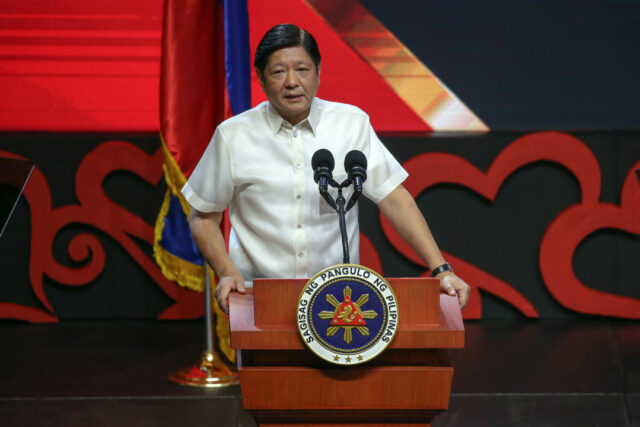
“My bilateral visit to Japan is essential and is part of a larger foreign policy agenda to forge closer political ties, stronger defense and security cooperation as well as lasting economic partnership,” President Ferdinand Marcos, Jr. said in his departure speech last Wednesday.

Closer political ties, security cooperation, and economic partnership to be forged and to endure require a show of trust, respect, understanding, and willingness to compromise by both countries. If there had been conflict between the two countries in the past, fallouts from the conflict should be forgiven and forgotten.

It will be recalled that sometime in December 2021, people learned, to their extreme puzzlement, that the portraits of World War II heroes Jose Abad Santos, Vicente Lim, and Josefa Llanes Escoda in the P1,000 bank note would be replaced by the Philippine Eagle. There is something the three have in common. The three played key roles in the Philippine resistance to the Japanese occupation in 1942 to 1945. All three were executed by the Japanese military.

Jose Abad Santos was an Associate Justice of the Supreme Court when World War II broke out. President Manuel Quezon named him Chief Justice on Dec. 24, 1941 and subsequently designated him Acting President. In April 1942, he and his son were captured by the Japanese. When he refused to cooperate with the Japanese occupation government, he was executed.

Gen. Vicente Lim, the first Filipino to graduate from the US Military Academy in West Point, was in command of the 41st Infantry Division of the Philippine Army in Bataan. After four months of fierce fighting, all Filipino and American forces in Bataan were ordered to surrender on April 9, 1942.

After his release as a prisoner of war, he joined the resistance against the Japanese invaders by funding various guerrilla activities and providing information on Japanese troop movement and military installation. But in June 1944, Lim was captured, brought to Fort Santiago where he was tortured, then to the Chinese Cemetery where he was beheaded.

Josefa Llanes Escoda was a civic leader and social worker. Following the fall of Bataan, she and her husband Antonio mobilized the staff of the National Federation of Women’s Clubs, of which she was the secretary, to make the connections between prisoners of war and their families. They also supplied medicine, food, and messages to both prisoners in Japanese garrisons and internees in internment camps. They were arrested for their activities and subsequently executed.

Some civil society groups suspected the removal of the portraits of the World War II heroes was part of the conditions for Japan’s support of the country’s infrastructure program worth trillions of US dollars.

There is good reason for such suspicion. In April 2018, the statue of the Comfort Woman (a sex slave of the Japanese soldiers in World War II) in Baywalk, Roxas Boulevard, Manila was removed. The statue was a representation of the estimated 1,000 young Filipino women who were either abducted, coerced, or deceived to serve as sexual slaves for hundreds of Japanese soldiers during the Japanese occupation.

The city government of Manila provided the place for the statue. The National Historical Commission of the Philippines (NHCP) installed the marker on the pedestal. My translation of the inscription, which is in Pilipino, is: “This monument is a memorial of the Filipino women who were victims of abuse during the Japanese occupation (1942-1945). A long time passed before they testified and gave a statement about their experience.”

The statue was formally unveiled on Dec. 8, 2017. But days after the installation, officials of the Department of Foreign Affairs (DFA) formally sought through a letter marked “extremely urgent,” an explanation from the City Hall of Manila and the NHCP regarding the statue. The DFA cited the sensitivity of the “comfort women issue” to Japan.

Officials from the Japanese embassy also went to see Manila officials to express their objection to the statue. DFA Secretary Alan Peter Cayetano said the statue would adversely affect Philippines-Japan relations.

On April 27, 2018, personnel of the Department of Public Works and Highways removed the statue, supposedly “to give way to a drainage improvement project along the Baywalk.” Anyway, the sympathizers of comfort women unveiled a new statue that no government agency can touch. It is located in a private property — the courtyard of the Redemptorist Church in Baclaran, Parañaque. The marker says: “The statue stands as a reminder that wars of aggression must always be opposed, and that sexual slavery and violence should never happen again to any woman, anywhere at any time.”

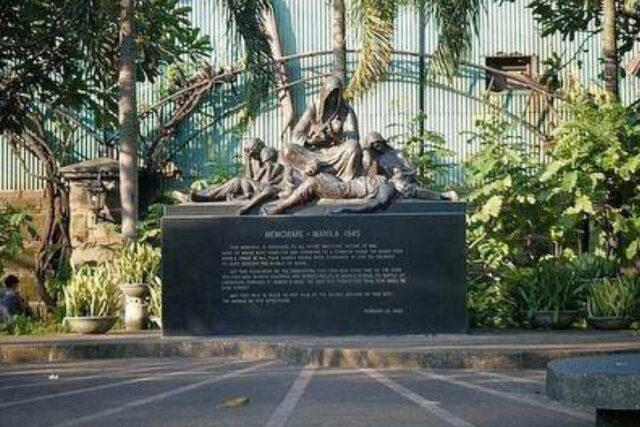
If a statue representing Filipino women forced into sexual slavery by the Japanese Imperial Army was troubling to Japanese, the memorial in Intramuros for the more than 100,000 civilians who perished during the Battle of Manila in February 1945 would be much more upsetting to them because of the sculpture and the inscription. The marker on the monument Memorare-Manila 1945 on Anda Street near General Luna Street, Intramuros, says:

“This monument is erected in memory of the more than 100,000 defenseless civilians who were killed during the Battle for the Liberation of Manila between February 3 and March 3, 1945. They were mainly victims of heinous acts perpetrated by the Japanese Imperial Forces and the casualties of the heavy artillery barrage by the American Forces. The Battle for Manila at the end of World War II was one of the most brutal episodes in the history of Asia and the Pacific. The non-combatant victims of that tragic battle will remain forever in the hearts and minds of the Filipino people.”

Intramuros is a popular tourist destination. The huge size of the monument attracts the curiosity of tourists. Removal or relocation to a private place of the monument at the instance of Japanese officials will certainly draw the ire of the surviving children and close relatives — there are thousands of them — of those killed during the Battle of Manila. I think the most that can be done to please Japanese officials would be the removal of the phrase “They were mainly victims of heinous acts perpetrated by the Japanese Imperial Forces” from the marker.

Much less conspicuous than the monument in Intramuros but just as disturbing to Japanese sensitivity is a marker in a building in the campus of the University of Santo Tomas in Sampaloc, Manila. The inscription says:

“Through these portals passed up to ten thousand Americans and other nationals of the free world who were interned within these walls by the Japanese military, suffering great physical and national humiliation from January 4, 1942, until liberated February 3, 1945, by the American Forces under General Douglas MacArthur.”

The building was used to house civilians numbering more than 3,000, mostly American businessmen and executives of subsidiaries of American companies and their families, Catholic priests and nuns, and Protestant missionaries. Thirty to 50 people were crowded into small classrooms in university buildings.

Little food was provided them by the Japanese Army. Sanitation was poor. Bathrooms and toilets were too few for the thousands of internees. Many died of starvation or of unavailability of medical care. Internees rescued by the American troops in February 1945 were emaciated and near death.

The marker is beyond the prerogatives of Philippine government officials, national or local, as the marker is in a building in a private property and was installed by the American Association of the Philippines.

There are other World War II memorials outside Manila that are as disconcerting to Japanese. They are the Capas National Shrine in the former concentration camp for Allied prisoners in Capas, Tarlac, and a marker in a building in the UP College of Agriculture in Los Baños, Laguna. The building served as an internment camp similar to the one in the University of Santo Tomas campus. But because they are in remote places unlikely to be visited by Japanese tourists, they are probably of no concern to officials of the Japanese Embassy.

But there is something Mr. Bongbong Marcos can do well within his prerogatives as president and as son of Ferdinand Marcos that would please both Filipinos and Japanese — to cease calling the proposed Sovereign Wealth Fund the Maharlika Investment Fund. “Maharlika” is the name of the supposed guerrilla unit of Ferdinand Marcos during the Japanese occupation. There are no records that affirm the existence of such a unit. It was merely a fiction of Bongbong Marcos’ father.

To please the Japanese immensely, he can also order the revision of the book For Every Tear a Victory. The chapter on his father’s war exploits should be expunged from the book. Ferdinand Marcos’ war stories are pure tall tales!


Oscar P. Lagman, Jr. is a retired corporate executive, business consultant, and management professor. He has been a politicized citizen since his college days in the late 1950s.


Ten trends in inflation, PPP, employment, cancer treatment and energy

Last week, several important pieces of news and events came out. I am summarizing them here.

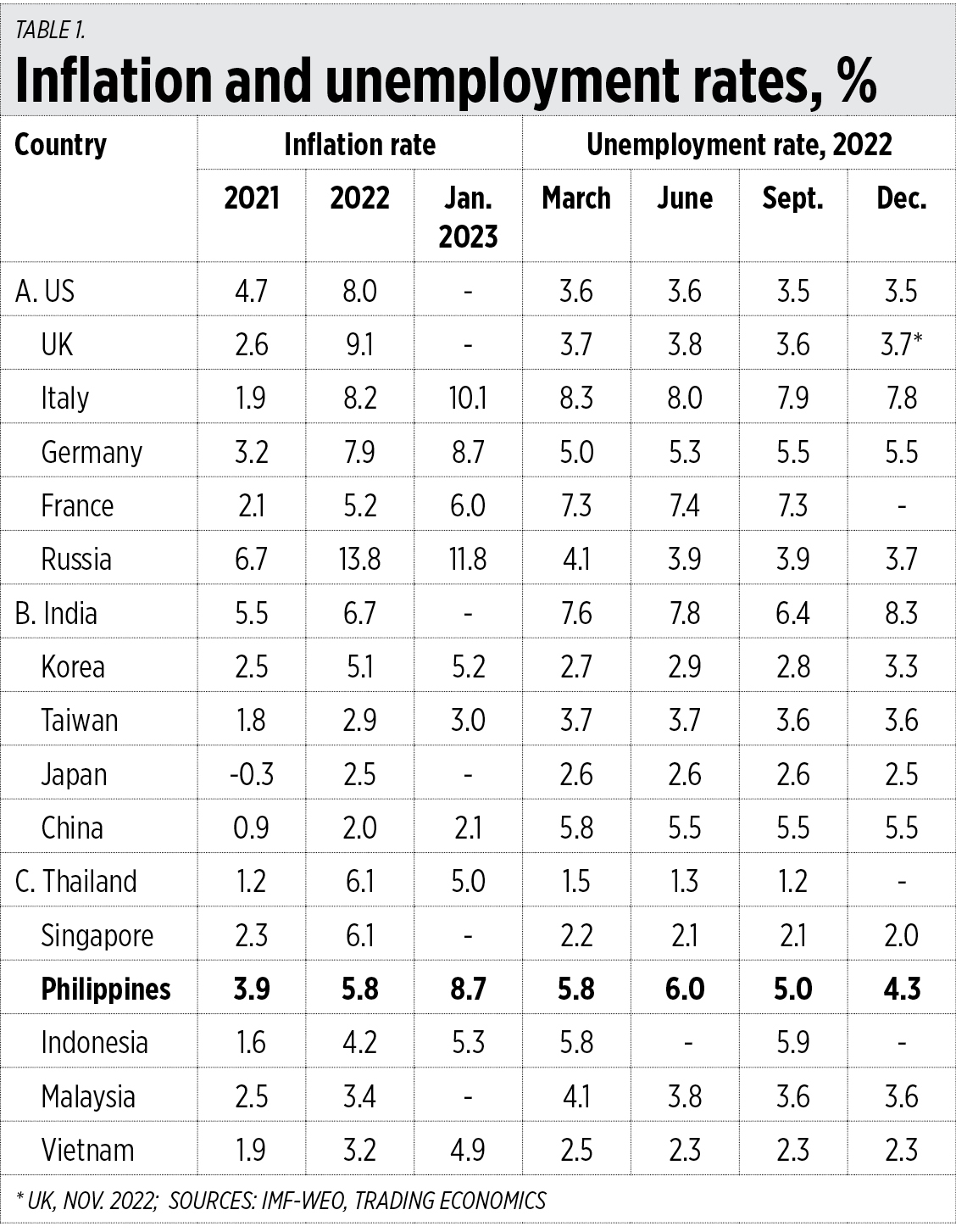
1. The Philippines inflation rate was 8.7%. The Philippine Statistics Authority (PSA) released the January inflation data last week, and the number is indeed bad. But last year, Thailand and Singapore also experienced inflation at 14-year highs, South Korea hit a 24-years high, Japan has a 41-year high.

The main contributors of the 8.7% inflation rate (the highest since November 2008) are from housing, water, electricity, gas, other fuels, transport, and food. These are basic necessities so even if the Bangko Sentral ng Pilipinas (BSP) interest rates further rise from the current 5.5% (only 2% last April) to 10%, people will still spend for them. The appropriate policies are to encourage more supply of those goods — cement, steel, electricity, water, etc. — both through domestic production and trade liberalization.

2. Low unemployment rate despite high labor force participation rate (LFPR). The PSA also released last week employment data for December 2022. LFPR is an indicator of people’s optimism or pessimism about the jobs market. They enter the labor force if they think they can find a good job, they don’t join if they think good paying jobs are not available anyway. The two highest LFPR in 2022 were recorded in November at 67.5% and December at 66.4%.

The two lowest unemployment rates in 2022 were also in November at 4.2% and December at 4.3%. That is a three-year low and it is the best situation that one can hope for in the jobs market. People are optimistic they can find good jobs or they can employ themselves via entrepreneurship. And when they do enter the labor force, very few are unemployed.

Last year among the ASEAN-6, the Philippines had the third highest inflation rate next to Thailand and Singapore. And when it came to the unemployment rate, the Philippines had the second highest as of September 2022 next to Indonesia. But the good thing is that Philippines unemployment shows a consistent decline (see Table 1).

3. Lecture on public-private partnership (PPP). On Feb. 8, the inaugural Ruperto P. Alonzo lecture series was held at the UP School of Economics. The speaker was Cynthia Hernandez, Executive Director of the PPP Center. She discussed the big PPP projects since the time of former President Cory Aquino under RA 6957 or build-operate-transfer (BOT) law of 1990, then RA 7718 or Amended BOT law of 1994 under former President Fidel Ramos, and so on. The main reason why I support more PPP in big infrastructure projects is that it relies on user-pay principle, not all taxpayers-pay principle. So the North Luzon Expressway (NLEX) will be paid only by those who use it and not by people who hardly or never use it, like taxpayers and businesses in Bicol, the Visayas, and Mindanao.

4. The Philippine Business Opportunities Forum (PBOF) in Japan. Last Friday, President Ferdinand Marcos, Jr. and the economic team plus infrastructure team held the PBOF in front of many Japanese and foreign investors. Among the important outcome of the Japan trip was the signing of 35 Letters of Intent (LOIs) between the Philippines and Japan that cover business opportunities in energy, manufacturing, transportation, healthcare, and other sectors.

5. Cancer center and treatment is highlighted. Also during the lecture by Ms. Hernandez last week, she mentioned the University of the Philippines-Philippine General Hospital (UP PGH) Cancer Center, a $95 million (or about P5.5 billion) 300-bed capacity hospital for cancer patients. A week before, it was also reported in BusinessWorld, “Cancer center is Marcos gov’t’s first PPP project” (Feb. 2).

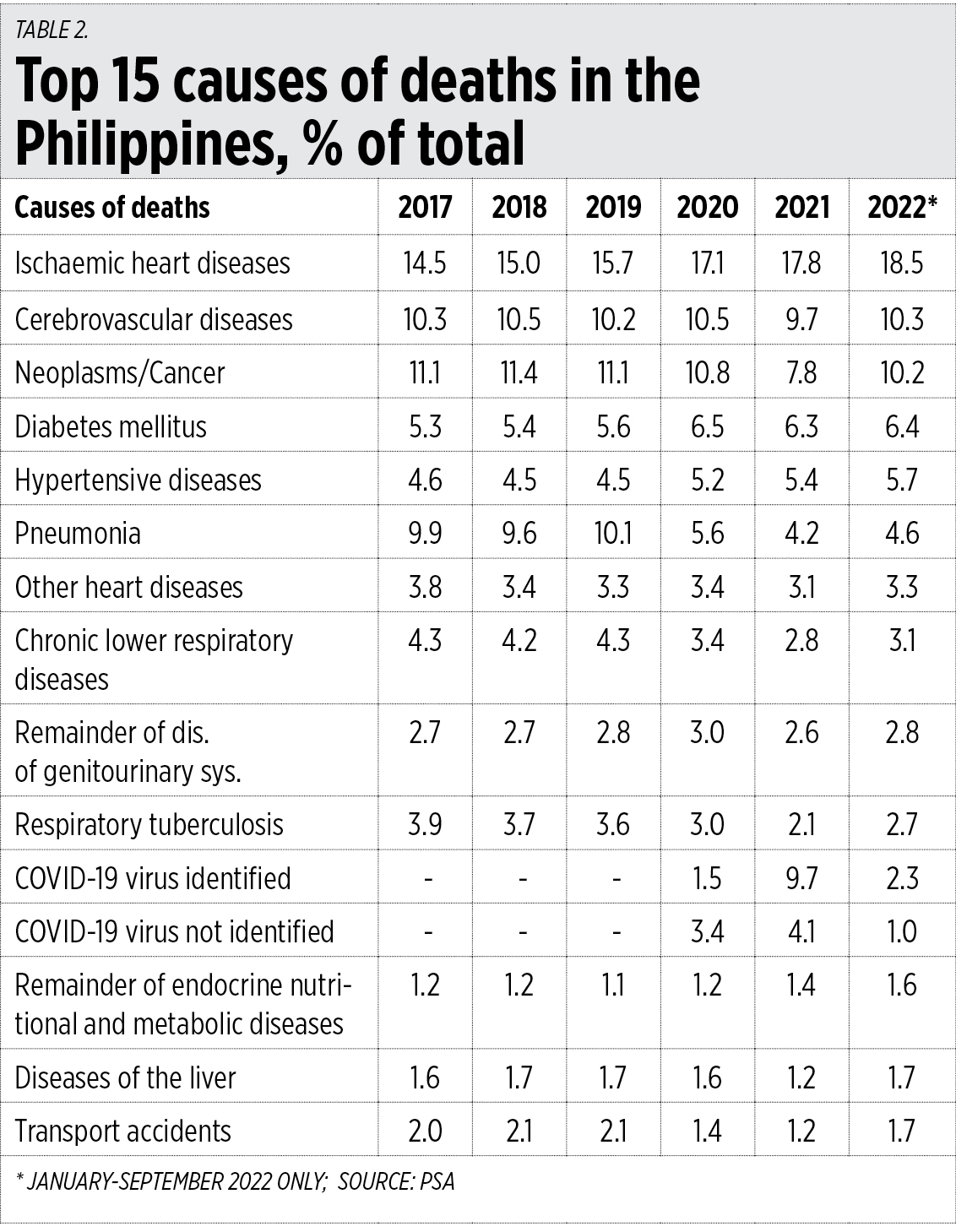
6. Cancer is third main cause of death in the Philippines. Last month, the PSA released the “2022 Causes of deaths in the Philippines,” data covering January-September 2022. I expand here with data from way back to 2017. For some reasons, cancer deaths and pneumonia deaths have declined significantly in 2021 and 2022 while COVID deaths came in (see Table 2).

It is possible that regular pneumonia deaths were labeled as COVID deaths because reporting of COVID cases and deaths were incentivized via higher PhilHealth coverage and subsidies if the patient was sick or died of COVID than non-COVID causes.

7. Cancer treatment is underfunded while COVID vaccination funding remains bloated. Another report in BusinessWorld last week was “More public funds seen needed for cancer care in PHL” (Feb. 9). It quotes Dr. Marvin Jonne Mendoza, head of the medical oncology section of the National Kidney and Transplant Institute, saying that the 2023 General Appropriations Act includes P1.56 billion for two cancer funds but for breast cancer, a patient needs P300,000 to P450,000 to complete the required 18 treatment cycles, and there are at least 27,000 new breast cancer cases/year in the Philippines. Even taking the low-end of P300,000/patient, this means some P8.1 billion is needed to deal with breast cancer alone.

Compare that with COVID vaccine procurement plus logistics of about P88.6 billion in 2021, P45 billion in 2022, and P24.5 billion in 2023.

8. New medicines are replacing chemotherapy. My older brother, Manong Nestor Oplas, died about 17 years ago of prostate cancer. His wife and my sister-in-law, Ate Alita Oplas died of cervical cancer several months ahead of Manong. As both went through painful and expensive treatments including chemo, my well-off sister covered their costly treatment, but both died young, only in their early 50s. My father died of liver cancer but he was almost 90 years old when he rested. Three of my wedding godparents also died of cancer.

If these new anti-cancer medicines — through intravenous or subcutaneous delivery — were available say two decades ago, my brother and sister-in-law, godparents and many other friends, may have lived longer.

9. The budget this year for “Prevention and Control of Non-Communicable Diseases” like cancer is P2.91 billion. The Department of Health has a total budget of P209.13 billion from the General Appropriations Act of 2023.

10. Last Friday, the Independent Electricity Market Operator of the Philippines (IEMOP) held a media briefing and they reported two pieces of good news. One was the launch of the Wholesale Electricity Spot Market (WESM) Mindanao on Jan. 26. Two is the start of operation of the Mindanao-Visayas Interconnection Program (MVIP) this coming March. This is a long-delayed project by the National Grid Corp. of the Philippines (NGCP) — the original target was end-2020, which became 2021, then became 2022. With President Marcos Jr. at the WESM Mindanao launch and announcing the March 2023 operation of MVIP, the NGCP will have no more excuses to keep delaying completion of the project.

The MVIP is important because Mindanao often has power surpluses — it has many new coal power plants — while Visayas and Luzon have occasional power deficits. In Mindanao, coal is 53% of installed capacity but contributes 62.5% of actual power generation.

The trends show bad numbers in inflation but good numbers in employment, energy, PPP, and foreign investments. In health, the continuing distortion in public spending in favor of COVID vaccination spending should stop and resources be diverted to controlling cancer and other non-communicable diseases.


Bienvenido S. Oplas, Jr. is the president of Bienvenido S. Oplas, Jr. Research Consultancy Services, and Minimal Government Thinkers.

minimalgovernment@gmail.com

Marcos foreign policy should embrace middle power identity

PHILIPPINE STAR/KRIZ JOHN ROSALES

Foreign policy and external relations are crucial aspects of President Ferdinand Marcos, Jr.’s government as they play a significant role in responding to the interaction between rapidly shifting domestic and international contexts. Furthermore, the administration should capitalize on the nation-state’s future demographic resources to build economic power and societal resilience, particularly against internal, geopolitical, and environmental threats, which are our weakest based on the Asia Power Index 2023.

Considering the Philippines’ specific military capability changes, it is time to utilize the nation-state’s resources as a middle power, maximizing our continuing source of influence through an expanding defense network (from the PHL-US alliance), our reach in the broadly integrating ASEAN plus network, and our potential multilateral power. These are crucial to navigating a complex interdependent world, where mounting US-China rivalry in the Indo-Pacific region has repercussions for the tightly integrated economies and securities in the region and the world.

As the primary architect of foreign policy, Marcos Jr. should promptly address the transformations affecting governance at different levels. The president must recognize that the Philippines has evolved into a middle power, occupying a favorable geopolitical and economic position in Asia between the great powers with their preponderant aims and the weaker nation-states that lack influence in global affairs.

Beyond a position in the distribution of power, middle power is also about positioning or how the nation-state and its leaders convert their resources and capabilities to real influence. Indeed, the notion of the middle power is also about foreign policy choice or strategy. To the middle power actor, with neither the immense military/economic wherewithal of the superpower but with the capabilities that can be the basis for voice in international and global politics, the Marcos Jr. administration must aim at a “middle” pathway to avoid being drawn into the escalating US-China rivalry.

At the 2023 World Economic Forum meeting, Marcos Jr. made it clear that when questioned about his stance, he stated, that he does not represent Beijing or Washington DC. His loyalty lies with the Philippines and that he stands with the Philippines. This approach of not siding with either party is known as having an independent or equidistant foreign policy in both its form and substance. However, its execution can prove to be challenging and require careful consideration in decision-making.

We have witnessed former Rodrigo Duterte’s execution of an independent (from the US) foreign policy through appeasement of China by affiliating within the ambit of the latter’s trade and investments. Similarly, a policy of downplaying the South China Sea arbitral ruling was necessary to deal with an aggressive neighbor. Towards the US, however, the policy was more of ambiguous distancing from the alliance while using a mix of incentives and pressure regarding the Mutual Defense Treaty, Visiting Forces Agreement, and Enhanced Defense Cooperation Agreement, which are cornerstones of the PHL-US relations. In addition, security and arms trade diversification of providers and partners underpinned the foreign policy separation from the US. Towards the end of his term, Duterte shifted the balance by reversing his appeasement policy towards a more cautious form of “soft balancing” towards China. Finally, to maintain a middle power choice, he revitalized US anti-terror support while resurrecting the legal force of the arbitral ruling power to respond to escalating Chinese provocations in the Philippine EEZ.

Is President Marcos Jr. shifting towards adopting a foreign policy approach that would establish the Philippines as a middle power?

His foreign policy incorporates vital elements necessary for the country to attain middle-power status and to embrace and solidify this identity. In his first 200 days in office, he continued and modified his predecessor’s foreign policy of soft-balancing China with strengthened economic ties and leveraging the arbitral ruling while reinforcing the Enhanced Defense Cooperation Agreement (EDCA) to increase US military access to Philippine bases and using this as the engine of the minimum credible defense. Additionally, like Duterte, Marcos Jr. is diversifying Philippine security beyond the US-led alliance system by strengthening bilateral strategic partnerships and security relations with Japan, South Korea, and Australia.

While these are forerunners in high politics, the middle power approach to foreign policy must necessarily entail that this administration develops the nation-state’s capabilities for what are otherwise non-traditional security and low political issues. For example, there are windows of opportunities found in the environmental agenda of the current administration under Secretary Toni Yulo-Loyzaga’s leadership. This administration should elevate its climate agenda to foster societal disaster resiliency and enhance maritime and marine sustainability in this area of great transnational significance. Furthermore, a prioritization of migration policy reform of overseas labor deployment under Secretary Enrique Manalo’s leadership is another window where a middle foreign policy choice based on some norm development at home will resonate globally.


Alma Maria O. Salvador, Ph.D. is an associate professor of Political Science at the Ateneo de Manila University.

Pentagon says latest shootdowns stem from more cautious stance

THE PENTAGON is seen from the air in Washington, US, March 3. — REUTERS

THE DECISION to shoot down three aerial objects in recent days stemmed from a decision to pay closer attention to North American skies and take a more cautious stance toward intrusions after US forces brought down an alleged Chinese spy balloon on Feb. 4, the Pentagon said.

The Defense Department doesn’t yet know what the additional objects are, but they approached sensitive military sites and posed a potential threat to commercial aviation, according to Melissa Dalton, assistant secretary of defense for homeland defense and hemispheric affairs.

After downing the Chinese balloon “we have been more closely scrutinizing our airspace at these altitudes, including enhancing our radar, which may at least partly explain the increase in objects that we’ve detected over the past week,” Ms. Dalton said in a briefing Sunday.

She said countries, companies and research organizations send up objects at those altitudes “for purposes that are not nefarious, including legitimate research.” She said the objects were shot down out of “an abundance of caution.”

A US F-16 fighter jet shot down an unidentified object over Lake Huron in Michigan earlier on Sunday, the fourth time in eight days a high-flying balloon or other craft has been brought down over the US or Canada. The US general in charge of NORAD said he hasn’t ruled out any possibilities on the source of three objects shot from the skies over the US and Canada — including that they might be of extraterrestrial origins.

“I’ll let the intel community and the counterintelligence community figure that out,” General Glen VanHerck, commander of the North American Aerospace Defense Command, said when asked Sunday if the US had excluded the possibility that the objects shot down over Alaska, Canada and Michigan were “aliens or extraterrestrials.”

“I haven’t ruled out anything at this point,” he said.

By contrast, the Biden administration said the high-altitude craft brought down on Feb. 4 was a Chinese spying balloon, which China denies, saying it was a weather balloon that went adrift. — Bloomberg

US tells citizens to leave Russia immediately

A RUSSIAN FLAG flies with the Spasskaya Tower of the Kremlin in the background in Moscow, Russia, Feb. 27, 2019. — REUTERS

MOSCOW — The United States has told its citizens to leave Russia immediately due to the war in Ukraine and the risk of arbitrary arrest or harassment by Russian law enforcement agencies.

“US citizens residing or travelling in Russia should depart immediately,” the US embassy in Moscow said. “Exercise increased caution due to the risk of wrongful detentions.”

“Do not travel to Russia,” the embassy said.

The United States has repeatedly warned its citizens to leave Russia. The last such public warning was in September after President Vladimir Putin ordered a partial mobilization.

“Russian security services have arrested US citizens on spurious charges, singled out US citizens in Russia for detention and harassment, denied them fair and transparent treatment, and convicted them in secret trials or without presenting credible evidence,” the embassy said.

“Russian authorities arbitrarily enforce local laws against US citizen religious workers and have opened questionable criminal investigations against US citizens engaged in religious activity.”

Russia has opened a criminal case against a United States citizen on suspicion of espionage, the Federal Security Service (FSB) said in January. — Reuters

Woman pulled alive from rubble in Turkey a week after major earthquake

ANTAKYA/ELBISTAN, Turkey — Rescuers pulled a woman alive from the rubble of a collapsed building in Turkey on Monday, broadcaster CNN Turk reported, a week after a major earthquake struck Turkey and Syria killing more than 33,000 people.

Sibel Kaya, 40, was rescued in southern Gaziantep province, some 170 hours after the first of two quakes struck the region, the report said. Rescue workers in Kahramanmaras had also made contact with three survivors, believed to be a mother, daughter and baby, in the ruins of a building.

With chances of finding more survivors growing more remote, the toll in both countries rose above 33,000 on Sunday and looked set to keep growing. It was the deadliest quake in Turkey since 1939.

On Sunday, rescue teams from Russia, Kyrgyzstan and Belarus pulled a man alive from a collapsed building in Turkey, about 160 hours after the quake struck, Russia’s Ministry of Emergency Situations said.

“Rescue work to remove the man from the rubble lasted more than four hours,” the ministry said on the Telegram messaging platform, alongside a video showing rescuers taking a man from rubble and carrying him away.

“The work was carried out at night with a risk to life coming from a possible collapse of structures.”

In a central district of one of the worst hit cities, Antakya in southern Turkey, business owners emptied their shops on Sunday to prevent merchandise from being stolen by looters.

Residents and aid workers who came from other cities cited worsening security conditions, with widespread accounts of businesses and collapsed homes being robbed.

Turkish President Tayyip Erdogan has said the government will deal firmly with looters, as he faces questions over his response to the earthquake ahead of an election scheduled for June that is expected to be the toughest of his two decades in power.

The quake is now the sixth most deadly natural disaster this century, behind the 2005 tremor that killed at least 73,000 in Pakistan.

A father and daughter, a toddler and a 10-year-old girl were among other survivors pulled from the ruins of collapsed buildings in Turkey on Sunday, but such scenes are becoming rare as the number of dead climbed relentlessly.

At a funeral near Reyhanli, veiled women wailed and beat their chests as bodies were unloaded from lorries — some in closed wood coffins, others in uncovered coffins, and still others just wrapped in blankets.

Some residents sought to retrieve what they could from the destruction.

In Elbistan, epicenter of an aftershock almost as powerful as Monday’s initial 7.8 magnitude quake, 32-year-old mobile shop owner Mustafa Bahcivan said he had come into town almost daily since then. On Sunday, he sifted through rubble searching for any of his phones that might still be intact and sellable.

“This used to be one of the busiest streets. Now it’s completely gone,” he said.

SYRIA AID COMPLICATED BY YEARS OF WAR
In Syria, the disaster hit hardest in the rebel-held northwest, leaving homeless yet again many people who had already been displaced several times by a decade-old civil war. The region has received little aid compared with government-held areas.

“We have so far failed the people in north-west Syria,” United Nations aid chief Martin Griffiths said on Twitter from the Turkey-Syria border, where only a single crossing is open for U.N. aid supplies.

“They rightly feel abandoned,” Mr. Griffiths said, adding that he was focused on addressing that swiftly.

The United States called on the Syrian government and all other parties to immediately grant humanitarian access to all those in need.

Earthquake aid from government-held regions into territory controlled by hardline opposition groups has been held up by approval issues with Islamist group Hayat Tahrir al-Sham (HTS) which controls much of the region, a U.N. spokesperson said.

An HTS source in Idlib told Reuters the group would not allow any shipments from government-held areas and that aid would be coming in from Turkey to the north.

The United Nations is hoping to ramp up cross-border operations by opening an additional two border points between Turkey and opposition-held Syria for aid deliveries, spokesperson Jens Laerke said.

U.N. Syria envoy Geir Pedersen said in Damascus the United Nations was mobilizing funding to support Syria. “We’re trying to tell everyone: Put politics aside, this is a time to unite behind a common effort to support the Syrian people,” he said.

The quakes killed 29,605 people in Turkey and more than 3,500 in Syria, where tolls have not been updated for two days.

Turkey said on Sunday about 80,000 people were in hospital, and more than 1 million in temporary shelters. — Reuters

Love in a time of inflation: how much will Valentine’s Day set you back?

PCH.VECTOR-FREEPIK

LONDON — This Valentine’s Day is set to look different after a year of record food inflation that has sent up prices of everything from flowers to chocolates and dining in restaurants.

COVID-era supply chain logjams and Russia’s invasion of Ukraine have meant that Britons paid a record 16.7% more for food in the four weeks to Jan. 22 compared to the same period last year, according to research firm Kantar.

As a result, romantic Valentine dinners out will cost more and restaurants are modifying their offerings to attract cash-conscious customers.

Last year, British restaurant chain PizzaExpress offered a three-course set menu complete with “a prosecco and raspberry mimosa, heart-shaped dough balls and a main, such as our Padana, with creamy goat’s cheese and sweet caramelized onion”.

Priced at 23.95 pounds ($29) per person, the ad for the meal asked: “Will the Triple Salted Caramel Cheesecake tickle your fancy?”

This year, PizzaExpress is advertising a slightly less impressive “love bundle” of a starter and a “classic” pizza for 15 pounds.

According to the latest data from Britain’s Office of National Statistics, eating at restaurants in December cost 9.4% more than last year.

Other expenses associated with date nights – from flowers and cinema tickets to taxis and childcare – also rose. As companies such as Mondelez, Nestle and Lindt hiked prices, people paid 10.7% more for chocolates.

The nation’s supermarkets are seeking to cash in, keeping prices for their Valentine’s Day meal-deals stable in the hope of luring customers from restaurants.

Morrisons is selling a 15-pound package for a starter, main, two sides, drink and dessert. Its members will get 1 pound off a dozen fresh red roses from Feb. 11, the retailer said. The price of flowers rose 6.2% in Britain in December.

Tesco, whose chief executive recently noted that consumers are shifting away from eating out, has reduced the price of its Valentine’s Day dinner-for-two to 12 pounds – down from 15 pounds last year – for a main, side dish, dessert and drink.

Sainsbury’s has tied up with Uber Eats to offer 15 pound “emergency bundles” of a three-course meal, drinks and gifts with free delivery in parts of East London.

“It’s an opportunity for the supermarkets to sell their premium ranges to people who wouldn’t normally buy them,” said Chris Beckett, head of equity research at investment firm Quilter Cheviot. “That could lead to repeat purchases in the future.”

Even diners with deeper pockets will have to dish out more this year.

London’s Michelin-starred Ritz Restaurant, whose ad boasts “breathtaking” interiors “with spectacular garland chandeliers and romantic twinkling candlelight all reflected in the mirrored panels”, this year priced its four-course set Valentine’s menu at 395 pounds per person, up from 325 pounds last year.

Both years, the deal included a glass of Barons de Rothschild “Ritz Reserve” Rosé NV Champagne and a menu created by the Ritz’s Executive Chef John Williams, Member of the Order of the British Empire.

Elsewhere in Europe, a similar trend has taken hold.

Luxury hotel Le Bristol in Paris, for instance, is this year charging upwards of 2,190 euros ($2,338) for its “seductive offer” that includes a room for one night, late check-out, a “gastronomic dinner for two”, chocolate and a bottle of champagne. Last year, a similar experience cost 1,090 euros.

The Ritz and Le Bristol did not respond to a request for comment. — Reuters

Explosions rock Gaza, Israel says it hit Hamas rocket factory

REUTERS

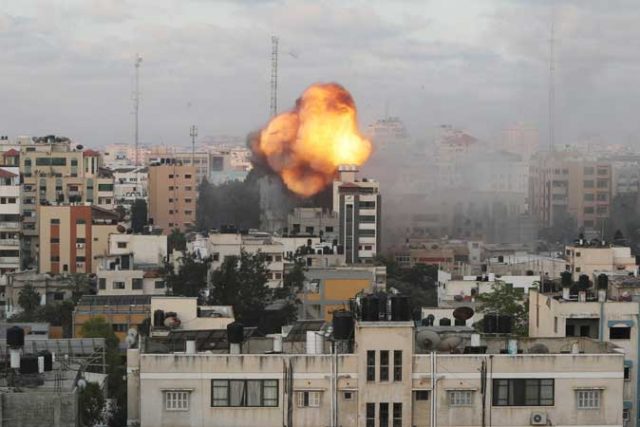
GAZA – Several explosions rocked the Gaza Strip early on Monday, according to a Reuters witness, as Israel’s military said it attacked an underground site used by the Palestinian enclave’s Hamas Islamists to manufacture rockets.

The air strikes, in which there was no immediate word of casualties, followed what Israel described as its shooting down over the weekend of a rocket that had been fired over the border from Gaza. There was no Palestinian claim for that launch.

In the Israeli-occupied West Bank, another Palestinian territory, witnesses said troops had surrounded a house in the city of Nablus, with gunfire ensuing and possible casualties.

The Den of Lions, a group of Palestinian gunmen based mostly in Nablus and nearby Jenin which has been subject to intensified Israeli raids over the past year, said it had ambushed an army unit. Israel had no immediate comment.

Hamas cadres seized control of Gaza in 2007 and have fought several wars with Israel there since. When smaller Gazan factions attack Israel, it generally retaliates against Hamas.

Palestinian sources said Israeli ground forces also fired on Hamas border positions on Monday. Sirens sounded in Israeli towns near the Gaza border, warning of possible new rocket launches. — Reuters

Russian arms supplies to India worth $13B in past 5 years – news agencies

REUTERS

Russian supplied India with around $13 billion of arms during the past five years, and New Delhi has orders placed with Moscow for weapons and military equipment exceeding $10 billion, Russian state news agencies reported late on Sunday.

India is the world’s biggest buyer of Russian arms, accounting for around 20% of Moscow’s current order book, and New Delhi has not explicitly condemned Russia’s invasion of Ukraine. Indian Prime Minister Narendra Modi has called for dialogue and diplomacy to solve the conflict, now in its 12th month.

Scores of Western countries imposed sanctions on Russia, including on arms, in response to the invasion, which Moscow calls a “special military operation”.

India, China and some Southeast Asian countries have maintained their interest in buying Russian arms, according to Dmitry Shugayev, the head of Russia’s Federal Service for Military-Technical Cooperation, the agencies reported.

“Despite the unprecedented pressure on India from Western countries led by the United States in connection with Russia’s special operation in Ukraine, it continues to be one of Russia’s main partners in the field of military-technical cooperation,” Interfax agency quoted Shugayev as saying.

Annual arms exports were about $14-15 billion, and the order book has remained steady at around $50 billion, Interfax reported.

Asian customers are particularly interested in Russia’s S-400 Triumf missile defence systems, short-range surface-to-air missiles systems such as the Osa, Pechora or Strela, as well as Su-30 warplanes, MiG-29 helicopters and drones, Shugayev said.

Russia’s TASS state news agency reported that Russia will present about 200 samples of weapons and military equipment at the 14th international aerospace exhibition Aero India 2023, which opens on Monday in Bengaluru.

India is scouting for billions of dollars worth of military planes, completing jetliner deals to meet civilian demand and pressing global aircraft manufacturers to produce more locally at the show this week. — Reuters

Ruling out aliens? Senior US general says not ruling out anything yet

ALBERT ANTONY-UNSPLASH

WASHINGTON – The US Air Force general overseeing North American airspace said on Sunday after a series of shoot-downs of unidentified objects that he would not rule out aliens or any other explanation yet, deferring to US intelligence experts.

Asked whether he had ruled out an extraterrestrial origin for three airborne objects shot down by US warplanes in as many days, General Glen VanHerck said: “I’ll let the intel community and the counterintelligence community figure that out. I haven’t ruled out anything.”

“At this point, we continue to assess every threat or potential threat, unknown, that approaches North America with an attempt to identify it,” said VanHerck, head of US North American Aerospace Defense Command and Northern Command.

VanHerck’s comments came during a Pentagon briefing on Sunday after a US F-16 fighter jet shot down an octagonal-shaped object over Lake Huron on the US-Canada border.

The incidents over the past three days follow the Feb. 4 downing of a Chinese balloon that put North American air defenses on high alert. US officials said that balloon was being used for surveillance.

Another US defense official, speaking on condition of anonymity, said the military had seen no evidence suggesting any of the objects in question were of extraterrestrial origin.

VanHerck said the military was unable to immediately determine the means by which any of the three latest objects were kept aloft or where they were coming from.

“We’re calling them objects, not balloons, for a reason, said VanHerck.

The incidents come as the Pentagon has undertaken a new push in recent years to investigate military sightings of UFOs – rebranded in official government parlance as “unidentified aerial phenomena,” or UAPs.

The government’s effort to investigate anomalous, unidentified objects – whether they are in space, the skies or even underwater – has led to hundreds of documented reports that are being investigated, senior military leaders have said.

But the Pentagon says it has not found evidence to indicate Earthly visits from intelligent alien life.

Analysis of military sightings are conducted by the Office of the Director of National Intelligence in conjunction with a newly created Pentagon bureau known as AARO, short for the cryptically named All Domain Anomaly Resolution Office.

Their first report to Congress in June 2021 examined 144 sightings by U.S. military aviators dating to 2004.

That study attributed one incident to a large, deflating balloon but found the rest were beyond the government’s ability to explain without further analysis.

A report from the Office of the Director of National Intelligence issued last month cited 366 additional sightings, mostly things like balloons, drones, birds or airborne clutter. But 171 remained officially unexplained.

“Some of these uncharacterized UAP appear to have demonstrated unusual flight characteristics or performance capabilities, and require further analysis,” the office said in the report.

Sill, Ronald Moultrie, under secretary of defense for intelligence and security, told reporters in December that he had not seen anything in the files to indicate intelligent alien life.

“I have not seen anything in those holdings to date that would suggest that there has been an alien visitation, an alien crash or anything like that,” Moultrie said. — Reuters