Home Blog Page 5149

‘History will hold Trump accountable’ for Jan. 6

U.S. President Donald Trump — REUTERS/LEAH MILLIS/FILE PHOTO

WASHINGTON — Former US Vice President Mike Pence offered his most forceful rebuke to date of his one-time boss Donald Trump on Saturday, saying that history will hold him accountable for his role in the Jan. 6, 2021, attack on the US Capitol.

Mr. Pence was in the Capitol when thousands of Trump supporters breached the building in an attempt to stop Congress from certifying the results of the 2020 presidential election, which Mr. Trump lost to Joseph R. Biden.

As the vice president has the constitutional role of Senate president, Mr. Pence was presiding over what had always been the ceremonial task of approving the votes of the Electoral College to select the president and vice president.

Throughout the siege, Mr. Trump sent several tweets, one calling on Republicans to “fight” and others making false claims of voter fraud. He also criticized Pence for certifying the results.

“President Trump was wrong,” Mr. Pence told assembled journalists and their guests at the Gridiron dinner, an annual white-tie event in Washington, D.C. “I had no right to overturn the election, and his reckless words endangered my family and everyone at the Capitol that day, and I know that history will hold Donald Trump accountable.”

Mr. Pence, who is considering a run for the Republican nomination for the 2024 presidential election, was whisked to safety by law enforcement during the attack.

He rarely addressed Jan. 6 in the months following the incident but has since upped his criticism of the rioters and the behavior of his former boss that day.

He has sharply criticized Mr. Trump’s conduct in recent media interviews, and in a memoir released in November, he accused Mr. Trump of endangering his family.

Still, Mr. Pence’s comments on Saturday were his most pointed to date.

“What happened that day was a disgrace,” he said. “And it mocks decency to portray it any other way. For as long as I live, I will never, ever diminish the injuries sustained, the lives lost, or the heroism of law enforcement on that tragic day.”

A spokesperson for Mr. Trump did not immediately respond to a request for comment outside business hours.

Mr. Pence’s relationship with Mr. Trump has been complex since the two left office. He had criticized the former president’s behavior but refrained from the most stinging rebukes of Mr. Trump. He also declined to cooperate with the House of Representatives committee investigating the Capitol attack, describing the work done by the mainly Democratic body as partisan.

The former vice president’s comments on Saturday indicate he is willing to more forcefully distance himself from Trump as the 2024 campaign heats up – even if that means alienating the millions of Republican voters still loyal to the former president.

His remarks came just days after conservative television host Tucker Carlson aired security footage of the Capitol attack, claiming that many of the rioters were “orderly.”

Carlson’s depiction of Jan. 6 was sharply criticized by Democrats and several high-profile Republicans in the Senate, though many other Republicans – particularly in the House – shrugged off the episode. — Reuters

Mutiny at the BBC: Lineker row causes growing crisis at UK broadcaster

LONDON — Britain’s BBC faced a mounting crisis as a row over football presenter Gary Lineker’s criticism of government migration policy led to a presenter mutiny, drew a comment from the prime minister and left the broadcaster’s boss defending his position.

The BBC was forced to axe much of its sports coverage on Saturday as presenters refused to work in a show of solidarity with Mr. Lineker, after the BBC sought to defend its impartiality by taking him off the air due to his comments on social media.

Mr. Lineker, a former England soccer captain, the BBC’s highest-paid presenter and the anchor of the football highlights program Match of the Day, was suspended from his role following his criticism of Britain’s migration policy.

Critics of Mr. Lineker’s suspension say the BBC bowed to government pressure, leading to a furious debate about the impartiality of the national broadcaster.

BBC Director General Tim Davie told the BBC on Saturday he had no intention of resigning over the matter. “We in the BBC, and myself, are absolutely driven by a passion for impartiality, not left, right or pandering to a particular party,” he said.

Mr. Davie said he wanted Mr. Lineker back on the air and hoped to find a balance which enabled some presenters to express opinions while at the same time maintaining the BBC’s neutrality.

Prime Minister Rishi Sunak issued a statement on Saturday defending the migration policy, which bars the entry of asylum seekers arriving in small boats across the English Channel, saying he hoped Mr. Lineker and the BBC could resolve their differences in a timely manner.

“It is rightly a matter for them, not the government,” Mr. Sunak said.

The Lineker row severely disrupted the BBC’s sports programming on Saturday as multiple presenters walked out, prompting it to issue an apology.

Saturday’s edition of Match of the Day, presented by Mr. Lineker for more than 20 years, aired at the usual time despite his absence, but was slashed to just 20 minutes and aired as a show of highlights without commentary.

NEUTRALITY UNDER SCRUTINY
The BBC is committed to being politically impartial but has faced criticism from the Conservative and Labor parties about how neutral it actually is, particularly in the era of social media when high-profile presenters can easily make their personal positions known.

The opposition Labor Party and media commentators accuse the BBC of silencing Mr. Lineker, after Mr. Sunak’s spokeswoman called Mr. Lineker’s comments “unacceptable” and interior minister Suella Braverman said they were “offensive”.

“The BBC is not acting impartially by caving in to Tory MPs who are complaining about Gary Lineker,” Labor leader Keir Starmer told reporters at a conference in Wales on Saturday.

Mr. Lineker declined to comment to the media as he left his London home on Saturday and did not reply to questions from reporters on arrival at the King Power Stadium in Leicester where he went to watch one of his former clubs play.

The furor followed Mr. Sunak’s announcement of the new law earlier in the week. Mr. Lineker, 62, took to Twitter to describe the legislation as a “cruel policy directed at the most vulnerable people in language that is not dissimilar to that used by Germany in the 30s.”

Seeking to resolve the dispute, the BBC said there needed to be an agreed position on Mr. Lineker’s use of social media before he can return to presenting. But critics of Mr. Lineker’s suspension say he is entitled to his personal opinions because he is not a news presenter.

Greg Dyke, who was director-general of the BBC between 2000 and 2004, told BBC radio earlier on Saturday that the BBC had made a mistake.

“The perception out there is going to be that Gary Lineker, a much-loved television presenter, was taken off air after government pressure on a particular issue,” Mr. Dyke said.

That could turn viewers away from the 100-year-old BBC, which is funded by a 159 pound ($192) annual “license fee” tax on all television-watching households.

While the broadcaster remains a central presence in British cultural life, it is battling to stay relevant with younger audiences and faces threats to its funding as some Conservative lawmakers want to scrap the license fee.

Questions about BBC Chair Richard Sharp pose a further challenge for the broadcaster.

Sharp is under pressure for failing to declare his involvement in facilitating a loan for former Conservative Prime Minister Boris Johnson shortly before he was appointed to the role. Sharp’s appointment, made on the recommendation of the government, is being reviewed by Britain’s public appointments watchdog. — Reuters

K-pop giant HYBE drops bid for SM Entertainment, ending takeover battle

THE LOGO of SM Entertainment is seen at its headquarters in Seoul, South Korea, March 9, 2023. — REUTERS

SEOUL — HYBE Co Ltd., the agency representing top-selling South Korean boy band BTS, dropped its plan to take control of K-pop pioneer SM Entertainment Co Ltd., the company said on Sunday.

HYBE’s withdrawal put an end to a weeks-long takeover battle with social media giant Kakao Corp., and will allow Kakao to expand its entertainment business further.

HYBE said its decision to halt the takeover bid came after the price to acquire SM exceeded a fair range as the competition intensified.

Kakao last week launched a 1.25-trillion won ($946.80 million) tender bid for up to 35% of SM Entertainment at 150,000 won per share, well above the 120,000 won per share offer from HYBE for a 25% stake that gained little traction with shareholders.

On Friday, shares in SM Entertainment closed at 147,800 won.

HYBE said after talks with Kakao, the two companies agreed to cooperate on matters related to their platforms.

Lee Jong-im, a Seoul-based culture critic, said the takeover of SM was the latest of a series of efforts by Kakao to expand its content and entertainment arm in recent years.

In 2021, Kakao Corp. acquired multiple content companies, including video game developer NFLY STUDIO.

Kakao Entertainment, a subsidiary of Kakao, also invested 12 billion won in Metaverse Entertainment, which specializes in virtual idol groups.

Kakao and SM Entertainment said they welcomed HYBE’s decision to drop its bid.

“Kakao and Kakao Entertainment will continue its tender offer bid until the 26th to secure a further stake and work on the details of business cooperation between HYBE and SM,” Kakao said in a statement. — Reuters

On Women’s Month: Be concerned over alcohol and gender-based violence

BECCA TAPERT-UNSPLASH

March is a month for celebrating women. This was declared by the Philippine Commission on Women (PCW) in 1988 and signed into law by the first Filipina president and first female president in Asia, Corazon Aquino.

The late President Aquino embodied women empowerment, breaking the glass ceiling in politics. Like her, one thing that made me strive to break that barrier is the influence of my elementary and secondary school, St. Scholastica’s College Manila, which is also the late President’s alma mater.

St. Scholastica’s College Manila has been educating young women for many years on socio-political issues. I remember having debates at nine years old regarding the 2010 elections, and attending rallies against the pork barrel scam and against the Marcos burial in the Libingan ng mga Bayani.

But one of the most significant memories I have of my alma mater is the One Billion Rising Movement, or Isang Bilyong Babae ang Babangon advocacy, which we celebrate on the 14th of February to pave the way for Women’s Month.

The Isang Bilyong Babae ang Babangon is a dance against violence against women, a global movement created to end violence against women and girls. It was created to celebrate the anniversary of the play and book The Vagina Monologues by Eve Ensler.

I remember singing and dancing and pouring my heart out because of the song’s empowering lyrics:

Bakit nga ba? Di mabubuhay ang bayan, Kung walang kababaihan / Ngunit kung tayo’y saktan, Parang walang hanggan? Bakit nga ba? Nakaguhit sa ating mukha, Na tayong lahat ay biktima, Ng kalupitan, karahasan? Pilit tayong dinadapa. Isang bilyong babae ang babangon, Ito na ang ating panahon!

(Why? The nation cannot survive, without women/ yet when we are hurt, it is like it never ends? Why? It is drawn on our faces, that we are all victims, of cruelty, violence? We are forced to fall down. One billion women will rise, it is our time!)

The dance and song performance is so empowering, highlighting the “Huwag matakot at lumaban na, Tama na ang pang-aabuso” (Don’t be afraid and fight now, it is time for the abuse to end) call to action for women to stand up against violence.

Violence against women is pervasive in the Philippines. The 2017 Philippine Statistics Authority (PSA) National Demographic and Health Survey showed that one in four Filipino women aged 15 to 49 have reported experiencing some form of physical, sexual, and emotional violence.

Further exacerbating the problem of violence against women in the Philippines is the high prevalence of excessive alcohol use.

Alcohol may encourage aggression or violence by disrupting normal brain function. It weakens brain mechanisms that normally restrain impulsive behaviors, including inappropriate aggression.

In a UNICEF study conducted in 1997 analyzing 1,000 cases of domestic violence in the Philippines, alcohol misuse was cited in one out of every four cases.

The use of limited household funds to buy alcohol often causes arguments and violent outbursts within a relationship, according to a 2009 qualitative study of 19 married women in Cebu by Fehringer and Hindin. A third of the women in the study mentioned the husband’s alcohol consumption as a source of conflict which led to violent acts.

In a study on husband/partner intoxication and intimate partner violence against women in the Philippines conducted by Kerridge and Tran (2016), 92.9% of women reported their partner being intoxicated at least sometimes. Intoxication was significantly associated with all three types of intimate partner violence, namely physical, emotional, and sexual violence.

The World Health Organization (WHO) says that alcohol use is a major factor behind domestic violence. Men are prone to be violent if factors — including low education, history of child maltreatment, exposure to domestic violence, and exposure to unequal gender norms — are present together with alcohol use. The WHO, UN Women, Human Rights Council, United Nations Office on Drugs and Crime, and Movendi International list alcohol as a major risk factor and a determinant of violence against women.

The link between alcohol and domestic violence was extensively discussed by Dr. Maricar Limpin, immediate past president of the Philippine College of Physicians, in a 2019 Senate hearing on alcohol taxes. She shared: “Once an alcoholic wants to drink, they will do anything in order to get what they want, even to the point of hurting family members. Alcohol use is why there are so many battered women among the poor.”

Alcohol-related violence against women is nonetheless preventable. Alcohol taxation and pricing legislation are known to be the most effective alcohol control measures.

Our legislators can prevent violence against women and protect public health through increasing alcohol excise taxes, thereby increasing prices, making alcohol less accessible, and reducing alcohol consumption.

Although Republic Act 11467, which was passed in 2020, raised taxes on alcohol products, consumption has barely dropped in the past decade. In 2013, binge drinking among current alcohol drinkers was at 56.2%, according to the Department of Science and Technology-Food and Nutrition Research Institute (DoST-FNRI). In 2021, 54.7% of current alcohol drinkers binge drink.

According to a 2021 study by Movendi International, four in 10 Filipino adults (40.1%) reported alcohol use in the past 30 days. Men used more alcohol than women (51.5% vs. 28.9%). One in three Filipinos (33.1%) reported high-risk and heavy alcohol use while consuming six or more alcoholic beverages in one sitting. The Philippine government estimated alcohol harm to cost the government P200 billion annually as of 2019.

This tells us that we still need to increase alcohol excise taxes to reduce consumption.

The Philippines also needs a comprehensive regulatory framework to reduce alcohol consumption.

Let us celebrate women’s month by protecting women from alcohol-related violence.


Emmanuella Iellamo is a policy researcher for Action for Economic Reforms and since her high school days has been an advocate for women empowerment.

Drowning in e-mail? Consider a paywall

MUHAMMAD RIBKHAN - PIXABAY

THE deluge of daily e-mail at work has become such a mundane part of professional life that it’s no longer fun to complain about. Try bringing it up with a colleague and they’ll barely hear you, so immersed are they in trying to obliterate an endless stream of spam.

The problem will only get worse as marketers use ChatGPT to draft e-mails, allowing them to send even more bumf you have no intention to read. Microsoft Corp. and Salesforce, Inc. are not helping matters by plugging ChatGPT into their e-mail tools, making spray-and-pray e-mail campaigns easier to carry out.

There is an answer for the desperate: a paywall.

Just as publishers like Bloomberg and newsletter writers have increasingly charged for online entry, so too can individuals who want to be more in control of their inbox, provided they don’t mind the discomfort of bringing money into a social exchange.

Five months ago, Dan Landau, a marketing executive at a venture capital firm, started using a tool called Gated on his Gmail. Now anyone not on his contact whitelist gets this message:

“Hi! I use Gated to reduce noise in my inbox and benefit charity. I don’t recognize your e-mail, so you’ll need to take one quick step to reach me:

If we don’t know each other, make a small donation to support my nonprofit, Doctors Without Borders.  If we know each other personally, bypass the donation by verifying here.”

About 5% of e-mail senders verify that they know Landau, and only about 1% make the necessary $2 donation to Doctors Without Borders. Why the infinitesimal figure? Most likely because so many of Landau’s e-mails were coming from automated systems. Now all of that goes into a folder that he checks once a day. “I love it,” he says.

Jim McKelvey, the billionaire co-founder of payments firm Block, Inc., recently built a system that charges 5 cents to any e-mail sender not on his whitelist. Everything else gets routed to a folder that he says he never looks at. “That took my e-mail down to this almost eerily quiet group of important messages,” he said in a video in which he announced the same tool being submitted to the Google App Store. “As soon as Gmail approves it, I will make this free for everybody.”

That makes it sound like this could go mainstream — but there’s a good chance it won’t. The idea of paid e-mail has been around for years and never really got off the ground. Everyone needs to adopt such a system for it to become popular, or essentially hold hands and jump off the cliff at once. While you might love the thought of a quiet inbox, how comfortable are you with asking a potential new contact to pay money to reach you?

“As soon as we bring money into any conversation, we have a problem,” says Seth Godin, a widely read marketing author who is in the unique position of having written 16 best-selling books and amassing 785,000 Twitter followers. In other words, he is more inundated than most with e-mails seeking his attention. Godin says it would be awkward to ignore someone who paid to access his inbox, and that’s on top of the broader, uncomfortable obligation to respond to people who have paid to speak to you.

Even so, Godin has been an advocate for throttled e-mail since the late 1990s, when he sold an e-mail system to Yahoo!. At that time, internet usage was still small enough for there to just be a handful of people at Yahoo! and AOL who could sit together in a room and decide on standards to make e-mail more gated.

“The problem was, AOL were afraid to break something that was working,” he remembers. If they charged for people to send e-mails, some other internet platform would leap ahead (which ended up happening anyway).

In 2006, Godin again called for an e-mail “stamp” system, which didn’t take off. Then other e-mail payment startups like Radr and Wrte.io tried to sell gated e-mail to professionals, which fizzled. Even Elon Musk’s attempt to banish bots from Twitter by charging for blue-tick accounts probably won’t dissuade spammers — they can just create profiles without blue ticks instead.

It seems the only way to spark mass change is for one big company to force one big change, on everyone. Google, for instance, could implement a widespread fee to anyone who sends more than 50 e-mails a day, Godin suggests. That would eliminate the unease of doing something largely unheard of.

Landau admits that he sometimes has to “defuse” that awkwardness with a quick apology to those who need to get around his e-mail gate. But ultimately, he doesn’t mind, and says he always writes back when someone pays the donation: “It makes me more interested to hear what they say.”

For him, the renewed focus is worth the extra friction. If ChatGPT spam grows exponentially, maybe more of us will feel the same.

BLOOMBERG OPINION

A culture of violence 

MARCO BIANCHETTI-UNSPLASH

Negros Oriental Governor Roel Degamo died from gunshot wounds sustained after being attacked on March 4 at his home in Barangay San Isidro, Pamplona town while attending to beneficiaries of the government’s 4Ps or Pantawid Pamilyang Pilipino Program.

Lanao del Sur Gov. Mamintal Adiong, Jr. was shot at and wounded in Bukidnon on Feb. 17, where four of his security personnel, including three police officers, died. Two days later, Aparri, Cagayan Vice-Mayor Rommel Alameda and five other persons traveling with him were killed in a highway ambush in Bagabag, Nueva Vizcaya. Maguindanao Mayor Datu Ohto Montawal was injured in an ambush along Roxas Boulevard in Pasay City on Feb. 22, sustaining a gunshot wound on his hip and left arm. Five former local officials were also assassinated in the latter half of 2022.

“The gangland-style shooting incidents executed in broad daylight are etching fears on our people about how easily lives can be taken, even of people who are in power,” Senator Grace Poe said at the Senate meeting that drafted instructions to the Philippine National Police (PNP) and other law enforcement agencies “to undertake the necessary steps in ensuring the safety of all.”1

It came from the PNP itself that there were 105,568 crimes recorded from July 2022 to Jan. 7, 2023 (5.5 months) with 57,103 of these in Luzon, 21,421 in the Visayas, and 27,044 incidents in Mindanao, with theft, rape, and robbery as the most prevalent crimes. But the country’s crime rate has dropped by 19.49% from January to Feb. 25 this year as compared to the same period in 2022, amid the spate of attacks against local officials this month, PNP chief Gen. Rodolfo Azurin, Jr. said.2

It is not just alarming because local officials have been killed. Not to be forgotten is 24-year-old Adamson University student John Matthew Salilig who was brutally beaten to death at fraternity induction rites just last Feb. 18, and secretly buried. His decomposing body was found 10 days later in a shallow grave in Imus City, Cavite. Authorities identified 18 persons of interest. Six of them were invited for investigation, while two were arrested for obstruction of justice, including the father of one of the suspects. One of the persons of interest committed suicide on Feb. 28.3

After the case of Salilig went public, the Public Attorney’s Office disclosed the killing of student Rommel Baguio, who was reported dead in December 2022. He was joining the Tau Gamma Phi at the University of Cebu. While undergoing the fraternity’s initiation rites, Baguio reportedly incurred injuries that lead to his death.4 Baguio was allegedly hazed on Dec. 10, 2022, rushed to the hospital on Dec. 18, and died on Dec. 19. Five fraternity officials will now face cases of murder and violation of the anti-hazing law.5

It is alarming when the youth are themselves violent. It clearly and sadly shows the deterioration of moral values in a creeping culture of violence. For the youth only grows, learning values and knowing what works and does not work in society, from seeing what the older people around them do. Reinforcement of values and mores will come gradually with individual experiences. The formation of the youth and ensuring the integrity of the whole of society are guided by the fair and just application and enforcement of the laws by the justice system.

“Crime does not pay” must be emblazoned in the collective conscience. But what about those who “get away with murder,” literally and figuratively? The Philippines remained the seventh worst country in the world where journalist killers get away with murder, according to a report from the New York based Committee to Protect Journalists (CPJ). The recent murders of radio journalists Percival Mabasa (Oct. 3, 2022), who had been critical of some politicians, and Renato Blanco (Sept. 18, 2022), who had reported on local politics and corruption, “raised fears that the culture of violence and impunity will endure.”6

How else will society know of itself if media and social communications are stifled or controlled? Unsolved crimes clog the dockets of courts while some persons accused of high crime are seemingly too speedily exonerated. Human Rights Watch (HRW), a group of 70-plus nationalities who are country experts, lawyers, journalists, and others who work to protect human rights around the world, is active where there seems to be inadequate attention by the country concerned (hrw.org/about/about-us). In a policy paper submitted to UN member states, HRW said that extrajudicial killings in the Philippine government’s “war on drugs” still occur on a regular basis.

“The Office of the UN High Commissioner for Human Rights (OHCHR) calculated in its report to the Council that the death toll was at least 8,663. Domestic human rights groups and the government appointed Philippines Commission on Human Rights state that the real figure of “drug war” killings is possibly triple the number reported in the OHCHR report.”7 In late 2021, the International Criminal Court (ICC) commenced investigations on alleged crimes against humanity in the “drug war.” A month after, then-President Rodrigo Duterte had the Philippines resign from the ICC. The Philippines, not the ICC, must have the first crack at investigating the alleged extrajudicial killings in its territory, the Legal Cooperation Cluster of the National Task Force to End Local Armed Conflict advised.8

On Jan. 26, a panel of judges at the ICC in the Hague authorized the Office of the Prosecutor to resume its investigation into alleged crimes against humanity in the Philippines. The judges concluded that the Philippine government “failed to substantiate its assertions that it was doing enough to investigate and prosecute killings that took place” from 2016 to 2022.9

The culture of violence and impunity will entrench itself as criminals are not punished. Dumaguete Bishop Julito Cortes condemned the “heartbreaking and senseless act of murder” of Governor Degamo and five others, and asked the police and the military to work to bring those accountable to justice. “How can we ever attain lasting peace if this culture of violence continues to torment us? When will this cycle of killings ever stop? We pray, then, that the perpetrators behind this bloodshed will be brought to justice soon.”10

“To those whose hands are full of blood, heed the words of the Prophet Isiah: ‘Wash yourselves clean! Put away your misdeeds from before God’s eyes; cease doing evil and learn to do good,’” Bishop Cortes said, citing Isaiah 1:16-17.

Justice for the victims, and for the Filipino people, who have been betrayed and robbed of their self-respect and integrity by the ruthless violence of a few heartless lost souls who have usurped power over life and death for their own ends.

1 philstar.com, March 6, 2023

2 pna.gov.ph, Feb. 27, 2023

3 cnnphilippines.com, March 6, 2023

4 inquirer.net, March 8, 2023

5 gmanetwork.com, March 5, 2023

6 bworldonline.com, Nov. 3, 2022

7 hrw.org/news, Sept. 12, 2022

8 pna.gov.ph, June 19, 2021

9 hrw.org, Jan. 27, 2023

10 The Philippine Star, March 6, 2023


Amelia H. C. Ylagan is a doctor of Business Administration from the University of the Philippines.

ahcylagan@yahoo.com

Japan credit watcher affirms PHL credit rating

PHILIPPINE STAR/ MICHAEL VARCAS

The Japan Credit Rating Agency (JCR) has maintained the Philippines’ credit rating at ‘A-‘ with a “stable” outlook due to the country’s strong growth amid high inflation.

“The ratings mainly reflect the country’s high and sustained economic growth performance underpinned by solid domestic demand and its resilience to external shocks,” the agency said in a press release on Friday.

JCR said the country’s resilient growth is supported by an external debt kept low relative to gross domestic product (GDP) and high dollar reserves. However, income disparity still needs to be addressed. 

“The economy was generally on a recovery path in 2022 backed by strong private consumption as the COVID-19 (coronavirus disease 2019) pandemic subsided, with its real GDP recovering to exceed the pre-pandemic level,” it added.

Last year, the Philippine economy expanded by 7.6%, exceeding the government’s 6.5-7.5% target, data from the Philippine Statistics Authority showed. It was also the country’s best growth since 1976 and one of the strongest in the region.

Household consumption also rose by 8.3% in 2022 from a year earlier. On the demand side, household spending was the biggest contributor to GDP.

According to the JCR, strong private consumption in the country last year was fueled by improved employment, increased mobility, and strong remittances. 

The country’s unemployment rate eased to 5.4% last year, its lowest since the 5.1% in 2019 or before the pandemic.

Based on central bank data, cash remittances hit a record high in 2022, jumping by 3.6% to $32.54 billion last year. It exceeded the previous record of $31.42 billion in 2021.

However, JCR said it sees the country’s real GDP slowing to 6% due to high inflation and continued policy tightening, hitting the lower end of the government’s 6-7% target. 

Headline inflation slowed to 8.6% in February, from the 14-year high 8.7% in January. Still, this was faster than the 3% in February 2022. 

February marked the 11th straight month inflation was above the 2-4% target of the central bank.

To tame inflation, the Bangko Sentral ng Pilipinas (BSP) raised the benchmark interest rates by 400 basis points (bps) since May 2022, bringing the key policy rate to a near 16-year high of 6%. 

Meanwhile, the country’s banking industry remains healthy, the credit rater said, as the gross non-performing loan (NPL) ratio fell to 3.2% at end-2022, 

It also cited the Philippines’ external debt balance, which was “kept contained” at 26.8% of GDP as of end-September last year, while dollar reserves stood at $99.3 billion at end-February. 

“These indicate the robustness of the country’s foreign currency liquidity position. JCR holds the view that the country will show its high resilience even when global risk-off moves are triggered again,” it said. 

The agency also said it maintained the country’s “stable” outlook as the economy is seen to stay “highly resilient” against external shocks.

The Department of Finance (DOF) said in a press release that the ‘A-’ credit rating with “stable” outlook means lower credit risks and gives the country better access to the international bond market and favorable interest rates.

“Moreover, it increases investor confidence in the country that may lead to more foreign direct investments (FDIs),” the DOF added.

Data released by the BSP on Friday showed FDI inflows reached $9.2 billion in 2022, 23.2% lower than the $12 billion net inflows seen in 2021. However, it surpassed the $8.5-billion projection of the central bank for the year.

Meanwhile, the debt watcher said the budget deficit remained high last year due to “increased spending to sustain economic recovery,” adding that expanding the tax base and improving fiscal expenditures is crucial to bring down deficit and debt levels.

The national government’s fiscal deficit reached P1.61 trillion in 2022,  higher than the revised P1.502-trillion target set by the Development Budget Coordination Committee (DBCC).

This brought the fiscal deficit to 7.33% of GDP, exceeding the DBCC target of 6.9%. This year, the government expects the deficit to settle at 6.1% of GDP.

“Before the pandemic, the government had promoted a policy aimed for fiscal soundness by keeping the budget deficit at about 3% of GDP. The deficit has been widening since 2020 due to the impact of pandemic measures,” JCR said.

The national government’s outstanding debt stood at P13.42 trillion last year, bringing the debt stock to 60.9% of GDP. This was lower than the 61.8% target, but still above the 60% threshold considered manageable by multilateral lenders for developing economies.

The government aims to bring down the debt-to-GDP ratio to less than 60% by 2025, and to 51.5% by 2028.

JCR also noted the Philippine government’s commitment to emphasizing infrastructure development.

Under the Philippine Development Plan, the government plans to spend 5-6% on infrastructure.

“The sustained infrastructure development is expected to have an effect of underpinning the recovery of the economy. In addition, the plan sets an important goal of reducing the poverty rate from 18.1% in 2021 to less than 9% by 2028,” it said.

Finance Secretary Benjamin E. Diokno in a statement said that the administration is “committed to maintaining sound macroeconomic fundamentals and achieving its fiscal targets by continuing the course of sound fiscal management.”

“The country’s recent structural reforms will also enable the country to withstand the pandemic shocks and map a route to recovery,” he added. — Keisha B. Ta-asan with Luisa Maria Jacinta C. Jocson

Oriental Mindoro resorts at a standstill as oil spill cleanup continues

PHILIPPINE COAST GUARD

By Brontë H. Lacsamana, Reporter

TOURIST SPOTS in Oriental Mindoro and nearby provinces have remained at a standstill for over a week after the sunken motor tanker (MT) Princess Empress caused an oil spill, endangering waters in the area.

Every day since, local government and community members have done coastal cleanup efforts on affected beaches, said Bong Marapia, head of the Coco Beach Resort in Kabilang Ibayo, Pola, Oriental Mindoro.

“We have no choice but to rest for now since no one is allowed to swim in the sea. We’re all closed,” he told BusinessWorld in Filipino over the phone.

The municipality of Pola sustained the most damage from the oil spill, reaching both beaches and mangroves on the coastline.

On the orders of Tourism Secretary Christina G. Frasco, the Department of Tourism (DoT) offices in Mimaropa, composed of Mindoro Oriental and Occidental, Marinduque, Romblon, and Palawan, have been closely monitoring the situation and coordinating with the Philippine Coast Guard and concerned local government units (LGUs).

“Though there seems to be less oil than before, locals and tourists alike are still strictly advised to avoid the sea, so we have no visitors and no income for now,” added Mr. Marapia.

The effects of the oil spill have reached the province of Antique as well, particularly the municipality of Caluya, where cleanups have also been conducted and improvised oil spill booms placed on the coast.

Though the town of Malay in Aklan, home to popular tourist destination Boracay, has not ben affected, oil spill booms have been placed there too, with the LGUs closely monitoring the situation.

“The DoT notes with seriousness the oil spill incident and its grave impact on the tourism industry, including disruptions in the livelihood of the affected communities, tourism-dependent businesses, and recreational activities,” said DoT secretary Ms. Frasco in a statement.

With 36,000 hectares of coral reefs, mangroves, and seagrass being endangered by the tragedy, dive destinations could likely be tarnished in the coming weeks, according to marine experts.

Ms. Frasco named the Verde Island passage and Apo Reef in Mindoro, and Coron’s World War II Wrecks and dugong sightings to be at risk.

The MT Princess Empress sank off the coast of Naujan, Oriental Mindoro on Februray 28, carrying 800,000 liters of industrial oil.

FDI inflows drop 23% to $9.2 billion

REUTERS

Net inflows of foreign direct investments (FDI) dropped 23.2% to $9.2 billion in 2022 from $12 billion seen in 2021.

“Notwithstanding the country’s sustained growth momentum, FDI net inflows decreased in 2022 due to the extended global slowdown and high inflation, which adversely affected investor decisions,” the Bangko Sentral ng Pilipinas (BSP) said in a statement on Friday.

In the Philippines alone, inflation slowed to 8.6% in February, from the 14-year high of 8.7% in January. 

Net Foreign Direct InvestmentFor the first two months of the year, inflation averaged 8.6%. This is higher than the actual 5.6% in 2022.

To tame inflation, the BSP raised borrowing costs by a total of 400 basis points (bps) starting May 2022, bringing the key policy rate to 6%, its highest in nearly 16 years.

The BSP projects full-year inflation to hit 6.1%, before easing to 3.1% in 2024.

“High interest rates and a looming global downturn led to lower net FDI in 2022,” China Banking Corp. Domini S. Velasquez said in a Viber message.

“The Philippines has to do more to attract foreign investors, thereby increasing capital investment in the country and creating better quality jobs,” she said.

Data from the BSP showed foreign investments in debt instruments declined by 15.6% to $6.33 billion in the January-to-December period from $7.51 billion in the same period in 2021.

Investments in equity and investment fund shares also dropped by 35.9% to $2.87 billion in 2022 from $4.48 billion a year earlier.

Net foreign investments in equity capital fell 49.5% to $1.71 billion. Equity capital placements went down by 50.5% to $1.95 billion, while withdrawals were lower by 56.1% to $243 million.

Most of these placements were from Japan, Singapore, and the United States. These went mainly to sectors such as manufacturing, real estate, financial and insurance, communication, and construction.

Meanwhile, reinvestment of earnings edged higher by 5.9% to $1.16 billion in 2022 from $1.1 billion in 2021.

FDI net inflows declined 76.2% to $634 million in December from $2.7 billion net inflows a year prior.

“The decline in FDI during the reference month was due largely to base effect, particularly given the significantly larger net placements of equity capital in December 2021,” the BSP said.

By components, investments in debt instruments fell by 54.7% to $286 million in December from $632 million in the same month of 2021.

Inflows to equity and investment fund shares dropped by 82.8% to $348 million in December from $2.03 billion in the same month a year prior.

FDIs in equity capital decreased by 86.2% year on year to $268 million in December, driven by the 85.6% drop in placements to $286 million. Withdrawals also fell by 56.1% to $18 million.

In December, equity capital placements mostly came from Singapore, Germany, and Japan. Most of these capital placements went to manufacturing and real estate industries.

Reinvestment of earnings inched up by 0.2% to $80 million that month.

According to Ms. Velasquez, liberalization of industries will help boost investments in the country as it will also support recently released infrastructure priorities of the government.

“Competitors such as Thailand, Indonesia, and Vietnam are reaping rewards from years of improving its business environment to attract foreign investors and the Philippines needs to fast-track interventions to show that the Philippines is now open for business,” she added.

The BSP expects FDI net inflows at $11 billion by this year. – Keisha B. Ta-asan 

GoGulong: Leading the innovation of the Philippine tire industry

If you’re a car owner or a tire seller/buyer, you probably have heard about GoGulong. Back then, buying car tires painstakingly involved going to several shops to canvass for a set best suited to your needs. Thankfully now, GoGulong makes tire shopping easy as they have partnered with different tire brands and installation sites nationwide!

How It All Started

GoGulong was founded by Jay Antonio and Christine Torres back in 2019. Christine’s family has been in the Philippine tire industry for almost half a century while Jay has been in software development for more than two decades. The vision is simple: To improve the Philippine tire industry using technology.

The vision came to light in late 2019 when they noticed that the customer experience of a tire buyer needs to be improved. These 4 questions came to mind:

●  How to make customers happy?
●  How to simplify the canvassing process?
●  How to reduce customers’ waiting time?
●  How to ensure value for money?

The pandemic set in—the country went into a series of lockdowns and the industry was not spared. Tire shops were all closed and business came to a depressing halt. In spite of this, Christine made sure that all her staff would still have a job. The couple took this opportunity to make GoGulong’s plan to fruition. They scrambled their team to complete the site, restructured inventory control and partnered with tire shops and installation sites. Finally, the website was launched in May 2020.

The first months were close to desperate—no sales, no traction, and with millions of logistical problems to sort out. The team just persisted in solving one problem after another, capitalizing on opportunities as they came and learning from mistakes.

How Is It Going?

The team followed the natural growth of the business with a central focus on making the customers happy. ‘Satisfy your customers, and the rest follows’ holds true for them. Averaging a perfect 5 out of 5 stars on both Facebook and Google reviews, it is evident that the team focuses on making the customers happy.

GoGulong has also partnered up with banks, fintech, and e-wallets. Other than the convenience of having multiple payment options, tire buyers also enjoy exclusive deals by using specific payment options with their partners.

GoGulong E-Commerce: Tire Shopping Made Easy

Two years later, GoGulong has more than 20 tire brand partners, over 100 installation sites across the country, and a fleet account solution.

GoGulong’s plan is to lead the digitization of the tire industry in the Philippines.

Tire Shop Solutions: Tire Selling Made Easy

GoGulong has also developed a cutting-edge solution to make tire selling easier! Tire sellers can now subscribe to the cloud-based GoGulong software to increase their sales while also reducing costs.

The software includes the following:

●  Sales Solution
●  Inventory Solution
●  Purchasing Solution
●  Fleet account management Solution
●  Customer management Solution

The people who have tried this software have high praises regarding its convenience and accessibility. It is easy to use and has saved them a lot of time.

What’s Next For GoGulong

In five years’ time, the team plans to expand operations overseas starting with South East Asia. In addition, they also plan to be one of the few Philippine-owned companies to lead the digitization of an entire multi-billion industry.


Spotlight is BusinessWorld’s sponsored section that allows advertisers to amplify their brand and connect with BusinessWorld’s audience by enabling them to publish their stories directly on the BusinessWorld Web site. For more information, send an email to online@bworldonline.com.

Join us on Viber at https://bit.ly/3hv6bLA to get more updates and subscribe to BusinessWorld’s titles and get exclusive content through www.bworld-x.com.

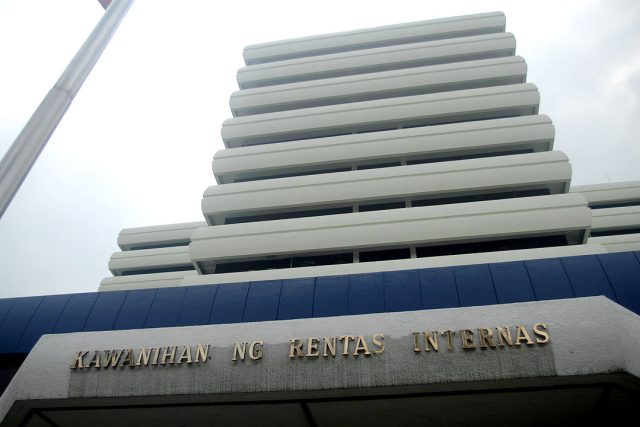
Large taxpayers’ electronic invoicing seen to start next year — BIR

Large taxpayers should be able to file returns and pay taxes electronically by next year, the Bureau of Internal Revenue (BIR) said.

“There are many challenges with the e-invoicing, but we are working double time so we can take the necessary actions with respect to that. The pilot should be (completed) by June; and by next year, all large taxpayers (should be covered),” BIR Commissioner Romeo B. Lumagui told reporters on Thursday.

Last year, the BIR selected 100 large taxpayers to pilot test its e-receipts and e-invoicing system.

In August, the agency said that only 15 out of the 100 pilot taxpayers were utilizing the system at the time.

“There are more (taxpayers) added to that list. Gradually, I’m sure by June, they will all be onboarded. Not just 100, but I think we can even get 200,” he added.

The BIR’s electronic invoicing/receipting system is capable of receiving, processing, and storing sales data transmitted by taxpayers from e-invoices and e-receipts.

Taxpayers that will be required to use the system are those engaged in e-commerce and the export of goods and services, as well as those under the large taxpayers service.

Under the Tax Reform for Acceleration and Inclusion Law, taxpayers should be able to electronically issue their invoices or receipts within five years of the law’s enactment and upon the establishment of a system capable of storing and processing the required data.

The BIR has been working on digitalizing its operations after adopting a 10-year digitalization roadmap in 2019. — Luisa Maria Jacinta C. Jocson

PHL working on possible Marcos visit to Washington – envoy

PRESIDENT FERDINAND R. MARCOS, JR. — PHILIPPINE STAR/KRIZ JOHN ROSALES

WASHINGTON – The Philippine ambassador to Washington said on Thursday Manila is working to arrange a possible visit to Washington this year by Philippines President Ferdinand R. Marcos, Jr.

Philippine Ambassador to the US Jose Manuel G. Romualdez told an event hosted by Washington’s Institute of World Politics that Mr. Marcos is expected to visit the US West Coast later in the year for the APEC summit, which is scheduled to be held in San Francisco in the week of Nov. 12.

“We are also working on a possible standalone visit here in Washington DC, although we have yet to agree on the likely dates,” Mr. Romualdez said. — Reuters