Home Blog Page 5139

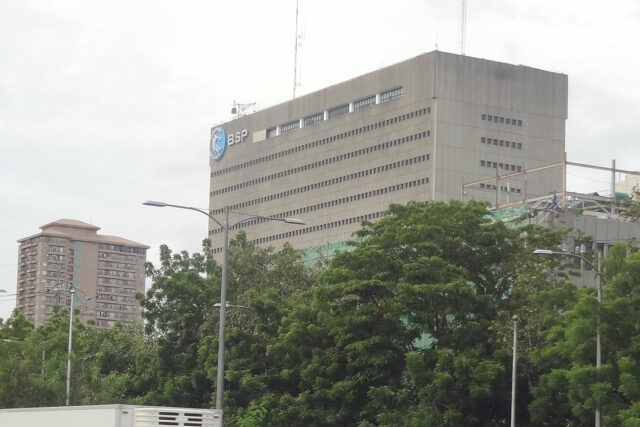
BSP approves consolidation of three cooperative banks

BW FILE PHOTO

THE BANGKO Sentral ng Pilipinas (BSP) has approved the consolidation of three cooperative banks and allowed a rural bank to start its operations.

The central bank said in a circular letter dated March 10 that it approved the consolidation of Metro South Cooperative Bank, Consolidated Cooperative Bank, and Bataan Cooperative Bank to form a new cooperative lender named One Cooperative Bank.

One Cooperative Bank began operating on Feb. 27 after the BSP issued a certificate of authority on Jan. 25

The BSP said it approved the consolidation on June 23, 2022. One Cooperative Bank was registered with the Cooperative Development Authority on Dec. 22, 2022.

Meanwhile, the central bank said in a separate circular letter dated March 10 that it issued a Certificate of Authority to Operate as a rural lender to People’s Hawak Kamay Bank, Inc.–A Rural Bank on Feb. 3.

It began operating on March 1.

The BSP’s policy-setting Monetary Board, in Resolution No. 227 dated Feb. 9. 2018, approved the application for authority to establish the new rural lender.

The bank was registered with the Securities and Exchange Commission on Oct. 19, 2019.

In March 2022, the BSP approved the Rural Bank Strengthening Program (RBSP) to help boost the operations, capacity, and competitiveness of rural lenders in recognition of their role in promoting development in the countryside and financial inclusion.

As part of the RBSP, the central bank in September last year raised the minimum capital requirement for rural banks to at least P50 million to further strengthen the industry.

Under the new rules, a rural bank with a head office and up to five branches needs to have a minimum capitalization of P50 million, regardless of location.

Rural banks with six to 10 branches are required to have a minimum capital of P120 million, while those with more than 10 branches should have capital of at least P200 million.

Rural banks whose capital falls below the new minimum requirements can refer to available options under the RBSP and submit their capital buildup plan within six months to the BSP. The rural banks are given five years to meet the minimum capital requirements.

The central bank shut down nine rural banks in 2022. — AMCS

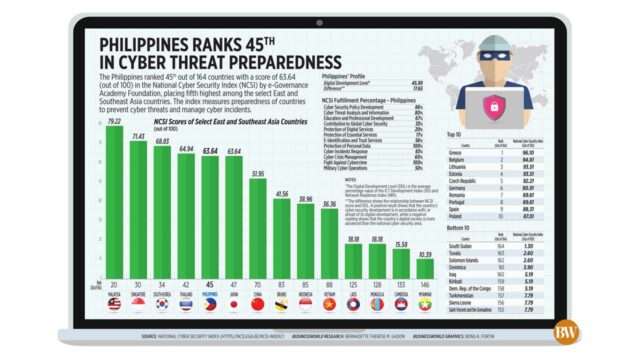
Philippines ranks 45th in cyber threat preparedness

The Philippines ranked 45th out of 164 countries with a score of 63.64 (out of 100) in the National Cyber Security Index (NCSI) by e-Governance Academy Foundation, placing fifth highest among the select East and Southeast Asia countries. The index measures preparedness of countries to prevent cyber threats and manage cyber incidents.

Philippines ranks 45<sup>th</sup> in cyber threat preparedness

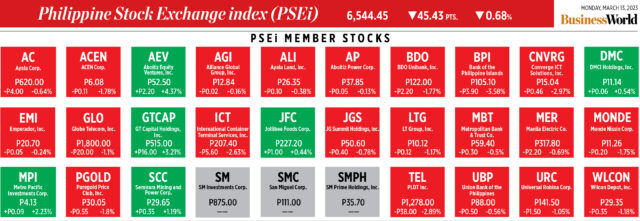
How PSEi member stocks performed — March 13, 2023

Here’s a quick glance at how PSEi stocks fared on Monday, March 13, 2023.


Peso climbs vs dollar on dovish Fed bets after collapse of two US banks

BW FILE PHOTO

THE PESO strengthened on Monday as concerns over the US banking sector weighed on the greenback.

The local currency closed at P54.93 versus the dollar on Monday, rising by 24 centavos from Friday’s finish of P55.17, data from the Bankers Association of the Philippines’ website showed.

The peso opened Monday’s session stronger at P55.05 per dollar. Its intraday best was at P54.79, while its worst showing was at P55.08 against the greenback.

Dollars traded climbed to $1.075 billion on Monday from the $779.8 million recorded on Friday.

The peso strengthened as the dollar index fell on Monday after the collapse of Silicon Valley Bank (SVB) and New York’s Signature Bank (NYSB), Rizal Commercial Banking Corp. Chief Economist Michael L. Ricafort said in a Viber message.

“The peso appreciated due to market worries after two major US banks, Silicon Valley Bank and Signature Bank collapsed over the weekend,” a trader likewise said in an e-mail on Monday.

The dollar fell on Monday on heightened expectations the Federal Reserve will be less aggressive with monetary policy as authorities stepped in to limit the fallout from the sudden collapse of Silicon Valley Bank, Reuters reported.

The US government announced several measures early in the Asian trading day, saying all SVB customers will have access to their deposits starting on Monday.

The authorities also said depositors of New York’s Signature Bank, which was closed on Sunday by the New York state financial regulator, would be made whole at no loss to the taxpayer.

The Fed announced it would make additional funding available through a new Bank Term Funding Program, which would offer loans up to one year to depository institutions, backed by Treasuries and other assets these institutions hold.

The market turmoil from the SVB collapse led investors to speculate the Fed will no longer raise interest rates by a super-sized 50 basis points this month. Focus will now be on Tuesday’s inflation data to gauge how hawkish the Fed is likely to be.

The dollar index, which measures the US currency against six others, slipped as much as 0.55% to near one-month lows of 103.67 after Goldman Sachs said it no longer expects the Fed to deliver a rate hike at its March 22 meeting. The index was last at 103.92.

The market is now pricing a nearly 33% chance of the Fed sticking to its current rate and an 67% chance of a 25-basis-point hike. In contrast, the market was pricing a 70% chance of a 50 basis point hike before the SVB collapse.

For Tuesday, the trader said the peso could strengthen further against the greenback on expectations of softer US consumer inflation data to be released on March 14.

The trader expects the peso to move between P54.08 and P55.05 per dollar on Tuesday, while Mr. Ricafort gave a forecast range of P54.80 to P55. — A.M.C. Sy with Reuters

PSEi drops on worries over global financial sector

BW FILE PHOTO

PHILIPPINE SHARES dropped on Monday due to concerns over the global financial sector after a US bank was shut down by regulators and ahead of the release of US consumer inflation data.

The benchmark Philippine Stock Exchange index (PSEi) declined by 45.43 points or 0.68% to end at 6,544.45 on Monday, while the broader all shares index went down by 21.56 points or 0.6% to close at 3,518.83.

“The PSEi ended in red with the financial sector leading the decline due to the meltdown of US-based Silicon Valley Bank (SVB). The event stirred up concerns regarding the global banking sector amid a rising rate environment, prompting investors to size up the situation against the 2008 financial crisis,” AP Securities, Inc. Equity Research Analyst Carlos Angelo O. Temporal said in a Viber message.

“The market seems to have sold shares due to the SVB issue in the United Kingdom and the United States. Investors are also awaiting the announcement of the Fed if they will be aggressive… or just pause for now,” Mercantile Securities Corp. Head Trader Jeff Radley C. See said in a Viber message.

California banking regulators closed Silicon Valley Bank on Friday and appointed the Federal Deposit Insurance Corp. as receiver for later disposition of its assets.

The collapse caused analysts to predict that the Fed would no longer hike rates in its March 21-22 meeting due to stress in the banking sector.

The US central bank hiked its target interest rate by 25 basis points (bps) at its Jan. 31 to Feb. 1 meeting to a range between 4.5% and 4.75%. Since March 2022, the Fed has raised rates by a total of 450 bps.

“Additionally, investors were anticipating the upcoming US CPI (consumer price index) report with apprehension, and this further contributed to the sell-off and foreign outflows that the market saw,” Mr. Temporal said.

February US consumer inflation data will be released on March 14.

US CPI increased 0.5% in January after gaining 0.1% in December. In the 12 months through January, consumer inflation increased to 6.4%.

Back home, almost all sectoral indices closed lower on Monday. Financials dropped by 37.39 points or 2.03% to 1,798.13; services declined by 33.21 points or 2.02% to 1,610.62; industrials went down by 70.80 points or 0.73% to 9,511.79; and property fell by 1.82 points or 0.06% to 2,794.73.

Meanwhile, holding firms gained 27.64 points or 0.44% to end at 6,299.98; and mining and oil went up by 0.76 point to 10,697.46. 

Value turnover surged to P25.53 billion on Monday with 913.52 million shares changing hands from the P8.77 billion with 798.74 million issues traded on Friday. 

Decliners outnumbered advancers, 124 versus 58, while 47 names closed unchanged.

Net foreign selling jumped to P21.15 billion on Monday from P142.67 million on Friday.

Mercantile Securities’ Mr. See put the PSEi’s support at 6,533 and 6,657; and resistance at 6,763, 6,800, and 7,000. — Ashley Erika O. Jose

Seek bigger payment from US for base access, Marcos asked

NATIONAL ARCHIVES AT COLLEGE PARK

By Kyle Aristophere T. Atienza and Alyssa Nicole O. Tan, Reporters

PRESIDENT Ferdinand R. Marcos, Jr. should seek bigger compensation from the United States for the risks that increased access to Philippine military bases under their Enhanced Defense Cooperation Agreement (EDCA) entails, according to a security expert.

“Perhaps Washington can provide and marshal investments from allies and partners such as Taiwan, Japan, Korea, Australia and Europe to compensate Philippine provinces hosting EDCA and offset possible losses from Chinese investments,” said Lucio Blanco Pitlo III, a research fellow at the Asia-Pacific Pathways to Progress Foundation.

He said China is expected to keenly observe rapid developments in the Philippine-US  alliance “with a great sense of vigilance.”

“EDCA’s implementation and expansion, joint patrols in the South China Sea and the Philippine-US-Japan partnership will be followed closely,” Mr. Pitlo said. “China is likely to oppose the deployment of US troops and more so, of capabilities that can put targets on the mainland, across the Taiwan Strait and the South China Sea within range.”

Mr. Pitlo noted that because China claims self-ruled Taiwan, it is expected to react more strongly in light of the EDCA expansion compared with what it did against South Korea in 2017, when Seoul allowed US missiles on its soil to deter North Korea.

The possibility of the Philippines getting dragged into the China-Taiwan conflict due to EDCA expansion is a “serious risk that Manila has to bear in mind.”

While it might not alleviate the risk, a bigger reward from the US could lighten the opposition to EDCA especially from frontline provinces, the analyst said, citing concerns of some local officials who fear that the EDCA expansion might drive away Chinese investments.

He said other countries where the US is trying to renew military access like the central Pacific island states of Palau, Marshall Islands and Federated States of Micronesia are “negotiating hard.”

He cited the case of Marshall Islands, which hosts the Ronald Reagan Ballistic Missile Defense Test Site at the US Army Garrison-Kwajalein Atoll and is rumored to get about $4 billion for the 20-year extension of its Compact of Free Association Agreement with the US.

“So far, what is being reported on EDCA is an $82-million outlay for the existing five original locations, a drop in the bucket compared with what tiny Pacific atoll nations will be getting,” Mr. Pitlo said.

“Of course, this is not an apple-to-apple comparison,” he said. “But the point here is whether the rewards we are getting are commensurate with the risks and if there is even an attempt to offer such reasonable rewards in the first place.”

The president’s decision to boost American access to Philippine military bases shows he is trying to counter China’s increasing assertiveness in the South China Sea by projecting strength, said Raymond Powell, a fellow at the Stanford University’s Gordian Knot Center for National Security Innovation.

Mr. Marcos seems to have realized that attempts to appease Beijing under his predecessor did not serve the Philippines’ national security interests “because China read this policy as a sign of weakness and an opportunity to consolidate its position in the West Philippine Sea,” he said in an e-mail.

The president might think that his “best leverage with China lies in projecting strength and that the quickest way to show strength is to have a vibrant network of capable partners and allies,” the security analyst said in an e-mail.

The Philippines has given the US access to four more military bases under their 2014 EDCA. None of the five existing EDCA sites are located in northern Luzon, “which is actually surprising given the looming security concerns across the Taiwan Strait,” Mr. Powell said.

The Philippines and US have yet to disclose the locations of the four EDCA sites but a former military official said last year Washington had sought access to bases in northern Luzon, the closest part of the Philippines to Taiwan, and on the island of Palawan, facing the disputed Spratly Islands in the South China Sea.

‘WAR OR PEACE’
“If in the expansion President Marcos were to deny his sole treaty ally access to the north for fear of angering Beijing, what message would that send?” Mr. Powell asked. “It would signify frailty in the alliance and a concession to China’s pressure tactics. It would once again project weakness.”

In February, the US Defense department said the expansion would allow more rapid support for humanitarian and climate-related disasters in the Philippines and respond to other shared challenges.

On Sunday, China hit the planned EDCA expansion, saying it serves Washington’s geopolitical interests.

“If the new sites are located in the northern Philippine provinces of Cagayan and Isabela, which are close to Taiwan, does the US really intend to help the Philippines in disaster relief with these EDCA sites?” the Chinese Embassy in Manila said in a statement. “And is it really in the national interest of the Philippines to get dragged by the US to interfere in the Taiwan question?”

Emerson De Yi-Zhou, a research assistant at the Center of Foreign Policy Studies of the National Chengchi University in Taiwan, said China’s fierce response to the latest development in the US-Philippines security partnership is “the result of the security dilemma between the US and China.” 

“China now views as aggressive any actions by the US, which strengthen ties with its hub-and-spoke system in Asia,” he said in a Facebook Messenger chat. “I don’t believe China will do anything to punish the Philippines, because diplomacy tells us verbal expressions do not equate to actual actions.”

Mr. Zhou said the Marcos government would probably hedge its foreign policy strategy by boosting security ties with the US while keeping economic relations with China for two main reasons: “To do its best for the Philippines’ economic prosperity in the post-coronavirus era and maximize the country’s security interests in the South China Sea dispute.”

Mr. Powell said while the Philippines values its economic relationship with China and is unlikely to be provocative, its recent actions show that it will not be silent amid China’s aggression.

The Philippine Coast Guard has intensified its strategy of publicizing aggressive actions by China in the South China Sea.

“The Philippines’ recent actions — from fortifying partnerships to dramatically increasing transparency about West Philippine Sea security threats — indicate that Manila believes the time for silent acquiescence is over,” Mr. Powell said.

Political tensions brought about by stronger security ties between the Philippines and US are unlikely to affect the Southeast Asian nation’s economic relations with China, Anvil Business Club Chairman Emeritus George Siy told BusinessWorld on the sidelines of a forum.

“The Chinese are very business-minded, so the companies are not going to stop doing business with you just because there’s an issue,” he said.

Former Senator Francisco S. Tatad said allowing increased US access to Philippine military bases is illegal.

“We will sell ourselves,” he told reporters on the sidelines of the forum.

Mr. Tatad said Mr. Marcos seems to have chosen to take sides instead of staying neutral. “We are, if President Marcos’s initial moves will provide the direction, moving towards the USA,” he said. “They are good friends of ours but the point is that this is a question of war or peace.”


Marcos orders agencies to step up efforts vs human trafficking

ENGIN AKYURT-UNSPLASH

PRESIDENT Ferdinand R. Marcos, Jr. has ordered an anti-trafficking inter-agency council and a presidential commission on organized crimes to harmonize efforts from both the government and private sector in combating human trafficking, which he said could compromise the country’s economy and national security.

The Inter-Agency Council Against Trafficking and Presidential Anti-Organized Crime Commission must thwart the “business of human trafficking” with the private sector, he said during a meeting at the presidential palace, based on a statement from the Presidential Communications Office (PCO).

The PCO said it had been tapped to help the council in starting a communication campaign that will educate the public about the dangers posed by human trafficking syndicates.

“Heightened public awareness is key,” Mr. Marcos said.

Mr. Marcos said human traffickers exploit the physical and economic weaknesses of vulnerable people especially women and children.

He also said human trafficking has been an ongoing problem for many countries especially as the global economy recovers from the coronavirus pandemic, which has worsened the lives of many people.

He said jobless people are more vulnerable to human traffickers and it’s high time for the government to boost intervention.

“The room for improvement here is that we can work together more and coordinate together more and where — that puts meat on the bones of what we have come to call the whole-of-government approach and bring everything to bear to the problems that we are facing,” Mr. Marcos said.

He said it is unfortunate that the country had managed to repatriate human trafficking victims from Myanmar despite the ongoing civil unrest in that country.

He  cited the need for the Philippines to keep its status in the tier system and “we must make sure that we do not fall out of Tier 1 into another tier.” “Let’s…make sure that the Tier 1 categorization or status of the Philippines is not put in any danger.”

The US Department of State’s Trafficking in Persons Office conducts a yearly assessment to monitor the efforts of all countries in fighting human trafficking. It provides each country with a grade according to a three-tier scale.  

Countries and territories under Tier 1 fully comply with the minimum standards, while those under Tier 2 do not but are making significant efforts to comply with the standards, according to the PCO. — Kyle Aristophere T. Atienza

Owner of sunken vessel assures oil spill clean-up equipment, program underway 

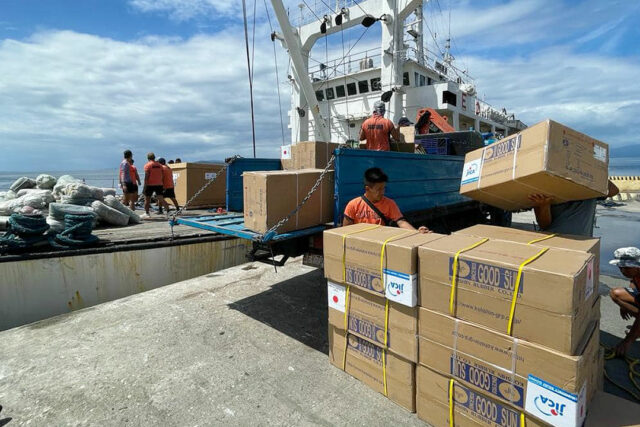
OIL spill equipment and protective gear donated by the Japanese government are unloaded at the Philippine Coast Guard post in Mindoro on March 13 for the ongoing clean-up operations. — JICA 

THE OWNER of the vessel carrying 800,000 liters of oil that sank off Naujan, Oriental Mindoro assured on Monday that immediate clean-up and long-term response programs are underway, with activities currently focused on    minimizing the impact of the spillage. 

RDC Rield Marine Services, owner of the MT Princess Empress tanker, said it is working with concerned agencies and international experts to make a strategy to ensure most effective operation can be mounted.  

Our primary focus at this stage remains on the oil spill response and we are adopting a phased approach as advised by experts,RDC Vice President for Administration and External Relations Frizie Cabial-Tee said in a statement  

She said the company is conducting emergency measures such as deploying tugs with spill response equipment.  

They have also coordinated with the French waste management company Le Floch Depollution to import needed equipment.  

The International Tanker Owners Pollution Federation (ITOPF) and clean-up contractors are developing at-sea and shoreline response plans, Ms. Cabial-Tee said.  

This will lay down details on the techniques, survey process, and objectives needed. 

The IOTF will also lead a series of joint surveys on affected areas for clean-up plans.  

We are working closely with our insurers, and those affected by the spill will be duly advised on how to submit their claims for processing,she said.  

We must, however, emphasize that the immediate priority has to be the coastal clean-up, which directly impacts the lives of the communities who depend on the sea,she added.  

JAPANESE ASSISTANCE
Meanwhile, equipment and gears such as oil blotters, heavy oil absorption masks, working gloves, rubber boots, and protective workwear donated by the Japanese government arrived at the Philippine Coast Guard (PCG) in Mindoro on Monday.   

On Friday, a team of Japanese oil spill control experts arrived in the country to advise on the clean-up operations.   

PCG Spokesperson Armando A. Balilo said in a radio interview that they might request needed equipment after the team is done evaluating oil spill sightings.  

He added that there are ongoing talks with the United States Coast Guard, through the American Embassy, for possible support on necessary assets.  

“What is really needed are remotely operated vehicle, although the company already had discussion with a provider, if our partner countries may also send, it will be greatly appreciated and will be a great (help) to contain the leakage from the tanker,” he said in Filipino.  

The University of the Philippines-Marine Science Institute, in its latest bulletin on the spill incident, showed through a trajectory model that the oil slick is threatening to reach the Verde Island Passage by March 16 due to the weakening northeast monsoon.  

The passage is considered a key marine channel having the highest concentration of coastal fishes, corals, crustaceans, mollusks, seagrasses, and mangroves. Sheldeen Joy Talavera

Navotas court convicts cop over death of 2 teens in drug war operation 

A REGIONAL court in Navotas City has convicted a police officer of murder over the killing of two teenagers during the previous administration’s anti-illegal drug campaign.  

In a decision made public on Monday, the Navotas Regional Trial Court Branch 287 sentenced the patrolman to reclusion perpetua or up to 40 years in prison and to pay civil indemnity, moral and exemplary damages of P100,000 each, including actual damages worth P90,000.  

“This court finds the accused guilty beyond reasonable doubt of the crime of murder punishable under the revised penal code in relation to the Family Courts Act of 1997,” it said.  

“Accordingly, he is sentenced to suffer the penalty of reclusion perpetua, without eligibility of parole.”  

The same cop was convicted in November by a Caloocan trial court of torture and planting of evidence in the killing of 19-year-old Carl Angelo M. Arnaiz and 14-year-old Reynaldo D. De Guzman.  

The Department of Justice filed the charges before the court in 2018 against two policemen involved in the murder of the two teens. The other cop died of hepatitis in 2019 while in detention.  

The court said the two policemen had the motive to plant ammunition on Mr. Arnaiz to support the story of a shootout after he supposedly robbed a taxi driver.  

A witness had testified that the 19-year-old was handcuffed before being shot by the law enforcers.  

At least 25 police officers have been charged with murder in connection with ex-President Rodrigo R. Dutertes deadly drug war, Justice Secretary Jesus Crispin C. Remulla told the United Nations Human Rights Council in November.  

An inter-agency task force on extralegal killings had investigated at least 17,000 cops, he added.  

The Philippine government estimates that at least 6,117 suspected drug dealers were killed in police operations under the Duterte administration. Human rights groups say as many as 30,000 suspects died.  

This year, Philippine police have arrested 8,183 drug suspects in 6,044 illegal drug operations from Jan. to Feb. 11, national police chief General Rodolfo S. Azurin, Jr. said on Feb. 13.   

Human rights abuses continued under the first six months of the current administration under President Ferdinand R. Marcos, Jr., Human Rights Watch said in a report on Jan. 12. John Victor D. Ordoñez

Police tighten security in Negros Oriental amid manhunt for more suspects in governor’s murder 

THE PHILIPPINE National Police (PNP) on Monday gave reassurance of keeping Negros Oriental secure as the manhunt continues for more suspects in the killing of the provinces governor and eight civilians in broad daylight. 

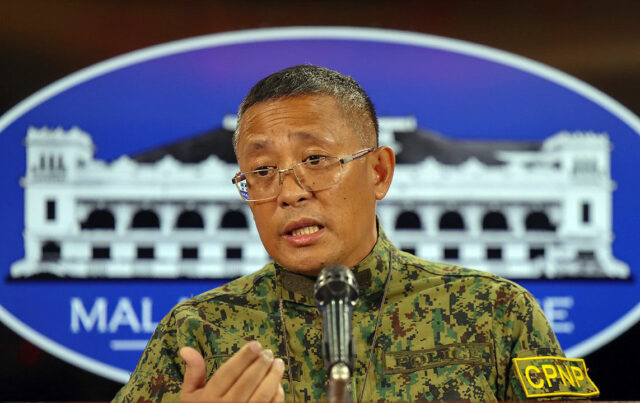
“We will continue to conduct joint checkpoints and border control operations to ensure that Negros Oriental is secured while hot pursuit is ongoing,” PNP chief Rodolfo S. Azurin told a livestreamed news briefing.  

Gov. Roel R. Degamo and eight others died while 15 others were wounded when armed men opened fire in his residential compound, where cash aid was being distributed under a social service program on March 4.   

Mr. Azurin said the police is coordinating with the Philippine Army as some of the suspects are ex-military officers.  

Four suspects were arrested last week, two of whom tagged a Negros Oriental representative as the mastermind behind the governor’s killing. 

“We are very confident that the remaining suspects of the Degamo murder cases are still lurking in Negros Oriental,” the police chief said.  

At a separate news briefing, Interior Secretary Benjamin C. Abalos, Jr. said a total of 17 cases have been filed in relation to Mr. Degamo’s murder.  

“It’s hard to give a timeframe for when we can solve this case, but we already have leads,” he said in Filipino.  

TOP OFFICERS
Meanwhile, more than half of senior police officers have been assessed by the five-man team that is looking into the records of high-ranking cops who may be involved in the illegal drug trade, said Mr. Azurin, who heads the committee.   

He said recommendations from the review have been submitted to the Office of the President.   

“It would be premature if we release the results of our investigation without the president’s approval, so we just have to wait for this,” Mr. Azuruin said. 

In January, Mr. Abalos called on all police colonels and generals to resign after a probe found many top police officers were involved in the illegal drug trade. John Victor D. Ordoñez

Aligning learning systems with job market key to a more robust PHL manufacturing workforce

PHILIPPINE STAR/WALTER BOLLOZOS

LEARNING systems in the Philippines must be aligned with job market demands to build up a more robust workforce, particularly for the manufacturing sector, Trade Secretary Alfredo E. Pascual said on Monday.  

We encourage employers to upskill workers. But we also recognize aligning systems of learning as equally important,he said during the launch of the Advanced Manufacturing Workforce Development Alliance (AMDev) Program in Biñan, Laguna.    

With around 790,000 Filipino graduates annually, companies should find it promising to readily recruit smart, young, and productive workforce for their manufacturing operations, he said.    

The AMDev, initiated by the United States Agency for International Development (USAID) and Unilab Foundation, is a five-year public-private partnership that aims to improve the capacity of the countrys education system to meet changing work requirements.  

The program aims to develop a highly skilled and adaptive workforce pipeline that meets the requirements of the advanced manufacturing sector, according to the Department of Trade and Industry (DTI).

Crucial to manufacturing development is advancing our workforce pipeline, so we fully support and will continue to support AMDev. Preparing our workforce for the future is essential, as it is one of DTIs strategic priorities,Mr. Pascual said.   

One of AMDevs key activities is the establishment of the Advanced Manufacturing Institute (AMI), which will be operationalized by Amherst Laboratories, Inc, Belmont Softgel Pharma Corporation, Fastech Advanced Assembly, and Western Digital.    

The AMDevs government partners include the DTI, the Commission on Higher Education, Department of Finance, Department of Science and Technology, and Technical Education and Skills Development Authority.    

Through AMDev, the Filipino workforce will have the opportunity to learn new skills and knowledge that will further strengthen the competencies of the country’s manufacturing sector,the DTI said.    

READING SKILLS
Meanwhile, the US government has signed a partnership with American non-profit research institute RTI International and Philippine-based Knowledge Channel Foundation, Inc. (KCFI) to improve the reading skills of Filipino children through radio and television resources.  

It is our fervent hope that this work will encourage practitioners and teachers to be knowledgeable, skillful, and insightful as we all work together to the care and education of young children,Education Finance Undersecretary Annalyn M. Sevilla said in a statement released by the US Embassy in Manila on Monday.  

Beginning March 13, the KCFI will regularly broadcast learning materials to instill the love for reading among children in kindergarten to grade three levels. 

The program is expected to help young students master the four macro literacy skills listening, reading, speaking, and writing as it seeks to address gaps in Philippine education and promote multimedia learning resources.  

The World Bank last year tagged the Philippines as among the worst in the region in learning poverty, with nine of 10 Filipinos unable to read and understand short, age-appropriate texts by age 10.  

We thank KCFI for its interest in our initiative and desire to promote learning and access to education, particularly for the most vulnerable and marginalized children,USAID Philippines Deputy Mission Director Rebekah Eubanks said in the statement. Revin Mikhael D. Ochave and Alyssa Nicole O. Tan 


Comelec to upgrade voting equipment as part of electoral reform agenda 

PHILIPPINE STAR/RUSSELL PALMA

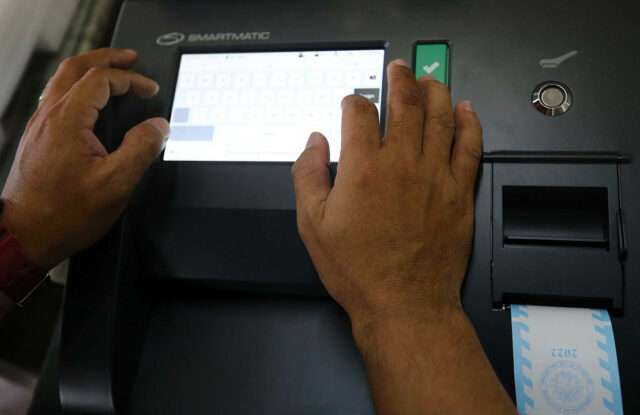
THE COMMISSION on Elections (Comelec) on Monday said it will replace existing equipment with newer technology as part of electoral reforms discussed during the first National Election Summit last week.  

“This is the first election summit in our country’s history, and we saw the new technologies that we can use in the subsequent elections,” Comelec spokesperson John Rex C. Laudiangco told a televised briefing in mixed Filipino and English.  

“We had many of our stakeholders demonstrate new equipment that could potentially be used in our next elections.”  

He said the Comelec en banc was set to discuss on Monday the recommendations made during the summit.  

The vote-counting machines used during the May 2022 national and local elections were first used in the 2010 elections. 

During the summit, held from March 8 to 10, Comelec Chairperson George Erwin M. Garcia said the election body is eyeing the integration of biometrics technology for the 2025 elections. 

“Hopefully in 2023, the Comelec will be allowed to use new machines and technology based on the recommendation of the summit, strategic planning,” he said, according to a copy of his speech sent to reporters.  

The event was attended by government officials, civil society organizations, election watchdogs, and other stakeholders.  

Mr. Garcia said Comelec plans on discarding 98,000 vote-counting machines to make way for newer equipment.  

President Ferdinand R. Marcos, Jr. earlier told Comelec to push to modernize the election process through innovations in technology. 

“Now that we use modern technologies to advance and make our election system more reliable, I am sure that we can implement positive reforms and make election result transmission faster and maintain its accuracy,” Mr. Marcos said in his speech during the summit.  

Last year, the International Coalition for Human Rights in the Philippines urged Comelec to review the automated elections system and implement measures that would discourage members of political dynasties from being elected.  

Election watchdog Kontra Daya, which means “against fraud” in Filipino, has called for similar reforms in the election system due to the technical blunders that occurred in last year’s national and local elections. John Victor D. Ordonez

ADVERTISEMENT
ADVERTISEMENT