Home Blog Page 506

Timely diagnosis is key to managing hypothyroidism

STOCK PHOTO | Image from Freepik

One in every 40 Filipino adults may have hypothyroidism — most without knowing it. This finding from the Philippine Thyroid Diseases Study by the Philippine Society of Endocrinology and Metabolism underscores a quiet but significant public-health concern. Hypothyroidism is a common, treatable condition that often goes undetected for years.

Hypothyroidism, also known as underactive thyroid disease, occurs when the thyroid gland does not produce enough hormones to meet the body’s needs. The thyroid is a small, butterfly-shaped gland located at the front of the neck, but its impact is far-reaching. It produces hormones, mainly thyroxine (T4) and triiodothyronine (T3), that regulate metabolism, heart rate, body temperature, digestion, and even mood. When hormone levels are low, many body systems slow down.

According to endocrinologist Dr. Erick Mendoza, president of the Philippine Thyroid Association, women are more prone to developing hypothyroidism than men. The most common cause is Hashimoto’s disease, an autoimmune condition in which the body mistakenly attacks the thyroid gland. Hashimoto’s typically develops during a woman’s reproductive years but can begin as early as adolescence. Other causes include thyroiditis (inflammation of the thyroid), congenital hypothyroidism present at birth, surgical removal of part or all of the thyroid, radiation treatment involving the thyroid, and certain medications.

A less common but still important cause of hypothyroidism is iodine deficiency. Iodine is essential for thyroid hormone production. To address this, the Department of Health and the National Nutrition Council promote adequate iodine intake through the ASIN Law (Republic Act 8172), which mandates the use of iodized salt. Experts advise using iodized salt in cooking, consuming iodine-rich foods such as seafood (for those without allergies), and consulting a doctor early when symptoms appear or when there is a family history of thyroid disease.

One of the biggest challenges in diagnosing hypothyroidism is that its symptoms are often vague and develop gradually. Many people dismiss them as part of aging, stress, or a busy lifestyle. Common symptoms include persistent fatigue, feeling cold more than usual, unexplained weight gain, constipation, difficulty concentrating, mood changes or depression, dry skin, hair loss, hoarseness, and irregular or heavy menstruation. Because these symptoms overlap with those of many other conditions, hypothyroidism is frequently overlooked.

“Many hypothyroidism symptoms are the same as those of other diseases,” Dr. Mendoza explained. “This is why doctors may request thyroid blood tests to confirm the diagnosis. Patients diagnosed with anxiety, depression, or other mood disorders, as well as women who have difficulty getting pregnant, should undergo thyroid testing.”

There are several blood tests used to assess thyroid function, including the thyroid-stimulating hormone (TSH) test, T4 test, T3 test, and thyroid antibody tests. Among these, the TSH test is the most important and is relatively inexpensive. In many cases, this single test is enough to detect hypothyroidism early before serious complications develop.

Once diagnosed, hypothyroidism is highly manageable. Treatment involves lifelong hormone replacement therapy using a prescription medication that restores thyroid hormone levels to a healthy range. When taken correctly and monitored regularly, treatment allows most people to live normal, active lives.

However, correct dosing is crucial. The American Thyroid Association cautions that taking too little medication may leave symptoms unresolved, while taking too much can cause side effects such as palpitations, nervousness, heat intolerance, and unintended weight loss. Regular follow-up and blood tests help ensure safe and effective treatment.

If left untreated, hypothyroidism can lead to serious health consequences. These include an increased risk of heart disease, heart failure, and bone disorders such as osteoporosis. In rare but severe cases, untreated hypothyroidism may progress to myxedema coma which is a life-threatening emergency that occurs more often in older adults and requires immediate hospital care.

The risks are especially high for pregnant women. Untreated hypothyroidism during pregnancy increases the likelihood of complications such as pre-eclampsia, miscarriage, premature birth, and impaired brain development in the baby, which can result in lower IQ and developmental delays. Early diagnosis and treatment protect both mother and child.

Beyond individual health, hypothyroidism also has broader social and economic implications. Fatigue, cognitive difficulties, and mood changes can affect work productivity, learning, and overall quality of life. The research-based pharmaceutical industry continues to address hypothyroidism as part of its broader commitment to tackling non-communicable diseases and improving access to essential medicines worldwide.

Hypothyroidism may be silent, but its impact is profound. Raising awareness, encouraging early testing, and ensuring access to affordable treatment can spare countless Filipinos from years of unnecessary suffering. Awareness begins with simple steps: telling your doctor about persistent symptoms, sharing family history of thyroid disease, and encouraging loved ones to seek evaluation when needed.

By talking more openly about thyroid health, we can transform a commonly overlooked condition into one that is recognized early, treated effectively, and managed well, improving lives one diagnosis at a time.


Teodoro B. Padilla is the executive director of Pharmaceutical and Healthcare Association of the Philippines, which represents the biopharmaceutical medicines and vaccines industry in the country. Its members are at the forefront of developing, investing and delivering innovative medicines, vaccines, and diagnostics for Filipinos to live healthier and more productive lives.

India water crunch leaves beverage firms scrambling to manage community fallout

PIXABAY

ALWAR, India — Foreign companies operating in India have long grappled with complex regulations and confusing tax laws.

In the northwestern state of Rajasthan, some of the world’s biggest beverage firms face the additional challenge of securing and managing dwindling water supplies while navigating strict government rules and grievances of some local people who only get the resource piped-in once a week.

Nearly two-thirds of Rajasthan is covered by the Thar Desert, and its groundwater extraction ranks among the highest in India, adding to the economic pressures for the state in balancing the needs of its 85 million people, booming tourism business, industry and its big agricultural sector.

Laws in India, the world’s most populous nation, bar the movement of liquor across state borders without a special permit, effectively forcing companies to set up production in every state they want to sell in despite the water scarcity. So global giants like Diageo, Carlsberg and Heineken have to maintain factories in Rajasthan if they want to distribute their products in the state.

“(Water stress) is a growing issue in India,” said Sonia Thimmiah, senior director of global sustainability at Heineken, the market leader, adding that a few years ago, water demand in some cities had come close to exceeding supply.

Heineken, Carlsberg and Diageo said that they are increasing water efficiency in Rajasthan and other water-stressed regions, have worked to improve communities’ access to water and aimed to replenish 100% of the water their factories use back to its source.

The challenges for the brewers in Rajasthan mirror a wider crisis across India, which holds 17% of the world’s population but just 4% of its freshwater. As the world’s fastest-growing major economy, India’s thirst for growth means more production and more strain on its scarce water resources.

The strain is evident in Rajasthan’s industrial town of Alwar, about 150 kilometers (km) (100 miles) southwest of Delhi, where most of the beverage companies are centered. The wider Alwar district’s groundwater extraction, driven mainly by irrigation, runs at nearly twice the rate its aquifers can recharge, government data show.

Industry users consume just about 2% of Rajasthan’s water, but under Indian law, all industrial and commercial entities seeking groundwater extraction have to install on-site rainwater harvesting and aquifer recharge systems.

In areas such as Alwar that the government classifies as “over-exploited” for groundwater, industries are further required to adopt the “latest water efficient technologies so as to reduce dependence on groundwater resources,” a government order said in 2020, without specifying details.

“The water tables are declining and rains are variable,” Diageo’s Alwar head Sumit Walia told Reuters.

“We have a vision to reduce water consumption by 40% and to ensure that whatever water is withdrawn from the ground, 100% replenishment is there. We are recycling 100% of the wastewater and installing advanced technologies which consume less water,” like using air to rinse bottles instead of water, he said.

Federal authorities have permitted brewers in Alwar to draw up to about 4.6 million liters of groundwater daily under 2025 permits seen by Reuters, based on applications from the companies. The global firms account for around 65% of that with Heineken topping the list at 1.2 million liters.

A typical Indian household uses 500-600 liters a day but even getting that is difficult in Salpur village, next to the Alwar industrial cluster, where water is a luxury.

“The situation is very bad,” said Imran Khan, head of the village of nearly 4,500 residents, who grows wheat and onion on his ancestral land. “We have to give several days of notice to the borewell owner to pump water for us — there’s a queue.”

He says he had to spend about 150,000 rupees ($1,700) to lay a 3-km (2-mile) pipeline from the borewell to his fields, and needs to pay 150 rupees for every hour of water supplied by its owner, a resident of another village.

Some locals blame the scarcity on the brewers.

“They are making alcohol there but locals do not have enough water to drink,” said Alwar resident Haider Ali, who took several global and local alcohol companies to India’s environmental court last year, alleging they were extracting water without permission.

A court-appointed inspection team later found that all factories complied with regulations. But the same court directed authorities in March to actively monitor groundwater abstraction and strictly enforce a 2020 government order prohibiting the issuance of new water permits to large industries in over-exploited areas.

Heineken and Carlsberg said there was no sign of community tension in Alwar beyond this court case, in part thanks to their work with locals on water. Diageo’s Mr. Walia said he was not aware of the court case, but industries making paper, automobiles and other products consumed more water than the liquor companies.

The water problems are not limited to Rajasthan.

Reuters has reported how in the past decade India has lost several days of coal-power supply because water shortages forced plants to suspend generation.

In Coca-Cola’s water security plan for 2023, reviewed by Reuters, the company says it operates nine factories in India in areas of “high or extremely high-water stress” and estimates that its annual costs of procuring water could rise by $180,000 to $2.7 million.

The company, which shut a factory in 2005 in the southern state of Kerala after protests over groundwater depletion, declined to comment.

Drinks makers say they are a small part of the problem in Rajasthan, and their water initiatives have significant positive impact.

Carlsberg’s Vice-President for Sustainability Simon Boas Hoffmeyer said its goals, including replenishing all water used, go beyond regulatory requirements. “If everybody did that, the industry’s share of the issue would be very, very small,” he said.

Diageo’s Global Head of Environment Michael Alexander said that in Salpur, the company has built small dams and planted 10,000 trees, while across Alwar it has desilted ponds, installed rooftop rainwater harvesting and funded boreholes and pipelines for communities.

Similar projects by Heineken had a positive impact in Rajasthan, said Subhransu Kumar Bebarta, partnerships lead at S M Sehgal Foundation, a nonprofit that implements the company’s water projects.

But big companies can go further, he said, adding larger infrastructure projects are needed in a state where some people struggle to find water to drink.

“They have improved the groundwater table. But still, there is always scope for more.” — Reuters

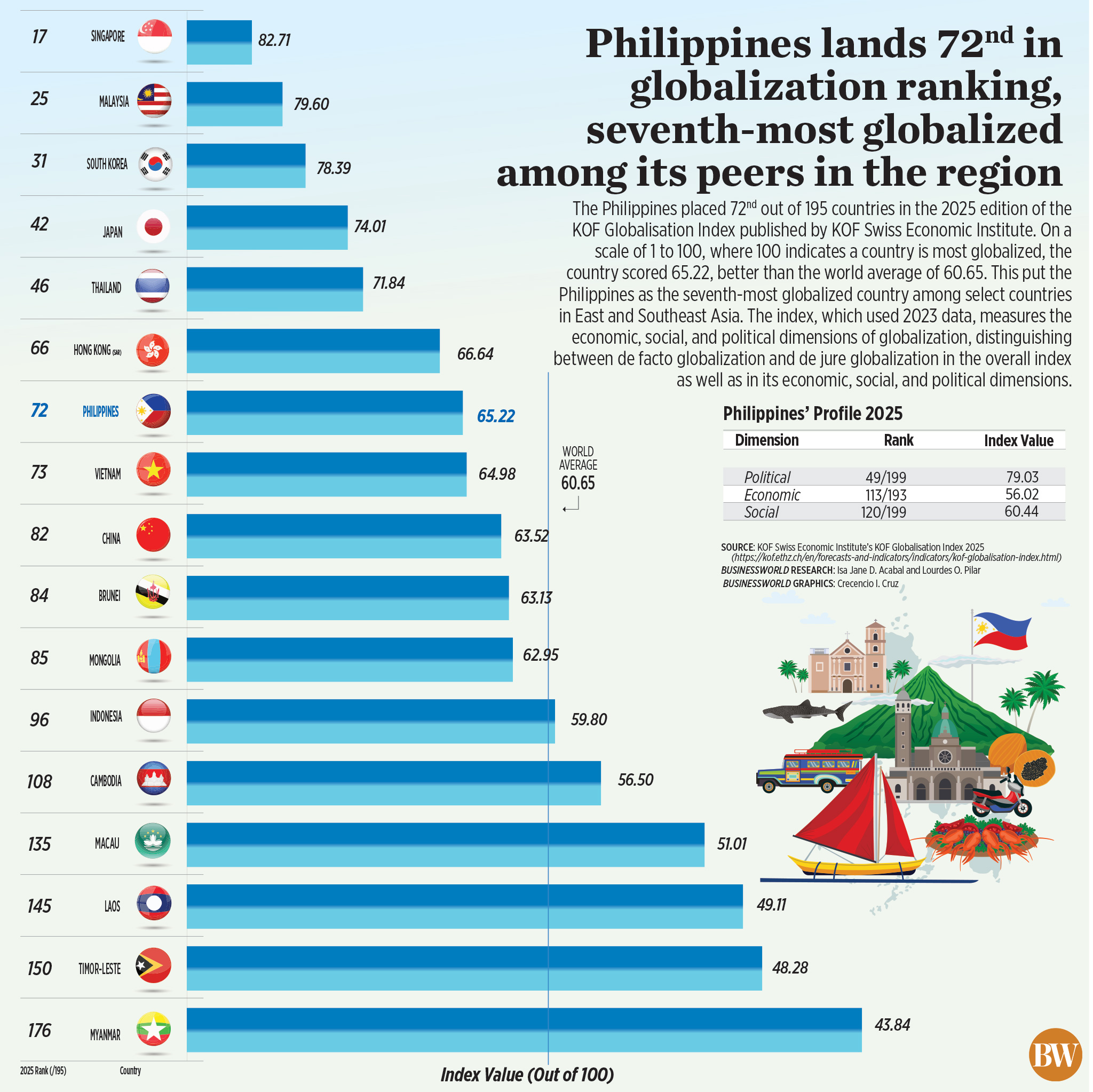
Philippines lands 72nd in globalization ranking, seventh-most globalized among its peers in the region

The Philippines placed 72nd out of 195 countries in the 2025 edition of the KOF Globalisation Index published by KOF Swiss Economic Institute. On a scale of 1 to 100, where 100 indicates a country is most globalized, the country scored 65.22, better than the world average of 60.65. This put the Philippines as the seventh-most globalized country among select countries in East and Southeast Asia. The index, which used 2023 data, measures the economic, social, and political dimensions of globalization, distinguishing between de facto globalization and de jure globalization in the overall index as well as in its economic, social, and political dimensions.

How PSEi member stocks performed — December 26, 2025

Here’s a quick glance at how PSEi stocks fared on Friday, December 26, 2025.


Market to consolidate amid holiday trading break

REUTERS

PHILIPPINE SHARES could end the year on a weak note as trading activity is expected to remain tepid amid this holiday-shortened trading week.

On Friday, the bellwether Philippine Stock Exchange index (PSEi) rose by 0.39% or 23.73 points to end at 6,065.64, while the broader all shares index went up 0.49% or 17.13 points to close at 3,464.66.

Week on week, the PSEi jumped by 144.77 points from its 5,920.87 close on Dec. 19.

“The PSEi ended higher despite a relatively quiet session, with the index trading within a narrow range for most of the day before the yearend,” Regina Capital Development Corp. Head of Sales Luis A. Limlingan said in a Viber message on Friday.

“The local bourse rebounded during the shortened trading week, reclaiming the 6,000 level on holiday optimism and bargain-hunting,” 2TradeAsia.com said in a market note.

Philippine financial markets were closed on Dec. 24-25 for the Christmas holidays.

Philstocks Financial, Inc. Research Manager Japhet Louis O. Tantiangco said the local market closed higher as investors took positions before the yearend.

“However, trading has been anemic, with net value turnover at P2.66 billion. This shows that many investors were staying on the sidelines, focused on the Christmas holidays,” he said in a Viber message.

For this week, activity may remain thin amid the lack of leads and the extended trading break, Mr. Limlingan said. The market will be closed again on Dec. 30 and 31 and Jan. 1 for Rizal Day and the New Year holidays. Trading will resume on Friday (Jan. 2).

“Limited volume and cautious positioning likely suggest investors are waiting for clearer catalysts before making more decisive moves ahead of the yearend,” he said.

“The thin value turnover seen also shows investors’ low confidence towards the local economy’s prospects for 2026, causing them to stay out of the market for the time being,” Mr. Tantiangco likewise said.

2TradeAsia.com said the PSEi is likely to close 2025 “on a whimper” even amid year-end window dressing and as technical indicators and valuations point to a gradual rebound in the first half of 2026.

“Easing inflation, further BSP (Bangko Sentral ng Pilipinas) rate cuts, and improving governance support a base-case rebound, aided by resilient consumption and potential foreign inflows on peso stability,” it said.

A low interest rate environment will be favorable for risk assets, it said.

“However, the delayed signing of the 2026 budget (now expected in early January) risks a brief reenacted regime, potentially delaying infrastructure spending and triggering short-term liquidity squeezes into the first quarter, which we already noted is a component of output that is desperately needed to reaffirm growth trajectory.”

It put the PSEi’s immediate support at 5,800, resistance at 6,000, and secondary resistance at 6,100. — Alexandria Grace C. Magno

Taiwan open to drone cooperation with PHL amid regional tensions

BW FILE PHOTO

By Kenneth Christiane L. Basilio, Reporter

TAIWAN sees a “big opportunity” to work with the Philippines on developing drone technologies, a Taiwanese foreign affairs official said, citing its wide military and civilian application as the two nations confront lingering regional tensions.

There is a possibility that Taipei could explore drone industry collaboration with Manila, Ministry of Foreign Affairs Director-General for International Cooperation and Economic Affairs Yu-Ping Lien said, without sharing more details.

“There is a big opportunity for both sides to cooperate… in the drone industry not only for security reasons, but also for commercial use,” she told BusinessWorld in an interview on the sidelines of a port development forum in early December.

Taiwan is seeking to forge deeper ties with the Philippines amid mounting tensions with China, as Taipei pushes for an economic corridor with Manila focused on port development and industry collaboration tied to regional security concerns.

Ms. Lien said Taiwan may opt to hold drone tests in the Philippines due to tight regulations and a lack of space for testing domestically, citing it as a possible first avenue for industry cooperation.

“Because we face regulations and the threat from the Chinese, we don’t have enough space for test runs,” she said. “Maybe we can find more space, even the land or airspace for drone testing.”

The Chinese Embassy in Manila did not immediately reply to a Viber message seeking comment.

Beijing, which views Taiwan as its own territory, has not ruled out taking the island by force, putting its 23 million people and the world’s most advanced semiconductor factories at risk. Chinese forces have repeatedly staged drills around the self-ruled island, putting Taiwan’s armed forces on alert.

Taipei has increasingly turned to sea drones to bolster its defenses, Reuters reported in June, as it works to reshape its forces for “asymmetric warfare” with mobile, smaller, and cheaper weapons designed to deliver strikes.

Manila has pursued a similar initiative, as it seeks to expand the use of unmanned systems and drones in its armed forces, a senior Defense department official said in October, as tensions with China persist in the South China Sea.

Remotely piloted drones have become a backbone in modern warfare due to their long-range reach and lower cost compared with other advanced weaponry, like missiles and fighter jets. Drones have also seen heavy combat use since Russia’s invasion of Ukraine in 2022.

“The ‘drone diplomacy’ between Manila and Taipei is a matter of co-existence in the drone ecosystem as part of the First Island Chain,” said Chester B. Cabalza, founding president of Manila-based think tank International Development and Security Cooperation, referring to the string of nations stretching from Japan in the north through Taiwan and the Philippines to Indonesia in the south.

The Philippines should pursue a drone manufacturing partnership with Taiwan to ease supply chain vulnerabilities in building unmanned systems, said Raymond M. Powell, director of maritime transparency group SeaLight.

“Most affordable components currently come from China… Taiwan offers a secure, friendly alternative source for these critical components,” he said in a Facebook Messenger chat.

Mr. Cabalza said building a “united, non-red supply chain” for drones manufacturing could bolster both the nations’ ability to secure their territories from invasion.

The Philippines is at odds with China as it lays claim over almost the entire South China Sea based on a “nine-dash line” map, a claim voided by a United Nations-backed tribunal in 2016.

“Drones enhance deterrence by creating an asymmetric cost trap for a potential aggressor,” said Mr. Powell, noting that a swarm of “low-cost, expendable munitions” could threaten adversaries’ expensive weapon systems and force them to think twice before taking aggressive actions.

Drones also act as a force multiplier for the Philippines, which still lacks warships able to effectively patrol its waters amid lingering Chinese presence, said Mr. Cabalza.

The Philippines has launched a sweeping $35-billion (P2-trillion) modernization program aimed at bolstering its military assets over the next decade, including the acquisition of advanced naval vessels, planes and missile systems, as it pushes back against China’s military might in the region.

Public trust at stake as gov’t falls short of detaining ‘big fish’ in flood control mess

PRESIDENT Ferdinand R. Marcos, Jr. presented updates on the government’s fight against corruption in flood control projects three months since he launched the sumbongsapangulo.ph website. — PHILIPPINE STAR/NOEL B. PABALATE

By Chloe Mari A. Hufana, Reporter, and Erika Mae P. Sinaking

THE GOVERNMENT’S failure to meet its self-imposed Dec. 25 deadline to arrest key personalities linked to the massive graft scandal has reinforced public doubts about how far accountability is allowed to go, analysts said.

“What unsettles people is not that arrests didn’t happen,” University of Makati political science professor Ederson DT. Tapia said via Facebook Messenger. “It’s that they happened in a very familiar way.”

Authorities moved against some individuals and released names, he said, but investigations appeared to stall before reaching those with real political or economic weight — a pattern the public has come to recognize.

Philippine President Ferdinand R. Marcos, Jr. vowed to put big personalities behind the flood control scandal in jail by Christmas, but only former public works officials and government contractors have so far been put behind bars.

Mr. Tapia said the missed deadline sharpened perceptions of selective enforcement, particularly in cases tied to flood control projects, where the consequences of alleged misuse are immediately visible.

“When funds are misused, communities don’t just lose money on paper. They lose homes, safety, dignity,” he said, adding that inaction against senior figures is read less as a procedural delay than as “selective courage.”

That perception, he said, gradually reshapes public expectations. Trust in institutions does not collapse outright but “thins out,” turning anti-corruption drives into performative exercises rather than credible deterrents.

Hansley A. Juliano, a political science lecturer at the Ateneo de Manila University, said the prolonged stalemate carries strategic risks for Mr. Marcos, whose net satisfaction rating has already slipped into negative territory.

The administration’s apparent bet that controversies would fade on their own has not restored confidence, he said, noting that weaker protests do not translate into renewed trust.

The President’s net trust rating also slipped into negative territory in the latest Social Weather Stations survey published on Dec. 26. His net trust score was down to -3 from +7 in October, as more respondents expressed little trust than much trust in his leadership.

“This stagnation will not lead to anything new unless heads roll, literally or figuratively,” Mr. Juliano said via Facebook Messenger.

He warned that institutional inertia could become the defining feature of the latter half of Mr. Marcos’ term, particularly as unresolved issues linger and political actors remain in defensive mode.

Both analysts pointed to political patronage and elite networks as central to the impasse.

Mr. Tapia said large-scale corruption is rarely sustained by isolated individuals but by relationships that allow powerful actors to rely on delay, complexity and distance from formal processes. As cases stretch on, lower-level figures absorb the immediate consequences while senior beneficiaries remain untouched.

Mr. Juliano added that the lack of decisive outcomes leaves little incentive for reform and creates space for rival political camps, including allies of former President Rodrigo R. Duterte, to consolidate support ahead of the 2028 presidential elections.

Absent high-level accountability or a clear recalibration of strategy, the administration risks ceding momentum well before the end of its term — allowing weakened trust, entrenched patronage and political stagnation to shape the post-2028 landscape, the analysts said.

Carl Marc L. Ramota, a professor at the University of the Philippines Manila’s Department of Social Sciences, likewise said that although some indictments and arrests have occurred, swift accountability remains unfulfilled, particularly for high-ranking officials.

“The government can do better,” Mr. Ramota told BusinessWorld via Facebook Messenger. “While we welcome the indictment of several DPWH (Department of Public Works and Highways) officials and contractors, including Sarah Discaya, the fact remains that no high-ranking public official has been arrested due to corruption charges.”

Public Works Secretary Vivencio B. Dizon has reported that 87 individuals have been recommended for criminal and administrative charges, with 23 formally charged in court as of December.

Contractor Cezarah Rowena C. Discaya, owner of St. Timothy Construction, was officially served an arrest warrant by the National Bureau of Investigation and is currently detained at the Lapu-Lapu City Jail in Cebu. Her husband, Pacifico “Curlee” F. Discaya II, is still within Senate custody alongside three former DPWH engineers — Henry C. Alcantara, Brice Ericson D. Hernandez, and Jaypee D. Mendoza.

Elizaldy S. Co, former Party-list Representative and former chairman of the House Appropriations Committee, remains a fugitive. He resigned from Congress earlier this year and is believed to be in hiding abroad. The government has canceled his passport as he faces multiple cases of plunder and malversation involving approximately P5 billion in alleged kickbacks.

“The long wait is unsettling and will further erode the public’s confidence in our institutions and processes,” Mr. Ramota said, adding that prolonged delays could weaken cases. “We might be losing vital evidence, witnesses, not to mention government money, with these delays.”

He said the continued freedom of alleged key figures underscores the need for deeper and more sustained investigations to identify and prosecute those who allegedly orchestrated the large-scale misuse of public funds in flood control projects.

Mr. Ramota also flagged institutional challenges surrounding the Independent Commission for Infrastructure, noting that it has been marred by controversies, including resignations and lingering questions over its transparency and independence.

Antonio A. Ligon, a law and business professor at De La Salle University in Manila, said the government has made some progress, but institutional and procedural factors have influenced the pace of arrests.

“While we have yet to see the full realization of the ‘jailed by Christmas’ promise since no new names have been jailed, I remain optimistic that the government’s objective of holding those involved accountable will be achieved,” Mr. Ligon said.

He noted that the justice system emphasizes due process, which can slow proceedings, and that seasonal factors can affect administrative timelines.

“Realistically the Ombudsman is only one person, those under him might not have that kind of grit and determination,” he said, adding that a coordinated whole-of-government approach is needed to effectively pursue accountability in major corruption cases.

Stronger but slower storms hit Luzon; faster cyclones threaten VisMin — UP study

PHILIPPINE STAR/KRIZ JOHN ROSALES/PPA POOL

TROPICAL CYCLONES that make landfall in the Philippines pose different risks, with faster storms threatening the Visayas and Mindanao (VisMin) and stronger but slower cyclones affecting Luzon, a University of the Philippines (UP) study found.

“Storms that hit the northern part of the country tend to be stronger but slower-moving. Southern storms tend to be faster and accelerate more rapidly,” Bernard Alan B. Racoma, assistant professor at the UP Diliman College of Science’s Institute of Environmental Science and Meteorology, was quoted as saying in a statement. “This has implications on the kinds of hazards these storms may bring.”

Mr. Racoma, together with Gerry Bagtasa, analyzed 372 tropical cyclones from 1979 to 2024, identifying patterns in storm speed, intensity, and duration.

The study found that fast-moving and rapidly accelerating storms in the Visayas and Mindanao leave residents with limited time to prepare, while slower but more intense cyclones in Luzon increase the risk of prolonged flooding and landslides due to extended rainfall.

Despite tropical cyclones often remaining within the Philippine area of responsibility (PAR) for several days, the researchers said that their direct presence along Philippine coastlines is short, averaging only about 21 hours before moving inland or away.

Mr. Racoma said the country’s narrow east-west geography partly explains this. In terms of geography, the Philippines is relatively narrow: it stretches more from north to south than from east to west. “Since tropical cyclones usually move from east to west, they tend to cross this shorter path faster,” he said in a mix of English and Filipino.

He added that storms also weaken over land as they lose access to warm ocean waters that fuel them.

The researchers said timing and intensity evolution are critical factors in reducing disaster risk, particularly given the threat of rapid intensification.

“Rapid intensification occurs very fast — typically within 24 hours. We don’t yet fully understand it; even weak storms can intensify quickly,” Mr. Racoma said.

He also warned against delaying preparations until a storm strengthens, noting that about half of tropical cyclones that form or enter the PAR make landfall, with rapid intensification commonly occurring within the region. — Vonn Andrei E. Villamiel

Senator pushes for heightened vigilance over 2026 budget use

PHILIPPINE STAR/PAOLO ROMERO

A SENATOR on Sunday called for continued public vigilance over the 2026 national budget, noting that oversight should extend beyond its passage into its implementation.

“The same vigilance showed by the public led by the Catholic Church, religious groups and civil society organizations must be maintained in watching over the budget’s implementation,” Senator Panfilo “Ping” M. Lacson said in a statement.

He added that public support is needed to flag potential wrongdoings in the implementation of the P6.793-trillion national budget for 2026.

“I hope that since there are only 24 of us, we should have the support of many Filipinos,” Mr. Lacson said.

The senator said that the chamber has placed several general and special provisions that function as safety nets and safeguards in the execution of the national spending plan.

These include the strict implementation of and compliance with the Medical Assistance to Indigent and Financially Incapacitated Patients under the Universal Health Care program.

He added that a monthly oversight of infrastructure and farm-to-market road programs would also be implemented. This includes complete grid coordinates for easy monitoring by media and the public.

The Senate had also banned the use of guarantee letters from politicians to secure government aid for their constituents.

He added that the public must not “let down their guard” in the government utilization of the national spending plan.

“Our people must not let down their guard because the 2026 budget will show if there is indeed reform for our government and our nation,” he said. “We must learn from the lessons of corruption in the budgets of 2025 and prior years.”

The 2025 budget faced heightened scrutiny after several opaque budget allocations and congressional insertion were found, prompting calls for better transparency and accountability. — Adrian H. Halili

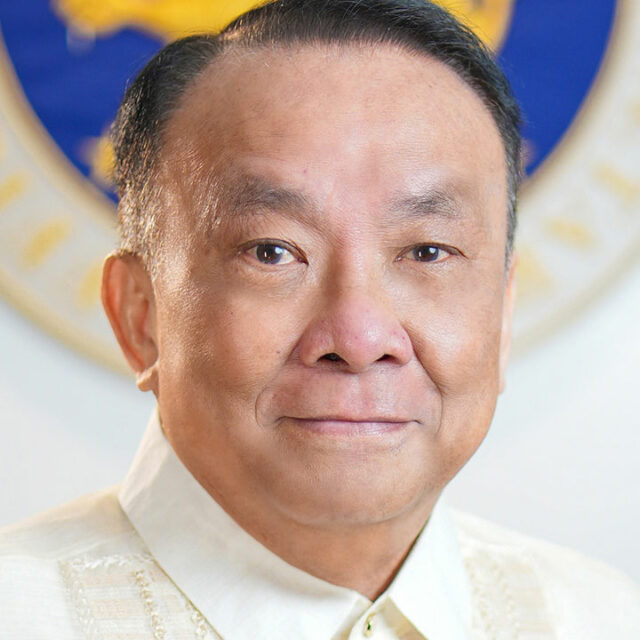
Bersamin denies link to ‘ES’ entries in Cabral files

LUCAS P. BERSAMIN

FORMER EXECUTIVE Secretary Lucas P. Bersamin on Sunday said he was “aghast and outraged” as he denied claims suggesting entries marked “ES” found in the Cabral files referred to him.

In a statement, Mr. Bersamin also refuted reports that P8.3 billion worth of Public Works projects had been allocated to him, saying he did not request, endorse, approve, or authorize any project or budget allocation at any point in the budget process.

“I also deny having instructed anyone, whether inside or outside of the government, to use my name or that of my former office for any such purpose,” he said.

His statement followed Senate President Pro Tempore Panfilo “Ping” M. Lacson’s radio interview on Saturday, which alleged that at least five Marcos Cabinet members had billions of pesos in allocable funds in the 2025 budget.

Mr. Lacson added that he was surprised to see an entry labeled “ES,” commonly referring to the Executive Secretary, then Mr. Bersamin. The names appeared in documents obtained from a lawyer for the late Public Works Undersecretary Maria Catalina E. Cabral, who died on Dec. 18 in Benguet.

According to Mr. Bersamin, the controversy raises serious questions about the integrity of the budget process within the Department of Public Works and Highways. He urged authorities to thoroughly scrutinize the so-called “Cabral Files” to identify those responsible for alleged budget manipulation.

“This matter strikes directly at the integrity of the national budget itself and must be fully investigated without delay,” he said, calling on all investigative bodies to place the issue at the top of their agenda.

Mr. Bersamin said he is willing to cooperate fully with any legislative, administrative, or judicial investigation into the matter.

Malacañang earlier said Mr. Bersamin stepped down from the Cabinet in November out of delicadeza amid controversies involving flood control projects.

Presidential Spokesperson Claire A. Castro said that the investigation should continue to identify those responsible if any Cabinet members are involved and there is sufficient evidence.

“Whoever among the Cabinet members is involved and there is evidence, the investigation should continue to identify the real culprits,” Ms. Castro said.

She said that, according to President Ferdinand R. Marcos, Jr., anyone found truly implicated must be held accountable, and that it is now in the hands of investigating bodies such as the Ombudsman or the Department of Justice.

“Anyone with sufficient evidence can submit it to the Independent Commission for Infrastructure or directly file a case with the Ombudsman or the DoJ (Department of Justice),” she added. — Erika Mae P. Sinaking

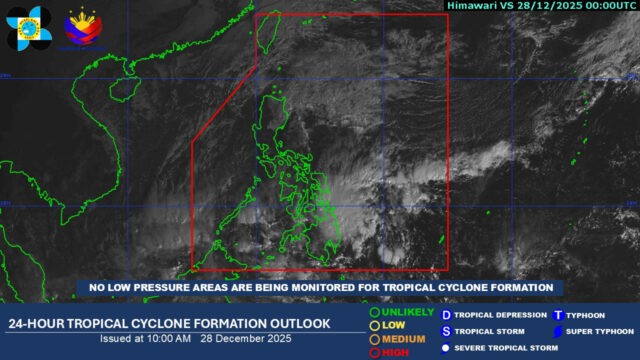
LPA may form in first week of Jan.

DOST-PAGASA FB PAGE

THE PHILIPPINES will close 2025 with generally fair weather, the state weather bureau said on Sunday, but warned that a low-pressure area (LPA) may form inside the Philippine area of responsibility in the first week of 2026.

In a 5 a.m. weather briefing, the Philippine Atmospheric, Geophysical, and Astronomical Services Administration said the northeast monsoon is expected to weaken from Monday to Tuesday, bringing isolated light rains over Northern Luzon.

From Dec. 29 to Jan. 1, it said scattered rain showers are forecast over Eastern Visayas, Caraga and the Davao Region due to easterly winds, while the rest of the country may experience localized thunderstorms.

From Wednesday to Thursday, it warned of another possible surge of the northeast monsoon, which could again bring light rains to Northern Luzon.

Scattered rain showers and thunderstorms are also expected over the Bicol Region due to a shear line, the agency said.

Elsewhere, generally fair weather conditions are forecast, aside from isolated thunderstorms. — Chloe Mari A. Hufana

PSA records fewer deaths in 1st half

SHAYNE_CH13/FREEPIK

THE PHILIPPINES registered fewer deaths in the first half of 2025, with heart diseases remaining as the leading cause, according to the local statistics agency.

Data from the Philippine Statistics Authority (PSA) showed that provisional number of registered deaths went down by 21.4% to 271,843 in the January-to-June period from 345,897 deaths in the same period in 2024.

Calabarzon (Cavite, Laguna, Batangas, Rizal, and Quezon) recorded the highest number of registered deaths among regions at 43,282, or 15.9% of the total deaths in the country.

The National Capital Region (NCR) registered 34,411 deaths, 17% lower from the 41,451 deaths registered in the same period a year ago.

“Quezon City recorded the highest number of registered deaths in the NCR from January to June 2025 at 7,201 or 20.9% of the total deaths in the region,” the PSA said.

Meanwhile, Cavite had the highest number of registered deaths among provinces at 10,956 in the first half, or 4% of the total deaths in the country. This was followed by Bulacan (9,943) and Rizal (9,675).

The agency said the figures cover deaths from January to June 2025, based on data processed as of Oct. 31.

Separately, the PSA said ischemic heart diseases were the leading cause of death with 53,985 cases, accounting for 19.9% of the total deaths nationwide in 2025.

Neoplasms ranked as the second most common cause with 30,961 deaths (11.4%) and Cerebrovascular diseases with 27,164 recorded cases (10%).

Pneumonia ranked fourth with 18,365 cases, while diabetes mellitus ranked fifth with 16,632 deaths. — Aubrey Rose A. Inosante

ADVERTISEMENT
ADVERTISEMENT