
How PSEi member stocks performed — April 11, 2023
Here’s a quick glance at how PSEi stocks fared on Tuesday, April 11, 2023.
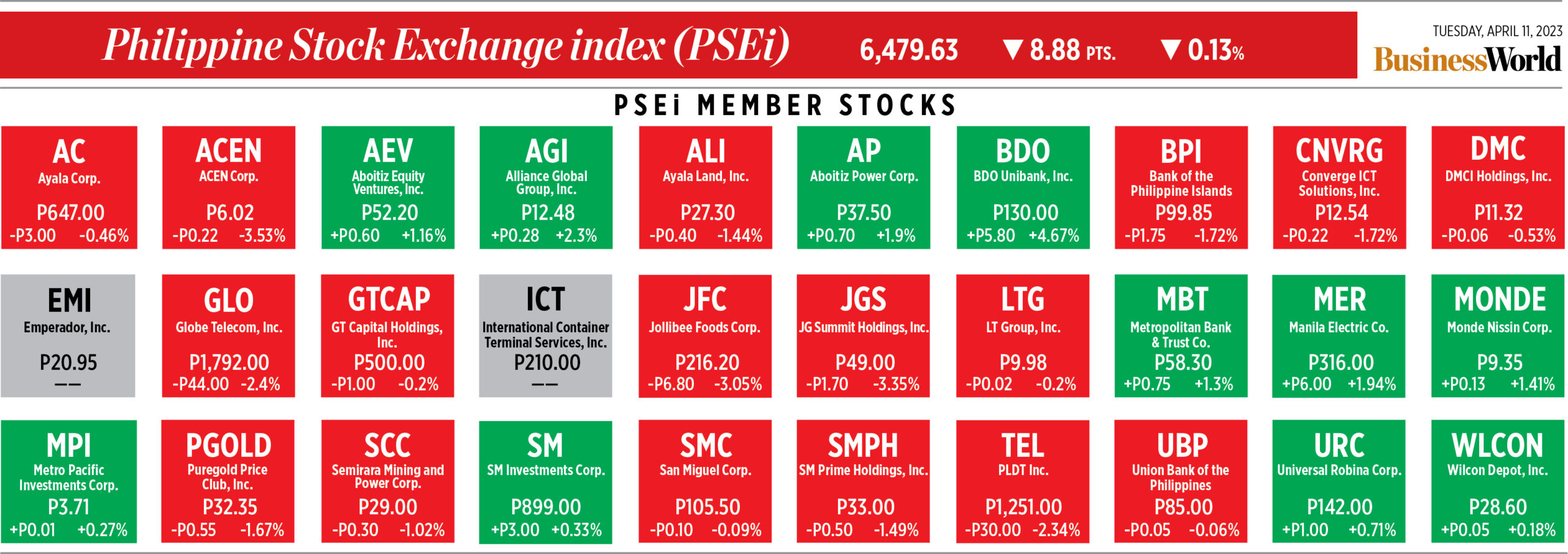

Here’s a quick glance at how PSEi stocks fared on Tuesday, April 11, 2023.

TAIPEI/BEIJING — Taiwanese are rushing to buy patches being worn by their air force pilots that depict a Formosan black bear punching Winnie the Pooh — representing China’s President Xi Jinping — as a defiant symbol of the island’s resistance to Chinese war games. China began three days of military drills around Taiwan on Saturday, a day after the island’s president, Tsai Ing-wen, returned from a brief visit to the United States, where she met US House Speaker Kevin McCarthy despite Beijing’s warnings.
Chinese censors have long targeted representations of Winnie the Pooh — created by British author A.A. Milne — over internet memes that compare the fictional bear to China’s president.
Alec Hsu, who designed the patch, has been selling it at his shop since last year, but he saw a spike in orders after Taiwan’s military news agency on Saturday published a photo of the patch on the arm of a pilot inspecting a fighter jet.
“I wanted to boost the morale of our troops through designing this patch,” said Mr. Hsu, who owns Wings Fan Goods Shop.
Mr. Hsu said he has ordered more patches to meet the increased demand. Customers have included military officers and civilians.
‘SCRAMBLE!’
The patch shows an angry Formosan black bear holding Taiwan’s flag and punching Winnie the Pooh, with the slogan “Scramble!” — referring to what the island’s pilots have had to do with increased frequency over the past three years as China sends more aircraft into Taiwan’s air defense identification zone.
The endangered Formosan black bear is seen as a symbol of Taiwanese identity. Taiwan was previously better known internationally as Formosa.
“Where can we get a patch like that! Guaranteed to be best sellers!” Taiwan’s de facto embassy in the United States wrote in a tweet on Monday.
Taiwan’s air force told Reuters that while it does not “particularly encourage” its members to wear the patch, which is not a part of their uniform, it “will maintain an open attitude” to anything that raises morale.
China claims democratically governed Taiwan as its own territory and has not ruled out taking the island by force. Ms. Tsai’s government rejects China’s sovereignty claims, saying only Taiwan’s people can decide their future.
While the Winnie the Pooh patch cannot be found on Chinese social media, Beijing has also been promoting videos and commentary about its drills around Taiwan.
The People’s Liberation Army Eastern Theater Command, the Chinese unit that would be at the frontline of any military action against Taiwan, released a video on Monday showing scenes from the drill, set against upbeat music.
The video targeted a Taiwanese audience by using traditional Chinese characters, which are still used in Taiwan but no longer in mainland China. — Reuters
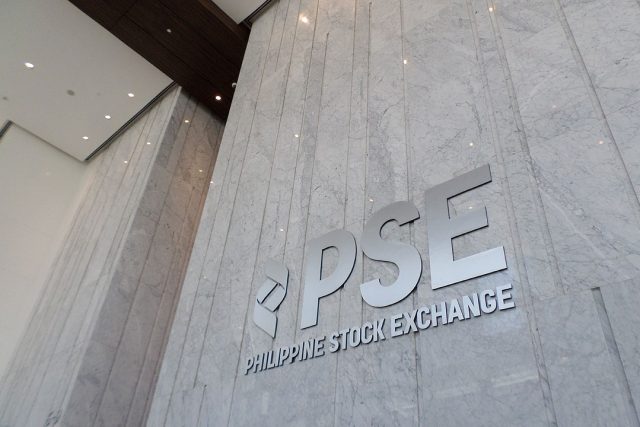
PHILIPPINE STOCKS declined on Tuesday ahead of the release of March US consumer inflation data and amid geopolitical concerns.
The benchmark Philippine Stock Exchange index fell by 8.88 points or 0.13% to close at 6,479.63 on Tuesday, while the broader all shares index dropped by 6.88 points or 0.19% to end at 3,479.86.
“Philippine equities opened the week softly after a five-day hiatus as many will be tuning into a fresh round of economic data, specifically the release of US CPI (consumer price index) on Wednesday. Besides this, investors will also digest the retail sales and University of Michigan reports on Friday,” Regina Capital Development Corp. Head of Sales Luis A. Limlingan said in a Viber message.
“Back home, the unemployment rate was unchanged… [and] the trade balance narrowed. For the rest of the week, investors will be watching OFW (overseas Filipino workers) cash remittances (April 14),” he added.
Philippine financial markets were closed from April 6-10 for nonworking days in observance of Holy Week and the Day of Valor.
The country’s unemployment rate stood at 4.8% in February, steady from the previous month, preliminary results of the Philippine Statistics Authority’s (PSA) February round of the Labor Force Survey released on Tuesday showed.
Meanwhile, the country’s trade-in-goods deficit stood at a $3.88-billion deficit in February, narrowing from $5.73-billion gap in January, the PSA reported separately.
In the first two months, the trade deficit widened to $9.61 billion from $8.50-billion gap a year ago.
“The market moved sideways as traders await the latest US CPI numbers, which will be released on April 12. Moreover, geopolitical concerns in Taiwan also spooked investors and limited buying activities,” AB Capital Securities, Inc. Vice-President Jovis L. Vistan said in a Viber message.
Chinese warplanes and navy ships were still in the waters around Taiwan, the island’s defense ministry said on Tuesday after the end of three days of war games, as Taiwan President Tsai Ing-wen criticized Beijing for its “irresponsible” behavior, Reuters reported.
Back home, the majority of sectoral indices declined. Property went down by 32.02 points or 1.16% to 2,711.95; services fell by 16.19 points or 1% to 1,596.47; holding firms decreased by 10.92 points or 0.17% to 6,339.47; and industrials dropped by 13.81 points or 0.14% to 9,277.08.
Meanwhile, financials increased by 23.16 points or 1.3% to 1,804.19 and mining and oil went up by 28.87 points or 0.27% to end at 10,703.02.
Value turnover rose to P5.37 billion on Tuesday with 1.22 billion shares changing hands from the P3.38 billion with 1.08 billion issues traded on April 5.
Decliners outnumbered advancers, 106 versus 61, while 63 names closed unchanged.
Net foreign buying increased to P56.12 million on Tuesday from the P43.80 million on April 5. — A.H. Halili with Reuters

THE PESO weakened to a near one-month low against the dollar on Tuesday following strong US jobs data, which could mean another rate hike by the US Federal Reserve, and after Bangko Sentral ng Pilipinas (BSP) Governor Felipe M. Medalla hinted at a possible pause in its tightening cycle.
The local currency closed at P54.93 versus the dollar on Tuesday, depreciating by 53 centavos from its P54.40 finish on April 5, data from the Bankers Association of the Philippines’ website showed.
This is the peso’s weakest close since its P54.95-per-dollar finish on March 15.
The local unit opened Tuesday’s session sharply weaker at P54.60 per dollar. It logged an intraday best of P54.58, while its worst showing was at P54.955 versus the greenback.
Dollars traded dropped to $1.143 billion on Tuesday from the $1.239 billion recorded on April 5.
The foreign exchange market was closed from April 6-10 for non-working days in observance of Holy Week and to commemorate the Day of Valor.
“The peso weakened following the robust US employment reports for March 2023 and after BSP Governor Medalla hinted at a potential pause in BSP rate hikes,” a trader said in an e-mail.
US employment data fueled bets of another 25-basis-point (bp) rate hike from the Fed in its next meeting, Rizal Commercial Banking Corp. Chief Economist Michael L. Ricafort said in a Viber message.
US employers maintained a strong pace of hiring in March, pushing the unemployment rate back down to 3.5% and signaling labor market resilience that will keep the Fed on track to raise interest rates one more time next month, Reuters reported.
Non-farm payrolls increased by 236,000 jobs last month, the survey of establishments showed.
Data for February was revised higher to show 326,000 jobs added instead of the previously reported 311,000.
The Fed last month raised its target interest rate by 25 bps to a range between 4.75% and 5%.
The US central bank has hiked rates by 475 bps since March 2022. It will hold its next review on May 2-3.
Meanwhile, Mr. Medalla told Reuters over the weekend that a pause in interest rate increases was possible “if the April CPI (consumer price index) is not higher than the March CPI.”
Mr. Medalla said a “zero or negative month-on-month inflation” may also support the case for a rate hike pause.
Philippine headline inflation eased for a second consecutive month in March to 7.6% from 8.6% in February. For the first quarter, inflation averaged 8.3%, still higher than the BSP’s 6% full-year forecast.
Since May 2022, the Monetary Board has raised key interest rates by 425 bps, bringing its policy rate to a near 16-year high of 6.25%. Its next meeting is on May 18.
The peso was also dragged lower by an increase in global crude oil prices, Rizal Commercial Banking Corp. Chief Economist Michael L. Ricafort said in a Viber message.
Brent crude futures rose 64 cents or 0.8% to $84.82 a barrel at 0557 GMT, while US West Texas Intermediate futures gained 67 cents or 0.8% to $80.41 a barrel.
For Wednesday, the trader said the peso could appreciate “amid expectations of a continued decline in US consumer inflation for March.”
The March US consumer price index report will be released on April 12.
The trader expects the peso to move between P54.80 and P55.05 against the dollar on Wednesday, while Mr. Ricafort expects it to trade from P54.80 to P55. — A.M.C. Sy with Reuters

THE Department of Transportation (DoTr) said Tuesday that the Palace has ordered a review of the inflation impact of two commuter rail fare hikes the department had approved in late March.
The Palace decision effectively pushes back the implementation date of the fare hike for Light Rail Transit (LRT) Lines 1 and 2.
The DoTr had approved the requested fare increase of P2.29 on boarding and an additional 21 cents distance for every kilometer traveled.
“This was approved by my office on March 27, and we reported this to the President. And the instruction of the President is to reassess the date of implementation for us to be able to determine the impact on inflation,” Transport Secretary Jaime J. Bautista said in a press conference on Tuesday.
Mr. Bautista said the instructions issued by President Ferdinand R. Marcos, Jr. also suspends the fare hike application process for Metro Rail Transit (MRT) Line 3, which had yet to be approved.
Mr. Bautista said the DoTr will discuss the impact of fare increases with the National Economic and Development Authority (NEDA).
“As far as the rate is concerned, it is already approved, but the implementation will be announced after we have conferred with NEDA and we will refer this back to the board of the LRTA (Light Rail Transit Authority),” said Mr. Bautista.
Once implemented, the minimum boarding fee at the LRT-1 and LRT-2 will be adjusted to P13.29 from P11, while the distance fee will be adjusted to P1.21 per kilometer from P1 per kilometer.
The DoTr said the new LRT-1 Single-Journey Ticket (SJT) fare scheme will be a minimum P15 and maximum P35. The previous range was P15-30. For Stored Value Cards (SVC), the minimum will rise to P14 from P12 and the maximum to P35 from P29.
Meanwhile, for LRT-2 the minimum SJT fare will remain at P15 while the maximum will rise to P35 from P30. The minimum SVC fare will rise to P14 from P12, and the maximum will rise to P33 from P28.
Mr. Bautista said that “the proceeds of the fare increase are intended to improve (the train operator’s) services, technical and technological capabilities to make mass transportation accessible, convenient and efficient for the riding public.”
Assistant Transport Secretary for Railways Jorjette B. Aquino said that the LRTA intends to allocate 97% of the expected incremental revenue for maintenance.
“It is the intention of the LRTA to allocate 97% or about P110 million of the expected P114 million additional rail revenue per year to augment funds for maintenance and other operating expenses,” Ms. Aquino said.
LRTA’s deficit for 2023 is projected at P8.5 billion, widening from P7 billion in 2022, according to Ms. Aquino.
“It has been actually operating at a loss and relying on government subsidies for its operations and maintenance,” she added.
LRT-1, LRT-2 and MRT-3 filed fare hike applications with the Rail Regulatory Unit (RRU) which held a hearing on Feb. 17.
Ms. Aquino said the MRT-3’s requested fare increase was not approved after it failed to meet the publication requirement as indicated by the RRU rules of procedure.
“LRTA and LRMC (Light Rail Manila Corp., operator of LRT 1 and 2) timely published their application and petition with notice of hearing in a newspaper of general circulation once a week for three consecutive weeks in accordance with the RRU rules of procedure,” she said.
She added that MRT-3, operated by Metro Rail Transit Corp., failed to publish its application 10 days before the hearing. — Justine Irish D. Tabile
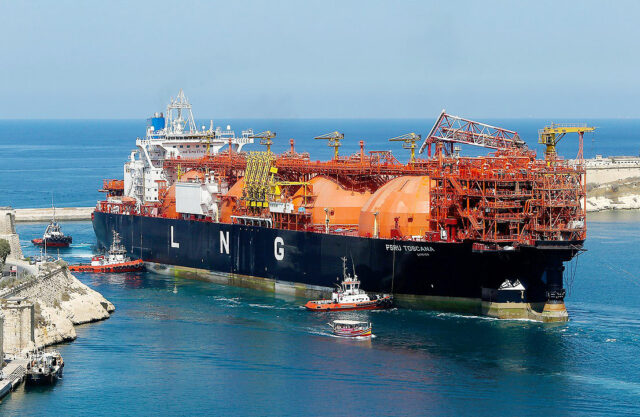
ELECTRICITY prices are likely to rise when power generators sign new supply deals for liquefied natural gas (LNG), with price volatility in the fuel likely to be passed on to consumers, the Institute for Energy Economics and Financial Analysis (IEEFA) said Tuesday.
“As contracts are renegotiated, generation companies will push to pass through volatile imported fuel costs to consumers… If LNG costs are passed on to households and businesses, the Philippines may continue to struggle with high electricity prices,” Sam Reynolds, an energy finance analyst, said in an IEEFA report.
In its report, IEEFA said the LNG outlook is clouded by the uncertainty of access to the fuel by the installed base of gas-fired power plants.
“Two recent power contract disputes demonstrate the difficulty of pricing imported LNG into the Philippine market and cast doubt on the economic viability of LNG expansion plans,” IEEFA said.
IEEFA was referring to the power supply agreement (PSA) between Manila Electric Co. (Meralco) and a unit of San Miguel Global Power Global Power Holdings Corp., South Premiere Power Corp. (SPPC).
SPPC is the administrator of the gas-fired power plant in Ilijan, Batangas.
Last year, SPPC together with another unit of San Miguel Global Power, San Miguel Energy Corp. (SMEC), applied for a rate increase with the Energy Regulatory Commission (ERC) after claiming that both its units incurred a combined loss of P15 billion. The rate increase was meant to recover P5 billion of the losses.
The company cited a “change in circumstance” after surging fuel costs breached the price range assumed during the execution of the contracts with Meralco. The ERC denied the petition, saying this had no basis as the PSA is a fixed-rate contract.
SPPC’s PSA with Meralco was the subject of a writ of preliminary injunction issued by the Court of Appeals, indefinitely suspending its power deal with Meralco.
Meanwhile, San Miguel Global Power expects an LNG shipment to arrive within this month.
Linseed Field Power Corp., a unit of Atlantic Gulf & Pacific Co., said it has completed the conversion of a vessel into a floating storage unit for gas.
Linseed will serve as the operator of the LNG re-gasification facility which will be rented by San Miguel Global Power’s SPPC.
“As a result, consumer power bills could increase further. The cost of the country’s first LNG cargo was undisclosed, but at current LNG prices in Asia, IEEFA estimates that rates from LNG-fired power generation in the Philippines could be roughly PHP9/kWh (kilowatt-hour). And based on average global LNG prices last year, LNG-fired power could cost as much as PHP16/kWh,” IEEFA said.
In March, Meralco announced that the two subsidiaries of San Miguel Global Power — Excellent Energy Resources, Inc. (EERI) and Masinloc Power Partners Co. Ltd. (MPPCL) — had terminated their PSAs with Meralco.
EERI had proposed to supply power from its natural gas-fired power plant starting in 2024, while MPPCL offered 600 megawatts from its coal-fired power plant by 2025.
San Miguel Global Power terminated the deal after the PSA application exceeded the date it should have been approved by the ERC.
“LNG-to-power contracts in the Philippines may be constantly subject to legal risks given the high costs and inherent volatility of LNG prices in global markets. Ultimately, however, fixed pricing terms are essential to protect consumers from the high costs associated with decisions to rely on foreign LNG,” IEEFA said.
“As PSAs for coal and LNG-fired power are renegotiated, however, there is still a major risk that highly volatile fossil fuel costs are passed through to consumers for decades to come,” it added. — Ashley Erika O. Jose
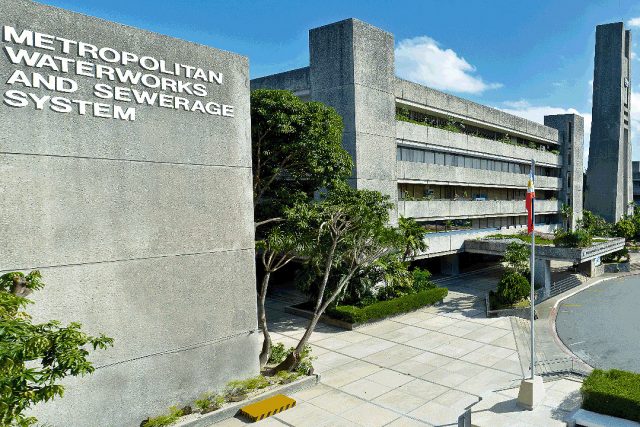
PARTS of Metro Manila and nearby provinces will likely experience a water shortage next year with dry spells expected with the El Niño weather phenomenon looming, a former water regulator aid.
“If rains fail to bring up the water level of Angat dam, we won’t reach safe levels that will carry us to next year. It’s not this year, the concern will be next year if the rains don’t come,” Ramon B. Alikpala, former chairman of the Metropolitan Waterworks and Sewerage System (MWSS), said in a briefing Tuesday.
Angat Dam supplies about 90% of the water needs of Metro Manila and nearby provinces.
On April 11, the Philippine Atmospheric, Geophysical and Astronomical Services Administration (PAGASA) reported that the water level at Angat declined to 199.13 meters from 199.37 meters a day earlier.
The dam has a minimum operating level of 180 meters and a normal high-water level of 212 meters, which is considered the level that provides an adequate safety margin for supply during the dry months.
PAGASA has said that El Niño is likely to develop in the second half of this year and run until next year.
“A new operating dam is much needed because Angat Dam can no longer keep up with the spiking demand for water. Simultaneously, there is also overpopulation and climate change, which call for an immediate solution,” Mr. Alikpala said.
Leonor C. Cleofas, MWSS administrator, said in a Viber message Tuesday that the MWSS has a water security roadmap that will address the growing demand for water.
She said that the MWSS is still confident that the water supply is sufficient to ride out the dry months.
“With the elevation of Angat we can get past the dry season. For next year, we have additional sources of water that will come online,” Ms. Cleofas said.
Delfin Sespene, an engineer with the MWSS site operations and management department, said the water regulator has once again requested that the National Water Resources Board (NWRB) increase the allocation from Angat to 52 cubic meters per second (CMS).
“Actually, we will be presenting to them tomorrow (Wednesday). We have a board meeting with NWRB. If NWRB does not approve, we have augmentation measures in case they cannot provide the 52. but we are hopeful,” Mr. Sespene said.
The MWSS normally draws 48 CMS from Angat. The NWRB temporarily raised the allocation for MWSS to 50 CMS between April 1 and 15. — Ashley Erika O. Jose
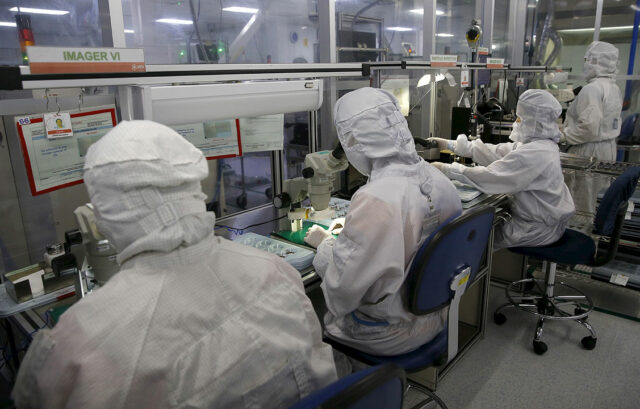
FACTORY PRODUCTION grew at the slowest pace in two months in February, signaling weakening demand.
Preliminary results of the Philippine Statistics Authority’s (PSA) latest Monthly Integrated Survey of Selected Industries (MISSI) indicated that manufacturing, as measured by the volume of production index (VoPI), expanded 7.2% year on year in February.
This reading was lower than the revised 11.2% in January and 69.8% growth posted a year earlier. It was also the slowest uptick since December’s 4.6%.
The February result brought average factory output growth to 9.2% for the year to date, much lower than the 40% average in the first two months of 2022.
Domini S. Velasquez, chief economist at China Banking Corp., said in a Viber message that the slower growth in VoPI in February points to a weakening manufacturing sector in the face of waning global demand.
Capital Economics’ emerging Asia economist, Shivaan Tandon, said the February slowdown may be driven by the fall in output for computer, electronics and optical products.
“The global electronics sector is struggling after a pandemic-induced boom. The Philippines has a large electronics sector which makes the economy particularly vulnerable to the ongoing downturn in the sector,” Mr. Tandon said in an e-mail.
The VoPI reading was in line with the manufacturing Purchasing Managers’ Index (PMI), which hit 52.7 in February, slowing from the 53.5 posted a month prior.
The PMI is a leading indicator for future manufacturing activity, as it reflects forward demand expectations in the form of raw material orders for use by factories in a few months’ time. A reading above 50 indicates an expansion in expected manufacturing activity.
According to the statistics agency, three categories were mainly responsible for the slower growth in February, led by food products, slowing to 6.4% from 14% in January.
The contraction in output of computer, electronic and optical products deepened to minus 14.2% from minus 6.9% previously.
Nonmetallic mineral products posted a contraction of 2.7%, a turnaround from the 17.8% rise a month earlier.
The PSA said five other categories out of 22, posted slowdowns in February. These include transport equipment (27.3% form 33.6%), electrical equipment (22.3% from 58.9%), and beverages (22% from 26.7%).
Meanwhile, five categories posted higher growth, led by machinery and equipment (34% from 33.4%), basic metals (30.8% from 15.2%), and printing and reproduction of recorded media (17.4% from 6%).
Four categories declined while four posted deeper contractions compared with January.
February capacity utilization averaged 72.6%, lower than the revised 72.8% in January. The February reading was higher than the 70.1% rposted in February 2022.
Nearly all categories exceeded 50% utilization, the PSA said in its report.
Philippine Chamber of Commerce and Industry President George T. Barcelon expects the manufacturing sector to remain on a growth track in the next few months.
“Now, it’s a question of how to sustain (it)… and one of the concerns is that food prices have been high, affecting consumers,” he told BusinessWorld by phone.
In February, inflation cooled for the first time in six months to 8.6%. It had hit a 14-year high 8.7% in January. In March, inflation eased further to 7.6%.
Mr. Barcelon said the cost of fuel has also gone up, which will likely affect logistics and manufacturing costs.
“In the next few months, we expect factory output to moderate further. The key risk for the sector is higher-than-expected wage hikes, if granted,” Ms. Velasquez said.
Mr. Tandon said he expects manufacturing output growth to slow further.
“The lagged impact of monetary policy tightening at home and abroad is set to weigh heavily on both domestic and external demand. High inflation at home also constitutes another major headwind.”
Mr. Tandon noted that if there is no turnaround in electronics output, the manufacturing sector is set to undergo a weak patch for the coming quarters, and gross domestic product (GDP) growth will slow to 5.5% in 2023. — Abigail Marie P. Yraola

THE Department of Budget and Management (DBM) said it approved the release of P42.93 billion to cover the health insurance premiums of senior citizens for one year.
Around 8.6 million enrolled senior citizens are expected to benefit from the release, the DBM said.
Under the 2023 budget, about P79 billion is allocated to cover health insurance premiums for indirect contributors, including seniors.
All senior citizens are covered by the National Health Insurance Program of the Philippine Health Insurance Corp.
At the end of February, the DBM said 61.4% or P3.23 trillion of the 2023 national budget has been released to national agencies and local government units.
This leaves P2.033 trillion remaining to be distributed from the P5.268-trillion 2023 budget.
Meanwhile, government agencies’ cash utilization rate hit 86% at the end of February, the DBM said.
The National Government, local governments, and state-owned firms used 86% or P451.09 billion in Notices of Cash Allocation (NCAs) issued to them in the first two months of the year. This left P76.37 billion in unused NCAs. — Luisa Maria Jacinta C. Jocson

THE Department of Agriculture (DA) said Tuesday that the 137 barangays where African Swine Fever (ASF) has been detected represent a tiny percentage of the national total.
“If you’re looking at the effects of ASF nationwide, we are looking at 137 barangays… only 0.3% of the total,” DA Deputy Spokesperson Rex C. Estoperez said in a briefing.
About 25% of the 81 provinces have outbreaks, though he added that presenting the outbreak data by barangay presents a “more realistic” picture.
Mr. Estoperez reiterated that the Bureau of Animal Industry’s (BAI) protocols are based on the guidelines set by the World Organization for Animal Health (WOAH), after Cebu province pushed back on the cull policy, citing its authority under the Local Government Code.
The first ASF outbreak in the Philippines was detected in 2019.
BAI responds to outbreaks by culling all swine within a 500-meter radius to control the spread of the disease.
Mr. Estoperez called for the cooperation of local government units (LGU) pending availability of vaccines for the disease, which are still undergoing clinical trials.
“We are committing all our resources, especially in the regions where we will have the support of local government units to prevent the spread of this virus,” he said.
In a statement Tuesday, Camarines Norte Rep. Luis Raymund F. Villafuerte called for a state of calamity declaration in ASF-affected areas.
Calamity declarations enable the government to move more quickly on funding emergency measures.
He called for the deployment of money from the contingency fund, and asked that budget planning for the succeeding General Appropriations Acts allow for fast-tracking vaccines.
Mr. Villafuerte noted the need for the BAI to step up because the continued presence of the disease could lead to pork shortages, a spike in inflation, and rising imports.
Samahang Industriya ng Agrikultura (SINAG) Executive Director Jayson H. Cainglet said that hog losses this year due to ASF have been valued by the industry at at least P10 billion.
Mr. Cainglet said via Viber that the farmgate price of pork has been between P190 and P220 per kilo, with retail prices at around P400 per kilo.
According to DA monitoring reports Tuesday, markets in Metro Manila sold pork belly (liempo) at retail for between P340 andP420 while pork shoulder (kasim) was priced at between P310 and P350. — Sheldeen Joy Talavera

THE PHILIPPINES and United States kicked off their biggest joint military exercises on Tuesday as they try to counter China’s increasing assertiveness in the South China Sea.
Almost 18,000 members of the Armed Forces of the Philippines and US military will participate in the Balikatan (shoulder to shoulder) war games on April 11 to 28. There will be observers from Japan, South Korea, the United Kingdom, France, India and Southeast Asian countries.
The drills will include live-fire exercises near disputed waters of the South China Sea, including a plan to sink a decommissioned navy ship in San Antonio, Zambales on the main island of Luzon.
San Antonio is about 140 miles from Scarborough Shoal, a Philippine feature in the South China Sea that is claimed by Beijing. In 2016, an international court ruled that both traditional Chinese and Filipino fishermen have the right to fish there. China has ignored the ruling.
It will be the first time the exercises are held under President Ferdinand R. Marcos, Jr., who has sought to boost security ties with the US after his predecessor Rodrigo R. Duterte led a pivot to China away from the US.
Mr. Marcos on Monday ruled out the use of Philippine military bases, access to which by American troops under a 2014 military pact has been widened, to launch offensives.
“We will not let our bases be used for whatever offensive actions,” he told reporters on the sidelines of a commemoration event for Filipino heroes of World War II.
The president said sites under the Philippines’ 2014 Enhanced Defense Cooperation Agreement (EDCA) with the US are aimed to help the Philippines.
In February, Mr. Marcos gave the US access to four more military bases under EDCA on top of the five existing sites. China has criticized the EDCA expansion, accusing the US of endangering “regional peace and stability.”
Also on Tuesday, Foreign Affairs Secretary Enrique A. Manalo said the Philippines and US should discuss how American troops could use local military bases without worsening tensions between the US and China.
‘STRATEGIC RIVALRY’
“As responsible powers, each with a stake in the region’s long-term peace and security, Washington and Beijing need to manage their strategic rivalry, with dialogue and transparent and sincere engagement, where possible,” he told a Center for Strategic and International Studies forum in Washington, based on a copy of his speech sent to reporters.
Mr. Manalo said there would be “adverse repercussions” for the Philippines if military tensions escalate between China and the US.
“The Philippines has been clear and consistent about our interest in maintaining the South China Sea as a sea of peace and stability, and our aim to boost our defense capabilities, including in the framework of EDCA,” he said.
EDCA is a supplementary deal to the 1999 visiting forces agreement, which allows the US to rotate troops in the Philippines and build and operate facilities on agreed locations for both their military forces.
In January, Mr. Marcos and Chinese President Xi Jinping agreed to find a compromise and peacefully resolve issues in the disputed waterway.
The Philippines is eyeing security partnerships with other countries, including a three-way security pact with Japan and the US. It is also in talks to include Australia and Japan in planned joint South China Sea patrols with the US.
The Department of Foreign Affairs (DFA) earlier this month said the Philippines and China would hold preparatory talks in May ahead of expected discussions on joint oil and gas exploration in the South China Sea.
The South China Sea is subject to overlapping territorial claims involving China, Brunei, Malaysia, the Philippines, Taiwan and Vietnam. It is a key global shipping route that is believed to be rich in fish and gas. China claims 80% of the waterway based on a 1940s map.
Foreign Affairs Undersecretary Theresa P. Lazaro said on March 24 Manila and Beijing had agreed that their maritime issues “should be addressed through diplomacy and dialogue and never through coercion and intimidation.”
Three of the four new EDCA locations will be in the northern Philippines — Naval Base Camilo Osias in Sta Ana, Cagayan; Lal-lo Airport, also in Cagayan; and Camp Melchor Dela Cruz in Gamu, Isabela.
Foreign Ministry spokeswoman Mao Ning earlier said the move would inevitably increase military tensions.
Cagayan is about 1,000 kilometers away from self-ruled Taiwan, which China considers part of its territory. Balabac Island in Palawan, which is facing the South China Sea, is also on the list.
The Balikatan exercises come after a three-day Chinese military exercise that simulated targeted strikes and a blockade of Taiwan.
Philippine Defense spokesman Arsenio R. Andolong earlier said the Philippines aimed to finish the construction of the five existing EDCA sites by 2024. Washington has allotted more than $83 million (P4.5 billion) for the projects.
Mr. Andolong said building works at the five sites, which are in Cebu, Cagayan de Oro, Palawan, Nueva Ecija and Pampanga, had been delayed by the coronavirus pandemic and after Mr. Duterte terminated the country’s visiting forces agreement with the US.
The former president restored the agreement a year later after a meeting with US Defense Secretary Lloyd James Austin III.
Mr. Marcos’ assurance that EDCA sites would not be used for offensives assumes the US would not provoke Chinese aggression or fight back in case of an attack, said Hansley A. Juliano, a political economy researcher studying at Japan’s Nagoya University.
“It is also just a polite diplomatic code. Both China and the Philippines know you don’t stockpile arms or invite allies if you’re actually friends,” he said in a Facebook Messenger chat. — Norman P. Aquino and John Victor D. Ordoñez

MOST Filipinos support a proposal to revive mandatory military training for college students, according to a senator.
Eight of 10 Filipinos are in favor of reinstating the Reserve Officers’ Training Corps (ROTC), Senator Sherwin T. Gatchalian said in a statement on Tuesday, citing a poll he commissioned for Pulse Asia Research.
The 78% approval rate was higher than the 69% result of a similar poll conducted in July last year, he said.
Pulse Asia interviewed 1,200 Filipino adults on March 15 to 19 for the poll, which had an error margin of ±3 points.
Mr. Gatchalian said 92% of respondents from Mindanao and 80% from the Visayas, 77% from the National Capital Region and 72% from the rest of Luzon favored mandatory military training.
Across socioeconomic classes, the support for mandatory ROTC was at 81% among classes ABC and E and 78% from class D.
The respondents said military training would instill discipline and responsibility. They also thought it would boost the country’s defense and develop leadership skills.
“It is clear from the voices of our countrymen that they are supportive of the return of the ROTC in college,” Mr. Gatchalian said in a statement.
He earlier filed Senate Bill 2034, which seeks to revive a compulsory two-year military training program that will cover students in both public and private universities, colleges and vocational schools.
The measure includes basic military, leadership and civic training as well as enhanced preparedness during disaster response operations.
The Pulse Asia poll showed 13% did not support mandatory military training for students, while 8% were neutral.
Those who were against the program said it would increase cases of abuse, harassment and hazing, and could become an “instrument of power” for leaders and officers. They also said the time students spend on military training should instead be used for academics.
The proposed military training for tertiary level students is expected to enhance the capacity of the nation and its human resources in times of war, calamities and disasters, as well as national or local emergencies. It is a priority bill under the Legislative-Executive Development Advisory Council.
The House of Representatives in December passed a similar bill in which students who complete a two-year training would become part of the Armed Forces of the Philippines’ reserve.
President Ferdinand R. Marcos, Jr. last month called on the Philippine Army to boost its relations with foreign counterparts, highlighting the importance of international ties amid common security challenges. This was in response to China’s increasing assertiveness in Philippine-claimed areas in the South China Sea.
In February, the Philippines gave the United States access to four more military bases under the 2014 Enhanced Defense Cooperation Agreement (EDCA) on top of five existing sites.
Lawmakers critical of Washington also questioned the real intent of the EDCA expansion, fearing that the Philippines would be used as a staging ground for US military activities in the region.
Aside from the South China Sea dispute, the Indo-Pacific region is beset by tensions between China and the US over the self-ruled Taiwan.
“We will continue to push for the return of the ROTC in colleges until it is enacted into law,” Mr. Gatchalian said in Filipino. “Through the ROTC, we can teach our youth discipline, love of country and the readiness to help in times of disasters.”
Youth groups have opposed the proposal, saying military training for students should be voluntary. — Beatriz Marie D. Cruz
