Home Blog Page 4961

Shares rise as market eyes Fed, BSP decisions

BW FILE PHOTO

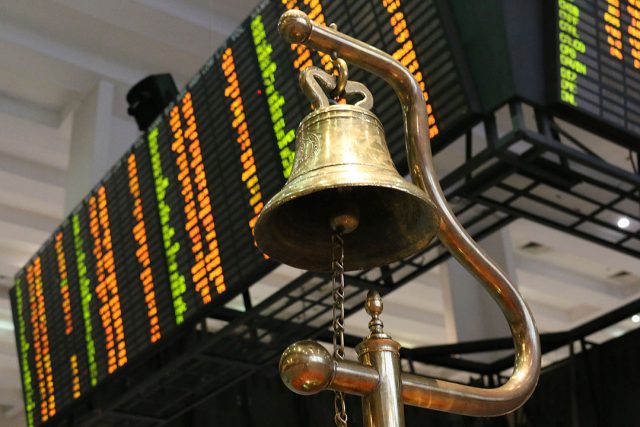
LOCAL SHARES climbed on Monday on the back of a pickup in buying as investors await more data and hints on the US Federal Reserve’s and Bangko Sentral ng Pilipinas’ (BSP) next moves and amid a shortened trading week.

The benchmark Philippine Stock Exchange index (PSEi) rose by 23.71 points or 0.36% to close at 6,505.62 on Monday, while the broader all shares index went up by 8.77 points or 0.25% to end at 3,489.54.

“Philippine shares started the shortened trading week in the green with a new batch of economic data likely to dictate market sentiment. The key economic data release stateside is the Philadelphia Fed manufacturing index on Thursday… [and] a relatively quiet week ahead here at home with the February cash remittances,” Regina Capital Development Corp. Head of Sales Luis A. Limlingan said in a Viber message.

Philippine financial markets will be closed on April 21 due to a nonworking day for Eid al-Fitr.

Money sent home by overseas Filipino workers rose by 2.4% year on year to $2.57 billion in February, data released by the BSP on Monday showed.

This was lower than the $2.762 billion seen in January.

The value of cash remittances was also the lowest in nine months or since the $2.42 billion in May 2022.

For the first two months of the year, cash remittances grew by 3% year on year to $5.331 billion.

The BSP expects remittances to grow by 3% this year.

“We are slowly seeing investors buying this market as the index closed a little above 6,500. Investors are still awaiting the Fed’s decision whether they will pause or continue its rate hike,” Mercantile Securities Corp. Head Trader Jeff Radley C. See said in a Viber message.

“With the recent announcement of the CPI (consumer price index) locally and abroad, there are signs that the inflation is already topping out and may continue to slowly go down. The BSP signaled that they might pause on their rate hike,” Mr. See added.

The Fed will hold its next policy meeting on May 2-3, while the BSP will have its own review on May 18.

Most sectoral indices climbed on Monday except for financials, which declined by 15.01 points or 0.82% to 1,795.24, and mining and oil, which fell by 39.89 points or 0.35% to 11,072.03.

Meanwhile, holding firms went up by 57.82 points or 0.91% to 6,358.29; industrials increased by 67.15 points or 0.72% to 9,319.86; property climbed by 11.32 points or 0.41% to 2,727.60; and services rose by 3.23 points or 0.2% to 1,607.65.

Value turnover went down to P4.39 billion on Monday with 1.07 billion shares changing hands from the P4.62 billion with 981.38 million issues traded on Friday.

Decliners outnumbered advancers, 98 versus 82, while 61 names closed unchanged.

Net foreign selling stood at P59.57 million on Monday versus the net buying worth P286.76 million seen on Friday. — A.H. Halili

Peso sinks to 3-month low on hawkish Fed comments

BW FILE PHOTO

THE PESO weakened to an over three-month low against the dollar on Monday following hawkish comments from a US Federal Reserve official.

The local currency closed at P55.85 versus the dollar on Monday, declining by 64 centavos from Friday’s P55.21 finish, data from the Bankers Association of the Philippines’ website showed.

This was the peso’s worst close in more than three months or since its P55.91 finish on Jan. 4.

The peso traded weaker than its Friday close the entire day, opening Monday’s session at P55.35 per dollar, which was already its intraday best. Its worst showing was at P55.87 versus the greenback.

Dollars traded inched down to $1.375 billion on Monday from the $1.39 billion recorded on Friday.

“The peso weakened significantly amid hawkish policy remarks from Fed official Waller about the need to tighten monetary policy toward its inflation target,” a trader said in an e-mail.

Despite a year of aggressive rate increases US central bankers “haven’t made much progress” in returning inflation to their 2% target and need to move interest rates higher still, Federal Reserve Governor Christopher J. Waller said on Friday, Reuters reported.

Important measures of underlying inflation have “basically moved sideways with no apparent downward movement,” Mr. Waller said in remarks that continue the Fed’s steady discounting of the immediate economic risks posed by recent bank failures.

Though Mr. Waller said it remains unclear whether bank stress would lead to an unexpected tightening of lending and credit and slow the economy more than needed, the apparent stability in financial markets showed the Fed was right to raise rates at its last meeting and keep the focus of monetary policy on fighting inflation.

“Monetary policy needs to be tightened further. How much further will depend on incoming data on inflation, the real economy, and the extent of tightening credit conditions,” Mr. Waller said in remarks prepared for delivery at the Graybar National Training Conference in San Antonio, Texas.

The Fed’s next policy meeting is on May 2-3.

The US central bank has hiked borrowing costs by a total of 475 basis points since March 2022, with the fed funds rate now at a between 4.75% and 5%.

The peso also declined as the dollar hit a one-month high against the yen on Monday, Rizal Commercial Banking Corp. Chief Economist Michael L. Ricafort said in a Viber message.

The dollar climbed to a one-month high against Japan’s yen on Monday as traders eyed up another interest rate hike from the Federal Reserve, while the Bank of Japan stuck to its easy money policies.

The dollar rose to 134.22 yen earlier in the session, the highest level since March 15. It was last up 0.12% at 133.9.

Meanwhile, the dollar index — which measures the currency against six major peers — was little changed at 101.64. It touched a one-year low of 100.78 on Friday before rebounding somewhat.

For Tuesday, the trader said the peso could rebound on a potentially upbeat Chinese gross domestic product report, “which might spur optimistic views on global growth prospects.”

The trader sees the peso moving between P55.70 and P55.95 against the dollar on Tuesday, while Mr. Ricafort sees it trading from P55.75 to P55.95. — A.M.C. Sy with Reuters

No need for legislation to effect LANDBANK, DBP merger — GCG

THE Governance Commission for GOCCs (GCG) said that the merger of the Land Bank of the Philippines (LANDBANK) and the Development Bank of the Philippines (DBP) does not require legislative intervention.

The GCG, which oversees government-owned and -controlled corporations (GOCCs), said it conducted a study on the issues raised by the merger, and found that the banks can be combined even though they both received their charters from Congress.

“The study aims to resolve the legal issues raised by the DBP Chairman and the Secretary of Finance in a sectoral meeting held at the Office of the President,” the GCG said in a statement on Monday.

In March, President Ferdinand R. Marcos, Jr. gave the go signal for the merger of the state-run banks. The merger is expected to be completed by the end of the year.

The GCG said that concerns were raised by the DBP that “both banks were statutorily created and must therefore be merged through legislation.”

“In order to resolve the issue, GCG sought answers through the provisions of statutes and applicable jurisprudence on the matter,” GCG Chairman Alex L. Quiroz said.

The study concluded that the President can go ahead with a merger “without waiting for Congress to file and pass related bills.”

It also found that the GCG has adequate authority to merge GOCCs.

“The GCG has the power to ascertain the manner of the merger — either de jure merger or de facto merger,” Mr. Quiroz added. — Luisa Maria Jacinta C. Jocson

LNG prices seen hindering growth in use of gas in Asia

ENERGY.AGPGLOBAL.COM

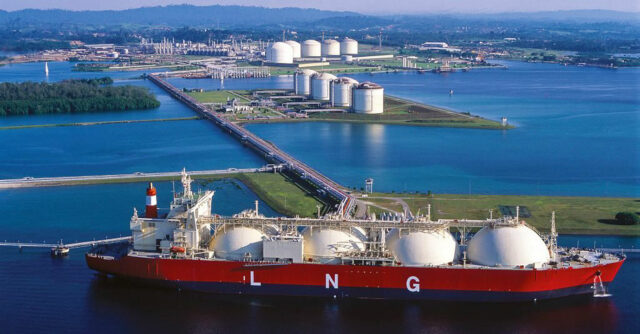
VOLATILE PRICES of liquefied natural gas (LNG) will hold back demand in Asia in the next few years, with new supply coming onto the market by 2025, the Institute for Energy Economics and Financial Analysis (IEEFA) said on Monday.

“Emerging Asian economies are widely forecasted to be the largest growth market for LNG demand globally over the next several decades. However, IEEFA expects that tight global markets and elevated prices may continue to restrain Asia’s LNG demand growth,” IEEFA said.

The Philippines is transitioning to gas imports with the depletion of the Malampaya field. Various companies are building LNG receiving terminals to service the import market.

San Miguel Global Power Holdings Corp. is expecting an LNG shipment to arrive this month. Its supplier, Vitol Asia Pte. Ltd., said it is on track to deliver the Philippines’ first LNG cargo.

“We are pleased and excited to have worked closely with our partner San Miguel Global Power on this historic and first LNG cargo into the Philippines,” Vitol Asia said on its website.

To date, seven LNG terminal projects have been approved by the Department of Energy, two of which are expected to come online in the first half of 2023.

The LNG terminals of First Gen Corp. and Linseed Field Power Corp., a unit of Atlantic Gulf & Pacific Co., are expected to become operational this year.

In the first quarter, IEEFA said that LNG demand is declining despite a downturn in global prices for the fuel.

Jephraim C. Manansala, chief data scientist at the Institute for Climate and Sustainable Cities, said that while Asian LNG spot prices are currently at their lowest in 21 months, they remain much higher than pre-pandemic levels of around $3 per million British thermal units (mmBtu).

LNG prices have now declined to $12.50 per mmBtu from a peak of $70.50 in August, Reuters reported.

“This highlights the high costs and inherent volatility of LNG prices in the global market, which may have implications for the Philippines’ electricity prices and economic sustainability,” Mr. Manansala said.

He said dependence on imports leaves the Philippines vulnerable to price fluctuations and external forces.

“We have not felt the impact of spiking LNG prices yet since the first LNG terminals are still to be commissioned this year, but the volatility of LNG prices remains a concern,” Mr. Manansala added. — Ashley Erika O. Jose

Budget release rate hits 81.9% at end of March

BW FILE PHOTO

THE Department of Budget and Management (DBM) said it had released P4.31 trillion or 81.9% of the 2023 national budget at the end of March.

Some P954.4 billion of the P5.268-trillion budget for this year remains undistributed, according to the DBM Status of Allotment Releases report.

The pace of releases was ahead of the 69.4% rate at the end of March 2022.

Releases to government agencies and departments amounted to P2.95 trillion, for a utilization rate of 93.8%.

Special Purpose funds released totaled P147 billion or 28.6% of the budgeted funds for the year.

Releases for Automatic Appropriations stood at P1.07 trillion, or 66.4% of the total.

These include the P240.76 million for retirement and life insurance premiums of various National Government agencies and P10 billion for the Rice Competitiveness Enhancement Fund. — Luisa Maria Jacinta C. Jocson

General Wholesale Price Index in the Philippines

WHOLESALE PRICE growth slowed to 6.8% in February, the Philippine Statistics Authority (PSA) reported on Monday, with the central bank’s monetary tightening starting to take effect to contain inflation, analysts said. Read the full story.

General Wholesale Price Index in the Philippines

Wholesale price growth eases in Feb. as inflation slows

PHILIPPINE STAR/ MICHAEL VARCAS

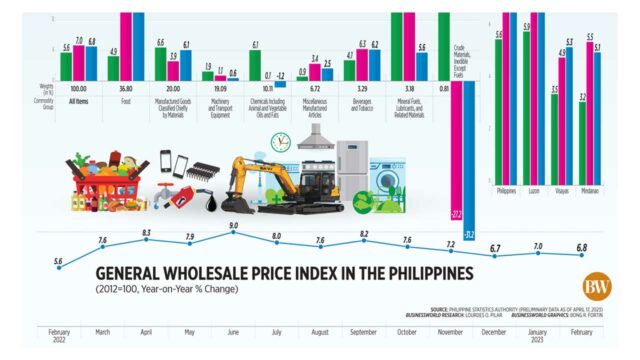
WHOLESALE PRICE growth slowed to 6.8% in February, the Philippine Statistics Authority (PSA) reported on Monday, with the central bank’s monetary tightening starting to take effect to contain inflation, analysts said.

Preliminary data from the PSA indicated that the general wholesale price index (GWPI) rose by the lowest rate in two months or since the 6.7% posted in December.

The February reading was below the 7% reported in January but higher than the year-earlier 5.6%.

General Wholesale Price Index in the Philippines

In the year to date, the GWPI averaged 6.9%, well up on the 5.1% posted a year earlier.

In an e-mail, ING Bank N.V. Manila Senior Economist Nicholas Antonio T. Mapa said rate hikes by the Bangko Sentral ng Pilipinas (BSP) to counter inflation probably “sapped” demand, which led to slower price growth in February.

Prices of mineral fuels, lubricants and related materials contributed to the GWPI slowdown, rising 5.6% in February from the 14.2% reported in January.

“Moderating global energy prices may be surfacing onshore, leading to the dip to 5.6%,” he added.

Among the eight commodities in the index, six posted slower growth. Price growth in crude materials, inedible except fuels slowed to -31.2% in February from -27.2% in January, as did that of chemicals including animal and vegetable oils and fats (-1.2% from 0.1%).

Manufactured goods classified chiefly by materials posted 6.1% price growth in February from 3.9% in January.

In a Viber message, Asian Institute of Management Economist John Paolo R. Rivera said that the slowdown in the GWPI reflects the delayed impact of monetary tightening by the BSP.

“We are now seeing the expected effects of policy adjustments. It may have taken time due to sticky prices and slow adjustments of economic agents or market players,” he said.

Among the major island groups, wholesale price growth in Luzon and Mindanao slowed to 7% in February from 7.2% in January, and to 5.1% from 5.5%, respectively.

Price growth in the Visayas came in at 5.3% in February from 4.9% a month earlier. This was the highest reading since the 5.6% posted in December.

In Luzon, six commodities also posted slower price growth led by mineral fuels, lubricants and related materials, which came in at 5.4% from 14.8% the previous month.

Price growth slowed for one commodity in the Visayas (mineral fuels, lubricants and related materials at 5.1% in February from 8.6% in January), while two commodities posted slower growth in Mindanao (Food at 8.8% from 10.3%, and chemicals including animal and vegetable oils and fats at 0.4% from 0.5%).

Inflation fell to 7.6% in March from 8.6% in February. This was the lowest reading since the 6.9% posted in September.

Core inflation remained high at 8%, the highest level since the 8.2% posted in December 2000.

Analysts said the market has still not resolved the issues that are keeping prices high.

“The problems in supply chain and production (are) still persistent. These have to be addressed because monetary tightening can only do so much and may harm the economy in the long run,” Mr. Rivera said.

“We can see a downward trajectory for prices although we believe inflation should remain sticky and return to BSP’s target only by the end of the year,” ING Bank’s Mr. Mapa said. — Bernadette Therese M. Gadon

Metro Manila’s construction materials retail price index

GROWTH in the wholesale price of construction materials in Metro Manila came in at a seven-month low in March as inflation eased with interest rates driven higher, an analyst said. Read the full story.

Metro Manila's construction materials retail price index

NCR construction materials bulk price growth slows in March

PHILSTAR FILE PHOTO

GROWTH in the wholesale price of construction materials in Metro Manila came in at a seven-month low in March as inflation eased with interest rates driven higher, an analyst said.

Preliminary data from the Philippine Statistics Authority on Monday indicated that the construction materials wholesale price index (CMWPI) in the National Capital Region (NCR) rose 7.7% year on year in March, easing from 9.1% in February but still higher than the year-earlier reading of 6.6%.

This was the slowest CMWPI reading since the 7% posted in August.

Metro Manila's construction materials retail price index

For the first quarter, the CMWPI averaged 8.7%.

Security Bank Corp. Chief Economist Robert Dan J. Roces said the global economy continues to recover from the coronavirus disease 2019 (COVID-19) pandemic and the reopening could lead to more demand for construction materials, which could push prices higher.

“However, global supply chain disruptions and logistical challenges may constrain the supply of these materials, which could put downward pressure on prices,” he added in an e-mail.

Among the 17 commodity groups, fuels and lubricants contributed the most to the slowdown of price growth, contracting 8% after posting growth of 1.4% in February.

Also posting slower growth were tileworks (1% in March from 4.2% in February), and reinforcing and structural steel (7.1% from 10%).

Four commodity groups posted price growth in March: painting works (12.9% from 11.6% in February); hardware (7.7% from 7.1%); doors, jambs, and steel casements (6.1% from 5.8%); and plumbing fixtures and accessories/waterworks (4.1% from 3.9%).

Mr. Roces said fuel prices in the next few months will remain volatile and “are likely to continue to be influenced by various factors such as global oil prices, supply and demand dynamics, and geopolitical tensions.”

Mr. Roces added that construction demand will continue to rise this year.

“In terms of the outlook for prices of building materials, it is expected that the recovered economy will be able to keep up with the high-interest rate environment, and construction projects may continue to trend up this year,” he said. — Bernadette Therese M. Gadon

Marine protection schemes urged for disputed Philippine waters

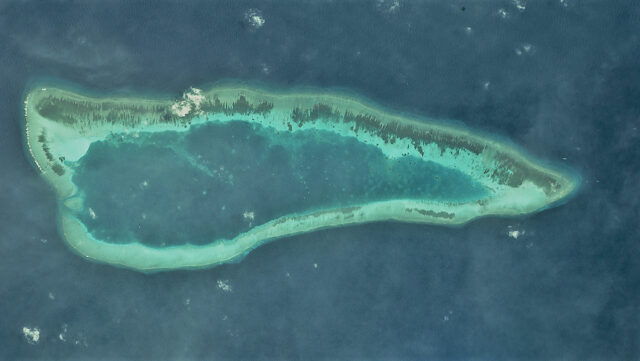
NASA

THE PHILIPPINES must still protect disputed waters off its western coast to preserve biodiversity and ensure the sustainability of its fisheries, marine scientists said.

“The Philippines lacks policies to support marine scientific research,” Deo Florence L. Onda, deputy director for research in the University of the Philippines Marine Science Institute (MSI) said.

Mr. Onda said the MSI is also pushing for the establishment of a department of fisheries and oceans as 82% of Philippine territory consists of water.

“It deserves an entire agency that will take care of the resources that we have in the blue waters of the country,” he said.

Mr. Onda said the West Philippine Sea suffers from overfishing and destructive fishing.

The intrusion of other countries has also contributed to the decline in the health of the environment there from poaching and illegal fish harvests.

Mr. Onda said many areas in the West Philippine Sea remain productive, such as Ayungin Shoal.

“Ayungin Shoal has been a hotspot for geopolitical tensions… but our studies show how productive Ayungin Shoal is,” he said.

Meanwhile, Ma. Carmen Ablan-Lagman, a Biology professor at De La Salle University, said the Kalayaan island group produces about 17 metric tons (MT) of fish per square kilometer (km²) per year.

The fishermen who ply these waters, based in Masinloc, Zambales, are estimated to have been denied access to 13 MT of fish per km² annually due to China-imposed fishing restrictions.

“The resources in that area are worthy of protection mainly not just because of the uniqueness of the things in there but the potential of the place,” she said. 

According to Drusila Esther E. Bayate, undersecretary for fisheries at the Department of Agriculture, the West Philippine Sea accounts for about 15% of capture fisheries production.

There were 375,190 registered fisherfolk that depend on the West Philippine Sea, as of January.

She said that among the threats to the livelihood of the fishing community are climate change, extreme weather events, harassment from domestic and foreign poachers, and destructive fishing.

National Security Council Assistant Director Jonathan E. Malaya said that the government is undertaking a reassessment of maritime governance to deal with security challenges.

He also said National Security Adviser Eduardo M. Año is currently in the process of “developing a clear and coherent national strategy” for the West Philippine Sea.

“On the international level, we must harness the strengths of our partners, our strategic like-minded partners in the region to our advantage for further capacity-building measures,” he said.

This includes joint military exercises as well “cooperation that will bring the country closer to becoming a capable maritime nation.” — Sheldeen Joy Talavera

The grant and taxation of public service franchises

On March 21, 2022, RA No. 11659, otherwise known as an Act Amending CA No. 146 or the Public Service Act, was signed into law, thereby amending the decades-old Public Service Act. With the end view of attracting foreign investment to boost market competitiveness, foster innovation, and create high-quality jobs, other public service businesses such as airports, railways, and expressways may now be owned 100% by foreign entities subject to the grant of administrative franchise by the agency tasked to oversee or regulate these undertakings.

As required under the law, the National Economic and Development Authority (NEDA) passed the implementing rules and regulations (IRR) on March 20, 2023. With these recent reforms, one must ascertain a public service franchise is required and its peculiar tax consequence.

PUBLIC UTILITIES VIS-À-VIS PUBLIC SERVICE BUSINESSES WITH PUBLIC INTEREST
Section 11, Article XII of the 1987 Philippine Constitution expressly provides that, “No franchise, certificate, or any other form of authorization for the operation of a public utility shall be granted except to citizens of the Philippines or to corporations or associations organized under the laws of the Philippines at least 60 per centum of whose capital is owned by such citizens, nor shall such franchise, certificate, or authorization be exclusive in character or for a longer period than 50 years.”

With the amendment under RA No. 11659 and Rule III Section 10 of its IRR, public utility refers to a public service that operates, manages, or controls for public use any of the following:

1. Distribution of electricity;

2. Transmission of electricity;

3. Petroleum and petroleum products pipeline transmission systems;

4. Water pipeline distribution systems and wastewater pipeline systems, including sewerage pipeline system;

5. Seaports; and,

6. Public utility vehicles (PUVs).

As public utilities, foregoing industries are still governed by the constitutional rules on Filipino ownership of 60% while foreigners may own up to 40% of the capital whether directly or indirectly. A public service business not included in the foregoing enumeration may be owned 100% by foreign nationals except if it is considered critical infrastructure, as is telecommunications, or otherwise identified as such by the President pursuant to NEDA’s recommendation.

LOCAL TAX OBLIGATION OF A FRANCHISE GRANTEE
As enunciated under the Act and its IRR, while the administrative agencies will no longer impose any citizenship requirement for those public service businesses not listed as public utilities, they are still empowered to grant administrative franchises and monitor and audit the public service entities. Now, what are the peculiar tax considerations that these grantees should take into consideration?

In New Vision Satellite Network, Inc. v. Province of Cagayan, G.R. No. 248840, July 5, 2021, our High Tribunal clarified on the distinction between a franchise and a secondary license or permit. For a franchise grantee, it follows that the local government (province or city) may impose the franchise tax thereon in addition to other national tax obligations. 

The Supreme Court explained this distinction as such:

First, a survey of franchises recognized in jurisprudence shows that they involve: (i) public utilities and common carriers; (ii) economic activities which are in the nature of natural monopolies, or industries where the most efficient number of operators is one or only a few; (iii) industries where the first entrants or incumbents have near monopoly status because of prohibitive fixed costs, economies of scale, and network effects, such that the first entrants or incumbent market players have a high degree of market dominance that impose an insurmountable barrier on potential entrants to enter the market and compete; and (iv) industries that require the use of natural resources or other scarce resources  (such as the airwaves), which utilization thereof necessitates the exclusion of other persons or entities. Second, economic activities covered by franchises are typically charged with public use. Third, the delegation of the authority to exercise the sovereign power of eminent domain is unmistakably a grant of franchise. This is typical in public utilities where certain public infrastructure facilities require the compulsory sale of lands and acquisition of right of way and other properties to give way to public use.

As such, tollway operators, broadcast systems, telecommunication systems and light railway operators require the grant of franchise given the nature of their business as opposed to virtual currency platform operators, pawnshops, financing or lending companies, which only need to secure a secondary license or permit. The Supreme Court notes that in the case of a financing company, lending company, virtual currency exchange operator, pawnshops, and other similar regulated entities requiring a secondary license in addition to general business and local permits, there can be as many market players as are qualified and eligible under the specific laws regulating the business activity. This is because these entities are not engaged in industries which are natural monopolies, or industries where first entrants do not have monopoly or near-monopoly status. Succeeding market players are free to enter the market as long as they comply with the requirements for the issuance of the administrative license to operate these businesses. Moreover, the requirement of obtaining government permits to operate these businesses is merely within the dictates of general welfare, and not because the economic reality of the industry involves scarce resources.

Hence, other than the license or permit to operate, it is crucial for public service companies to secure administrative franchises with the relevant governing agency and pay the local franchise tax. It must be noted that public service franchise grantees are subject to national taxes under the Tax Code except if it is a franchise grant allowing payment of a fixed national franchise tax in lieu of other taxes.

If implemented properly, this landmark reform could usher in a new economic era of public services in the Philippines that are world class and globally competitive, along the way strengthening the fiscal standing of local government units via the local taxes collected from administrative franchise grantees.

Let’s Talk Tax is a weekly newspaper column of P&A Grant Thornton that aims to keep the public informed of various developments in taxation. This article is not intended to be a substitute for competent professional advice.


Kim M. Aranas is a senior manager from the Tax Advisory & Compliance division at the Cebu office of P&A Grant Thornton, the Philippine member firm of Grant Thornton International Ltd.

pagrantthornton@ph.gt.com

Injured RR Pogoy is out of Gilas squad for SEA Games Cambodia

RR POGOY — PBA MEDIA

GILAS Pilipinas will embark on its redemption drive in the coming Southeast Asian Games (SEAG) in Cambodia without ace gunner RR Pogoy.

TNT’s Mr. Pogoy sustained a fractured finger in Game 3 of the PBA Governors’ Cup finals last Friday and has to undergo surgery, making it impossible for him to join the Gilas quest for the lost gold in the May 5-17 SEAG.

RR Pogoy, who showed up in Sunday’s Game 4 in street clothes and wearing protected dressing on his broken right pinky.

Mr. Pogoy is waiting for a hand specialist’s recommendation on whether to stay in the country or go overseas for the operation on the finger, which he fractured when he tried to poke the ball away from Ginebra’s Christian Standhardinger.

The Cebuano hotshot couldn’t give a definite timetable for his return but teammate Calvin Oftana, who had a similar injury before, shared it would need a healing period of two to three months.

Mr. Pogoy is one of only two holdovers from the ill-fated delegation in Vietnam who are still part of the 28-man “Redeem Team” pool for the Cambodia SEAG. Six-time MVP June Mar Fajardo of San Miguel Beer is the other. But even Mr. Fajardo himself is doubtful for this trip as he’s still on the road to recovery.

“The Kraken” tore an MCL during the Beermen’s game against Japanese heavyweight Ryukyu Golden Kings in the East Asia Super League Champions Week last March 2 and hasn’t played since.

Naturalized player Justin Brownlee, meanwhile, is tipped to lead Gilas’ bring-back-the-gold mission in Phnom Penh along with the healthy mainstays of the pool like  Mr. Standhardinger, Scottie Thompson, Jamie Malonzo, CJ Perez, Mr. Oftana, Mikey Williams and Chris Newsome. — Olmin Leyba