Home Blog Page 4961

What Filipino students are saying about ChatGPT

PHILSTAR FILE PHOTO

By Miguel Hanz L. Antivola

FILIPINO students weighed in on ChatGPT, an artificial intelligence (AI) chatbot developed by San Francisco-based AI research lab OpenAI that can produce essays and answer questions in seconds.

“ChatGPT has proven to be an invaluable tool for me in many ways,” graduating computer science student Wanders from Davao City said in an interview. “I found it helpful in generating ideas, assisting with research, and providing summaries.”

He said that he uses ChatGPT to organize information and develop ideas, rather than relying solely on the bot to write essays for him. 

Law student Jake from Quezon City said that he has used ChatGPT as a research tool in drafting legal advice for a school requirement.

“It helped me by speeding up the process of generating leads and summaries of US cases which talked about the topic, rather than me manually typing keywords in Google search… I verified the information by looking at the actual case text,” he said.

Meanwhile, AJ, a humanities college student from Quezon City, said that he uses ChatGPT occasionally for idea generation or exploring new concepts, citing inaccuracies as a challenge.

“The responses I got from ChatGPT never made it to the work I turn in… After I get a grasp of something using AI, I go on actually engaging with the texts. I find that most results from AI are inaccurate,” he said. 

“There is this one time that I’m looking for sample academic essays on a very specific topic. After getting interesting results, I asked ChatGPT to provide me with external links so I could see them for myself. They gave me fake links to academic journals. I’ve also seen posts about ChatGPT making up citations that don’t exist.” 

Some educators have become more cautious about academic dishonesty, as they have noticed an increase in the use of ChatGPT and other AI tools by students for their assignments. 

“They expressly prohibit consulting AI bots in exams. Our exam outputs are subject to AI detection services in order to uphold academic honesty,” Jake, the law student, said.

Elementary school teacher Bea said, “In our school, we acknowledge the use of ChatGPT. However, we are against it because it is still considered plagiarized work.” 

ChatGPT can be thought of as an automatic text summarizer rather than a tool that plagiarizes,said Ralph Vincent J. Regalado, chief executive officer and founder of Senti AI, a local AI solutions and services company. 

AJ, the college student from Quezon City, said that AI can only supplement information and optimize processes at best, recognizing that it lacks “human sensibilities,” 

A cautious outlook on AI in Philippine education grounded students and educators alike.

“AI definitely does not have a human touch to it, but considering how rapid technological advancements are unraveling, it is indeed something to be wary about,” AJ said. 

“ChatGPT will surely continue progressing speedily. Its development will not be hampered by state measures. I think the burden rests on academic institutions to implement measures that prevent its abuse and misuse,” Jake said. 

For his part, Wanders, the college student from Davao City, said: “It is essential that all stakeholders work together to find a way forward that balances the benefits and risks of AI technology in the academe.”

Mr. Regalado, the AI expert, offered a different view, “I do believe that we shouldn’t shy away from using new technologies to improve how we do things. Teaching students how to properly use tools such as ChatGPT for research… can definitely help them adjust to the changing landscape once they leave school.” 

He stressed the need for human intervention in AI development for a sustainable future, citing “human in the loop” and the importance of input quality in AI output. 

“Depending on the course objectives, students can be encouraged to use ChatGPT for school work as a supplementary resource, learn to use it wisely and validate the content it generates. When in doubt — turn to your teachers, and use your own critical thinking skills,” he said. 

He also said that educators should make it a point to instill academic honesty, critical thinking, and creativity when students use AI tools for their school work, alongside clear policies with appropriate consequences if improperly used.


Stalemate?

AZERBAIJAN_STOCKER-FREEPIK

The leak of classified US intelligence information and the almost immediate arrest of a suspect, 21-year-old Air National guardsman Jack Teixeira, has triggered discussions on the impact of the unauthorized release of data on the security and intelligence establishment of the US.

Fears have been expressed about the volume of information about US military capabilities and what the US knows about secrets even of allies like the UK, Germany and South Korea. At this point, there is certainly a lot of weeping and gnashing of teeth at the Pentagon and, of course, the White House on the custody of sensitive information. The fallout from this intelligence lapse continues as even the Democratic allies of President Joe Biden would like to ask questions like how did Teixeira, apparently a junior level staffer, have access to such sensitive information he shared in social media; which staff are entitled to have access to sensitive information; and are there background checks conducted of potential hires?

One cause for concern is the assessment of the US of the status and, more important, the direction the Ukraine war is taking. No doubt, the war has affected the global economy, especially with respect to oil and commodity prices and the worldwide inflation both have caused.

On the military front, the classified US information revealed that the war could be headed for a stalemate which is in stark contrast to earlier announcements that the Russian military was well on its way to being roundly beaten. It does appear that on the ground the Russian military has already been defeated and continues to be humiliated because of poor leadership, and lack of discipline and commitment of troops especially Russian convicts and other forced conscripts. There is also the well-known conflict between the Russian defense establishment and the Wagner mercenary group headed by Yevgeny Prigozhin who tries to upstage Russian military officials at every turn. Prigozhin had bragged a few months ago that if he had taken over the lead role in the war against Ukraine, Wagner would have overrun half of the country by then. Recent reports show that in a blog, Prigozhin however said on April 16 that “the ideal option” would be the end of the war. Considering that Prigozhin, whose para-military group is supported by the Kremlin (although there are rumors of a fall out), is purportedly a close ally and crony of Putin, the war advocate could have just been floating a position that Putin cannot publicly articulate. Or Prigozhin is simply playing his role of maverick to the hilt.

Whatever Prigozhin’s motives, the comment tends to validate the frustration felt by everyone involved in the war which has dragged on for more than a year and could very well slide into 2024. Such an eventuality could cause complications for the Democrats during the presidential elections.

The war has stretched the munitions resources and assets of Ukraine which is dependent on the US and NATO countries and possibly other countries, if one were to believe the leaked intelligence report.

(Even Taiwan’s air defense systems were, noted by the US military, very vulnerable to a Chinese air attack, according to the intelligence reports. As expected, the Taiwan’s Ministry of Defense took exception to a report by foreign parties.)

Much of the American frustration is engendered by it carrying the major load of the war effort which has political costs. In the first week of March, the US continued to exert pressure on its European allies to assume more of the collective burden and increase allies’ defense spending.

With or without the US intelligence report, the military of most countries, including Russia and its cohorts, are very much aware that Ukraine is running out of war supplies as Russia, too, is hard pressed to sustain its “special operations” in Ukraine.

In a March 3 report, writers Phil McCausland and Dan De Luce state that, in an obvious response to US pressure, Estonia proposed that Europe increase 155-millimeter artillery shell production by seven times, moving manufacturing capacity from 240,000 to 300,000 shells per year to up to 2.1 million shells annually. The US is actively campaigning with its allies to increase the latter’s defense spending, hoping that its own financial burdens will be alleviated. Even neighboring Canada was requested by President Biden in a recent visit to increase Canada’s defense spending.

The McCausland and De Luce report adds that the estimated cost of the proposal would be nearly $4.25 billion for the joint acquisition effort that would be shared by the European Union member states. If fulfilled, Europe would produce Ukraine’s ammunition needs in six months or in the summer, rather than the four years it would take at current production. With arms procurement and manufacturing a key agenda item for the Biden administration, and even as the Estonian proposal is being discussed, the US is increasing its production five-fold, according to the authors of the article.

The need to increase Ukrainian munitions is necessary and crucial as the Russians and Wagner have no qualms about sending thousands of troops to the warfront, knowing with certainty that these convicts and forced conscripts have little or no hope of coming out of the war alive.

To Ukraine, the production of shells in Europe and the US is at a crisis point, according to McCausland and De Luce. “If production remains at the same level or slightly higher, we will run out of shells,” according to Andriy Zagorodnyuk, former defense minister who now advises the Ukrainian government on arms procurement.

Should this increase in munitions supply to Ukraine materialize within the planned timeline, it could create a tremendous advantage for the embattled former member of the USSR, especially if one considers that coupled with Germany’s decision early this year to send tanks to the war in the next few months was a key turning in Europe’s commitment to the war against Russia. Modern warfare experts say the use of the German-made and other European-manufacture tanks could alter the complexion of the war in favor of Ukraine.

The US intelligence report on the possibility of a stalemate, however, remains to be a big question. US military experts predicted, in a CNN interview, that “there will be no war win for Ukraine in 2024.”


Philip Ella Juico’s areas of interest include the protection and promotion of democracy, free markets, sustainable development, social responsibility and sports as a tool for social development. He obtained his doctorate in business at De La Salle University. Dr. Juico served as secretary of Agrarian Reform during the Corazon C. Aquino administration.

Filling rice bowls

MDJAFF-FREEPIK

The Marcos II Administration wants the country to achieve rice self-sufficiency in four years. It aims that by 2027 the Philippines can produce all its rice needs without having to import from abroad. A laudable target. But rice self-sufficiency has been a government objective for more than 60 years now. It has been a moving target, obviously.

It remains uncertain whether the four-year timeline is driven by science or politics. For sure, the Administration will want to achieve the target within its term, which ends in 2028. But while the objective deserves support, one cannot help but be skeptical. Most governments since the post-war era had targeted food self-sufficiency. It was never achieved consistently in the long-term.

There have been some good years, but overall, our total food import bill continues to grow. Obviously, there are more mouths to feed now given the ever-growing population. And farmlands have not expanded, being a finite resource. The weather, meantime, has been less predictable due to climate change. And irrigation remains a challenge because of limited water production.

Controlling rice production and ensuring 100% adequacy for domestic needs is highly dependent on one’s ability to control the weather and other variables. This, of course, is impossible. Moreover, while self-sufficiency can be achieved in a particular harvest year — with good weather — the challenge is to ensure consistency in production over the long term.

What is more concerning is the point of view of some sectors that rice production and liberalized importation cannot go hand in hand. Their call is for the repeal of the Rice Liberalization Law, and the return of government controls over rice imports. This, I believe, will actually be a step back. After all, if domestic supply is sufficient, and affordable, then importation will be unnecessary.

Rice self-sufficiency is not the objective but simply one of the means to attaining food self-sufficiency. The challenge is how to feed the growing population and ensure food security. Food security ensures national security as it promotes political and social stability. As long as people, including the poor, get to eat properly, then the development battle is half won.

In this line, importation should be an option, precisely as a way to fill the gap between local supply and demand. Of course, importation is not always easy. During hard times, there won’t be much to import either. And, importation relies heavily on the country’s capacity and ability to pay the import bill, as well as the willingness of foreign suppliers to sell to us.

Food importation is a stop-gap measure, not a long-term solution, to ensuring food security. Although, a policy that relies heavily on free trade in food remains highly susceptible to risks: foreign exchange supply and rate fluctuations; trade disputes; regime changes; and supply disruptions caused by adverse weather conditions or war, famine, or plague, among others.

We cannot always expect the rest of the world to have food to sell to us. In times of bad weather, war, famine, or even trade disputes, global food can be in short supply. We should be able to fend for ourselves. But how can we do that if we continue to lose farms and farmers to “progress” and “development”? Technology can do only so much in improving farm productivity and efficiency. Food production will always need farmlands and farmers. We need long-term solutions to ensure food security.

Data indicates that since the late 1960s, farm yields have actually increased substantially because of the cultivation of high-yielding rice varieties, with average productivity reportedly increasing from 1.23 metric tons per hectare in 1961 to 3.59 metric tons per hectare in 2009. The area under irrigation also grew from under 500,000 hectares in the mid-1960s to about 1.5 million hectares in 2009.

But self-sufficiency, particularly in rice production, is no longer likely, given the rate we have been losing land to development, seemingly stagnating yields, and given that farmers are now a dying breed. Data from the Philippine Statistics Authority (PSA) indicate that in second quarter 2018, the harvested area for rice fell to 939,790 hectares, from 947,190 million hectares in the quarter in 2017. Yields have also reportedly remained flat in the second quarter at 4.38 tons per hectare.

A more important factor, to me, is that the population is over 100 million people now, and it seems that consumption growth has been outpacing harvest growth, resulting in a supply gap. This is where importation plays a more crucial role, and the right timing of importation and distribution is key to ensure supply and price stability.

But, considering the rate of development, and the rate of population growth, it is not likely for the trend of supply gaps to disappear or to reverse any time soon. I believe it will remain with us for years to come and may in fact worsen in the future. In 1960, there were only 27 million of us. Today, we are more than 100 million. The rate of population growth from the 1960s to the 1980s was about one million per year, but since the 1990s it has been about 1.6 million annually.

And while in 2013-2017, according to the National Food Authority, rice production averaged 12.019 million metric tons (MT) annually, consumption averaged at a higher rate of 12.850 million MT. The resulting supply gap made it necessary for us to import rice during the period. In 2022, palay (unmilled rice) production was at 19.76 million MT. It was at a record high of 19.96 million MT in 2021.

In 2022, demand forced us to import a record high 3.8 million MT of rice, mostly from Vietnam. In 2021, despite the record harvest, we still imported 2.7 million MT of rice. The PSA also reported that in 2021, rice self-sufficiency was down to 81.5%, from 85% in 2020. This year, the import forecast is for another 3.8 million MT of imported rice to cover an expected production shortfall. And this shows, simply, that despite the best harvest, importation is still necessary.

We need not abandon rice self-sufficiency, as long as we make the effort to improve and modernize rice farming. But we cannot shun importation just yet, and perhaps even after we achieve self-sufficiency. To do so, the average annual agricultural sector growth of 1.1% should be significantly higher than average population growth of 1.8%. Otherwise, agriculture will always have to play catch up just to meet the food needs of a growing population.

Weather is the most unpredictable factor in all this, and adverse weather affects not only local harvest but global supply and prices as well. Loss of land to development, with farms lands becoming cities and residences and commercial areas, also significantly affect supply. This is especially true if productivity or yields do not go up. And then, there is the declining number of farmers and farming communities. It is a complex problem that cannot be solved by Agriculture alone.


Marvin Tort is a former managing editor of BusinessWorld, and a former chairman of the Philippine Press Council

matort@yahoo.com

GDP expansion and an irrational lobby

Last week, the country’s economic team went to Washington DC to hold the Philippine Economic Briefing (PEB) and joined meetings with multilateral agencies and corporate investors and lenders. The economic team has one important goal — to attract more investments and create more businesses and jobs here as more liberal economic policies are implemented.

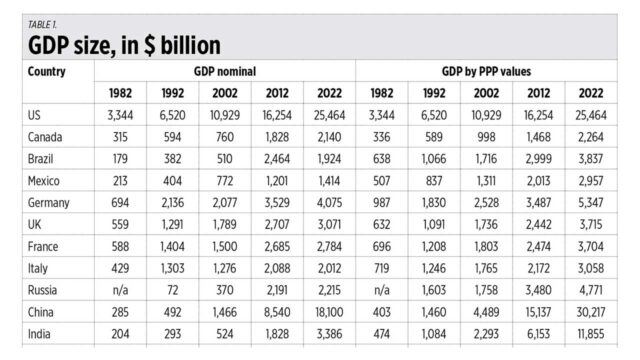
Also last week, the IMF released the World Economic Outlook (WEO) 2023. I was curious about the economic expansion of the Philippines and other countries over the past four decades, so I checked the database and got the excel file.

I show here different countries’ gross domestic product (GDP) size, both nominal (current GDP values in national currency multiplied by average exchange rate with the US$) and by purchasing power parity (PPP) values, which attempts to remove price level differences of goods and services between countries.

In PPP values of GDP, China overtook the US in 2016 with $18.7 billion. Indonesia overtook Italy in 2011 with $2.23 billion, then France in 2019 with $3.33 billion. And Vietnam had overtaken the Philippines in 2018 with $936 million. Nonetheless, the Philippines has expanded its GDP-PPP tenfold from 1982 to 2022 (see Table 1).

A FISCAL SURPLUS
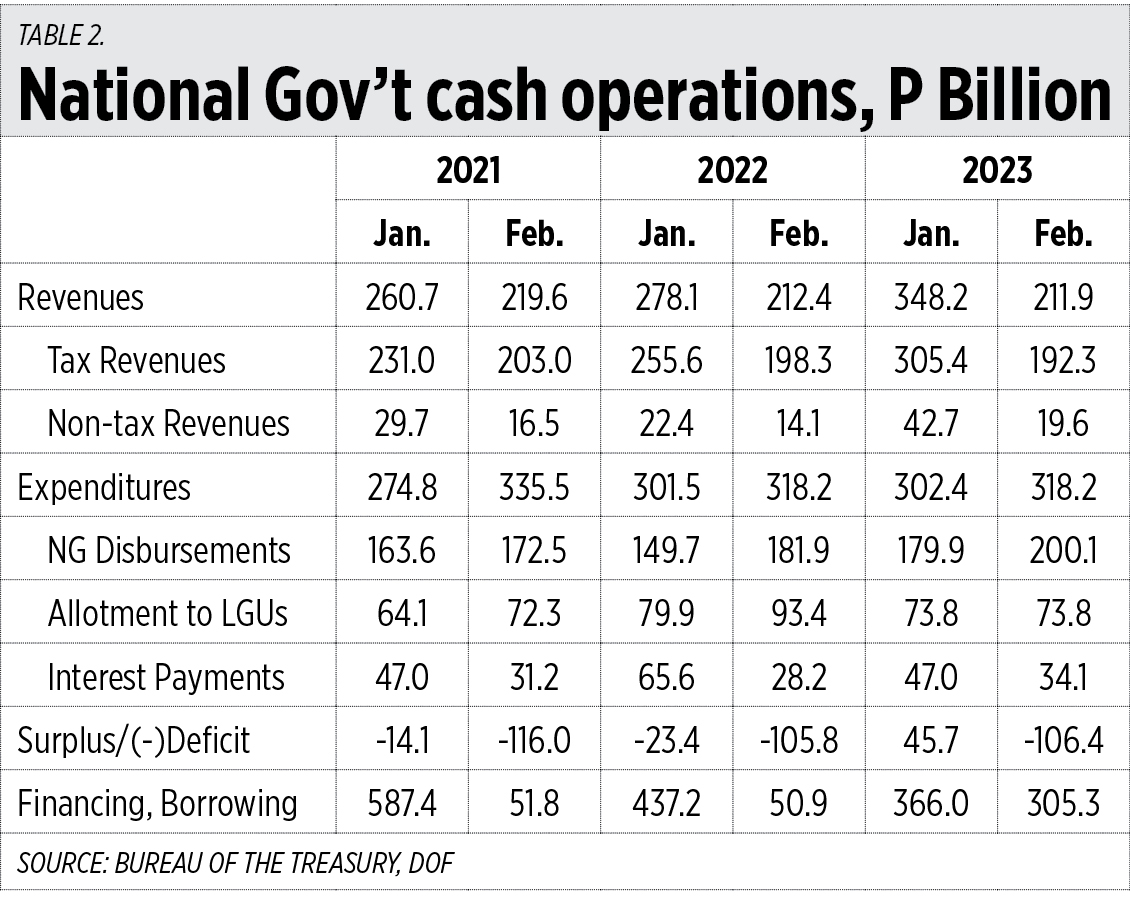
On the fiscal side, the Department of Finance (DoF) and Department of Budget and Management (DBM) labor hard to raise revenues without creating new taxes, and limit spending somewhere because other sectors just keep expanding their share of the annual budget. In particular, the local government units (LGUs), which have higher revenue share after the implementation of the Mandanas ruling, and the military and uniformed personnel (MUP) pension that just keeps expanding, now about P160 billion/year from taxpayers because the previous and current personnel contribute zero to this fund.

Every January, the DoF secures big borrowings to help finance expenditures in the first quarter. Last January, it raised $3 billion from its second global bond offering under the Marcos Jr. administration. Target borrowings for 2023 is P2.21 trillion.

Also last January, the DBM had a good accomplishment — it controlled spending to the January 2022 level while revenues have expanded, resulting in a fiscal surplus of P46 billion (see Table 2). Congratulations, DBM.

Consider also these recent reports in BusinessWorld: “Budget gap widens in February as revenue collections decline” (April 4), “DBM calls on agencies to prioritize infrastructure, human capital, food security in budget proposals” (April 5), “DBM releases P43B for senior citizen health insurance” (April 11), “Gross borrowings jump in Feb.” (April 17).

ABOLISH OR RECALL EO 12
There is an ongoing noisy lobby that says hybrid cars, e-motorcycles, and e-tricycles should be tax-free too under an expanded Executive Order No. 12 (EO 12), signed by the President last January. For me this is shameless for three reasons.

One, EO 12 itself is wrong in the first place. Those electric vehicles (EVs) — e-cars, e-buses, e-trucks will also add to traffic congestion and road depreciation but contribute zero or little for road maintenance because they are imported tax free.

Two, there is a continuing fiscal burden with high public debt, high annual deficit and borrowings, and high pressure to raise taxes somewhere — and yet many rich sectors want to contribute zero for their vehicles. A small sedan worth P0.5 million is taxed, but e-cars — which should cost at least P1.5 million — hybrid cars — at least P1.2 million — will not be taxed. That is lousy.

Three, the rule of law should prevail. The law applies equally to unequal people, unequal businesses and vehicles. If certain cars should be tax-free, then all cars should be tax-free too. Otherwise, all cars, EVs or gasoline, should be taxed.

The DoF should either ignore or oppose this new lobby to expand tax-free favoritism to hybrid cars and e-tricycles. Or the DoF should convince the President to pull out, to recall EO 12. All cars, all trucks, all motorcycles must either pay taxes, or pay nothing. No exemptions.


Bienvenido S. Oplas, Jr. is the president of Bienvenido Oplas, Jr. Research Consultancy Services, and Minimal Government Thinkers

minimalgovernment@gmail.com

Courtesy call

ROCK-STAAR-UNSPLASH

IT’S POSSIBLE again to have face-to-face meetings even with no specific agenda to take up. The virtual meetings we got so used to in the lockdown period are still around, but becoming less frequent. The personal appointments are back, including lunch.

To reassure the invitee that no issues or favors are to be taken up, the inviter characterizes the sought meeting as just a “courtesy call.” If lunch is too hard to arrange, a drop-by at the office will do, over coffee. (How long can that take?) The executive assistant can book a 15-minute time slot for this.

The courtesy call has no real agenda except a “meet and greet.” Nothing important is expected to be discussed, debated, or even mentioned. There is no presentation to be made and at the end of the meeting, there are no recall notes to be agreed on. (Did I say that?) There is no expectation of a follow-up for new business or a difficult negotiation in the horizon.

The courtesy meeting is an end in itself. No practical alternative is offered to the physical visit — can we just e-mail “hi” to each other?

Certain occasions trigger off a courtesy call.

Maybe a new chief executive is installed. Major service providers doing business with the company’s old chief, who was ousted or retired, are nervous about getting retained or even paid for past transactions. They want to see the newly designated chief and evaluate how to move forward with him and the new team in the inevitable reorganization. Even the secretary may be new. (Just note the new birthday.)

Courtesy calls follow a certain routine.

Calling cards are no longer exchanged as the visitor is expected to be already known (at least by name) by the host. Also, the EA is expected to have given her boss a briefing on the visitor — this guy played golf regularly with your predecessor. (Is that right?)

Common backgrounds are unearthed, like cousins who are friends, former colleagues, or school ties that bind — did you attend the last homecoming? There has to be some caution exercised in name dropping, as some personalities that are claimed may provoke a hostile reaction — that mud slinger is a friend of yours?

Safe topics are best. These include the pandemic effects on restaurants and gyms, the traffic situation at C-5, and foreign places of interest — have you ever been to Ukraine, before the invasion?

The host being visited is not necessarily a total stranger. Maybe, the courtesy caller has even met him previously at some corporate function. Or worked briefly with him. Old times are always good to dwell on, unless these were contentious.

After 15 minutes or so (never mind if one hasn’t gotten to the tourist attractions yet), the visitor pleads the need to flee as his host may have other matters to attend to. This avoids the necessity of the latter glancing at his watch, or even texting while the conversation about long-lost cousins is still going on.

The photo op can be skipped unless the meeting is taking place in a restaurant where waiters seem to be trained for mobile phone camera angles — look this way please.

Politicians and bureaucrats handle courtesy calls differently. Meeting people (especially suppliers) are an integral part of their appointment schedules. These meetings are the very stuff of politics — a lot of small talk going nowhere, some beating around the bush, and the studious avoidance of contentious subjects like audit findings. Best to keep the visit stress-free. (Talk to my Executive Assistant if you need anything.) As for photos?

With politicians in power, the calling card too is unnecessary. The visitor knows who his host is and no contact details are required except if the card is used later for avoiding traffic tickets. Still, that one needs a handwritten note at the back. And, if the visitor’s name slips into the rack of memory, no worries there.

Favor-seekers do not expect to be remembered anyway, except for the task required. They usually do a good job of later reminding their host who they are, what they need, and the amount of “encouragement” they can provide.

Courtesy calls are an opportunity to simply converse without being too guarded or precise. When more formal meetings are required, these can be scheduled for other occasions, maybe dinner with appetizing tapas and loud music in the background to avoid being recorded.

It’s really not clear what value a courtesy call brings to the business practice. It’s just a social ritual that is supposed to establish rapport… or the possibility of having a good one.


Tony Samson is chairman and CEO of TOUCH xda

ar.samson@yahoo.com

Chinese tourists are back, but still far from pre-COVID levels

A WOMAN and a child wear masks as they arrive from Guangzhou, China, at the Ninoy Aquino International Airport in Pasay, Philippines, Jan. 23, 2020. — REUTERS

BEIJING/BANGKOK — Bookings in China for trips abroad during the upcoming May Day holiday point to a continued recovery in travel to Asian countries, but the numbers remain far off pre-COVID levels with long-haul airfares soaring and not enough flights available.

Overseas tour bookings for the upcoming holiday, for which many in China are off from April 29 until May 3, are up 157% from the beginning of April, according to Ctrip, the country’s largest online travel firm.

But, given airlines capacity is yet to fully recover after China kept its borders shut for three years and underlying consumer demand remains weak, the numbers do not compare well with the heyday of Chinese outbound tourism.

In February, over 150,000 Chinese tourists traveled to Thailand, the latest data from the Thai Ministry of Tourism show -— a three year high but still 85% below February 2019 levels.

Trips to Japan and South Korea have only recovered to 5%-10% of February 2019 levels.

“It mainly has to do with supply-side constraints in the air industry and tourism sector in destination countries,” said Sheana Yue, China economist at Capital Economics.

Thailand is the most popular destination, with the United States the only non-Asian destination in the top 10, to the disappointment of luxury boutiques on the shopping streets of Paris or Milan.

“There has been a lot of news in China about inflation in Europe and high energy prices,” said Ying Zhang, a research analyst at the Economist Intelligence Unit.

In 2019, 155 million Chinese traveled abroad, spending $254.6 billion, or close to the gross domestic product of Vietnam, according to estimates by Citi. Chinese tourists used to make up 10% of European arrivals from outside the continent.

Flights to Europe are up to 80% more expensive than before the pandemic, according to ForwardKeys, a travel data firm.

Prices on flights from mainland China to Southeast Asia have dropped 49% in March from a year ago, according to aviation data provider Flight Master.

Chinese tourists making a comeback is crucial for regional economies. They accounted for 30-35% of all arrivals into Thailand, Vietnam, Japan, and South Korea in the summer of 2019, and 25% of visitors to the Philippines.

In Thailand and the Philippines, their pre-pandemic contribution to economic growth was particularly significant.

Pre-pandemic, China was Australia’s top source of tourists, but numbers following Beijing’s reopening of borders have only trickled back. — Reuters

Airline blunder sells $10,000 business class tickets for $300

YASSINE KHALFALLI-UNSPLASH

EAGLE-EYED travelers have snapped up $10,000 business-class tickets on Japan’s ANA Holdings Ltd. for just a few hundred dollars after a currency conversion blunder.

ANA has said it will honor the tickets for those people who saw the mistake and jumped on its website quickly to book and pay (the glitch was circulating widely on some social media platforms) but those who only reserved the tickets will have to pay a “just price,” according to an airline spokesperson Wednesday.

Most of the tickets were from travel starting in Jakarta, through to Japan and then onto New York and back again into various Southeast Asia destinations, including Singapore and Bali — business class all the way.

The Japanese carrier said the mistake stemmed from an error on its Vietnam website, which listed an erroneous currency conversion. It didn’t state how many people had secured discount tickets and added it was “currently investigating the cause of the bug and the size of its damage.”

Bloomberg News spoke to several people who successfully booked what will likely be a once-in-a-lifetime bargain.

Johnny Wong, who works in the airline industry, snagged a round-trip ticket from Jakarta to Honolulu via Narita airport in Tokyo for 13 million dong ($550).  “I never thought I’d catch such a deal,” said Mr. Wong. The 29-year-old said he felt under pressure to enter his details as fast as he could, racing against time before ANA realized its error. That fare is currently selling for $8,200.

It isn’t the first time an airline has inadvertently sold premium seats at a steep discount.

Cathay Pacific Airways Ltd. accidentally sold deeply discounted first- and business-class tickets from Vietnam to the US back in 2019 for as little as $675 when the normal price would have been as much as $16,000. It too honored those fares. — Bloomberg

India to have 2.9 million more people than China by mid-2023

REUTERS

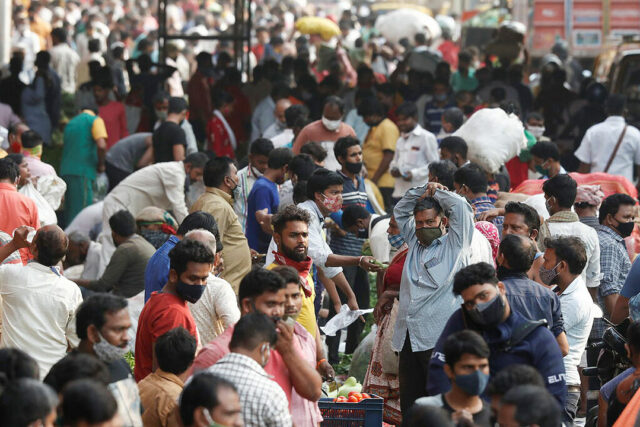
NEW DELHI — India is on its way to become the world’s most populous country, overtaking China with almost 3 million more people in the middle of this year, data released on Wednesday by the United Nations (UN) showed.

The demographic data from the United Nations Population Fund’s (UNFPA) “State of World Population Report, 2023” estimates India’s population at 1,428.6 million or 1.4286 billion against 1.4257 billion for China.

The United States is a distant third, with an estimated population of 340 million, the data showed. The data reflects information available as of February 2023, the report said.

Population experts using previous data from the UN have projected India would go past China this month. But the latest report from the global body did not specify a date for when the change would take place.

UN population officials have said it was not possible to specify a date due to “uncertainty” about the data coming out of India and China, especially since India’s last census was conducted in 2011 and the next one due in 2021 has been delayed due to the pandemic.

Although India and China will account for more than one-third of the estimated global population of 8.045 billion, the population growth in both Asian giants has been slowing, at a much faster pace in China than in India.

Last year, China’s population fell for the first time in six decades, a historic turn that is expected to mark the start of a long period of decline in its citizen numbers with profound implications for its economy and the world.

India’s annual population growth has averaged 1.2% since 2011, compared with 1.7% in the 10 years previously, according to government data.

“The Indian survey findings suggest that population anxieties have seeped into large portions of the general public,” Andrea Wojnar, Representative for UNFPA India, said in a statement.

“Yet, population numbers should not trigger anxiety or create alarm. Instead, they should be seen as a symbol of progress, development, and aspirations if individual rights and choices are being upheld,” she said. — Reuters

China ramps up construction on new Antarctic station – report

CARLOS DE SOUZA-UNSPLASH

WASHINGTON — China is increasing its Antarctic footprint according to new satellite imagery collected by a Washington-based think tank that shows construction has resumed for the first time since 2018 on the country’s fifth station in the southern polar region.

Beijing has sought to develop new shipping routes in the Arctic and expand its research in Antarctica, but Western governments worry its increasing presence in the polar regions could provide the People’s Liberation Army (PLA) with better surveillance capabilities.

The new station, on Inexpressible Island near the Ross Sea, is expected to include an observatory with a satellite ground station, and should help China “fill in a major gap” in its ability to access the continent, the Center for Strategic and International Studies (CSIS) said in a report.

CSIS used satellite images taken in January to identify new support facilities, temporary buildings, a helicopter pad, and foundations for a larger main building at the 5,000 square meter (53,820 square feet) station. It is estimated that construction could be done by 2024.

“While the station can provide tracking and communications for China’s growing array of scientific polar observation satellites, its equipment can concurrently be used for intercepting other nations’ satellite communications,” CSIS said.

The station is well positioned to collect signals intelligence over Australia and New Zealand and telemetry data on rockets launched from Australia’s new Arnhem Space Centre, it said. Once finished, the station is expected to include a wharf for China’s Xuelong icebreaker ships.

CSIS told Reuters that while the US still maintains a larger research presence in Antarctica — including the biggest facility in its McMurdo station — China’s footprint is growing faster. China’s fifth station will be 200 miles (320 km) from the McMurdo station, it said.

Under the 1959 Antarctic Treaty, to which China is party, activities on the continent are restricted to “peaceful purposes.” Military personnel are allowed to conduct scientific research, but are banned from setting up bases, carrying out maneuvers, or testing weapons.

A 2022 Pentagon report said China’s new Antarctic infrastructure was likely intended in part to strengthen its future claims to natural resources and maritime access and improve PLA capabilities.

China rejects claims that such stations would be used for espionage. — Reuters

Strikes in Europe could spell more flights havoc into summer

PEOPLE walk past a display board showing the list of canceled flights at Frankfurt airport during a nationwide strike called by the German trade union Verdi over a wage dispute, in Frankfurt, Germany, March 27, 2023. — REUTERS

LONDON — Strikes across Europe have led to a spike in flight cancellations, delays and driven down bookings to cities like Paris, data from travel firms show, despite efforts by airlines to avoid a repeat of last year’s disruptions.

Flight cancellations and delays of over three hours in Europe were up over 2022 and 2019 over the Easter holiday weekend from April 5-11, most markedly in France and Britain, according to data from flight claim management firm AirHelp.

“The situation quickly deteriorated as France was sinking into the pension reform crisis. Charles de Gaulle airport is negatively affected, both as a destination and as a hub,” said Olivier Ponti, VP of Insights at travel data firm ForwardKeys.

In France, where air traffic control staff were on strike in recent weeks, 62% of flights were on time, compared with 75% in 2022 and 76% in 2019 before the pandemic brought international travel to a standstill, Airhelp data shared with Reuters showed.

Some 33,300 flights were canceled this year over Easter, compared with 7,800 last year, while 9,000 flights were delayed by more than three hours, compared to 6,800 last year.

Transfers and planned stays through Charles de Gaulle airport in Paris dropped by around 75% compared to 2019 levels by mid-March, according to ForwardKeys.

Paris airports operator Aeroports de Paris estimated on Monday it lost around 470,000 passengers between January and March due to the strikes.

In Britain, border strikes also caused disruption at airports across the country, with airports in London facing the largest delays, according to AirHelp.

Around 73% of flights were on time, compared with 76% in 2022 and 81% in 2019. There were 33,700 flights canceled, compared with 26,600 last year, while 10,800 flights, which made up 1% of all total flights, were delayed by more than three hours, up from 9,500 last year.

PASSENGER RIGHTS PAYOUTS
The ongoing disruptions from prolonged labor strife could lead to escalating costs for airlines that have worked hard to mitigate problems, leading some chief executive officers to call on the European Commission to intervene.

This year’s Easter holiday was seen as a major test of the industry’s ability to cope with the influx of travelers after adding staff.

But there’s a particular worry that continuing strikes might lead to a decline in tourist traffic, which was set to rebound to pre-pandemic levels this summer.

Tickets from Europe to Charles de Gaulle airport fell by 30% compared to 2019 during the week of March 16, ForwardKeys said, although they dropped by only 8% from the United States.

And strikes look set to continue. President Macron on Saturday signed into law a deeply unpopular bill to raise the state pension age, infuriating unions which called for months of mass protests, that started in January this year, to continue.

In Germany, Hamburg Airport has cancelled all departures on Thursday and Friday due to a strike by security control workers called by union Verdi.

Air traffic authority Eurocontrol previously warned that delays could continue into the northern hemisphere summer, especially if strikes keep going.

Ryanair Chief Executive Michael O’Leary said last month that it was a “scandal” that French strikes had blocked many flights over France’s airspace, disrupting services between different countries including the busy tourist market between Britain and Spain.

According to passenger rights rules in Europe, airline customers who face delays of many hours are entitled to compensation, long a sore point for airlines struggling with razor thin margins.

Airlines say airports and other stakeholders need to also pay in compensation to consumers, so the burden isn’t entirely on them. — Reuters

IMMAP Web Wednesdays 2023: AI for Everyone

Wondering how to maximize Artificial Intelligence in your business?

From streamlining marketing campaigns to improving consumer engagement, learn about how AI is changing businesses for the better.

Join us as Colin Christie of Navix Health Inc., and Ralph Regalado of Senti AI shares how Artificial Intelligence is transforming the digital landscape and how you can use the best practices when navigating this new technology.

Join our FREE Webinar on April 26, 2023 (via ZOOM).

Sign up now!

OUR PANELISTS

OUR MODERATOR


Spotlight is BusinessWorld’s sponsored section that allows advertisers to amplify their brand and connect with BusinessWorld’s audience by enabling them to publish their stories directly on the BusinessWorld Web site. For more information, send an email to online@bworldonline.com.

Join us on Viber at https://bit.ly/3hv6bLA to get more updates and subscribe to BusinessWorld’s titles and get exclusive content through www.bworld-x.com.

Financial costs, stigma impede access to mental health services in PHL — study

High financial costs and stigma remain significant barriers to accessing mental health services in the Philippines, according to a recent study.

“Local mental health and psychosocial support (MHPSS) providers reported high financial costs of mental healthcare (40%) as the top barrier,” the Harvard Humanitarian Initiative (HHI) said in an e-mailed statement on Tuesday.

The other top five obstacles to accessing mental health care services in the country were related to stigma. These include feeling embarrassed or ashamed (35.9%), worrying about being perceived as “crazy” (31.0%) or weak (30.3%), and concerns about family (23.4%) and societal reactions (22.1%).

The HHI conducted the study last year in cooperation with the Philippine Psychiatric Association and the Psychological Association of the Philippines.

The survey involved 145 MHPSS providers, with the majority being psychiatrists (82.1%) and psychologists (11.7%). These respondents rendered mental health services in various settings, such as private practices (75.2%), public hospitals (44.1%), or private hospitals (39.3%) across different regions, including the National Capital Region (56.6%).

“Most of the respondents (65%) perceived that barriers to access and treatment stigma have decreased since the advent of COVID-19,” the HHI said.

“Most provider testimonials (62.6%) emphasized that the transition to teletherapy ensured care continuity. In some cases, switching to teletherapy allowed for the expansion of services and service areas,” it added.

The majority of the respondents (97.9%) perceived an increase in mental health concerns in the help-seeking population in the Philippines since COVID-19. They likewise observed an increase in anxiety (97.9%) and depressive disorders (97.2%), followed by bipolar and related disorders (49.0%), trauma-related disorders (46.2%), and suicide risk behaviors (44.1%).    

Increases in psychotic disorders (24.8%), substance-related and addictive disorders (16.6%), and obsessive-compulsive-related disorders (13.1%), on the other hand, were less frequently reported.  

According to the survey respondents, enhancing mental health services in the Philippines requires several measures. These include expanding training programs for mental health providers or staff (82.5%), increasing the number of mental health service providers (75.5%), and improving internet connectivity (72%). 

The government should increase funding for mental health (69.9%) and raise awareness about available services (66.4%) to improve mental health care in the Philippines, they said.

“Greater accessibility to mental healthcare services through telehealth create opportunities for providing care for those who may not otherwise seek support because of distance, travel costs, or other similar barriers,” said Vincenzo Bollettino, program director of the HHI Resilient Communities. — Patricia B. Mirasol