Home Blog Page 494

Eala starts new season with WTA 250 ASB Classic in Auckland, NZ

ALEX EALA — PHILIPPINE STAR/RUSSELL PALMA

AND ALEXANDRA “ALEX” EALA is off to a new season with high hopes and lofty goals following a banner year that catapulted her to one of the tennis world’s brightest young stars.

Ms. Eala is seeded fourth in the Women’s Tennis Association (WTA) 250 ASB Classic starting on Monday at ASB Tennis Centre in Auckland, New Zealand (NZ) that serves as one of her warm-up tournaments for the highly-anticipated Australian Open (AO) in Melbourne next week.

“Nobody say I didn’t manifest it. Let’s start the 2026 season, shall we?” said Ms. Eala on her Instagram, sharing a throwback photo of her playing on hardcourt before rising to the world stage.

Ranked No. 53 in the WTA rankings, the 20-year-old Filipina comes in only behind the top three seeds in Elina Svitolina (WTA No. 14) of Ukraine as well as the American pair of Emma Navarro (WTA No. 15) and Iva Jovic (WTA No. 35) as per the official draw.

Also in the fray of the loaded main draw is the 45-year-old and seven-time major champion Venus Williams of the United States, who will also play in the AO, as a wildcard along with Indonesia’s Janice Tjen, France’s Varvara Gracheva, Croatia’s Petra Marcinko, Hungary’s Panna Udvardy and Mexico’s Renata Zarazua, whom Ms. Eala already faced in other WTA Tour legs.

Ms. Eala and Ms. Jovic will team up in the doubles tourney against the powerhouse duo of Ms. Svitolina and Ms. Williams, scheduled at 8:50 a.m. on Monday before her singles campaign on Tuesday slated at 6 a.m.

Ms. Svitolina, a former WTA Tour finals champion, and the decorated Ms. Williams will serve as two of the biggest and brightest opponents of Ms. Eala in her booming career so far after beating former Grand Slam champions Iga Swiatek of Poland, Jelena Ostapenko of Latvia and Madison Keys of the United States at the Miami Open last year.

As one of the top seeds in the singles, Ms. Eala drew WTA No. 69 Donna Vekic of Serbia in the Round of 32 on Tuesday after the ongoing qualifiers.

Ms. Vekic, whose career-high was at No. 17, is also among the participants in the historic Philippine Women’s Open slated on Jan. 16 to 31 at the refurbished Rizal Memorial Tennis Center in Manila, where Ms. Eala is in line for a grand homecoming.

World No. 45 Tatjana Maria of Germany, No. 55 Xinyu Wang of China, and No. 66 Solana Sierra of Argentina are also in as the country, thanks to the Philippine Sports Commission, becomes part of the WTA Tour for the first time ever.

Ms. Eala, as per the Philippine Tennis Association announcement on Sunday, has secured a wildcard entry in the Manila tilt albeit her availability will depend on the result of the Australian Open that kicks off its main draw on Jan. 18 like the other top-ranked players.

But first things first for Ms. Eala, which plunges to the ASB Classic as first of her two tests ahead of the AO, where she is set for a main draw debut. Ms. Eala will also vie in the Kooyong Classic on Jan. 13 to 15 in Melbourne for her final pre-AO tourney.

The lefty sensation earned a direct entry in the 103-player main draw as Top 100 player in the world rankings after settling for wildcard invites in the qualifying rounds in the previous years. She bowed to Croatia’s Jana Fett in Round 1 last year, 7-5, 6-2.

The AO main draw remains as the only major Ms. Eala has not played in after strutting her stuff in the Wimbledon, French Open and US Open, where she became the first Filipina winner in any Grand Slam main draw last year following a stunning upset of world No. 15 and 2025 ASB Classic champion Clara Tauson of Denmark, 6-3, 2-6, 7-6 (13-11).

Ms. Eala won the AO girls’ doubles crown in 2020, teaming up with Indonesian pal Priska Madelyn Nugroho, underscoring her caliber then as the world No. 2 junior player before climbing to the women’s pro as now one of the world’s rising stars. — John Bryan Ulanday

Seattle Seahawks handle San Francisco 49ers to earn West division title, NFC’s top seed

SEATTLE SEAHAWKS tight end Eric Saubert (81) makes a catch against San Francisco 49ers cornerback Upton Stout (20). — REUTERS/IMAGN IMAGES/SERGIO ESTRADA

KENNETH WALKER III and Zach Charbonnet combined to rush for 171 yards, Sam Darnold played turnover-free and Seattle’s defense was dominant as the Seahawks clinched the NFC West title and the conference’s top playoff seed with a 13-3 victory against the San Francisco 49ers on Saturday night in Santa Clara, California.

Jason Myers kicked two field goals and Charbonnet scored the game’s lone touchdown for the Seahawks (14-3), who won their seventh consecutive game.

Walker rushed for 97 yards on 16 carries and Charbonnet added 74 on 17 attempts. Darnold was 20-of-26 passing for 198 yards, with Jaxon Smith-Njigba making six catches for 84 yards.

The 49ers (12-5), who had won six in a row and scored more than 40 points in each of their previous two games, were limited to 173 yards of total offense and nine first downs.

Brock Purdy was 19 of 27 for 127 yards with one interception and Christian McCaffrey was limited to 23 yards on eight carries.

Myers kicked a 31-yard field goal with 14:15 remaining to give the Seahawks a 10-point lead. The 11-play, 55-yard drive was kept alive when Walker rushed for 19 yards on third-and-17 and the 49ers’ Renardo Green was called for pass interference against Rashid Shaheed on third-and-9.

The 49ers didn’t get a first down on the ground until Purdy scrambled for one with 13:34 remaining.

San Francisco reached the Seahawks’ 6-yard line on that drive before McCaffrey bobbled a tipped pass and the ball fell into linebacker Drake Thomas’ arms for an interception.

The Seahawks dominated the first half statistically but led just 10-3 at the intermission.

Seattle got a first-and-goal at the 49ers’ 1-yard line on the game’s opening drive before Darnold was sacked for a 12-yard loss by Tatum Bethune. The Seahawks went for it on fourth down from the 4, but Darnold’s pass for Cooper Kupp fell incomplete.

The 49ers were held to a three-and-out on their first possession and Seattle needed just three plays to take the lead on Charbonnet’s 27-yard run around the left end.

Myers converted from 45 yards with 5:19 left in the half to make it 10-0.

The 49ers’ Eddy Piniero booted a 48-yarder with 1:06 remaining in the second quarter for the hosts’ lone points.

The Seahawks had a 12-3 advantage in first downs and 196-69 edge in total yards at the half. — Reuters

Surging Philadelphia 76ers hand slumping New York Knicks their third straight loss

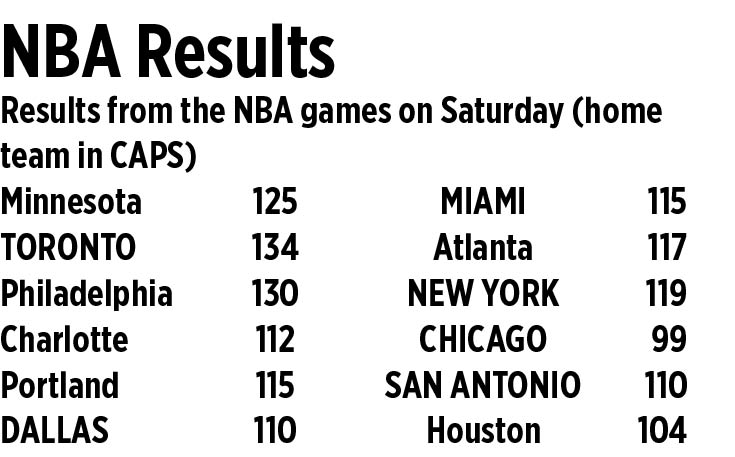
TYRESE MAXEY scored 36 points to highlight the Philadelphia 76ers’ 130-119 road win over the slumping New York Knicks on Saturday.

Maxey finished 14 of 22 from the field (six of nine from 3-point range), while rookie VJ Edgecombe knocked down four 3-pointers in a strong 26-point performance. Joel Embiid added 26 points and 10 rebounds as Philadelphia prevailed in the finale of a five-game road trip.

New York matched a season high with its third straight loss despite 31 points from Jalen Brunson. Karl-Anthony Towns contributed 23 points and 14 rebounds for the Knicks, while OG Anunoby notched 19 points for the hosts.

After leading by eight points at halftime, Philadelphia increased its advantage to 17 points in the first four minutes of the third quarter. Paul George hit two 3-pointers early in the period before Maxey’s triple made it 81-64.

The Sixers led by 19 with under three minutes to go in the third. However, the Knicks’ bench made a push in the closing stretch to get the team within 12 points (99-87) entering the fourth.

Towns scored seven points in the first two minutes of the final period, bringing New York within 103-94, but Philadelphia regained the momentum when Edgecombe blocked a 3-pointer by Mikal Bridges then hustled downcourt for a transition dunk.

With under five minutes remaining, Maxey silenced the crowd with a tough jumper and a contested 3-pointer. Embiid dunked in the waning seconds — his first slam of the season — as the Sixers went on to win their third straight game.

Philadelphia led 31-30 after a first quarter in which neither team led by more than five points.

That changed early in the second quarter as the Sixers scored nine straight points to go ahead, 46-38, on Jared McCain’s deep 3-pointer. Shortly thereafter, Embiid’s putback gave the visitors their first double-digit advantage.

The Sixers led by as many as 13 late in the half before Brunson’s two free throws and Anunoby’s 3-pointer got the hosts within 66-58 at the break.

Brunson led all scorers with 21 points in the first half, while Edgecombe paced Philadelphia with 18. — Reuters

Arsenal strengthens Premier League grip; Villa surges into second as Wolves finally win

ARSENAL beat Bournemouth, 3-2, on Saturday to extend its lead at the top of the Premier League, with Aston Villa moving into second place and Wolverhampton Wanderers finally getting their first league win of the season at the 20th attempt.

Mikel Arteta’s side went a goal behind before Gabriel Magalhaes equalized and midfielder Declan Rice added two second-half strikes. However, Eli Kroupi’s 76th minute goal for Bournemouth to make it 3-2 had the Arsenal coach’s nerves jangling all the way to the final whistle.

Despite the home side pouring forward in search of an equalizer, Arsenal managed to hang on for a win that moves it onto 48 points from 20 games.

Villa, who lost 4-1 to Arsenal in its previous game, is six points behind in second place after a 3-1 home win over Nottingham Forest in the day’s early kick-off.

“The win against Villa would have meant nothing if we came here today and didn’t pick up anything,” Arsenal goal-scorer Rice said. “If you can win your games in and around Christmas, on top of what we’ve done already, it’s going to put us in a really good position.”

Manchester City, who lost ground after being held to a scoreless draw by Sunderland in their last outing, is third on 41 points ahead of its Sunday clash with a Chelsea side still reeling from the departure of coach Enzo Maresca on New Year’s Day.

The most joyous scenes of the day were to be found at Molineux, where Wolves, who collected a mere three points from their first 19 games of the league season, doubled that tally with a resounding 3-0 thrashing of fellow struggler West Ham United on Saturday, with all three goals coming in the first half.

The home crowd celebrated wildly as their side finally ended a winless streak of 23 league games since beating Leicester on April 26, with Jhon Arias, Hwang Hee-chan and 18-year-old Mateus Mane getting on the scoresheet.

“It was amazing, I feel like we worked hard every day to get this point, and got our first three points and a goal so I feel good,” Mane told Sky Sports.

“It’s our first win, but we’re not done yet, we want to get higher and higher. I’ve had friends and family watching here today which felt amazing,” he added.

WOLVES TAKE HEART
Though they remain rock-bottom of the table on six points, 12 from the safety of 17th spot which is currently occupied by Nottingham Forest, Wolves can take heart from the fact that four of their side’s six points have come in their last two games.

On the other hand, West Ham leaves the Black Country looking over its shoulder after an embarrassing performance that leaves it 18th on 14 points, with little to suggest it has what it takes to survive in the Premier League.

The only silver lining for the Londoners came in the shape of a 2-0 defeat for 19th placed Burnley at the hands of Brighton & Hove Albion.

Unai Emery’s Aston Villa bounced back in style from its defeat by Arsenal, with Ollie Watkins netting his fourth goal in three games and John McGinn chipping in with a brace to maintain its title challenge.

“So good, three points. We needed rest and work to get ready for this match, the players responded fantastically to the demands we set,” Villa boss Unai Emery said as his side won its 11th straight game at Villa Park.

“It’s very important to have our supporters and how we are feeling today. Each match is a new challenge and how we are competing is the key,” he added. — Reuters

Earned power

The Bucks’ one-point escape the other night felt, on surface, like a routine January win in a long National Basketball Association season. It was anything but. With under five ticks left in the set-to, Giannis Antetokounmpo finished an alley-oop that settled a contest replete with missed rotations, late fouls, and creeping doubt. The box score dutifully recorded another 30-point, double-digit rebound night, in the process nudging history anew. And for all and sundry, the development reflected a superstar at a crossroads.

What made the finish linger was not simply the dunk, but what preceded it. During a timeout with 8.8 seconds left on the game clock, cameras caught Antetokounmpo effectively rejecting head coach Doc Rivers’ play and drawing up his own: shaped by instinct, read on the fly, and trusted by teammates. Excellent execution followed, with Kevin Porter, Jr. delivering the pass that he effortlessly slammed through the hoop. And somewhere in that exchange was a subtle shift in authorship, one that revealed as much about where Bucks stand as it did about how the match ended.

Make no mistake. There is nothing inherently subversive about a foundational piece assessing the situation and adjusting in real time. The great ones always have. But context matters. The Bucks have been uneven at best since their 2025-26 campaign began: brittle at times and increasingly dependent on instances of individual brilliance as opposed to collective rhythm. When Antetokounmpo waved off the original design and moved toward his own, it was not an act of rebellion. Still, it served as a reminder that certainty resides in him.

That reality feeds into the larger conversation now enveloping the franchise. The standings are unforgiving, the margins thin, and the once-wide-open windows all but shut. Around the league, executives understand leverage when they see it. Antetokounmpo may be under contract, but accords in the pro landscape these days are all but superseded by intent. The longer the Bucks drift without definition, the more the balance tilts toward the player who can still determine outcomes with a single overrule, or a simple leap at the rim.

And therein lies the rub. Antetokounmpo remains both the Bucks’ stabilizer and their unresolved question. He rescues games that threaten to slip away with regularity, yet each brush with success underscores the fragility of a structure totally dependent on his presence. The alley-oop was a triumph of awareness and will, but it was also a signal flare. The green and white won because their best player knew exactly what was required in the moment, and because everyone else agreed (or, to be precise, had no choice but) to follow. That is power, unmistakable and earned. Whether it is enough to propel them to stability, only time will tell.


Anthony L. Cuaycong has been writing Courtside since BusinessWorld introduced a Sports section in 1994. He is a consultant on strategic planning, operations and human resources management, corporate communications, and business development.

Venezuela’s Maduro in custody; Trump says US will run the country

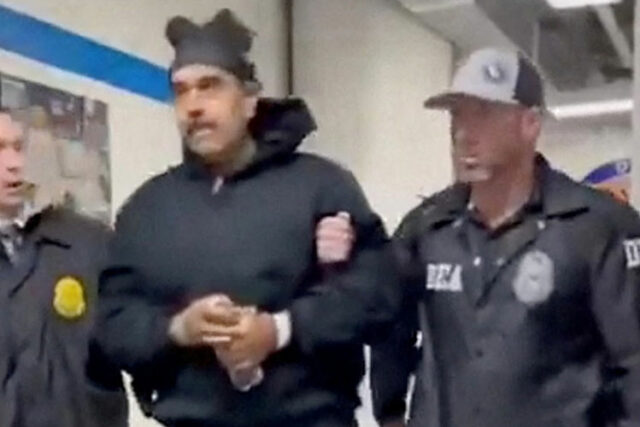
A STILL IMAGE from a video posted by the White House’s Rapid Response 47 account on X.com shows Venezuela’s President Nicolas Maduro being walked in custody down a hallway at the offices of the US Drug Enforcement Administration in New York City, Jan. 3. — @RAPIDRESPONSE47/HANDOUT VIA REUTERS

CARACAS/NEW YORK — Venezuelan President Nicolas Maduro was in a New York detention center on Sunday after President Donald J. Trump ordered an audacious US raid to capture the South American leader and take control of the country and its vast oil reserves.

As part of the dramatic operation early on Saturday that knocked out electricity in parts of Caracas and included strikes on military installations, US Special Forces seized Mr. Maduro and his wife, Cilia Flores, and transported them via helicopter to a US Navy ship offshore before flying them to the US.

“We will run the country until such time as we can do a safe, proper and judicious transition,” Mr. Trump told a press conference at his Mar-a-Lago resort in Florida.

For months, his administration criticized Mr. Maduro, 63, over what it called his involvement in shipping drugs to the US. It ramped pressure with a massive military buildup in the Caribbean and a series of deadly missile attacks on alleged drug-running boats.

POTENTIAL POWER VACUUM IN VENEZUELA
While many Western allies oppose Mr. Maduro and say he stole Venezuela’s 2024 election, Mr. Trump’s boasts about controlling the nation and exploiting its oil revived painful memories of past US interventions in Latin America, Iraq and Afghanistan.

Some legal experts questioned the legality of an operation to seize the head of state of a foreign power, while Democrats who said they were misled during recent Congress briefings demanded a plan for what is to follow.

Mr. Trump said as part of the takeover, major US oil companies would move back into Venezuela, which has the world’s largest oil reserves, and refurbish badly degraded oil infrastructure, a process experts said could take years.

He said he was open to sending US forces into Venezuela. “We’re not afraid of boots on the ground,” he said.

A plane carrying Mr. Maduro landed near New York City on Saturday night, and he was helicoptered to the city before being taken by a large convoy to the Metropolitan Detention Center in Brooklyn under a heavy police guard.

Images released by US authorities showed the leader handcuffed and blindfolded during the flight, and later being led down a hallway at the offices of the US Drug Enforcement Administration, where he was heard wishing a “Happy New Year.”

Indicted on various federal charges, including narco-terrorism conspiracy, Mr. Maduro expected to make an initial appearance in Manhattan federal court on Monday, according to a Justice department official.

It is unclear how Mr. Trump plans to oversee Venezuela. US forces have no control over the country, and Mr. Maduro’s government appears not only to still be in charge but to have no appetite for cooperating with Washington.

Mr. Maduro’s vice-president, Delcy Rodriguez, appeared on Venezuelan television on Saturday afternoon with other top officials to decry what she called a kidnapping.

“We demand the immediate release of President Nicolas Maduro and his wife Cilia Flores,” Ms. Rodriguez said, calling Mr. Maduro “the only president of Venezuela.” A Venezuelan court ordered Ms. Rodriguez to assume the position of interim president.

RECALLING PAST REGIME CHANGES
Mr. Trump did not say who will lead Venezuela when the US cedes control but appeared to rule out working with opposition figure and Nobel Peace Prize laureate Maria Corina Machado, widely seen as Mr. Maduro’s most credible opponent.

“She doesn’t have the support within or the respect within the country,” he said.

In Venezuela, the streets were mostly calm after a rush for groceries and fuel. Soldiers patrolled some parts and small pro-Maduro crowds gathered in Caracas.

Others expressed relief. “I’m happy, I doubted for a moment that it was happening because it’s like a movie,” said merchant Carolina Pimentel, 37, in the city of Maracay.

Many Venezuelan migrants around the world erupted in celebration.

“We are free. We are all happy that the dictatorship has fallen and that we have a free country,” said Khaty Yanez, who lives in the Chilean capital Santiago, one of an estimated 7.7 million Venezuelans — 20% of the population — who have left the country since 2014.

The United Nations Security Council planned to meet on Monday to discuss the actions, which Secretary-General Antonio Guterres described as “a dangerous precedent.” Russia and China, both major backers of Venezuela, criticized the US.

“China firmly opposes such hegemonic behavior by the US, which seriously violates international law, violates Venezuela’s sovereignty and threatens peace and security in Latin America and the Caribbean,” China’s foreign ministry said.

Mr. Trump’s comments about an open-ended military presence in Venezuela echoed the rhetoric around past invasions in Iraq and Afghanistan, both of which ended in American withdrawals after years of costly occupation and thousands of US casualties.

A US occupation “won’t cost us a penny” because the United States would be reimbursed from the “money coming out of the ground,” Mr. Trump said, referring to Venezuela’s oil reserves, a subject he returned to repeatedly during Saturday’s press conference.

Mr. Trump’s focus on foreign affairs provides fuel for Democrats to criticize him ahead of midterm congressional elections in November, when control of both houses of Congress is at stake, with Republicans controlling both by narrow margins.

Opinion polls show the top concern for voters is high prices at home, not foreign policy.

Mr. Trump also runs the risk of alienating some of his own supporters, who have backed his “America First” agenda and oppose foreign interventions. — Reuters

US lifts Caribbean airspace curbs after attack on Venezuela

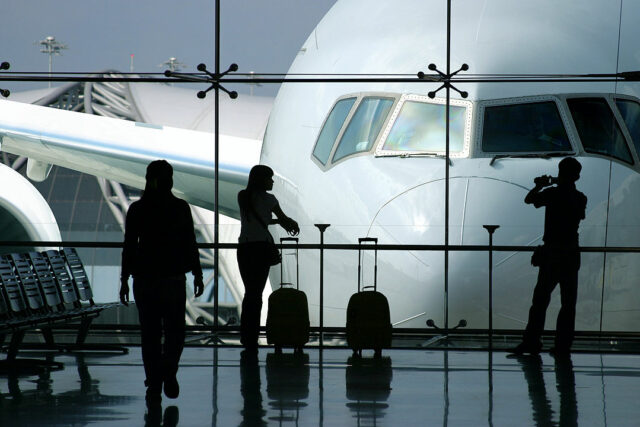
STOCK PHOTO | Image by L.Filipe C.Sousa from Unsplash

THE United States has advised airlines its Caribbean airspace curbs will expire at midnight ET (0500 GMT) and flights could resume as schedules are quickly updated, Transportation Secretary Sean Duffy said on Saturday.

The comments on X followed the cancelation of hundreds of flights by major airlines after the US attack on Venezuela and the capture of its president, Nicolas Maduro.

Key carriers United Airlines and Delta were readying to resume flights to the Caribbean by Sunday.

In a statement, United said a flight to San Juan in Puerto Rico was planned for Saturday night, adding, “We expect to operate most scheduled flights to the region for Sunday.”

Delta Air Lines expects to fly its normal Caribbean schedule on Sunday, it said in a statement, but adjusted to reposition resources.

Even after the removal of curbs, however, airlines will need several days to restore normal operations, said airline analyst Robert Mann, adding, “They have a day’s worth of passengers basically,” already stranded in the Caribbean.

American Airlines, Delta, United, Frontier Airlines, Spirit Airlines and JetBlue Airways began canceling flights, in line with Federal Aviation Administration (FAA) airspace closures in the Caribbean.

JetBlue canceled 215 flights, an airline spokesperson said.

In a notice to airmen, the FAA said it closed the airspace to US carriers “due to safety-of-flight risks associated with ongoing military activity.”

In other security notices for non-US air carriers, the agency warned them away from Venezuelan airspace.

It cautioned British operators against “potential risk from anti-aircraft weaponry and heightened military activity” if flying within 100 miles (160 kilometers) of Venezuelan airspace.

The FAA declined further comment.

NON-US AIRLINES ALSO CANCEL FLIGHTS
Several European and South American airlines also canceled flights.

The curbs would be lifted “when appropriate,” Mr. Duffy had said in a post on X.

American military activity near Venezuela led to a near mid-air crash in November between a JetBlue airliner and a US aerial refueling tanker, media said.

Several carriers waived change fees and fare differences for customers affected by the closures if they postponed travel.

Saturday’s US military operation captured Venezuela’s long-serving President Mr. Maduro, President Donald J. Trump said, promising to put the country under American control for now, by deploying US forces if necessary.

Air Canada said its Caribbean and South American operations were normal, under guidance from Transport Canada, and it was monitoring the situation, adding, “We will update as required if the situation changes.”

Commercial air traffic over Venezuelan airspace appeared to stop after Saturday’s attack, records on tracker FlightRadar24 showed. — Reuters

Myanmar to free 6,186 prisoners in Independence Day amnesty during election

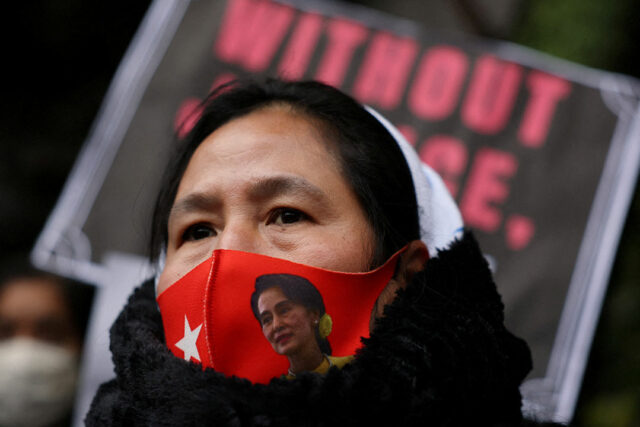
A MYANMAR protester residing in Japan uses a face mask with an image of Myanmar’s detained former leader Aung San Suu Kyi during a rally denouncing an upcoming election led by the military junta and demanding the immediate release of Ms. Suu Kyi and all political prisoners, outside Myanmar’s embassy in Tokyo, Japan on Dec. 14, 2025. — REUTERS/ISSEI KATO

MYANMAR’S military government will release 6,186 prisoners under an amnesty marking Independence Day, state media said on Saturday, a week after a multi-stage general election began in the impoverished Southeast Asian nation.

The amnesty, which includes 52 foreigners, is a humanitarian gesture that takes into consideration the public’s peace of mind, state-run MRTV said.

The junta also reduced sentences by one-sixth nationwide, excluding for those convicted of serious crimes such as murder, rape, terrorism, corruption and arms- or drug-related offences.

It was not immediately clear whether any political detainees would be freed.

Myanmar has been in turmoil since 2021, when the military toppled the elected civilian government of Nobel Peace Prize laureate Aung San Suu Kyi and violently suppressed pro-democracy protests, sparking a nationwide armed rebellion.

Ms. Suu Kyi is serving 27 years in prison after being detained in the coup, months after her National League for Democracy won a landslide and was later dissolved.

More than 30,000 people have been detained on political charges since the coup, according to the Assistance Association for Political Prisoners, a human rights group.

Newly formed resistance groups and long-established ethnic armies are fighting the military across much of the country, forcing an estimated 3.6 million people from their homes.

The first round of the election, Myanmar’s first since 2020, was held last weekend in a vote condemned by opposition groups, the United Nations and some Western governments as a sham, given that anti-junta political parties are out of the running and it is illegal to criticize the polls. — Reuters

US strike on Venezuela to embolden China’s territorial claims, Taiwan attack unlikely, analysts say

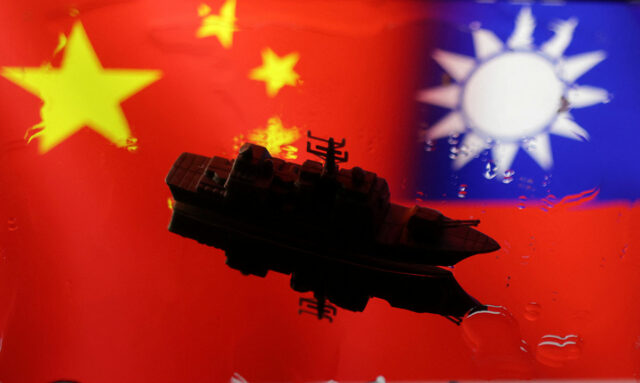
A Navy miniature is seen in front of displayed Chinese and Taiwanese flags in this illustration taken, April 11, 2023. — REUTERS/DADO RUVIC

SHANGHAI/BEIJING — The US attack on Venezuela will embolden China to strengthen its territorial claims over areas such as Taiwan and parts of the South China Sea but will not hasten any potential invasion of Taiwan, analysts said.

Chinese President Xi Jinping’s considerations about Taiwan and his timeline are separate from the situation in Latin America, influenced more by China’s domestic situation than by US actions, they said.

Still, analysts said, President Donald Trump’s audacious attack on Saturday, capturing Venezuelan leader Nicolas Maduro, hands China an unexpected opportunity that Beijing will likely use in the near term to amplify criticism of Washington and bolster its own standing on the international stage.

Further out, Beijing could leverage Trump’s move to defend its stance against the US on territorial issues including Taiwan, Tibet and islands in the East and South China seas.

‘CHEAP AMMUNITION’ FOR A CHINA PUSHBACK
“Washington’s consistent, long-standing arguments are always that the Chinese actions are violating international law but they are now damaging that,” said William Yang, an analyst at International Crisis Group, a Brussels-based NGO.

“It’s really creating a lot of openings and cheap ammunition for the Chinese to push back against the US in the future.”

China claims democratically governed Taiwan as its own province – an assertion the island’s government rejects – and claims almost all of the South China Sea, a position that puts it at odds with several Southeast Asian nations that also claim parts of the vital trade route.

China’s foreign ministry and Taiwan Affairs Office, and Taiwan’s presidential office did not immediately respond to requests for comment.

Beijing condemned Trump’s strike on Venezuela, saying it violated international law and threatened peace and security in Latin America. It has demanded the US release Maduro and his wife, who are being detained in New York awaiting trial.

Hours before his capture, Maduro met with a high-level Chinese delegation in Caracas, according to photos he posted on his Instagram page.

The Chinese foreign ministry did not immediately respond to a request for comment on the whereabouts of the delegation, which included China’s special representative for Latin American and Caribbean affairs, Qiu Xiaoqi.

On Sunday China’s official Xinhua news agency called the US attack “naked hegemonic behaviour.”

“The US invasion has made everyone see more and more the fact that the so-called ‘rules-based international order’ in the mouth of the United States is actually just a ‘predatory order based on US interests’,” state-run Xinhua news agency said.

‘CHINA ISN’T THE US, TAIWAN ISN’T VENEZUELA’
Taiwan, in particular, has been facing growing pressure from Beijing. China last week encircled the island in its most extensive war games to date, showcasing Beijing’s ability to cut off the island from outside support in a conflict.

But analysts said they did not expect China to capitalise on the Venezuelan situation to escalate that into an attack anytime soon.

“Taking over Taiwan depends on China’s developing but still insufficient capability rather than what Trump did in a distant continent,” said Shi Yinhong, professor of international relations at Renmin University in Beijing.

Neil Thomas, a fellow on Chinese politics at the Asia Society, said China sees Taiwan as an internal affair and so was unlikely to cite US actions against Venezuela as precedent for any cross-strait military strikes.

“Beijing will want a clear contrast with Washington to trumpet its claims to stand for peace, development and moral leadership,” Thomas said. “Xi does not care about Venezuela more than he cares about China. He’ll be hoping that it turns into a quagmire for the United States.”

Wang Ting-yu, a senior lawmaker from Taiwan’s ruling party who sits on the parliament’s foreign affairs and defence committee, rejected the idea that China might follow the US example and strike Taiwan.

“China has never lacked hostility toward Taiwan, but it genuinely lacks the feasible means,” Wang posted on Facebook. “China is not the United States, and Taiwan is certainly not Venezuela. If China could actually pull it off, it would have done so long ago!”

Still, the situation amplifies risks for Taiwan and could press Taipei to seek more favour from the Trump administration, some observers said.

On China’s Weibo social media platform, discussions of the US attack trended heavily on Sunday, with several users saying Beijing should learn from what Trump did.

Lev Nachman, a political science professor at National Taiwan University, said he expected Taiwan’s government to express lightly worded support for American action on Venezuela. Taiwan has not yet made any statement.

“What I do think Trump’s actions could do is to help Xi Jinping’s narrative in the future to create more justification for action against Taiwan,” he said. — Reuters

Trump says US will run Venezuela after US captures Maduro

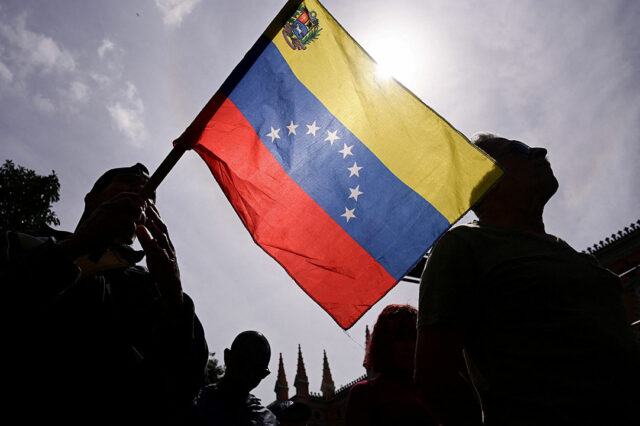
A person holds a Venezuelan flag as government supporters gather after US President Donald Trump said the US has struck Venezuela and captured its President Nicolas Maduro, in Caracas, Venezuela, January 3, 2026. — REUTERS/GABY ORAA

WASHINGTON — US President Donald Trump said on Saturday he was putting Venezuela under temporary American control after the United States captured President Nicolas Maduro in an audacious raid and whisked him to New York to face drug-trafficking charges.

“We will run the country until such time as we can do a safe, proper and judicious transition,” Trump said during a press conference at his Mar-a-Lago resort in Florida. “We can’t take a chance that someone else takes over Venezuela who doesn’t have the interests of Venezuelans in mind.”

Trump said as part of the takeover, major US oil companies would move into Venezuela, which has the world’s largest oil reserves, and refurbish badly degraded oil infrastructure, a process experts said could take years.

Critics said his focus on oil at the press conference raised questions about his administration’s efforts to frame the capture of Maduro and a series of deadly missile attacks on alleged drug boats as a law enforcement operation aimed at choking off drug shipments to the US

As part of the dramatic overnight operation that knocked out electricity in parts of Caracas and included strikes on military installations, US Special Forces captured Maduro in or near one of his safe houses, Trump said.

Maduro and his wife, Cilia Flores, were transported to a US Navy ship offshore before being flown to the US on Saturday evening.

Video showed a plane arriving at Stewart International Airport about 60 miles (97 km) northwest of New York City, with several US personnel boarding the aircraft after it landed. A Justice Department official confirmed Maduro had landed in New York, and video later showed a large convoy arriving at the Metropolitan Detention Center in Brooklyn under a heavy police presence.

Maduro, who was indicted on various US charges, including narco-terrorism conspiracy, is expected to make an initial appearance in Manhattan federal court on Monday, according to a Justice Department official. His wife also faces charges, including cocaine importation conspiracy.

It is unclear how Trump plans to oversee Venezuela. US forces have no control over the country itself, and Maduro’s government appears not only to still be in charge but to have no appetite for cooperating with Washington. Trump did not say who will lead Venezuela when the US cedes control.

Maduro’s apparent successor, Venezuelan Vice President Delcy Rodriguez, appeared on Venezuelan television Saturday afternoon with other top officials to decry what she called a kidnapping.

“We demand the immediate release of President Nicolas Maduro and his wife Cilia Flores,” Rodriguez said, calling Maduro “the only president of Venezuela.” A Venezuelan court later ordered Rodriguez to assume the position of interim president.

In the US some legal experts questioned the legality of an operation to seize the head of state of a foreign power, and Democrats who said they were misled during recent briefings demanded a plan on what would now follow.

POTENTIAL POWER VACUUM
In Venezuela, the streets were mostly calm on Saturday. Soldiers patrolled some parts and small pro-Maduro crowds gathered in Caracas.

Others expressed relief. “I’m happy, I doubted for a moment that it was happening because it’s like a movie,” said merchant Carolina Pimentel, 37, in the city of Maracay.

At his press conference, where he was accompanied by Secretary of State Marco Rubio and Secretary of Defense Pete Hegseth, Trump did not provide specific answers to repeated questions about how the United States would run Venezuela given its government and military are still functioning.

“The people that are standing right behind me” – such as Rubio and Hegseth – would oversee the country, Trump said.

He said he was open to sending US forces into Venezuela. “We’re not afraid of boots on the ground,” he said.

The removal of Maduro, whom critics called a dictator as he led Venezuela with a heavy hand for more than 12 years, could open a power vacuum in the country, which is bordered by Colombia, Brazil, Guyana, and the Caribbean.

Trump publicly closed the door on working with opposition leader Maria Corina Machado, widely seen as Maduro’s most credible opponent.

Trump said the US has not been in contact with Machado, who was awarded the Nobel Peace Prize last year. “She doesn’t have the support within or the respect within the country,” he said.

RECALLING PAST REGIME CHANGES
Trump’s comments about an open-ended military presence in Venezuela echoed the rhetoric around past invasions in Iraq and Afghanistan, both of which ended in American withdrawals after years of costly occupation and thousands of US casualties.

He said on Saturday that as president, including his first term, he has overseen military actions that were “only victories.” But none of those involved removing another country’s leader.

Trump in the past criticized such interventions, calling the Iraq invasion “a big fat mistake” during a 2016 presidential debate, and saying in 2021 that he was “especially proud to be the first president in decades who has started no new wars.”

Before Saturday, the US had not made such a direct intervention in the region since the invasion of Panama 37 years ago to depose military leader Manuel Noriega over allegations that he led a drug-running operation. The United States has leveled similar charges against Maduro, accusing him of running a “narco-state” and rigging the 2024 election.

Maduro, a 63-year-old former bus driver handpicked by the dying Hugo Chavez to succeed him in 2013, has denied those claims and said Washington was intent on taking control of his nation’s oil reserves.

Trump’s action recalls the Monroe Doctrine, laid out in 1823 by President James Monroe, laying US claim to calling the shots in the region, as well as the “gunboat diplomacy” seen under President Theodore Roosevelt in the early 1900s.

Trump nodded to the comparisons during his press conference, suggesting an updated version of it might be called the “Donroe Doctrine.”

While various Latin American governments oppose Maduro and say he stole the 2024 vote, Trump’s boasts about controlling Venezuela and exploiting its oil revive painful memories of past US interventions in Latin America that are generally opposed by governments and people in the region.

Argentina’s President Javier Milei lauded Venezuela’s new “freedom” while Mexico condemned the intervention and Brazil’s President Luiz Inacio Lula da Silva said it crossed “an unacceptable line.”

Russia and China, both major backers of Venezuela, criticized the US action.

“China firmly opposes such hegemonic behaviour by the US, which seriously violates international law, violates Venezuela’s sovereignty, and threatens peace and security in Latin America and the Caribbean,” China’s foreign ministry said.

POLITICAL RISKS TO TRUMP AT HOME
A US occupation “won’t cost us a penny” because the United States would be reimbursed from the “money coming out of the ground,” Trump said, referring to Venezuela’s oil reserves, a subject he returned to repeatedly during Saturday’s press conference.

The idea that a country’s oil reserves can pay for an American invasion also recalls the 2003 Iraq war. In the run-up to the invasion, US officials repeatedly stated that the cost would largely be covered by Iraq’s assets, including its oil. Various estimates by academics say the actual cost to the United States of its years-long entanglement in Iraq ended up being at least $2 trillion.

Trump’s focus on foreign affairs provides fuel for Democrats to criticize him ahead of midterm congressional elections in November, when control of both houses of Congress is at stake. Republicans control both chambers by narrow margins.

Opinion polls show the top concern for voters is high prices at home, not foreign policy.

Trump also runs the risk of alienating some of his own supporters, who have backed his “America First” agenda and oppose foreign interventions.

Voicing those concerns, Marjorie Taylor Greene, a Georgia Republican who has broken with Trump in recent months, said on social media, “This is what many in MAGA thought they voted to end. Boy were we wrong.” — Reuters


No quick wins in tapping Venezuela’s oil reserves

MODELS of oil barrels and a pump jack are displayed in this illustration photo taken on Feb. 24, 2022. — REUTERS

MIAMI — Venezuela is unlikely to see any meaningful boost to crude output for years even if US oil majors do invest the billions of dollars in the country that President Donald Trump promised just hours following Nicolás Maduro’s capture by US forces.

The South American country may have the world’s largest estimated oil reserves, but output has plummeted over the past decades amid mismanagement and a lack of investment from foreign firms after Venezuela nationalized oil operations in the 2000s that included the assets of Exxon Mobil and ConocoPhillips.

Any companies that might want to invest there would need to deal with security concerns, dilapidated infrastructure, questions about the legality of the US operation to snatch Maduro and the potential for long-term political instability, analysts told Reuters.

American firms won’t return until they know for sure they will be paid and will have at least a minimal amount of security, said Mark Christian, director of business development at CHRIS Well Consulting. He also said the companies would not go back until sanctions against the country are removed.

Venezuela would also have to reform its laws to allow for larger investment by foreign oil companies.

Venezuela nationalized the industry in the 1970s, and in the 2000s ordered a forced migration to joint ventures controlled by its state oil company, PDVSA. Most companies negotiated exits and migrated, including Chevron, while a handful of others did not reach deals and filed for arbitration.

THERE IS A LOT THAT COULD GO WRONG
“If Trump et al can produce a peaceful transition with little resistance, then in five to seven years there is a significant oil-production ramp up as infrastructure is repaired and investments get sorted out,” Thomas O’Donnell, an energy and geopolitical strategist, told Reuters, adding that heavy crude produced in the country works well with US Gulf Coast refineries and can also be blended with lighter oil produced from fracking.

But that would depend on everything going right, and there’s a lot that could go wrong.

“A botched political transition that has a feeling of US dominance can lead to years of resistance,” O’Donnell said, noting armed groups of citizens and guerrilla groups that operate in the country.

Chevron would be positioned to benefit the most from any potential oil opening in Venezuela, said Francisco Monaldi, director of the Latin America Energy Program at Rice University’s Baker Institute in Houston. Other US oil companies would be paying close attention to political stability and would wait to see how the operational environment and contract framework unfolded, he added.

Venezuela – a founding member of OPEC with Iran, Iraq, Kuwait and Saudi Arabia – produced as much as 3.5 million barrels per day in the 1970s, which at the time represented over 7% of global oil output. Production fell below 2 million bpd during the 2010s and averaged around 1.1 million bpd last year, or just 1% of global production.

CHEVRON
Chevron is the only American major currently operating in Venezuela. Conoco has been seeking billions for the takeover of three oil projects nearly two decades ago, while Exxon was also involved in lengthy arbitration cases against Venezuela after it exited the country nearly two decades ago.

“The company that probably will be very interested in going back is Conoco, because they are owed more than $10 billion, and it’s unlikely that they will get paid without going back into the country,” Monaldi said. Exxon could also return, but is not owed as much money, he added.

“ConocoPhillips is monitoring developments in Venezuela and their potential implications for global energy supply and stability. It would be premature to speculate on any future business activities or investments,” a company spokesperson said in emailed comments to Reuters.

Chevron, which exports around 150,000 bpd of crude from Venezuela to the US Gulf Coast, has had to carefully maneuver with the Trump administration in an effort to maintain its presence in the country over the past year. CEO Mike Wirth said in December that he had spoken with the Trump administration about what he said was the importance of maintaining an American presence in the country through multiple political cycles.

The oil firm has been in Venezuela for over 100 years and said on Saturday that it is focused on the safety and well-being of its employees, in addition to the integrity of its assets. “We continue to operate in full compliance with all relevant laws and regulations,” a Chevron spokesperson said in an emailed response to questions.

Exxon did not immediately respond to questions from Reuters.

OPEC and allies will meet on Sunday and are expected to maintain current oil output policy. The group has been increasing production since last year, stoking concerns of a global supply glut, but has agreed to pause oil output hikes for January, February and March.

Ed Hirs, an energy fellow at University of Houston, said recent events in Venezuela would have little impact on US prices for oil and gasoline for now, with much of the country’s production going to Cuba and China at the moment. He also said that history is full of recent examples of American excursions that didn’t produce notable results for US companies.

“Trump now joins the history of US presidents who have overthrown regimes of oil-rich countries. Bush with Iraq. Obama with Libya. In those cases, the United States has received zero benefit from the oil. I’m afraid that history will repeat itself in Venezuela,” Hirs said.

Oil tankers chartered by Chevron had been among the few to set sail from Venezuela over the past month, following Trump’s December announcement of a “ blockade “ of sanctioned tankers entering and leaving the country. The country had exported around 921,000 bpd in November, with much of that going to China.

That’s perhaps where one quick win could emerge, if Trump is able to restart the flow of Venezuelan crude into the US Gulf, potentially boosting refiners like Valero VLO in the process. At the moment, it appears that just the opposite is happening. — Reuters

Groups flag P633 billion corruption risk in bicam-approved 2026 budget

HANDOUT COURTESY OF OFFICE OF SEN. GATCHALIAN

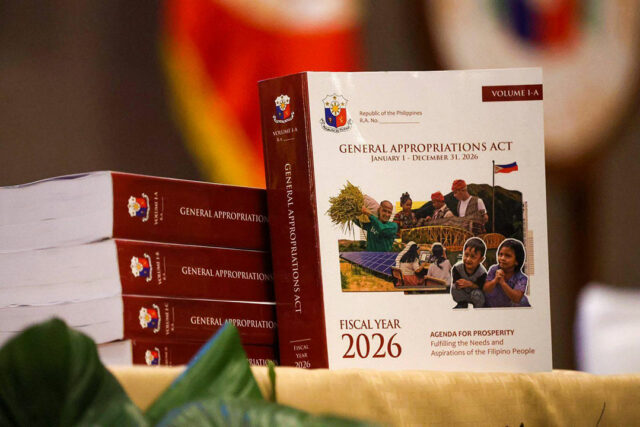
Multisectoral groups on Monday raised their recommendations on the P6.793-trillion national budget approved by the bicameral for 2026, following their concerns on the P633 billion worth of projects at risk for corruption and patronage.

“We recommend that the President take action on more than P633 billion worth of projects at risk of corruption and patronage in the bicam version of the budget,” the Roundtable for Inclusive Development (RFID) and People’s Budget Coalition (PBC) said in a joint statement.

Both chambers of Congress separately ratified the bicameral conference committee report on the proposed national budget for 2026 on Monday.

The first recommendation filed by the groups highlights vetoing unprogrammed appropriations, also known as “shadow pork,” worth P243 billion, in addition to removing the P43 billion SAGIP program, which was said to previously used to fund anomalous flood control projects.

The groups defined shadow pork as funds that “sit outside the regular budget framework” and are often used in the previous years in “risky” infrastructure projects due to their minimal transparency or legislative scrutiny upon release.

“Special provisions on unprogrammed appropriations had violated specific provisions in the PDAF ruling of the Supreme Court,” the civil groups said.

“The constitutionality of unprogrammed appropriations itself is an issue, as Congress artificially increases the budget ceiling set by the President, required under the Constitution; it also violates separation of powers and non-delegability of the legislative power of the purse,” they added.

The groups also promoted transforming the patronage-driven assistance or ayuda worth P210 billion into “rights-based and rules-based programs”, in consultation with allied health professionals and social protection experts, along with the P11 billion worth of confidential and intelligence funds (CIF).

According to the groups, soft pork is composed of aid programs at risk of political patronage because it leads citizens to “beg” politicians for assistance.

“Politicians must be excluded from the process of selecting beneficiaries, prevalent under the inhumane and unconstitutional guarantee letter system that encourages post-enactment intervention by legislators in the budget,” they said.

“We are alarmed that the bicameral conference committee nearly tripled soft pork to P210 billion compared to the President’s proposed budget,” they added.

The last recommendation mentioned involved placing the P600 billion-worth of infrastructure projects under a multisectoral citizen monitoring initiative funded by the government or internationally funded independent research programs.

The 2025 national budget faced heightened public scrutiny after several budget allocations and congressional insertions had been discovered, sparking multiple rallies nationwide for transparency and accountability.

“As citizens, we remain committed to working with you to monitor the budget process so that every taxpayer peso benefits our nation,” they said.  “Buwis natin ito, budget natin ito [This is our taxes, this is our budget].”— Almira Louise S. Martinez

ADVERTISEMENT
ADVERTISEMENT