Home Blog Page 493

GOCC pay scheme under GCG review 

THE Governance Commission for Government-Owned or -Controlled Corporations (GCG) said the new compensation framework guidelines for workers in state-run firms is currently undergoing final review.

In a statement dated Oct. 9, the regulator said the guidelines for the new Compensation and Position Classification System II (CPCS II) — which raises salaries and adds tiered medical allowances — are now being looked at by the GCG, sitting en banc.

“Once approved, the Implementing Guidelines will immediately be readied for the signature of the members of the GCG en banc and for publication in a newspaper of general circulation,” the GCG said, adding that the pay scale will also be posted on GCG’s website.

The regulator said state-run firms that have submitted complete documentation will have their Authority to Implement requests processed and released on a “first-in, first-out” basis once the guidelines take effect.

“The GCG reaffirms its continued partnership with the GOCC sector and its commitment to the timely and transparent implementation of the CPCS II,” it said. — Aubrey Rose A. Inosante

PHL close to concluding trade deals with EU, UAE

REUTERS

THE Department of Trade and Industry said on Monday that it is looking to finalize negotiations for free trade deals with the European Union (EU) and the United Arab Emirates (UAE), next year and next month, respectively.

At a Senate budget hearing on Monday, Trade Secretary Cristina A. Roque said the Philippines is not yet at the stage of discussing market access issues with the EU.

“We are still in the text-based negotiations. These are the rules and disciplines,” Trade Undersecretary Allan B. Gepty also told the Senators.

The Philippines-EU FTA is expected to be the country’s most comprehensive trade agreement, being the first such deal to tackle government procurement, digital trade, energy and raw materials, and trade and sustainable development.

Trade between the Philippines and the EU was $15.5 billion in 2024, making the bloc the Philippines’ fifth-largest trading partner, accounting for 7.7% of total trade.

Philippine exports to the EU hit $8.1 billion, while imports from the EU amounted to $7.5 billion.

Ms. Roque said that the DTI is looking to sign a free trade deal with the UAE by late November.

“The Comprehensive Economic Partnership Agreement (CEPA) will be signed by end of November, around Nov. 24,” Ms. Roque told the panel.

Among the top Philippine exports to the UAE are electrical equipment, food products, iron and steel, mineral fuels and machinery.

Mr. Gepty said products covered under the free trade deal include agricultural products, industrial products, machinery, and electronics.

The Philippines and the UAE began negotiating their CEPA in February 2022. Once signed it would be Manila’s first free trade agreement (FTA) with a Middle Eastern country.

The CEPA is expected to provide opportunities for Dubai companies to invest in the Philippines.

The UAE is the Philippines’ 18th biggest trading partner and top export market in the Gulf Cooperation Council. — Adrian H. Halili

PEZA in smart community tieup with FiberHome

FACEBOOK.COM/PEZAPH

THE Philippine Economic Zone Authority (PEZA) said it signed a partnership with FiberHome Phils., Inc. to develop smart and sustainable economic zones (ecozones).

“This partnership aims to explore opportunities for collaboration in transforming PEZA ecozones into smart industrial communities through the adoption of innovative technology and digital solutions,” PEZA said in a statement on Monday.

“This includes leveraging advancements in Internet of Things (IoT), artificial intelligence, and data analytics to build efficient, secure, and connected environments that foster competitiveness and sustainability,” it added.

Under the agreement, FiberHome will provide access to its “Smarter Cities, Stronger Communities” platform.

“This platform will also feature a digital marketplace showcasing products and services of PEZA-registered business enterprises, opening more opportunities for local and international trade and collaboration,” it said.

“This collaboration reinforces PEZA’s commitment to digital transformation, public-private partnership, and sustainable economic growth,” PEZA said.

“By integrating modern technology into the ecozone ecosystem, PEZA and FiberHome aim to strengthen the country’s position as a hub for innovation, investment, and smart development,” it added.

In a separate statement, PEZA said the De La Salle University (DLSU) Innovation Hub was inaugurated as a Knowledge, Innovation, Science, and Technology (KIST) Park on the DLSU Laguna Campus.

“Spanning five hectares, the DLSU Innovation Hub will focus on Advanced Biotech Systems and Engineering, featuring cutting-edge laboratories, incubators, and open innovation spaces that promote sustainability and industry-academe synergy,” PEZA said.

It is the first KIST ecozone established within a private university in the Philippines, designed “to cultivate ideas, research, and technologies fueling sustainable and inclusive national growth.” — Justine Irish D. Tabile

Project awards hit 20GW since RE opened to full foreign ownership

STOCK PHOTO | Image by ZHANG FENGSHENG from Unsplash

RENEWABLE ENERGY (RE) investors have committed to build 20 gigawatts (GW) worth of capacity since the Philippines opened up the industry to full foreign ownership nearly three years ago, the Department of Energy (DoE) said.

“In 2022, the liberalized foreign ownership rule sent a clear signal to the world that the Philippines is open for clean energy business. To date, (the Philippines) has attracted proposals for 75 projects, totaling 20 GW in capacity, awarded to fully foreign entities,” Energy Undersecretary Rowena Cristina L. Guevara said in a speech last week.

The DoE has awarded 53 RE contracts to build 13,183.95 megawatts (MW) of onshore wind capacity to 100% foreign entities; nine offshore wind contracts equivalent to 5,510 MW of capacity; and 13 contracts  to build 1,297.52 MW in solar capacity.

“We recognize that private sector investment is central in achieving our targets,” Ms. Guevara said. “Hence, we are creating an enabling business environment to make RE more appealing to investors.”

The DoE believes the opening up of the industry will help bring the RE share of the power generation mix to 35% by 2030 and 50% by 2040 from the current 22%.

The DoE has launched four rounds of green energy auctions, with one more for offshore wind set this year and one for waste-to-energy and biomass scheduled in 2026.

Citing a simulation presented by the Independent Electricity Market Operator of the Philippines, Ms. Guevara said that the integration of new capacities from the auctions into the energy mix could result in lower average prices on the Wholesale Electricity Spot Market.

Average spot prices from 2026 to 2029 are projected to decrease by P1.32 per kilowatt-hour (kWh) on Luzon, P1.30 per kWh in the Visayas, and P0.90 per kWh in Mindanao.

“RE also holds the promise of lowering long-term electricity prices through economies of scale,” Ms. Guevara said. — Sheldeen Joy Talavera

Power plant retirement to be eligible for carbon credits

PIXABAY

THE Department of Energy (DoE) has identified the activities that will be deemed eligible for carbon credits, like the early retirement of coal-fired power plants.

In a circular dated Sept. 23, the DoE said the eligible “mitigation” activities that can significantly reduce greenhouse gas (GHG) emissions also include the development of renewable energy projects; energy efficiency improvements; adopting low-carbon energy technologies; fuel switching and co-firing in power generation; switching to electric vehicles; and biofuels blending.

Proponents of such projects will be allowed to issue carbon credit certificates (CCCs), it said.

The Philippines is a signatory to the Paris Agreement, a global treaty seeking to hold the increase in the global average temperature to well below 2°C above pre-industrial levels, and limit the increase to 1.5°C.

The Philippines has committed to reduce its GHG emissions by 75% by 2030, as outlined in its Nationally Determined Contribution (NDC) climate action plan. It plans to reduce or eliminate emissions in five areas: agriculture, waste, industry, transport, and energy.

Article 6 of the Paris Agreement recognizes the issuance and transfer of CCCs as a means of incentivizing activities that reduce GHGs.

A CCC is a tradeable certificate representing one ton of carbon dioxide equivalent of GHG emissions reduced, avoided, or removed from the atmosphere.

Participants can trade CCCs on the Philippine market, in countries covered by bilateral or multilateral agreements, and on the voluntary carbon market.

The DoE is tasked with overseeing the energy industry’s NDC. Meanwhile, the Department of Environment and Natural Resources will serve as the designated national authority (DNA) of the Philippines tasked with soliciting international cooperation with regard to carbon markets.

Upon the issuance of the general framework for the implementation of the Paris Agreement by the DNA, the DoE will review and amend the circular.

In August, Energy Undersecretary Felix William B. Fuentebella said the carbon credit policy is a “game-changer” for the Philippine energy industry.

“It will equip our energy sector with the tools to generate and manage carbon credits with integrity, ensuring every ton of reduced carbon dioxide is real and verifiable. This builds trust and unlocks investment in effective climate solutions,” he said. — Sheldeen Joy Talavera

FPI hopes BoC digitalization can reform ‘most corrupt’ agency, curb smuggling

BW FILE PHOTO

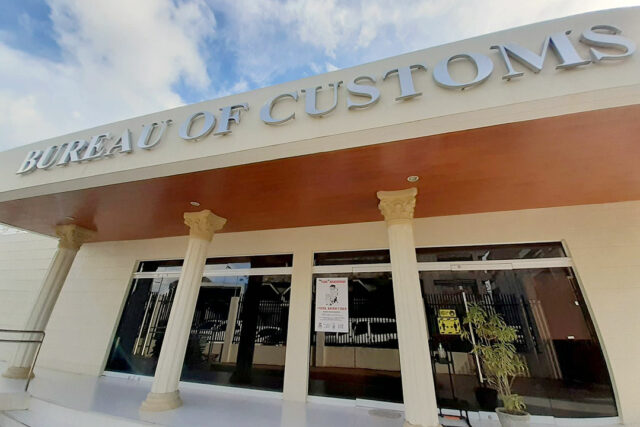
THE Federation of Philippine Industries (FPI) said it is hoping that digitalization can turn the Bureau of Customs (BoC) around from its current reputation “from one of the most corrupt to one of the most reformed.”

FPI Chairman Emeritus Jesus L. Arranza said he hopes Customs Commissioner Ariel F. Nepomuceno’s reform agenda “will help restore the credibility of the BoC.”

Mr. Arranza said in a statement on Monday that FPI members, “who have long been victims of smuggling and illicit trade, are the first to feel the negative effects of these illegal activities — and we will also be the first to commend genuine reform efforts.”

Citing the US Department of State’s Annual Investment Climate Report, he said that American businessmen have complained about facilitation fees and bureaucratic hurdles at the BoC.

He said that the digitalization of customs processes will help eliminate face-to-face transactions between importers and Customs personnel.

“The modernization effort, to be implemented through a public-private partnership model, will automate import documentation, inspection tracking, and valuation processes — removing the opportunities for collusion, bribery, and technical smuggling,” the FPI said.

Mr. Nepomuceno has banned BoC officials and employees from doing business or taking a financial interest in customs brokerage companies.

“All BoC personnel are now required to submit verified affidavits disclosing any relatives within the fourth civil degree who are involved in brokerage operations,” the FPI said.

The BoC also suspended Letters of Authority and Mission Orders issued before July 2 pending review of all planned enforcement actions under the Intelligence and Enforcement Groups. — Justine Irish D. Tabile

PHL targets revival of seaweed export industry

DA.GOV.PH

THE Department of Agriculture (DA) said it is targeting a revival in the seaweed export industry, which the Philippines used to dominate.

Agriculture Secretary Francisco P. Tiu Laurel, Jr. made the remarks in a meeting with the Food and Agriculture Organization (FAO).

The Philippines was formerly the top exporter of seaweed in 1990, fulfilling 80% of global demand.

Mr. Laurel added that mango, abaca, and bamboo also have the potential to drive growth, and called for FAO support to achieve this in his meeting with FAO Assistant Director-General Alue Dohong.

Mr. Laurel said of the FAO meeting: “We are not only talking about food security. We are committing to the transformation of agrifood systems with investment, innovation, and inclusive growth.”

Mr. Laurel said the Philippines needs FAO help after decades of underinvestment in agriculture.

The DA added in the statement that former Agriculture Secretary Luis Lorenzo, Jr. and his company Rizome have invested $100 million in a bamboo manufacturing facility in Cagayan de Oro. — Andre Christopher H. Alampay

Bounty Fresh sees chicken industry as least vulnerable to foreign competition

BW FILE PHOTO

BOUNTY FRESH GROUP said it considers the chicken industry to be less vulnerable to competition from imports than pork or beef, but cited the need to invest in transformation to support demand from the growing population.

Noting the 4% annual growth of the broiler chicken industry, Bounty Fresh CEO Kenneth Cheng said making the chicken farming industry “future-ready and resilient” will require it to keep up with the growing population and increasing affluence, which is tied to increased meat consumption.

One of the markers of the industry’s resilience is the emergence of its farms without damage after recent floods and earthquakes he said.

“If we are able to transform ourselves, we will feed the country,” Mr. Cheng told reporters during a lunch meeting.

He said technology’s role will be partly to offset a worker shortage, adding: “If we stick to old techniques of farming, we will run out of people.”

The company is committed to upholding biosecurity by investing in vaccines to prevent the spread of diseases. — Andre Christopher H. Alampay

Reciprocal tariff talks seen concluding next year

ASIANTERMINALS.COM.PH

THE Department of Trade and Industry (DTI) said  negotiations on US reciprocal tariffs are likely to be completed next year.

Trade Undersecretary Allan B. Gepty said it will be hard to conclude the negotiations in 2025 as the US is negotiating with at least 69 countries.

“On our part we want to fast track the negotiation, but when we had the last round of negotiations with the US about three weeks ago, they told us that they are facing a lot of negotiations with other countries, so we are looking at next year,” he said.

“As to when next year, I couldn’t give a definite period, pero ’yon ang naging usapan po namin (that has been the result of our talks),” he added.

The US currently charges a 19% tariff on Philippine goods, which he said covers agricultural products, which the Philippines is seeking to exempt from tariffs.

’Yon po ang wino-work out at nine-negotiate natin (That’s what we are working on and still negotiating). That is why we submitted a list,” he said, noting that the list includes auto parts and garments.

The Philippines is also negotiating with the US to exempt semiconductors, especially after US President Donald J. Trump threatened to impose tariffs on all chips entering the US market.

“Another strategy is expanding our market access to other countries. That is why we have a series of free trade agreement negotiations right now,” he said. — Justine Irish D. Tabile

BPOs to be consulted on response to possible US reshoring legislation

PHILSTAR FILE PHOTO

THE Department of Trade and Industry (DTI) said it will consult with the business process outsourcing (BPO) industry to map out possible responses to potential US legislation that will call for the reshoring call centers to the US.

“I am setting a meeting with the BPO industry,” Trade Secretary Ma. Cristina A. Roque told senators during the DTI budget hearing on Monday.

Senators had queried the department about the proposed “Keep Call Centers in America” bill.

Introduced in the US Senate earlier this year, the bill aims to impose restrictions on US firms that outsourcing call center operations.

“We do not want that to happen. I have to meet with the BPO companies to check what their sentiments are and what they plan to do,” she told BusinessWorld.

“We are not sure yet if it is really going to happen, but… it is really best that we get to meet them because… we want to find solutions, and… they will be able to tell us their recommendations,” she added.

Senator Sherwin T. Gatchalian called the US bill

“a clear and pressing danger to us considering that we earn close to about $40 billion a year, so if these call centers shrink and eventually disappear, talagang patay tayo (it will kill us) because that’s about 2 million call center agents na mawawalan ng trabaho (that will lose their jobs), and the repercussions will be really tremendous,” he said.

“This is just a bill for now, but we need to be forward-looking, and we need to have contingency measures,” he added.

Asked to comment, Philippine Chamber of Commerce and Industry Chairman George T. Barcelon said: “the US government has to think twice because artificial intelligence won’t be able to completely eliminate humans. And definitely their cost of providing such services would shoot up with their pay, which is 4-5x higher than offshoring.” — Justine Irish D. Tabile

Reshaping the tax landscape of the mining industry

The Philippine mining industry has undergone a tax overhaul, and it is far more than a surface-level polish. With Republic Act (RA) No. 12253, otherwise known as the Enhanced Fiscal Regime for Large-Scale Metallic Mining Act, signed by President Ferdinand R. Marcos, Jr. on Sept. 4, 2025, the government is set to reshape how the wealth buried beneath our mineral-rich soil is distributed.

Prior to RA 12253, the mining industry operated under a patchwork of tax rules and regulations which often raised concerns about potential gaps in enforcement and revenue collection. Key issues included the seemingly selective imposition of royalties on operations within mineral reservations, leaving highly profitable ventures outside these zones largely unregulated. Companies also had the flexibility to offset losses across different projects, potentially masking the true profitability of individual operations. Further, the absence of restrictions on related-party borrowing allowed entities to claim excessive interest deductions, significantly reducing taxable income.

These persistent gaps underscored the need for a more equitable regime leading to the passage of RA 12253, as applicable to all large-scale metallic mining operations. This landmark legislation introduced several key reforms intended to address longstanding issues in the mining industry and reshape how mining operations are regulated in view of the government’s principles of accountability, transparency and good governance in the management of mineral resources.

Among the key highlights of RA 12253 is the introduction of a five-tier royalty system imposed on mining operations outside mineral reservations. The tier system is margin-based and follows a progressive taxation scheme ranging from a 1% to 5% tax rate, depending on the profitability of the operation. For operations with margins less than or equal to 0%, a minimum royalty rate of one-tenth of 1% or 0.01% of the gross output of the minerals or mineral products extracted or produced applies. Meanwhile, the royalty rate for operations within mineral reservations remains at 5% of the gross output of minerals or mineral products.

This shift toward a margin-based system, along with the imposition of a minimum royalty for operations outside mineral reservations, addresses the concern over selective royalty imposition and hereby creates a more balanced and fair system for all miners, regardless of the location of the operation.

Complementing the shift to a margin-based royalty system, another salient feature introduced by RA 12253 is the imposition of windfall profits tax ranging from 1% to 10% based on margin. This tax is levied on top of existing corporate income and excise taxes and is aimed at capturing a fair share of mining revenue during periods of high profitability, particularly when commodity prices surge.

RA 12253 also enforces a ring-fencing rule which treats each mineral agreement or financial or technical assistance agreement as a separate taxable entity. This provision prohibits the consolidation of income and expenses across various operations, thereby preventing companies from offsetting losses from one operation against profits from another.

As emphasized by President Marcos, “Gone are the days when a mining contractor can bury its profits beneath the weight of losses. No longer can we use one project’s failure to conceal another project’s success.” By requiring project-level tax reporting, the ring-fencing rule enhances transparency and ensures that the actual or true profitability of each mining operation is properly reported for tax administration.

To further reshape the tax landscape of the industry, RA 12253 places a limit on the deductibility of interest expenses arising from related-party debts of mining contractors and operations. Specifically, the interest on such debt is deductible only up to a two to one debt-to-equity ratio at any point during the taxable year. This aims to fill the gap in the previous framework where entities were able to significantly reduce their taxable income by claiming excessive interest deductions on intercompany loans.

These measures are among the most transformative elements of RA 12253, marking a significant shift in how mining operations are taxed in the Philippines. With the law now in effect, mining contractors and operators are expected to reassess their financial structures and tax planning strategies to ensure compliance with the new fiscal regime. To facilitate this transition, the law provides a 150-day period from its effectivity, giving taxpayers sufficient time to align their systems and practices with the updated requirements.

Despite the promise of a simpler and more equitable system of the new fiscal regime, the transition may pose challenges for the mining industry. From an investment perspective, the introduction of new taxes such as the windfall profits tax and margin-based royalties, along with stricter reporting obligations, may prompt investors to reassess the financial viability and risk profile of mining ventures in the Philippines. Although the law provides legal stability for existing agreements, the potential impact on returns and operational flexibility could influence future investment decisions, especially during the transition period.

Nevertheless, RA 12253 offers a transformative opportunity beyond the surface. By ensuring that mining revenue is fairly shared and transparently managed, the Philippines is taking a bold step toward inclusive growth and sustainable development. For mining companies, the message is clear: if you want to dig, you must also give back. For communities, it is a promise of progress, with an estimated revenue impact of P25.08 billion from 2026 to 2029, as projected by the Department of Finance, and with 40% of collections from royalties and excise taxes going directly to local government units. For the government, it is a blueprint for fiscal resilience, environmental stewardship, and economic justice.

Let’s Talk Tax is a weekly newspaper column of P&A Grant Thornton that aims to keep the public informed of various developments in taxation. This article is not intended to be a substitute for competent professional advice.


Dana Danielle F. Uganiza is a senior in charge from the Tax Advisory & Compliance practice area of P&A Grant Thornton, the Philippine member firm of Grant Thornton International Ltd.

pagrantthornton@ph.gt.com

DOST: Recent Cebu, Davao quakes won’t trigger the ‘Big One’ 

DOST Secretary Renado U. Solidum Jr. (middle) at the National Artificial Intelligence Stakeholders’ Conference. — EDG ADRIAN A. EVA 

The recent earthquakes in Cebu and Davao will not trigger the possible occurrence of the destructive earthquake that could hit Metro Manila, also known as the “Big One,” the Department of Science and Technology (DOST) said on Monday. 

“The vast earthquake events were generated by specific earthquake movements or faults [that] are far apart from each other,” Renato U. Solidum Jr., DOST Secretary, told reporters during the press conference of the 1st National Artificial Intelligence (AI) Stakeholders’ Conference. 

“If you’re concerned about Metro Manila and its scenario, those faults would not transfer any stress to the (West) Valley Fault,” he added.  

The Big One refers to a magnitude 7.2 earthquake predicted to cause widespread destruction and casualties in the country’s capital.   

It would be triggered by the West Valley Fault (WVF), a 100-kilometer-long active fault that traverses the highly populated areas of Bulacan, Rizal, Metro Manila, Cavite, and Laguna. 
 
The last recorded earthquake of the WVF was in 1658, and it is likely to generate strong tremors every 200 to 400 years, increasing the probability as the year 2058 approaches, according to the Philippine Institute of Volcanology and Seismology (PHIVOLCS) earlier statements.  

It also said in a press conference on Friday that the recent major tremors in Cebu and Davao were generated by different sources, namely the Bogo Bay Fault and the Philippine Trench, respectively, which the agency noted are both far from the WVF. 

Although the Big One is unrelated to the recent earthquakes in Cebu and Davao, the possibility of its occurrence remains, Mr. Solidum said.  

“We have been developing applications not only to inform people about the hazards that could affect their areas, but more importantly, to help LGUs (local government units) prepare before disasters happen,” Mr. Solidum added. 

The DOST Secretary also said that the agency is harnessing the power of artificial intelligence (AI) to identify areas vulnerable to earthquakes.  

One of its key initiatives is Project OMEGA which combines deterministic ground shaking, landslide hazard modeling, geophysical data, remote sensing, and AI to produce more accurate earthquake hazard maps. 

Mr. Solidum also said the agency has invested more than ₱2.3 billion in 113 AI-related projects since 2017 and is likely to continue doing so in the future. Edg Adrian A. Eva