Home Blog Page 4924

Shares to move sideways before Fed, CPI report

BW FILE PHOTO

STOCKS may move sideways ahead of the policy meeting of the US Federal Reserve and the release of Philippine consumer price index (CPI) data for April.

The bellwether Philippine Stock Exchange index (PSEi) jumped by 0.62% or 41.40 points to close at 6,625.08 on Friday, while the broader all-share index gained 0.67% or 23.67 points to 3,532.53.

Week on week, the PSEi increased by 104.64 points or 1.6% from its close of 6,625.08 on Friday.

“The local market performed positively on Friday, leading to a close above the 6,600 resistance level. Trading was active with net value turnover registering P6.6 billion, higher than the year-to-date average of P5.72 billion,” Philstocks Financial, Inc. Senior Research Analyst Japhet Louis O. Tantiangco said in a Viber message.

For this week, anticipation for positive first-quarter corporate results may continue to dictate market sentiment, Mr. Tantiangco said.

“How the market will close the week, however, may depend on our April inflation figures. An inflation reading slower than March’s 7.6%, especially one near or at the lower end of the Bangko Sentral ng Pilipinas’ (BSP) 6.3%-7.1%, forecast may give the local market a boost,” he added.

“Lower inflation figures could also potentially signal that the central bank may hold off on further monetary policy tightening measures,” Globalinks Securities and Stocks, Inc. Head of Sales Trading Toby Allan C. Arce said in a Viber message.

The lower end of the BSP’s CPI estimate for April would match the 6.3% print in August 2022.

It would also be the slowest rate in 10 months or since June last year, when it stood at 6.1%.

Still, this would surpass the central bank’s 2-4% target for the 13th consecutive month.

The Philippine Statistics Authority will release April inflation data on Friday.

BSP Governor Felipe M. Medalla last month said if inflation eased further in April, the Monetary Board will likely consider pausing its tightening cycle at their May 18 review.

The Philippine central bank has increased borrowing costs by 425 basis points  (bps) since May 2022 to tame inflation, bringing its policy rate to 6.25% — the highest in nearly 16 years.

The US Federal Reserve’s policy decision this week will also affect the market, China Bank Capital Corp. Managing Director Juan Paolo E. Colet said in a Viber message.

“There’s a chance the BSP might signal its view on the path of domestic policy rates soon after the Fed’s policy announcement,” Mr. Colet added.

The Fed is expected to hike rates by another 25 bps at its May 2-3 meeting.

The US central bank has raised the fed funds rate by 475 bps since March 2022 to a range between 4.75% and 5%.

Philstocks Financial’s Mr. Tantianco placed the PSEi’s support at 6,600 and resistance at 6,800. — AHH

Amended VAT zero-rating rules to boost exporters’ local purchases

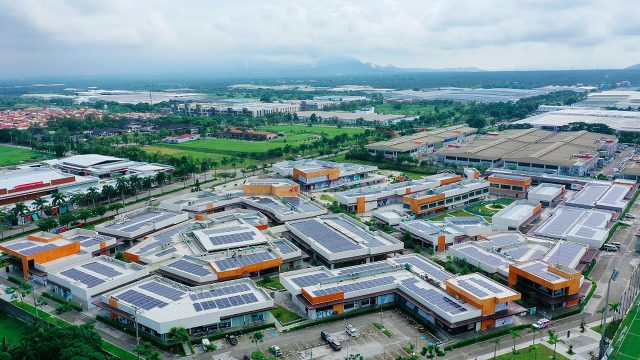
LIMA Estate’s 30-hectare commercial area in Batangas. — BW FILE PHOTO

THE amended guidelines for value-added tax (VAT) zero-rating by economic zone locators could boost purchasing by exporters from local suppliers, the Philippine Economic Zone Authority (PEZA) said.

“With the revised guidelines, this will encourage the locators to localize their sourcing of goods and services. This will increase value adding in the country and facilitate the integration of local suppliers of goods and services into the economic zone (ecozone) value chain,” PEZA Director General Tereso O. Panga told reporters via Viber on Monday.

Mr. Panga added that the amended guidelines show that the government is “serious” in implementing the Corporate Recovery and Tax Incentives for Enterprises (CREATE) Act and attracting foreign direct investment.  

“Overall, this will be a big boost to the investment promotion agencies’ (IPAs) mandate and for the country as a competitive investment destination in the region,” Mr. Panga said.

The Bureau of Internal Revenue (BIR) issued Revenue Regulations No. 3-2023, which amended the VAT zero-rating guidelines.

RR No. 3-2023, allows local suppliers of goods and services to registered export enterprises to forego BIR approval for VAT zero-rating of items they provide to locators. Instead, their VAT zero-rating may be claimed on the strength of certifications to be issued by IPAs such as PEZA.  

The CREATE Act previously required business enterprises to prove that the local purchases of goods and services are directly and exclusively used in their registered activities in order to enjoy the VAT zero-rating. Otherwise, these would be subject to 12% VAT.

Mr. Panga said that locators faced higher costs prior to the BIR issuance due to the limited goods and services covered under the VAT zero-rating incentive.

“This prompted some locators to outsource their service requirements abroad to avoid exposure to VAT. Some locators have resorted to importing their materials as it is easier to avail of tax- and duty-free incentive than sourcing them from the local market given the grey area in BIR’s definitions for direct and exclusive use in a registered activity,” Mr. Panga said.

The BIR regulation also specified six items that cannot be deemed directly or exclusively used in the registered project or the registered export enterprise, to encourage more sourcing from domestic suppliers.

These are janitorial services, security services, financial services, consultancy services, marketing promotion, and services rendered for administrative operations such as human resources, legal, and accounting. — Revin Mikhael D. Ochave

New JV rules signal government intent to assert control over tolls

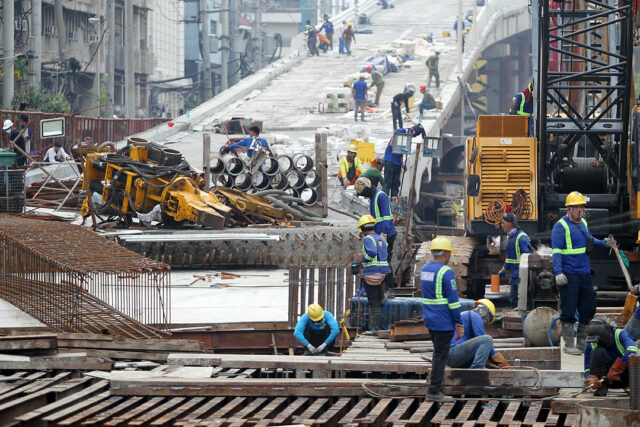
PHILIPPINE STAR/ RUSSELL PALMA

By Luisa Maria Jacinta C. Jocson, Reporter

THE revised guidelines for joint venture (JV) agreements between government and private entities risk dampening investor sentiment but will ensure better regulation, analysts said. 

“This is a positive development reestablishing a clear regulatory regime to govern public-private partnerships (PPPs). It sends a message that public utilities and services remain within the ambit of government’s regulatory powers to protect the public interest,” Terry L. Ridon, a public investment analyst and convenor of think tank InfraWatch PH, said in an e-mail.

“This may reduce the private sector’s appetite to participate in PPPs, but the government is putting its foot down to ensure that the public will not be subjected to exorbitant fees and charges,” he added.

The National Economic and Development Authority (NEDA) recently released the revised guidelines for JV agreements between the government and private entities.

One of the major changes under the revised guidelines is that tolls, fees, rentals, tariffs and charges that a JV may collect for the use or availment of a facility or service will be subject to the approval of the appropriate regulatory body, as provided by the law.

In the previous version of the guidelines, joint venture agreements may designate a formula to guide the adjustment of tolls, fees, rentals, and charges.

“The tolls, fees, rentals, tariffs, and charges may be subject to adjustment during the life of the JV agreement, based on an approved formula/adjustment schedule in the approved JV agreement,” according to the new guidelines.

The agency or local government unit involved must also secure the advice of the regulatory body or a green light from the approving authority, or both, for the formula.

“The monitoring of the consistency of the proposed adjustments of tolls, fees, rentals, tariffs, and charges with the prescribed rate of return, if any, shall be undertaken by the appropriate regulatory body or the government entity,” it added.

Mr. Ridon said that as the government contributes assets and resources into these projects, it is “well within its authority to assert its regulatory powers in these projects.”

“The approval of regulatory fees is in order, because tolls and fees, unlike taxes, are intended to be temporary, meaning once the cost intended to be recovered has been served, then such tolls and fees may be reduced if not totally eliminated, so regulating should include monitoring too,” Antonio A. Ligon, a professor of law and business at De La Salle University, said in a Viber message.

On the other hand, Mr. Ligon said that the revised guidelines will not be a “big issue” for the private sector. 

“What is important is parties agree to comply with existing rules and regulations in line with their objective of accomplishing their venture. It’s timely that parties in the JVs are made conscious and compliant,” he said.

Rizal Commercial Banking Corp. Chief Economist Michael L. Ricafort said that apart from the need for regulatory approvals, investors are also looking for “greater certainty” in JVs for more predictable investment returns. 

“(This serves as a) basis for them to become more decisive in view of other alternative investment options available for them locally and overseas; as well as the need for the government to have more diversified investors and funding for the country’s various infrastructure projects,” he said in a Viber message.

The guidelines came into effect on April 25. They were last revised in 2013.

Another new provision under the revised guidelines is that any increase that exceeds 10% of the project cost would be subject to new approvals. 

“Any addition to the scope of the project that is separable from the existing scope and costs more than 10% of the original project cost shall be treated as a new project and would be subject to the approval and tendering process under the guidelines,” it added.

The guidelines also do not allow the splitting of government contracts or division or breaking up government contracts into smaller quantities and amounts.

It also prohibits dividing contract implementation into artificial phases or sub-contracts to circumvent any provision or procedure under the guidelines including the approval by the NEDA Board Investment Coordination Committee.

Enriched copra meal production for animal feed targeted for Q4

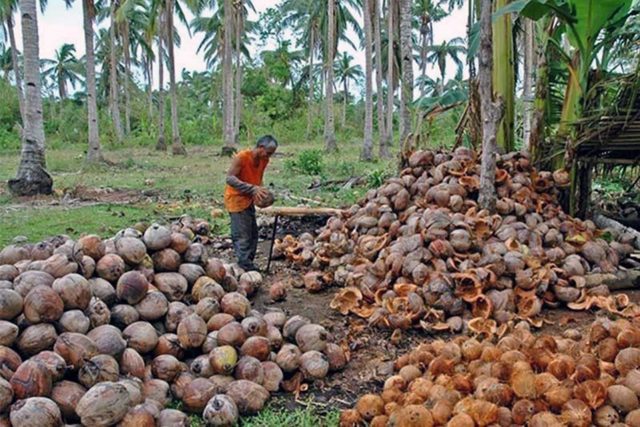
PHILSTAR FILE PHOTO

THE Department of Agriculture said it has set a fourth-quarter target for commencing commercial production of protein-enriched copra meal (PECM) to reduce the need to import animal feed.

“It aims to replace feed, particularly soya. We import a lot of soya. Soya is around 20-40% of the feed ratio,” National Livestock Program (NLP) Director Ruth S. Sonaco told reporters last week.

“If we can replace it with protein-enriched copra meal, there would be a huge difference in feed cost, around 40% less,” she added.

Copra meal is a by-product of the coconut oil extraction process.

The United States Department of Agriculture projected Philippine imports of soybean meal at 2.90 million metric tons (MT) this year, up from an initial forecast of 2.87 MT.

Copra meal production is expected to decline to 1 million MT from 1.13 MT in the previous year due to falling copra output.

Prices of feed grain have been affected due to the Russia-Ukraine war. The two countries are among the top suppliers of feed grains.

“The DA perceives PECM as a possible avenue (for easing) the pressure brought by feed inflation, and thereby cushion the effects of unprecedented feed cost spikes on small, medium to large scale farmers,” the department said in memorandum circular.

According to Ms. Sonaco, the construction of two production facilities is ongoing in Batangas and North Cotabato, targeted for completion within the next two quarters.

Each facility has a budget of P50 million while another two facilities are set to be established next year, she said.

In November, the Department of Budget and Management approved the allocation of P69.7 million to support the project.

POULTRY OUTLOOK
Ms. Sonaco said that the poultry industry’s recovery is outpacing that of livestock.

“The recovery is easier in poultry because remember, broilers only need 28 days. Even if they are culled, poultry farms recover fast,” she said.

The NLP projects chicken this year to be in surplus by about 557,000 MT, equivalent to 128 days of chicken demand.

Domestic production of chicken is expected to hit 2.08 million MT on a liveweight basis, with demand at nearly 1.6 million MT.

The Bureau of Animal Industry said six barangays currently have active cases of type H5N1 avian influenza (AI) as of April 20.

Since the first AI outbreak in January last year, the Philippines has recorded cases in 160 barangays across nine regions. — Sheldeen Joy Talavera

WTO touts benefits of trading system for small countries 

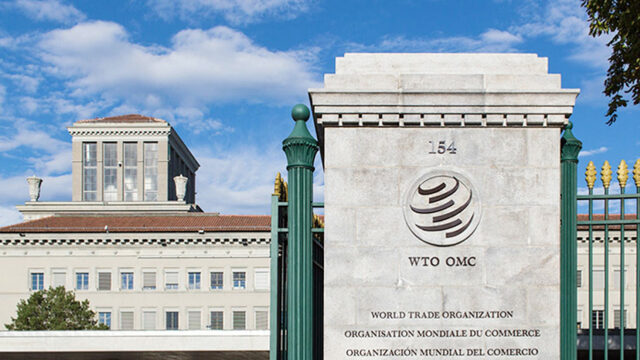
WORLD TRADE ORGANIZATION

SMALLER countries stand to benefit from rules-based trading system as global trade fragments, the World Trade Organization (WTO) said.

“I think we’re all relying on an open, non-discriminatory, and rules-based trading system. And specifically, smaller countries that cannot really assert themselves in a power-based trading system can benefit from that,” WTO Chief Economist Ralph Ossa told reporters at a seminar in Bangkok last week.

He was asked about the impact of trade fragmentation in Southeast Asia and the Pacific.

Mr. Ossa said there are opportunities for countries in the region to host industries that are moving out of big economies like China.

“In terms of your specific region, clearly, there’s an opportunity also in the sense that there are some industries moving out of China… That is what happens if countries get richer and the wages rise… Some industries move out to other destinations. So in that sense, that is an opportunity,” Mr. Ossa said.

“But the big picture is that nobody really gains from this at the end of the day…. You can take the small gains but should be mindful of the big risks,” he added.  

One of the companies that transferred some production outside of China is Apple, Inc., which announced in September that it would move its iPhone 14 production to India.

WTO Director-General Ngozi Okonjo-Iweala has said that trade fragmentation and the decoupling of the global economy into the eastern and western blocs could threaten Southeast Asia and the Pacific.  

“Fragmentation would be costly for all economies, particularly poorer ones. WTO economists estimate that if the global economy decouples into two self-contained blocs, long-term global gross domestic product (GDP) would decrease by at least 5% — worse than the damage from the financial crisis of 2008-09,” Ms. Okonjo-Iweala said.

“Your region, where global supply chains are an important contributor to its economic success, would no doubt be also impacted,” she added.

Meanwhile, Mr. Ossa said there is currently “not much effect” so far from trade fragmentation, but added that global trade is at a “turning point.”

“We do increasingly see policies put in place that kind of accelerating this fragmentation. But then when we look at the actual data and what has happened so far, we do not see that much (effect yet),” Mr. Ossa said.

“It seems that we are at a turning point. We’ve kind of changed course. But we haven’t really sailed for long enough in that direction to really see the impact on the world economy,” he added.

In April, the WTO projected that world merchandise trade volume could post slower growth of 1.7% in 2023 from 2.7% in 2022, but could improve to 3.2% in 2024. — Revin Mikhael D. Ochave

PHL banks still funding coal power projects — CEED

PIXABAY

THE PHILIPPINES is falling short of its Paris climate commitments, with coal-fired plants still attracting financing from major banks, the sustainability think-tank Center for Energy, Ecology, and Development (CEED) said.

“There is a convergence of climate, energy security and affordability, and environmental imperatives that point to the urgency of ending our use of this dirty fuel — warnings of the rapidly closing window to keep the 1.5°C global warming goal alive, in particular, should have already been a wakeup call,” Gerry C. Arances, executive director of CEED, said in a message.

According to a report from Withdraw from Coal: End Fossil Fuels (WFC-ECC) Philippine banks funded coal and gas-fired power plants. The financing amounted to $867.08 million for the period April 2022 to March 2023.

The report identified the banks as Bank of the Philippine Islands, BDO Unibank, Inc., Metropolitan Bank & Trust Co., Security Bank Corp., Philippine National Bank, and China Bank Corp.

“Philippine banks that are still fueling coal with financing policies that sound good only on paper are making a game out of Filipinos’ climate survival,” Mr. Arances said.

“To date, the Philippines’ biggest banks are contributing to the unalignment of finance to climate initiatives by continuing to finance the coal industry. Worse, they have even begun to divert financing into the expansion of another fossil fuel — natural gas, better referred to as fossil gas,” the report said.

Coal-fired power plants still dominate the power generation mix at 57.5%, with natural gas accounting for 17.7% and renewable energy 23.4%.

According to a Climate Analytics report, a German non-profit, the Philippines must have an 80% share of renewable energy in its power mix by 2030 to become compliant with the Paris climate agreement.

The Paris Agreement binds signatories to take action in holding the increase of warming of global temperatures to well below 2°C compared to pre-industrial levels. Signatories have committed to action plans keeping warming at 1.5°C.

To limit global warming to about 1.5°C, greenhouse gas emissions must peak before 2025 and decline by around 43% by 2030. — Ashley Erika O. Jose

To tax or not to tax compensation?

On May 1, 1903, the first Labor Day was celebrated in the Philippines. Thousands of workers marched from the streets of Tondo, Manila to Malacañang Palace to voice their demands for better working conditions and fair treatment from the then American-ruled administration. Fast forward one hundred and twenty years later, we are still commemorating the contributions of our labor force, which has helped build and develop the nation after years of immeasurable hard work and perseverance.

Perhaps, one of the most recurring issues raised every Labor Day is the demand for higher wages. Related to this, from the point of view of taxpayers, the amount of take-home pay received by employees, after deducting the withholding tax on their compensation, is vital to each individual employee-taxpayer.

Thus, having an understanding of the rules and regulations surrounding what constitutes taxable and non-taxable income is crucial for employees and employers alike, to avoid disputes in determining how much tax should be deducted from taxpayers’ hard-earned money.

To arrive at taxable compensation, non-taxable income is deducted from gross compensation. All forms of compensation are generally included as part of the taxable income unless they are specifically allowed by tax rules to be treated as non-taxable income.

Below are some of the more common compensation items or employee benefits and their related tax treatments.

ALLOWANCES
Fixed or variable allowances are generally considered taxable compensation.  However, there are types of allowances included in the list of de minimis benefits under Revenue Regulations (RR) No. 5-2011, as updated by the Tax Reform for Acceleration and Inclusion (TRAIN) Law, which are not taxable. These non-taxable allowances consist of the following:

a. P250 monthly medical allowance to dependents of employees;

b. P2,000 monthly rice allowance;

c. P300 monthly laundry allowance;

d. P6,000 annual uniform and clothing allowance; and

e. Daily meal allowance for overtime work and night/graveyard shift not exceeding 25% of the basic minimum wage.

With regard to the above daily meal allowance, the Bureau of Internal Revenue (BIR) clarified through BIR Ruling No. 544-12 that daily meal allowance not given on occasion of overtime work cannot be classified as a de minimis benefit. Hence, daily meal allowances provided to employees will be considered taxable, unless specifically intended for overtime work.

Any other allowances not included in the list of de minimis benefits, such as communication allowance, travel allowance, fuel allowance, and housing allowance, will be generally included as part of taxable compensation of employees. Note, however, that when the allowances are provided for expenses incurred or expected to be incurred by an employee in the performance of his duties and are necessary in pursuit of the trade or business of the employer, these are not considered compensation subject to withholding tax, as long as the allowance is subject to accounting or liquidation by the employee in accordance with the substantiation requirements of Section 34 of the Tax Code, as amended.

MEDICAL ASSISTANCE
Included in the list of de minimis benefits prescribed by the BIR is actual medical assistance not exceeding P10,000 per year. Hence, any medical assistance provided within the prescribed threshold can be considered non-taxable income.

Pursuant to BIR Ruling No. 019-02, the medical assistance provided to employees must be for their own medical expenses. Further, the medical assistance must be fully substantiated with actual official receipts.

RR No. 5-2011 cited examples of medical assistance such as expenses for “medical and healthcare needs,” annual executive check-up, maternity assistance, and routine consultations.

MONETIZED LEAVE
For private employees, unused vacation leave credits not exceeding 10 days converted to cash are considered non-taxable de minimis benefits during the year. Meanwhile, for government officials and employees, the monetized value of both vacation and sick leave is considered a de minimis benefit.

Hence, without specific BIR issuances/tax exemption rules, conversion to cash of other leave benefits, such as birthday leave, bereavement leave, and emergency leave, will unfortunately be considered taxable income.

13TH MONTH PAY AND OTHER BONUSES
The mandatory 13th month pay and other additional benefits granted by employers, such as 14th month pay, performance bonus, health bonus, perfect attendance bonus, and all other types of bonus, may be considered non-taxable compensation but only up to P90,000. Any amount in excess of the P90,000 ceiling may not be allowed as deductions against gross income and forms part of the taxable income of employees.

OTHER BENEFITS SUBJECT TO P90,000 THRESHOLD
“Other benefits” considered in computing for the amount subject to the P90,000 threshold include fringe benefits provided to rank-and-file employees, benefits in excess of the de minimis thresholds, loyalty awards, and gifts given in cash or in kind. Hence, these benefits are generally considered taxable, unless the aggregate amount of 13th month pay and other benefits of the employee does not exceed the P90,000 ceiling.

Discussed above are just some of the usual benefits received by employees as hard-earned fruits of their labor. Such fruits of labor should be carefully evaluated on whether they should be taxed or not, as tax treatments certainly have an impact on the take-home pay of employees.

And as another Labor Day comes to a close, we are reminded of how vital the role of our labor force is in the development of our economy. They should be treated fairly and their compensation should be taxed or not taxed accordingly.

Let’s Talk Tax is a weekly newspaper column of P&A Grant Thornton that aims to keep the public informed of various developments in taxation. This article is not intended to be a substitute for competent professional advice.


Patrick Manuel R. Olarte is a senior in charge from the Tax Advisory & Compliance division of P&A Grant Thornton, the Philippine member firm of Grant Thornton International Ltd.

pagrantthornton@ph.gt.com

Marcos won’t allow Philippines to be used as military launchpad

PHILIPPINE COAST GUARD FACEBOOK PAGE

PRESIDENT Ferdinand R. Marcos, Jr. on Sunday said he would not allow any country to use the Philippines as a staging post for any kind of military action, amid increasing tensions between the US and China over self-ruled Taiwan. 

“We will not allow that to happen,” he said told reporters aboard the plane on his way to Washington, based on a transcript sent by the presidential palace.

“All we are worried about is the peace and the safety of our people, here and abroad. And that’s the main consideration. So in my view, that’s the role.”

Mr. Marcos said his government would “not encourage any provocative action” by other countries that will involve the Philippines.

The Philippine leader on Sunday left Manila for a four-day visit to Washington. He and US President Joseph R. Biden were set to meet at the White House on May 1.

Mr. Marcos said he wanted to understand Washington’s view of the situation in the Indo-Pacific region and “how do they feel it will develop and what part today the US intends to play.”

He said he intends to “put our position forward.” “We have no interest other than peace in our region.”

He said the Association of Southeast Asian Nations (ASEAN) also plays a crucial role in keeping the peace and lowering tensions.

“The best move for us is to stay within ASEAN, keep ASEAN solid, strong and united,” he said. If ASEAN members have a consensus, it would remain strong “be the one to conduct and to lead the political fortunes of all the other countries around Asia.”

The Philippine leader said China had yet to form a team that will talk to Philippine officials to settle sea disputes.

He made the remark when asked if had spoken with Chinese officials about a near-collision incident between a Chinese Coast Guard ship and a Philippine patrol vessel carrying journalists in the South China Sea on April 23.

“They almost collided and that can cause casualties on both sides,” Mr. Marcos said.

“And that’s exactly what we want to avoid, so I told them we should finish it, create the high-level communication mechanism we talked about. It has yet to be formed,” he said. “We’re waiting for China to give us the details of who will be the team at their end.”

The president said his government had submitted the names and “even the telephone numbers” of its team members.

Mr. Marcos said China had agreed to “sit down” and talk about Filipinos’ fishing rights within the Philippines’ exclusive economic zone in the South China Sea.

“I’ve asked the Coast Guard and the Department of Foreign Affairs to put together perhaps a map of these fishing grounds that we will say, this is part of the Philippines, and we’ll see what they say when we give them our proposal,” he said in mixed English and Filipino.

The two countries agreed to form a communication mechanism during Mr. Marcos’ state visit to China in January. The mechanism should be between the Department of Boundary and Ocean Affairs of the Ministry of Foreign Affairs of China and the Maritime and Ocean Affairs Office of the Department of Foreign Affairs of the Philippines.

The April 23 incident between the Philippines and China happened just a day after Chinese Foreign Minister Qin Gang met with Mr. Marcos in Manila, where they agreed to establish more “lines of communications.”

SHADOWED
Boosting communication lines between the two countries would help immediately resolve “any event that occurs in the West Philippine Sea that involves China and the Philippines,” Mr. Marcos said in a statement after their April 22 meeting.

The April 23 incident happened after BRP Malapascua and BRP Malabrigo of the Philippine Coast Guard (PCG) approached the Second Thomas Shoal, which the Philippines calls Ayungin.

Second Thomas Shoal is home to a small military contingent aboard a rusty World War II-era US ship that was intentionally grounded in 1999 to reinforce the Philippines’ territorial claims.

The Philippine vessels were shadowed by Chinese Navy and coast guard ships while these were patrolling within the Philippines’ exclusive economic zone in the South China Sea.

The Philippine Coast Guard said it had spotted a swarm of more than 100 Chinese vessels during the April 18- 24 journey.

In February, just a month after Mr. Marcos’ China visit, the Philippines accused the Chinese Coast Guard of endangering the crew of a Philippine resupply ship at Second Thomas Shoal by pointing a military-grade laser at the vessel.  Mr. Marcos summoned Chinese Ambassador to Manila Huang Xilian over the incident.

Mr. Marcos in February announced the expansion of the Philippines’ 2014 Enhanced Defense Cooperation Agreement, giving Washington access to four more military bases on top of the five existing sites.

China has criticized the EDCA expansion, accusing Washington of endangering regional peace and stability.

EDCA banks on the 1999 visiting forces agreement and the 1951 Mutual Defense Treaty between the Philippines and US.

In September 1991, Philippine senators ended a treaty that allowed the US to operate military bases north of the country. — Kyle Aristophere T. Atienza

Philippines to boost vaccination amid rising coronavirus infections

PHILIPPINE STAR/ MICHAEL VARCAS

By Kyle Aristophere T. Atienza, Reporter

THE GOVERNMENT will boost vaccination efforts amid rising coronavirus infections in the Philippines, President Ferdinand R. Marcos, Jr. said on Sunday.

“We will have to conduct again, especially for young people, a vaccination push,” he told reporters aboard a plane on his way to Washington, based on a transcript from the presidential palace.

Mr. Marcos feared that the heat endured by Filipinos during the summer peak might weaken their immune system and make them more vulnerable to COVID-19.

The heat index in Metro Manila and other parts of the country would remain around 40ºC in the next several weeks, the local state weather bureau said earlier. A heat index of 42ºC to 51ºC falls under a “danger category.”

The weekly COVID-19 positivity rate in Metro Manila rose to 14.3% on April 27 from 9% on April 20, according to the OCTA Research Group. But deaths and hospital admissions in the capital region remained low at 22%.

“The National Capital Region has reported close to zero deaths,” OCTA said in a Friday bulletin.

The World Health Organization (WHO) has recommended a 5% threshold for the positivity rate.

Mr. Marcos notes that while the COVID-19 positivity rate in the country had increased, the “baseline still remains low.”

He expects the new wave of infections not to force him to reimpose mandatory face mask rules.

“Let’s see if there will be guidance from the Inter-Agency Task Force on the Management of Emerging Infectious Diseases, if there will be guidance from the Department of Health (DoH),” he said. “I hope we don’t have to, but we might. I hope not.”

Earlier, OCTA fellow Fredegusto P. David cited the detection of Omicron subvariant XB.1.16 as a possible reason for the significant increase in COVID-19 cases in the country.

Also called Arcturus, the subvariant comes from XBB, a recombinant of two BA.2 descendent lineages. The Health department has said XB.1.16, which is more contagious, could evade immunity.

The WHO has labeled XBB.1.16 a variant of interest.

The DoH on April 25 reported the Philippines’ first XBB.1.16 patient, a Filipino from Iloilo province in central Philippines. The patient was asymptomatic and had since recovered, the agency said on April 26.

Meanwhile, at a roundtable discussion on April 28, League of Municipalities of the Philippines (LMP) Secretary General and Barcelona, Sorsogon Mayor Cynthia Falcotelo-Fortes said the success of any vaccination program in the Philippines relies heavily on local government units.

“What is needed is contextualization in every local government unit. There is no one-size-fits-all program because municipalities have varying contexts,” she said. “Let’s localize programs.”

While support from the National Government through the DoH is needed in vaccination campaigns, local governments should “proactively initiate local programs and be as creative as they can be to increase local immunization rates using available resources,” Ms. Fortes said.

Meanwhile, pediatric infectious disease expert Anna Ong-Lim cited the need to increase childhood vaccination in the country.

She noted that during the pandemic, the Philippines’ “immunization coverage decreased significantly.”

“Most of our immunization coverage is roughly about 50%. What’s our target? 90%, but that’s still conservative. We need to catch up,” Ms. Lim said.

Routine immunization in the Philippines went down to an all-time low of 48.5% in 2021 and recovered in 2022 to 62.9%. Experts said with progressing COVID-19 vaccinations and easing restrictions, there is an opportunity to bounce back and boost routine vaccination and catch-up immunization — vaccinating a person who did not receive it at the recommended age.

Ms. Lim warned that if vaccination rates continue to be low, children are at risk of infectious diseases such as measles, influenza, polio and pneumonia that are just as threatening.

The Leage of Municipalities cited challenges to improve their vaccination rates as low immunization persists in some areas of the country.

“One is parents’ behavior,” Ms. Fortes said. “These young parents, they think vaccination is not safe. On the part of local government units, we continue our advocacy.”

Her town of Barcelona, for instance, brings immunization closer to the people. “We don’t require them to come to our rural health units. We have strategic locations, we do clustering.”

The league made a commitment to support National Government efforts in implementing routine and catch-up vaccination for children.

“I’m calling on my fellow local government chiefs to coordinate with DoH and maximize your resources to improve your local community’s immunization rate,” she told the roundtable.

“The National Government cannot do it alone. It takes all of us to achieve the national target and protect our children from vaccine-preventable diseases,” she added.

“We really bring to life accountability. We don’t point fingers at anyone, but

Once the program is out, we are accountable, and we will define the success rate. We need to raise our level of governance.”

Wage-setting system, rates at the center of Labor Day protests

WORKERS’ groups hold a rally in Manila on May 1, 2023, calling for a wage hike on Labor Day. — PHILSTAR/WALTER BOLLOZOS

By John Victor D. Ordoñez, Reporter 

THE GOVERNMENT should review the country’s wage-setting process, provide more public sector jobs and ensure workers can form trade unions peacefully, labor groups demanded on Monday, Labor Day. 

“Jobs generation should be the centerpiece of policy-making,”  Sentro ng mga Nagkakaisa at Progresibong Manggagawa Secretary-General (SENTRO) Josua T. Mata said in a Viber message.    

He said a robust public employment programis needed to ensure that we attain full employment as mandated by the Constitution.” 

More than 10,000 workers from trade unions flocked to the streets of Mendiola in the capital Manila for a united stance on International Workers’ Day, according to the All Philippine Trade Unions, an alliance of Philippine labor groups. 

“We are also calling on the government to junk the regional wage setting mechanism and replace it with a national minimum wage that should progressively be raised towards a living wage,” he said. 

Minimum wage rates in the Philippines are set by region through tripartite boards composed of representatives from the workers sector, employers sector, and government.    

Every wage order approved by a Regional Tripartite Wages and Productivity Board, based on economic indicators and other related factors, is subject to a final concurrence by the secretary of the Department of Labor and Employment (DoLE).    

The Philippines is divided into 17 regions.   

In a separate statement, the Bukluran ng Manggagawang Pilipino (BMP) reiterated its call for a P750 increase to the minimum wage in Metro Manila to help workers in the capital region cope with inflation.  

“It is time for our government to address the increasingly precarious work conditions that millions of contractual workers are facing today,” said Luke Espiritu, president of the BMP.  

In March, the Unity for Wage Increase Now! (UWIN) sought to raise the P570 daily minimum wage in Metro Manila to P1,100. The region’s wage board approved a P33 minimum wage hike in June last year.  

Senate President Juan Miguel F. Zubiri earlier filed a bill seeking to raise the minimum wage for private sector workers by P150. 

The Makabayan bloc had also proposed a wage hike at the House of Representatives, seeking a P750 hike for all private sector workers, those working in special economic zones, freeports and in the agricultural sector.  

FARM WAGES
Farmer groups on Monday brought to attention the wage discrimination against agricultural workers and called for the adoption of a national minimum wage.  

Ariel B. Casilao, acting chairperson of Unyon ng Manggagawa sa Agrikultura (UMA), said agricultural workers in most regions have a lower minimum wage rate compared to their industrial counterparts.  

How would the countrys agriculture be boosted if our own government looks down on peasants who make up the democratic majority of the population,he said in a statement.   

Mr. Casilao noted that the average daily pay of a farm worker stood between P70 – P350 as their group demanded an “across-the board hike” of P750 to earn a family living wage. 

UMA spokesperson John Milton Lozande said a genuine agrarian reform program is also needed to address land grabbing that force farmers into wage work.   

The Kilusang Magbubukid ng Pilipinas urged farm workers to engage and participate in demanding genuine land reform.  

The combined strength of farmers asserting genuine agrarian reform across the country and workers demanding for wages, jobs, and democratic rights can achieve more gains for the toiling masses and all Filipino working people,” Kilusang Magbubukid ng Pilipinas said in a statement.  

Sonny A. Africa, executive director of think tank Ibon Foundation, said the low wages for agricultural workers stem from the “persistently low agricultural productivity.”  

He also noted that most of the employment set up in the agricultural sector are “very informal” and “non-wage basis.” 

“This agricultural and overall economic backwardness is due to the government’s long-standing neglect of agricultural and industrial development for the country,” he told BusinessWorld in a Viber message.  

In 2021, fisherfolk and farmers had the highest poverty incidence rates at 30.6% and 30%, respectively, according to preliminary data released by the Philippine Statistics Authority. 

“The most immediate measure, however, is to have a national minimum wage that raises wages nationwide to more decent levels,” Mr. Africa said.

He said most companies can afford to give higher wages while the government can provide subsidies for micro and small enterprises.

The government’s strategy of using low wages to supposedly attract foreign investment and without meaningful agricultural or industrial policy is deeply counterproductive,” he added.   

GOVERNMENT AID
Labor Secretary Bienvenido E. Laguesma, in an interview with One News on Monday, said the DoLE will continue providing financial aid and skills training programs for workers, while regional wage boards assess wage petitions.  

DoLE on Sunday and Monday held job fairs nationwide and provided over P1.88 billion in cash aid to beneficiaries of its employment program for displaced workers.  

“Wage hikes are not rushed since we need to consider the situation of most micro and small enterprises,” Mr. Laguesma said in Filipino.  

Headline inflation likely slowed within the 6.3-7.1% range in April due to lower food, gas and electricity prices, slower than the 7.6% in March, the Bangko Sentral ng Pilipinas said in a statement on April 28. 

The Philippine jobless rate in February went up by 4.3% month on month to 2.48 million. Job quality improved that month as underemployment, a measure of Filipinos seeking more work, fell to 12.9% from 14.1% in January and 14% a year earlier.  

LABOR RIGHTS
Meanwhile, Renato B. Magtubo, chairman of Partido Manggagawa, reiterated that the state should look into cases of violence, red-tagging and extralegal killings against union organizers. 

“The government should adhere to the recommendations of the International Labor Organization (ILO) High-Level Tripartite Mission aimed at protecting, promoting and fulfilling workers’ freedom of association,” he said in a Viber message.  

A team of ILO representatives visited the Philippines in February and met with trade union organizers and government officials to discuss reported human rights violations against workers.  

In a joint report submitted to the ILO, Philippine trade unions said the state has consistently failed to comply with ILO conventions on freedom of association and the right to organize.

President Ferdinand R. Marcos, Jr. on Sunday signed an executive order creating an inter-agency body that will investigate labor rights violations against trade unionists.  

Mr. Magtubo also said that the government should address the plight of those working in contractual labor and ensure their security of tenure. — with Sheldeen Joy Talavera 

PHL lawmaker wants inclusion of cybersecurity in defense treaty with US

PHILIPPINESTAR/ WALTER BOLLOZOS

A PHILIPPINE lawmaker called for the inclusion of cybersecurity measures in the countrys 1951 defense treaty with the United States, citing that cyberattacks pose serious threat to critical infrastructure.  

If a cyberattack happens, our banking system and critical government infrastructures will go down — brownouts, and blackouts [will happen] nationwide, even telecommunications [will suffer],Senator Francis N. Tolentino told DZBB radio on Sunday. 

A cyberattack on the countrys banking system and government institutions should also be considered armed attacks,Mr. Tolentino said.  

Michael Henry Ll. Yusingco, a lawyer and policy analyst, said the proposal should be discussed further to consider all stakeholders involved in the treaty. 

Cybersecurity is also vital in maintaining our maritime security,Mr. Yusingco said via Messenger chat. Part of the discussion should be how our cybersecurity infrastructure compliments our maritime security strategy.”  

Beyond the defense sector, Mr. Yusingco said the Philippines needs to invest in overall cybersecurity systems as Filipinos have essentially established virtual livesin cyberspace.”   

It is imperative that our government acquire the wherewithal to keep this space safe and secure for us,he said.  

Philippine President Ferdinand R. Marcos, Jr., who is on an official visit to the US this week and was scheduled to meet with President Joseph R. Biden on May 1, said he aims to include the 70-year-old Mutual Defense Treaty (MDT) in the discussions.   

Mr. Marcos said the treaty has to evolve,citing the changing geopolitical landscape from tensions in the South China Sea, the conflict between China, self-ruled Taiwan and the US, as well as nuclear threats from North Korea. 

In a statement last week, the White House said the two leaders would review opportunitiesto deepen economic cooperation, invest in the clean energy transition and ensure respect for human rights.  

The two leaders will also discuss regional matters and coordinate efforts to uphold international law and promote a free and open Indo-Pacific,it also said.  

The MDT enabled the 2014 Enhanced Defense Cooperation Agreement (EDCA) between the two countries, which was recently expanded to allow American troops access to four new sites in the Philippines. Beatriz Marie D. Cruz 

Marcos says national gov’t to assist in Western Visayas power distribution problem

BW FILE PHOTO

PRESIDENT Ferdinand R. Marcos, Jr. said the national government will help resolve the power distribution issues in Western Visayas following power outages in the regions Panay and Negros islands since Friday.   

“Negros and Panay islands are the ones having problems now. The irony is Negros actually has a surplus of power supply,” the president told reporters onboard a plane en route to Washington, based on a Palace-supplied transcript released on Monday.  

“The reason why theres a brownout is because of the distribution system in the high-tension wire,he said partly in Filipino. So thats what we will have to look into.”  

The countrys power transmission system is operated by the National Grid Corporation of the Philippines (NGCP), a privately-owned consortium composed of Monte Oro Grid Resources Corp., Calaca High Power Corp., and the State Grid Corporation of China as technical partner.  

When asked whether the national government would take over power distribution in the area, Mr. Marcos said: I wont take over anything. Well augment on the distribution side because that has been the problem.”  

The president said what the government was initially looking into was how to get the surplus power out of Negros into the rest of the Visayas because theyre at a net loss, a net undersupply.” 

But suddenly, this comes up and it turns out its because of the distribution system not the power supply.” 

Western Visayas is composed of Negros Occidental in Negros island; Aklan, Antique, Capiz, and Iloilo in Panay; and the island province of Guimaras. The regional center is Iloilo City, one of the fastest growing urban areas in the country.   

The region suffered a major power outage over the weekend, starting with a total blackout in the entire Panay and Guimaras islands on Friday.  

The Department of Energy on Sunday said the power interruptions in Panay may continue indefinitely as the NGCP was still working on the full recovery of the islands grid. Kyle Aristophere T. Atienza 

ADVERTISEMENT
ADVERTISEMENT