Home Blog Page 4799

PSE questions P189-M deficiency taxes

THE Philippine Stock Exchange, Inc. (PSE) has questioned the tax bureau’s assessment of about P189.2 million in deficiency taxes, including a compromise penalty and interests up to Sept. 30, 2023.

In a disclosure on Tuesday, the stock market operator said the assessed value involved alleged deficiencies in various taxes in the calendar year 2017 including income tax, value-added tax, and expanded withholding tax.

“The Company will dispute said assessment and will take appropriate legal action for the cancellation of the assessment,” PSE said.

Based on its submitted information statement, the listed firm derives revenues from listing- and trading-related fees. It charges listing fees for initial public offerings and additional listings, and for annual listing maintenance.

PSE’s trading revenues are mainly comprised of transaction fees, subscription fees, and service fees related to clearing and settlement.

In the first quarter of this year, its net income after tax decreased by 0.5% to P203.16 million from P204.21 million in the same period last year. It attributed the decline mainly to a 2.16% drop in its operating revenues and a 9.3% increase in cost ad expenses.

PSE provides and maintains a convenient and suitable market for the exchange, purchase and sale of securities and other instruments.

On Tuesday, its shares closed unchanged at P164 each.

BSP Circular No. 1171 amends foreign exchange regulations

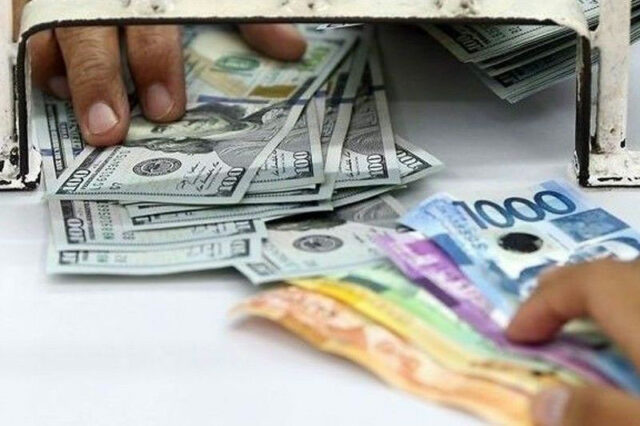
PHILIPPINE STAR/ MIGUEL DE GUZMAN

Over the past few years, the Bangko Sentral ng Pilipinas (BSP) has undertaken various liberalization measures to ease foreign exchange regulations and facilitate foreign exchange transactions by banks, international and domestic corporations, Filipinos working and living abroad, and the public in general.

In particular, the amendments under Circular No. 1171 are expected to have a significant impact on the foreign exchange market in the country. These amendments to foreign exchange regulations are in line with the regulator’s thrust to further streamline procedures and documentary requirements for foreign exchange transactions. While these amendments broadly seek to ease the requirements on foreign currency financing, these changes will also help prevent money laundering and other financial crimes.

One of the key amendments introduced by Circular No. 1171 is the relaxation of the rules on foreign currency loans and borrowings. Under the new circular, non-residents will now be allowed to borrow foreign currency from residents without the need for prior approval from the BSP. This amendment is expected to make it easier for businesses to access foreign currency financing.

Another key amendment is the simplification of the rules on foreign investments. Under the new circular, non-residents will now be able to register their foreign investments with the BSP through a single form. This simplification is expected to make it easier for businesses to invest in the Philippines.

In addition to these key amendments, the BSP also adopted the following:

• Issuance in electronic form of BSP — International Operations Department (IOD) documents [e.g., BSP letter-approval, Bangko Sentral Registration Document (BSRD)] making all the issued electronic BSRD forms valid even after the period covered by Circular 1080. In relation, BSP shall no longer issue original hard copies to replace the said BSP documents;

• Electronic submission of BSP-IOD issued documents to authorized agent banks (AABs)/AAB subsidiary or affiliate forex corporations (AAB forex corps) and to the BSP;

• Electronic submission of BSP-IOD application forms without the required electronic/digital signatures, provided that the same shall be accompanied with the required attestation from the submitting party;

• Electronic submission of reports to BSP-IOD;

• Lifting of the notarization requirement for certain supporting documents for trade and non-trade current account transactions, and foreign investments; and,

• Lifting of the applicable processing fees, penalties, and dues in relation to non-compliance with period for submission to BSP-IOD of applications/requests for various FX transactions.

The BSP has stated that these amendments are aimed at promoting a more efficient and transparent foreign exchange market. The BSP believes that these amendments will help to attract more foreign investment and boost the economic growth in the Philippines.

This article is for general informational and educational purposes only and not offered as and does not constitute legal advice or legal opinion.


Sittie Namraidah L. Ali is an associate of the Corporate & Special Project  Department of the Angara Abello Concepcion Regala & Cruz Law Offices (ACCRALAW).

slali@accralaw.com

(632) 8830 8000

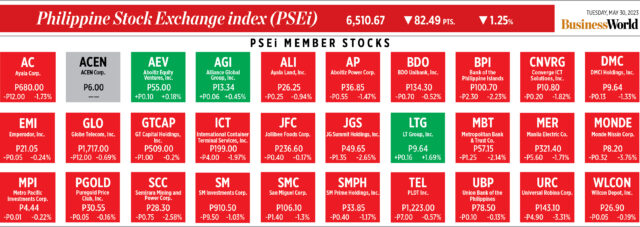
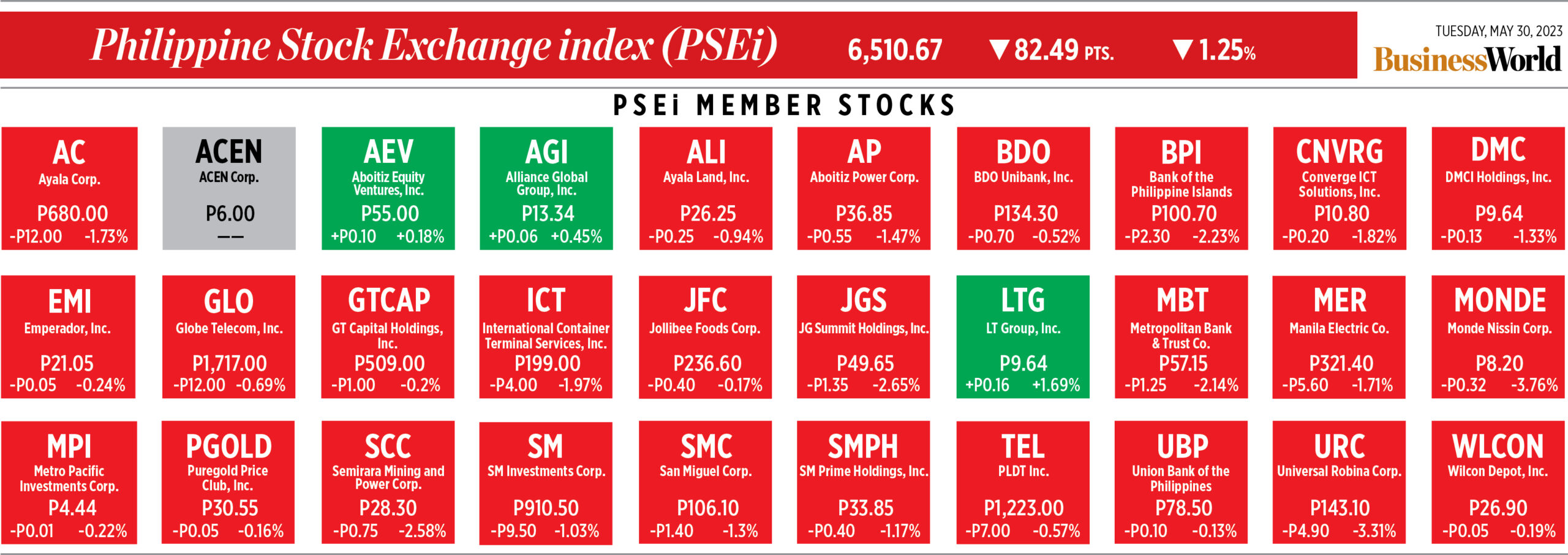
How PSEi member stocks performed — May 30, 2023

Here’s a quick glance at how PSEi stocks fared on Tuesday, May 30, 2023.


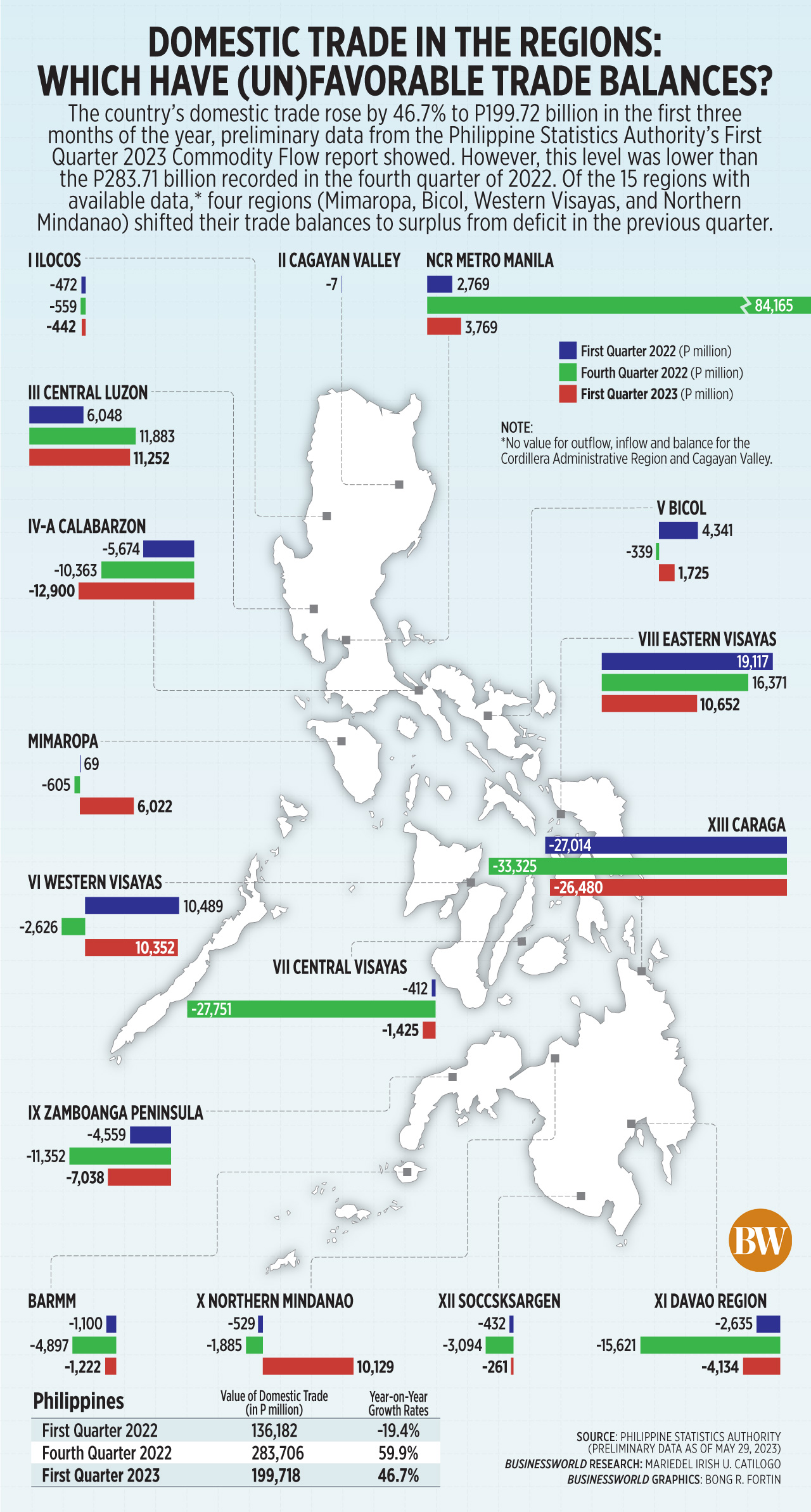
Domestic trade in the regions: Which have (un)favorable trade balances?

THE DOMESTIC TRADE in goods grew by 46.7% year on year in the first quarter to P199.72 billion, the Philippine Statistics Authority (PSA) said on Tuesday. Read the full story.

Domestic trade in the regions: Which have (un)favorable trade balances?

Philippine shares fall ahead of MSCI rebalancing

BW FILE PHOTO

PHILIPPINE SHARES declined on Tuesday as investors positioned ahead of the Morgan Stanley Capital International (MSCI) rebalancing and await the passage of the US debt ceiling bill.

The Philippine Stock Exchange index (PSEi) fell by 82.49 points or 1.25% to close at 6,510.67 on Tuesday, while the broader all shares index went down by 35.36 points or 1% to end at 3,475.05.

“The index was dragged down by foreign selling as various institutional investors rebalanced portfolios ahead of the effectivity of MSCI adjustments and with the trading month drawing to a close,” China Bank Capital Corp. Managing Director Juan Paolo E. Colet said.

“The PSEi is again critically hovering above its 6,500 support, which could mean a potentially volatile session tomorrow on the back of last-minute window dressing,” Mr. Colet added.

Globalinks Securities and Stocks, Inc. Head of Sales Trading Toby Allan C. Arce said that shares fell on Tuesday amid continued uncertainty over the US debt limit deal.

“Despite [Monday’s] cheer over the prospect that the world’s largest economy will avert a major debt default, markets are not out of the woods yet. Although an agreement had been reached “in principle,” it came just as lawmakers were hitting the road for the Memorial Day holiday in the US and are not expected to return until June 4,” Mr. Arce added.

Over the weekend, US President Joseph Biden and House Speaker Kevin McCarthy reached a tentative deal to suspend the $31.4-trillion debt ceiling until Jan. 1, 2025, and would be ready for voting in Congress, Reuters reported.

If approved, the deal will prevent the US government from defaulting on its debt and comes after weeks of heated negotiations between Mr.  Biden and House Republicans.

It still needs to pass through a narrowly divided Congress before June 5, when the US Treasury says it would run short of money to cover all of its obligations.

The agreement would suspend the debt limit through Jan. 1, 2025, cap spending in the 2024 and 2025 budgets, claw back unused COVID funds, speed up the permitting process for some energy projects and include extra work requirements for food aid programs for poor Americans.

Back home, all sectoral indices closed lower on Tuesday. Mining and oil decreased by 205.28 points or 2.01% to 9,963.43; industrials fell by 146.31 points or 1.56% to 9,230.80; financials shed 24.26 points or 1.32% to end at 1,804; services dropped by 20.04 points or 1.29% to 1,533.62; holding firms went down by 69.10 points or 1.05% to 6,503.04; and property declined by 24.88 points or 0.91% to 2,704.61.

Value turnover rose to P4.46 billion on Tuesday with 1.11 billion shares changing hands from the P3.29 billion on Monday with 599.74 million issues traded on Friday.

Decliners outnumbered advancers, 127 versus 42, while 43 names closed unchanged.

Net foreign selling stood at P85.53 million on Tuesday versus the P143.21 million in net buying seen on Monday. — A.H. Halili with Reuters

Peso sinks to 6-month low vs dollar

BW FILE PHOTO

THE PESO sank to a six-month low against the dollar on Tuesday on expectations that the Bangko Sentral ng Pilipinas (BSP) could hold rates steady in its next review while the US Federal Reserve remains hawkish.

The local currency closed at P56.31 versus the dollar on Tuesday, weakening by 19 centavos from Monday’s P56.12 finish, data from the Bankers Association of the Philippines’ website showed.

This was the peso’s worst close in six months or since its P56.56 finish on Nov. 29, 2022.

The local unit opened Tuesday’s session at P56.07 per dollar. Its intraday best was at P56.05, while its worst showing for the day was at P56.44.

Dollars traded rose to $1.394 billion on Tuesday from the $1.113 billion recorded on Monday.

“The peso weakened as prospects of June BSP rate hike waned after Governor Medalla hinted at a potentially lower domestic inflation level for May 2023,” a trader said in an e-mail.

Headline inflation in May will be significantly lower than 6.6% in April, putting it on track to return within the 2-4% target by September or October, the BSP said.

BSP Governor Felipe M. Medalla told reporters on Monday that inflation is rapidly easing year on year due to high base effects.

Inflation has been on a downtrend since hitting 8.7% in January. It cooled to 6.6% in April from 7.6% in March, but it was faster than 4.9% a year ago.

For the first four months of the year, average inflation stood at 7.9%. This is still higher than the central bank’s 5.5% full-year forecast and 2-4% target.

The Philippine Statistics Authority is scheduled to release its May inflation data on June 6.

The peso tracked the performance of other Asian currencies on Tuesday amid hawkish remarks from US Federal Reserve officials, Rizal Commercial Banking Corp. Chief Economist Michael L. Ricafort said in a Viber message.

The dollar was last down 0.18% against the Japanese yen at 140.18, Reuters reported. The US currency had hit a six-month high of 140.93 yen before the announcement.

Fed officials said they see the need for further monetary tightening due to higher-than-expected consumer spending in April.

US consumer spending increased 0.8% last month, the Commerce department said on Friday. The core Personal Consumption Expenditures price index increased 0.4% in April after rising 0.1% in March, and was up 4.7% year on year.

Money markets price in a roughly 62% chance that the Fed will raise rates by 25 basis points in June versus a roughly 26% chance a week ago.

For Wednesday, the trader sees the peso moving between P56.20 and P56.45 per dollar, while Mr. Ricafort sees it trading from P56.20 to P56.40. — AMCS with Reuters

Regulator seeking power to order GOCC restructuring

THE Governance Commission for Government-Owned or -Controlled Corporations (GCG) said it is proposing that it be given the authority to restructure companies that it oversees.

In a statement outlining its proposals to amend its charter on Tuesday, the GCG said the authority it is seeking would give it “the express power to consolidate, rationalize, and integrate GOCCs into National Government agencies (NGAs).”

It said it will also propose to Congress that it be given the power to issue subpoenas or cite respondents in contempt.

“In the performance of its duties and functions during the past years, several issues have been raised regarding the scope and even legality of the GCG’s powers and functions under its charter,” the GCG said on Tuesday.

The commission said the power to impose various forms of discipline on the GOCCs will “strengthen its oversight powers.”

GCG Chairperson Alex L. Quiroz, a former Sandiganbayan justice, said the proposals will take the form of amendments to Republic Act No. (RA) 10149, or the GOCC Governance Act of 2011.

“In order to efficiently operate as a regulatory body for the GOCC sector, RA 10149 is proposed to be amended to address issues and clarify and strengthen the powers and functions of the GCG.”

The GCG also “seeks to be granted the authority to determine the appropriate incentive programs for all employees affected by any rationalization, reorganization, merger, consolidation, integration into an NGA, abolition, or privatization of GOCCs.”

Mr. Quiroz noted that some GOCCs’ operations are “duplicative of what is already being carried out by NGAs or other GOCCs.”

“We can recommend to the Office of the President that it would be economical for those GOCCs which are not financially viable, but are performing vital public service, to be converted into or transferred to NGAs,” he added.

The GCG said draft bills that are being submitted to Congress also address its proposed amendments. — Luisa Maria Jacinta C. Jocson

MWSS proposes no change to Angat water allocation in June 

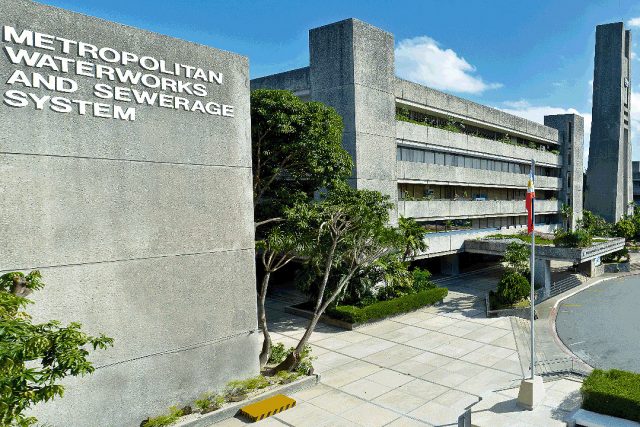
THE Metropolitan Waterworks and Sewerage System (MWSS) said it is seeking to retain its 52 cubic meters per second (CMS) water allocation from the National Water Resources Board (NWRB) for June.

Patrick James Dizon, head of the MWSS Angat/Ipo operations management division, said the MWSS has requested an extension of its current 52 CMS allocation to next month.

“We sent a letter to NWRB, I think that was two weeks ago. That is proposing to maintain 52 CMS from Angat Dam because in the previous months this was the allocation needed to supply Metro Manila and nearby provinces,” Mr. Dizon told reporters by phone on Tuesday.

He said that the extension of the 52 CMS is crucial as it will ensure uninterrupted water supply in areas served by MWSS’ concessionaires, Maynilad Water Services, Inc. and Manila Water Co., Inc. 

Earlier in May, MWSS announced that the NWRB extended the 52 CMS water allocation covering until the end of this month. 

In April, the NWRB approved the 52 CMS allocation for the April 16-30 period.

The NWRB had temporarily raised the allocation for the MWSS to 50 CMS between April 1 and 15. The MWSS normally draws 48 CMS from Angat.

Mr. Dizon warned that an NWRB rejection may result in water service interruptions.

“Tomorrow (Wednesday) we will have a special board meeting with NWRB to discuss this request,” he said.

Mr. Dizon said that its June water requirement is typically 48 CMS, but due to increasing demand and population growth, the allocation needs to be raised to address shortages in some areas. 

“Right now there are portions of Cavite, Pasay, Muntinlupa (in the south of Metro Manila) that are currently experiencing water service interruptions,” he said. — Ashley Erika O. Jose

Manufacturing PPI growth slows to 2.3% in April

Workers are seen inside the Mega manufacturing plant in Sto. Tomas, Batangas, March 1, 2023. — PHILIPPINE STAR/KRIZ JOHN ROSALES

PRICE GROWTH in manufactured products slowed to 2.3% in April, the Philippine Statistics Authority (PSA) said.

Citing preliminary data, the PSA said the producer price index (PPI) for manufacturing declined from the 2.5% posted in March. The year-earlier growth rate had been 6.3%.

The April reading was the lowest since the 0.36% increase in December 2021.

The price index for food products rose 4.4%, lower than the 5.5% in the preceding month.

“The manufacture of food products accounted for 44.6% of the slowdown in the PPI growth for manufacturing in April 2023,” the PSA said.

Other factors in slowing price growth were chemicals and chemical products. The sub-index for this category fell 1.7%, deepening the 0.05% contraction from the preceding month.

Basic metal prices also contracted 4.9% during the month.

The categories reporting higher price growth were led by furniture with 5.9%, exceeding the previous record of 5.6%.

Beverage price growth was 5.5%, as was the rate for leather and related products, including footwear. — Sheldeen Joy Talavera

DoE claims P205 million in savings from energy efficiency drive at gov’t agencies

ALEXANDER-JAWFOX-UNSPLASH

THE Department of Energy (DoE) said the Government Energy Management Program (GEMP) has yielded electricity savings of P205 million.

“We commend the efforts of our government agencies in implementing energy efficiency measures,” Energy Secretary Raphael P.M. Lotilla said in a statement on Tuesday. 

The DoE said since the signing of Republic Act No. 11285 or the Energy Efficiency and Conservation (EEC) Act of 2019, the government has saved the equivalent of 20 million kilowatt-hours.

“The regular conduct of energy audits and spot checks also increased the awareness of government entities which encouraged them to adopt energy efficiency and conservation by reducing expenditures on fuel and electric utility services,” the DoE said.

GEMP seeks to reduce the government’s electricity and fuel consumption by at least 10% via efficiency and conservation strategies as well as the use of renewable energy.

“Small acts … could indeed drive significant impact, especially when the entire bureaucracy, including the local government units and State Universities and Colleges adopt behavioral changes and imbibe energy conservation as a way of life,” Mr. Lotilla said.

The EEC Act also formed the Inter-Agency Energy Efficiency and Conservation Committee which prepares a yearly assessment of opportunities for energy cost reduction in state-owned and leased buildings and facilities. — Ashley Erika O. Jose

$100-M engineered-bamboo facility to rise in Cagayan de Oro

RIZOMEBAMBOO.COM

A FLORIDA-based building materials company, Rizome, has invested $100 million in an engineered-bamboo manufacturing facility in Cagayan de Oro, its Philippine unit said on Tuesday.

Former Agriculture Secretary Luis P. Lorenzo, Jr., an investor in Rizome Philippines, said the investment was executed via Bamboo Ecologic Export Corp.

In a statement, Mr. Lorenzo said the company is “progressively infusing” the capital in the Cagayan de Oro plant.

“I became a global investor (because) I want to bring the best technology here. I don’t want the Philippines to be second-class. The investment is big. But (even now) our business is already a billion-peso industry. And it employs thousands,” Mr. Lorenzo said.

The investment announcement follows third-reading approval in the House of Representatives of House Bill 7941, or the proposed Philippine Bamboo Industry Development Act.

“Currently, we are the fifth largest bamboo exporter in the world. With smart planning and malasakit (concern) especially for our bamboo planters, the Philippine bamboo industry could be a behemoth a few years down the road,” Speaker Ferdinand Martin G. Romualdez said in a statement on Monday.

Mr. Lorenzo pushed for the use of bamboo as a building material. “Government is technically pushing housing (so) why not import-substitute all the components of housing construction,” he said.

The US-based parent Rizome grows bamboo in Florida as well as the Philippines, touting the crop’s sustainability and potential for carbon sequestration. Its manufactured products include panels, boards, and veneers.

The Philippine unit buys bamboo from agrarian reform beneficiaries in Bukidnon, North Cotabato, and the Agusan and Surigao provinces, as well as from communities in mining areas.

“An important priority policy is to make bamboo a recognized construction material in the implementation of the Building Code,” Rizome International said.

“This, an engineered bamboo is a proven technology strong as steel, tough as concrete, fire resistant, water resistant, pest-free, and as beautiful as hardwood,” it added.

Mr. Lorenzo said the new passenger terminal at the Mactan Cebu International Airport is the first terminal in Asia made of lamellar wood.

“The beams and all that — we make all of those; we make these bullet proof. We can make beams as long as you like. No more steel, no more concrete,” he said. — Sheldeen Joy Talavera

‘Rapid’ growth in PHL economy seen driving construction industry

Workers are seen in a construction site in Manila. — PHILIPPINE STAR/RUSSELL PALMA

THE construction industry and a few others will grow rapidly over the next decade on expectations of robust economic expansion, S&P Global Market Intelligence Asia-Pacific Chief Economist Rajiv Biswas said.

Speaking at a FinTech Alliance meeting on Monday, Mr. Biswas said: “There’s going to be very rapid growth in a number of sectors in the economy, notably in the construction sector (due to the) rapid growth of the Philippines expected in the next decade,” Mr. Biswas said.

He said Philippine gross domestic product (GDP) will double by 2030, putting the country on track to become a $1-trillion economy by 2033.

“One of the fastest-growing sectors will be construction, but many other sectors including electronics (and) automotive will be growing strongly. The pharmaceuticals industry will also be showing rapid growth,” he said.

Speaking to BusinessWorld by phone, Colliers Philippines Associate Director for Research Joey Roi H. Bondoc said his firm is bullish on the growth of the construction sector over the next 10 years.

“In our view, what will really drive the growth in the construction sector in the Philippines is the development of more offices, residential projects such as condominiums and (detached houses), malls, and hotels,” he said.

Infrastructure projects will also boost growth in the public construction sector, even if these projects take around five to seven years to be completed, Mr. Bondoc said.

However, elevated inflation and high interest rates will continue to be a challenge in the near term.

“If we will have geopolitical tensions between China, Taiwan, and US, and the ongoing Russia-Ukraine crisis, or any other political turmoil that will likely erupt moving forward, that will have a significant impact on global supply chains, and that will again have an adverse impact on prices of construction materials,” he said.  

Inflation hit a 14-year high of 8.7% in January, before easing to 6.6% in April. Still, April marked the 13th straight month that inflation breached the central bank’s 2-4% target range.

The Philippine Statistics Authority reported that inflation in product categories like furnishings and household equipment rose to 6.1% in April, from 2.6% a year earlier.

“Disruptions in the global supply chain will raise the prices of construction materials, and these elevated prices will likely slow the growth of private construction here in the Philippines,” Mr. Bondoc said.

High interest rates will also have a “detrimental impact” on the industry, making it more expensive to borrow money to finance projects and mortgages.

“On the commercial side, if these hikes continue again, we’ll likely see a tempered appetite in terms of completion of new projects across the Philippines. As it is, we see developers slowing down in terms of launches,” Mr. Bondoc added.

The central bank has raised borrowing costs by 425 basis points since May last year. Earlier this month, it paused its policy tightening cycle due to easing inflation.

According to S&P’s Mr. Biswas, the medium-term outlook for the electronics industry remains strong even though it has faced challenges in the last 12 months.

Rapid technological development in electronics and increased demand due to the digital transformation of the global economy are driving growth in the industry, he said.

Mr. Biswas said the services sector will grow at a faster rate in the next 10 years, notably financial services and the information technology-business process outsourcing (IT-BPO) industry.

He said the IT-BPO industry has become “one of the most dynamic” in the Philippines. The industry is also expected to contribute significantly to economic output and support employment growth.

“There’s a lot of room for great optimism about the future prospects for the services sector in Philippine economy,” Mr. Biswas said.

“The Philippines is going to be one of the fastest-growing emerging markets in the next decade and will become an increasingly big focus for global multinationals, both in the manufacturing sector and in the services economy,” he added. — Keisha B. Ta-asan


ADVERTISEMENT
ADVERTISEMENT