Home Blog Page 4749

It’s time to leave the Paleo Diet in the past: Recent studies have failed to support its claims

THE PALEO DIET urges us to mimic our prehistoric ancestors’ food choices. In practice, this means eschewing dairy products, cereals, pulses, and processed sugar, and consuming vegetables, fruit, nuts, pasture-raised meat, and wild-caught seafood instead.

The Paleo Diet’s proponents contend that by eating this way, we will lose weight and reduce our risk of chronic diseases.

The roots of the Paleo Diet can be traced to the 1950s, but it owes its current popularity to a book by Loren Cordain called The Paleo Diet: Lose Weight and Get Healthy by Eating the Food You Were Designed to Eat, the first edition of which was released in 2001.

In the 22 years since the publication of Cordain’s book, the Paleo Diet has been adopted by several million people and a multi-billion dollar industry has developed in connection with it, including premium-priced foods and a certification scheme.

While the Paleo Diet has many adherents, clinical research has yet to substantiate its purported health benefits.

To begin with, it does not seem to outperform conventional recommended diets as a means of losing weight in the medium- to long-term. The only published multi-year study to have evaluated the Paleo Diet’s impact on weight loss found that following the Paleo Diet was no more effective than following the Nordic countries’ official nutrition recommendations after two years.

It is a similar story with the claims that have been made about the Paleo Diet’s impact on chronic diseases. For example, a recent review found that studies examining the Paleo Diet’s impact on Type 2 diabetes have been “inconclusive.”

Similarly, the authors of a 2020 study reported that following the Paleo Diet resulted in a higher relative abundance of gut bacteria that produce a chemical associated with cardiovascular disease, which is at odds with the claim that the Paleo Diet will reduce the probability of experiencing chronic diseases.

Why have the health benefits claimed for the Paleo Diet not been supported by clinical research? As evolutionary anthropologists, we think the problem is that the Paleo Diet is based on a flawed premise and faulty data, and in what follows we’ll try to show why our research brought us to this conclusion.

The idea underlying the Paleo Diet is that the ongoing surge in obesity and associated diseases in many countries is the result of a mismatch between the foods we eat and the foods our species evolved to consume.

This mismatch, so the argument goes, is a consequence of there having been too little time since agriculture appeared, 12,000 years ago, for evolution to have adapted our species to deal with a high-carbohydrate, low-protein diet or to process domesticated food.

This argument seems reasonable because there is a perception that evolution is a very slow process. However, it is not in fact supported by research on diet-related genes.

Work on lactase persistence — the continued ability to produce the enzyme lactase as an adult — illustrates this. Lactase enables us to digest the milk sugar lactose, so lactase persistence is useful for a diet involving dairy products. Lactase persistence is found in just a few regions, one of which is Europe. Ancient DNA research indicates that lactase persistence is less than 5,000 years old in Europe.

Similarly, an analysis of genetic data from African populations published last year found evidence of recent adaptation in a family of genes connected with metabolizing alcohol. In this case, natural selection operated within the last 2,000 years.

This evidence shows the mismatch rationale for adopting the Paleo Diet is not supported by genetic studies. Such studies demonstrate that evolution can produce diet-related adaptations in much less time than has elapsed since agriculture first appeared.

There is also an issue with the Paleo Diet’s recommendations regarding the contributions of the three macronutrients — protein, carbohydrate, and fat — to a person’s diet.

According to the current version of the Paleo Diet, we should aim for a diet consisting of 19-35% protein, 22-40% carbohydrate, and 28-58% fat, by energy. This makes the Paleo Diet lower in carbohydrate and higher in protein than conventional recommended diets, such as those promoted by Health Canada and the United States Department of Agriculture.

The macronutrient ranges recommended by the Paleo Diet are based on a study from 2000 that estimated macronutrient percentages for more than 200 hunter-gatherer groups. However, recently we have found there is a problem with this study.

The problem lies in the macronutrient values the researchers used for plant foods. While they employed several sets of macronutrient values for animal foods, they only used one set of macronutrient values for plant foods. They obtained the plant data from an analysis of foods traditionally eaten by Indigenous Australians.

In our study, we evaluated the effects of this decision with two plant macronutrient datasets, both of which consisted of values for plants consumed by hunter-gatherers from several continents.

Using multi-continent plant data produced significantly different macronutrient estimates. These in turn produced macronutrient ranges that are wider than the ones recommended by the Paleo Diet. The ranges we calculated are 14-35% protein, 21-55% carbohydrate, and 12-58% fat, by energy.

These ranges overlap those recommended by Health Canada (10-35% protein, 45-65% carbohydrate, and 20-35% fat) and the United States Department of Agriculture (10-30% protein, 45-65% carbohydrate, and 25-35% fat).

That the macronutrient ranges of hunter-gatherer diets overlap government-approved macronutrient ranges casts doubt on the idea that the Paleo Diet is healthier than conventional recommended diets.

Given that the rationale for adopting the Paleo Diet isn’t supported by the available scientific research, and its macronutrient recommendations aren’t scientifically robust, it is, we suggest, not surprising that the diet’s purported health benefits haven’t been supported by clinical studies.

The Paleo  Diet has been a worthwhile experiment, but at this point it seems likely that people following it might just be wasting money. Conventional, government-recommended diets offer comparable outcomes at a lower cost. In our view, it’s time to leave the Paleo Diet in the past. — The Conversation via Reuters Connect

Mark Collard is the Canada Research Chair in Human Evolutionary Studies, and Professor of Archaeology, at Simon Fraser University. Amalea Ruffett is  a PhD Student in Archaeology at the Simon Fraser University. Mr. Collard receives funding from the Canada Research Chairs Program, the Canada Foundation for Innovation, the British Columbia Knowledge Development Fund, and Simon Fraser University. Ms. Ruffett does not work for, consult, own shares in or receive funding from any company or organization that would benefit from this article, and has disclosed no relevant affiliations beyond their academic appointment.
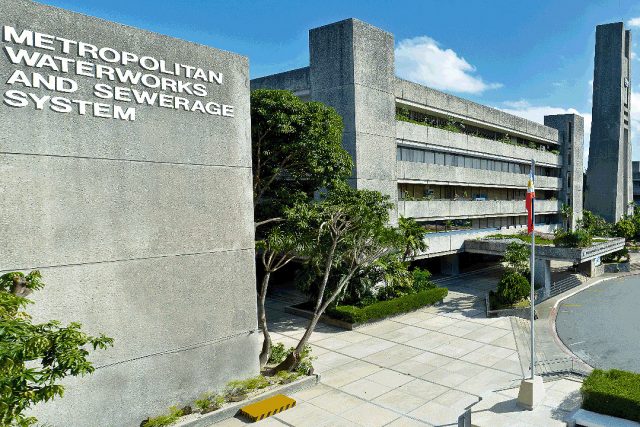

MWSS considers fine for Maynilad

THE Metropolitan Waterworks and Sewerage System (MWSS) is looking at penalizing Maynilad Water Services, Inc. for failing to fulfill its obligations amid the recurring water service interruptions.

“The MWSS sent a letter to Maynilad this month giving them an opportunity to explain the problems and what are their actions to resolve these problems,” Patrick Lester N. Ty, chief regulator at the MWSS Regulatory Office (RO), told reporters on Wednesday.

Mr. Ty was referring to water service interruptions experienced in some parts of Maynilad’s service areas.

The MWSS has said that portions of Cavite, Pasay and Muntinlupa are experiencing water interruptions, which is said to be due to the ongoing maintenance of the Putatan water treatment plant.

Maynilad responded to the letter on Tuesday, but Mr. Ty said the MWSS needs at least a month to study the company’s explanation.

“If their explanation is not acceptable then there will be a penalty, potentially, based on the penalty we imposed earlier this year. Based on the concession agreement, it could be doubled,” he said.

“Those who received a rebate last January, they will be the ones who will be entitled to another rebate if the Maynilad explanation will not be enough. Maximum is double the penalties imposed last January,” Mr. Ty said.

In January, the MWSS directed Maynilad to rebate P27.48 million to customers affected by the water services interruptions in areas served by the concessionaire’s Putatan water treatment plants.

In May, the agency and the water distributors signed the revised concession deal governing the supply of water in Metro Manila.

Maynilad and Manila Water Co., Inc. announced in separate disclosures on May 11 that the amended agreements were signed on May 10 to retroactively take effect on July 1, 2022.

According to Mr. Ty, under the revised agreement, water concessionaires could be penalized after three days of violation. The previous agreement authorized MWSS to impose penalties or fines after 15 days of violation and six months to resolve the situation.

“We will issue new rules and regulations regarding penalties to our two concessionaires because the new concession agreement is now effective. We are preparing the implementing rules and regulations which will be their guiding rules on how this would be implemented,” he said.

He said that the new agreement is stricter as it is the responsibility of both concessionaires to ensure uninterrupted water supply.

“That is why we privatized the system so it is their responsibility to provide services,” Mr. Ty said.

Meanwhile, Jennifer C. Rufo, head of Maynilad corporate communications, said in a Viber message on Wednesday that the company “will abide by the Implementing rules and regulations to be promulgated by the MWSS RO” in connection with the revised concession agreement.

Mr. Ty said that the new concession agreement provides that the MWSS RO can recommend to Congress the revision of the agreement or the concessionaires’ franchise.

“There are provisions that allow the RO to require the concessionaires to fix things, if not we can get a third party to do it for them or recommend that concession agreement be improvised as well as their projects,” he said.

Separately, the National Water Resources Board (NWRB) announced on Wednesday that it had approved the 52 cubic meters per second (CMS) water allocation to MWSS.

On Tuesday, the MWSS requested an extension of its current 52 CMS allocation to meet the needed supply in Metro Manila and nearby provinces.

Normally, the agency draws 48 CMS from the Angat dam. The NWRB said the 52 CMS allocation will cover June 1 to 15, before reducing it to 50 CMS from June 16 to 30.

Maynilad serves Manila, except for portions of San Andres and Sta. Ana. It also operates in Quezon City, Makati, Caloocan, Pasay, Parañaque, Las Piñas, Muntinlupa, Valenzuela, Navotas, and Malabon. It also supplies the cities of Cavite, Bacoor, and Imus, and the towns of Kawit, Noveleta, and Rosario, all in Cavite province.

Metro Pacific Investments Corp., which has a majority stake in Maynilad, is one of three Philippine units of Hong Kong-based First Pacific Co. Ltd., the others being Philex Mining Corp. and PLDT Inc.

Hastings Holdings, Inc., a unit of PLDT Beneficial Trust Fund subsidiary MediaQuest Holdings, Inc., has an interest in BusinessWorld through the Philippine Star Group, which it controls.  — Ashley Erika O. Jose   

Primaries that affect the world

STOCK PHOTO | Image by Isabella Fischer from Unsplash

The Republican party is off to a hot start in its search for its standard bearer for the US presidency in the general elections on Tuesday, Nov. 5, 2024. As of the most recent count, five GOP stalwarts have declared their availability as candidates for the GOP nomination for presidential standard bearer in the forthcoming primaries.

The leader in most recent polls is former president Donald Trump. At 77, the businessman-turned TV celebrity host-politician is making a third run for the presidency. He has repeatedly claimed — and has gained a number of gullible believers in the process — that he won the 2020 elections by a landslide. He claims the election was stolen from him without offering any proof that stood up in court. Instead, he is now the defendant or potential defendant in a host of legal cases including sexual abuse (a jury just found Trump liable for sexual abuse and awarded $5 million in damages to opinion columnist E. Jean Carroll).

Another presidential wannabee is the 46th governor of Florida, the 44-year-old Ron DeSantis.

In fairness, DeSantis appears, when compared to Trump, to have solid academic credentials and well-rounded experience as a son of a middle-class employee (his mother was a nurse) and small entrepreneur (his father used to install Nielsen TV ratings boxes). DeSantis graduated from Yale University and Harvard Law School Juris Doctor, cum laude. Trump’s academic credentials are murky.

After law school, DeSantis joined the US Navy in 2004 and was promoted to lieutenant before serving as legal advisor to the Navy SEAL Team One, the elite land and sea counter-terrorism group assigned difficult and dangerous missions that required courage, skill, and precision.

DeSantis, whose grandparents are of Italian descent, served as Congressman of Florida’s 6th district from 2013 to 2018. In 2018, DeSantis won the governorship of the Sunshine State, beating Democratic candidate Andrew Gillum by 0.4%. In his 2022 re-election, however, DeSantis won by a landslide.

As is widely known, DeSantis’ launch on Twitter of his Republican presidential bid was hounded by technical issues. As expected, Trump jumped on the incident to cast doubt on the ability of the DeSantis camp to organize and lead a serious campaign to challenge Trumps’ well-oiled machinery. But political observers dismissed the 24-minute glitch as precisely that — a glitch — pointing to more compelling issues confronting DeSantis. It is to be noted however that DeSantis, who was with billionaire Twitter and Tesla owner Elon Musk during the launch, raised some $8 million in the first 24 hours of the launch.

The impression that is being created and probably cultivated by DeSantis himself that he is another version of Trump — minus the sexual assault charges; the mishandling of classified documents; the association with, and support for, the Jan. 6, 2021 Capitol riot which could lead to a grand jury indictment; the election case in Georgia supported by a recorded conversation between Trump and the Republican Secretary of State; and other legal issues, including Trump’s business practices.

Being a version of Trump and his so-called conservative views is perhaps, in the mind of DeSantis and his handlers, the best way to chip at what, as this point, seems to be a huge 30-point lead of Trump among Republican faithful, according to RealClearPolitics’ national average polls, as reported by CBC News on May 25. DeSantis’ recent acts as Florida governor clearly reflect his willingness to be a mirror image of Trump who repeatedly proclaims his conservative views to solidify his base, while conveniently and, perhaps deliberately, forgetting to mention the Republican party.

DeSantis’ embracing of the conservative cause is reinforced by the fact that he was one of the co-founders of the conservative Congressional Freedom Caucus. Interestingly, he is in the company of some high-profile Republican conservative extremists who live off hysterical and uncivil social media posts. DeSantis hopes to get the “undecideds” and, in a long shot, some of the “always Trumpers.”

Mark Gollom of CBC News points out the real and most immediate challenges that DeSantis is facing. It appears that DeSantis is getting his baptism of fire in the biggest of the big leagues. Gollom says: “After his (DeSantis) big re-election (as Florida governor) months ago, DeSantis has sputtered along, his poll numbers cratering as he races off against a challenger which has a hard-core base of support that no other candidate can match.”

As things stand, DeSantis, will have to engage Trump in a toe-to-toe battle, insult for insult, lewd story for lewd story, scandal for scandal, black propaganda for black propaganda. DeSantis, who, from all appearances, earned his credentials through hard work and merit and did not inherit any riches or businesses or buildings or political network from a so-called business tycoon-father, will probably have to take the gloves off and engage in bare knuckle politics.

By playing Trump’s game. DeSantis will become the ordinary combative and confrontational Republican like Marjorie Taylor Greene of Georgia and Jim Jordan of Ohio. The association with these two congresspeople is not too flattering.

Does DeSantis have a chance of catching up? Gollom quotes Danny Hayes, a political science professor at the George Washington University: “Primaries are volatile things. Candidates rise and fall because voters don’t pay that much attention early in the process. If anybody is writing off DeSantis right now, they’re probably not looking clearly at the situation.”

The Republican primaries will probably not give much chance for mission-driven candidates to offer a vision of governance which affects the rest of the world. Like the 2015 GOP primaries, the forthcoming debates could degenerate into weird discussions like the size of some parts of Trump’s anatomy; Trump accusing Ted Cruz’s father of involvement in the John F. Kennedy assassination and comments on Ted Cruz’s wife. If the debate follows that path, other candidates, especially DeSantis, will have much to lose because he is essentially the better candidate and better person and human being compared to Trump. Unfortunately, he may have to adopt Trump’s tactics in order to be noticed and talked and written about.


Philip Ella Juico’s areas of interest include the protection and promotion of democracy, free markets, sustainable development, social responsibility and sports as a tool for social development. He obtained his doctorate in business at De La Salle University. Dr. Juico served as secretary of Agrarian Reform during the Corazon C. Aquino administration.

AllHome Corp. to hold annual meeting of stockholders online on June 23


Spotlight is BusinessWorld’s sponsored section that allows advertisers to amplify their brand and connect with BusinessWorld’s audience by enabling them to publish their stories directly on the BusinessWorld Web site. For more information, send an email to online@bworldonline.com.

Join us on Viber at https://bit.ly/3hv6bLA to get more updates and subscribe to BusinessWorld’s titles and get exclusive content through www.bworld-x.com.

Keeping things chill

AT COLD Storage, the world is at your fingertips — provided you’d be okay with getting it being chilled first.

Cold Storage seafood began in 1996, and while they are distributed in about 180 supermarkets across Manila and Cebu  — and, according to Cold Storage president Marco Qua, son of founder Mariano Qua during their branch blessing on May 26, they’re on their way to expand operations in Davao — their two main branches are in Banawe, Quezon City, and in San Juan.

The Banawe branch was dressed up and relaunched last week, and refrigerators showed off their products: premier frozen seafood, sourced from North America, Australia, Europe, and Asia; frozen and sealed in plastic bags. “My father Mariano Qua was visiting Singapore and he witnessed the possibilities for our seafood industry,” said the younger Mr. Qua in a speech.  “My father believed that every Filipino deserves to taste the best of the world.”

Recently, the Quas have also begun selling meat products, such as 100% Black Angus steaks (Mr. Qua is a fan).

During an interview with BusinessWorld, Mr. Cua discussed how they were able to survive for more than 20 years. “We source directly from producers. We don’t go through traders. We get the best quality at the cheapest price possible.”

The fish is caught, immediately blast-frozen, then shipped to the Philippines to be processed and repacked in their facilities. “Once you thaw it, it’s as good as freshly-caught,” said Mr. Qua. “Since we work directly with producers, if there are any quality problems, we can talk to them kaagad (immediately),” he said. “We never cut corners, and we don’t do as much marketing — until lately.”

Several hotel and restaurant chains get their seafood from Cold Storage, as well as some airlines. Still, with them in the center of this large supply chain, does receiving it frozen compromise the quality of the product, when the world is obsessed with freshness? “Sometimes, I prefer frozen over fresh,” said Mr. Qua. The freezing process preserves the fish at its prime, while with fresh fish, sometimes they’re transported over long distances in inadequate chilled (as opposed to freezing) temperatures. “The product’s quality deteriorates faster,” he said in a mixture of English and Filipino.

On how the fish should be treated once it reaches the customer’s home, he makes an important point: “We don’t like drastic changes (in temperature),” he said. The fish should be air-thawed at room temperature, not soaked in warm water — or microwaved — lest the fish’s quality be compromised.

Last year, they renovated their San Juan branch, also to much buzz. Asked about this new vigor (and dressed up facilities), Mr. Qua pointed to eating patterns formed during the pandemic. “During the pandemic, people were hoarding frozen seafood as if it were essential,” he said. “There’s so much potential. We just need to put our message out there.”

Cold Storage’s Banawe branch is located at #764 Banawe S., Quezon City, with phone number 8732-3663. They’re also available at Shopee and Lazada at https://shopee.ph/coldstorageseafood and https://s.lazada.com.ph/s.g21sk. — Joseph L. Garcia

Loan growth slows in April amid BSP tightening

BW FILE PHOTO

LENDING GROWTH slowed in April due to a high base and as the central bank’s rate hikes made their way through the financial system, and even as liquidity expanded faster that month.

Outstanding loans by big banks grew by 9.7% to P10.86 trillion in April, slower than the 10.2% expansion in March and the 10.1% seen in April 2022, preliminary data from the Bangko Sentral ng Pilipinas (BSP) showed.

Meanwhile, big banks’ loans net of reverse repurchase (RRP) placements with the BSP inched up by 0.6% from a month earlier.

“The sustained expansion in bank lending activity suggests that domestic liquidity remains sufficient to support economic activity,” BSP Governor Felipe M. Medalla said in a statement.

Oxford Economics Japan Assistant Economist Makoto Tsuchiya said in an e-mail that the slowdown in credit growth was likely due to a high base.

“The slowdown in credit growth can be partly attributed to base effects, as you can see that the annual growth was picking up throughout last year given gradual economic reopening. But we estimate that the sequential growth has stalled since late last year, as the initial demand from economic reopening faded,” he said.

Meanwhile, ING Bank N.V. Manila Senior Economist Nicholas Antonio T. Mapa said the aggressive policy tightening by the BSP since May last year has affected bank lending growth.

“Loans to productive sectors show slower pace of expansion again, which points to slower capital formation which should cap productive capacity down the line,” Mr. Mapa said.

The BSP raised the benchmark interest rate by 425 basis points from May 2022  to March 2023 to tame inflation, with the key rate now at 6.25%.

The Monetary Board last month paused its tightening campaign after hiking for nine straight meetings on expectations that inflation would continue to ease.

BSP data showed outstanding loans to residents, net of RRPs, eased by 9.6% to P10.55 trillion in April from 10.2% in March and 10% a year ago.

Credit for production activities declined by 8.3% to P9.47 trillion in April from 9% in March and 10.3% in the same month in 2022.

Year on year, more loans were extended for electricity, gas, steam, and air-conditioning supply (12.4%), wholesale and retail trade, and repair of motor vehicles and motorcycles (10.3%), manufacturing (9.3%), information and communication (19%), and real estate activities (4.5%).

Meanwhile, Mr. Mapa said consumer credit is still showing faster gains despite higher borrowing costs.

“This could mean that households are resorting to consumer credit at higher rates to finance basic goods and services. The increase in rates may have also translated to higher consumer loans receivable as households find it more difficult to service debt on time given constraints on higher costs,” he said.

Consumer loans to residents increased by 22.3% to P1.08 trillion in April, a tad faster than 21.8% in March. This was attributed to year-on-year rise in credit card loans (29.9%), motor vehicle loans (1.9%) and salary-based general purpose consumption loans (56.2%). 

Meanwhile, outstanding loans to nonresidents excluding RRPs expanded by 12.2% to P319.31 billion in April, slower than the revised 13.1% growth in the previous month.

Oxford Economics’ Mr. Tsuchiya said loan growth is expected to slow further this year amid lower demand from households and businesses.

“Given slowing global economy and lower demand for Philippines goods exports, businesses will likely remain cautious in expanding their production capacity,” he said.

Mr. Tsuchiya cited a BSP survey that showed bank officers said demand for loans remained unchanged for the last three quarters.

“Households will feel less pressure to borrow as initial pent-up demand fades, inflation edges down, and interest rate remains high. That said, higher unemployment rate could keep borrowing high, as consumers borrow out of necessity,” he said

M3 GROWTH
Despite slower credit growth, domestic liquidity rose by 6.6% annually to P16.3 trillion in April, the BSP said in a separate statement, faster than the revised 6.2% expansion in March. Month on month, it rose by about 0.5% from March.

Money supply, or M3, is considered as the broadest measure of liquidity in an economy.

In April, domestic claims rose by 11.9%, slightly slower than the 12.4% in March.

Net borrowings of the central government expanded by 20.1% in April, declining from the revised 21.1% rise in the prior month.

Net claims on the private sector grew by 9.7% in April, unchanged from March, due to the sustained expansion in bank lending to nonfinancial private firms and households

Meanwhile, net foreign assets (NFA) declined by 0.2% in April, improving from the revised 3.9% contraction in March.

“The NFA of banks declined mainly on account of higher bills payable. Meanwhile, the BSP’s NFA position expanded by 2.5% in April after contracting in the previous month,” Mr. Medalla said.

“Looking ahead, the BSP will continue to ensure that domestic liquidity conditions remain consistent with the prevailing stance of monetary policy, in line with the BSP’s price and financial stability objectives,” he added. — Keisha B. Ta-asan

AEV board clears P17.5-B bond issuance

ABOITIZ Equity Ventures, Inc.’s (AEV) board of directors on Wednesday approved the company’s issuance of up to P17.45 billion for its second tranche of fixed-rate retail bonds, inclusive of an oversubscription option.

It said, subject to market conditions, the bonds are expected to be offered to the public in the third quarter of this year and will be listed with the Philippine Dealing & Exchange Corp.

In a regulatory filing, the company said the bonds would come from its P30-billion shelf-registration program, which was approved by the Securities Exchange Commission in 2022.

Last year, the company issued the first tranche of its fixed-rate retail bonds together with the final tranche of its 2019 bonds amounting to about P20 billion.

Its board delegated the company’s management to appoint an issue manager, bookrunner, underwriter, and trustee of the issuance. Its management will also approve the final interest rate, offer price, tenors, and other terms and conditions of the second tranche bonds.

The company has yet to disclose the use of proceeds from the issuance.

During the first quarter, AEV reported an attributable net income of P4.01 billion, up 1.8% from P3.98 billion in the same period last year.

AEV’s core businesses, conducted through its subsidiaries and affiliates, are grouped into five main categories: power generation, distribution and retail electricity supply; financial services; food manufacturing; real estate; and infrastructure.

On Wednesday its shares declined by 0.91% or 50 centavos to P54.50 apiece. — A. H. Halili

Mighty dollar can fight off the digital upstarts

JASON LEUNG-UNSPLASH

PROPONENTS of de-dollarization might resent America’s exorbitant privilege all they want. But what can they do about it?

Analysts usually trace the US currency’s hegemony to its outsized use in international commerce. Even a decade after China eclipsed the US as the world’s largest goods-trading nation, that dominance doesn’t appear to be fading. The much-awaited petroyuan has so far been just a myth, even though some dollar-starved importers like Pakistan are keen to pay for Russian crude in the Chinese currency.

An even bigger moat may be the greenback’s role in fundraising. It will take the People’s Republic a long time to match the depth, liquidity, and openness of the dollar-denominated capital market in which firms and banks borrow and hedge their risks. A proposed common currency for the so-called BRICS grouping of Brazil, Russia, India, China, and South Africa may flounder for the same reason.

That still leaves the de-dollarization camp with a low-hanging fruit, one they can pluck with digital technologies.

When it comes to carrying value across illiquid currency corridors, the dollar is a sturdy mule. That’s a big part of the reason it ends up on one side of the trade in nearly 90% of foreign-exchange trades. Dealers often find it more efficient to use the dollar as the go-between. Funds are first converted into the US currency, and then reconverted into whatever the payee’s bank will accept: euros, yen, Swiss francs, or something else. This preferred vehicle-currency status accounts for 40% of the dollar’s $6.6 trillion-per-day turnover.

This is what keeps Brazil’s President Luiz Inacio Lula da Silva awake at night. Bypassing the need for dollars as a middleman is also the vision outlined by Southeast Asian nations’ finance ministers and central bank governors in Bali last year. They want payments transacted in Thailand using an Indonesian app to be directly exchanged between rupiah and baht.

Five central banks in the region — Indonesia, Malaysia, the Philippines, Singapore, and Thailand — are seeking to achieve this by syncing their domestic, smartphone-based, instant-payment systems under a protocol known as Nexus. This will solve some of the existing issues related to slow transfers. The hefty fees charged by banks for cross-border transactions will also fall, or at least become more transparent to customers.

However, the problem of foreign-exchange conversion will remain. That’s because the Singapore dollar is the only Southeast Asian currency eligible for settlement by CLS Group Holdings AG. Jointly owned by many of the world’s largest banks, CLS lines up payments so that neither party in a trade is left holding a claim after it has discharged its obligations.

Settlement risk compels banks to set aside capital to cover it. That has a charge. Therefore, for an illiquid bilateral payments corridor in Southeast Asia, both the Singapore dollar and the US dollar — or at least one of them — will still end up as vehicles because they help cut costs. Nexus won’t change this. No matter how hard the BRICS push their rival IOU, the greenback isn’t going away.

One way to edit it out will be to use blockchain technology to eliminate settlement risks. If all countries put their central bank digital currencies, or CBDCs, on a common platform, it would be easy to ensure “atomicity:” Transfers across borders will either succeed in their entirety, or fail altogether. Money won’t get stuck somewhere in the long chain of banks between the sender and the recipient. In payment journeys where the dollar is just a vehicle — and not the origin or the destination — it can be ditched. Tokenization will provide safety to intermediaries.

A multicurrency CBDC network could eliminate a big chunk of the $120 billion-a-year in transaction costs. However, the enormous coordination and trust it will require to first create such a global public good, and then agree on its ownership and governance, makes the idea a non-starter. Especially when the same blockchain technology can be more feasibly employed to preserve the dollar’s exceptionalism.

In a recent experiment with the Singapore central bank, the New York Federal Reserve showed that it could keep the dollar in play even in the blockchain world. A vehicle currency managed to deliver up to 47 payments in one second in an illiquid corridor of two other national units. Distributed ledgers that didn’t share a common technology were able to participate without requiring a central party. What’s more, the Fed didn’t need a retail digital dollar to do this. A wholesale token, available only to banks, was enough.

Experiments like the awkwardly named Project Cedar Phase II x Ubin+ show one thing: The Fed may be taking its time to decide whether to issue a retail CBDC, but it’s not wasting the interlude. The e-CNY, now available via popular WeChat Pay and Alipay wallets to 1 billion retail users, is gaining acceptance at stores within China. Sooner or later, the online yuan will go global.

Should the BRICS nations get serious about a single currency for trade, they may, too, offer a digital version. But why would any of these alternatives get a second look from intermediaries if a wholesale token of the US currency is available to carry the weight of payments across illiquid corridors? The dollar is a mule with very strong legs.

BLOOMBERG OPINION

VistaMalls, Inc. announces schedule of annual stockholders’ meeting on June 26

NOTICE OF ANNUAL MEETING OF STOCKHOLDERS

Notice is hereby given that the annual meeting of stockholders of VISTAMALLS, INC. (the “Company” or “STR”) for the year 2023 will be held online on June 26, 2023, Monday at 10:00 a.m. with the proceedings livestreamed and voting conducted in absentia through the Company’s secure voting online facility which may be accessed through the following URL address: https://vote.vistamalls.com.ph/VSRV/Login.

The following shall be the agenda of the meeting:

  1. Call to order
  2. Certification of service of notice and presence of quorum
  3. Approval of the minutes of the last Annual Meeting of Stockholders held on June 27, 2022
  4. Presentation of the President’s Report, Management Report and Audited Financial Statements for the year 2022
  5. Ratification of all acts and resolutions of the Board of Directors and Management from the date of the last annual stockholders’ meeting until the date of this meeting.
  6. Election of the members of the Board of Directors, including the Independent Directors, for the year 2023
  7. Appointment of External Auditors
  8. Adjournment

Minutes of the 2022 Annual Meeting of Stockholders is available at the website of the Company (https://documents.starmalls.com.ph/minutes-of-meetings.php).

Electronic copies of the Information Statement and Management Report with respect to the 2023 Annual Meeting of Stockholders of the Company, as well as the 2022 Annual Report (SEC Form 17-A) and Quarterly Report for period ended 31 March 2023 (SEC Form 17-Q) of the Company, are available on the Company’s website (https://documents.starmalls.com.ph/sec-annual-reports.php) and PSE Edge (https://edge.pse.com.ph/companyDisclosures/form.do?cmpy_id=147).

The Board of Directors has fixed the close of 16 May 2023 as the record date for the determination of stockholders entitled to notice of, and to vote at, said Annual Stockholders’ Meeting.

In light of the current circumstances, and to ensure the safety and welfare of the Company’s stockholders, the Company will dispense with the physical attendance of stockholders at the meeting and will allow attendance only by remote communication and voting only in absentia or by appointing the Chairman of the meeting as their proxy.

Stockholders who intend to participate in the meeting via remote communication and to exercise their vote in absentia must notify the Corporate Secretary by registering in advance at https://vote.vistamalls.com.ph/VSRV/Login on or before June 16, 2023. All information submitted will be subject to verification and validation by the Corporate Secretary.

Stockholders who intend to appoint the Chairman of the Meeting as their proxy should submit duly accomplished proxy forms on or before June 16, 2023 at the Office of the Corporate Secretary at UGF Worldwide Corporate Center, Shaw Boulevard, Mandaluyong City and/or by email to ir@vistamalls.com.ph.

The procedures for participating in the meeting through remote communication and for casting of votes in absentia are set forth in the Information Statement.


MA. NALEN S.J. ROSERO
Corporate Secretary


Spotlight is BusinessWorld’s sponsored section that allows advertisers to amplify their brand and connect with BusinessWorld’s audience by enabling them to publish their stories directly on the BusinessWorld Web site. For more information, send an email to online@bworldonline.com.

Join us on Viber at https://bit.ly/3hv6bLA to get more updates and subscribe to BusinessWorld’s titles and get exclusive content through www.bworld-x.com.

Google announces AI-powered digital marketing tools for firms

REUTERS

GOOGLE has introduced new assistive tools enhanced by generative artificial intelligence (AI) to improve the efficiency of digital marketing for businesses.

“Small businesses, agencies, and major brands are seeing the opportunity, the potential, of AI to be additive to their own skills as a creative partner,” Dan Taylor, vice-president for global ads at Google, said in a roundtable on Friday.

To cater to this demand, Google Ads has introduced AI-boosted solutions to their existing products amid rapidly changing landscape for marketers, Mr. Taylor said.

Ad spending in the Philippine digital advertising market is projected to reach $1.608 billion in 2023, according to Statista.

“Our goal is to help advertisers perform better,” said Brian Burdick, senior director for search ad automation at Google.

The new products include AI- and large language model-powered improvements to Automatically Created Assets (ACA), conversational experience in campaign constructions, and Google Product Studio.

With these, Google said advertisers can produce text assets and professional-grade creative images by simply entering landing pages from their website and uploading existing product or service images.

AI will then generate relevant and effective keywords, headlines, descriptions, images, and other assets for ad campaigns that advertisers can review and edit before deploying.

Advertisers can also chat with Google AI using natural, conversational language for suggestions and better performance.

A text-to-image AI model in Google Product Studio can also be used to help create new lifestyle product images from basic product photos. This will allow advertisers to prompt the tool with a brief description of their desired background and image elements.

“We’re trying to make it as user-friendly as possible,” said Jeff Harrell, senior director for shopping at Google, on AI-generated image assets using Google Product Studio.

“There is no special knowledge needed of AI versus being able to be descriptive about what you’re looking for,” he added.

Text-based AI-generated assets with ACA are currently in global open beta testing stage for English, with plans to include more languages this year, the company said.

Conversational experience in Google Ads will start a closed beta testing in the United States soon, it added.

Google Product Studio will be available in the US later this year via Merchant Center Next or the Google and YouTube Channel App on Shopify.

“We are absolutely looking to expand over the course of the year,” Mr. Harrell said on growing access to different regions and languages.

Amid the current issues surrounding AI, Google said it is carefully integrating the use of the technology in its products.

“Even if a creative is generated [by AI] in a way that isn’t quite right for the use case, we have really high quality policies in place to make sure that we catch those ads before they’re served,” Mr. Taylor said.

“As these AI tools develop new ways to deliver creatives at scale, we’re also developing policies and monitoring of those creatives to make sure that they deliver a great experience for the consumer,” he added. — Miguel Hanz L. Antivola

D.M. Wenceslao & Associates, Inc. to conduct annual stockholders’ meeting via remote communication on June 23


Spotlight is BusinessWorld’s sponsored section that allows advertisers to amplify their brand and connect with BusinessWorld’s audience by enabling them to publish their stories directly on the BusinessWorld Web site. For more information, send an email to online@bworldonline.com.

Join us on Viber at https://bit.ly/3hv6bLA to get more updates and subscribe to BusinessWorld’s titles and get exclusive content through www.bworld-x.com.

Emmentaler loses fight for EU trademark

EMMENTALER AOP SWITZERLAND

BRUSSELS — Emmentaler cheese cannot be trademarked in the European Union (EU) as the German public sees it as a type of cheese rather than by its geographical origin, Europe’s second-top court said on Wednesday.

The yellow Swiss cheese recognizable by its large holes is the second most-produced and exported hard cheese in Switzerland.

Emmentaler Switzerland, which has registered the word “Emmentaler” with the World Intellectual Property Organization (WIPO), took its fight to the General Court after the European Union Intellectual Property Office (EUIPO), turned down its application to register the WIPO recognition.

The Luxembourg-based Court backed the EU patent office.

“Since the mark applied for is descriptive of a type of cheese for the relevant German public and is not perceived as an indication of the geographical origin of that cheese, the General Court concludes that it does not enjoy protection as a collective mark,” the Court said.

Emmentaler Switzerland can appeal on points of law to the Court of Justice of the European Union. —  Reuters