Home Blog Page 4721

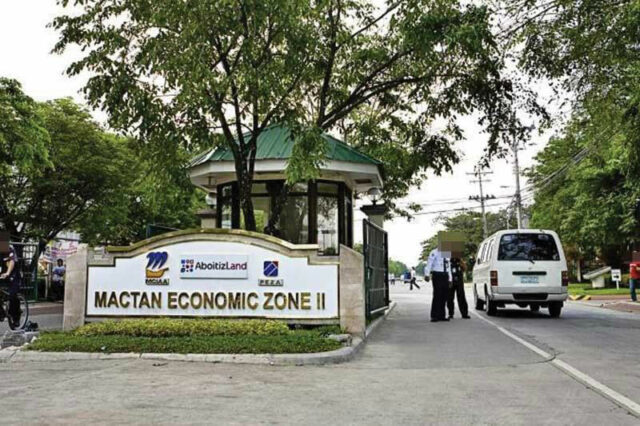
PEZA says Cebu investments in excess of P275 billion to date

PHILSTAR

THE Philippine Economic Zone Authority (PEZA) said investments in Cebu have exceeded P275 billion to date.

PEZA Director General Tereso O. Panga told the annual general membership meeting of the Mactan Export Processing Zone Chamber of Exporters and Manufacturers on June 14 that PEZA locators in Cebu have generated P275.3 billion worth of investment to date, $5.9 billion worth of average exports a year, and created 232,076 jobs.

Mr. Panga added that PEZA locators in Mactan island, such as those in the Mactan Economic Zone (MEZ) I and II, Cebu Light Industrial Park, Jpark Island Resort and Waterpark, and Mactan Newtown, remitted P267 million in tax payments last year from the 2% gross income tax share of the Lapu-Lapu City government.

“With this continuous positive performance, we are anticipating an upturn in the economy especially within the province. At the same time, we are looking at welcoming strategic and big-ticket investments from various industries to locate in Cebu,” Mr. Panga said.

Mr. Panga said new investment pledges in Cebu province include Autoliv Cebu Safety Manufacturing, Inc., which is planning an expansion project at a 2.6-hectare area in northern Cebu, as well as Taiyo Yuden Philippines, Inc., which has shown interest in registering a new and expansion project in MEZ.

For 2023, the PEZA targets 10% investment approval growth from a base of P140.7 billion worth of approved investment last year.

PEZA-approved investments in the first five months rose 153.74% to P48.027 billion.

Meanwhile, Mr. Panga told reporters last week in Taguig City that the PEZA is asking the Fiscal Incentives Review Board (FIRB) to issue a resolution that would allow locators to offer work-from-home (WFH) arrangements for up to 30% of their employees.

Mr. Panga added that the Labor department is set to issue an official position paper supporting the PEZA’s proposal.

“We are arguing that we be allowed as much as 30% (WFH) since that is something permissible. Our locators are really for hybrid workplaces,” Mr. Panga said.

“We just need the FIRB resolution. I don’t think we will need a law to allow us to do WFH because what we are proposing is something permissible. You have to keep pace with the economies that fully support WFH,” he added.

In September, the FIRB issued a resolution that allowed PEZA-registered IT and business process outsourcing firms to implement 100% WFH and still enjoy fiscal incentives if they shift their registration to the Board of Investments. — Revin Mikhael D. Ochave

DICT, PPP Center sign deal to collaborate in developing infotech projects

DICT

THE Department of Information and Communications Technology (DICT) and the Public-Private Partnership (PPP) Center of the Philippines have signed an agreement to support the development of ICT infrastructure and projects.

The memorandum of agreement signed on Wednesday is expected to fast-track ICT infrastructure development and project implementation.

The two sides agreed on a framework for collaboration in terms of project assistance, capacity building, and formulation of PPP policy and guidelines for ICT, the PPP Center said in a press release.

“Catalyzing digital acceleration and bridging the digital divide require tremendous collective effort. But we need not take the digital transformation journey alone,” Information and Communications Technology Secretary John Ivan E. Uy said in a statement.

“Joining forces, we will deploy services that will create more opportunities for Filipinos, to ensure that no one gets left behind,” he said.

At present, the PPP Center is helping the department review PPP project concept notes and proposals such as the Fiber-enabled Free Public Internet Access Project and the Design, Build and Operate of an underground fiber optic conduit network at the Philippine National Railway from San Fernando, La Union to Sorsogon.

The PPP Center and DICT have also been working on the Regional Ring project which aims to provide government network access at all government agencies and public places in Marinduque and Ilocos Norte.

“DICT will also extend their assistance to implementing agencies that are developing IT projects, and to help them evaluate unsolicited proposals,” PPP Center Executive Director Ma. Cynthia C. Hernandez said. — Justine Irish D. Tabile

Substandard steel bars destroyed

OFFICE OF REP. ERIC GO YAP

THE Department of Trade and Industry (DTI) ordered the destruction of P18.8 million worth of substandard steel bars after they were found non-compliant with government standards.

In a statement over the weekend, the DTI said that 136 bundles of deformed steel bars were cut to pieces on June 7-9 at a steel mill in Laguna.

The Bureau of Philippine Standards (BPS) had conducted a surprise factory audit on March 20. The DTI did not identify the company involved.

“After the products were cut into non-commercial lengths, the same were transferred to the company’s smelting facility for reprocessing,” the DTI said.

The DTI said that samples taken from the steel bars showed that the products failed to meet Philippine National Standard 49:2020.

“Sub-standard products must be destroyed immediately to ensure that these products are not distributed in the market for the purchase of unknowing consumers,” Trade Secretary Alfredo E. Pascual said.

“Our country is located within the Pacific Ring of Fire and the DTI needs to be extremely vigilant and has to intensify our surveillance, monitoring, and enforcement of technical regulations for construction materials, especially for cement and steel products,” he added.

According to the DTI, the BPS conducted the surprise audit after the reported sale of steel bars under an unregistered logo. — Revin Mikhael D. Ochave

How sustainable supply chains enable business transformation

Supply chains underscore sustainability and serve as the core of an organization’s ESG-related goals and objectives. With this in mind, supply chain leaders are taking the necessary measures to safeguard resources while identifying new opportunities to drive results.

EY teams conducted a global supply chain survey, the EY Supply Chain Sustainability 2022 Report, which polled respondents from countries like Argentina, Canada, and the US for insights from the retail, technology, and agriculture sectors. The findings indicate that several executives have long-term goals for sustainable supply chains, but only some have the acumen, programs, and technology to assess their progress. Some challenges included costs and a need for a strong business case to justify expenditures.

According to the US Environmental Protection Agency, more than 90% of an organization’s greenhouse gas emissions and around 50% to 70% of its operating costs are attributed to supply chains. As such, executives can clearly realize significant sustainability-related benefits to greening their supply chains in the long term.

The study discovered that eight in 10 supply chain leaders are gearing their initiatives toward more sustainable operations. They are increasing efforts toward decarbonization, proper use of natural resources, ethical sourcing, and fair trade. They are also trying to increase innovation, lessen risk, and realize a greater return on investment for ESG-related initiatives.

In the Philippines, many manufacturers, retailers, and local governments have taken steps to reduce plastic use in favor of more environmentally friendly materials. For example, several cities have implemented ordinances banning the distribution and/or use of single-use plastics for onsite dining. Several cities have also banned the distribution of plastic bags in their establishments.

With the Philippines counting as a significant contributor to the plastic problem, accounting for 750 thousand metric tons of plastic waste entering the ocean in 2010, the Philippine Alliance for Recycling and Materials Sustainability (PARMS) and its member companies have committed to the Zero Waste to Nature, Ambisyon 2030 (ZWTN 2030) initiative. The initiative aims to divert waste from landfills by recycling materials and resources, supported by strategies and a roadmap with specific implementation timelines and targets to ensure that none of the industrial or post-consumer packaging waste generated by PARMS members ends up in nature by 2030.

In addition, with the government’s passage of Republic Act No. 11898, also known as the Extended Producer Responsibility (EPR) Act of 2022, obliged enterprises established their own EPR programs for the EPR registration deadline in February. With the Act now being implemented, there is greater anticipation that the country will see a significant increase in its overall recycling rate. While the EPR Act initially covers plastic packaging, the coverage will gradually expand to encompass other materials as well.

This article will delve deeper into the most salient insights from the report with the aim of supporting executives in achieving their sustainability-related goals.

LACK OF TRANSPARENCY AND ROI-BACKED SUSTAINABILITY EFFORTS
The demand for supply chain-related visibility has increased with the burgeoning expectations of employees, regulators, and stakeholders. Consumers are becoming more mindful of ESG-related matters, such as sustainable sourcing, organizational health, and work conditions.

The report showed that supply chain visibility was a top priority that year for executives, compared to it being a second priority for previous years. In addition, there is a crucial need to assess risks and plan for disruptions and crises. However, only 37% of respondents reported end-to-end supply chain visibility.

Collaboration programs, data analytics, and digital tools can help businesses set KPIs and establish overall governance. Organization-wide visibility is a comprehensive initiative, and companies can use it to assess program effectiveness, track resources, and understand labor conditions. Management can also capitalize on technology to identify and home in on operational efficiencies.

Notably, the report revealed that 33% of organizations lack a business case for sustainable supply chains, whereas almost half of the respondents reported that their companies have difficulties in measuring sustainability-related returns. Consequently, lacking a solid business case could lead to a shortage of financial support for long-term efforts.

FOCUS ON END-TO-END SUPPLY CHAIN TRANSFORMATION
As much as 61% of businesses reported that cost savings and efficiency were primary motivators for undergoing supply chain sustainability initiatives. Even so, financial gain was not the only benefit.

According to Andrew Winston from a Harvard Business Review Whiteboard Session, organizations should prioritize four elements to concretize return on investment for supply chain sustainability:

1. Cost reduction. Improve operational efficiency, lessen material waste, and minimize carbon footprint.

2. Revenue growth. Assess how sustainable supply chains influence market share, profitability, and stock price.

3. Supply chain risk management. Create long-term sourcing strategies and manage compliance and regulatory risks.

4. Intangibles. Delve into sustainability’s relationship with brand reputation, customer loyalty, and talent retention.

Moreover, 55% of supply chain executives expect improved operational risk management in the next three years, whereas 31% already reported more efficiency and productivity. Regarding long-term returns, 54% of respondents said they expect an increase in share price or other benchmarks of shareholder value.

TAILOR-FIT SUSTAINABILITY-RELATED INITIATIVES
Executives must determine how sustainable supply chains fit into their business strategies. Businesses can structure their efforts by identifying how supply chains enable their goals. Deploying technological capabilities to improve visibility can boost supplier and stakeholder engagement. Organizations can broaden their RoI metrics to include intangible impacts and sustainability results.

Given the ever-changing nature of the global market, companies need to go beyond standard business-case drivers such as customer loyalty, market share, and revenue. Enterprises should adopt an end-to-end approach, focusing on cross-functional collaboration, planning, and distribution to identify new opportunities.

C-LEVEL CONSIDERATIONS
Around 10% of respondents stood out in terms of progress in sustainability-related areas, and their organizations are realizing considerate benefits. One thing they have in common is their considerable focus on transparency. More than half (57%) of this group have public-facing sustainability goals. In terms of material gain, almost half of these trailblazing leaders have already reported a better employee experience. 

Compared with other respondents, these executives are reaping financial gains despite focusing less on cost-saving measures. At least 25% have reported increased revenue from their supply chain sustainability initiatives, while 43% expect an increased share price in the next three years. Lastly, the data show they are more likely to use sustainable supply chains to protect their corporate brand.

Supply chain sustainability has become increasingly important as global market expectations evolve. Organizations are starting to identify financial and nonfinancial opportunities of ESG-related efforts, and executives who know which KPIs to prioritize are already reaping the benefits.

This article is for general information only and is not a substitute for professional advice where the facts and circumstances warrant. The views and opinions expressed above are those of the author and do not necessarily represent the views of SGV & Co.


Benjamin N. Villacorte is a partner from the Climate Change and Sustainability Services team of SGV & Co.


Hosting Afghans in transit to US not a security threat to PHL — analysts

SCREENGRAB FROM SENATE FACEBOOK PAGE

By Beatriz Marie D. Cruz, Reporter

A REQUEST from the American government for the Philippines to host Afghan nationals while their US immigration applications are being processed should not be seen as a security threat but as a humanitarian act by a country that prides itself in its hospitality, analysts said on Sunday.

Chester B. Cabalza, founder of the Manila-based International Development and Security Cooperation, said “receiving Afghans as a host country for their Special Immigrant Visas should not be construed as tall order from the Americans,” noting that the Philippines is a treaty ally of the US.

“As part of the international community, we help other nationalities in distress as long as they will not become a threat to national security,” he said via Messenger chat.

“It will not become a threat as long as we take control of the situation and enforce our own laws on them. We have done the same thing with the Chinese, Israelites and Vietnamese before in their diasporic struggles.”

Hansley A. Juliano, a political economy researcher studying at Japan’s Nagoya University’s Graduate School of International Development in Japan, said, “The Philippines is actually already a bit late on hopping on this, especially as many other countries with closer ties to pre-fall Afghanistan has facilitated supporting the migration and asylum of Afghan refugees.”

“However, we do need to be very transparent about how this is being done,” Mr. Juliano said in a separate Messenger chat.

Philippine Foreign Affairs Secretary Enrique A. Manalo, speaking at a Senate hearing on Friday, said they received the request from the US in October last year.

“We received in a concept note from the US government [containing] a request for the Philippines to allow Afghans formerly employed by the US government and their qualified dependents to temporarily stay in the Philippines to process their SIV (Special Immigrant Visa) applications with the US embassy in Manila,” he said.

Mr. Manalo said the Afghans will be traveling with valid passports and undergo “rigorous security vetting and background checks.”   

All costs will be shouldered by the US government.

The Philippine government will set mobility and other restrictions for the transients as well as the schedule of arrivals in batches.

US Ambassador to the Philippines Jose Manuel G. Romualdez told senators that up to 60,000 Afghans are applying for an SIV and that the US is proposing to send up to 1,500 per batch to the Philippines.

The Afghans are either still in their homeland while some are already in neighboring Pakistan, Mr. Romualdez noted.

WORKERS
In 2021, the US withdrew its troops from Afghanistan after a 20-year presence leading an international military coalition that kept the ulta-conservative Taliban at bay.

After the international forces and diplomatic missions left, the Taliban immediately returned to power, putting at risk the lives of Afghans employed under the US and other foreign governments and organizations.

“Receiving refugees as a humanitarian accommodation is innate in the Philippines and with Filipinos… as part of the international community,” Mr. Cabalza said.

A labor group on Sunday also urged the Philippine government to agree to temporarily take in Afghan nationals, citing reports of human rights violations against workers in the Central Asian country.

“The Federation of Free Workers (FFW) remains alarmed by reports of rampant human rights abuses, including infringements on women’s rights, persecution of religious and ethnic minorities, and arbitrary detention of activists and journalists,” it said in a statement.

“As the situation unfolds, the FFW continues to extend its solidarity to Afghan workers who are facing challenges in their fight for equality of employment and occupation under International Labor Organization (ILO) Convention 111.”

Under the ILO Convention, all human beings, regardless of race, creed, or gender, have the right to “pursue material well-being and spiritual development in conditions of freedom and dignity of economic security and equal opportunity.”

“Despite the opposition of Vice President Sara Duterte-Carpio and other government officials, the FFW has consistently expressed deep concern over the deteriorating humanitarian crisis in Afghanistan,” it said.

Security expert Rommel C. Banlaoi said the government should not rush into agreement and must do “further assessment if accepting them will serve our national interests.”

During the Senate hearing, Defense Secretary Gilbert C. Teodoro clarified that the Afghans should not be classified as refugees.

“Basically, they’re not displaced. They’re in their homeland right now. They have not applied for political asylum or any other thing.”

Mr. Teodoro said that the Afghans will only be considered refugees if their visas are denied and they are not repatriated.

Ms. Duterte-Carpio has opposed the proposal, citing threats to security and sovereignty.

Education Undersecretary Michael Wesley Poa quoted a position paper signed by Ms. Duterte-Carpio, saying, “It seems that the vetting process may be done by the US. We think it is interference to our exclusive determination of who can enter into our country.”

Mr. Juliano said equating the entry of foreign nationals to human security issues is dangerous, as it may create xenophobic or anti-immigration sentiments among Filipinos — themselves a people of migrants.

“This same framing has been the bad faith talking points of rightwing and racist parties throughout Europe and North America,” he said.

The US embassy has not replied to an e-mail seeking comment. — with John Victor D. Ordoñez

PHL looks to Japan, US on maritime security sans ASEAN united front

THE PHILIPPINES is doing well in pursuing stronger maritime security partnerships with the United States and Japan given the lack of a united front within the Association of Southeast Asian Nations (ASEAN).

Lucio B. Pitlo III, a research fellow at the Asia-Pacific Pathways to Progress Foundation, said in a Facebook Messenger chat that the growing ties between the three countries may be a result of the failure of the 10-member southeast Asian bloc to take concrete actions on security issues in the region.

“These minilaterals may present an expedient workaround to the difficulties of regional organizations like ASEAN to take a common stand on security issues, given varying risk assessments and relations with and influence of major powers in their security and foreign policy calculation,” he said.

ASEAN members Philippines, Vietnam, Brunei, and Malaysia along with China and Taiwan hold different and in some cases overlapping territorial claims over the South China Sea.

China and ASEAN have yet to finalize a code of conduct in the disputed waterway after negotiations started in 2002 following the signing of the non-binding Declaration on the Conduct of Parties in the South China Sea.

The national security advisers of the three countries — Eduardo Año of the Philippines, Jake Sullivan of the US, and Akiba Takeo of Japan — held their first talks on June 16 in Tokyo, discussing regional security issues, including those involving the South China Sea, and ways to boost their trilateral cooperation.

The three security advisers said in a joint statement that “…they reiterated the importance of peace and stability across the Taiwan Strait.”

They agreed to conduct combined maritime activities and advance trilateral defense cooperation based on the recent progress between the US and the Philippines, such as the four additional locations identified under their Enhanced Defense Cooperation Agreement, and between Japan and the Philippines in discussing frameworks to enhance and facilitate reciprocal visits of defense and military officials.

They also reaffirmed the importance of three-way joint trainings among the three countries’ coast guards that was held in early June.  

“Regular patrols with like-minded partners are naturally important and beneficial for Manila’s desire to maximize its efforts towards maritime security and territorial defense,” geopolitical analyst Don Mclain Gill, who teaches foreign relations at the De La Salle University, said in a Facebook Messenger chat.

Mr. Gill said the Philippines should further deepen its relationship with the US and Japan by pushing their three-way partnership to go beyond the area of maritime security.

“Manila must also forward proposals for a trilateral development and economic cooperation framework, which aligns with the visions of all three countries towards a free, open, prosperous, and rules-based Indo-Pacific,” he said.

“Hence, the trilateral must not just stop at joint patrols, rather, it must be considered to be a foot on the door for more opportunities to explore.”

Chester B. Cabalza, founder of the Manila-based International Development and Security Cooperation, said pursuing naval and coastal partnerships with other countries is important for a coastal nation like the Philippines, which is struggling to contain China’s aggression at sea.

Mr. Cabalza said the insights and “best practices” that the Philippines can gain on coastal and naval defense from the stronger and “strategic” countries are “contributory to Manila’s short and long term strategies aimed at attaining interoperability and defense capability.”

The experts expect China, which claims more than 80% of the South China Sea, to react aggressively to the three countries’ partnership.

“Definitely, China will always be on its offensive guard in encircling their maritime interests in the South China Sea,” Mr. Cabalza said. “Or Beijing will furthermore boost its naval and coast guard diplomacy to address its maritime insecurity with Manila which they successfully did recently.”

Mr. Gill said it is also palpable for China to react negatively towards such developments “given its regional exclusionary desires.” — Kyle Aristophere T. Atienza

Judge’s inhibition in De Lima case a win for fairness

SENATOR Leila de Lima attends the hearing at Regional Trial Court Branch 204 in Muntinlupa City on Nov. 4, 2022. — PHILIPPINE STAR/RUSSELL PALMA

A JUDGE’s inhibition in the remaining illegal drug case of detained former Senator Leila M. de Lima upheld her right to an impartial court, according to a human rights lawyer.

“In fairness to the presiding judge, inhibition does not necessarily mean that the judge is indeed partial, but it becomes a prerogative in case a litigant doubt his impartiality,” Ephraim B. Cortez, president of the National Union of Peoples’ Lawyers, said in a Viber message.

“Because according to the Supreme Court, a ‘judge must be like Caesar’s wife — above suspicion and beyond reproach’.”

On June 15, Muntinlupa Regional Trial Court Branch 256 Presiding Judge Romeo S. Buenaventura granted the June 13 motions of Ms. De Lima’s former aides to stop handling the case after it was discovered that he is the brother of Emmanuel S. Buenaventura, who had helped execute the affidavits testifying against her.

Ronnie P. Dayan, one of the former aides, had since recanted his statement. He said he was coerced by the late former Oriental Mindoro Rep. Reynaldo T. Umali to testify against Ms. De Lima.

The judge’s brother used to lawyer for Mr. Umali, which they said created a conflict of interest.

Mr. Cortez noted the judge had just received evidence in relation to Ms. De Lima’s petition bail and not yet the main evidence for the illegal drug case, which means there is no sign of a violation against the former lawmaker’s right to due process.

He said there might be a slight delay in the case since the case will be re-raffled to another judge, which would then lead to another court hearing.

Last week, Ms. De Lima appealed the court’s denial of her bail plea. The Muntinlupa court had rejected her motion for bail saying it could not overlook testimonial evidence against the former senator.

The former lawmaker’s lawyers said the court should have used the basis of probable cause instead of relying on the evidence of guilt being strong in deciding on the bail plea. 

Four witnesses have retracted their testimonies against the former lawmaker. They all claimed to have been coerced by the previous administration. The court dismissed a separate illegal drug trafficking case against Ms. De Lima and Mr. Dayan on May 12, citing reasonable doubt.

“Senator De Lima will have another chance to confront the witnesses against her and to present evidence to refute those presented by the prosecution,” Mr. Cortez said.John Victor D. Ordoñez

PCG rescues 120 people as ferry catches fire 

A PHILIPPINE Coast Guard vessel comes to the rescue of the MV Esperanza Star passenger-cargo boat that caught fire off Panglao, Bohol coming from the nearby island province of Siquijor Sunday morning. The Coast Guard said in its initial report that there were about 120 passengers and crew members on board the commercial boat. — PHILIPPINE COAST GUARD

ALL 120 PEOPLE onboard a ferry that caught fire at sea in central Philippines on Sunday have been rescued, the Philippine Coast Guard (PCG) said. 

The M/V Esperanza Star, which was carrying 65 passengers and 55 officers and crew members, caught fire while sailing from Siquijor island in the south to nearby Bohol island, the coast guard said. 

Coast guard firefighters onboard another vessel used a water canon and declared the fire out by around 0200 GMT, a spokesperson said.   

The cause of the fire is still unknown.  

Two coast guard vessels involved in firefighting and rescue operations were still in the waters in the vicinity of the fire.   

The whereabouts and conditions of the rescued passengers and crew members were not disclosed.  

The Philippines, an archipelago of more than 7,600 islands, has a poor record for maritime safety, with vessels often overcrowded and many ageing ships in use.  

In March, a ferry carrying about 250 people also caught fire in southern Philippines, leading to the deaths of more than two dozen people including a six-month-old baby. Reuters

Senator calls for reforms to strengthen PHL students’ skill set

PHILIPPINE STAR/ MIGUEL DE GUZMAN

A SENATOR has reiterated the need to pass reforms that would help the Filipino youth adapt to new technologies as the country lagged behind a global skills test report released last week.  

In pushing and fulfilling reforms in our education system, we should ensure that the youth are not left behind in the use of new technologies,Senator Sherwin T. Gatchalian said in a statement on Sunday.  

The Philippines ranked last among its East and Southeast Asian peers after placing 99th out of 100 countries in online learning platform Courseras Global Skills Ranking.  

The report ranks skills and proficiency of learners in the fields of business, technology and data science.  

The Philippinesbusiness proficiency dropped to 16% from 62% last year. Technology proficiency is also down to 5% from 29%, while data science proficiency significantly decreased to 1% from 21%.  

The Second Congressional Commission on Education (EDCOM II) composed of senators, congressmen, and private sector representatives has been meeting since January to address current gaps in the countrys education system.  

Mr. Gatchalian said the EDCOM IIs proposed reforms are expected to boost Filipinosskills in fields mentioned in the report.  

He also called for the need to pass Senate Bill No. 2022 or the Batang Magaling Act, which aims to strengthen linkages and collaboration with the Education department, local government units, the academe, and industry partners in ensuring work readiness among graduates.  

The proposed measure also aims to involve industry partners and stakeholders in creating Work Immersion Plans in all education institutions offering the senior high school program.   

It will also produce roadmaps in provinces, cities, and municipalities to set goals and interventions on enhancing the employability and competitiveness of high school graduates.   

The bill is still pending at the Senate committee level.   

It is our duty to assess if they have the necessary skills that industries need,Mr. Gatchalian said. Beatriz Marie D. Cruz 

PRC commits to open office in Bangsamoro gov’t complex

@BANGSAMOROGOVT

THE PROFESSIONAL Regulation Commission (PRC) has committed to open an office at the Bangsamoro government complex in Cotabato City to serve the license requirements of professionals in the autonomous region.   

Bangsamoro Labor Minister Muslimin G. Sema said he met with PRCs Soccsksargen Regional Director Rotelo B. Cabugsa last week where they resolved to work together to set up the service facility.  

That would be a big help to professionals in the Bangsamoro region,Mr. Sema told reporters Saturday.    

Professionals from the Moro, settler and indigenous non-Moro communities in the Bangsamoro region need to travel to main cities in other regions in southern Philippines for renewals of PRC licenses and other transactions.  

The Bangsamoro Autonomous Region in Muslim Mindanao covers the provinces of Maguindanao del Sur, Maguindanao del Norte, Lanao del Sur, Basilan, Sulu and Tawi-Tawi and the cities of Lamitan, Marawi and Cotabato.  

Mr. Cabugsa, in a separate statement on Saturday, confirmed the plan to put up a PRC office in Cotabato City in response to requests by regional officials, including members of the Bangsamoro Parliament.  

In the meantime, the PRC will hold a service caravan in Cotabato City on June 24 to facilitate the renewal of licenses and identification cards, process applications for licensure examinations, and authentication of PRC documents. John M. Unson 

Azkals face a tough Chinese Taipei in international friendly at RMS

PHILSTAR FILE PHOTO/FFC / AFF

Match Today
(Rizal Memorial Stadium)
7 p.m. — Philippines vs Chinese Taipei

PHILIPPINE coach Michael Weiss expects a stronger performance from the Azkals as they face a tougher opponent in Chinese Taipei tonight in an international friendly at the Rizal Memorial Stadium (RMS).

The Pinoy booters started the second era of Mr. Weiss with a 1-0 victory over Nepal last Thursday, overcoming issues on short preparation, injuries and match fitness from coming off competition breaks to pull through behind Jarvey Gayoso’s second-half strike and Patrick Deyto’s solid goalkeeping.

“I’m positive we’ll be in better shape because we have recovered from the last match, coming from the holidays. We’ll have fresher legs and we can play faster,” Mr. Weiss said in yesterday’s pre-match presscon.

The Taiwanese go into the 7 p.m. match confident they can go toe-to-toe with the hosts after holding Asean power Thailand to a fighting 2-2 draw in Bangkok last Friday.

“This will be an even tougher match than the first (against Nepal) because Chinese Taipei has showcased in a very good manner their game against Thailand. They held a strong Thailand team to 2-2 which is a very respectable result,” Mr. Weiss noted.

“And the way they played, is typical Taiwan — very compact, quick on transition and they’re physically strong.”

A win against the visiting Taiwanese will complete a two-game sweep in the June Fifa match days for the Azkals, who are ultimately building up for the joint qualifiers of the Fifa World Cup and AFC Asian Cup in November. — Olmin Leyba

Blu Girls rout South Korea secure World Cup berth

PHILSTAR FILE PHOTO/ ASIA SOFTBALL

THE PHILIPPINES smashed South Korea, 10-0, to claim the bronze in the World Baseball and Softball Confederation Under-15 Women’s Softball Asia Cup in Puli Township in Nantou, Taiwan over the weekend and a World Cup berth.

Only two slots were staked in this tournament that drew participation from seven countries including Japan and host Chinese Taipei, which finished in the top two.

But the Blu Girls, whose participation was bankrolled by Cebuana Lhuillier, booked the last bus ticket to the World Cup scheduled Oct. 21 to 29 since the Japanese were already directly seeded since they will host the weeklong tilt in Tokyo.

Amateur Softball Association of the Philippines Jean Henri Lhuillier lauded the Annalyn Ebreo-mentored squad for its feat.

“Their performance was nothing short of amazing, their passion and teamwork were truly inspirational,” said Mr. Lhuillier. “We wish them the best and we will continue to support them as they face stiffer competition in Japan.” — Joey Villar