Home Blog Page 4712

Beal to Suns

It’s easy to see why the Suns are pulling the trigger on a deal that would land them proven scorer Bradley Beal. They’re not just forming a super team that allows them to keep pace with the best of the best in the National Basketball Association. They’ll be getting a three-time All-Star capable of lighting up the scoreboard in plenty of different ways, thereby making it even harder for the opposition to contain them. Given that they also have creative forces Kevin Durant and Devin Booker, they aren’t likely to experience significant offensive droughts.

True, the Suns will also be giving up talent to get talent. And, admittedly, the haul they’re handing over is hefty — among them future Hall of Famer Chris Paul and a bevy of draft picks. That said, the 38-year-old point guard is on the downside of a long career. Eighteen years’ worth of toiling in the league has made his body brittle, causing him to miss 52 matches since he joined the Suns prior to the 2020-21 season. And during the times he managed to suit up, his numbers dwindled; whereas he used to bring up his stats in the postseason, he proved less productive in the 2023 Playoffs.

Not that Beal is any more of a strongman. In fact, it can be argued that he’s at least as prone to injury as Paul has been. Since playing in all 164 regular season contests between the 2017-18 and 2018-19 campaigns, he has burned rubber in a mere 207 of 328 possible starts due to a variety of ailments. In other words, the Suns are taking a gamble on his increased availability in the face of a lighter workload; no longer does he need to expend as much energy with Durant and Booker also puncturing the hoop with consistency.

Nonetheless, the Suns will come out on top of the deal for landing Beal. Their next step is to ensure that the move translates to lasting gains, which is much easier said than done. With their Big Three on max contracts and Deandre Ayton and Cameron Payne the only other players on the roster, they are hard-pressed to show their capacity to get the most of what remains of their salary cap space. The new collective bargaining agreement further tightens their financial screws, so the onus is on owner Mat Ishbia and general manager James Jones to find depth and balance on the fringes. How they fare in this regard may well determine if their bet pays off, and by how much.


Anthony L. Cuaycong has been writing Courtside since BusinessWorld introduced a Sports section in 1994. He is a consultant on strategic planning, operations and human resources management, corporate communications, and business development.


Macron’s Paris summit seeks new roadmap for easing debt burdens

TWITTER.COM/EMMANUELMACRON

PARIS — French President Emmanuel Macron hosts a summit on Thursday and Friday to pin down a roadmap for easing the debt burdens of low-income countries while freeing up more funds for climate financing.

The summit brings dozens of leaders together in the French capital to forge a top-level consensus on how to progress a number of initiatives currently struggling in bodies like the G20, IMF-World Bank and United Nations.

Ranging from debt relief to climate finance, many of the topics on the agenda take up suggestions from a group of developing countries, led by Barbados Prime Minister Mia Mottley, dubbed the “Bridgetown Initiative”.

“We are moving to a world – I would call it the Bridgetown system of finance — (that) recognizes that we have to massively upscale the public sector and focus that on building resilience and adaptation because it’s hard for that to be funded any other way,” said Avinash Persaud, a special envoy for Mottley on climate finance.

Though binding decisions are not expected, officials involved in the summit’s planning said that some strong commitments should be made about financing poor countries.

Nearly 80 years after the Bretton Woods Agreement created the World Bank and International Monetary Fund (IMF), leaders aim to squeeze more financing from multilateral lenders for the countries that need it most.

In particular, there should be an announcement that a $100-billion target has been met that will be made available through the International Monetary Fund for vulnerable countries, officials said.

The plan, which was first agreed two years ago at an African finance summit in Paris, calls on wealthy governments to lend unused special drawing rights to the IMF to, in turn, lend to poor countries.

Governments are also looking at ways to allow the World Bank to use leverage to lend more to poor countries without putting its top AAA credit rating at risk.

“We want to go farther and should be able to set targets to put more public money on the table,” a French presidency source said.

RISING INTEREST RATES
Rising global interest rates have left a growing number of low-income countries dependent on IMF funding while the most distressed — Ethiopia, Ghana, Sri Lanka and Zambia — have had little choice but to default.

A G20 “common framework” for debt restructuring has proven painfully slow with Western officials blaming China — now a major creditor after years of heavy lending — for dragging its feet.

A source close to the Paris Club creditor nations said on Monday that the governments Zambia owes money to aim to make a debt restructuring proposal in time for the summit in what is widely seen as a test case for the much-criticized Group of 20 (G20) restructuring framework.

On top of interest rate stress, developing and emerging market countries are also struggling to secure the $1 trillion economists say they need by 2030 to finance carbon emission cuts, boost climate resilience and deal with damage from climate change.

Persaud said support was also expected for the IMF and other multilateral development banks to offer $100 billion in currency risk guarantees to unlock private investment in poor countries for climate and development initiatives.

Some leaders are expected to lend their weight to long-stalled proposals for a levy on shipping industry emissions ahead of a meeting next month of the International Maritime Organization, officials said.

They said calls are also expected to be made in favor of disaster risk clauses in lending agreements, which allow a country to suspend repayments in the case of a disaster. — Reuters

Ships, planes search for sub that went missing on trip to Titanic wreckage

JOSEPH MISCHYSHYN

US and Canadian ships and planes searched on Monday for a submarine that went missing more than a day earlier off the coast of southeastern Canada while taking tourists to explore the wreckage of the Titanic, officials said.

The US Coast Guard said there was one pilot and four passengers on board and that the vessel had the capacity to be submerged for 96 hours, but it was unclear whether it was still underwater or had surfaced and was unable to communicate.

US and Canadian ships and planes have swarmed the area about 900 miles (1,450 km) east of Cape Cod, some dropping sonar buoys that can monitor to a depth of 13,000 feet (3,962 meters), US Coast Guard Rear Admiral John Mauger told reporters on Monday.

“It is a remote area and it is a challenge to conduct a search in that remote area,” Mr. Mauger said.

“We are deploying all available assets to make sure that we can locate the craft and rescue the people on board,” he said. “Going into this evening we will continue to fly aircraft and move additional vessels.”

Mr. Mauger said officials have also been reaching out to commercial vessels for help.

The private company that operates the submarine, OceanGate Expeditions, said in a statement on Monday that it was “mobilizing all options” to rescue those on board.

British billionaire Hamish Harding is among the passengers, according to a social media post from a relative.

Pakistani businessman Shahzada Dawood and his son, Suleman, were also on board, their family said in a statement.

“We are very grateful for the concern being shown by our colleagues and friends and would like to request everyone to pray for their safety,” the statement said.

The US Coast Guard said earlier on Twitter that a boat on the surface — the Polar Prince — lost contact with the submarine, called the Titan, about one hour and 45 minutes after it began diving toward the site of the Titanic’s wreckage on Sunday morning.

OceanGate said, “We are deeply thankful for the extensive assistance we have received from several government agencies and deep sea companies in our efforts to reestablish contact with the submersible.”

Mr. Harding’s stepson wrote on Facebook that Mr. Harding had “gone missing on submarine” and asked for “thoughts and prayers.” The stepson subsequently removed the post, citing respect for the family’s privacy.

Mr. Harding himself had posted on Facebook that he would be aboard the sub. There have been no further posts from him. The expedition headed out to sea on Friday, and the first dive was set for Sunday morning, according to Mr. Harding’s post.

The expeditions, which cost $250,000 per person, start in St. John’s, Newfoundland, before heading out approximately 400 miles (640 km) into the Atlantic to the wreckage site, according to OceanGate’s website.

In order to visit the wreck, passengers climb inside Titan, the five-person submersible, which takes two hours to descend approximately 12,500 feet (3,800 m) to the Titanic.

The British passenger ship famously sank in 1912 on its maiden voyage after striking an iceberg, killing more than 1,500 people. The story has been immortalized in nonfiction and fiction books as well as the 1997 blockbuster movie Titanic. — Reuters

Taliban treatment of women could be ‘gender apartheid’ — UN expert

EHIMETALOR AKHERE UNUABONA-UNSPLASH

GENEVA — A United Nations (UN) expert said on Monday that the treatment of Afghan women and girls by the Taliban could amount to “gender apartheid” as their rights continue to be gravely infringed by the country’s de facto authorities.

“Grave, systematic and institutionalized discrimination against women and girls is at the heart of Taliban ideology and rule, which also gives rise to concerns that they may be responsible for gender apartheid,” UN Special Rapporteur on the situation of human rights in Afghanistan, Richard Bennett, told the Human Rights Council in Geneva.

The UN defines gender apartheid as “economic and social sexual discrimination against individuals because of their gender or sex.”

“We have pointed to the need for more exploration of gender apartheid, which is not currently an international crime, but could become so,” Mr. Bennett told reporters on the sidelines of the Council.

“It appears if one applies the definition of apartheid, which at the moment is for race, to the situation in Afghanistan and use sex instead of race, then there seem to be strong indications pointing towards that.”

A Taliban spokesperson said their administration was implementing Islamic laws and accused the United Nations and Western institutions of “propaganda.”

“Richard Bennett’s report on the situation in Afghanistan is a part of such propaganda, which does not reflect the realities,” spokesman Zabihullah Mujahid said in a statement.

The Taliban seized power in August 2021, drastically curtailing women’s freedoms and rights, including their ability to attend high school and university.

In a report covering July to December 2022, Mr. Bennett found in March that the treatment of women and girls by the Taliban “may amount to gender persecution, a crime against humanity.”

“These serious deprivations of women’s and girls’ fundamental rights and the harsh enforcement by the de facto authorities of their restrictive measures may constitute the crime against humanity of gender persecution,” Mr. Bennett reiterated on Monday.

In April, Taliban authorities began enforcing a ban on Afghan women working for the UN after stopping women working for aid groups in December.

Taliban authorities say they respect women’s rights in accordance with their strict interpretation of Islamic law. — Reuters

Ukraine builds layered air defenses as Russia ramps up strikes

MAX KUKURUDZIAK-UNSPLASH

NEAR KYIV, Ukraine — At a glance on a clear summer’s afternoon, the US-made Avenger air defense system is barely visible in the shadow of trees at the end of a dirt track outside Kyiv.

The short-range unit is an important part of a three-layered air defense network that Ukraine is trying to develop with a range of highly sophisticated Western systems to thwart Russian air attacks.

Russia has unleashed regular long-distance missile and drone attacks since October, but it seriously increased strikes in May as Ukraine prepared for a counteroffensive this month.

The strikes, which regularly kill civilians, look at least in part aimed at depleting air defense stocks so that fewer systems can be used to protect troops trying to advance under Russian air superiority, Kyiv officials say.

“The most difficult is an attack by various types of aerial targets,” said the Avenger unit’s commander who goes by the call sign “Architect,” his pre-war profession.

“When they arrive in one night, both (drones) and cruise missiles fly by, that’s the most difficult.”

He leads a six-man team that took up positions two weeks ago after being trained by US military instructors in Europe. They are yet to shoot down any missiles or drones.

They join an unfolding air battle that has played out over several weeks during which Ukraine has reported an extraordinary rate of downed drones and missiles, including hypersonic ones.

On Friday, Ukraine said it shot down all six cruise missiles and six hypersonic Kinzhal missiles fired at targets in and around the capital.

But strikes still regularly slip past defenses. Last Wednesday, three civilians were killed in a missile attack in Odesa. The day before 11 were killed in a strike on President Volodymyr Zelensky’s hometown.

‘RACE AGAINST TIME’
Though it has dropped out of headlines as Kyiv has pressed for F-16 fighter jets from the West, Ukraine is still regularly asking for — and receiving — air defense missiles to replenish stocks, said Yuriy Sak, adviser to Ukraine’s defense minister.

“Russia’s tactic is using cheap drones in order to exhaust our air defenses. It’s almost like a race against time. Who’s going to run out first? The Russians with their missiles or the ones we get from our allies?” he said.

Washington has supplied at least 12 Avenger systems to Ukraine. The Avenger is a rotating turret with eight missiles mounted on the back of a Humvee, which makes it highly mobile.

“One of our top priorities, when it comes to transforming our armed forces and building up our air defense capability is creating a three-layered air defense system,” said Mr. Sak.

The Avenger, like hand-held Stinger missiles, are at the short-range end of the three layers. US-made Patriot systems are at the long-range end. Avengers have a range of up to 5 km. Patriots have a 3 km minimum range and a maximum of 80 km.

There is greater mobility at the short end to counter targets and it is also much cheaper than firing expensive salvos of Patriot missiles, Mr. Sak said.

The Avenger is effective near the battefield, but there are too few of the systems to go around, he added.

In a bid to build up short-end capabilities, Ukraine is pressing Australia to supply four-wheel-drive Hawkei vehicles that can be mounted with air defences and used in the same way as Avengers, Sak said.

In the month of May alone, the Air Force reported shooting down 149 cruise missiles, 399 drones, seven hypersonic Kinzhal missiles, three ballistic missiles as well as 11 Iskander missiles of two different types.

By contrast in April, the Air Force said it had shot down 73 drones and 21 cruise missiles.

The unit commander near Kyiv said he was constantly aware of his responsibility to do his best to protect the roughly 3.5 million people living in Kyiv, and that they were on duty round the clock ready to respond. — Reuters

China, Cuba in talks on opening military training site, says WSJ report

DIEGO GONZALEZ-UNSPLASH

CHINA and Cuba are discussing building a joint military training facility on the island, according to the Wall Street Journal (WSJ), a report that comes after the White House earlier said Beijing has spy facilities on the island about 145 km (90 miles) from the US.

The two countries were holding advanced talks about opening the facility in northern Cuba, the newspaper on Tuesday cited US officials as saying, adding that it could pave the way for Beijing to station troops there permanently and expand espionage activities.

The US was in contact with Cuban officials about preventing the plans from going forward, the Wall Street Journal reported, citing US officials.

China’s Foreign Ministry didn’t immediately respond to a request from Bloomberg News for comment. The US and Cuban embassies in Beijing didn’t reply to similar requests.

Earlier this month, a senior US official said in a statement issued on the condition of anonymity because of the matter’s sensitivity that intelligence indicated China has long maintained espionage facilities in Cuba and that they were expanded in 2019.

The White House had pushed back days earlier on a report in the Wall Street Journal that China and Cuba had reached a secret agreement to establish a spy facility on the island. The administration’s position is there’s been no new deal, and the facilities have been in place for years.

The bases would allow Chinese intelligence services to eavesdrop on electronic communications throughout the southeastern US, where many military bases are located, and monitor ship traffic, according to the report. — Bloomberg

‘Netflix Effect’ lifts Korean content but market control worries grow

STOCK PHOTO | Image by Tumisu from Pixabay

 – When Netflix co-CEO Ted Sarandos visits South Korea this week he will find an entertainment industry that has achieved global fame through hits such as “Squid Game” and “The Glory”, but also growing worries about the service’s effects on the local market.

South Korea has created some of Netflix’s biggest shows, which have become synonymous with the broader international success of the country’s cultural exports and spurred the Californian company to invest $2.5 billion in local content.

Mr. Sarandos is expected to arrive in Seoul on Tuesday, according to industry sources, and meet with film students during his first visit as co-CEO. He will also meet Prime Minister Han Duck-soo on Thursday to discuss the video streaming market.

But while Korean shows are hugely popular on Netflix, with 60% of global users watching at least one title last year, calls are growing for the government to support locally funded projects and secure the rights for content.

The government last week announced plans to provide 500 billion won ($390.09 million) to help local streaming platforms compete with global rivals such as Netflix amid soaring production costs.

“The media and content industry will thrive when various platforms compete instead of being dominated by only a few, which will benefit both creators and consumers,” said Heo Seung, public affairs director at South Korean streaming platform Watcha.

South Korea exported $13 billion worth of content in 2022 including video games, music and broadcasting, according to the Korea Economic Research Institute, eclipsing electric vehicle and rechargeable battery shipments.

The “Netflix Effect”, a term coined for the phenomenon that launches actors and directors from obscurity to instant stardom when their shows appear on the platform, is a part of South Korea’s success.

Against this backdrop, President Yoon Suk Yeol welcomed Netflix’s $2.5 billion investment as a “big opportunity” for both South Korea and the U.S. streaming giant.

Netflix’s market weight in South Korea dwarfs that of local platforms such as Tving, Wavve and Watcha.

In 2022, the US firm reported an operating profit of 14.28 billion won in South Korea, a stark contrast to Tving’s operating loss of 119 billion won.

Netflix boasted a 38.2% market share in South Korea last year, according to Mobile Index, overshadowing Tving’s 13.1%.

Unlike the EU, South Korea does not have laws requiring foreign streaming services to produce or invest in local content.

That has prompted some Korean politicians to call for Netflix to better reward creators when their projects succeed.

Netflix said it aims to compensate local creators fairly at the initial production stage, regardless of how well their shows perform.

“Compensation is an important part of that, but so is the creative expression our local team supports, along with the global audience reach of our service,” a Netflix spokesperson said in an emailed statement.

Creators who have worked with Netflix say the company has taken a chance on them when others did not. “Squid Game” creator Hwang Dong-hyuk said in various interviews in 2021 the series was rejected multiple times before being picked up by Netflix.

Aditya Thayi, a London-based filmmaker who directed upcoming Netflix documentary “King of Clones”, told Reuters Netflix is changing the game by “evening the playing field for Asian filmmakers.”

While the project was commissioned by Netflix UK, it centres on genetic cloning fraud in South Korea and includes file clips from broadcasters’ archives. Such footage alone can cost up to$40,000 to acquire, Thayi said, making it prohibitively expensive for independent producers without funding.

Lim Jong-soo, a professor at Sejong University, said Netflix has given South Korean producers more opportunities but that the government could do more to help, such as by securing IP rights for creators.

“The government needs to come up with a system to ensure that excess profits can be returned to South Korean creators.” – Reuters

Defense, critical tech on agenda as India’s Modi heads to US for landmark visit

INDIAN PRIME MINISTER NARENDRA MODI — PHILLIPINES GOVERNMENT VIA PICRYL.COM

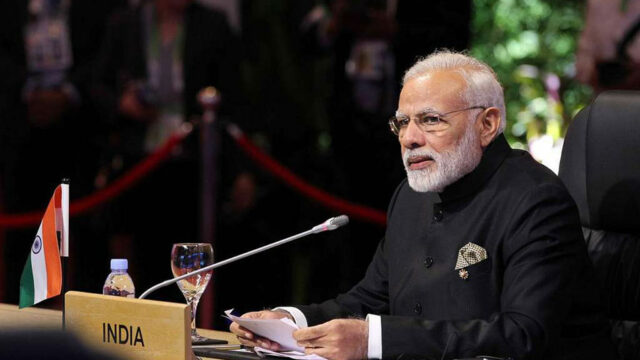
 – Indian Prime Minister Narendra Modi heads to the United States this week for a visit billed as a turning point for bilateral relations, with deeper cooperation in defense industry and sharing high technology in sharp focus.

The visit is expected to give India access to critical American technologies Washington rarely shares with non-allies, strengthening a new bond that is underpinned by not just global politics but also business and economics.

Washington and New Delhi, whose relationship was marked by mutual suspicion during the Cold War, have been moving closer for over two decades now with successive US presidents displaying bipartisan support for stronger ties with the emerging Asian economy and regional power.

President Joe Biden has built on that legacy and expanded cooperation as the United States sees India as a vital partner in its efforts to push back against China’s expanding influence worldwide and strengthen security in the Indo-Pacific.

Washington also wants to wean India away from its traditional defense partner Russia. New Delhi continues to do business with Moscow and has increased its purchases of cheap Russian oil in the aftermath of the invasion of Ukraine, much to the frustration of the West.

India too has overcome its “hesitations of history” – as Modi put it in a 2016 address to US Congress – and looked West amid its own military tensions and fraying ties with China.

Though Mr. Modi has made several previous visits to the United States, this will be his first with the full diplomatic status of an official state visit, just the third of Mr. Biden’s presidency and third by any Indian leader.

“It’s a milestone in our relationship…It is a very significant visit, very important visit,” India’s Foreign Secretary Vinay Kwatra told reporters on Monday.

A key achievement expected to be showcased is in the area of defense cooperation, especially between military industries of the two countries, Kwatra said, as India seeks to produce more weapons and equipment at home for itself and also for export.


JET ENGINES, DRONES, SEMICONDUCTORS

Major announcements expected during Modi‘s visit are US approval to General Electric to manufacture engines in India for its domestically produced fighter jets, India’s purchase of 31 armed MQ-9B SeaGuardian drones made by General Atomics worth $3 billion, and removal of US obstacles that prevent smoother trade in defence and high technology.

“People will be looking back on this visit by Prime Minister Modi as a real springboard for the US-India relationship, as it relates to defense … issues in particular,” Ely Ratner, Assistant Secretary of Defense for Indo-Pacific Affairs, said at a June 8 event.

A stronger India that can defend its own interests and can contribute to regional security is good for the United States, he said, adding that there is an aspiration to see India as an exporter of security in the region.

Cooperation in semiconductors, cyberspace, aerospace, strategic infrastructure and communication, commercial space projects, quantum computing and the use of artificial intelligence in industrial and defense fields, will also be discussed, a senior Indian official said.

During the three-day visit that begins in New York on June 21, Mr. Modi will be hosted by President Biden for a state dinner and a private family dinner, attend lunch with Vice-President Kamala Harris and Secretary of State Antony Blinken, and address a joint session of Congress for the second time in nine years.

Mr. Modi will also meet American CEOs and lead an International Yoga Day event at the UN headquarters.

“This is not a routine visit, this is a fundamental turning point between India and the US,” C. Raja Mohan, Senior Fellow at the Asia Society Policy Institute in New Delhi.

“This is not a question of containing China or anti-China. This is about producing a new balance of power in Asia, which is a multipolar Asia, where there is no single power dominating it,” he said. – Reuters

Blinken urges China’s vigilance on its firms providing tech to Russia

US Secretary of State Antony Blinken. Official White House — CAMERON SMITH VIA FLICKR

BEIJING – US Secretary of State Antony Blinken said on Monday he had asked China’s government to be vigilant about private companies that may be providing Russia with technology that could be used against Ukraine, although he said he had seen no evidence Beijing is providing lethal assistance to Moscow.

“What we do have ongoing concerns about, though, are Chinese firms, companies, that may be providing technology that Russia can use to advance its aggression in Ukraine and we have asked the Chinese government to be very vigilant about that,” Mr. Blinken told reporters.

Mr. Blinken spoke on a rare visit to Beijing during which China and the United States agreed to stabilize their intense rivalry so it does not veer into conflict, although the visit did not yield any major breakthrough.

Mr. Blinken met on Monday, the second day of his visit, with Chinese President Xi Jinping.

Western powers have provided Ukraine with billions of dollars in military assistance since Russia invaded in February 2022. China has faced accusations, which it denies, of supplying lethal weapons to Moscow. China and Russia announced a “no-limits” partnership shortly before Russia invaded Ukraine.

“With regard to lethal aid to Russia for use in Ukraine, we and other countries have received assurances from China that it is not and will not provide lethal assistance to Russia for use in Ukraine,” Mr. Blinken said.

“We appreciate that, and we have not seen any evidence that contradicts that,” he told reporters.

Asked for comment on Mr. Blinken’s remarks, the Chinese embassy in Washington said China is committed to promoting peace talks and has not provided weapons to either side in the Russia-Ukraine conflict.

“We oppose the unfair prohibition or restriction on normal economic and trade activities between Chinese and foreign companies. We urge the US side not to undermine China’s legitimate rights and interests in any form when handling the Ukraine issue and its relations with Russia,” spokesperson Liu Pengyu said in an emailed statement. – Reuters

‘Great Resignation’ continues as quarter of workers look to change jobs – PwC

STOCK PHOTO | Image by Mohamed Hassan from Pixabay

MUMBAI – A quarter of workers surveyed by PwC expect to change jobs in the next 12 months, up from 19% last year, as they are increasingly left cash-strapped in a cooling economy while dealing with inflationary pressures.

Even as the ‘Great Resignation’ continues, around 42% of the employees surveyed by PwC in its new study of the global workforce said they are planning to demand pay raises to cope with the higher cost of living, up from 35% last year.

Some 46% of respondents to the ‘2023 Hopes and Fears Global Workforce Survey’, which polled 54,000 workers in 46 countries, said either that their households were struggling to pay bills every month, or that they could not pay bills most of the time.

“With the ongoing economic uncertainty, we see a global workforce that wants more pay and more meaning from their work,” said Bhushan Sethi, joint global leader of PwC’s people & organization practice.

Some 38% said they had money left over at the end of the month, down from 47% last year. Around one worker in five is doing multiple jobs, with 69% of those saying they were doing so for additional income.

“Purpose, company culture and inclusion also remain key to employee concerns,” the survey found.

Workers who are struggling financially are also less able to meet the challenges of the future, including investing in developing new skills and adapting to the rise of artificial intelligence (AI).

Among the workers surveyed who were doing better financially, more than one-third said AI will improve their productivity, while a quarter expected AI to create new job opportunities.

Younger workers, including Gen Z and millennials – people born after 1981 – expect to see a positive impact from AI on their careers over the next five years, the survey found. – Reuters

[B-SIDE Podcast] How common tower companies help boost digital transformation

Follow us on Spotify BusinessWorld B-Side

The Philippines’ mobile network operators (MNOs) are now using shared towers to accelerate and lower the cost of digital transformation in the country as a result of the government’s common tower policy.

In this B-Side episode, Suresh Sidhu, chief executive officer and founder of EdgePoint Infrastructure Sdn. Bhd., speaks with reporter Miguel Hanz L. Antivola how telecommunications infrastructure companies support the Philippines’ digital transformation.

TAKEAWAYS

Seeking operations from third-party telco infrastructure companies grants cost efficiency and focus for MNOs.

“We can offer them much longer-term solutions for using our infrastructure,” Mr. Sidhu said on the difference in investment horizon for telco infrastructure companies building shared towers.

The total cost comes down for all MNOs, where their capital expenditures (capex) are converted to operational expenditures (opex), and sites are shared by multiple operators.

“Using us, [payback is] closer to seven to ten years, so rather than spending all that capex themselves up front, the leasing of the site gives them a payback that is much longer and, therefore, much better for them.”

“Colocation pricing is often somewhere in the region of 10-20% from the market price… so things are a lot cheaper for them as well.”

“The price we offer is reflective of the fact that any single site is able to be shared, and we don’t need just one operator to recover our investment.”

Other advantages for MNOs include ‘colocation discounts,’ faster market operations, and immediate access to sites.

“They don’t have to focus so much on infrastructure… That’s our job.”

“The operators can spend more time thinking about network quality and customer service.”

Process clarity is a key challenge for telco infrastructure companies in the Philippines.

“Acquiring the site and getting the landlords to agree to lease the rent — [it] takes a lot of time,” Mr. Sidhu said.

“You need to make sure that you’re talking to the right landlord. You know that you’ve got everything in order. I think that’s a key challenge,” he added.

This challenge of process clarity includes securing the necessary permits and establishing trustworthiness with landlords, both of which slow down the time it takes to build a tower.

“I think the local government units (LGUs) are also trying quite hard, but we know we can always improve and automate more processes.”

Local production of materials will boost telco infrastructure operations.

Mr. Sidhu noted that telco infrastructure companies in the country rely on tower imports, which result in longer wait time and greater cost.

“There’s not a lot of local production, and I think having and encouraging more local fabrication in the Philippines will improve time for delivery, as well as costs quite considerably,” he said on maximizing the local supply chain.

“Right now, we probably have to use multiple vendors, which is fine, but typically in a mature tower country, you have fewer bigger partners to help you deliver the sites.”

However, Mr. Sidhu also sees progress in terms of the growing number of skilled vendors in the country.

“Hopefully, they continue to grow and become more professionally established and skillful because it’s always a little different putting up a site in sandy soil, marshy soil, mountain areas, urban sites,” he said of local manufacturers who can help them install and prepare a site.

“We’re looking forward to some of these partners getting bigger and bigger over time, and therefore building more and more skill, so we can use them more regularly.”

Analytics and artificial intelligence (AI) will become an important part of telco infrastructure companies.

Aside from the continuous growth of 5G networks in the Philippines through good site acquisition, telco infrastructure companies also look forward to using analytics and AI to improve operations.

“What we’re now doing is using crowdsourced data to put analytics in place, to also offer ideas to the operators where we see they may need it,” Mr. Sidhu said.

“So we are able to transform over time, from being a reactive order taker to a proactive solution provider for operators.”

“It’s starting now, but we need to get more mature.”

Solving the backhaul transmission through satellites can complement the goal, but it still needs to mature.

Low Earth orbit (LEO) satellites have the opportunity to provide network coverage and stable broadband access to remote locations in the country, Mr. Sidhu noted.

“You can build a site almost anywhere, but the issue is what we call backhaul transmission,” he said.

“So if I build a site on one end of the country, but the nearest site is blocked by a mountain or 50 mountains, how am I going to connect that site?”

“We see them as more complementary and potential partners… The technology has to mature a little bit to become more reliable.”

“There’s some regulatory matters that probably have to be sorted out, but overall, we think it can be a complementary part of the solution for our countries’ infrastructure.”

Recorded remotely on June 5, 2023.

Follow us on Spotify BusinessWorld B-Side

PHL competitiveness ranking dips — report

PHILIPPINE STAR/MIGUEL DE GUZMAN

By Justine Irish D. Tabile, Reporter

THE PHILIPPINES dropped four spots in an annual global competitiveness report amid global inflation, public health crises, and geopolitical concerns.

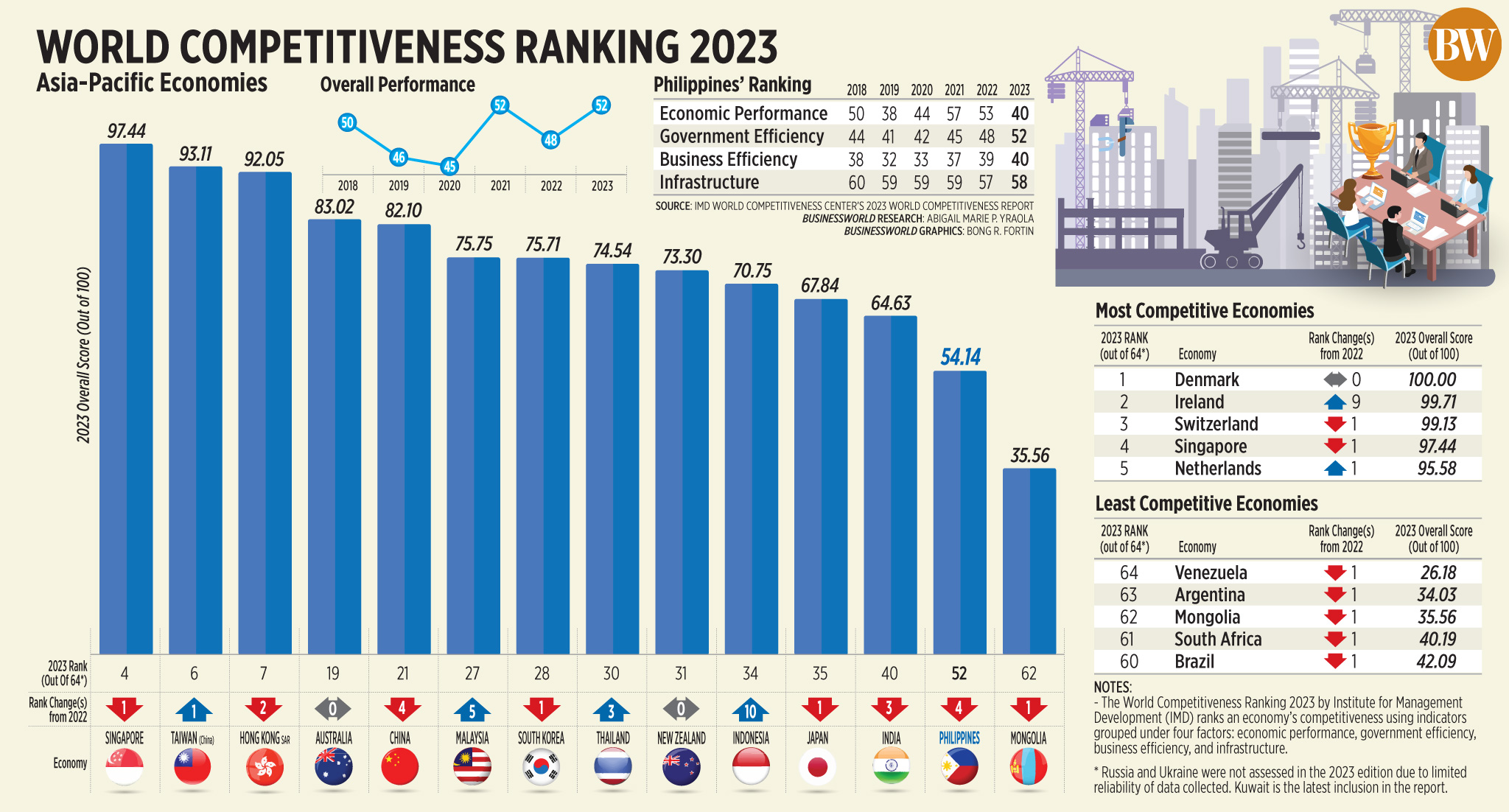
In its 2023 World Competitiveness Yearbook, Switzerland-based International Institute for Management Development (IMD) placed the Philippines 52nd out of 64 economies, from 48th in 2022.

World Competitiveness Ranking 2023

This year’s drop marked the sixth year that the Philippines stayed in 13th place out of 14 economies in the Asia-Pacific region.

IMD ranked the economies using 255 indicators spread across four competitiveness factors: economic performance, government efficiency, business efficiency, and infrastructure.

“The Philippines suffered declines in three out of the four main factors or dimensions of Competitiveness,” the Asian Institute of Management (AIM) Rizalino S. Navarro Policy Center for Competitiveness said in a statement.

The center has been the IMD’s Philippine partner institute in producing the competitiveness yearbook since 1997.

The Philippines declined a notch to 58th in 2023 in the infrastructure factor, which the IMD described as a perennial challenge for the country.

Foundation for Economic Freedom (FEF) President Calixto V. Chikiamco said the decline is “not surprising and that the comments are valid.”

“Infrastructure remains poor and inefficient, like the Ninoy Aquino International Airport. Power availability is uncertain. Water will be rationed. The poor infrastructure and services are turning off investors,” Mr. Chikiamco said in a Viber message.

To improve, the Philippines should adopt a whole-of-nation approach, he said.

“Get private sector involved, for example, expand the school voucher system to cure the ills in education; abolish quantitative restrictions in food imports; get more public-private partnerships in infrastructure done; hasten implementation of Public Service Act Amendment to woo foreign investors,” he said.

The country’s business efficiency factor dropped to 40th in 2023 from 39th in 2022 while its government efficiency factor suffered the biggest decline — to 52nd in 2023 from 48th in 2022, according to IMD.

The Philippines also declined in all the sub-factors under government efficiency: to 55th from 51st in public finance; dropping one place to 14th in tax policy; to 56th from 53rd in the institutional framework; falling five places to 57th in business legislation; and to 53rd from 50th in the societal framework.

Meanwhile, the country saw an improvement in the economic performance factor, jumping 13 places to 40th. Sub-factors under economic performance saw better results: to 30th from 48th in domestic economy, to 9th from 19th in employment, and to 39th from 58th in prices.

The Philippine economy expanded by 7.6% in 2022, surpassing the Development Budget Coordination Committee’s (DBCC) 6.5-7.5% target for the year and better than the 5.7% gross domestic product (GDP) growth in 2021.

In the first quarter, GDP expanded by 6.4%, marking the slowest pace in two years and settling within the government’s 6-7% target for the year.

Meanwhile, the unemployment rate further eased in April this year to 4.5% from 4.7% in March and 5.7% in April last year. It was the lowest jobless rate since 5.3% in January 2020.

Inflation cooled in May, the lowest so far in 2023, to 6.1% from 6.6% in April. Although slowing down, the rise in consumer prices in May was still faster than the 5.4% a year earlier and marked the 14th straight month it breached the central bank’s 2-4% goal.

The IMD said the Philippines continues to face challenges in sustaining economic recovery and growth momentum amid global downside risks and in strengthening social protection and healthcare systems for inclusive development.

It noted that the country also faces problems in addressing learning gaps, reducing climate change vulnerability, and reinforcing efficient public management strategies to support fiscal responsibility.

Rizal Banking Corp. Chief Economist Michael L. Ricafort said in a Viber message that “the decline in the country’s competitiveness ranking largely brought about by higher prices or inflation that reduced purchasing power and a drag on economic growth.”

“Higher inflation locally and worldwide since 2022 resulted in higher interest rates that increased borrowing/financing costs for consumers, businesses/industries, government, and other institutions, thereby could have also slowed down investments and overall economic growth,” he added.

Mr. Ricafort said the recession in the US, slowed down exports and foreign direct investments, while the pandemic lockdown weighed on the Philippines’ competitiveness despite easing restrictions in the latter part of 2022.

MOST COMPETITIVE
Denmark topped the competitiveness index again in 2023, followed by Ireland and Switzerland in second and third places, respectively.

In the Asia-Pacific region, the top three most competitive economies are Singapore, Taiwan, and Hong Kong — in that order. 

“Political fragmentation is a result of COVID-19 and the Ukraine war, and a major upshot is that more and more countries — Singapore, Saudi Arabia and India, for example — are pursuing their own interests,” said Arturo Bris, director of IMD’s World Competitiveness Center.

“With inflation pressures easing and uncertain stock markets, we are now able to see winners and losers in a context where multiple crises overlap,” Mr. Bris said.

The countries covered by the 2023 World Competitiveness ranking were different from the 2021 report after Kuwait joined the list for the first time, ranking 38th out of 64 economies.

Meanwhile, Russia and Ukraine were not assessed due to limited data reliability, the IMD said.

ADVERTISEMENT
ADVERTISEMENT