Home Blog Page 4653

Putin, Xi to attend virtual SCO summit hosted by India’s Modi
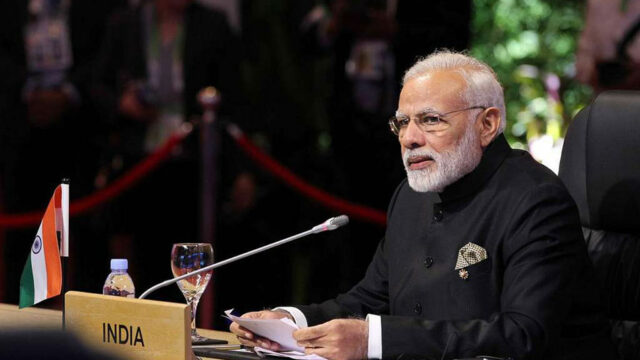
INDIAN PRIME MINISTER NARENDRA MODI — PHILLIPINES GOVERNMENT VIA PICRYL.COM

 – Leaders of the Shanghai Cooperation Organisation (SCO) on Tuesday will hold an online summit hosted by India seeking to expand the influence of the Eurasian group by including Iran and opening a path to membership for Belarus.

China’s President Xi Jinping and Russian leader Vladimir Putin will participate in the virtual summit, which will be Putin’s first appearance at an international event since he crushed a mutiny by the Wagner mercenary group in late June.

Formed in 2001 by China and Russia, with former Soviet central Asian states as members and joined later by India and Pakistan, the eight-member SCO is a political and security group that seeks to counter western influence in Eurasia.

While Iran is expected to be accepted as a member, Belarus will sign a memorandum of obligations which will lead to its membership later. When both countries, which have observer status and enjoy close ties to Moscow, are accepted as members of the SCO it will expand the grouping’s western flank in both Europe and Asia.

The summit takes place barely two weeks after Indian Prime Minister Narendra Modi was hosted by US President Joe Biden for a state visit, and the two countries called themselves “among the closest partners in the world”.

India, which holds the presidency of SCO and the G20 this year, has walked a diplomatic tightrope as relations between western nations and a Russia-China partnership have been fraught due to Moscow’s invasion of Ukraine last year, and Beijing’s growing assertive presence in the global geopolitical theatre.

Mr. Putin spoke to Modi in a call last week to discuss the aftermath of the quashed mercenary mutiny. During the discussion Mr. Modi reiterated a call for dialogue and diplomacy regarding the war in Ukraine.

Last year on the sidelines of the summit in Uzbekistan Modi told Mr. Putin that it is not the era of war, which is the closest India has come to addressing the issue of the war directly with the Russian leader.


RUSSIAN OIL

Both Mr. Putin and Xi are expected to visit New Delhi in September as India hosts the G20 summit, for which Biden and leaders of other member nations are also likely to be present.

India has refused to blame Russia for the war and increased bilateral trade largely by lifting purchases of Russian oil to a record high, which has irked several western capitals.

The summit on Tuesday will also see Mr. Modi sharing the virtual stage with Xi for the first time since November when the two leaders were present for the G20 summit in Indonesia.

The relationship between the two nuclear-armed Asian giants has been frosty for over three years as they are involved in a continuing standoff on their Himalayan frontier.

It will also bring Mr. Modi face to face online with his Pakistani counterpart Shehbaz Sharif, 10 months after they both attended the SCO summit in Uzbekistan.

New Delhi announced last month that the summit will be held virtually, without providing any justification. India will hand over the presidency of the bloc to Kazakhstan at the summit.

SCO member nations are expected to discuss Afghanistan, terrorism, regional security, climate change and digital inclusion, among other topics.

Foreign Ministers of SCO members met in India’s coastal resort-state of Goa in May, which ended in old rivals India and Pakistan attacking each other over Kashmir, terrorism and a souring of bilateral ties. – Reuters

Twitter says users must be verified to access TweetDeck

JOSHUA HOEHNE/UNSPLASH

Twitter users will soon need to be verified in order to use TweetDeck, the social media company said in a tweet on Monday.

The change will take effect in 30 days, the company said.

Twitter made the announcement in a tweet detailing an improved version of TweetDeck with new features. It was unclear if Twitter will charge users for both the new and old version of TweetDeck. Twitter did not immediately respond to request for comment.

Charging for TweetDeck, which was previously free and is widely used by businesses and news organizations to easily monitor content, could bring a revenue boost to Twitter, which has struggled to retain advertising revenue under billionaire Elon Mr. Musk’s ownership.

The move comes just days after Mr. Musk said that both verified and unverified users would have a limited number of posts they could read per day “to address extreme levels of data scraping & system manipulation.”

His announcement sparked a fierce backlash from users on Twitter, and ad experts said it would undermine new CEO Linda Yaccarino, who started in the role last month.

Individuals must pay $8 per month to verify their account, while organizations pay $1,000 per month. – Reuters

Microsoft faces EU antitrust probe after remedies fall short, sources say

Microsoft is likely to face a European Union antitrust investigation in the coming months after remedy discussions with the EU watchdog to avert such a move appear to have hit a roadblock, people familiar with the matter said.

Microsoft, which has been fined 2.2 billion euros ($2.4 billion) in the previous decade for practices in breach of EU competition rules, including tying or bundling two or more products together, found itself in the EU crosshairs after a complaint by Salesforce-owned workspace messaging app Slack in 2020.

Microsoft added Teams to Office 365 in 2017 for free, with the app eventually replacing Skype for Business.

Slack alleged that its rival had unfairly integrated workplace chat and video app Teams into its Office product. The company did not respond to a request for comment on Monday.

Microsoft kicked off talks with the European Commission last year in a bid to stave off an investigation. It recently offered to cut the price of its Office product without its Teams app.

The European Commission, which hopes a price differential between Office with Teams and Office without the app will ensure a level playing field with rivals and give consumers more choice, has been seeking a deeper price cut than that offered by the U.S. software giant, the people said.

The EU executive declined to comment.

A Microsoft spokesperson said: “We continue to engage cooperatively with the Commission in its investigation and are open to pragmatic solutions that address its concerns and serve customers well.”

The company, which risks a fine up to 10% of its global turnover if eventually found in breach of EU antitrust rules, could still improve its remedy before the watchdog kicks off an investigation. – Reuters

Beyond Borders: Successful conclusion of the 2023 International Tax Conference by The Asian Consulting Group

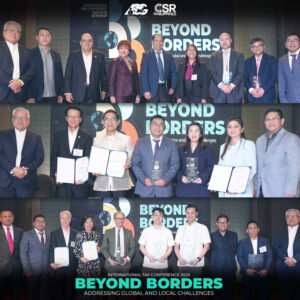
The 2023 International Tax Conference concluded with great success last June 15. Esteemed speakers and panelists shared their expertise and engaged in insightful discussions on economic and tax issues, tax policies and digitalization in the Philippines, and good governance and ease of doing business.

Notable speakers included Ralph van Doorn, senior economist of the World Bank Philippines; and Romeo Balanquit, assistant secretary of the Philippines’ Department of Budget and Management. They delivered speeches on addressing global and local economic and taxation challenges, highlighting the need for a resilient system in the Philippines.

Mr. van Doorn presented on the “Economic Outlook — Addressing High Inflation (Glance at the Philippines’ Economic Updates),” emphasizing the country’s outperformance compared to regional peers and the importance of ongoing reforms for sustained growth and development.

The conference featured industry leaders and experts such as Ragnar Gudmundsson from the International Monetary Fund, Aekapol Chongvilaivan from the Asian Development Bank, and Senator Win Gatchalian. They discussed the current tax landscape and explored ways to simplify compliance for businesses while fostering growth and sustainability.

Kirbee Tibayan from the United Nations Office on Drugs and Crime shared valuable insights on the implementation review of the United Nations Convention Against Corruption (UNCAC). She highlighted the progress made by the Philippines in implementing anti-corruption measures and promoting transparency.

The conference also showcased the expertise of Philippine Tax Whiz Mon Abrea, who discussed the challenges of corruption and launched his book, Reimagining the World Without Corruption, which received positive reception from industry professionals.

Former Vice-President, Atty. Leni Robredo, delivered a powerful closing speech, reminding participants of the role taxation plays in the public good and encouraging them to be responsible citizens committed to building a better nation.

Overall, the 2023 International Tax Conference provided a platform for in-depth discussions, valuable insights, and knowledge exchange on pressing economic and tax issues. Participants left with a renewed commitment to contribute to the growth and prosperity of the Philippines.


Spotlight is BusinessWorld’s sponsored section that allows advertisers to amplify their brand and connect with BusinessWorld’s audience by enabling them to publish their stories directly on the BusinessWorld website. For more information, send an email to online@bworldonline.com.

Join us on Viber at https://bit.ly/3hv6bLA to get more updates and subscribe to BusinessWorld’s titles and get exclusive content through www.bworld-x.com.

Traveltech BPO Philippines: Cynergy BPO – Charting the Course for a Seamless Journey in Outsourcing

In the pantheon of industries experiencing seismic digital shifts, travel technology, or “traveltech,” stands as a towering figure. Emerging as a symphony of transformative technology and the primal human urge to explore, it is redefining the way we traverse the globe.

Navigating these swirling currents of change, one organization stands as a compass — Cynergy BPO. Led by its CEO, John Maczynski, the company is carving an intuitive path through the complex landscape of BPO to the Philippines.

“The digital transformation is revolutionizing the way the world explores, but it also adds complexity,” states Maczynski. “Businesses need to focus on creating the best possible travel experiences, and that’s where we come in. The advisory firm ensures that their non-core tasks are handled effectively and efficiently.”

Cynergy BPO isn’t just another player in the field; it is a seasoned navigator. As a leading advisory firm, it aids global traveltech businesses in identifying the right outsourcing opportunities in the Philippines. The company’s deep knowledge of both the Philippine vendor landscape and the intricate demands of the industry sets it apart.

“Finding the right BPO partner in a new country can be overwhelming,” says Maczynski. “We function as a guiding star, leading our clients to world-class BPO providers who specialize in the sector and align with their needs and objectives.”

In a world that revolves around data, protecting it is of paramount importance. Recognizing this, the firm underscores its commitment to data security and compliance to regulations. “Data security isn’t negotiable in the traveltech sector. Maintaining these high standards is an integral part of our service proposition,” asserts Maczynski.

However, the company’s commitment extends beyond service delivery. Cynergy BPO places its clients’ business goals at the center of its strategy, focusing on creating a bespoke service model for every client. This personalized approach ensures a smooth journey, from the initial exploration of the BPO landscape to the eventual transition of services.

While the road to outsourcing may seem daunting to many businesses, Cynergy BPO aims to make this a journey of discovery and growth. “Outsourcing can be a leap of faith, but with the right guidance, it’s a leap that can propel a company to new heights,” states Ralf Ellspermann, the CSO of the company. “Our goal is to demystify the process and provide a clear roadmap to success.”

Cynergy BPO’s role as a strategic advisor to companies is proving invaluable, especially in an era where efficiency and cost-effectiveness can determine a company’s competitive edge. Its services come at no cost, without any obligation, enabling businesses to explore the potentials of outsourcing in the Philippines risk-free.

Outsourcing in the Philippines is no longer a well-kept secret. But finding the right match for your needs, ensuring compliance and security, and managing relationships — that’s the challenge,” Ellspermann explains. “That’s the journey we guide our clients through. The reward at the end is not just cost savings or efficiency gains. It’s a stronger, more resilient business ready to face the future.”

As the sector continues to evolve, so does the value of having an expert guide in the complex world of BPO. The choice between trial and error and a sure bet becomes more apparent. Partnering with Cynergy BPO is not just a smart business move; it’s a voyage towards success.

Traveltech is carving out the future of global exploration, and with Cynergy BPO as a compass, businesses can embark.


Spotlight is BusinessWorld’s sponsored section that allows advertisers to amplify their brand and connect with BusinessWorld’s audience by enabling them to publish their stories directly on the BusinessWorld website. For more information, send an email to online@bworldonline.com.

Join us on Viber at https://bit.ly/3hv6bLA to get more updates and subscribe to BusinessWorld’s titles and get exclusive content through www.bworld-x.com.

Manufacturing growth cools in June

A WORKER wipes an automotive computer component part at an electronics assembly line in Biñan, Laguna, April 20, 2016. — REUTERS

By Luisa Maria Jacinta C. Jocson, Reporter

PHILIPPINE FACTORY ACTIVITY lost momentum in June, with output expanding to its slowest pace in 11 months, S&P Global said on Monday.

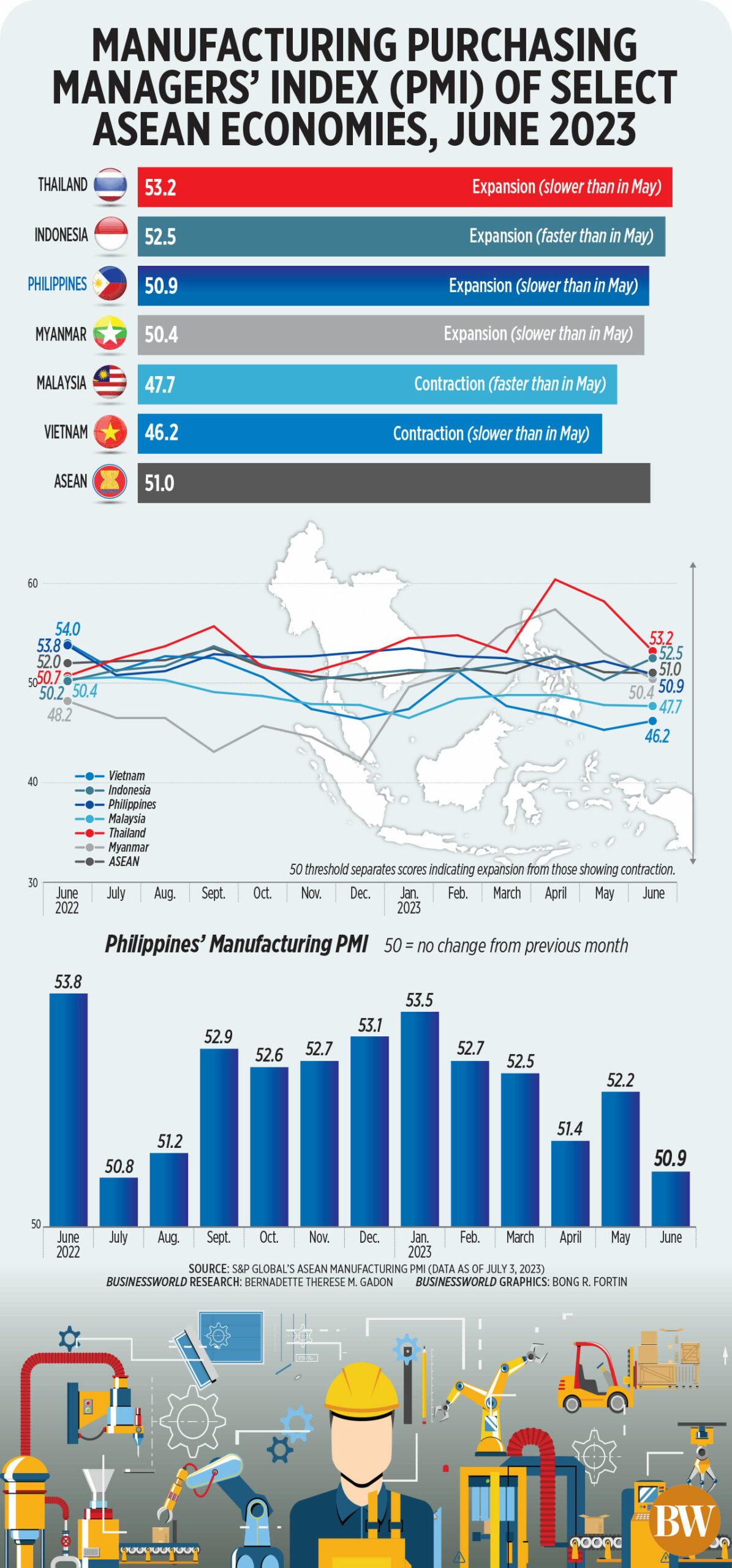
The S&P Global Philippines Manufacturing Purchasing Managers’ Index (PMI) eased to 50.9 in June from 52.2 in May, remaining above the 50-point index mark that separates growth from contraction.

This was the weakest manufacturing growth seen in 11 months or since the 50.8 reading in July 2022.

June also marked the 17th straight month that the PMI reading was above 50.

“Growth across the Filipino manufacturing factor slowed as the June PMI index reading signaled the weakest improvement in the health of the sector since July 2022,” Maryam Baluch, economist at S&P Global Market Intelligence, said in a statement.

“The muted headline figure reflected softer rates of expansion across both output and new orders, while manufacturing employment registered a fresh reduction,” she added.

The headline PMI measures manufacturing conditions through the weighted average of five indices: new orders (30%), output (25%), employment (20%), suppliers’ delivery times (15%) and stocks of purchases (10%).

Based on the latest PMI reading, the Philippines had the third best PMI reading in June out of six Southeast Asian countries.

The Philippines was behind Thailand (53.2) and Indonesia (52.5), but ahead of Myanmar (50.4). Meanwhile, Malaysia (47.7) and Vietnam (46.2) both reported a contraction in factory activity.

WEAK DEMAND
“Filipino manufacturing firms signaled a moderate improvement in overall business conditions in the closing month of the second quarter. Overall growth was supported by continued expansion in production and factory orders. However, in both cases, the rates of increase eased from May, with some panelists reporting weaker underlying demand trends,” S&P Global said.

Firms’ output only showed a “fractional rise” in June, and the weakest since the current run of expansion started in September 2022, it added.

Philippine firms saw a slower rise in new orders, although they noted this was driven by additional demand and new client wins.

“Similarly, while helping to sustain growth in total factory orders, foreign demand for Filipino manufacturers’ goods also expanded in June,” S&P Global said.

However, manufacturing firms reported a decline in employment due to slowing output growth.

“According to surveyed businesses, the renewed reduction in manufacturing employment was in part due to the non-replacement of voluntary leavers as well as some firms actively reducing their payroll numbers,” S&P Global said.

On the other hand, firms increased their purchasing activity for a 10th straight month in June, and at the fastest clip in four months.

The survey also showed that price pressures eased in June.

“Rates of input price and output charge inflation slowed and were the softest recorded in over two-and-a-half years. With inflationary pressures fading and global economic uncertainties still a looming threat to growth, the central bank maintained their policy rate at 6.25% for the second successive policy meeting in June,” S&P Global said.

Philippine firms also kept an optimistic outlook for the next 12 months.

“Going forward, the sector remains optimistic of growth in the coming 12 months. However, global headwinds could dampen the outlook for manufacturers in the Philippines,” Ms. Baluch said.

ING Bank N.V. Manila Senior Economist Nicholas Antonio T. Mapa said that manufacturing growth slowed in June as demand eased.

“Also, the lack of pickup on demand and activity has once again translated to a slower recovery in employment,” he said in a Viber message.

China Banking Corp. Chief Economist Domini S. Velasquez said that weaker manufacturing growth may be attributed to the moderation in economic activity.

“Although external headwinds will likely cause softer export demand, we think that this is likely to improve. Easing supply chains globally could prop up the manufacturing sector despite weak demand. Domestically, a slowdown in consumer and producer prices should benefit the manufacturing sector,” she said in a Viber message.

“Moving forward, we expect the manufacturing sector to continue to expand modestly until we see improvements in Chinese and advanced economies’ demand,” she added.

New BSP governor sees inflation returning to target before yearend

BSP GOVERNOR ELI M. REMOLONA

THE NEW Bangko Sentral ng Pilipinas (BSP) chief sees inflation returning to the 2-4% target range before the year ends.

“Inflation has finally started to come down, and if our models are right, we should be back in our target range even by the end of this year,” BSP Governor Eli M. Remolona said during the turnover ceremony and the BSP’s 30th anniversary event at its head office in Manila on Monday.

Mr. Remolona takes over the central bank after his predecessor Felipe M. Medalla led an aggressive monetary tightening campaign to curb inflation.

From May 2022 to March this year, the BSP has raised interest rates by 425 basis points to combat inflation. This brought the policy rate to 6.25%, the highest in nearly 16 years.

Mr. Medalla, who served 11 years as a Monetary Board member and one year as BSP governor, said the past year “was a year like no other” as the central bank faced unprecedented challenges and fought record-high inflation.

“We acted decisively. We also sold foreign exchange as necessary… Combined with non-monetary measures, our actions helped reduce second-round effects and re-anchor inflationary expectations,” he said.

Mr. Medalla noted that the Philippines may see 18 straight months of inflation being above the 2-4% target from April 2022 to September 2023. This is three months longer than the longest record of 15 months in 2008 to 2009.

“Unless there are new shocks, we should see inflation below 4% before the end of this year,” he said.

The BSP sees full-year inflation averaging at 5.4%, before further slowing down to 2.9% in 2024.   

Also, Mr. Remolona said the country’s banking system remains strong.

“Capital and liquidity have been more than adequate. That’s why, in recovering from the pandemic, our banks have been a source of strength, unlike in previous crises, when they were a source of weakness,” he said.

Based on central bank data, the combined net profit of Philippine banks rose by 45.6% to P96.62 billion as of end-March from P66.34 billion in the same period in 2022.

“The plumbing of our system — our payments and settlement system — has increasingly become digitalized and efficient. We are delivering greater and greater access to financial services for our people,” Mr. Remolona said.

The BSP is aiming to have 50% of retail payments done digitally and 70% of adult Filipinos become part of the formal financial system by 2023.

The central bank reported that the share of online payments in the total volume of retail transactions in the country stood at 42.1% in 2022, while the country’s banked population was at 56% of all adults in 2021. — KBT

BSP to complete climate stress testing this year

THE SUN rises behind buildings as seen from Mabini Bridge in Manila, June 16, 2023. — PHILIPPINE STAR/MIGUEL DE GUZMAN

THE PHILIPPINE central bank intends to complete the conduct of climate stress testing in collaboration with the World Bank this year.

The Bangko Sentral ng Pilipinas (BSP) on Monday launched its first sustainability report, which details the progress in pursuing the sustainability agenda in the financial system.

In the report, the BSP said it plans to issue detailed guidelines for banks in conducting their own climate stress testing using their own data. 

“The exercise will also inform the enhancement of prudential reports submitted by banks to capture identified data relevant for surveillance of aggregate exposures of the banking system to climate and other environment-related risks,” it said.

The BSP is also looking to update sustainability reporting requirements in the financial sector. This will take into account the final version of reporting standards to be released by the International Sustainability Standards Board.

The central bank is also considering other potential regulatory incentives for banks to promote green lending “such as the use of preferential rediscount rates or provision for higher loan values related to its rediscounting facility.”

“The BSP is also reviewing the single borrower’s limit (SBL) regulations to promote lending to social and green projects under the Sustainable Finance Framework of the (National Government), among others,” it said.

Last month, the BSP proposed an additional SBL of 15% for loans meant to finance green projects and a reserve requirement rate of zero percent for sustainable bonds. 

If approved, the draft circular will amend sections 362 and 251 of the Manual of Regulations for Banks that cover exposure limits to a single borrower and reserves.

The SBL is a ceiling on the amount of loans, credit accommodations and guarantees a bank or financial institution can extend to one borrower meant to prevent over-concentration of risk.

The BSP said it is working with the Securities and Exchange Commission and the Insurance Commission in developing the sustainable finance taxonomy guidelines with the support of the World Bank.

“This taxonomy will build on the Philippine Sustainable Finance Guiding Principles, the country’s nationally determined contributions, and the ASEAN (Association of Southeast Asian Nations) taxonomy,” it said.

The BSP will also continue to improve the earlier-implemented green initiatives in its own offices and facilities and operations. It will also ensure effective implementation in the emission reduction initiative.

Meanwhile, the central bank said the inflationary effects of “temperature shocks” in the short term would be best addressed by non-monetary policy interventions, not monetary policy.

“On the other hand, if inflation pressures remain persistent and evidence of second-round effects materializes, the central bank will respond and adjust its policy interest rates accordingly,” it added.

The BSP monitors climate-related developments as part of its 11-point sustainability agenda. This includes weather disturbances such as the El Niño and storms that may damage crops or livestock, thus affecting supply and threatening price stability.

The state weather agency earlier said the El Niño weather phenomenon may emerge this month with an 80% probability and will likely persist until the first quarter of 2024. The last time an El Niño event hit the Philippines was in 2019, with agricultural damage reaching up to P8 billion.    

The central bank said it is currently conducting a study that examines the effects of temperature shocks on economic growth and inflation.

This is the first attempt to quantify the macroeconomic effects of temperature shocks in the Philippines and may serve as the starting point in understanding the wider consequences of climate change, the BSP said. 

“To the extent that climatic changes affect agricultural production, this would affect the level and volatility of inflation. Nevertheless, the impact of climate-related risks to price stability can be mitigated by well-timed and targeted interventions of the NG,” it said. — Keisha B. Ta-asan

Wage hikes unlikely to boost demand or fuel another inflation spike

Workers install steel bars at a construction building site in Manila, July 1, 2023. — PHILIPPINE STAR/MIGUEL DE GUZMAN

THE 7% HIKE in minimum wages in the National Capital Region (NCR) is unlikely to boost domestic demand to the extent that it will fuel another spike in inflation, analysts said.

In an e-mail, Oxford Economics assistant economist Makoto Tsuchiya said the minimum wage hike in NCR, which takes effect on July 16, will provide support to households that are grappling with rising cost of goods.

“But we estimate the real minimum wage in NCR in 2023 will still be lower than the 2020 level given surging inflation for the past few years. Therefore, the hike is unlikely to boost domestic demand to the extent that will reaccelerate inflation,” Mr. Tsuchiya said. 

Last week, the Regional Tripartite Wages and Productivity Board (RTWPB) of the NCR approved a P40 wage hike for all minimum wage earners in Metro Manila, bringing the minimum wage from P570 to P610 a day effective July 16.

“Given that the increase is roughly 7%, only slightly faster than the growth of the economy, we feel that the increase in wages may not fan out of control inflationary pressures just yet,” ING Bank N.V. Manila Senior Economist Nicholas Antonio T. Mapa said.

On the other hand, Security Bank Corp. Chief Economist Robert Dan J. Roces said any wage hike is inflationary and could increase demand for goods and services as workers have more money to spend.

“In effect it may lead to higher prices with businesses passing on the cost of increased wages to consumers,” he said.

In terms of risk, Mr. Roces said the “inflationary tendency, if any, may be offset by raising interest rates especially in this current environment.”

The Bangko Sentral ng Pilipinas (BSP) extended its policy pause for a second straight meeting in June, keeping rates at a near 16-year high of 6.25%.

While the wage hike raises the possibility of further tightening, Mr. Tsuchiya said the BSP’s next move will likely be a cut in the first quarter of 2024.

“Even with the minimum wage hike, we still look for inflation to continue trending down, which will allow the BSP to cut rates to support the economy… That said, if inflation does get out of control due to the combination of demand and supply factors, the BSP will need to respond by resuming its rate hiking cycle,” Mr. Tsuchiya said. 

MORE WAGE HIKES?
Meanwhile, the regional wage boards of Central Luzon, Calabarzon, Western Visayas and Central Visayas will likely decide on pending wage petitions by September, the Department of Labor and Employment (DoLE) said on Monday.

“We anticipate that the wage boards in these particular regions will be doing their public hearings and public consultations from the month of July to September, and wage actions can be expected during this period,” Labor Undersecretary Benedicto Ernesto R. Bitonio, Jr. told CNN Philippines.

Mr. Bitonio said the NCR wage board considered the capacity of micro, small and medium enterprises (MSMEs) to handle wage increases when it decided on the P40 hike. He added that many local firms are still recovering from the pandemic.

“We are in the process of recovering from that (the pandemic),” the Labor official said. “This is why the policy of the wage boards has always been to adjust the minimum wage rates in a moderate and predictable manner so as to balance all the interests that are involved in this wage determination process.” 

Last month, the Central Luzon Workers for Wage Increase asked the Central Luzon RTWPB for a P640 increase to the current P460 daily minimum pay.

Cebu City-based labor groups earlier filed a petition seeking a P292.50 increase to the daily minimum wage in Central Visayas.

In March, Iloilo City trade unions sought a P100 increase in the daily minimum pay for private workers in Western Visayas.

Labor organizations under the Workers Initiative for Wage Increase on March 27 asked the Calabarzon wage board to increase the daily minimum wage to P750 from the current wages of P470 for non-agricultural workers; P429 for agricultural workers; and P350 in retail and service establishments with not more than 10 workers.

Every wage order approved by an RTWPB must be approved by the Labor secretary. Wage boards can only act on wage petitions a year after a region’s last wage order.

Under the Labor Code, wage boards must consider the demand for a living wage, wage adjustment in the consumer price index, the changes in the close of living in the region, and the needs of workers and their families among others.

Aside from the wage hike petitions, lawmakers have also filed bills seeking across-the-board minimum wage hikes for workers in the private sector. 

The Employers Confederation of the Philippines has said wage increases may lead to the closure of many MSMEs, which account for 99% of the country’s businesses. — Keisha B. Ta-asan and John Victor D. Ordoñez

Jollibee Foods maps market expansion in Vietnam

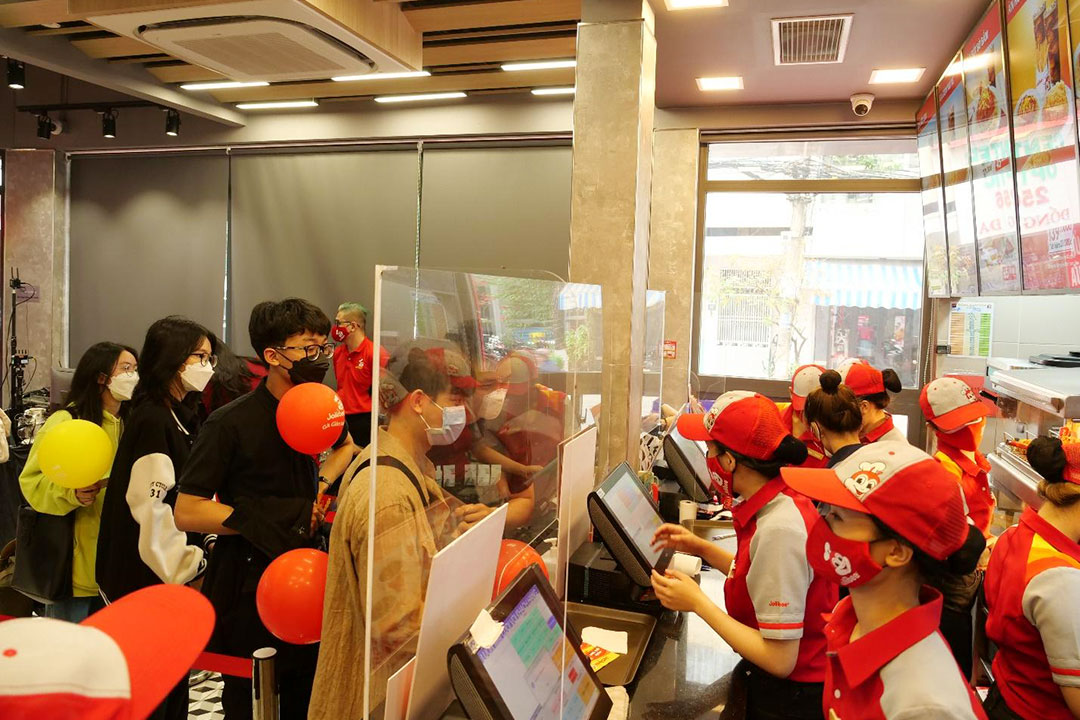
Vietnamese customers wait for their turn to order in Jollibee’s store in Da Nang, Vietnam. The company aims to make Jollibee the top quick-service restaurant chain in the Philippines’ regional neighbor. — JOLLIBEE FOODS CORPORATION

JOLLIBEE FOODS Corp. said on Monday that it is planning to expand its market reach in Vietnam due to the country’s economic development and growing population.

“We intend to maximize Vietnam’s huge growth opportunity of the rapidly growing QSR (quick service restaurants) industry in Vietnam, focusing our investment on key cities and developing areas,” said Jollibee Foods President and Chief Executive Officer Ernesto Tanmantiong in a statement.

The company said that as of the first quarter it had opened about 158 Jollibee stores in Vietnam as it aims to become “among the country’s top QSRs.”

It added that Jollibee Vietnam opened seven new stores in 2022 and four more during the first quarter of 2023.

“To support the company’s growth plans, Jollibee established its own commissary in Vietnam, which has the capacity to support 400 stores,” the company said.

Jollibee Foods added that to date, it is the third biggest QSR brand in the country and caters to a 100% local customer base.

“Our continued success in Vietnam and in many other parts of the world shows that Jollibee can indeed win over the hearts of the international customer base, and we will continue expanding our presence both in Vietnam and around the globe,” Mr. Tanmantiong added.

During the first quarter, the company recorded a nearly 11% decrease in attributable net income to P2.06 billion from P2.31 billion in the previous year despite strong revenue growth.

Its consolidated revenues for the quarter grew by 28.5% to P55.09 billion from the P42.86 billion recorded in the same quarter last year.

System-wide sales — which measure all sales to consumers, both from company-owned and franchised stores — rose by 31.1% to P78.64 billion from P59.98 billion.

Overseas system-wide sales jumped by 23.3%, while same-store sales rose by 8.8%. For the Philippines, system-wide sales increased by 36.7% while same-store sales went up by 31.6%.

As of end-March, the company had been operating 6,542 stores worldwide with 3,281 in the Philippines and 3,261 in its international business.

At the stock exchange, Jollibee Foods’shares rose by 0.5% or P1.20 to P240 apiece. — Adrian H. Halili

Global-Estate Resorts forecasts sustained growth

GLOBAL-ESTATE RESORTS, INC.

ANDREW L. TAN’S Global-Estate Resorts, Inc. (GERI) expects to sustain its growth momentum as tourism recovers, its president said on Monday.

GERI President Monica T. Salomon told stockholders during their annual meeting that her optimism was based on the “remarkable” performance of the economy, the favorable outlook for the property sector, and the resurgence of tourism and leisure.

“The company is confident that it would sustain its growth momentum in the succeeding years,” she said.

In line with the forecast, the company is banking on its tourism estate portfolio to drive its earning upward.

“The anticipated rise in tourist arrivals due to pent-up demand is expected to boost hotel occupancies and retail spending, benefiting the company’s tourism estates in Boracay and Batangas,” Ms. Salomon added.

She added that GERI’s Boracay Newcoast property is poised to capture the meetings, incentives, conferences and exhibitions or MICE market in the area.

The Boracay property, which is a 150-hectare integrated tourism and leisure estate, opened last year its Boracay Newcoast Convention Center that can accommodate 1,200 individuals.

Ms. Salomon said the site now can host large-scale business events.

“The company seeks to explore and develop different types of tourism, suitable for its tourism and leisure estates,” she said.

During the first quarter, GERI’s attributable net income rose by 40% to P479 million from the previous year’s P343 million. Its consolidated revenues increased by 56% to P2.1 billion from P1.3 billion previously.

A subsidiary of Megaworld Corp., GERI is primarily engaged in the development of integrated tourism and leisure estates, and integrated lifestyle communities with residential, retail, hotel, and leisure components.

Its wholly owned subsidiaries include Novo Sierra Holdings Corp.; Elite Communities Properties Services, Inc.; Savoy Hotel Boracay, Inc.; Belmont Hotel Boracay, Inc.; Twin Lakes Corp.; Megaworld Global-Estate, Inc.; Oceanfront Properties, Inc.; and Global Homes and Communities, Inc.

On Monday, its shares fell by 2.25% or two centavos to P0.87 apiece. — Adrian H. Halili

Young workers seen seeking better job benefits 

A BUSINESS process outsourcing firm has called on employers to modify their rewards and benefits based on the needs of employees as a survey has shown that Gen Z and millennials are prioritizing work-life balance.

“In these changing times, we should be deliberate about giving team members the support they need and allowing them to have a rewarding journey,” TELUS International Philippines Vice-President and Country Manager Anne Muñoz said in a statement on Monday.

Her stand comes as a recent survey by Deloitte says the top priorities for Gen Z and millennial respondents in choosing an employer are a good work-life balance and opportunities for learning and development.

“Having meaningful rewards is one part of the equation to engage Gen Z and millennial team members. These must also come with a work culture that emphasizes purpose and allows each team member to see the value of their contributions toward the overall goal of the organization,” Ms. Muñoz said. 

The Deloitte survey has also shown that the cost of living is the top concern among Gen Z and millennials who say they will be less anxious about their financial situation if employers offer financial wellness benefits.

In response, TELUS International Philippines has improved its monthly mobile load benefits, added nontaxable medical allowances, and increased the nontaxable allowances for rice subsidies and uniforms.

“We have set our sights on helping our team members achieve financial security through TIP S.A.F.E., a retirement benefits fund and savings program that enables our team members to allot a certain amount from their salary to be placed in an account that earns interest,” Ms. Muñoz said.

TELUS International Philippines also increased the number of paid time off conversions, as well as upgraded its site clinics by ensuring hospital-quality consultation wherein team members could get certificates and recommendations for lab work from health maintenance organization (HMO)-accredited doctors onsite.

“We encourage our team members to avail of our free teleconsultation services to help address their issues on health, family counseling, trauma counseling, or financial and legal counseling. All our team members have had access to our HMO plans since their first day,” Ms. Muñoz said.

“In addition to extending health benefits to family members, we have been providing degree and certificate courses to our team members and their loved ones through TELUS International University (TIU), with a significant discount of 50-80% on tuition fees,” she added.   

Ms. Muñoz said there should also be efforts to boost employee benefits to keep the young workforce satisfied, citing a survey by YPulse showing that games, co-working spaces, and team activities are some of the things Gen Z and millennials look for in the workplace.

“We’ve gone above and beyond by creating highly engaging themed meeting rooms and game rooms that inspire creativity, allowing our team members to do their best work while enjoying the things they love doing. We also have various special interest groups where they can bond over different interests,” Ms. Muñoz said. 

TELUS International Philippines has seven sites across Metro Manila and two sites in Iloilo. It is a leading Philippines-based provider of digitally enabled customer experience and business process solutions. — Revin Mikhael D. Ochave