Home Blog Page 4629

Budget utilization rate hits 91% at end of May

BW FILE PHOTO

THE cash utilization rate of government agencies hit 91% at the end of May, the Department of Budget and Management (DBM) said.

The DBM said the National Government, local governments and state-owned companies used P1.57 trillion of the P1.71 trillion worth of notices of cash allocation (NCAs) issued as of the end of May. This left P146.18 billion in unused allocations.

The utilization rate was behind the pace of the 93% rate set a year earlier.

NCAs are a quarterly disbursement authority that the DBM issues to agencies, allowing them to withdraw funds from the Bureau of the Treasury to support their spending needs.

At the end of May, line departments used P1.1 trillion or 88% of their allotments, leaving P144.1 billion unused.

The only agencies to post a 100% budget usage rate were the Joint Legislative-Executive Councils and the Commission on Elections.

The Department of Migrant Workers had the lowest usage rate of 42% at the end of May.

Meanwhile, budgetary support to government-owned companies was 100% used, while allotments to local government units (LGUs) posted a utilization rate of 99%.

Budget Secretary Amenah F. Pangandaman said agencies are improving their utilization this year.

“We’re happy to note that the utilization rate of departments is higher, around 70-80%. They are getting used to procurement, planning of projects, and implementations,” she said during the Kapihan sa Manila Bay forum earlier in the week.

However, she said the late budget of the Philippine Health Insurance Corp. (PhilHealth) affected utilization performance.

“The bulk of that amount is the budget of PhilHealth. Last year, they requested early. This year, the requests came in late,” she added.

Rizal Commercial Banking Corp. Chief Economist Michael L. Ricafort said that the slower utilization rate was due to election-related spending in 2021.

“The faster budget utilization a year ago may have to do election-related preparations especially before the election spending ban (which resulted in) speeding up the completion of various infrastructure and other projects,” he said in a Viber message. 

Last year, the public works spending ban was in effect between March 25 and May 8. Spending bans are designed to deter politicians from using public resources for their election campaigns.

“The slower budget utilization this year may also reflect the (devolution) to local governments from the National Government of the various projects and programs,” he added, noting that some LGUs may still be adjusting to the additional responsibilities.

At the end of May, the DBM had released P4.68 trillion or 88.9% of the 2023 national budget, slightly ahead of the year-earlier pace of 88.8%. — Luisa Maria Jacinta C. Jocson
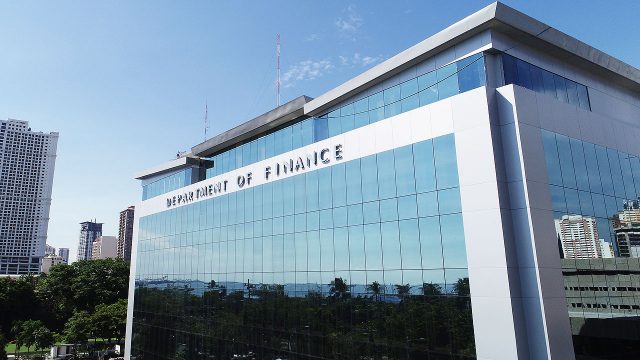
Government agencies ordered to draft asset management plans

DOF.GOV.PH

GOVERNMENT agencies are being directed to draft asset management plans as their investment utilization practices come under scrutiny. 

In a joint memorandum circular, the departments of Finance and Budget and Management, as well as the National Economic and Development Authority released guidelines for the preparation, submission, and review of asset management plans.

Asset management plans under the circular must be two-year roadmaps detailing each agency’s investment strategy.

“It is the agency’s written representation of intended capital, maintenance and operational programs for its existing asset base, and investment in new infrastructure which is based on its understanding of demand, customer requirements, and details of its network or portfolio of assets,” it added.

The government’s National Asset Management Plan aims to manage public non-financial assets, map investments in assets, and identify the resources and capacities needed to support agencies.

“Easy access and analysis of critical information on government assets, such as costs and implementation schedules, are the bare minimum requirements to generate useful insights that lead to good asset management,” it said. 

“The agency asset management plan will make the analysis of data easier and will ultimately improve the Philippine government’s asset management practices,” it added. 

The program aims to increase efficiency, improve decision-making, enhance risk management, and reduce the cost of government.

The Development Budget Coordination Committee’s technical working group on asset management will identify the priority agencies that must roll out asset management plans.

The plans must include an inventory of the agency’s assets and other such data, which will be lodged with the National Asset Registry System managed by the Bureau of the Treasury. — Luisa Maria Jacinta C. Jocson

PHL trade mission meets with French business federation 

THE Department of Trade and Industry (DTI) said a trade mission to Europe is prospecting for potential French investment in the Philippines.

In a statement on Thursday, the DTI said that Trade Secretary Alfredo E. Pascual met with French business federation MEDEF International on June 20 to pitch Philippine investment projects.

According to the DTI, the roundtable meeting was attended by 13 French companies engaged in finance, infrastructure, manufacturing, services, and transportation. It said the meeting participants expressed a “positive outlook toward the opportunities available in the Philippines.”

“The Philippines is open for business and now is the time for French businesses to seize the opportunities we offer,” Mr. Pascual said in his speech at the meeting.

Mr. Pascual discussed the opportunities presented by the Regional Comprehensive Economic Partnership (RCEP) trade deal which took effect in the Philippines on June 2, directing their attention to activities like sustainability and environmental projects.

RCEP consists of the 10 ASEAN members, Australia, China, Japan, South Korea, and New Zealand.

“French businesses, known for their expertise in renewable energy, sustainable agriculture, and eco-friendly solutions, can find immense opportunities to partner with Philippine companies in these areas,” Mr. Pascual said.

“Recently, we witnessed the visit organized by MEDEF International for its members in the Philippines… These developments indicate not only the interest and confidence of French companies in the Philippines but also the strong relationships we enjoy at the business level,” he added.

Mr. Pascual told French companies during the meeting that the Philippine government has started to roll out the Philippine Business Hub platform that uses digital and online processes to simplify business transactions.

“This initiative streamlines the registration of businesses, permit renewals, and other activities, making it easier and faster to conduct business in the Philippines,” Mr. Pascual said.

Mr. Pascual also sought MEDEF support as the Philippines pursues the renewal of Philippine eligibility for the European Union’s Generalised Scheme of Preferences Plus (EU-GSP+) preferential tariff scheme and the resumption of Philippine-EU free trade agreement negotiations.

The EU-GSP+ scheme, which is set to expire by the end of the year, sets zero tariffs for 6,274 products or 66% of all EU tariff lines. The Philippines can maintain its GSP+ status by committing to adhere to international conventions on human rights, labor, good governance, and environmental practices.

Currently, the DTI is undertaking a European investment roadshow, which started on June 18 and runs to July 6. The roadshow hopes to drum up investment from France, the UK, Belgium, Netherlands, and Germany.

“Our Board of Investments (BoI) recorded a 200% surge in foreign investment in 2021, totaling 11 billion euros across 235 projects. From 2020 to 2022, the Philippines received net foreign direct investment flows of $28 billion, with Europe accounting for a significant portion,” Mr. Pascual said. — Revin Mikhael D. Ochave 

Bill aims for strategic focus, council to reach export potential with RCEP

THE TADECO fresh banana packaging plant in Panabo City. — BW FILE PHOTO

A BILL seeking to create a multi-year strategy and a supervisory council to make local enterprises more competitive in the global market has been filed in the House of Representatives.

The proposed Tatak Pinoy Strategy (TPS), which signifies strength in the Filipino brand, aims to “systematically expand” productive capabilities of businesses for export, Marikina Rep. Stella Luz A. Quimbo said in House Bill No. 8525.

Ms. Quimbo said the game plan is intended to help the Philippines maximize the benefits of global trade agreements such as the Regional Comprehensive Economic Partnership (RCEP), which has recently come into effect.

“This is crucial amidst the country’s untapped global potential,” she said, noting the International Trade Center’s estimate that the country has some $27.8 billion worth of unrealized export potential.

The TPS will focus on five clusters, namely: manpower, infrastructure, technology and innovation, investments, and public fiscal management and government procurement.

It will cover a six-year period and must be aligned with the Philippine Development Plan (PDP), according to the bill.

A council will be created to manage and propose improvements to the proposed TPS, with the National Economic and Development Authority (NEDA) director-general as chair and the Trade and Finance secretaries as vice-chair.

Funding for the TPS will be allocated in the national budget.

Priority sectors that will be assisted include creative industries specified under the Philippine Creative Industries Development Act.

A similar measure is being discussed in a Senate committee.

“At a time of globally integrated development, this bill seeks to promote the Filipino brand to be recognized as world-class [through its] quality products and services,” Ms. Quimbo said.

The Department of Trade and Industry (DTI) said in a Senate hearing in April that it will assist companies looking to maximize the benefits of RCEP.

EXPORT PLAN
Meanwhile, Malacañang issued a memorandum circular (MC) on Thursday approving the Philippine Export Development Plan for 2023 to 2028 (PEDP 2023-2028).

The PEDP, which was approved by President Ferdinand R. Marcos, Jr. earlier this month, calls for “industry-level” and “company-level” interventions to address challenges facing the domestic export sector, which has lagged behind regional rivals.

The memorandum, signed by Executive Secretary Lucas P. Bersamin on June 20, directs concerned government agencies to “support and cooperate in the implementation of the PEDP 2023-2028.”

Sixty days upon the memorandum’s effectivity, agencies must submit to the Export Development Council and to the office of the Executive Secretary an inventory of relevant programs, activities and projects that are in line with the development plan.

“These agencies shall implement the identified PAPs (programs and projects) to develop and promote Philippine exports, and ensure the free flow of goods, in accordance with the PEDP 2023-2028, PDP 2023-2028, and MC No. 27,” the memorandum read. — Beatriz Marie D. Cruz and Kyle Aristophere T. Atienza

PHL commits to OGP; Civil, business sector urged to monitor gov’t

PHILIPPINE STAR/KRIZ JOHN ROSALES

MALACAÑANG on Thursday issued an order reaffirming the Philippines’ commitment to a broad international partnership for transparency and citizen participation in governance.

Executive Order No. 31 institutionalized the Philippine Open Government Partnership (PH-OGP), “a multi-stakeholder partnership responsible for overseeing and implementing the country’s commitments to the OGP.”

Under the presidential order, the PH-OGP, through its steering committee, shall ensure that open government values are embedded in government policies and programs.

“The Philippines has been a long-time signatory to the Open Government Partnership and it is good that the country reaffirmed its commitment to the agreement,” Philip Arnold “Randy” P. Tuaño, dean of the Ateneo School of Government, said in a Facebook Messenger chat.

“Hopefully, this would bode well to strengthening citizenship participation at both national and local government levels and improving transparency and accountability in different government structures,” he said.

“What is critical here is that the specific commitments in the partnership agreement are acted upon by the national government,” he said, adding that monitoring of the government’s actions by the business sector and civil society is also critical.

Through the OGP, governments and civil society organizations (CSOs) work together in creating action plans with concrete reforms.

“This model helps ensure citizens play a role in shaping and overseeing government,” the OGP said on its website.

Since its founding in 2011, the OGP network has grown to 76 countries and 105 local jurisdictions “that work alongside thousands of civil society organizations.”

OGP members address issues involving justice, gender, health, education, digital governance, the right to information, civic space, natural resources, and corruption, among others.

Every two years, every member submits an action plan co-created with CSOs.

The committee created under Mr. Marcos Jr.’s order is tasked to set the direction, programs, and activities of the PH-OGP and promote open and participatory governance through advocacy and outreach activities.

“It shall also embody a concrete set of actions, composed of government programs and projects that conform to the OGP values.”

The Philippines’ fifth action plan — which covered years 2019-2022 — improved access to civil society–government town hall meetings and widened public participation in OGP, the global network said in a report in May.

But the momentum was not sustained during the implementation, OGP said.

“Five of the action plan’s eleven commitments achieved early results, producing fewer open government results than the last plan,” it said, noting that Commitment 6 — the passage of the Freedom of Information and Localizing the FOI program — made major progress “as 61 local governments passed relevant ordinances during the implementation period.”

OGP noted limited implementation for other commitments, saying it was “largely the result” of COVID-19 disruptions and the May 2022 elections.

OGP said the impact of local governments’ commitments will be “magnified” by the implementation of the Philippine Supreme Court ruling that increased their shares from national government taxes and led to the devolution of public services. — Kyle Aristophere T. Atienza

Low antiretroviral drugs supply due to increased use — DoH

PHILIPPINE STAR/EDD GUMBAN

THE PHILIPPINE health agency attributed the unstable supply of human immunodeficiency virus (HIV) antiretroviral drugs in treatment facilities to a “notable increase” in their use.

A network of groups advocating for the welfare of people living with HIV (PLHIVs) earlier asked the Department of Health (DoH) and the national AIDS council to act on reports about low stocks of antiretroviral drugs, particularly Tenofovir-Lamivudine-Dolutegravir (TLD), a fixed-dose combination used in treating HIV/AIDS.

In a statement released Wednesday night, the DoH said the reported low stocks in designated treatment hubs could be attributed to “unprecedented increase in the use of TLD among PLHIVs prior to the targeted full-scale rollout of the transition from their existing regimens.”

“In accordance with the Philippine TLD Transition Plan, treatment-naive patients as well as those who developed adverse drug reactions in their current regimens (i.e., efavirenz) were prioritized for transition to TLD in 2020 to 2022,” it said.

DoH said there was a notable increase in the uptake of TLD in various facilities “as the PLHIV community became more aware of the promising superiority of TLD over other regimens through word of mouth, social media, learning sessions with support groups, and information dissemination by the treatment facilities.”

The Health agency said “current and the incoming antiretroviral stocks” will be able to cover “all patients” until April 2024.

It said an initial order of 58,000 TLD bottles — procured under the agency’s 2023 national budget — is expected to arrive in the country by the end of June.

“[It] is expected to cover all current patients, estimated new enrollees, and estimated shiftees based on the updated TLD transition plan.”

“Additionally, the DoH will facilitate early procurement for FY (Fiscal Year) 2024 to make sure that there will be no gap in the supplies in the facilities,” DoH said.

The Network Plus Philippines said in a recent statement that it has been getting reports since May that many PLHIVs have been receiving only “one bottle of ARV or even less than that” when refilling their ARV medications in HIV treatment facilities.

On May 31, the Health department confirmed that several regions — including Cagayan Valley, Central Luzon, Bicol, and Central Visayas — had low stock levels of TLD.

The Philippines registered the fastest-growing HIV epidemic in the Asia-Pacific region, with most local cases occurring among young Filipinos, according to an April statement by the Joint United Nations Programme on HIV/AIDS.

It said that since 2010, new infections among young people in the 15 to 24 age group have increased by 216% in the Philippines. — Kyle Aristophere T. Atienza

Clark airport passengers up 217% in May

CLARK INTERNATIONAL AIRPORT

THE CLARK International Airport (CIA), positioned as the air travel hub north of Manila, recorded a 217% increase in passenger traffic in May to 189,183 compared to the same month in 2022.

Luzon International Premier Airport Development Corp. (LIPAD), the consortium that manages the CIA, said the significant increase was due to the growing demand for air travel and the additional routes that were opened at the airport.

May is a good month for Clark International Airport. We celebrated our first anniversary at the new terminal and we recorded this significant increase,LIPAD President and Chief Executive Officer Noel F. Manankil said in a statement on Thursday.

In May, the airport serviced 73,226 domestic passengers and 115,847 international passengers, which were 617% and 134% higher, respectively, than in May 2022.

Month-on-month, the consortium saw 54% more passengers in May versus the 123,161 passengers it served in April composed of 35,814 domestic passengers and 87,347 international flyers.

The airport recorded 1,537 flights in May, composed of 878 international and 659 domestic.

That is an increase of 71% compared to April 2023, which had 898 flights. Compared to May 2022, that is a 290% increase in air traffic,LIPAD said.

Thirteen airlines operated at the airport in May five local and eight international carriers which serviced nine domestic and 10 international routes.

These are Bacolod, Caticlan, Cagayan de Oro, Davao, Cebu, Coron, El Nido, General Santos, Iloilo, Puerto Princesa, Bangkok, Busan, Doha, Dubai, Hong Kong, Incheon, Macau, Narita, Singapore, and Taipei,LIPAD said.

LIPAD is composed of Filinvest Development Corp., JG Summit Holdings, Inc., Changi Airports Philippines Pte. Ltd., and Philippine Airport Ground Support Solutions, Inc. Justine Irish D. Tabile

LTFRB to open bus, jeepney routes amid suspended PNR train services

PHILIPPINE STAR/MIGUEL DE GUZMAN

THE LAND Transportation Franchising and Regulatory Board (LTFRB) announced on Thursday that it will open bus and jeepney routes to serve commuters affected by the closure of select stations of the Philippine National Railways (PNR).

The five-year closure of PNR stations from Governor Pascual to Calamba is intended to give way to the construction of the North-South Commuter Railway (NSCR).

The 147-kilometer NSCR will connect Metro Manila to Pampanga and Laguna, with its construction eyed to be completed by 2028.

The effect of the closure of these select PNR stations on commuters will be quite substantial so through these PUV (public utility vehicle) routes, we hope to lessen the impact of the closure,said LTFRB Chairman Teofilo E. Guadiz III in a statement.

In a memorandum circular, the LTFRB through its Franchise Planning and Monitoring Division in cooperation with PNR identified three routes.

These are: FTI Divisoria via East Service Road and Alabang (Starmall)-Divisoria via the South Luzon Expressway for Public Utility Buses (PUBs), and Malabon-Divisoria for Modern Public Utility Jeepneys (MPUJs).

LTFRB said there will be 30 PUBs that will ply the FTI-Divisoria route, 25 PUBs for Alabang (Starmall)-Divisoria route, and five MPUJs for Malabon-Divisoria.

However, the number of units may be modified accordingly depending on passenger demand,it said.

The memorandum provides that units that will be authorized for these routes should not be more than five years old and will operate under a special permit for one year and renewable every year until the NSCR is fully operational. Justine Irish D. Tabile

Suspended congressman asks DoJ to inhibit from murder case

PHILIPPINE STAR/MIGUEL DE GUZMAN

SUSPENDED Negros Oriental Rep. Arnolfo A. Teves, Jr. has asked the panel of prosecutors from the Department of Justice (DoJ)  to stop handling the probe of the killing of a governor of the province, citing bias against him.

In a motion filed before the DoJ on Thursday, Mr. Teves said Justice Secretary Jesus Crispin C. Remulla has a “predisposition” against the lawmaker, adding he has a right to due process.

“As a consequence, Teves, Jr. will need a miracle of biblical proportions to achieve a fair preliminary investigation before any prosecutor under the Department of Justice,” according to the motion.

“This is especially since Secretary Remulla has publicly announced his conclusion that Teves, Jr. is totally involved in the murders, long before the filing of this case.”

He said the Office of the Ombudsman should handle the preliminary investigation of the murder.

Mr. Remulla, commenting on the lawmaker’s motion, told reporters in a Viber Message, We are not judges.

Mr. Teves, who had gone into hiding overseas, is accused of conspiring to murder former Negros Oriental Governor Roel R. Degamo and eight others on March 4.

Fifteen people were also hurt during the shooting at the late governor’s residential compound.

The congressman has denied involvement in the crime and cited threats against him and his family.

In another development, the Supreme Court ordered the National Bureau of Investigation (NBI) to comment on Mr. Teves’ co- accused’s petition for writ of habeas corpus.

The writ of habeas corpus is a legal remedy against illegal confinement or detention and compels a public official to justify the detention.

In a resolution dated April 17 but sent to reporters on Thursday, the High Court gave the NBI 10 days to comment on the motion.

The House ethics panel in May sought another 60-day suspension for Mr. Teves for his continued failure to physically appear in Congress.

He was initially suspended after his travel authority expired on March 9. The previous 60-day suspension expired on May 22. John Victor D. Ordoñez

IM Daniel Quizon races to solo lead of ASEAN Age Group Chess

DANIEL QUIZON — PHILSTAR FILE PHOTO

DANIEL Quizon smothered fellow International Master (IM)  Dao Minh Nhat to seize the solo lead after six rounds in the premier Open Under-20 class of the 21st ASEAN+ Age Group Chess Championships in Bangkok, Thailand.

Mr. Quizon, 19, found a way to turn a slim advantage in an opposite-colored bishops endgame into a 61-move victory of a timid English Opening duel that catapulted him straight to the top with five points with three rounds to go.

Thai FIDE Master Prin Laohawirapap, Mr. Quizon’s erstwhile co-leader, fell from the pedestal after escaping with a 57-move draw against Vietnamese FM Ngo Duc Tri in their Trompovski duel.

Mr. Laohawirapap stumbled to second with 4.5 points, half a point ahead of Mr. Ngo and Filipino IM Michael Concio, Jr., who stormed back into title-contention with a snappy triumph over another Vietnamese Pham Phu Quang.

Mr. Concio’s resurgence bolstered the chances of the Filipinos, whose trip were being bankrolled by the Philippine Sports Commission and supported by the National Chess Federation of the Philippines and Philippine Olympic Committee, finishing in the top two.

At press time, Messrs. Quizon and Concio were battling Messrs. Ngo and Laohawirapap, respectively, in the seventh round at press time.

Another Philippine bet, Ruelle Canino, likewise stayed in the golden hunt after she slew top seed and erstwhile solo No. 1 Nguyen Ha Khanh Linh in the girls’ U16 division.

Thanks to the shock win, the 15-year-old Cagayan de Oro lass caught up on Ms. Nguyen at the helm with five points each. — Joey Villar

Bigger, faster Gilas women at par with continent’s best — Aquino

PAT AQUINO — FIBA/PHILSTAR FILE PHOTO

GILAS Pilipinas is banking on a ‘bigger but faster’ unit to be at par with the continent’s best in the coming FIBA Women’s Asia Cup Division A next week in Sydney, Australia.

National team head coach and program director Pat Aquino said he’s satisfied with the 12-woman roster, led by Duke University’s Vanessa de Jesus, he assembled as they slug it out against the giants on June 26 to July 3.

The availability of Ms. De Jesus, a 5-foot-8 floor general, upgraded the Gilas backcourt while the addition of UP-commit Louna Ozar from France and UAAP Mythical Team member Jhazmin Joson of Ateneo beefed up its wing position to make up for the inside absence of anchor Clare Castro.

“We got bigger in the sense that we have Vanessa (de Jesus) and Louna (Ozar). We’re not with Clare (Castro) but we got bigger in other positions. Our advantage is we’re faster with this roster,” Mr. Aquino told The STAR.

Mmes. De Jesus, Ozar and Joson joined the core of 32nd Southeast Asian Games team in Cambodia bannered by Jack Animam in the final Gilas team named by the Samahang Basketbol ng Pilipinas on Wednesday

Also in the fray are veterans Afril Bernardino, Khate Castillo, Janine Pontejos, Chack Cabinbin, Mikka Cacho and Angel Surada with young guns Camille Clarin and Ella Fajardo.

The team showed a glimpse of its capability by trouncing Keilor Thunder, a semi-pro club in Australia’s NBL1, with a 93-72 win on Tuesday.

Gilas, which is staying at the Atura Hotel in Dandenong, Melbourne since last week, will play one more tune-up against another Aussie club before going to Syndey via train trip of least nine hours today.

The Filipina dribblers are bunched with five-time champion Japan, host Australia and Chinese Taipei in Group B of the elite Asia Cup Division A, which also serves as qualifier to the 2024 Paris Olympics.

Only the champion team will gain automatic ticket to the Summer Games next year with the other four teams earning seats in the FIBA Olympic Qualifying Tournaments. — John Bryan Ulanday

Gilas pool to harness the benefits of tough Euro camp

GILAS Pilipinas coach Chot Reyes — FIBA.BASKETBALL

COACH Chot Reyes expects Gilas Pilipinas’ FIBA World Cup pool to harness the benefits of a tough grind in Europe and emerge a lot wiser, resilient and cohesive just like the group that took a similar route before going to battle in the 2014 edition.

The current batch left for Tallinn, Estonia last night via Turkey for the first phase of their 16-day Euro camp highlighted by tuneup matches against the national teams of Estonia and Finland.

From Estonia, Mr. Reyes’ crew will take a road trip to Kaunas, Lithuania for more training and games against Norway and high-quality Lithuanian clubs.

“We wanted to get really rough competition,” Mr. Reyes said in the program Sports Desk on CNN Philippines.

“…we feel it’s part of the buildup. We had to go through this as well in 2014 I felt, those games prepared us to play well in the actual World Cup. We’re hoping this will serve the same purpose as the last,” he added.

The 2014 group, which incidentally included present pool members June Mar Fajardo and Japeth Aguilar, stood its ground against powers Croatia, Argentina and Greece and even Puerto Rico before yielding and chalked up a victory over Senegal.

With injuries and conditioning issues hounding the first few weeks of training in Manila and Laguna, the 2023 pool will have a lot of catching-up to do to reach its desired form for the World Cup that kicks off on Aug. 25.

“We’re a work in progress. We’re still very far from being in any kind of competitive shape and that’s why we’re going to the Estonia and Lithuania camps. Aside from the games, we are undergoing adverse, difficult circumstances because that’s really how to build the resilience and the ‘adversity quotient’ of our team.

“…because we know how difficult the games are going to be in the World Cup,” said Mr. Reyes, whose team faces Italy, the Dominican Republic and Angola in the tournament proper at home.

Twelve pool members boarded the flight to Estonia — Messrs. Fajardo, Aguilar, CJ Perez, Kiefer and Thirdy Ravena, Scottie Thompson, Chris Newsome, Jamie Malonzo, Dwight Ramos, Poy Erram, Rhenz Abando and AJ Edu.

Justin Brownlee, who is cleared to go after undergoing a non-basketball medical procedure, took a separate flight from LA and is expected to reconnect with his teammates in Tallinn tomorrow. Ange Kouame will follow later in the Lithuania leg after attending his graduation. — Olmin Leyba