Home Blog Page 4568

Wage hikes seen to force businesses to pass on costs to consumers
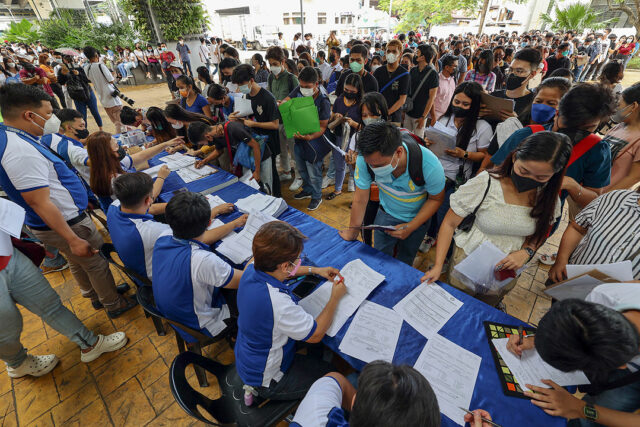
Applicants fill up documents at a job fair in Manila, June 20, 2022. — PHILIPPINE STAR/KRIZ JOHN ROSALES

THE GOVERNMENT should focus more on measures that would reduce the impact of inflation on Filipinos, instead of implementing wage hikes that would likely force many businesses to pass on these costs to consumers, analysts said.

The minimum wage in the National Capital Region (NCR) increased by P40 starting Sunday (July 16), bringing the daily minimum wage to P610 for workers outside the agriculture sector and P573 for workers in the agriculture sector, service retail establishments with 15 or fewer workers, and manufacturing companies with less than 10 workers.

Foundation for Economic Freedom (FEF) President Calixto V. Chikiamco said that while the recent NCR wage order may not be large, it will likely compel small businesses to pass on the additional costs to consumers.   

“The majority of workers, however, are not in the formal sector and won’t enjoy the mandated wage increase. Therefore, they will suffer from the increased prices as a result,” Mr. Chikiamco said in a Viber message.   

“Instead of mandating wage increases, which only benefit a minority, the government should liberalize food importation to reduce food inflation, which will benefit the poor the most,” he added.   

Headline inflation slowed for a fifth straight month in June to 5.4% from 6.1% in May, as food and transport costs eased. However, June marked the 15th straight month of inflation exceeding the Bangko Sentral ng Pilipinas’ 2-4% target band.

Year to date, inflation averaged 7.2%, still higher than the revised 5.4% forecast by the central bank.

While food inflation decelerated to 6.7% in June from 7.5% in May, data showed faster annual price increases were seen in rice, fish, and vegetables.

University of Asia and the Pacific (UA&P) Senior Economist Cid L. Terosa said the minimum wage hike will add about 0.06 to 0.1 percentage point to the average inflation for the next six months.   

“Hence, the National Economic and Development Authority (NEDA) statement that the minimum wage increase is unlikely to drive inflation appears to have weight,” Mr. Terosa said in an e-mail.

Last week, the NEDA said the inflationary impact of the minimum wage increase would be minimal and is unlikely to push inflation above the BSP’s 2-4% target range.   

According to Mr. Chikiamco, the central bank may have already factored in the modest wage increase in its inflation forecast this year.

The Philippine central bank sees inflation returning to the 2-4% target range by October. Full-year inflation is seen to average by 5.4% this year, before further slowing to 2.9% in 2024.

Meanwhile, Hansley A. Juliano, a political economy researcher studying at Nagoya University’s Graduate School of International Development in Japan, said wage hikes are supposed to boost workers’ purchasing power.   

“When the value of money is going down, insisting on not raising wages is essentially reducing the worth of wages, especially those at minimum levels. To insist on not raising their wages is condemning them to below minimum living conditions,” he said in a Messenger chat.

He cited a June 26 blog by International Monetary Fund economists, which noted that rising corporate profits accounted for about half the increase in Europe’s inflation over the last two years as firms raised prices by more than the costs of imported energy. 

“If anything, regulation should and always be directed towards seeing how corporate profits are subsequently reused/reinvested or divested via taxation,” Mr. Juliano said.   

He added that overspending or overinvestment at the executive levels needs to be monitored and assessed, rather than attributing inflation to workers’ demands.

In the Philippines, several labor organizations have filed petitions seeking to increase the daily minimum wage in other regions. The regional wage boards of Central Luzon, Calabarzon, Western Visayas and Central Visayas will likely decide on pending petitions by September.

Under the Labor Code, wage boards must consider demands for higher living wages amid movements in inflation and changes in each region’s cost of living. — Keisha B. Ta-asan
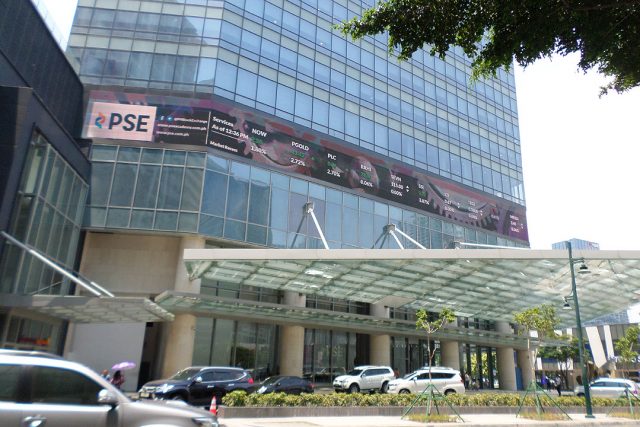

PSE’s Monzon downplays series of market delistings

BW FILE PHOTO

THE PHILIPPINE Stock Exchange’s (PSE) top official sees no cause for concern after a series of firms delisted or signaled plans to pull out from the local bourse.

“Up to June 30, we had three delistings, the other two [were] involuntary — kami ang nag-delist sa kanila (we delisted them) because they were not complying,” PSE President and Chief Executive Officer Ramon S. Monzon told reporters on the sidelines of a Securities and Exchange Commission event last Friday.

“For the second half, I think we have [Metro Pacific Investments Corp.] and Holcim [Philippines, Inc.],” Mr. Monzon said.

He said as of June 30, the PSE had three delistings, which was lower compared with other markets in the region such as Singapore Exchange Ltd., which recorded five delistings.

“All the other exchanges had [delistings as well],” he added.

Earlier this year, Eagle Cement Corp. voluntarily delisted from the PSE after the acquisition of San Miguel Corp. unit San Miguel Equity Investments, Inc. (SMEII) of the company’s 4.4 billion common shares at P22.02 per share, constituting 88.5% of the total issued and outstanding shares of the company.

SMEII conducted a tender offer to acquire the 574.9 million common shares held by shareholders, which represented 11.5% of its total issued and outstanding shares.

In March, the PSE delisted Unioil Resources & Holdings Co., Inc. and PICOP Resources, Inc. due to their continuous non-filing of reportorial requirements and nonpayment of penalties for disclosure violations.

Metro Pacific and Holcim have both signaled intentions to delist from the main board of the PSE after significant shareholders of both companies signaled their intention to take the companies private.

Additionally, 2GO Group, Inc. filed for voluntary delisting from the PSE after SM Investments Corp. conducted a tender offer for up to 378,817,279 common shares or 15.39% of the issued and outstanding common stock of the company at P14.64 apiece.

Meanwhile, Mr. Monzon said that Cosco Capital, Inc. had signaled its intention to conduct an initial public offering (IPO) for an industrial real estate investment trust (REIT) within the year.

“[They] are supposed to be filing their application this month or next month, fina-finalize na lang ‘yung mga listahan ng underwriters (they are just finalizing the list of underwriters),” Mr. Monzon added.

He said the company might list shares worth “anywhere between P15 to 30 billion.” The company has yet to disclose information on the possible listing.

“That’s one big REIT for the second half, we have to get other IPOs,” Mr.  Monzon said.

To date, the local bourse operator has yet to receive new filings from companies intending to go public. — Adrian H. Halili

Registered SIMs reach 61% of total subscribers

A VENDOR shows different SIM cards for sale at a stall in Quiapo, Manila, Oct. 8, 2022. — PHILIPPINE STAR /KRIZ JOHN ROSALES

PUBLIC telecommunication entities recorded 103.1 million registered subscriber identity modules or SIMs as of July 13 or just 12 days before the deadline on July 25.

The latest count is 61.36% of the total number of subscribers as of December 2022 or the base number used for SIM registration, data from the National Telecommunications Commission showed.

PLDT Inc.’s wireless network Smart Communications, Inc. still led the registration with 48.8 million SIMs registered, which is 73.6% of its 66.3 million subscribers.

Globe Telecom, Inc. follows with 47.04 million registrants, representing 54.21% of its 86.75 million total subscribers, while DITO Telecommunity Corp. posted 7.28 million registered SIMS, 48.64% of its 14.97 million users.

Republic Act No. 11934 or the SIM Registration Act requires all SIM users to register their SIMs under their name or risk SIM deactivation. The law aims to help mitigate the proliferation of text scams and other mobile phone-aided criminal activities.

Department of Information and Communications Technology (DICT) Secretary Ivan John E. Uy previously hinted at the none extension of SIM registration after the agency extended the deadline for another 90 days.

Public policy think tank Infrawatch PH said that the registration period was enough to allow people to register but that the government should consider special cases for still unregistered subscribers.

“The six-month period to comply with SIM registration is more than sufficient to allow the general population of mobile users to undertake registration through online and onsite processes,” said Terry L. Ridon, Infrawatch convenor, in a Viber message.

“However, the DICT and telcos should allow late registration for special circumstances, such as users experiencing a continuing unavailability of specific government-issued identification cards, users in isolated and island communities with limited data reception, among others,” he added.

Globe echoed this and commended the government for granting users the 90-day extension to register their SIMs.

“This gave our customers more time to finish their SIM registration and allowed us to ensure that we covered as many SIM users as we could through various initiatives,” Globe said in a statement on Sunday.

“We believe SIM users have been given enough time — from December 27, 2022 to July 25, 2023, or a total of 211 days to register their SIMs. As of July 15, Globe has logged over 47.14 million registered SIMs,” it added.

Catherine Y. Yang, first vice-president and head of group corporate communications at PLDT and Smart, said that the telco will continue its efforts in getting more customers to register.

“As the country heads into the final stretch of the SIM Registration campaign, Smart continues its intensified efforts, both on-ground and online, to assist our customers in registering their SIMs and comply with the SIM Registration Act,” she said in a statement on Sunday.

“We urge our customers to register their SIMs to avoid SIM deactivation, as well as to protect themselves from text scams and other mobile phone-aided crimes. Our commitment to ensuring that no one is left behind when it comes to SIM registration remains,” she added.

MORE EFFORTS FROM TELCOS
In separate press releases last week, Globe and Smart again called on their subscribers to register their SIM cards.

Last Thursday, Globe announced that fully-verified GCash users can now register their SIMs through a simple text until July 19.

Under this new registration protocol, selected Globe subscribers will receive a notification to register their SIMs by texting “GCASH” followed by their birthday in “mmddyy” format to 8080.

“By opting to register via this route subscribers can request GCash to send their account details to Globe,” the telco said.

Meanwhile, Smart and PLDT Enterprise urged Smart Satellite (SmartSAT) subscribers to register their prepaid SIM cards.

Albert Mitchell L. Locsin, first vice-president and head of enterprise at PLDT and Smart said that users of SmartSAT SIMs are also required to register under the SIM Registration Act.

To register, individual subscribers or company representatives must fill out the Smart SAT Registration form and e-mail a scanned and signed copy to smartsatsimreg@smart.com.ph.

Once completed, an e-mail containing the SIM Registration Certificate Number will be sent out to confirm the successful registration. — Justine Irish D. Tabile

GT Capital sees ‘very positive’ earnings

TY-LED GT Capital Holdings, Inc. expects to maintain its earnings growth momentum for the rest of the year driven mainly by its various business units, its top official said.

GT Capital President Carmelo Maria Luza Bautista told BusinessWorld last Thursday that the company is expecting “very positive” earnings for the year coming off the momentum seen during the first quarter.

“It will be very good… a significant improvement versus last year,” he said.

During the January-to-March period, GT Capital booked a consolidated net income of P6.64 billion, up 52% from P4.4 billion a year ago, driven by contributions from its business units.

Mr. Bautista said the company’s units Metropolitan Bank & Trust Co. (Metrobank) and Toyota Motor Philippines Corp. posted record numbers during the first quarter, which significantly lifted the group’s numbers.

Metrobank saw its net income jump by 31.3% to P10.5 billion, translating to a 13.1% return on equity.

Toyota more than doubled its consolidated net income for the quarter to P4.5 billion from P2.1 billion in the same period last year.

“We’re doing launches [through Federal Land, Inc.], so property would be the third engine,” Mr. Bautista said.

Federal Land announced earlier its intention of going into estate development, which will begin with a collection of 10 master-planned, multi-use properties under its Federal Land Communities product line.

It also recently launched a 600-hectare mixed-use development, Riverpark, in General Trias, Cavite.

“This is a major move away from single tower developments into an actual estate because we do have the advantage of a significant land bank,” Mr. Bautista said.

He said the company is focusing on its value chains and looking at businesses that are associated with its core units.

“So, it’s more on alliances and synergies of the value chain rather than a new sector altogether, mahirap ‘yan (that is difficult), unless we find a strategic partner,” he said.

The company has several strategic global partnerships in its portfolio, including Toyota Motor Corp., Axa S.A., Mitsui & Co. Ltd., and Sumitomo Corp.

“We seem to be the partner of choice with foreign investors, and the Philippines is actually [an] attractive investment destination although it would still need a push in terms of foreign direct investments,” he added.

On Friday, GT Capital shares closed unchanged at P520 apiece. — Adrian H. Halili

Metrobank teams up with Kenneth Cobonpue

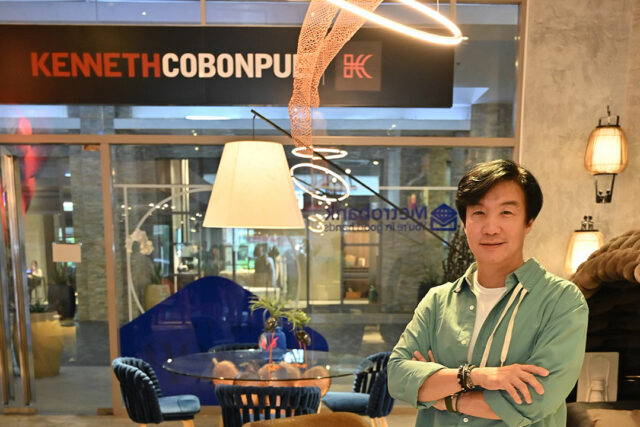
FURNITURE designer Kenneth Cobonpue last week unveiled his latest collection through an event organized by Metropolitan Bank & Trust Co. (Metrobank).

Mr. Cobonpue unveiled the new pieces, The Loop and The Barnacle, during a July 12 event in Makati City.

The Loop is a dome-shaped lamp made of cotton, while The Barnacle is a lamp shaped like a barnacle, made of rice paper.

Metrobank gave its credit cardholders a chance to avail themselves of items from Mr. Cobonpue’s latest collection from July 12 to 15. Metrobank debt and credit cardholders were able to avail of some items with a 20% discount, straight or 0% installment for three or six months.

Items were also available for 0% installment for three months for a minimum single-receipt spend of P100,000, and 0% installment for six months for a minimum single-receipt spend of P300,000 for Metrobank credit card holders.

While the promo ended during the weekend, Metrobank is expected to offer more promos for their clients.

“It’s part of a collaboration with different cultural icons,” said Kristel Artates, public relations lead for Metrobank’s consumer business sector. “Kenneth Cobonpue is a world-class Filipino talent. We wish to (get) his work closer to more of our customers; that’s why we came up with the partnership.”

The bank is also eyeing more partnerships.

“This is something that we’re still trying to build,” said Ms. Artates, adding that perks and promotions for dining, fashion, and travel would be introduced in the coming months. “Definitely be on the lookout for more executions like this from Metrobank.”

In entering collaborations with more cultural flair (Ms. Artates also mentioned a collaboration with the Big Bad Wolf book fair which ended earlier this month), she said Metrobank is now “more customer-obsessed.”

Car takers

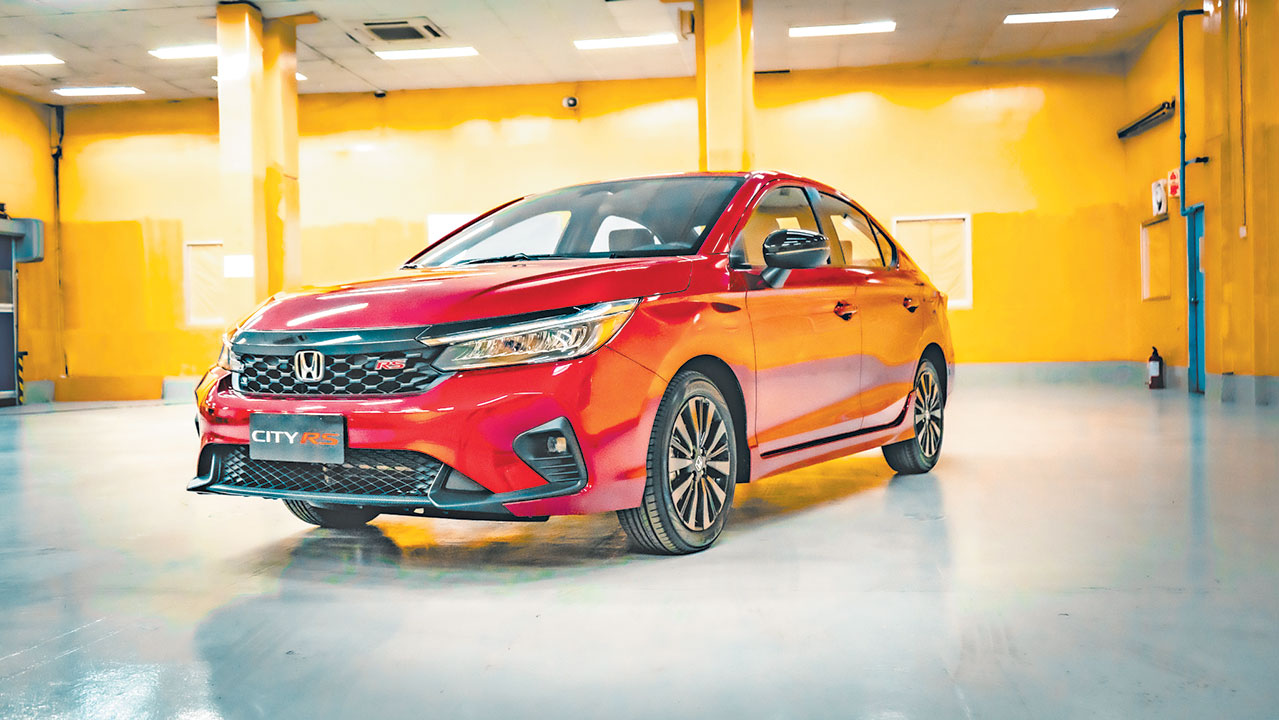
The refreshed Honda City (in RS trim) — PHOTO BY KAP MACEDA AGUILA

Honda believes in the continued relevance of passenger cars

IS THERE room for categories other than SUVs and MPVs in our ute-loving country? Yes, of course there is, says Honda Cars Philippines, Inc. (HCPI).

The company certainly knows what it’s talking about, because two of its subcompact passenger cars occupy the second and third places in the list of its brand best-sellers. These are the City and the Brio, respectively, which were outpaced only by the all-new BR-V which has already moved more than 5,000 units since its unveiling in November of last year.

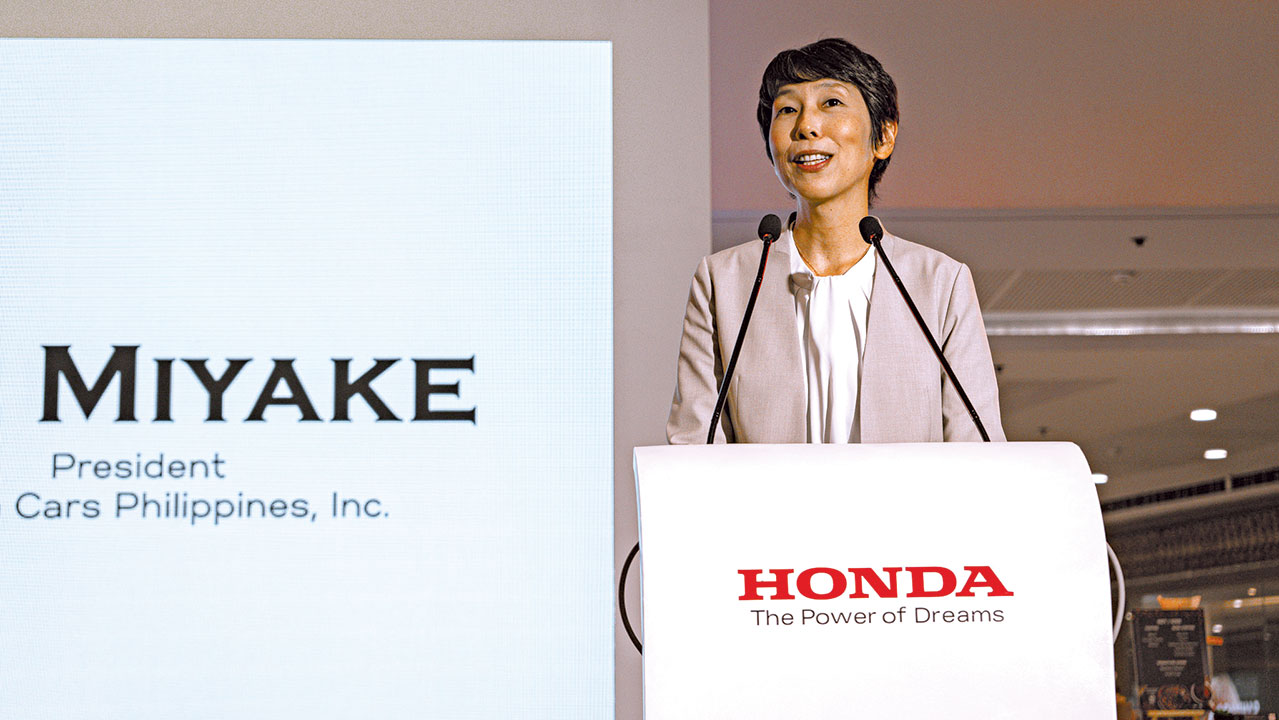
Refreshed versions of the City and Brio were launched simultaneously at the SM Megamall’s Fashion Hall last Thursday, with the very public launch an indication of the importance of the nameplates to the company, according to HCPI President Rie Miyake, who presided over her first launch event since taking over the reins from Masahiko Nakamura.

In a speech, the executive said that “nearly 80% of the sales volume” for Honda is accounted for by the aforementioned three models, and that it has been “so far, a very good 2023” with 17% growth in HCPI sales performance versus the previous year. She also noted an “improving supply situation” for the BR-V, which the company hopes will continue to drive growth.

Two new dealerships – Honda Cainta and Honda Fairview – have also been added to the network, with a third (Honda Sta. Rosa) to be opened “soon,” bringing the total to 38.

CITY
The City has sold more than 140,000 units since in its debut in the country in 1994, which makes it among the more enduring automotive nameplates. Foremost among the changes in the updated City is the presence of Honda Sensing across all its variants. This is Honda’s suite of advanced driver assistance features which promise both convenience and enhanced safety – in line with Honda’s stated goal of “realizing zero traffic collision fatalities by 2050.” Included Honda Sensing abilities are: Lead Car Departure Notification System, Collision Mitigation Braking System, Lane Keeping Assist System, Road Departure Mitigation System with Lane Departure Warning, Adaptive Cruise Control (ACC), and Auto-High Beam (AHB) – in addition to other standard safety features.

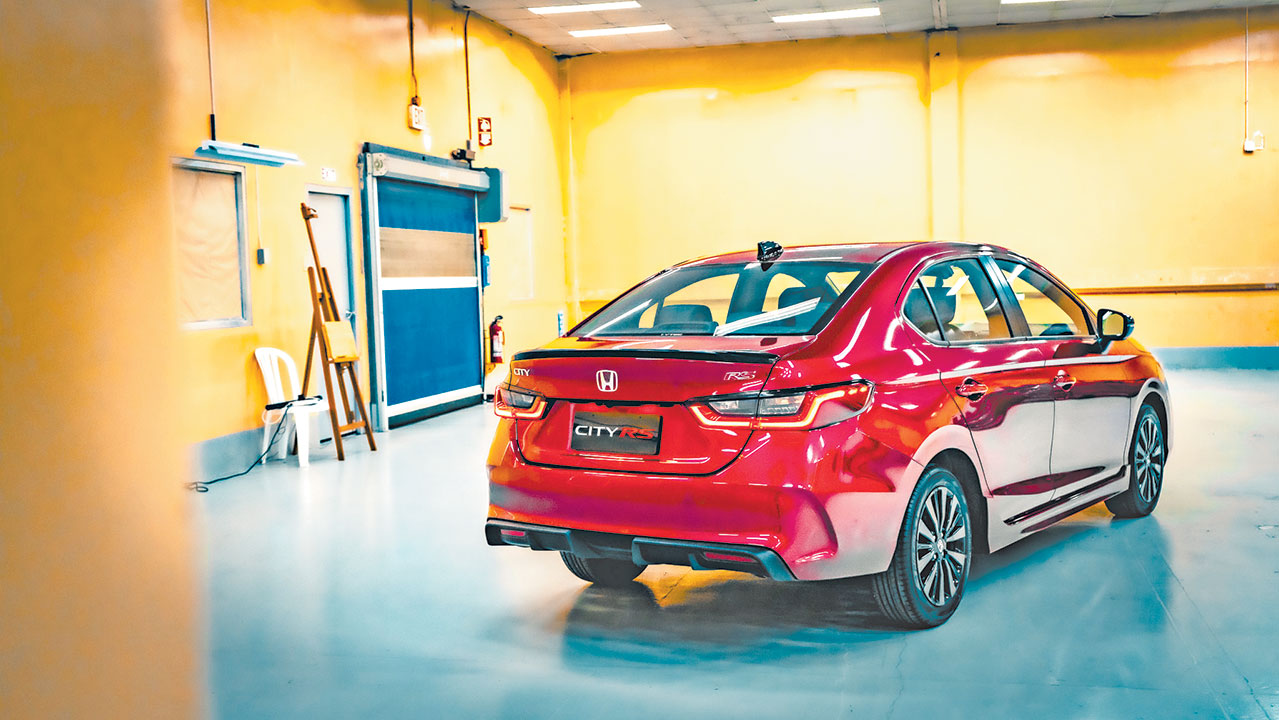
On the outside, the new City dons a new grille, bumper design, LED daytime running lights and fog lights (LEDs for the RS and halogens for the V), and LED headlights on the RS and halogen projector headlights on the rest. A new side sill garnish, exclusive to the RS, gives the sedan a wider, sportier stance. New wheels are also affixed on all the trims: 16-inch Black Cut alloy wheels for the RS and Silver Cut for the V; 15-inch wheels for the S and E (silver paint alloy for the S and steel with cover for the E). The City is said to banner an updated windshield shape to minimize blind spots.

Inside, the RS receives leather-wrapped seats boasting a new design. The car also gets new sport pedals. A dark red front panel garnish and high-gloss black interior accents are bestowed on the RS; a high-gloss black front panel garnish and silver interior accents go on the V.

On the instrumentation display is a new 4.2-inch full-color TFT meter with red ambient light instrument cluster (for the RS), and 4.2-inch full color TFT meter with and green ambient light for other variants. An eight-inch Advanced Touchscreen Display Audio (for the RS, V, and S) now comes with improved LCD display and better reverse camera resolution, while Apple CarPlay and Android Auto are wireless-capable for the RS, V, and S.

The 1.5-liter DOHC i-VTEC engine with CVT returns, and Honda positions the vehicle as having the “most powerful engine in its segment” with a stated output of 121ps and 145Nm.

The Honda City’s pricing is as follows: 1.5 E CVT Honda Sensing (P973,000), 1.5 S CVT Honda Sensing (P998,000), 1.5 V CVT Honda Sensing (P1.073 million), and 1.5 RS CVT Honda Sensing (P1.128 million). Available colors are: Ignite Red Metallic (RS CVT, V CVT, and S CVT), Obsidian Blue Pearl (RS CVT and V CVT), Platinum White Pearl (RS CVT and V CVT, plus P20,000), Taffeta White (S CVT and E CVT), Lunar Silver Metallic (S CVT and E CVT), and Meteoroid Gray Metallic (all variants).

BRIO
Over 30,000 units of the Brio have been sold since its 2014 introduction here. The second-generation refresh receives a piano black RS design front grille, LED headlights in the RS, updated fog lights and fog light garnish (in the RS), and daytime running lights (for the RS and V) – now all LEDs. Crystal black door mirrors with power folding and adjust, plus an RS-design side sill also make their appearance.

The new Brio gets a tailgate spoiler with an RS rear bumper lower garnish and taillights in the RS variants. Wheels have been updated: 14-inch alloys on the V, 14-inch steelies on with cover on the S, and 15-inch RS alloys on the RS.

Black fabric with red accents wrap the seats of both RS trims. Speed-sensing auto door locks are standard for the RS and V; power windows with auto up/down are on all trims.

A seven-inch capacitive touchscreen audio screen is standard across all variants, with new audio controls with Illumination in the RS and V. The RS Black Top, RS, and V variants feature Apple CarPlay, Android Auto, Bluetooth, a USB port, AM/FM, and Android smartphone mirroring. A six-speaker setup (with two tweeters) are on the RS variants, and four speakers are on the V and S.

The Brio returns with the 1.2-liter four-cylinder SOHC i-VTEC engine good for 90ps and 119Nm, mated to a CVT. The 1.2 S MT gets a five-speed manual.

For safety, Honda’s G-Con technology “enhances impact absorption for added protection of passengers in the event of a collision.” All variants still get driver and front passenger airbags and anti-lock brakes with EBD. Rear parking sensors are now made standard across all trims.

The new Honda Brio is available in four variants with the following prices: 1.2 S MT (P735,000), 1.2 V CVT (P827,000), 1.2 RS CVT (P853,000), and 1.2 RS Black Top CVT (P863,000). Color choices are the following: Stellar Diamond Pearl (RS Black Top CVT and RS CVT, plus P20,000), Electric Lime Metallic (RS Black Top CVT and V CVT), Phoenix Orange Pearl (RS Black Top CVT), Rallye Red (V CVT), Meteoroid Gray Metallic (RS CVT, V CVT, and S MT), and Taffeta White (V CVT and S MT).

SUPPLY
In an exclusive interview with “Velocity,” HCPI General Manager for Sales Atty. Louie Soriano acknowledged that the passenger car segment may not be as strong versus SUVs and MPVs, but hopes are high in the Brio and City. “Right now, the market share of the City in the B segment is at about eight percent. We’d like to increase that,” he said.

Although selling fewer units than the Ctiy, the Brio corners 13.9% of its market segment, revealed Atty. Soriano. “We really want to help maintain our position in the passenger car segment with these two models.”

The City is manufactured in Thailand, while the Brio comes from Indonesia, and Atty. Soriano assured that there is ample supply for people who want these vehicles.

AN ELECTRIFIED HONDA TO ARRIVE
THIS YEAR
While Honda is not new to electrified powertrains (the CR-Z and the Legend come to mind), it doesn’t have a vehicle in that category presently. That hole will be filled this year, as hinted at by Ms. Miyake in her speech, and confirmed by Atty. Soriano to “Velocity.”

“Yes, this year, we’re going to launch model that is electrified,” revealed Atty. Soriano with a smile.

Megaworld opens data science lab for Taguig township

MEGAWORLD Corp. has opened a data science laboratory within its 50-hectare McKinley Hill township in Taguig City.

In a media release, the company said that its Township Analytics and Technology Lab (TAT Lab) is the first data science lab in the Philippines to be spearheaded by a property developer.

“Megaworld’s commitment to building next-generation townships that are safer, more secure, enjoyable, and sustainable is evident with the establishment of our very own data science lab,” said Megaworld TAT Lab Chief Data Scientist and Lab Director Francis Viernes in a statement on Friday.

The project is Megaworld’s investment in the use of data science and artificial intelligence (AI) as it continues to build “smarter and future-ready” township developments across the country.

“Our residents, locators, visitors, and partners stand to benefit from the various innovative programs to be spearheaded by TAT Lab, which are all aimed at creating better experiences in and around our townships,” said Mr. Viernes, who is also Megaworld head of data analytics.

The laboratory will mainly focus on increasing safety and security in Megaworld’s townships by “developing, deploying, and improving machine learning models and utilizing artificial intelligence as a technology enabler. “

Megaworld said one of the programs using AI is an accident-detection system that can detect road accidents seconds before it happens.

“This AI-powered accident detection system will be one of the several programs that we will be rolling out in Megaworld townships soon to make our developments more responsive to the future needs of our communities,” he said.

The company will also deploy a location-specific weather program that aims to provide residents and locators with localized and more accurate climate information.

“Our township weather analytics sends out advice to people within our townships about the specific time rain is going to pour, for example, in McKinley Hill as opposed to just having a generic weather analysis for the entire Taguig City,” he added.

The laboratory headquarters will also house the Megaworld Command Center, a surveillance facility capable of monitoring and consolidating situation reports across all the company’s townships. The facility will both be run by TAT Lab and the company’s estate group.

“The proximity of TAT Lab to the Megaworld Command Center will ensure that machine learning models deployed across our townships are working properly and generating the appropriate information for our data scientists that will help make our developments safer and more secure for everyone,” said Megaworld Head of Estate Management Don Earl Caagbay.

Meanwhile, the company is also planning to roll out its township geographic assessment, which has real-time traffic information and advanced security monitoring programs that will implement security and protection for the township.

“In the future, more data science and technology programs will be employed in various aspects across Megaworld’s townships, including risks, traffic, security, utilities, waste disposal, and sustainability,” the company said.

Megaworld closed unchanged at P2 per share on Friday. — Adrian H. Halili

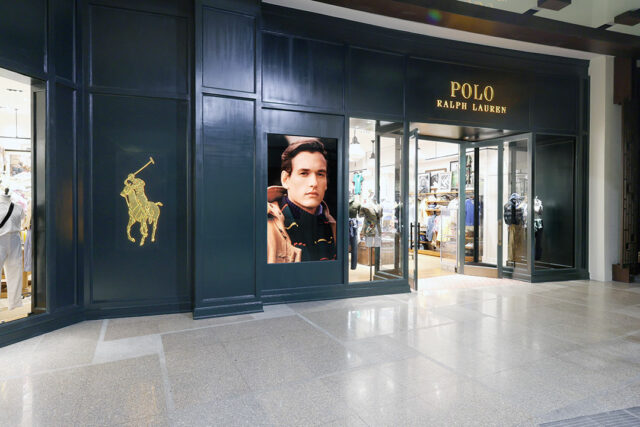
Polo Ralph Lauren opens in Greenbelt

WHILE a Ralph Lauren luxury store once occupied a space in Greenbelt 3 (which has since closed), the new Polo Ralph Lauren store has opened in Greenbelt 5.

Karina Vera, SSI merchandising group manager, said the Ralph Lauren luxury store remains open in Shangri-La Plaza’s East Wing even if the Greenbelt 3 flagship store, which first opened in 2014, has been shuttered.

“We had to close (the Greenbelt 3 store) because it’s a different direction,” she said, adding that  two new stores are slated to open this year.

Polo Ralph Lauren is one of the brands under the Ralph Lauren Corporation, with each brand representing a certain tier. These include Ralph Lauren, Ralph Lauren Collection, Ralph Lauren Purple Label, Polo Ralph Lauren, Double RL, Lauren Ralph Lauren, Polo Ralph Lauren Children, and Chaps.

The Polo Ralph Lauren Spring/Summer 2023 collection was showcased during the July 12 store opening.

Heritage Icons is a timeless collection inspired by The Hamptons’ preppy fashion, while The Curator combines refined sportswear with an understated, sophisticated gallery look.

The Summit range presents an active line with archival styles and technical performance, and Key West embodies the relaxed island lifestyle. Lastly, the South America assortment offers vibrant seasonal fashion and iconic utility.

The Spring/Summer 2023 Women’s Polo collection features three themes: Mediterranean, which embodies the destination’s allure with nautical stripes, block print florals, and rustic woven fabrics in an ocean-inspired palette; California Modern, which showcases chic tailored pieces, summer dresses, and crisp button-downs inspired by California’s coastal architecture; and Laurel Canyon, which captures the free-spirited style of the ‘70s with lightweight suiting, shirting stripes, and romantic florals.

Due to the trend of quiet luxury espoused by wealthy characters in shows such as Succession (not to mention Gwyneth Paltrow’s own outfits at her ski crash trial), the discreet, slightly old-fashioned styles by designers such as Ralph Lauren are staging a comeback.

Polo Ralph Lauren, in particular, seemed to be the uniform of choice in the early 2000’s for the preppy set (albeit in a flashier format).

Lagi namang bumabalik iyong fashion; umiikot lang (Fashion always comes back. It’s a cycle). Now’s our turn,” Ms. Vera said.

In the Philippines, Polo Ralph Lauren is available through boutiques owned and operated by Stores Specialists, Inc. (SSI).

TCCCI, SAIC to ‘evolve’ MG ties by month’s end

An electrified ZS on display in Shanghai in 2019 — PHOTO BY KAP MACEDA AGUILA

No longer distributor and importer, but not out of the picture

AFTER FIVE YEARS and more than 25,000 units sold, The Covenant Car Company, Inc. (TCCCI), erstwhile country distributor of the Morris Garages (MG) brand, is looking to turn the page on its relationship with SAIC Motor, which owns MG.

“It’s a global decision that (SAIC) has decided (on). Wherever they are, they will be the distributor,” said TCCCI President Atty. Albert Arcilla over lunch with a handful of motoring media, including this writer.

Atty. Arcilla, along with TCCCI Executive Vice-President and Director for Marketing Communications Lyn Buena, sought to clarify some reports that they felt mischaracterized or failed to accurately capture what was to happen regarding MG in the Philippines.

First, TCCCI is not being eased out of the picture through an abrupt (or even hostile) takeover by SAIC Motor Philippines (SMP). The contract for TCCCI’s MG distributorship was inked in 2018 and is set to expire this month. And while it’s true that SAIC Motor Philippines has been created with the specific intent to take over the importation and distribution duties, what the role of TCCCI in MG Philippines will be once a new contract is inked remains to be seen.

“Even before we started, they’ve always been here,” maintained Atty. Arcilla, referring to SAIC/MG officials from China. “It’s nothing new. The only difference is that they want to set up their own company here and become the distributor. We respect that. Our contract has always been valid for five years.”

When asked if a renegotiation was ever in the cards for possible extension of the distributorship, the executive replied: “We saw it on the regional level that they were already representing themselves. I don’t think we can make a different setup. Of course, we’re thinking that ours is still a growing market. But it’s a global direction… the business model is to (take charge) where they are.” So while there is a provision in the contract that allows for both parties to renegotiate for another term, it of course needs to be mutually agreed upon — and SAIC’s regional direction is already clear.

What is being hammered down for the moment are the brass tacks of how TCCCI’s role will exactly look like by August.

“We have been talking to them for other services,” shared Atty. Arcilla. “I think they’re happy with MG’s performance in the Philippines. The relationship with TCCCI is there, and they’re talking to us about what we can do for them. We’ve done very well for the brand, if I may say so.”

Added Ms. Buena: “In fact, we were distributor of the year on our first year as importer — the only one with that distinction among 80 countries.”

Atty. Arcilla observed that SAIC’s actuations reflect a fundamental change in business models. “We need to live with it,” he submitted. “Before, there were a lot of distributors, but we’ve seen them set up their companies where they are. To be honest, I generally see this happening with China-headquartered brands, which would then look for local partners or service groups.”

While TCCCI waits for how the relationship will be defined, the company has plenty to be busy with. It has administered over the Chevrolet brand in the country since 2009. It was actually good timing when MG was offered to the company in 2018, shared the executives, as Chevrolet was then pulling out models. “We were given a five-year horizon by Chevy,” said Atty. Arcilla. “Sure enough, new models are now coming in.”

Taking in additional auto marques is also something always being considered by TCCCI. “We are very open to represent other brands,” he declared.

At the end of the day though, TCCCI wants to take care of the customers it has won over since taking the reins of MG. “We feel responsible for the buyers who bought into MG based on our representation. We’ve been selling the cars for five years, and a lot of people have bought MG vehicles based on our representation. We need to protect that. We cannot lose the trust of our clients. I think even SAIC and MG know that,” asserted Atty. Arcilla.

However shape or form the new deal will take, TCCCI also said it remains committed to doing a seamless turnover — and that includes endorsing the dealer-principals directly to SAIC. “When we were informed of regional plans, we immediately put the dealers on board,” he continued. “We’ve communicated to our dealers. It’s an opportunity. Most of them have understood the change and how to work around it. They are in talks with SMP with their own dealership agreements. We’ve opened the communication lines with SAIC and the dealers. The dealers need to know where they will get inventory.”

As for TCCCI, it will continue to sell the cars in its own inventory, and the discussion with SMP remains “very open, fluid, and transparent.” Atty. Albert happily noted: “I think they intend to grow the brand. We have been very cooperative.”

Of course, letting go of the MG steering wheel signals the end of an era. “It’s bittersweet, yes, but again it’s a global decision. We’ve seen it so many times,” said the executive.

“There’s no label yet,” he continued with laugh. “But the relationship has been beneficial for both sides for five years… As long as we can come up with a workable relationship, why not? We’ll see where the new business model brings us.”

Court grants Petron’s appeal to set aside P20M in excise taxes

CTA.JUDICIARY.GOV.PH

THE COURT of Tax Appeals (CTA) has granted Petron Corp.’s appeal to set aside its tax liabilities worth P20 million representing its wrongly paid excise taxes on the importation of alkylate gas for the period covering Dec. 29, 2014 to April 8, 2015.

In a decision dated July 7 and made public on July 14, the CTA en banc said that alkylate does not fall under substances that are subject to excise tax mandated under the law.

“The payment of excise taxes by petitioner (Petron) upon its importation of alkylate is deemed illegal and erroneous in the absence of a specific provision of law that distinctly and categorically imposes tax thereon,” Associate Justice Lanee S. Cui-David said in the ruling.

Citing Supreme Court jurisprudence, the tax court said alkylate should not be treated like naphtha gas or other products of distillation that are subject to excise taxes.

The Tax Code imposes taxes on naphtha gas, regular gasoline and similar products of distillation, but not on the ingredients or raw materials that compose them.

Petron was also able to provide its entitlement to the refund by presenting its statement of settlement of duties and taxes, as well as its import entry and internal revenue declaration for the covered period.

Last month, the appellate tax court affirmed its refund to Petron worth P64.33 million representing similar wrongly paid excise taxes on alkylate, ruling that the gas is not subject to excise tax. 

The High Court in March granted a separate refund claim of the firm in the amount of P219.15 million paid in 2012, based on the same conclusion.

“In light of the court’s (Supreme Court) determination that alkylate does not belong to the same category as naphtha and regular gasoline, the same should not be subjected to excise tax,” the CTA said. — John Victor D. Ordoñez

P750M in agri rehab funds deemed insufficient

PHILIPPINE STAR/KRIZ JOHN ROSALES/PPA POOL

THE P750 million in available funding to rehabilitate farmland and fisheries after calamities has been called inadequate given the number of potential claimants, industry officials said.

“The P750 million is good only for 30,000 farmers,” Raul Q. Montemayor, national manager of Federation of Free Farmers, said in a Viber message, noting that some 1.5 million are engaged in rice farming alone.

“I think the better approach is for banks to simplify their lending systems and for government agencies like ACPC (the Agricultural Credit Policy Council) to reduce the risks in lending by subsidizing crop insurance, interest rates and loan guarantee premiums,” he said.

Cristina G. Lopez, deputy executive director of the ACPC, said the P750 million referred to represents the year’s funding for the Survival and Recovery Aid (SURE). This year’s budget is up from P500 million previously.

Asked about the potential mobilization of the funds for El Niño, she said: “Right now, our funds are in position. We have partner banks, and they have the funds we placed with them,” she said by phone.

She added that affected farmers and fisherfolk can readily apply for loans of up to P25,000 with partner banks.

These loans charge zero interest and are payable over three years.

The ACPC’s network of lending conduits consists of rural banks, cooperatives, government financial institutions, non-government organizations, and associations.

Jayson H. Cainglet, executive director of Samahang Industriya ng Agrikultura, said that the level of funding will not cover the typical crop damage inflicted by calamities.

Maliit ang P25,000 kung damaged crops (P25,000 is a small amount for crop damage). The cost (of production) per hectare for rice is between P65,000 and P75,000… but the crucial factor in loans is that they should be given out immediately, to allow farmers hit by calamities to start again,” he said.

He added that farmers should be given the full amounts requested in the event of El Niño damage.

The Philippines experienced its worst episode of El Niño between 1997 and 1998, when agricultural output contracted 6.67%, according to the Department of Agriculture.

“During that episode, palay (unmilled rice) production reportedly dropped by around 20%. I don’t have data on actual losses and loan defaults, but it must have been massive,” Mr. Montemayor said.

In 2016, the El Niño lasted 18 months, with the resulting drought affecting more than 400,000 farmers tilling 550,000 hectares of farmland, according to the World Bank.

Ms. Lopez said that the ACPC is working with the Philippine Crop Insurance Corp. (PCIC) to implement the SURE program to ensure quick payouts.

Ms. Lopez added that the program offers another calamity loan with a one-year moratorium on amortization.

President Ferdinand R. Marcos, Jr., who also serves as the Secretary of Agriculture, has said that the PCIC’s coverage is insufficient to insure the country’s 2.2 million hectares of agricultural land.

He said that a new approach needs to be developed via the Land Bank of the Philippines (LANDBANK) featuring credit and insurance products for farmers.

“The President ensured that the LANDBANK will become more active and return to its principal mandate as an agricultural bank,” the Philippine Council for Agriculture and Fisheries said in a statement on Thursday. — Sheldeen Joy Talavera

Zara owner boosts sustainability goals as fast fashion industry feels the heat

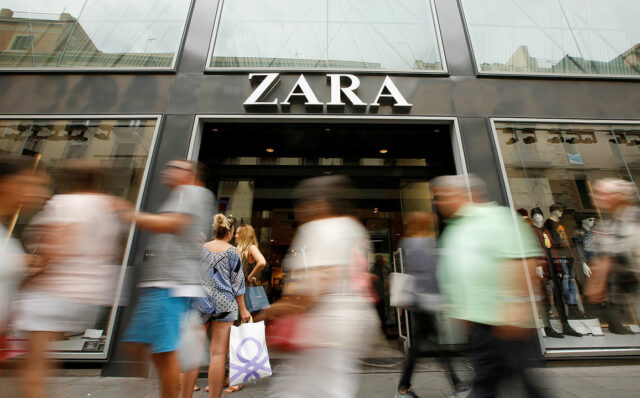
People walk past a Zara store, an Inditex brand, in central Barcelona, Spain, Sept. 20, 2016. — REUTERS/ALBERT GEA

ZARA owner Inditex said on Tuesday it will look to recycling and sustainably farmed crops to reduce its environmental impact by 2030, as fast-fashion retailers face growing pressure to cut waste.

By the end of the decade around 40% of the Spanish group’s fibers will come from conventional recycling and 25% from sustainably farmed crops, Chief Executive Oscar Garcia Maceiras said, revealing new sustainability targets at the annual shareholders’ meeting in A Coruna, northern Spain.

Another 25% will come from “next-generation” materials in which the group is investing, and the remaining 10% from other sustainable sources, the company said.

The new targets come as the European Commission is drawing up regulations to make clothing retailers pay for the waste they produce, arguing that fast-fashion companies “encourage customers to shop impulsively and incentivize purchasing larger quantities of clothes.”

Inditex previously had targets to use more sustainable cotton, linen, polyester, and fibers made from wood pulp, but did not have an overall goal for recycled fibers.

“Moving forward on sustainability is natural for us,” said Inditex Non-Executive Chair, Marta Ortega, in brief comments to investors at the AGM. She called the new targets a “great challenge”.

Inditex has achieved record sales, margins and profits since Ortega, the heir to the family business, took over as chair in April 2022. Its shares are up 38% this year.

Inditex shows no sign of slowing production. The company placed 621,244 tons of garments on the market last year, according to its 2022 annual report, 10% more than in 2021.

“Over the long term, we expect Inditex to transition toward a circular model for fashion, the pace of which will be metered by customer demand and regulation,” said Adam Gofton, portfolio manager at Mackenzie Investments in Toronto, which holds shares in Inditex.

“Inditex’s scale leaves the company well positioned to respond to regulatory pressure (scale means any incremental fixed costs can be spread over larger number of units),” he added. — Reuters