Home Blog Page 4567

German LGBTQ+ activist warns about ‘worrying’ hate crime rise

UNPLASH

BERLIN — Prominent German LGBTQ+ rights activist Anastasia Biefang has expressed concerns about an increase in homophobic and anti-transgender violence and abuse in the country, comparing it to rhetoric used by the Nazis.

Ms. Biefang, who made headlines as the first trans person to serve as a commander in the German military, spoke this weekend as hundreds of thousands of people took to the streets of Berlin to celebrate Christopher Street Day and demand LGBTQ+ equality.

“I hear narratives that I thought we had overcome since 1945,” said Ms. Biefang, 49, a former battalion leader who still serves in a leading capacity in the army’s cyber and information department.

The number of hate crimes targeting the lesbian, gay, bisexual and trans community is rising in Germany, with officially registered cases increasing by 15.5% last year to reach 1,005, according to Interior Ministry data.

Ms. Biefang said that while there had been positive achievements in recent years, there was a “feeling of exclusion, stigmatization, division” that was sowing anti-LGBTQ+ sentiment.

“That’s a great shame. It’s not only a shame, but it’s also worrying,” she told Reuters in an interview on Saturday, adding that “transphobic, queerphobic, homophobic violence is also increasing significantly” in Berlin.

In recent decades, the German capital has been known for having an accepting culture towards gender and sexual minorities.

Ms. Biefang said it was of particular concern that the growing backlash against LGBTQ+ rights was being fueled by supporters of far-right parties.

Her comments coincide with a fresh poll by Insa for the Bild am Sonntag weekly newspaper, which puts the far-right Alternative for Germany (AfD), a party that has drawn criticism for taking swipes at LGBTQ+ rights, at a record 22%.

There has been a pushback against gay and trans rights in other parts of Europe, too.

Hungarian Prime Minister Viktor Orban, whose government in 2021 passed a law banning the use of materials seen as promoting homosexuality and gender change at schools, on Saturday renewed his criticism of the European Union for conducting what he called an “LGBTQ offensive.” — Reuters

Pope urges world leaders to do more to tackle climate change

REUTERS

VATICAN CITY — Pope Francis said on Sunday that recent heat waves across many parts of the world and flooding in countries such as South Korea showed that more urgent action was needed to tackle climate change.

“Please, I renew my appeal to world leaders to do something more concrete to limit polluting emissions,” the Pope said at the end of his Angelus message to crowds in St. Peter’s Square.

“It is an urgent challenge, it cannot be postponed, it concerns everyone. Let us protect our common home,” the pope added.

Francis has called on the world to rapidly ditch fossil fuels and made the protection of the environment a cornerstone of his pontificate. He noted in his landmark 2015 “Laudato Si” (Praised Be) encyclical that the planet was “beginning to look more and more like an immense pile of filth”.

On Sunday, the pope expressed solidarity with those who were suffering from the climate crisis and those helping them.

Parts of the southern United States have baked in a record-breaking heat wave, while extreme temperatures have also been recorded in China and southern Europe, including Italy and Greece.

A wildfire raging on the Greek island of Rhodes forced thousands of tourists and island residents to shelter in schools and indoor stadiums on Sunday after they were evacuated from coastal villages and resorts. — Reuters

Marcos says inflation ‘moving in right direction’

PHILIPPINE STAR/KRIZ JOHN ROSALES

Philippine President Ferdinand R. Marcos, Jr. touted his administration’s successes over the past year including battling inflation and steering the economy back on track, but said a number of economic challenges lie ahead.

After more than a year in office, buffeted by soaring inflation that has dented economic growth, the government is now “stabilizing the prices of all critical commodities”, Mr. Marcos said.

“Inflation rate is moving in the right direction,” he said in his second state of the nation address.

“There are many things over which we have no control. But over those where we do have control, we are doing everything we can.”

To help keep consumer prices in check, Mr. Marcos said the government aims to increase local food production by implementing among others, a “timely and calibrated importation.”

Developing the long-neglected farm sector, which contributes to 10% of the country’s economic output, is a priority of Mr. Marcos, who also helms the agriculture ministry.

Negative sentiment against Mr. Marcos rose in his first year in office after inflation surged to levels not seen in 14 years, prompting the Philippine central bank to embark on its most aggressive monetary tightening cycle in years.

The Philippines remains vulnerable to global price shocks because it buys a sizeable portion of its rice overseas, and relies on imports for most of its fuel requirements. — Reuters

Spain faces political uncertainty after right fails to win predicted majority

Madrid, Spain | STOCK PHOTO | Image by Stanislav from Pixabay

MADRID — Spaniards were greeted by political gridlock on Monday after the right failed to clinch a predicted decisive victory and no clear winner emerged in the country’s general election.

The results from Sunday’s vote left neither the left nor right bloc with an easy path to form a government. 

A Catalan leader on the run from Spanish justice became an unlikely potential kingmaker, said Ignacio Jurado, a professor in political science at the Carlos III University in Madrid.

The centre-right People’s Party (PP) and the far-right Vox won a combined 169 seats in parliament, while the ruling Socialists (PSOE) and far-left Sumar won 153, well short of the 176 seats needed for a majority.

After winning the most seats, the People’s Party (PP) will be given the first stab at trying to cobble together enough votes in parliament to win a prime-ministerial investiture vote. But its alliance with the far-right Vox will make it difficult to gain support from any other faction.

Prime Minister Pedro Sanchez’ Socialists have more options but face potentially unpalatable demands from Catalan separatist parties. Those could include insistence on an independence referendum, triggering the kind of political chaos seen in 2017 when Catalonia last tried to break from Spain.

Sanchez could win over left-wing separatist party Esquerra Republicana de Catalunya (ERC), as he did to form a minority government in 2019. But he will likely also need the backing of the more hardline Junts, which has not supported Sanchez in the past four years.

Junts has not conveyed a clear position. Its candidate for Congress, Miriam Nogueras, said any backing would be in return for a fresh independence referendum for Catalonia. 

The Socialists, which oppose independence and any vote on the issue, may have a hard time accepting such a demand.

Carles Puigdemont, one of the party’s top leaders, said Junts would back neither Sanchez nor Feijoo.

Puigdemont is living in self-imposed exile in Belgium and is wanted by Spanish authorities for leading a failed independence bid in 2017.

Sanchez has governed with a minority after forming a coalition with the far-left Unidas Podemos party and securing support for the investiture vote from Basque and Catalan pro-independence parties, drawing the ire of many Spaniards.

“The PSOE is at the mercy of Puigdemont,” said Ignacio Torreblanca, head of the Madrid office at the European Council on Foreign Relations. — Reuters

US pauses some aid, imposes visa bans after ‘neither free nor fair’ Cambodia election

STOCK PHOTO | Image from Pixabay

WASHINGTON — The United States said it was pausing some foreign assistance programs in Cambodia and imposing visa bans on individuals it says undermined democracy after the ruling Cambodian People’s Party (CPP) declared a landslide victory in elections on Sunday.

State Department spokesperson Matthew Miller said in a statement that Washington was “troubled” that the elections, in which Prime Minister Hun Sen’s CPP faced no viable opponent were “neither free nor fair.”

“Ahead of the elections, Cambodian authorities engaged in a pattern of threats and harassment against the political opposition, media, and civil society that undermined the spirit of the country’s constitution and Cambodia’s international obligations,” Mr. Miller said.

“In response, the United States has taken steps to impose visa restrictions on individuals who undermined democracy and implemented a pause of certain foreign assistance programs,” he added.

Mr. Miller called on Cambodian authorities to restore genuine multi-party democracy, end politically motivated trials and reverse convictions of government critics, and allow independent media to operate without interference in order to “improve the country’s international standing.”

Self-styled strongman Hun Sen, who has ruled Cambodia for 38 years, had brushed off Western concern about the election’s credibility, determined to prevent any obstacle in his carefully calibrated transition to his anointed successor and eldest son, Hun Manet. — Reuters

China’s state planner unveils steps to spur private investment

REUTERS

BEIJING — China’s state planner on Monday unveiled measures that seek to promote, encourage and spur private investment in some infrastructure sectors and said it will strengthen financing support for private projects.

The latest announcement comes as China last week pledged to improve the private sector, releasing guidelines by the Communist Party and the cabinet as authorities vowed to make it “bigger, better and stronger” amid a flagging post-pandemic economic recovery.

The National Development and Reform Commission (NDRC) said in a statement that it wants to attract more private capital to participate in the construction of national major projects.

The NDRC said a list of sectors ranging from transport, water, clean energy, new infrastructure to advanced manufacturing and modern agriculture will be available for private investors to participate in, according to the statement. More specific details on this will be provided later, it added.

Over the past several weeks, investors have been betting on more stimulus measures to prop up an economy that has started to rapidly lose momentum following the initial post-COVID bounce. However, some piecemeal steps announced by the authorities have underwhelmed markets.

In the guidelines released last week, China said it will create a “traffic light” system to make clear the areas in which private investors are able to invest.

“Significance of improving private investment should be fully recognized” and the NDRC will strive to keep the proportion of private fixed-asset investment among all investment at a “reasonable level,” the statement said.

Private fixed-asset investment shrank by 0.2% in the first six months from a year earlier, in contrast to an 8.1% rise in investment by state entities, official data showed last week, highlighting weak private sector confidence.

The NDRC also pledged to strengthen financial support for private-invested projects.

A special fund from central government budget will be set up by the NDRC to give annual support for 20 cities with high private investment growth and strong policy implementation, the statement said. — Reuters

India health data faces rising risk of breaches, cyberattacks

REUTERS

Last year, responding to reports of breaches of data from India’s CoWIN vaccine portal, the head of the National Health Authority, RS Sharma, said that it had “state-of-the-art security infrastructure and has never faced a security breach.”

Last month, Sharma’s own personal data was exposed in a massive leak of CoWIN data via the Telegram app. 

Officials first denied a breach had taken place, then days later, Delhi police said they had arrested two individuals in relation to the leak.

The data leak – including names, Aadhaar national IDs, mobile numbers, voter IDs, passports and COVID vaccination status of millions of individuals – was one of the largest in India, and came on the heels of other breaches of CoWIN and Aadhaar data, and the records of a leading hospital in Delhi.

The recent breaches of health data are particularly concerning, digital experts said, as they leave individuals vulnerable to scams, harassment and discrimination without remedy in the absence of a data protection law in the country.

They warned it also undermines India’s aim to develop and export to Asian and African countries its digital public infrastructure model comprising Aadhaar, mobile payment system UPI and the National Health Stack data platform, that authorities say will improve access and efficiency.

But in pushing its digital public infrastructure, “India is putting people at risk from data collection and data overreach,” said Raman Jit Singh Chima, Asia policy director at digital rights group Access Now. “It’s a bad model.”

“The push for greater digitiation of health data is happening without discussion or adequate data protection. India is seeing an increase in cyberattacks, and the refusal to acknowledge breaches and to hold institutions accountable is a reckless approach,” he said.

The ministry of electronics and information technology did not respond to a request for comment.

The health ministry, in a June 12 statement, said that the CoWIN portal “is completely safe with adequate safeguards for data privacy. All steps have been taken and are being taken to ensure security of the data.”

The federal Computer Emergency Response Team was investigating the incident, it added. No details have since been released.

Junior IT minister Rajeev Chandrasekhar said at the time that the leaked CoWIN data was accessed by a bot “from a threat actor database, which seems to have been populated with previously breached/stolen data.”

“It does not appear that CoWIN app or database has been directly breached,” he said on Twitter.

HIGHLY SENSITIVE
Under the ambitious Digital India programme, there is increasing digitisation of data and services in the country.

The national digital health mission that aims to link individual health records to a unique ID similar to the Aadhaar ID, has raised concerns about data security and the potential for misuse.

In the rush to build out the digital public infrastructure, “the very suitability of these technologies has gone unchallenged,” said Aarushi Gupta at Digital Futures Lab, a research collective.

“Given the vast amounts of data collection, processing, and exchange … citizens are at considerable risk of their data being leaked and their privacy rights being compromised, as seen with the recent leak,” she added.

India was the biggest target for cyberattacks after the United States in 2021 and 2022, with nearly 500 attacks last year, an increase of nearly a fourth, according to cybersecurity firm CloudSEK.

A separate study by NordVPN, a virtual private network service provider, last year showed India was the worst hit by data breaches, with some 600,000 people having had their data stolen and sold on bot markets by hackers.

Last year, India took aim at VPNs that provide users with anonymity online, with new legislation that it said would improve cybersecurity, including requiring firms to report data breaches within six hours of noticing them.

But India’s national cybersecurity policy hasn’t been updated since 2013, leaving the country’s expanding digital infrastructure vulnerable to new threats, said Prateek Waghre, policy director at Internet Freedom Foundation, a non-profit.

It is also not clear if a long-delayed data protection bill that is expected to be passed soon, will protect sensitive health data, he told the Thomson Reuters Foundation.

“There is a question of how effective the bill will be, and whether government agencies will be exempt from accountability in case of a breach,” Waghre added.

“The more data there is, the more it can be abused. If you can access the entire medical history of individuals, imagine how valuable that is for the private sector; how will it be protected from misuse?”

MAJOR TARGET
Healthcare institutions worldwide are increasingly victims of hacks and cyberattacks, with vaccination records and the personal information of patients and healthcare workers most frequently targeted, according to a study by CloudSEK.

In November, the All India Institute of Medical Sciences (AIIMS), a federal government hospital that caters to ministers, politicians and the general public, was hit by a cyberattack that shut down its servers and disrupted patient care for weeks.

The attack, which officials said had come from a foreign country, is reported to have compromised the records of up to 40 million patients.

Earlier, the data of millions of pregnant women was exposed online by a government agency, local media reported.

“Any data leak is harmful, and there are no protocols for confidentiality of sensitive data such as pregnancy, HIV treatment or vaccinations,” said Amulya Nidhi, founder of Jan Swasthya Abhiyan, or People’s Health Movement, a non-profit.

“With leaks of such sensitive data, people can be badly affected. Our entire social framework can be affected.” — Reuters


Before election, UK’s Sunak commits to 1 million new homes promise

REUTERS

LONDON — British Prime Minister Rishi Sunak will commit to a promise to build one million homes by the next national election, tackling a lack of housing stock that has alienated some younger voters who are often forced to pay high rents and are unable to buy.

Before an election expected next year, Mr. Sunak’s governing Conservatives have witnessed a collapse of support among younger voters, who are frustrated at being priced out of owning their own homes and are struggling with high childcare costs.

Housing has long been a contentious area for the Conservatives, who are divided between some lawmakers in rural areas who do not want to see an increase in building and want to protect greenbelt protected land, and between those in more urban regions, who want to see more homes built quickly.

Housing minister Michael Gove will set out further measures on Monday to unblock the planning system and build homes in the “right places” where there is local consent to reach the 1 million target that was set out at the 2019 election.

Mr. Sunak said his government would concentrate on building in inner-city areas where demand was highest, including a new urban quarter in Cambridge to boost its role as a science hub.

“Today I can confirm that we will meet our manifesto commitment to build 1 million homes over this parliament. That’s a beautiful new home for a million individual families in every corner of our country,” Mr. Sunak said, using a term that refers to the time between the 2019 election and the next vote.

“We won’t do that by concreting over the countryside – our plan is to build the right homes where there is the most need and where there is local support, in the heart of Britain’s great cities,” he said in a statement.

The housing plan is the latest attempt by Mr. Sunak to reduce the opposition Labour Party’s large poll lead after an unexpected victory in a so-called by-election just outside central London on Friday offered him some breathing space.

In June, British house building at the sharpest pace in more than 14 years apart from two months early in the COVID-19 pandemic, as higher borrowing costs dampened demand and weighed on the broader construction sector, a survey said this month.

Earlier this month, a parliamentary committee said the government was on track to deliver one million new homes, but was not forecast to deliver another promise to build 300,000 net new homes per year by the mid-2020s, largely because of uncertainty over planning policy reform. — Reuters

[B-SIDE Podcast] Advancing the Philippine coffee industry

Follow us on Spotify BusinessWorld B-Side

The local demand for coffee outpaces its production in the Philippines, according to an industry expert. 

This unmet need bodes well for farmers seeking credit from typically risk-averse financial institutions.

In this B-Side episode, TJ Ryan, chief of the party of Philippine Coffee Advancement and Farm Enterprise (PhilCAFE), talks to BusinessWorld reporter Patricia B. Mirasol about post-harvest handling, agricultural lending, and leveraging public-private partnerships in the Philippine coffee industry.

PhilCAFE is a project focused on Philippine coffee and funded by the United States Department of Agriculture.

TAKEAWAYS 

Agricultural lending in the sector has improved, but it is still a work in progress.

PhilCAFE has set up coffee appreciation tours with its financial institution partners to help facilitate agricultural lending, Mr. Ryan said.

The tours demonstrated how coffee was being produced according to improved quality standards. Partners were also introduced to the entire value chain of local coffee, which included introductions to buyers.

Such efforts have yielded results, such as a tripartite agreement among the cooperatives, banks, and buyers worth north of $4.2 million in agricultural financing, Mr. Ryan said.

“Agriculture is really the last thing banks want to invest in,” he said, noting how the effects of climate change have likewise made farming tough for coffee producers. 

“When [financial institutions] talk to buyers and the buyers say, ‘We can’t get enough coffee,’ that’s going to be positive for the banks, because of course they understand that that’s an unmet demand. An unmet demand means a financial opportunity,” Mr. Ryan added. 

The Philippines imports 90% of the coffee it consumes. 

Robusta is undergoing an image makeover worldwide. 

Robusta used to be looked down upon because of its reputation as fodder for instant, lower quality coffee, Mr. Ryan said. However, two factors are now working in favor of this variant.

“One, people have focused on improving its quality, and are therefore showing that Robusta can be very, very good coffee,” he said. “Two, Robusta’s resilience against inclement weather and high temperatures is really thrusting it in the spotlight.” 

Arabica, another commercially grown variant that is used in chains such as Starbucks and Bo’s Coffee, is under greater threat of climate change.  

“When we took the Philippine Robusta to Milan last year and Greece this year, it was really well-received,” added Mr. Ryan. “With proper investment and attention, it could be a real source of economic strength and build a reputation in the coffee world for the Philippines.”  

The Philippines produces about 45,000 metric tons of Robusta.  

The other known commercially grown variants are Excelsa and Liberica (locally known as barako). 

Education in coffee production, including in post-harvest handling, are raising the livelihoods of Filipino coffee farmers. 

Competition among the 137 entries was so stiff at the 2023 Philippine Coffee Quality Competition, Mr. Ryan said. He mentioned that if the 2022 winner had participated, he would have finished 6th.

“We had the highest number of specialty Arabica and fine Robusta entries,” he said. “We had the highest percentage of those two categories, and the highest scores ever in the competition.”  

The competition has been running since 2017. Micro-lots of the winning entries are sold through bids in a subsequent international auction.

Last year’s winning cup was sold at $75 per kilo.

“[These] are life-changing numbers for these producers,” Mr. Ryan added.  

PhilCAFE, for its part, offers processing courses for free to coffee producer organizations in the Philippines. The courses are from the Coffee Quality Institute (CQI), which sets standards for coffee quality around the world.

According to Mr. Ryan, these processing skills have been distributed geographically in areas across Luzon, Visayas, and Mindanao.

“Normally the CQI courses are a paying course, but – in a country that’s transitioning into a pretty significant specialty coffee phase – these courses can make a huge difference both in producers’ livelihoods and skillsets,” he said. 

“When the project ends, they probably would have to renew their certification in 3 years through a paid course,” he added, “but they typically now earn more, because they’re selling higher-quality coffee.” 

Shell LiveWIRE 2023 selects 11 community enterprises, tech startups for acceleration program

Eleven businesses selected for the Shell LiveWIRE Acceleration Program 2023 joins the first Pitch Day.

Eleven community and tech startup businesses have been selected for the Shell LiveWIRE 2023 Acceleration program, where they will receive mentorship, training, and financial support.

Shell LiveWIRE, the flagship enterprise development program of Shell, aims to help businesses identify their core strengths and establish a system that can strengthen their capacity to scale, improve their products, expand their market, and generate sustainable streams of revenue. The program supports businesses that are on the cutting edge of innovation, focusing on energy solutions, value chain integration, and economic diversification.

“In these uncertain times, the significance of platforms like Shell LiveWIRE cannot be overstated. They act as catalysts for progress, fostering connections, driving innovation, and empowering local enterprises to navigate challenges and thrive in an ever-changing world,” Shell Pilipinas Corp. Vice-President for Corporate Relations Serge Bernal said.

Among the 219 applications received, three tech startups, six community enterprises, and two Shell Sponsor’s A-List were selected.

This year, the selected tech startups include LITHOS Manufacturing OPC, a company focused on adding value to the local minerals for industrial, agricultural, aquaculture, and environmental applications; Lycan, a company that integrates smart technologies into two-wheeled electric vehicles; and Farmvocacy, Inc., a social climate fintech startup that supports climate-smart rice farming, environment-friendly, and high-yielding farming systems.

The six community enterprises selected for this year support Shell LiveWIRE’s vision of strengthening local economies by promoting entrepreneurship, innovation, and meaningful employment. These enterprises include Samahang Mangingisda ng Dalupaon (SAMADA), a group of fisherfolks that ventured into an agri-enterprise related to fish processing; Tagbilaran Young Workers Association, a business that produces bags, and other souvenir items, with upcycled plastic waste; PHILIA Variety Store, a direct market conduit for the smallholder community farmers of coffee, cacao, coconut, and other agricultural products; DLR Foods Supply Trading, a company that provides ready-to-eat meals in retort pouches that are halal-certified; Odicon Small Coconut Farmers’ Organization (OSCFO), an agricultural enterprise that specializes in the sustainable processing of coconut byproducts; and Agri-VINO Enterprises, a chicken poultry business that provides egg incubation service to the community, reducing travel costs for fellow growers.

Aside from the nine selected businesses under the tech startup and community enterprise categories, two other businesses also made it to the list of participants in the Acceleration Program. These businesses are Forent, Philippines’ peer-to-peer car-sharing platform, where car owners make money by renting their cars out to anyone in need of transportation; and USHER Technologies or the Universal Structural Health Evaluation and Recording System, a company that provides equipment that monitors and analyze the structural health of buildings.

The selection of the short-listed businesses was done by a panel of judges comprising of Shell leaders, Department of Trade and Industry representatives, and venture capitalists who are experts in industry and market requirements.

Tech startups will get a chance to win P1,000,000. For community enterprises, all founders will receive a P100,000 grant after the program. On top of these, all participants get a chance to be a part of the Shell Value Chain as suppliers or vendors in the company’s ecosystem.

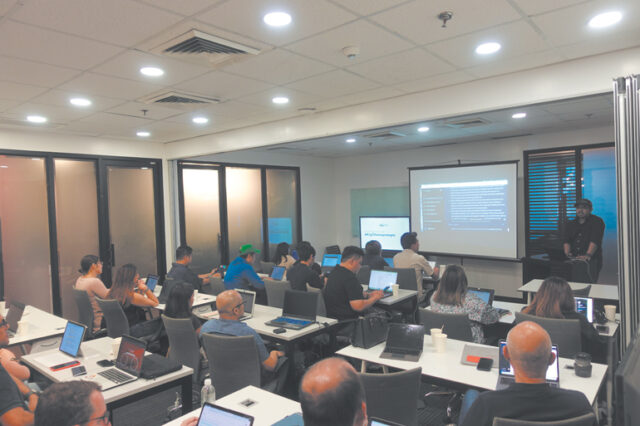
Edutech startup 10XME Academy holds training programs on AI tools

Edutech startup, 10XME Academy, announces the launch of its 10X AI training programs, a pioneering initiative designed to help entrepreneurs, corporate employees and students to leverage the best artificial intelligence (AI) tools for elevating their productivity “ten times.”

10XME Academy was founded on the principle that AI can bolster productivity tenfold. The startup offers hands-on and outcome-based classes curated to help their students accomplish their objectives. They prioritize practical learning, enabling students to achieve an increase in productivity within days, rather than weeks.

The launch comes amid increasing recognition of AI’s potential to enhance productivity. A recent study conducted by the National Bureau of Economic Research demonstrated a 14% boost in issues resolved per hour with the aid of an AI-based conversational assistant. The study further suggested that AI assistance has been especially beneficial to novice and low-skilled workers, enabling them to glean potentially tacit knowledge from their more experienced peers and move down the experience curve. Industry leaders also predict a competitive edge for those who can effectively utilize advanced AI technologies, such as OpenAI’s GPT-4. The findings underline AI’s integral role in accelerating productivity and support 10XME Academy’s mission to empower professionals and businesses through AI.

“AI is disrupting many industries and forcing many professionals to either upskill or find other work. Technology is the greatest equalizer and AI tools will prove that fairly quickly. With our courses, we want to challenge an organization’s perceived limitations and allow them to take back their time. We want professionals and entrepreneurs to be confident using these tools to further their careers or future-proof their income,” said Bianca Azurin, founder of 10XME Academy.

The inaugural class, entitled “How to Replace your Marketing Agency with AI,” will start on Aug. 19. It will run for four consecutive Saturdays and conclude on Sept. 9.

This four-day program goes in depth into how local companies can leverage AI tools to maximize every aspect of their marketing team’s output and performance. Students will learn how to craft effective marketing strategies, create and distribute content at scale, and implement AI tools into their daily operations.

The program will be led by guest lecturers from the region’s most innovative tech startups. Students can expect to actively participate in practical exercises and go through all the AI tools with the main lecturer. They will also be given up to 10 times the value of their program fees in the form of exclusive tools, perks, and subscriptions offered by future partners.

Classes will be held at partner venues in Bonifacio Global City, with plans to establish dedicated 10XME Academy classrooms in the future. The academy will also eventually offer immersive online classes where students get to join the live class from anywhere in the world.

Applications are currently open for the first cohort. Interested participants can submit their applications on the 10XME Academy’s website, https://www.10XME.io/. Deadline of applications is on Aug. 8. Full program brochures may be found on the website as well.

Pilot class

Prior to the official roll out of the actual four-day comprehensive programs, 10XME Academy conducted two pilot classes to gather initial feedback on its courses.

During its pilot marketing class last July 1, over 20 business leaders and marketers from prominent companies in the country were invited to participate. The course explored a diverse range of topics including integrating AI into business operations, prompt engineering basics, and creating search engine optimization plans using AI.

Among the attendees of the first class are Nix Nolledo of EDEN Holdings, Steve Sy of Great Deals E-commerce Corp., Steve Benitez of Bo’s Coffee, Dean Bernales of Uniquecorn Strategies, Jen Bilango of Coins.ph, Ton Patron of DA5 – Western Union and SurgePay, and other representatives from Ludy’s Peanut Butter, Infinix Mobile, PHINMA Properties, Pantheon Holdings, DragonPay, Accenture Innovation, AllCare.io, and BreederDAO.

10XME Academy also recognizes the potential of the youth to achieve financial freedom even before graduating from college. A separate class called “Earn Your First Million with Ecommerce” was conducted on July 8 for students to learn the fundamental principles of starting an e-commerce business. It was attended by teenagers, aged 13 to 17, from schools like Philippine Science High School System, De La Salle University, and Everest Academy.

The pilot e-commerce class focused on marketing strategies, including branding, logo design, social media management, and content creation — all with the help of AI. The academy envisions working directly with schools to offer its programs as extracurricular weekend classes, helping students leverage AI tools to complement their existing skill sets and interests.

The pilot classes were facilitated by Miggy Azurin, managing partner at Huskee Digital, former faculty at Ateneo de Manila University School of Management, and former lecturer at the Certified Digital Marketer program.

Construction expert launches blockchain, AI-powered homebuilding platform

Hailing from a famed Filipino family of architects and contractors, Jose Paolo “JP” Calma, former CEO of the Multi-Development and Construction Corp. (MDCC), has launched Homeqube, a blockchain and AI-powered homebuilding platform that enables users to design their dream homes through its built-in network of architects, engineers, contractors, suppliers, and manufacturers.

With his extensive background in system architecture and interior construction, Mr. Calma’s first-hand perspective of the complex issues within the homebuilding industry prompted him to build a decentralized online platform that makes homebuilding accessible to all.

“Homeqube is designed to solve persistent problems within the industry, such as long lead times, staggering inefficiencies in the design process, the overreliance on human labor, unsustainable raw materials, and not to mention the huge gap between e-commerce and the sector,” Mr. Calma said.

The blockchain and AI-powered homebuilding platform features user-centric controls or “knobs” based on a deconstruction philosophy where various combinations of designs can be created from basic system parts. Users can explore cost, lifestyle, and mobility metrics by adjusting these knobs, helping them to make informed home design and building decisions.

Other key features include optical character recognition (OCR) for automatic lot area plotting, agile design, and auto-generation of essential documents before move-in.

Using the platform’s standard QUBE token and gamification approach, users can earn tokens every time their created part and design are recognized and accepted by the Homeqube system, participate in design game challenges, and eventually sell their designs as non-fungible tokens (NFTs) once they become community members.

As such, the platform also features a Solana-based launchpad and NFT marketplace for homebuilding needs from home designs, home system algorithms, decors, furniture, fixtures, prototypes, and augmented reality (AR) overlays. It is the first NFT marketplace that accepts a wide array of 3D printing files, including parametric data and generative art.

“Drawing on the principles of strategic information architecture and the power of peer collaboration, Homeqube revolutionizes the industry. There’s no need for traditional e-commerce ‘add to cart’ processes. With our platform, we introduce an innovative approach where commercial satisfaction can be achieved through engaging and interactive experiences. We’re also paving the way for seamless fiat ramping,” the Homeqube CEO said.

According to Mr. Calma, the platform serves as a hub for industry professionals, from manufacturers and engineers to interior designers and plumbers, where they can enrich their practices or kick-start their businesses.

ADVERTISEMENT
ADVERTISEMENT