Home Blog Page 4530

Thousands flee homes in Beijing as Doksuri dumps record rainfall

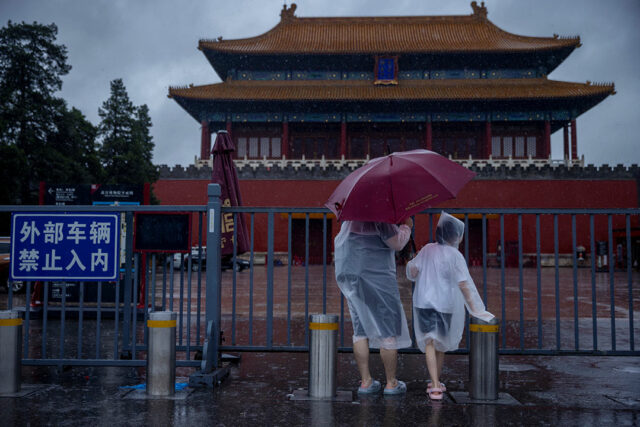
People in raincoats stand at the closed gates of the Forbidden City during heavy rain in Beijing, China, July 30, 2023. — REUTERS/THOMAS PETER

BEIJING — Tens of thousands of people were evacuated from their homes in Beijing as the remnants of Typhoon Doksuri dumped record rainfall on the city, grounding flights and flooding hundreds of roads on Monday.

Besides Beijing, heavy rain continued to soak the neighboring city of Tianjin as well as Hebei province in a region nearly the size of Britain in the wake of Doksuri, which was downgraded to a tropical depression on the weekend.

Three of the five rivers that make up the Hai river basin rose to dangerous levels on Monday. Some houses were washed into the Yongding river, state media reported.

Doksuri is one of the strongest storms to hit China in years and caused widespread flooding over the weekend in the southern province of Fujian, driving hundreds of thousands of people from their homes.

Average rainfall in Beijing reached 140.7 mm (5.5 inches) overnight Sunday, with the maximum recorded rainfall in Fangshan area hitting 500.4 mm (19.7 inches), according to the city’s observatory.

The observatory kept a red alert — the highest warning — for heavy rainfall in place while Beijing Hydrology Station upgraded its flood warning with more rain and river flooding forecast.

More than 31,000 people were evacuated from their homes, work at more than 4,000 construction sites was halted, almost 20,000 buildings were inspected for damage, and scenic spots in the city were closed, media reported.

Both airports in the capital canceled more than 180 flights on Monday morning, with hundreds more delayed, according to flight tracking app Flight Master.

Railway authorities dispatched workers to send food including instant noodles, eggs and ham, and drinking water to train passengers who were stuck overnight.

As many as 358 roads in Beijing were affected by the rain as of Monday.

There was no reported damage or casualties, state media said, but south of Beijing, Doksuri’s impact was more pronounced.

In northern Hebei province, a driver was missing after two trucks fell off a collapsed bridge in Baoding city on Sunday, while a section of a railway bridge for freight in Shijiazhuang city was washed away in a swollen river, media reported.

While Doksuri continues to taper off, forecasters warned that typhoon Khanun was approaching and was set to strike China’s densely populated coast this week.

Authorities said Khanun could inflict further damage to corn and other crops that have already been hit by Doksuri. — Reuters

Italy minister says joining China’s Belt and Road was ‘atrocious’ decision

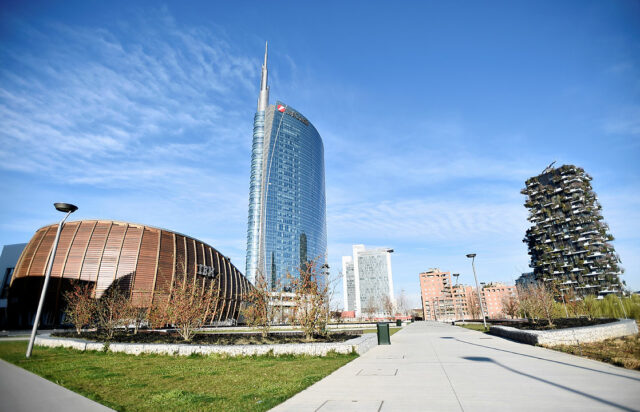
A general view of UniCredit Tower and the Bosco Verticale residential tower in Milan, Italy, March 8, 2020. — REUTERS

ROME — Italy made an “improvised and atrocious” decision when it joined China’s Belt and Road Initiative (BRI) four years ago as it did little to boost exports, Italian Defense Minister Guido Crosetto said in an interview published on Sunday.

Italy signed up to the BRI under a previous government, becoming the only major Western country to have taken such a step. Mr. Crosetto is part of an administration that is considering how to break free of the agreement.

The BRI scheme envisions rebuilding the old Silk Road to connect China with Asia, Europe and beyond with large infrastructure spending. Critics see it as a tool for China to spread its geopolitical and economic influence.

“The decision to join the (new) Silk Road was an improvised and atrocious act” that multiplied China’s exports to Italy but did not have the same effect on Italian exports to China, Mr. Crosetto told the Corriere della Sera newspaper.

“The issue today is: how to walk back (from the BRI) without damaging relations (with Beijing). Because it is true that China is a competitor, but it is also a partner,” the defense minister added.

After a White House meeting with US President Joseph R. Biden on Thursday, Italian Prime Minister Giorgia Meloni said her government was still deliberating on the BRI and announced a trip to Beijing in the near future.

“We’ll take a decision before December,” Ms. Meloni told US broadcaster Fox News in an interview aired on Sunday, adding that the issue required discussions with the Chinese government and within the Italian parliament.

Ms. Meloni reiterated her view that it is a “paradox” that while Italy is part of the BRI, it is not the Group of Seven (G7) country with the biggest trade with China, and said that shows it is possible to have good relations with Beijing without the Belt and Road. — Reuters

Japan sees growing appetite for personal cooling devices

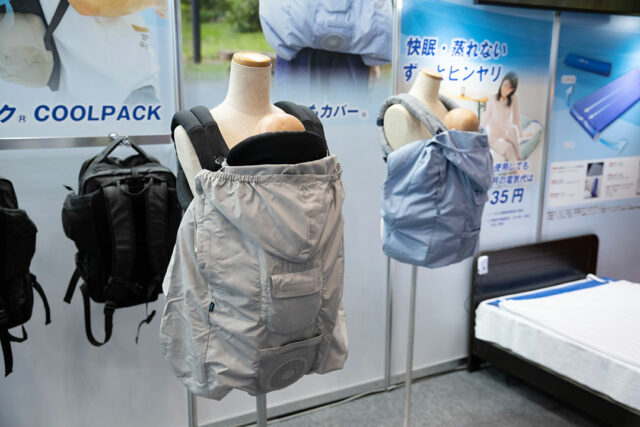
Kuchofuku Co’s baby carrier fans are battery powered.— AKIO KON/BLOOMBERG

AS EXTREME heat blankets the globe from Phoenix to Athens, entrepreneurs are responding with an array of personal cooling devices that can help reduce health risks for everyone from infants to outdoor workers.

At Tokyo’s annual Extreme Heat Countermeasures Exhibition last week the focus was on how to keep workers in high-temperature environments, like construction sites and factories, cool and reduce the risk of heat stroke. As fossil fuel emissions accelerate climate change and with July set to become the world’s hottest month on record, there is growing appetite for the products from consumers and public institutions.

“We’re getting more orders from public facilities, like school gyms, to use our product,” said Hayato Ohashi, who works in sales at industrial fan manufacturer Earth Blower Japan, Inc. “The heat is just getting extraordinary in the last decade — it’s not something that will suddenly disappear next year.”

Japan has one of the world’s oldest populations and its citizenry is particularly at risk from extreme temperatures. In 2020, 86% of heat wave deaths were among people above the age of 65, according to the environment ministry. And Japan isn’t the only country aiming to safeguard people: last week US President Joseph R. Biden said the nation is spending $100 billion a year to protect Americans from extreme heat.

Here are the top cooling products showcased at the trade show in Tokyo.

BABY CARRIERS, BEDS
Tokyo-based Kuchofuku Co. has been making fan-equipped apparel like vests and jackets favored by many Japanese construction workers for decades. The company has redesigned some of its products as casual wear and home products for general consumers.

Fan-based cooling apparel works by accelerating airflow to dry perspiration and typically uses less energy than air-conditioning. The approach works best in more humid places where perspiration doesn’t evaporate efficiently.

Kuchofuku’s offerings included a fan-equipped baby carrier and a bed. The mattress, which is made of a sheet of flexible, mesh-like padding, has an electricity-powered fan at the foot that sucks air from the headboard to boost circulation and keep sheets dry. The baby carrier fans are battery powered.

LARGE-SCALE FANS
Earth Blower Japan produces large-scale fans nearly 2 meters (6 feet 6 inches) tall that blew visitors passing its booth with a strong breeze. Fans come in a variety of models, with names of Japanese deities, like thunder god “Raijin” or wind god “Fujin Max.”

Mr. Ohashi emphasized the flexibility that fans offer because they can easily be transported to new locations and provide immediate relief. Although factories and logistics centers are the regular customers, the company has also rented out its blowers for use at stadiums, including for some of the sporting events during the Tokyo 2020 Olympic Games.

Fans can also limit power costs. Although expenses vary according to the cost of electricity, Ohashi said running its biggest fan for eight hours a day for a month excluding weekends typically only costs around ¥10,000 ($72).

SAFETY HELMETS
Many of the products on display targeted outdoor workers. Because of Japan’s aging population many of its laborers at construction sites or in agriculture are at higher risk of heat stroke.

Hyogo prefecture-based Toyo Safety Industrial Co. showcased a safety helmet with a fan installed at the base that circulates air around the wearer’s head. The fans that are detachable and rechargeable.

WEARABLES
Tokyo-based Biodata Bank, Inc. has developed a wearable device that alerts people when they are at risk of heatstroke.

Its Heat Warning Watch Canaria beeps when the wearer’s core body temperature exceeds unhealthy levels. Priced at ¥4,950, the watch can be used for four months without charging. The device is aimed at outdoor workers and athletes.

The product is currently sold in Japan and Europe, and the company has seen demand increase in European countries amid heat waves in recent years.

FOR PETS
Some firms are eyeing products for four-legged animals.

Manufacturer A-Mec Co. developed a mesh vest with pockets to carry cold packs for dogs to keep pets cool in hot weather. The vests, which come in four sizes and range in price between ¥4,950 and ¥7,150, are also sold in the US market.

Businesses have become increasingly aware of demand for animal cooling products, and retailers like Sweet Mommy also offer fan-based cooling vests for pets. — Bloomberg

Greener economy: Brian Poe-Llamanzares calls for sustainable investments at Southeast Asia Investment Forum

Brian Poe-Llamanzares

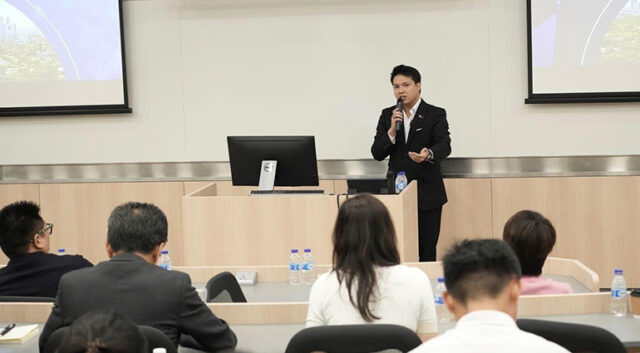
SINGAPORE — In a power-packed address at the recently concluded “Southeast Asia Investment Forum,” Brian Poe-Llamanzares, sustainability advocate, philanthropist, and chief-of-staff to the Office of Senator Grace Poe, sparked a much-needed conversation about the critical steps to ensure better and sustainable investments in the Philippines.

Held at the Hon Sui Sen Memorial Library in Singapore on July 29, 2023, the event provided a dynamic platform for exploring investment prospects and challenges in the region.

“I would like to thank the National University of Singapore and the Mandarin Alumni Association for this invitation. This is an amazing opportunity for the Philippines and myself. I hope that my remarks will attract investors and connect sustainability warriors in Asia to the Philippines,” expressed Mr. Poe-Llamanzares, setting the tone for an engaging and insightful speech.

Drawing from his experience, the charismatic speaker emphasized the importance of due diligence, urging investors to delve beyond the numbers on traditional financial reports. The balance sheet, income statement, and cash flow statement may be essential, but Mr. Poe-Llamanzares made a powerful revelation — they fall short of revealing a company’s environmental cost — its carbon footprint.

“These reports do not reveal a company’s carbon footprint. Financial reports can reveal the cost of income, but not a company’s environmental cost. They can reveal the efficiency of cash flow. But not how quickly we drain our rivers, nor how efficiently we pollute our seas,” explained Mr. Poe-Llamanzares.

Amidst the current climate crisis, the call for Environmental, Social, and Corporate Governance (ESG) has grown louder. Mr. Poe-Llamanzares referred to his book, A Sustainable Future, as he educated the audience about the significance of ESG in today’s investing landscape. According to the Global Sustainable Investing Alliance (GSIA), corporate spending on ESG reached a staggering $35.3 trillion in 2020, projected to soar to $33.9 trillion in global institutional ESG investing by 2026.

“Greening our companies brings in green dollars,” Mr. Poe-Llamanzares proclaimed, highlighting the positive impact of ESG on revenue and profit. A report by Moore Global indicated that spending on ESG boosts revenue by 9.7% and profit by 9.1%.

Mr. Poe-Llamanzares then turned his attention to the Philippines, its vibrant economy, and its eagerness to embrace sustainable growth despite the country’s rapidly growing population and increasing demand for water, food, and electricity. The GDP of PHP 19.94 Trillion in 2022 reflects the nation’s ambitions to expand and green its economy. Household consumption, accounting for 70% of the GDP, and Gross Capital Formation, investing in construction and durable equipment, play pivotal roles in driving economic growth.

To achieve a greener economy, Mr. Poe-Llamanzares shared that the Philippines is embracing the ESG revolution through strategic steps like loosening restrictions in laws like the Retail Trade Liberalization Act, the Foreign Investments Act, and the Public Service Act fosters investment growth. Moreover, the revised implementing rules and regulations of the Renewable Energy Act demonstrate the nation’s commitment to increasing renewable energy’s share in its energy mix to 35% by 2030 and 50% by 2040.

According to Mr. Poe-Llamanzares, the Philippines has also made strides in green financing, issuing sustainability-related bonds and private banks offering green and sustainable loans. As the Philippines moves towards a Water-Energy-Food nexus, investments in recycling gray water, utilizing rainwater, adopting energy-efficient technology, electric vehicles, and sustainable agriculture will also pave the way for a greener future.

Investing in ESG is not just about ticking boxes, but it’s an investment in a better world. It is an investment in the future we want to leave behind for our children and the generations to come. Together, we can unlock the potential of sustainable growth and make a positive impact on both business and the world,” Poe-Llamanzares concluded with a call to action, inspiring investors to embrace ESG principles for a greener and more sustainable future.

The “Southeast Asia Investment Forum” successfully provided a platform for Mr. Poe-Llamanzares to shed light on the pressing need for sustainable investing and its potential impact on the future of the region’s economy. The forum’s participants left with a renewed sense of responsibility and awareness of the importance of incorporating ESG principles into their investment strategies.


Spotlight is BusinessWorld’s sponsored section that allows advertisers to amplify their brand and connect with BusinessWorld’s audience by enabling them to publish their stories directly on the BusinessWorld website. For more information, send an email to online@bworldonline.com.

Join us on Viber at https://bit.ly/3hv6bLA to get more updates and subscribe to BusinessWorld’s titles and get exclusive content through www.bworld-x.com.

Beijing stimulus given benefit of the doubt

Asian share markets are looking to end July with a bang as hopes for new policy steps have Chinese blue chips up 4.8% for the month and on track for their best performance since January.

China’s July PMIs were mixed with manufacturing steadying at 49.3 but services slowing to a disappointing 51.5. Yet that merely stoked wagers Beijing would have to dole up sizable stimulus at some point or risk social unrest, particularly with youth unemployment rising.

Beijing did apparently issue measures to restore and expand consumption on Monday, according to a State Council document out on Monday, though many seemed aspirational and whether they would work was an open question. So far, domestic investors seem to be giving Beijing the benefit of the doubt – foreign funds have been shunning Chinese stocks for a while.

MSCI’s broadest index of Asia-Pacific shares outside Japan is also on track for its best month since January with a gain of almost 6% in July.

The Nikkei is trying for a seventh straight month of gains and is just barely in the green with a rise of 0.2% for July, though it’s still up 27% year-to-date.

The market is having to contend with a rare selloff in bonds after the Bank of Japan lifted the lid on yields last week, essentially doubling it to 1.0%. That’s seen 10-year yields climb 16 basis points 0.60% in two sessions, the sharpest move since the BOJ last remade its yield curve policy in December.

Higher yields could be positive for banks as they allow them to raise borrowing rates and their own margins, but they also make safe haven bonds relatively more attractive compared with riskier equities and challenge PE valuations.

Any rise in Japan’s paltry yields should, theoretically, be a plus for the yen and a negative for yen-funded carry trades. Yet after its initial rally to 138.05 on Friday, the yen has since backtracked at pace to 141.68 per dollar.

Even crowded carry favorites such as the Mexican peso have brushed off the BOJ’s shift, with the peso nearing its highest since 2014 after jumping 2.3% on Friday.

This in part reflects the still huge gulf between Japan rates and emerging markets and the fact that many carry trades are funded at one month rates and rolled over. Right now, investors can still borrow yen for one month at -0.1% to buy pesos and earn 11.1%.

Greater yen volatility would make those positions riskier, but it’s still attractive, especially as the next BOJ meeting is almost two months away on Sept. 22. Indeed, many analysts assume any major policy change won’t come until the Oct. 31 meeting when the BOJ updates its economic forecasts. — Reuters

Ukraine to start talks with US on security guarantees –senior official

REUTERS

Ukraine is to start consultations with the United States this week on providing security guarantees for Kyiv pending the completion of the process of joining NATO, President Volodymyr Zelenskiy’s chief of staff said on Sunday.

Andriy Yermak, writing on the Telegram messaging app, also said officials from a number of countries were preparing to meet in Saudi Arabia to discuss Zelenskiy’s peace plan for Ukraine, based on the departure of all Russian troops.

Yermak did not say when the next meeting would take place but said the plan would be discussed in three phases, leading up to a meeting of heads of state and government.

The Wall Street Journal first reported on the meeting in Saudi Arabia on Saturday, saying it would be held in Jeddah on August 5-6.

The talks on security guarantees with the United States are a follow-up on pledges issued by the Group of 7 (G7) at the NATO summit in Lithuania earlier this month to draw up and honor security guarantees.

“We are starting talks with the United States (this) week,” Yermak wrote on Telegram.

“Security guarantees for Ukraine will be concrete, long-term obligations ensuring Ukraine’s capacity to defeat and restrain Russian aggression in the future. These will be clearly drafted formats and mechanisms of support.”

He said the guarantees “will be in effect until Ukraine secures NATO membership.”

The Western Alliance’s Vilnius summit offered support to Ukraine in countering Russia’s 17-month-old invasion and individual countries pledged new weapons, but no date for Ukrainian membership was set as long as the war continues.

Members of the G7 agreed for each nation to negotiate agreements to provide security guarantees and help Ukraine bolster its military.

In his comments, Yermak said more than 10 other countries had joined the G7 declaration and Ukraine was negotiating terms of future guarantees with each of them.

Yermak spoke of the forthcoming meeting in Saudi Arabia at a gathering of regional officials in the western Ukrainian city of Ivano Frankivsk.

He said an initial international meeting devoted to the peace plan took place in Copenhagen in June.

In addition to calling for a withdrawal of Russian troops, Zelenskiy’s peace plan also provides for the restoration of Ukraine’s pre-war borders and the return home of all prisoners and deported children.

Russia and Ukraine held a series of peace talks soon after Russia’s invasion in February 2022, but these failed to produce any agreement.

Ukraine, its military now bolstered by Western arms, now says it will not take part in any further talks until Russian troops leave. — Reuters

Musk draws heat from San Francisco over giant X logo

TWITTER.COM/ELONMUSK

A giant, glowing X marks the San Francisco spot where Elon Musk says he plans to keep his company, the messaging platform X, formerly known as Twitter. But city officials and some residents are unhappy with the display.

On Friday, the company erected an “X” logo on the roof of its Market Street headquarters, to the chagrin of neighbors who complained about intrusive lights, and San Francisco’s Department of Building Inspection which said it is investigating the structure.

The move followed a post from Musk, the enigmatic billionaire who acquired the company in October for $44 billion, announcing the newly named firm would remain in San Francisco despite what he termed the city’s recent “doom spiral, with one company after another left or leaving.”

Musk, who also is CEO of electric car maker Tesla, moved that company’s headquarters from California to Texas in 2021. Keeping X in San Francisco could be a good sign for a city that has struggled to bounce back from tourism and business losses sustained during the pandemic.

Its downtown region is struggling with job cuts in the tech sector, the departure of major retailers, and reduced tourism. Traffic has fallen as more people work from home, while high-profile crime and homelessness have tarnished the city’s image.

“Beautiful San Francisco, though others forsake you, we will always be your friend,” Musk wrote.

Yet not all San Franciscans are keen for Musk’s friendship. Locals over the weekend recorded video of the giant X glowing, pulsing and strobing, with some criticizing its intrusive lights.

X user @itsmefrenchy123 said they would be “LIVID” over the bright logo, imagining it “right across from your bedroom.”

“I’m just astounded at the flagrant lack of consideration for anyone ever,” wrote X user @DollyMarlowe.

San Francisco’s Department of Building Inspection, meanwhile, opened an investigation into the structure, saying it might be in violation of permitting rules.

A BID inspector said in a written report that company representatives denied roof access, twice, to BID officials seeking to inspect the logo. The inspector noted one representative said the sign was temporary.

A BID spokesperson could not immediately be reached on Sunday. — Reuters

Over 150 dogs join race to support Venezuelan shelters

STOCK PHOTO | Image by Dorota Kudyba from Pixabay

CARACAS – More than 150 dogs wearing colorful scarves on their necks participated alongside their owners in a race through Venezuela’s capital Caracas on Sunday morning, which was organized to seek support for animal shelters in the country.

Runners and their pets ran for four kilometers (2.49 miles) across eastern Caracas in the second edition of the ‘Dog Running’ race.

Under Venezuela’s prolonged economic collapse, many have left pets in shelters or abandoned them on the streets. Household incomes have been hit by an annual inflation of about 400%, making it hard for pet owners to pay for the basic needs of their animals.

“In each edition (of the race) we support shelters that have taken in animals from the streets in precarious situations,” said Andreina Nedjme, organizer of the event.

All participants of the race paid $30 to run with their pets, aiming to give animals a good quality of life while they wait for a family, Nedjme added.

Runners interviewed on the sidelines of the race said they were happy to compete with their pets, noting such activities should be more encouraged in the city. — Reuters

EU ready to strengthen cooperation with the Philippines on maritime security – EC president

REUTERS

MANILA – European Commission President Ursula von der Leyen said on Monday the European Union was ready to strengthen cooperation with the Philippines on maritime security.

She was speaking after a meeting with Philippine President Ferdinand Marcos Jr. in Manila.

“We are ready to strengthen the cooperation with the Philippines on maritime security in the region by sharing information, conducting threat assessment and building the capacity of your coast guard,” she said in a joint statement with Marcos.

The Philippines is a fulcrum of the geopolitical rivalry between the United States and China, with its maritime territory encompassing part of the South China Sea, a strategic and resource-rich waterway over which China also claims sovereignty.

The leaders also discussed relaunching negotiations for a free trade agreement and the Southeast Asian country’s energy transition. — Reuters

Ready to store more with vivo Y36

Considered as an avant-garde in design and quality, vivo Y36 is a budget-friendly phone that can do it all. 

Besides being stylish, the newly launched vivo phone is capable of keeping users productive and entertained. This is all thanks to its 256 big storage (ROM), which is expandable up to 1TB.

Whether one needs a phone for studying, traveling, working, or content creation, the vivo Y36 can cover any tasks and save essential files.

Here’s some reasons why vivo Y36 is the perfect choice for students, professionals, content creators, or simply for those who has an on-the-go lifestyle.

For budding photographers, save more photos and videos 

Having a good camera system is not enough if the phone has low storage capacity. Photos and videos, especially those with high resolution, take up a lot of space. 

Sometimes, it can be a great dismay when capturing memories and then getting a full storage notification. 

Avoid stress with vivo Y36’s 256 ROM + up to 1TB expandability and create a life museum of unforgettable memories. This phone can help you save up to 25,000 photos and 500 hours of HD videos.

For entertainment lovers, download favorite streaming contents

People usually download music, movies, series, and podcasts so they will be entertained even when they are offline.

Having a large collection of media files definitely takes up a lot of storage space.

Thankfully, vivo Y36 will get anyone covered with its massive storage. To add up, the phone also has an immersive 6.64-inch Full HD+ display and an audio booster of up to 200 percent for great experience.

For digital nomads, get plenty of space for files and documents

A smartphone is one of the most powerful productivity tools ever invented. Don’t miss out on important tasks for school and work with vivo Y36. 

Save PDF files and presentations to read or review anytime, anywhere. Create documents, presentations, or social media content with mobile apps like Canva. Lastly, capture countless ideas and information with the phone’s built-in notes application.

With vivo Y36, conquer projects and activities for school and work without worry!

For casual gamers, install favorite gaming apps

Mobile gaming might be the most popular form of gaming in the world in today’s generation due to accessibility.

However, did you know that apps bloat over time? Most gaming apps constantly get updates and bug fixes. Avoid uninstalling apps or freeing up space to take full advantage of app updates with vivo Y36.

Aside from the big storage, the phone is also equipped with 8GB RAM and up to 8GB extended RAM to take casual gamers to victory.

Indeed, vivo Y36 is the perfect device for people who regularly work from their phones and download lots of files or apps. Get it for Php 12,999 on vivo Philippine’s official website, e-stores such as Shopee, Lazada and TikTok, as well as physical stores nationwide.


Spotlight is BusinessWorld’s sponsored section that allows advertisers to amplify their brand and connect with BusinessWorld’s audience by enabling them to publish their stories directly on the BusinessWorld website. For more information, send an email to online@bworldonline.com.

Join us on Viber at https://bit.ly/3hv6bLA to get more updates and subscribe to BusinessWorld’s titles and get exclusive content through www.bworld-x.com.

Aboitiz presents for ABAC Sustainable Growth Working Group on nuclear energy for decarbonization, democratization of climate risk data 

THE FUTURE IS EVERYONE’S BUSINESS. Aboitiz Group President and CEO Sabin M. Aboitiz (front, second from left), as ABAC PH member and Sustainable Growth Working Group (SGWG) Vice Chair, and accompanied by Aboitiz Equity Ventures’ First Vice President and Chief Reputation and Sustainability Officer Ginggay Hontiveros-Malvar (behind Aboitiz), present updates at ABAC III. In photo (front, from left): SGWG Chair and ABAC China member Frank Gaoning Ning, Aboitiz, Financial Task Force (FTF) Chair and ABAC Japan member Hiroshi Nakaso, and FTF Vice Chair and ABAC Thailand member Kobsak Duangdoo.

The APEC Business Advisory Council (ABAC) III meeting is in full swing, with business leaders from 21 APEC economies engaging in dialogue and discussion to refine recommendations for sustainable and inclusive growth in the region.

On Friday, July 29, the Sustainable Growth Working Group (SGWG) held their meeting, which focused on addressing climate change, ensuring energy security and sustainability, and fostering sustainable food systems. The priorities of the work program are ultimately aligned with the 2023 ABAC theme Equity. Sustainability. Opportunity. which highlights the evolving landscape of environment, social, and governance (ESG) investing.

As Vice Chair of the SGWG, Aboitiz Group President and Chief Executive Officer (CEO) and ABAC PH member Sabin M. Aboitiz gave presentations that tackled climate risk issues, including the democratization of climate risk information and decarbonization possibilities through nuclear technology. These will inform further discussions amongst the SGWG as they craft the policy recommendations that will formally be shared with APEC leaders later this year.

In his first presentation, Aboitiz shared the progress report on the Climate Risk Scenarios Project.

“We proposed the Climate Risk Scenarios Project in order to help economies build long-term climate resilience and fortify investment decisions by using a climate lens. We recognized that acquisition of important data related to climate risks remains limited and very expensive,” said Aboitiz.

“The objective of this project is to provide both the public and private sectors with a free platform that contains all the necessary data, methodologies, and policies needed to better understand and manage climate risks,” he continued.

By coming together to share and exchange information and knowledge, information gaps between economies can be addressed. With nine economies volunteering for the initial assessment, the final Climate Risk and Assessment Report will be presented at ABAC IV in November of this year.

This was followed by a presentation on the ABAC Experts Roundtable on Exploring Nuclear Energy and Emerging Technologies in APEC. The roundtable discussion, which was virtually held on June 30, is part of the ongoing developments of ABAC SGWG exploration of nuclear energy and small modular reactors (SMRs) as viable zero-carbon sources.

The discussions echo the sentiments of President Ferdinand “Bongbong” Marcos Jr. as shared in his remarks during the Opening Ceremony of ABAC III on Friday, July 28.

“The government and business sector must come together to identify practical, pragmatic, and promising solutions to sustainably address pressing issues like energy insecurity, the triple threat of climate change, pollution, and biodiversity loss,” said President Marcos.

“Striking a balance between being prescriptive and affording, especially developing economies with policy space, we can pursue innovative technologies and approaches; for example, in the exploration of nuclear energy and small modular reactors as viable options for low- or zero-carbon energy sources. In the Philippines, we have identified the use of renewable energy as the top of our climate agenda and we need all the support of the business sector to see this through fruition,” the President added.

As the Aboitiz Group undergoes its Great Transformation to become the Philippines’ first techglomerate, it is embracing technology and a renewed entrepreneurial mindset to tackle the challenges faced by the communities it serves. Aboitiz’s regional involvement in advocating and achieving sustainable growth through ABAC is part of its wider dedication to using its expertise and experience to make a positive impact on the world.


Spotlight is BusinessWorld’s sponsored section that allows advertisers to amplify their brand and connect with BusinessWorld’s audience by enabling them to publish their stories directly on the BusinessWorld website. For more information, send an email to online@bworldonline.com.

Join us on Viber at https://bit.ly/3hv6bLA to get more updates and subscribe to BusinessWorld’s titles and get exclusive content through www.bworld-x.com.

Steering the country towards inclusive prosperity

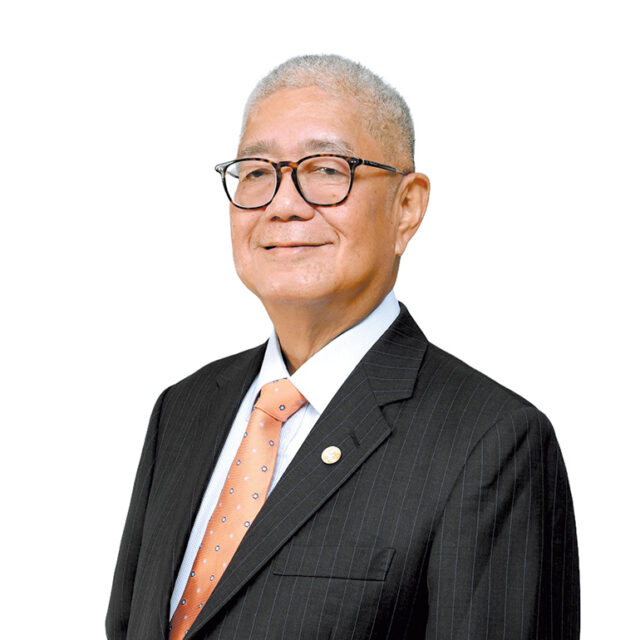
Eli M. Remolona, Jr.

Much and more is expected of Eli M. Remolona, Jr., the person appointed by President Ferdinand R. Marcos, Jr. to serve as the newest governor of the Bangko Sentral ng Pilipinas (BSP) for the next six years.

For the past few years, particularly following the coronavirus outbreak, the central bank had a key role in meeting the challenges of maintaining the country’s economic momentum while protecting it from the worst of the pandemic’s impact.

The administration of his predecessor, Felipe M. Medalla, has largely been responsible for steering the country away from the economic slump affecting most of the world. Mr. Medalla took over the monetary authority to complete the previous governor Benjamin E. Diokno’s unfinished tenure after he had left the position to assume the role of Finance Secretary.

Since then, the BSP has had to contend with skyrocketing inflation by keeping the most aggressive monetary tightening cycle in years. The key policy interest rate currently sits at 6.25%.

To this day, the BSP considers inflation as one of the biggest challenges the country is facing considering its impact on the economy.

“Our challenge now is inflation. Fortunately, the BSP’s inflation-targeting framework has served us well in the face of unusual supply shocks,” Mr. Remolona said in a briefing after the President’s State of the Nation Address.

“We continue to focus on our mandate of price stability and have dedicated our resources and attention in pursuit of this goal,” he said.

According to data from the Philippine Statistics Authority, from a peak of 8.7% in January 2023, inflation decelerated in the succeeding five months settling at 5.4% this June, the slowest in 13 months.

“Our models tell us that inflation will be within the target range of 2 to 4 percent by the fourth quarter of 2023. This is the range that we think is ideal for an economy like the Philippines when it is growing at full capacity,” Mr. Remolona said.

Mr. Remolona attributed much of these gains to the strong banking policies implemented during the pandemic, and stressed the importance of sustained policy improvement for the banking sector moving forward.

“Unlike in previous crises, our banks formed part of the solution rather than part of the problem. This is, in part, due to our work in ensuring financial stability,” he said.

Increases in bank capitalization and modifications to capital ratios are two examples of such improvements that have helped fortify the banking sector. To stimulate economic activities and buoy domestic economy during the pandemic, the BSP also permitted banks to lend to micro, small, and medium enterprises (MSMEs) as alternative compliance to their reserve requirements.

“Fortunately, the BSP’s inflation-targeting framework has served us well in the face of unusual supply shocks. We continue to focus on our mandate of price stability and have dedicated our resources and attention in pursuit of this goal,” Mr. Remolona said.

He restated the central bank’s expectation that inflation will slow further in the fourth quarter of this year and fall back within the government’s 2%-4% target band.

“This is the range that we think is ideal for an economy like the Philippines when it is growing at full capacity,” he said.

The digitalization of financial services in the country, which has also been a primary objective of Mr. Medalla’s administration, have helped boost the efficiency, competitiveness, and financial inclusion in the country.

Mr. Remolona said authorities “are mindful and we will manage the attendant risks to ensure continued trust and confidence in this increasingly digital economy.”

“We want to bring more Filipinos into this financial fold, so that as many of us as possible can share in the fruits of economic progress,” he added.

Expertise through experience

Fortunately, Mr. Remolona has had a long career in the industry to rise up to the challenges of steering the economy towards such a goal. Before he took his office, he sat on the seven-member policy-making Monetary Board.

“With his extensive experience and remarkable achievements in central banking, economic policy, international finance, and financial markets, Mr. Remolona brings a wealth of expertise to his new role,” the Presidential Communications Office said in a statement.

“His appointment ushers in a new era for the central bank, with great anticipation and confidence in his ability to steer the Philippine economy toward sustained growth and stability,” the office added.

Part of this experience was a total of 33 years spent at the Federal Reserve Bank of New York and the Bank for International Settlements (BIS). Mr. Remolona had previously replaced Mr. Medalla on the Monetary Board when Medalla was appointed governor of the central bank last year.

He was also the chair of the Risk Management Committee and an independent director of the Bank of the Philippine Islands prior to joining the BSP.

Throughout his career, Mr. Remolona has worked as a consultant for esteemed institutions such as the Asian Development Bank (ADB), the International Monetary Fund (IMF), and the World Bank.

Mr. Remolona also served as a Professor of Finance and Director of Central Banking at the Asia School of Business in Kuala Lumpur, in collaboration with the MIT Sloan School of Management, from 2019 to 2022.

He also taught at Williams College, Columbia University, New York University, and the University of the Philippines-School of Economics. He taught courses on monetary policy, money and capital markets, and digital transformation, contributing to the education and development of future finance professionals.

As the BIS regional director for Asia and the Pacific from 2008 to 2018, he worked closely with the 12 top central bank governors in the region to develop policy on topics like financial regulatory reform, the growth of capital markets, and financial stability. He also oversaw BIS reserve management for Asia-Pacific central banks.

In 1972, Remolona began his career in economics by working for President Marcos, Jr.’s father and namesake in the role of economist on the Presidential Economic Staff and Development Management Staff of the Executive Secretary Alejandro Melchor.

In addition, he went on a business expedition to the Philippines to offer the late Marcos senior advice on how to improve the country’s economic foundation.

As Mr. Remolona shared during BSP’s 30th anniversary and turnover ceremony, the central bank’s next moves forward will stress two points, namely building on the progress the central bank has already made and improving the work they have been doing.

“I know we’re all eager to work even harder. I know we have what it takes to do even better — especially if we work together,” the governor said in his speech. — Bjorn Biel M. Beltran


ADVERTISEMENT
ADVERTISEMENT